





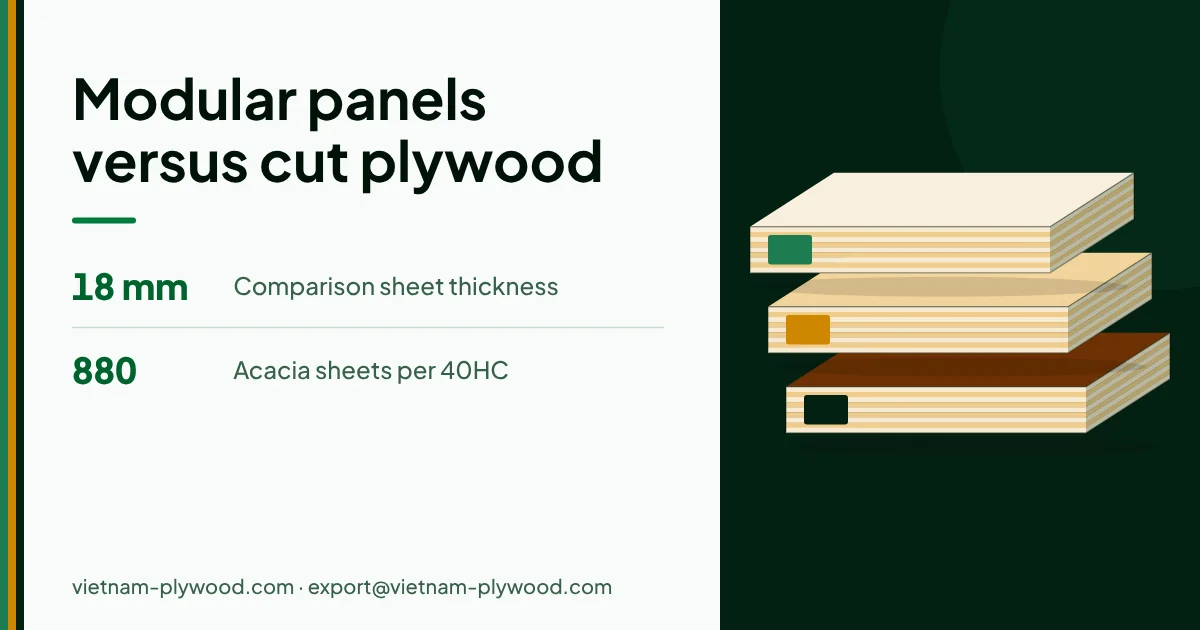
Plastic concrete formwork uses reusable polymer panels, often assembled as modular molds; film-faced plywood can instead be cut to the drawing. Choosing the wrong system raises cutting waste, replacement spending and site delays. HCPLY manufactures film-faced sheets for contractors and formwork yards that need adaptable layouts, while modular plastic systems suit repeated geometries.
What is plastic concrete formwork?
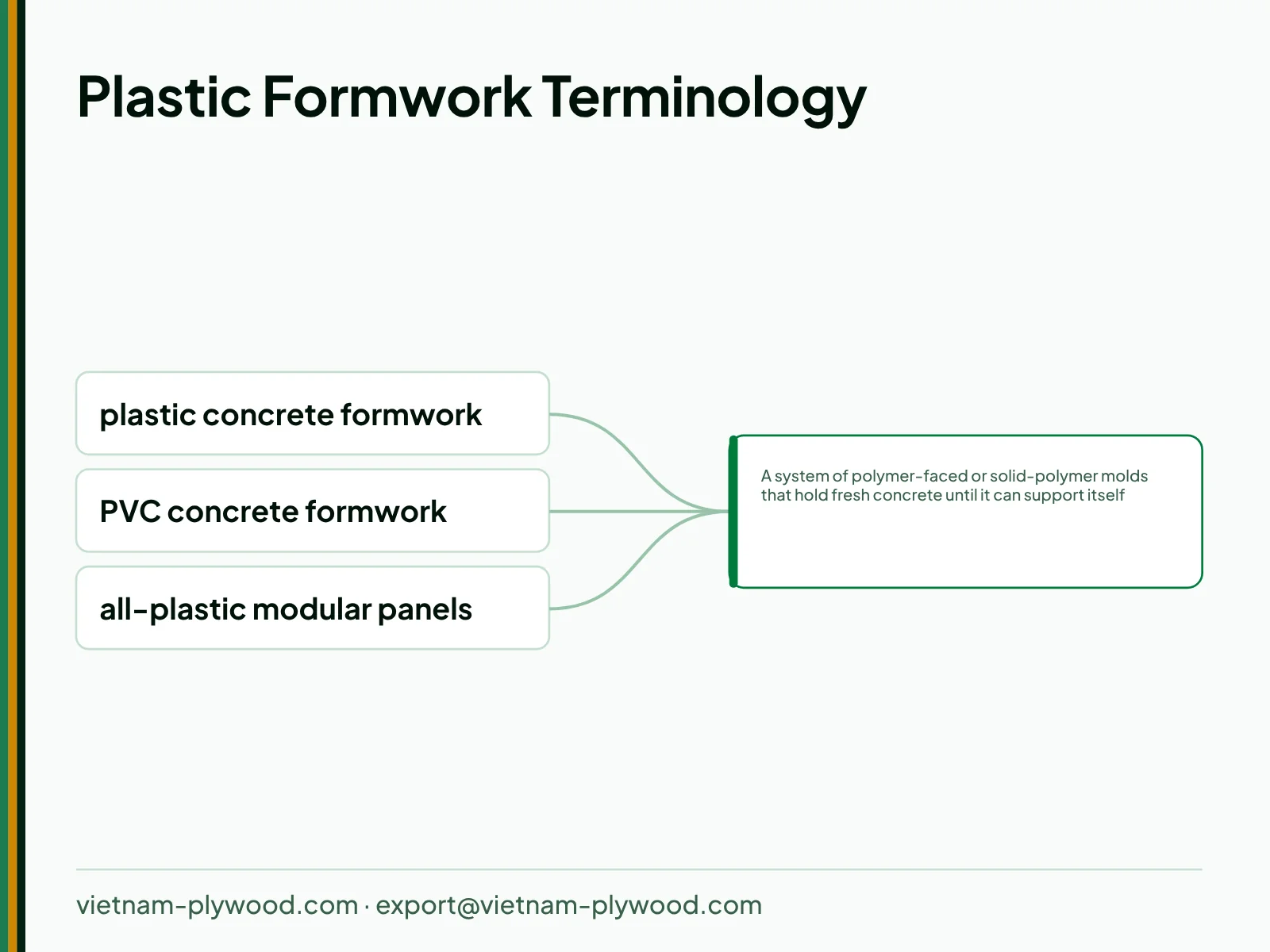
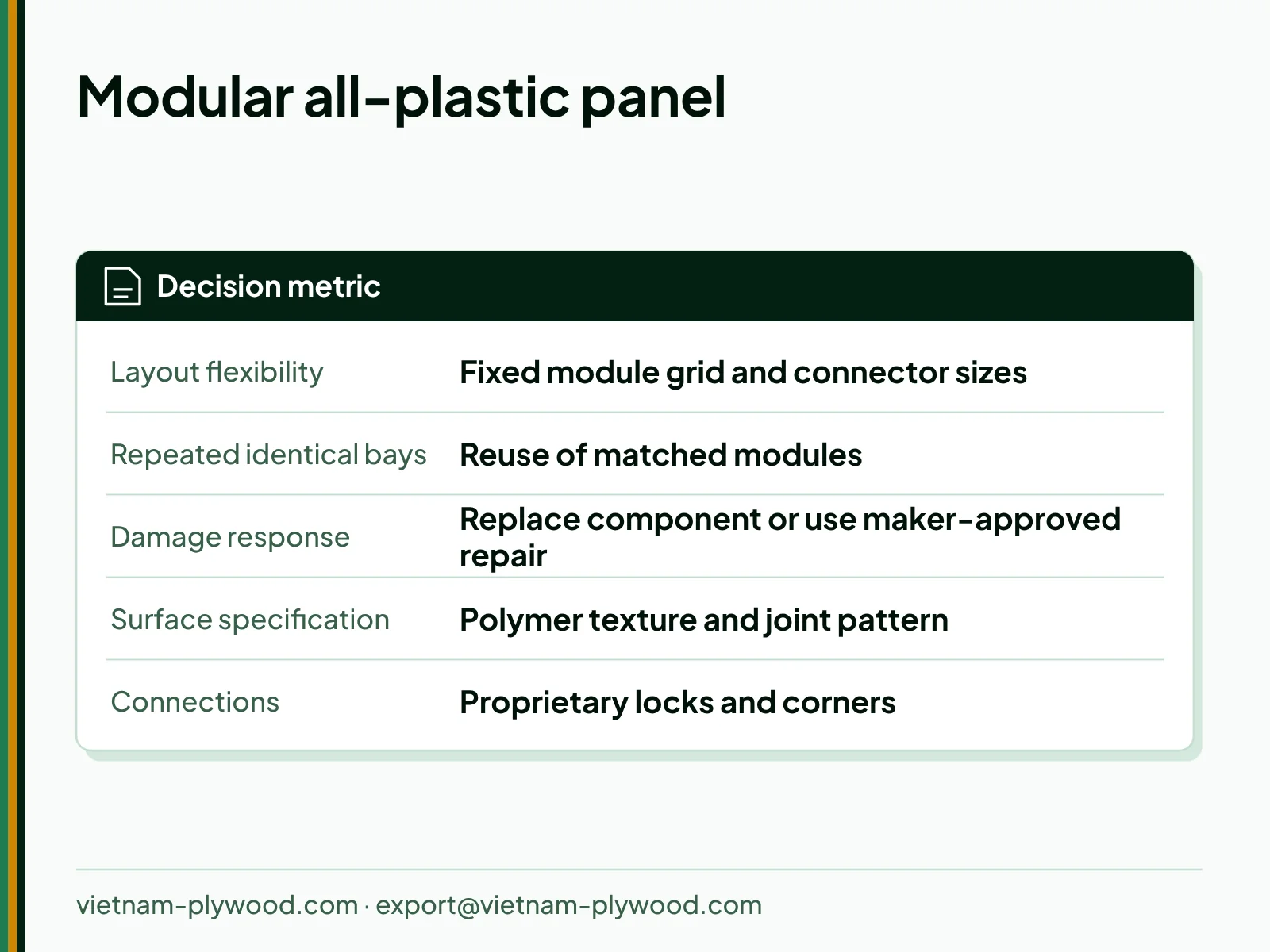
Plastic concrete formwork is a system of polymer-faced or solid-polymer molds that hold fresh concrete until it can support itself. Modular panels typically connect through proprietary locks and corners; their economics rely on repeating the same dimensions. PVC concrete formwork is one plastic category, while polypropylene-coated plywood remains a wood-core sheet with a polymer surface. These constructions should not be quoted as interchangeable.
A complete formwork system includes its braces, ties, shores and connections. A panel’s surface material alone says little about the pressure its assembled support system can resist. For an overview of systems, see formwork explained.
Is plastic formwork better than film-faced plywood?
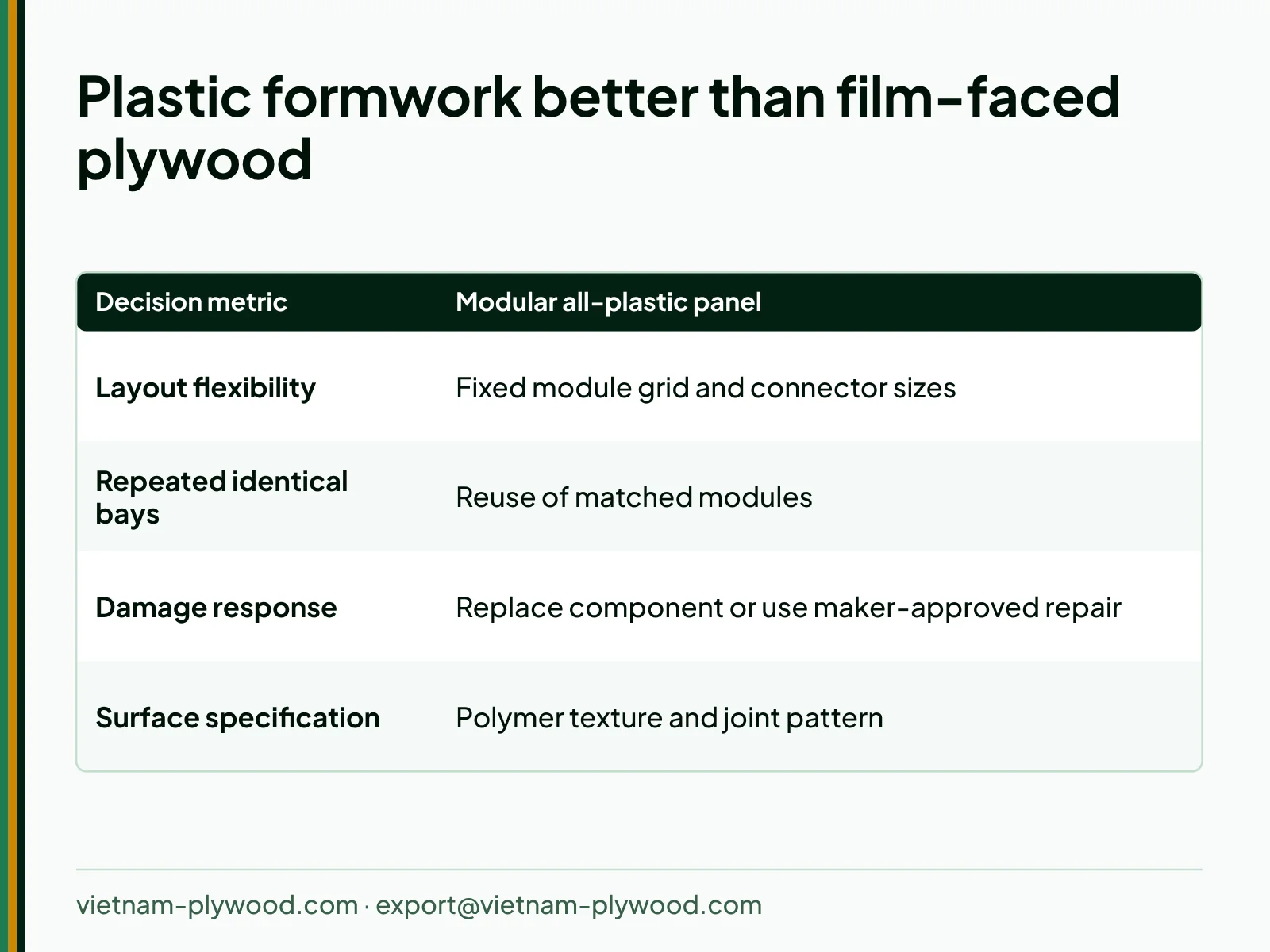
Neither wins every job. A modular plastic kit reduces recurring fabrication when the geometry stays constant, while film-faced plywood fits changing dimensions and cutouts. Compare the installed system and replacement stock rather than counting panels alone.
| Decision metric | Modular all-plastic panel | Film-faced plywood sheet | Verdict by use |
|---|---|---|---|
| Layout flexibility | Fixed module grid and connector sizes | Cut to specified dimensions | Plywood for irregular plans |
| Repeated identical bays | Reuse of matched modules | Repeated handling and edge care | Plastic for stable repetition |
| Damage response | Replace component or use maker-approved repair | Trim or replace sheet; reseal cut edges | Plywood for local recutting |
| Surface specification | Polymer texture and joint pattern | Film weight and face condition | Match required concrete finish |
| Connections | Proprietary locks and corners | Designed ties, studs and supports | Compare full system cost |
| Procurement risk | Matching spare modules required | Standard sheet formats available | Plywood for changing projects |
Film-faced plywood is described further on our construction plywood product page. For other material choices, compare timber formwork options and aluminium versus plywood formwork.
Where do modular panels pay back?
Modular plastic pays back where the same wall, column or footing dimensions repeat across many placements. The calculation needs actual delivered kit cost, labor per cycle, cleaning time, damaged-part replacement and recoverable residual value. A high advertised reuse count cannot replace records from the contractor’s own crew.
Build a trial around one representative bay. Record assembly and stripping hours, rejected concrete surfaces, lost connectors and panels withdrawn after each pour. Then compare the total cost per accepted pour against a plywood system designed for the same load and finish. Smaller repeated elements can favor the modular kit because few pieces require cutting.
Where does plastic lose to cut-to-layout plywood?
Plastic modules lose ground at angled returns, penetrations, stepped foundations and changing wall lengths. Standard modules can require filler pieces or special corners, increasing joints and assembly decisions. Plywood sheets can be marked and cut to the actual drawing, provided the designed support spacing and edge treatment are maintained.
A formwork yard with changing contracts should price the odd bays separately from the regular bays. The economical answer can be a hybrid site inventory: modular kits for repeating elements and plywood for infill or exceptional geometry. Keep material-specific accessories and load calculations distinct.
Can plastic panels be repaired on site?
Plastic repairs are limited by the system maker’s approved method and the damaged part’s structural role. Cracked locking edges, deformed corners or compromised connections call for withdrawal until the maker’s criteria permit reuse. Improvised welding or adhesive patches should not substitute for approved repair instructions.
Plywood offers a different response: a damaged edge can sometimes be trimmed back where the remaining sheet still fits the engineered layout. Every fresh cut needs edge sealing, and a sheet with damaged load-bearing integrity must be removed. Neither material should remain in service merely because its face looks clean.
Is PVC formwork suitable for odd layouts?
PVC formwork suits odd layouts only when the system has compatible infill pieces and a documented assembly design. Otherwise the module grid can leave numerous nonstandard gaps. Request a panel-by-panel layout drawing showing every corner, opening and tie position before accepting a modular proposal.
The phrase formwork plastic also appears in offers for coated wood panels. A polypropylene (PP) coating on plywood does not turn its core into solid plastic. The comparison here is all-plastic modular panels versus film-faced plywood; polymer-coated plywood should be evaluated separately by its own core, coating and test evidence.
Which HCPLY line builds the plywood alternative?
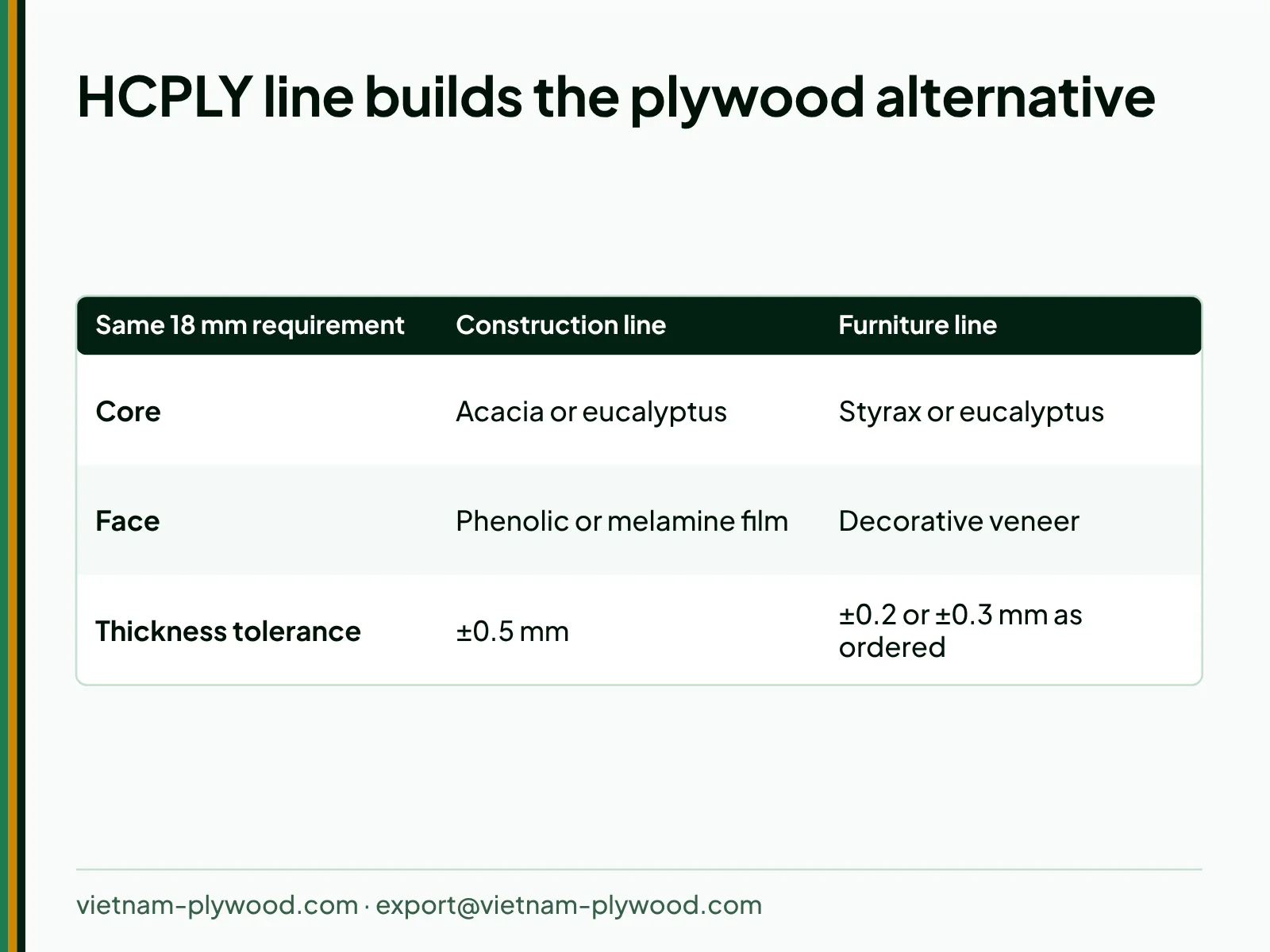
Our construction line presses phenolic- or melamine-film-faced plywood with acacia or eucalyptus cores. HCPLY’s furniture line instead makes sanded, full-stitched styrax- or eucalyptus-core panels; our commercial and packing line makes acacia-core MR-glue panels. These are distinct builds even when nominal thickness matches.
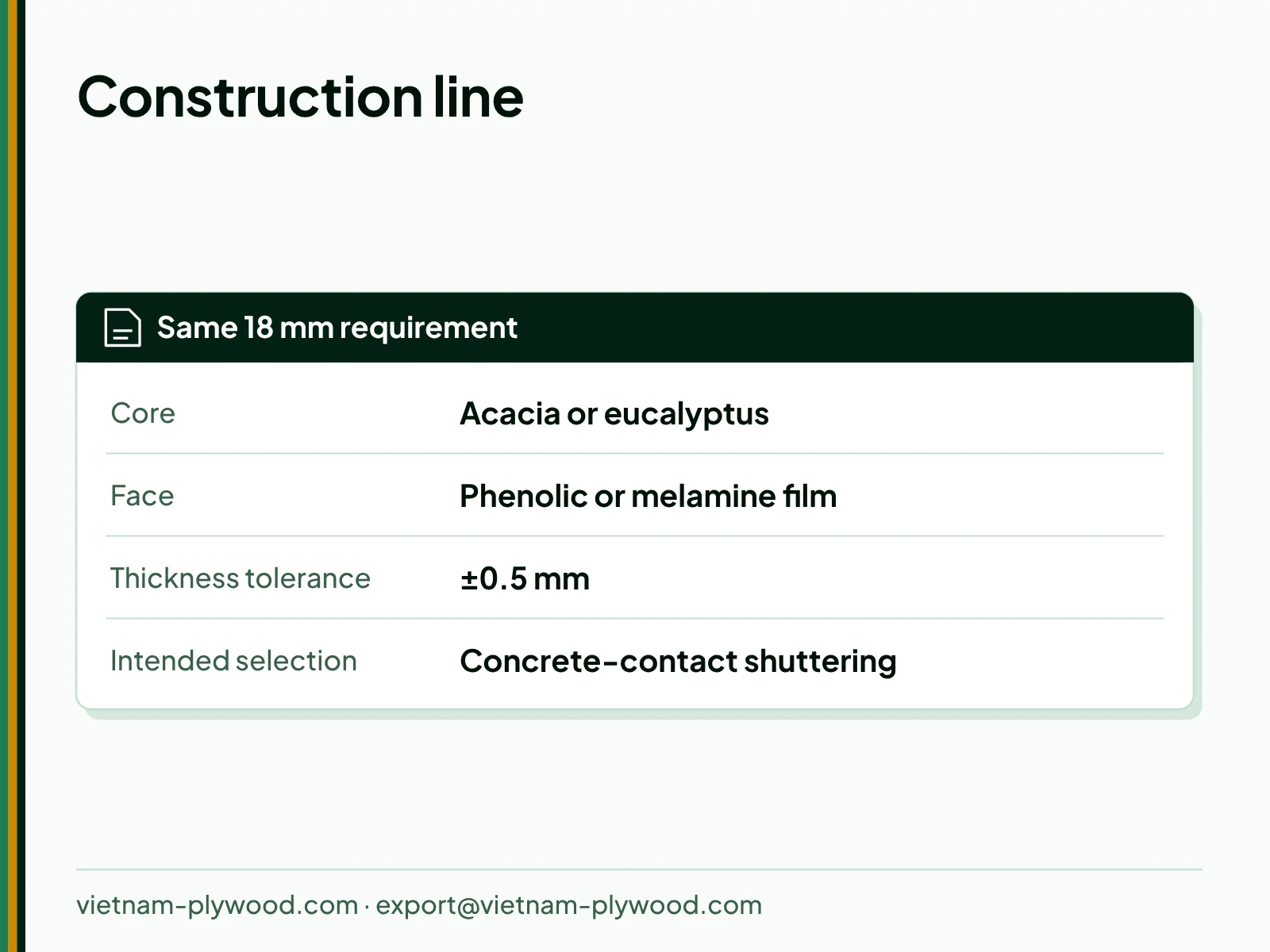
| Same 18 mm requirement | Construction line | Furniture line | Commercial and packing line |
|---|---|---|---|
| Core | Acacia or eucalyptus | Styrax or eucalyptus | Acacia |
| Face | Phenolic or melamine film | Decorative veneer | Raw or light-sanded face |
| Thickness tolerance | ±0.5 mm | ±0.2 or ±0.3 mm as ordered | ±0.5 mm; packing ±0.5–1.0 mm |
| Intended selection | Concrete-contact shuttering | Furniture components | General or packing use |
Our construction line offers 120 g/m² standard film and 135 g/m² premium film; 220 g/m² is reserved for anti-slip film. Glue and emission are separate specification fields. For a cross-line comparison, see plywood grades across factory lines and packing or commercial plywood.
What should inspectors check at the factory?
Inspectors can witness sheet measurement, face condition, edge sealing preparation and identification of the agreed core at the producing factory. HCPLY handles specification, on-site quality control, documents and loading; buyers inspect goods at the producing factory and meet at its factory office.
Ask the inspector to select sheets across pallets and measure thickness against the agreed ±0.5 mm construction tolerance. Check length and width against ±2 mm, inspect film continuity and note visible core voids at accessible edges. Record the inspected pallet references and photograph any rejected sheets before loading.
How does plywood affect container planning?
At 18 mm and 1220 × 2440 mm, an acacia-core sheet weighs 31.08 kg before film weight. A full acacia-core 40HC plan contains 880 sheets, 47.15 m³ and 27.35 t; the payload ceiling is 28.5 t. Eucalyptus-core sheets at the same size weigh 34.83 kg, with 795 sheets and 27.69 t in the corresponding plan.
A mixed-specification container is possible within the payload limit, so the purchasing schedule should combine sheet counts with mass. Our minimum order is one 40HC. The dedicated container-load guide covers the detailed loading calculation.
What safety documents govern the formwork design?
The assembled formwork needs an engineered load path and current jobsite drawings, regardless of its face material. The US Occupational Safety and Health Administration’s 2025 Code of Federal Regulations edition, 29 CFR §1926.703(a)(1), requires formwork to support anticipated vertical and lateral loads without failure. Section 1926.703(a)(2) requires plans and revisions at the jobsite: official 2025 regulation.
These US provisions govern covered US workplaces; buyers elsewhere should apply their jurisdiction’s project rules. Specify design pressure, bracing, tie spacing, stripping criteria and the required concrete finish before comparing offers. A material sample is useful for finish review but does not establish an assembled system’s structural capacity.
How should buyers compare quotations?
Compare complete installed cost for the same drawing and expected placement schedule. Request separate lines for panels, corners, ties, support members, spare parts, labor and damaged-unit replacement. For plywood, specify film, core, glue, tolerance and edge handling; for plastic, request the exact module inventory and compatible replacement policy.
For film-faced plywood, with proper handling, a release agent on every pour and sealed edges including cut edges, melamine-glue panels achieve about 12–15 pours and phenolic-glue panels up to about 25 pours. These are planning conditions rather than a substitute for site records. Film-faced pricing follows core, film weight, glue, thickness, quantity and delivery terms; request a quotation against the written build.
Our export terms include FOB Hai Phong, CFR (CNF) and CIF. Factory lead time runs 15–45 days from receipt of the 30% deposit; the exact figure depends on order size, line loading and what the contract fixes; the 70% balance is against the scanned bill of lading, by telegraphic transfer or irrevocable letter of credit at sight. The shipment document set includes invoice, packing list, bill of lading and origin documents, plus applicable order certificates and destination papers. After loading, the draft shipping documents come to you for approval.
What specification should a buyer send?
Send the formwork drawing and intended pour conditions alongside the sheet build. That allows the construction line to quote the actual panel requirement while the contractor designs the supporting system. State the receiving port and required inspection evidence so the quotation and shipment paperwork match the project.
Application: concrete wall / column / slab; drawing and pour conditions attached
Line or core: construction line; acacia or eucalyptus core
Glue: melamine MR or phenolic WBP
Emission: E0 / E1 / E2 class as specified separately
Face and grade: film-faced; 120 g/m² standard or 135 g/m² premium; agreed face condition
Thickness and tolerance: 18 mm; ±0.5 mm
Size: 1220 × 2440 mm or approved cutting schedule
Quantity: sheet count and pallet allocation within one 40HC
Destination port: [port and country]
Ask Lucy at contact for a sample set matched to the intended concrete-contact finish.