





A plywood sheet resists water through its factory glue bond and the protection added to its faces, edges and joints. Choosing the wrong combination can cost a rejected cabinet batch, coating rework or installation delays. For waterproofing for plywood, HCPLY asks buyers to specify both the pressed panel and the finish applied after import.
What is the best waterproofing for plywood outdoors?
The best waterproofing for plywood outdoors combines a water-resistant factory bond with a compatible exterior coating and sealed edges. For exposed painted joinery, specify phenolic-bonded plywood, then use a coating system rated for the actual weather and maintenance cycle. Epoxy suits high wetting risk; exterior primer and paint suit opaque architectural finishes. Neither substitutes for drainage and protected joints.
Start with the exposure schedule: rain during construction, repeated splashes, sheltered humidity, or continuous wetting. Those are different purchase specifications. A cabinet maker facing occasional condensation needs a different surface system from a contractor installing exterior panels under direct rainfall. The wrong combination can lead to swollen edges, finish repairs, rejected assemblies and delayed installation.
For the underlying distinction, read whether plywood is waterproof. HCPLY separates the bond specified at pressing from the protective coating applied after import.
What does WBP glue protect, and what remains exposed?
Weather and boil proof (WBP) phenolic glue holds veneer layers together under demanding wet exposure. It does not seal wood fibres at the face, fastener hole or cut edge. Moisture resistant (MR) melamine glue serves a different exposure requirement. A panel can retain its glue bond while its wood still swells from absorbed water.
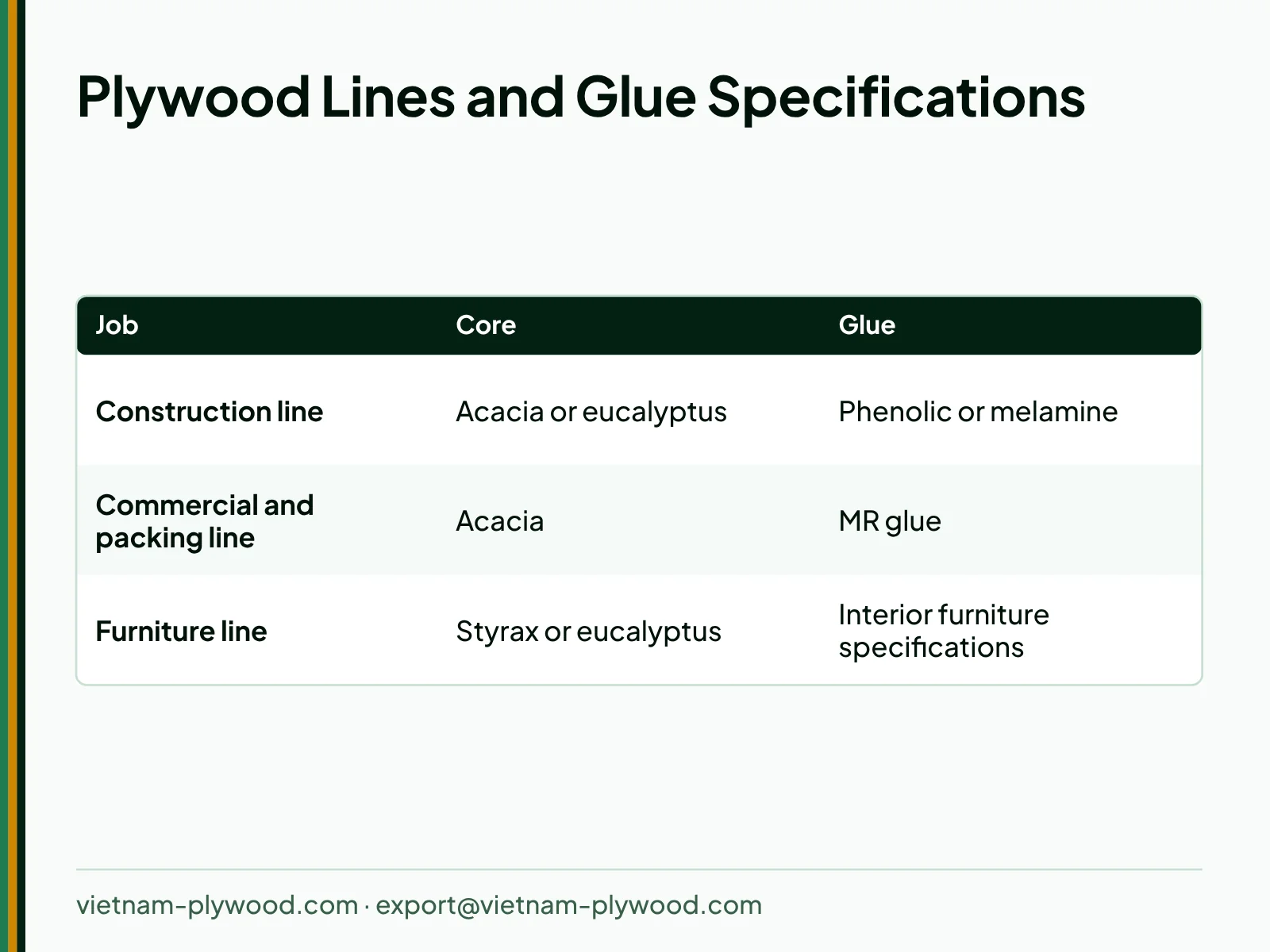
Our construction line presses phenolic or melamine film-faced sheets with acacia or eucalyptus cores. For a wet-exposure order, buyers can specify phenolic WBP bonding and a suitable face finish. Our commercial and packing line uses acacia cores with MR glue; it is a fit for protected packing rather than prolonged outdoor wetting. Our furniture line uses full-stitched, sanded styrax or eucalyptus cores for interior furniture specifications.
Bond and emissions are separate fields. E0 and E1 describe emissions classes on our furniture line; neither tells a buyer whether the adhesive is suitable for rainfall. For a purchase specification, name the adhesive, intended exposure and any test report the buyer accepts rather than using the word “waterproof” alone.
Which panel build belongs in each exposure?
Choose the panel by its expected water path, surface finish and edge treatment. The table compares the three HCPLY production lines at the same illustrative 18 mm thickness, not interchangeable performance grades.
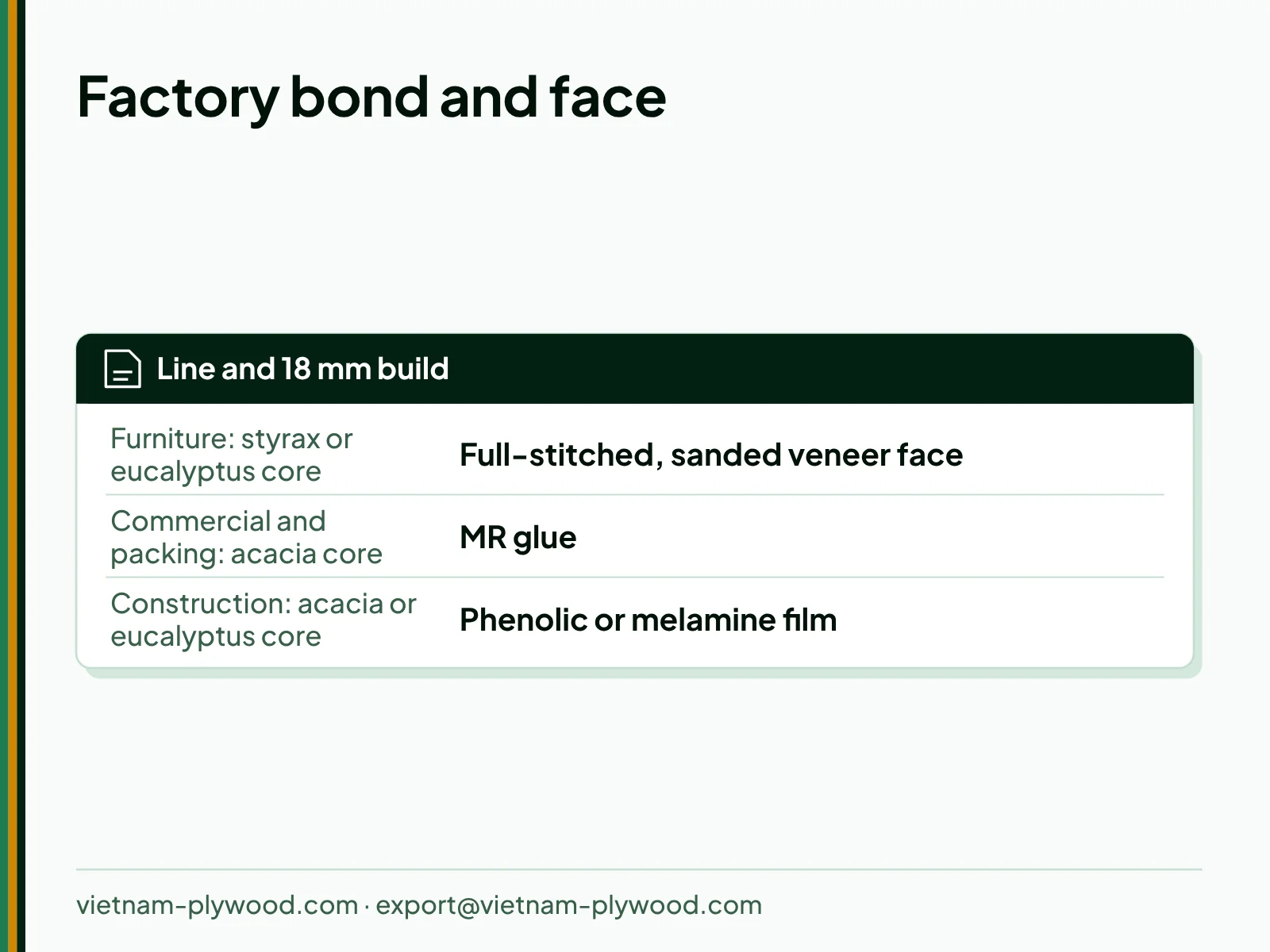
| Line and 18 mm build | Factory bond and face | Exposure decision | Treatment after import |
|---|---|---|---|
| Furniture: styrax or eucalyptus core | Full-stitched, sanded veneer face; specify emission class | Interior cabinetry with controlled moisture | Seal cutouts and edges; use a compatible cabinet finish |
| Commercial and packing: acacia core | MR glue; unsanded or light-sanded | Protected packing or temporary sheltered use | Keep dry in service; coat only for the defined exposure |
| Construction: acacia or eucalyptus core | Phenolic or melamine film; specify WBP or MR bond | Formwork and selected wet-site applications | Protect fresh cuts; check film condition and joints |
A face veneer name does not identify the core. Bintangor, okoume and other named faces describe the visible surface; density follows the core. Buyers who need a paint-ready exposed face should assess sanding, face grade and coating adhesion rather than select by a decorative veneer name alone.
Compare the grades across factory lines and the exterior plywood specification before issuing an order.
Which coating works for exterior waterproofing for plywood?
Use a coating rated for the anticipated moisture, sunlight and abrasion. A film that blocks liquid water can still crack at joints or peel from a poorly prepared surface. Coating data sheets, substrate trials and inspection access matter more than a generic “waterproof” label.
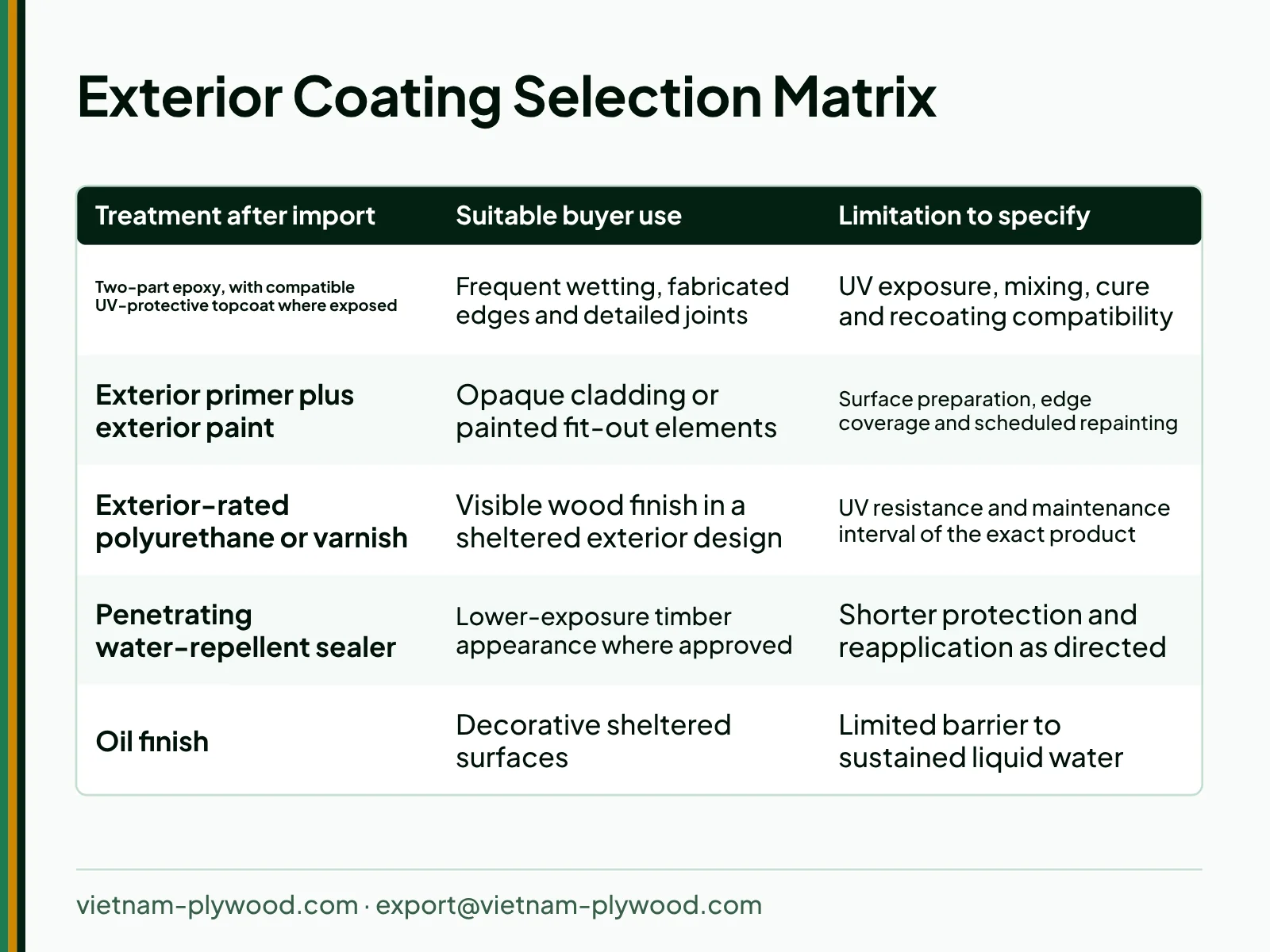
| Treatment after import | Suitable buyer use | Limitation to specify |
|---|---|---|
| Two-part epoxy, with compatible UV-protective topcoat where exposed | Frequent wetting, fabricated edges and detailed joints | UV exposure, mixing, cure and recoating compatibility |
| Exterior primer plus exterior paint | Opaque cladding or painted fit-out elements | Surface preparation, edge coverage and scheduled repainting |
| Exterior-rated polyurethane or varnish | Visible wood finish in a sheltered exterior design | UV resistance and maintenance interval of the exact product |
| Penetrating water-repellent sealer | Lower-exposure timber appearance where approved | Shorter protection and reapplication as directed |
| Oil finish | Decorative sheltered surfaces | Limited barrier to sustained liquid water |
A coating manufacturer’s system instructions determine coat count, dry time, application temperature and compatibility. Avoid treating a generic PVA adhesive as an exterior sealer without a product-specific exterior rating. Also avoid specifying a clear finish where the maintenance plan cannot accommodate UV-driven degradation.
The U.S. Department of Agriculture Forest Service’s 2021 Finishing Wood chapter explains that outdoor finishes must address water, sunlight and weathering. Its guidance supports selecting finishes by protection and substrate characteristics: USDA Forest Service, 2021.
How should a fabricator seal plywood edges and holes?
Seal every freshly cut edge and drilled penetration before the assembly becomes inaccessible. End grain at exposed plies provides a path for moisture even when the face carries a coating. Specify the treatment of the panel perimeter, internal cutouts, screw holes and site-made joints in the fabrication drawings.
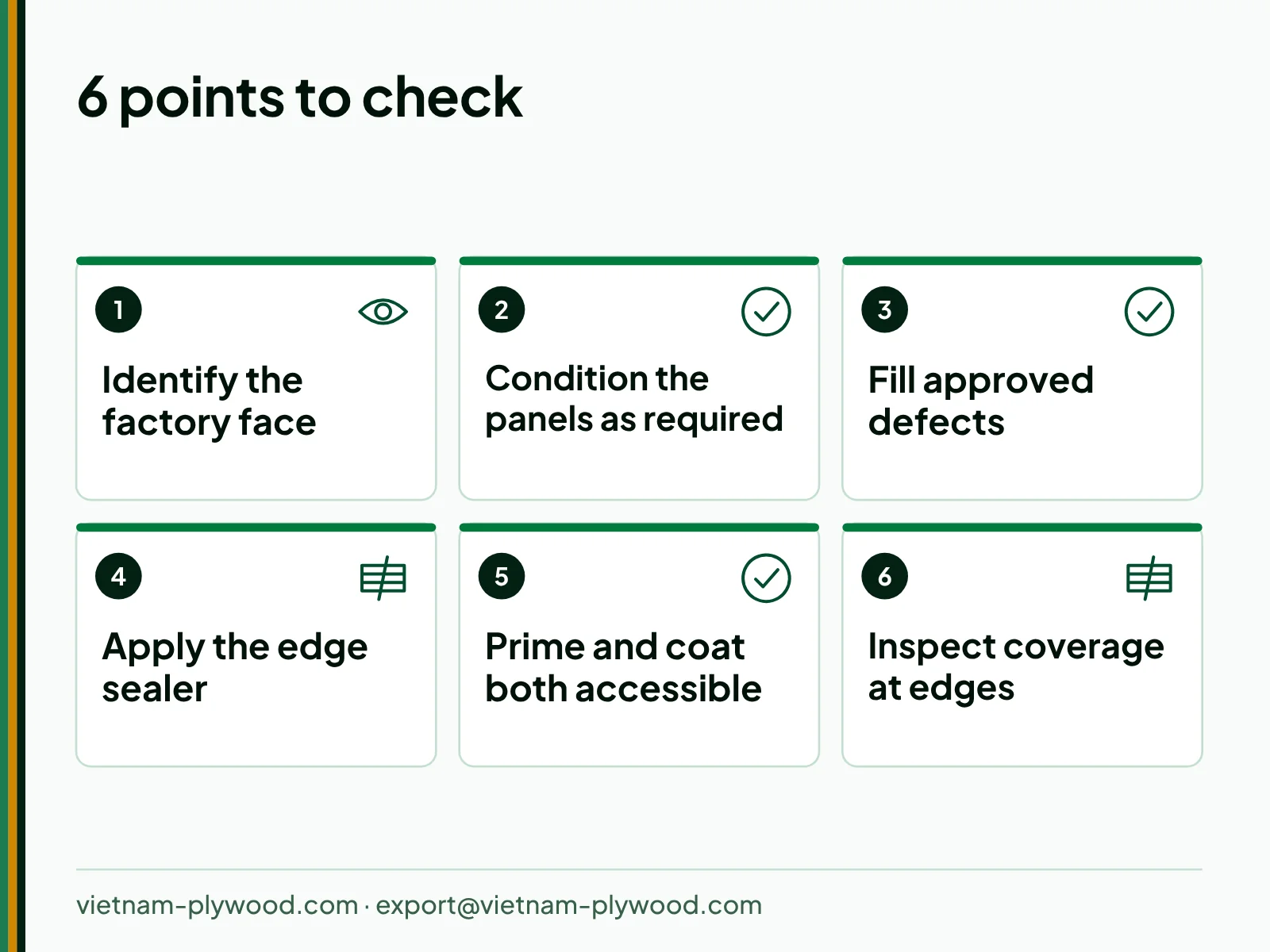
- Identify the factory face and bond type; check the coating supplier’s compatibility instructions.
- Condition the panels as required by the coating system, and remove dust, oil and loose fibres.
- Fill approved defects with a compatible exterior filler, allowing its specified cure.
- Apply the edge sealer or epoxy system across the complete cut profile, including corners and holes.
- Prime and coat both accessible faces as specified, respecting recoat and cure conditions.
- Inspect coverage at edges and joints before hardware, trims or sealant conceal them.
Where a design creates water traps, revise the detail to shed water. A sealed horizontal pocket or unventilated joint can retain moisture against the wood. For fasteners, use a joint detail that limits water entry without relying on surface paint alone.
What can an inspector witness at the producing factory?
An inspector can match the ordered bond, core, face and thickness to the actual producing run. On-site inspection should include exposed edge observations, panel measurements and the condition of any factory-applied film or edge treatment specified for the order.
For our construction line, compare the film specification against the purchase order: 120 g/m² standard, 135 g/m² premium or 220 g/m² anti-slip film. Inspect the face for visible damage and record whether panel edges arrive coated. Any cutting after delivery creates new exposed wood and calls for another sealing operation.
For a veneer-faced furniture order, check sanding quality, core continuity and the agreed face grade before finishing trials. HCPLY can arrange inspection at the producing factory; buyers visit the factory office and inspect goods where the order is made. Record the sampled panels and agreed acceptance criteria in the inspection report.
Can different waterproofing specifications share a container?
A mixed order can combine specifications within the 28.5 t payload limit of a 40HC container. The packing plan must consider core density and pallet height, rather than count every 18 mm sheet as equal in weight.
At 1220 × 2440 × 18 mm, the reference sheet weights are 26.79 kg for styrax, 31.08 kg for acacia and 34.83 kg for eucalyptus. A full single-core load is 990, 880 or 795 sheets respectively, using the corresponding pallet limits. These reference weights exclude film weight.
For example, 500 styrax sheets plus 300 acacia sheets have a calculated sheet mass of 500 × 26.79 + 300 × 31.08 = 22,719 kg before pallets, packaging and any film. Pallet positions and the remaining payload still need checking against the actual packing plan. Use the container loading reference for full-load calculations.
Does film-faced plywood need an extra sealer?
Film-faced plywood has a factory-applied surface film, but cut edges and damaged film still need attention. For concrete formwork, protect the perimeter and reseal every cut. Follow the release-agent and cleaning requirements for the actual job rather than treating a film face as a permanent waterproof membrane.
With proper handling, a release agent on every pour and sealed edges, including cut edges, melamine-glue film-faced plywood yields about 12–15 pours; phenolic-glue film-faced plywood reaches up to about 25 pours. These figures describe formwork reuse under those conditions, not the life of exterior architectural cladding.
Film can be unsuitable as a decorative surface for a paint system unless the coating supplier approves adhesion to that substrate. Buyers seeking a painted exterior finish should request an appropriate raw or veneer face and run a coating trial. Film-face selection and paint-face selection solve different surface requirements.
What should a buyer ask about “marine” and exterior claims?
Ask for the precise panel construction and an accepted test report before specifying a marine or structural grade. A WBP adhesive description alone does not establish compliance with a named marine or structural standard. The core build, face condition and test scope also matter.
For an outdoor cabinet, document whether the assembly will face intermittent splashes, direct rainfall or prolonged standing water. For a signboard, specify UV exposure, attachment details and the planned repainting cycle. For a contractor’s temporary panel, document handling and edge repair after repeated cutting.
HCPLY can discuss a marine or BS 1088 specification only against a test report the buyer accepts. A coating applied after import cannot change a tested glue-bond classification. Distinguish the plywood purchase specification from the fabricator’s separate finish-system approval.
How do buyers qualify a coating system before bulk production?
Qualify the complete assembly on representative samples: the ordered plywood build, actual edge preparation, finish, joints and hardware. A face-only splash check misses the exposed plies at cutouts and drilled holes.
Ask the coating supplier for written substrate preparation, compatible primer, film build, cure and maintenance instructions. Agree on an exposure test suited to the intended market and service, and document how failure is judged. A buyer’s laboratory or project engineer should set acceptance criteria for bond integrity, swelling, coating adhesion and appearance.
Keep retained samples from the agreed production build and finished assembly. Compare changes after conditioning and water exposure using the same inspection method. If the finish lifts around a fastener, correct the joint or coating process before placing the full-volume order.
What belongs in the order and export paperwork?
Put the panel’s water-exposure requirements in the written purchase specification and acceptance record. The shipping document set identifies the goods and carries the order’s agreed certificate documents and test reports; it does not replace the fabrication coating instructions.
For an HCPLY shipment, the commercial invoice, packing list and bill of lading (B/L) form the core export record, with certificate of origin, phytosanitary and fumigation papers as applicable. Order-specific emission certificates and test reports accompany the agreed build; EU lots also use the relevant origin and due-diligence files. After loading, the draft shipping documents come to you for approval.
For scheduling, review plywood production lead time. Keep coating cure, inspection and assembly time in the importer’s own project plan; these operations occur after the factory has completed its panel production.
What specification should the importer send?
Send one written build and exposure specification before requesting a quotation. State the bond requirement, finish substrate, edge responsibilities and destination port so the producing factory can evaluate the panel and the buyer can price the separate coating work.
The minimum order is one 40HC, with mixed specifications permitted within the payload limit. Commercial plywood starts from US$250/m³ FOB Hai Phong (October 2026); furniture plywood starts from US$350/m³ FOB Hai Phong (October 2026). The actual quotation reflects the ordered core, face, bond, thickness, finish preparation and shipment mix. Other builds require a written quotation.
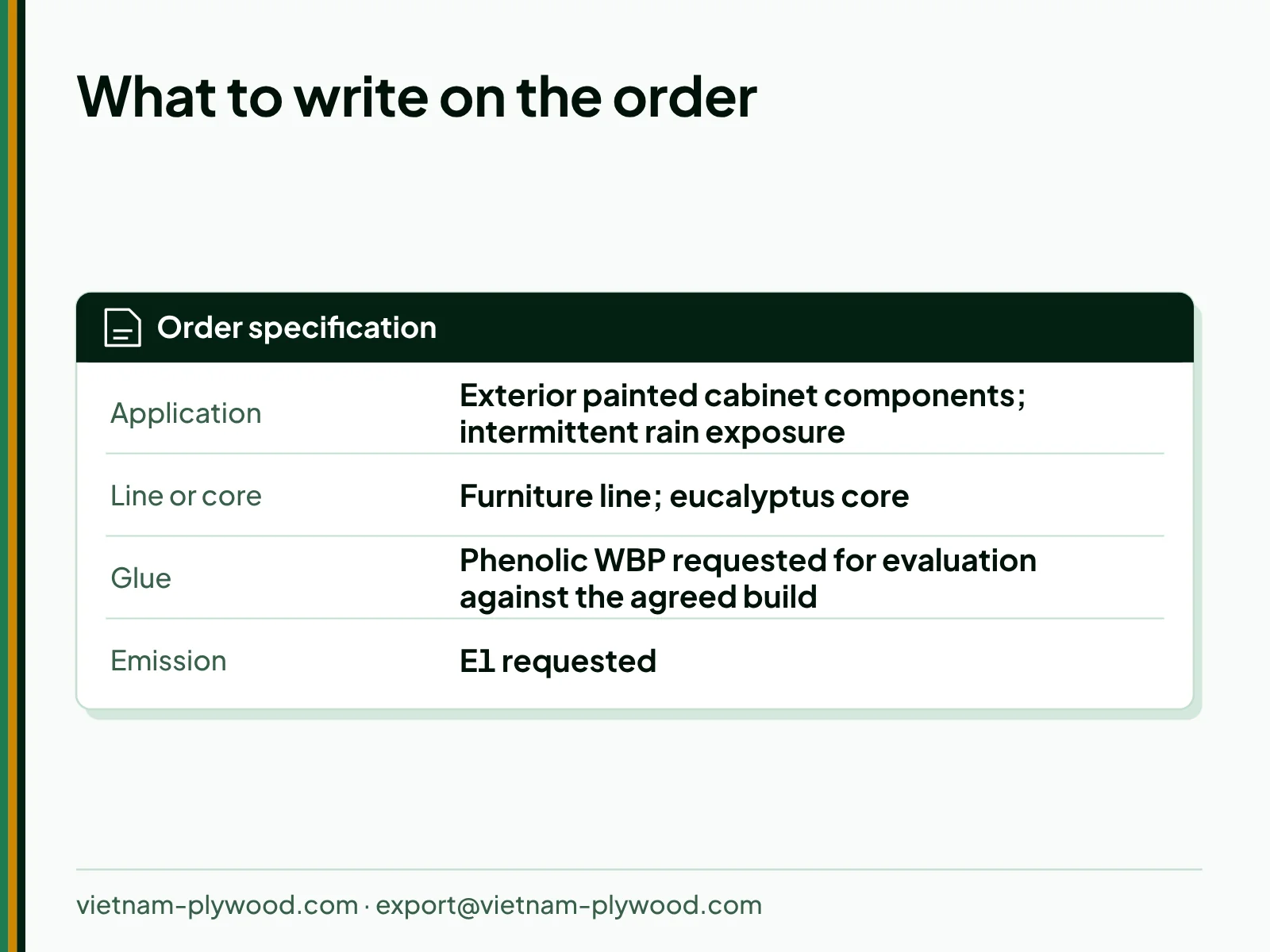
Use the following request as the basis for a trial order:
Application: Exterior painted cabinet components; intermittent rain exposure
Line or core: Furniture line; eucalyptus core
Glue: Phenolic WBP requested for evaluation against the agreed build
Emission: E1 requested
Face and grade: Sanded veneer face, A/B as agreed; coating compatibility trial
Thickness and tolerance: 18 mm; ±0.2 mm as ordered
Size: 1220 × 2440 mm
Quantity: One mixed 40HC trial container, detailed sheet schedule attached
Destination port: [buyer to enter]
Edge treatment: Factory condition recorded; all fabricated cuts sealed after import
Finish system: [buyer to enter approved primer, coating and cure schedule]
Plan a trial container with Lucy at contact HCPLY or export@vietnam-plywood.com, then approve the panel and coating assembly together.