

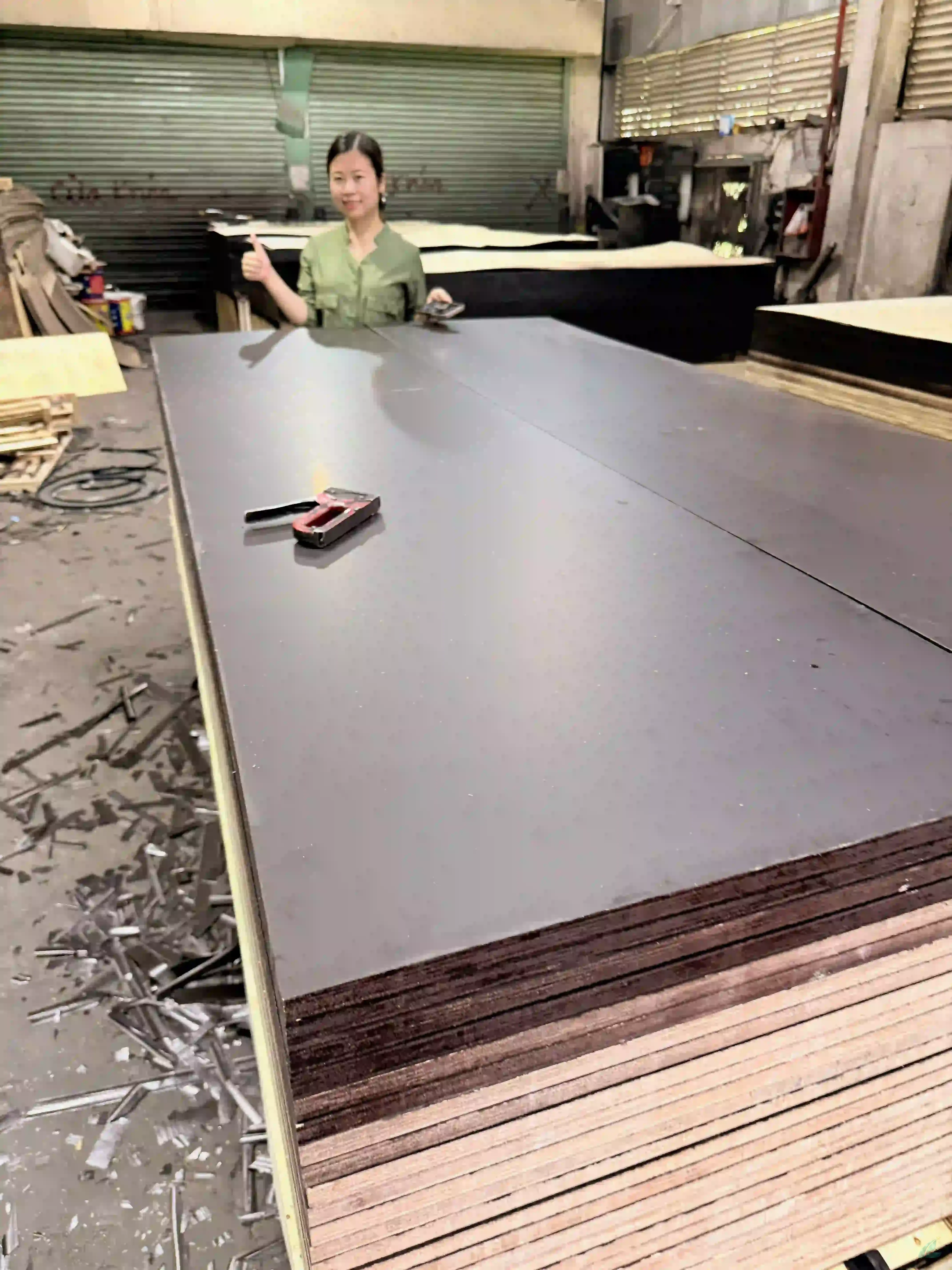
Two buyers walk into the same plywood market. One needs concrete formwork for a 20-storey tower in Dubai. The other needs cabinet substrate for a furniture factory in India. Both ask for “plywood from Vietnam.” Both get very different answers — and very different prices.
Film faced plywood and commercial plywood share the same basic structure: layers of veneer glued under heat and pressure. The surface treatment, glue system, and core construction diverge entirely after that. Those differences translate directly into a price gap of $60–$180 per CBM and a completely different cost calculation for the buyer.
This comparison breaks down exactly what drives the price difference between film faced vs commercial plywood, when each type makes financial sense, and what the 2026 FOB price ranges look like from Vietnam.
Get a free quote for film faced or commercial plywood from HCPLY
📊 TL;DR — Film Faced vs Commercial Plywood at a Glance
| Specification | Film Faced Plywood | Commercial Plywood |
|---|---|---|
| Face surface | Phenolic film (135–220 gsm) | Wood veneer (bintangor, okoume, birch, etc.) |
| Glue type | Phenolic WBP | Melamine MR |
| Boiling test | 72 hours | 12 hours |
| Core construction | Eucalyptus or acacia (stitched or edge-jointed) | Acacia or styrax (variable construction) |
| Emission standard | N/A (exterior use) | E0 / E1 / E2 depending on grade |
| Sanded surface | No — film is the finish | Yes (furniture grade) / No (packing grade) |
| Reusability | 15–20 pours (formwork) | Single-use or multi-year (furniture) |
| FOB Vietnam price | $260–$380 per CBM | $200–$400 per CBM |
| Primary use | Concrete formwork, truck flooring, scaffolding | Furniture, cabinetry, packaging, interior fitout |
Key Insight: Commercial plywood has a wider price range than film faced plywood because veneer species, emission grade, and core construction vary enormously across the commercial segment. A birch E0 cabinet panel costs more than standard film faced plywood.
🎯 What Is Film Faced Plywood?
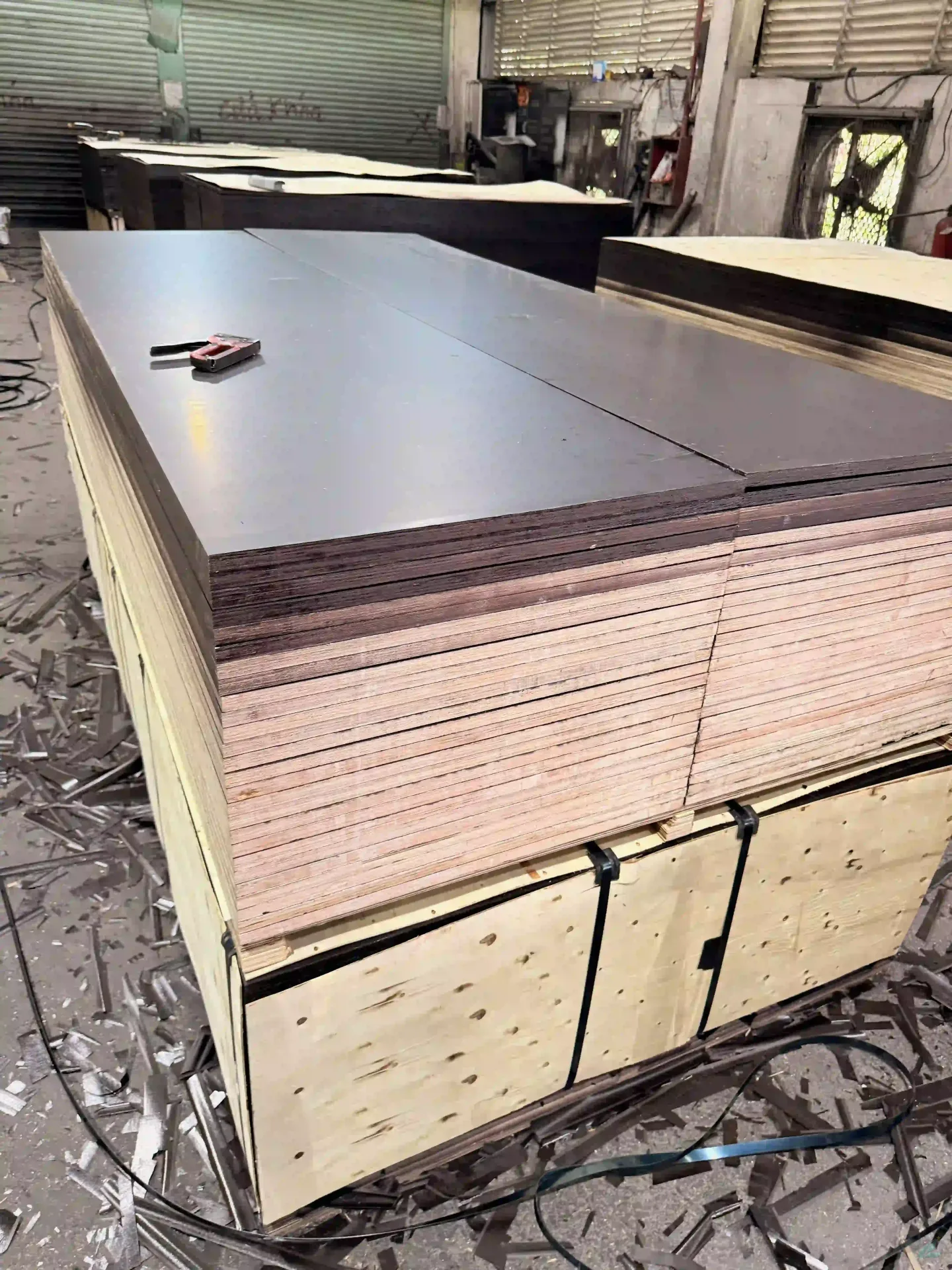
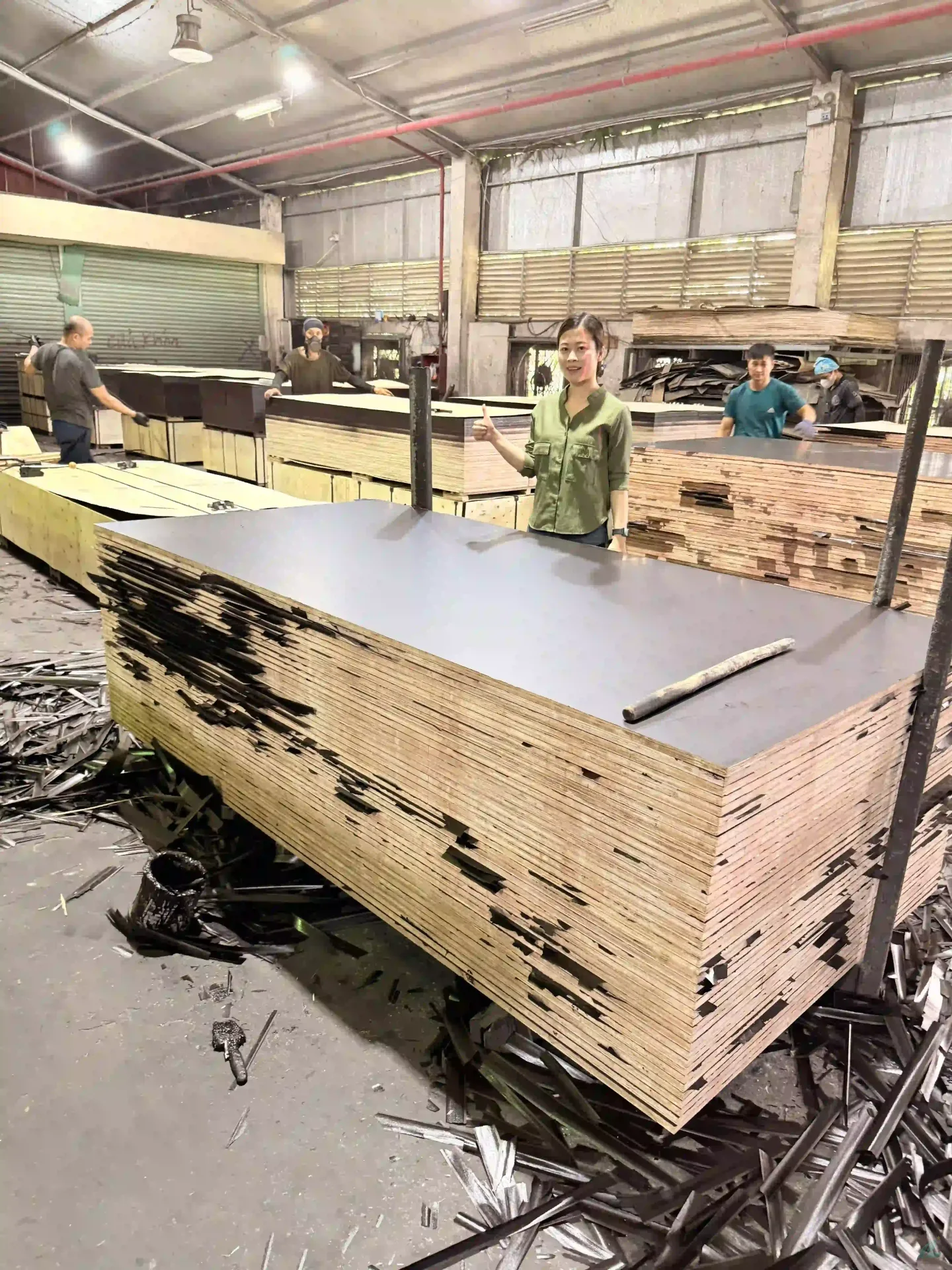
Film faced plywood is a construction-grade panel with a smooth phenolic film bonded to both surfaces under heat and pressure. The film — typically 120–220 gsm, either black or brown — creates a hard, waterproof shell that resists concrete, chemicals, and abrasion.
The core is eucalyptus or acacia veneer assembled with phenolic WBP adhesive throughout all layers. This glue system passes a 72-hour boiling test, meaning the panel holds together under sustained moisture exposure. That single specification eliminates film faced plywood from furniture use (overkill) and makes it mandatory for concrete formwork (required).
Standard thicknesses for formwork are 12mm, 15mm, 18mm, and 21mm. Sheet sizes are 1220×2440mm (4×8ft) or 1250×2500mm for European metric markets.
2026 FOB price range from Vietnam: $260–$380 per CBM (HCPLY production data, Q1 2026; subject to change — contact for current pricing). At 18mm thickness with acacia core, a standard 40HC container holds approximately 16 pallets, or roughly 47.5 CBM.
💎 What Is Commercial Plywood?
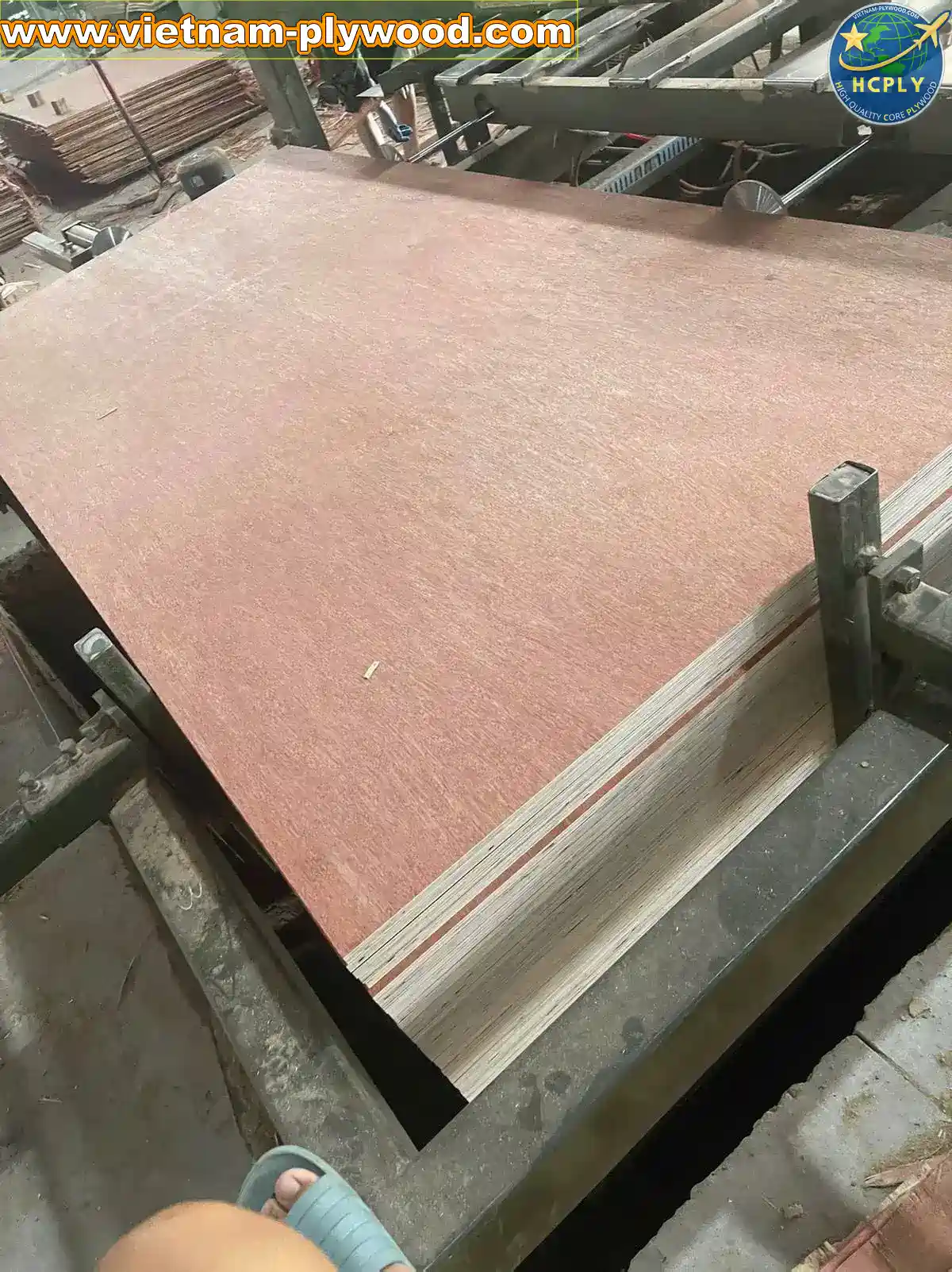
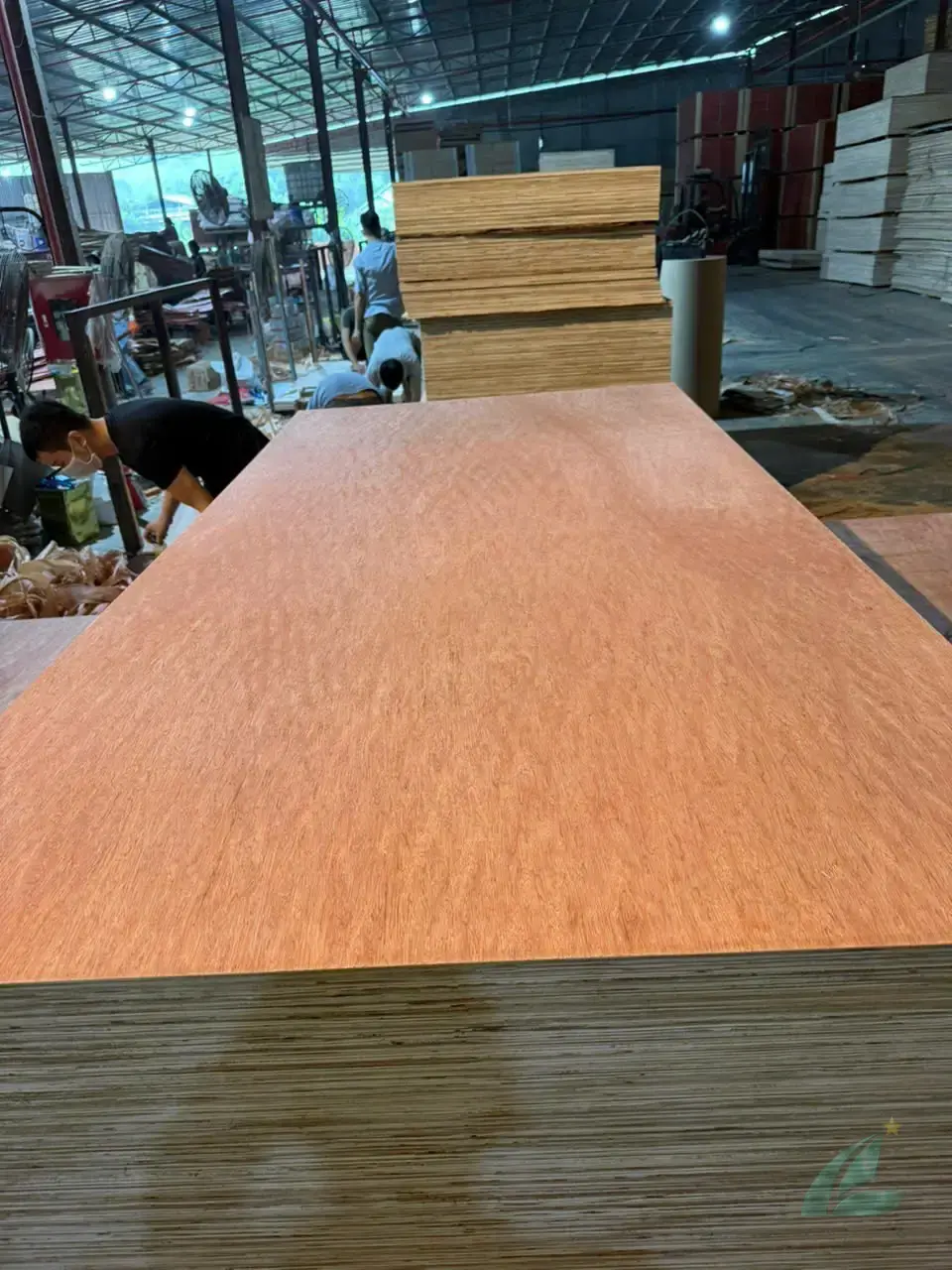
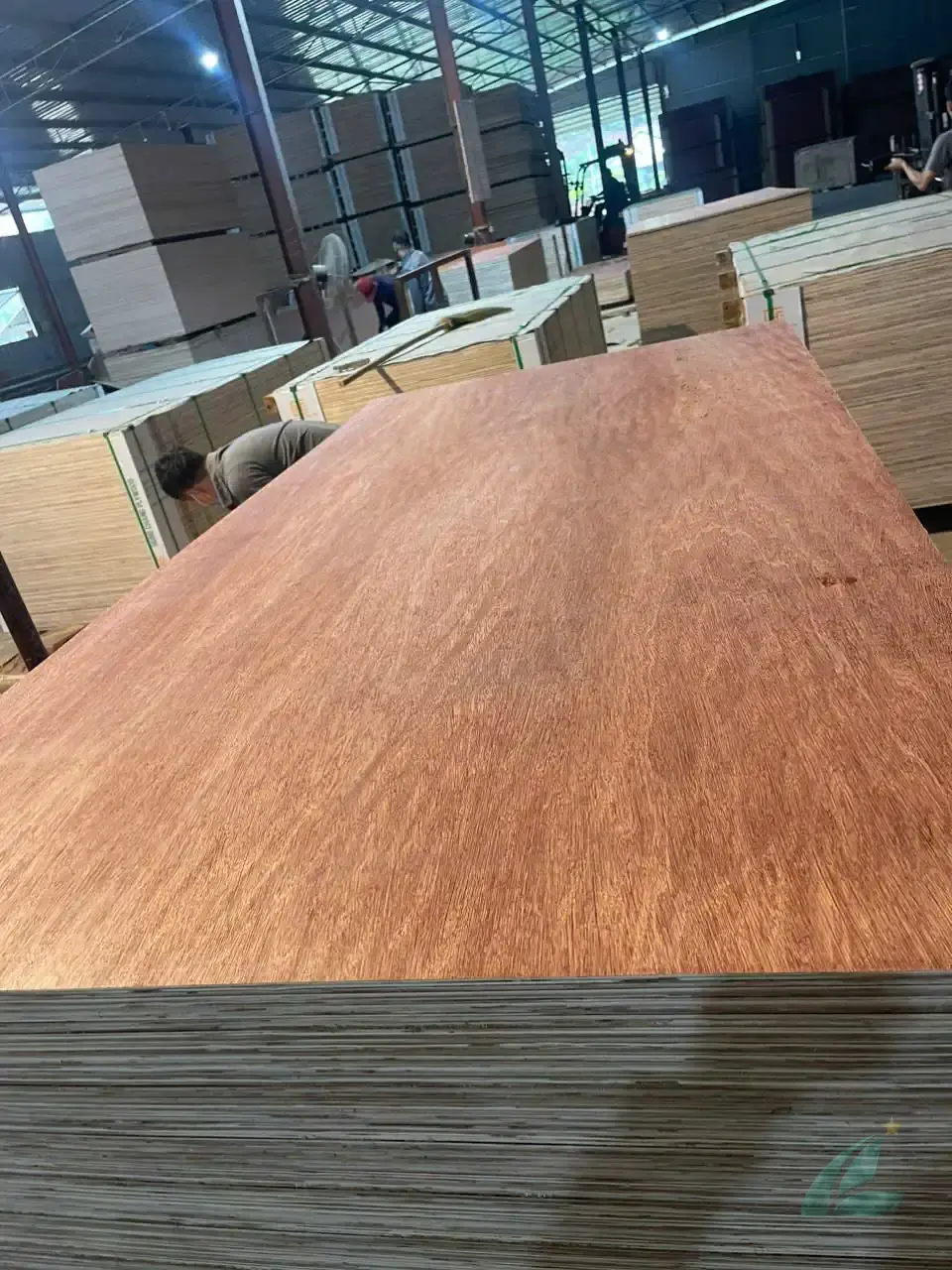
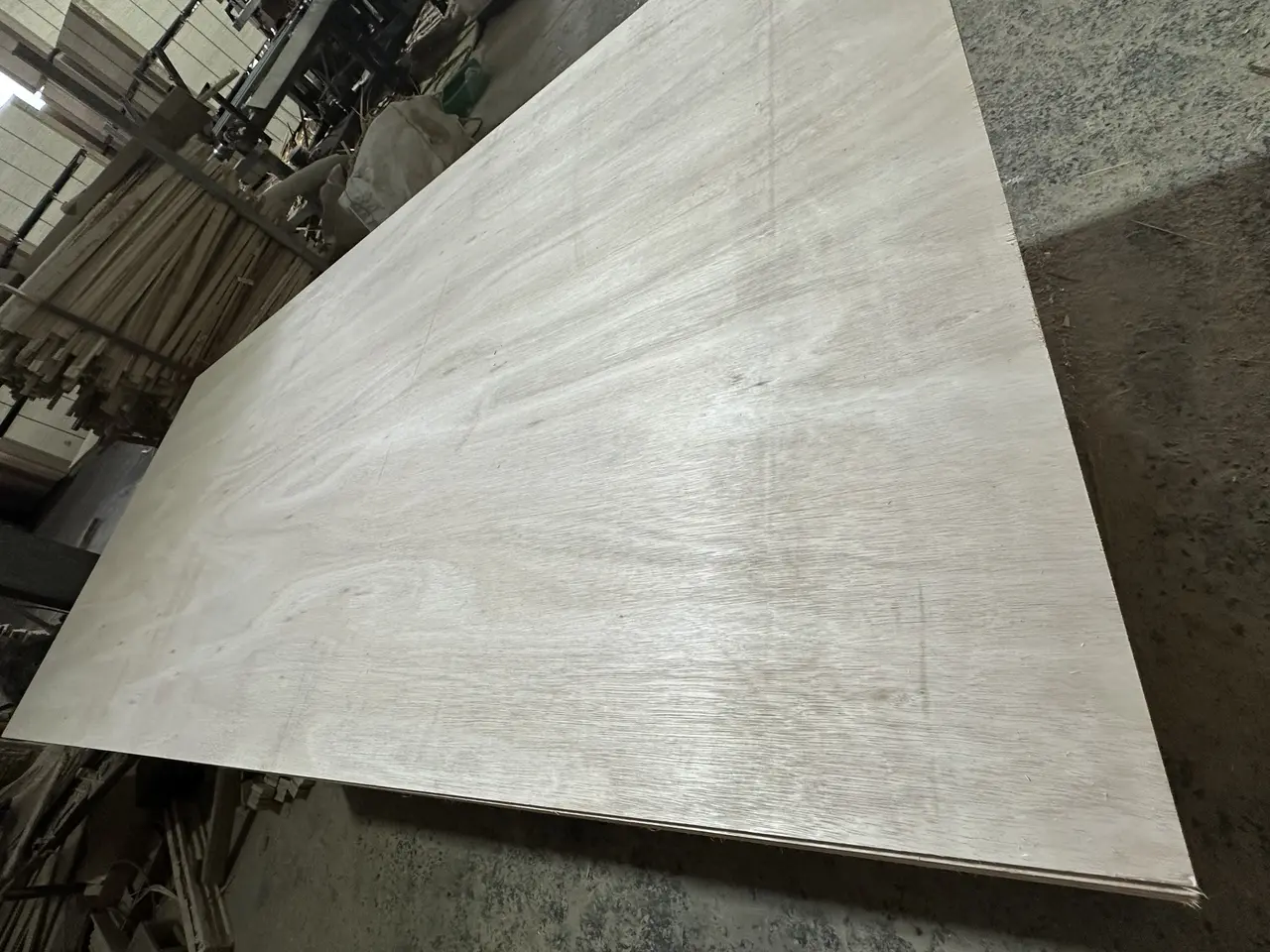
Commercial plywood covers a wide category: any panel with a decorative or utility wood veneer face, bonded with melamine MR adhesive, intended for interior or light-duty applications.
The face veneer determines the product name and much of the price. Bintangor face is the entry point — the lowest-cost, widest-distributed commercial panel in Asia. Okoume face steps up for European furniture aesthetics. Birch face is the premium tier, with D/E/F grading (not A/B/C — Vietnam uses European birch grading) used for cabinet boxes and kitchen furniture.
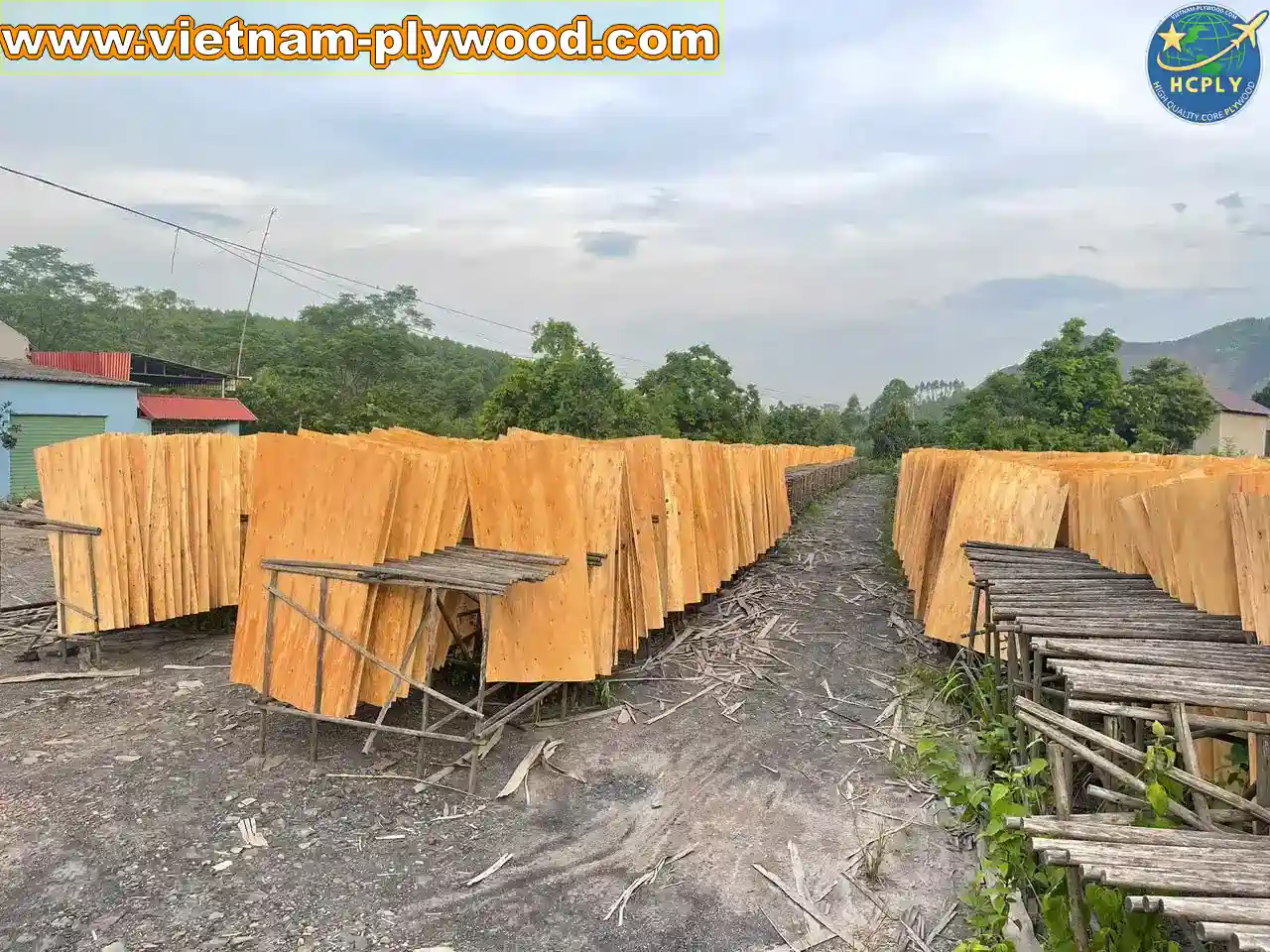
Core species in commercial plywood from Vietnam are acacia (~580 kg/m³), eucalyptus (650–750 kg/m³), or styrax (480–500 kg/m³). Styrax is lightweight and bright, making it the preferred core for furniture-grade panels destined for US, European, and Korean markets.
Emission grade matters in commercial plywood in a way it does not in film faced: E0 (≤0.5 mg/L formaldehyde) is mandatory for US CARB P2 and EU/Japan interior markets. E1 is standard Europe. E2 is budget-grade for packaging or non-interior use.
2026 FOB price range from Vietnam: $200–$400 per CBM — the wide range reflects the spectrum from packing-grade bintangor C/D (cheapest) to E0 birch-faced furniture panels (most expensive in the commercial segment). For standard commercial bintangor MR E1 panels, expect $200–$250/CBM FOB Hai Phong (HCPLY production data, 2026).
📦 Why Film Faced Plywood Costs More — The 4 Cost Drivers
The price premium of film faced plywood over basic commercial plywood comes from four specific inputs.
1. Phenolic film overlay
The film itself — minimum 135 gsm for budget film faced, 220 gsm for premium AICA film — adds direct material cost. Budget Chinese film is cheaper but degrades faster, reducing reuse cycles from 15–20 to 4–8 pours (HCPLY production data, 2026). Premium AICA film on HCPLY’s construction-grade panels maintains surface integrity across 15+ concrete pours.
- WBP phenolic glue system
Phenolic adhesive costs more per kilogram than melamine MR glue and requires longer hot-press cycles at higher temperatures. Every layer of veneer in film faced plywood uses phenolic — not just the surface. This is the structural reason film faced plywood withstands wet concrete where commercial plywood delaminated.
- Core species and construction grade
Film faced plywood at HCPLY uses eucalyptus or acacia core — not styrax. Eucalyptus (650–750 kg/m³) provides the density needed for load-bearing formwork. The core assembly is edge-jointed or stitched, not loose-laid. This construction eliminates internal voids that would cause surface buckling under concrete pressure.
- Edge sealing and handling tolerance
Construction-grade panels require sealed edges to prevent moisture ingress from the cut sides during formwork use. This finishing step adds cost but extends service life from a few pours to the full 15–20 cycle.
⚠️ Important: “Film faced plywood” sold at prices below $220/CBM FOB is typically budget-grade with Chinese film, loose-laid core, and limited reuse potential. At that price point, the economics of reusability break down. Always request the film weight (gsm) and expected reuse cycles from the supplier.
🔧 Choosing the Right Type by Application
The choice between film faced and commercial plywood is decided by application, not price. Buying the cheaper type for the wrong use case costs more in total.
📌 When Film Faced Plywood Is the Right Choice
Concrete formwork is the defining application. Any construction project casting concrete — walls, columns, slabs, beams — requires WBP-grade plywood that can be stripped cleanly after the pour and reused. Film faced plywood delivers 15–20 reuse cycles with AICA film; budget alternatives deliver 4–8.
Truck and trailer flooring uses anti-slip film faced plywood (220 gsm wire mesh surface) for the same reason: waterproof, hard-wearing, structurally stable under load.
Outdoor scaffolding boards and platform decking in humid environments (Middle East construction sites, Southeast Asian monsoon conditions) also require phenolic WBP panels.
“From our Korean construction clients, we consistently see that the total cost per pour with premium film faced plywood — even at $350/CBM — is lower than with budget panels at $240/CBM, once you factor in replacement frequency and labor for panel changes.” — Lucy, International Sales Manager, HCPLY
📌 When Commercial Plywood Is the Right Choice
Furniture production drives the majority of Vietnam’s commercial plywood export. Cabinet boxes, drawer sides, shelving panels, bed frames — all use commercial grade panels with E0 or E1 emission ratings, sanded faces, and consistent thickness calibration.
Interior construction: wall linings, partition systems, flooring underlayment, and decorative panels use commercial-grade plywood because the application does not require waterproof glue — only consistent dimensions and clean face veneer.
Packaging and crating — the bottom of the commercial plywood price ladder — uses bintangor C/D or mixed face with acacia core and E2 emission. At $200–$220/CBM, this is the most cost-sensitive segment.
Interestingly, some Southeast Asian buyers substitute bintangor-faced commercial plywood in light construction to reduce cost and avoid the slipperiness of film-faced panels in humid conditions. This works for protected applications; it fails in direct concrete contact or sustained moisture exposure.
View HCPLY’s full film faced plywood specifications
💰 Price Comparison: What You Actually Pay Per Project
The FOB price comparison between film faced and commercial plywood is only the starting point. The cost-per-use analysis matters more for construction buyers.
| Scenario | Film Faced (Premium) | Film Faced (Budget) | Commercial Bintangor |
|---|---|---|---|
| FOB price/CBM | $340 | $230 | $210 |
| Reuse cycles (formwork) | 15–20 | 4–8 | Not suitable |
| Cost per pour (amortized) | $17–$23/CBM | $29–$58/CBM | N/A |
| Application fit | Construction | Light construction | Furniture / packaging |
For a furniture manufacturer buying E0 birch-faced commercial panels, the comparison shifts entirely: birch E0 from Vietnam runs $300–$400/CBM, overlapping with film faced plywood pricing. In that segment, the buyer is paying for different value — surface quality and emission compliance, not reusability.
Understanding this split is why the plywood quotation guide recommends specifying application before requesting a price. The same “plywood from Vietnam” request yields quotes that are technically incomparable.
🏭 How Vietnam Factory Type Affects What You Receive
The factory segment that produces your plywood matters as much as the specification on the purchase order.
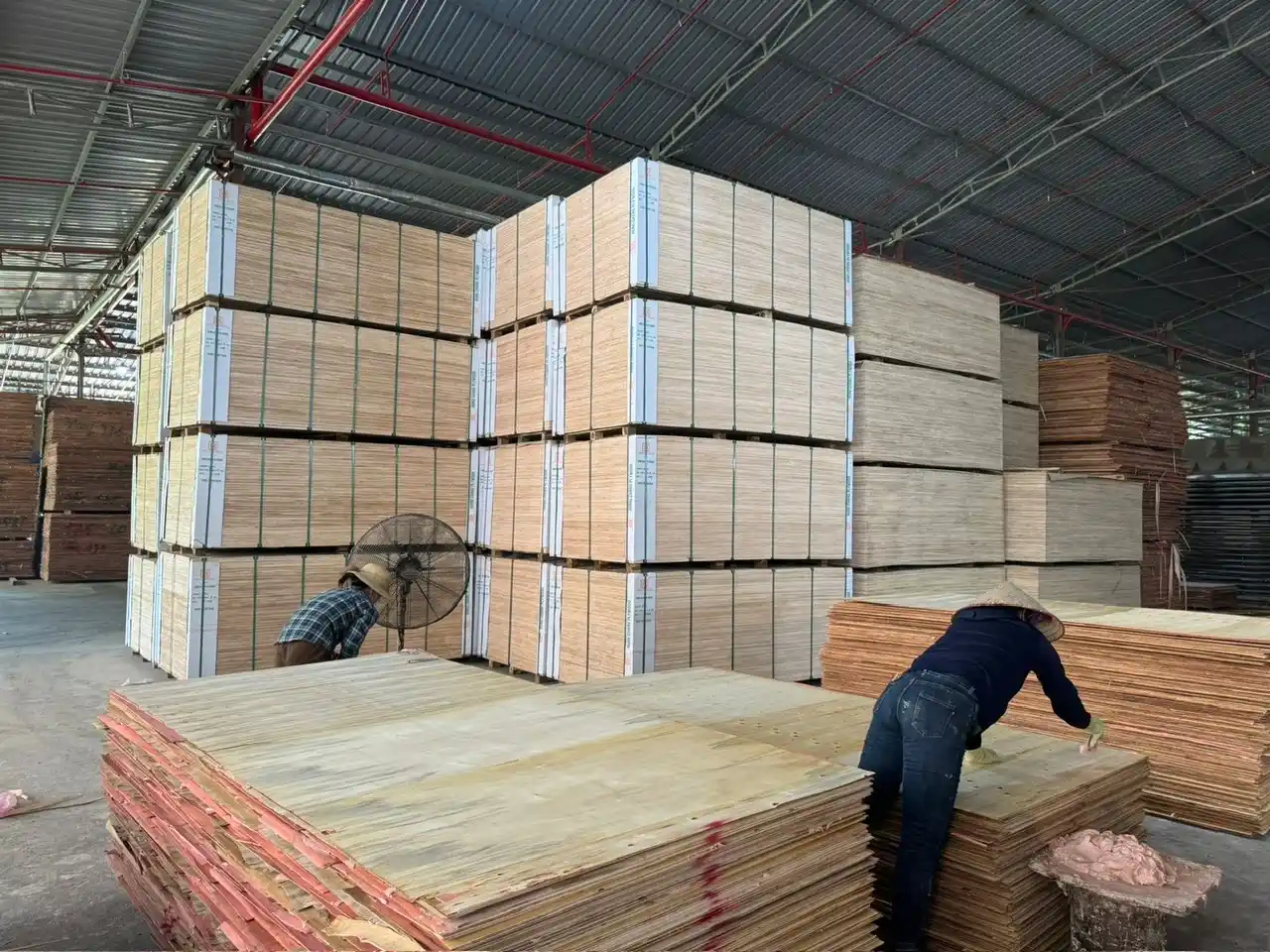
Vietnam’s construction-grade film faced plywood comes from factories purpose-built for that segment: eucalyptus or acacia Grade A core, phenolic pressing lines, edge-sealing equipment, and AICA film procurement relationships. These factories do not produce furniture panels — the machinery, skills, and input materials are different.
Commercial plywood for furniture export comes from a different factory type: full-stitched styrax or eucalyptus core, wide-belt sanding lines, E0 emission testing, and FSC/CARB chain-of-custody certification.
For deeper background on how factory segmentation affects pricing, see Vietnam plywood factory types and industry segmentation.
🌏 Export Market Preferences
Buyer preferences by market break down clearly across the two categories.
Film faced plywood markets: Southeast Asia (construction boom in Vietnam, Thailand, Indonesia, Malaysia), Middle East (UAE, Saudi Arabia, Kuwait — high-rise construction), Africa (infrastructure projects), South Korea (strict construction standards, AICA film preferred), and Australia (AS/NZS structural compliance).
Commercial plywood markets: India (largest importer of Vietnamese commercial plywood — bintangor and gurjan face for furniture and cabinetry), Europe (E0/E1 birch and okoume face for furniture manufacturing), US (CARB P2 compliance required — E0 birch or EV face panels), and domestic Vietnam furniture factories supplying global brands.
The plywood glue types and emission standards guide covers the MR vs WBP distinction in depth, including why emission standards apply to commercial but not construction applications.
📐 Specifications That Determine Final Price
When requesting a quote, the specifications below are the primary price levers for each type.
Film faced plywood price levers:
- Film weight: 135 gsm (budget) vs 220 gsm AICA (premium) — price difference ~$30–$50/CBM
- Core species: acacia ($260–$300/CBM) vs eucalyptus ($310–$380/CBM) — eucalyptus is heavier and stronger
- Thickness: 12mm, 15mm, 18mm, 21mm — affects sheets per container and per-sheet economics
- Film color: black (phenolic) or brown (melamine film) — brown film is typically $10–$20/CBM lower
Commercial plywood price levers:
- Face veneer species: bintangor (lowest) → okoume/EV → birch (highest)
- Emission standard: E2 → E1 → E0/CARB P2 (adds $20–$60/CBM per tier)
- Core construction: loose-laid (cheapest) → edge-jointed → full stitched (highest quality)
- Sanding: unsanded (packing grade) vs sanded (furniture grade)
For a full breakdown of specification-to-price relationships, the plywood core types guide covers acacia vs eucalyptus vs styrax density and cost comparisons.
✅ Conclusion — Match Type to Application, Then Optimize Cost
Film faced plywood costs more per CBM than basic commercial plywood for specific, justified reasons: phenolic film, WBP glue, and construction-grade core. That premium delivers 15–20 reuse cycles for formwork, making the per-pour cost lower than budget alternatives.
Commercial plywood spans a wider price range precisely because it covers a wider application spectrum — from $200/CBM packing grade to $400/CBM E0 birch furniture panels. The right commercial plywood for your project depends on face species, emission standard, and core construction.
The decision framework: define your application first, then match the specification, then compare prices within that specification. Comparing film faced to commercial plywood on FOB price alone misses the point.
HCPLY supplies both categories from dedicated production facilities in Northern Vietnam. Mixed-container loading is available for buyers who need both film faced and commercial grades in one shipment.
Get a free quote with specifications — contact HCPLY today
For buyers new to Vietnam plywood sourcing, the complete guide to buying plywood from Vietnam covers the full procurement process from specification to delivery.
Related reading:
- For current pricing, see film-faced plywood price guide.
- Compare with average price of Vietnam commercial plywood.
- See the updated FOB price rates for all product types.
- Browse film-faced plywood top suppliers and applications.
Disclosure: This article is published by HCPLY, a Vietnam-based plywood manufacturer and export operator. While we aim to provide objective industry guidance, readers should consider our perspective as a market participant when evaluating recommendations.