
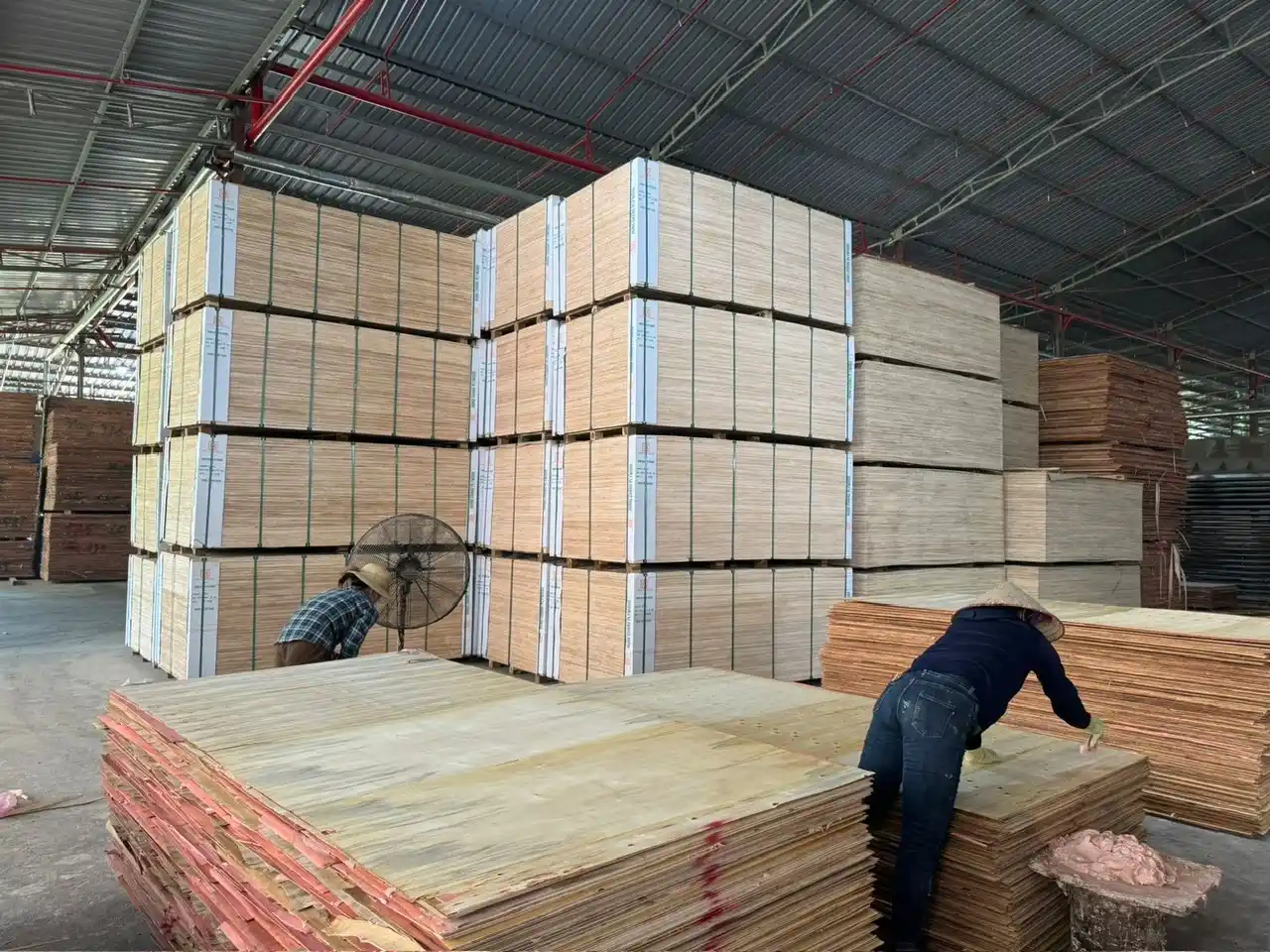
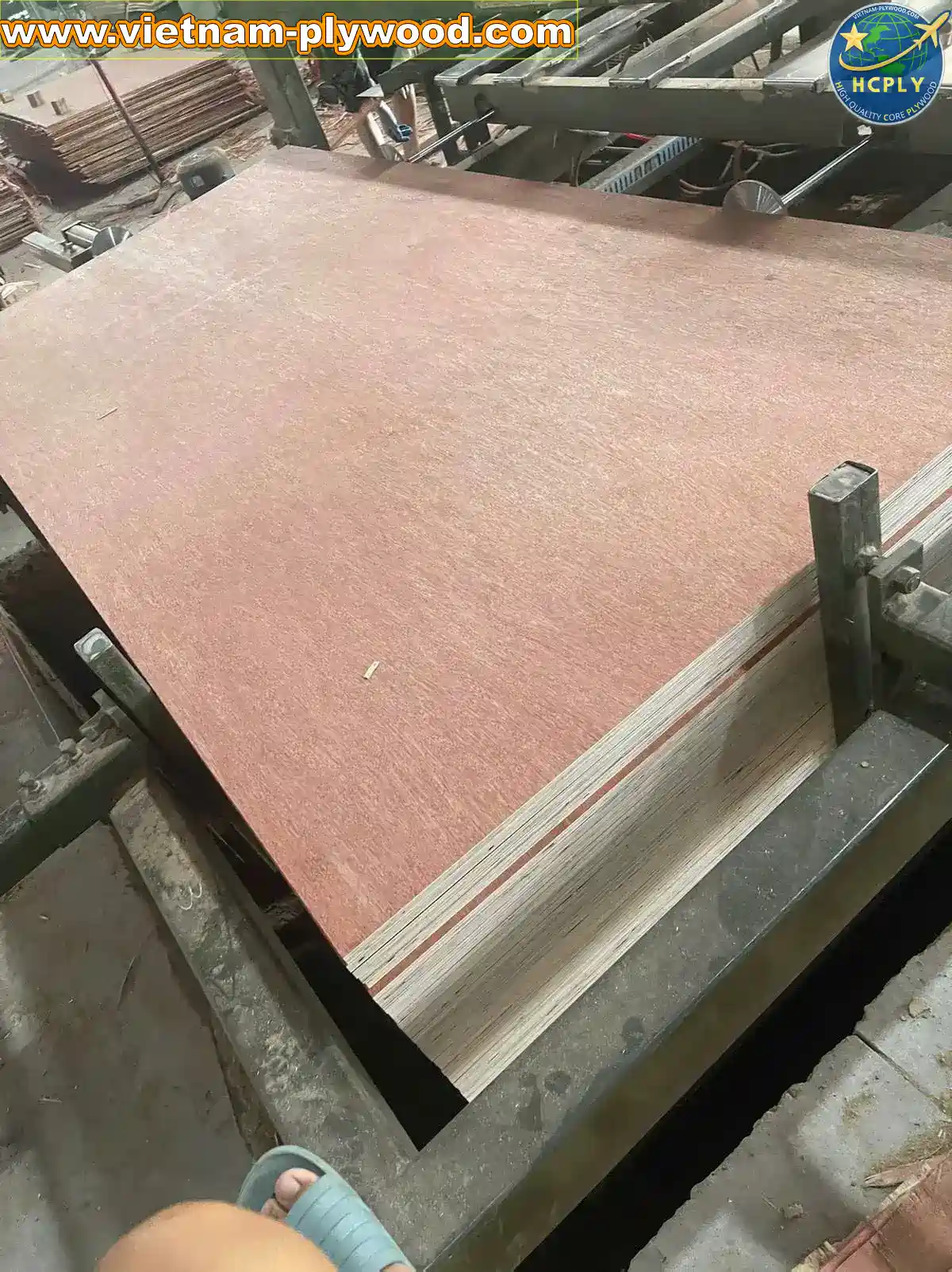
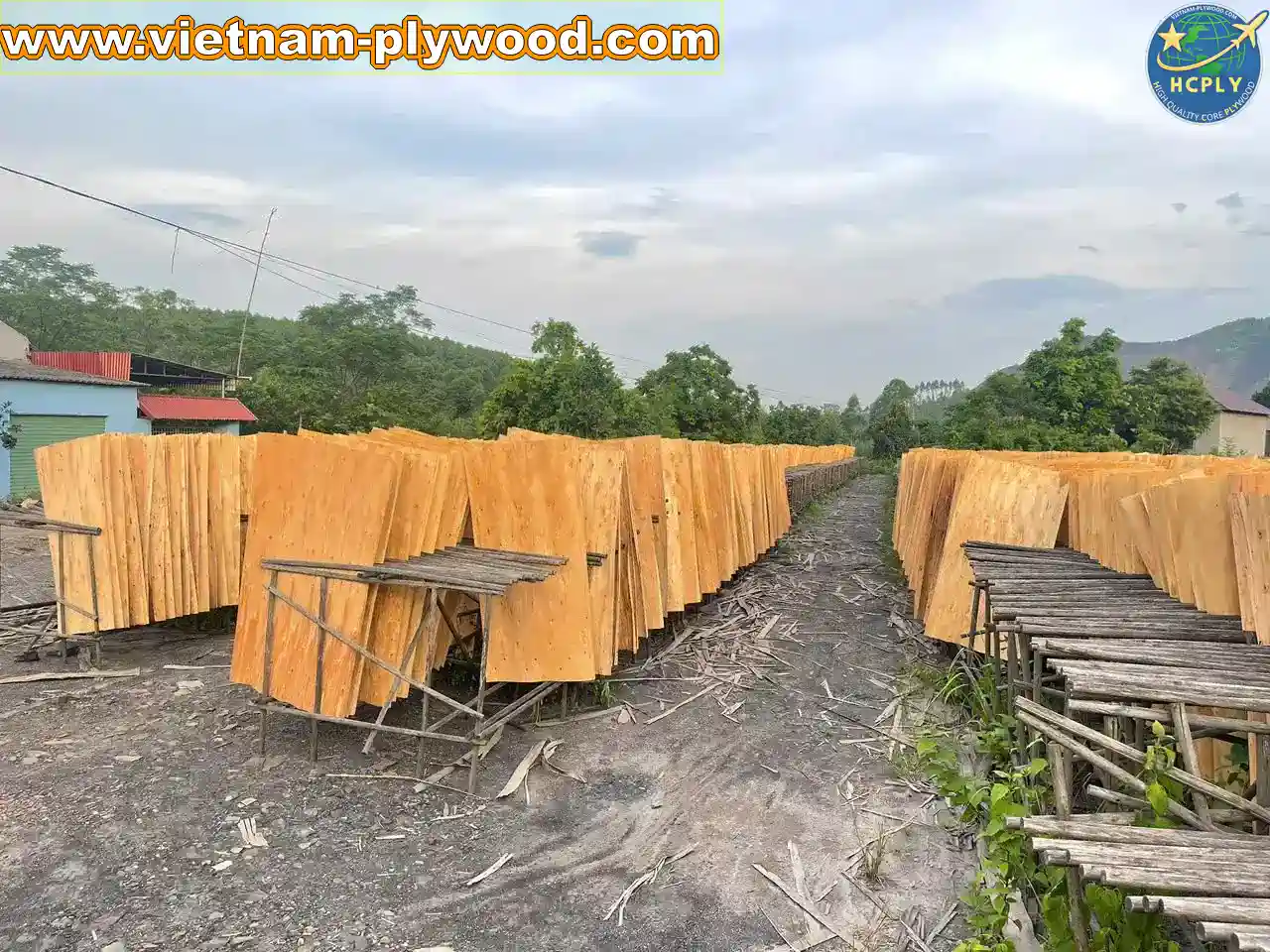

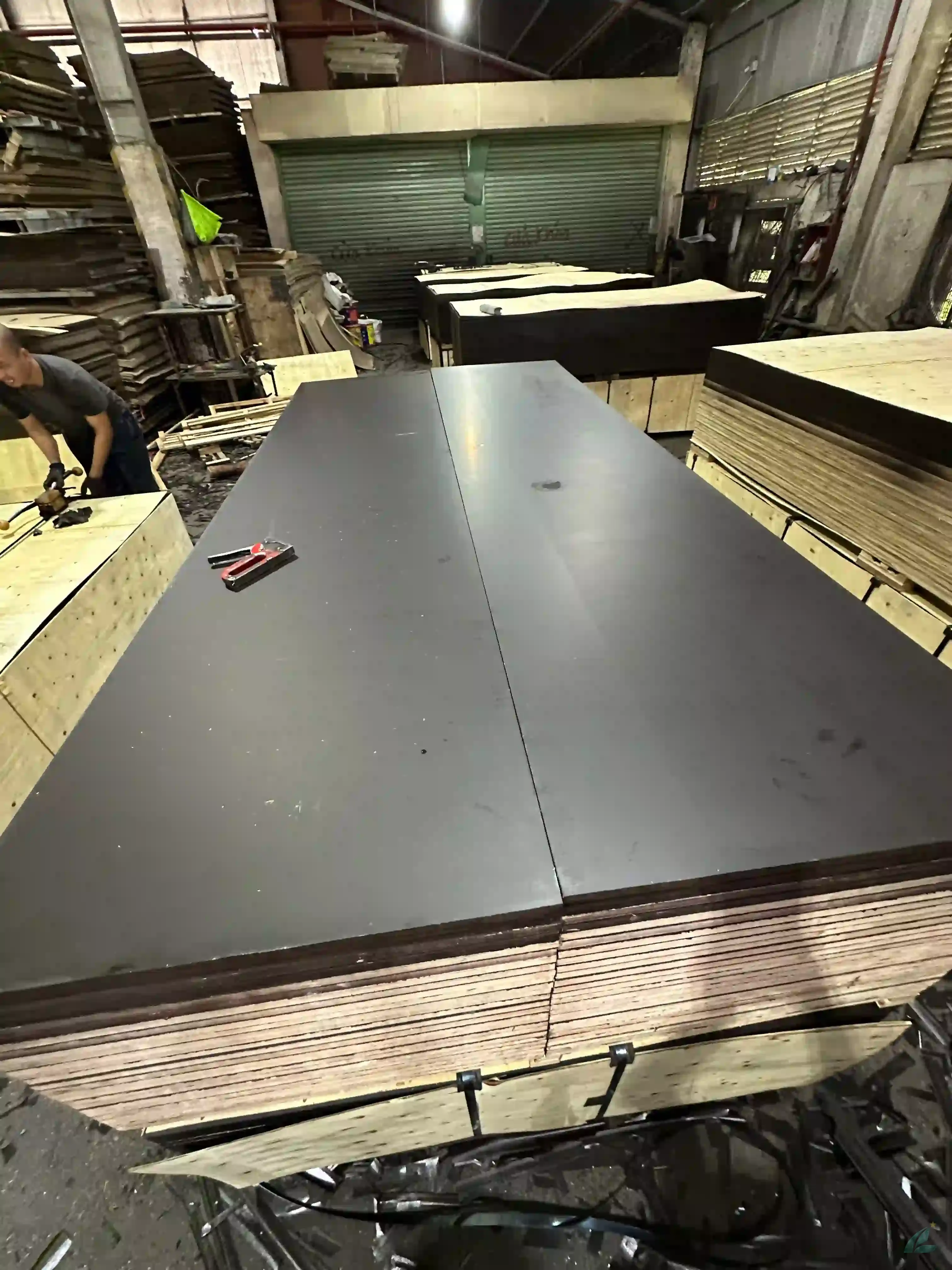
Film faced plywood from Vietnam ranged from $380 to $520 per m³ FOB Hai Phong in our Q1 2026 benchmarks, depending on thickness, film, core species, glue system and certification. That $140/m³ spread is not a negotiating margin. It reflects real cost differences between a budget 12 mm acacia-core sheet and a certified 18 mm eucalyptus-core panel with premium film and a phenolic glue line.
This guide explains what drives the price, how to compare offers on cost per pour rather than cost per cubic metre, and where buyers overpay, or underpay and receive the wrong grade. It was updated in October 2026 with the current EU and US rules for formwork panels.
Film Faced Plywood Price Ranges (FOB Benchmarks)
The table shows factory-direct FOB Hai Phong benchmarks published in Q1 2026. They are reference points, not offers: actual quotes depend on volume, specification mix and raw material prices at the time of enquiry.
| Thickness | Core | Film | Glue | Est. FOB/m³ |
|---|---|---|---|---|
| 12mm | Acacia | Standard film | Melamine MR | $380–$420 |
| 15mm | Acacia | Standard film | Melamine MR | $390–$430 |
| 18mm | Acacia | Standard film | Melamine MR | $400–$440 |
| 12mm | Eucalyptus | Premium film | Phenolic WBP | $440–$480 |
| 15mm | Eucalyptus | Premium film | Phenolic WBP | $455–$490 |
| 18mm | Eucalyptus | Premium film | Phenolic WBP | $480–$520 |
| 21mm | Eucalyptus | Premium film | Phenolic WBP | $490–$530 |
⚠️ Important: Prices above are FOB Hai Phong and exclude freight, insurance, port handling and import duties. Add $60–$120/m³ for CIF depending on destination port. HCPLY quotes FOB Hai Phong, CFR or CIF.
“The price difference between acacia-core and eucalyptus-core film faced plywood is real and justified,” says Lucy, International Sales Manager at HCPLY. “Eucalyptus core runs about 650 kg/m³, against about 580 for acacia. The heavier core means fewer cubic metres per container, but a harder panel for demanding formwork.”
Four Factors That Drive the Price
Factor 1: Core Species and Grade
In Vietnam, film faced and anti-slip plywood is made only on acacia (~580 kg/m³) or eucalyptus (~650 kg/m³, 650–750 in practice) cores. Styrax is a furniture core and is not used for film faced grades.
“The most common mistake new buyers make is comparing price without checking the core species. Different cores produce very different panels at very different price points.” — Lucy, International Sales Manager, HCPLY
Acacia core is lighter and cheaper and suits standard formwork. Eucalyptus is denser and harder and is preferred for high-reuse work by Korean, Japanese and European buyers. Core grade matters as much as species: premium mills use Grade A core, often stitched, while budget mills use acacia AB core laid without stitching.
The core decision is not only about price. A buyer who needs a high reuse count on a high-rise project should not save $40/m³ by switching to a budget core. The lower reuse count erases the saving within a few pours.
Factor 2: Film Weight and Brand
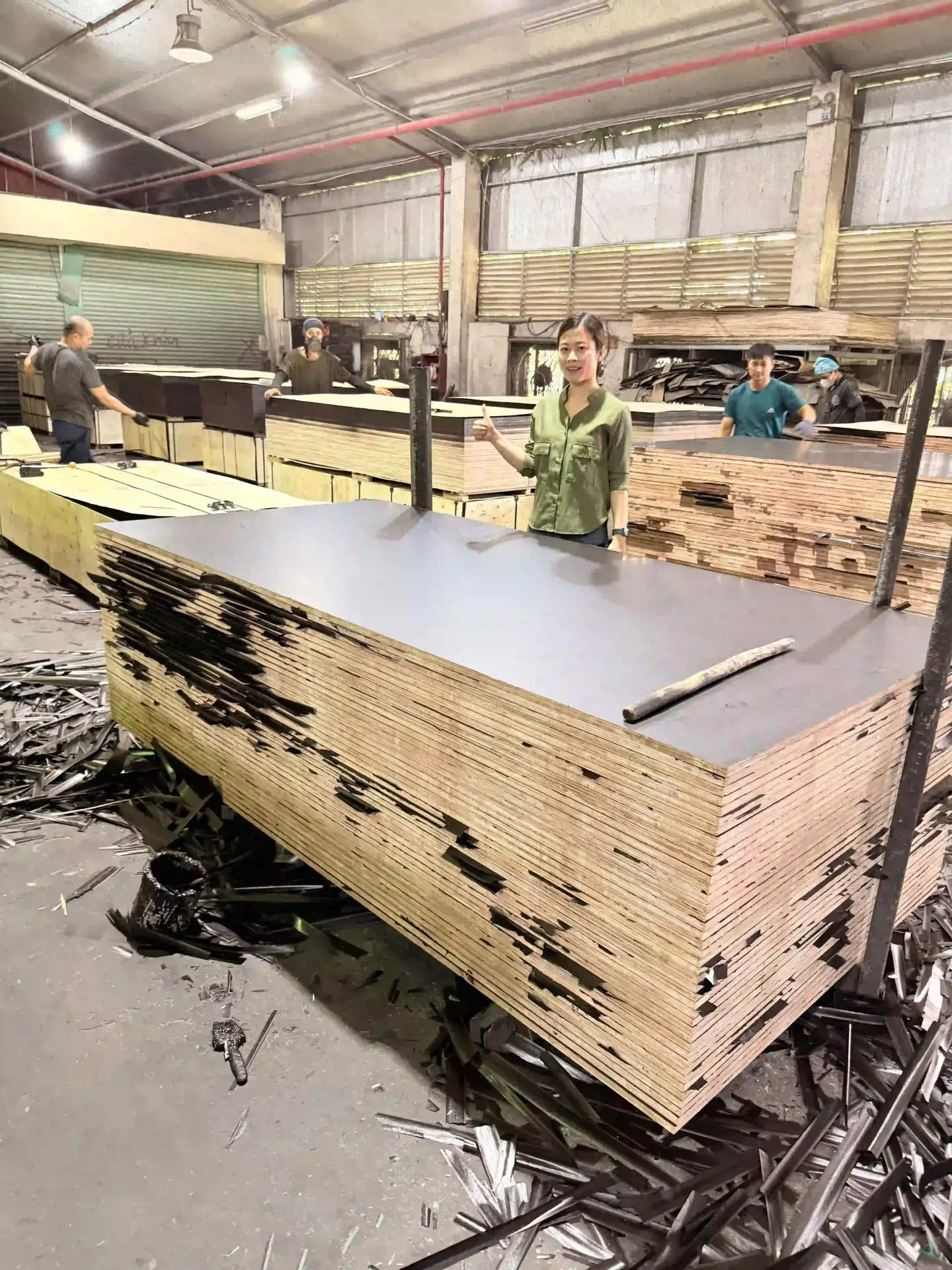
Film weight is measured in grams per square metre (g/m²). Standard film for Vietnamese formwork panels is about 120–135 g/m²; premium film starts at 135 g/m². The heavier 220 g/m² films are used for anti-slip panels, not for standard film faced plywood. Film brand (for example AICA or Dynea), weight and colour are agreed per order.
Better film improves surface smoothness and release, but it is only one part of the result. Reuse life depends on the whole build: core grade, pressing, film and glue.
For the brand question in detail, see Dynea film vs AICA film plywood.
Factor 3: Glue System, Melamine vs Phenolic
The film is not the only barrier against water. The glue line inside the core decides how the panel copes with moisture from fresh concrete and repeated cycles.
- Melamine-bonded film faced plywood is widely used for formwork. A well-made premium panel reaches about 12–15 pours. Its exterior bond is built to pass about a 12-hour boil test.
- Phenolic (WBP) bonding reaches up to about 25 pours on a premium build and is the system traditionally tested with a 72-hour boil test.
- The standard E0 interior glue used for furniture panels survives roughly a 6-hour boil and is not a formwork glue.
💡 Tip: “Phenolic film” describes the surface, not the glue line inside the panel. Specify both: the film weight and brand, and the core glue system with the boil test and its method. Our guide on WBP vs MR glue differences compares the two in detail.
Phenolic WBP glue adds approximately $15–$25/m³ over melamine on equivalent thicknesses.
Factor 4: Certification and Documents
| Requirement | Where it applies | Approx. premium |
|---|---|---|
| CE (EN 13986) with Declaration of Performance | EU construction products | Included in standard export |
| FSC chain of custody | When the buyer or project requires it | +$8–$15/m³ |
| CARB P2 / TSCA Title VI | US interior hardwood plywood; ask if your customer requires it for formwork | +$10–$20/m³ |
| EUDR origin dossier | EU from 30 December 2026 | Supplied with the order |
FSC and EUDR are separate. FSC is a voluntary certification; EUDR is a legal due-diligence duty for the EU importer. There is no official “EUDR certificate”. The mill supplies an origin dossier with plot geolocation (GeoJSON) so the importer can file its due diligence statement.
Container Loading and Cost per Pour
A 40HC carries 15 pallets of eucalyptus-core film faced plywood at 1220×2440 mm, or 16 pallets with acacia core. In volume, a premium film faced load is about 43 m³ with eucalyptus core and about 47 m³ with acacia core. The 28.5 MT payload limit applies before volume is optimised.
This matters for landed cost. If you buy 18 mm eucalyptus-core panels at $500/m³ FOB and freight is $80/m³, your landed cost is $580/m³ before duties. Switching to a budget acacia-core panel at $430/m³ FOB saves $70/m³ upfront. If reuse falls from about 12–15 pours to about 6, the cost per pour rises.
Cost per pour formula:
Cost per reuse = (Panel price + Freight + Handling) ÷ Reuse cyclesFor high-rise or bridge formwork with many cycles, premium specifications usually give the lower cost per pour. For one-off slab work with 3–4 reuses, a budget build is the rational choice.
See the container packing calculation for every core and thickness. HCPLY sends a free packing plan with sheets, pallets, m³ and weight for any specification.
Why Vietnamese Film Faced Prices Are Competitive
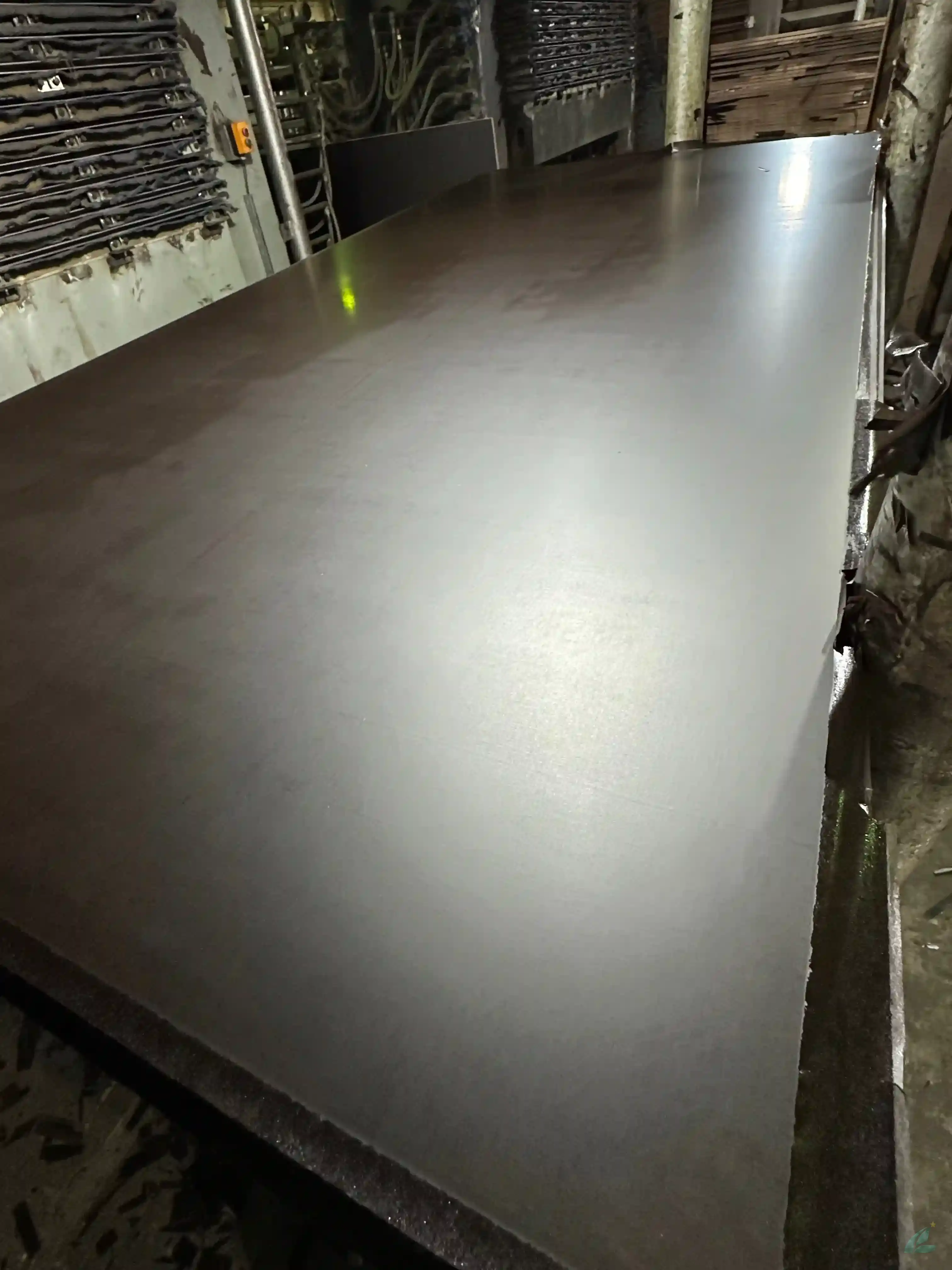
Northern Vietnam produces most of the country’s exported plywood, and its mills buy acacia and eucalyptus core veneer from plantations close by. Short haulage of the bulkiest raw material, skilled labour and mills that specialise in film faced panels keep costs down.
Buying factory-direct also avoids the domestic VAT that a reseller pays when buying from a mill, which otherwise ends up in the export price.
⚠️ Note: Not all Vietnamese film faced plywood is the same product. Budget mills (Segment D) use acacia AB core without stitching, standard film and melamine glue, giving about 6 pours, and sell FOB at $340–$380/m³. Premium mills (Segment C) use Grade A core, film from 135 g/m² and melamine or phenolic glue at $460–$530/m³. The two offers are not the same construction.
For a full breakdown of the segments, see our Vietnam plywood factory types guide.
Standard Specifications for Film Faced Plywood from Vietnam
| Parameter | Standard range | Notes |
|---|---|---|
| Thickness | 12, 15, 18, 21 mm | Production range 3–40 mm |
| Sheet size | 1220×2440 mm (4×8 ft) | 1250×2500 mm for EU metric |
| Film colour | Brown or black | Agreed per order |
| Film weight | ~120–135 g/m² standard | Premium from 135 g/m² |
| Core | Acacia or eucalyptus | Grade A for premium builds |
| Glue | Melamine-reinforced or phenolic WBP | Chosen against reuse target |
| Reuse target | ~6 (budget), ~12–15 (melamine premium), up to ~25 (phenolic premium) | With correct site use |
| Tolerance | ±0.5 mm thickness, ±2 mm length/width | Construction panels |
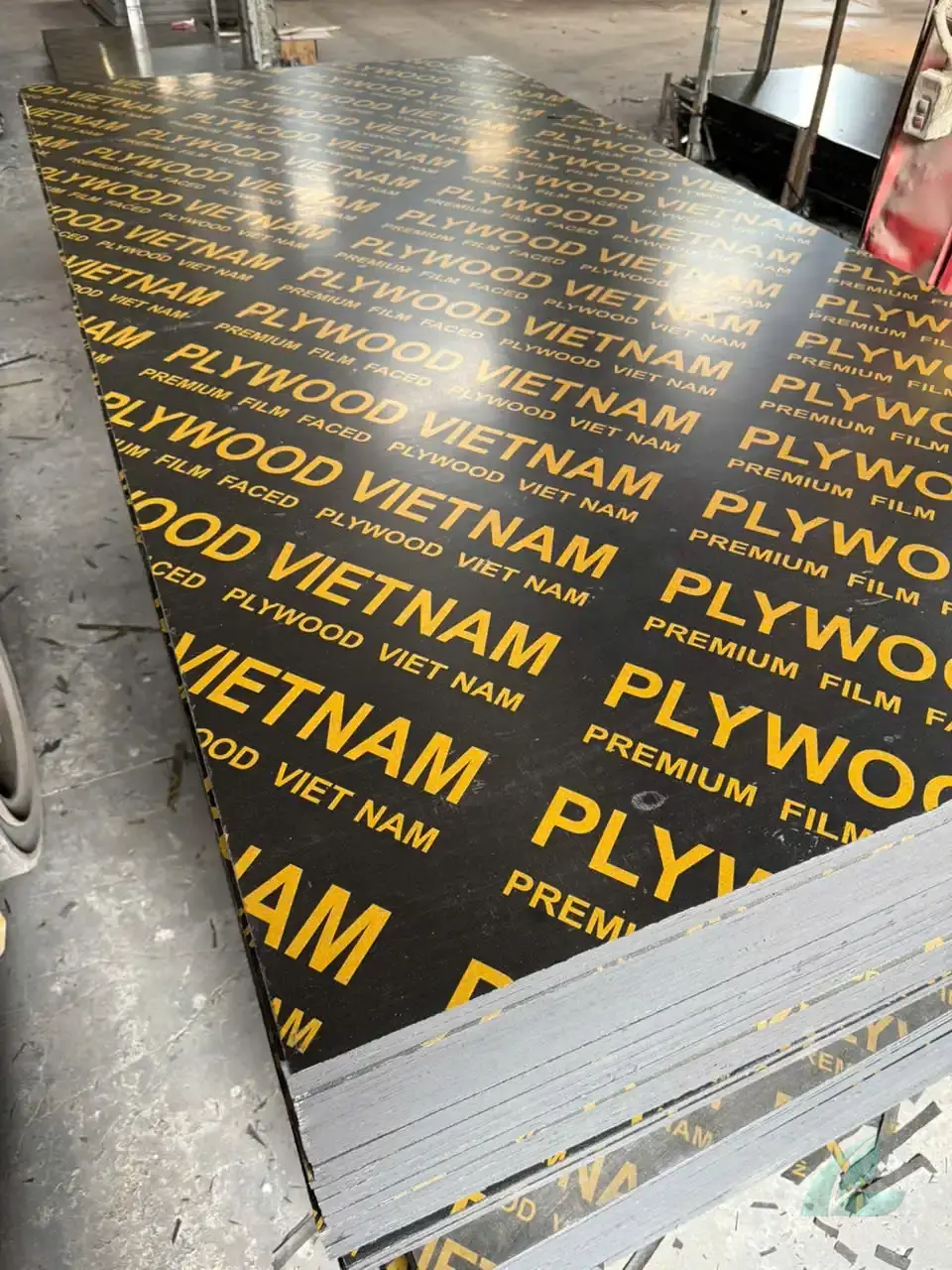
Film faced plywood is not sanded; the film is the finished surface. Edges are sealed with paint to limit moisture entry, which matters for every reuse cycle.

More detail: film faced plywood technical specs and plywood glue types and emission standards.
What Changed for Film Faced Plywood Buyers in 2026
Status as of October 2026:
European Union
- CE and DoP: film faced formwork panels sold as construction products in the EU carry CE marking under EN 13986. Ask for the Declaration of Performance for the exact product.
- EUDR applies from 30 December 2026 to plywood importers that are large or medium companies, and to micro and small importers already covered by EUTR; other micro and small operators follow on 30 June 2027. Plywood falls under ex 4412. Vietnam is classified low risk (Implementing Regulation (EU) 2025/1093), which allows simplified due diligence when every commodity in the product comes from low-risk countries. The dossier covers core, face and back veneers. See EUDR due diligence for plywood importers.
United States
- The 2026 AD/CVD case on hardwood and decorative plywood from Vietnam (A-552-851 / C-552-852) reached final determinations on 21 July 2026, with the ITC injury vote on 9 September 2026. Phenolic film-faced plyform and structural PS 1/PS 2 plywood are listed outside its scope. Melamine-bonded panels need a separate scope check with your customs broker. Status: US anti-dumping plywood update.
All markets
- ISPM 15: plywood is processed wood and is outside ISPM 15, but solid-wood pallets or battens used to pack it must be treated and marked.
RFQ Red Flags to Clear Before Pricing
These contradictions in an enquiry lead to quotes that cannot be compared. Clear them first:
- A reuse guarantee with no site conditions (release oil, edge sealing, handling, storage)
- Premium phenolic glue combined with an AB-grade or loose-laid core
- A boil-test duration with no test method
- An emission class (E0/E1/E2) written in the glue field
- A request for “all certificates” without naming the market or product
Getting an Accurate Film Faced Plywood Price
A price enquiry without a specification is not useful. For an accurate FOB quote, provide:
- Application: slab, wall, column, high-rise or bridge formwork, and the reuse you need
- Thickness: 12, 15, 18 or 21 mm, or a mix
- Sheet size: 1220×2440 mm or 1250×2500 mm
- Film: weight, brand preference and colour
- Glue system: melamine-reinforced or phenolic, with the boil test and method
- Core: acacia (lighter, lower cost) or eucalyptus (denser, harder), and grade
- Documents: CE/DoP, FSC, EUDR dossier, as your market requires
- Volume and port: containers per order or per year, destination port for CFR/CIF
HCPLY replies within 24 hours for standard specifications. For mixed containers, a packing plan with sheet counts, m³ and weight is included at no charge.
Contact HCPLY for a factory-direct price list. No commitment required.
What Experienced Film Faced Plywood Buyers Know
Vietnamese film faced plywood spans a wide price band because the range runs from budget panels for a few pours to premium certified boards for high-cycle work. The gap is not negotiation room; it is the cost of a different build.
Experienced buyers in Korea, the Gulf and Europe do not chase the lowest FOB price. They calculate cost per pour, check film weight and glue system before ordering, and make sure the documents match their market.
Three questions to ask any supplier before ordering:
- What is the film weight in g/m², and which film brand do you use?
- Is the core glue phenolic or melamine-reinforced, and which boil test (hours and method) does it pass?
- Which core species and grade, and is the core stitched?
HCPLY works with a specialised premium film faced partner mill in Northern Vietnam: Grade A acacia or eucalyptus core to specification, film brand and weight per order, melamine or phenolic glue, and export documents including CE, FSC and the EUDR origin dossier. Factory-direct pricing with no reseller VAT in the price.
Get a Free Film Faced Plywood Price List from HCPLY. Tell us your thickness, core and destination market, and we reply within 24 hours.