

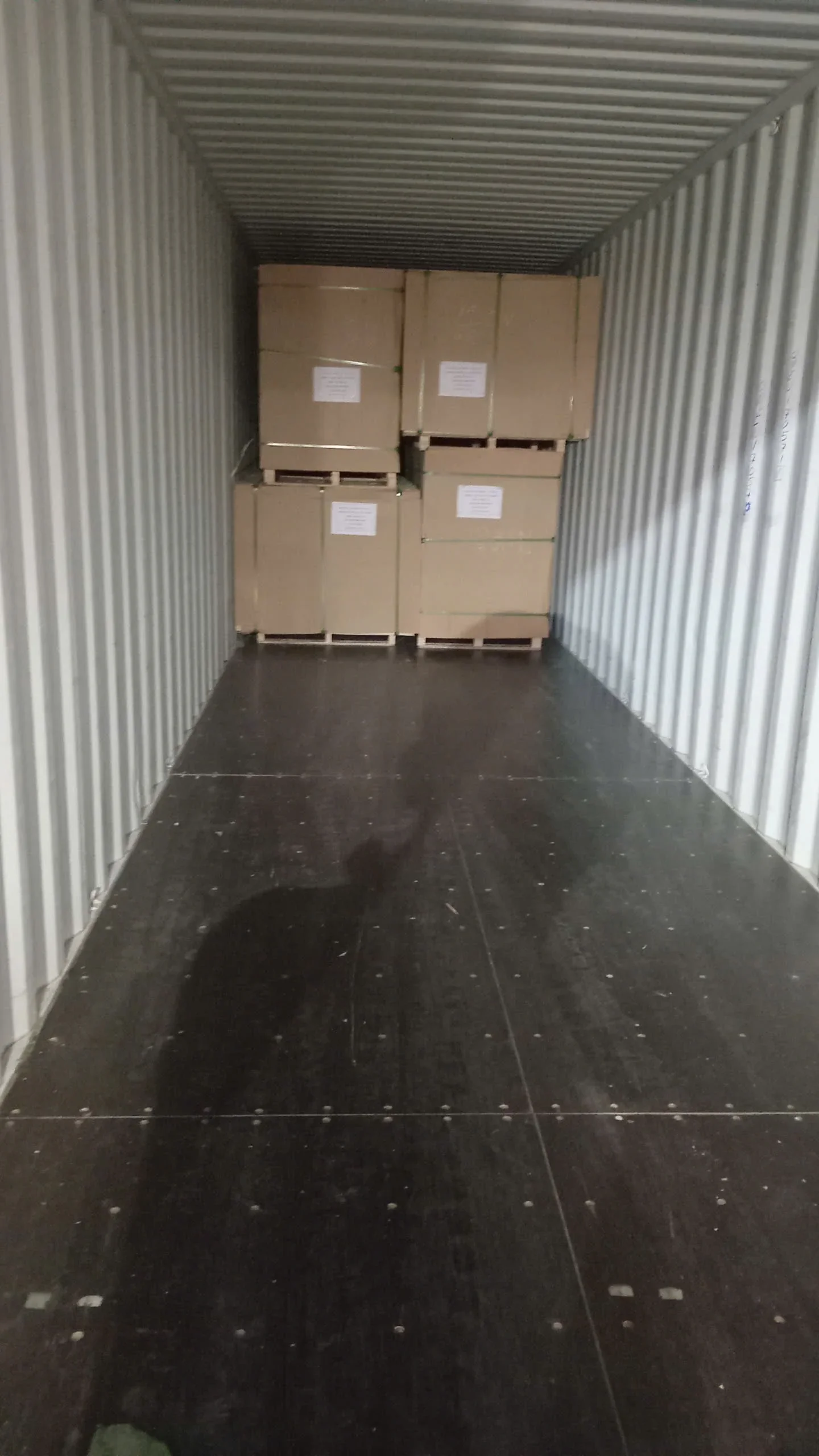
Most buyers requesting a Vietnam plywood price list receive one of two useless responses: a vague range spanning $200–$600/CBM that tells them nothing, or a locked spreadsheet with generic figures that bears no relationship to what they actually want to order.
⚠️ Important: Prices in this guide are indicative ranges for planning purposes. Firm quotations depend on your exact specification: face species, core species, thickness, glue type, emission standard, and quantity. Contact us for a current valid quote.
📊 Vietnam Plywood Price List 2026 — FOB Hai Phong by Category
The single most important thing to understand before reading any Vietnam plywood price list: the name of the plywood does not determine the price—the specification does. Two buyers ordering “bintangor plywood” can receive quotes $80/CBM apart because one specifies acacia core, E2, unsanded, and the other specifies styrax core, E0, sanded.
The table below shows realistic indicative ranges for common export configurations. These are FOB Hai Phong Port, valid as of Q1 2026 (Vietnam factory data, 2026). All prices subject to change — contact for current pricing.
📌 Commercial & Packing Grade (Acacia Core)
The Vietnam plywood price list for commercial plywood grades is anchored by acacia core—the most affordable core species domestically. These are the FOB rates you will encounter for high-volume, price-sensitive markets:
| Product | Face | Core | Glue | Emission | Thickness | FOB USD/CBM |
|---|---|---|---|---|---|---|
| Bintangor Plywood | Bintangor | Acacia | Melamine MR | E2 | 3–18mm | $190–$230 |
| Bintangor Plywood | Bintangor | Acacia | Melamine MR | E1 | 3–18mm | $200–$245 |
| Packaging Plywood | Bintangor C/D | Acacia | Melamine MR | E2 | 4–18mm | $185–$220 |
| Okoume Plywood | Okoume | Acacia | Melamine MR | E1 | 3–18mm | $205–$250 |
| Eucalyptus Plywood | Eucalyptus | Acacia | Melamine MR | E1 | 6–18mm | $210–$255 |
Acacia core is the most affordable Vietnamese core species at approximately 580 kg/m³ density (Vietnam factory data, 2026). It produces competitive FOB prices for commercial and packing applications where surface quality matters less than cost.
📌 Furniture & Interior Grade (Styrax or Eucalyptus Core)
The highest-demand segment in any Vietnam plywood price list is furniture and interior grade. These panels serve EU, US, Japanese, and Korean markets where emission compliance and surface quality are non-negotiable:
| Product | Face | Core | Glue | Emission | Thickness | FOB USD/CBM |
|---|---|---|---|---|---|---|
| Bintangor Plywood | Bintangor A | Styrax | Melamine MR | E0 | 3–25mm | $235–$280 |
| Okoume Plywood | Okoume | Styrax | Melamine MR | E0 | 3–25mm | $245–$295 |
| Birch Plywood | Birch D/E | Styrax | Melamine MR | E0 | 4–25mm | $380–$460 |
| Birch Plywood | Birch D/E | Styrax | Melamine MR | CARB P2 | 4–25mm | $420–$540 |
| EV Plywood | Engineered Veneer | Styrax | Melamine MR | E0 | 3–25mm | $260–$320 |
| Gurjan Plywood | Gurjan | Eucalyptus | WBP Phenolic | E1 | 4–25mm | $295–$380 |
| Pine Plywood | Pine | Styrax | Melamine MR | E1 | 3–25mm | $240–$290 |
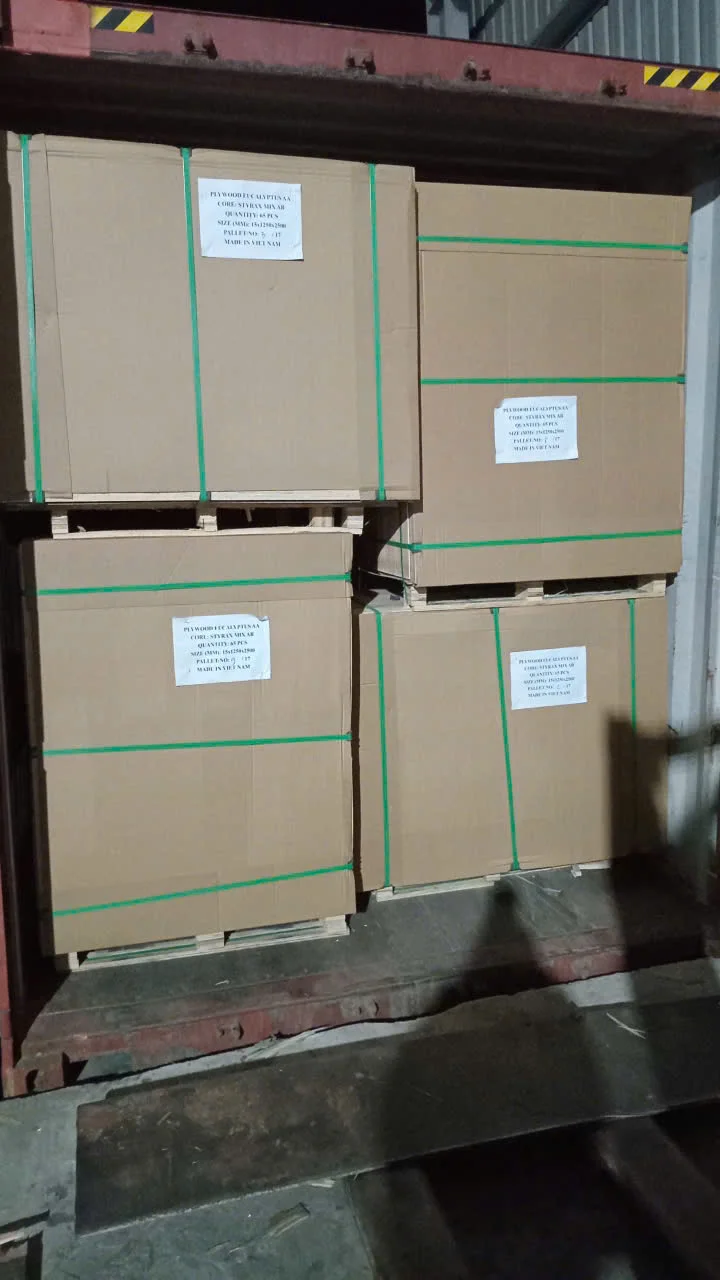
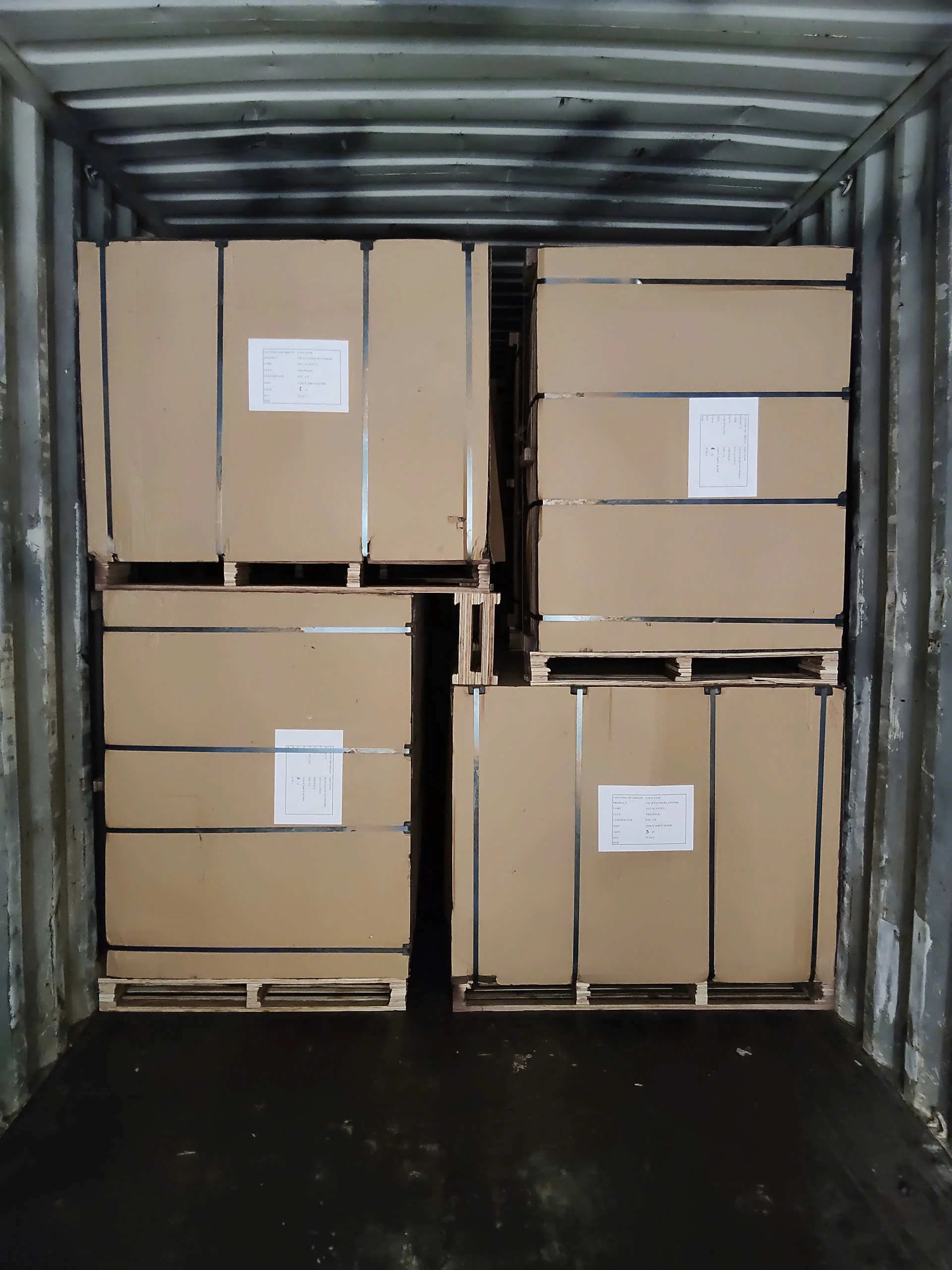
Styrax core sits at 480–500 kg/m³—the lightest Vietnamese core species and the preferred substrate for premium furniture-grade panels (Vietnam factory data, 2026). Its low density means a 40HC container holds 18 pallets versus 15 for eucalyptus, directly improving your landed cost per sheet.
🔧 Construction & Formwork Grade Pricing
Film-faced and anti-slip plywood — the main construction plywood products — occupy a separate pricing logic from furniture grades. Cost is driven by film weight, phenolic resin quality, and expected reuse cycles rather than face veneer species.
📌 Film-Faced Formwork Plywood
| Film Type | Core | Glue | Film GSM | Reuse Rating | Thickness | FOB USD/CBM |
|---|---|---|---|---|---|---|
| Phenolic brown film | Acacia | WBP Phenolic | 120 gsm | 8–12x | 12–21mm | $260–$310 |
| Phenolic brown film | Eucalyptus | WBP Phenolic | 120 gsm | 10–15x | 12–21mm | $290–$340 |
| AICA phenolic film | Eucalyptus | WBP Phenolic | 135+ gsm | 15–20x | 12–21mm | $340–$420 |
| Melamine black film | Acacia | Melamine MR | 120 gsm | 6–10x | 12–21mm | $250–$295 |
💡 Tip: Evaluate film-faced plywood on cost-per-pour, not cost-per-CBM. A panel rated for 15 reuses at $380/CBM outperforms a $260/CBM panel rated for 8 reuses by a significant margin when you factor in replacement frequency and project downtime.
Premium Vietnamese facilities use AICA film rated at 135+ gsm with WBP phenolic glue, achieving the 15–20 reuse cycles demanded by European and South Korean construction contractors.
📌 Anti-Slip Plywood
| Face | Core | Film | Thickness | FOB USD/CBM |
|---|---|---|---|---|
| AICA anti-slip 220 gsm | Acacia/Eucalyptus | Phenolic WBP | 12–21mm | $290–$360 |
Anti-slip panels carry a premium over standard film-faced because the 220 gsm AICA mesh surface requires additional bonding pressure and cure time during production.
Get 2026 pricing for your specification — Request a Free Quote
📋 What Moves the Price: The 6 Key Variables
Understanding price variables lets you control costs before you place an order. Each variable is a lever you can adjust.
1. Face Veneer Species
Face veneer is the single largest visible cost differentiator. Birch face veneer is imported and carries a premium; bintangor is plantation-grown within the region and prices accordingly. From lowest to highest face cost: bintangor → okoume ≈ EV → pine ≈ poplar ≈ eucalyptus → gurjan → birch. Expect a $150–$200/CBM spread between the cheapest and most expensive face options for identical specifications otherwise.
2. Core Species and Density
Vietnamese plywood uses three core species: acacia (~580 kg/m³), styrax (480–500 kg/m³), and eucalyptus (650–750 kg/m³). Core choice drives both panel weight and container economics. Eucalyptus core is the strongest and heaviest—a 40HC loads only 15 pallets (≈44.5 CBM) before hitting the 28.5 MT payload limit. Styrax loads 18 pallets (≈53 CBM) at only 26.5 MT. That 8.5 CBM difference per container directly reduces your cost per sheet (Vietnam factory data, 2026).
3. Glue Type: Melamine MR vs Phenolic WBP
Melamine (MR) and phenolic (WBP) are the two glue systems used in Vietnamese plywood. This is a separate concept from emission standard—do not conflate them.
- Melamine MR: 12-hour boil test, moisture resistant. Used for furniture, interior, commercial applications.
- Phenolic WBP: 72-hour boil test, weather and boil proof. Used for film-faced formwork, anti-slip, and marine applications.
WBP phenolic glue adds $15–30/CBM over MR for equivalent specifications, reflecting the higher resin cost and longer press cycles required.
- Emission Standard: E2 → E1 → E0 / CARB P2
formaldehyde emission class is a market-entry requirement, not a preference. The US, EU, Japan, and South Korea require E0 or CARB P2 for interior-use panels. E2 panels are permitted only for exterior or industrial applications in most regulated markets.
| Standard | Formaldehyde Limit | Price Premium vs E2 |
|---|---|---|
| E2 | ≤5.0 mg/L | Baseline |
| E1 | ≤1.5 mg/L | +$5–15/CBM |
| E0 | ≤0.5 mg/L | +$15–35/CBM |
| CARB P2 | ≤0.05 ppm | +$25–50/CBM |
5. Thickness and Ply Count
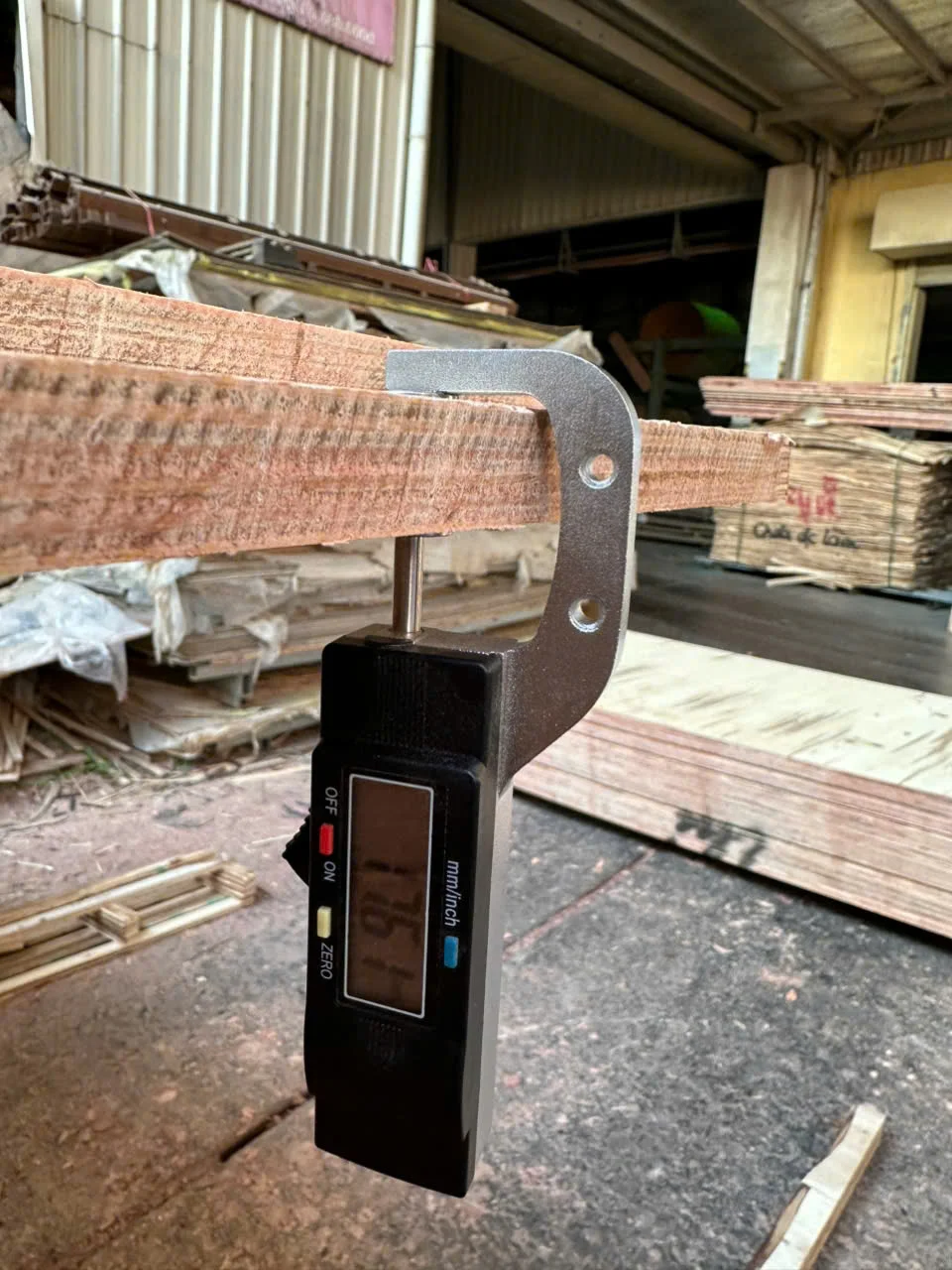
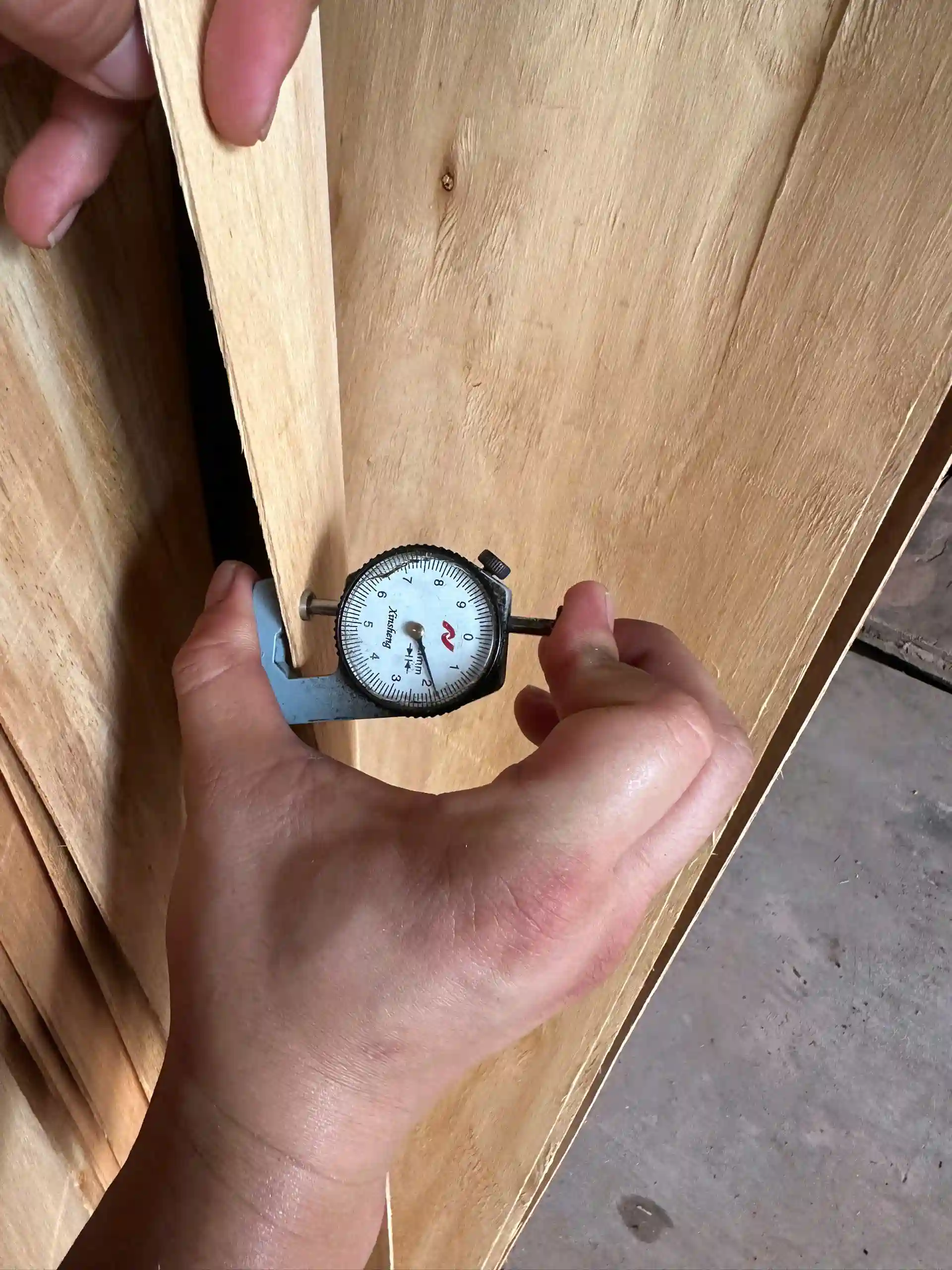
Thicker panels require more core veneer layers and longer press cycles. Prices generally increase with thickness, though not linearly—the cost curve flattens at mid-range thicknesses (9–18mm) where production efficiency peaks. Very thin panels (3–5mm) can carry a per-unit premium due to more demanding handling and higher reject rates.
6. Core Construction Quality
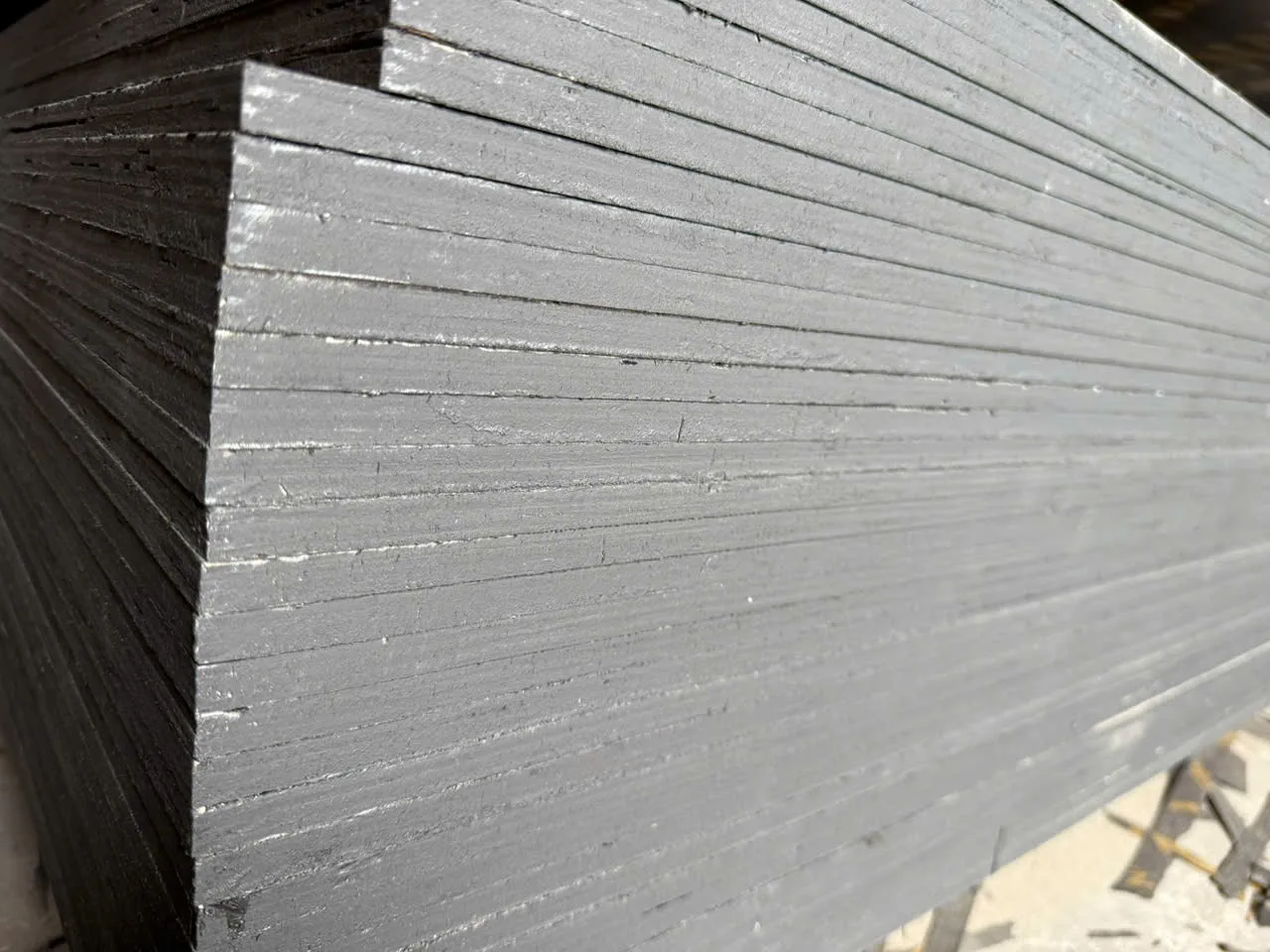
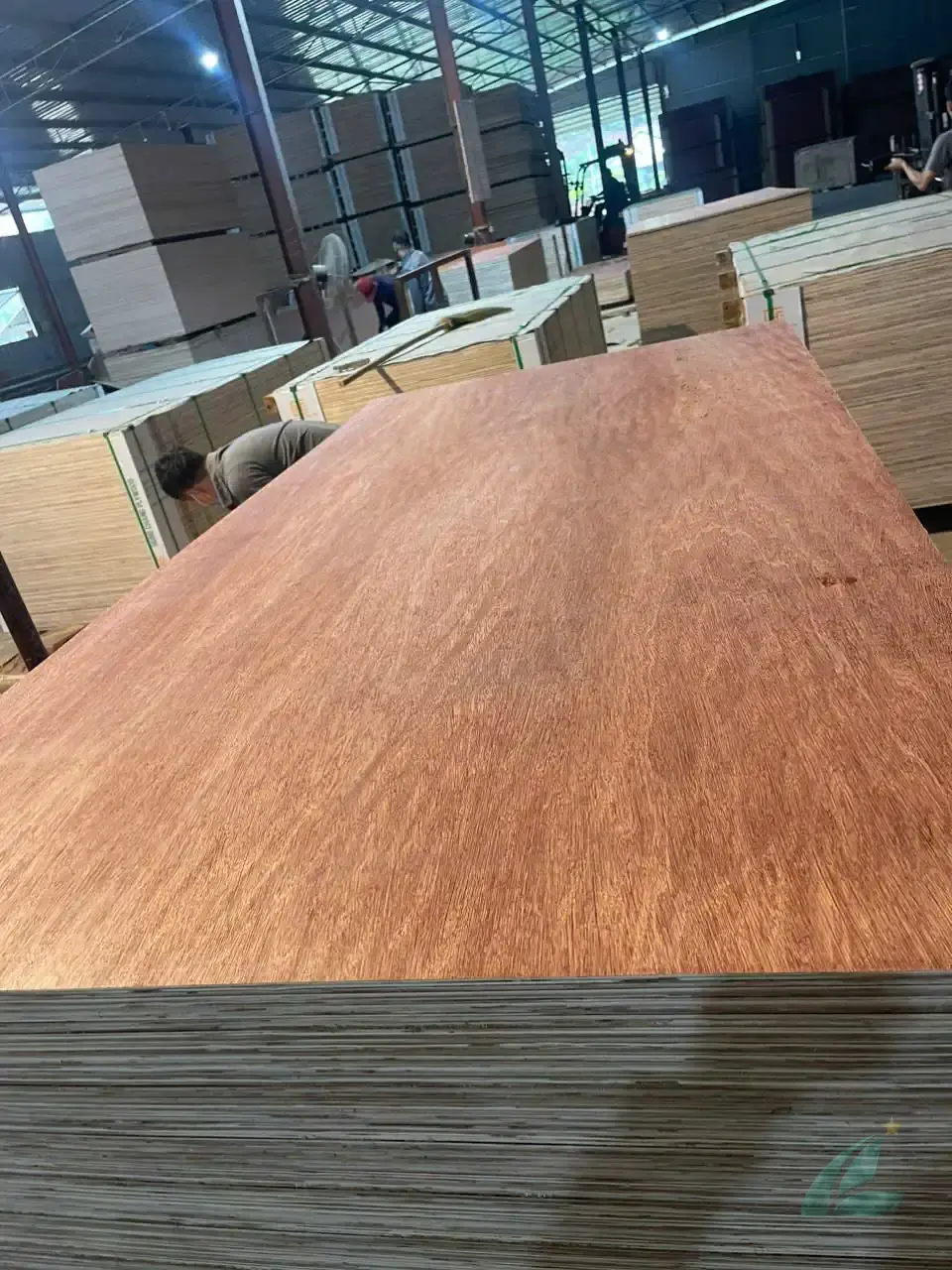
Core construction directly affects structural performance and production cost. Full stitched core (all layers sewn with no gaps) is the premium standard used for furniture-grade panels destined for European and US markets. Loose-lay or edge-jointed core costs less but produces visible gaps in cross-sections that fail quality inspection for premium buyers.
📦 How Core Species Affects Your landed cost
Most buyers compare FOB prices per CBM. The more useful comparison is cost per sheet delivered, because core species affects how many sheets fit in a container.
Consider two configurations, both bintangor face, 18mm, MR glue, E1, 1220×2440mm:
| Specification | Styrax Core | Acacia Core | Eucalyptus Core |
|---|---|---|---|
| Density (kg/m³) | ~490 | ~580 | ~700 |
| Pallets per 40HC | 18 | 16 | 15 |
| Approx CBM/40HC | 53 | 47.5 | 44.5 |
| Est. FOB/CBM | $245 | $220 | $255 |
| Est. freight cost/CBM | Lower | — | Higher |
Source: Vietnam factory data, 2026; container packing methodology from our plywood container packing calculation guide. For instant CBM lookup, see the CBM per thickness complete table.
Styrax core, despite its slightly higher FOB/CBM, fits 8.5 CBM more per container than eucalyptus core. At typical transcontinental freight rates, that compression effect reduces landed cost significantly—often erasing the apparent FOB premium entirely.
“Buyers who focus only on FOB/CBM miss the container efficiency picture entirely. For light-density markets like furniture importers, styrax core almost always wins on landed cost when you run the full numbers.” — Lucy, International Sales Manager, HCPLY
🏭 Why Factory-Direct Pricing Matters
When a factory operates as a direct export operator rather than a domestic trading company, shipments exit directly from the production facility without passing through local intermediaries. This eliminates the 8% VAT that domestic trading companies must pay on inter-company transfers—a structural cost advantage that translates directly to FOB price.
“Factory-direct doesn’t just mean better price. It means your Bill of Lading, FSC certificate, CARB P2 test report, and phytosanitary certificate all carry the factory name—no middleman paperwork, no documentation gaps at customs.” — Lucy, International Sales Manager, HCPLY
For buyers comparing quotes, ask each supplier whether their export price is factory-direct or passes through a domestic trading entity. The 8% VAT differential often explains quote discrepancies between similarly-positioned suppliers.
Learn more about how Vietnam’s supplier market is structured in our Vietnam plywood supplier types guide. For a step-by-step purchasing process, see how to buy plywood from Vietnam.
Request factory-direct pricing — Contact Us Now
🔗 Key Certifications and Their Price Impact
Certified panels require additional production controls, third-party auditing, and documentation—all of which carry costs. Understanding what each certification adds helps you budget accurately and avoid paying for certifications your market does not require.
| Certification | Market Requirement | Typical Price Add |
|---|---|---|
| FSC Chain of Custody | EU (preferred), US Lacey Act | +$5–15/CBM |
| CARB P2 | US mandatory for interior | Included in E0 pricing |
| CE Marking | EU construction products | +$3–8/CBM (documentation) |
| EUDR Compliance | EU from 2025 | Documentation cost varies by supplier |
| ISO 9001 | General assurance | Factory-level; no per-CBM cost |
Qualified Vietnamese manufacturers hold FSC, CARB P2, CE, ISO 9001, and EUDR compliance. Review the full certification scope and documentation in our plywood certifications and export documentation guide.
For EUDR specifically: as of 2026, European importers must verify deforestation-free sourcing for all timber products. Vietnam’s plantation-sourced acacia, eucalyptus, and styrax core species qualify under EUDR traceability requirements (European Commission EUDR Regulation 2023/1115, 2023).
📐 Reading a Vietnam Plywood Quotation
When you receive a quotation from any Vietnamese plywood supplier, verify these seven fields before accepting or comparing it:
- Face species and grade: “Bintangor A” and “Bintangor B” are different products
- Core species: acacia, styrax, or eucalyptus—this determines density and container economics
- Glue type: Melamine (MR) or Phenolic (WBP)—not interchangeable for your end-use
- Emission standard: E2 / E1 / E0 / CARB P2—verify against your market’s legal requirements
- Core construction: full stitched, edge-jointed, or loose-lay—critical for premium furniture grades
- Thickness tolerance: standard is ±0.3mm; Japanese market buyers should confirm tighter tolerances
- Price basis: FOB port (Hai Phong), Incoterms version, currency, and validity period
A quotation missing any of these fields is incomplete. Differences in any one item explain why two “identical” quotes can differ by $50/CBM or more. See our plywood quotation guide for a pre-order specification checklist. For strategies on getting the best price, read our guide on how to negotiate plywood prices with Vietnam suppliers.
✅ Price Ranges by Target Market
Different markets have different standard specifications, which creates predictable price bands. FOB plywood rates in Vietnam vary significantly by destination because each market enforces different emission standards, certification requirements, and preferred face species. Here are the typical configurations and resulting ranges by destination (Vietnam export data, 2026):
India (largest market): Bintangor or gurjan face, acacia or eucalyptus core, MR glue, E1 emission. FOB range: $200–$320/CBM depending on face and thickness.
Europe (EU): Okoume, birch, or pine face, styrax or eucalyptus core, MR glue, E0 emission, FSC certified. FOB range: $280–$480/CBM. EUDR documentation required from 2026.
United States: Birch face with CARB P2 emission, styrax core, MR glue. FOB range: $420–$540/CBM. Lacey Act compliance documentation included.
South Korea: Film-faced formwork panels (WBP phenolic, AICA film, eucalyptus core) and furniture-grade birch. Film-faced FOB: $320–$420/CBM.
Middle East: Bintangor or film-faced, construction-focused. FOB range: $220–$360/CBM depending on grade.
Southeast Asia: Commercial bintangor or packing grade. FOB range: $185–$240/CBM.
For a deeper analysis of market-specific requirements and supplier considerations, see our Vietnam plywood export markets guide. To calculate total delivered cost from FOB, use the landed cost calculation guide for importers.
✅ How to Get an Accurate Quote from Your Supplier
An indicative Vietnam plywood price list answers the planning question. A firm quotation answers the purchasing question. To receive a current, valid 14-day FOB quotation, provide the following in your inquiry:
- Face veneer species (bintangor / okoume / birch / gurjan / film-faced / other)
- Core species preference (acacia / styrax / eucalyptus, or “recommend for my use case”)
- Thickness (e.g., 12mm, 15mm, 18mm—or list if mixed)
- Sheet size (1220×2440mm, 1250×2500mm, or custom)
- Glue type (MR or WBP phenolic)
- Emission standard (E2, E1, E0, CARB P2)
- Certifications required (FSC, CARB P2 test report, CE, EUDR)
- Quantity (number of 40HC containers or CBM)
- Destination port (for CIF estimates if needed)
Send your specification — Get a Free Quote Today
The more complete your specification, the faster and more accurate your quotation. Our export team responds to complete inquiries within 24 hours during business days.
✅ Conclusion
This Vietnam plywood price list covers the full 2026 range: from under $190/CBM for packing-grade acacia-core panels to over $540/CBM for CARB P2-certified birch face with styrax core. All figures are indicative and subject to change — contact us for current pricing. Current FOB plywood rates from Vietnam remain competitive against Chinese and Malaysian alternatives when you account for quality consistency and certification coverage. That spread reflects real specification differences, not supplier margin variation.
The four variables that move prices most are face veneer species, core species, glue type, and emission standard. Understanding each before you request a quotation puts you in a stronger negotiating position and prevents the common mistake of comparing quotes that specify different products.
We offer factory-direct pricing across all three production segments—furniture-grade, commercial, and film-faced—from our facilities in Phu Tho, Northern Vietnam. No VAT intermediation, full export documentation, and on-site QC at every facility.
Disclosure: This article is published by HCPLY, a Vietnam-based plywood manufacturer and export operator. While we aim to provide objective industry guidance, readers should consider our perspective as a market participant when evaluating recommendations.