


Vietnam plywood export markets span 30+ countries across six continents, with an estimated 3+ million CBM shipped annually from the country’s Northern production base. Every destination has different rules: a shipment configured for India fails compliance in Japan, a certificate accepted in the UAE is insufficient for the EU, and a product that moves in Korea has zero demand in Africa.
This guide covers the major vietnam plywood export markets country by country — regulations, popular products, pricing, and documentation — so buyers and importers can align specifications before their first inquiry. As of Q1 2026, compliance requirements are tightening in most major destinations, making pre-order clarity more valuable than ever.
“Every vietnam plywood export market has its own rules, and those rules tightened further in 2026. CARB P2 for the US, EUDR for Europe, BIS for India — buyers who understand the regulatory picture before they order avoid very costly surprises at the port.” — Ms. Lucy, International Sales Manager, HCPLY
⚠️ Important: Trade regulations change frequently. Anti-dumping duties, emission standards, and deforestation due diligence requirements are all evolving in 2026. Confirm current requirements with your customs broker and supplier before each shipment. This guide provides a structural framework — not real-time regulatory updates.
Vietnam Plywood Export Overview
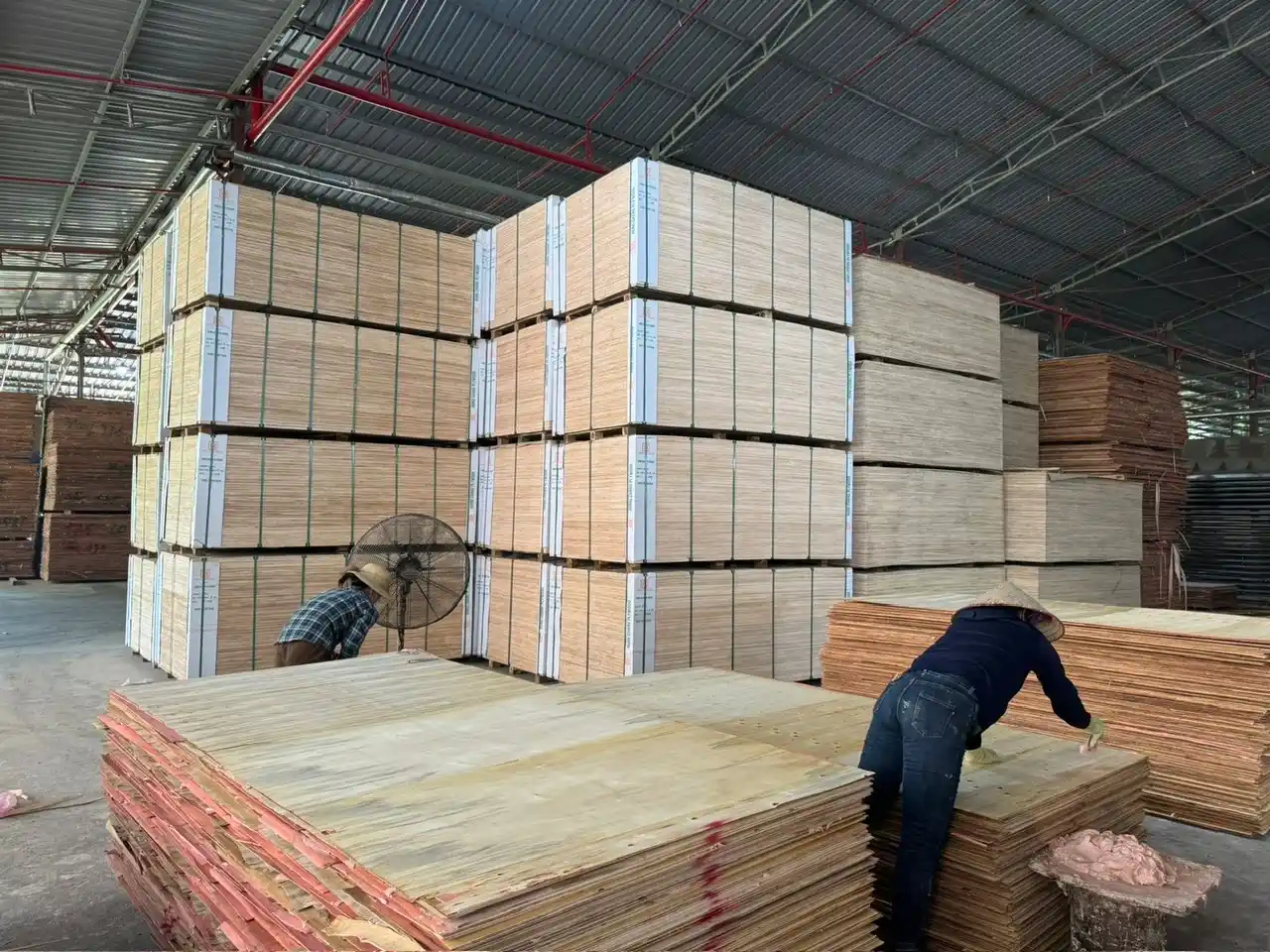
Vietnam plywood export volumes have grown steadily since 2015, driven by plantation forestry expansion, competitive manufacturing costs, and trade policy shifts that redirected global demand away from Chinese suppliers. Northern Vietnam — concentrated in Phu Tho, Bac Ninh, Bac Giang, Yen Bai, and Tuyen Quang provinces — produces over 80% of export volume.
Three plantation-grown core species define Vietnam’s structural advantage: acacia (~580 kg/m³), eucalyptus (650–750 kg/m³), and styrax (480–500 kg/m³). These species, combined with 10+ face veneer options, cover every market segment from budget packing to premium furniture. HCPLY manages 3 specialized production facilities in Northern Vietnam and exports 50–100 containers per month with a standard lead time of 15–25 days.
For background on how the Vietnam plywood industry is organized by region and factory type, see the Vietnam plywood regional map — North vs South production guide and the Vietnam plywood factory types and industry segmentation guide.
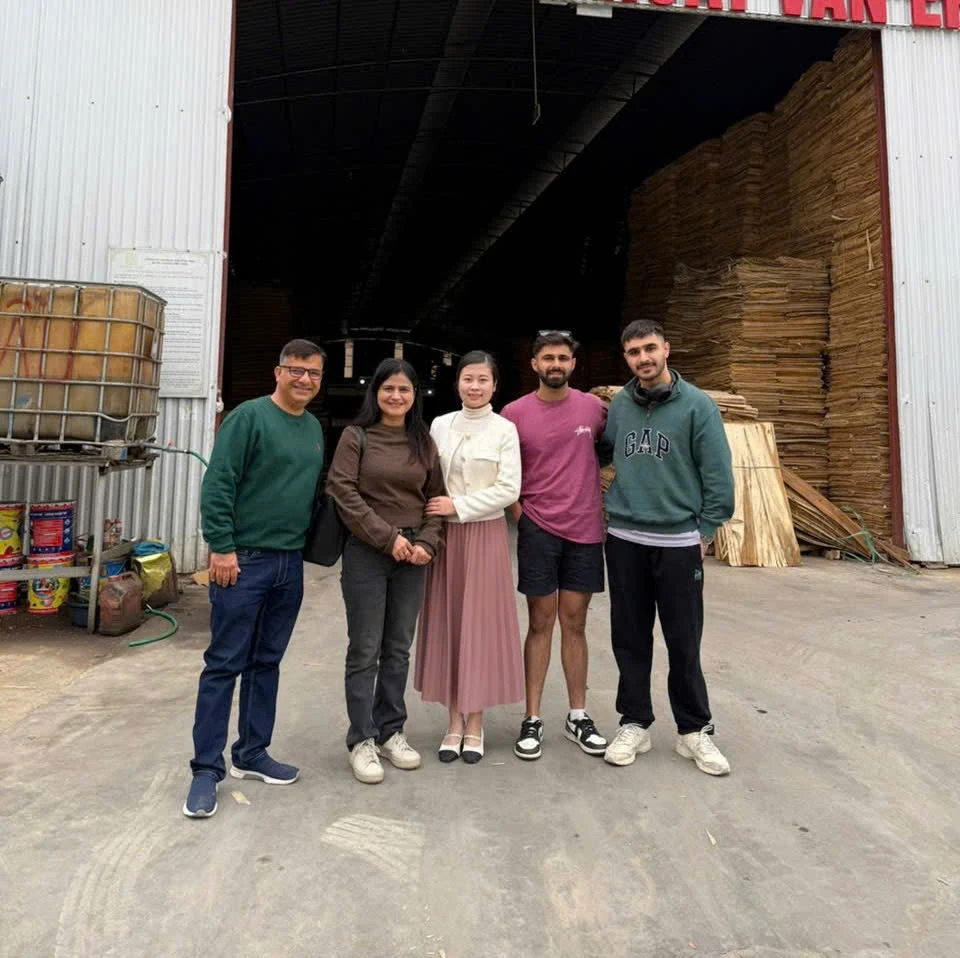
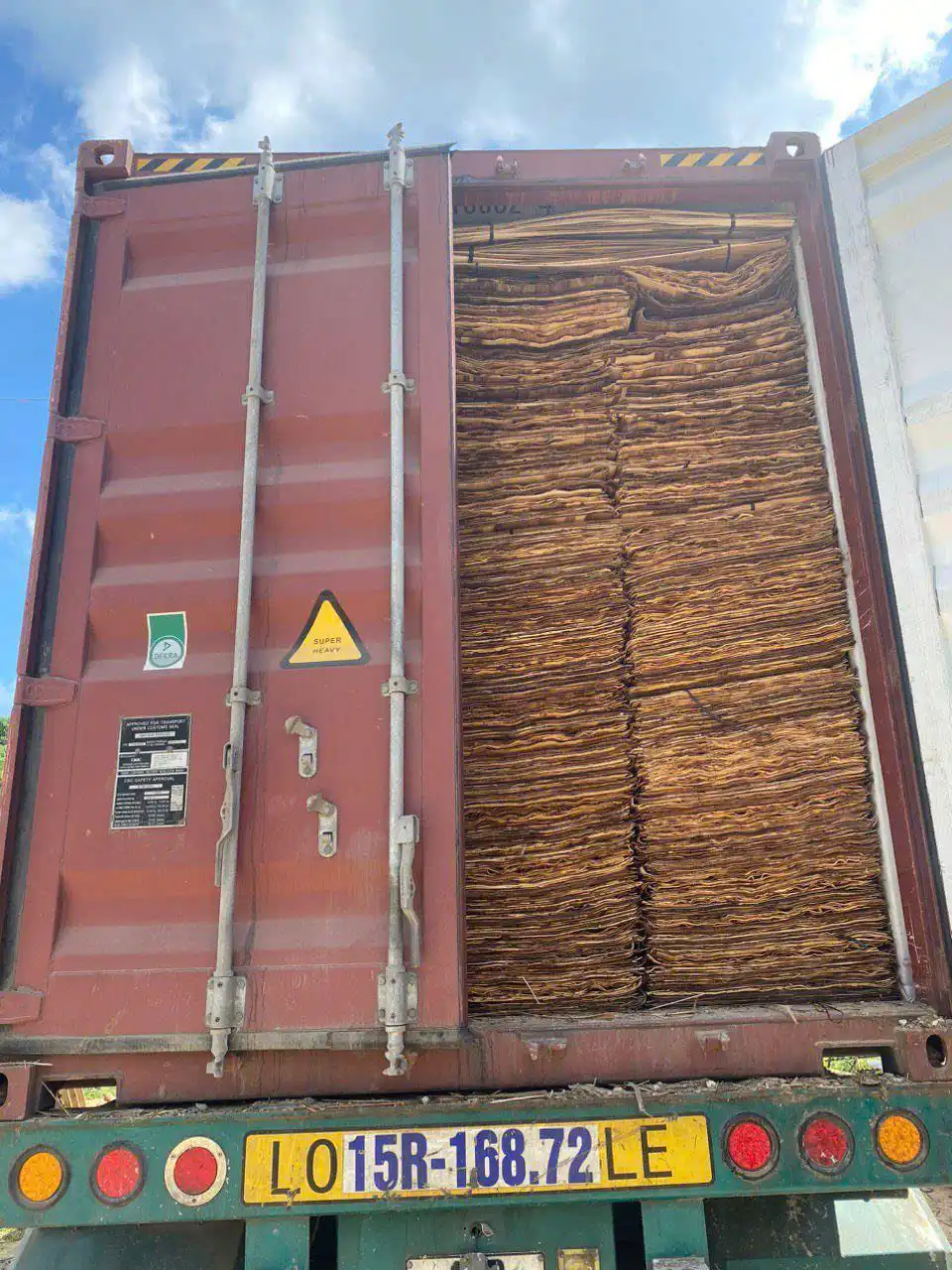
Key structural advantages driving plywood import from vietnam across all destinations include: plantation-sourced core species (reducing deforestation risk for EUDR, FSC, and Lacey Act compliance), competitive factory-direct FOB pricing with no domestic logistics markup, multi-FTA access (EVFTA, CPTPP, RCEP, UKVFTA), and full certification infrastructure (FSC, CARB P2, CE, ISO 9001, EUDR documentation) at established exporters.
India — Largest Vietnam Plywood Export Market
India is the largest single-country destination for vietnam plywood export markets by volume. Indian furniture manufacturers, construction contractors, and plywood distributors have sourced from Vietnam for over a decade. Demand accelerated as domestic Indian timber supplies tightened and anti-dumping duties on Chinese plywood gave buyers further reason to diversify.
Popular products for India include gurjan plywood — the dominant specification for Indian furniture and flush door manufacturing, carrying cultural and technical prestige that no other species matches — and bintangor plywood for commercial-grade panels where the face will be covered by laminate. Film-faced plywood is growing for infrastructure formwork, and packing plywood supplies industrial packaging and crate manufacturing.
“The most common mistake new buyers make is comparing price without checking the core species.” — Ms. Lucy, International Sales Manager, HCPLY
India regulatory requirements
| Requirement | Detail |
|---|---|
| BIS certification | Mandatory under IS 303 (general), IS 710 (marine), IS 848 (decorative). Foreign manufacturers apply through FMCS scheme — factory audit + product testing + annual renewal |
| Certificate of Origin | Standard CO required; Form AI for India-ASEAN FTA preferential rates |
| Fumigation | ISPM 15 fumigation certificate required for all wood product imports |
| Emission | E1/E2 acceptable for most Indian commercial applications; E0 for export-oriented furniture manufacturers |
| Anti-dumping | India has AD duties on Chinese plywood. Vietnam shipments are not currently subject to AD duties — monitor trade policy |
India pricing dynamics
FOB pricing for gurjan plywood ranges approximately USD 350–550/CBM depending on core species and construction quality (subject to change — contact for current pricing). Bintangor plywood at commercial grade ranges USD 280–400/CBM. Indian buyers typically prefer acacia core for cost efficiency, accepting the darker color and density (~580 kg/m³) in exchange for more competitive per-CBM pricing.
BIS certification is time-consuming and requires an in-person factory audit by Indian inspectors. Port congestion at Mundra and Nhava Sheva can add 1–2 weeks to delivery timelines. Transit from Hai Phong: 12–18 days to Mundra, Chennai, or Kolkata.
United States — High-Compliance, High-Opportunity
The US market represents significant opportunity for vietnam plywood export markets, particularly after AD/CVD orders on Chinese hardwood plywood effectively priced Chinese competitors out of many product categories. However, the US is also one of the most regulation-intensive destinations for plywood import from vietnam.
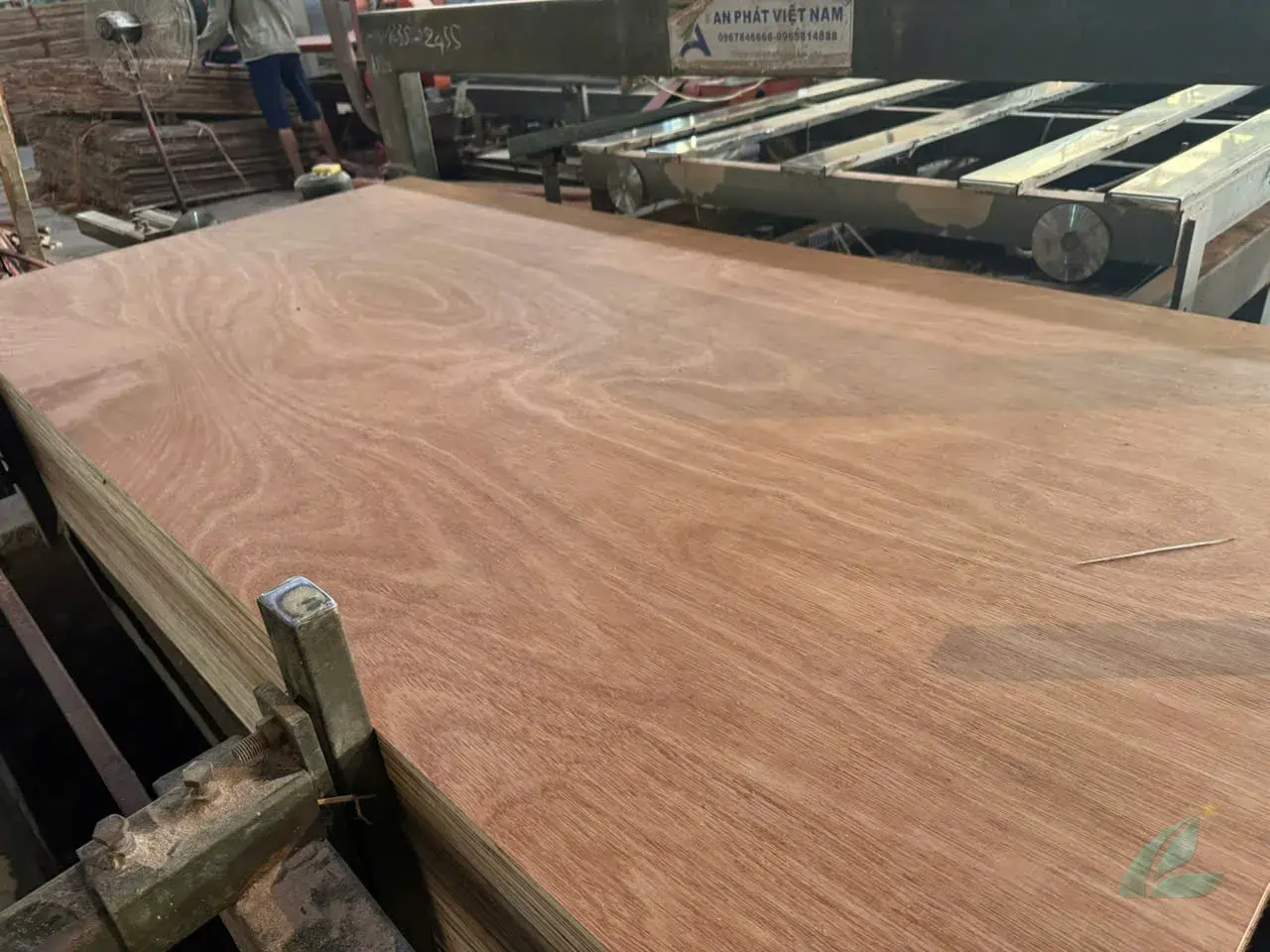
Popular products for the USA include birch plywood (D/E/F grade) for furniture and cabinet manufacturers requiring consistent sanded panels with E0 emission, okoume plywood for marine and decorative applications, and film-faced plywood for construction formwork.
USA regulatory requirements
| Requirement | Detail |
|---|---|
| TSCA Title VI / CARB P2 | Mandatory for all composite wood products sold in the US. Third-party certified (TPC) lab testing required. Every panel must display TSCA compliance label |
| Lacey Act | PPQ 505 declaration of species, country of harvest, and quantity. Penalties for false declarations are severe |
| AD/CVD | AD/CVD orders on Chinese hardwood plywood continue. Investigations into Vietnam-origin plywood as potential circumvention route are ongoing as of Q1 2026 |
| HS classification | 4412.xx — rates vary by species, thickness, and face. Standard MFN tariff 0–8% |
⚠️ Critical for US importers: AD/CVD investigation status is evolving. Preliminary countervailing duty determinations on certain hardwood plywood from Vietnam were issued in late 2025. Confirm current duty rates with a licensed customs broker. See anti-dumping plywood Vietnam US status and CARB P2 TSCA Lacey Act compliance guide.
USA pricing dynamics
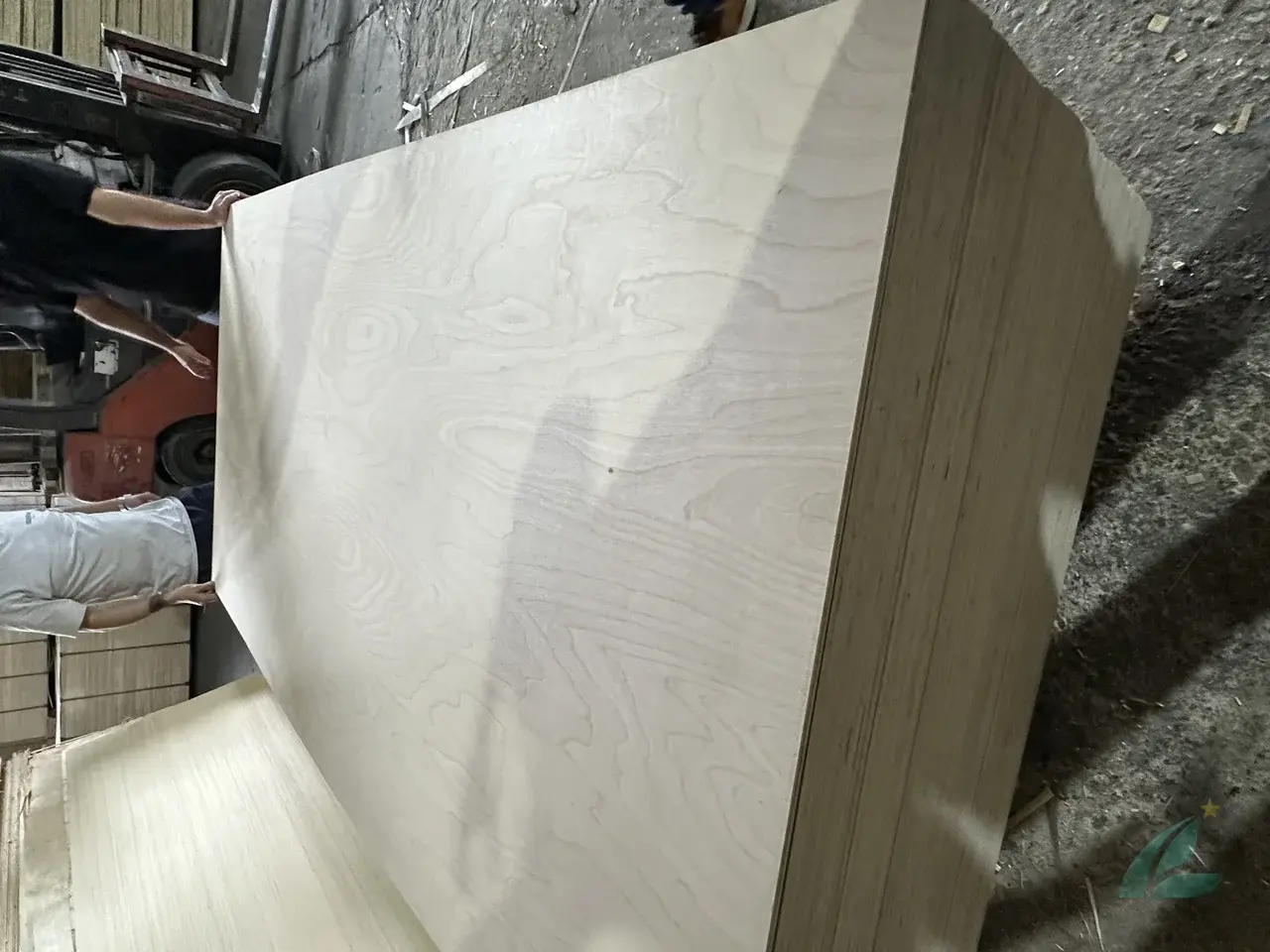
The US market accepts higher FOB pricing in exchange for strict compliance documentation and consistent quality. Furniture-grade birch plywood (full stitched, styrax core, E0, CARB P2 certified) typically ranges USD 380–580/CBM FOB (subject to change — contact for current pricing). The premium reflects compliant production, third-party testing, and chain-of-custody documentation. US buyers prioritize specification compliance over price negotiation.
Transit from Hai Phong: 18–25 days to US West Coast (Los Angeles, Seattle-Tacoma), 28–35 days to East Coast (Savannah, New York). For a complete import workflow, see the how to import plywood from Vietnam guide.
European Union — EUDR and Premium Quality
The EU demands the highest compliance standards of any vietnam plywood export destination. CE marking, formaldehyde emission limits, FSC preference, and the EU Deforestation Regulation create a framework that rewards well-documented exporters and excludes non-compliant suppliers.
Popular products for the EU include okoume plywood — the traditional European furniture and marine species, lightweight and paintable, with strong demand in France, Spain, Belgium, and the Netherlands — birch plywood (D/E/F grades) for CNC furniture and premium cabinetry, EV plywood for modern interiors with uniform appearance, and film-faced plywood for construction formwork across EU infrastructure projects.
EU regulatory requirements
| Requirement | Detail |
|---|---|
| CE marking | Mandatory. EN 636 (structural plywood), EN 314 (bond quality), EN 13986 (wood-based panels) |
| EUDR | Phased enforcement from December 2024. Operators must submit due diligence statements with geolocation of harvesting areas. Applies to plywood and timber products |
| Formaldehyde emission | E0 or E1 for interior applications. E0 increasingly specified by EU furniture manufacturers |
| FSC certification | Not legally mandatory but strongly preferred. Many EU distributors require FSC as a procurement condition |
| FLEGT | Vietnam has a FLEGT VPA with the EU — supports legality assurance for EU-bound shipments |
For a detailed look at EU deforestation due diligence requirements, see the EUDR due diligence guide for plywood importers.
EU pricing dynamics
EU buyers accept premium FOB pricing for certified, documented products. Okoume plywood in BB/BB grade with WBP phenolic glue and FSC certification ranges USD 300–480/CBM. Birch plywood (D grade face, styrax core, E0, FSC) ranges USD 380–580/CBM (subject to change — contact for current pricing). A Spain-based buyer sourcing factory-direct from HCPLY reported saving approximately USD 50/CBM versus purchasing through a trading company — the 0% VAT on factory-direct exports versus the 8% intermediary markup accounts for most of the difference.
Primary EU ports: Rotterdam, Antwerp, Hamburg, Le Havre. Transit from Hai Phong: 28–35 days. Key markets: Germany, France, Spain, Italy, Poland, Netherlands, Belgium.
Japan and South Korea — Strict Quality Standards
Japan represents the most quality-demanding market for vietnam plywood export markets. Japanese buyers apply the strictest dimensional tolerances, the most rigorous emission standards, and the most detailed inspection protocols of any export destination. South Korea is a steadily growing market driven by construction formwork demand and a furniture sector increasingly sourcing from Vietnam rather than China.
Japan popular products: Premium furniture-grade plywood with birch, okoume, or EV face; full stitched styrax or eucalyptus core; E0/F★★★★ emission. Specialty thin panels (3mm–6mm) for interior decorative use. High-grade film-faced plywood meeting JAS standards.
Japan regulatory requirements
| Requirement | Detail |
|---|---|
| JAS (Japanese Agricultural Standard) | Governs structural grades, bond strength, emission, and dimensional tolerance |
| F★★★★ (F-four-star) | Highest JAS formaldehyde emission rating — approximately equivalent to E0. Required for all interior plywood in Japan |
| Dimensional tolerance | Japanese buyers typically specify ±0.2mm thickness tolerance — stricter than ±0.3mm standard elsewhere |
| Surface quality | Zero tolerance for face defects, staining, or veneer overlap on the face side |
| Phytosanitary | ISPM 15 fumigation mandatory |
Japan pays the highest FOB premiums of any vietnam plywood export market. Furniture-grade panels meeting F★★★★ command USD 400–600+/CBM (subject to change — contact for current pricing). Market entry takes 6–12 months of sample evaluation before regular supply contracts. Transit from Hai Phong: 5–8 days to Tokyo (Yokohama), Osaka (Kobe), or Nagoya.
South Korea popular products: Film-faced plywood for Korea’s continuous construction cycles, birch plywood for furniture and cabinetry, and commercial plywood (bintangor, eucalyptus face) for general interior use.
Korea requires E0 emission for furniture and interior plywood — among the strictest standards in Asia. Form AK (ASEAN-Korea FTA) provides preferential tariff rates. Korean buyers tend to establish annual contracts with quarterly price adjustments based on raw material and freight movements. Transit from Hai Phong: 4–6 days to Busan or Incheon.
Middle East — Construction Boom
The Middle East is one of the fastest-growing vietnam plywood export markets, driven by massive construction investment across the UAE, Saudi Arabia, and Qatar. The region’s appetite for film-faced plywood for concrete formwork and commercial plywood for interior fit-out creates sustained, high-volume demand.
Popular products for the Middle East include film-faced plywood as the primary demand driver for high-rise construction and civil works across the GCC, gurjan plywood for premium hospitality and luxury residential fit-out, commercial plywood (bintangor and eucalyptus face) for general interior construction, and anti-slip plywood for scaffolding platforms and industrial flooring.
Middle East regulatory requirements
| Requirement | Detail |
|---|---|
| Municipal requirements | Dubai Municipality, Abu Dhabi QCC, and local authorities specify material standards for construction products |
| Emission | E1 acceptable for most construction applications. E0 specified for premium interior hospitality projects |
| Certifications | FSC preferred for green building (LEED/Estidama) projects. CE marking accepted but not always mandatory |
| Fumigation | ISPM 15 mandatory |
Middle East buyers are value-oriented — competitive pricing with reliable documentation and consistent supply. Film-faced plywood ranges USD 300–450/CBM (subject to change — contact for current pricing). Vietnam’s advantage in this region is plantation-grown core species with FSC certification and reliable phenolic (WBP) bonding quality. Payment terms are typically 30-day LC or TT against copy of B/L.
Primary ports: Jebel Ali (Dubai), Dammam (Saudi Arabia), Hamad Port (Qatar). Transit from Hai Phong: 12–18 days.
UK, Australia, and Southeast Asia
United Kingdom (Post-Brexit)
Since Brexit, the UK has been developing its own regulatory framework diverging from EU standards. UKCA marking replaces CE marking for products sold in England, Wales, and Scotland. The UK Timber Regulation (UKTR) replaces EUTR and requires due diligence on timber legality. FSC or PEFC certification is strongly preferred — many UK construction specifications mandate it.
Popular products: okoume plywood for marine and decorative applications, birch plywood for furniture and joinery, film-faced plywood for construction formwork. The UKVFTA provides preferential tariff rates. Okoume plywood ranges USD 300–480/CBM. Transit from Hai Phong: 28–35 days to Felixstowe, Southampton, or London Gateway.
Australia and New Zealand
Australia is a quality-conscious market with specific regulatory requirements around structural grading (AS/NZS 2269) and formaldehyde emission. Biosecurity inspections at Australian ports are thorough — any non-compliance results in quarantine and potential re-export at the importer’s cost. Methyl bromide treatment certificate is mandatory for all wood imports.
Popular products: okoume plywood for caravan/RV interiors (styrax core, lightweight), film-faced plywood meeting AS 3610 formwork requirements, and structural plywood for residential and commercial construction. Australian buyers pay EU/Japan-comparable pricing. Transit from Hai Phong: 18–22 days to Fremantle, Melbourne, or Sydney.
Southeast Asia (ASEAN)
Southeast Asian markets (Malaysia, Singapore, Thailand, Philippines, Indonesia, Cambodia, Myanmar) represent a growing regional trade lane facilitated by the ASEAN Free Trade Area and Form D Certificate of Origin for preferential tariff rates. Vietnam’s proximity means short transit times of 2–7 days to most ASEAN ports, keeping total landed costs low.
Popular products: commercial plywood (bintangor and eucalyptus face) for construction and interior use, film-faced plywood for infrastructure formwork, packing plywood for industrial packaging, and matt plywood as raw core substrate for lamination by downstream manufacturers.
Africa — Emerging Market Opportunity
African markets represent a growing frontier for vietnam plywood export markets. Construction investment across sub-Saharan Africa is accelerating, and plywood demand for construction and packaging applications is expanding. The market is price-sensitive but offers volume opportunities for competitive suppliers as of 2026.
Popular products for Africa include film-faced plywood for infrastructure and housing formwork, commercial plywood (bintangor face, acacia core) for general construction, and packing plywood for industrial packaging and shipping crates. Price is the primary purchasing criterion.
Africa regulatory requirements
| Requirement | Detail |
|---|---|
| Standards | Vary by country. South Africa (SANS), Nigeria (SON), Kenya (KEBS) each have national standards. Many African countries do not have specific plywood import standards |
| Emission | E2 generally acceptable. Limited enforcement of emission standards in most African markets |
| PVOC | Pre-shipment Verification of Conformity required by Kenya, Nigeria, Tanzania for select product categories |
| Fumigation | ISPM 15 required by most African countries |
Budget plywood (acacia core, bintangor or packing face, E2, melamine MR glue) ranges USD 200–320/CBM FOB (subject to change — contact for current pricing). Payment risk is higher than established markets — LC confirmed through international banks is recommended for first-time transactions. Key markets: South Africa, Nigeria, Kenya, Tanzania, Ghana, Egypt. Transit from Hai Phong: 20–35 days depending on destination.
A Poland-based buyer who switched from acacia core to styrax core on their standard furniture panels achieved 54 CBM per 40HC container versus the previous 46–47 CBM — the lower density of styrax (480–500 kg/m³ versus acacia’s ~580 kg/m³) allowed more volume within the 28.5 MT payload limit. That buyer now sources 3–5 containers per month. The principle applies across all markets: core species selection affects container economics directly.
Market Comparison Table — All Destinations
| Market | Key Certification | Popular Product | Price Tier (FOB/CBM)* | Growth Trend | Primary Barrier |
|---|---|---|---|---|---|
| India | BIS IS 303/710 | Gurjan, Bintangor | $280–550 | Stable-High | BIS certification process |
| USA | CARB P2, TSCA VI | Birch, Hardwood | $350–580 | High (AD/CVD on China) | AD/CVD investigation risk |
| EU | CE, EUDR, FSC | Okoume, Birch | $300–580 | Stable | EUDR documentation burden |
| Japan | JAS, F★★★★ | Premium furniture | $400–600+ | Stable-Premium | Strictest quality tolerances |
| South Korea | KS, E0 | Film-faced, Birch | $300–500 | Growing | E0 strict enforcement |
| Middle East | Municipal specs | Film-faced, Gurjan | $300–500 | High (construction) | Heat exposure, competition |
| UK | UKCA, UKTR | Okoume, Birch | $300–580 | Moderate | Post-Brexit diverging standards |
| Australia/NZ | AS/NZS 2269 | Okoume, Structural | $320–580 | Growing | Biosecurity strictest |
| Southeast Asia | National + Form D | Commercial, Packing | $200–400 | Growing | Price competition |
| Africa | Varies by country | Film-faced, Packing | $200–350 | Emerging | Payment risk, infrastructure |
All price ranges are indicative (Q1 2026, HCPLY production data) and subject to change — contact for current pricing.
Trade Documentation and Vietnam vs Competitors
Universal documents (all markets): Commercial Invoice, Packing List, Bill of Lading, Certificate of Origin, Phytosanitary Certificate, Fumigation Certificate (ISPM 15), Insurance Certificate.
Market-specific additional documents
| Market | Additional Documents |
|---|---|
| India | BIS certificate, Form AI (India-ASEAN FTA), specific packing marks per Indian customs |
| USA | TSCA Title VI compliance label on every panel, Lacey Act PPQ 505 declaration, CARB P2 TPC lab reports |
| EU | CE marking documentation, EUDR due diligence statement with geolocation data, FSC CoC certificate, EUR.1 (EVFTA) |
| Japan | JAS certification marks, F★★★★ test reports, detailed production batch records |
| South Korea | KS compliance documentation, Form AK (ASEAN-Korea FTA), E0 emission test reports |
| Middle East | Municipal compliance letters (Dubai/Abu Dhabi), Form D if applicable |
| UK | UKCA marking documentation, UKTR due diligence records, UKVFTA origin form |
| Australia | BICON biosecurity declaration, methyl bromide treatment certificate, AS/NZS test reports |
| ASEAN | Form D (AFTA preferential origin), national standard compliance documentation |
| Africa | PVOC (Pre-shipment Verification of Conformity) for Kenya, Nigeria, Tanzania |
For detailed export certification standards and plywood quality control processes, visit our dedicated pages.
Vietnam vs China vs Indonesia
International buyers evaluating vietnam plywood export markets frequently compare Vietnam against Chinese and Indonesian alternatives.
Vietnam’s advantages: tropical hardwood core (acacia ~580 kg/m³, eucalyptus 650–750 kg/m³, styrax 480–500 kg/m³ — higher density and better structural performance than Chinese poplar core); AD/CVD-free status for most products to the US; FSC plantation sourcing that supports EUDR, Lacey Act, and FSC compliance more readily than some Indonesian sources; specification flexibility (mixed-specification containers, custom sizing, 1 × 40HC MOQ); and multi-FTA access across EU, UK, Pacific, and Asian markets.
China advantages: massive scale enabling lower per-unit costs for certain commodity grades; lightweight poplar plywood for decorative applications where density is not critical.
Indonesia advantages: tropical species diversity (meranti, nyatoh not available from Vietnam); established marine plywood reputation in European markets; SVLK certification recognized under FLEGT.
| Factor | Vietnam | China | Indonesia |
|---|---|---|---|
| Core density | High (acacia/eucalyptus/styrax) | Low-Medium (poplar/pine) | Medium-High (tropical hardwood) |
| AD/CVD (US) | Not currently applicable | Active duties on hardwood plywood | Not currently applicable |
| FSC availability | Widely available | Increasingly available | SVLK + FSC available |
| EUDR readiness | Strong (plantation-based) | Variable | Variable (natural forest concerns) |
| MOQ flexibility | 1 × 40HC standard | Often 3–5 containers minimum | 1–3 containers |
| Lead time | 15–25 days | 15–30 days | 20–30 days |
| Price range (FOB)* | $200–580/CBM | $180–500/CBM | $250–550/CBM |
All price ranges indicative (Q1 2026) and subject to change — contact for current pricing.
See the plywood container packing calculation guide for container load planning, and the complete import guide from Vietnam for the full procurement workflow.
HCPLY’s claim rate stays below 2% because quality rejection happens at the factory, not at the port. Return rate from established buyers exceeds 70%. For FSC certified plywood enquiries, certification documentation is available for all major destinations. First-time buyers should also review the complete guide to buying plywood from Vietnam for a step-by-step procurement walkthrough.
Disclosure: This article is published by HCPLY, a Vietnam-based plywood manufacturer and export operator. While we aim to provide objective industry guidance, readers should consider our perspective as a market participant when evaluating recommendations.