
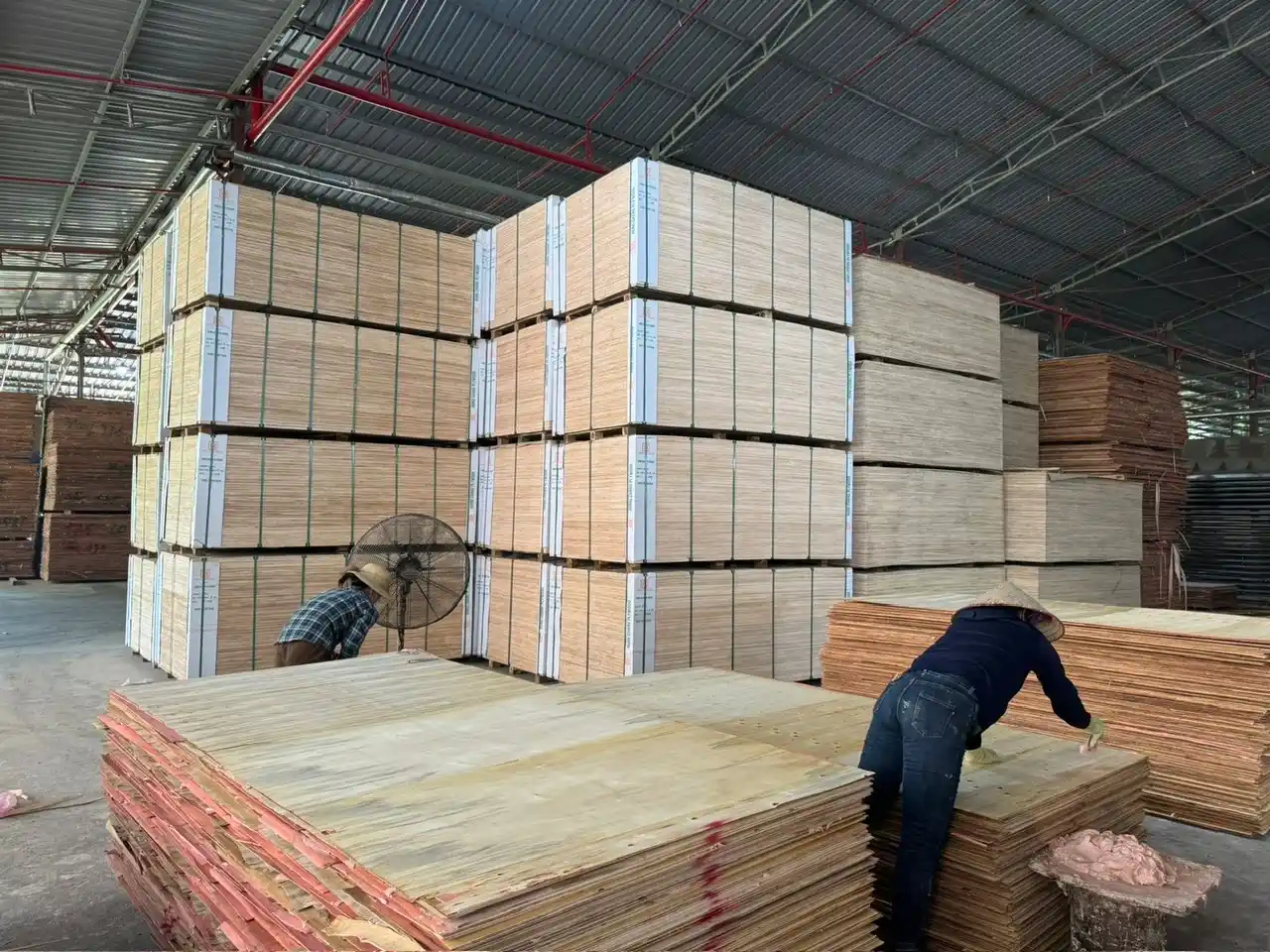
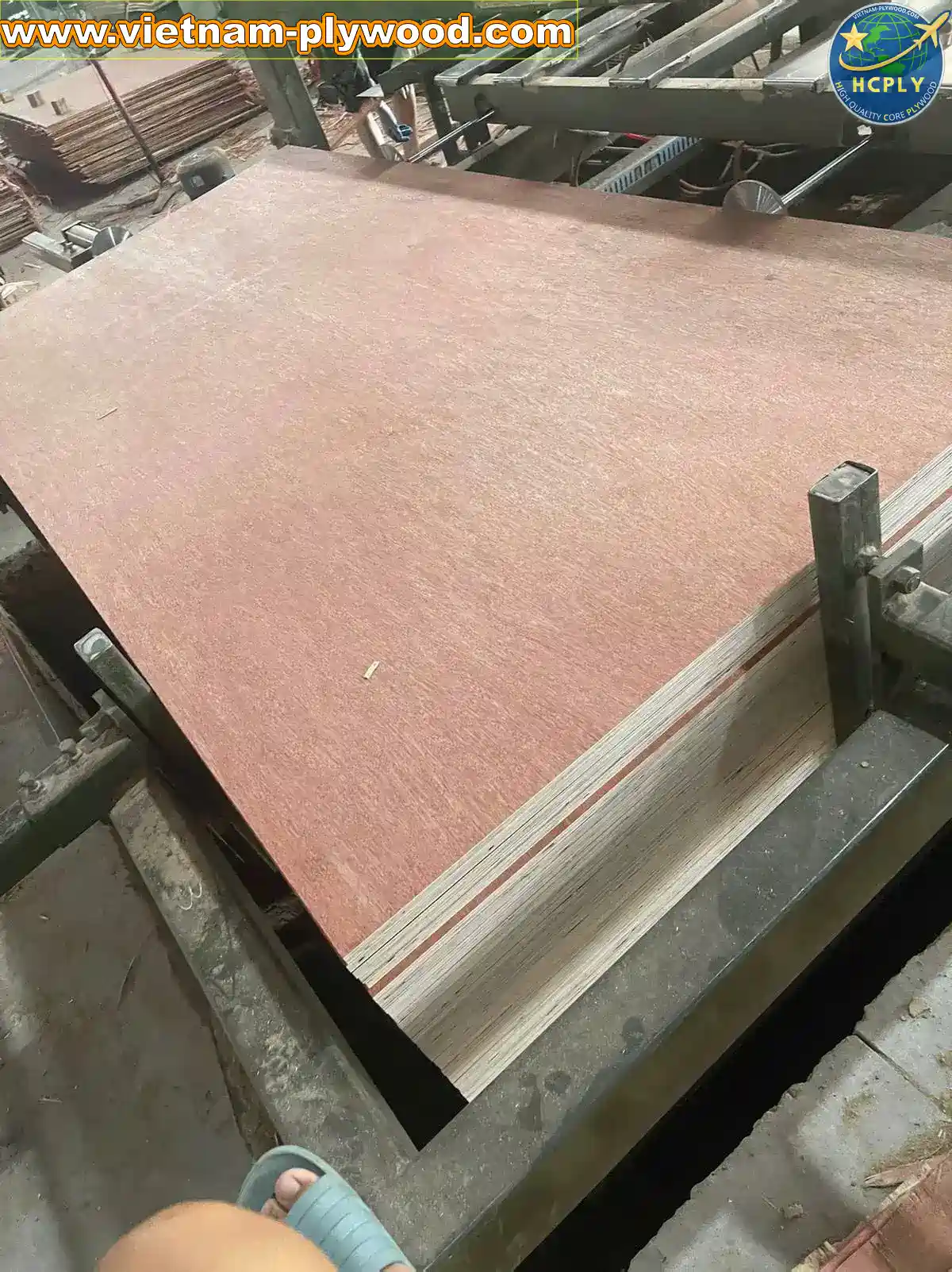

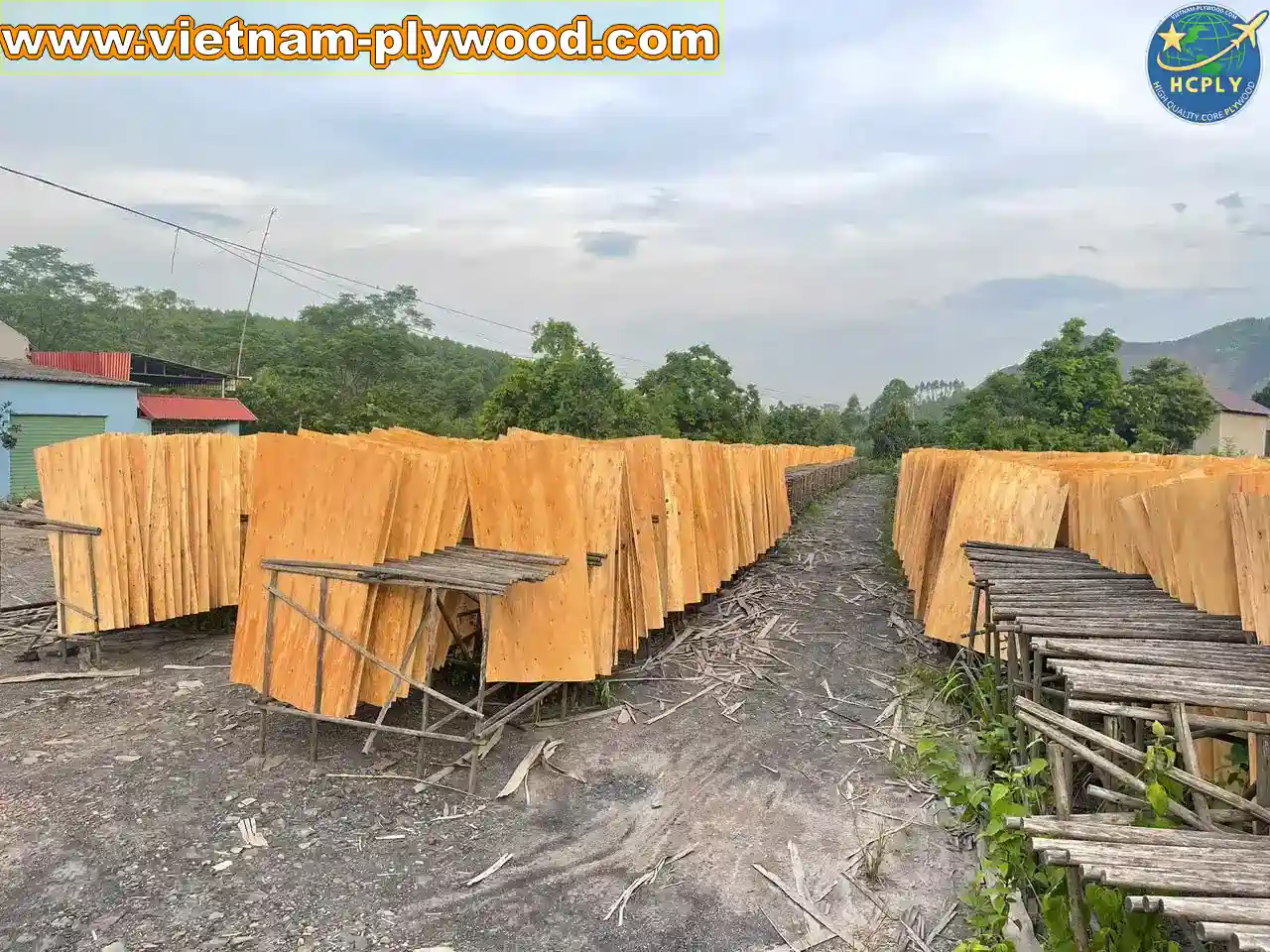

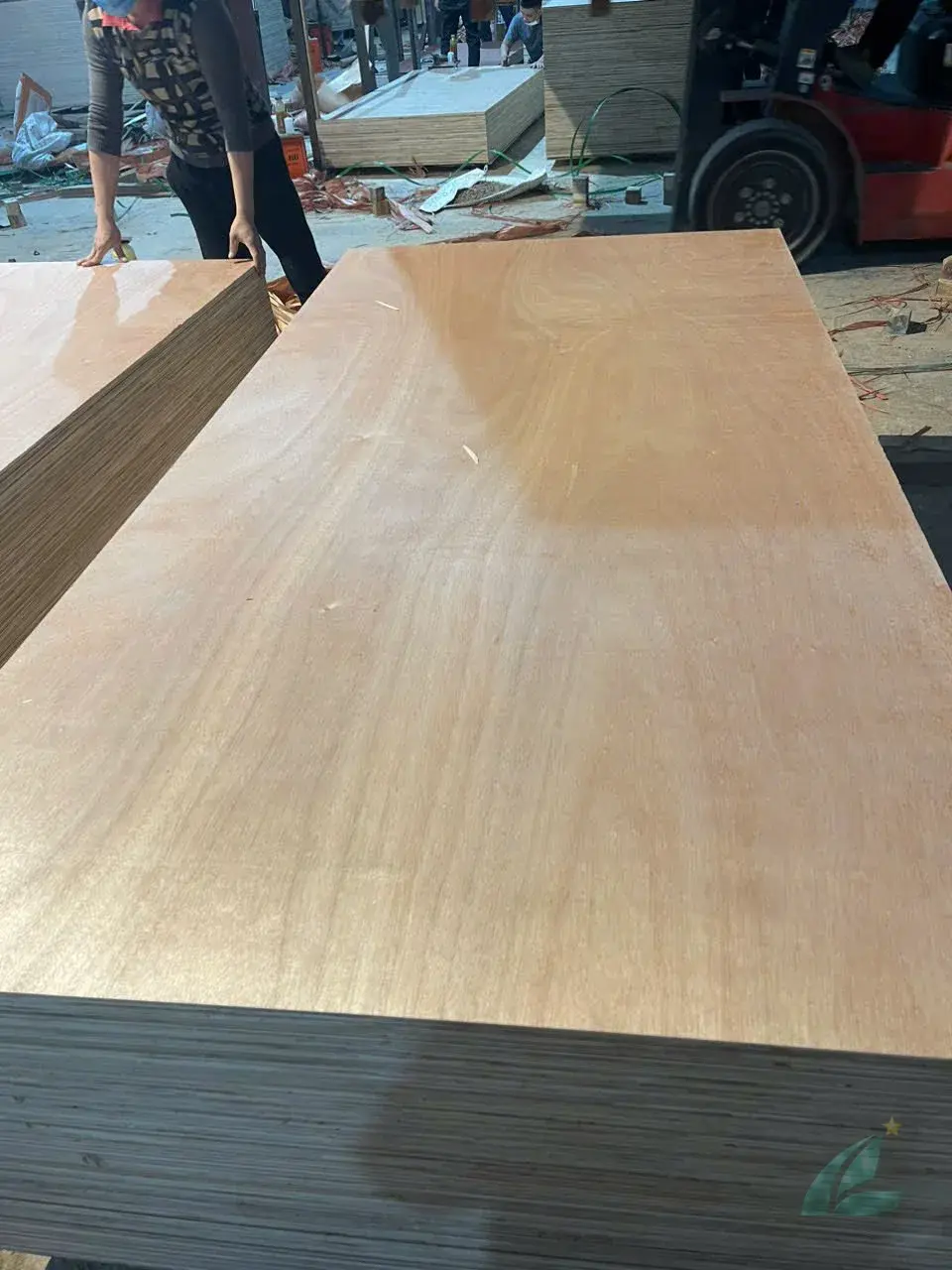
Vietnam has become a major source for okoume face plywood in Europe, the Middle East, and Southeast Asia. The reason is straightforward: Vietnamese factories press imported okoume veneer over locally grown styrax or eucalyptus core, producing panels that match the appearance of African-processed okoume at 15–25% lower FOB cost — with full export certification available.
This guide covers what okoume plywood from Vietnam actually is, the key specifications that affect price and performance, how to evaluate exporters, and which certifications matter for your market.
📋 What Is Okoume Face Plywood?
Okoume is a tropical hardwood (Aucoumea klaineana) native to Gabon and Central Africa. Its veneer is light pink to pale tan, with a fine, straight grain and minimal defects — which is why it became the default face veneer for European furniture-grade plywood through the mid-20th century (British Standard BS 1088 used okoume as the benchmark for marine-grade panels).
In the Vietnam model, okoume is used exclusively as the face veneer — the 0.2–0.4mm outer layer that determines appearance and grade. The structural core uses Vietnamese plywood raw materials: styrax (480–500 kg/m³) for lightweight furniture, or eucalyptus (650–750 kg/m³) for higher-density structural panels.
💡 Key Insight: The “okoume plywood” label refers to the face species, not the core. A Vietnamese okoume plywood panel with styrax core is technically different — and lighter — than one with eucalyptus core, affecting container packing capacity and freight cost.
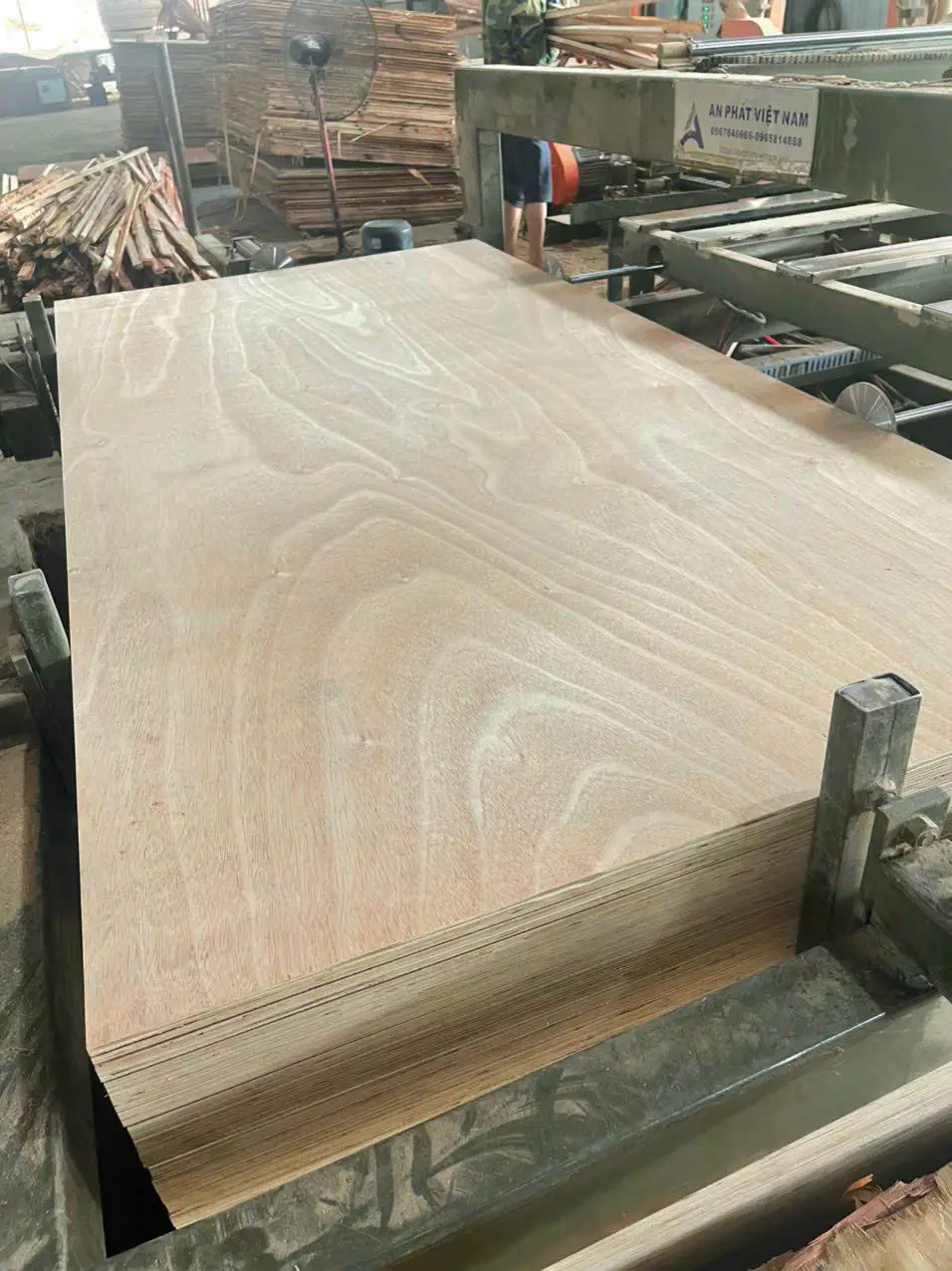
Standard grades exported from Vietnam:
| Spec | Value |
|---|---|
| Face species | Okoume (Gabon/Cameroon origin) |
| Face grade | A/B (clear face, tight knots, no open defects) |
| Face thickness | 0.2–0.4mm |
| Core options | Styrax, Eucalyptus |
| Glue | Melamine (MR) or Phenolic (WBP) |
| Emission | E0, E1, or E2 (specify per market) |
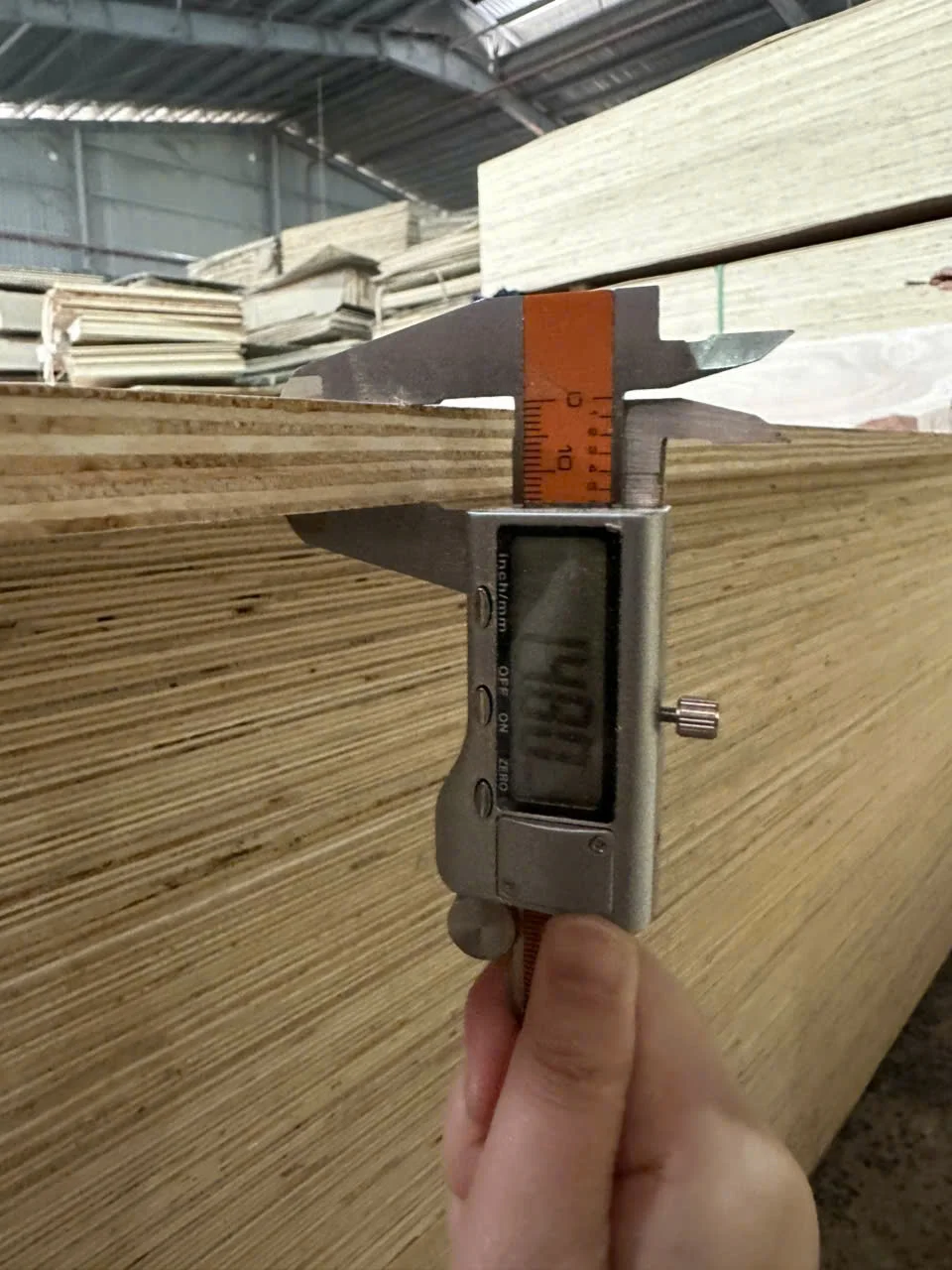
| Thickness range | 3–30mm |
| Sheet sizes | 1220×2440mm (4×8ft) or 1250×2500mm (metric) |
| Sanding | Yes — both faces calibrated |
🏭 Why Vietnam for Okoume Plywood?
Vietnam does not grow okoume. The country imports raw okoume logs and sliced veneer from Gabon, Cameroon, and Equatorial Guinea, then processes the panels in Northern Vietnam factories — primarily in Phú Thọ, Bắc Ninh, and Hà Nội provinces.
This processing model creates four structural advantages for international buyers:
-
Lower all-in cost. Vietnam factory overhead, labor, and plantation core costs are significantly below Chinese and African processing centers. FOB Hai Phong prices for okoume plywood typically run 12–20% below equivalent Chinese product (HCPLY internal pricing data, 2026).
-
No anti-dumping duties. Unlike Chinese plywood exports to the US, EU, and India, Vietnamese plywood does not face hardwood plywood anti-dumping orders — keeping landed cost competitive.
-
Full certification availability. Northern Vietnam factories producing premium furniture-grade okoume carry FSC chain-of-custody, CARB P2, CE, and ISO 9001. This matters because EUDR (EU Deforestation Regulation) compliance now requires traceable sourcing documentation — and reputable Vietnamese exporters provide full EUDR-ready paperwork as standard.
-
Short lead times. Production lead time from confirmed order to FOB loading is 15–20 days for standard specifications, versus 30–45 days from Chinese mills. This matters for buyers managing seasonal furniture production cycles.
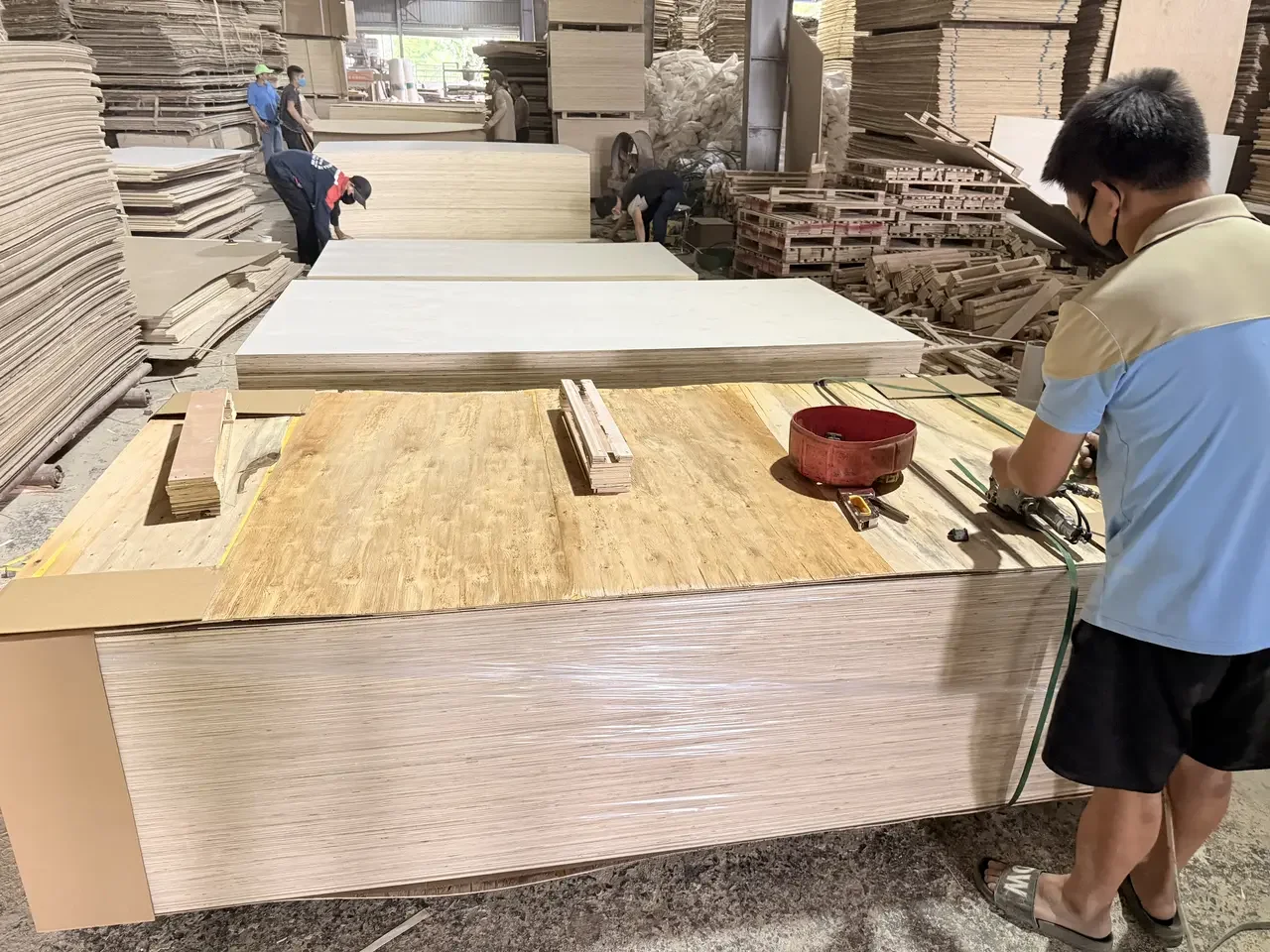
“European buyers often tell us they were sourcing okoume plywood from China for years, then switched to Vietnam after realizing the certification stack and FOB pricing were both better — without sacrificing surface quality.” — Lucy, International Sales Manager, HCPLY
📦 Specifications That Affect Sourcing Decisions
Before requesting quotes from Vietnam exporters of okoume face plywood, confirm these six spec points — they determine both price tier and which factory segment can fulfill the order.
📌 Core Species: Styrax vs Eucalyptus
Most European furniture buyers specify styrax core for okoume plywood. Styrax (480–500 kg/m³) keeps panel weight low — critical for flat-pack furniture and modular cabinetry where shipping weight and handling matter. An 18mm okoume/styrax panel weighs approximately 26.8 kg per sheet (1.22 × 2.44 × 0.018 × 500 = 26.8 kg for 1220×2440mm).
Eucalyptus core (650–750 kg/m³) is significantly denser — an 18mm eucalyptus-core panel weighs approximately 34.8 kg per sheet at 650 kg/m³. This suits structural applications where bending strength and screw-holding are priorities over weight.
Acacia core (~580 kg/m³) is available but primarily used for commercial and packing-grade products — not standard for furniture-grade okoume.
📌 Emission Standard: E0 vs E1
- E0 (≤0.5 mg/L formaldehyde): Required for US market (CARB P2 equivalent) and preferred for European furniture destined for enclosed spaces. Premium pricing applies.
- E1 (≤1.5 mg/L): Acceptable for most EU markets under EN 13986 for construction products and interior fitout. More price-competitive.
- E2: Not appropriate for indoor furniture. Specify only for external or industrial applications.
The glue type (Melamine MR vs Phenolic WBP) is a separate specification — MR and WBP refer to water resistance class, not formaldehyde emission. A panel can be MR glue + E0 emission. See the plywood glue types and emission standards guide for the full breakdown.
📌 Surface Finish
Furniture-grade okoume plywood is sanded on both faces — calibrated for thickness tolerance of ±0.3mm. This matters for furniture assembly where consistent thickness determines joint fit. If a supplier quotes “unsanded” okoume, that product is either commercial-grade or intended for further lamination (as a substrate for HPL or melamine paper), not finished furniture.
🔍 How to Evaluate Vietnam Okoume Plywood Exporters
Not all Vietnamese exporters operate at the same factory segment. The Vietnamese plywood industry separates into distinct tiers — and okoume buyers should understand this before requesting samples. The Vietnam plywood factory types guide details the full segmentation.
Red flags:
- Quoting okoume plywood at significantly below-market FOB price — this usually indicates acacia core (not styrax), E2 emission (not E0/E1), and loose-lay core construction rather than stitched.
- Unable to provide CARB P2 or E0 test reports from a named third-party lab (SGS, Bureau Veritas, Intertek, or equivalent).
- FSC certificate that lists only the factory — not the okoume veneer source. EUDR requires full chain-of-custody from the forest of origin.
- No on-site QC photos or video of actual production — reputable factories provide pre-shipment inspection documentation.
Green flags:
- Factory in Northern Vietnam (Phú Thọ, Hà Nội, Bắc Ninh region) — where 80%+ of export-grade plywood production is concentrated (Vietnam Timber and Forest Products Association, 2024).
- FSC certificate covering the okoume veneer input, not just the finished panel.
- Willingness to provide pre-shipment inspection access (third-party inspector or buyer’s agent at factory).
- Core construction details specified in the quote — full stitched vs edge-jointed vs loose-lay affects structural quality significantly.
✅ What Defines a Verified Okoume Plywood Exporter
HCPLY Okoume Plywood Specifications (2026)
| Parameter | Specification |
|---|---|
| Face | Okoume A/B grade, 0.2–0.4mm |
| Core | Styrax (standard) or Eucalyptus (heavy-duty) |
| Glue | Melamine (MR) — Phenolic (WBP) on request |
| Emission | E0 or E1 (CARB P2 available) |
| Thickness | 3–30mm (custom accepted) |
| Sheet size | 1220×2440mm or 1250×2500mm |
| Core construction | Full stitched (furniture grade) |
| Sanding | Both faces, ±0.3mm tolerance |
| Certifications | FSC, CARB P2, CE, ISO 9001, EUDR |
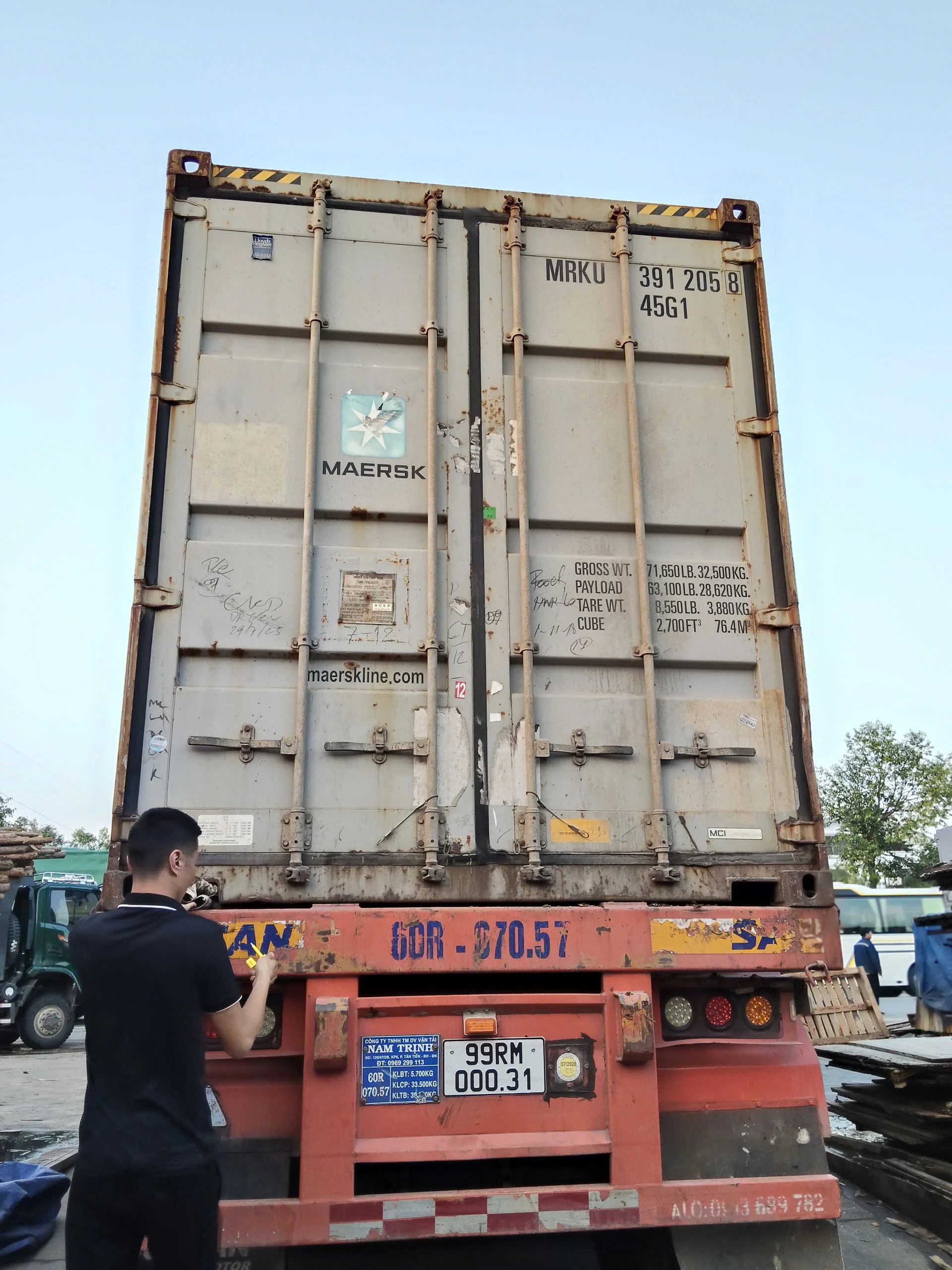
| MOQ | 1 × 40HC container |
| Lead time | 15–20 days |
| FOB port | Hai Phong, Vietnam |
Mixed specifications within one container are accepted — buyers can combine 12mm and 18mm, or 1220×2440 and 1250×2500, in a single shipment without MOQ penalty per spec.
For a direct comparison with bintangor face veneer — which competes with okoume in price-sensitive commercial markets — see bintangor vs okoume plywood.
Request a Free Okoume Plywood Quote from HCPLY
No commitment required. Quote includes product spec sheet, current FOB pricing, and lead time. New to sourcing from Vietnam? See how to buy plywood from Vietnam and how to import plywood from Vietnam.
🌍 Target Markets for Vietnam Okoume Plywood
Okoume from Vietnam ships to 20+ countries. Three markets account for the majority of volume:
Europe (Germany, France, Poland, Spain): Okoume is the traditional furniture-grade face veneer in Europe. Vietnamese okoume with E0/E1 emission and FSC certification meets EU Timber Regulation and emerging EUDR requirements. See the plywood certifications and export documentation guide for what documents EU buyers need at customs.
Middle East (UAE, Saudi Arabia, Jordan): Commercial-grade okoume (E1, acacia or styrax core) is cost-competitive with Chinese product while offering better surface consistency. Film-faced plywood competes in the construction plywood segment, but okoume dominates furniture and interior fitout.
Southeast Asia and India: Okoume faces competition from bintangor in price-sensitive markets, but commands a premium in furniture-grade applications. India’s BIS certification requirements apply to structural plywood, not furniture-grade okoume.
📊 Okoume vs Competing Face Veneers: Quick Comparison
| Face Veneer | Price Tier | Grain | Weight | Best For |
|---|---|---|---|---|
| Okoume | Budget-mid | Fine, straight | Light (styrax core) | EU furniture, marine, interior panels |
| Bintangor | Budget | Coarser, reddish | Medium | Commercial, packing, SE Asia |
| Birch | Premium | Very fine, white | Medium (styrax core) | Premium cabinets, US/EU/Korea |
| EV (Engineered Veneer) | Mid | Consistent, no defects | Medium | Modern furniture, cabinet liners |
| Gurjan | Premium | Dark, dense | Heavy | India furniture, marine |
Okoume occupies the intersection of acceptable appearance and budget pricing — it is the face veneer that EU furniture factories use when birch is too expensive but bintangor is too rough. For buyers sourcing face veneer plywood from Vietnam, the plywood face veneer types complete guide covers all species in detail.
Disclosure: This article is published by HCPLY, a Vietnam-based plywood manufacturer and export operator. While we aim to provide objective industry guidance, readers should consider our perspective as a market participant when evaluating recommendations.
🔗 Related Resources
- Okoume Plywood Vietnam — Full Product Specifications
- Bintangor vs Okoume Face Veneer — Comparison
- Vietnam Plywood Export Markets — Country Buyer Guide
- Plywood Face Veneer Types — Complete Guide
📝 Conclusion
Vietnam exporters of okoume face plywood offer a combination that is hard to match: imported okoume veneer at African-origin quality, pressed over Vietnamese plantation core, with full EU/US certification, at FOB pricing 12–20% below Chinese equivalents. For European furniture buyers, Middle East contractors, and US importers handling CARB P2 requirements, the Vietnamese supply chain for okoume plywood is mature, certified, and factory-direct.
The key differentiator between Vietnamese exporters is the factory segment — premium furniture-grade okoume (full stitched, E0, sanded) comes from a different production environment than commercial okoume (loose-lay, E1, unsanded). Confirm core construction type and certification evidence before placing the first order.
Get a Free Okoume Plywood Quote from HCPLY — factory-direct pricing, full certification package, and 15–20 day lead time.