






Is plywood from Russia the same as birch-face plywood from Vietnam?
Plywood from Russia describes a geographical origin; birch-face plywood describes the visible veneer. HCPLY presses imported birch face veneer onto Vietnamese styrax or eucalyptus cores on our furniture line. A birch appearance alone cannot identify the country where its veneer trees grew, or establish the non-preferential origin of the finished panel. Those are separate questions requiring linked records.
A mistaken origin declaration can delay clearance, expose an importer to penalties or leave a container detained. Our birch-face plywood specification begins with the face, core and intended furniture application; the origin file begins with the actual veneer lot. The invoice for a finished panel and the purchase record for its face veneer answer different questions.
For EU orders, ask for a chain from the veneer supplier’s declared harvest origin through the incoming lot, pressing batch and export shipment. The certifications and documentation library covers the related paperwork topics.
Is Baltic birch from Russia?
“Baltic birch” is a commercial description, not a reliable country-of-harvest declaration. Birch grows in several regions; a trade name does not distinguish Russian veneer from material harvested elsewhere. A buyer needs the species, actual harvesting country and records identifying the purchased lot.
Our birch-face product uses imported face veneer on Vietnamese cores; we do not press birch-core plywood. A product with birch on its surface can therefore have a different construction, density and documentary history from all-birch plywood.
Do not substitute the supplier’s shipping address for the tree’s harvest location. Match the harvest declaration to purchase, transport and inventory records, then compare those with the lot assigned to the press.
Does the EU anti-circumvention duty apply to birch plywood from Vietnam?
The EU’s 2024 anti-circumvention extension specifically covered the defined birch plywood product consigned from Türkiye and Kazakhstan, including shipments declared as originating there; it did not name Vietnam in that extension. The European Commission’s 2024 announcement explains the investigation and the difference between anti-dumping enforcement and sanctions.
The product definition, applicable measures on the declaration date, genuine non-preferential origin and any Russian-origin inputs still need examination. Have the importing customs specialist check the current TARIC treatment against the exact construction and code before purchase.
The European Commission’s 2024 measure described the investigated goods as plywood with at least one birch outer ply under its specified tariff definition. It also described transhipment and final completion as circumvention patterns. That history makes a transparent record of what was actually pressed, and where the raw veneer came from, commercially significant.
How do EU sanctions differ from anti-dumping duties?
Sanctions restrict specified Russian or Belarusian goods and activities; anti-dumping duties are separate trade-defence measures attached to defined imports. Equally, a country-of-origin certificate alone cannot resolve the origin of every wood component.
The European Commission’s 2025 sanctions alert identifies repackaging and relabelling of plywood through third countries as a risk. The Estonian Tax and Customs Board’s customs guidance explains that operators importing plywood from third countries must examine whether the material actually originated in Russia or Belarus.
The Estonian authority also distinguishes preferential origin documentation from evidence supporting non-preferential origin. Buyers should ask their EU customs team to evaluate the finished board and its veneer inputs under the applicable rules, rather than treating a Vietnamese bill of lading as proof of harvest origin.
How can a buyer prove where the birch face grew?
A usable evidence trail identifies the birch veneer lot and links it to the finished plywood shipped. Start upstream and work forward through the producing factory. The required detail should be agreed before the first veneer purchase allocated to the order.
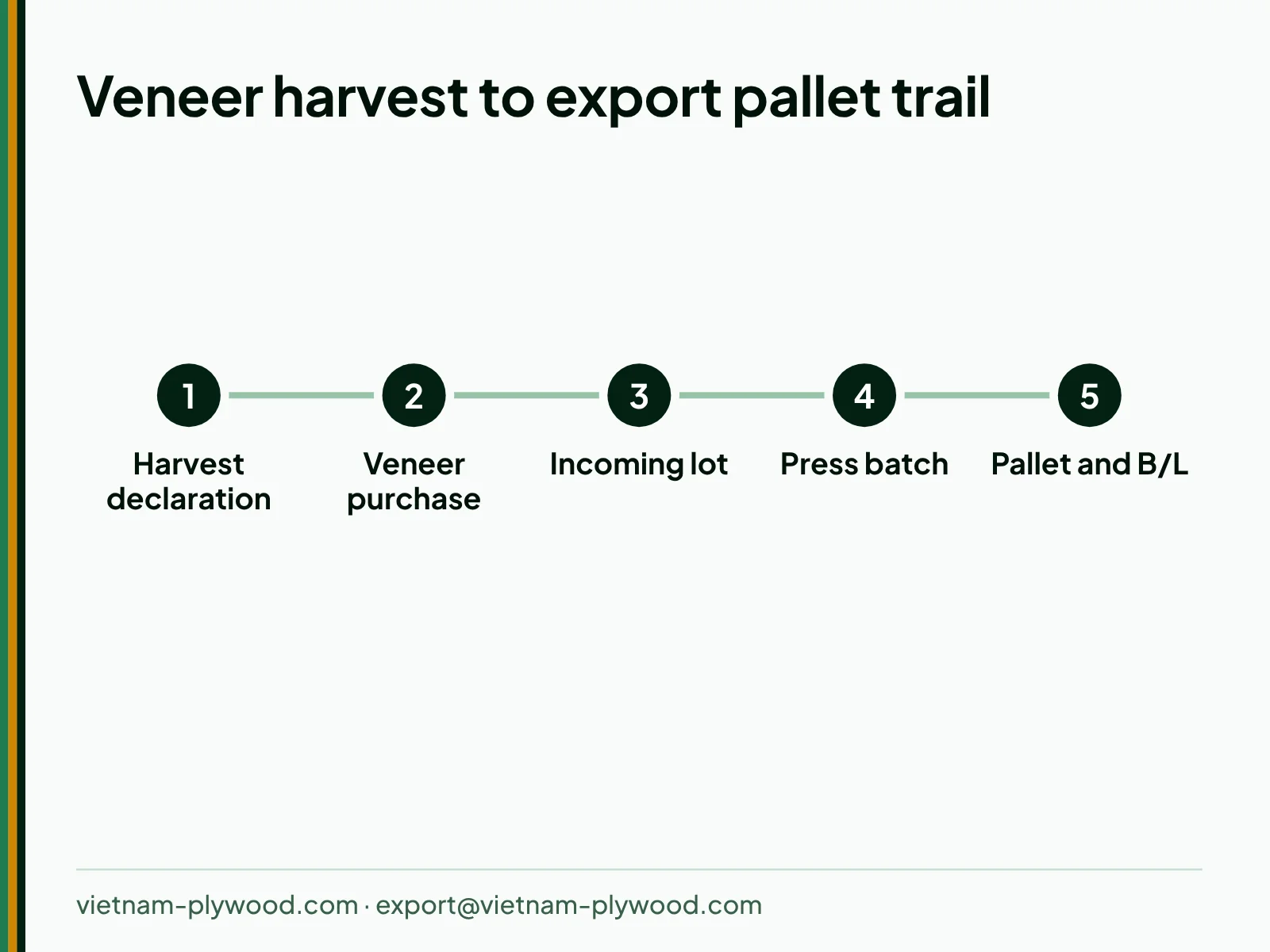
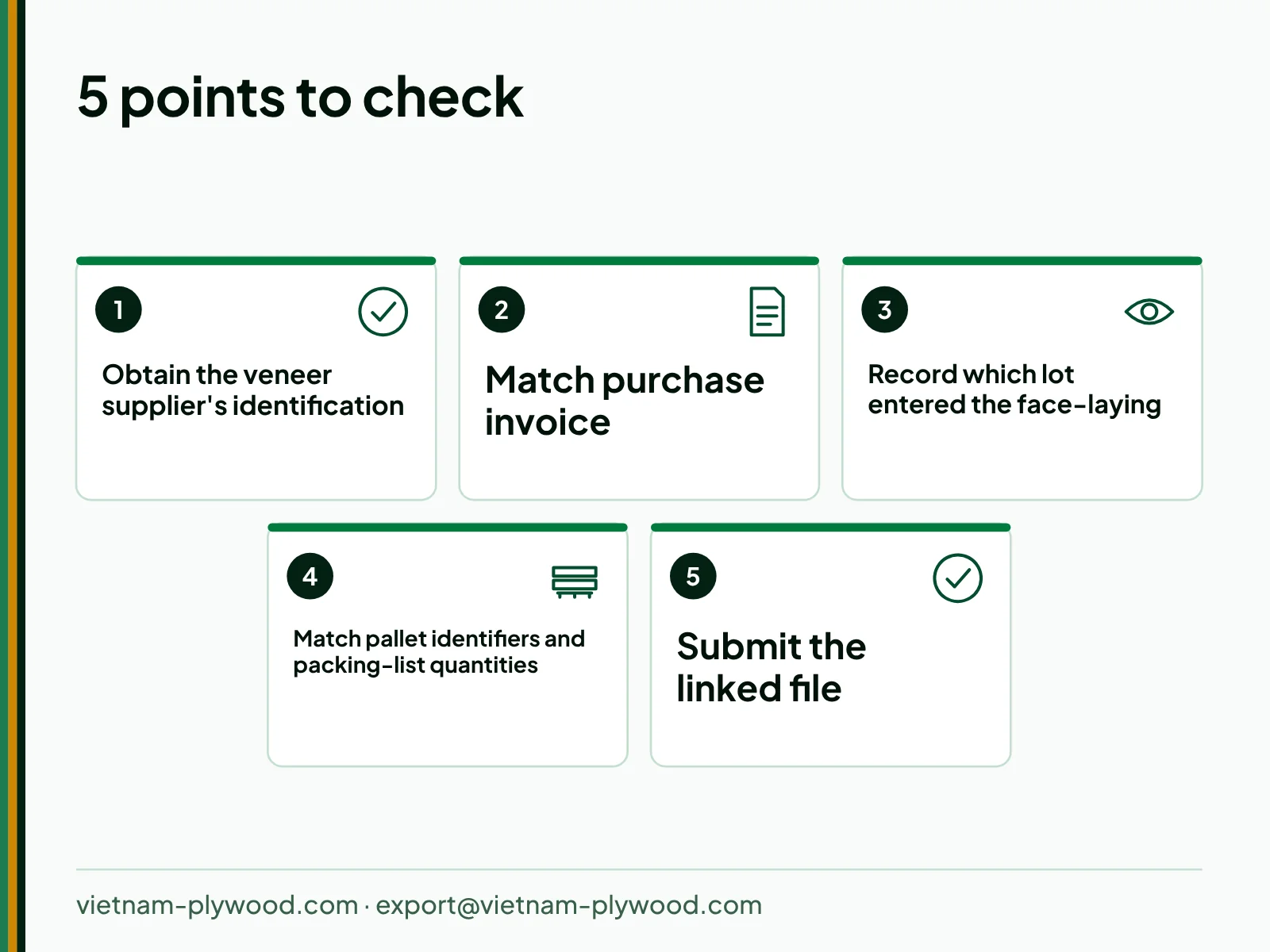
- Obtain the veneer supplier’s identification, species declaration, harvesting country and available harvest-level evidence for the lot.
- Match purchase invoice, delivery or transport papers and incoming inventory identification to that veneer lot.
- Record which lot entered the face-laying and hot-press batch, and which finished pallets came from that batch.
- Match pallet identifiers and packing-list quantities to the export invoice and bill of lading (B/L).
- Submit the linked file to the importing compliance team for sanctions, customs-origin and deforestation checks.
Where upstream records lack harvest-level detail required by the destination’s rules, obtain the missing information before treating the dossier as complete.
What can an inspector witness at the producing factory?
The inspector can compare incoming birch veneer lot markings with purchase records, then follow the lot into the face-laying and pressing records. At the producing factory, buyers can inspect veneer bundles, core construction, batch identification and finished pallet labels. They can also compare the export packing list against the goods loaded.
HCPLY runs on-site quality control and export documentation, with visits at the factory office and inspection at the factory producing the order. The physical inspection checks that the panel construction and batch trail agree; it cannot independently establish the geographic harvest origin without upstream evidence.
For furniture orders, our furniture line uses stitched, sanded styrax or eucalyptus cores. A buyer can witness face identification and thickness measurement against the written tolerance, then check whether the pallet batch references the same veneer lot shown in the purchase file.
Which factory line builds the requested panel?
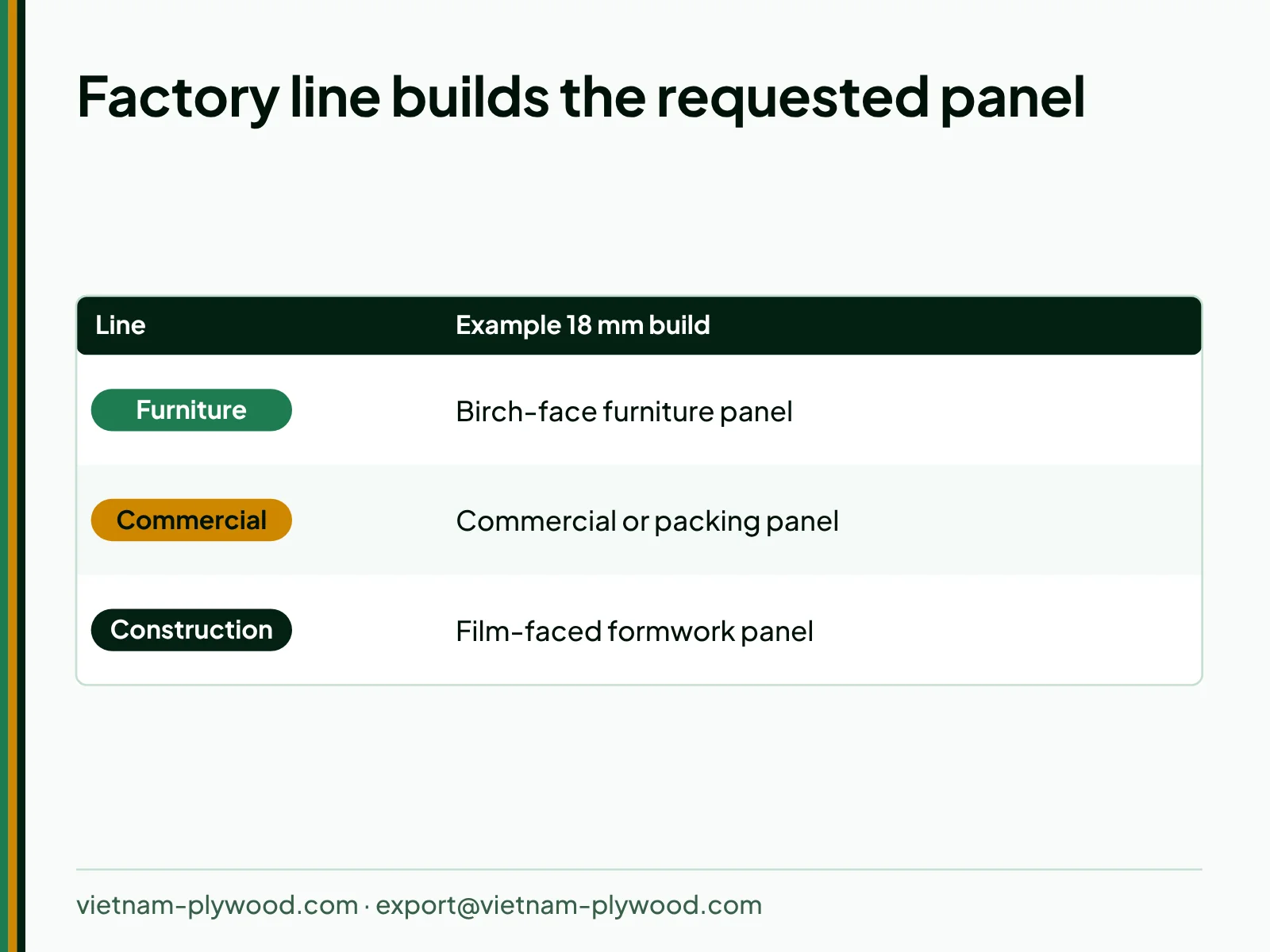
Our furniture line presses birch-face panels for cabinet and fit-out applications. The other lines serve different constructions, even when a buyer requests the same nominal thickness. This distinction helps prevent an origin dossier for a decorative face being mistaken for one covering a different plywood build.
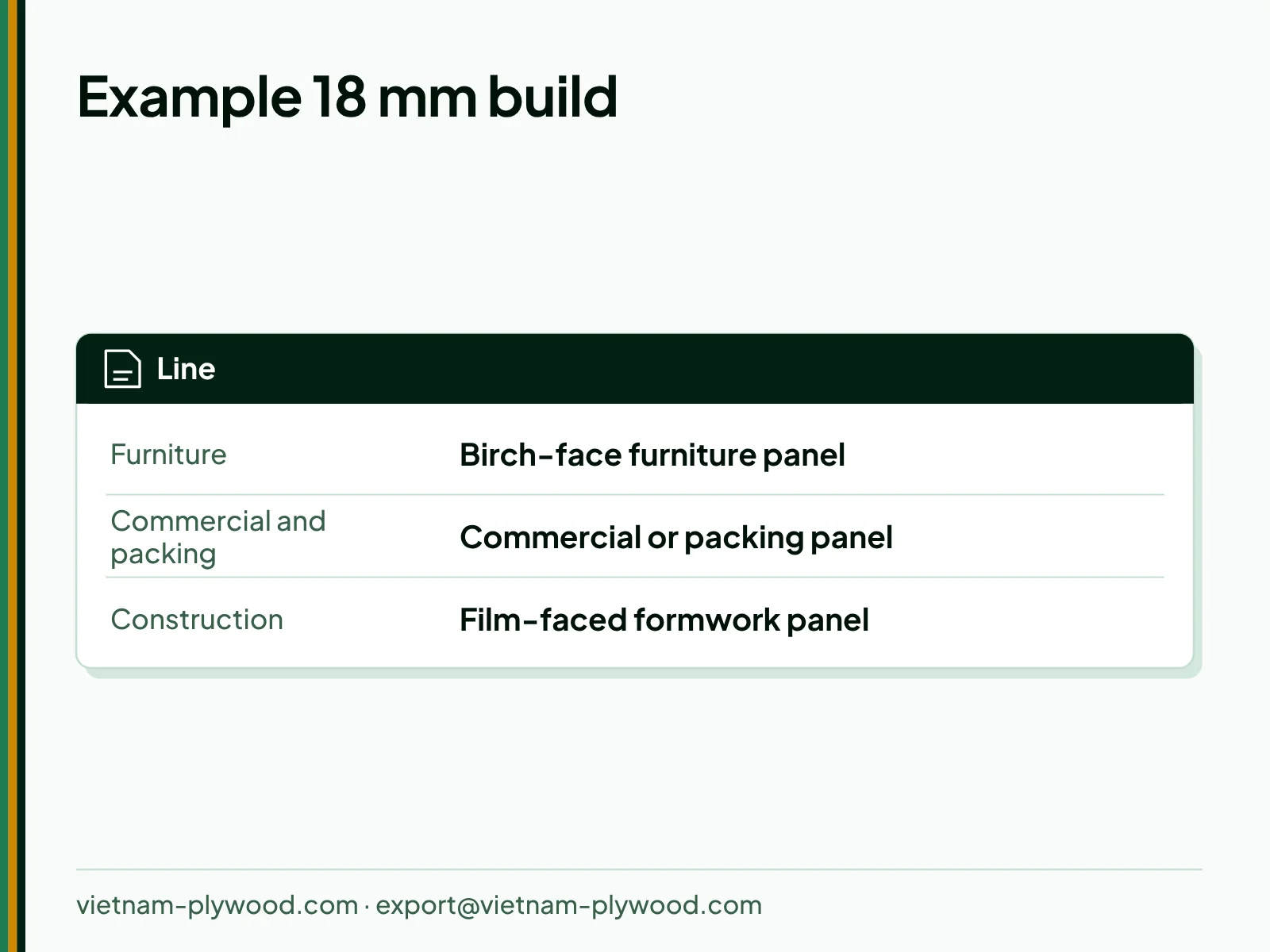
| Line | Example 18 mm build | Core and finish | Relevant record |
|---|---|---|---|
| Furniture | Birch-face furniture panel | Styrax or eucalyptus; full stitched, sanded | Imported birch face lot linked to press batch |
| Commercial and packing | Commercial or packing panel | Acacia; MR glue; unsanded or light-sanded | Acacia core and production lot records |
| Construction | Film-faced formwork panel | Acacia or eucalyptus; film surface, unsanded | Film and core batch identification |
For the furniture panel, specify the face grade separately from the core and emission class. Birch face grades in our range are D, E or F. Furniture sanded thickness tolerance is ±0.2 mm or ±0.3 mm as ordered; length and width tolerance is ±2 mm. These measurements are product acceptance checks, separate from origin compliance.
What does the EU Deforestation Regulation add?
The EU Deforestation Regulation (EUDR) adds harvest-location, legality and deforestation due-diligence requirements for relevant wood products. The European Commission’s 2026 implementation overview lists 30 December 2026 for medium and large operators and 30 June 2027 for micro and small operators, with the stated special treatment for existing timber-regulation coverage.
For a composite panel, the importing operator must determine the applicable product scope and traceability requirements, including the wood inputs involved. Obtain the required upstream information from the veneer source and the Vietnamese core supply chain.
Use the EUDR application dates explainer for timing. Sanctions screening and EUDR due diligence should be recorded as distinct decisions.
Which export papers travel with the container?
HCPLY prepares the commercial invoice, packing list, B/L, certificate of origin, phytosanitary and fumigation papers, plus insurance for CIF shipments. EU lots include EUR.1 where applicable and the EUTR/EUDR file set; agreed certificate documents and test reports accompany the order.
The birch veneer purchase and origin papers should be cross-referenced to the factory batch and pallet list. The certificate of origin addresses the finished shipment under its applicable origin rules; the veneer purchase trail addresses the origin of an imported component. After loading, the draft shipping documents come to you for approval.
Before release, compare the consignee, goods description, shipment quantity, pallet marks and manufacturing batch across the file. An EU customs reviewer can then request the underlying veneer evidence without trying to reconstruct the chain from unrelated documents.
Can a birch-face trial order share a container?
A trial order can mix specifications within one 40HC, provided the combined load stays within the 28.5 t payload limit. For 18 mm, 1220 × 2440 mm styrax-core furniture panels, the computed full-container reference is 990 sheets, 53.05 m³ and 26.52 t. This is a packing reference, not a requirement to order only one specification.
If a buyer mixes the birch-face furniture build with commercial panels, each specification needs its own lot and pallet identification. Review the mixed-container arrangements and container packing reference when preparing the loading plan.
A mixed shipment should still give the importing reviewer a clear mapping from each declared product line to its physical pallets and manufacturing records.
What should be checked before placing the order?
Before placing the order, agree the exact product construction, the source evidence needed for birch veneer and the destination’s customs review requirements. A complete specification prevents a visually correct panel arriving with documentation that the importer cannot use.
Ask the importing team to check the current tariff classification and trade-defence status, Russian and Belarusian sanctions exposure, and EUDR obligations. For US-bound orders, the separate Lacey Act plywood guide and Section 232 tariff discussion address other destination questions.
Send the written requirements to Lucy at export@vietnam-plywood.com. For the first shipment, request a trial container and agree the veneer lot documentation and inspection checkpoints before production.
What specification should the buyer send?
Include the application, face construction, production line, emission class and the destination port. Specify the harvest-origin evidence required for the imported birch veneer as an additional documentary condition.
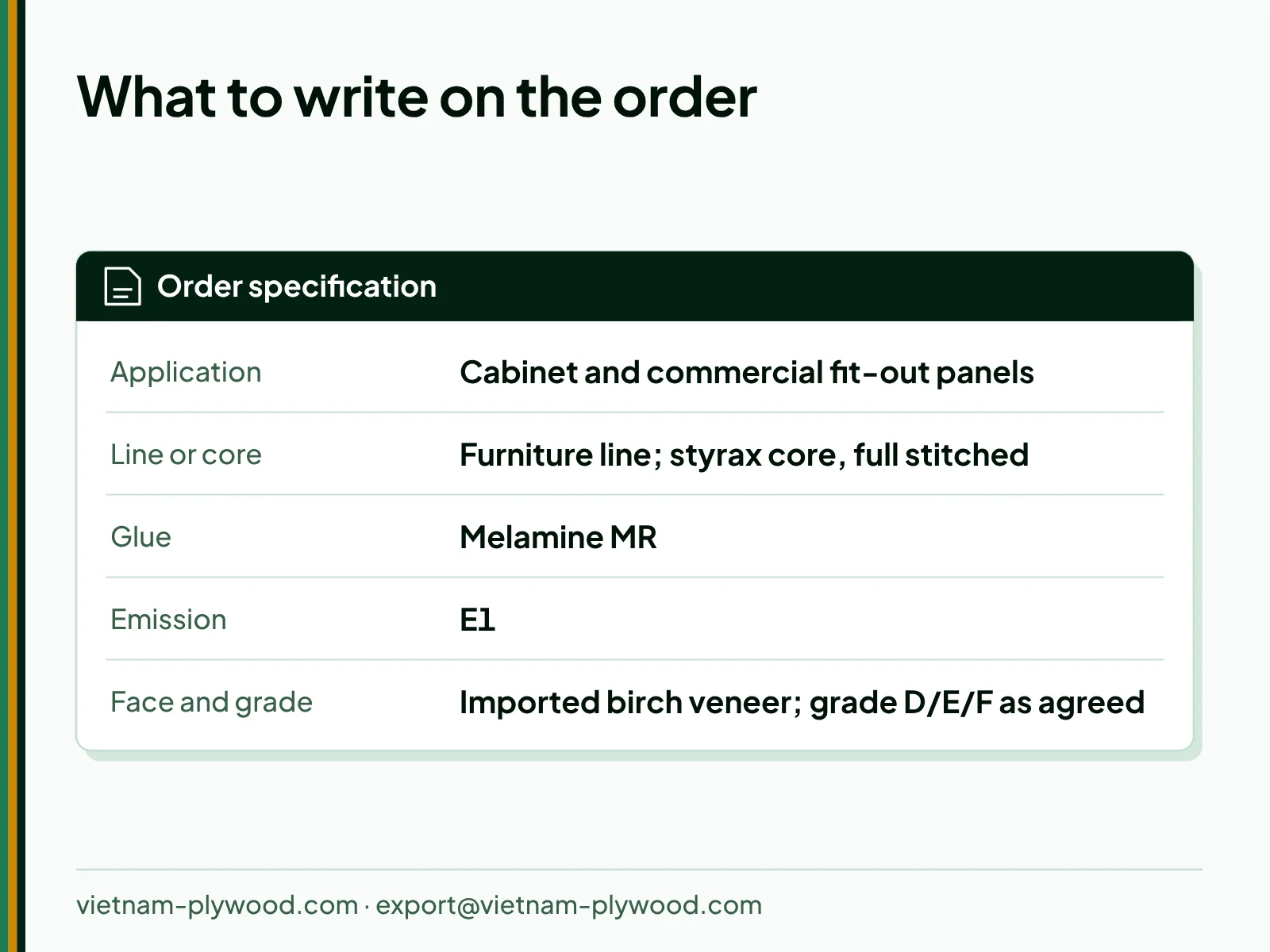
Application: Cabinet and commercial fit-out panels
Line or core: Furniture line; styrax core, full stitched
Glue: Melamine MR
Emission: E1
Face and grade: Imported birch veneer; grade D/E/F as agreed
Thickness and tolerance: 18 mm; ±0.2 mm sanded
Size: 1220 × 2440 mm
Quantity: One 40HC trial container; mixed specification if agreed
Destination port: [name EU port]
Origin evidence: Birch veneer harvest country, supplier lot and batch link
Next step: plan a trial container with Lucy and attach the importer’s origin-evidence checklist to the enquiry.