

Factory reference issued by HCPLY Vietnam — based on production data from 1,000+ verified container loads, not online shipping calculators.
The plywood pallet height limit is the single number that determines sheets per pallet, pallets per container, total CBM, and total weight. An error here propagates through every export document and every freight cost calculation.
— David Duc Do, Export Project Leader, HCPLY Vietnam (10+ years, India/South Asia specialist)
📋 Why the Pallet Height Limit Matters More Than You Think
The plywood pallet height limit for a 40HC container is 1000mm. Most buyers accept this number from their supplier without questioning it — and that is the correct approach, provided the supplier explains what is and is not included in that measurement.
The problem is that online calculators, competitor datasheets, and general container logistics guides quote a range from 900mm to 1100mm. A buyer comparing packing lists from two Vietnamese suppliers will often find different sheet counts for the same thickness. The pallet height definition is why.
This article explains the physics behind the 1000mm standard, why the ceiling height of the 40HC container is nearly irrelevant to this limit, what the three actual constraints are, and how to use the limit correctly in procurement calculations — whether you are verifying a supplier’s packing list or calculating the landed cost of a new order.
The 1000mm rule is not a guideline. It is the result of three physical limits that intersect at that specific number (HCPLY production data, 2026).
📦 40HC Internal Dimensions — What Constrains Pallet Height
Before addressing the pallet itself, it is worth understanding the container geometry, because most buyers assume the 2,698mm internal height is what limits stacking. It is not — at least not for plywood.
📌 Internal Height: 2,698mm
The 40HC (40-foot High Cube) has an internal height of approximately 2,698mm, compared to 2,392mm for a standard 40ft container (ISO 668, Lloyd’s Register, 2024). That extra 306mm is why the 40HC became the default container for plywood export — it allows taller pallets and, in some cargo types, double stacking.
For plywood, a single pallet at 1000mm stack height plus a 100–120mm pallet base gives a total loaded height of approximately 1,100–1,120mm. That leaves over 1,500mm of clearance to the container roof. The ceiling is not the problem.
📌 Internal Width: 2,352mm
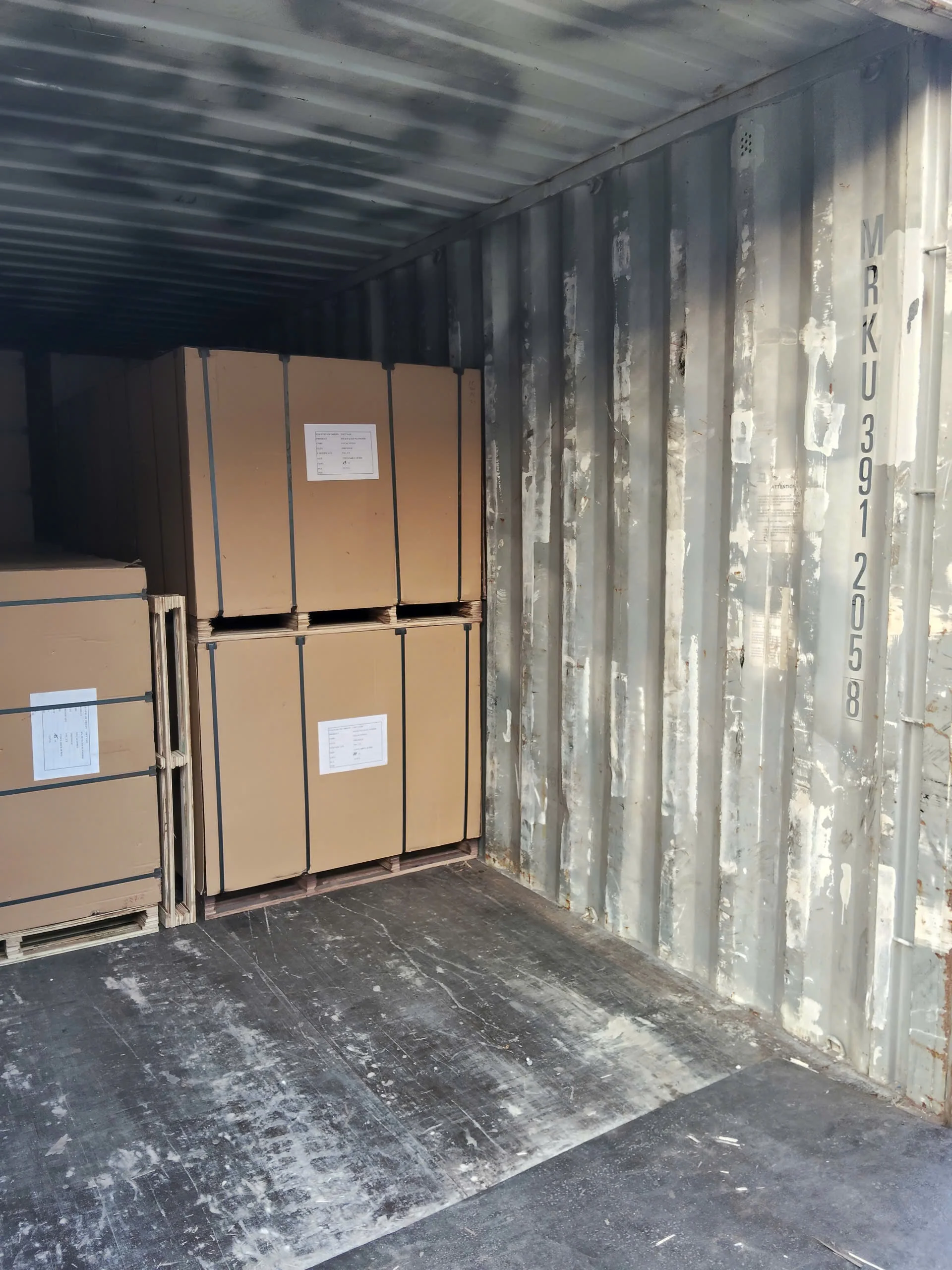
The internal width of 2,352mm is more relevant. Two 1220mm plywood pallets placed side by side span 2,440mm — wider than the container interior. This is why the 4×4 flat arrangement (16 pallets) with 2 pallets loaded vertically at the front is the standard layout for 1220×2440mm sheet configurations (iContainers, 2024).
📌 Maximum Payload: 28.5 MT
The 28.5 MT payload ceiling is the binding constraint for dense-core plywood. The container ceiling at 2,698mm is irrelevant if the payload limit is reached before the volume is filled. For eucalyptus core plywood (density ~700 kg/CBM), a full 40HC hits 28.5 MT at just 15 pallets — leaving significant empty height but zero remaining weight allowance.
Understanding these three dimensions in sequence is the foundation for understanding why the pallet height limit exists at 1000mm and not higher.
⚙️ The Three Constraints Behind the 1000mm Rule
The 1000mm plywood pallet height limit is not an arbitrary factory preference. It is the lowest common denominator across three independent physical constraints. All three must be satisfied simultaneously, and 1000mm is the number where all three are met without compromise.
📌 Constraint 1: Forklift Stability
Standard 2.5-ton forklifts handle plywood pallets at the factory dispatch floor and at the destination warehouse. A pallet stacked to 1000mm has a center of gravity at approximately 500mm above the forks — within the stability envelope of a 2.5-ton machine operating on a level surface.
At 1100mm stacking height, the center of gravity rises to 550mm. This is still within rated capacity on a flat floor, but the margin for uneven port surfaces, ramp approaches, and container floor deflection shrinks. At 1200mm, forklift tip risk becomes measurable at port conditions. Factories that have tested higher stacking heights report increased near-miss incidents at stacking heights above 1050mm (HCPLY production data, 2026).
The 1000mm limit preserves the full stability margin for forklifts handling plywood in real port conditions — not laboratory specifications.
📌 Constraint 2: Payload Ceiling
The second constraint is the 28.5 MT payload limit of the 40HC container.
For eucalyptus core plywood (density ~700 kg/CBM), each additional 50mm of stacking height per pallet adds approximately 80–90 kg across one pallet. Multiplied by 15 pallets, that is 1,200–1,350 kg of added total weight — enough to push a fully loaded eucalyptus container from 28.0 MT to 29.2–29.3 MT, which is 0.7–0.8 MT over the payload ceiling.
The payload ceiling applies before CBM optimization. For all three Vietnamese core species, 1000mm stacking height keeps the payload under 28.5 MT:
| Core Species | Density (kg/CBM) | Max Pallets | Weight at 1000mm Stack | Payload Margin |
|---|---|---|---|---|
| Styrax | ~500 | 18 | ~26.5 MT | 2.0 MT |
| Acacia | ~580 | 16 | ~27.5 MT | 1.0 MT |
| Eucalyptus | ~700 | 15 | ~28.0 MT | 0.5 MT |
Raising stacking height to 1100mm eliminates the payload margin for eucalyptus core entirely. Even for styrax, the margin narrows from 2.0 MT to approximately 0.5 MT — leaving no buffer for moisture absorption, dunnage, or strapping material weight (HCPLY production data, 2026).
📌 Constraint 3: Documentation Consistency
The third constraint is often overlooked by buyers focused on physical limits. Every number in a plywood shipment’s packing list — sheets per pallet, pallets per container, total CBM, total weight — flows from the pallet height limit. The packing list, commercial invoice, and bill of lading must all reflect the same data.
If a factory stacks pallets to 1050mm but the packing list states 1000mm, the sheet counts are inconsistent. Customs authorities at destination ports cross-check packing list sheet counts against declared CBM. A discrepancy of 5–10 sheets per pallet across 16–18 pallets generates an audit flag that delays cargo release.
The 1000mm limit is also the number used in HCPLY’s packing list template, ensuring that every document issued for every shipment references a consistent, verifiable standard (HCPLY production data, 2026).
📐 Sheets Per Pallet — The 1000mm Formula in Practice
The practical output of the 1000mm limit is a direct formula for calculating sheets per pallet:
Sheets per Pallet = ROUNDDOWN(1000 ÷ Thickness_mm)ROUNDDOWN (not standard rounding) is mandatory. Any stack that exceeds 1000mm — even by one sheet — violates the limit and invalidates the packing list calculation.
Standard Reference Table
| Thickness (mm) | Sheets per Pallet | Actual Stack Height (mm) |
|---|---|---|
| 3mm | 333 | 999 |
| 5mm | 200 | 1000 |
| 6mm | 166 | 996 |
| 9mm | 111 | 999 |
| 12mm | 83 | 996 |
| 15mm | 66 | 990 |
| 18mm | 55 | 990 |
| 21mm | 47 | 987 |
| 25mm | 40 | 1000 |
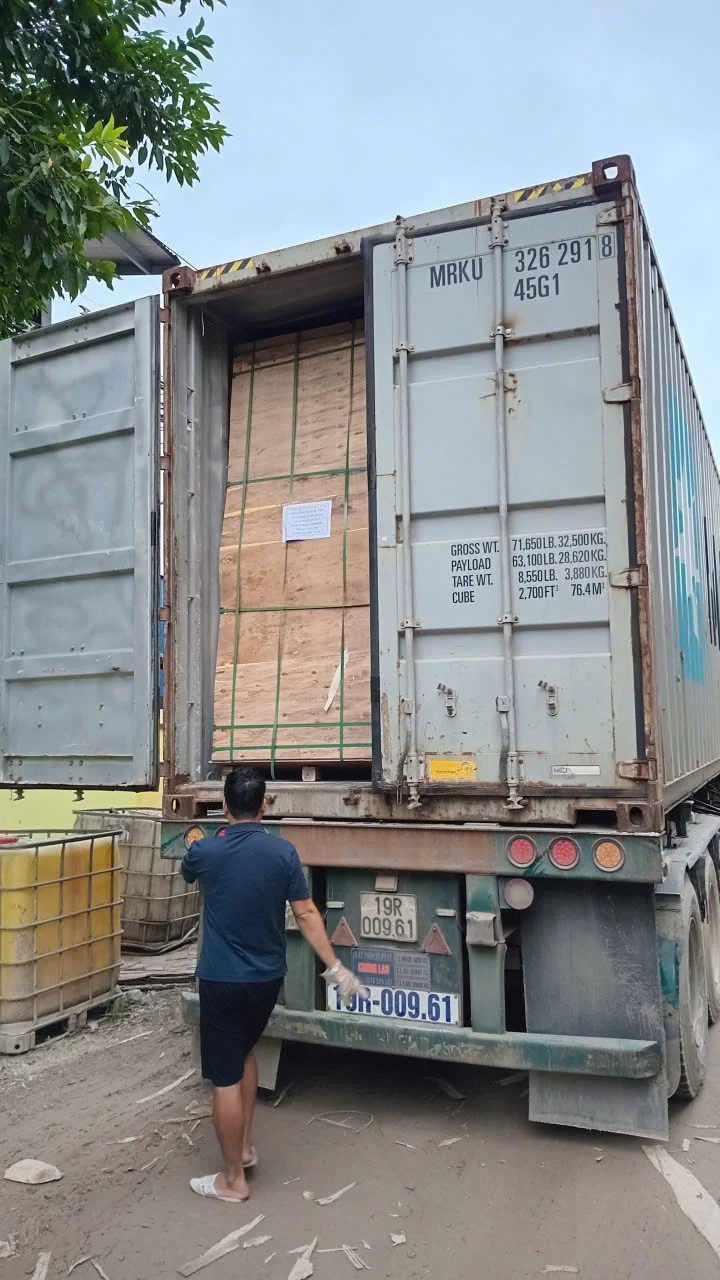
The actual stack height will vary slightly from the nominal calculation due to the ±0.3mm sheet thickness tolerance. At 18mm nominal, actual sheet thickness may be 17.7–18.3mm. For a 55-sheet pallet, the real height range is 974–1007mm. The ROUNDDOWN formula absorbs this variance — a 55-sheet pallet at 18.3mm actual thickness reaches 1,007mm, which is within the 5mm manufacturing tolerance band (HCPLY production data, 2026).
For a full breakdown of how these per-pallet numbers translate to full-container CBM and weight totals, see the plywood CBM calculation formula guide which extends this table through each core species combination.
🔍 Why 900mm vs 1000mm — Resolving the Supplier Discrepancy
If you have requested packing data from multiple Vietnamese plywood suppliers, you will have noticed that some quote 900mm stacking height and others quote 1000mm. Both may be technically correct — the discrepancy comes from what is included in the measurement.
Convention A (900mm, total-included): The supplier states pallet height as the complete loaded height including the pallet base. A typical wooden export pallet base measures 100–120mm. A 900mm stated height means approximately 780–800mm of sheets plus 100–120mm of pallet base.
Convention B (1000mm, sheet-only): The supplier states pallet height as the sheet stack only, excluding the pallet base. This is the HCPLY convention. Total loaded height (sheets + base) is approximately 1,100–1,120mm.
The physical result is nearly identical. The difference is documentation convention. The critical risk is when a buyer uses the supplier’s stated height to calculate sheet counts independently and applies the wrong convention. Using 900mm sheet-only on an 18mm product gives 50 sheets per pallet (not 55), reducing total container sheets by 80 units for an 18-pallet styrax load — a 8.4% undercount that affects the entire price calculation.
⚠️ Important: When requesting packing data, always ask explicitly: “Is your stated pallet height sheets-only or does it include the pallet base?” Document the answer. This single clarification prevents the most common packing list discrepancy in Vietnamese plywood procurement.
The plywood pallet configuration reference guide provides the full dimensional breakdown including pallet base heights by pallet type used in HCPLY’s three production facilities.
🏭 Pallet Height Limit by Core Species — Practical Impact
The pallet height limit interacts with core species density in ways that directly affect how many containers a buyer needs to order. Understanding this interaction prevents over-ordering or under-ordering at scale.
Styrax Core — 18 Pallets, Maximum Efficiency
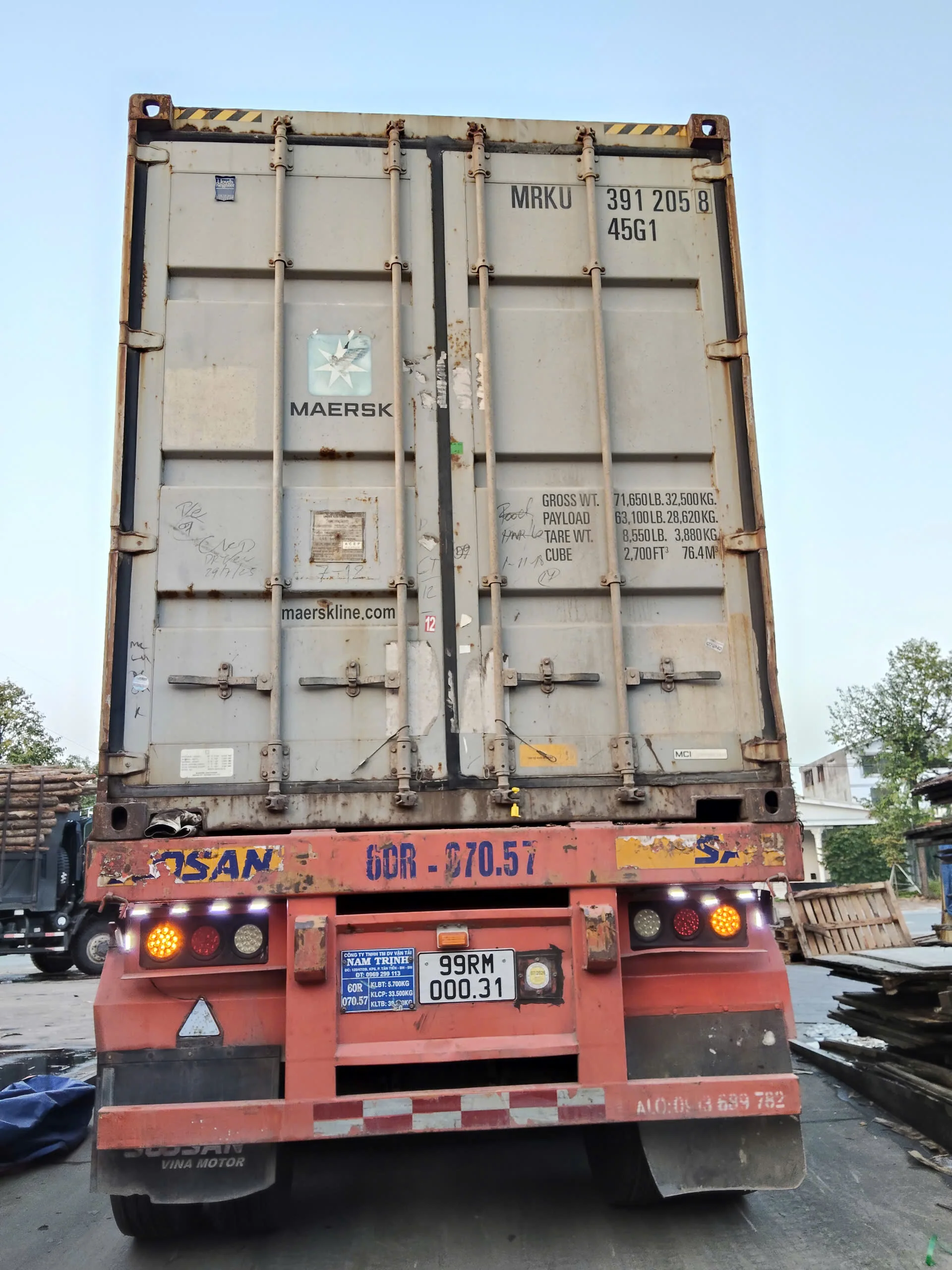
At ~500 kg/CBM density, styrax core gives the most favorable pallet-height-to-weight ratio. At 1000mm stacking height and 18 pallets per 40HC, total container weight is approximately 26.5 MT — 2.0 MT under the payload ceiling. This margin provides genuine flexibility: mixed-thickness orders can be packed using the same configuration without recalculating, as long as per-pallet weights are independently verified.
For furniture-grade plywood (birch face + styrax core), the 18-pallet configuration at 18mm thickness delivers 990 sheets per container, a benchmark that experienced buyers use as the reference for FOB pricing efficiency.
Acacia Core — 16 Pallets, 1.0 MT Margin
Acacia core density at ~580 kg/CBM reduces the container to 16 pallets before the 28.5 MT ceiling is approached. At 1000mm stacking height, container weight is approximately 27.5 MT. The 1.0 MT margin is sufficient for most single-species orders but leaves little room for mixed-thickness configurations with heavier intermediate sheets.
Packing grade plywood using acacia core follows the 16-pallet standard. Buyers expecting 18 pallets (a common assumption for buyers familiar only with styrax core) will find their sheet count 12–13% lower than expected.
Eucalyptus Core — 15 Pallets, Weight-Limited
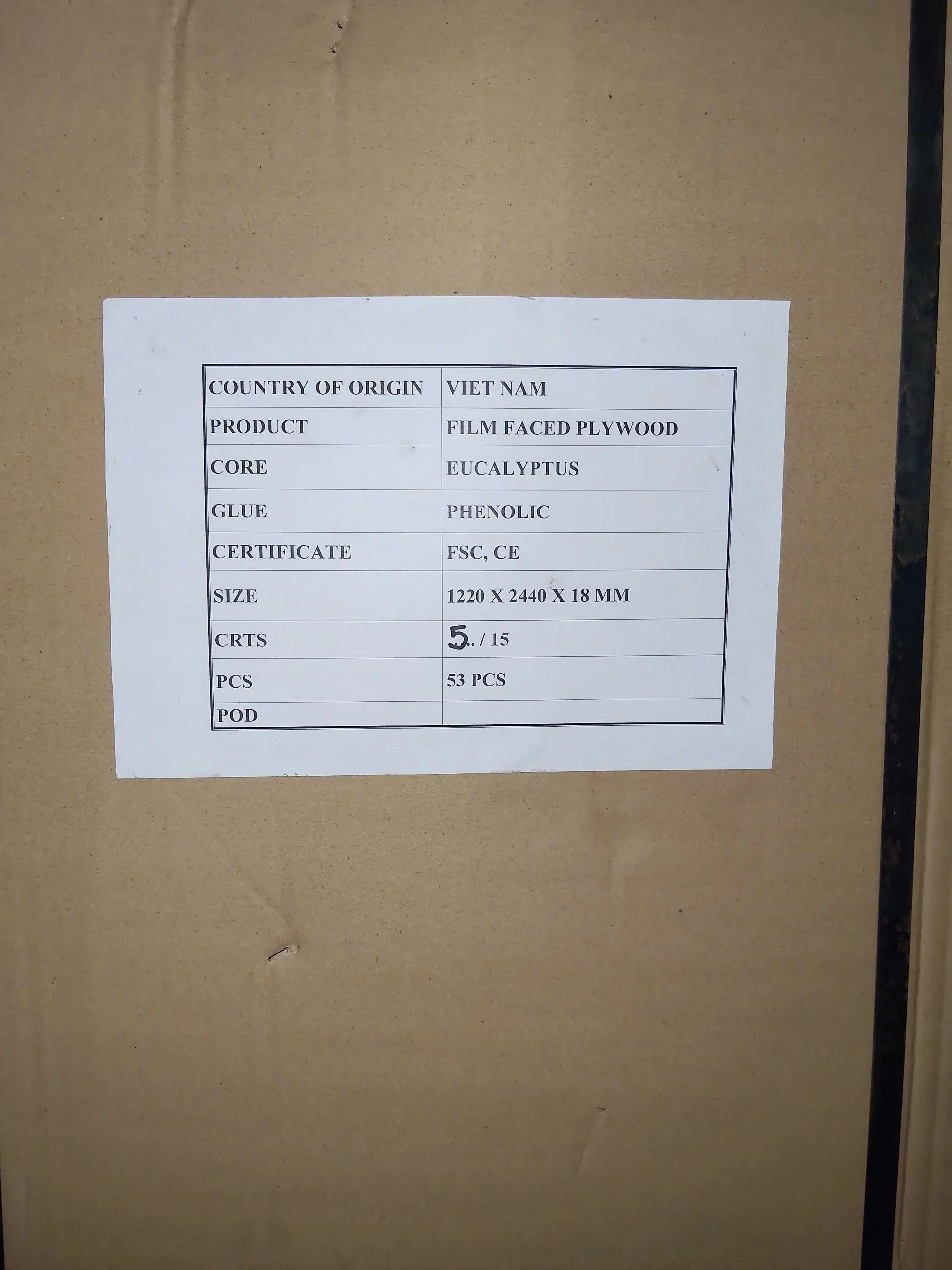
Eucalyptus core at 650–750 kg/CBM is the most constrained configuration. At 15 pallets and 1000mm stacking height, container weight reaches approximately 28.0 MT — leaving only 0.5 MT before the payload ceiling. Any variation in actual sheet thickness, dunnage, or strapping material must be checked against this margin before the packing list is finalized.
“For eucalyptus core orders, we run the payload check before we run the CBM check,” explains Lucy, International Sales Manager, HCPLY. “That 0.5 MT margin is not comfortable at scale — we build every packing list from the weight constraint outward, not from the volume constraint inward.”
For a detailed comparison of how each core species performs across full-container economics, the styrax core container loading guide and plywood core types guide provide the CBM and weight breakdowns side by side.
📊 Pallet Height Limit and Freight Cost — The Direct Connection
The plywood pallet height limit is a freight cost variable, not just a physical constraint. The relationship is direct: the height limit determines sheets per pallet, which determines total container sheets, which determines FOB value per container, which determines freight cost per sheet.
At 18mm thickness, the difference between a 50-sheet pallet (900mm sheet-only interpretation) and a 55-sheet pallet (1000mm sheet-only interpretation) across 18 styrax pallets is 90 sheets. At $30 FOB per sheet (mid-range birch face + styrax core), that is $2,700 of product that either fits in the container or requires an additional shipment.
This is why the pallet height definition matters in contract negotiations, not just technical discussions. A supply contract that specifies “1000mm pallet height” without defining whether that is sheet-only or total-loaded locks the supplier into a specific sheet count commitment. Without the definition, the supplier retains the flexibility to interpret the number in whichever way benefits their packing efficiency.
The plywood shipping cost per CBM guide covers how packing efficiency differences between suppliers translate into landed cost differentials that are often larger than the FOB price gap.
✅ Verifying a Supplier’s Pallet Height Data — 5-Step Checklist
Before approving a packing specification from any supplier, run this verification sequence:

Step 1. Confirm the height measurement convention: sheet-only or total-loaded (including pallet base). Request the pallet base height separately if sheet-only is stated.
Step 2. Apply the formula independently: ROUNDDOWN(1000 ÷ thickness_mm). Compare your result to the supplier’s stated sheets per pallet. A discrepancy of more than 1 sheet indicates either a different height standard or a rounding error in the supplier’s calculation.
Step 3. Calculate total container weight: (sheets per pallet × pallets per 40HC × sheet volume × core density). Verify it is below 28.5 MT. If it is within 0.5 MT of the ceiling, request the supplier’s per-pallet weight breakdown.
Step 4. Cross-check pallet count against core species: styrax = 18, acacia = 16, eucalyptus = 15. If the supplier’s pallet count differs, ask for the payload calculation that justifies it.
Step 5. Verify consistency across all documents: packing list sheets per pallet, CBM total, and weight total must match the formula outputs. Any inconsistency between the three documents is a red flag that the packing list was generated without a systematic calculation.
Request Factory Packing Data for Your Order — HCPLY provides complete, cross-verified packing specifications for every confirmed order, including per-pallet weight, measured stack height, and CBM breakdown. No commitment required to receive the data.
📦 Conclusion
The 1000mm plywood pallet height limit for 40HC containers is not an arbitrary standard — it is the intersection of forklift stability physics, the 28.5 MT payload ceiling, and documentation integrity requirements. The 40HC’s 2,698mm internal height creates no practical constraint for plywood; the payload ceiling does.
The 900mm vs 1000mm discrepancy between suppliers is a measurement convention gap, not a real difference in physical loading practice. The critical risk is applying the wrong convention to independent sheet-count calculations, which creates packing list errors that propagate through freight cost models and export documents.
Every importer placing repeat plywood orders at scale should have the pallet height convention confirmed in writing before the first container is packed. One clarification at the specification stage prevents persistent discrepancies across every subsequent order.
Request Factory Packing Data for Your Order — HCPLY provides verified, factory-tested packing specifications for all products and core species combinations. Contact our export team for a complete packing reference for your specific thickness and core requirements.