
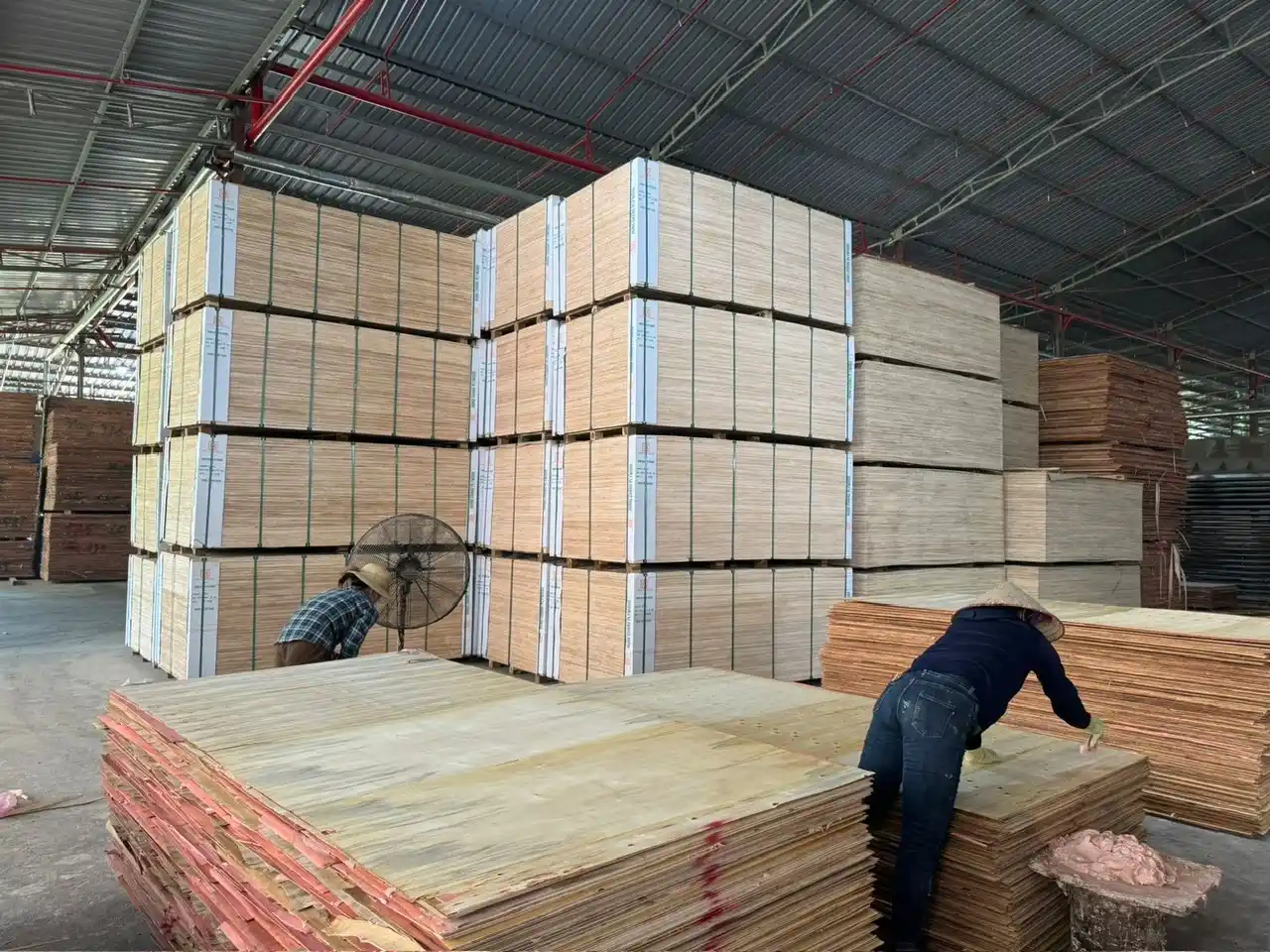
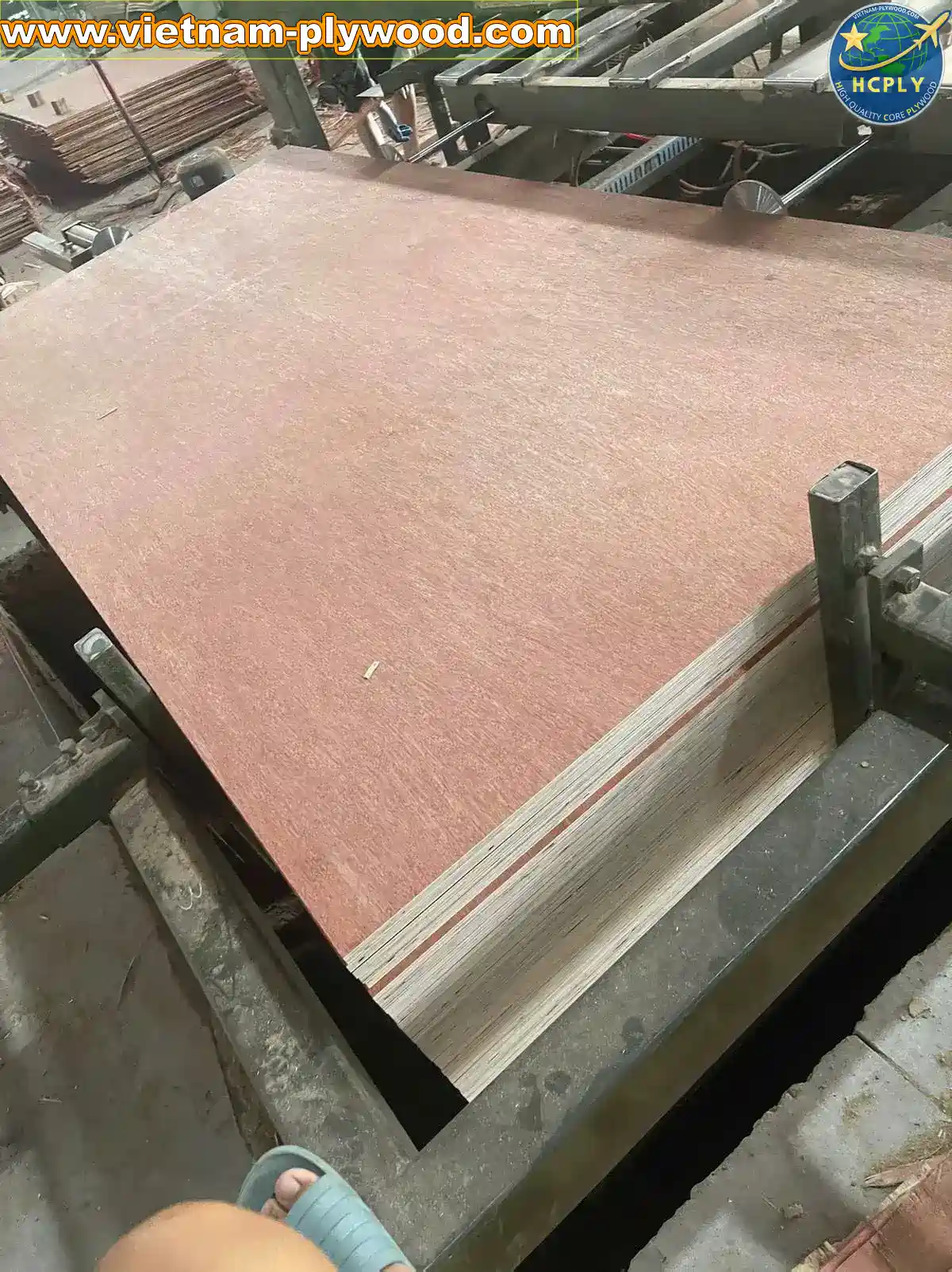



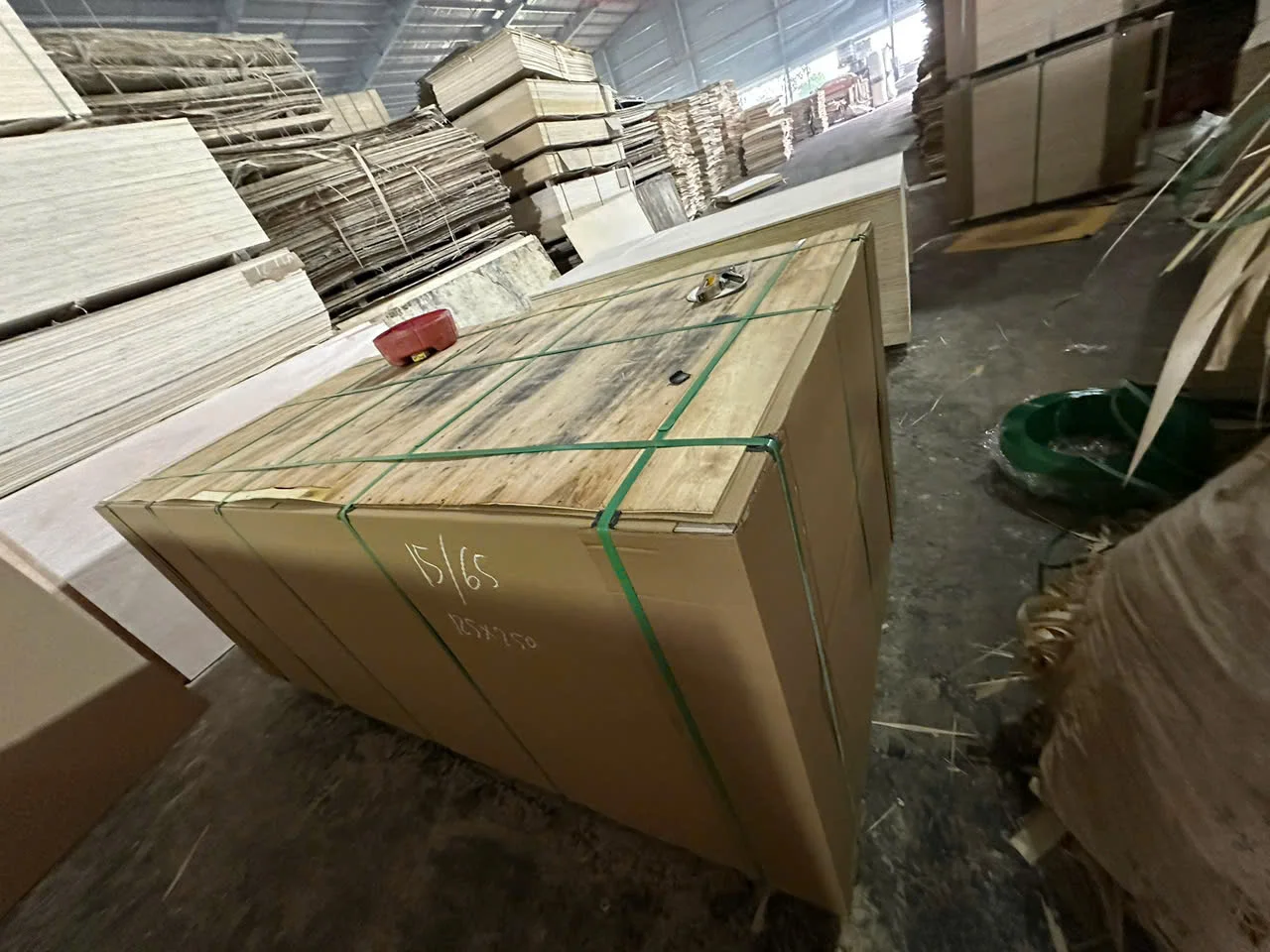
Most plywood importers negotiate the FOB price and treat freight as a fixed overhead. That habit costs money. Freight per cubic metre from Vietnam is not one number: it changes with what you load, how dense the core is, and how well the container is packed.
Two buyers ordering similar panels from the same port can pay $9–$15 per m³ more or less on freight alone, before the FOB price is even discussed. The difference comes from core density and packing execution.
This article covers how ocean freight turns into a cost per m³, why core density is the variable most buyers miss, the practical levers that cut landed cost without reopening the FOB price, and the 2026 compliance checks that can add cost or delay at destination.
What Shipping Cost per CBM Actually Means
Ocean freight for a full 40HC is quoted per container, not per m³. Indicative Q1 2026 rates from Hai Phong (Freightos Baltic Index, 2026):
| Destination | 40HC rate (approx., Q1 2026) |
|---|---|
| India (Nhava Sheva, Mundra) | $1,200–$2,200 |
| Middle East (Jebel Ali) | $1,800–$3,000 |
| Europe (Hamburg, Rotterdam) | $2,500–$4,500 |
| US West Coast | $2,200–$3,500 |
These are base rates. With BAF, THC and documentation fees, the real invoice is usually $200–$600 higher per 40HC. For current lane-by-lane figures, see plywood freight rates from Vietnam to major ports.
To get freight per m³, divide total freight by the volume loaded:
Freight per CBM = Total Container Freight ($) ÷ Net CBM LoadedA container carrying 53 m³ at $2,500 total freight costs $47 per m³ in freight. The same container with only 42.6 m³ costs $59 per m³. Same invoice, same destination: about 25% more per m³, purely because less product fits within the payload.
Key insight: The core species on your order, and how well the mill packs it, decide how many cubic metres you receive for each freight dollar.
Core Density: The Variable Most Buyers Miss
Every 40HC has two limits: volume (about 76 m³ usable) and payload (28.5 MT maximum, a hard stop). Plywood reaches the payload limit long before it fills the box, so a heavier core means fewer pallets.
Loading reference for 18 mm, 1220×2440 mm sheets (HCPLY packing calculator, built from loading records):

| Core species | Density | Pallet height | Pallets/40HC | Sheets | Net volume | Weight |
|---|---|---|---|---|---|---|
| Styrax | ~500 kg/m³ | 1,000 mm | 18 | 990 | ~53.1 m³ | ~26.5 MT |
| Acacia | ~580 kg/m³ | 1,000 mm | 16 | 880 | ~47.2 m³ | ~27.4 MT |
| Eucalyptus | ~650 kg/m³ | 970 mm | 15 | 795 | ~42.6 m³ | ~27.7 MT |
Styrax core loads about 25% more volume per container than eucalyptus core. At a freight rate of $2,500 per 40HC to Europe:
- Styrax: $2,500 ÷ 53.1 m³ = $47.1/m³ in freight
- Acacia: $2,500 ÷ 47.2 m³ = $53.0/m³ in freight
- Eucalyptus: $2,500 ÷ 42.6 m³ = $58.7/m³ in freight
That is about $11.6/m³ between the lightest and heaviest core, on freight alone. Real panel densities vary by mill and order (eucalyptus runs 650–750 kg/m³ in practice), so weigh actual sheets before planning a heavy load.
For 1250×2500 mm sheets at 18 mm, the reference is 990 sheets (~55.7 m³) with styrax, 848 (~47.7 m³) with acacia and 750 (~42.2 m³) with eucalyptus.
How Packing Efficiency Shifts Landed Cost
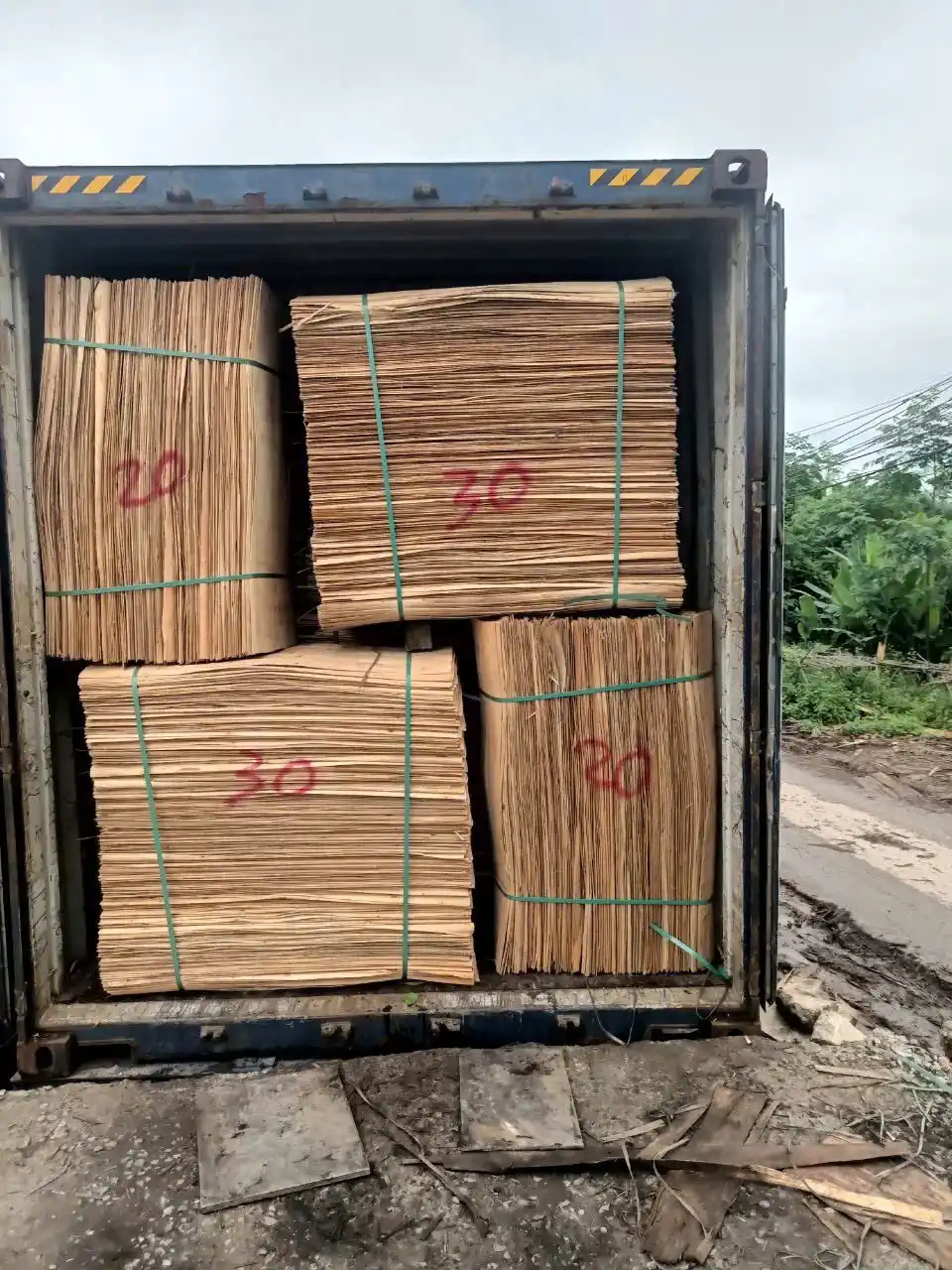
Packing efficiency has two parts: pallet height and container layout. Both decide how many cubic metres actually ship.
Pallet Height
Pallets are built to a reference height that is safe for forklifts and stable at sea: 1,000 mm for styrax and acacia at 1220×2440 mm, and lower for heavier combinations (970 mm for eucalyptus; at 1250×2500 mm, 970 mm for acacia and 900 mm for eucalyptus). Sheets per pallet = ROUNDDOWN(pallet height ÷ thickness).
For 18 mm styrax sheets: ROUNDDOWN(1000 ÷ 18) = 55 sheets per pallet.
If a supplier builds those styrax pallets to 900 mm “to be safe”, each pallet holds 50 sheets instead of 55. Over 18 pallets that is 90 sheets, about 4.8 m³ of plywood that does not ship, while you pay the same freight.
⚠️ Important: Ask for the packing plan with sheets per pallet and pallet height before you confirm the order. A pallet height below the reference for that core and size is a sign of under-packing and a higher freight cost per m³.
Container Layout
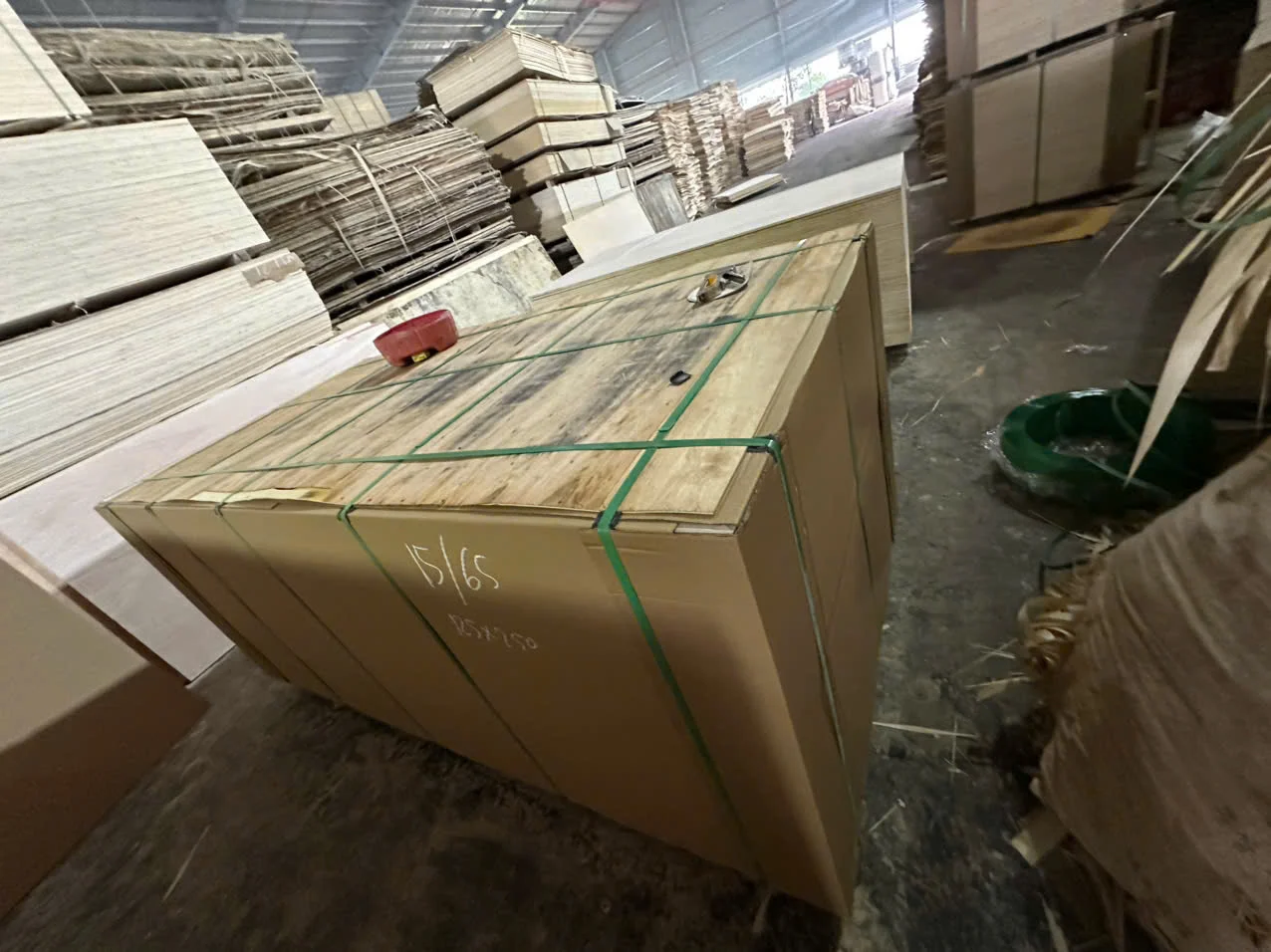
The reference 40HC layout is 16 pallets lying flat (4×4) plus 2 pallets standing at the container’s front end. That uses floor space fully and puts the vertical clearance at the front to work. It applies in full to light styrax loads; heavier cores stop at 16 or 15 pallets because of weight.
A supplier who loads styrax panels as 16 flat pallets only ships about 11% fewer sheets for the same freight.
The difference between a well-planned pack and a careless one: $150–$400 per container in freight absorbed by fewer sheets.
💡 The other side of the limit: never force extra pallets into a container. Overloaded pallet bases can crack in transit, and the container then has to be unloaded by hand, which adds labour cost at destination. The packing reference is a limit, not a target to beat.
Building the Full Landed Cost per CBM
Freight is one line. Landed cost per m³ counts every component:
| Cost component | Typical range |
|---|---|
| FOB price (plywood) | $200–$450/m³ depending on spec (see price list) |
| Ocean freight | $47–$85/m³ (destination-dependent) |
| Marine insurance | $5–$10/m³ (0.3–0.5% of CIF value) |
| Destination THC | $3–$8/m³ |
| Customs duty | Varies by country and product (0–25%) |
| Customs clearance | $1–$5/m³ (fixed fees spread over the load) |
| Total landed | $260–$600/m³ |
“Most buyers compare the FOB price. But two suppliers with the same FOB price can land at $50/m³ apart once you account for packing efficiency, core density and freight terms.” — Lucy, International Sales Manager, HCPLY
For an importer buying 4–6 containers a year at about 50 m³ each, closing a $50/m³ gap is worth $10,000–$15,000 a year without changing a single FOB price. For a full method, see plywood landed cost calculation.
Three Ways to Lower Shipping Cost per CBM
1. Match Core Species to the Application and the Freight Rate
On long, expensive routes (Europe, the US), styrax core’s volume advantage over eucalyptus gives the largest saving, and styrax is usually priced at or below eucalyptus. For furniture buyers, moving from acacia to styrax core often gives a cleaner face, a lighter panel and more cubic metres per container: about 53–54 m³ against 46–47 m³. The plywood weight table for all core types gives per-sheet weights by species and thickness.
Core choice must follow the application first. Film faced and anti-slip panels use only acacia or eucalyptus cores, so the styrax lever applies to furniture and interior panels. On short routes (India, Southeast Asia) the freight difference per m³ shrinks and application fit matters even more.
2. Verify Packing Data Before Confirming
Ask for the packing plan showing:
- Sheets per pallet
- Pallet height (mm)
- Pallet count and arrangement
- Total m³ and weight
Compare pallet height with the reference for that core and sheet size; see our pallet height limit guide for 40HC containers. The container packing calculation guide explains the formula by core and thickness, and the packing calculator runs the numbers for you.
3. Compare FOB and CIF on Established Routes
CIF is convenient for a first shipment. On regular routes, for example Vietnam to India, the UAE or Hamburg, a good forwarder with steady volume can often beat a supplier-arranged CIF rate. A common estimate of the margin on supplier-arranged CIF is $200–$400 per 40HC above open-market rates, or $4–$8 per m³. See CIF vs FOB pricing for Vietnam plywood.
Contact HCPLY for factory-direct FOB pricing. Every order comes with export documents and the packing plan.
Worked Example: Styrax vs Eucalyptus to Europe
Two buyers order 18 mm furniture-grade plywood, 1220×2440 mm, to Hamburg. Freight is $3,200 per 40HC; insurance and destination handling add about $15/m³.
Buyer A orders eucalyptus core (denser, harder):
- 15 pallets × 53 sheets × 0.0536 m³/sheet = 42.6 m³
- Freight: $3,200 ÷ 42.6 = $75.1/m³
- FOB: $380/m³
- Estimated landed (before duty): ~$470/m³
Buyer B orders styrax core (furniture grade, lighter):
- 18 pallets × 55 sheets × 0.0536 m³/sheet = 53.1 m³
- Freight: $3,200 ÷ 53.1 = $60.3/m³
- FOB: $365/m³ (styrax core is typically priced lower)
- Estimated landed (before duty): ~$440/m³
The difference is about $30/m³, roughly $1,600 on a 53 m³ order, for furniture panels that do the same job. Buyer B also ships 990 sheets in one container, where Buyer A needs more than a container for the same sheet count.
Every HCPLY order ships with a packing list showing sheets per pallet, pallet count, m³ and weight, so buyers can check the numbers before the container is sealed.
2026 Update: Compliance Checks That Affect Landed Cost
Freight is not the only thing that can change landed cost or hold a container at the port. Status as of October 2026:
- EUDR (EU), from 30 December 2026. The importer’s due diligence statement reference must exist before the customs declaration is lodged, so a missing origin dossier means a container that cannot clear. One DDS can cover several shipments within the declared scope and quantity, which keeps the paperwork per container low for regular importers. Vietnam is classified low risk. See EUDR due diligence for plywood importers.
- US duty status. The 2026 AD/CVD case on hardwood and decorative plywood from Vietnam reached final determinations on 21 July 2026, with the ITC injury vote on 9 September 2026. Check whether your product is in scope before you calculate landed cost; structural PS 1/PS 2 plywood and phenolic film-faced plyform are listed outside it.
- Packing timber (ISPM 15). Plywood itself is outside ISPM 15, but solid-wood pallets, battens and dunnage are covered and must be treated and marked. Untreated packing timber can mean inspection costs at destination.
- Packaging (EU PPWR), from 12 August 2026. The sum of lead, cadmium, mercury and hexavalent chromium in packaging is limited to 100 mg/kg. It concerns the wrapping, straps and pallets, not the plywood.
- Weight limits on your side. Some buyers set a maximum container weight below the 28.5 MT payload, for example 26 tonnes per 40HC because of road limits. State it in the RFQ so the packing plan is built to it from the start.
What a Reliable Supplier Provides on Every Shipment

Knowing the numbers helps; having the mill execute them is what actually lowers freight per m³. HCPLY’s shipping documents for every 40HC include:
- Packing list (sheets per pallet, pallet height, total m³, total weight)
- Commercial invoice and Bill of Lading
- Certificate of origin (EUR.1 for EU lots), phytosanitary and fumigation certificates
- Insurance certificate for CIF shipments
- FSC, CARB P2 or CE documents where they apply to the order, and the EUDR/EUTR dossier for EU lots
Draft documents are sent for your approval after loading, for FOB, CFR and CIF shipments alike. To work out the volume of your own order, use the plywood CBM calculation formula guide.
View HCPLY’s product range and request a quote. Factory-direct pricing with packing data for every specification.
Conclusion
Freight per m³ from Vietnam is not set by your forwarder’s quote alone. It depends on (1) total freight divided by the volume actually loaded, (2) core density, which decides how much fits before the 28.5 MT payload limit, and (3) packing execution, which decides whether the reference load becomes the real one.
Buyers who land plywood at the lowest cost do three things: they choose a core that fits both the application and the freight route, they check the packing plan against the reference, and they compare supplier CIF with their own forwarder’s rate. In 2026, add a fourth: have the compliance file ready before the container sails.
As of Q1 2026 freight levels, that approach saves $150–$400 per container on freight alone, before any change to the FOB price.
Disclosure: This article is published by HCPLY, a Vietnam-based plywood export operator working with specialised partner mills. We aim to give objective guidance, but readers should weigh our perspective as a market participant.
Request a freight-inclusive quote from HCPLY. Send your destination port and specification, and we will return volume, weight and a freight estimate within 24 hours. No commitment required.