





Natural birch vs white birch is a choice between a broader wood-tone face and a paler, more tightly selected face. A wrong colour choice can mean rejected cabinet fronts, extra sorting costs and days lost to replacement. HCPLY compares both selections against an agreed physical reference on our furniture line before loading.
What is the difference between natural birch vs white birch?
Natural birch describes a face that keeps the wood’s visible colour range, while white birch describes a selected pale appearance. Neither term alone identifies a botanical species, a uniform shade or a plywood core. For cabinet runs, the practical difference is how much tonal contrast the buyer accepts across adjacent panels. A written reference is more useful than either label alone.
A natural selection can show cream, pale yellow and warmer brown areas. A white selection aims for a lighter, narrower visual range, yet the face still shows grain and occasional natural marks. The choice changes the sorting work before pressing and the inspection criteria at loading.
For a broader introduction to decorative sheets, see our wood veneer sheet guide. This matters when panels meet on a visible elevation.
Which face works better for each furniture use?
The comparison below treats colour as a visual purchasing requirement. It does not assign a mechanical grade to either appearance. Both can be pressed on Our furniture line with the same agreed core, glue and panel dimensions.
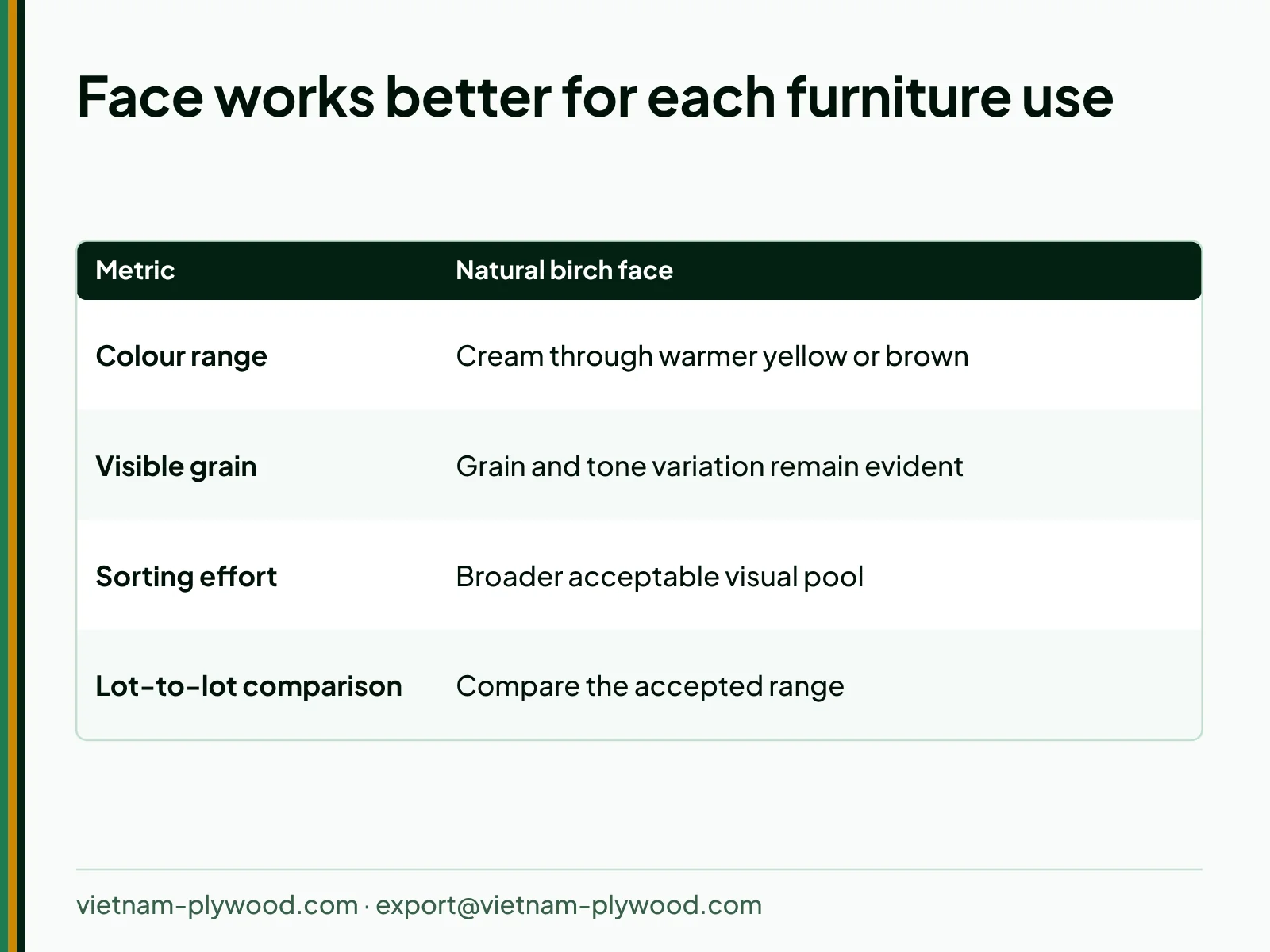
| Metric | Natural birch face | White birch face | Verdict by use |
|---|---|---|---|
| Colour range | Cream through warmer yellow or brown | Paler selection with a narrower agreed range | White for continuous light cabinet fronts; natural for varied wood character |
| Visible grain | Grain and tone variation remain evident | Grain remains visible against a lighter background | Natural for expressive surfaces; white for restrained fit-outs |
| Sorting effort | Broader acceptable visual pool | More selective matching against a reference | Natural for flexible appearance briefs; white for tight matching |
| Lot-to-lot comparison | Compare the accepted range | Compare the pale boundary and exceptions | Either requires a retained reference |
| Finishing response | Test stain or clear finish on the actual face | Test finish for yellowing or warm shifts | Neither is selected from an unfinished photograph alone |
| Core identification | Face does not identify core | Face does not identify core | Specify core separately for both |
| Inspection decision | Check range, defects and layout | Check pale match, defects and layout | Match the face to the agreed use |
A buyer selecting natural birch plywood for shelving might welcome variation that would interrupt a run of white cabinet doors. Conversely, an overly narrow white selection can add sorting and rejection work without improving a concealed component. Define which surfaces are exposed before choosing the reference.
What colour is birch plywood?
Birch wood color ranges from light cream to yellowish and reddish-brown tones, according to the species and the part of the tree. A pale face is a visual selection, not a promise that every sheet is paper white. The birch colour seen after finishing also differs from the raw veneer.
The U.S. Department of Agriculture Forest Service’s 1990 Silvics of North America paper birch account identifies paper birch as also called white birch. That botanical common name does not specify the colour range of a decorative plywood face.
For a plywood purchase, a description of “white birch” should be accompanied by a face sample and agreed appearance limits. A species common name and a face colour request answer different questions.
How are birch faces colour-sorted before pressing?
Colour sorting starts with an agreed sample, then groups face veneers by visible tone, grain and permitted marks before lay-up. HCPLY’s furniture line uses full stitched, sanded panels with styrax or eucalyptus cores. The birch face is selected independently of those core choices.
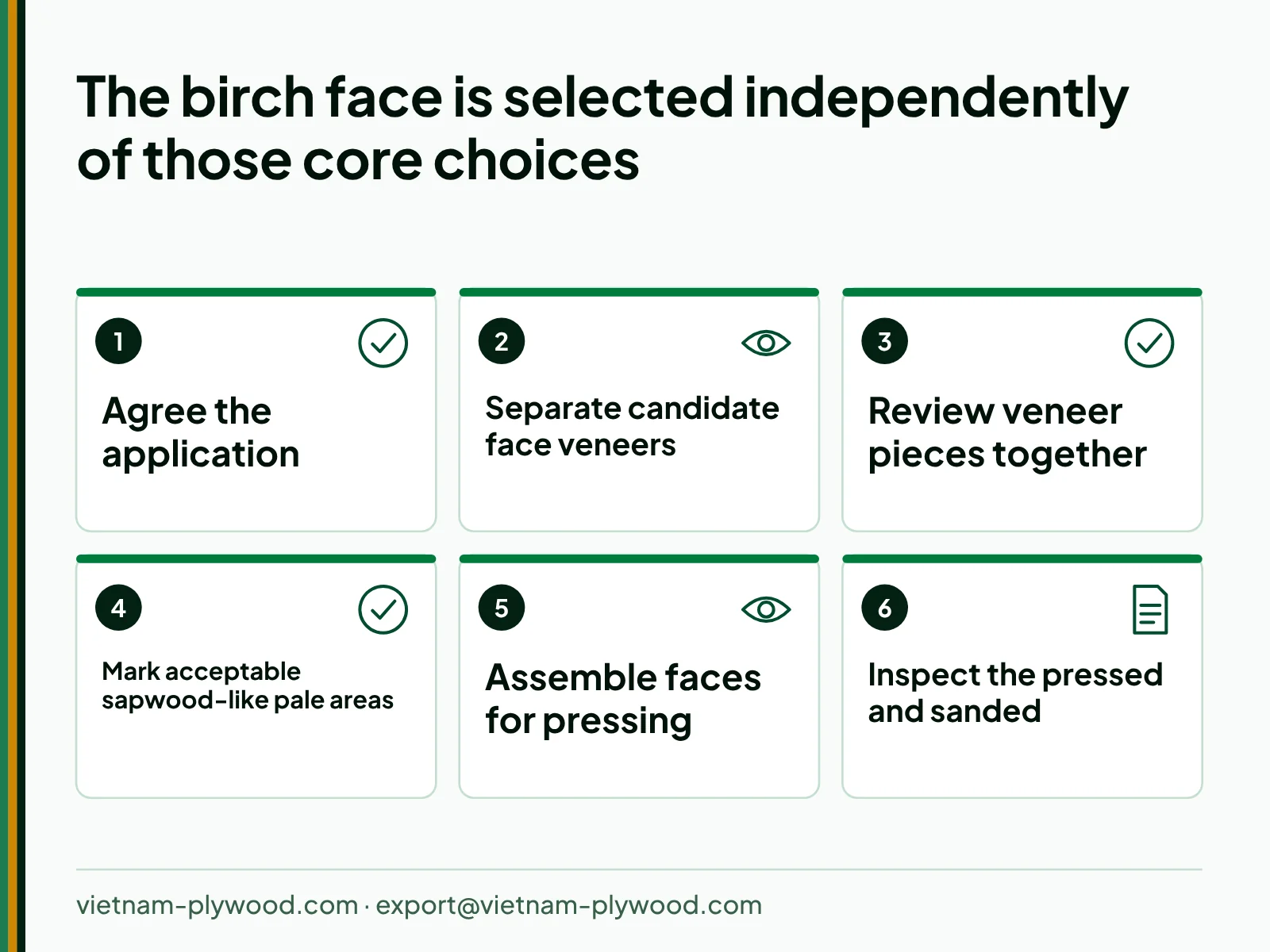
- Agree the application, visible side and reference sample under the intended inspection light.
- Separate candidate face veneers into accepted pale and broader natural colour groups.
- Review veneer pieces together, including transitions at joins and the effect of grain direction.
- Mark acceptable sapwood-like pale areas, warmer streaks and visible defects against the sample.
- Assemble faces for pressing, keeping adjacent visible components in mind where the order identifies them.
- Inspect the pressed and sanded surface against the same reference before packing.
The sequence describes the requested inspection method; the order specification establishes the actual acceptance limits. Sorting is an appearance control, whereas bonding and emission remain separate technical fields. Read the face veneer types overview for the broader choice of face materials.
Which factory line builds this panel?
Our furniture line presses the birch-faced cabinet panel; the other lines serve different applications. We have three member factories in Phu Tho and Hai Phong, and the order is made at the producing factory that matches its specification.
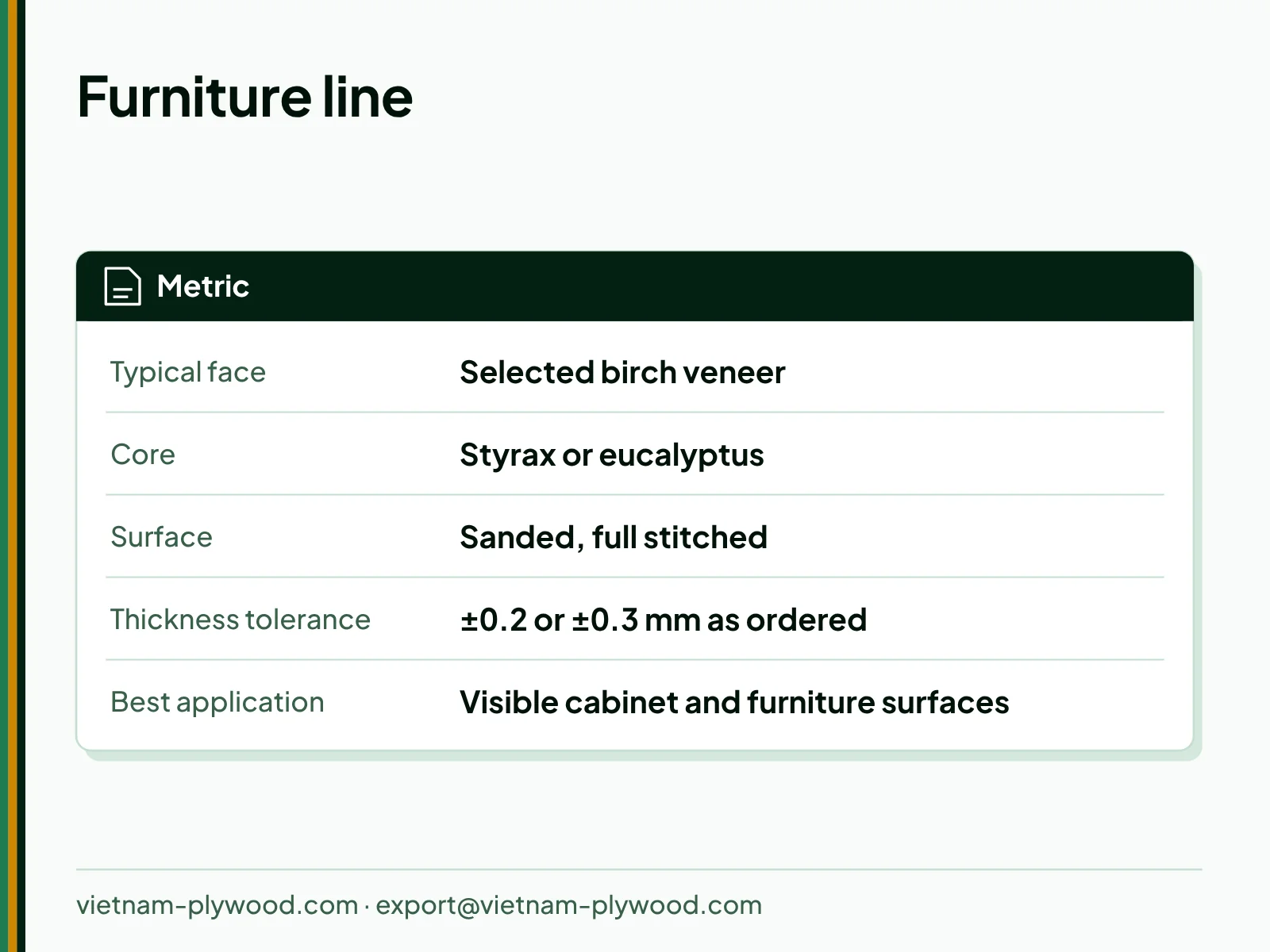
| Metric | Furniture line | Commercial and packing line | Construction line |
|---|---|---|---|
| Typical face | Selected birch veneer | Commercial face or raw specification | Phenolic, melamine or anti-slip film |
| Core | Styrax or eucalyptus | Acacia | Acacia or eucalyptus |
| Surface | Sanded, full stitched | Unsanded or light-sanded | Unsanded, film-covered |
| Thickness tolerance | ±0.2 or ±0.3 mm as ordered | ±0.5 mm; packing ±0.5–1.0 mm | ±0.5 mm |
| Best application | Visible cabinet and furniture surfaces | Packaging and general-purpose panels | Concrete formwork |
The commercial and packing line would build a cost-oriented acacia-core panel rather than a colour-matched cabinet face. Our construction line would use film for repeated formwork contact. Neither substitutes for a pale decorative birch surface. See packing or commercial plywood for that separate buying decision.
Can a white birch face stay consistent from lot to lot?
A white birch face can be matched to an agreed visual range across lots, but a colour name cannot define the acceptable difference. Natural veneer contains variation within individual sheets and between batches. Repeat purchasing therefore needs a retained physical reference and a decision rule for borderline faces.
Specify whether the approved reference is a single panel, a group showing the acceptable range, or a finished mock-up. Record the inspection lighting and viewing distance in the purchase specification. Include whether small dark marks, mineral-like streaks, warm patches and joined-face transitions are acceptable.
A clear lacquer can shift the apparent birch color; a stain can amplify grain differences. Test the intended finish on actual veneer from the proposed selection, then use that result when setting the acceptance range. Raw and finished appearances differ.
What do grain and face thickness change?
Birch ply texture is usually read through fine grain, subtle figure and occasional darker marks. Grain direction and veneer cutting pattern can make adjacent sheets look different even when their overall colour is close. For a large wall or cabinet run, layout order can matter as much as the average shade.
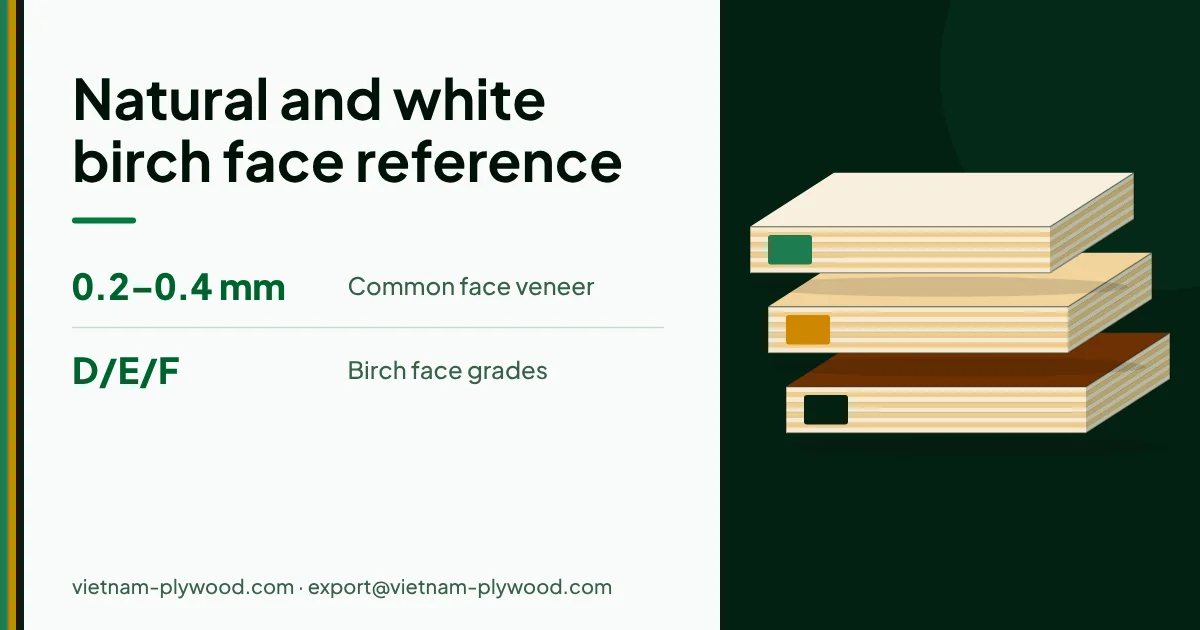
Face veneer commonly measures 0.2–0.4 mm on our panels. The order must state face thickness where sanding allowance, edge exposure or finishing work makes it relevant. A thicker-looking surface in a photograph is not a measurement of the veneer layer.
Our birch face grades are D, E and F; the purchase specification must define the permitted visual defects and colour range separately. A letter alone does not replace a reference board. The face veneer thickness guide covers that separate dimension in more detail.
Core density follows the core rather than the face. Styrax is 500 kg/m³ and eucalyptus is 650 kg/m³ in our specifications. Neither number describes the density of a birch face or an all-birch panel; We do not press birch-core plywood.
How is the colour reference checked before loading?
The buyer or inspector compares the packed order’s accessible faces with the approved colour reference at the producing factory. The check should cover representative pallets and any visibly different groups, with the sampling method written into the inspection plan.
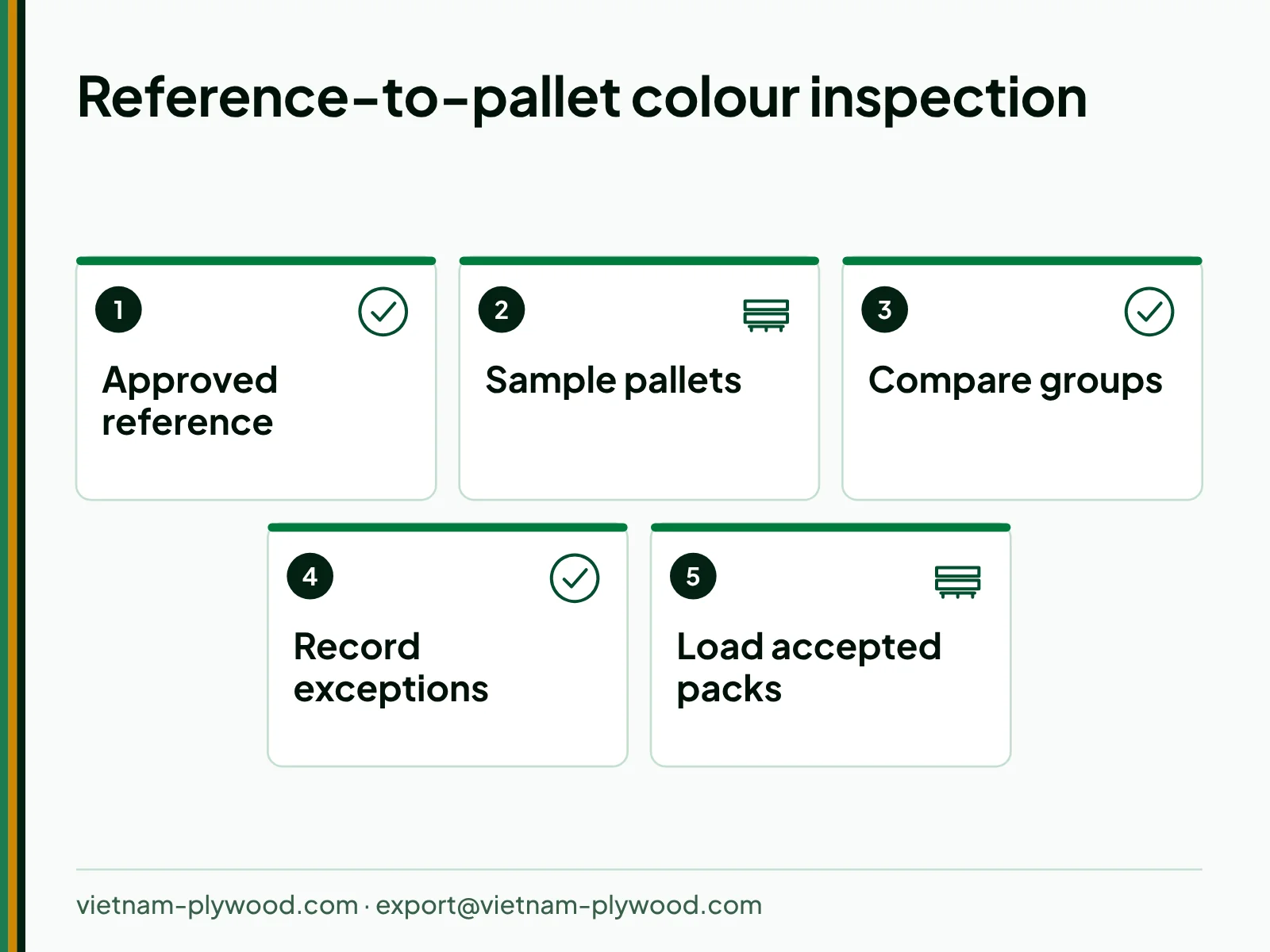
Start with the approved reference in the same lighting used for the inspection. Open selected packs, compare several sheets side by side and record both the palest and warmest acceptable examples. Look at face joins, grain direction, sanding marks and any patches that could become conspicuous after finishing.
For a cabinet-front order, compare panels as a group rather than judging each sheet in isolation. If a group falls outside the agreed range, identify its pallet and separate it for a decision before loading. The inspection record should identify the reference version, selected packs, findings and disposition.
HCPLY manages on-site quality control and loading. Buyers can visit the factory office and inspect goods at the producing factory. This is the point to agree what the inspector will witness, rather than relying on an informal description of white.
How do core and shipment weight affect the order?
The face selection does not change the core-based loading calculation. For 18 mm sheets measuring 1220 × 2440 mm, the reference 40HC load is 990 styrax-core sheets at 26.52 t, or 795 eucalyptus-core sheets at 27.69 t. These figures exclude any separate face-weight adjustment.
A 40HC has a payload limit of 28.5 t in our loading plan. Specifications can be mixed within that limit, so a cabinet programme can combine natural and white face selections when the purchase schedule identifies each pack. The pallet count and weight still follow the actual core, thickness and size.
The container loading reference handles the broader sheets-per-container calculation. For a mixed visual order, keep face designation, pack identification and pallet placement aligned with the inspection record.
Which specifications and papers identify the accepted face?
The purchase specification identifies the natural or white face and its reference; the packing list identifies the shipment quantities and packs. The face colour requirement belongs in the agreed order documents and inspection record rather than being inferred from a certificate.
For a furniture build, specify the core, full stitched construction, face grade, glue and emission class as distinct fields. E0 and E1 are emission classes on our furniture line. Melamine moisture-resistant glue and phenolic weather-and-boil-proof glue describe adhesive performance, not an emission rating.
We prepare the commercial invoice, packing list, bill of lading and applicable origin and shipment papers. Order-specific certificates and test reports accompany the agreed build; member-factory certificates are shown with factory details masked, on request. After loading, the draft shipping documents come to you for approval.
A visual sample is still the primary evidence for colour matching. A document can identify the agreed sample and inspection result, but it cannot communicate the complete appearance of a veneer face by a colour name alone.
How should a buyer compare quotations?
Compare quotations against the same approved face reference, grade, core and dimensions. A narrower white selection normally calls for more sorting than a broad natural selection; the quotation should show which visual limits drive that work. Core and thickness also affect cost.
Furniture plywood starts from US$350/m³ FOB Hai Phong (October 2026). That starting figure is not a separate price for a white birch grade. Ask for a quotation against the written face and panel specification, including the reference method and permitted marks.
The minimum order is one 40HC. Factory lead time runs 15–45 days from receipt of the 30% deposit; the exact figure depends on order size, line loading and what the contract fixes. The remaining 70% is paid on the scan of the bill of lading, by T/T, or by irrevocable sight L/C. We ship FOB Hai Phong, or CFR (CNF) or CIF to your port.
Samples cost nothing: a first-time buyer pays the courier, and that charge comes off the first confirmed order. A physical face sample is particularly useful when the colour decision affects a repeated cabinet programme.
What should the final factory visit cover?
The final factory visit should connect the approved colour sample to the actual pressed panels and the loading record. For our birch-faced furniture orders, Lucy coordinates the written specification and the inspection at the producing factory.
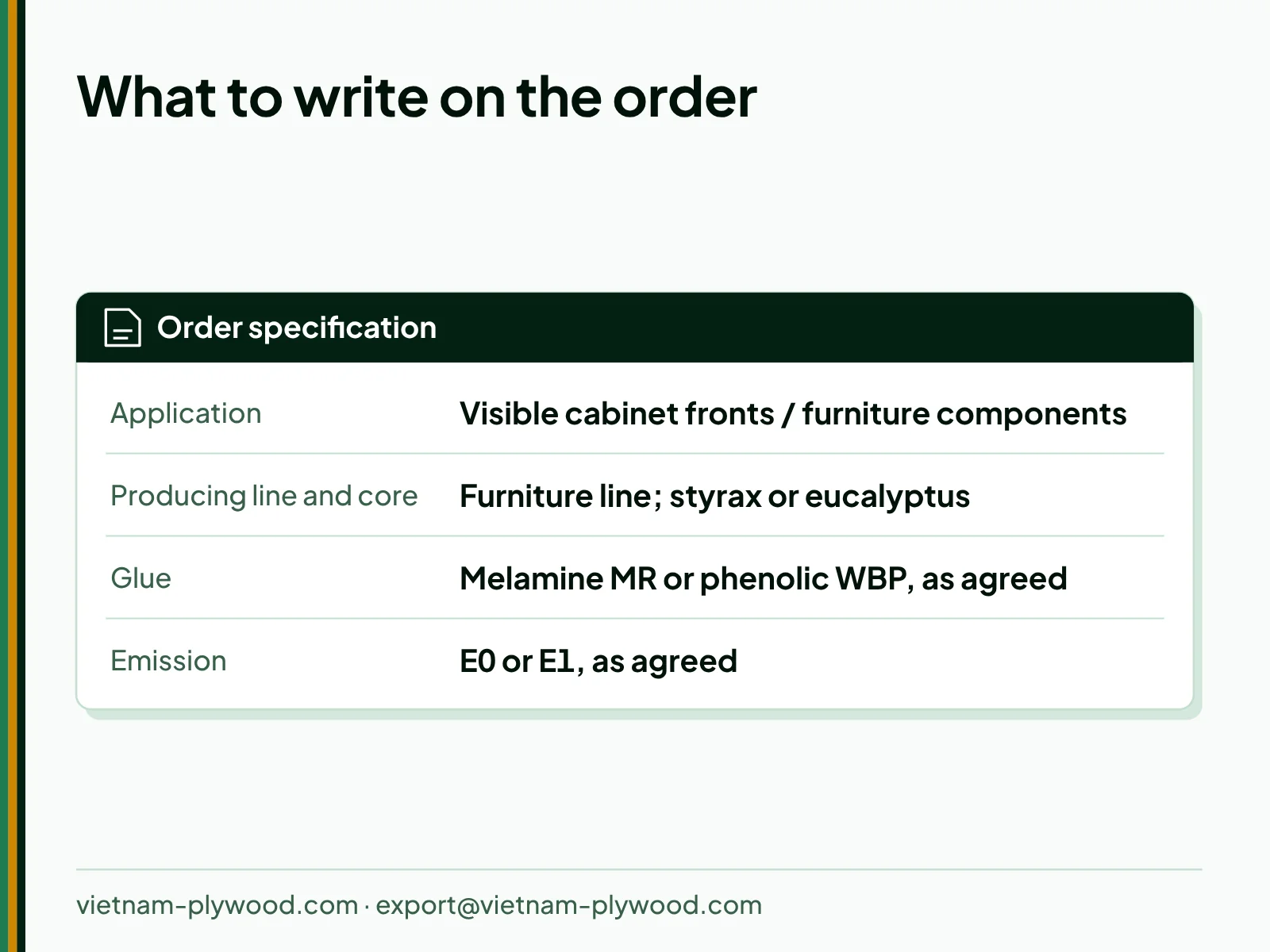
Bring the reference panel or agreed sample set and the finishing mock-up if colour after coating matters. Check visible panels in groups, record exceptions and verify that natural and white selections are marked distinctly on their packs. Review the packing list against the accepted groups before the container is closed.
Use the following specification as the starting document for the purchase and inspection discussion:
Application: visible cabinet fronts / furniture components
Producing line and core: furniture line; styrax or eucalyptus
Glue: melamine MR or phenolic WBP, as agreed
Emission: E0 or E1, as agreed
Face and grade: natural birch or white birch; D/E/F; approved colour reference ID
Face appearance: accepted colour range, grain direction and permitted marks
Thickness and tolerance: ___ mm; ±0.2 or ±0.3 mm as ordered
Sheet size: ___ × ___ mm
Quantity: ___ sheets / ___ m³; one 40HC minimum
Destination port: ___
Inspection: reference version, lighting, sampling and pack identification
Next step: book a factory visit with Lucy at export@vietnam-plywood.com to agree the reference and inspect the finished faces before loading.