

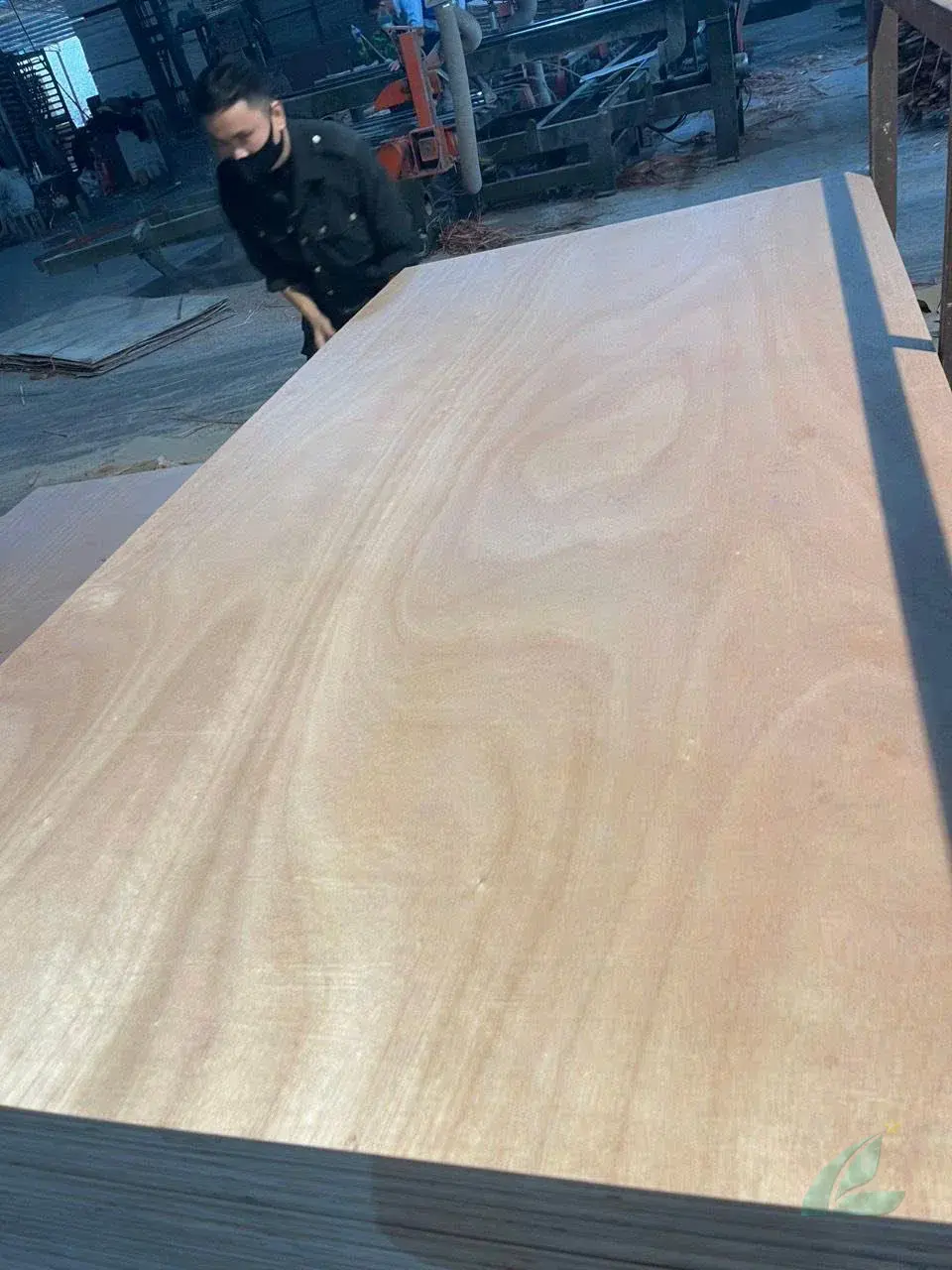
Most plywood sold as “waterproof” fails in permanent moisture — not because the wood deteriorates first, but because the glue does. Standard MR (melamine resin) adhesive passes a 12-hour boiling test (EN 314 Part 2, Class 2). Marine grade plywood is bonded with phenolic WBP glue rated to 72 continuous hours. That 6× difference in moisture resistance separates panels that hold for decades on a dock from panels that delaminate by the second monsoon season.
This guide covers marine grade plywood specifications from Vietnam: what qualifies as true marine grade, which face veneer suits each waterproof application, and how HCPLY supplies factory-direct WBP panels for export (HCPLY production data, 2026).
📋 What Qualifies as Marine Grade Plywood?
Marine grade plywood is defined by two non-negotiable specifications: WBP phenolic glue bonding and void-free core construction. Every other property — face veneer species, core density, thickness — is application-specific.
WBP Phenolic Glue (Weather and Boil Proof)
Phenolic resin is thermosetting: once cured under heat (approximately 150°C) and pressure during hot pressing, the bond is chemically inert. It does not soften, swell, or release under boiling water exposure. The 72-hour boiling test referenced by BS 1088 (British Standard for Marine Plywood, 2003) is the industry benchmark. Melamine glue by comparison is thermoplastic — it begins to weaken under sustained heat and moisture.
⚠️ Important: WBP refers to the glue type, not the wood. Marine grade plywood resists delamination at glue lines — but veneer fibers still absorb moisture. All marine installations require surface sealing (epoxy saturation, polyurethane varnish, or marine paint) to prevent wood fiber degradation.
Void-Free Core Construction
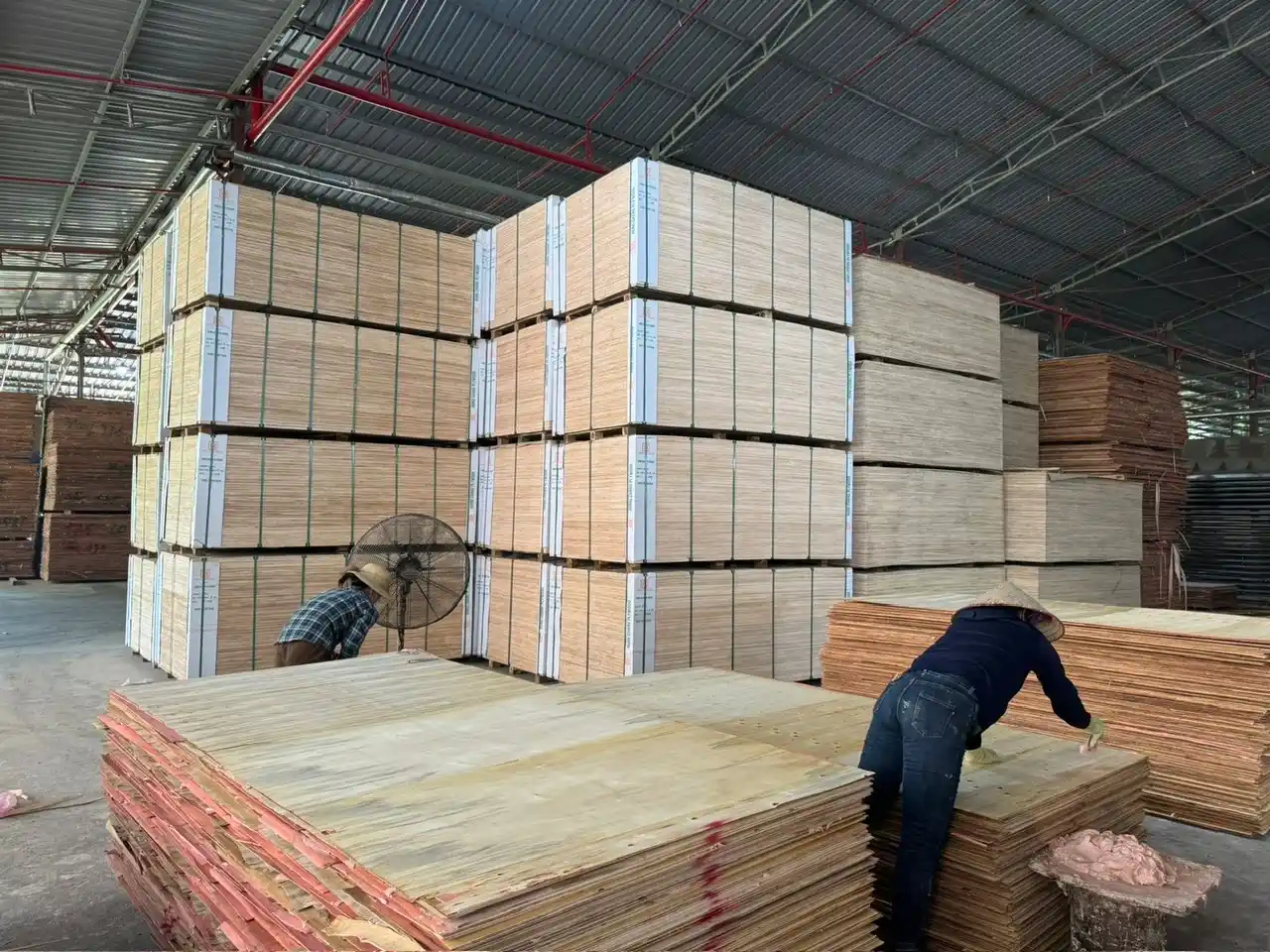
Internal voids between veneer layers create moisture traps and delamination initiation points. True marine grade panels use full-stitched or edge-jointed core construction — no loose-laid veneer gaps. From HCPLY’s northern Vietnam production facilities, marine-grade panels specify full-stitched core with eucalyptus (650–750 kg/m³) or acacia (~580 kg/m³) core species.
🔧 Face Veneer Options: Okoume vs Gurjan for Marine Use
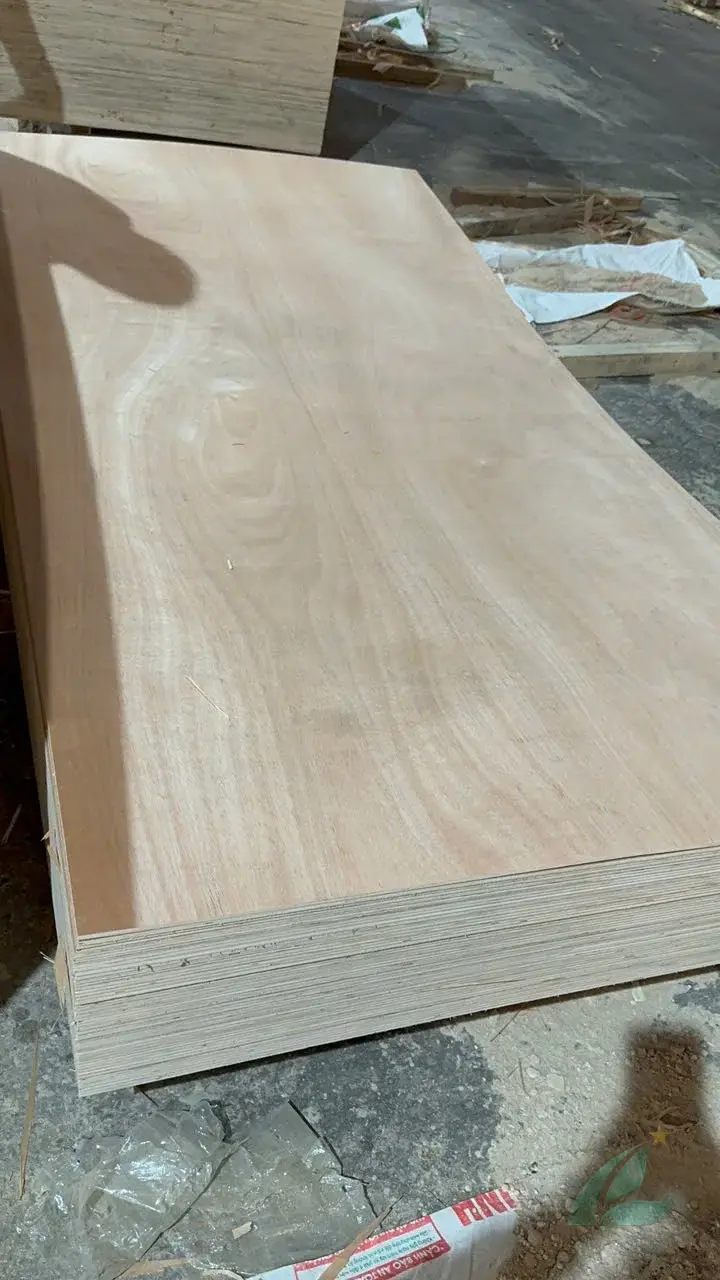
Vietnam exports two primary face veneer options for marine grade plywood. The choice depends on application demands, regional market preferences, and structural requirements.
📌 Okoume Face — European Boat Building Standard
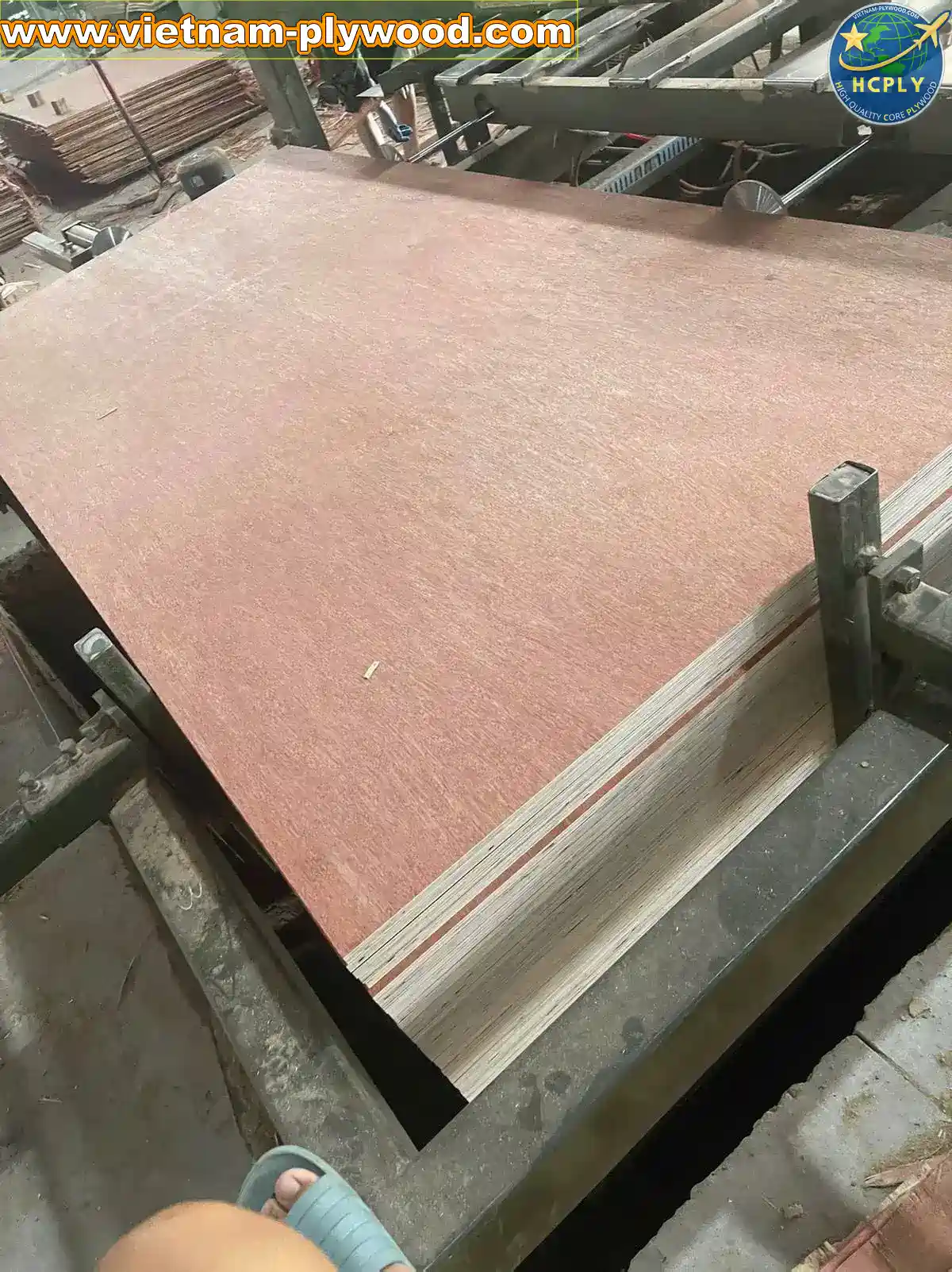
Okoume (Aucoumea klaineana) is the face veneer of choice for European boat builders and BS 1088 applications. It is a light pink-white African tropical hardwood with fine, uniform grain and excellent glue absorption. Key characteristics for marine use:
- Weight advantage: Okoume panels are 8–12% lighter than comparable gurjan panels — critical for boat building where weight-to-strength ratios affect hull performance (Chesapeake Light Craft technical data, 2024)
- Workability: Clean splitting behavior for stitch-and-glue boat construction. Bends without checking when used in thin veneers (3–9mm panels)
- Surface finish: Accepts epoxy, fiberglass overlay, and marine varnish uniformly — important for hulls requiring fairing and painting
HCPLY sources okoume face veneer and bonds to eucalyptus core with phenolic WBP glue for European and Australian boat building export.
📌 Gurjan Face — Indian Market and Heavy Marine Structural
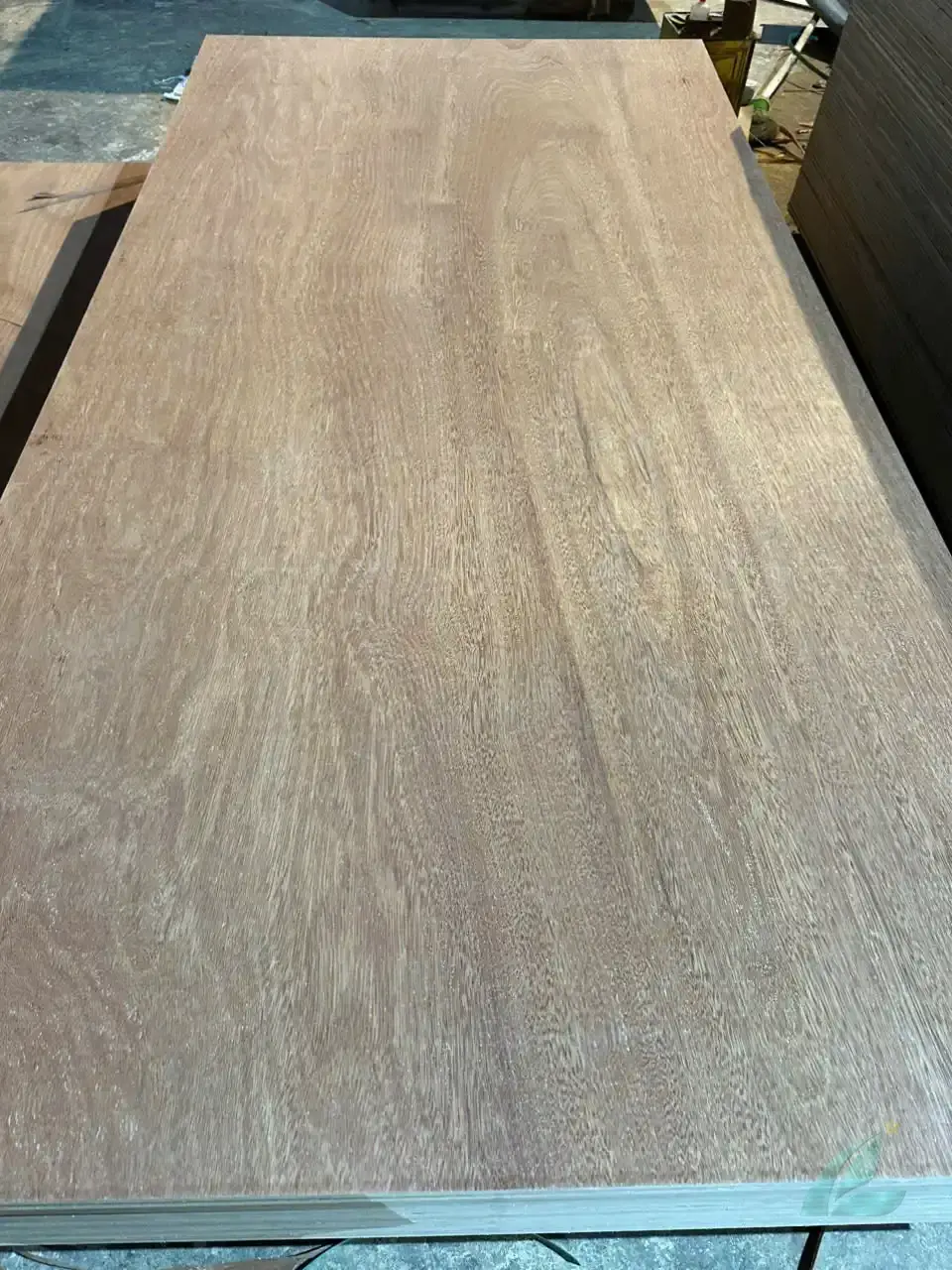
Gurjan (Dipterocarpus turbinatus) is a dense tropical hardwood from South and Southeast Asian forests. It is the dominant face veneer for marine plywood sold into India, South Asia, and Middle East construction markets. Characteristics:
- Density and strength: Gurjan provides greater hardness and bending resistance than okoume, making it preferred for structural dock decking, marine warehouse flooring, and coastal construction applications where load-bearing matters
- Market alignment: India’s IS 710 standard for marine plywood specifies tropical hardwood face veneers compatible with gurjan. Indian buyers importing gurjan plywood from Vietnam — sourced from the best gurjan face plywood manufacturers in Vietnam — frequently specify WBP glue for monsoon-climate applications
- Surface durability: Gurjan’s closed-grain structure resists surface abrasion better than okoume — relevant for dock walkways and boat decks subject to foot traffic
“For Indian market marine applications — dock flooring, coastal warehouse panels, boat hulls for commercial fishing vessels — gurjan face on eucalyptus core with phenolic WBP consistently meets both structural and moisture resistance requirements.” — Lucy, International Sales Manager, HCPLY
📦 Waterproof Plywood Applications: By End Use
Marine grade WBP plywood from Vietnam is specified across four major waterproof plywood applications. Each has distinct technical requirements.
🛥️ Boat Building and Repair
Boat construction is the strictest marine plywood application. Panels are subject to continuous moisture cycling, occasional submersion, mechanical stress from wave loads, and temperature variation between wet and dry states.
Hull planking (stitch-and-glue construction): 6mm–12mm okoume WBP panels are standard for hard-chine plywood boat designs. The panels are pre-cut, bent, and bonded with structural epoxy. WBP glue at the veneer bond lines keeps the panel structure intact even if surface epoxy coating is damaged.
Deck underlayment: 12mm–18mm panels serve as structural deck substrate under fiberglass or teak overlays. Marine plywood here must maintain dimensional stability through seasonal wet-dry cycles without delaminating or causing surface distortion.
Cabin interiors and bulkheads: 9mm–12mm panels for interior partitions. Okoume face accepts varnish and paint finishes for interior aesthetics while maintaining WBP core bonding for moisture resistance in engine compartments and bilge areas.
🏗️ Dock, Jetty, and Coastal Construction
Dock and marina construction involves permanent partial submersion, tidal cycling, and UV exposure. Marine grade plywood performs as decking substrate, dock fascia, and structural paneling in this environment.
Dock decking substrate: 18mm–21mm gurjan or okoume WBP panels under composite decking or anti-slip overlay. The plywood provides structural rigidity and fastener-holding strength. WBP glue prevents layer separation from tide-driven moisture cycling.
Floating jetty platforms: Lighter okoume-faced, styrax-core WBP panels reduce platform weight — directly affecting buoyancy requirements and anchoring loads. A 20-panel floating dock section using 18mm okoume WBP plywood can save 60–80 kg versus equivalent eucalyptus core panels (HCPLY production data, 2026).
Coastal warehouse and cold-store racking: Acacia or eucalyptus core WBP panels rated for high humidity environments. Coastal fish processing facilities in Vietnam, India, and Southeast Asia commonly specify WBP phenolic plywood for wall panels, flooring substrates, and shelving in high-humidity cold rooms.
📊 Technical Specifications: Marine Grade Plywood from Vietnam
| Specification | Detail |
|---|---|
| Glue type | Phenolic WBP — passes 72-hour boiling test |
| Face veneer | Okoume A/B or Gurjan A/B |
| Core species | Eucalyptus (650–750 kg/m³) or Acacia (~580 kg/m³) |
| Core construction | Full stitched or edge-jointed (void-free) |
| Thickness range | 9mm – 25mm |
| Standard sheet size | 1220×2440mm (4×8 ft) |
| Thickness tolerance | ±0.3mm |
| Emission | E1 standard (phenolic WBP is inherently low-formaldehyde) |
| Certifications | FSC, CE, ISO 9001 |
| MOQ | 1 × 40HC container |
| Lead time | 15–20 days |
| FOB port | Hai Phong, Vietnam |
⚠️ Note: Phenolic WBP glue and emission class are separate specifications. Phenolic resin inherently produces lower formaldehyde emissions than melamine glue — most WBP marine plywood tests at E1 or better without additional treatment. However, for markets requiring E0 or CARB P2 certification, additional low-emission resin formulations can be specified. Confirm requirements before ordering.
For a detailed explanation of glue types and emission standards, see Plywood Glue Types & Emission Standards Guide.
🔍 How to Verify Marine Grade: Boiling Test and Documentation
The 72-hour boiling test is the primary verification method for WBP phenolic bonding. Understanding this test helps buyers specify correctly and reject non-compliant panels.
Factory boiling test procedure (BS EN 314-2):
- Cut 25mm × 150mm test specimens from finished panels
- Immerse fully in boiling water for 4 hours
- Dry in oven at 65°C for 20 hours
- Re-immerse in boiling water for 4 hours
- Inspect while wet — zero delamination is the pass criterion
Panels bonded with genuine phenolic WBP glue pass without visible glue line separation. Panels using lower-grade adhesives show delamination at glue lines during steps 2–4 (EN 314 Part 2 Class 3, 2017).
Key Insight: Some suppliers label MR glue plywood as “waterproof” based on short-term water immersion tests. Request factory boiling test reports — not just immersion tests — when verifying marine grade specification.
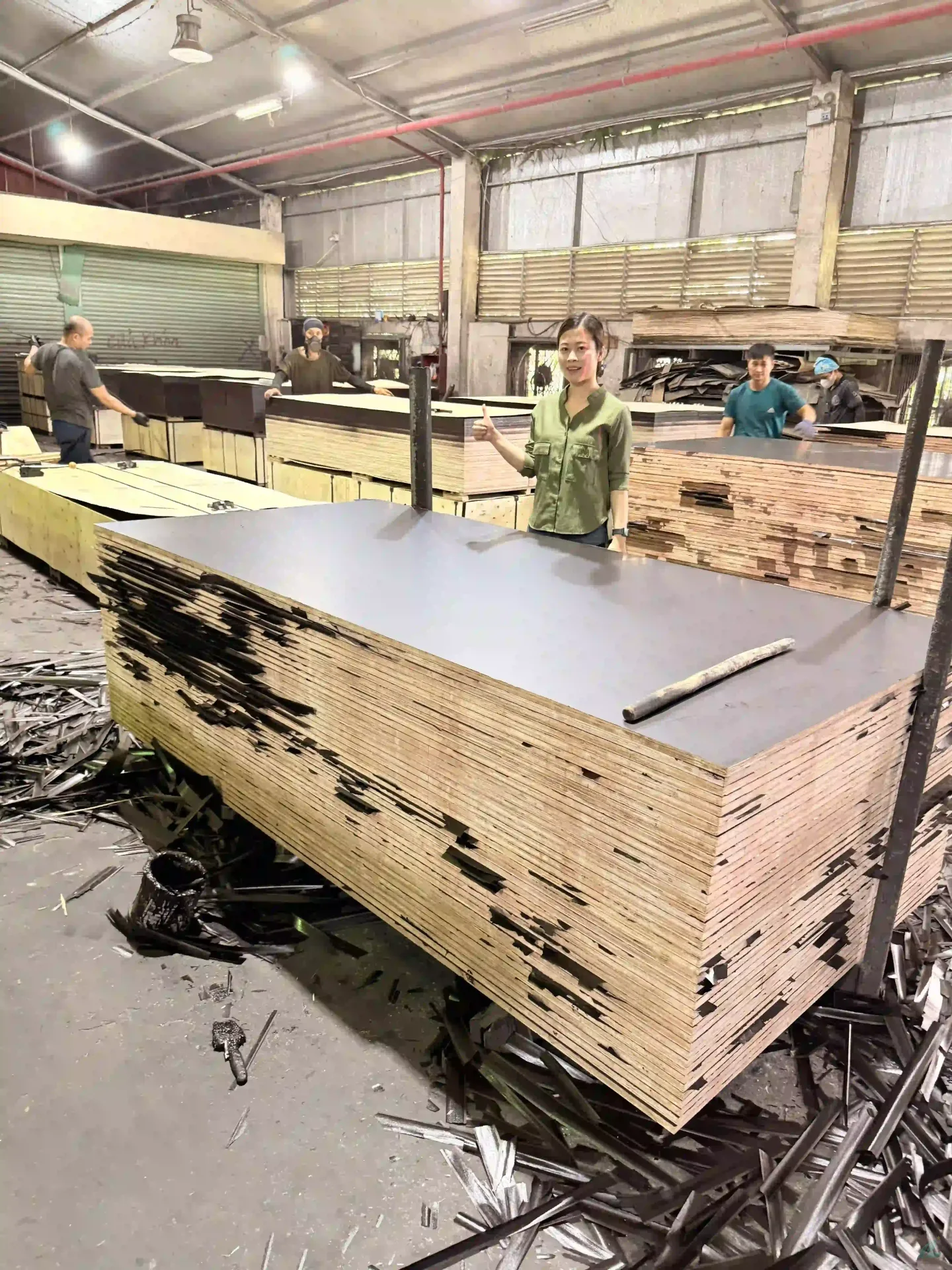
HCPLY conducts batch boiling tests for all WBP marine grade orders with test reports provided as part of export documentation. This forms part of our quality control process before container loading.
🌍 Export Markets for Vietnam Marine Grade Plywood
Vietnam-produced marine grade plywood reaches 20+ countries, with distinct regional demand patterns as of 2026.
India (largest volume): IS 710 marine plywood specification dominates. Buyers specify gurjan face on eucalyptus core, 12mm–18mm, for dock construction, fishing vessel repair, and coastal warehouse paneling. HCPLY ships 15–20 containers per month to Indian ports (HCPLY production data, 2026).
Middle East: Construction-driven demand for WBP panels in coastal hotel and marina projects. Film-faced WBP panels for formwork and anti-slip WBP panels for scaffolding and flooring are common adjacent specifications alongside marine plywood for permanent installations.
Europe and Australia: Okoume face BS 1088-aligned panels for boat building supply chains. European buyers prioritize FSC certification and E1 emission compliance alongside WBP glue specification. See Vietnam Plywood Export Markets Guide for country-specific requirements.
Southeast Asia: Vietnam, Thailand, Philippines, and Indonesia building sectors specify WBP plywood for coastal and riverine construction projects. Regional buyers often mix marine grade panels with standard MR commercial plywood based on application zone (permanently wet vs. intermittent moisture).
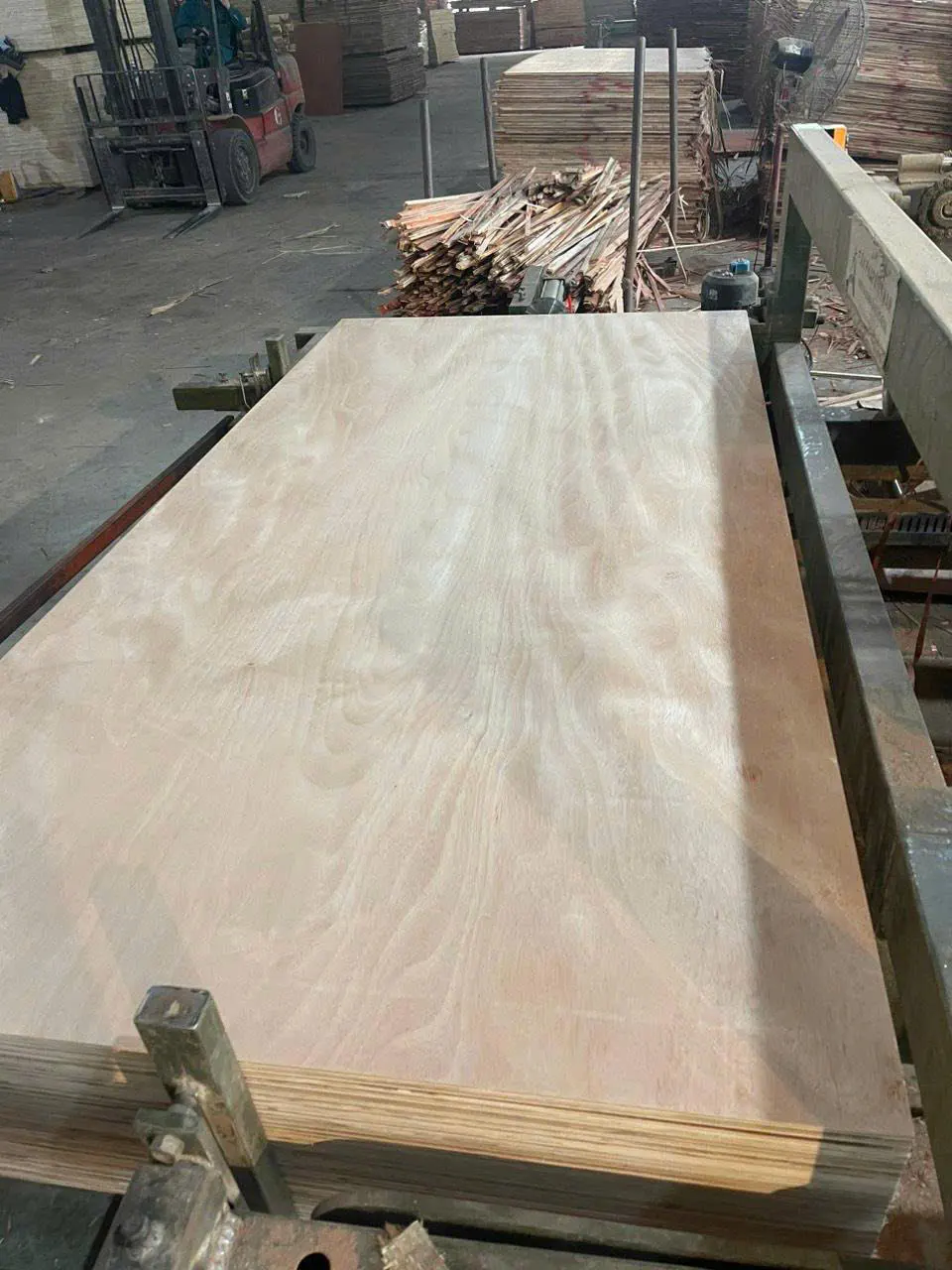
⚙️ Ordering Marine Grade Plywood from Vietnam: What to Specify
Buyers frequently make errors when ordering marine grade plywood because they specify only one parameter — typically just “WBP” — without addressing core species, face veneer grade, and core construction. Here is the complete specification checklist:
Required specifications:
- Face veneer species: Okoume (boat building, lightweight) or Gurjan (structural, Indian market)
- Core species: Eucalyptus core for maximum density and strength; acacia core for cost-optimized marine applications
- Glue type: Phenolic WBP — confirm this explicitly, not just “waterproof”
- Core construction: Full stitched (premium, void-free) or edge-jointed (mid-range). Never accept loose-laid for marine applications
- Thickness: Match to structural design requirements (9mm–25mm)
- Sheet size: 1220×2440mm (4×8 ft standard) or 1250×2500mm (European metric)
- Certifications required: FSC for EU/US markets; CE for European construction; CO + Phytosanitary for all destinations
For help understanding how different core species affect panel weight and container loading, see Plywood Core Types — Acacia vs Eucalyptus vs Styrax.
Pricing context: Marine grade WBP plywood carries a 15–25% premium over standard MR furniture-grade panels of the same thickness and face veneer. The cost differential reflects phenolic resin pricing, more intensive hot-press cycles (higher temperature, longer dwell time), and stricter core construction requirements (no loose-laid allowed for waterproof plywood applications).
Get a Free Quote for Marine Grade Plywood — Contact HCPLY
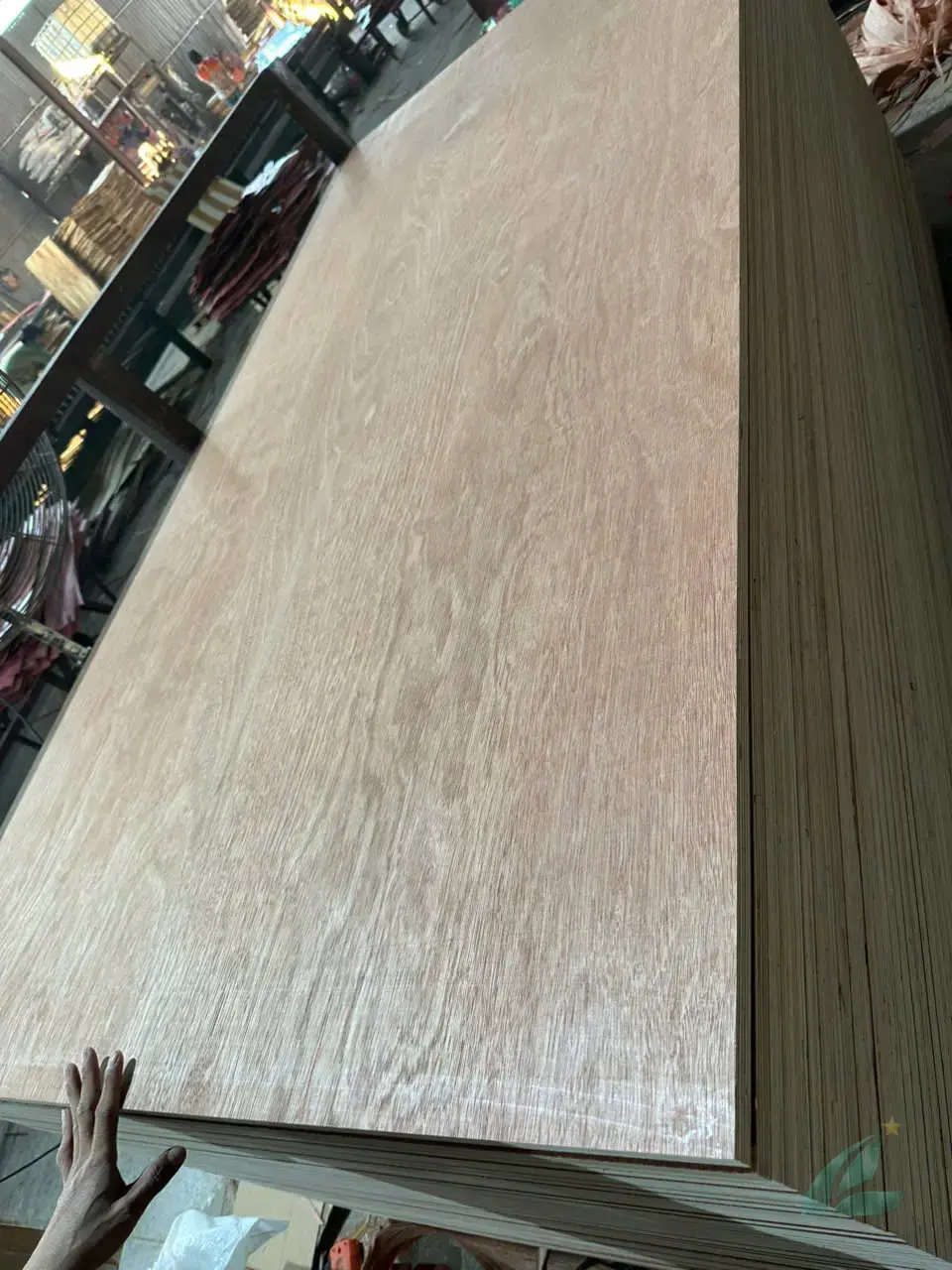
✅ Conclusion: Specifying Marine Grade Plywood Correctly
Marine grade plywood from Vietnam starts with one non-negotiable: phenolic WBP glue tested to 72 hours. Everything else — okoume vs gurjan face, eucalyptus vs acacia core, 9mm vs 21mm thickness — depends on the specific waterproof application.
For boat builders: okoume face, eucalyptus core, full-stitched, 9mm–18mm. For a broader look at marine and outdoor plywood applications, see our application guide. For dock and coastal construction: gurjan face, eucalyptus core, WBP, 15mm–21mm. For industrial wet environments: acacia core WBP panels deliver cost-effective moisture resistance where maximum structural strength is not the primary concern.
Disclosure: This article is published by HCPLY, a Vietnam-based plywood manufacturer and export operator. While we aim to provide objective industry guidance, readers should consider our perspective as a market participant when evaluating recommendations.
Request marine plywood specifications and FOB pricing from HCPLY
Free sample panels available before full container orders. Typical lead time: 15–20 days from production confirmation.