

Freight is a fixed cost per container. The more plywood volume you ship in each box, the lower your landed cost per sheet. Yet most buyers specify plywood by face veneer and glue type — and overlook the single variable that controls lightweight core plywood freight efficiency: core species density.
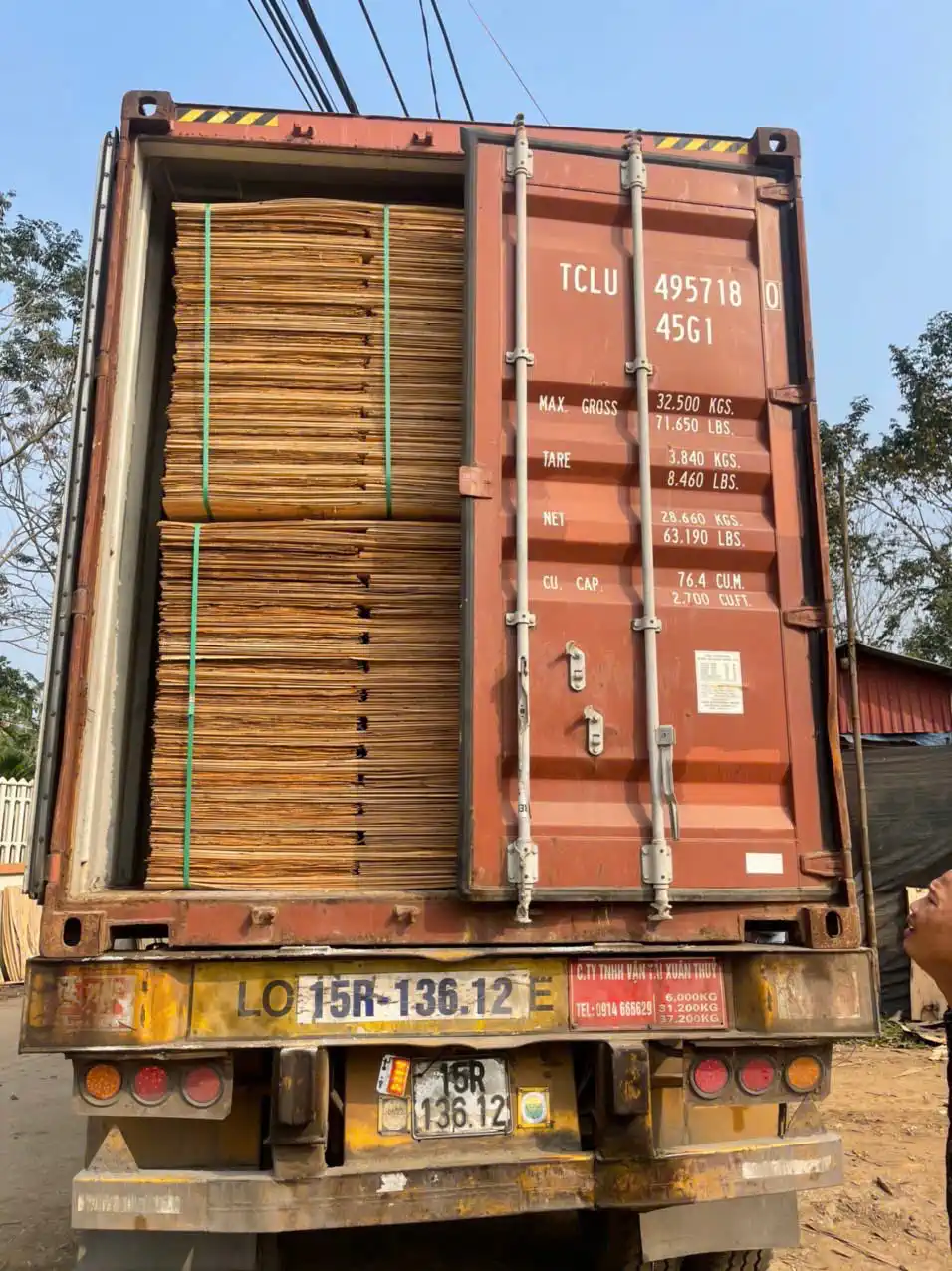
Styrax core (480–500 kg/m³) packs 18 pallets into a standard 40-foot high-cube container. Eucalyptus core (650–750 kg/m³) packs only 15. That three-pallet gap represents a 20% CBM difference — and at 2026 freight rates, the math translates directly into $200–400 in freight savings per container (HCPLY production data, 2026).
This guide explains the mechanics, gives you the verified packing tables, and helps you decide when lightweight core plywood freight strategy is the right specification choice for your shipments.
📦 Why Core Density Controls Container Efficiency
Density in plywood is determined by core species, not face veneer. A birch-faced panel on styrax core weighs the same per CBM as a bintangor-faced panel on styrax core. The face adds 0.2–0.4mm per side — negligible compared to the 8–18 inner core plies that make up the bulk of any panel.
The 40HC container has a maximum payload of 28.5 MT — a hard ceiling, not a target. Before optimizing for volume, any packing plan must pass the weight check. This is where density becomes critical:
- Styrax at 500 kg/CBM: 53 CBM loads to ~26.5 MT — well within the 28.5 MT limit
- Acacia at 580 kg/CBM: 47.5 CBM loads to ~27.5 MT — close to limit
- Eucalyptus at 700 kg/CBM: 44.5 CBM loads to ~28 MT — near the payload ceiling
Eucalyptus core does not load fewer pallets because of size. It loads fewer pallets because stacking more volume would push the container over the 28.5 MT payload limit (HCPLY production data, 2026).
⚠️ Important: The 28.5 MT payload limit applies BEFORE CBM optimization. Specifying eucalyptus core to maximize volume in a 40HC is a structural impossibility — weight caps out before the container fills.
📊 Verified Packing Tables: Styrax vs Acacia vs Eucalyptus
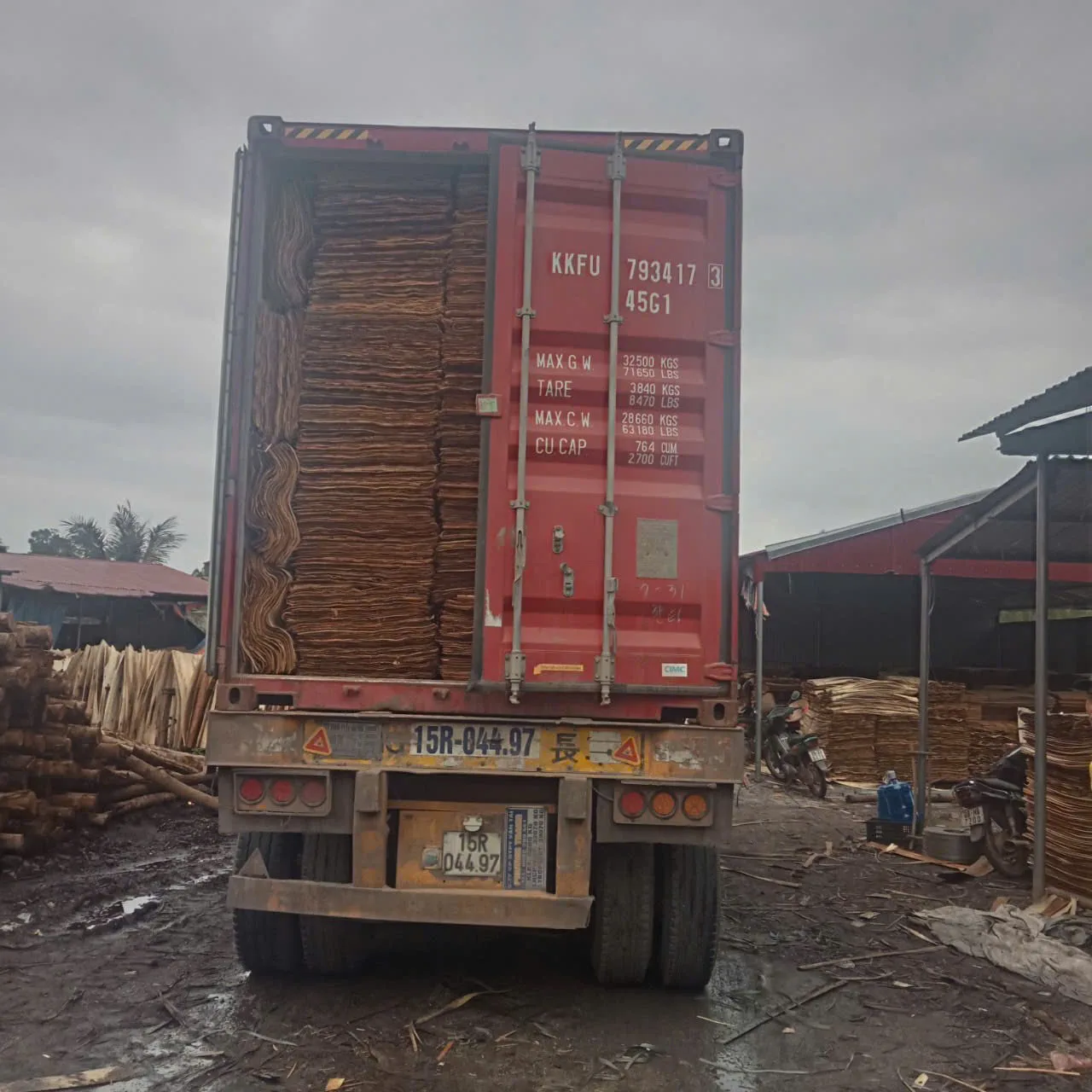
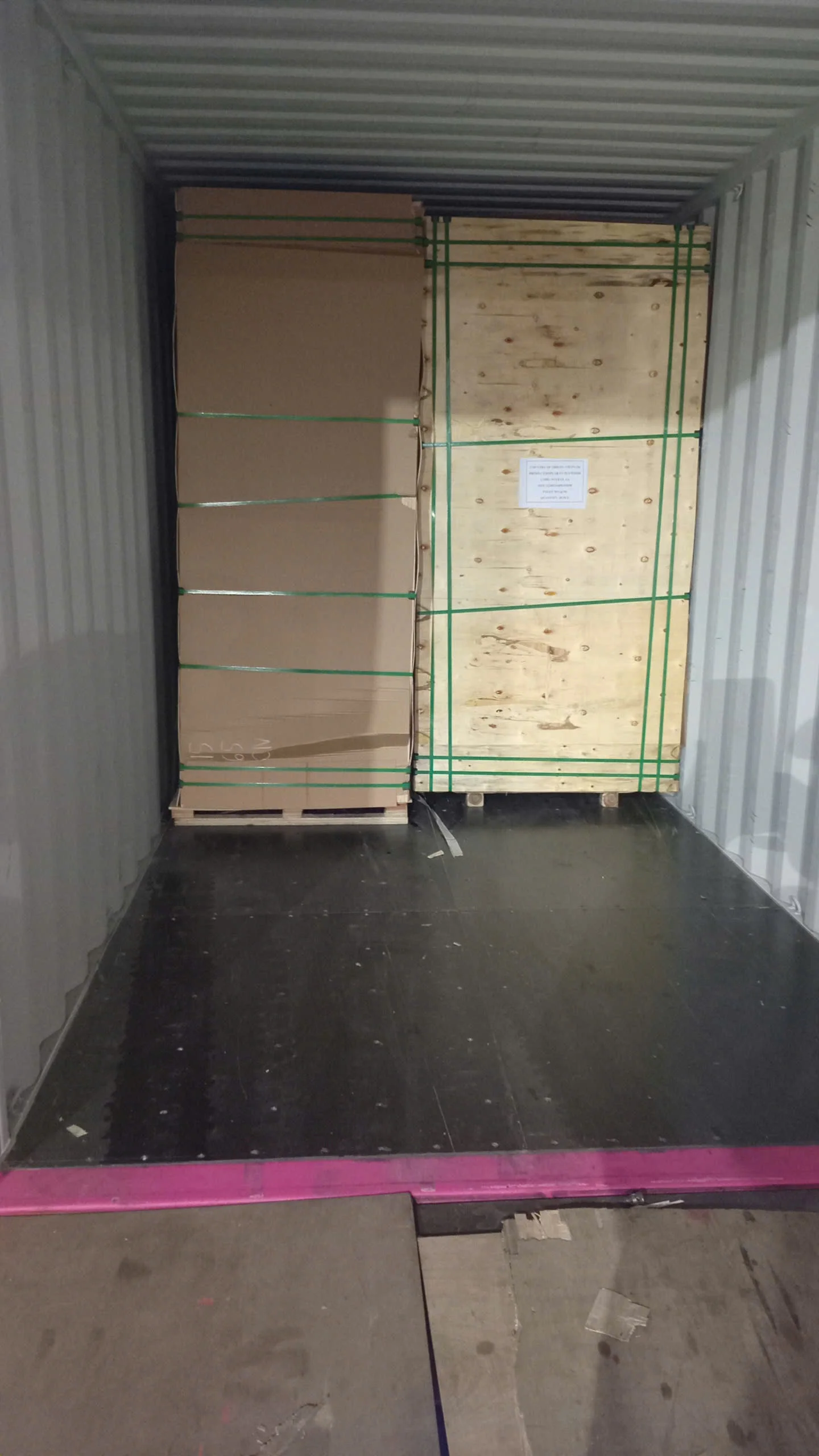
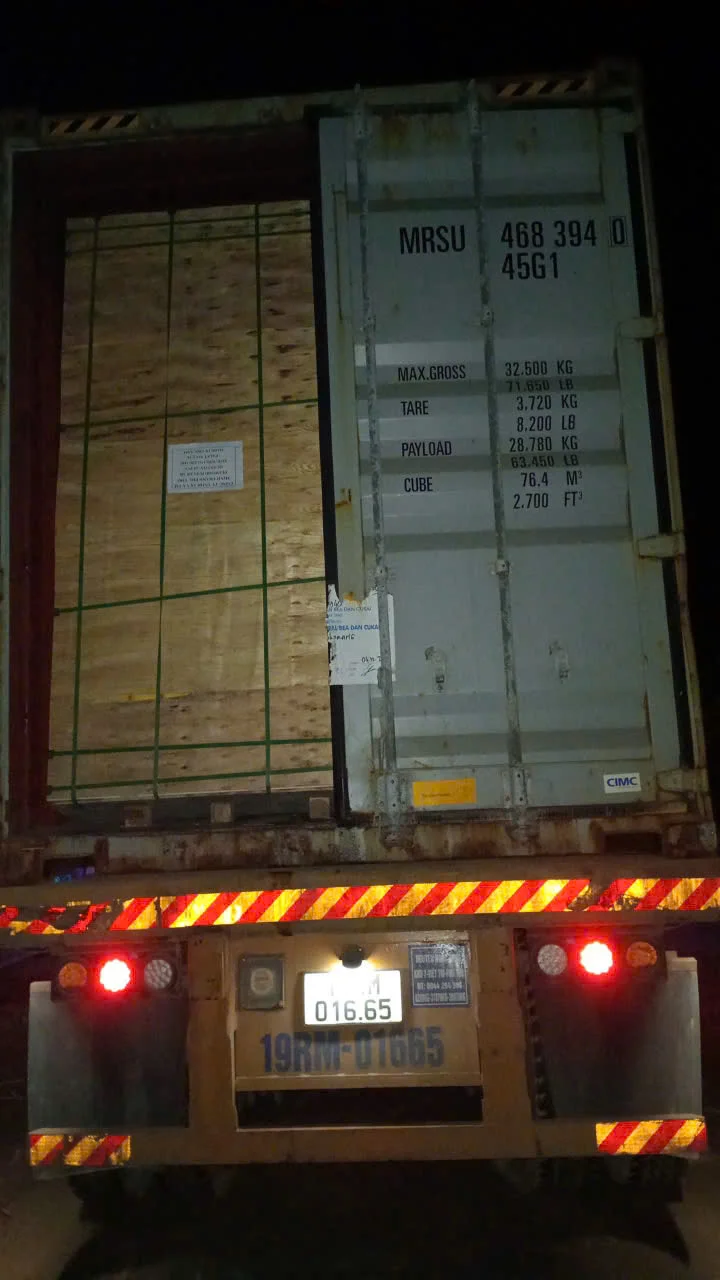
The following data comes from HCPLY factory-executed packing at standard 1220×2440mm sheet size. Pallet stack height is fixed at 1000mm (forklift-safe, structurally stable). Container layout: 16 pallets flat (4×4) + 2 upright at the front bulkhead = 18 maximum for lightweight cores.
| Core Species | Density (kg/m³) | Pallets per 40HC | CBM per 40HC | Weight per 40HC |
|---|---|---|---|---|
| Styrax | 480–500 | 18 | ~53 CBM | ~26.5 MT |
| Acacia | ~580 | 16 | ~47.5 CBM | ~27.5 MT |
| Eucalyptus | 650–750 | 15 | ~44.5 CBM | ~28 MT |
Source: HCPLY production data, 2026. Sheet size 1220×2440mm.
The CBM gap between styrax and eucalyptus is 8.5 CBM per container — equivalent to roughly 1.3 additional pallets of plywood. Across a full year of monthly shipments, this compounds to over 100 CBM of additional freight capacity at zero additional freight cost.
💰 Converting CBM Difference Into Dollar Savings
Freight cost per container is largely fixed — the ocean freight rate, port handling, and documentation fees do not change whether you ship 44 CBM or 53 CBM. What changes is how much product you move per dollar of freight.
Here is how the calculation works:
Freight cost (fixed): $1,200 per 40HC (example rate, Hai Phong to Europe, 2026)
Styrax load:     53 CBM → $1,200 ÷ 53 = $22.64 per CBM
Eucalyptus load: 44.5 CBM → $1,200 ÷ 44.5 = $26.97 per CBM
Difference:      $4.33 per CBM × 44.5 CBM = $193 per container
At $1,500 freight: difference rises to $242. At $2,000 freight: $323 per container. The more expensive the freight lane, the greater the styrax advantage.
💡 Tip: Run this calculation with your actual freight rate before specifying core species. Even a modest $150 per container saving adds up to $1,800/year on monthly shipments.
“The styrax vs eucalyptus core freight cost gap surprises most buyers — they recover $200–350 per container in savings without changing face veneer or glue spec at all.” — Lucy, International Sales Manager, HCPLY
🔧 When Lightweight Core Is the Right Choice
Styrax core is not a compromise. It is the standard premium furniture core in Northern Vietnam — the same species specification used for E0, full stitched panels destined for European and US furniture manufacturers.
Use styrax core when:
- Application is interior furniture, cabinets, or decorative panels
- Emission standard required is E0 or E1 (furniture markets: EU, US, Japan, Korea)
- Face veneer is birch, okoume, EV, pine, or poplar (typical for premium furniture)
- Weight per sheet matters to downstream handler (lighter for workshop floor handling)
- Freight cost optimization is a purchasing priority
Styrax is not suited for:
- Structural flooring (requires high-density eucalyptus for compressive load)
- Concrete formwork (film-faced plywood uses acacia or eucalyptus for rigidity)
- Applications requiring >650 kg/m³ density specifications
- Any spec requiring >580 kg/m³ density minimum
The distinction matters because styrax at 480–500 kg/m³ is genuinely lighter in service — which is an advantage for furniture assembly but a disqualification for structural end uses.
📋 Acacia Core: The Budget Middle Ground
Acacia core (~580 kg/m³) sits between styrax and eucalyptus on both density and cost. It loads 16 pallets per 40HC — two fewer than styrax, one more than eucalyptus.
Acacia is the most widely used core for commercial and packing-grade plywood in Vietnam. It is darker in color (compared to styrax’s lighter tone) and is typically used with melamine MR glue and E1/E2 emission grades for price-competitive markets.
For buyers sourcing commercial-grade panels (bintangor face, loose-lay or edge-jointed core, E1/E2), acacia core is standard. Specifying styrax in this segment adds cost without proportional quality gain — acacia core is appropriate for the application.
The freight advantage of acacia over eucalyptus is meaningful but smaller:
| Comparison | CBM Difference | At $1,200 Freight |
|---|---|---|
| Styrax vs Eucalyptus | 8.5 CBM | ~$193/container |
| Acacia vs Eucalyptus | 3 CBM | ~$68/container |
| Styrax vs Acacia | 5.5 CBM | ~$125/container |
Source: Calculated from HCPLY packing tables, 2026.
📐 Thickness Effect on Packing Efficiency
Density is the primary driver of container weight limits, but thickness determines how many sheets stack into 1000mm pallet height — which affects total sheet count and CBM.
The formula is straightforward:
Sheets per pallet = ROUNDDOWN(1000 ÷ thickness_mm)For a 15mm panel: 1000 ÷ 15 = 66 sheets per pallet (rounded down). For a 12mm panel: 1000 ÷ 12 = 83 sheets per pallet. For an 18mm panel: 1000 ÷ 18 = 55 sheets per pallet.
Thinner panels pack more sheets per pallet and more CBM per container — this is independent of core species. The combined effect of thin specification + styrax core produces the highest CBM per 40HC for furniture-grade plywood.
For complete thickness-by-pallet calculation tables, refer to the plywood container packing calculation guide.
🏭 How HCPLY Specifies Core for Each Facility
HCPLY manages 3 specialized production facilities in Northern Vietnam, each with distinct core specifications:
Facility 1 — Premium Furniture: Core species: styrax, eucalyptus (Grade A). Construction: full stitched. Glue: Melamine MR, emission E0/E1. This facility produces the panels where styrax core is standard — lightweight, clean, appropriate for birch, okoume, EV, and pine face veneers destined for EU/US furniture buyers.
Facility 2 — Commercial & Packing: Core species: acacia. Construction: edge-jointed or loose-laid. Glue: Melamine MR, emission E1/E2. Price-competitive panels for commercial markets (India, Southeast Asia, Middle East lower segment).
Facility 3 — Premium Film-Faced: Core species: eucalyptus or acacia Grade A. Film: AICA phenolic film. Glue: Phenolic WBP. Construction applications requiring reuse 15+ times. Dense core required for concrete formwork rigidity.
The freight savings calculation applies most directly to Facility 1 output — buyers specifying furniture-grade panels who have the option of styrax vs eucalyptus core.
For a deeper breakdown of Vietnam factory segments, see Vietnam plywood factory types & industry segmentation.
🔗 Applying Core Choice to Your Sourcing Decision
Before your next container order, run three checks:
1. Application check: Is the end use furniture or interior fit-out? If yes, styrax core is technically appropriate and freight-optimal.
2. Weight check: Does your product specification require a minimum density? Most furniture specs do not. If your customer specifies ≥600 kg/m³ board density, eucalyptus is required. For standard furniture panels, no such constraint applies.
- CBM math: Take your FOB price per CBM. Add your freight cost divided by CBM. Compare the landed cost per sheet between cores. The arithmetic is usually in favor of styrax for furniture-grade panels.
HCPLY supports mixed-spec containers — you can combine styrax and acacia core products in a single 40HC provided total weight is verified. This is useful for buyers needing both furniture-grade and commercial-grade panels in one shipment.
For a full walkthrough of sourcing mechanics, see the plywood quotation guide — what to know before pricing.
Get a Free Quote with Core Comparison
✅ Lightweight Core Freight Savings — Summary
Core species density is a primary variable in plywood container economics. The key numbers, verified from HCPLY factory data 2026:
- Styrax: 480–500 kg/m³ → 18 pallets → 53 CBM per 40HC — maximum freight efficiency for furniture grade
- Acacia: ~580 kg/m³ → 16 pallets → 47.5 CBM per 40HC — standard for commercial grade
- Eucalyptus: 650–750 kg/m³ → 15 pallets → 44.5 CBM per 40HC — required for structural and construction applications
The styrax vs eucalyptus core freight cost difference averages $200–400 per container depending on freight lane and rate. This is recovered entirely from better CBM utilization, with no compromise on face veneer, glue type, or emission standard.
For furniture and interior plywood buyers, lightweight core plywood freight optimization is one of the highest-leverage adjustments available before freight rate negotiations. It costs nothing to change the spec — only requires knowing the data.
Contact HCPLY Now to request a side-by-side quote comparing styrax and eucalyptus core for your standard specifications. Our team provides core-specific packing tables with every quotation.
Related reading: