
Vietnam plywood exports 20+ countries and holds a consistent 5–12% price advantage over Chinese plywood on comparable grades (IndexBox Global Plywood Market Report, 2025). That gap is not accidental — it is structural. Six cost drivers, built into Vietnam’s geography, raw material base, and trade agreements, make this price position durable rather than a short-term market anomaly. Vietnam’s rivals simply cannot replicate these structural advantages.
This guide breaks down each driver with factory-level data so you can evaluate whether Vietnam plywood pricing makes commercial sense for your application and target market.
📊 How Vietnam Plywood Prices Compare Globally
Vietnam plywood competitive prices sit below every major Asian exporter for commercial and furniture grades. The table below reflects 2024–2025 export market data.
| Origin | Average Export Price | Relative to Vietnam | Key Strength |
|---|---|---|---|
| Vietnam | Baseline | — | Commercial + furniture range |
| China | +5–12% | Higher | Wide spec range, but anti-dumping exposure |
| Indonesia | +8–15% | Higher | Marine/WBP grades |
| Malaysia | +20–40% | Much higher | Premium tropical hardwood |
| Russia/Europe | +30–50% | Much higher | Birch, structural grades |
(IndexBox Global Plywood Market Report, 2025; Vietnam Timber & Forest Product Association, 2025)
Malaysia’s average export price reached $1,600/CBM in 2024 — driven by its focus on Meranti and premium species. Vietnam’s commercial bintangor and eucalyptus grades operate at a fraction of that figure, targeting the volume segment that India, the Middle East, and Southeast Asia demand most.
Key Insight: Price advantage is widest on commercial bintangor, packing grade, and construction plywood. Premium furniture-grade plywood (E0, full-stitched styrax core, birch face) narrows the gap considerably — this is expected and reflects actual cost differences in raw material and production quality.
🌳 Driver 1: Domestic Plantation Raw Material Supply
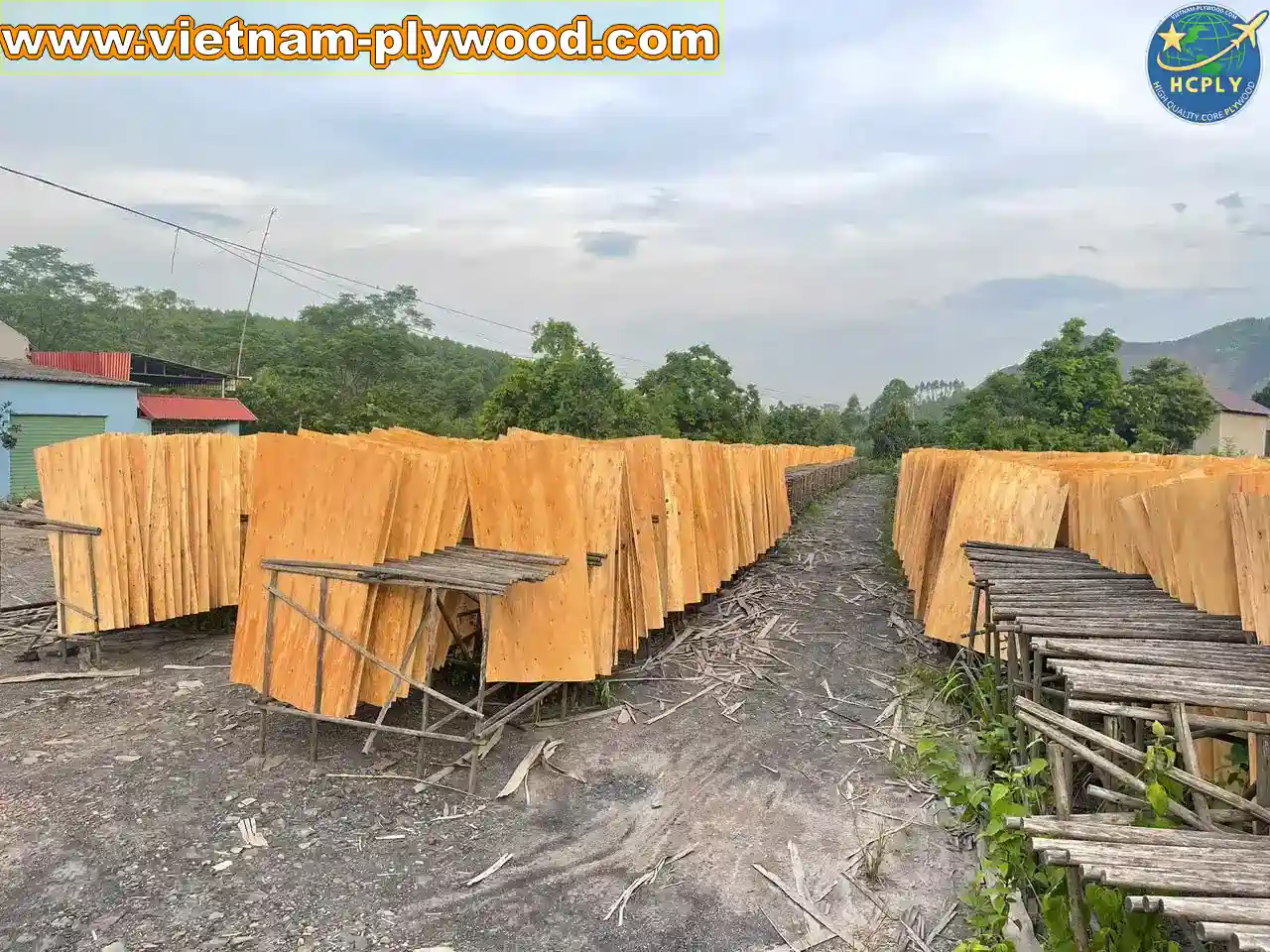
Approximately 80–90% of the raw timber used in Vietnamese plywood production comes from domestic plantations — primarily acacia and eucalyptus grown in the northern highlands of Phu Tho, Tuyen Quang, and Yen Bai provinces (Vietnam Timber & Forest Product Association, 2024).
This contrasts sharply with Indonesia and Malaysia, where natural forest timber access has tightened under FSC and EUDR compliance requirements, pushing raw material costs upward.
Vietnam’s three plantation core species each carry distinct price points:
- Acacia core (~580 kg/m³) — most affordable, abundant from short-rotation plantation cycles, ideal for commercial and packing grades
- Styrax core (480–500 kg/m³) — lightweight and cost-effective, preferred for furniture grades requiring low density
- Eucalyptus core (650–750 kg/m³) — highest density and strength, commands a premium but still sourced domestically
Because plantations operate on predictable 5–8 year harvest rotations, Vietnamese factories face less raw material price volatility than competitors relying on natural forest logs or imported timber. Stable input costs translate directly into stable FOB quotes.
See how core species affect container packing and landed cost per CBM
🏭 Driver 2: Factory Clusters in Northern Vietnam
Northern Vietnam — particularly Phu Tho, Yen Bai, and Vinh Phuc provinces — concentrates the highest density of export-grade plywood factories in the country. This geographic concentration is a core pillar of the Vietnam plywood price advantage over competitors across Asia. Factory clustering creates three cost efficiencies that southern Vietnamese or competing-country factories cannot replicate:
Shared logistics infrastructure. Proximity to Hai Phong port (Vietnam’s primary export hub) keeps inland transport costs low. A factory in Phu Tho moves a 40HC container to port in under 4 hours. The same movement from Central Vietnam adds 200+ km and 8+ hours of trucking cost.
Labor cost advantage. Northern Vietnamese factory wages average significantly below those in urban Chinese manufacturing zones, below Malaysian mill workers, and below Indonesian Java-based factories. This labor cost differential directly affects the per-sheet production cost on the sanding, pressing, and cutting lines.
Supplier density. Face veneer importers (birch from Russia, okoume from Africa, gurjan from Myanmar), glue suppliers, and film paper distributors all maintain representatives in or near the northern cluster. This reduces procurement lead times and volumes needed to achieve favorable pricing.
“When buyers compare Vietnam vs China, they often focus only on FOB price. What they miss is the compounded advantage — cheaper raw material, shorter port run, lower labor, and now zero EU duty. It is structural, not cyclical.” — Lucy, International Sales Manager, HCPLY
📋 Driver 3: Zero-Duty Trade Agreement Access
Vietnam’s trade agreement portfolio delivers a pricing advantage that competitors like China cannot match in key import markets as of 2026:
| Agreement | Markets Covered | Plywood Tariff |
|---|---|---|
| EVFTA | EU 27 countries | 0% |
| CPTPP | Japan, Canada, Australia, Mexico, others | 0% or reduced |
| RCEP | China, Korea, ASEAN, Japan, Australia | Reduced |
| UKVFTA | United Kingdom | 0% |
| AKFTA | South Korea | Reduced |
(Vietnam Ministry of Industry and Trade, 2025)
Chinese plywood entering the United States faces anti-dumping and countervailing duties that can add 25–30% to landed cost. Vietnamese plywood carries no equivalent US tariff exposure when manufactured and documented correctly — making Vietnam the primary alternative supplier for US importers who shifted supply chains from China post-2018.
For European buyers, EVFTA zero-duty entry combined with EUDR-compliant documentation (FSC chain-of-custody, GPS geo-coordinates of plantation origin) positions certified Vietnamese plywood competitively against domestic European wood panel suppliers.
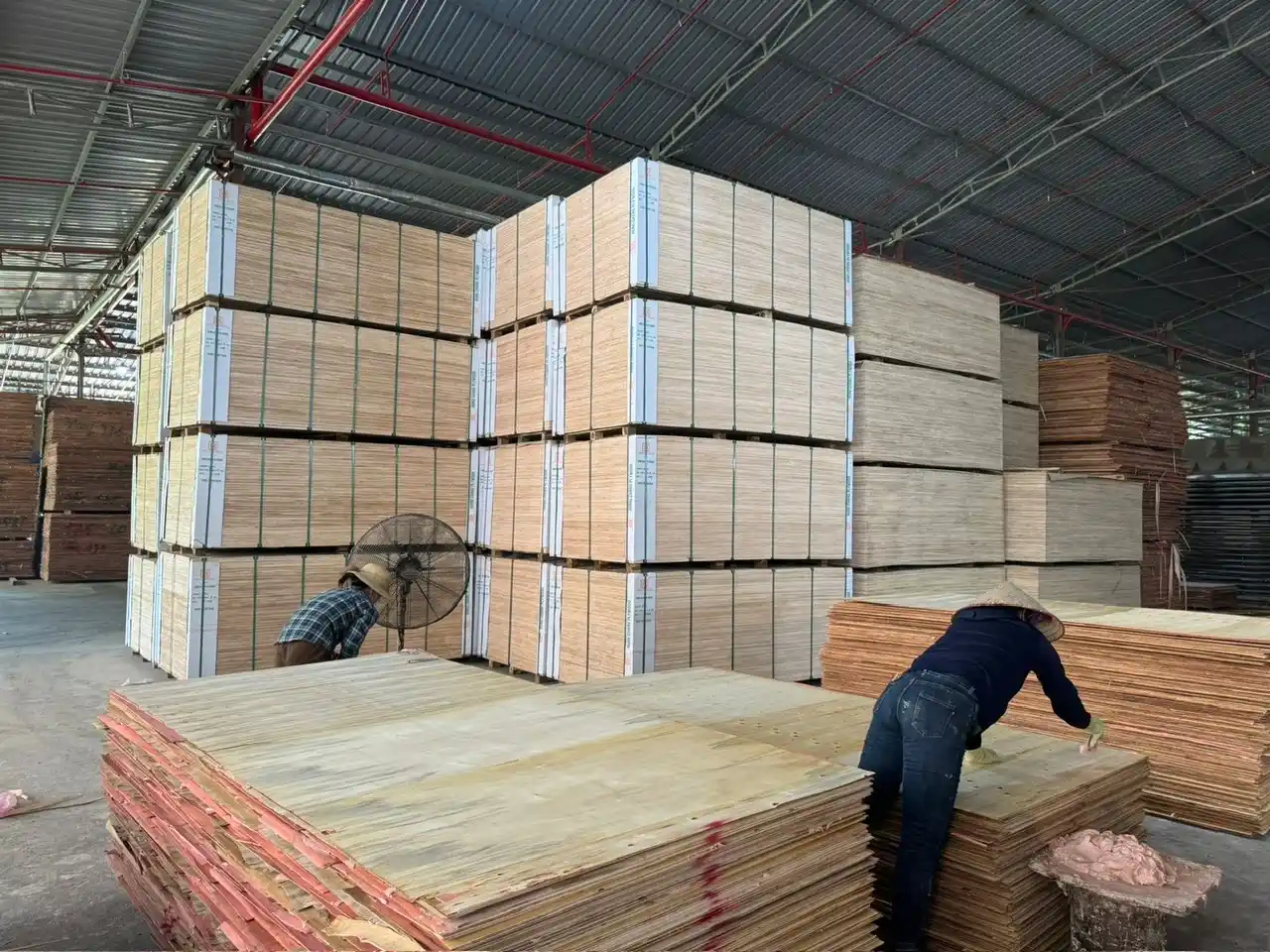
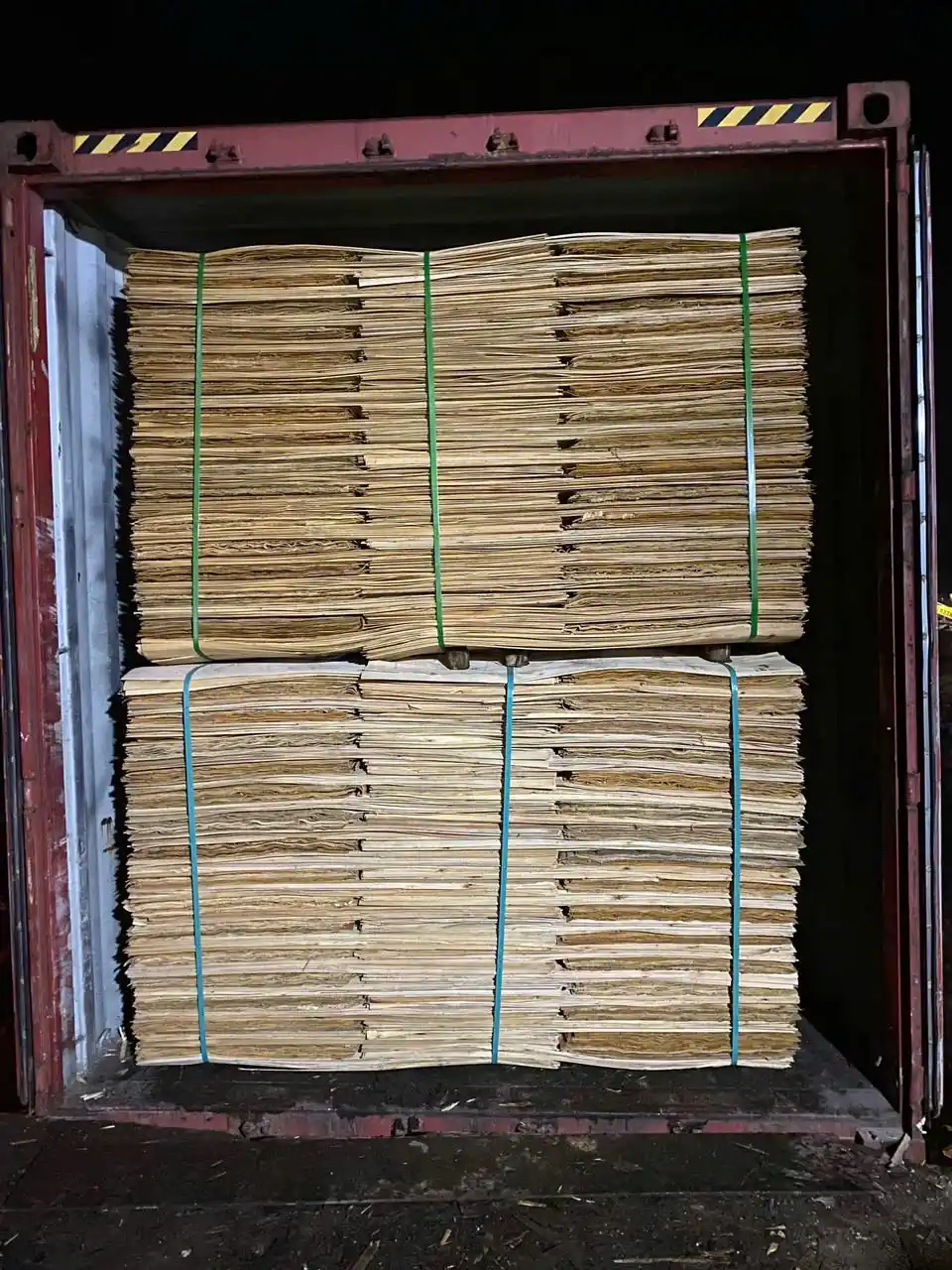
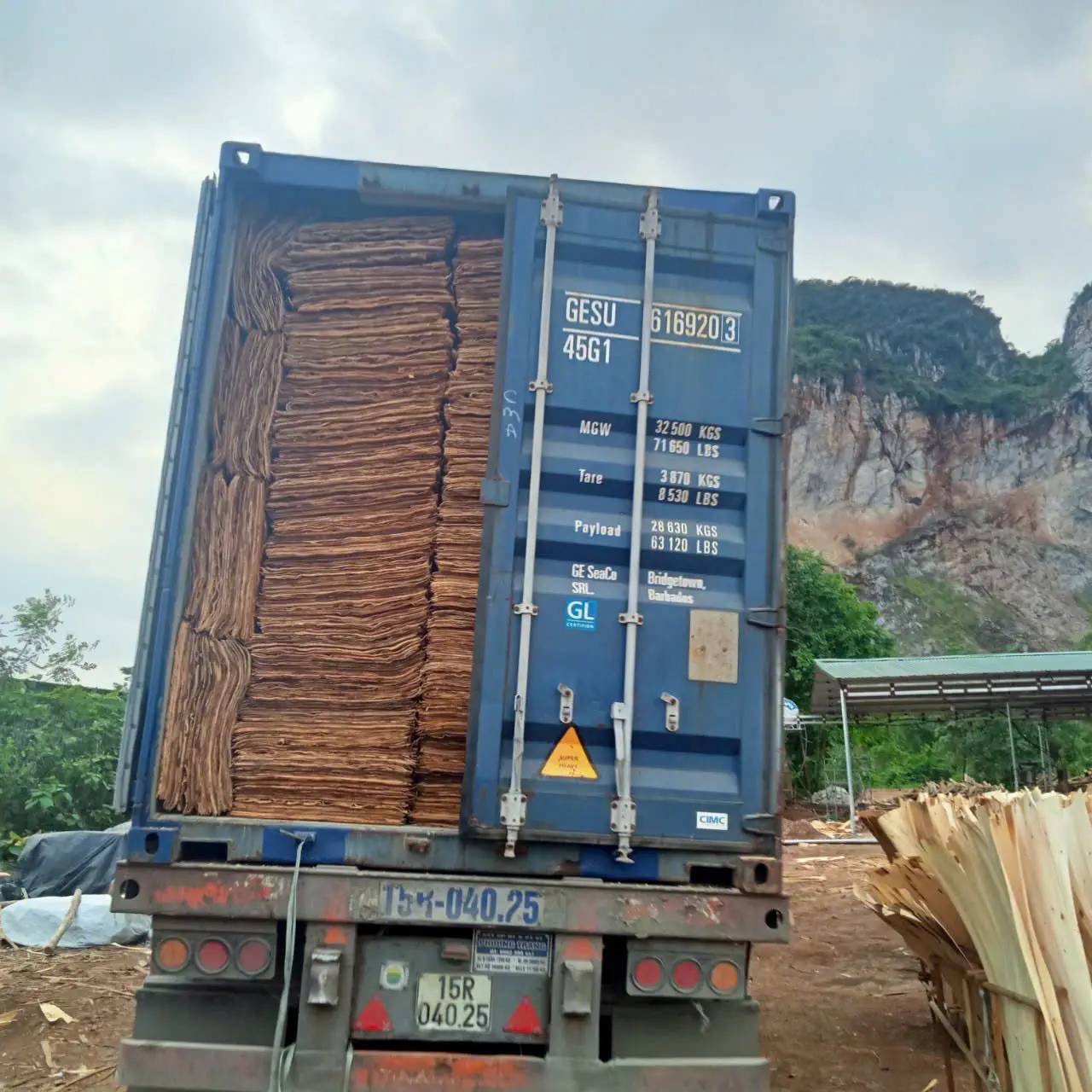
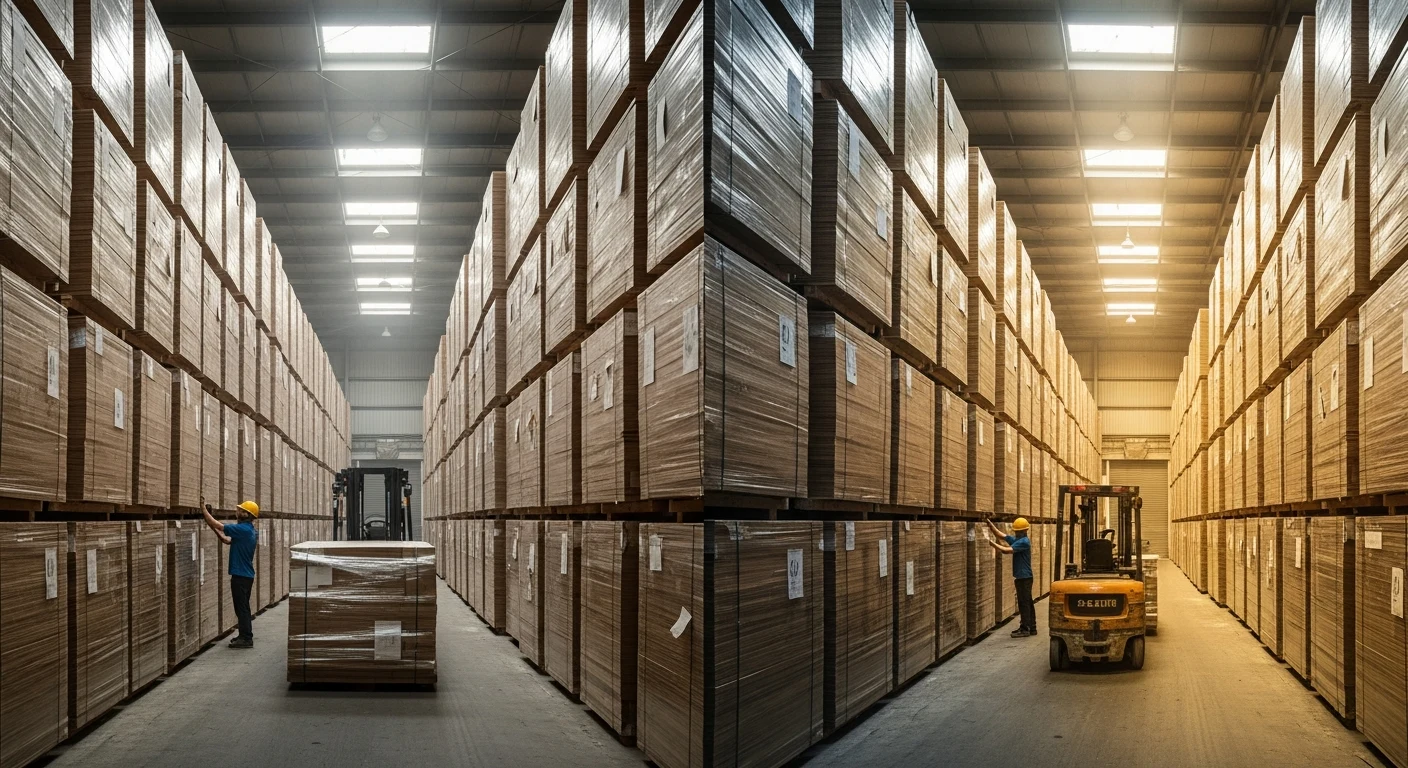
!Vietnam plywood export packing strapping HCPLY factory ready for container loading
Understand HCPLY’s FSC, CARB, and EUDR certifications for your market
⚙️ Driver 4: Efficient Production Volumes and Economies of Scale
Vietnam’s plywood industry exported approximately $1.5 billion USD worth of wood products including plywood in 2024, with annual growth tracking 9–12% (Vietnam Timber & Forest Product Association, 2025). This export volume forces continuous factory investment in efficient production.
- Premium furniture facility — styrax/eucalyptus core, E0 emission, full-stitched construction, sanded finish, FSC+CARB certified. Production optimized for European and North American furniture buyers.
- Commercial and packing facility — acacia core, melamine (MR) glue, E1/E2 emission, competitive pricing for India, Middle East, and Southeast Asia.
- Premium film-faced facility — AICA phenolic film, WBP phenolic glue, 15+ reuse cycles, for construction market clients.
This segmentation matters for pricing: each facility runs its production line continuously at high utilization without stopping to switch between fundamentally different product requirements. High-utilization specialized facilities cost less to run per CBM produced than multi-purpose factories constantly re-tooling.
⚠️ Important: Not all Vietnamese plywood factories are equal in capability or cost position. A factory producing furniture-grade E0 birch-faced plywood cannot suddenly quote cheaper because you ask for budget packing grade — their fixed cost base doesn’t allow it. Match the factory segment to your specification need. Read our Vietnam plywood factory types guide
📦 Driver 5: Container Packing Efficiency Reduces Landed Cost
The true measure of price competitiveness is not FOB price alone — it is landed cost per sheet. Container packing efficiency directly determines how many sheets arrive at your port per freight dollar spent.
Vietnamese factories shipping styrax-core plywood achieve 18 pallets per 40HC container — the highest packing density of any core species. This compares to:
- Styrax core: 18 pallets, ~53 CBM, ~26.5 MT per 40HC
- Acacia core: 16 pallets, ~47.5 CBM, ~27.5 MT per 40HC
- Eucalyptus core: 15 pallets, ~44.5 CBM, ~28 MT per 40HC
(HCPLY production data, 2026)
A buyer importing styrax-core birch-faced plywood receives 20% more sheets per container than eucalyptus-core equivalent. When freight costs $3,000–4,000 per 40HC regardless of what fills it, that packing efficiency difference is a real cost reduction of $150–200 per 1,000 sheets landed.
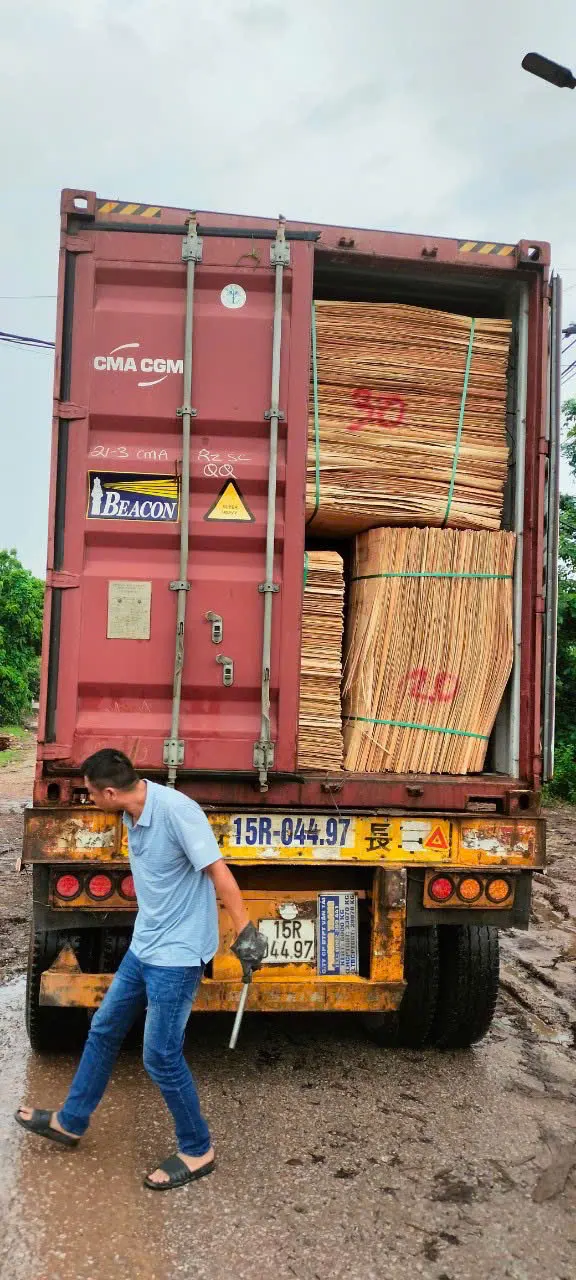
Calculate your exact CBM and sheet count per container
🔧 Driver 6: Spec Flexibility Matched to Price Level
Vietnam’s competitive pricing advantage extends beyond raw FOB numbers to the flexibility buyers gain when sourcing from factories producing the full specification range under one export relationship.
A single HCPLY order can include:
- Commercial bintangor on acacia core for price-sensitive packaging applications
- Furniture-grade birch on styrax core (E0, full-stitched) for European cabinet buyers
- Film-faced on eucalyptus core for construction clients
Sourcing all three from one contact point eliminates the cost and risk of managing three separate supplier relationships, three sets of export documentation, and three quality verification processes. The hidden cost reduction is real — even if it does not appear on the FOB invoice.
📐 What Vietnam Plywood Prices Do NOT Cover
Understanding what drives competitive pricing also requires understanding what will cost more and why:
Premium face veneers require imported raw material. Birch veneer comes from Russia. Okoume face veneer comes from West Africa. Gurjan face veneer from Myanmar. Import costs for these raw materials add to the FOB price — this is not avoidable and is not a factory inefficiency. Budget birch-faced plywood in Vietnam is still competitively priced vs Chinese equivalent, but the raw veneer import cost is the floor below which no manufacturer can go.
Higher emission standards (E0, CARB P2) require better glue formulation. E0-grade melamine resin costs more than standard E1/E2. A buyer requesting CARB P2 certification on a budget commercial specification should expect a price increment. This is technically correct — not a manufacturer upsell.
Full-stitched core construction adds labor cost. Premium furniture-grade plywood with all core layers fully stitched (no gaps, no overlaps) requires 40–60% more assembly labor than loose-laid core construction. This is visible in the price difference between $X/sheet packing grade and premium furniture grade.
Transparent pricing requires understanding these technical drivers. When a Vietnamese factory quotes significantly below market, the question to ask is which specification compromised to achieve that price — not whether you found a hidden bargain.
Learn to read a Vietnam plywood quotation correctly before accepting a price
🏭 How Vietnam Suppliers Structure Factory-Direct Pricing
Key pricing parameters for a valid HCPLY quotation:
- Face veneer species — determines raw material import cost (where applicable)
- Core species — acacia, eucalyptus, or styrax (price and density differ meaningfully)
- Glue type — melamine (MR) or phenolic (WBP)
- Emission standard — E0/CARB P2, E1, or E2
- Core construction — full-stitched, edge-jointed, or loose-laid
- Sanding — calibrated sanded vs unsanded
- Certifications required — FSC, CARB P2, CE, EUDR each have documentation costs
Provide all seven parameters when requesting a quote. Incomplete specifications produce unusable prices.
Get a factory-direct quote from HCPLY
✅ Summary: Vietnam’s Price Advantage Is Structural
Vietnam plywood competitive prices reflect six reinforcing structural advantages — not temporary discounts or quality compromises:
- 80–90% domestic plantation supply insulates input costs from global timber volatility
- Northern factory clusters minimize logistics costs to Hai Phong port
- Zero-duty trade agreements (EVFTA, CPTPP, UKVFTA) lower the effective landed cost in key markets
- Specialized production facilities maintain high utilization and low per-CBM production cost
- Styrax core packing efficiency (18 pallets/40HC) reduces freight cost per sheet landed
- Full spec range from one supplier eliminates multi-vendor sourcing overhead
The gap between Vietnam and China will narrow as Vietnamese wages rise — a process already underway. But the raw material and trade agreement advantages are structural and multi-decade in duration. For importers building a 3–5 year sourcing strategy, Vietnam’s position as the preferred alternative to both Chinese and Malaysian plywood supply is well-founded in the data.
Disclosure: This article is published by HCPLY, a Vietnam-based plywood manufacturer and export operator. While we aim to provide objective industry guidance, readers should consider our perspective as a market participant when evaluating recommendations.
Contact HCPLY for a factory-direct price comparison for your specific specification
For the complete purchasing process, see our guide to buying plywood from Vietnam. Browse factory-direct pricing on our product catalog. Read verified buyer reviews from importers across 20+ countries.