
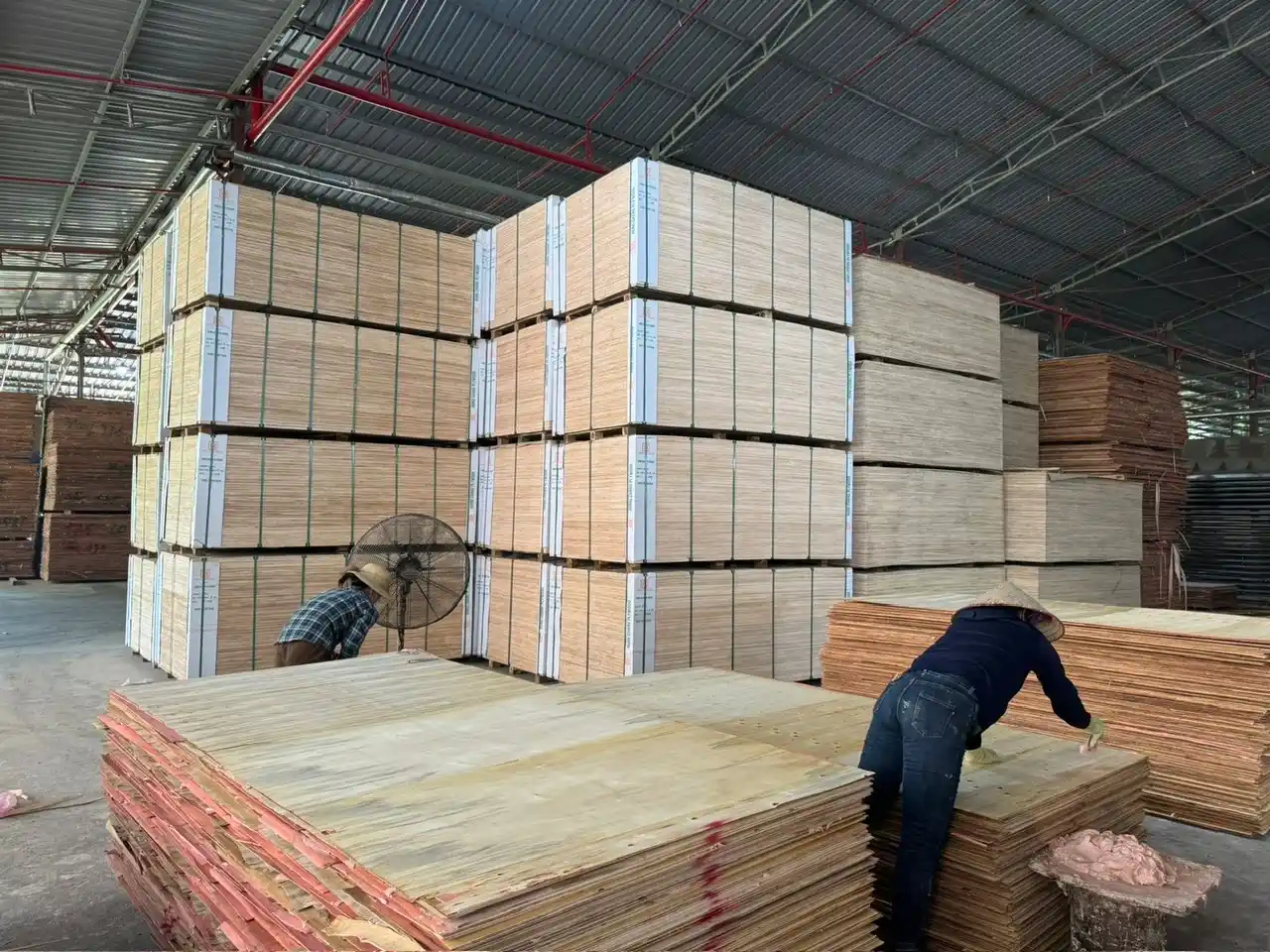
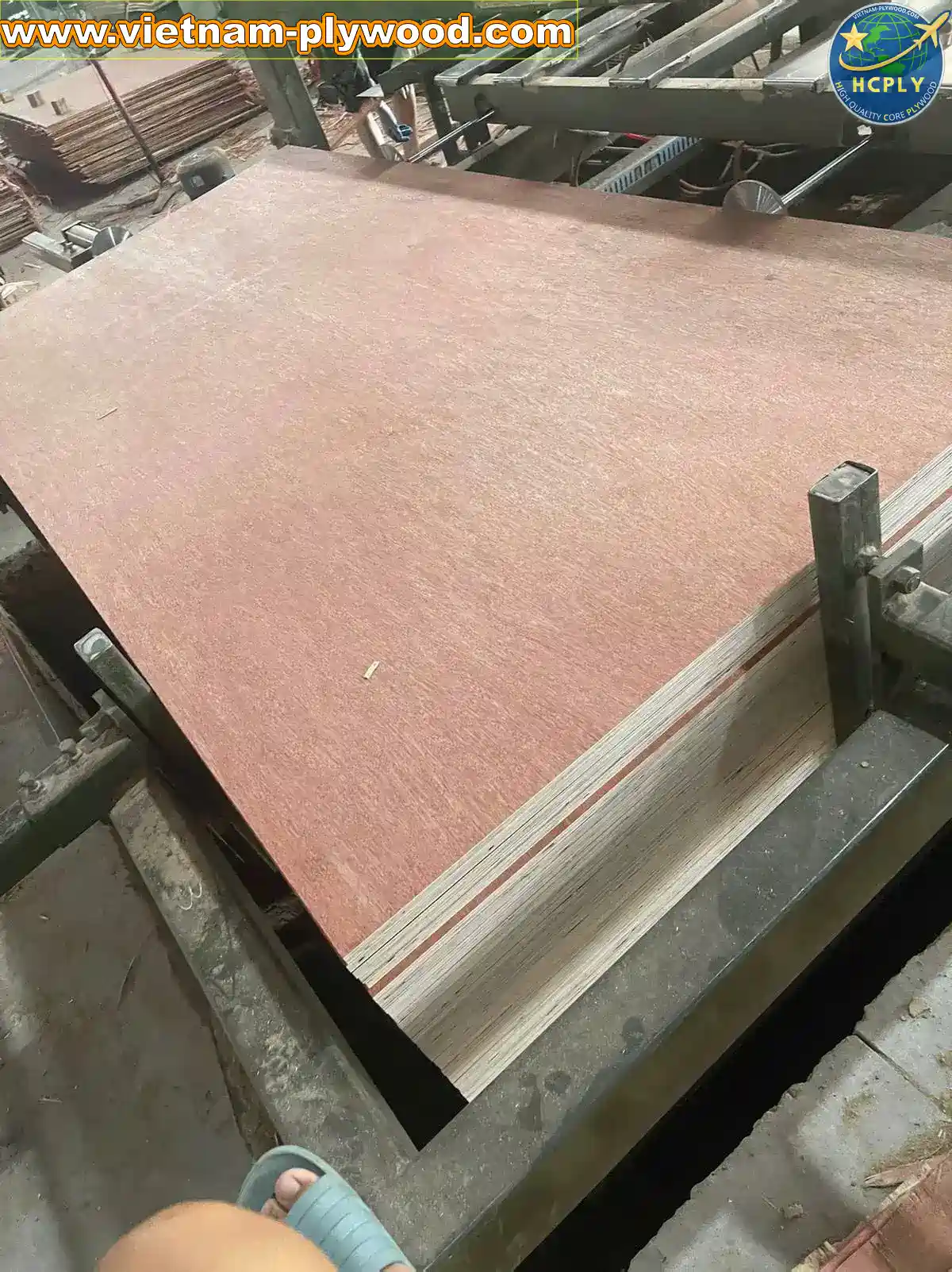

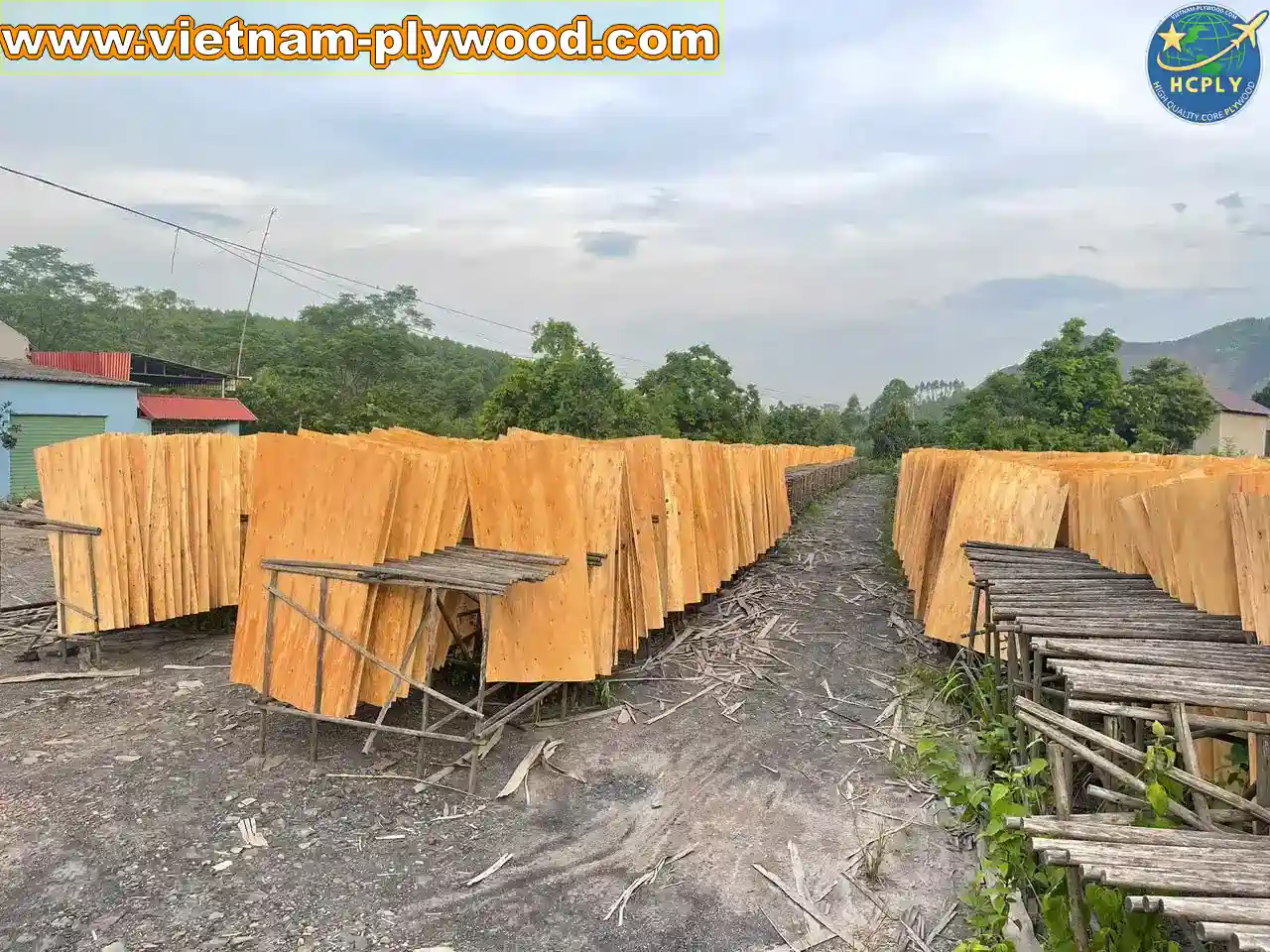

Vietnam exports over 6 million cubic metres of plywood per year — but not all of it qualifies as export-ready (Vietnam Timber and Forest Products Association, 2024). The term “export-grade” is one of the most overused and least regulated phrases in the global plywood trade. Any factory can stamp it on a pallet.
What makes Vietnam commercial plywood export-ready, and what actually separates it from low-quality material that causes buyer complaints, customs delays, and failed quality inspections? This article breaks down the seven concrete technical factors — from core construction to certification infrastructure — that determine whether a commercial panel from Vietnam can reliably serve international B2B buyers in 2026.
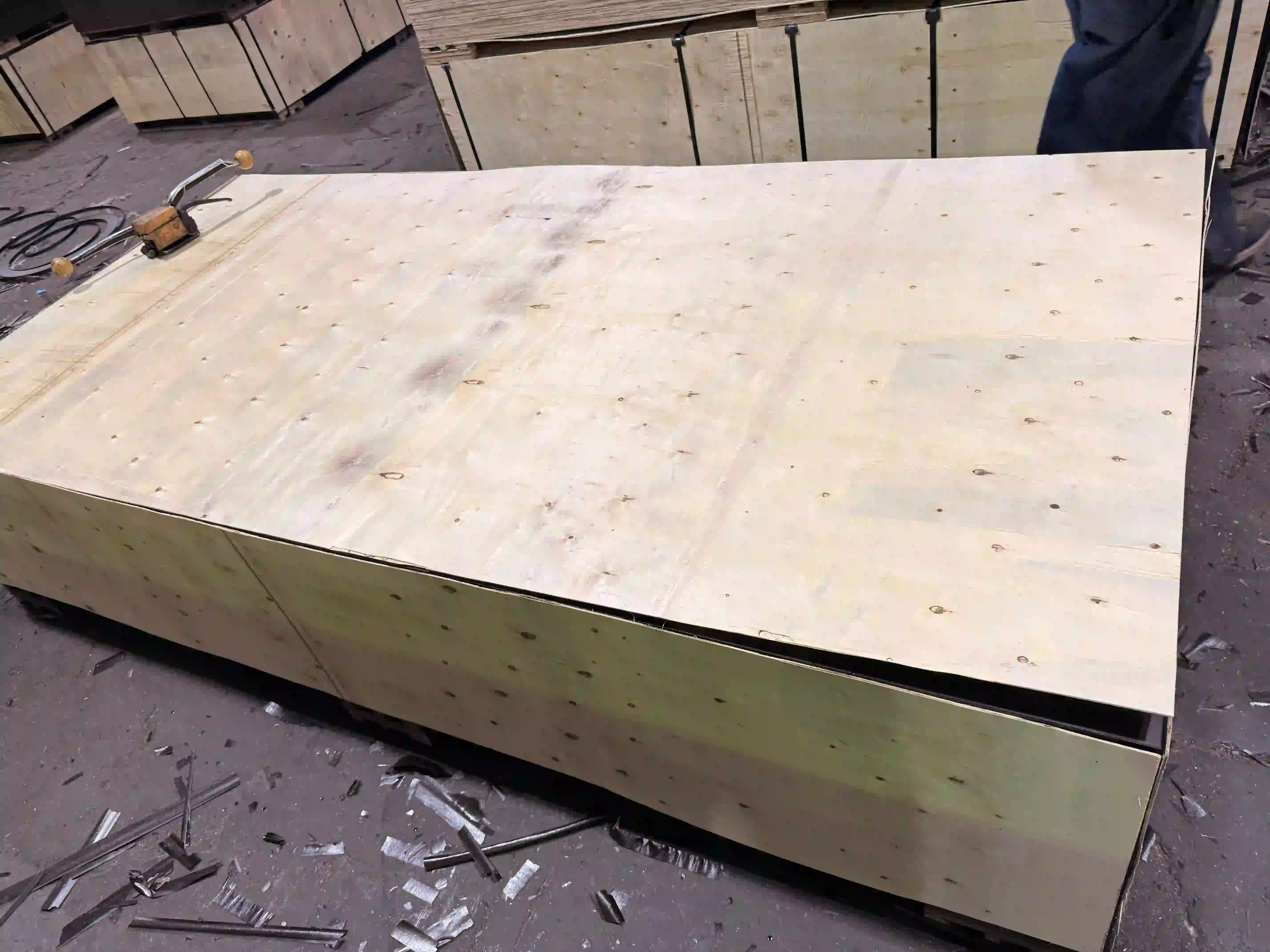
📋 What Does “Export-Ready” Actually Mean?
Export-ready commercial plywood is a panel that meets documented technical specifications consistently across production batches, carries valid third-party certifications for the destination market, and is supported by a complete export documentation package.
The phrase itself has no legal definition. A factory in Vietnam can describe any product as export-grade without penalty. What matters to buyers is whether the product meets the technical thresholds of the import country — and whether the supplier can prove it with documentation.
Three distinct levels exist in practice:
- Domestic grade: No formal emission testing, loose-lay or edge-jointed core, no third-party certification. Adequate for in-country use, not for international trade.
- Regional export grade: Meets the basic standards of price-sensitive markets (Southeast Asia, Africa). Some certification, E2 emission, edge-jointed core.
- Premium export grade: Full certification stack, E0/E1 emission, stitched or fully stitched core, calibrated sanding, third-party inspection protocol.
Most Vietnamese commercial plywood destined for India, Korea, the Middle East, and Europe falls into the second or third category. Understanding where your specification sits in this hierarchy determines your landed cost and the likelihood of quality claims downstream.
🔧 Factor 1: Core Construction Quality
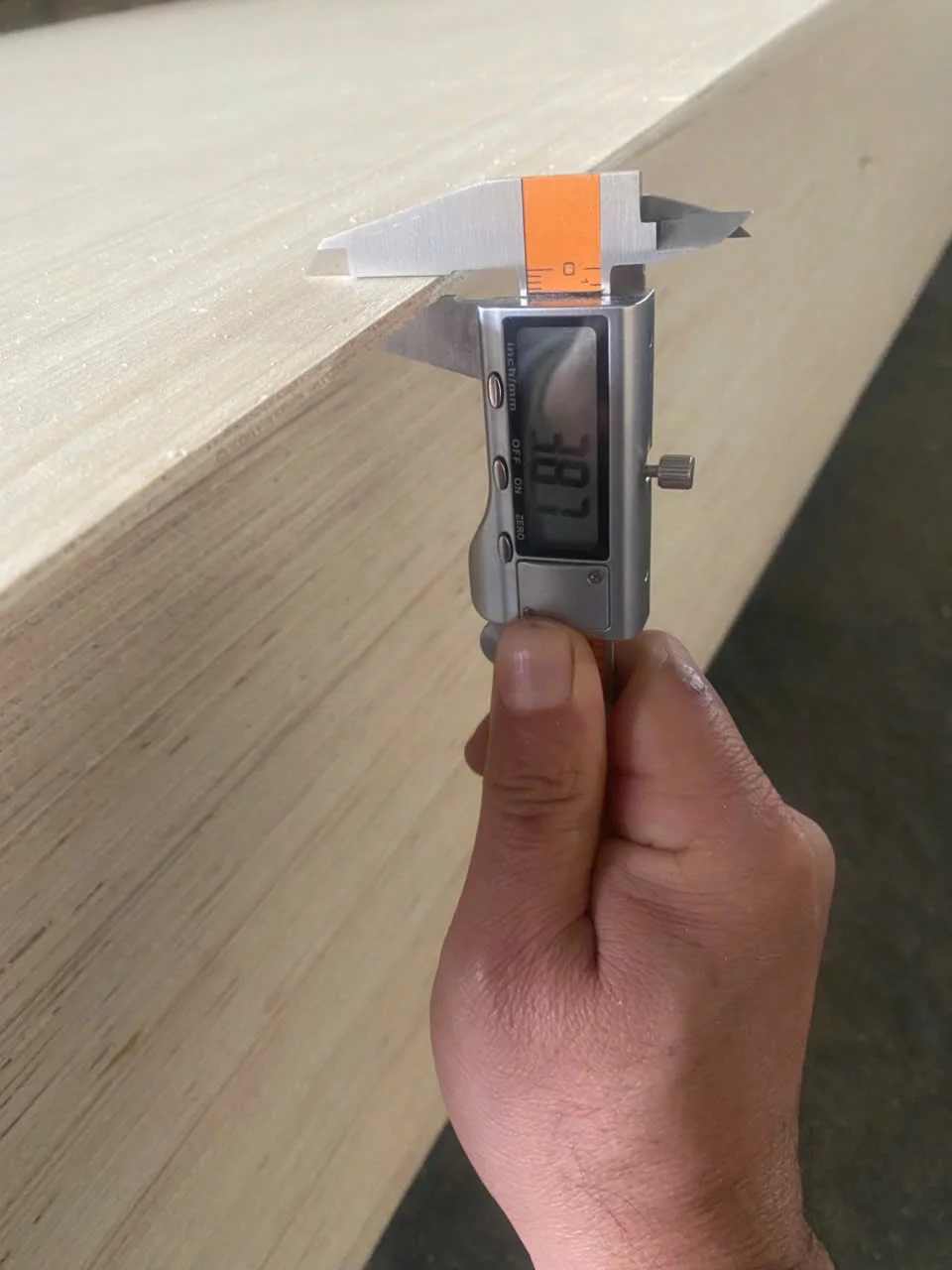
Core construction is the single biggest differentiator between export-grade and domestic-grade commercial plywood. It is also the factor most difficult to assess from a product photo or basic sample.
“We process quotation requests from 20+ countries monthly. Each market has different priorities — European buyers focus on EUDR compliance and E0 emission, Indian buyers prioritize BIS certification and competitive pricing, and Japanese buyers demand the tightest thickness tolerances.” — Lucy, International Sales Manager, HCPLY
There are four construction methods used in Vietnamese factories:
| Construction | Description | Export Suitability |
|---|---|---|
| Full stitched | All core pieces sewn together — no gaps, no overlap | Premium export / EU / Japan |
| Stitched outer + edge-trimmed inner | Outer layers stitched, inner layers milled | Solid mid-grade export |
| Finger-jointed | Pieces joined at ends, not stitched | Acceptable for commercial export |
| Loose-laid (xếp chồng) | Pieces placed without joining | Domestic / budget regional only |
For commercial plywood destined for furniture carcasses, shopfitting, or general interior use, stitched outer with edge-trimmed inner is the minimum acceptable standard. Full stitched core is required for premium markets (EU furniture, Korean specification buyers, Japanese importers).
Loose-lay core produces panels that pass basic visual inspection but fail under load and moisture cycling. This is the construction method used in the cheapest factories — and the one that generates the highest rate of delamination claims.
⚠️ Important: Always request a cross-section photo of the core before committing to a new supplier. A factory that cannot provide one within 24 hours likely cannot provide consistent core construction either.
🌿 Factor 2: Face Veneer Species and Grade
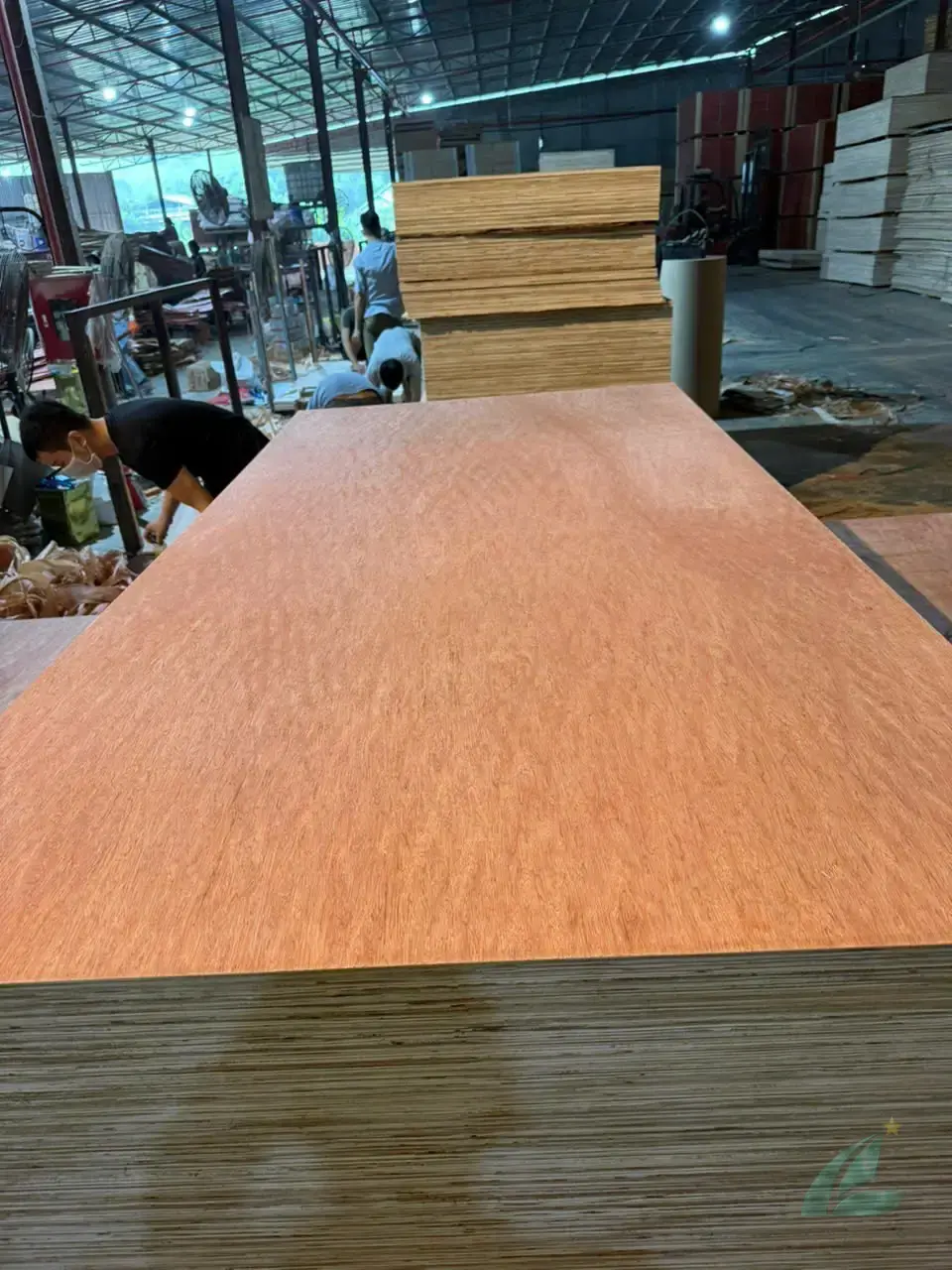
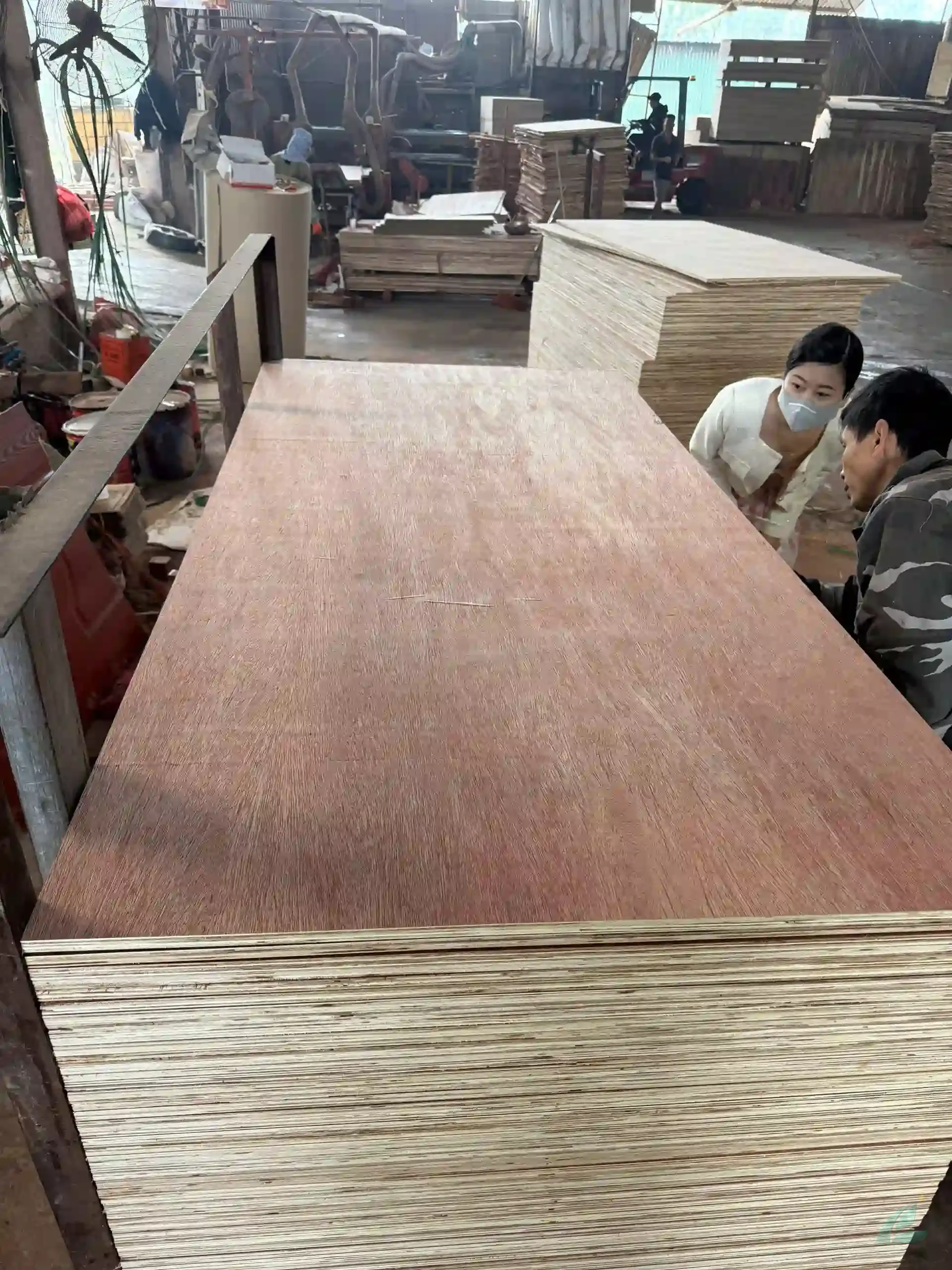
Commercial plywood from Vietnam uses bintangor or okoume as the standard face veneer. Both are export-appropriate species — the question is grade specification and consistency.
Bintangor (reddish-brown, grade A/B) is the most widely exported face species from Vietnam. It is cost-effective, accepts paint and laminate well, and is the dominant choice for the Indian and Southeast Asian markets. The grade A/B split matters: grade A face has fewer pin knots and surface blemishes; grade B tolerates more imperfections.
Okoume (light pink-grey) commands a modest price premium over bintangor. It has a finer grain and more consistent appearance — preferred for European shopfitting and visible furniture carcasses. Okoume face with E1 emission is the standard specification for general European commercial import.
For export-ready production, the key requirement is face veneer consistency across sheets in a batch. Domestic-grade factories often mix veneer grades within a production run. Export-ready factories maintain grade segregation with visual inspection before lay-up.
Face veneer thickness for export-grade plywood vietnam production is standardised at 0.2–0.4mm — the range where appearance is maintained without excessive material cost.
⚙️ Factor 3: Core Species and Density
The three core species used in Vietnamese plywood directly affect panel weight, structural performance, and container packing efficiency:
- Acacia core: approximately 580 kg/m³. Most affordable. Standard for commercial and packing-grade export. Dark colour. Used by the majority of commercial factories.
- Styrax core: 480–500 kg/m³. Lightest option. Preferred for EU furniture and premium commercial panels. Produces panels 8–10% lighter than acacia — significant when container weight limits apply.
- Eucalyptus core: 650–750 kg/m³. Heaviest and densest. Used when structural performance or hardness is required — less common for commercial grade.
For commercial export specifically, acacia core is the default. A buyer specifying acacia core with edge-trimmed inner construction, bintangor B/B face, and E1 emission is ordering a standard, well-priced export product that most established Vietnamese factories can fulfil.
Styrax core is the upgrade path: same commercial product, lighter, cleaner appearance, slightly higher cost. Worth specifying if your customers are in Europe or Korea where panel weight and indoor air quality standards matter.
📊 Factor 4: Glue and Emission Standards
This is the most commonly misunderstood area of Vietnamese plywood specifications, and misreading it causes serious problems at customs.
Glue type and emission standard are two separate specifications:
- Glue type (MR or WBP) describes the adhesive’s water resistance: MR (melamine resin) passes a 12-hour boiling test; WBP (phenolic) passes a 72-hour boiling test.
- Emission standard (E0, E1, E2) describes the formaldehyde release from the cured panel: E0 ≤0.5 mg/L; E1 ≤1.5 mg/L; E2 ≤5.0 mg/L.
A panel can have MR glue and E0 emission. It can also have MR glue and E2 emission. These are independent axes. Confusing them — as many purchase orders do — results in product arriving that cannot enter the destination market.
For export-ready commercial plywood:
- Standard export: Glue = MR (melamine). Emission = E1.
- EU/US/Japan export: Glue = MR. Emission = E0 (equivalent to CARB P2 for US market).
- Construction/outdoor export: Glue = WBP (phenolic). Emission specification N/A (not for interior use).
Key Insight: The EU does not permit E2-grade plywood for indoor applications. Any commercial plywood entering EU retail channels or used in furniture must be E1 minimum — and increasingly, E0 is specified by European buyers to align with CARB P2 for supply chain simplification (European Panel Federation, 2025).
Explore plywood glue types and emission standards in detail
🏭 Factor 5: Certifications and Market Access
A panel can meet all technical specifications but still be unable to enter certain markets without the right certifications. This is the documentation layer of export-readiness.
| Certification | Market Requirement | What It Covers |
|---|---|---|
| FSC | EU (preferred), US, Australia | Responsible forest sourcing chain of custody |
| CARB P2 | USA mandatory | formaldehyde emission ≤0.05 ppm for hardwood plywood |
| CE Marking | EU mandatory for construction products | Structural and fire performance compliance |
| EUDR | EU mandatory from 2025 | No-deforestation traceability for wood products |
| ISO 9001 | Required by many B2B buyers | Factory-level quality management system |
| EUTR | EU supplementary | Legal timber regulation compliance |
For commercial plywood specifically, the minimum certification set depends entirely on destination:
- India, Southeast Asia, Middle East: Certificate of Origin (CO) + Phytosanitary Certificate. No third-party certifications strictly required, though FSC is increasingly preferred by larger Indian importers.
- Europe: FSC + CE + EUDR + E0/E1 emission test report. Non-negotiable from 2025.
- United States: CARB P2 mandatory for all composite wood products entering US commerce, regardless of end use.
- South Korea: E0 standard, factory audit preferred by major Korean importers.
HCPLY holds FSC, CARB P2, CE, ISO 9001, EUDR, and EUTR as standard certifications across its three production facilities. These are not project-specific certificates — they cover the full production range and are renewed annually (HCPLY factory data, 2026).
Full certification guide: FSC, CARB P2, CE, and EUDR for Vietnam plywood
📐 Factor 6: Dimensional Tolerance and Sanding
Export-ready commercial plywood must maintain consistent dimensional accuracy across production batches. The tolerance standards that matter:
- Thickness tolerance: ±0.3mm for sanded panels; ±0.5mm for unsanded (HCPLY production standard, 2026).
- Length/width tolerance: ±2mm.
- Squareness: ≤1.5mm across the diagonal.
- Bow and twist: ≤0.5% of panel length for furniture-grade; ≤1.0% acceptable for general commercial.
Sanding is required for commercial plywood used in visible applications. Wide-belt sanding calibrates thickness to tolerance while producing the smooth surface needed for paint, laminate, or veneer bonding. Unsanded commercial panels are acceptable for packaging carcasses, rough construction substrates, and applications where the face is covered.
The practical test: if your panels arrive with visible thickness variation across a sheet — visible ridges, surface fuzz, or the edge-thickness differing from centre-thickness by more than 0.5mm — the factory is not running a calibrated sanding line. This is a production infrastructure problem, not a batch problem.
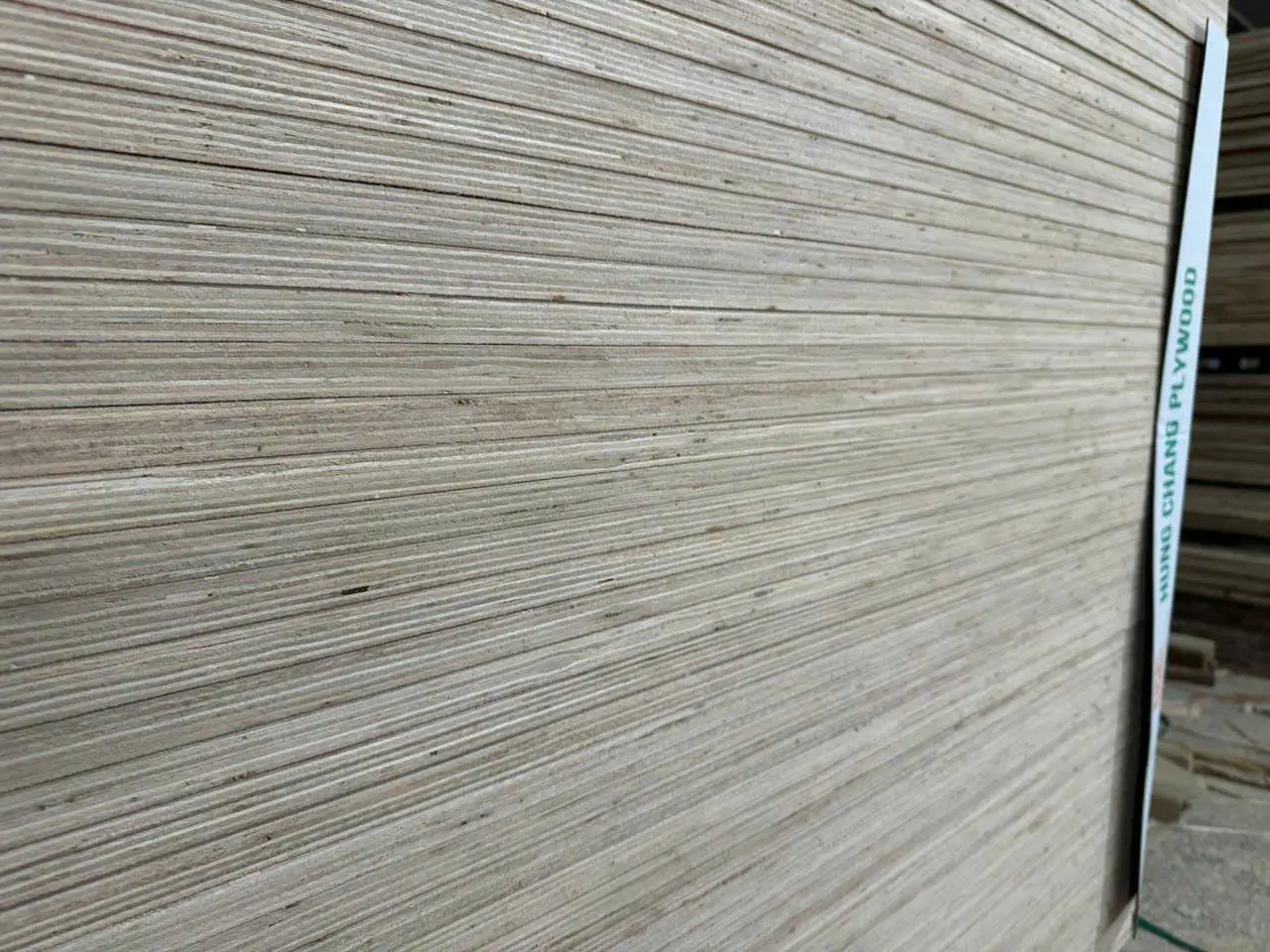
“We reject any panel batch where the thickness variation across a sheet exceeds 0.3mm,” says Lucy, International Sales Manager at HCPLY. “Buyers often discover thickness inconsistency only after they start machining — by then it is a costly problem. Our pre-shipment QC checks every batch with a digital calliper at 9 measurement points.”
✅ Factor 7: Pre-Shipment quality control Protocol
The final determinant of export-readiness is whether the factory has a systematic QC process before loading — not just post-production inspection.
A genuine export-ready factory runs three QC stages:
- After hot pressing: Core layer integrity check, delamination test on sample panels from each press cycle.
- After sanding/sizing: Thickness measurement at 9 points, surface grade check, edge squareness verification.
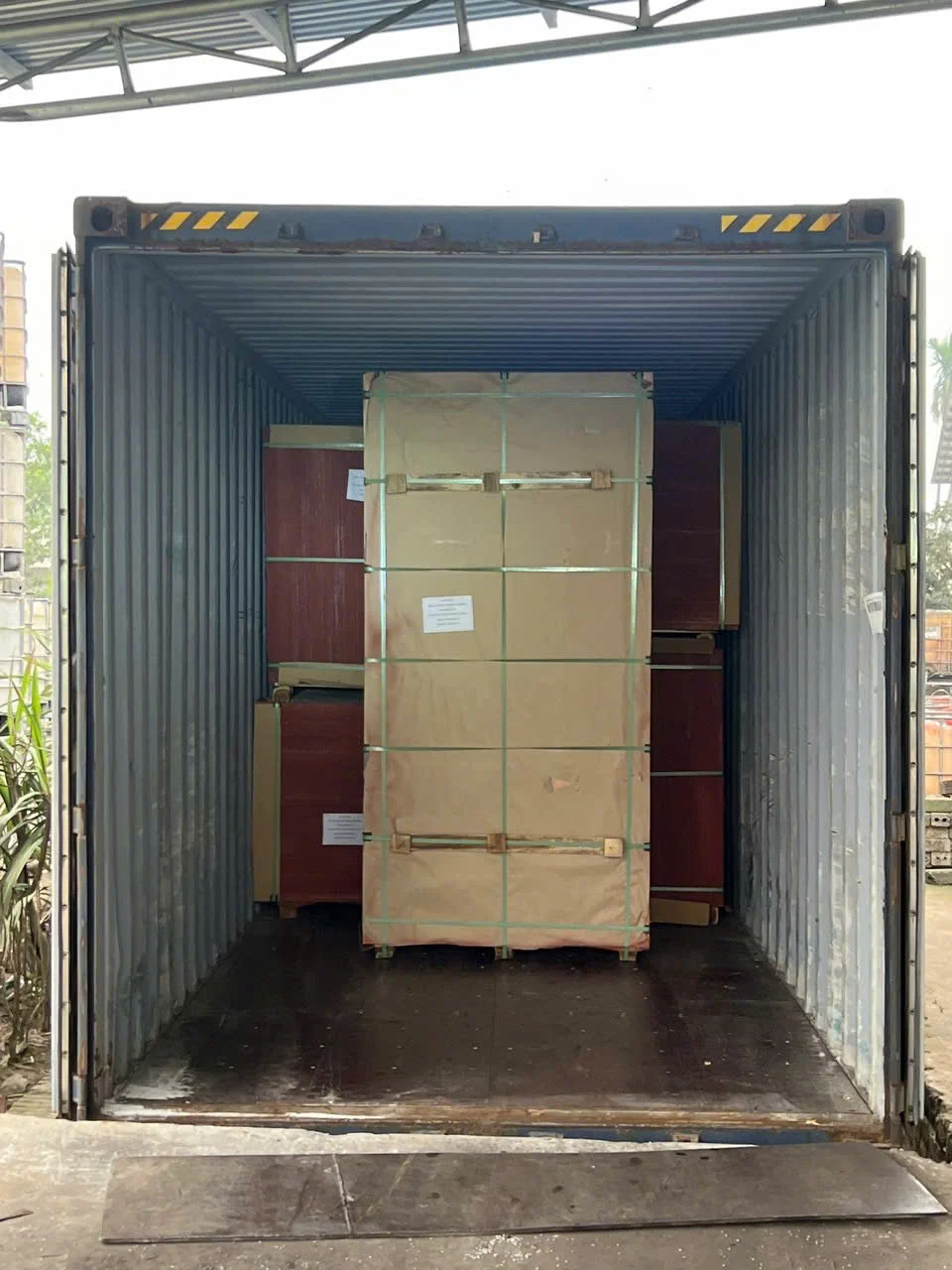
- Before container loading: Final moisture check (target 8–12% for most markets), pallet integrity, strapping verification, count against packing list.
Factories that only inspect at stage 3 — visual check before loading — cannot catch production defects introduced at pressing or sanding. This is the most common failure mode: panels that look acceptable at dispatch but delaminate or warp on arrival.
For international buyers, the minimum requirement is a pre-shipment photo package documenting thickness measurement, surface condition, pallet strapping, and container loading. Video documentation of loading is increasingly requested by Korean and European buyers as standard.
See HCPLY’s QC process in detail
🔗 How to Verify Export-Readiness Before Ordering
Before placing a first order with any Vietnamese commercial plywood supplier, request these specific items:
- Current FSC or CARB certificate — check the validity date and that your product type is within scope.
- Emission test report from an accredited laboratory — not a factory self-declaration. Report should be less than 12 months old.
- Thickness tolerance test data from the last production run — ideally with raw calliper readings, not just a pass/fail statement.
- Cross-section photo of the core construction for your specified product.
- Pre-shipment inspection photos from a recent order (same product type if possible).
Suppliers who can provide all five within 48 hours have the documentation infrastructure that supports genuine export-grade production. Suppliers who cannot — or who send certificates from a different product or an expired date — are showing you their actual capability level.
“An experienced buyer can tell within 10 minutes of reviewing documents whether a factory is genuinely export-ready,” says Lucy, HCPLY International Sales Manager. “The documents don’t lie — but you have to know which documents to ask for.”
Contact HCPLY to request documentation samples and pricing
📦 Export Documentation Package
Export-ready commercial plywood ships with a standard documentation set. Missing any of these creates customs delays:
- Commercial Invoice — with HS code, unit price, total value
- Bill of Lading (B/L) — issued by the shipping line
- Packing List — sheet counts, gross/net weight, container number
- Certificate of Origin (CO) — Form E for ASEAN buyers, Form B for others
- Phytosanitary Certificate — mandatory for all wood products
- Fumigation Certificate — required by most markets
- FSC or CARB Certificate copy — when required by destination
- Test Report — emission, thickness, moisture when required
HCPLY provides all applicable documents as standard — not as an add-on service. Factory-direct export means the documentation comes from the production facility, not through a trading intermediary.
🌐 Which Markets Import Vietnam Commercial Plywood?
Commercial plywood from Vietnam serves distinct volume markets, each with specific requirements:
- India: Largest single importer. Bintangor A/B face, acacia core, MR glue, E1/E2 emission. COO Form B. No FSC required for most buyers, but increasingly requested by large importers.
- South Korea: E0 standard minimum. Film-faced for construction; commercial for interiors. Factory audit expected.
- Middle East (UAE, Saudi Arabia, Qatar): Construction boom drives film-faced demand; commercial panels for interior fitout. COO + Phytosanitary sufficient for most consignments.
- Europe: E0/E1, FSC, CE, EUDR mandatory. Okoume or birch face preferred over bintangor. Strictest market for documentation.
- Southeast Asia (Malaysia, Philippines, Thailand): Price-sensitive. Acacia core, bintangor face, E1 or E2 acceptable. High volume, thin margins.
Understanding which tier of export-readiness your target market requires prevents over-specifying (paying for E0 certificates not required for Southeast Asia) or under-specifying (shipping E2 panels that cannot enter EU trade). Getting the commercial plywood export standards right for each market is the most cost-effective compliance decision you can make at the ordering stage.
🏭 How Qualified Factories Deliver Export-Readiness
Key infrastructure for commercial export:
- Emission control: All export-bound panels tested against E1 minimum standard, with E0 capability for premium orders.
- Core construction: Edge-trimmed inner as standard; stitched core available on request.
- Sanding: Calibrated wide-belt sanding line, ±0.3mm thickness tolerance.
- Certification: FSC, CARB P2, CE, EUDR, ISO 9001 in force.
- QC protocol: 3-stage inspection with documentation at each checkpoint.
- Lead time: 15–20 days from order confirmation for standard specifications.
Factory-direct pricing means no VAT overhead, no intermediary markup. Export documentation originates from the production facility — reducing the risk of documentation discrepancies that create customs complications.
📝 Conclusion
Vietnam commercial plywood becomes export-ready through a combination of seven factors: core construction quality, face veneer grade consistency, correct core species, properly specified glue and emission standards, valid third-party certifications, dimensional tolerance control, and a systematic pre-shipment QC protocol.
The word “export-grade” on a packing list means nothing without the documentation to back it. Buyers who know which documents to request, and what to look for in them, consistently source better product at better prices.
Disclosure: This article is published by HCPLY, a Vietnam-based plywood manufacturer and export operator. While we aim to provide objective industry guidance, readers should consider our perspective as a market participant when evaluating recommendations.
Request a certified commercial plywood quote with full documentation from HCPLY
For a broader overview of all plywood types available from Vietnam, see our complete plywood classification guide. For the full purchasing process, see our guide to buying plywood from Vietnam. Browse export-ready specifications on our product catalog. View our quality certifications.