

The wrong glue specification on a plywood purchase order has predictable consequences. MR melamine panels on a concrete formwork site delaminate after 3-4 pours. WBP phenolic specified for dry indoor furniture adds 40-80% adhesive cost with zero performance return. Both errors are common, both are preventable.
WBP glue vs MR glue is not a technical debate — it is a matching problem. The correct adhesive is the one that meets the moisture conditions of your specific application at the lowest cost. This guide helps you choose the right type and make that match correctly, every time.
📊 TL;DR: WBP vs MR Glue Quick Reference
| Specification | WBP (Phenolic) | MR (Melamine) |
|---|---|---|
| Full name | Water Boil Proof | Moisture Resistant |
| Adhesive chemistry | Phenol formaldehyde (PF) | Melamine urea formaldehyde (MUF) |
| Boiling water test | 72+ hours, no delamination | 12 hours, no delamination |
| EN 314-2 class | Class 3 — Exterior | Class 2 — Humid interior |
| Cost premium vs MR | +40-80% | Baseline |
| Glue line color | Dark reddish-brown | Light / near invisible |
| Emission compatibility | E0, E1 | E0, E1, E2 |
| Typical press temp | 130-145°C | 110-120°C |
| Suited for | Formwork, marine, outdoor | Furniture, cabinets, commercial |
⚠️ Important: WBP/MR = glue bond water resistance. E0/E1/E2 = formaldehyde emission standard. These are two completely independent specifications. A full plywood spec requires both — for example: “Glue: Melamine (MR). Emission: E0.”
🔧 What Each Glue Type Actually Means
WBP and MR are performance labels, not chemical names. Each label defines the bond threshold the adhesive must survive under standardized testing — not the exact resin formula used to achieve it.
WBP → Phenolic resin (PF). Phenol formaldehyde forms a cross-linked thermoset bond with no melting point. The chemical structure resists water, alkalis, and heat above 200°C (Taylor & Francis, 2024). This is why WBP phenolic survives concrete contact (pH 12-13) and boiling water for 72+ continuous hours.
MR → Melamine resin (MUF). Melamine urea formaldehyde combines melamine and urea polymers to produce moisture resistance superior to plain urea formaldehyde (UF), at a fraction of phenolic resin cost. The bond resists high humidity and brief water contact but hydrolyzes under sustained saturation (ScienceDirect, 2023).
The practical meaning: when you write “WBP” or “MR” on a purchase order, you are specifying the bond performance class. The factory’s production team selects the resin that achieves that class in their press conditions.
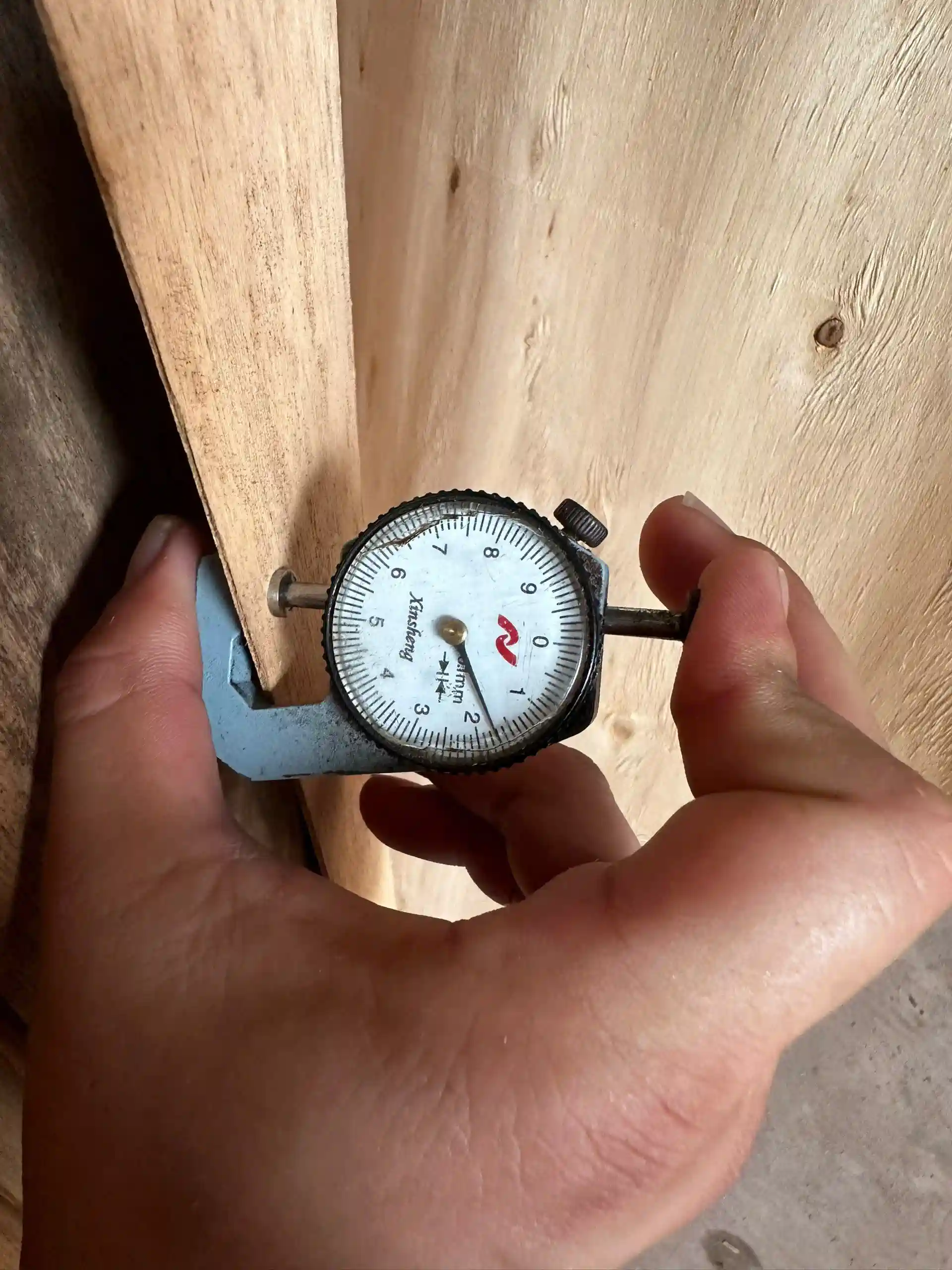
💧 MR Glue (Melamine): When It Fits
MR melamine is the dominant adhesive in Vietnamese plywood exports. Over 60% of volume shipped from Vietnam uses melamine-based adhesive — furniture, cabinets, commercial interiors, and general-purpose panels to India, the Middle East, and Southeast Asia (HCPLY production data, 2026).
📌 What MR Handles Well
The 12-hour boiling test that defines MR performance means the bond survives:
- Indoor humidity cycling — kitchens, offices, residential spaces
- Ambient RH up to 85-90% without bond degradation
- Brief surface moisture — condensation, cleaning, light splashes
- Normal temperature variation from 5°C to 40°C
At HCPLY’s furniture production facility, MR melamine is the standard adhesive for birch, okoume, EV, and bintangor furniture-grade panels. The nearly invisible glue line is a functional advantage for furniture with exposed edges — open shelving, Scandinavian-style cabinetry, and modular office furniture where cross-section appearance matters.
📌 Where MR Falls Short
Sustained water soaking degrades MR bonds within 24-48 hours. Edge grain is the most vulnerable point: moisture penetrating unsealed edges saturates the glue line and accelerates delamination regardless of face surface treatment.
Applications where MR is not appropriate:
- Concrete formwork (alkaline pH degrades bond)
- Marine or boat building (continuous submersion risk)
- Outdoor furniture without full coating protection
- Anti-slip truck floors or scaffolding platforms exposed to rain
MR glue is correct for:
- Kitchen cabinets (enclosed, not direct water)
- Bedroom, dining, and office furniture
- Commercial fit-out — retail, hotel, office interiors
- Interior wall paneling and shelving
- General commercial plywood for India, Middle East, SE Asia
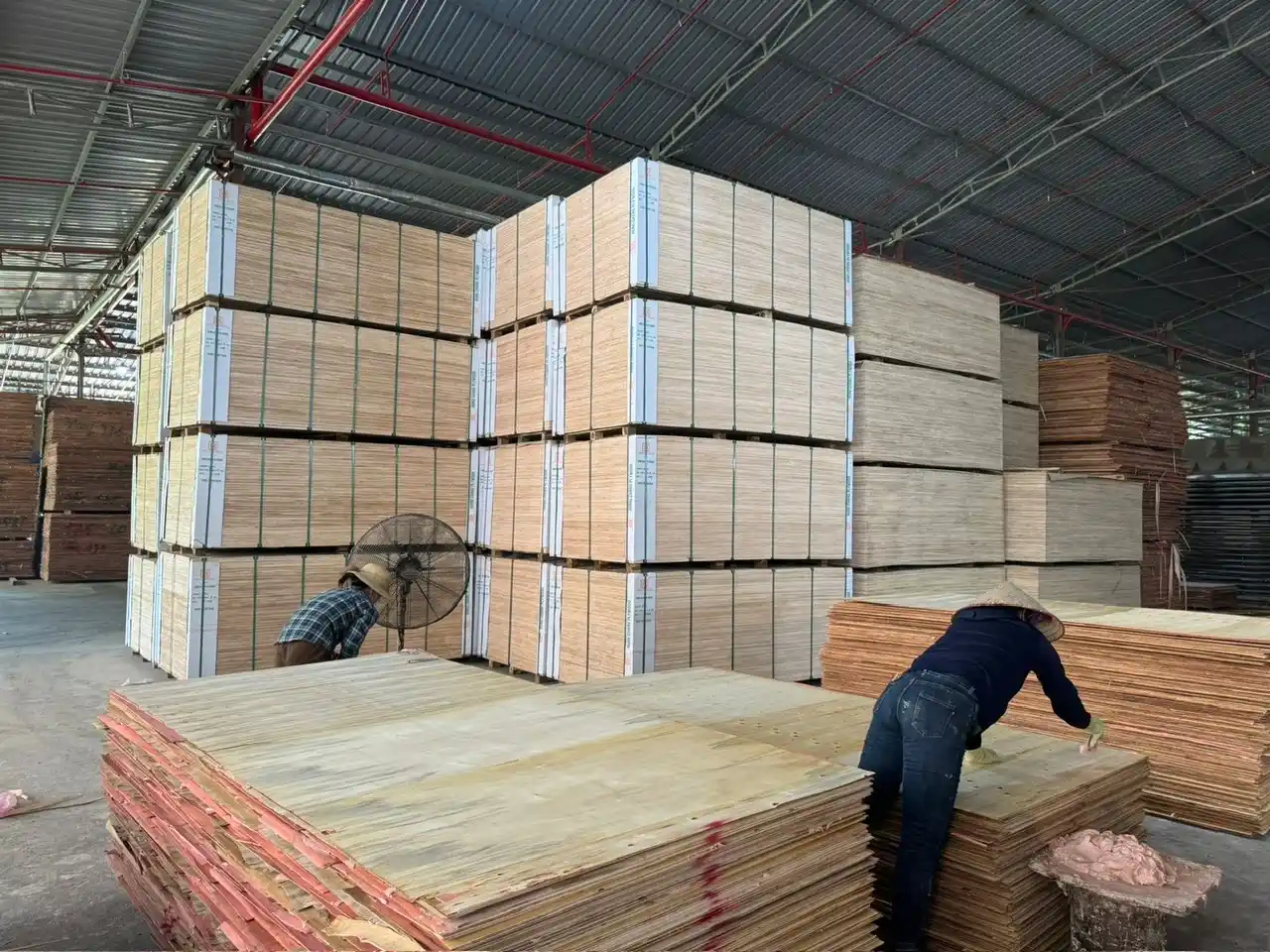
Explore furniture-grade MR plywood from HCPLY
⚙️ WBP Glue (Phenolic): When It Fits
WBP phenolic is the adhesive for applications involving real water exposure — not humidity, but direct liquid contact over extended time. The 72-hour boiling water test is six times more demanding than MR’s 12-hour standard, and the phenolic chemistry behind it explains why.
Phenolic resin creates bonds that resist:
- Boiling water immersion for 72+ hours (EN 314-2 Class 3)
- Alkaline environments — wet concrete at pH 12-13
- UV exposure and temperature extremes
- Petroleum-based chemicals (not all formulations)
📌 The Construction Formwork Case
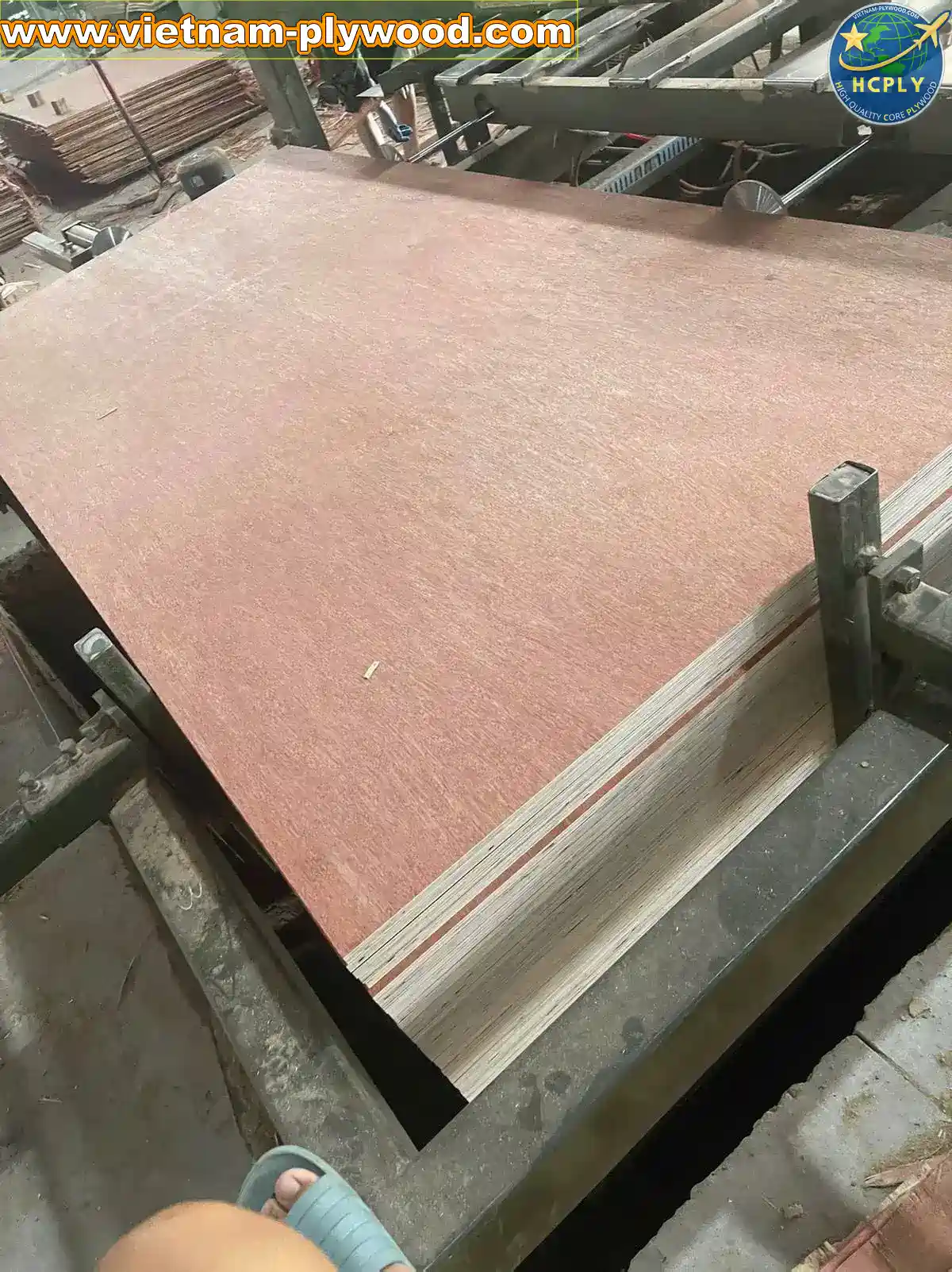
Concrete formwork is the primary WBP market. Each pour cycle subjects the panel to wet alkaline concrete, pressure washing, and mechanical handling. MR melamine panels delaminate within a few cycles under these conditions. WBP phenolic film-faced panels from HCPLY — bonded with phenolic resin, covered with AICA-brand film at minimum 135 gsm — achieve 15-20+ reuse cycles in standard formwork applications (HCPLY production data, 2026).
The economic math favors WBP here: at 15 reuses per panel versus 4-6 for MR equivalents, the total cost per pour drops significantly even after accounting for the higher initial panel price.
📌 The Marine Application Case
Marine plywood needs to survive continuous contact with fresh or salt water. No MR melamine formulation is rated for this exposure. WBP phenolic plywood for boat building and dock applications provides the bond integrity required — combined with properly sealed edges and appropriate species selection.
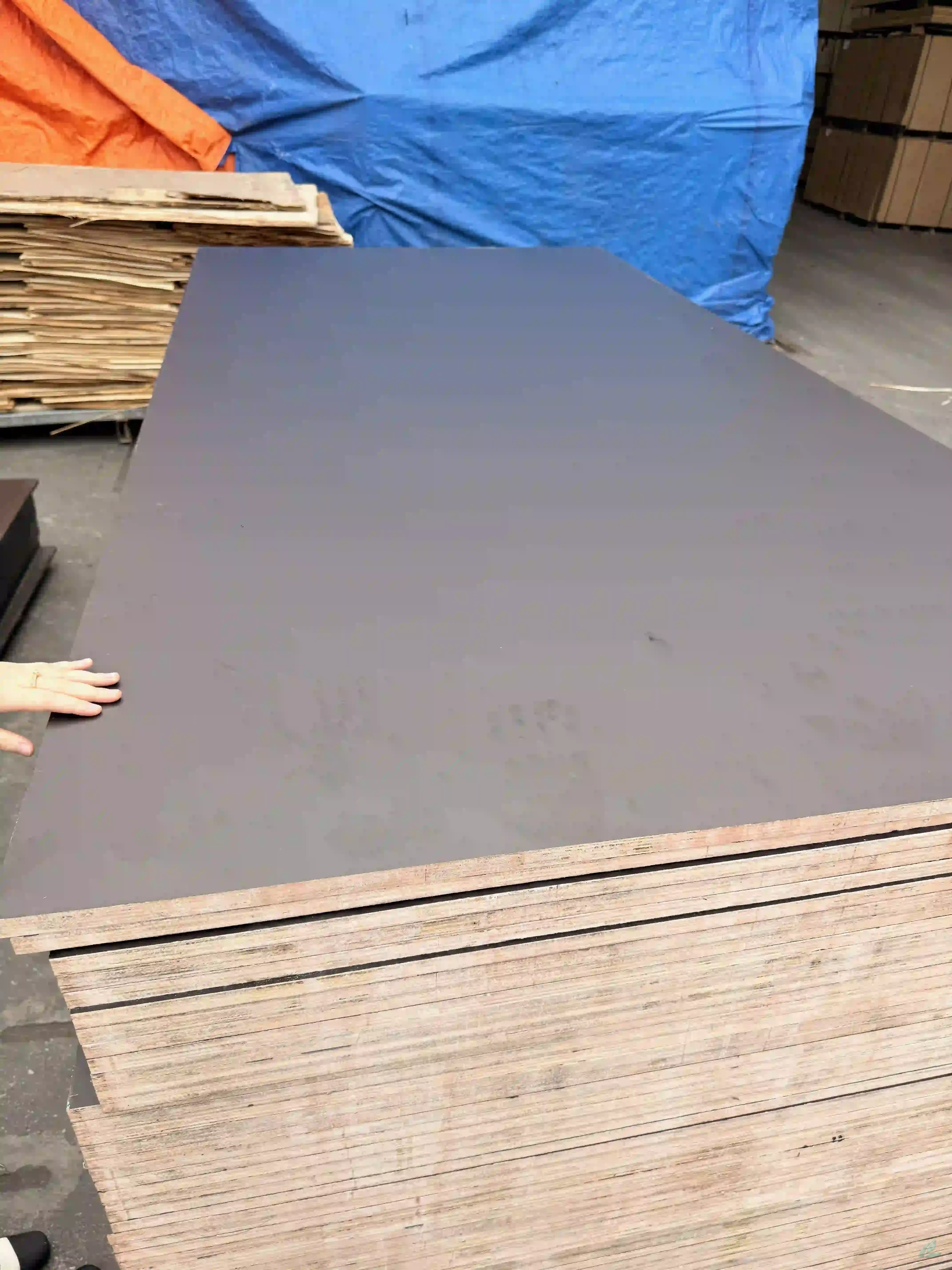
WBP glue is correct for:
- Concrete formwork and shuttering (film-faced plywood)
- Marine applications — boats, docks, wet industrial floors
- Anti-slip plywood for truck beds and scaffolding
- Outdoor furniture in wet climates (rain-exposed)
- Exterior cladding panels
- Any panel requiring EN 314-2 Class 3 certification
View HCPLY film-faced plywood with WBP specification
📐 The 5-Question Decision Guide
Answer these questions in order. The first “yes” that applies determines your adhesive specification.
Q1: Will the panel contact water directly, or be submerged even briefly? → Yes → WBP phenolic (marine, outdoor, wet industrial floors)
Q2: Will the panel be used in concrete formwork or exposed to alkaline environments? → Yes → WBP phenolic (pH resistance required)
Q3: Will the panel be outdoors and exposed to rain, without full protective coating? → Yes → WBP phenolic (no coating is fully water-sealed permanently)
Q4: Is the application in a consistently humid indoor environment with occasional direct moisture — a bathroom, laundry, or industrial kitchen? → Yes → WBP phenolic preferred (MR acceptable only with full edge sealing and regular coating maintenance)
Q5: Is the application indoor furniture, cabinets, commercial interiors, or general commercial use in any climate-controlled or moderate-humidity space? → Yes → MR melamine (cost-optimal, technically sufficient)
If none of the above applies clearly — default to MR melamine. It is the correct specification for the majority of B2B plywood purchases from Vietnam.
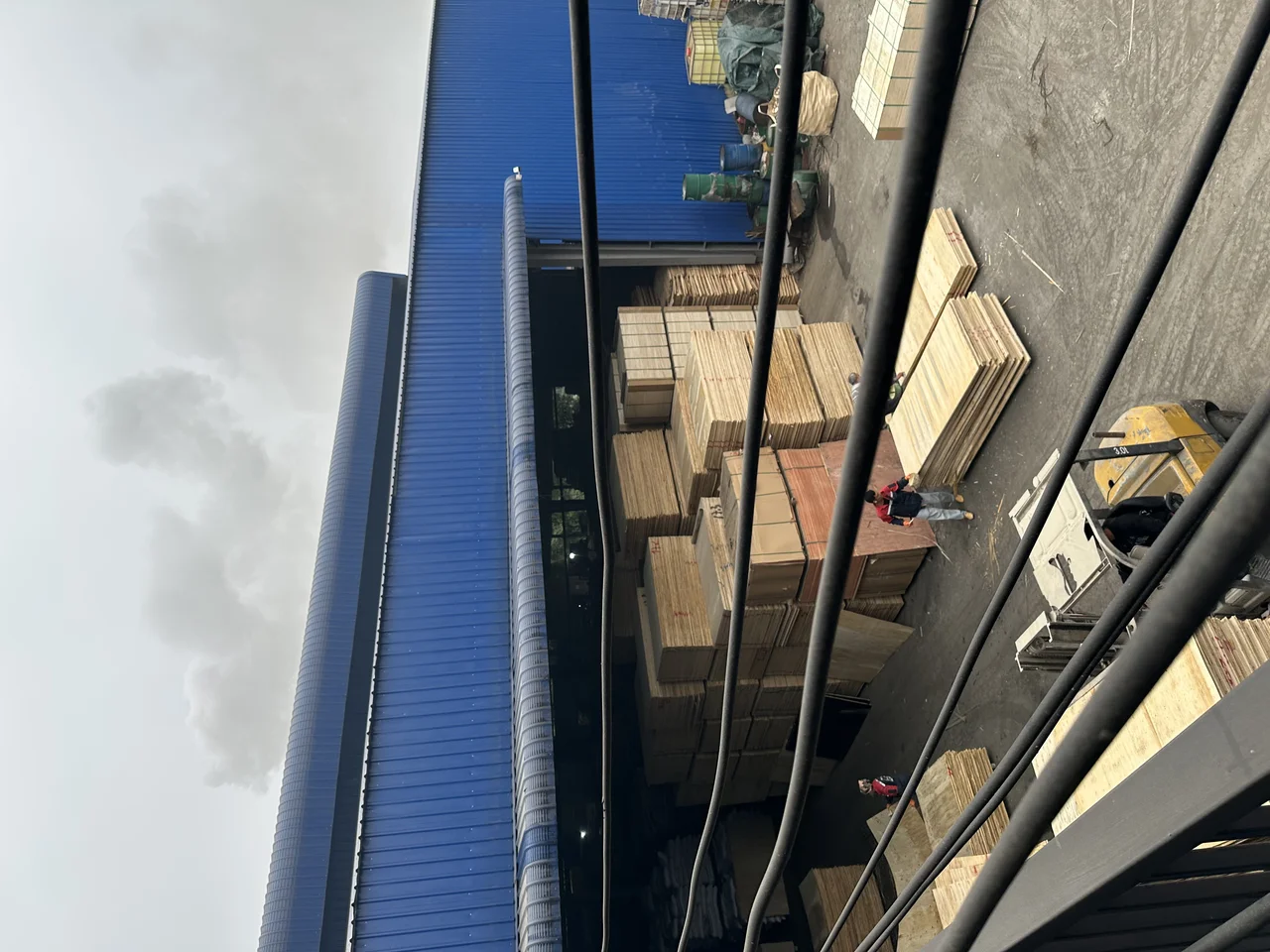
🏭 Market-by-Market Glue Requirements
Different export markets have different preferences and regulatory requirements for adhesive type, independent of formaldehyde emission rules.
| Market | Typical Glue Requirement | Primary Application |
|---|---|---|
| EU (Construction) | WBP (EN 314-2 Class 3 for exterior) | Formwork, outdoor |
| EU (Furniture) | MR with E0/E1 emission | Cabinets, interiors |
| United States | MR (CARB P2 for emission — not glue type) | Furniture, cabinets |
| India | MR E1 or E2 | Commercial, furniture |
| South Korea (Construction) | WBP | Film-faced formwork |
| South Korea (Furniture) | MR E0 | Interior fitout |
| Middle East | MR standard | Commercial, furniture |
| Australia | WBP for exterior, MR for interior | Mixed |
| Japan | MR with F4-star (≈E0) | Furniture |
| Southeast Asia | MR E1/E2 | Commercial |
⚠️ Note: Emission standards (E0, E1, E2, CARB P2) are separate from these glue type requirements. A US order for furniture plywood requires both “Glue: MR” AND “Emission: CARB P2” — these are independent lines on the purchase order.
“Every week we see purchase orders that specify glue type but omit emission class, or vice versa. Both must appear. The most common error we fix for new buyers is writing ‘MR E0’ as a single item instead of two separate specifications.” — Lucy, International Sales Manager, HCPLY (6+ years export experience)
📋 Glue Type vs Emission Standard: The Mandatory Distinction
The most frequent specification error in plywood procurement: treating glue type and emission class as the same variable.
They measure completely different properties:
Glue type (bond water resistance):
- MR = Melamine resin, passes 12-hour boiling water test
- WBP = Phenolic resin, passes 72-hour boiling water test
Emission standard (formaldehyde off-gassing into room air):
- E0 / CARB P2 = ≤0.05 ppm — required for US, EU, Japan, Korea furniture (as of 2026)
- E1 = ≤0.1 ppm — EU standard for general interior use
- E2 = ≤0.3 ppm — budget/export grade, restricted in EU and US interior use
These combine independently. Examples of correct specification format:
| ✅ Correct | ❌ Wrong |
|---|---|
| Glue: Melamine (MR). Emission: E0 | ”MR E0 glue” |
| Glue: Phenolic (WBP). Emission: E1 | ”WBP Phenolic, E0” |
| MR glue, CARB P2 certified | ”E0 glue” |
Both MR and WBP adhesive types are available with E0 or E1 emission certification. WBP phenolic resin inherently produces lower formaldehyde due to PF chemistry — most phenolic panels achieve E0 or E1 naturally. MR melamine requires modified resin formulation and process control to reach E0 (European Chemicals Agency, 2024).
Full technical breakdown of plywood emission standards by market
💰 Cost Implications: Choosing the Right Spec Saves Real Money
Over-specifying WBP for indoor applications is a measurable cost error. Under-specifying MR for outdoor applications creates claim costs that far exceed any initial savings.
Cost of over-specifying WBP for furniture:
On standard 18mm furniture plywood, WBP phenolic adds approximately $15-25/CBM in adhesive cost versus MR melamine (HCPLY production data, 2026). For a 40HC container with ~47-53 CBM of furniture plywood, that is $705-$1,325 per shipment — for zero performance benefit in dry indoor conditions.
Over a year of regular orders, this error compounds quickly. HCPLY’s export team routinely identifies this pattern in incoming buyer specifications and flags it before production.
Cost of under-specifying MR for formwork:
A buyer who saves on WBP phenolic by specifying MR for concrete formwork typically gets 3-5 reuse cycles before delamination versus 15-20 for properly specified WBP panels. The initial cost saving disappears after the first few pours when replacement orders begin.
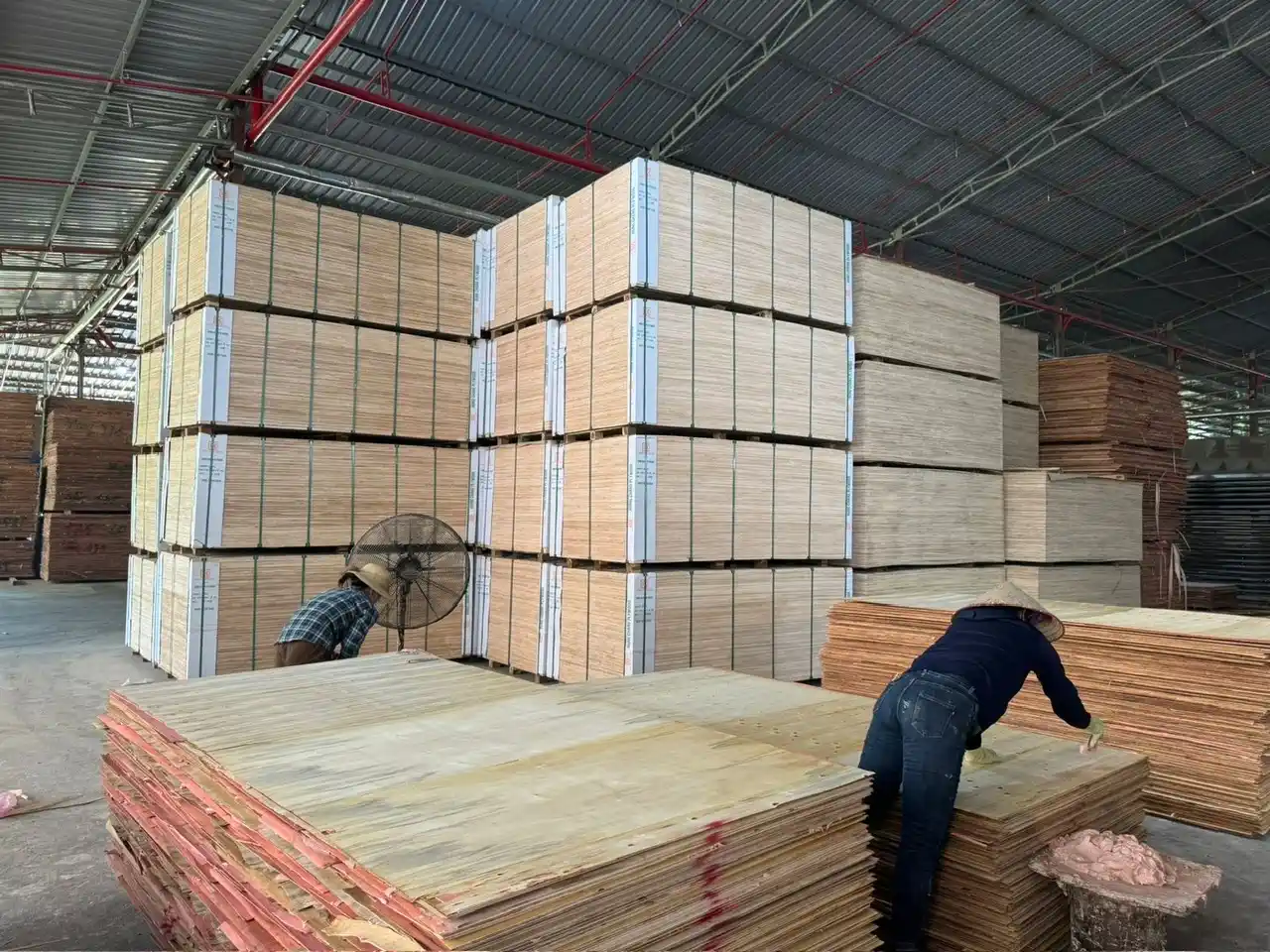
Correct specification is not conservative or aggressive — it is matched to the application. HCPLY produces both adhesive types across dedicated production facilities. Furniture-grade MR panels ship from the styrax/eucalyptus core facility. WBP construction panels ship from the film-faced production line. Mixed containers with both specifications are standard.
✅ How to Write the Specification on Your Purchase Order
A complete plywood adhesive specification contains six elements. All six must appear on the purchase order separately:
Face veneer: [species, grade — e.g., birch D/E, okoume A/B]
Core:        [species + construction — e.g., styrax, full stitched]
Thickness:   [mm — e.g., 18mm]
Glue type:   MR (Melamine) OR WBP (Phenolic)
Emission:    E0 / E1 / E2 / CARB P2
Sanding:     Sanded both sides / unsanded / calibrated
Three rules that prevent the most common specification disputes:
-
Never write glue type and emission class as one term. “MR E0” is ambiguous — factories interpret it differently. Write them as separate line items.
-
State the application context. “For indoor kitchen cabinets” or “for concrete formwork, 15+ reuse cycles” gives the factory the information to flag specification mismatches before production.
-
Request two test certificates. One for adhesive bond class (EN 314-2 or equivalent for MR/WBP confirmation). One for emission level (EN 717-1 or ASTM E1333 for E0/E1/E2/CARB P2). Two independent properties require two independent certifications.
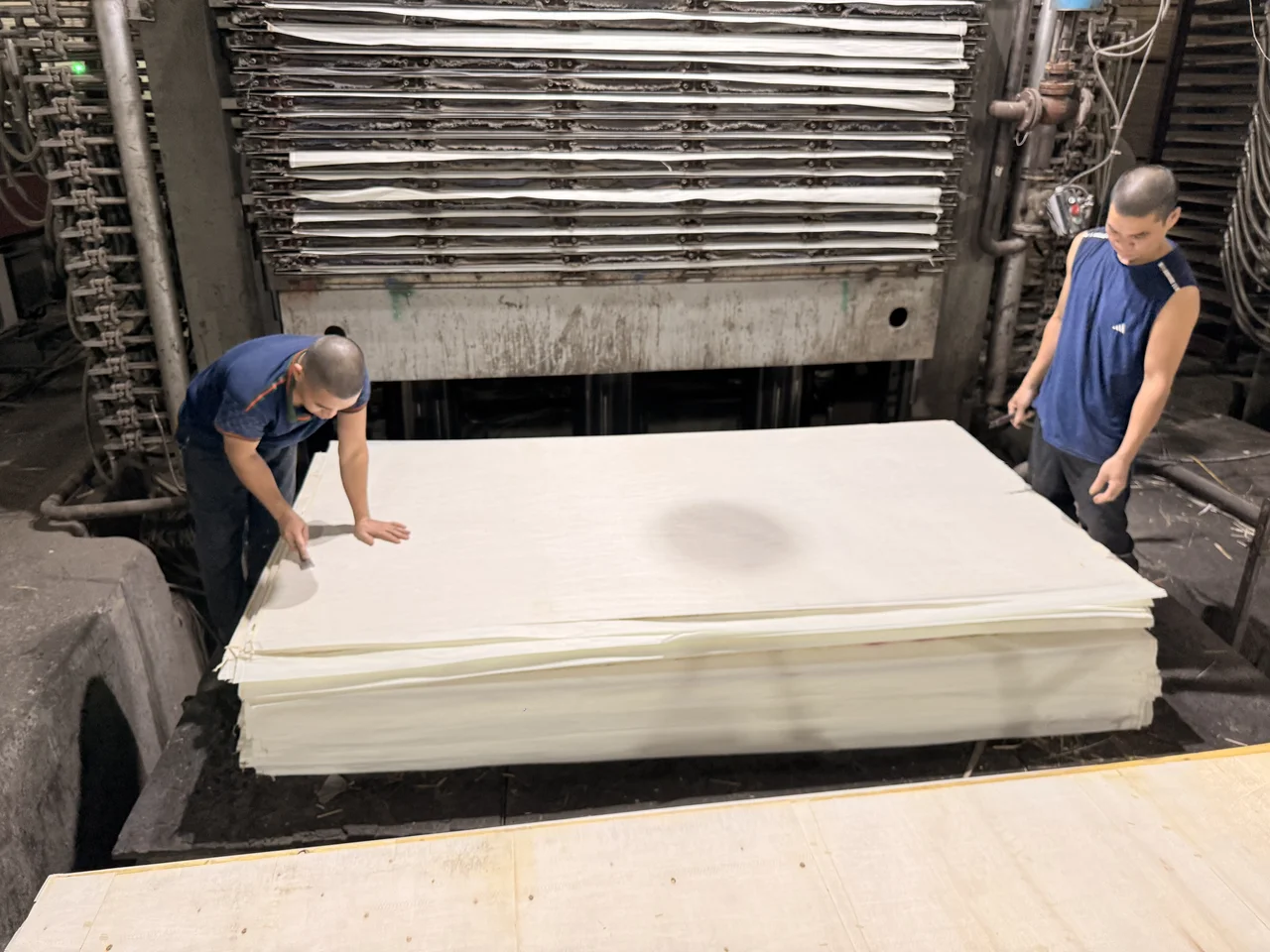
Review HCPLY’s QC process and available certifications
Disclosure: This article is published by HCPLY, a Vietnam-based plywood manufacturer and export operator. While we aim to provide objective industry guidance, readers should consider our perspective as a market participant when evaluating recommendations.
🔗 Related Articles
- WBP vs MR vs Interior Glue: Full Technical Comparison — Chemistry, boiling test methodology, EN 314-2 classification, and production-level quality factors
- Melamine vs Phenolic Glue: 7 Factors for Furniture — In-depth comparison for furniture buyers across cost, appearance, lifespan, and emission compatibility
- Plywood Glue Types and Emission Standards: Complete Guide — Full reference covering MR, WBP, E0/E1/E2, CARB P2, and market requirements
The question “which plywood glue suits your needs” has a straightforward answer once you define the moisture conditions the panel will face. WBP phenolic for applications involving water contact, alkaline environments, or outdoor exposure. MR melamine for furniture, commercial interiors, and general-purpose indoor use.
Match the adhesive to the application. Specify glue type and emission class separately and completely. Source from a factory that produces both — so you get factory-direct pricing on MR furniture panels and WBP construction panels without splitting suppliers.
Get a Free Quote — WBP or MR Specification Matched to Your Application — Specification review included at no cost, no commitment required.