
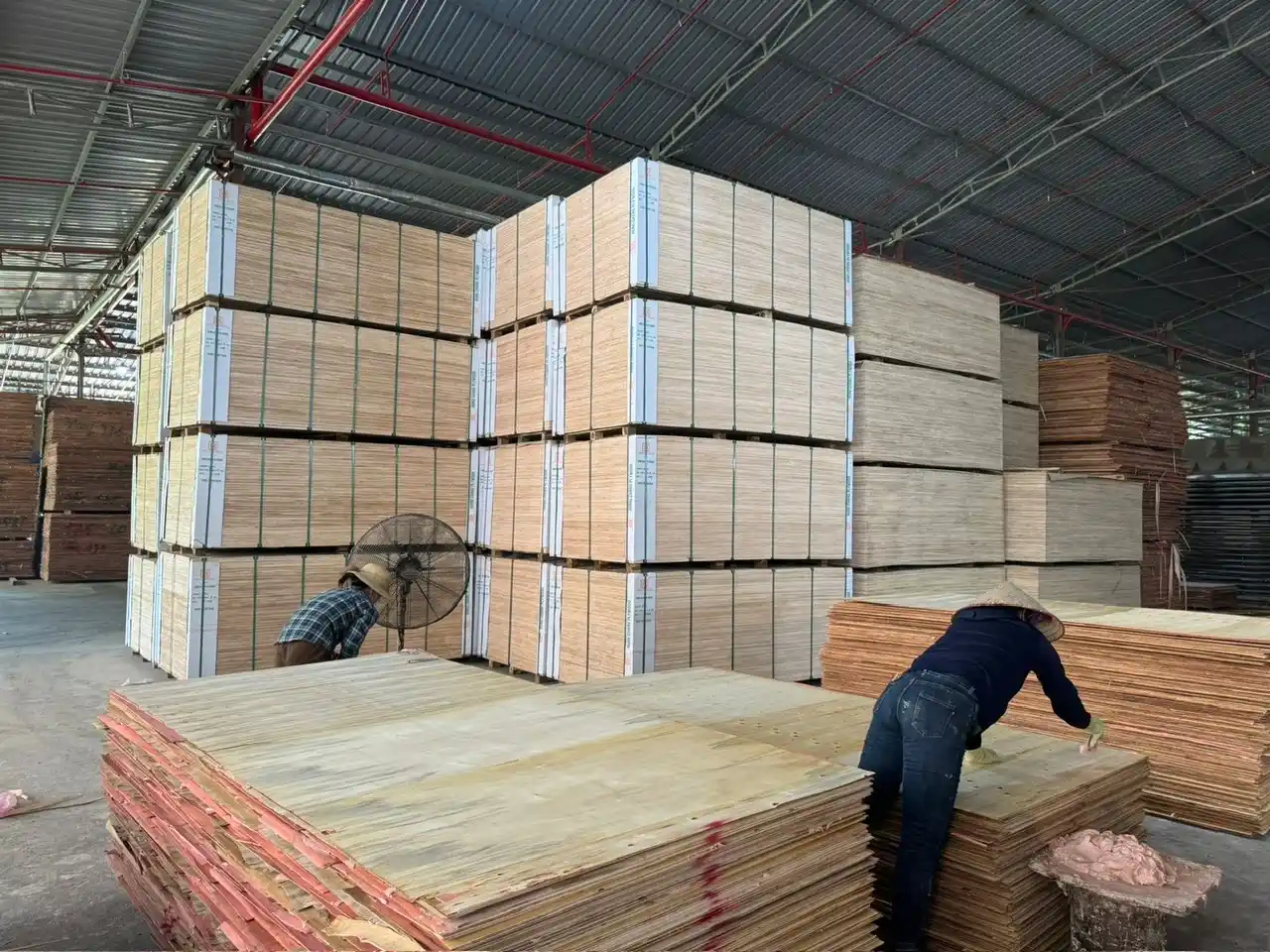
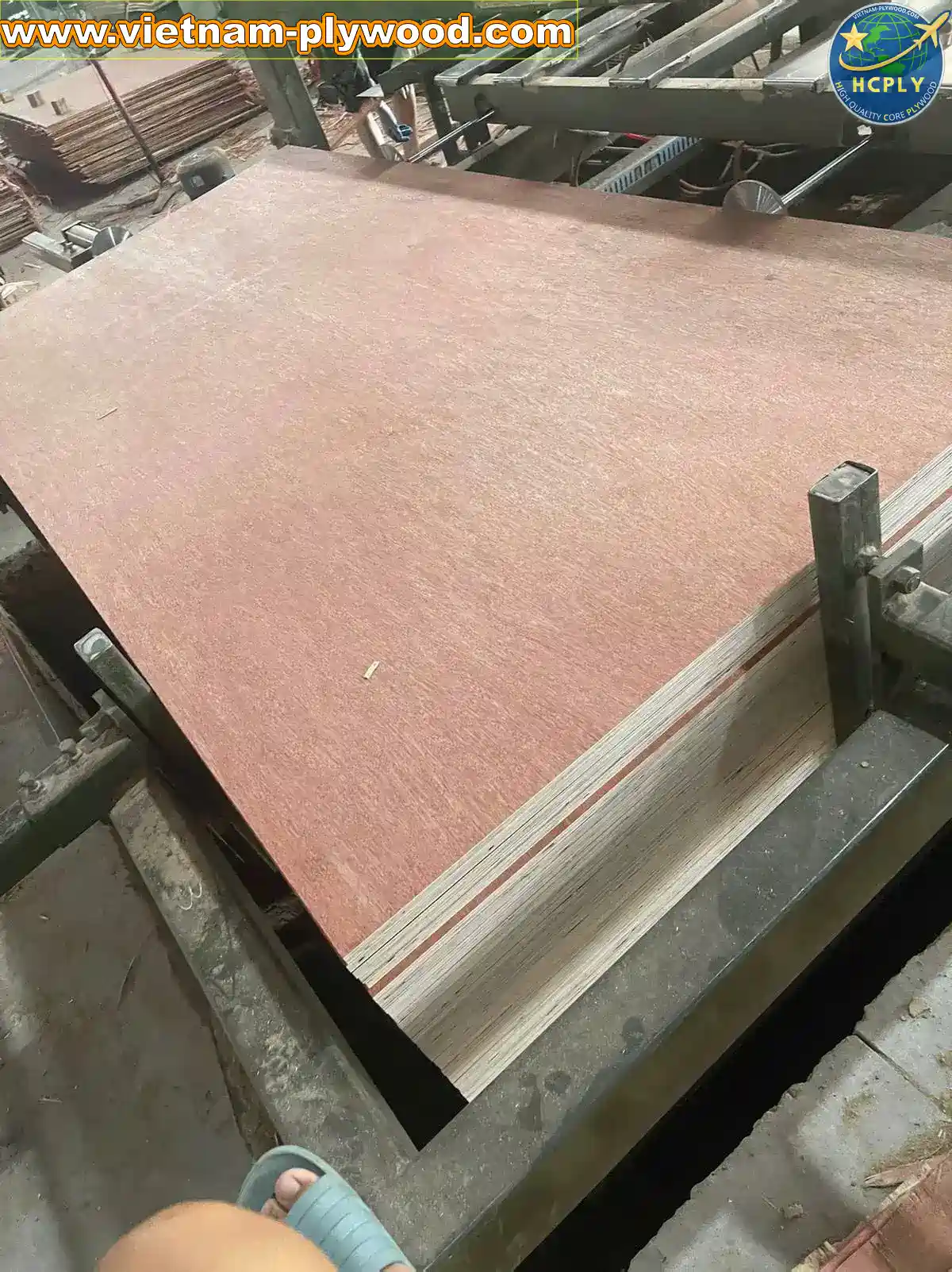
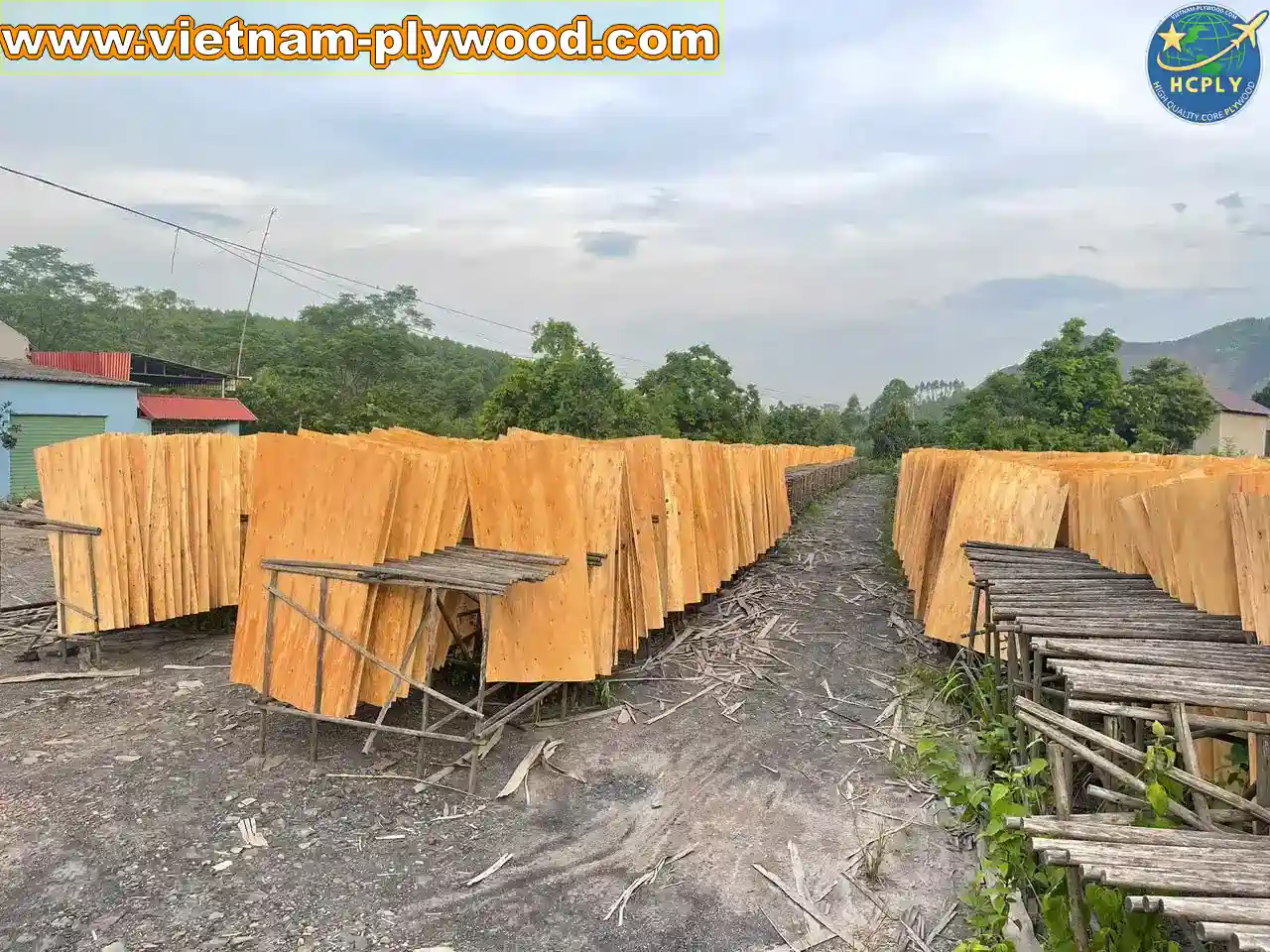

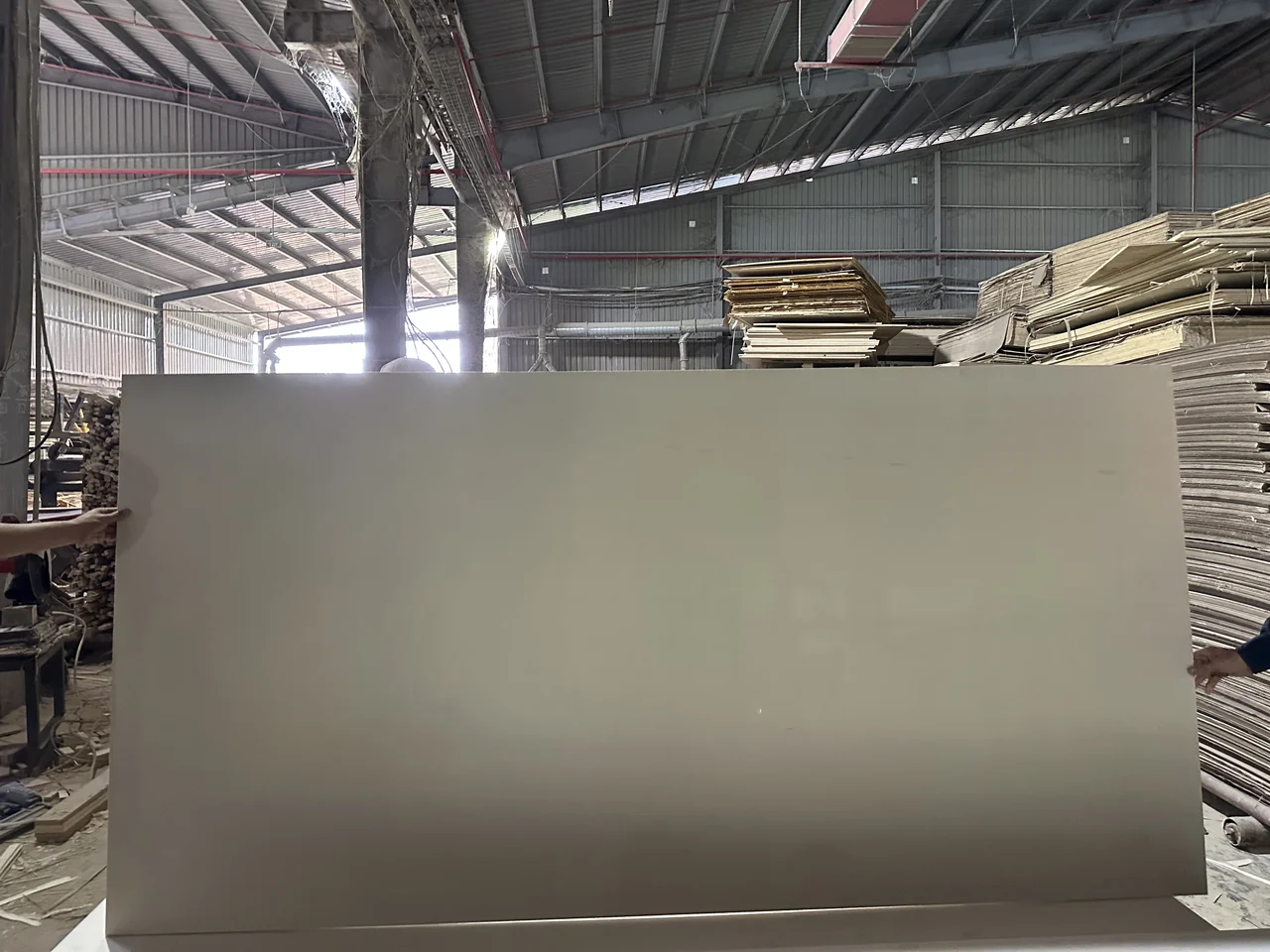
White face plywood from Vietnam is the substrate that luxury packaging manufacturers specify when surface appearance is non-negotiable. A uniform, pale-toned veneer accepts print, lacquer, and foil finishing without colour bleed or grain irregularity — the two defects that destroy a premium unboxing experience.
Procurement teams sourcing for wine cases, electronics gift boxes, cosmetics packaging, and branded retail crates lose significant money when a supplier substitutes a darker bintangor face for the specified poplar or EV. The surface turns grey-yellow under lacquer, print colours shift, and an entire container becomes a reject. This guide covers how to specify Vietnam plywood for packaging correctly so that does not happen.
📦 What Is White Face Plywood?
White face plywood is a standard plywood panel — cross-laminated veneer layers bonded under heat and pressure — where the outer face veneer belongs to the pale-toned species category. In the Vietnamese export market, “white face” describes panels faced with:
- Poplar veneer — creamy white to pale yellow, straight grain, lightweight, the most specified for luxury packaging
- EV (Engineered Veneer) — reconstituted plantation species, tighter colour consistency batch-to-batch
- Pine veneer — off-white with visible knots, used for rustic or natural-aesthetic packaging
Poplar and EV dominate high-end packaging orders because they accept print ink and lacquer finishes with minimal colour interference. The white base does not compete with brand colours the way a reddish bintangor or dark gurjan face would.
💡 Key distinction: The face veneer determines colour and printability. The core species determines weight, density, and container loading cost. Specifying only “poplar plywood” without defining the core leaves the door open to substitution — always confirm face AND core in writing.
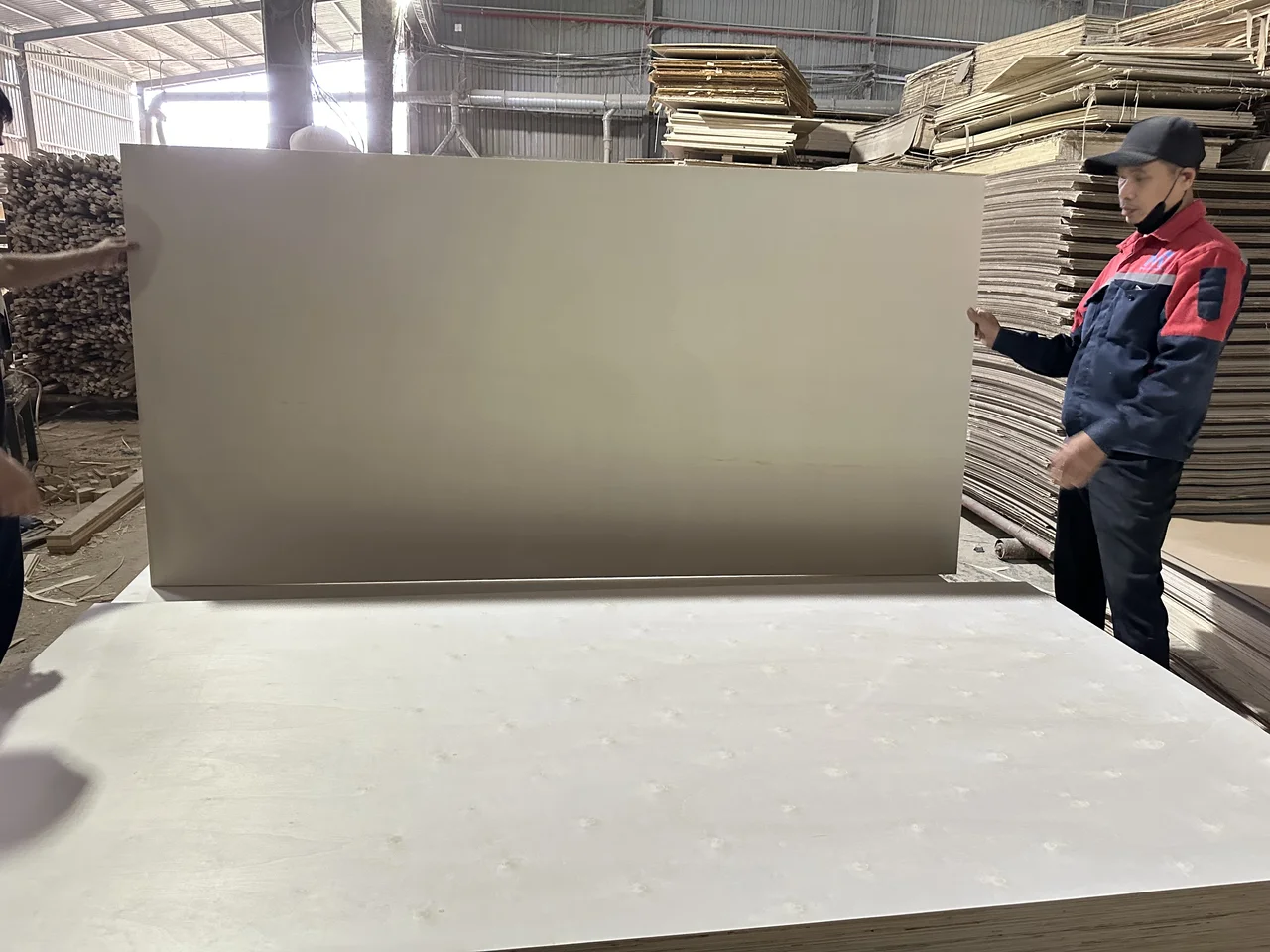
🔧 Core Species and Their Effect on Packaging Cost
The three core species available from Northern Vietnam factories produce panels with different weights and container loading capacities. For packaging buyers, this directly affects landed cost per unit.
| Core Species | Density | Pallets per 40HC | Best Application |
|---|---|---|---|
| Styrax | 480–500 kg/m³ | 18 pallets | Lightweight luxury boxes, wine cases, gift sets |
| Acacia | ~580 kg/m³ | 16 pallets | Standard shipping crates, retail display panels |
| Eucalyptus | 650–750 kg/m³ | 15 pallets | Heavy-duty outer packaging, structural crates |
Styrax core paired with a poplar face delivers the lightest white face plywood panel. This combination is most commonly specified for premium gift boxes and wine cases where per-unit weight affects air freight cost directly (HCPLY production data, 2026).
For heavier industrial outer packaging where structural rigidity matters more than weight, acacia or eucalyptus core with a poplar or EV face still delivers a clean white surface with higher panel stiffness.
“We see a consistent pattern with European packaging clients — they specify poplar face with styrax core at 9mm or 12mm for wine case inner panels, then switch to acacia core at 15mm for the outer crate. Two specifications, one shipment, optimised across both functions.” — Lucy, International Sales Manager, HCPLY
See the full plywood core types guide for density comparisons and container loading calculations by core species.
🏭 Face Veneer Specifications: Poplar vs EV vs Pine
Understanding the specific properties of each white face option prevents misspecification at the purchase order stage.
📌 Poplar Face Veneer
Poplar face veneer is the primary choice for high-end packaging plywood from Vietnam. The veneer ranges from creamy white to pale yellowish-white, with a uniform, mild grain pattern. Face veneer thickness runs 0.2–0.4mm in standard production, with 0.4mm the preference for packaging grades requiring multiple lacquer passes (technical reference data, HCPLY factory).
The pale base colour means printed graphics remain true — black, gold, and red inks read correctly under gloss lacquer without the warmth shift caused by reddish face species. For cosmetics and electronics packaging where colour accuracy is part of brand compliance, poplar face is the only acceptable option.
Poplar face plywood is sanded on both faces at the furniture-grade factory segment — A/B face grade is standard for packaging applications. This produces a surface ready for direct printing or lacquering without additional prep work.
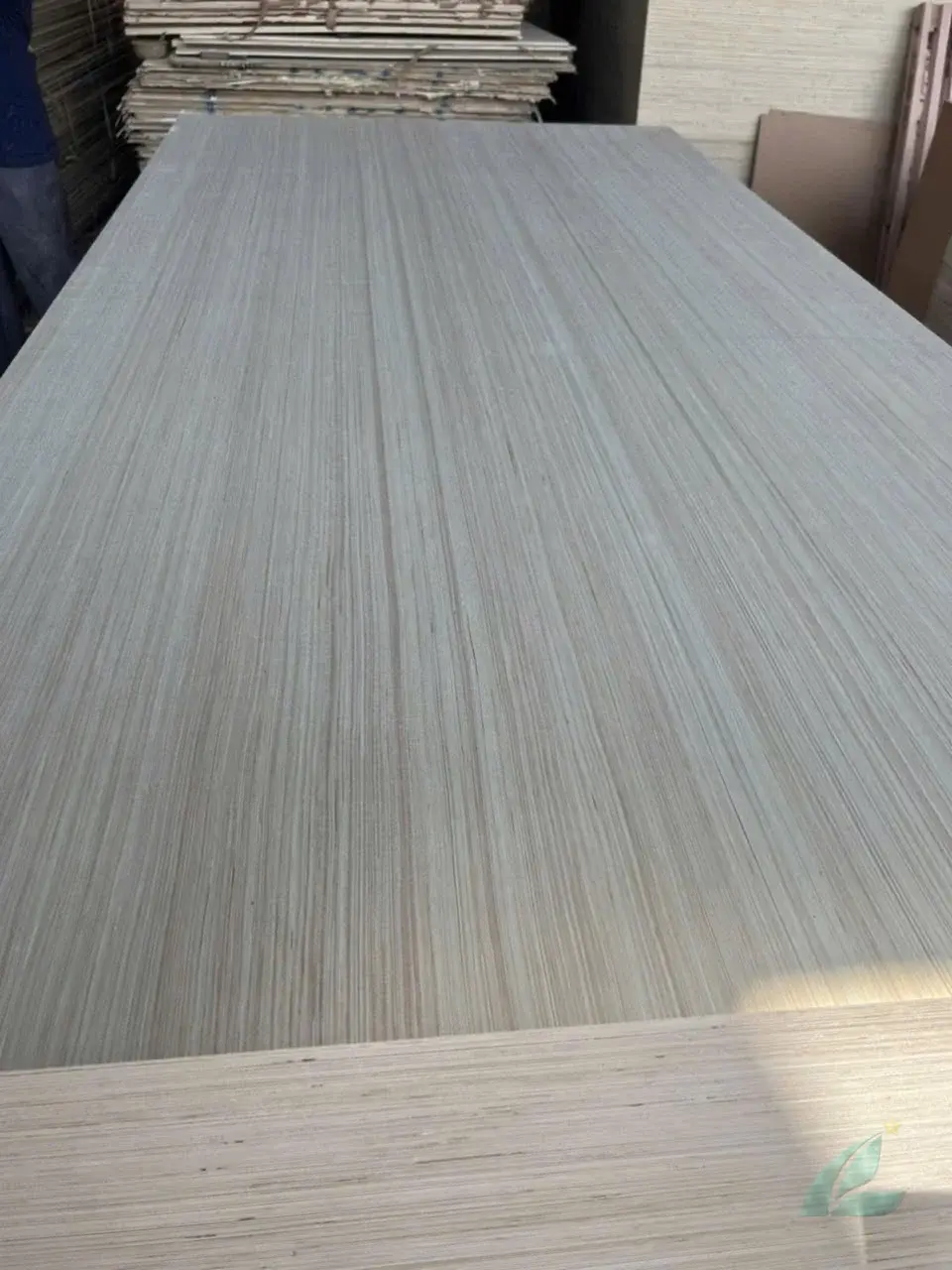
📌 EV (Engineered Veneer) Face
EV veneer is reconstructed from plantation wood fibres, producing sheets with near-perfect colour and grain consistency across an entire container. Where poplar may show minor natural colour variation between sheets, EV delivers a virtually identical surface from pallet to pallet — critical for high-volume branded packaging runs where batches are inspected against a colour standard.
The tradeoff is cost: EV face commands a small premium over natural poplar. For packaging buyers running quality-audited supply chains with strict colour tolerances, that premium is justified.
Poplar Plywood Vietnam covers the full specification sheet for this product, including available grades, thicknesses, and core combinations.
📊 Glue and Emission Standards for Packaging Markets
Glue type and emission standard are two separate specifications — a distinction that matters enormously for market access.
Glue type determines moisture resistance:
- Melamine (MR glue) — passes 12-hour boiling test, adequate for interior packaging
- Phenolic (WBP glue) — passes 72-hour boiling test, for outdoor or high-humidity packaging environments
Emission standard determines formaldehyde release — a regulatory requirement in most developed markets:
- E0 / CARB P2 — mandatory for US market consumer packaging; strongly preferred in EU and Japan
- E1 — acceptable for EU industrial outer packaging not in direct consumer contact
- E2 — unsuitable for packaging entering US or EU retail channels
For high-end packaging destined for EU or US markets, the correct specification is: Glue: Melamine (MR). Emission: E0 (CARB P2 certified). Combining these incorrectly — writing “MR, E0, E2” as a single field — is one of the most common purchase order errors buyers make.
See the plywood glue types and emission standards guide for the full technical breakdown.
⚠️ Important: CARB P2 certification requires factory-level testing and third-party audit. Not all Vietnamese factories carry this certification. Confirm CARB documentation before placing orders for US-bound packaging.
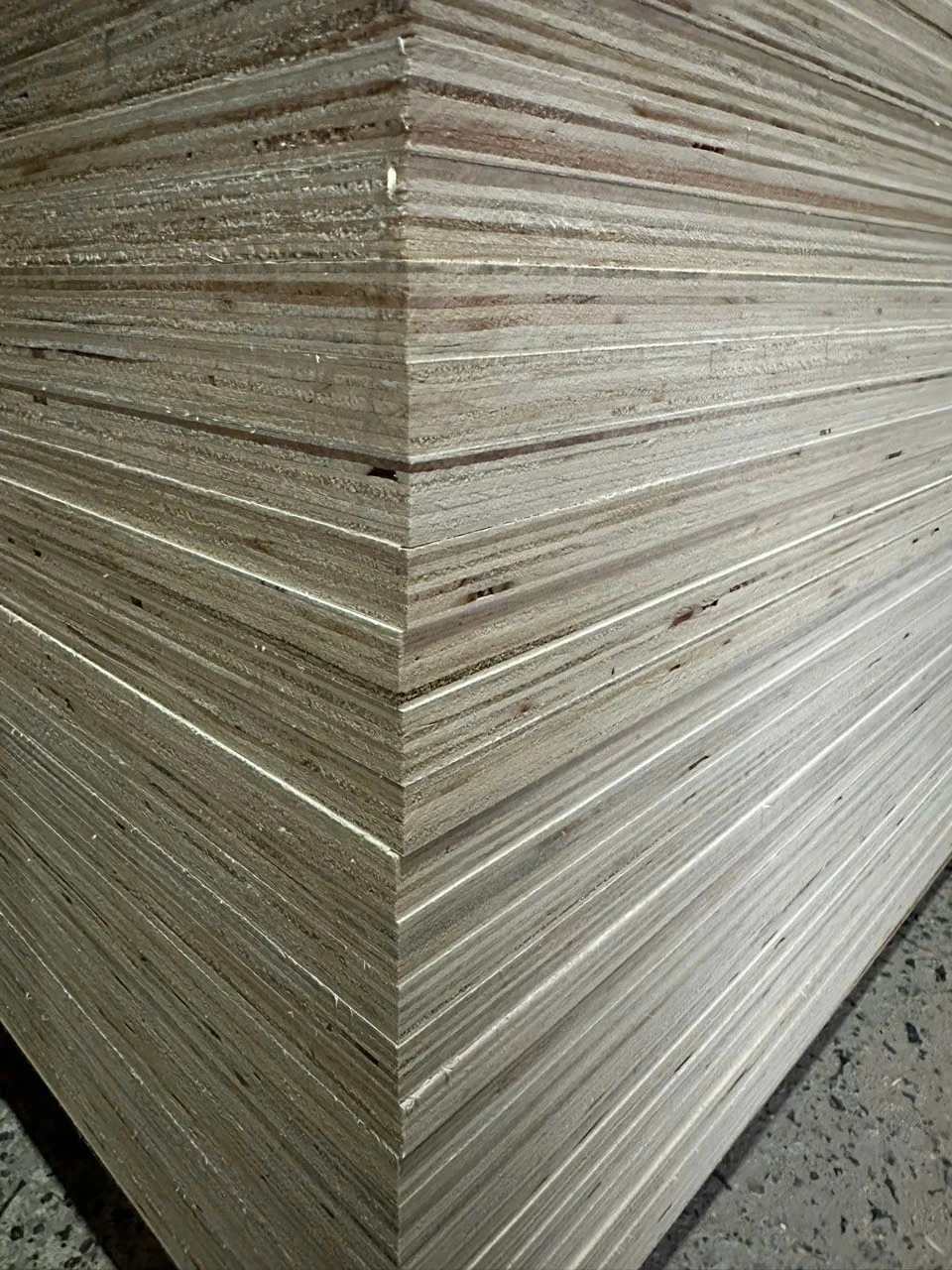
📋 Standard Specifications for Export Packaging Orders
The table below lists the most common white face plywood specifications ordered by packaging manufacturers from HCPLY in 2026.
| Specification | Standard Option | Premium Option |
|---|---|---|
| Face veneer | Poplar A/B | EV A/B |
| Core | Acacia | Styrax |
| Glue | Melamine (MR) | Melamine (MR) |
| Emission | E1 | E0 / CARB P2 |
| Sanding | Both faces | Both faces |
| Thickness | 9mm, 12mm | 9mm, 12mm, 15mm |
| Sheet size | 1220×2440mm | 1220×2440mm, 1250×2500mm |
| Tolerance | ±0.3mm | ±0.3mm |
| Certifications | ISO 9001 | FSC, CARB P2, CE |
Custom dimensions are available with a minimum order of one 40HC container. Smaller mixed-specification orders are possible by combining white face plywood with other products in a single container — HCPLY recalculates total weight and CBM for each mixed load.
📐 Thickness Selection by Packaging Application
The packaging application determines which thickness is correct. Using the wrong thickness either adds unnecessary material cost or produces panels that fail structural tests.
4–6mm panels suit interior liners and light decorative boxes. At 6mm, a poplar-face panel on styrax core weighs approximately 3.0–3.5 kg per 1220×2440mm sheet — light enough for gift set inserts without adding shipping weight.
9mm panels are the standard for wine cases, cosmetics boxes, and retail display panels. This thickness provides the combination of surface quality, cut-ability, and structural integrity that packaging engineers need without adding unnecessary weight.
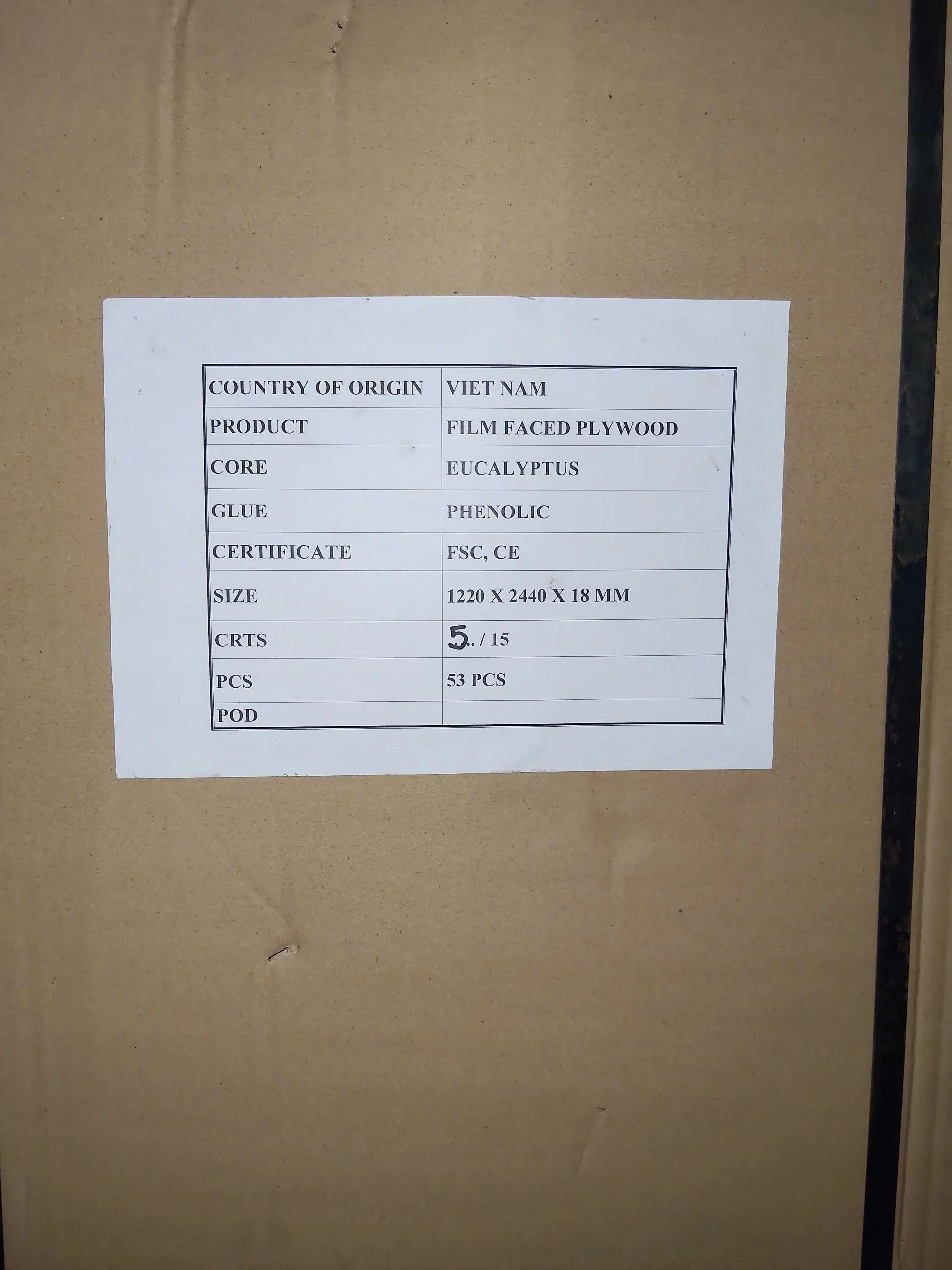
12–15mm panels handle outer shipping crates, machinery packaging, and heavy-product protective crating. At this thickness, the acacia or eucalyptus core provides better screw-holding and edge rigidity than styrax, making it the preferred core for structural packaging applications.
18mm panels are used for palletised display units and point-of-sale structures that must carry significant product weight on-floor.
For a full treatment of how thickness affects container packing and per-unit shipping cost, read the plywood container packing calculation guide for 40HC containers.
🔍 quality control Checkpoints for Packaging Plywood
High-end packaging suppliers cannot accept surface defects that would pass as acceptable for construction or packing-grade plywood. The quality parameters that matter for white face packaging panels are more demanding than general commercial plywood standards.
Surface smoothness — both faces must pass wide-belt sanding at the factory. Scratches, press marks, or uneven sanding ridges visible under raking light are cause for rejection. The face grade A/B standard means the A face is near-defect-free and the B face allows minor, non-structural imperfections (Wood Panel Industries Federation grading, 2024).
Colour uniformity — sheets in a pallet should match within an acceptable variance. Sheets with significant grain colour variation are sorted out during the grading process. EV face is specified when stricter colour tolerance is required.
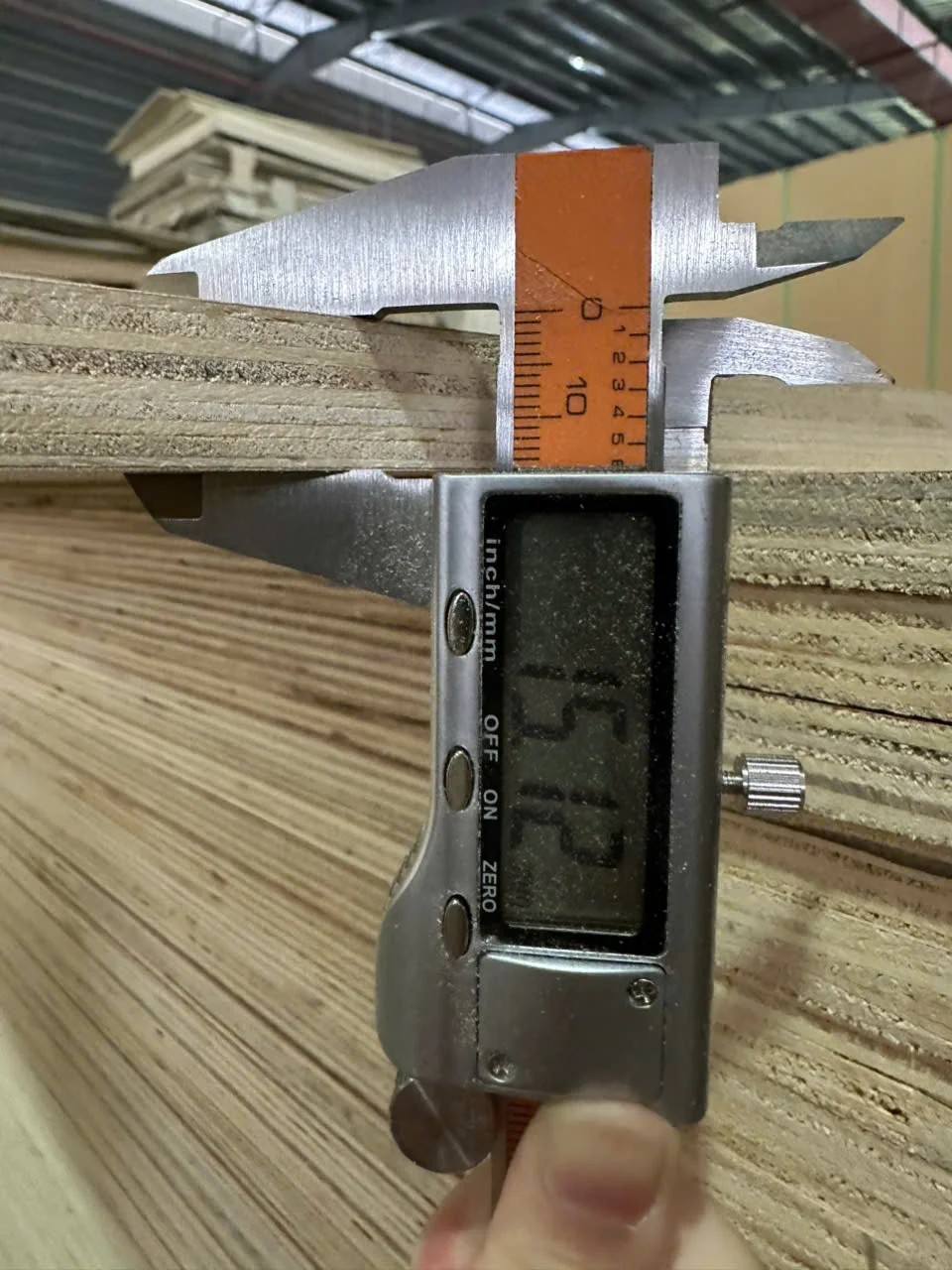
Thickness calibration — the ±0.3mm tolerance applies across the sheet. Packaging dies and CNC routers require consistent thickness to cut cleanly. Panels outside tolerance cause die drift and produce rough edges on cut parts.
Flatness — packaging plywood must lie flat without warp or twist. Warp causes gaps in finished boxes and failures at the gluing stage. Proper kiln drying of veneer to 6–8% moisture content before pressing is the factory-controlled variable that determines flatness (HCPLY QC protocol, 2026).
HCPLY’s on-site QC team checks surface, thickness, and flatness at three stages: after hot pressing, after sanding, and before container loading. Real-time photos and inspection reports are available to buyers for each shipment.
🌍 Export Markets and Certification Requirements
White face plywood for high-end packaging ships to different markets with different compliance requirements.
European Union — FSC certification required for packaging claiming environmental credentials. EUDR (EU Deforestation Regulation) traceability documentation mandatory from 2025 for all timber products. E1 emission minimum; E0 preferred for consumer-facing packaging (European Environment Agency, 2024).
United States — CARB P2 certification mandatory for packaging entering retail channels. Lacey Act documentation required for wood species verification. Anti-dumping duties on certain categories — buyers should confirm HTS code classification before ordering.
Japan and South Korea — F4-star (Japan) or equivalent E0 standard. Strict thickness tolerance requirements. Surface quality expectations are the highest in Asia-Pacific.
Middle East and Southeast Asia — E1 acceptable for most applications. FSC optional but increasingly requested. Commercial packaging grades (E1, MR glue, acacia core) ship in the highest volumes to these markets.

HCPLY carries FSC, CARB P2, CE, ISO 9001, EUDR, and EUTR documentation. Full export document sets — CO, FSC certificate, Phytosanitary, Fumigation certificate, Invoice, and Bill of Lading — are prepared for every shipment.
Get a Free Quote for White Face Packaging Plywood
📊 Comparison: White Face Options for Packaging
| Property | Poplar Face | EV Face | Pine Face |
|---|---|---|---|
| Base colour | Creamy white to pale yellow | Near-uniform white | Off-white with knots |
| Colour consistency | Good | Excellent | Variable (knotty) |
| Print surface | Excellent | Excellent | Good (rustic aesthetic) |
| Lacquer adhesion | Excellent | Excellent | Good |
| Price (relative) | Mid | Mid-High | Mid |
| Best for | Luxury boxes, wine cases | Branded retail runs | Rustic / natural packaging |
For buyers comparing poplar against bintangor or okoume, the plywood face veneer types guide provides a full species comparison including colour, price, and application matrix.
✅ How to Order White Face Plywood from Vietnam
Placing a correct purchase order for white face packaging plywood requires specifying six parameters. Missing any one creates room for substitution or compliance failure.
- Face veneer — Poplar A/B or EV A/B (do not leave as “white face” without species)
- Core species — Styrax (lightweight) or Acacia (rigid). Confirm which is required for your application.
- Thickness — specify in mm, with ±0.3mm tolerance noted
- Sheet size — 1220×2440mm standard or 1250×2500mm for EU metric
- Glue — Melamine (MR). Confirm if WBP is required for outdoor packaging.
- Emission — E0 / CARB P2 for US/EU consumer packaging, E1 for industrial outer packaging
MOQ is one 40HC container. Lead time is 15–20 days from order confirmation. Samples are available before order commitment.
For industrial and heavy-duty packaging applications, the industrial packaging plywood applications guide covers ISPM-15 requirements, crate strength calculations, and export compliance for machinery and heavy-product packaging.
Request Free Samples and Instant Quotation
🔗 Summary
White face plywood from Vietnam is a well-defined, reliably-sourced product when specified correctly. The face veneer species — poplar or EV — determines surface colour, printability, and lacquer adhesion. The core species — styrax or acacia — determines panel weight and per-container loading capacity. The emission standard — E0 or CARB P2 — determines market access.
Getting all three right in the purchase order prevents the substitution errors that generate rejected containers. HCPLY supplies white face packaging plywood to buyers in Europe, North America, Korea, Japan, and the Middle East across 20+ countries, with factory-direct documentation and no VAT overhead on export pricing.
Disclosure: This article is published by HCPLY, a Vietnam-based plywood manufacturer and export operator. While we aim to provide objective industry guidance, readers should consider our perspective as a market participant when evaluating recommendations.
Contact HCPLY Now to Get White Face Plywood Specifications and Pricing