

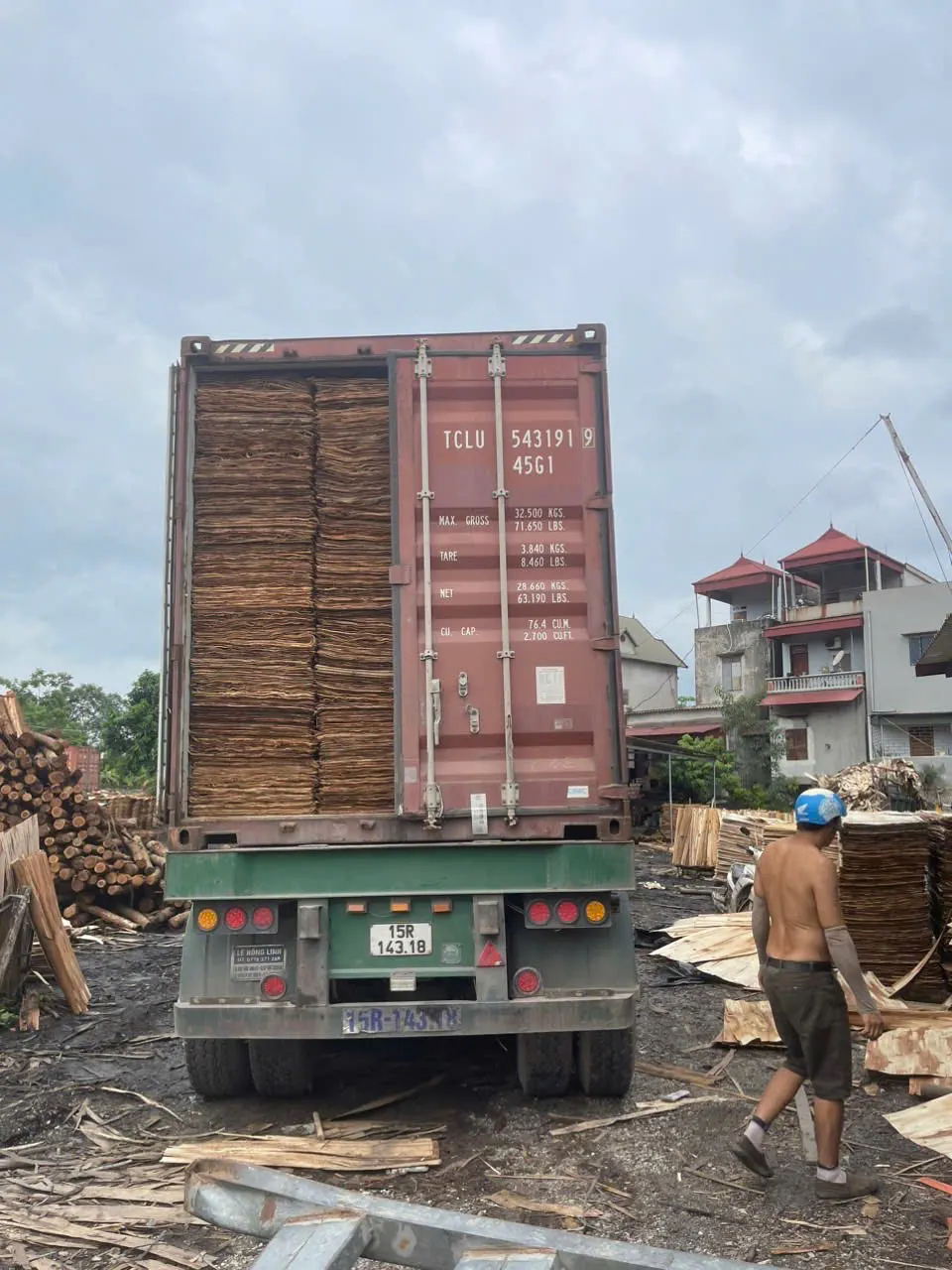
Vietnam and Indonesia are the two biggest plywood exporters in Southeast Asia. Buyers routinely get quotes from both countries, then struggle to compare them accurately — because the materials, factory structures, and certification ecosystems are fundamentally different.
This guide breaks down the Vietnam vs Indonesia plywood comparison across five dimensions: raw material, price, quality, certifications, and supply chain reliability. The goal is not to declare a winner. The goal is to give you enough data to make the right sourcing decision for your specific application.
When evaluating any Vietnam plywood supplier, the first step is understanding that Vietnam and Indonesia operate completely different material systems — not just different price points.
📊 Vietnam vs Indonesia Plywood: Quick Comparison
| Factor | Vietnam | Indonesia |
|---|---|---|
| Primary core species | Acacia (~580 kg/m³), Eucalyptus (650–750 kg/m³), Styrax (480–500 kg/m³) | Meranti (Shorea spp.), Falcata, Sengon |
| Primary face veneers | Imported birch, okoume, bintangor; domestic eucalyptus, gurjan | Meranti, tropical hardwood |
| Export volume (2024) | ~$1.6B H1 2024, +34% YoY (Vietnam Customs, 2024) | Major decline in EU market, strong Japan/Korea |
| Top export markets | Korea, Japan, USA, Malaysia | Japan, Korea, Malaysia, Middle East |
| Emission certifications | CARB P2, E0/E1, FSC | FSC + SVLK; CARB P2 less common |
| FOB price position | 5–15% lower than comparable Indonesian specs | Higher for meranti hardwood grades |
| Raw material risk | Low — plantation-based, no wild logging | Medium — meranti faces potential CITES pressure |
| EUDR compliance | Available from leading exporters | Requires SVLK + additional EU traceability |
⚠️ Important: These are industry-level generalizations. Individual factory quality in both countries varies enormously. Always request mill test reports and third-party inspection for any supplier, regardless of country of origin.
🌳 Raw Material: Different Systems, Different Tradeoffs
The most fundamental difference between Vietnamese and Indonesian plywood is what the panels are made of.
“Factory-direct export means 0% domestic VAT on our shipments. Trading companies in Vietnam pay 8% VAT when purchasing from factories, which adds roughly $40–50 per CBM to the buyer’s cost. That price difference compounds over a 12-month supply contract.” — Lucy, International Sales Manager, HCPLY
Vietnam: Plantation-Based Core + Imported Face
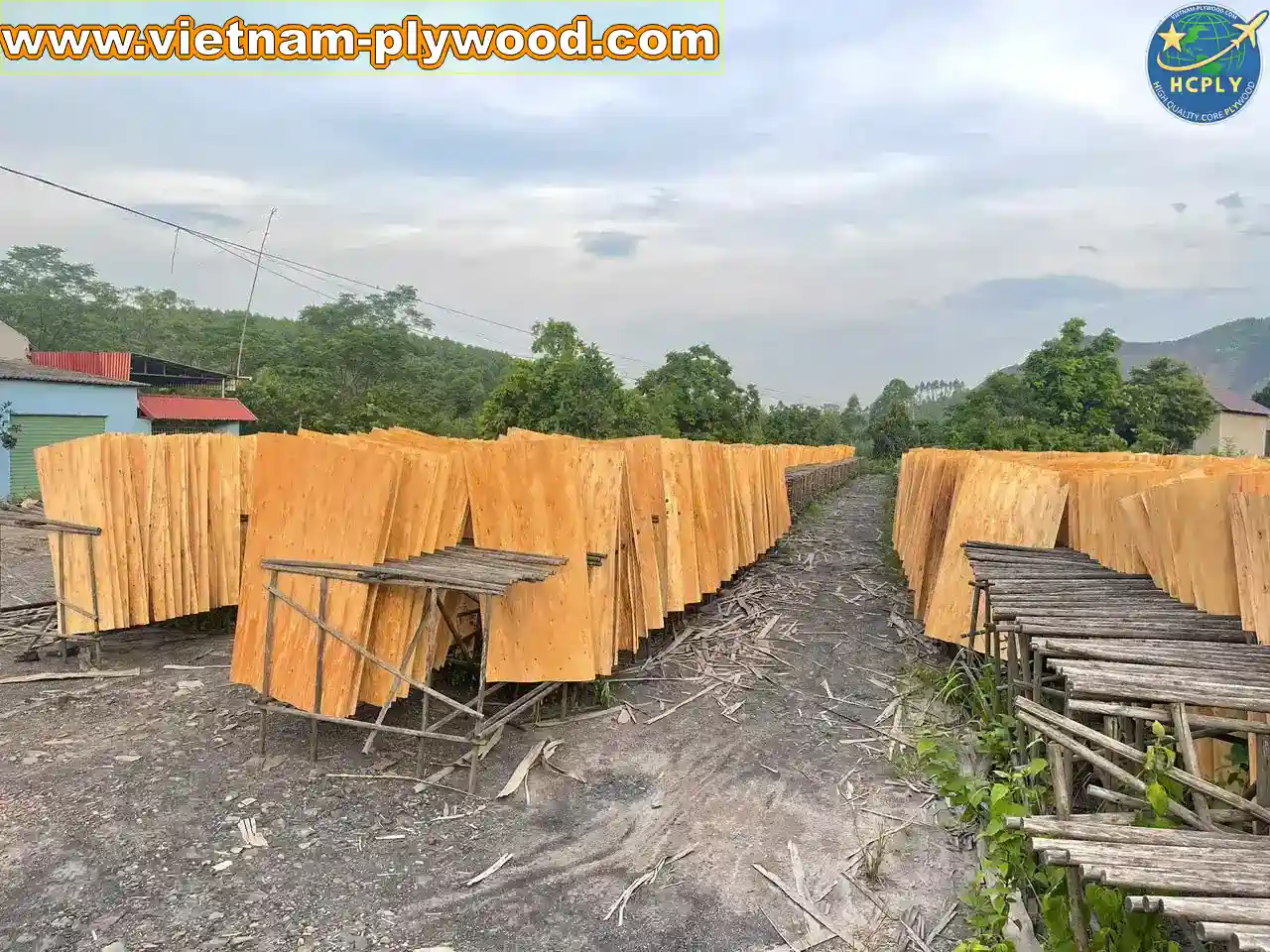
Vietnam’s plywood industry is built almost entirely on fast-growing plantation species. Approximately 80–90% of raw timber used in plywood production comes from domestic plantations — primarily acacia and eucalyptus (ITTO, 2024). Styrax (bồ đề) is a third species unique to northern Vietnam, prized for its light density (480–500 kg/m³) and used as a birch-core substitute in premium furniture plywood.
Face veneers in Vietnam are frequently imported: birch from Russia/Baltic, okoume from West Africa, gurjan from Myanmar. This creates a distinct product profile — Vietnamese plywood typically combines an imported decorative face with a plantation hardwood core.
Implication for buyers: You can specify precisely — birch face + styrax core + E0 emission is a clearly defined product. Core density is predictable. Supply is stable because plantations are fully established.
Indonesia: Tropical Hardwood Core + Face
Indonesia has traditionally built its plywood industry around tropical hardwood species, particularly meranti (Shorea spp.) and falcata. Meranti is a natural forest species; falcata and sengon are plantation-grown.
Indonesia is the world’s largest exporter of falcata plywood, with 405 suppliers exporting to 812 buyers globally (Volza Trade Data, 2025). Falcata’s primary markets are Japan, Korea, and Malaysia.
The meranti risk: The EU’s proposal to list Shorea spp. under CITES Appendix II — while deferred from COP 2025 — remains an active discussion for 2026 and beyond (APKINDO, 2025). A CITES listing would severely restrict meranti trade, directly affecting Indonesian exporters who rely on it. Buyers planning long-term European supply chains should factor in this regulatory uncertainty.
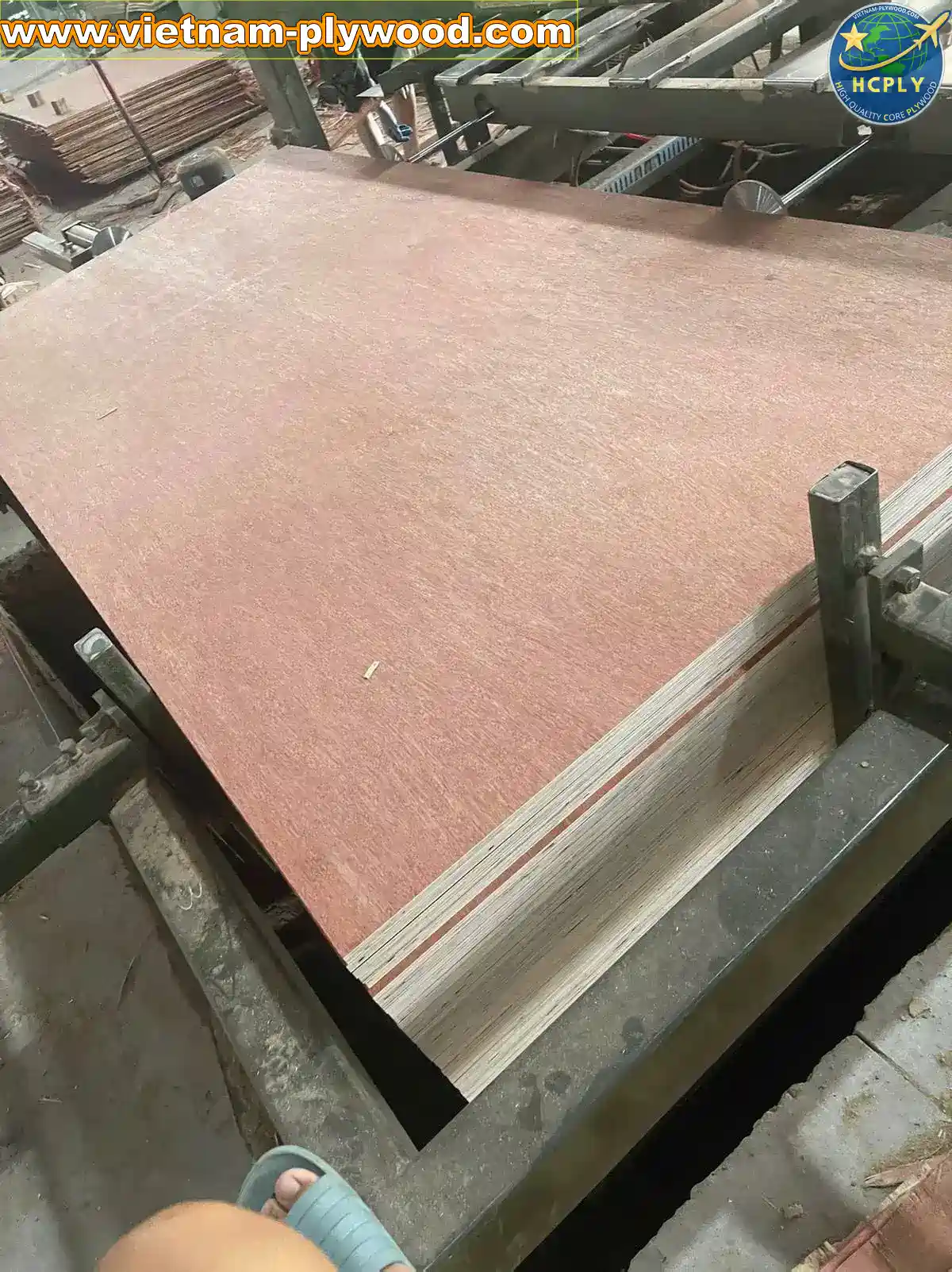
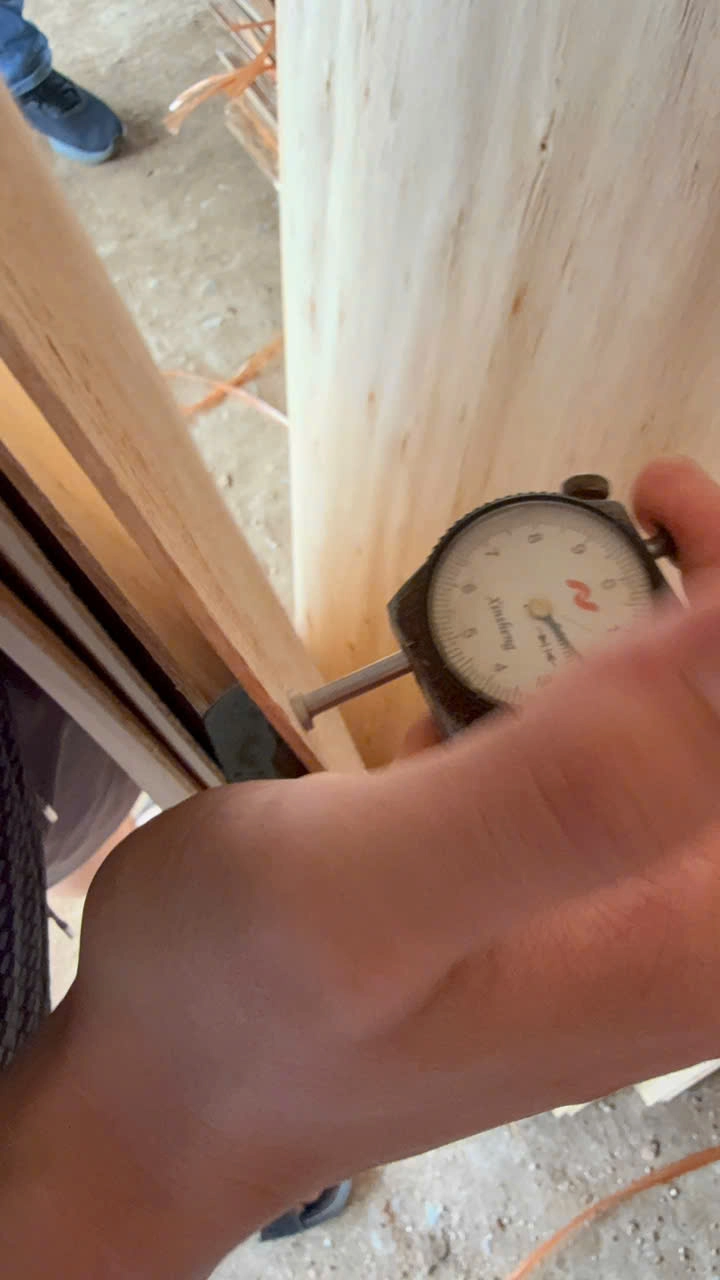 Eucalyptus core veneer at HCPLY — dense, stable, plantation-grown, EUDR-traceable
💰 Price: Understanding the Real Difference
Vietnam plywood is typically 5–15% cheaper at FOB for equivalent product specifications. Three structural reasons explain this gap.
-
No export VAT. Vietnamese manufacturers exporting directly from the factory pay zero VAT on FOB shipments. Indonesian manufacturers pay PPN (VAT) on domestic transactions, which gets embedded in export pricing when factories are VAT-registered entities.
-
Plantation timber cost. Acacia and eucalyptus grown in Phu Tho Province, Vietnam are among the most cost-efficient plantation wood inputs in Asia. Mature rotation cycles (6–8 years for acacia) and proximity to factories keep log costs low.
-
Factory structure. Vietnam’s northern plywood cluster — concentrated in Phu Tho, Yen Bai, Tuyen Quang — features a high density of specialized factories with low overhead. Indonesia’s top producers like Kutai Timber (KTI) carry legacy infrastructure costs from their natural forest era.
Where Indonesia is price-competitive: For orders requiring genuine meranti hardwood face or falcata core, Indonesian producers have no equivalent in Vietnam. If your specification requires these materials — common for Korean and Japanese construction markets — Indonesia is the appropriate source regardless of price comparison.
💡 Tip: Always compare FOB prices for identical specifications. A $5/sheet price difference evaporates if you’re comparing birch-face E0 Vietnam plywood against meranti E1 Indonesian plywood. Spec-for-spec comparison is the only valid basis.
Get a specification-matched quote from HCPLY
✅ Quality: Factory Segmentation Matters More Than Country
Country-of-origin quality generalizations are misleading. What determines panel quality is which factory segment you’re buying from, not which country the container left from.
Vietnam’s Factory Segments
Vietnam’s plywood industry has four clearly defined segments (HCPLY production data, 2026):
- Premium furniture factories: Styrax or eucalyptus core, full stitched construction, E0 emission, sanded face, FSC+CARB P2+CE certified. These factories do not produce commercial-grade panels — their QC systems and skilled labor are calibrated for premium output only.
- Commercial/packing factories: Acacia core, loose-laid or edge-jointed construction, E1/E2, unsanded. Competitive on price for commodity applications.
- Premium film-faced factories: Eucalyptus/acacia core, AICA film ≥135 gsm, phenolic WBP, reuse 15–20 times. These supply Korean, Japanese, and Australian construction markets.
- Budget film-faced factories: Acacia core, cheaper film (4–8 reuse cycles), E2. For price-sensitive markets.
The same product name — “film-faced plywood 18mm” — from a premium factory versus a budget factory are not comparable products. This is the #1 confusion point for international buyers sourcing from Vietnam.
Indonesia’s Quality Profile
Indonesia’s established exporters (Kutai Timber, Sinar Mas Group, etc.) produce consistent hardwood plywood with strict JAS (Japan Agricultural Standard) compliance for the Japanese market. JAS-certified Indonesian plywood represents a genuinely differentiated quality standard — F4-star equivalent formaldehyde levels with hardwood structural properties that plantation species cannot fully replicate.
For Korea’s construction market, Indonesian meranti remains preferred over Vietnamese alternatives in specific applications because of its natural density and surface characteristics.
“When Korean buyers specify meranti-face plywood for certain construction applications, it’s a materials specification, not a supplier preference,” notes Lucy, International Sales Manager at HCPLY. “We advise them accurately — if the specification genuinely requires meranti, source from Indonesia. If the goal is moisture resistance and strength at competitive pricing, our eucalyptus-core panels with WBP glue meet the same structural requirement.”
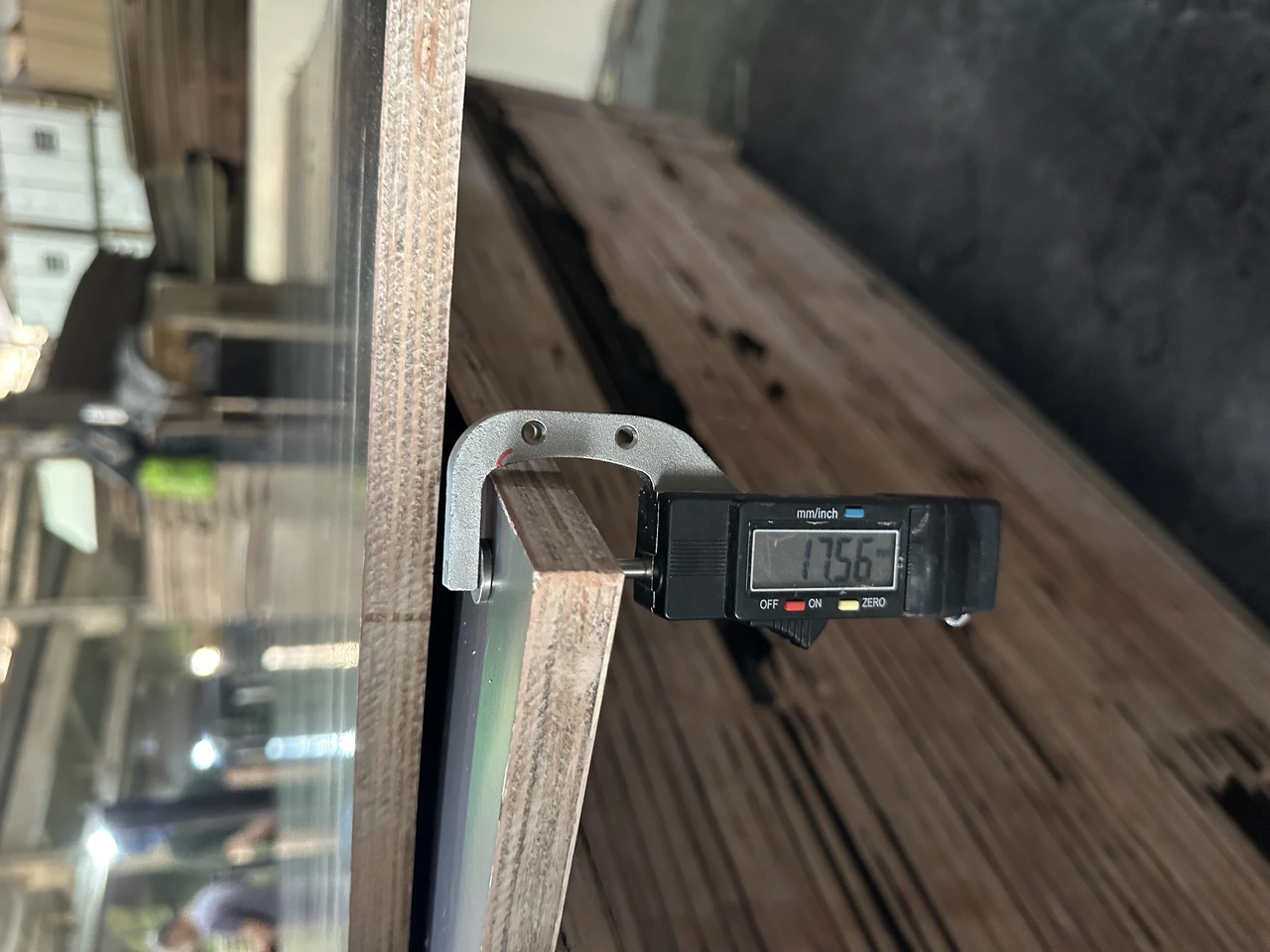 3-stage QC at HCPLY: post-press, post-sand, pre-load inspection. Every panel measured for thickness tolerance ±0.3mm.
📋 Certifications: Where Vietnam Has Gained Ground
Certification availability has shifted meaningfully in Vietnam’s favor over the past five years.
Vietnam’s Certification Ecosystem
Leading Vietnamese exporters now carry a full certification stack: FSC, CARB P2, CE, ISO 9001, EUDR, EUTR. CARB P2 — mandatory for the US market — is widely available from premium Vietnamese furniture plywood factories. This was not the case before 2020.
For European buyers, EUDR compliance requires geo-referenced supply chain data tracing panels to specific plantation plots. Vietnamese factories sourcing from acacia and eucalyptus plantations in documented provinces (Phu Tho, Tuyen Quang, Yen Bai) can generate this traceability data. Indonesia’s SVLK (Sistem Verifikasi Legalitas Kayu) provides timber legality verification, but the additional EUDR geo-traceability layer requires supplementary documentation.
The plywood certifications and export documentation guide covers what documentation to request from any supplier before placing an order.
Indonesia’s Certification Strengths
Indonesia has SVLK — a mandatory government-administered timber legality verification system that covers all Indonesian timber exports. This is a broader system than Vietnam’s voluntary FSC chain-of-custody, and every Indonesian exporter must comply. For buyers who prioritize legality assurance above specific emissions standards, SVLK provides strong baseline protection.
Indonesia’s large manufacturers also hold FSC, PEFC, and JAS certifications for premium product lines.
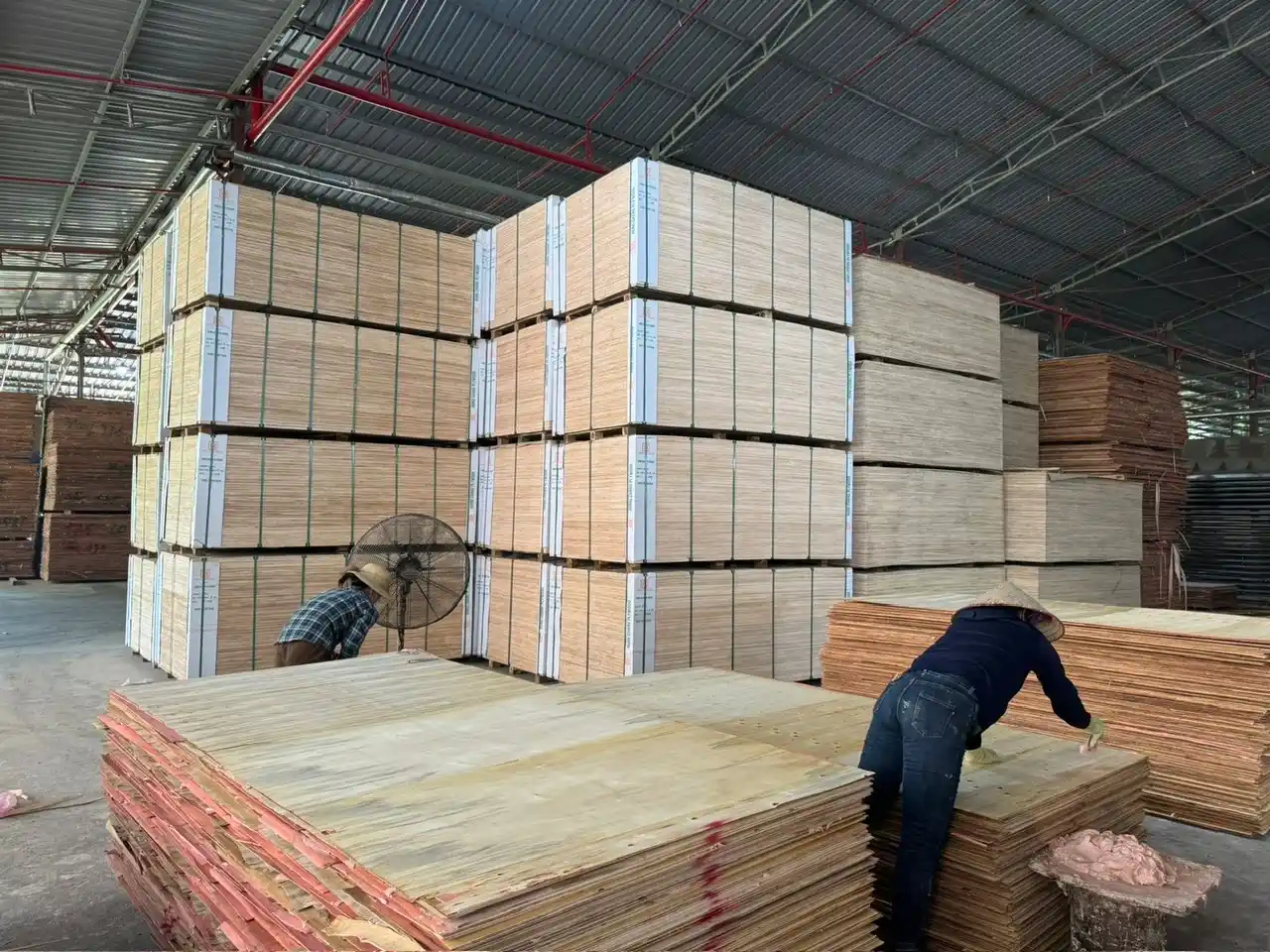
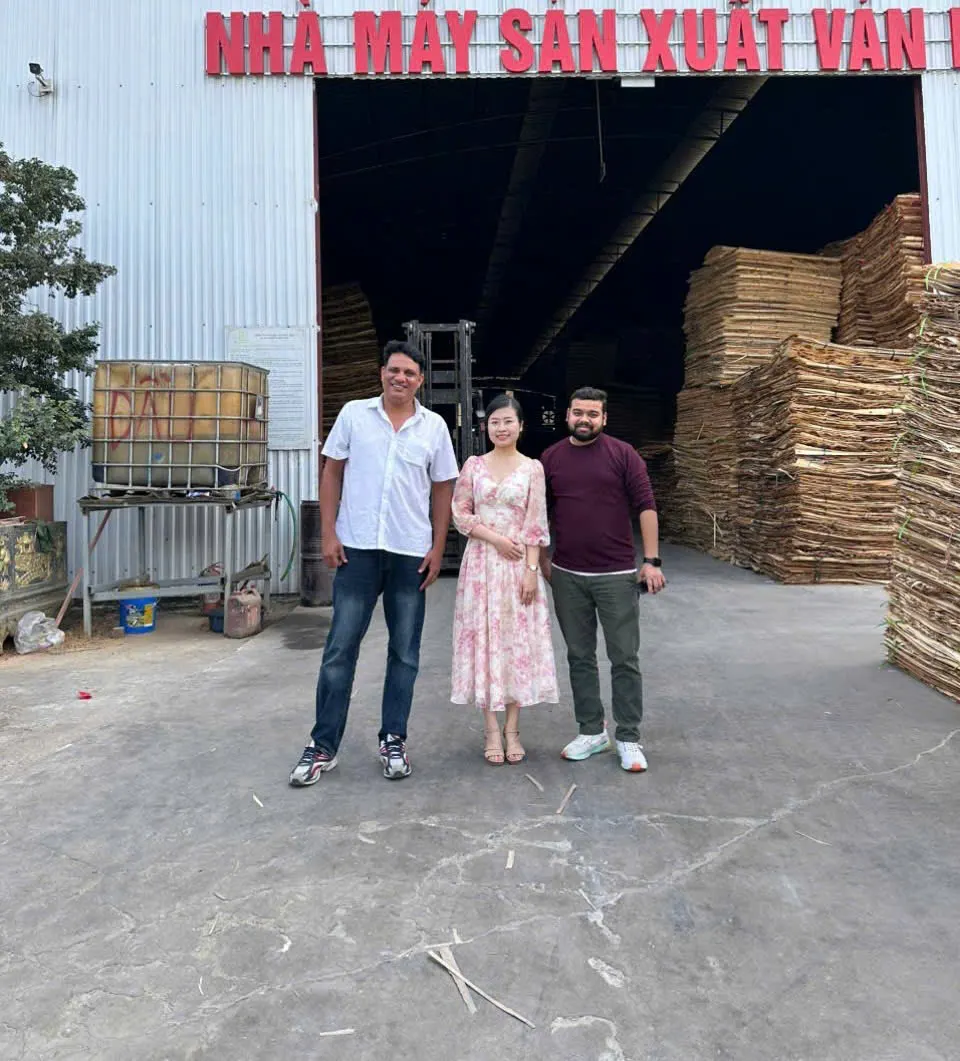 International buyers conducting factory audits at HCPLY. On-site QC team available for third-party inspection access.
🚢 Supply Chain: Lead Times, Ports, and Risk Profile
Lead Times
Production lead times in both countries average 15–25 working days for standard orders (1 × 40HC container). Custom specifications — special thickness, non-standard sheet sizes, specific certification requirements — add 5–10 days regardless of country.
Vietnam ships from Hai Phong Port (northern Vietnam). Indonesia ships from Surabaya (NPCT1), Belawan (North Sumatra), or Jakarta (Tanjung Priok). For Indian buyers (India is Vietnam’s largest plywood export destination by volume), transit from Hai Phong to Mumbai is 10–14 days. From Surabaya to Mumbai is 8–12 days — marginally faster.
For Korean and Japanese buyers, transit times are comparable. For European buyers, both require routing through Singapore or Port Klang, with similar total transit times of 22–30 days.
Container Loading Efficiency
Container efficiency depends on panel density, not country of origin. From Vietnam:
- Styrax core panels: 18 pallets, ~53 CBM per 40HC (lightest, highest volume efficiency)
- Acacia core panels: 16 pallets, ~47.5 CBM per 40HC
- Eucalyptus core panels: 15 pallets, ~44.5 CBM per 40HC (heaviest)
The plywood container packing and CBM calculation guide provides factory-level packing tables for each core type.
Supply Reliability Risk Assessment
| Risk Factor | Vietnam | Indonesia |
|---|---|---|
| Raw material supply disruption | Low — plantation-controlled | Medium — meranti natural forest supply declining |
| US AD/CVD duty exposure | High — 196% preliminary rate (US DOC, 2025) | High — 19.98–84.94% preliminary rate (US DOC, 2025) |
| EU regulatory risk | Low — EUDR-capable from plantations | Medium — meranti CITES discussion ongoing |
| Currency volatility | VND stable vs USD | IDR moderate volatility |
| Factory capacity scalability | High — large cluster, multiple suppliers | Medium — consolidating industry |
⚠️ Note: The US Commerce Department’s preliminary antidumping findings for both Vietnam and Indonesia (announced June 2025, Federal Register 2025-11074) affect US-bound hardwood and decorative plywood specifically. Buyers sourcing for US distribution should consult trade counsel before placing orders for that market.
 Container loading at HCPLY — 15–18 pallets per 40HC depending on core species and panel thickness
🔗 Which Should You Source From?
The right answer depends on your application, not on a country preference.
Source from Vietnam when:
- You need CARB P2, E0 emission, or EUDR-compliant panels
- Your specification is: birch/okoume/bintangor face + plantation core
- You require FSC + CE + ISO 9001 full certification stack
- Cost efficiency is a priority and meranti is not a material requirement
- You want single-contact access to multiple product segments (furniture, commercial, film-faced)
Source from Indonesia when:
- Your specification genuinely requires meranti face or falcata core
- You’re supplying Japan market with JAS-compliant product
- Your buyer explicitly specifies Indonesian species for legacy material reasons
- You need SVLK documentation as primary legality proof
For most B2B buyers sourcing plywood for furniture manufacturing, construction, or packaging applications in 2026, Vietnam offers a stronger combination of price competitiveness, certification coverage, plantation supply stability, and factory specialization. Indonesia remains the correct source for meranti-specific applications — a narrowing but real segment.
Choosing the right Vietnam plywood supplier — factory-direct versus trading company versus multi-facility operator — has a bigger impact on your outcome than choosing between Vietnam and Indonesia. Understanding how different Vietnamese plywood suppliers are structured is essential before comparing any quotes. A trading company, a factory-direct manufacturer, and a multi-facility export operator all present differently on paper but deliver very different outcomes.
Contact HCPLY for a factory-direct comparison quote — no commitment required
Disclosure: This article is published by HCPLY, a Vietnam-based plywood manufacturer and export operator. While we aim to provide objective industry guidance, readers should consider our perspective as a market participant when evaluating recommendations.