
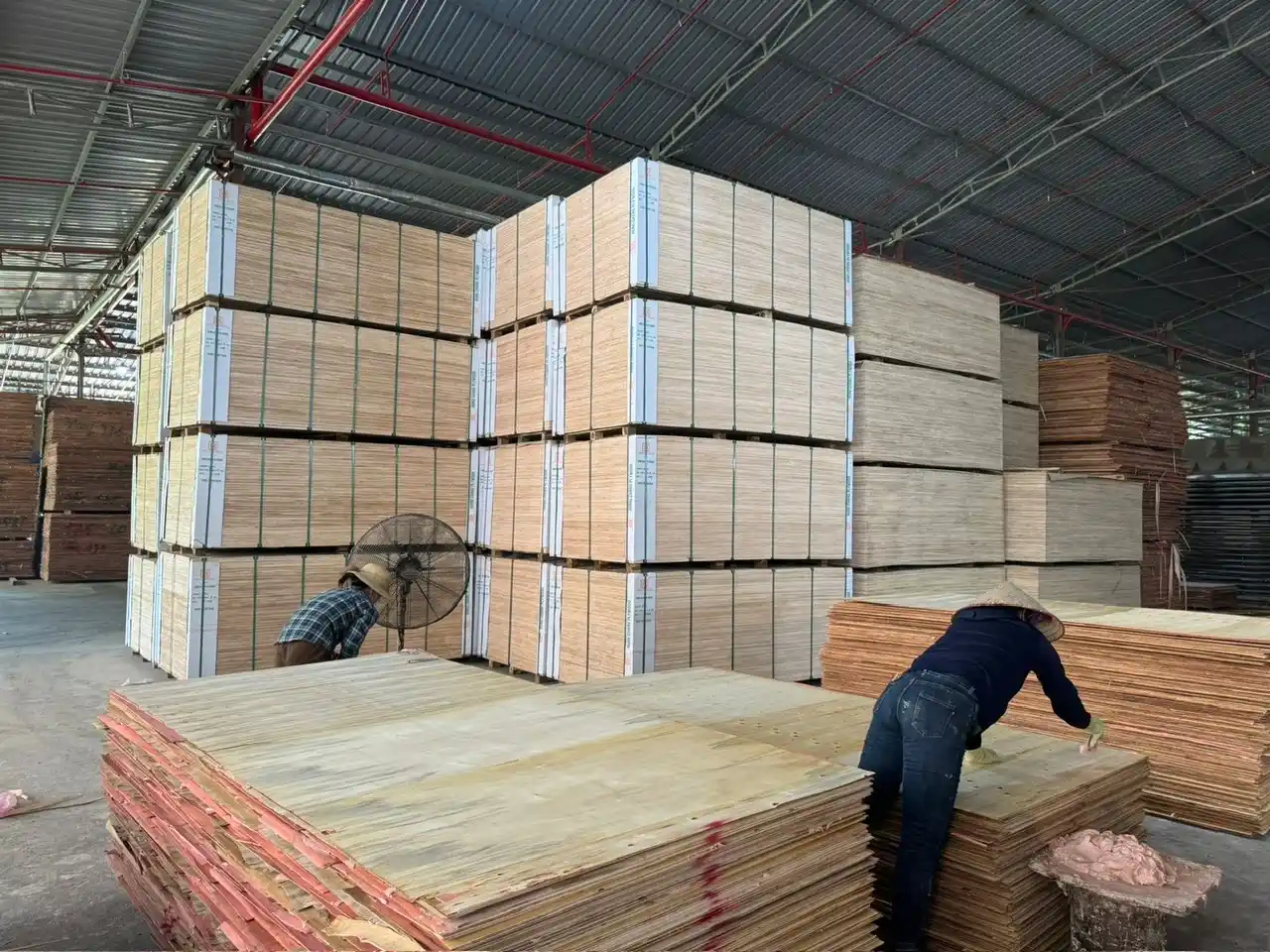
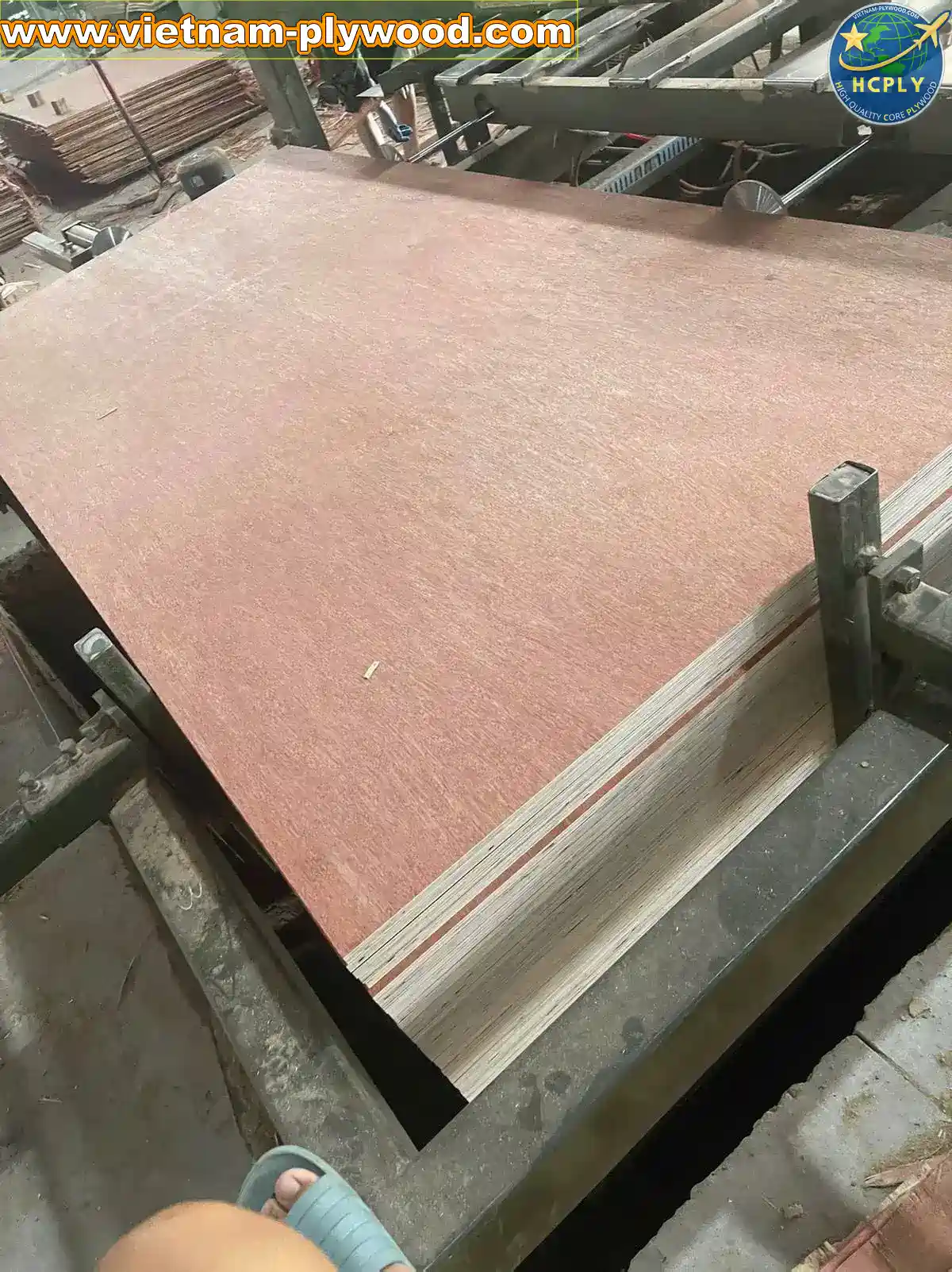
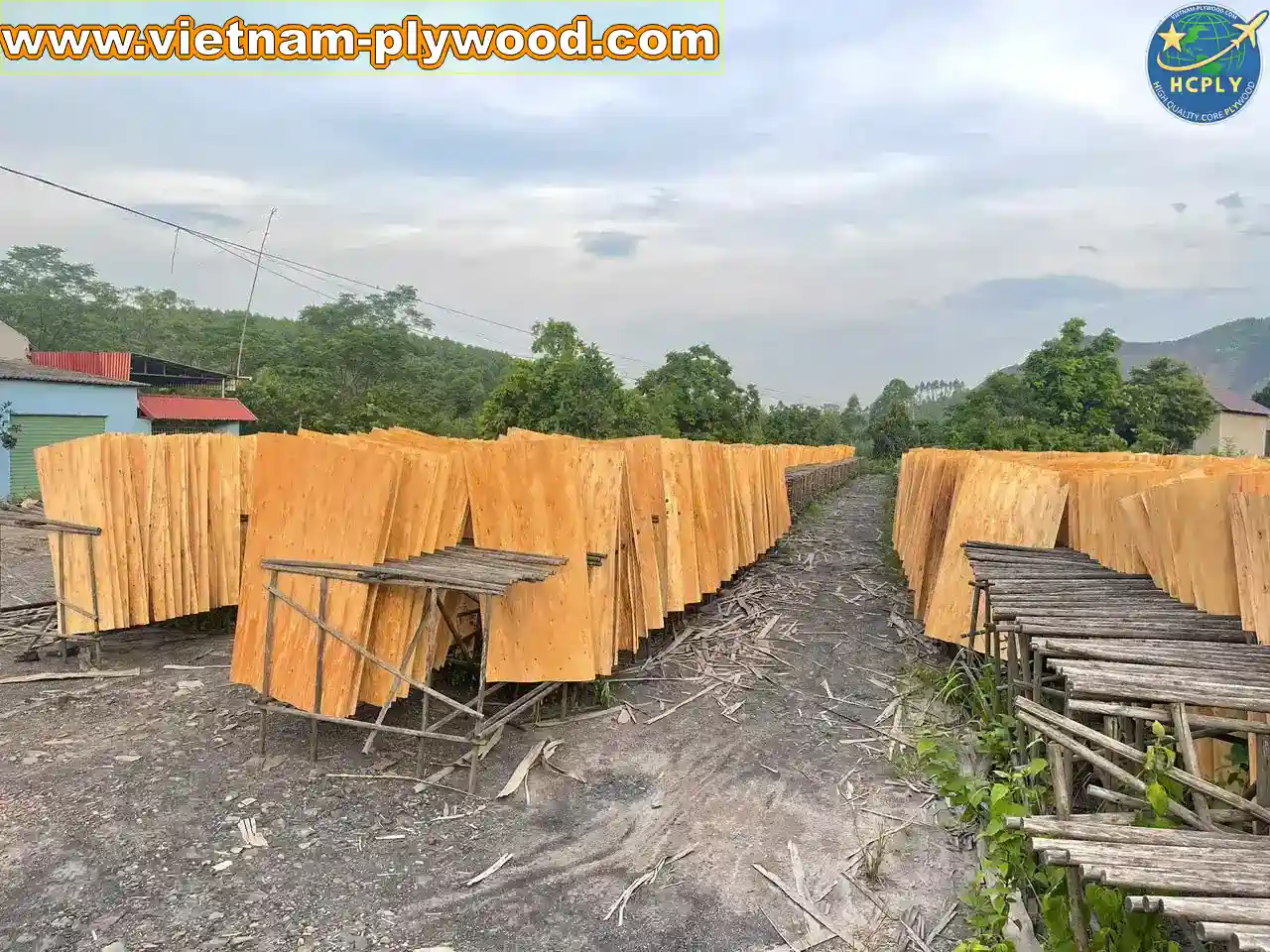

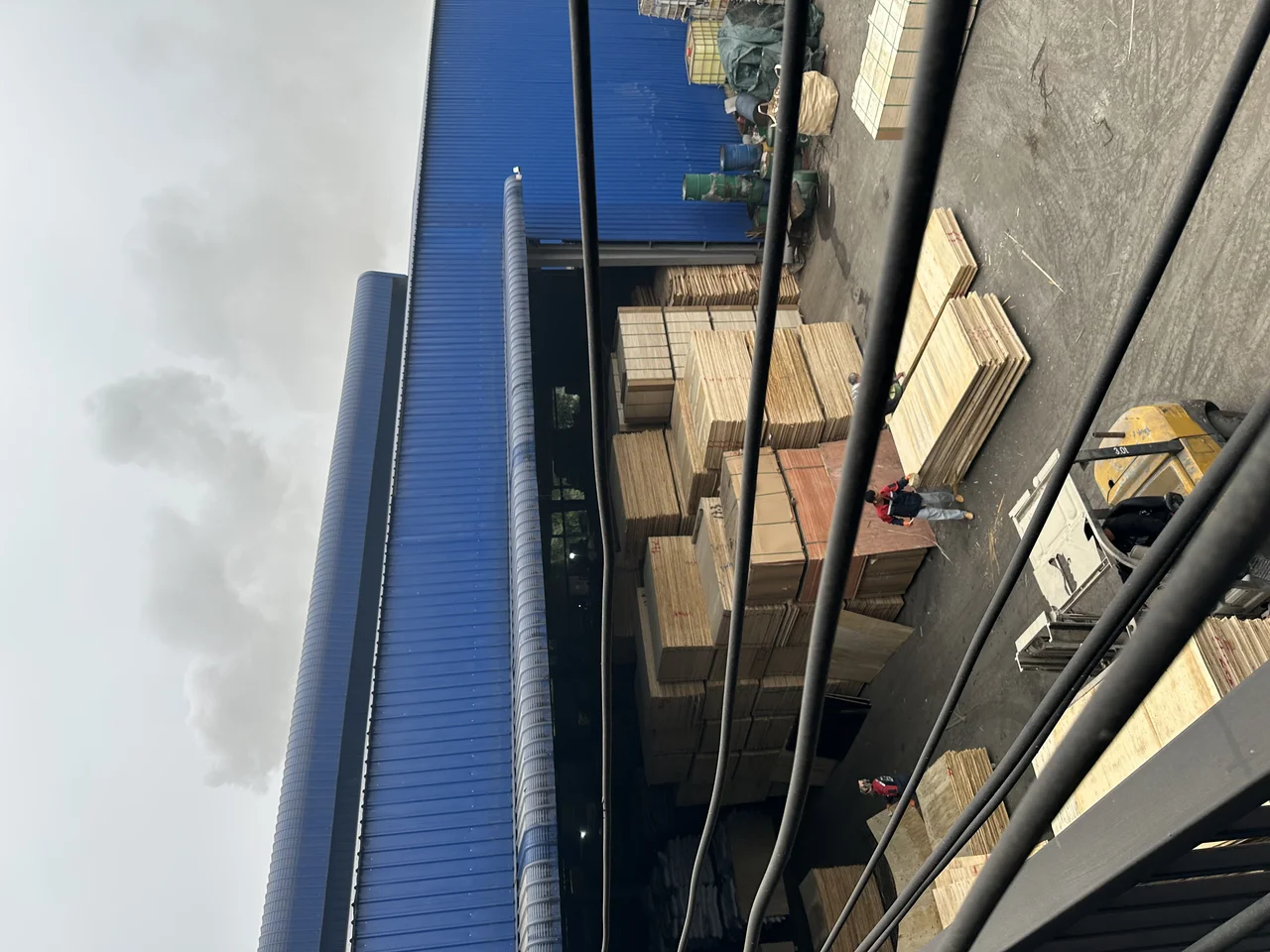
Sanded and unsanded plywood look similar in cargo photos, but they are produced in entirely different factory segments with different equipment, core species, and certification levels. Ordering the wrong surface finish from a Vietnam supplier is one of the most common specification errors importers make — and it shows up as surface defects, lamination failures, or wasted cost on furniture production lines.
This guide explains the difference from a factory perspective: what sanding actually does to the panel, which applications require it, which do not, and how to specify correctly when sourcing sanded vs unsanded plywood Vietnam.
📋 TL;DR — Sanded vs Unsanded Plywood at a Glance
| Specification | Sanded Plywood | Unsanded Plywood |
|---|---|---|
| Surface | Smooth, calibrated, paint-ready | Rough, variable texture |
| Thickness tolerance | ±0.3mm (calibrated) | ±0.5–1.0mm (uncalibrated) |
| Applications | Furniture, cabinets, lamination | Packing, construction, formwork |
| Factory segment | Premium furniture facility | Commercial / packing facility |
| Certifications typical | E0/E1, FSC, CARB P2 | E1/E2, basic or none |
| Core species (Vietnam) | Styrax, eucalyptus | Acacia, mixed |
| Price vs same thickness | +15–30% | Base price |
| Glue | Melamine (MR) | Melamine (MR) or Phenolic (WBP) |
💡 Key Insight: In Vietnam’s plywood industry, surface finish is a proxy for the entire factory segment — core quality, glue grade, certification level, and QC protocol. Sanded and unsanded panels rarely come from the same production line.
📦 What Sanding Actually Does to a Plywood Panel
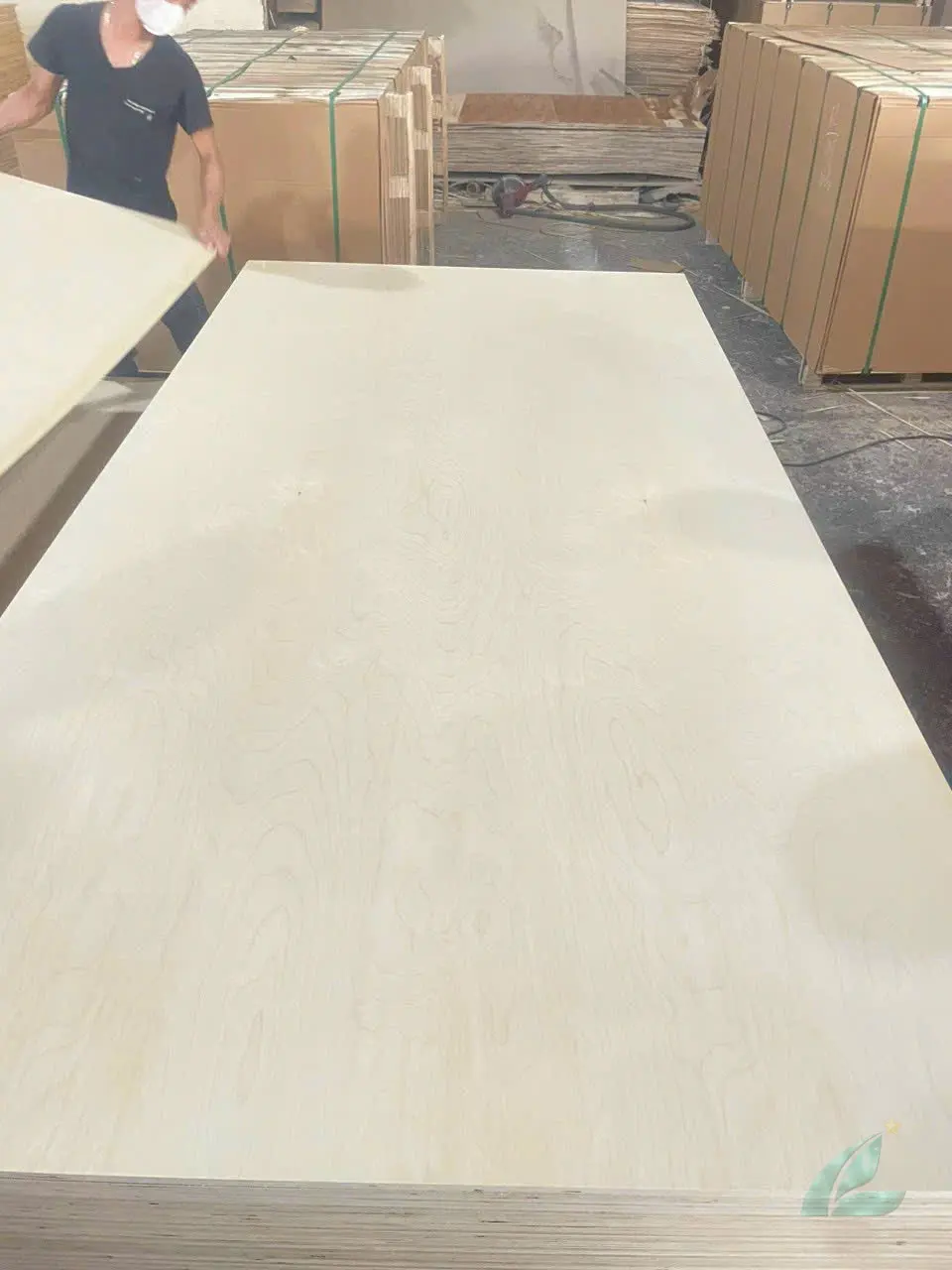
When a hot press cycle completes, the panel surface is uneven. Veneer layers are bonded under heat and pressure (110–120°C for melamine glue, 130–145°C for phenolic), and micro-variations in veneer thickness, moisture content, and press platen alignment create surface undulations across the sheet (HCPLY production data, 2026).
“Sanding is where furniture-grade plywood is made or broken. Our factory runs a 4-stage grit sequence — 80, 120, 150, 180 — on calibrated drum sanders. Skip a stage or run at the wrong speed, and you get waviness that only shows up after lacquer application.” — David, Export Project Leader, HCPLY
Wide-belt sanding corrects this in two or three passes:
- Calibration sanding — coarse grit (60–80) removes high spots and brings thickness into ±0.3mm tolerance across the full sheet
- Intermediate sanding — medium grit (100–120) removes calibration marks and closes the grain surface
- Finish sanding — fine grit (150–180) produces the smooth surface required for lacquer, HPL, or melamine paper bonding
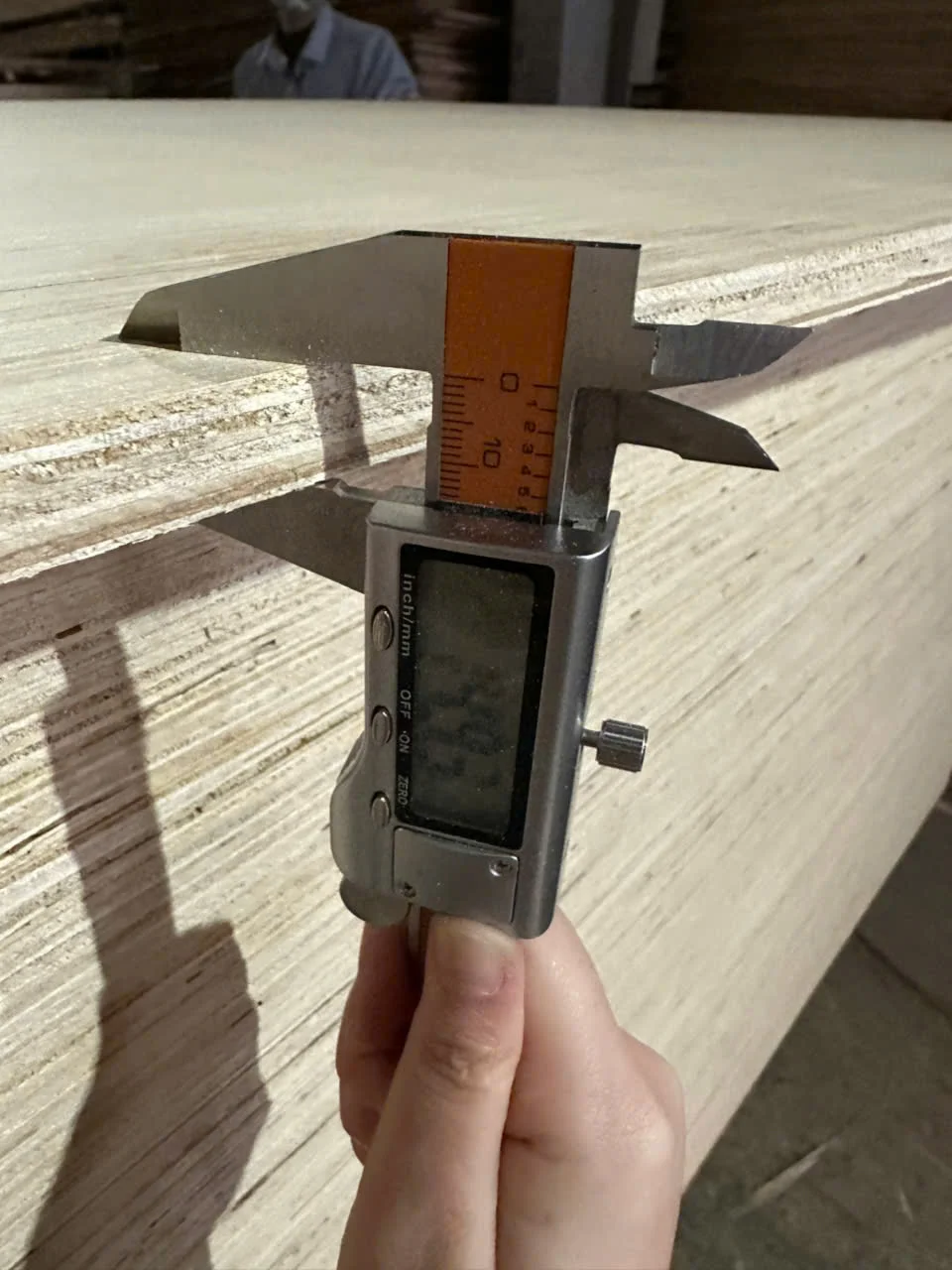
The result is a panel where thickness is predictable to within 0.3mm — critical for CNC furniture cutting, cabinet assembly, and automated lamination lines. Without sanding, thickness variation of ±0.5–1.0mm is typical, which causes fitment problems in precision joinery and HPL bubble defects during lamination pressing.
“From a furniture manufacturer’s standpoint, thickness tolerance is not optional,” said Lucy, International Sales Manager at HCPLY. “When a buyer specifies 18mm sanded birch plywood, every sheet must be 18mm ±0.3mm — otherwise CNC nesting calibration fails and production yield drops sharply.”
🔧 When Unsanded Plywood Is the Right Choice
Unsanded plywood is not inferior — it is the correct specification for applications where surface appearance is irrelevant and structural performance or cost is the priority.
Construction formwork. Film-faced plywood for concrete shuttering is always unsanded beneath the phenolic film overlay. The film itself provides the smooth release surface; sanding the core underneath adds cost with zero benefit. According to APA — The Engineered Wood Association, structural plywood grades used in sheathing applications are specified by structural performance, not surface smoothness (APA Technical Guide, 2024).
Packing and crating. Industrial packaging plywood — crates, pallets, box bases — requires strength and rigidity, not aesthetics. Unsanded acacia core with MR melamine glue is the standard specification (HCPLY production data, 2026). Sanding adds cost that buyers in this segment will not pay.
Anti-slip plywood. AICA anti-slip film is pressed onto the panel surface during manufacturing. The mesh texture of the film bonds directly to the pressed (unsanded) face. Pre-sanding this surface would reduce adhesion quality.
Structural subfloor and sheathing. In construction applications where plywood is covered by flooring, drywall, or roofing, surface finish has no value. Thickness and structural grade determine specification.
⚠️ Important: Do not confuse “unsanded” with “low quality.” Unsanded eucalyptus core with WBP phenolic glue — the core specification for premium film-faced formwork plywood — is structurally superior to sanded styrax core with MR melamine glue used in lightweight furniture panels. Quality is determined by application fitness, not surface treatment.
🏭 Vietnam Factory Segments: Sanded vs Unsanded
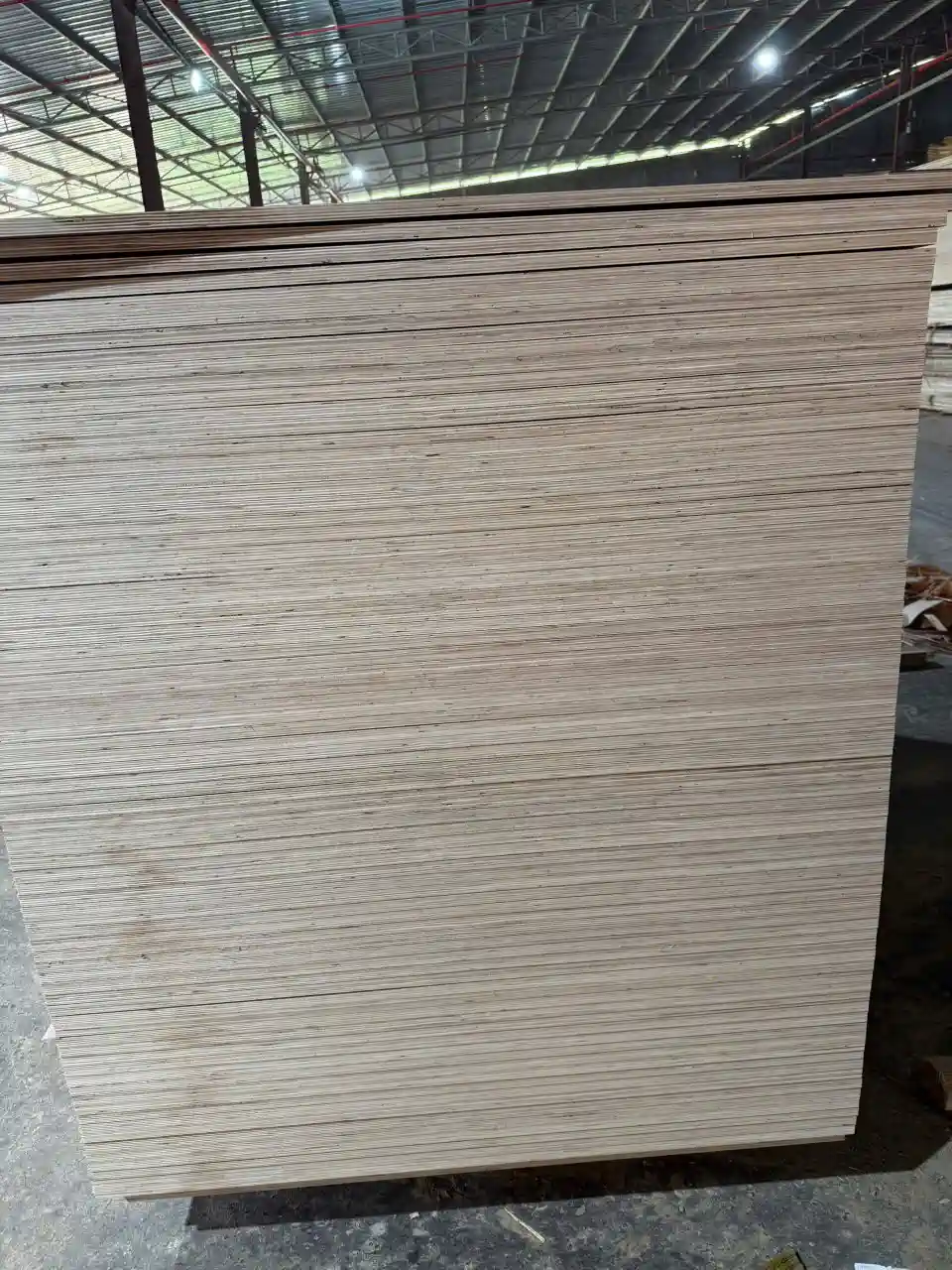
Understanding which factory produces which surface finish is essential when sourcing sanded vs unsanded plywood Vietnam. Vietnam’s plywood industry is segmented — not all factories produce all specifications.
📌 Premium Furniture Facilities (Always Sanded)
These facilities use styrax or eucalyptus core (Grade A), full-stitched core construction, melamine glue (MR), and E0 or E1 emission standards. Every panel goes through calibration and finish sanding. Certifications include FSC, CARB P2, CE, and ISO 9001.
Target markets: EU, USA, Japan, South Korea, Australia.
HCPLY’s Facility 1 (Ha Hoa District, Phu Tho Province) operates in this segment, producing sanded furniture plywood for export to 20+ countries.
📌 Commercial and Packing Facilities (Unsanded or Lightly Sanded)
These facilities use acacia core with loose-lay or edge-jointed construction, melamine MR glue, and E1 or E2 emission. Panels are not sanded or receive light surface cleaning only. Certifications are minimal.
Target markets: Southeast Asia, India (lower segment), Africa.
📌 Construction Film-Faced Facilities (Unsanded Core)
Film-faced plywood for concrete formwork uses phenolic WBP glue with acacia or eucalyptus core. The core panel is unsanded — the AICA phenolic film overlay is pressed directly onto the surface. Reuse ratings of 15+ times depend on film quality, not core surface finish.
⚠️ Note: You cannot request sanded finish from a commercial or construction facility and expect furniture-grade results. The difference is not just equipment — it is core species, construction method, and QC protocol. Facilities are not interchangeable.
📊 Cost Impact: How Sanding Affects FOB Price
Sanding adds cost at three levels in Vietnam factories (HCPLY production data, 2026):
| Cost factor | Impact |
|---|---|
| Wide-belt sander operation | Equipment depreciation + electricity per shift |
| Abrasive consumables | Sanding belts replaced every 4–6 hours per grit stage |
| Line speed reduction | Sanded panels move 30–40% slower through finishing line |
| Core species upgrade | Sanded panels require Grade A core — styrax or eucalyptus vs acacia |
| Certification overhead | E0/FSC/CARB P2 testing and audit costs |
The combined effect is a 15–30% FOB price premium for sanded furniture-grade plywood versus unsanded commercial-grade of the same nominal thickness and face species. For birch plywood, the premium can reach 30–35% because of the imported birch veneer cost stacked on top of the sanding premium.
From a landed cost perspective, buyers should calculate the right specification from the start. Over-specifying (ordering sanded where unsanded works) wastes budget. Under-specifying (ordering unsanded for furniture applications) creates production line defects that cost more to fix than the original price difference.
Get a Free Quote for your sanded or unsanded plywood specification
📐 Thickness Tolerance: The Practical Difference
Thickness tolerance is the measurable output of sanding — and the specification that directly determines whether a panel works for your application.
Sanded panels: ±0.3mm tolerance is standard from Vietnam furniture factories (HCPLY production data, 2026). This means an 18mm sanded panel measures between 17.7mm and 18.3mm anywhere on the sheet. For Japan and Korea markets, some buyers specify ±0.2mm — achievable with an additional fine calibration pass.
Unsanded panels: Tolerance of ±0.5–1.0mm is typical, depending on veneer uniformity and press calibration. For packing and construction, this is acceptable. For furniture CNC cutting, it is not — high spots cause blade wear and dimension inaccuracy.
The plywood sizes and thickness specification guide covers full thickness tolerance tables for all standard grades sourced from Vietnam factories.
🔍 How to Specify Correctly When Ordering from Vietnam
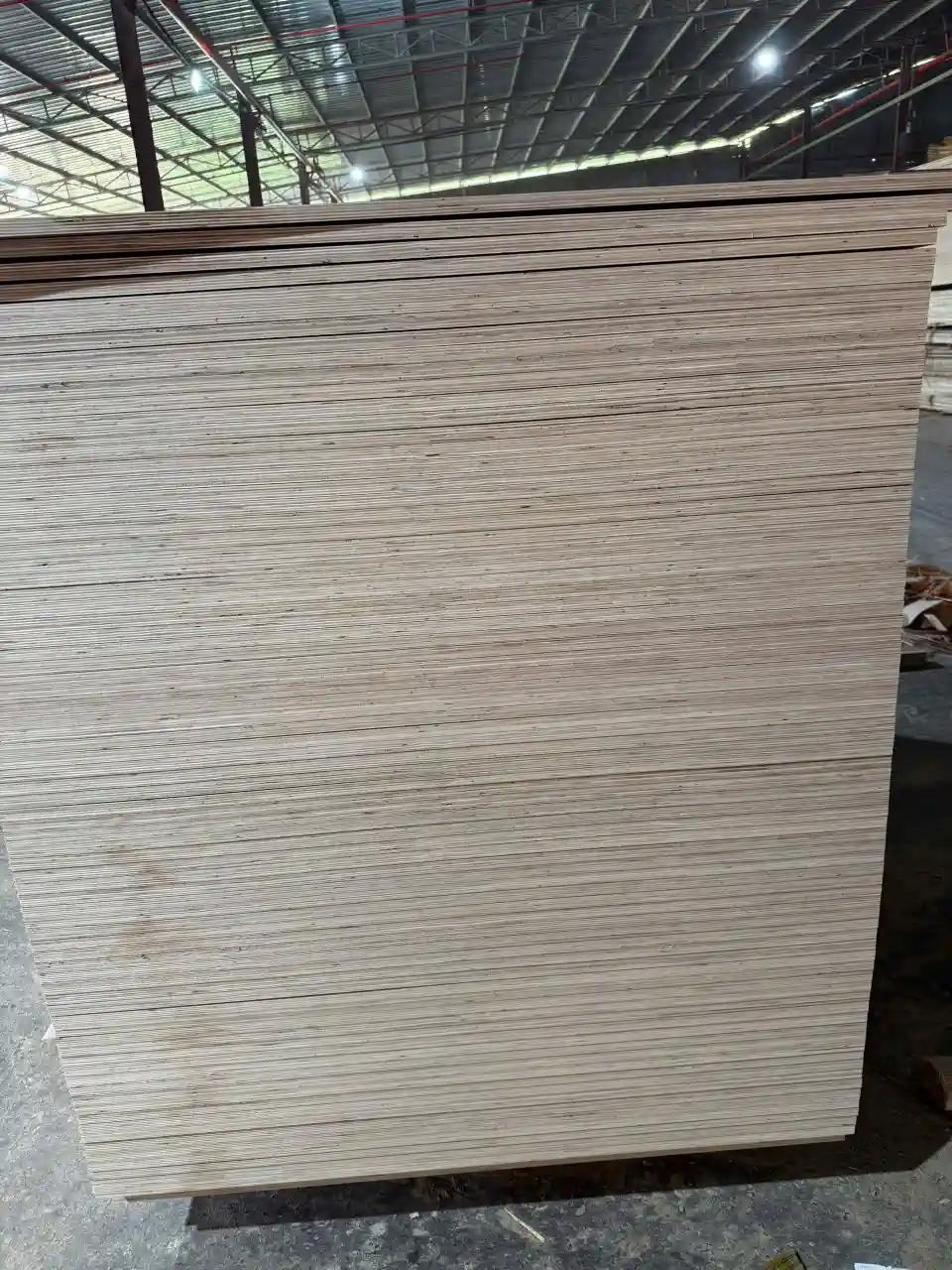
When requesting a quotation from a Vietnam plywood supplier, surface finish must be stated explicitly. “Sanded” or “unsanded” alone is insufficient — you need to specify the complete package:
For sanded furniture-grade plywood:
- Face species: birch D/E, okoume A/B, EV A/B, bintangor A/B
- Core: styrax or eucalyptus (state preference)
- Core construction: full stitched (premium) or edge-jointed (standard)
- Glue: Melamine (MR)
- Emission: E0 or E1
- Sanding: both faces, ±0.3mm tolerance
- Certifications: FSC, CARB P2 (if required)
For unsanded commercial/packing plywood:
- Face species: bintangor C/D, poplar, or eucalyptus
- Core: acacia (most common)
- Core construction: loose-lay or edge-jointed
- Glue: Melamine (MR) — specify E1 or E2
- Sanding: none
See the Vietnam plywood manufacturing process guide for a full breakdown of how sanding fits into the production sequence from log to finished panel.
Contact HCPLY for factory-direct sanded plywood quotation
✅ Application Quick Reference
Use this reference to confirm which specification applies to your end use:
| Application | Sanded? | Recommended spec |
|---|---|---|
| Furniture manufacturing | Yes | Birch/okoume/EV face, styrax core, E0, ±0.3mm |
| Kitchen cabinets | Yes | Birch D/E or EV face, styrax core, E0 |
| HPL/melamine lamination substrate | Yes | Matt (unfaced) or bintangor A, E0, ±0.3mm |
| Interior decorative panels | Yes | Okoume or birch face, styrax core, E1 |
| Concrete formwork | No | Construction plywood, eucalyptus core, WBP |
| Packing crates / pallets | No | Packaging plywood, acacia core, E2 |
| Anti-slip scaffolding planks | No | Anti-slip film, acacia/eucalyptus core, WBP |
| Structural sheathing | No | Eucalyptus core, WBP, structural grade |
| Container flooring | No | Film-faced or anti-slip, WBP |
For detailed specification tables on furniture and cabinet applications, see the furniture plywood specification guide.
Disclosure: This article is published by HCPLY, a Vietnam-based plywood manufacturer and export operator. While we aim to provide objective industry guidance, readers should consider our perspective as a market participant when evaluating recommendations.
🔗 Related Articles
- Plywood Face Veneer Types — Complete Buyer Guide from Vietnam Factory
- Vietnam Plywood Manufacturing Process — From Log to Container
- Plywood Quality Control — Factory Inspection Guide
- Double Sanded vs Single Sanded Plywood — S2S vs S1S Explained
- Furniture Plywood Specification Guide
- Plywood Face Grade Explained — What A/B/C/D/E/F Means
📋 Conclusion
Sanded vs unsanded plywood Vietnam is not a minor preference — it determines which factory segment produces your panels, which core species and glue grade are used, and what certifications apply. Sanded plywood is the right choice for furniture, cabinetry, and lamination; unsanded is correct for construction, packing, and formwork.
The specification error to avoid is ordering unsanded commercial-grade panels for furniture production, or paying the sanded premium for panels that will be covered by film, paint, or flooring. State your surface finish requirement at the inquiry stage — it routes your order to the correct facility from day one.
Get a Free Quote — specify your surface finish requirement and receive factory-direct pricing