


Vietnam plywood prices in 2026 reflect a market that has grown substantially — Vietnam’s wood and forest product exports reached $17.2 billion in 2025, up nearly 6% year-on-year (Vietnam Export Data, 2025). For buyers placing orders this year, understanding the price drivers behind the headline FOB figures is the difference between a well-negotiated contract and a costly surprise at the destination port.
This market analysis article breaks down 2026 FOB benchmarks by product category, explains the five factors that move prices most, and gives buyers a practical framework for evaluating quotes from Vietnamese suppliers.
📊 Vietnam Plywood FOB Benchmark Prices — 2026
FOB prices below reflect standard orders from Hai Phong port, Q1 2026. All prices are per CBM unless noted. Order size, certification requirements, and core species choice will shift quotes within or beyond these ranges.
| Product Type | Core Species | Glue | Emission | FOB Range (USD/CBM) |
|---|---|---|---|---|
| Packing / Industrial | Acacia | Melamine MR | E2 | $190–$240 |
| Commercial Bintangor | Acacia / Styrax | Melamine MR | E1 | $220–$265 |
| Commercial Okoume | Styrax | Melamine MR | E0/E1 | $250–$310 |
| Film-Faced (Black/Brown) | Acacia / Eucalyptus | Phenolic WBP | — | $260–$350 |
| Birch Face (D/E grade) | Styrax | Melamine MR | E0 | $280–$380 |
| Gurjan Face (A/B grade) | Acacia / Eucalyptus | Melamine MR / WBP | E0/E1 | $290–$400 |
| EV / Engineered Veneer | Styrax / Eucalyptus | Melamine MR | E0 | $270–$370 |
Key Insight: The table shows FOB from factory gate to Hai Phong. For CIF pricing, add $35–$80 per CBM depending on shipping route and destination port. India and Middle East freight additions are typically lower than Europe or North America.
These figures align with the broader market range of $190–$400+ USD/CBM reported across Vietnamese exporters for 2025 (HCPLY production data, 2026). All prices are indicative — subject to change; contact HCPLY for current pricing.
What the Price Tiers Actually Mean
The spread within each product category is not random. It reflects three structural decisions buyers make when placing an order:
Core species choice is the single biggest price lever. Acacia core (density ~580 kg/m³) is the most affordable and most widely available core in northern Vietnam. Styrax core (480–500 kg/m³) carries a modest premium because it is lighter — preferred for furniture exports where weight matters for final product handling. Eucalyptus core (650–750 kg/m³) commands the highest core cost but delivers the best structural performance.
Core construction method adds another pricing layer. Full-stitched cores — where every veneer piece is machine-sewn with no gaps — carry a premium over loose-laid or edge-jointed construction. For buyers shipping to Japan, South Korea, or European furniture manufacturers, full-stitched is often a specification requirement, not just a quality preference.
Certification stack is the third variable. A standard commercial panel with no third-party certification costs less to produce than the same panel carrying FSC Chain-of-Custody, CARB P2 compliance testing, and CE marking for the European market. Each certification adds cost — typically $3–$15 per CBM depending on the certificate and testing frequency.
🔧 5 Factors Driving Vietnam Plywood Prices in 2026
📌 Factor 1: Raw Material (Log and Core Veneer) Costs
Plantation acacia and eucalyptus in northern Vietnam — Phu Tho, Yen Bai, Tuyen Quang — are the feedstock for the overwhelming majority of core veneers produced by Vietnamese mills. Log prices track regional plantation harvest cycles and global timber demand simultaneously.
In 2024–2025, tighter acacia log availability from Phu Tho drove core veneer costs upward by an estimated 8–12% for commercial grade material (HCPLY production data, 2025). This cost pressure flows directly into finished panel FOB pricing, particularly for acacia-core products such as packing plywood and commercial bintangor grades.
Styrax (bồ đề) — the preferred lightweight core for furniture-grade plywood — grows exclusively in northern Vietnam. Supply is less elastic than acacia because styrax harvests depend on specific highland forest cycles. This geographic concentration means styrax pricing is more stable but also more sensitive to any regional supply disruption.
📌 Factor 2: Resin and Glue Input Costs
Melamine (MR glue) and phenolic resin (WBP glue) are petrochemical derivatives. Their price tracks global urea-formaldehyde and phenol markets, which in turn respond to crude oil pricing, Chinese chemical production volumes, and shipping costs from regional chemical suppliers.
The 2022–2023 resin cost spike — driven by energy costs and supply chain disruption — has partially normalized, but 2026 resin costs remain 15–20% above 2021 baselines (industry benchmark, Vietnamese Timber & Forest Product Association, VIFOREST, 2025). This cost is embedded in every FOB price, regardless of product type.
📌 Factor 3: Export Demand Recovery Across Key Markets
Vietnam’s plywood exports hit $487 million in the first half of 2024 alone — a 24.3% increase in value and 34.1% in volume year-on-year (Vietnam Customs data, H1 2024). South Korea, the US, Malaysia, and Japan accounted for 72.5% of export volume in that period.
For 2026, EU market demand is expected to accelerate further as EUDR compliance frameworks are finalized and zero-tariff access under the EU-Vietnam Free Trade Agreement (EVFTA) makes Vietnamese certified products more competitive than Chinese or Indonesian alternatives (Vietnam Timber & Forest Product Association, 2025). Strong demand from growing markets reduces price pressure on Vietnamese mills — sellers with certified product have pricing power.
Request current FOB quotes for your target market
📌 Factor 4: Anti-Dumping Duties and Trade Policy Exposure
The US market presents a specific pricing consideration. Hardwood plywood from Vietnam has faced anti-dumping review proceedings tied to Chinese circumvention investigations. Buyers importing into the US should verify duty status for their specific HS code and product category before placing orders — this directly affects the landed cost calculation and sometimes the supplier selection.
For markets without anti-dumping exposure — India, the Middle East, most of Europe, Korea, and Australia — Vietnamese suppliers can quote and ship without this overhead. This is why Vietnam’s price advantage over China is most pronounced in these markets.
📌 Factor 5: Container Freight and Port Congestion
FOB is the benchmark, but total landed cost depends on ocean freight. From Hai Phong port, freight rates to major destination ports fluctuate significantly with global container market conditions.
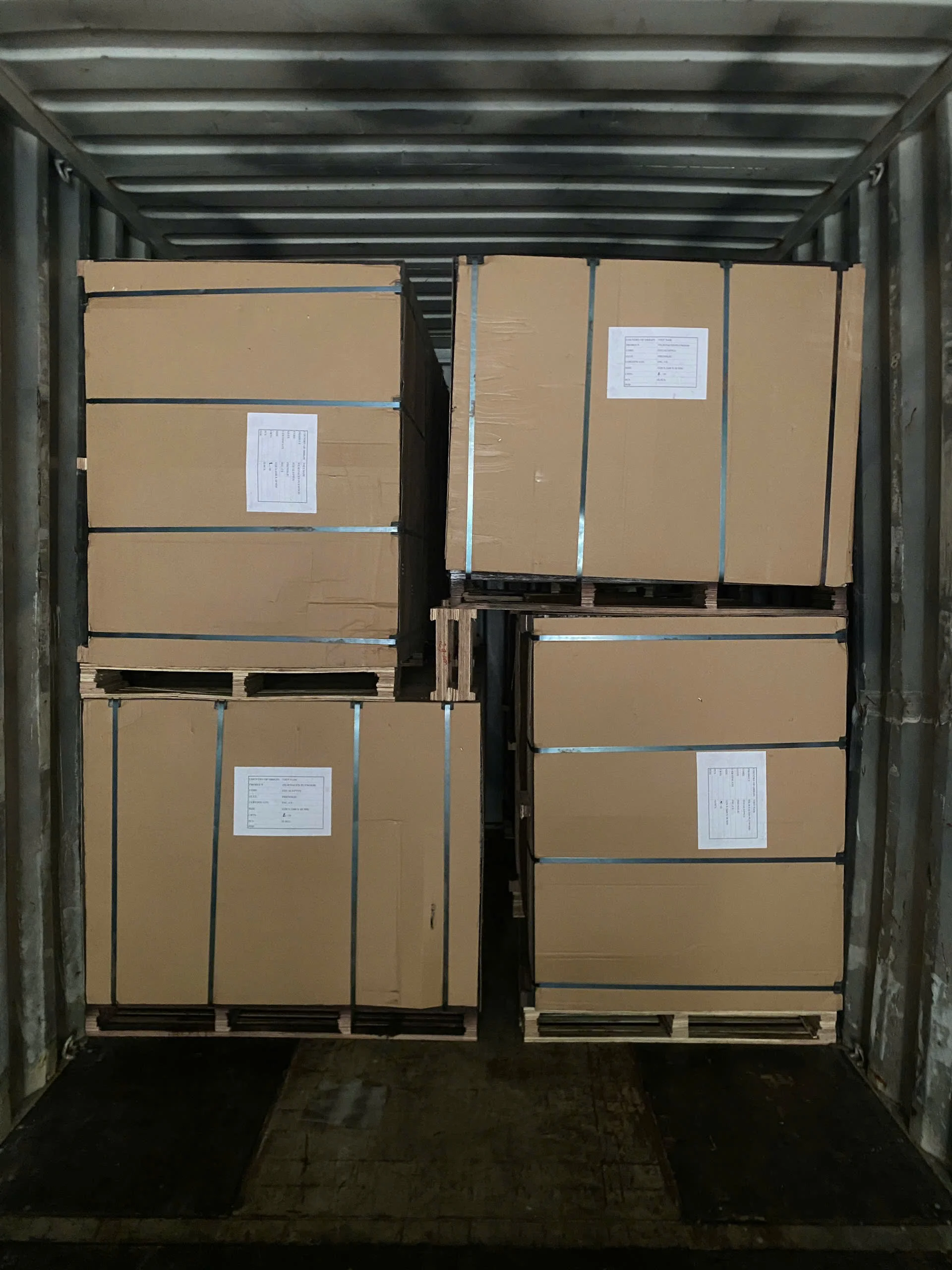
Buyers should note that core species choice affects freight cost per unit: styrax-core panels (480–500 kg/m³) allow 18 pallets per 40HC container versus 15 pallets for eucalyptus-core panels (650–750 kg/m³). Over a full container order, this difference in plywood container packing efficiency can represent a meaningful freight cost differential per CBM of product delivered.
🌍 Pricing by Destination Market
Market destination shapes the total cost structure even when FOB is identical. Here’s how the major markets compare in 2026:
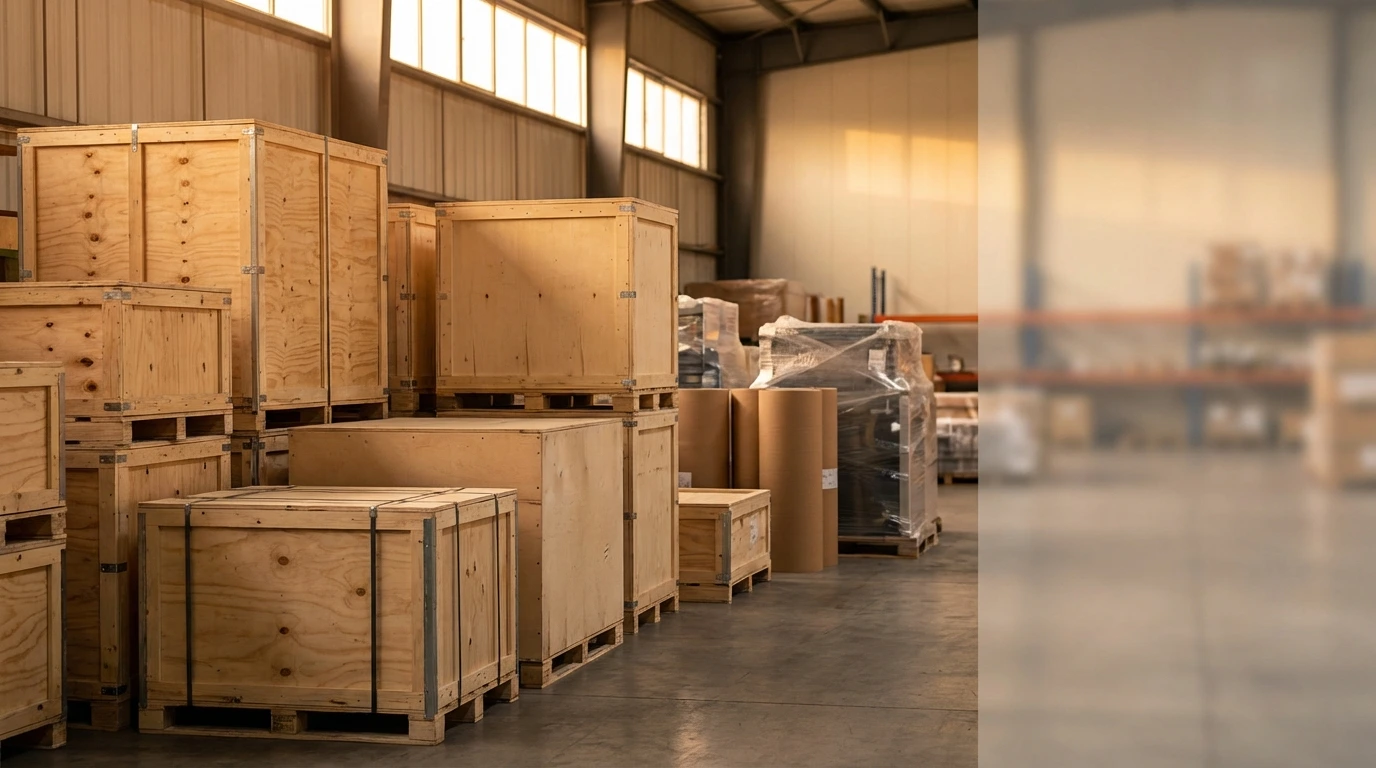
India remains the largest single-country importer of Vietnamese plywood by volume. Gurjan-face and bintangor-face plywood dominate Indian specifications. The BIS certification requirement for structural applications adds a compliance cost layer that not all Vietnamese exporters can meet — those who can command a modest price premium over non-certified alternatives. Learn about gurjan plywood specifications and Indian market grades
Middle East (UAE, Saudi Arabia, Kuwait) is driven by construction project demand — film-faced formwork plywood and commercial-grade panels for interior fitout. Price sensitivity is high, but quality requirements for formwork plywood are firm: buyers specify minimum reuse counts (typically 10–15 times) and phenolic WBP glue as non-negotiable. Cheaper film-faced product with short reuse life delivers poor cost-per-use economics. See film-faced plywood specifications and reuse benchmarks
Europe (Germany, Poland, France, Spain) increasingly requires FSC certification and EUDR traceability documentation. E0 emission standards apply to furniture-grade imports. The compliance overhead is real, but so is the price premium — European importers pay $30–$60 per CBM more than equivalent non-certified product, which absorbs the cost and leaves margin for certified Vietnamese suppliers.
South Korea and Japan are the most technically demanding markets. Thickness tolerance requirements (often ±0.2mm versus Vietnam’s standard ±0.3mm), E0 emission, and surface quality specifications require premium production processes. Prices reflect this: these markets consistently pay at the upper end of the ranges listed in the table above.
📐 How to Evaluate a Price Quote
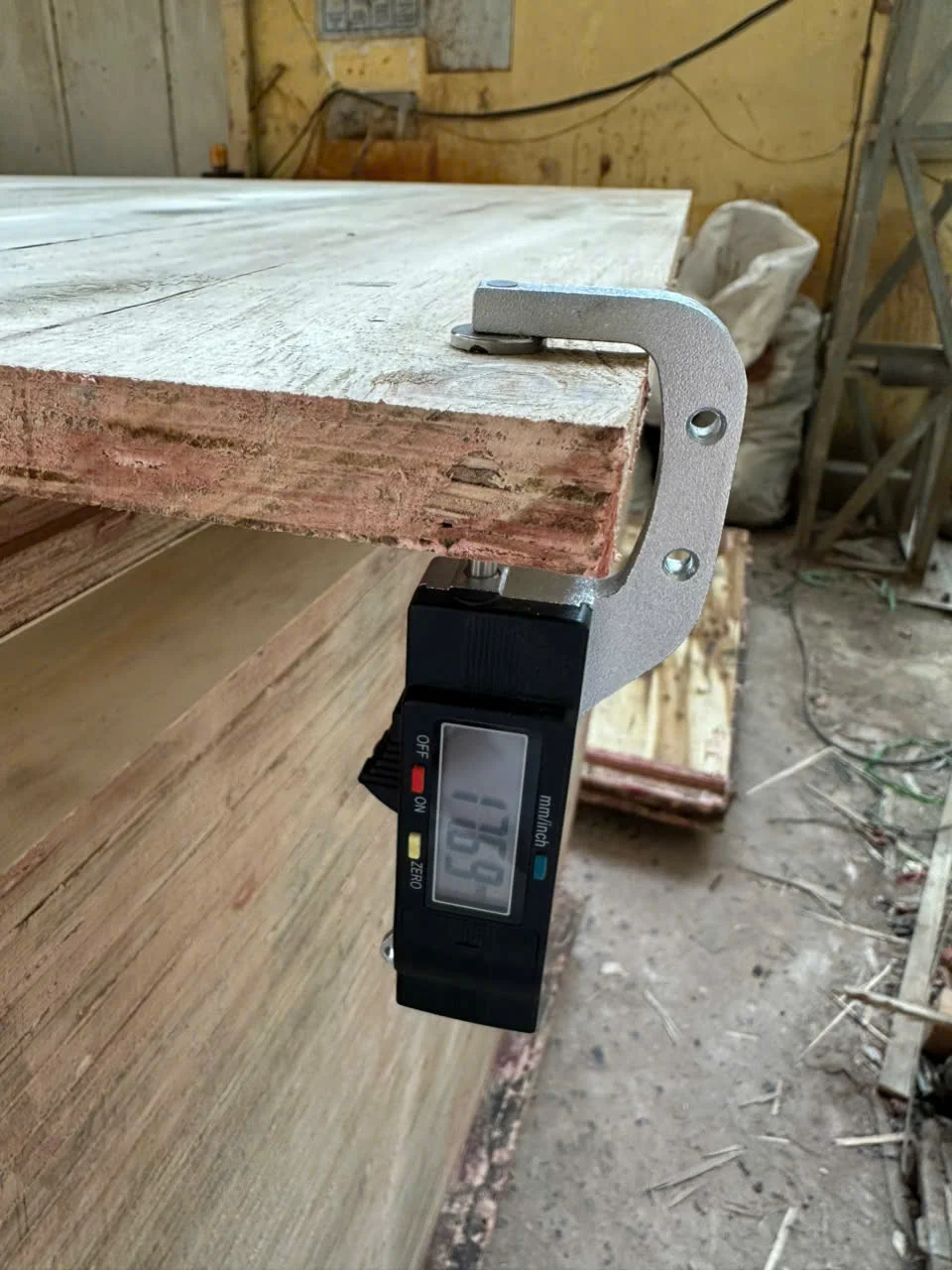
“Price per CBM” without specification context is not a meaningful number. “Price per CBM” is only meaningful when the specification is locked. Two quotes at $280/CBM can represent completely different products.
The specification checklist every buyer should confirm before comparing quotes:
- Core species: Acacia, styrax, or eucalyptus — and density/construction grade
- Core construction: Full-stitched, edge-jointed, or loose-laid
- Glue type: Melamine (MR) or Phenolic (WBP) — do not accept vague “WBP” claims without specifying boil test duration
- Emission standard: E0, E1, or E2 — separate from glue type (these are different specifications)
- Face veneer: Species, grade, thickness (0.2–0.4mm typical for Vietnamese product)
- Sanding: Full-sanded both faces, or single-face sanded — matters for furniture grade
- Certifications: Which certificates are included vs. charged extra
- Panel size and thickness: Including dimensional tolerance commitment
⚠️ Important: A supplier quoting E0 glue has made a technical error — E0 is a formaldehyde emission standard, not a glue type. Melamine (MR) and Phenolic (WBP) are glue types. This distinction matters when specifying product for regulated markets.
“Lucy at HCPLY always walks buyers through the specification matrix before quoting,” noted David, HCPLY’s Export Project Leader with 10+ years in South Asia markets. “The buyers who get surprised by quality are almost always the ones who compared prices without comparing specs.”
📦 2026 Market Forecast: What to Expect
Several trends will shape Vietnam plywood prices through the rest of 2026:
EUDR compliance is a selective tailwind. Suppliers who have secured FSC Chain-of-Custody and EUDR documentation will face less price competition from non-compliant alternatives as EU customs enforcement tightens. Expect certified product premiums to hold or widen through H2 2026.
US market uncertainty creates opportunity in other markets. Anti-dumping investigation outcomes for hardwood plywood remain a variable. Suppliers who can flex export volume to India, Middle East, and Europe are better positioned to maintain stable output and pricing discipline.
Log cost stability is the key watch factor. If northern Vietnam plantation harvests for acacia and eucalyptus normalize through mid-2026, core veneer cost pressure should ease moderately. A 5–8% reduction in core costs would flow into FOB prices within one quarter, benefiting buyers who time forward contracts carefully.
Seasonal demand peaks remain predictable. July–September historically sees tighter supply and firmer pricing as construction project starts in the Middle East and year-end furniture production schedules in Korea and Europe pull forward demand. Buyers with Q4 delivery requirements should place orders before June to lock pricing and secure production slots.
View the full HCPLY product range and request 2026 pricing
🏭 Why Factory Segment Determines More Than Market Does
The most significant pricing variable is one that buyers frequently overlook: which production segment the product actually comes from.
Vietnam’s plywood industry divides into distinct factory segments, and a supplier’s quoted price reflects their production segment more than market conditions do. A furniture-grade facility running full-stitched styrax core with E0 melamine and calibrated sanding cannot produce commercial packing plywood at a price competitive with a facility designed specifically for that segment — and vice versa.
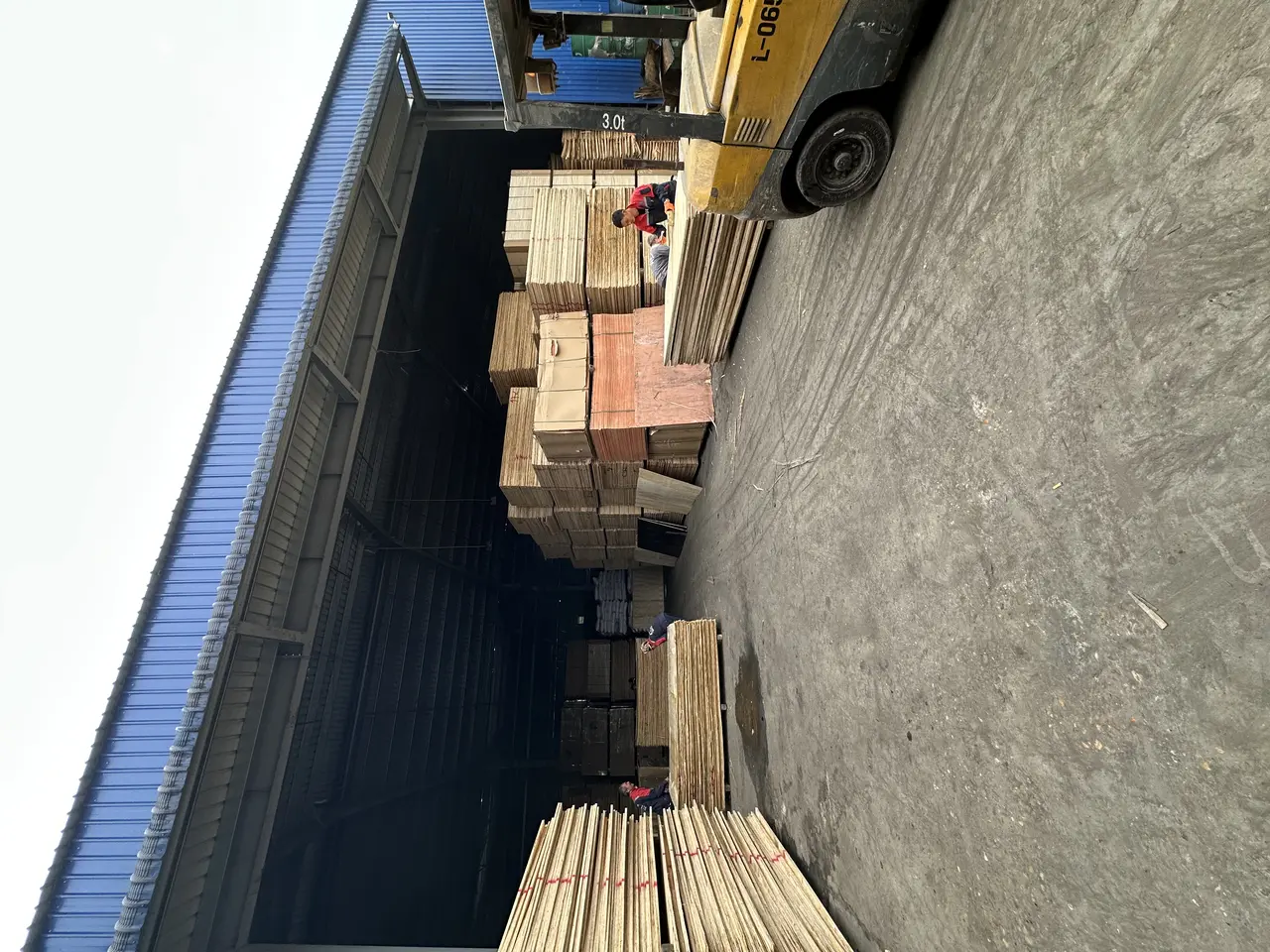
HCPLY manages 3 specialized production facilities in Northern Vietnam — each purpose-built for a specific output segment: premium furniture plywood, commercial and packing grades, and premium film-faced construction panels. This multi-facility model means buyers can source across price tiers from a single contact point, with factory-direct documentation for each shipment.
Understanding factory segment explains why two quotes for “18mm bintangor plywood” can differ by $40–$60 per CBM while both appearing credible on paper. The production inputs, construction method, and QC standards are simply different products with the same name.
For an in-depth look at how factory segments in Vietnam work and what each segment can actually deliver, read the companion article on HCPLY factory segment overview.
✅ Conclusion
Vietnam plywood prices 2026 reflect a market that has matured significantly in both scale and complexity. The headline FOB range of $190–$400+ USD/CBM covers products that differ substantially in core species, construction method, certification, and intended application. The number means nothing without the specification.
For buyers, the practical takeaway is straightforward: lock specification before comparing quotes, understand the factory segment behind each supplier, and factor in destination-market compliance costs before calculating total landed cost. Suppliers who offer the lowest FOB without the right certifications often cost more by the time product arrives at destination.
HCPLY’s team provides detailed FOB quotations with full specification sheets, factory documentation, and certification packages for all production segments. Lead time from order confirmation to FOB Hai Phong is 15–20 working days for standard specifications.
Request your 2026 FOB price list from HCPLY — no commitment required