


Vietnam exports plywood to 20+ countries, but not all grades perform equally on a laser bed or CNC spoilboard. Importers sourcing panels for precision cutting applications — sign shops, furniture makers, CNC hobbyists, and industrial fabricators — need specific panel properties that go beyond standard commercial specs.
This guide covers exactly which Vietnam plywood grades work for laser cutting and CNC routing, what technical specifications to request, and how to avoid the most common sourcing mistakes that result in burned edges, delamination, and flatness failures.
📋 Why Panel Quality Matters for Laser Cutting & CNC Routing
A laser or CNC machine reads the material surface as a precise physical plane. Any deviation in flatness, density inconsistency, or internal void will translate directly into cut quality failure. Three panel properties determine success:
-
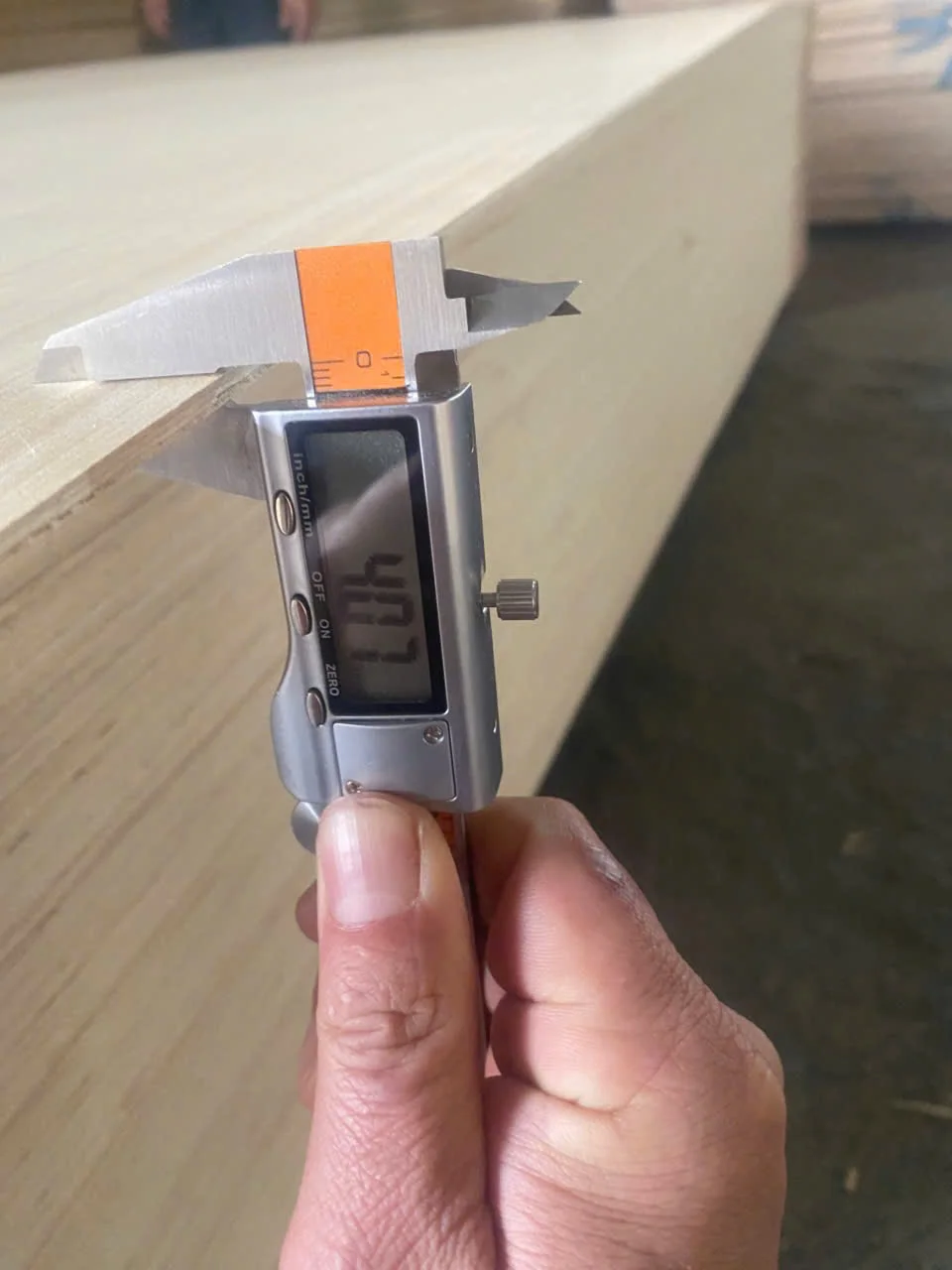
Flatness and thickness calibration. A CO2 laser has a fixed focal length — typically 1.5–3mm depth of field. If your panel bows or warps by more than that, the focal point drifts and edges become beveled or fail to cut through. Vietnam export-grade sanded plywood is calibrated to ±0.3mm thickness tolerance (HCPLY production data, 2026), which is acceptable for most CNC setups and adequate for laser work when panels are stored flat and at stable humidity.
-
Core construction and void density. Internal voids in the core veneer cause the router bit or laser beam to encounter sudden changes in material density. CNC bits can catch and splinter at void edges. Lasers produce uneven char marks or incomplete cuts over hollow sections. Full-stitched core construction eliminates this problem at source.
-
Face veneer species and glue type. Species with uniform grain, low resin content, and consistent density produce cleaner cuts with less char. Glue chemistry affects fume output — critical for enclosed workshops.
💡 Tip: Always specify your end application when ordering. “Laser cutting grade” or “CNC routing grade” should prompt the factory to confirm core construction, sanding spec, and face veneer grade.
🔧 Best Vietnam Plywood Species for Laser & CNC Work
📌 Birch Plywood (Top Choice)
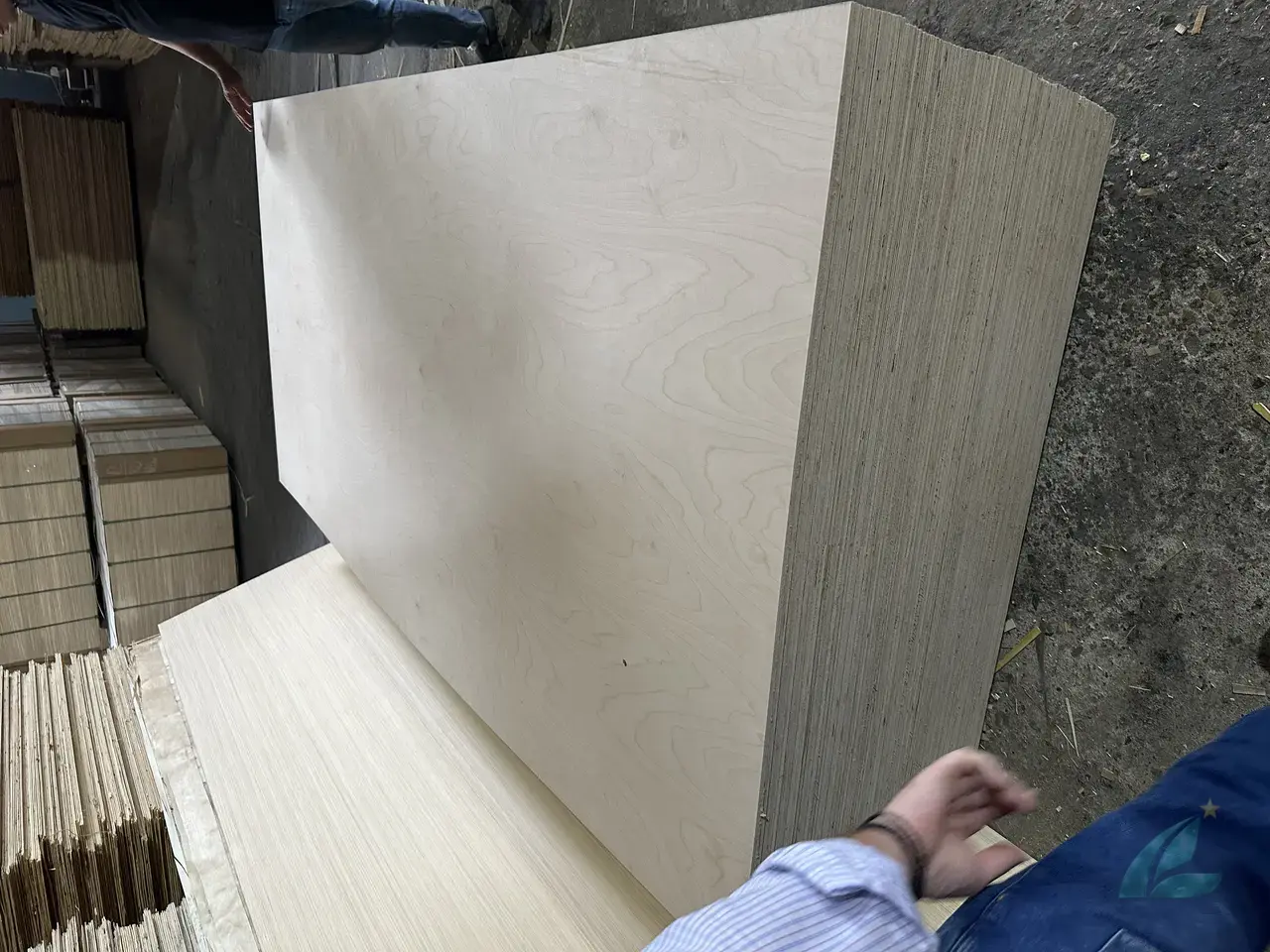
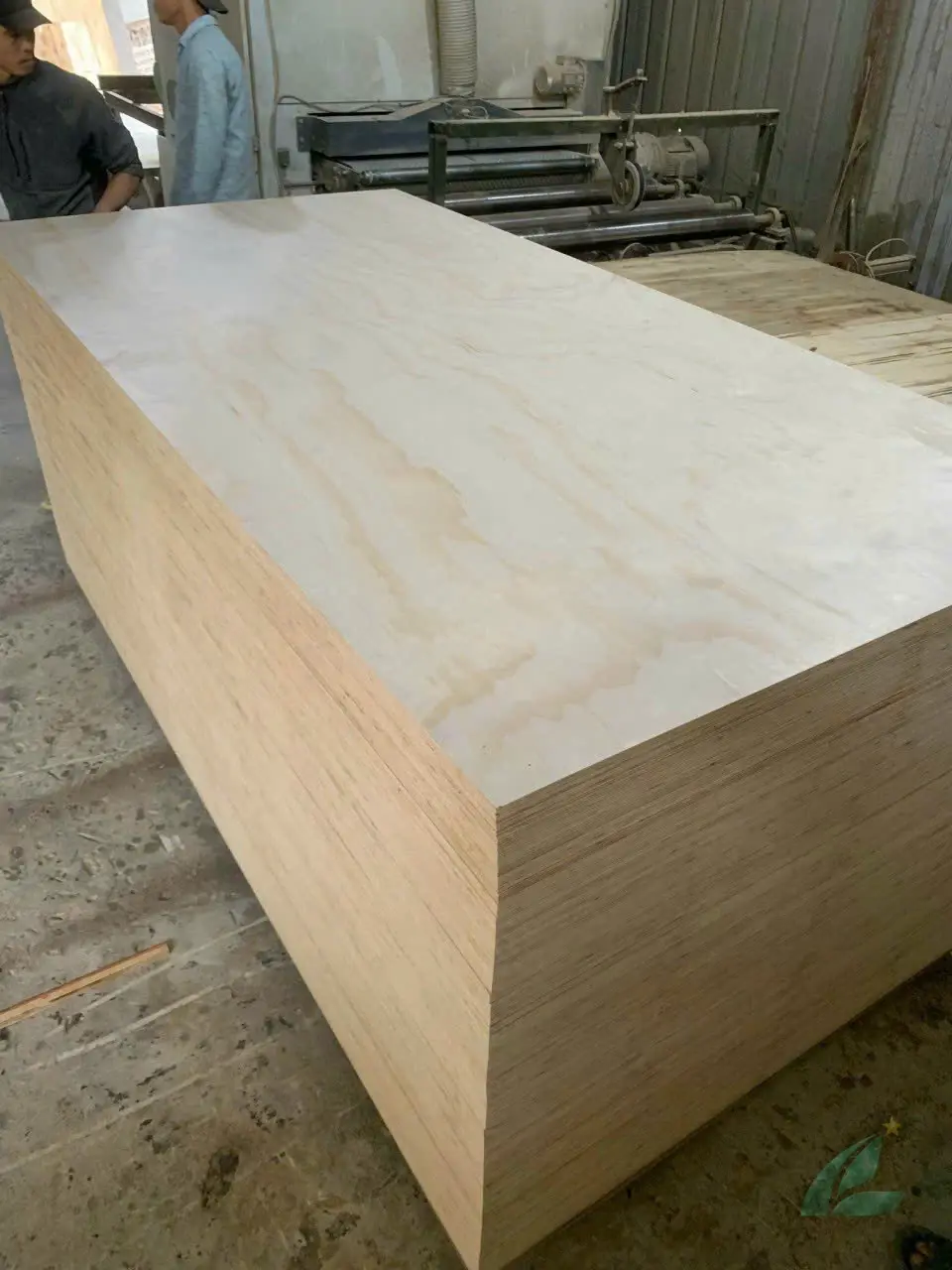
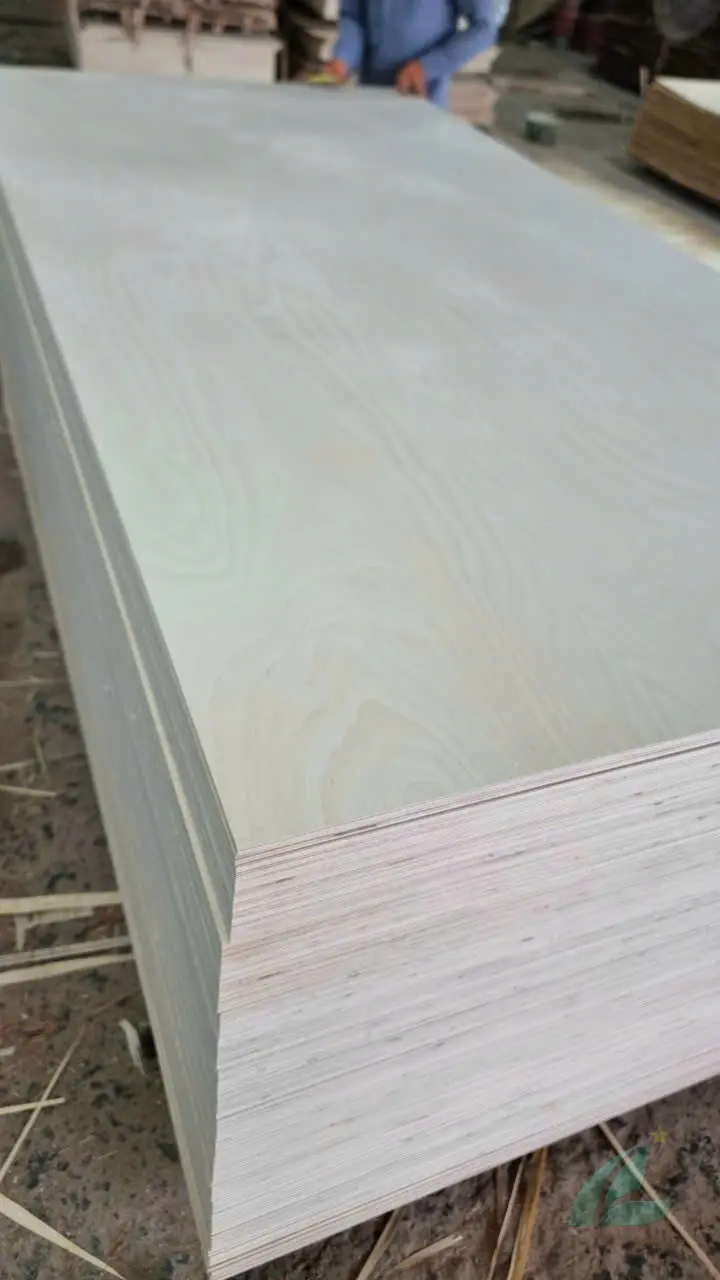
Birch plywood from Vietnam uses imported birch face veneer bonded to a styrax or eucalyptus core. Birch face veneer is graded D/E/F — unlike most species which use A/B grading — where D-grade represents the best available quality from Vietnam production (xTool Laser Guide, 2024).
Birch veneer has fine, consistent grain with minimal resin pockets. When laser-cut, it produces crisp edges with controlled charring and excellent engraving contrast — the light tone of birch creates high-visibility burns. For CNC routing, the dense face veneer holds edges cleanly without fraying.
Typical specs for laser/CNC grade birch panels:
- Face: D/E grade birch, 0.2–0.4mm veneer thickness
- Core: Styrax (480–500 kg/m³) — lightweight, uniform
- Glue: Melamine (MR). Emission: E0 or E1
- Surface: Sanded both sides, calibrated ±0.3mm
- Thickness range: 3–18mm (3, 5, 9, 12mm most ordered for cutting)
- Size: 1220×2440mm or 1250×2500mm
The styrax core is Vietnam’s equivalent to European birch core — same whitish color, similar density, and crucially, it’s grown in Northern Vietnam where HCPLY’s facilities are located (Phu Tho Province), keeping costs lower than imported alternatives.
📌 EV Plywood (Engineered Veneer — Best Consistency)
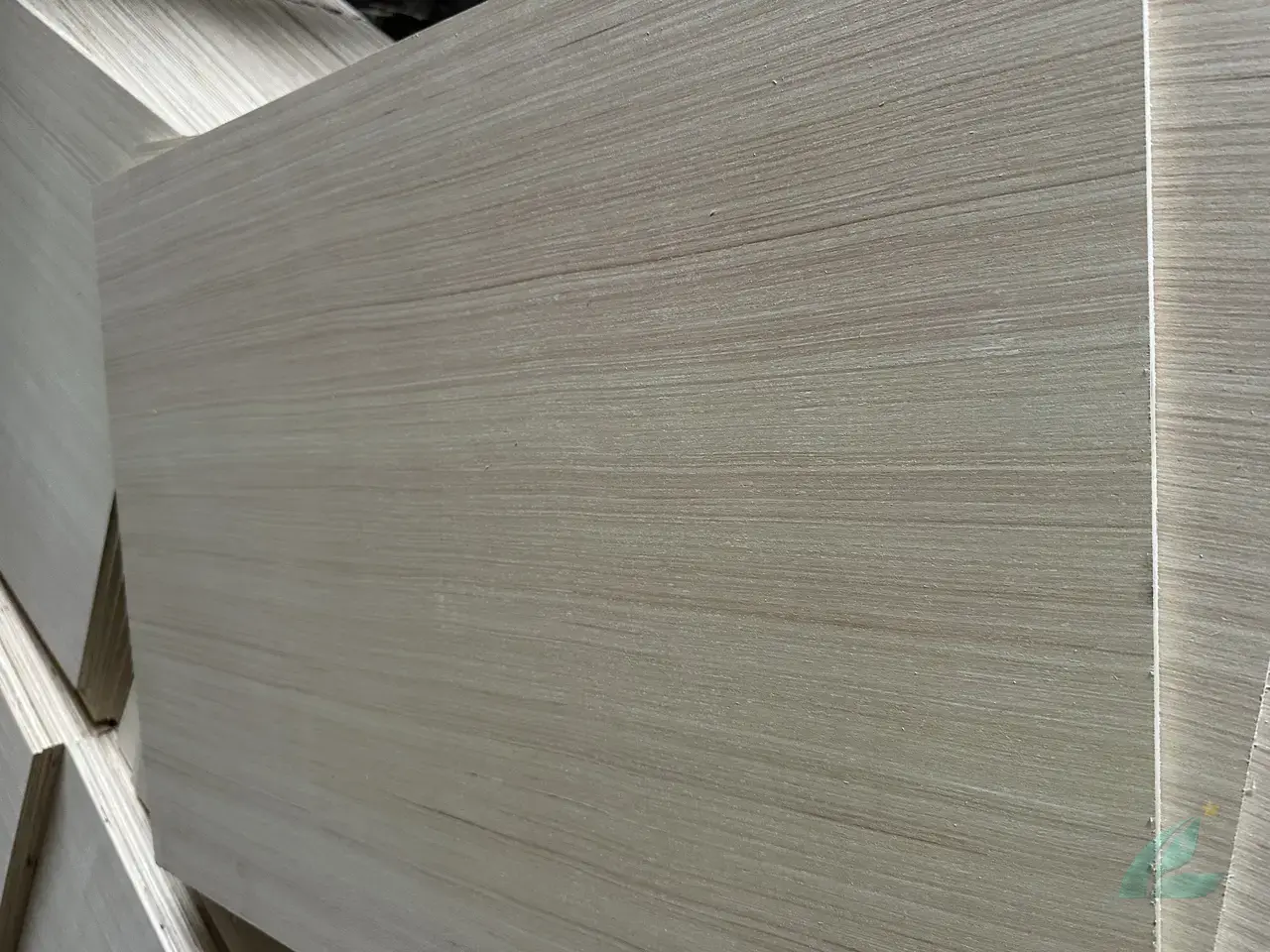
EV (Engineered Veneer) plywood uses reconstituted wood face veneer with an exceptionally uniform grain pattern. Unlike natural birch which has subtle grain variation, EV face veneer is manufactured to exact consistency — zero knots, zero mineral streaks, uniform density across the sheet.
For laser engraving applications where consistent tone and depth are critical — such as branded merchandise, signage, or decorative inlay — EV plywood outperforms natural veneer species. The engineered face responds predictably to laser power settings, reducing trial-and-error calibration.
For CNC routing, the uniform density also means consistent feed rates and tool wear. EV is typically bonded to a styrax or eucalyptus core with E1 or CARB P2 emission standard.
📌 Matt Plywood (Budget CNC Substrate)
Matt plywood is unfaced raw core substrate — no face veneer applied. This is the most economical option for CNC-routed structural components where surface aesthetics don’t matter: jigs, fixtures, templates, spoilboard layers, and sacrificial workholding pieces.
Matt panels use styrax, eucalyptus, or acacia core depending on price tier. For CNC structural applications, eucalyptus core (650–750 kg/m³) provides maximum density and screw-holding capacity — useful for fixture blocks and workholding devices.
⚠️ Important: Matt plywood is not sanded or calibrated to the same tolerance as furniture-grade panels. Specify “calibrated sanded matt” explicitly if you need tight thickness control.
📊 Species Comparison: Laser Cutting & CNC Routing
| Property | Birch | EV | Matt (Eucalyptus) |
|---|---|---|---|
| Face consistency | High | Very High | None (no face) |
| Laser edge quality | Excellent | Excellent | Good |
| Engraving contrast | High (light face) | High | Medium |
| CNC bit wear | Low | Low | Medium |
| Density (core) | 480–500 kg/m³ (styrax) | 480–650 kg/m³ | 650–750 kg/m³ |
| Emission standard | E0/E1 | E1/CARB P2 | E1/E2 |
| Price tier | Highest | High | Lowest |
| Best for | Furniture, signs, décor | Premium signs, inlay | Jigs, fixtures, templates |
📐 Thickness Guide for Laser & CNC Applications
Thickness selection depends on your machine type and the application:
Laser cutting (CO2, 60–150W):
- 3mm — most common for profile cutting, decorative panels, small parts
- 5mm — signs, thicker decorative pieces
- 9mm — structural decorative panels, cabinet backs
- 12mm — maximum practical thickness for most CO2 lasers without multiple passes
Beyond 12mm, most CO2 lasers require 2–3 passes, which increases char and reduces edge quality. Fiber lasers handle thicker panels better but are less common for wood applications.
CNC routing:
- 9mm — cabinet backs, drawer bottoms, light structural panels
- 12mm — standard cabinet sides, shelving, furniture components
- 15–18mm — heavy structural use, workholding fixtures, thick panel furniture
- 25mm — industrial jigs, spoilboards, thick furniture frames
All thickness measurements from Vietnam export factories are nominal with ±0.3mm tolerance (HCPLY production data, 2026). Premium furniture-grade panels from full-stitched construction facilities maintain tighter practical tolerances through calibrated sanding.
⚙️ Core Construction: The Specification That Matters Most
Most importers focus on face veneer species and miss the most critical variable: core construction. This is where cheap and premium panels diverge most dramatically.
Full-stitched core — veneer pieces sewn together with no gaps, no overlaps. This is the standard at HCPLY’s premium furniture facility. Result: uniform density throughout, zero internal voids, predictable machine behavior.
Loose-laid core — veneer pieces placed without stitching, creating potential gaps and overlaps. Found in commercial and packing grade panels. Result: internal voids that cause CNC bit chatter and laser cut inconsistency.
Finger-jointed core — mid-grade construction with interlocked joints. Acceptable for general CNC work, not recommended for precision laser cutting.
⚠️ Note: Vietnam factory segmentation means you cannot assume the same factory makes all grades. Laser and CNC grade panels come exclusively from the premium furniture facility.
“When buyers specify ‘sanded birch plywood’ without stating core construction, they sometimes receive commercial-grade panels with loose-laid cores. Our furniture facility uses full-stitched construction as the default — but buyers must state this explicitly so they don’t receive a commercial allocation.” — Lucy, International Sales Manager, HCPLY
What to write in your purchase order:
- Core construction: Full stitched
- Face: D/E grade birch (or EV), sanded both sides
- Glue: Melamine (MR). Emission: E0 (or E1 if E0 not required)
- Thickness tolerance: ±0.3mm calibrated
🏭 How Vietnam Factories Achieve Flat, Consistent Panels
Flatness is primarily a function of three production steps:
Veneer drying. Core veneer must reach 6–8% moisture content before glue application (Woodworker’s Source, 2024). Panels produced from insufficiently dried veneer develop internal stress that causes warping post-production. HCPLY’s production process uses controlled drying to reach target moisture before pressing.
Hot pressing parameters. Temperature, pressure, and dwell time must be calibrated to the glue type. Melamine glue (MR) and phenolic glue (WBP) require different parameters. Incorrect pressing creates uneven adhesion and warping.
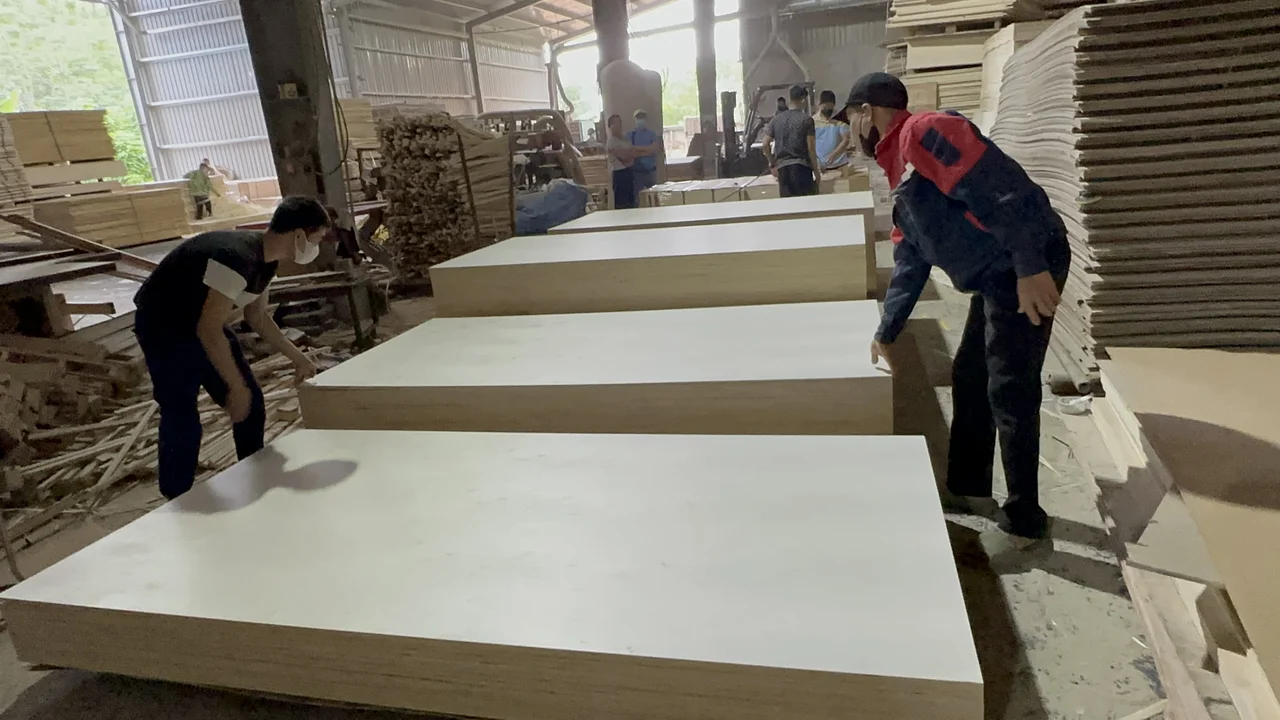
Calibrated sanding. Wide-belt sanding after pressing removes surface irregularities and brings panels to final calibrated thickness. For laser and CNC grade panels, both faces are sanded — this is called “S2S” (sanded two sides). The sanding process is what separates furniture-grade panels from commercial-grade panels in practical flatness performance.
📦 Ordering Laser & CNC Grade Plywood from Vietnam
“Get a Free Quote for Laser & CNC Grade Panels” — contact HCPLY directly to confirm current lead times and available specifications.
Standard export specs you can order today:
| Spec | Available Options |
|---|---|
| Face veneer | Birch D/E, EV, Okoume, Bintangor |
| Core species | Styrax (lightest), Eucalyptus, Acacia |
| Glue | Melamine MR |
| Emission | E0, E1, E2 |
| Thickness | 3, 5, 9, 12, 15, 18mm (custom possible) |
| Sheet size | 1220×2440mm, 1250×2500mm, custom |
| Surface | Sanded both sides (S2S) |
| Certifications | FSC, CARB P2, CE, ISO 9001 |
| MOQ | 1×40HC container |
| Lead time | 15–20 days |
Mixed-spec containers: HCPLY accommodates multiple thickness and species combinations within a single 40HC container. This matters for smaller importers who need, say, 3mm birch for laser work and 18mm matt panels for CNC fixtures — both can ship together. See the plywood container packing guide for capacity calculations.
For reference on how to read and compare plywood sizes and thickness options, the full specification matrix covers all standard combinations.
✅ Quick Spec Checklist for Your Purchase Order
Before sending an RFQ to any Vietnam plywood supplier, confirm these parameters:
- Face species: Birch D/E or EV (not bintangor or okoume for premium cutting results)
- Core construction: Full stitched (not loose-laid or edge-jointed)
- Core species: Styrax preferred for birch panels (lightweight, uniform)
- Surface: Sanded both sides (S2S), calibrated
- Thickness tolerance: ±0.3mm
- Glue: Melamine (MR)
- Emission: E0 or E1 (not E2 for indoor workshop use)
- Certifications: FSC + CARB P2 (if shipping to US/EU)
- Moisture content at shipment: 8–12%
- Core construction documented: Request factory QC report showing construction type
This checklist prevents the most common specification gap: ordering “birch plywood” and receiving commercial-grade panels from a different factory segment.
Disclosure: This article is published by HCPLY, a Vietnam-based plywood manufacturer and export operator. While we aim to provide objective industry guidance, readers should consider our perspective as a market participant when evaluating recommendations.
🔗 Related Articles
- Plywood Face Veneer Types — Complete Buyer Guide
- Plywood Core Types — Acacia vs Eucalyptus vs Styrax
- Plywood Sanding vs Unsanded — When to Choose
- Plywood Sizes & Thickness — Specification Guide
- Vietnam Plywood Manufacturing Process — Factory Guide
📋 Conclusion
Vietnam produces genuinely high-quality panels for laser cutting and CNC routing — but only from specific factory segments. Birch plywood with full-stitched styrax core, sanded S2S to ±0.3mm tolerance, with MR glue at E0 emission is the specification to request. EV plywood offers superior consistency for engraving applications. Matt plywood handles budget CNC fixture and template work.
The critical factor is not species selection alone — it is core construction and factory segment. Specify full-stitched core explicitly, and confirm the supplier’s furniture-grade facility is fulfilling your order, not a commercial or packing-grade allocation.
Get a Free Quote for Laser & CNC Grade Panels — HCPLY’s team responds within 24 hours with current pricing, samples, and lead times. No commitment required.