

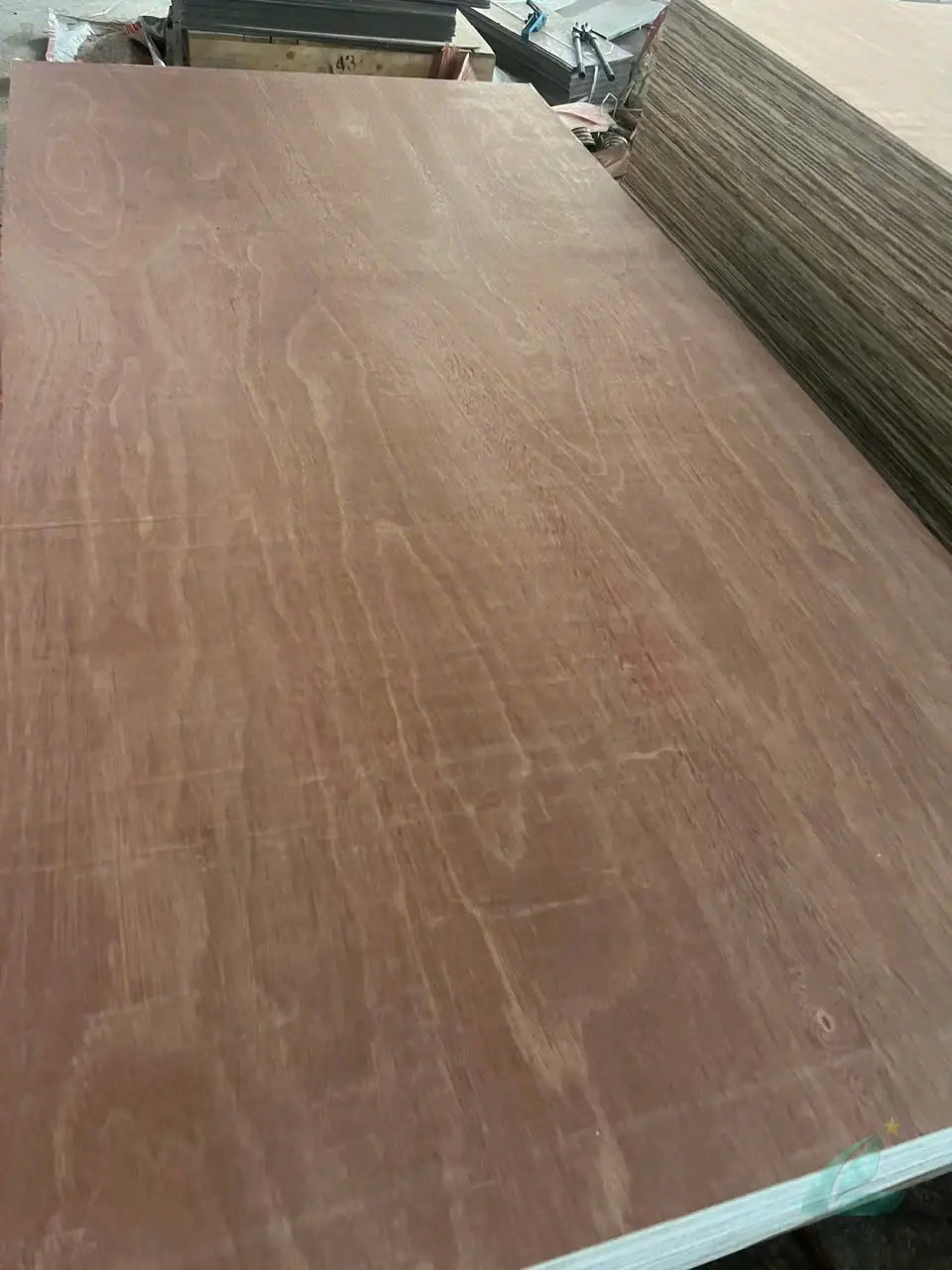
Vietnam plywood is used in furniture factories across 20+ countries — but not every panel leaving Vietnamese ports qualifies as furniture-grade. Buying the wrong spec means delamination, warped panels, emission test failures, and rejected shipments.
Five suitability checks determine whether a plywood panel from Vietnam is genuinely suitable for furniture production. Confirm all five before placing your order, and you will source consistently without surprises.
📋 Why Furniture Grade Plywood Has Strict Requirements
Furniture plywood faces conditions that packing plywood never encounters: it gets sanded, painted, lacquered, CNC-routed, edge-banded, and loaded with hardware. It sits in living spaces where occupants breathe the air around it.
That set of demands creates clear performance requirements:
- Surface smoothness — for paint adhesion and visible finish quality
- Dimensional stability — flat panels, consistent thickness, no twist after cutting
- Low formaldehyde emission — mandatory for residential, school, and healthcare furniture in most export markets
- Structural integrity — screw-holding, edge strength, resistance to delamination under humidity cycles
Vietnam’s furniture-grade plywood, when correctly specified, meets all four. The challenge for international buyers is that Vietnam also produces commercial and packing-grade plywood on the same roads and from the same suppliers — and the two do not mix.
⚠️ Important: A low price on a “furniture plywood” offer should trigger verification, not celebration. Furniture-grade and commercial-grade plywood carry prices that reflect their actual specs. If an offer is 20–30% below market, ask specifically for the datasheet before proceeding.
🔍 Check 1 — Face Veneer Species and Grade
The face veneer determines the visual surface quality of every piece of furniture the panel is used to make. For furniture production, you need face veneer that:
“We always ask buyers about their end application before quoting. A furniture manufacturer and a construction contractor need completely different specs even when they both request 18mm plywood. Getting the application right prevents 90% of post-delivery complaints.” — Lucy, International Sales Manager, HCPLY
- Takes sanding without tearing or fuzz
- Accepts paint, lacquer, or laminate without bleed-through
- Shows consistent grain and color within a batch
📌 Recommended Face Veneer Species for Furniture
| Face Species | Grade System | Surface Quality | Best For |
|---|---|---|---|
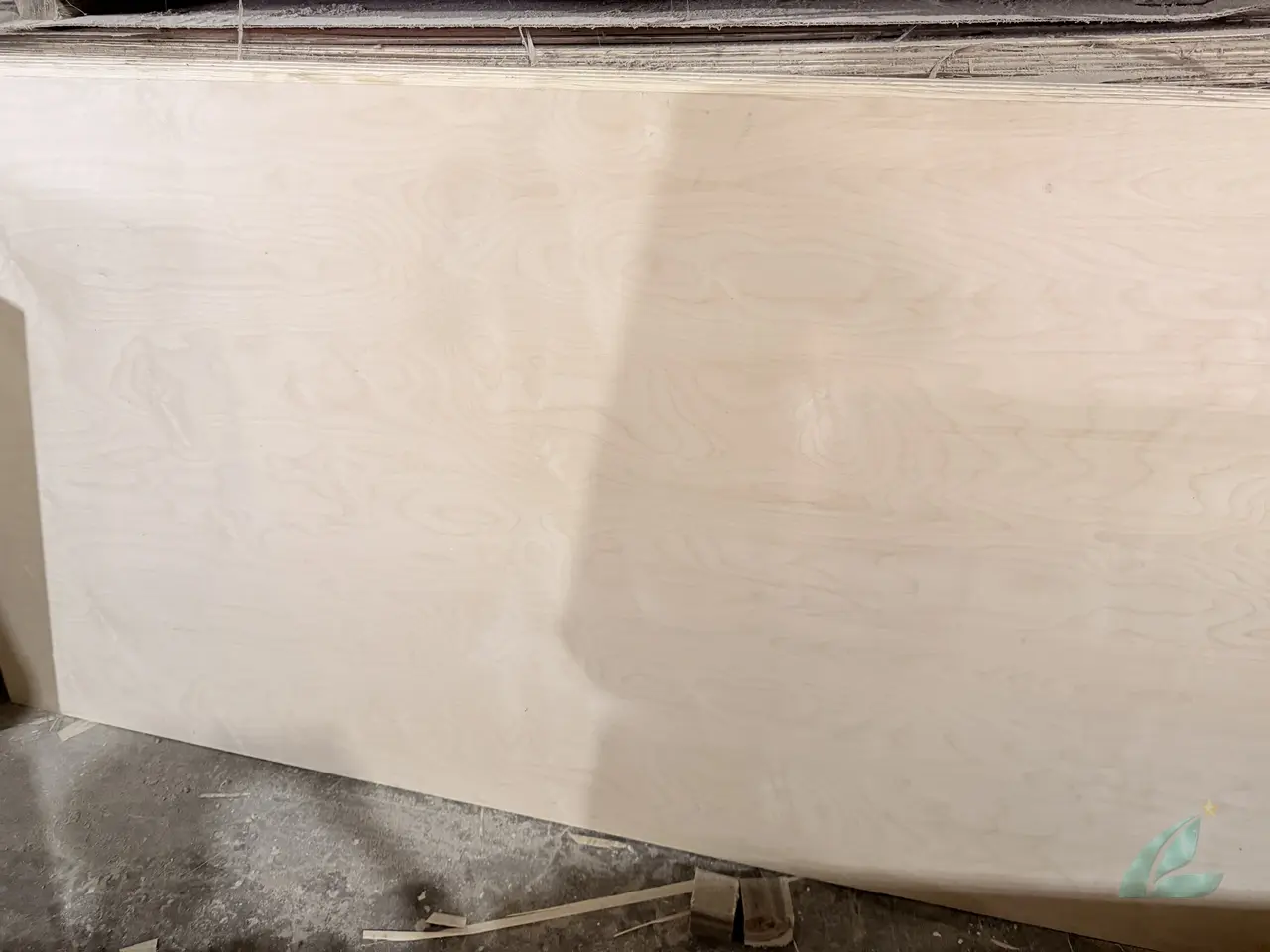
| Birch | D/E/F (D = best available from Vietnam) | Premium — tight grain, clean white | Cabinets, painted furniture, EU/US export |
| EV (Engineered Veneer) | A/B | Very uniform — consistent grain pattern | Modern cabinets, lacquered interiors |
| Okoume | A/B | Light pink, clean, lightweight | European furniture, interior doors |
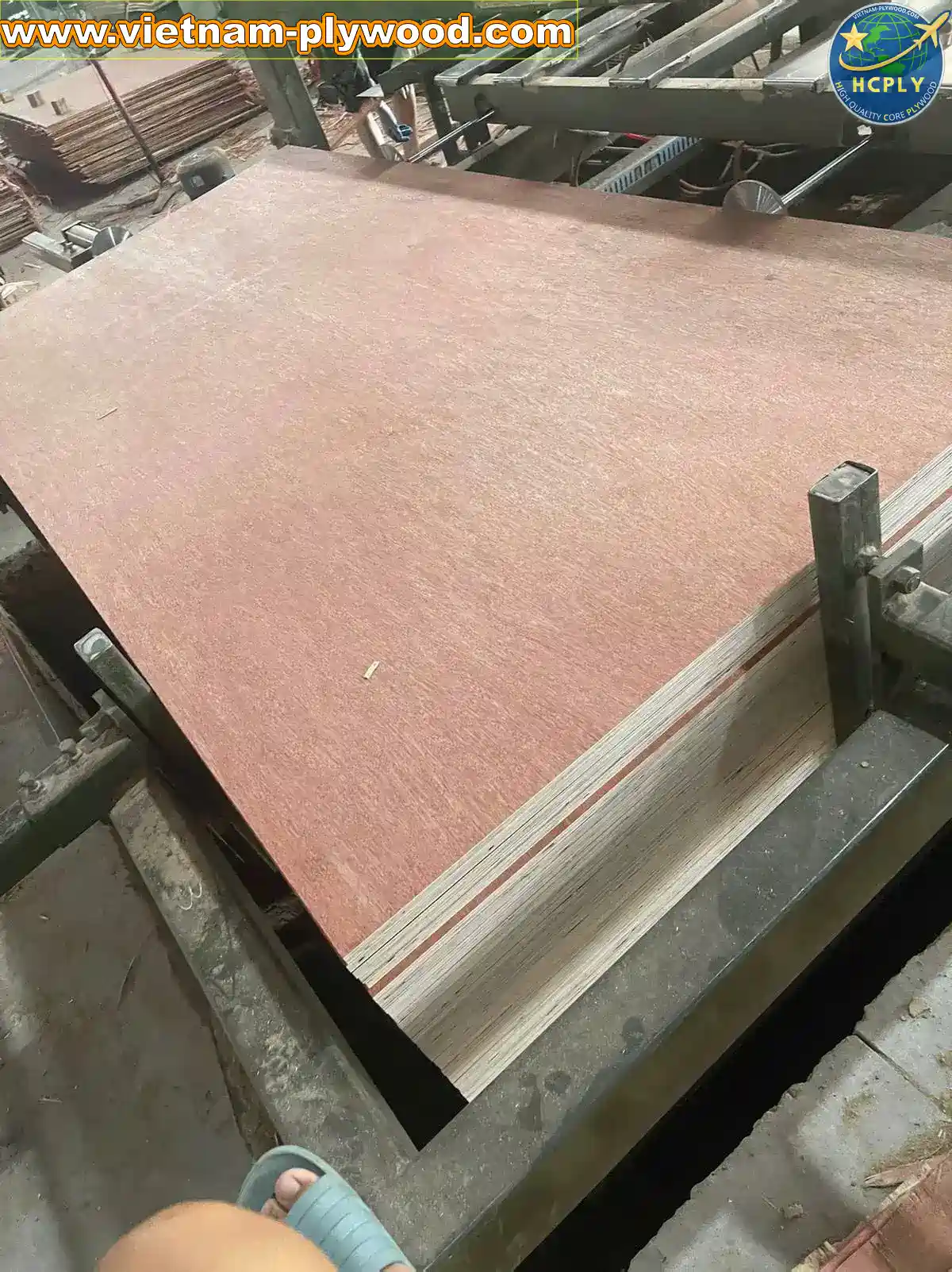
| Bintangor A/B | A/B | Reddish-brown, commercial grade | Budget furniture, commercial projects |
| Pine | A/B | Knotty appearance | Rustic furniture, Australian and EU market |
💡 Note on Birch Grade: Birch plywood from Vietnam uses grade D/E/F — not A/B/C. Grade D is the best quality available in the Vietnamese supply chain. Many buyers assume birch comes in A/B like other species. It does not.
For premium painted or lacquered cabinets, birch face or EV face on styrax core is the most common specification. For cost-sensitive commercial furniture, bintangor A/B face on acacia or styrax core delivers acceptable surface quality at a lower price point.
Learn more about the full range of face options in the plywood face veneer types guide.
🔧 Check 2 — Core Species and Core Construction
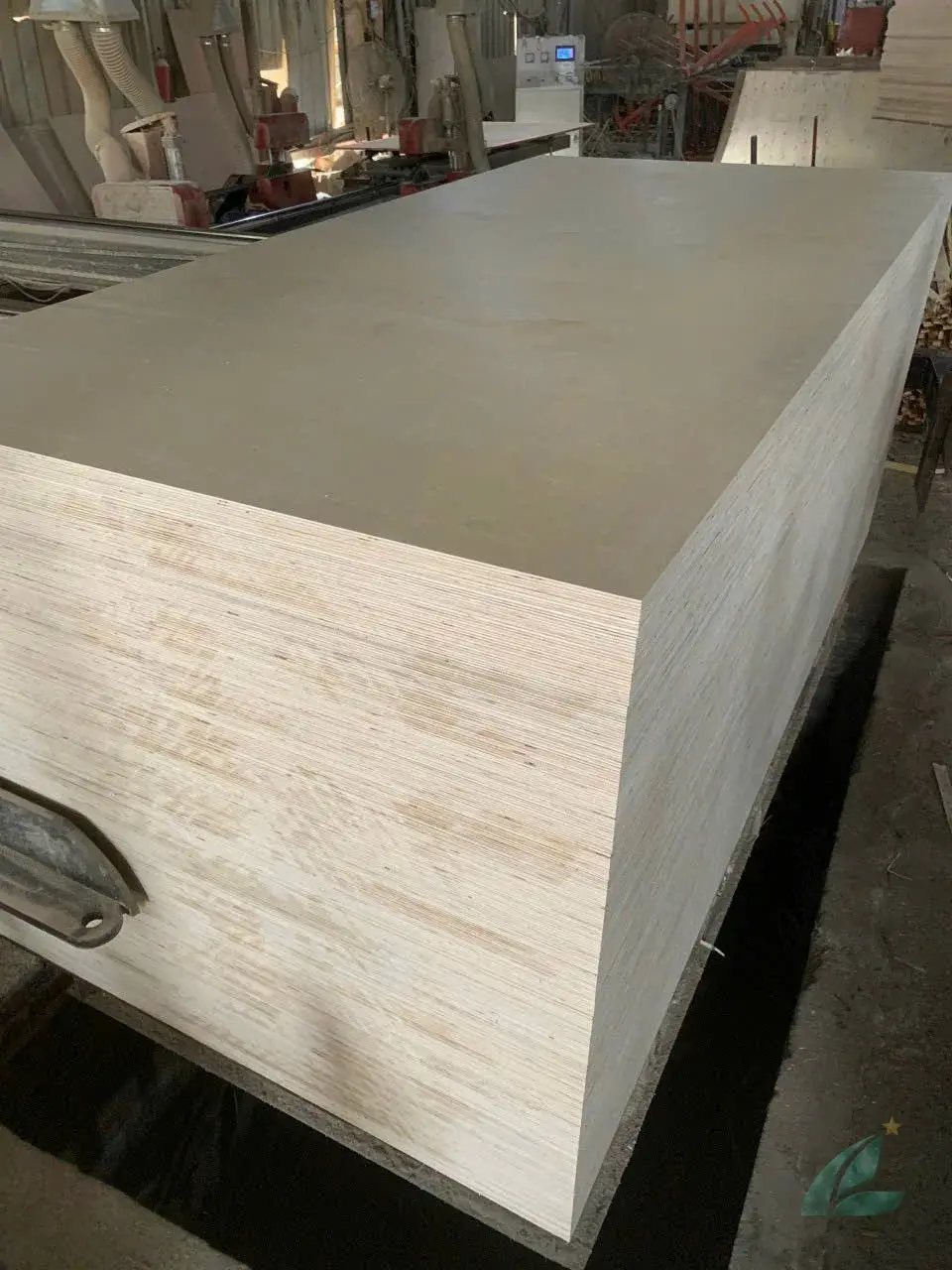
The core species directly determines the panel’s density, weight, screw-holding capacity, and dimensional stability. Vietnam produces three core species:
Core Species Comparison for Furniture
| Core | Density | Typical Use | Weight per 18mm Sheet (1220×2440) |
|---|---|---|---|
| Styrax | 480–500 kg/m³ | Premium furniture — lightweight, pale, birch-substitute | ~26 kg |
| Acacia | ~580 kg/m³ | Commercial furniture, budget grade | ~30 kg |
| Eucalyptus | 650–750 kg/m³ | Flooring substrate, heavy-duty shelving | ~36–40 kg |
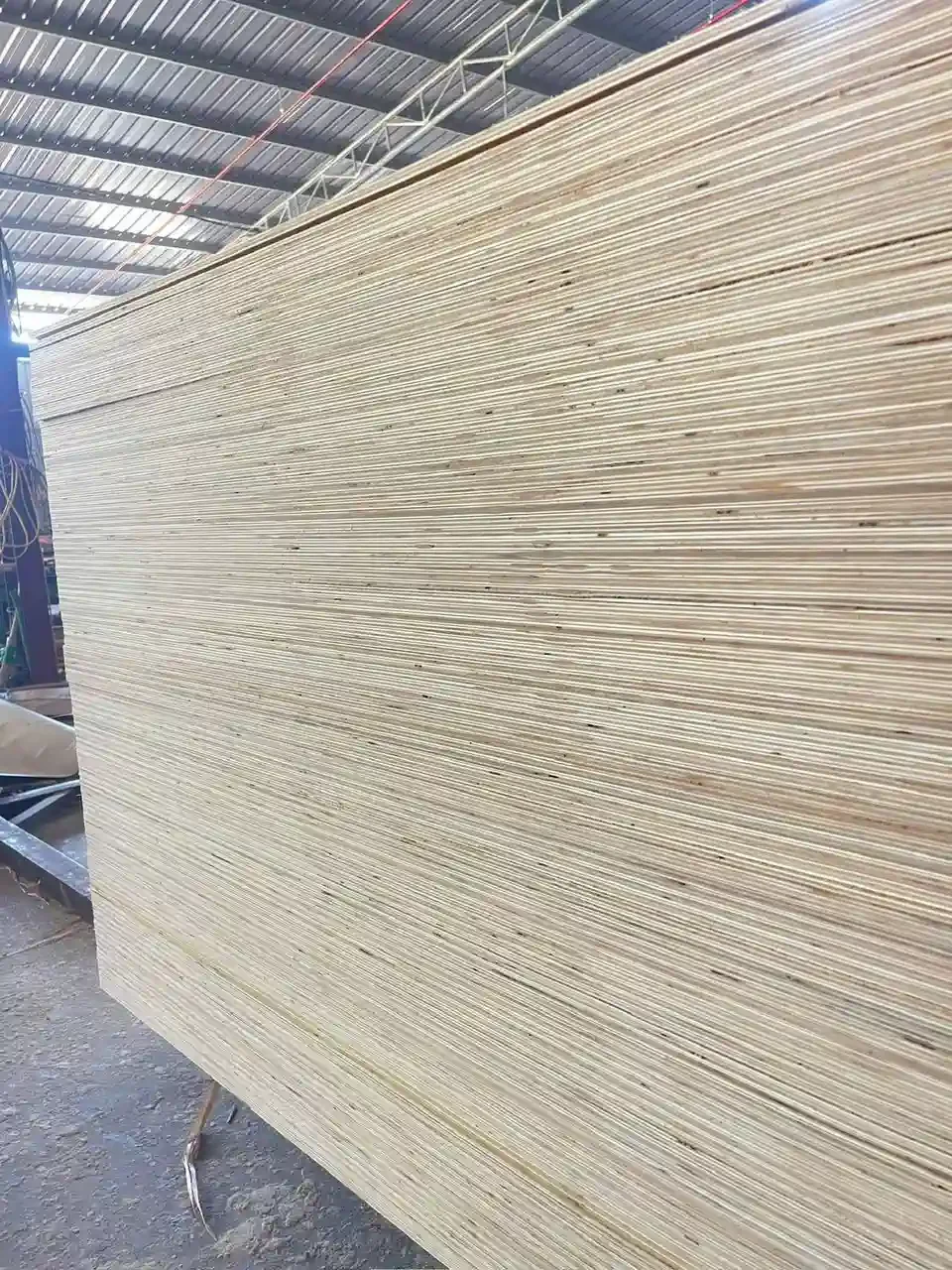
Styrax core is the benchmark for furniture-grade plywood from Vietnam. It is lightweight, dimensionally stable, and pale white — matching the performance profile of birch core used in European and North American premium furniture manufacturing. HCPLY’s dedicated furniture production facility uses styrax and eucalyptus Grade A cores.
Acacia core is acceptable for commercial furniture where weight is not a concern, but its darker color can affect the aesthetics of thinner veneers. Eucalyptus core is heavy — appropriate for flooring underlayment and heavy-duty shelving, not standard furniture panels.
Core Construction Matters Too
Beyond species, the way the core veneers are assembled determines internal quality:
- Full stitched core — veneer strips sewn together on all layers. No gaps, no overlaps. This is the premium standard for furniture plywood.
- Stitched outer + edge-trimmed inner — good balance of quality and cost for commercial furniture.
- Loose-laid (finger-jointed only) — acceptable for packing, not suitable for furniture requiring consistent edge strength.
Always ask your supplier to specify both the core species AND the core construction method. A low-bid offer that doesn’t mention core construction is almost certainly loose-laid.
For a full comparison of core options, see Plywood Core Types — Acacia vs Eucalyptus vs Styrax.
📊 Check 3 — Emission Standard (E0, E1, or CARB P2)
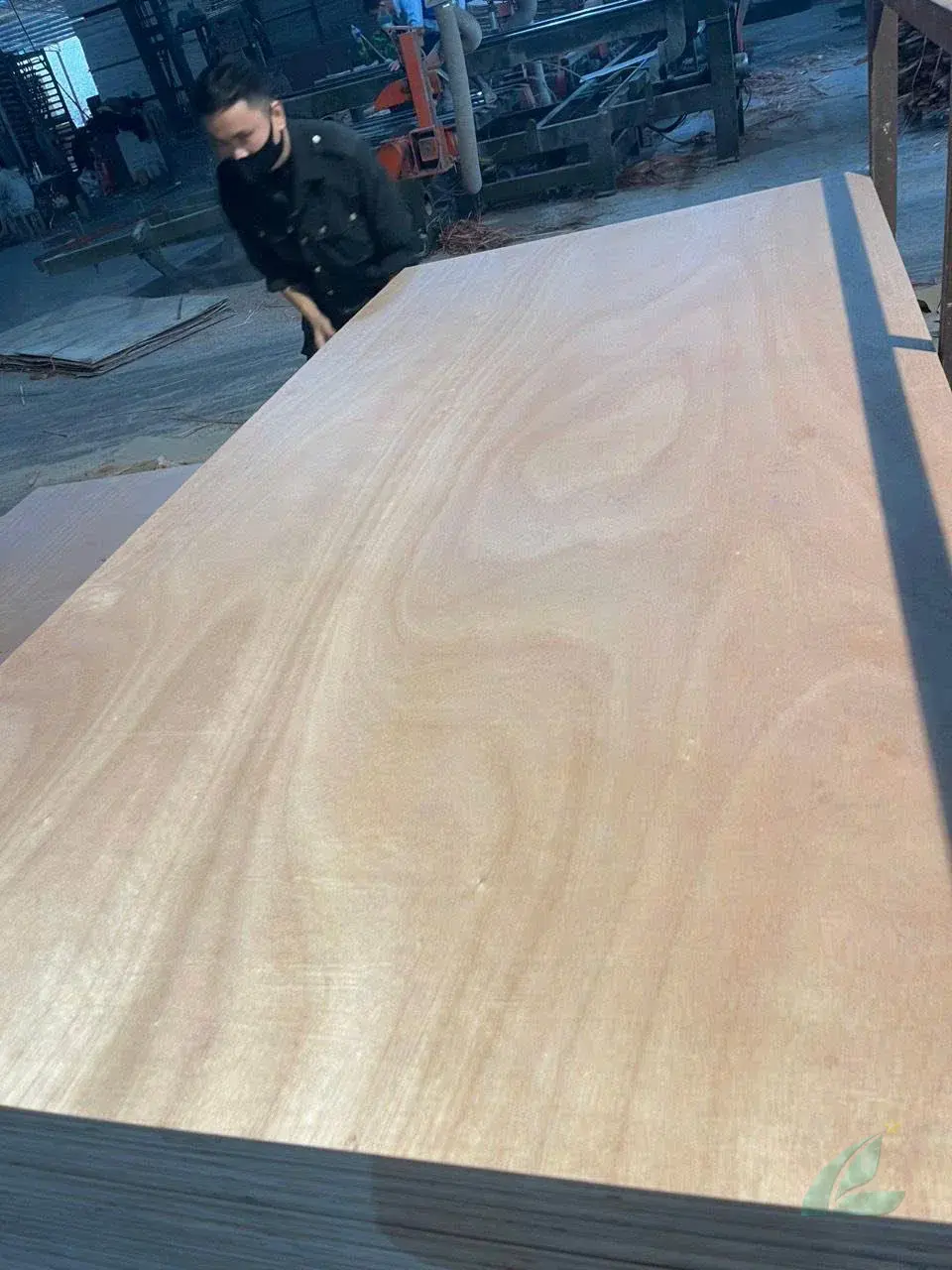
Formaldehyde emission is the most regulated parameter in furniture-grade plywood. The emission standard tells you how much formaldehyde the panel releases into the air during normal indoor use. According to the European Panel Federation (EPF, 2024), E1 is the minimum EU baseline for interior wood-based panels sold in residential applications.
This is separate from the glue type. A common mistake among buyers is conflating “E0 glue” with “melamine glue” — they are two different classifications. Emission is about formaldehyde content in the cured panel. Glue type is about bond chemistry and water resistance.
Emission Standards Quick Reference
| Standard | Limit | Markets |
|---|---|---|
| E0 / CARB P2 | ≤0.5 mg/L (or ≤0.05 ppm) | US (CARB P2), EU high-spec, Japan (F4-Star equivalent), South Korea |
| E1 | ≤1.5 mg/L | EU standard, most Asian markets |
| E2 | ≤5.0 mg/L | Industrial / outdoor only — NOT for furniture |
For furniture sold in the US, you need CARB P2 (California Air Resources Board Phase 2), which is approximately equivalent to E0 (Formaldehyde Action Network, 2023). For EU markets, E1 is the minimum; E0 is increasingly preferred for high-end residential furniture.
Japan requires F4-Star (≈E0) under JAS (Japan Agricultural Standard). South Korea mandates E0 for interior furniture. If your destination market is not listed above, verify the local standard before specifying.
How to verify on a shipment: Request the third-party test report from a recognized laboratory (SGS, Bureau Veritas, or equivalent). The report shows the measured formaldehyde emission value in mg/L or mg/m³. Do not accept a supplier’s self-declaration without a lab report.
💡 Tip: HCPLY can supply E0 and CARB P2 certified furniture plywood with full third-party test reports. Confirm the emission requirement in your purchase order so it appears on the production specification.
Read more about emission standards in the plywood glue types and emission guide.
⚙️ Check 4 — Glue Type: Melamine (MR) vs Phenolic (WBP)
Glue type determines water resistance — specifically, how the panel performs when exposed to moisture, steam, or humidity cycles in the finished furniture piece.
Melamine (MR) Glue
MR (Melamine Resin, also called moisture-resistant) is the standard glue for furniture-grade plywood. It passes a 12-hour boiling test and performs adequately under the humidity conditions found in normal interior environments — including kitchens and bathrooms when protected by surface treatments.
For most furniture applications — bedroom sets, office furniture, kitchen cabinets (dry to semi-damp zones), retail fixtures — MR glue is correct.
Phenolic (WBP) Glue
WBP (Weather and Boil Proof, phenolic resin) passes a 72-hour boiling test. It is required for exterior construction plywood, concrete formwork, marine applications, and permanent outdoor structures.
Phenolic glue adds cost and is unnecessary for interior furniture. Do not pay for WBP if your application is indoor furniture.
Practical Decision Guide
| Application | Glue Specification |
|---|---|
| Bedroom furniture, wardrobes, office furniture | MR (Melamine) |
| Kitchen cabinets (dry to light moisture) | MR (Melamine) |
| Kitchen cabinets (direct water exposure, sink base) | WBP (Phenolic) |
| Bathroom furniture (high humidity, possible water splash) | WBP (Phenolic) |
| Outdoor furniture or garden structures | WBP (Phenolic) |
| Decorative panels, laminated wall cladding | MR (Melamine) |
“The glue system is what buyers forget to specify,” says Lucy, International Sales Manager at HCPLY. “They request the face species, the thickness, the emission standard — but they skip glue type. We send melamine by default for furniture, and that is correct. But for applications near water, the buyer needs to explicitly request WBP before production starts.”
For a full technical explanation, see Melamine vs Phenolic Glue for Plywood.
📐 Check 5 — Sanding and Surface Preparation
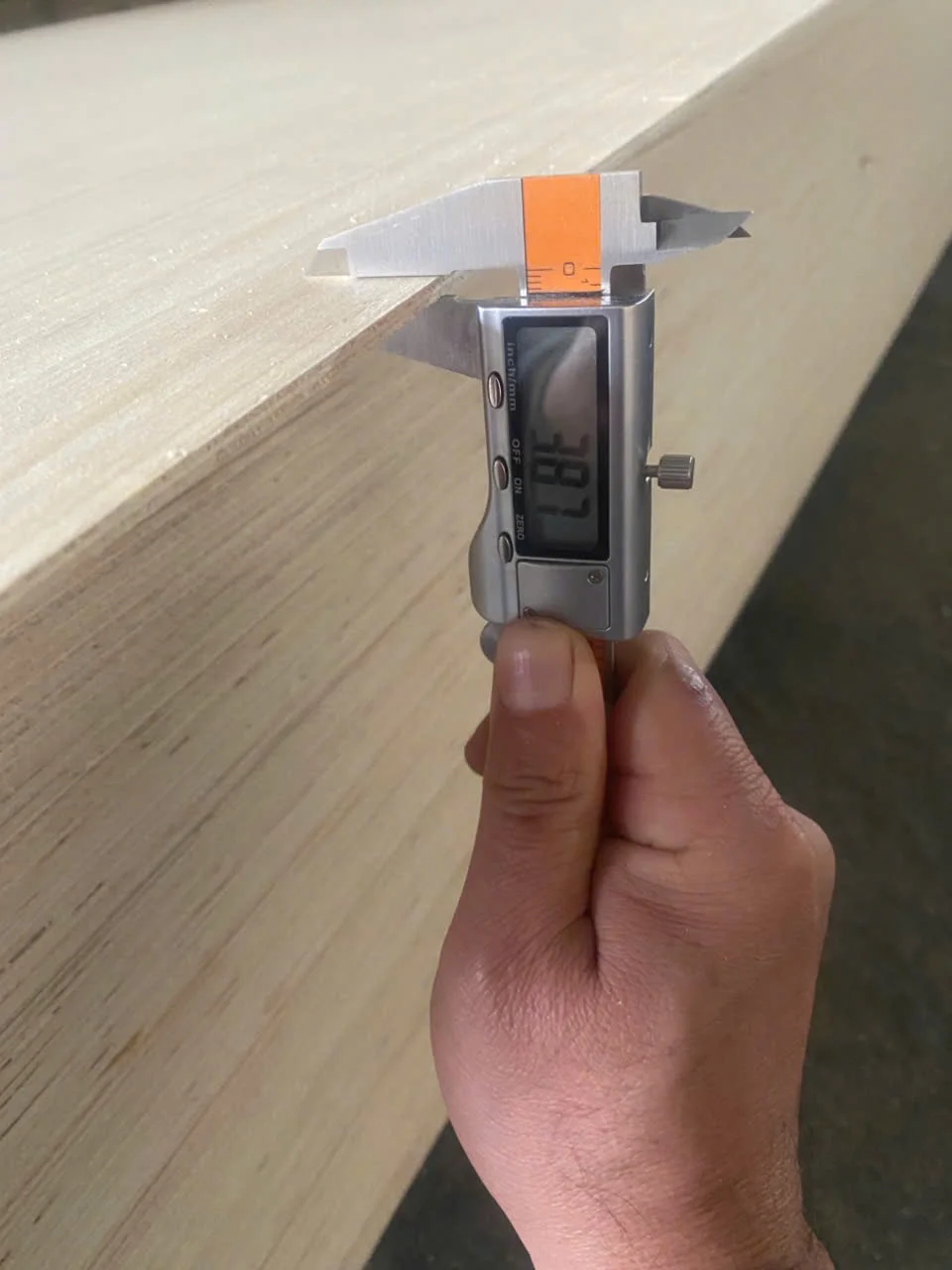
Furniture plywood must be double-sanded: calibration sanding first (to achieve consistent thickness tolerance ±0.3mm), then finish sanding (to achieve a smooth, paint-ready surface).
This is non-negotiable. Furniture that cannot be sanded — packing plywood, film-faced plywood, anti-slip plywood — has a different surface treatment entirely and will not accept paint or laminate in the same way.
What to Specify in Your Order
When ordering furniture-grade plywood from Vietnam, specify:
- Sanded both sides (S2S) — both face and back are finish-sanded
- Thickness tolerance: ±0.3mm — this confirms calibration sanding was done
- Surface: no putty filling — for premium furniture, no knot-filling paste (ask specifically if this matters for your application)
Commercial furniture lines sometimes accept sanded one side (S1S), where only the visible face is finish-sanded and the back receives calibration only. This is acceptable when the back will be laminated or will face a wall.
⚠️ Note: Packing-grade plywood from Vietnam is never sanded. If an offer does not specify sanding, ask. Receiving unsanded plywood intended for furniture production means extra labor, uneven lamination bonding, and potential surface defects in the finished piece.
For the full sanding decision framework, see Sanded vs Unsanded Plywood — When to Choose.
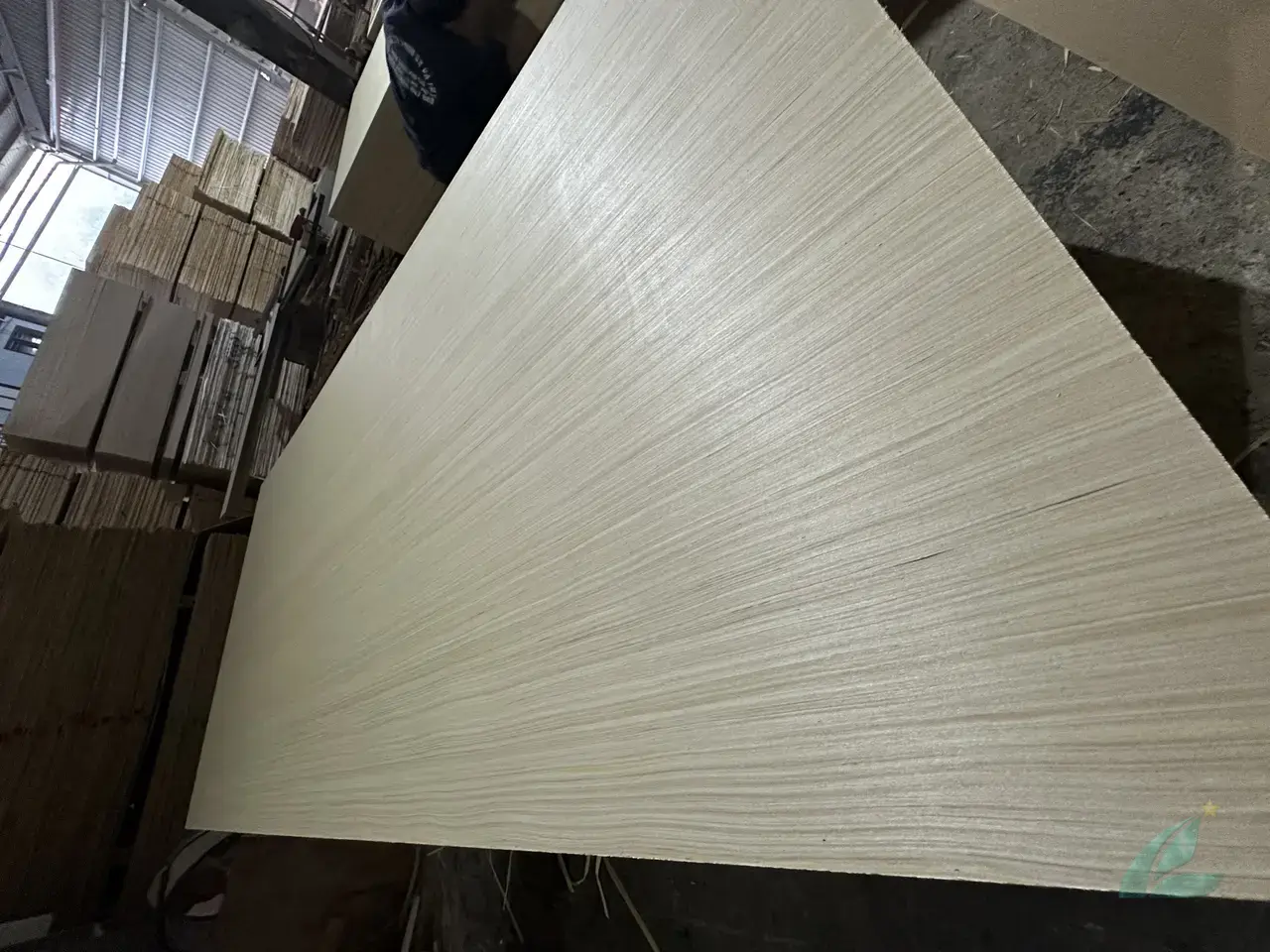
🏭 What Factory Segment Produces Furniture-Grade Plywood?
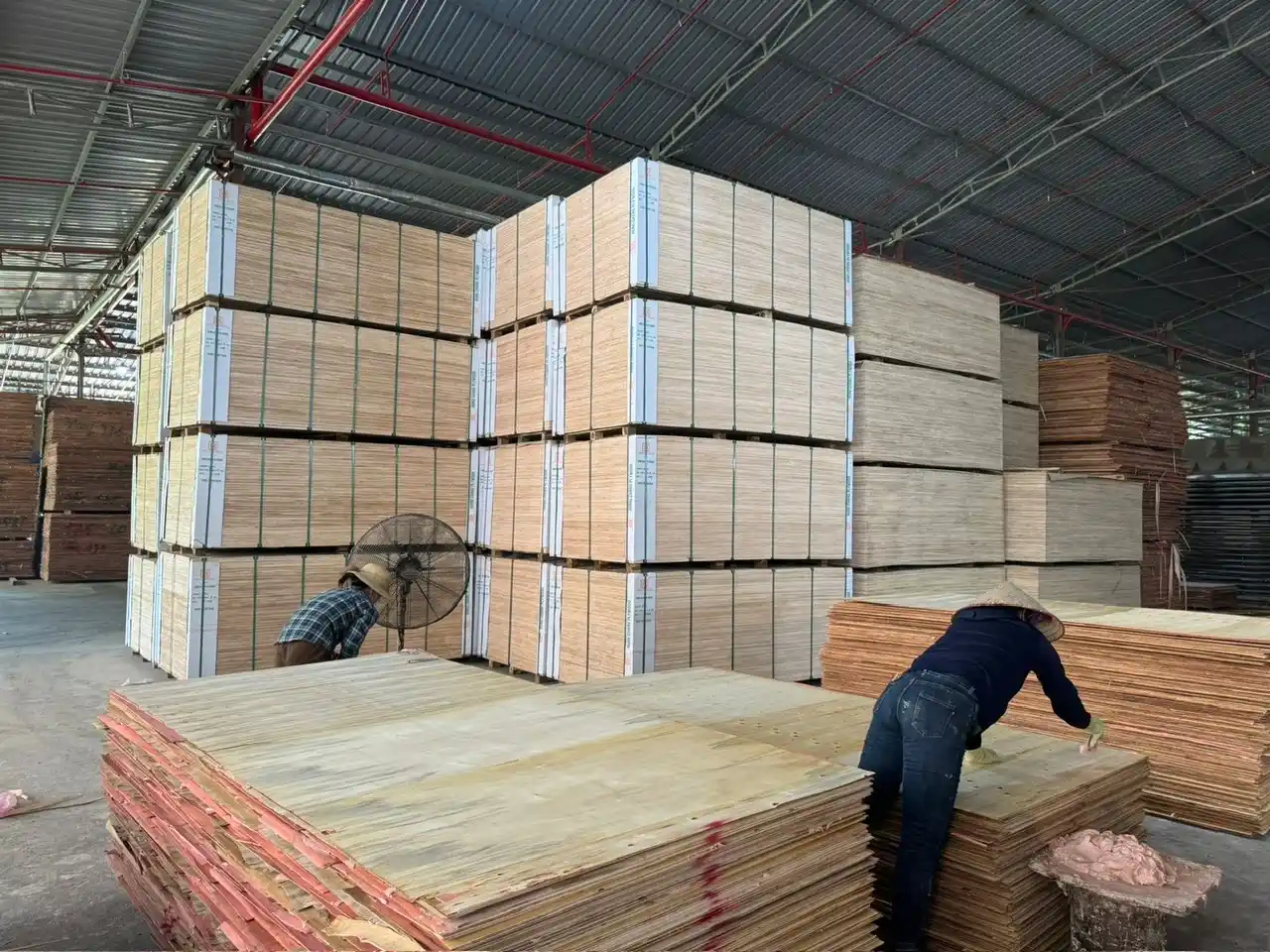
Vietnam’s plywood industry is segmented. Not every factory makes furniture-grade panels — and this is a practical risk for international buyers who source based on price alone.
Premium furniture plywood factories in Vietnam use:
- Styrax or eucalyptus Grade A core
- Full stitched core construction
- Melamine (MR) glue with E0/E1 emission
- Double sanding (calibration + finish)
- Full certifications: FSC, CARB P2, CE, ISO 9001
Commercial/packing plywood factories use:
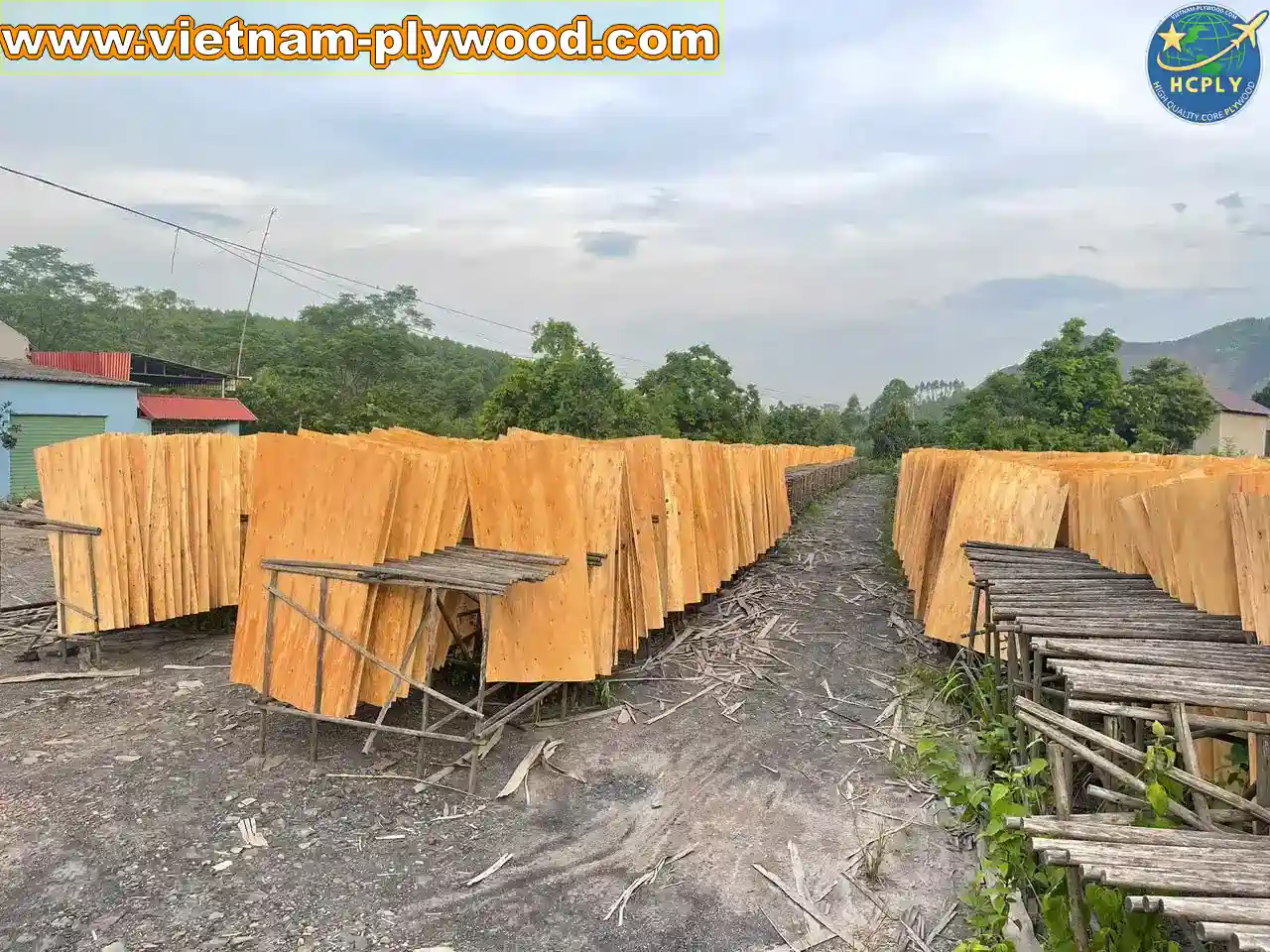
- Acacia core, loose-laid construction
- Melamine glue with E1 or E2 emission
- No sanding, or light calibration only
- Fewer certifications, or none
These two factory segments cannot be interchanged. A buyer who requests “furniture grade” from a factory built for packing production will receive a panel that does not meet furniture requirements — regardless of what the spec sheet says.
Get a Free Furniture Plywood Quote — specify your face veneer, thickness, emission standard, and destination market for an accurate FOB price.
✅ Furniture Plywood Suitability Checklist
Use this checklist when evaluating a plywood offer or supplier for furniture production:
| Parameter | Furniture Requirement | Question to Ask Supplier |
|---|---|---|
| Face veneer | Birch D/E, EV A/B, Okoume A/B, or Bintangor A | ”What face species and grade?” |
| Core species | Styrax (premium) or Acacia (commercial) | “What core species?” |
| Core construction | Full stitched (premium) or stitched outer (commercial) | “Full stitched or loose-laid?” |
| Emission standard | E0 or CARB P2 (premium) / E1 (commercial) | “Can you supply test report?” |
| Glue type | Melamine (MR) for indoor, WBP for wet zones | ”Melamine or phenolic glue?” |
| Sanding | Double-sanded S2S, ±0.3mm thickness tolerance | ”Sanded both sides? Tolerance?” |
| Certifications | FSC, CARB P2, ISO 9001 (for regulated markets) | “Which certs are available?” |
All seven parameters should appear on the technical datasheet before you sign a purchase order.
Disclosure: This article is published by HCPLY, a Vietnam-based plywood manufacturer and export operator. While we aim to provide objective industry guidance, readers should consider our perspective as a market participant when evaluating recommendations.
🔗 Related Guides
For buyers sourcing furniture plywood from Vietnam, these articles cover the adjacent specifications in detail:
- Types of Plywood from Vietnam — Full Classification Guide
- Plywood Face Veneer Types — Complete Buyer Guide
- Plywood Core Types — Acacia vs Eucalyptus vs Styrax
- Plywood Glue Types & Emission Standards Guide
- Plywood Sizes & Thickness Specifications
📦 Sourcing Furniture Plywood from Vietnam
HCPLY exports furniture-grade plywood to 20+ countries, with a production capacity of 2,500-5,000 CBM/month across 3 specialized facilities in Northern Vietnam (HCPLY production data, 2026). The dedicated premium furniture facility produces panels with:
- Styrax and eucalyptus Grade A core, full stitched construction
- Face veneer options: birch D/E, okoume A/B, EV A/B, bintangor A/B, pine, poplar, eucalyptus
- Emission: E0, E1, or CARB P2 with third-party test reports
- Glue: Melamine (MR) standard; WBP available on request
- Sanding: double-sanded S2S, thickness tolerance ±0.3mm
- Certifications: FSC, CARB P2, CE, ISO 9001, EUDR, EUTR
MOQ is 1 × 40HC container. Mixed specifications within one container are accepted. Lead time is 15–20 days from order confirmation. All orders ship FOB Hai Phong with complete export documentation.
Contact HCPLY Now to receive a specification-matched quote with datasheet. No commitment required for initial inquiry.