
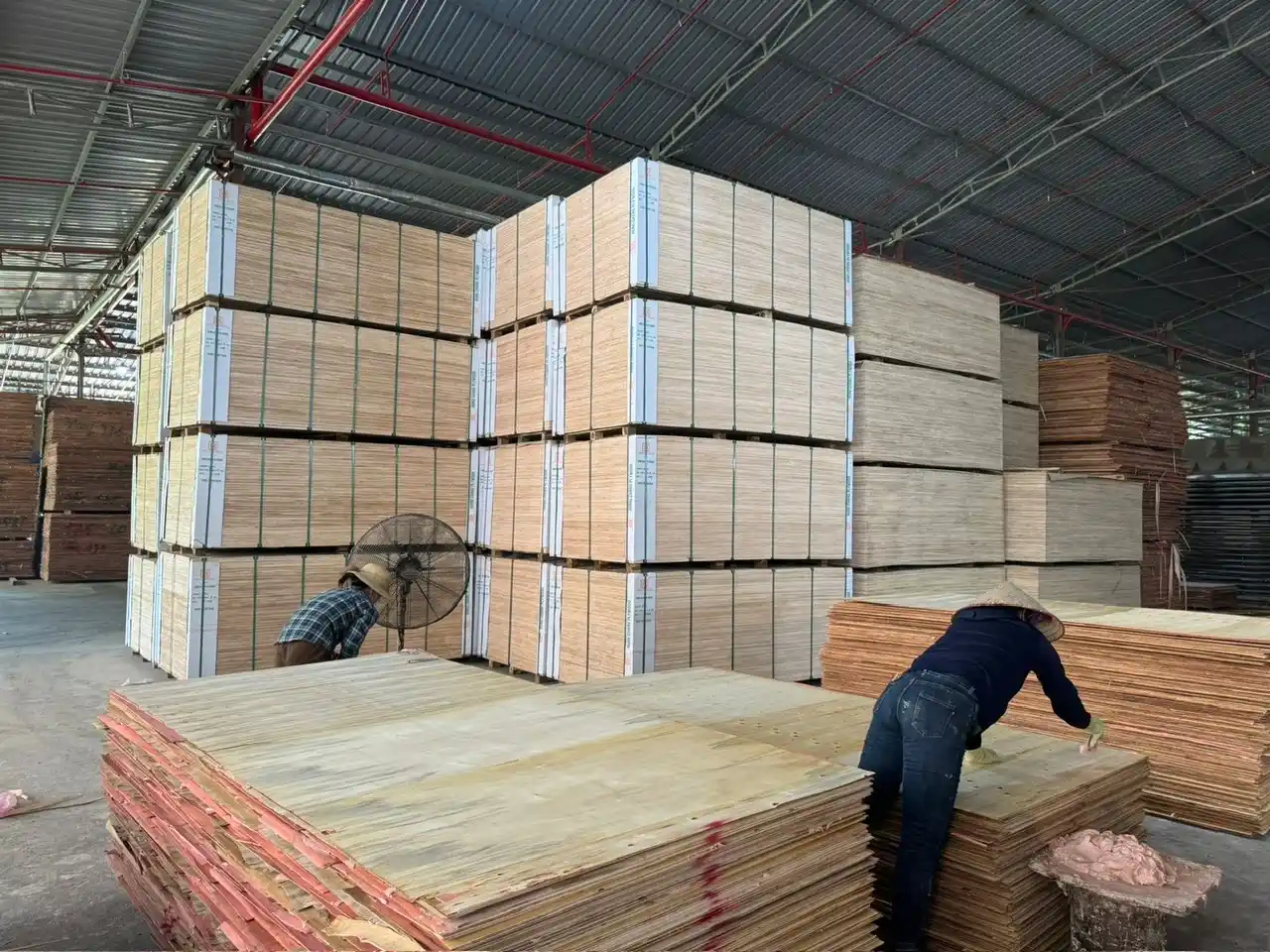
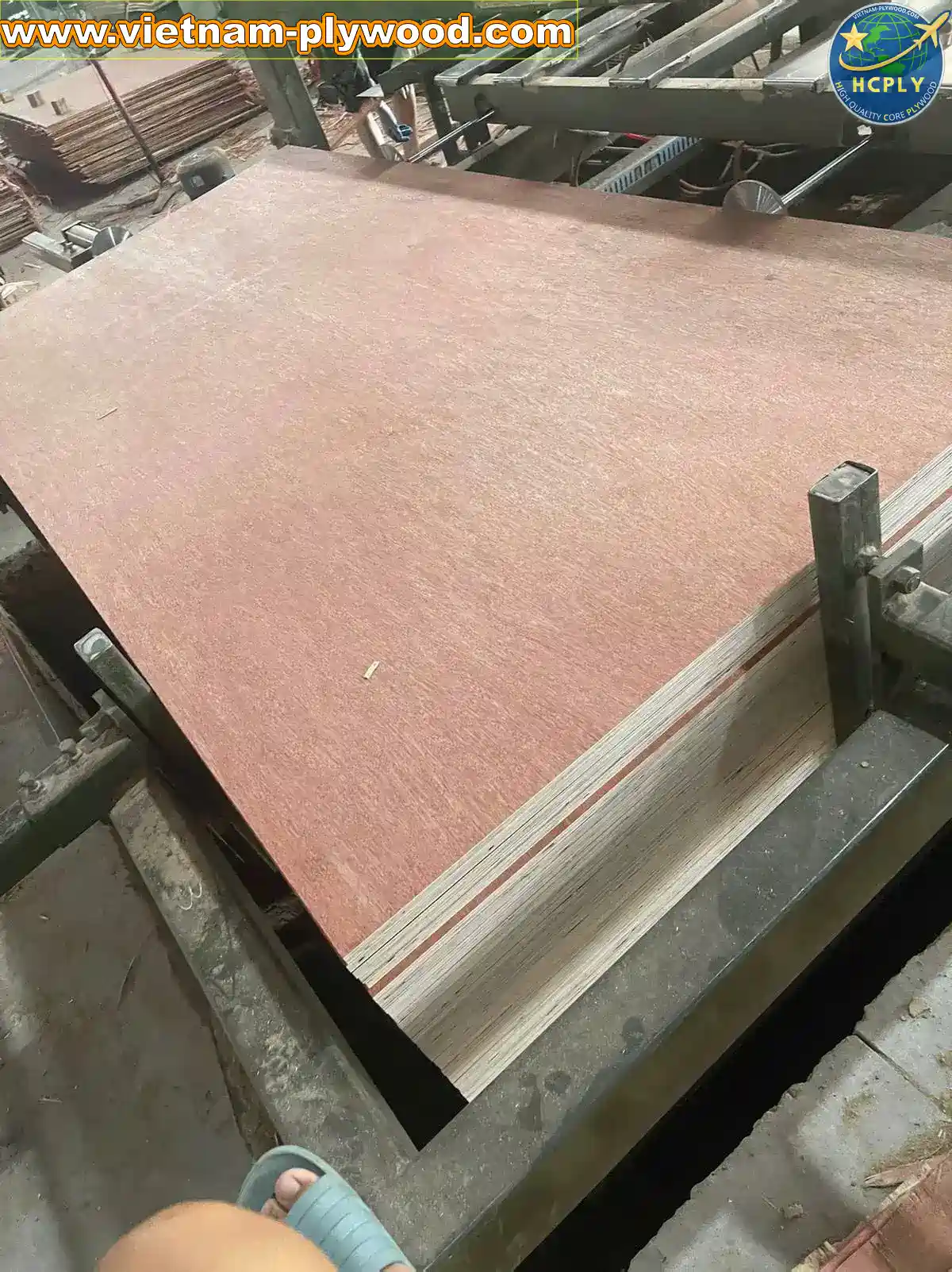
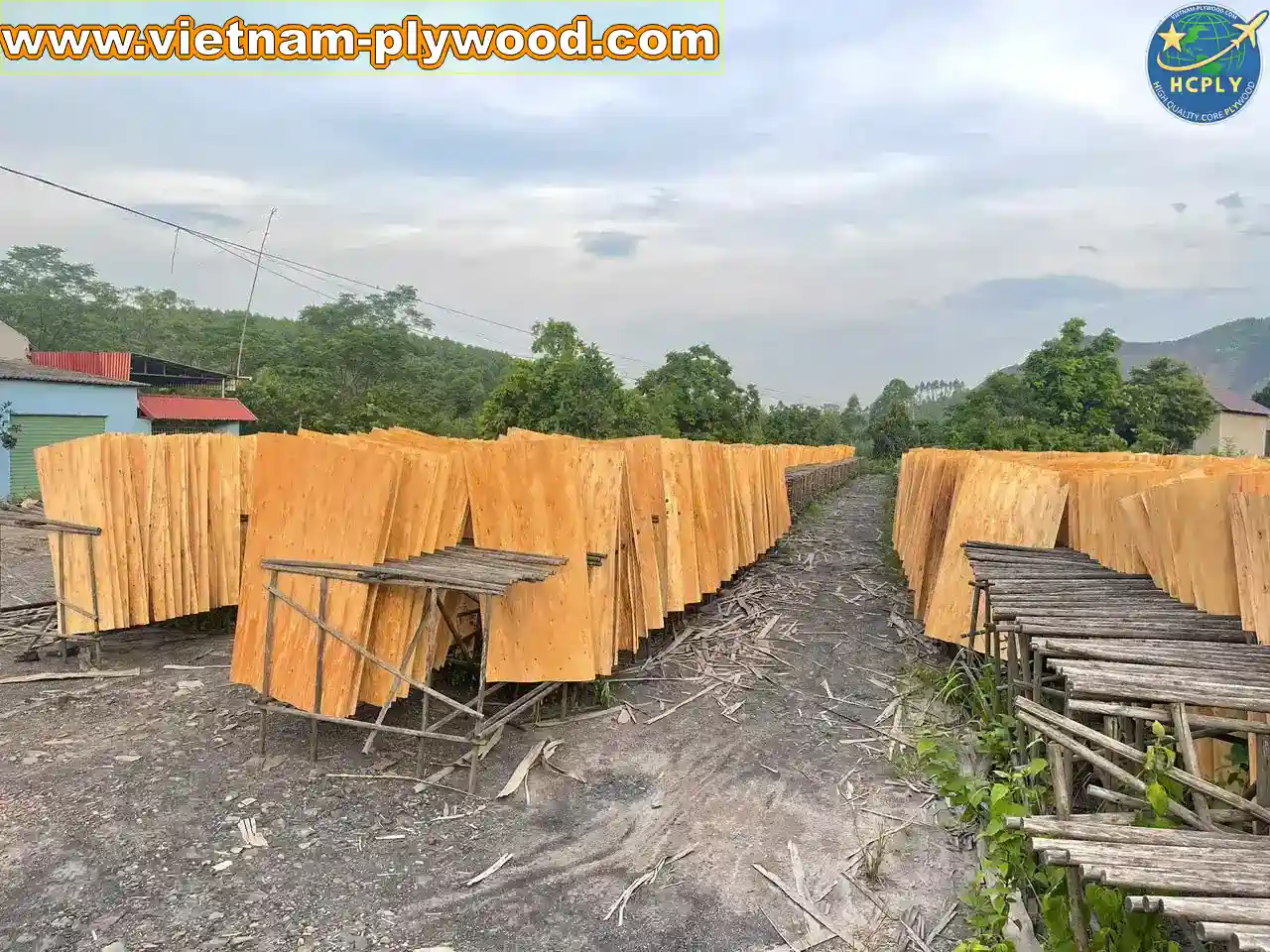

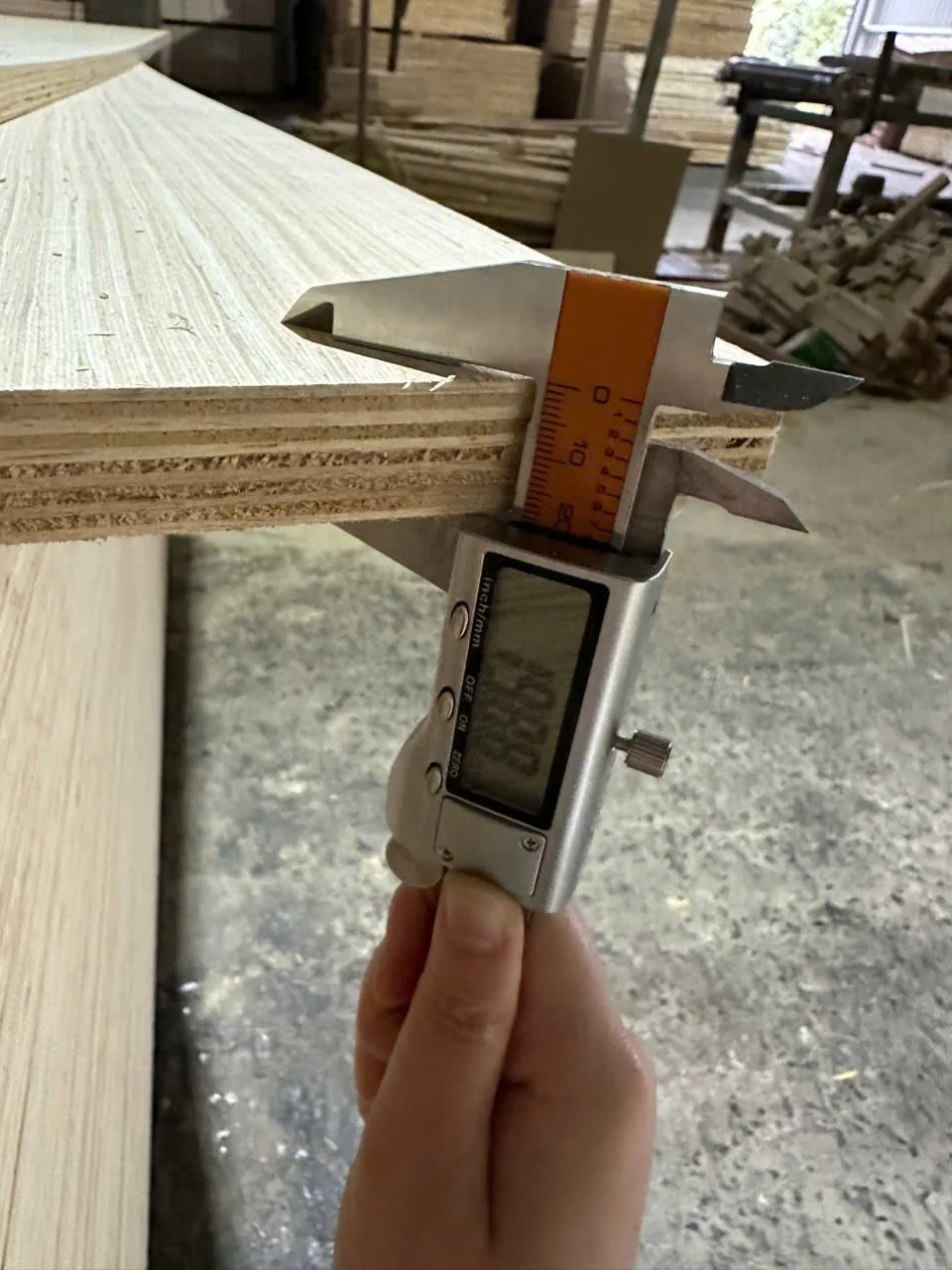
Vietnam plywood density is one of the most misused numbers in B2B procurement. Buyers quote “600 kg/m³” as a standard figure. Suppliers accept that number without question. The container arrives, and the packing list shows something different — or the panels perform differently than expected for their weight class.
The problem is not that density is complicated. The problem is that most buyers do not know which variable drives it. In Vietnamese plywood, density is determined almost entirely by core species — not face veneer, not thickness, not glue type. Get the core species right, and the density calculation becomes exact. Get it wrong, and your freight estimates, quality checks, and strength expectations are off from the start.
This guide covers everything buyers need to know: verified density ranges for all three Vietnamese core species, how density affects product performance, how to use density to detect substitution before shipment, and how density directly drives container loading efficiency.
📊 What Is Plywood Density — and Why It Varies
Plywood density is mass per unit volume, expressed in kg/m³. It tells you how much material is packed into a given volume of panel. Higher density means more wood fiber per cubic meter — which generally correlates with better screw-holding strength, higher modulus of rupture, and greater stiffness.
In Vietnam, three plantation core species dominate production. Their densities are factory-verified and consistent across Northern Vietnam mills (HCPLY production data, 2026):
| Core Species | Vietnamese Name | Density Range | Primary Use |
|---|---|---|---|
| Styrax | Bồ đề | 480–500 kg/m³ | Premium furniture, interior panels |
| Acacia | Keo | ~580 kg/m³ | Commercial, packaging, general export |
| Eucalyptus | Bạch đàn | 650–750 kg/m³ | Flooring, structural, heavy-duty |
Key Insight: These three species cover essentially all Vietnamese plywood production from Northern Vietnam — where 80%+ of the country’s export volume originates (HCPLY factory data, 2026). Styrax is found only in Northern Vietnam’s mountainous provinces; it does not exist in Southern Vietnam factories.
The spread between lightest and heaviest is significant. Styrax at 490 kg/m³ vs eucalyptus at 700 kg/m³ means the heaviest core weighs 43% more than the lightest at identical thickness and sheet size. For a full pallet of 18mm panels, this difference reaches 600 kg — which directly impacts container payload planning.
Plywood species in Southeast Asia plantations vary from approximately 340 to 750 kg/m³ across all commercial species (USDA Forest Products Laboratory, Wood Handbook, 2021). Vietnamese export grades consistently occupy the mid-to-upper range of this spectrum.
🔍 Why Density Varies — Even Within the Same Order
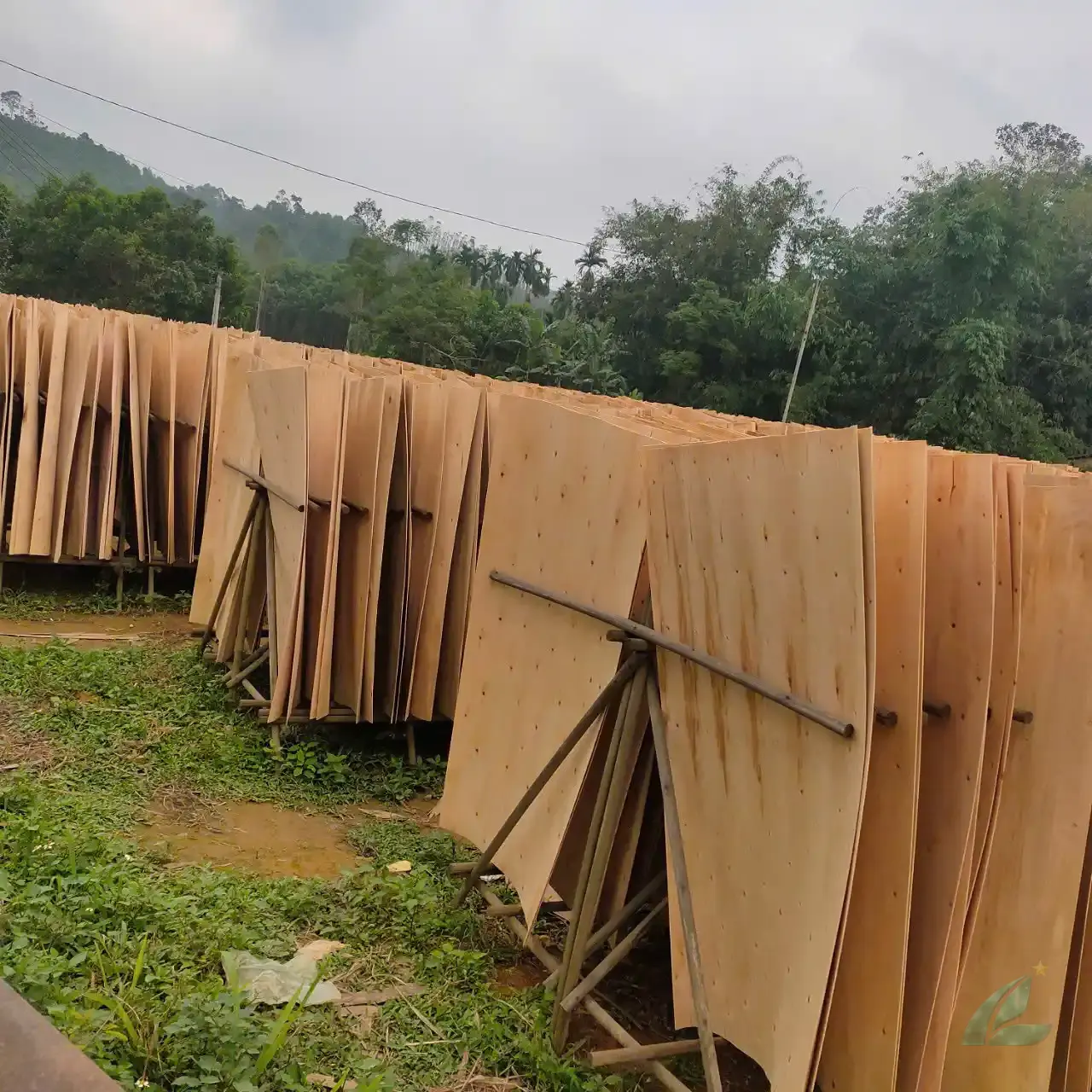
Buyers sometimes receive panels that test outside the declared density range. Four factors drive this variation:
- Moisture content at measurement
Density is measured at a specific moisture content. Standard factory moisture for export plywood is 6–8% (HCPLY QC protocol). At 12% moisture, the same panel weighs approximately 4–6% more. Rainy season batches pressed under higher ambient humidity can arrive with elevated moisture — and elevated apparent density — that drops after acclimatization. Request moisture readings alongside density declarations in mill-test reports.
2. Mixed core batches
A single panel can contain veneers from different logs of the same species — and plantation acacia density ranges from 520 to 580 kg/m³ across different growth regions. Panels at either end of this range will measure differently, even though both are correctly labeled “acacia core.”
- Glue spread and pressing parameters
Higher glue loading adds mass. Factories that use heavy resin application to compensate for lower-quality veneer bonding will produce slightly denser panels. Conversely, optimized low-resin processes with properly dried veneer produce panels closer to the wood’s natural density. This variation is typically ±2–3% of nominal density — minor but detectable in precise quality testing.
4. Core construction method
Full-stitched cores use more veneer material than loose-laid or edge-jointed cores, because the stitching process produces zero gaps. A full-stitched acacia core panel is marginally denser than a loose-laid panel of the same nominal thickness, because gaps in loose cores are air, not wood. Premium furniture panels from HCPLY’s furniture-grade facility use full-stitched construction throughout.
📐 Density by Product Type — Practical Reference
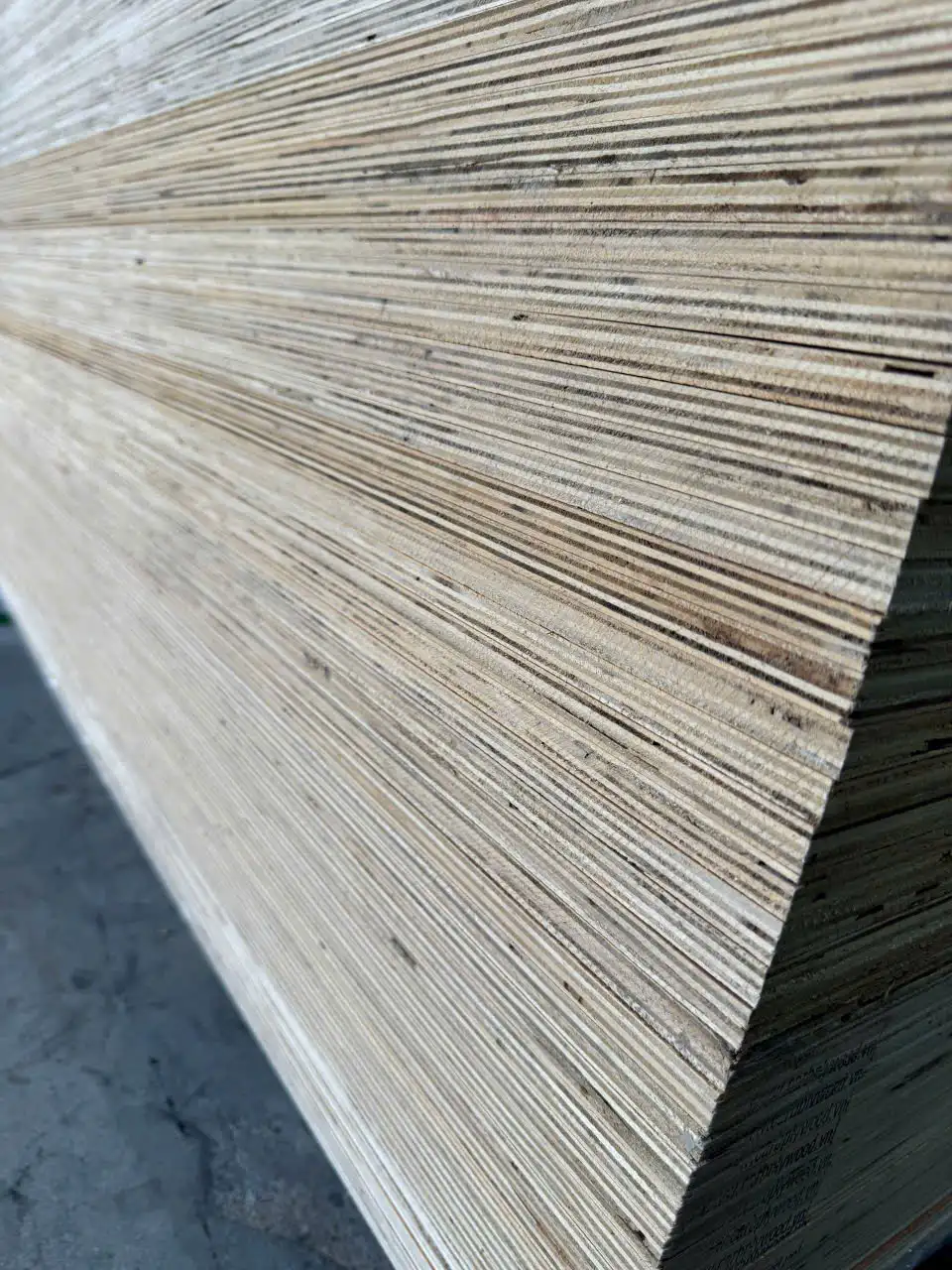
Understanding which core goes into which product type saves buyers from ordering the wrong specification. This table covers HCPLY’s standard production range:
| Product Type | Typical Core | Density Range | Application |
|---|---|---|---|
| Kitchen cabinet plywood | Styrax | 480–500 kg/m³ | European/US interior furniture |
| Birch-face plywood | Styrax | 480–500 kg/m³ | Premium cabinet, furniture |
| Okoume-face plywood | Styrax / Eucalyptus | 480–700 kg/m³ | Furniture, lightweight panels |
| Commercial bintangor | Acacia | ~580 kg/m³ | General trade, India/SE Asia |
| Packing plywood | Acacia | ~580 kg/m³ | Crates, pallets, industrial |
| Eucalyptus plywood | Eucalyptus | 650–750 kg/m³ | Flooring, structural, heavy use |
| Film-faced formwork | Eucalyptus / Acacia | 580–750 kg/m³ | Concrete shuttering |
⚠️ Important: Face veneer does not define density. Birch-face plywood from HCPLY uses styrax core — making it light at 480–500 kg/m³. A buyer specifying “birch plywood, 600 kg/m³” is describing a product that does not exist in Northern Vietnamese production. If a supplier agrees to that spec, they are likely substituting an acacia or eucalyptus core beneath the birch face — a substitution that affects weight, freight cost, and performance.
“Density tells you more than weight alone — it’s the fingerprint of your plywood’s quality and core material.” — Lucy, International Sales Manager, HCPLY
Request verified density documentation with your HCPLY quotation
📦 How Density Affects Container Loading
This is where density becomes a direct financial variable. The 40HC container has a payload limit of 28.5 MT — a hard ceiling that applies regardless of volumetric space. When core density is high, the payload limit is reached before the container fills, reducing the number of pallets that can ship.
Factory-measured results for 1220×2440mm panels, standard pallet height 1000mm (HCPLY logistics data, 2026):
| Core Species | Density | Pallets per 40HC | CBM per 40HC | Container Weight |
|---|---|---|---|---|
| Styrax | ~490 kg/m³ | 18 pallets | ~53 CBM | ~26.5 MT |
| Acacia | ~580 kg/m³ | 16 pallets | ~47.5 CBM | ~27.5 MT |
| Eucalyptus | ~700 kg/m³ | 15 pallets | ~44.5 CBM | ~28 MT |
The difference between styrax and eucalyptus is 3 pallets per container. At a typical FOB value of $400–600 per CBM, those 3 pallets represent $3,000–5,000 in missed container utilization — per shipment. For buyers ordering 6–10 containers per year, this compounds significantly.
For a complete container loading calculation with sheets-per-pallet tables across all standard thicknesses, see the Plywood Container Packing Calculation Guide.
🔧 How to Use Density for Quality Verification
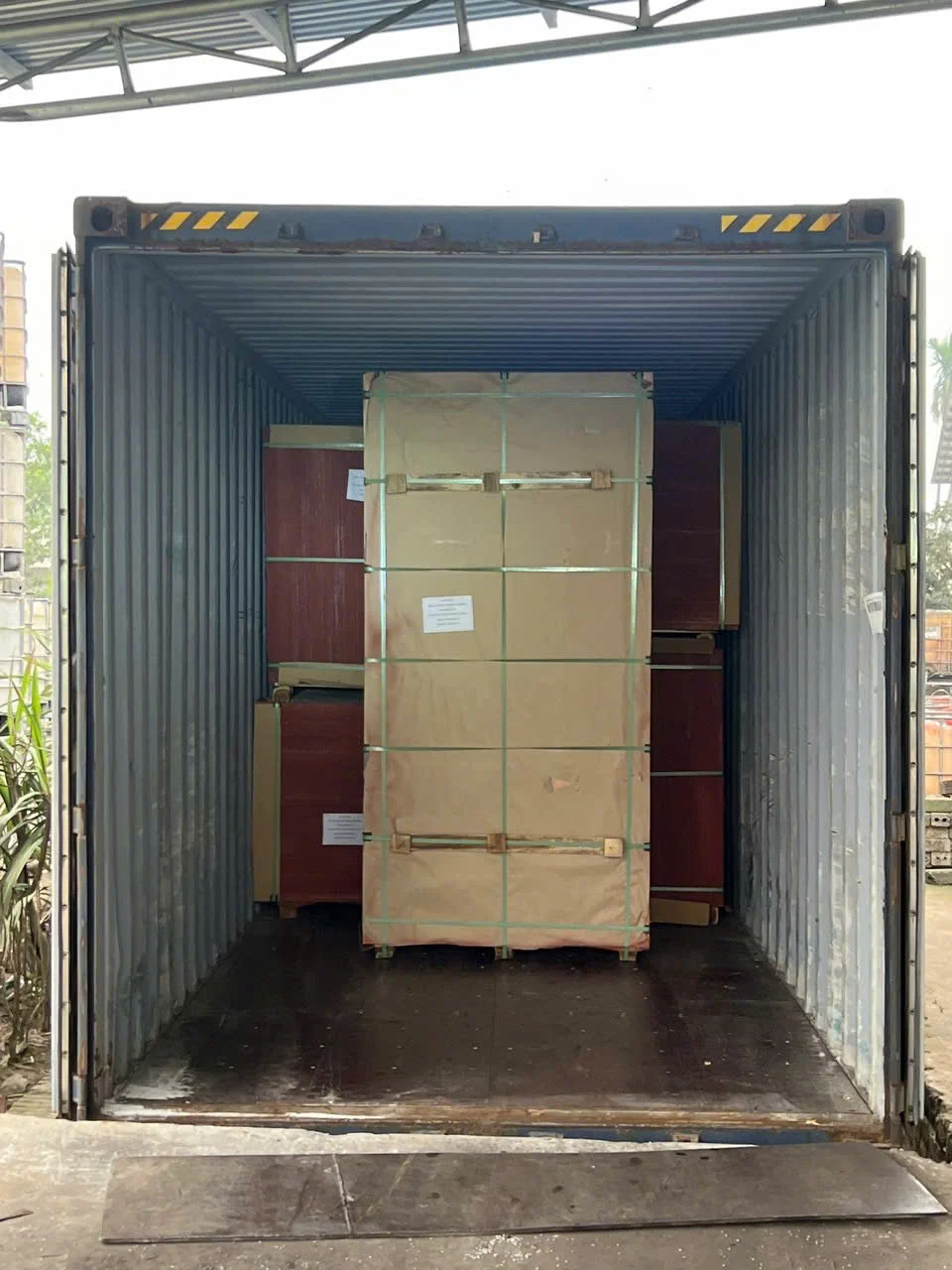
Density is one of the most reliable indicators of material substitution — the practice of quoting premium specifications while shipping cheaper core materials. Buyers can use three methods to verify:
📌 Method 1: Packing List Weight Verification
Every export shipment includes a packing list with declared weight. Calculate the expected weight from the declared specifications:
Expected weight (kg) = Thickness(m) × 1.220 × 2.440 × Density(kg/m³) × Sheets per containerIf the packing list shows weight below expected range for declared core species, request a mill-test report with independent density measurement. A 5%+ deviation warrants investigation.
📌 Method 2: Pre-Shipment Inspection
Independent third-party inspectors (SGS, Bureau Veritas, Intertek) include density verification in standard pre-shipment inspection protocols for plywood. Density is measured by weighing a cut sample of known dimensions. This test takes less than 10 minutes per panel and costs under $300 for a full inspection. For orders above $50,000 FOB value, pre-shipment inspection is a standard risk management step.
📌 Method 3: Specify Core Species, Not Generic Density
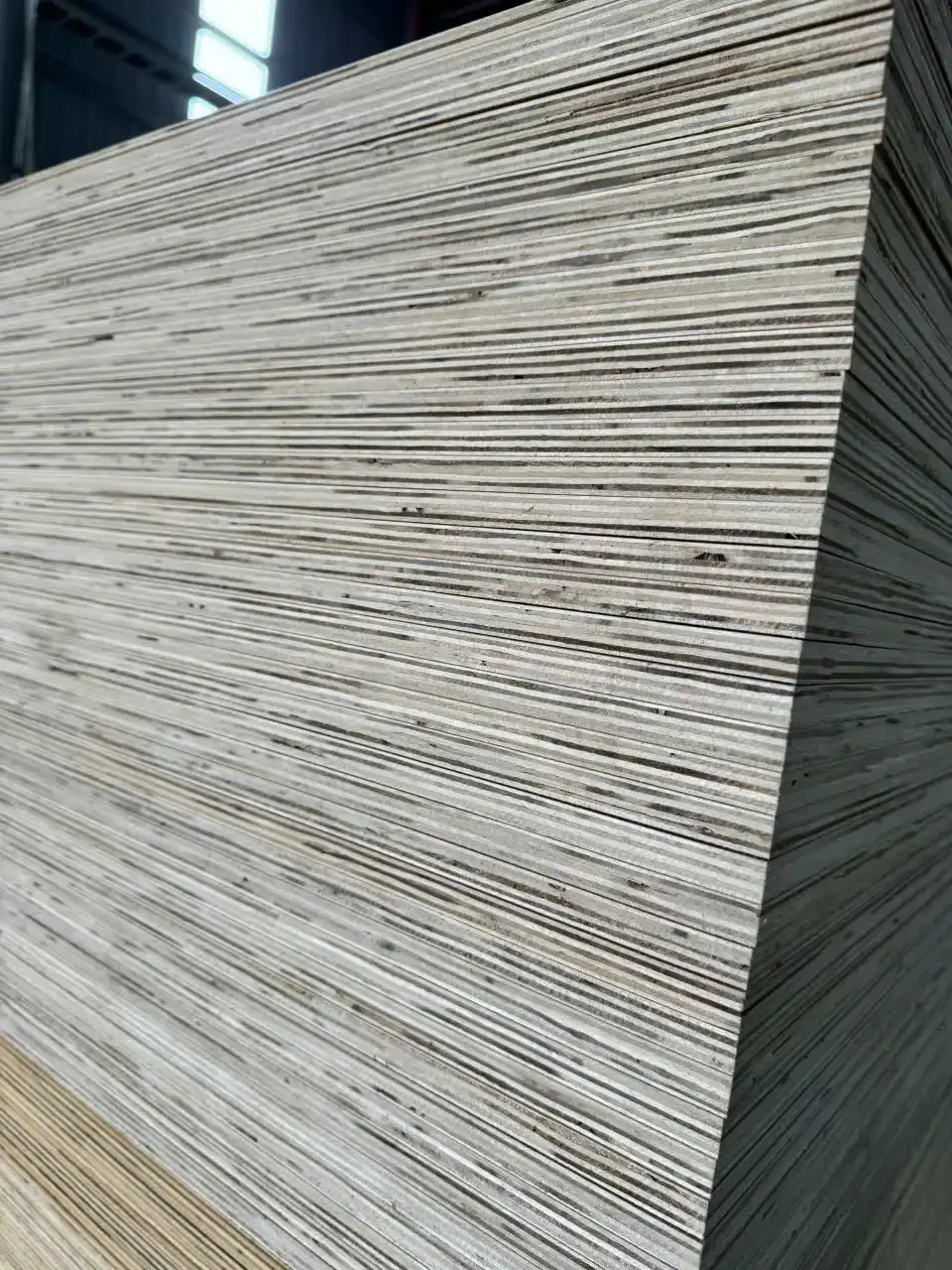
The most reliable protection: specify the core species by name in the purchase contract. “Styrax core” is verifiable by visual inspection of a cut edge — styrax is pale cream/white with fine even grain. “Acacia core” shows darker, more varied grain patterns. “Eucalyptus core” is yellow-brown and noticeably heavier.
Specifying “density 580–600 kg/m³” without naming the core species leaves room for blended or substituted material. Specifying “acacia core, density ~580 kg/m³” locks both the material and the expected measurement.
For a full comparison of core species properties and visual identification, read the Plywood Core Types Guide.
📋 Density and Performance — What the Numbers Mean
Higher density generally means better mechanical performance, but the relationship is not linear across all properties. Buyers should match density to application requirements, not default to the heaviest available option.
Structural applications (flooring, formwork, scaffolding)
Eucalyptus core at 650–750 kg/m³ delivers the highest MOR (Modulus of Rupture) and screw-holding strength per panel. For flooring substrates, structural load-bearing panels, and scaffolding deck boards, the performance advantages of eucalyptus core justify its weight and freight cost premium.
Eucalyptus plantation density in Southeast Asia falls consistently in the 640–760 kg/m³ range (FAO Forestry Paper, Eucalyptus in a Changing World, 2004) — confirming that Northern Vietnamese eucalyptus sits at the upper end of commercially available plantation densities globally.
Furniture and interior applications
Styrax core at 480–500 kg/m³ was specifically adopted by Vietnamese mills as a birch-core substitute for European and US furniture manufacturing. Birch core from Scandinavian sources ranges from 550–700 kg/m³ — heavier than styrax. Yet European kitchen cabinet manufacturers prefer styrax because it provides adequate screw-holding for cabinet construction while minimizing furniture weight and freight cost.
For high-volume furniture production shipping to Germany, Poland, or South Korea, styrax core is the specification that optimizes the full cost equation: material cost + freight + performance.
Commercial and packaging applications
Acacia core at ~580 kg/m³ is the workhorse for general commercial plywood. It is neither the lightest nor the heaviest — it is the most available and most cost-competitive in Northern Vietnam. For buyers in India, Southeast Asia, and the Middle East sourcing commercial-grade panels, acacia core is the default specification unless weight-sensitivity or high mechanical performance is a stated requirement.
⚙️ Quick Reference: Weight per Sheet at Common Thicknesses
For full pre-calculated weight tables, the Plywood Weight per Sheet guide covers 10 thicknesses across both 1220×2440mm and 1250×2500mm sizes. The summary below covers the four most ordered thicknesses at standard sheet size 1220×2440mm:
| Thickness | Styrax ~490 kg/m³ | Acacia ~580 kg/m³ | Eucalyptus ~700 kg/m³ |
|---|---|---|---|
| 12mm | 17.5 kg | 19.6 kg | 25.0 kg |
| 15mm | 21.9 kg | 24.6 kg | 31.3 kg |
| 18mm | 26.3 kg | 29.5 kg | 37.5 kg |
| 21mm | 30.6 kg | 34.4 kg | 43.8 kg |
Weights use factory-measured densities (HCPLY production data, 2026) at standard export moisture content 6–8%. For standard thickness and size specifications, see the Plywood Sizes & Thickness Guide.
✅ Conclusion — Three Rules for Density-Smart Procurement
Vietnam plywood density is manageable once buyers move away from generic numbers toward core-species specifications. Three rules simplify the process:
-
Specify core species, not generic density. “Acacia core” gives you a verifiable material, consistent density, and a clear quality baseline. “Hardwood core, 580–600 kg/m³” gives you nothing that cannot be manipulated.
-
Cross-check density against the packing list. Every shipment has a declared weight. Run the calculation. If the numbers don’t match within 5%, ask for the mill-test report before the container loads.
-
Match density to application, not to price. Eucalyptus core for furniture adds freight cost without performance benefit. Styrax core for flooring substrates underdelivers on structural strength. The right density is the one that matches the end use — and that starts with knowing what each Vietnamese core species actually delivers.
HCPLY includes verified density specifications and core species declaration in every quotation and packing list. Factory-direct documentation means the number on the quote is the number on the container — no intermediary layers to obscure what is actually shipping.
Disclosure: This article is published by HCPLY, a Vietnam-based plywood manufacturer and export operator. While we aim to provide objective industry guidance, readers should consider our perspective as a market participant when evaluating recommendations.