

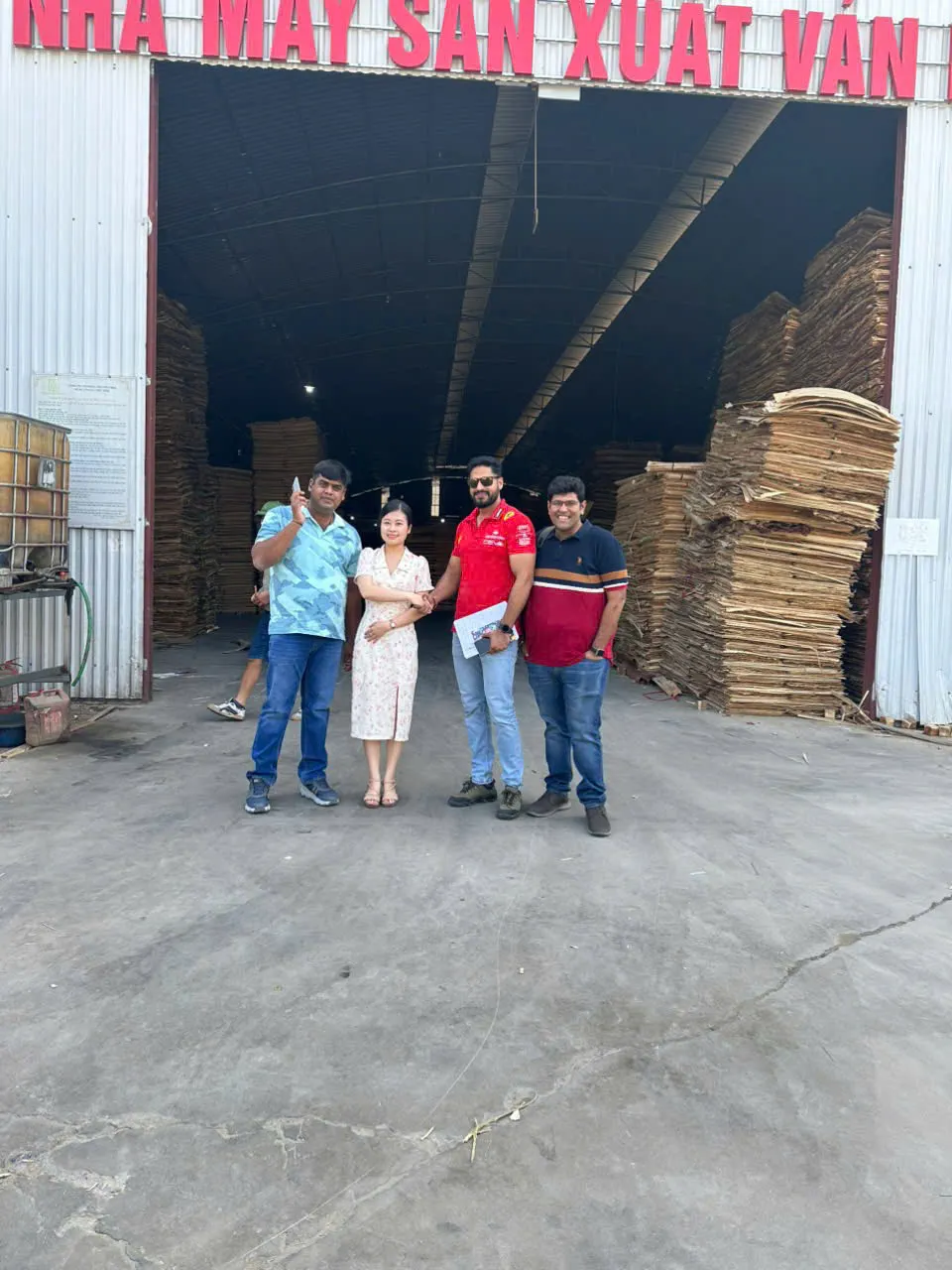
India imported over $65 million worth of plywood in the latest 12-month reporting period, and Vietnam captured 30.33% of that value — the highest year-over-year growth contribution among all supplier countries (GTAIC Trade Intelligence, 2025). For Indian importers sourcing buying plywood from Vietnam, the challenge is not finding suppliers — it is separating genuine manufacturers from trading companies reselling the same product at 40-70 USD/CBM markup.
This guide covers the supplier market, BIS compliance requirements, and due diligence framework for Indian buyers sourcing plywood from Vietnam.
“Indian buyers consistently tell us they waste 3-6 months evaluating suppliers who turn out to be trading companies. That delay costs more than the plywood itself.” — Lucy, International Sales Manager, HCPLY
Request a free quote with FOB Hai Phong pricing for India → No commitment, response within 24 hours.
📊 Vietnam Plywood Exports to India — Market Snapshot
Vietnam’s plywood exports to India grew 15.57% in value during the May 2024 to April 2025 period, even as overall import volume into India declined by 62.63% (GTAIC Trade Intelligence, 2025). This signals a clear shift: Indian buyers are paying more per cubic meter for higher-quality Vietnamese plywood rather than increasing volume of low-grade imports.
| Metric | Value |
|---|---|
| India total plywood import value (12 months) | ~$65.5M |
| Vietnam share by value | 30.33% |
| Nepal share by value | 45.47% |
| China share by value | 8.77% |
| Vietnam value growth YoY | +15.57% |
| Key HS code | 4412 |
Key Insight: Vietnam ranks second by import value but first in growth rate among India’s plywood suppliers. Nepal dominates volume (86%) through low-cost shipments, while Vietnam plywood companies compete on quality, certification compliance, and product diversity (GTAIC Trade Intelligence, 2025).
Indian demand concentrates on three product categories from Vietnam:
- Gurjan-faced plywood — premium furniture and interior applications, the single highest-value import category
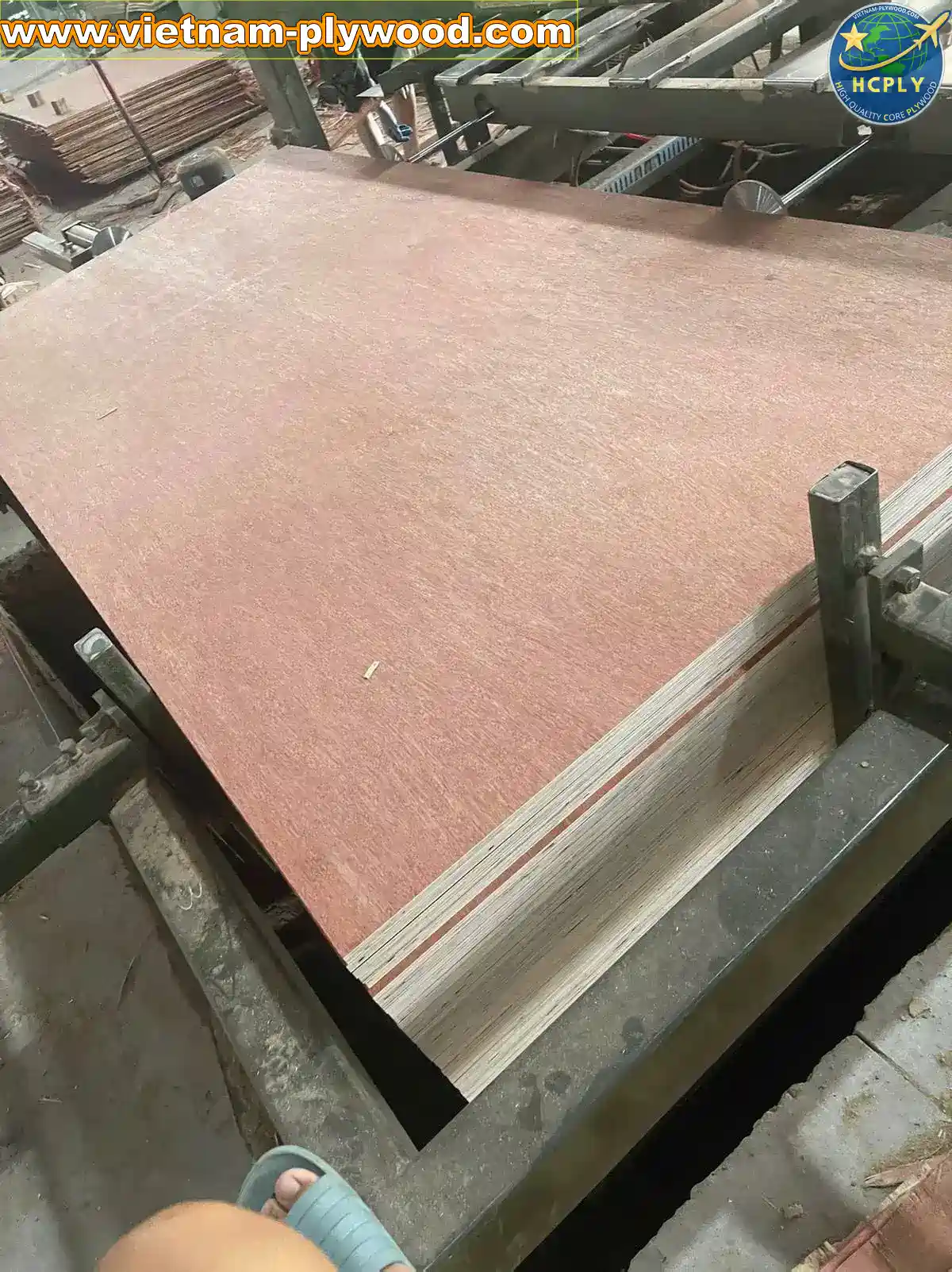
- Bintangor-faced plywood — commercial furniture, packaging, and general-purpose use at competitive pricing
- Film-faced plywood — concrete formwork for India’s construction boom, requiring phenolic WBP adhesive and glue types for weather resistance
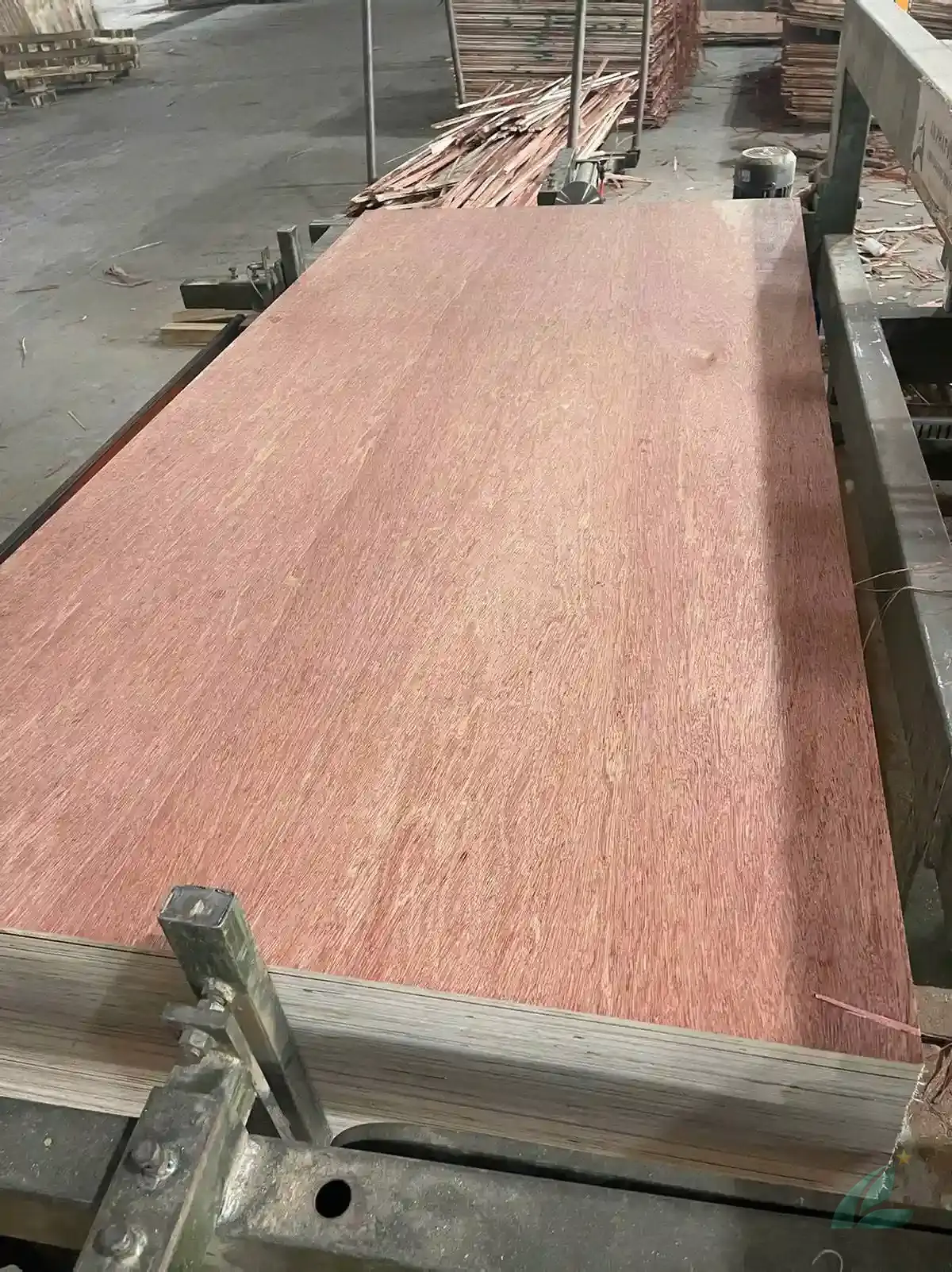
🏭 Types of Vietnam Plywood Companies Serving India
Vietnam plywood companies serving the Indian market fall into four categories. Understanding these categories prevents the most common procurement mistake — comparing prices between fundamentally different business models.
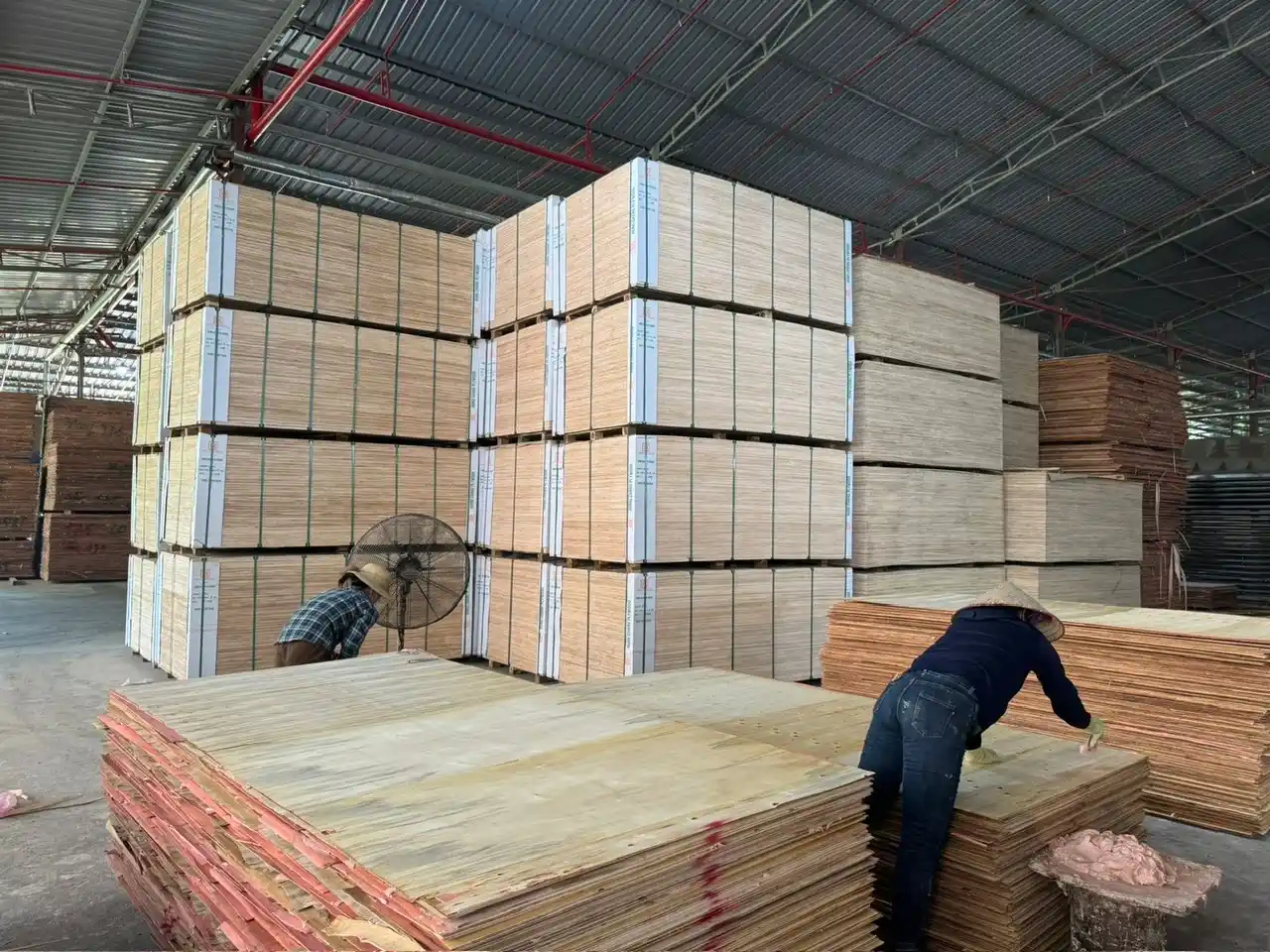
Factory-direct exporters operate their own production lines and export without domestic VAT overhead. They control QC from veneer peeling through container loading. HCPLY operates in this category — managing 3 specialized facilities covering furniture-grade, commercial, and film-faced plywood segments with active BIS compliance for Indian imports.
Trading companies purchase finished panels from multiple workshops and resell under their own brand. They add 8% domestic VAT plus sales margin — typically USD 40-70/CBM above factory pricing. Over 80% of search results show trading companies, not manufacturers.
Specialized single-factory manufacturers own one production line and export directly. Strong in one product segment but cannot offer multi-segment coverage. Common in Phu Tho, Yen Bai, and Bac Giang provinces.
International group branches are Vietnam operations of larger multinational wood panel companies. Strong logistics and compliance infrastructure, but Vietnam production decisions may not be locally optimized.
For Indian buyers, the critical differentiator is BIS compliance capability. Not all Vietnam factories can produce to IS 303 and IS 710 requirements — the testing protocols, glue specifications, and documentation standards are specific to the Indian market.
📋 Product-Market Fit — What India Buys from Vietnam
Not every vietnam plywood company produces what Indian buyers actually need. Here is the product-market alignment based on actual import patterns:
| Product | Face Veneer | Core | Glue | Emission | India Application | Price Range (FOB) |
|---|---|---|---|---|---|---|
| Gurjan Plywood | Gurjan A/B | Acacia / Eucalyptus | WBP Phenolic | E1 | Premium furniture, marine | $350-400+/CBM |
| Bintangor Commercial | Bintangor A/B | Acacia | Melamine MR | E2 | Commercial furniture, packaging | $200-260/CBM |
| Film-Faced | Phenolic film | Eucalyptus / Acacia | Phenolic WBP | N/A | Construction formwork | $280-380/CBM |
| Packing Grade | Bintangor C/D | Acacia | Melamine MR | E2 | Pallets, crates, shipping | $180-220/CBM |
⚠️ Important: Glue type and emission standard are separate specifications. Melamine (MR) and Phenolic (WBP) describe water resistance. E0/E1/E2 describe formaldehyde emission levels. A product can be “Melamine MR, E1” or “Phenolic WBP, E0” — these are independent parameters. Read the full glue and emission guide.
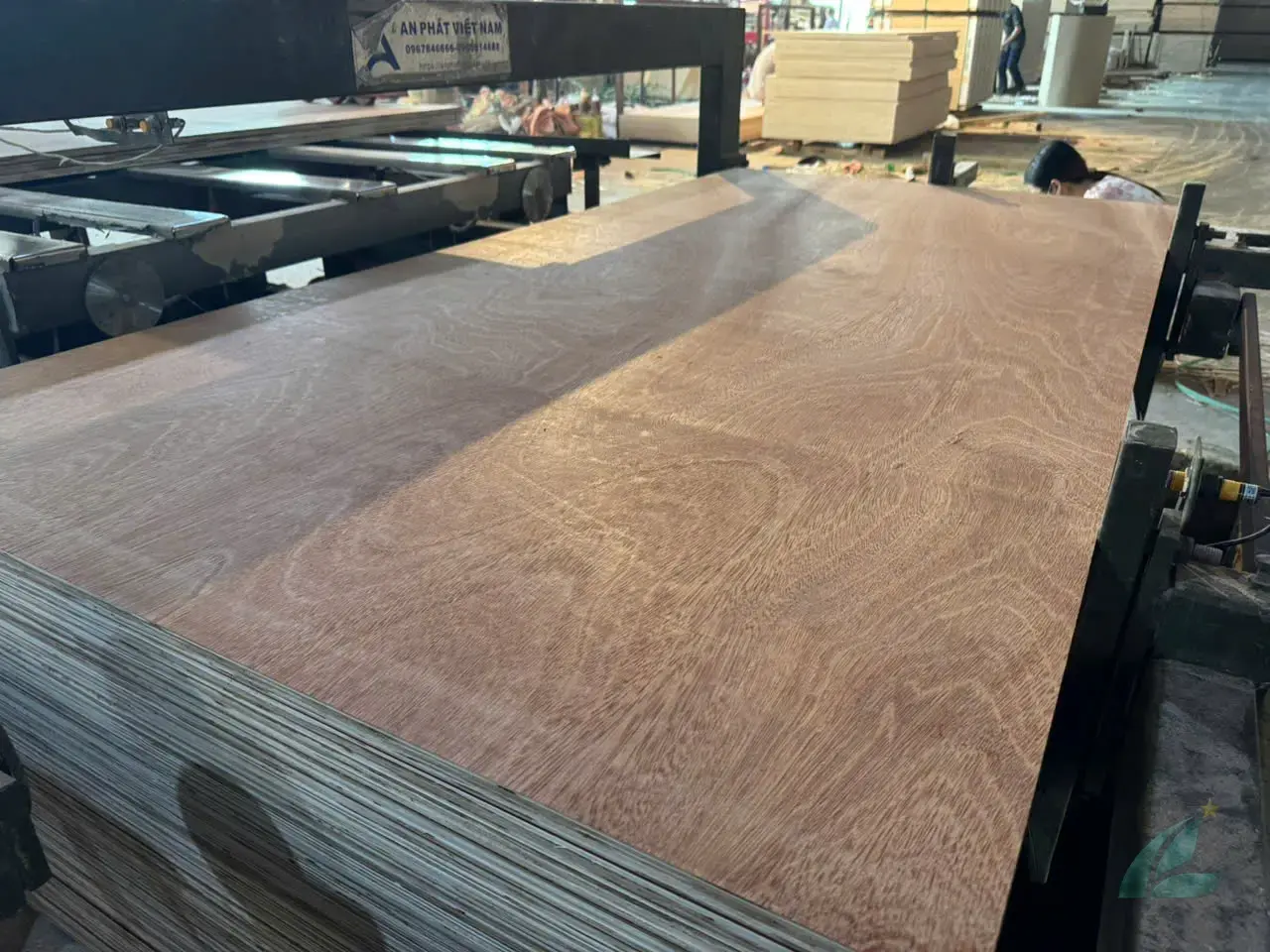
🔒 BIS Certification — The India Import Gate
Since February 2025, all plywood sold in India must carry BIS (Bureau of Indian Standards) marks under quality control Order enforcement. This applies to both domestic manufacturers and imports (Bureau of Indian Standards, 2025).
Key standards for Vietnamese plywood entering India:
| Standard | Scope | Requirement |
|---|---|---|
| IS 303:1989 | Plywood for general purposes | Mandatory BIS mark |
| IS 710:2010 | Marine plywood | Mandatory for marine-grade claims |
| IS 5509 | Fire-retardant plywood | If claiming fire resistance |
What this means for Indian importers:
- Your Vietnam plywood supplier MUST hold valid BIS certification or license
- Products without BIS marks face seizure at Indian customs
- The BIS registration process typically takes 4-6 months from application to approval
- Factory inspection by BIS-authorized agents is required
HCPLY’s BIS status: Active compliance documentation maintained for Indian market shipments. Our export team handles complete documentation including BIS-related paperwork, Certificate of Origin (Form AI for India), Phytosanitary Certificate, and Fumigation Certificate (HCPLY production data, 2026).
Verify HCPLY’s BIS compliance — contact our India desk →
✅ Due Diligence Checklist for Indian Buyers
Before wiring deposit to any Vietnam plywood supplier, verify these 10 points:
Documentation Checks:
- Factory business license (not just company registration) — confirms manufacturing capability
- ISO 9001 certificate issued to the FACTORY, not a trading company
- FSC Chain of Custody certificate — verify on info.fsc.org database
- BIS compliance documentation — mandatory for India since February 2025
- Recent Bill of Lading showing the factory as shipper (not a trading intermediary)
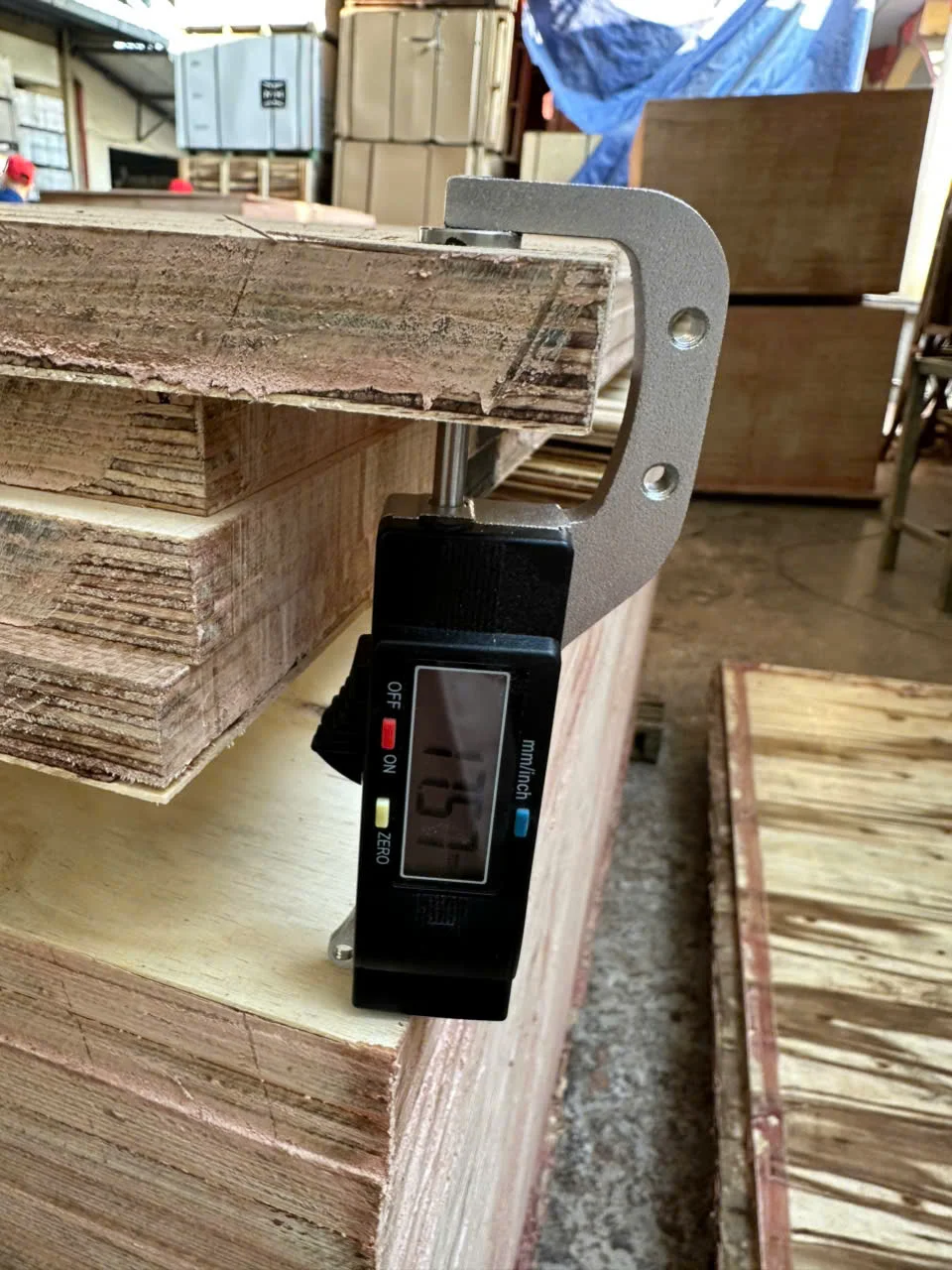
Quality Verification: 6. Request trial container (1x 40HC) before committing to volume 7. Arrange third-party pre-shipment inspection — SGS, Bureau Veritas, or CCIC 8. Ask for real-time QC photos during production: core layup, pressing, sanding, edge inspection 9. Specify thickness tolerance in writing: standard is ±0.3mm
Commercial Terms: 10. Confirm FOB vs CIF pricing, payment terms (L/C recommended for first orders), and lead time (typical: 15-20 days from order confirmation)
Key Insight: Over 80% of Vietnam plywood suppliers appearing in search results are trading companies, not manufacturers. They embed 8% domestic VAT plus sales overhead into their FOB pricing — adding 40-70 USD/CBM versus factory-direct pricing (HCPLY export records, 2026).
📦 Shipping and Logistics — Vietnam to India
All major vietnam plywood companies ship FOB Hai Phong port. Indian buyers importing plywood should understand the container packing calculation to verify quoted volumes.
Standard shipping parameters:
| Parameter | Value |
|---|---|
| Port of loading | Hai Phong, Vietnam |
| Container type | 40HC (High Cube) |
| Maximum payload | 28.5 MT |
| CBM per 40HC | 40-53 CBM (depends on core species) |
| Transit to Nhava Sheva (Mumbai) | 12-16 days |
| Transit to Kolkata | 8-12 days |
| Transit to Chennai | 10-14 days |
Packing efficiency by core species:
| Core | Density | Pallets per 40HC | CBM per 40HC |
|---|---|---|---|
| Acacia (~580 kg/m3) | Medium | 16 | ~47.5 |
| Eucalyptus (650-750 kg/m3) | Heavy | 15 | ~44.5 |
| Styrax (480-500 kg/m3) | Light | 18 | ~53 |
Acacia core dominates India-bound shipments because it balances cost efficiency with acceptable density. For any plywood exporter Vietnam to India, container optimization directly impacts CIF pricing. Eucalyptus core ships fewer sheets per container (heavier density hits the 28.5 MT payload limit faster), while styrax core maximizes CBM but costs more per cubic meter.
🔍 How to Compare Vietnam Plywood Companies — Scoring Framework
Use this framework to evaluate any plywood exporter Vietnam offers:
| Criteria | Weight | What to Check |
|---|---|---|
| Factory ownership | 25% | Own factory vs. trading company vs. hybrid model |
| India export history | 20% | Years active, container count, Indian client references |
| BIS certification | 15% | Active BIS license or compliance documentation |
| Product match | 15% | Gurjan, bintangor, film-faced — covers your specific need |
| Certification stack | 15% | FSC, CARB P2, CE, ISO 9001, EUDR |
| Pricing transparency | 10% | FOB breakdown, willingness to show factory cost structure |
Red flags when evaluating suppliers:
- Company will not share factory business license or location
- Bill of Lading shows a different company name as shipper
- Single certification covers all product types (unlikely for multi-segment factories)
- No BIS documentation available despite claiming India export experience
- Price significantly below market range — may indicate material substitution risk
Compare HCPLY against your current supplier → Send us your current specification sheet and we will provide a transparent price comparison.
🏭 Why Factory Type Matters for Indian Buyers
Vietnam has four distinct factory segments, and understanding which segment produces your product directly affects quality and pricing:
Segment A — Premium Furniture Factories: Core: styrax or eucalyptus | Construction: full stitched | Glue: Melamine MR, E0/E1 | Sanding: always sanded. These factories produce gurjan-faced and birch-faced plywood for the Indian premium furniture market.
Segment B — Commercial / Packing Factories: Core: acacia (loose-lay or edge-jointed) | Glue: Melamine MR, E2 | Sanding: minimal or none. These factories produce the bintangor and packing-grade plywood that constitutes the bulk of India’s volume imports from Vietnam.
Segment C — Premium Film-Faced Factories: Core: eucalyptus or acacia Grade A | Film: AICA premium 135+ gsm | Glue: Phenolic WBP | Reuse: 15-20 times. For India’s construction formwork demand.
⚠️ Note: You cannot compare a price quote from a Segment A factory (full stitched, E0, sanded) with a quote from a Segment B factory (loose-lay, E2, unsanded) — even when both products carry the same name “bintangor plywood.” The specifications, quality, and cost structure are fundamentally different.
📐 Specification Template for Indian Import Orders
When contacting vietnam plywood companies, provide this specification sheet to receive accurate pricing:
PLYWOOD SPECIFICATION REQUEST — India Import

Face veneer:     [Gurjan / Bintangor / Film-faced / Other]
Face grade:      [A/B for most; D/E/F for birch]
Core species:    [Acacia / Eucalyptus / Styrax]
Core construction: [Full stitched / Edge-jointed / Loose-lay]
Glue type:       [Melamine MR / Phenolic WBP]
Emission:        [E0 / E1 / E2]
Thickness:       [mm] ± 0.3mm tolerance
Sheet size:      [1220x2440 / 1250x2500 / Custom]
Sanding:         [Sanded both sides / One side / Unsanded]
Quantity:        [Number of 40HC containers]
Destination port: [Nhava Sheva / Kolkata / Chennai / Other]
Payment terms:   [L/C / T/T / Mixed]
Certifications:  [BIS / FSC / CARB P2 / CE / ISO]
Providing complete specifications upfront eliminates back-and-forth communication and confirms every plywood manufacturer in Vietnam quotes on identical parameters — making price comparison meaningful. For the full import process, see how to import plywood from Vietnam.
📈 India-Vietnam Plywood Trade Outlook 2026
Three trends are reshaping how vietnam plywood companies serve Indian buyers in 2026:
-
BIS enforcement tightening. The Quality Control Order now applies to all enterprise sizes as of August 2025 (Bureau of Indian Standards, 2025). Vietnamese factories without BIS certification are effectively locked out of the Indian market. This consolidates India-bound exports among the top 10-15 certified manufacturers.
-
Value over volume. The Vietnam plywood India trade saw export value grow 15.57% while volume dropped 62.63% (GTAIC Trade Intelligence, 2025). Indian buyers are upgrading from low-grade Nepalese plywood to Vietnamese furniture-grade and certified construction plywood — a structural shift favoring quality-focused plywood exporter Vietnam operations with strong certification profiles.
-
Certification stacking. Indian distributors increasingly require FSC + BIS + CARB P2 simultaneously. Only a handful of Vietnamese factories hold all three. HCPLY maintains this full certification stack across all 3 production facilities, providing documentation that satisfies Indian customs, end-buyer audits, and retail compliance requirements (HCPLY production data, 2026).
Disclosure: This article is published by HCPLY, a Vietnam-based plywood manufacturer and export operator. While we aim to provide objective industry guidance, readers should consider our perspective as a market participant when evaluating recommendations.
Start sourcing from a certified Vietnam plywood manufacturer → HCPLY’s India desk responds within 24 hours with complete specifications, pricing, and certification documentation.