

Vietnam is one of the world’s largest producers of engineered wood panels, and importers regularly face the same decision: should you source HDF panels, MDF boards, or Vietnam plywood for your application?
When evaluating Vietnam HDF plywood vs MDF panels, the answer depends on three things — density requirements, structural load, and moisture exposure. This HDF vs MDF plywood Vietnam sourcing guide covers all three, with factory-level data so you can specify correctly before sending your inquiry.
📋 TL;DR — HDF vs MDF vs Plywood Comparison Table
| Specification | MDF Panels | HDF Panels | Vietnam Plywood |
|---|---|---|---|
| Density | 600–800 kg/m³ | 800–1,100 kg/m³ | 480–750 kg/m³ (core-dependent) |
| Structural strength | Low | Medium | High (cross-grain layers) |
| Moisture resistance | Poor | Moderate | Good (MR glue), Excellent (WBP) |
| Screw-holding | Low | Medium | High |
| Machinability | Excellent | Good | Good |
| Edge finish | Smooth, no grain | Smooth, no grain | Raw edge — needs banding |
| Best for | Painted surfaces, doors | Flooring cores, doors, cabinets | Furniture frames, construction, marine |
| Typical glue/emission | Urea resin / E0–E2 | Urea resin / E0–E2 | Melamine MR or Phenolic WBP / E0–E2 |
| Export from Vietnam | Yes | Yes | Yes — HCPLY primary product |
⚠️ Important: Glue type and emission standard are two separate specifications. E0 is a formaldehyde emission class — it does not define whether the glue is melamine or phenolic. Always specify both independently when sourcing from Vietnam.
📦 What Is MDF? Vietnam Production Context
MDF (Medium-Density Fiberboard): An engineered panel made by breaking wood fibers into fine particles, mixing with urea-formaldehyde resin and wax, then hot-pressing into sheets. Density range: 600–800 kg/m³ (Forest Products Laboratory, USDA, 2023).
Vietnam produces significant volumes of MDF, primarily in the Mekong Delta and industrial zones near Binh Duong and Ho Chi Minh City. The raw material is plantation-grown acacia and rubber wood chips.
Key properties:
- Smooth, consistent surface — ideal for painting, lamination, and CNC routing
- Uniform density throughout — no voids, no grain, predictable behavior on machines
- Poor moisture resistance — swells significantly when wet, loses structural integrity
- Low screw retention — fasteners pull out under repeated load cycles
MDF is the standard substrate for flat-panel furniture doors, shelving with melamine paper overlay, and routed decorative moldings. Its consistent machinability makes it popular with furniture factories running automated production lines.
📦 What Is HDF? Key Differences from MDF
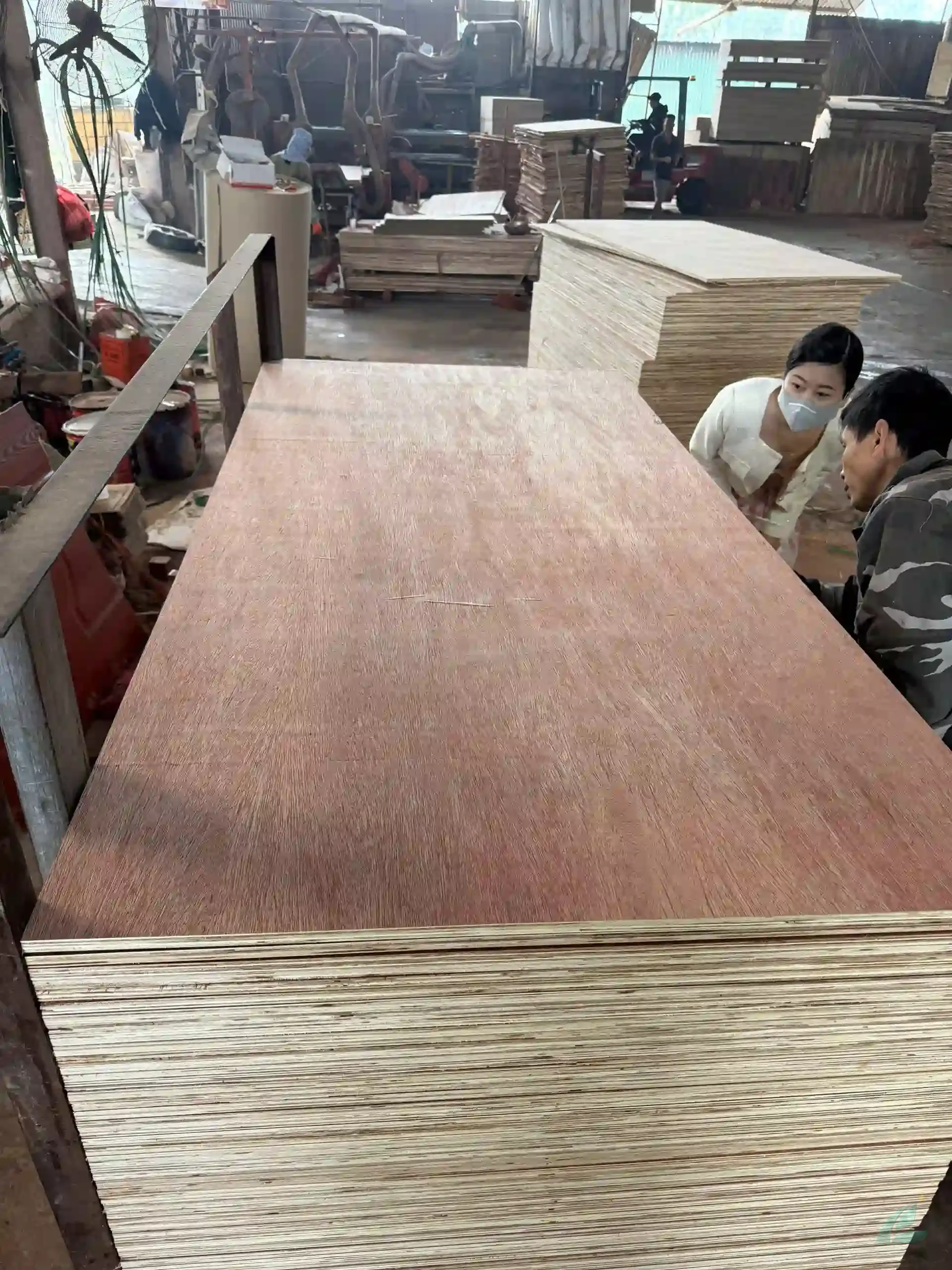
HDF (High-Density Fiberboard): Same fiber-and-resin process as MDF but pressed at higher pressure and temperature to achieve 800–1,100 kg/m³ density (Wood-Based Panel Technology, FAO, 2022). The result is a harder, denser sheet that resists surface denting and handles moisture better than standard MDF.
Where HDF outperforms MDF:
- Laminate flooring core — the thin 8–12mm core layer beneath the wear surface in laminate floors is almost universally HDF, because it holds the click-lock joint and resists moisture from the subfloor
- High-traffic cabinet doors — HDF door panels maintain flat surfaces under repeated opening and closing
- Thinner profiles — at 3–6mm thickness, HDF holds screws and hinges that MDF at the same thickness cannot
Where HDF falls short:
- Still no cross-grain structure — unlike plywood, the fibers are randomly oriented, so tensile strength perpendicular to the face is limited
- Heavy: at 1,000+ kg/m³, a 18mm HDF sheet weighs roughly 40–42 kg per panel (2440×1220mm), compared to 25–30 kg for styrax-core plywood of the same size
- Higher cost per cubic metre than standard MDF
💡 Tip: Vietnamese manufacturers and traders often use “HDF plywood” as a colloquial term for thick HDF boards used as plywood substitutes in furniture production. These are not plywood — they have no cross-grain layers. Confirm the manufacturing process before finalizing your specification.
🔧 Vietnam Plywood — How It Differs Structurally
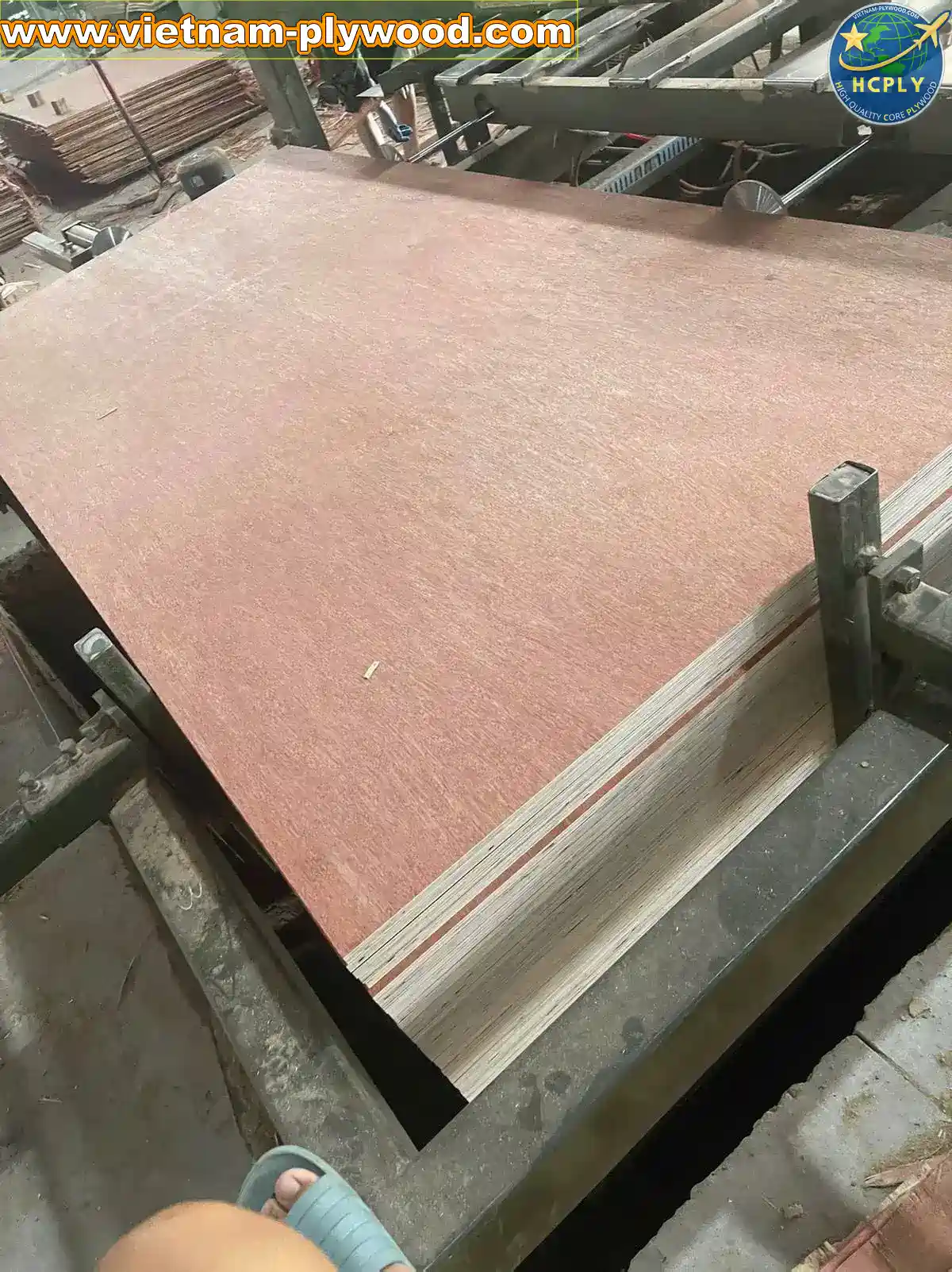
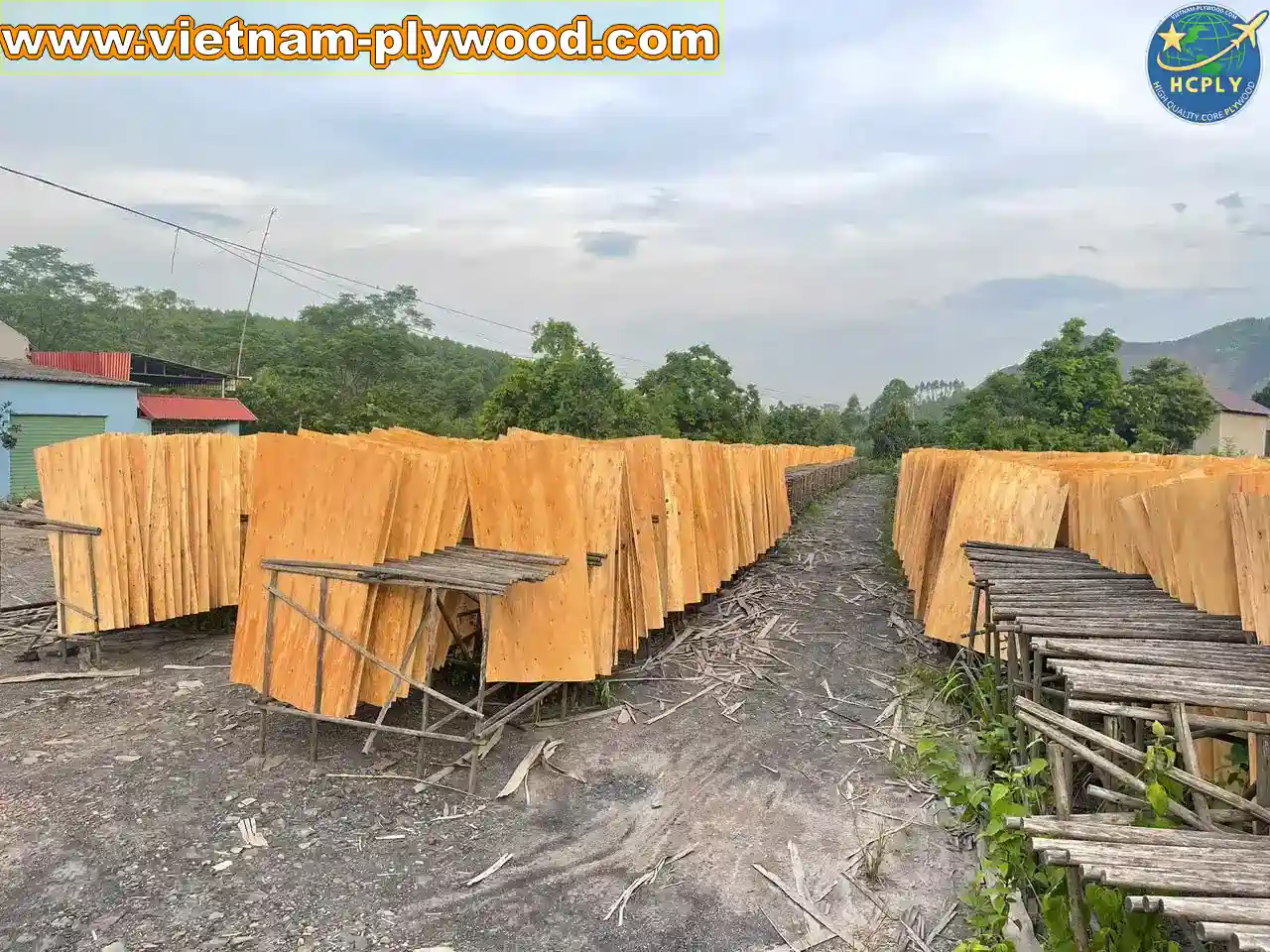
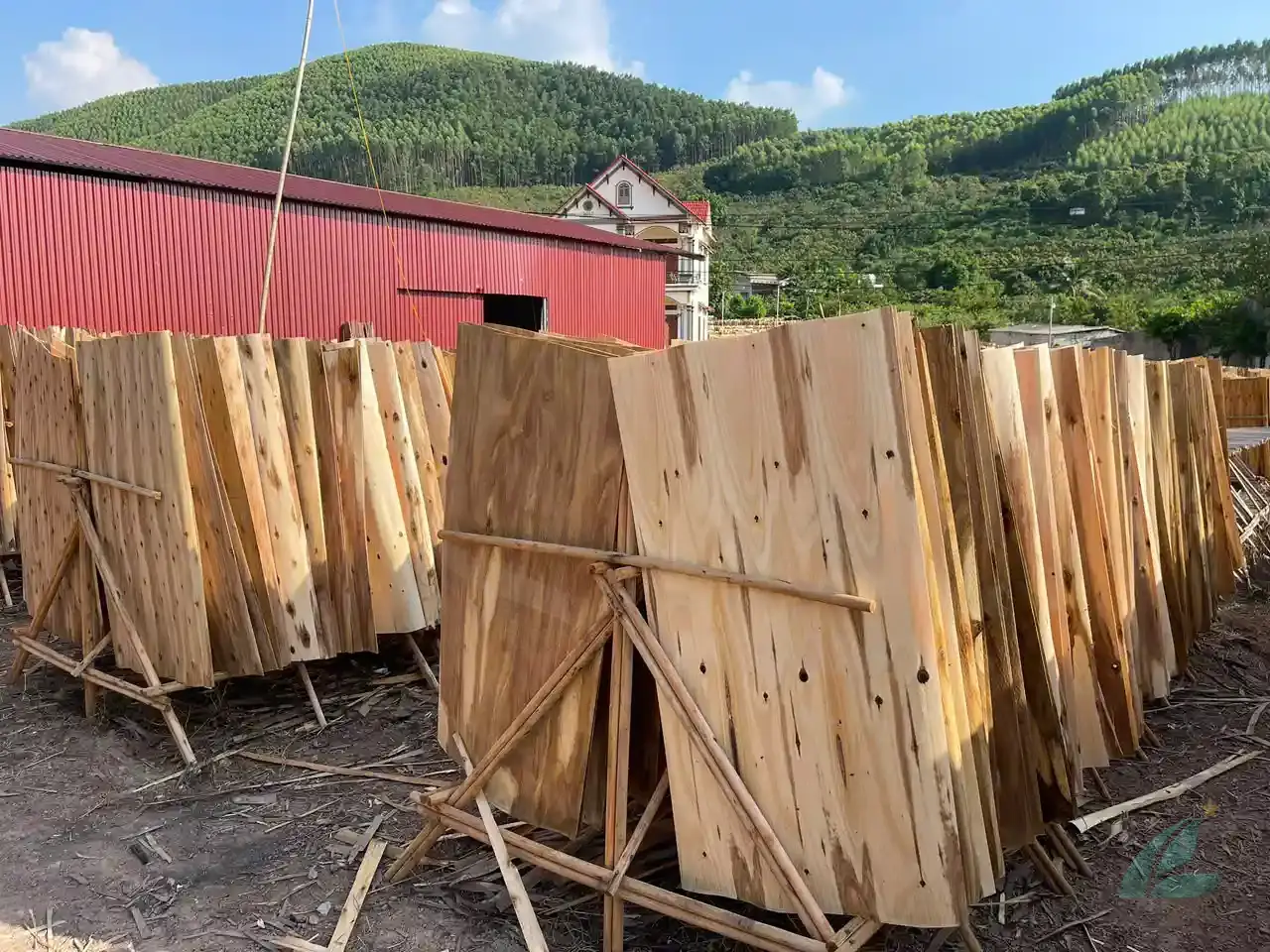
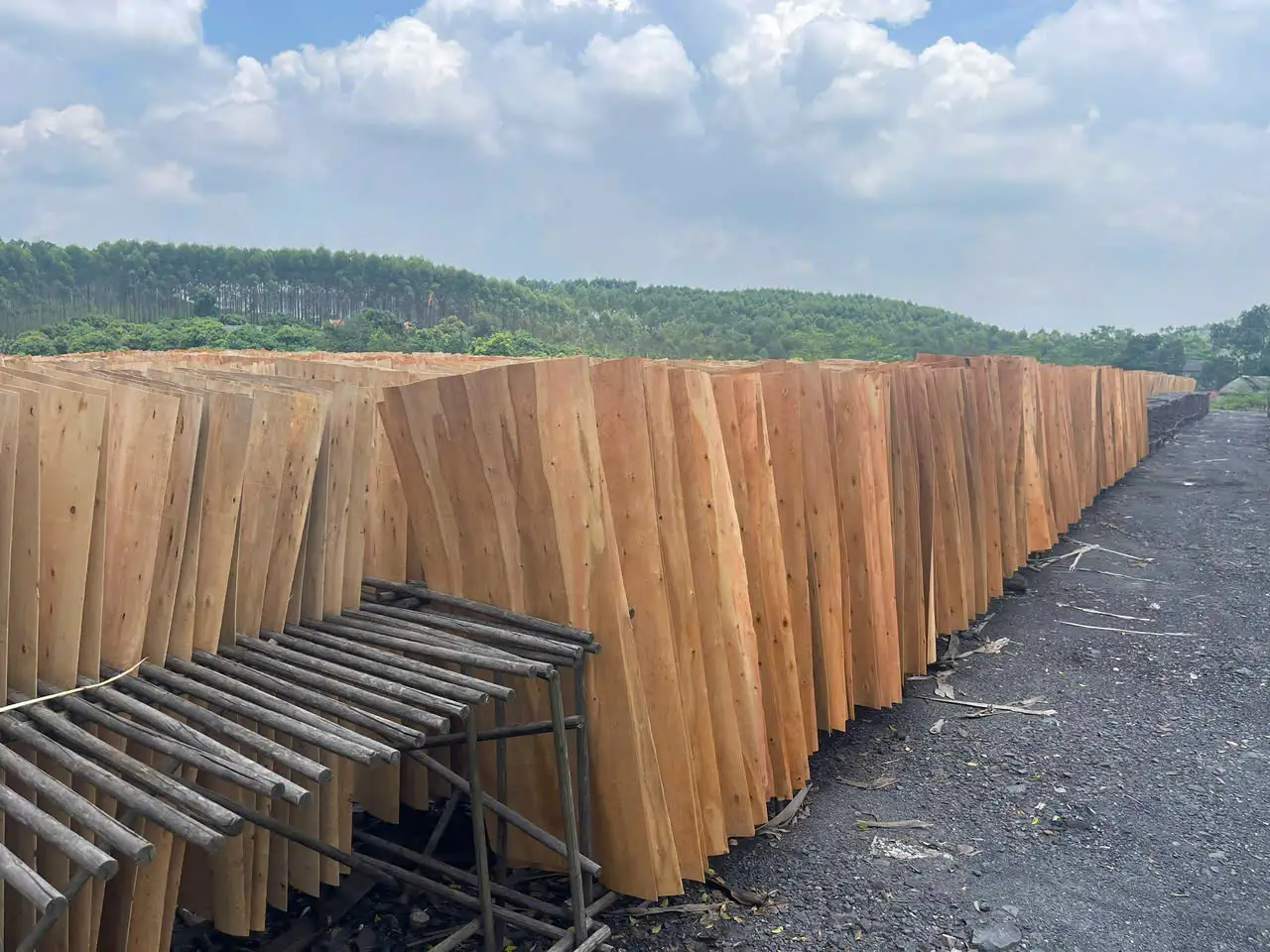
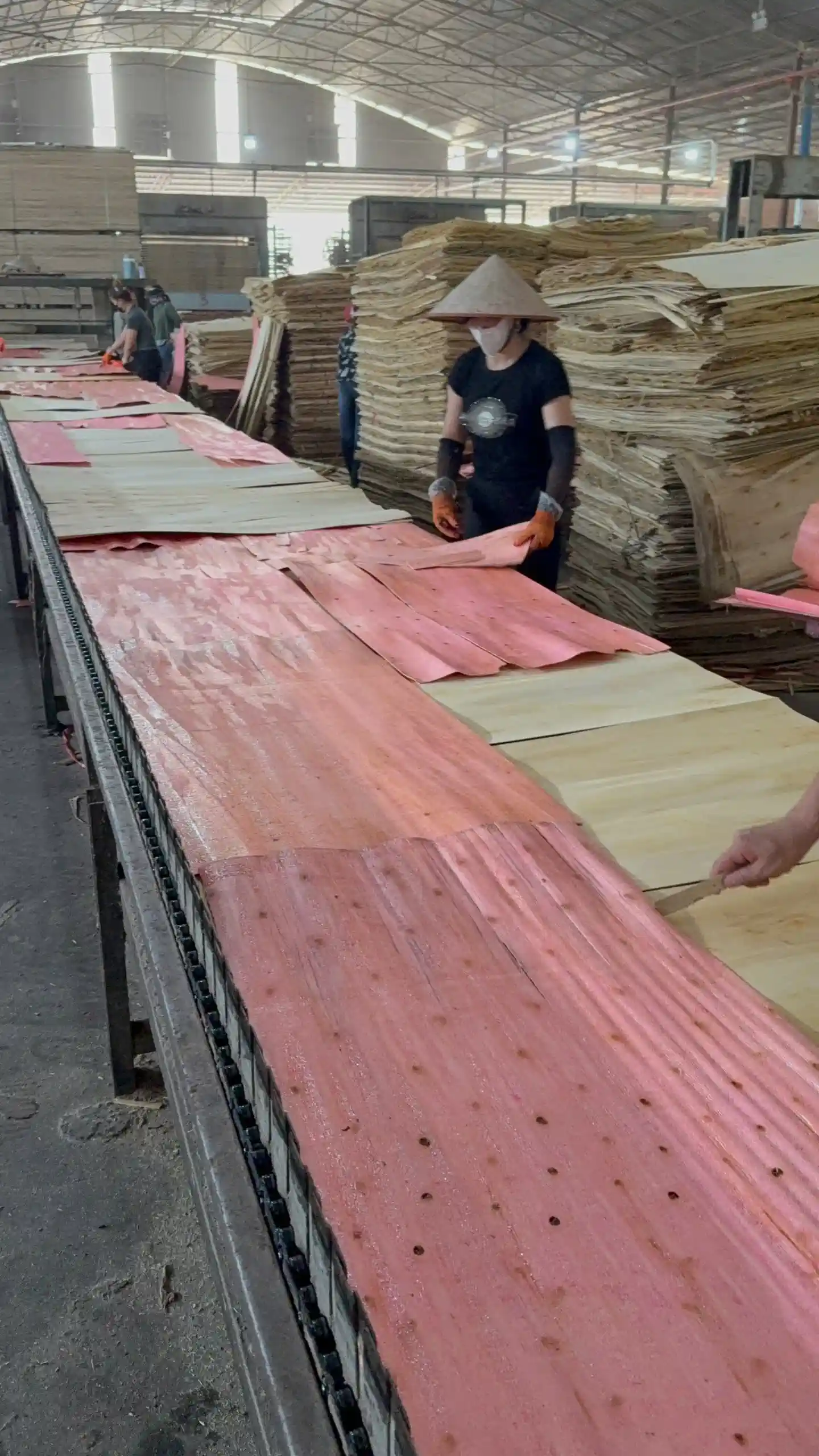
Vietnam plywood is built from rotary-peeled veneer sheets glued at perpendicular grain orientations — typically 3, 5, 7, or more layers depending on target thickness. This cross-grain construction is the fundamental structural advantage over both MDF and HDF.
Core species available from Vietnam (Northern factories):
| Core Species | Density | Best Application |
|---|---|---|
| Styrax | 480–500 kg/m³ | Premium furniture, cabinet carcasses — lightweight |
| Acacia | ~580 kg/m³ | Commercial furniture, packaging |
| Eucalyptus | 650–750 kg/m³ | Construction, flooring, heavy-duty applications |
Critical distinction: A plywood panel’s density is determined by its core species — not by the face veneer. An okoume-faced panel with eucalyptus core weighs significantly more than the same panel with a styrax core. Specifying core species is mandatory when ordering from Vietnam.
For furniture cabinet carcasses, birch-faced styrax-core plywood with E0 emission is the benchmark specification for European and North American markets. This combination delivers a lightweight, premium-finish panel with formaldehyde emissions equivalent to natural wood.
Explore the full range of plywood core types from Vietnam manufacturers to understand how core selection affects every downstream specification.
📊 Density and Strength: The Real Numbers
Density drives most performance differences between MDF, HDF, and plywood. But density alone is misleading — structural orientation matters as much as mass.
Modulus of Rupture (MOR) — bending strength benchmark:
- MDF (standard): 25–35 N/mm² depending on thickness and resin content (EN 622-5, 2006)
- HDF: 40–60 N/mm² due to higher compression during manufacturing
- Vietnam plywood (styrax core, 12mm): substantially higher due to cross-grain construction — fibers resist bending in multiple directions simultaneously
For any application where panels span unsupported distances — shelf spans, cabinet bottoms, drawer bases — plywood outperforms both MDF and HDF at equivalent or lower weight. This is why furniture factories in Vietnam’s Northern manufacturing cluster use plywood for structural elements and MDF/HDF only for non-load-bearing surfaces.
“When a buyer specifies MDF for a furniture cabinet carcass, they’re optimizing for surface finish at the expense of structural durability. For export furniture that ships in containers, plywood carcasses with MDF doors handle the stress of international logistics far better.” — Lucy, International Sales Manager, HCPLY
🏭 Applications: Which Panel for Which Job?
📌 Use Plywood When:
- Cabinet and furniture carcasses require load-bearing strength
- Panels will be screwed, bolted, or fastened repeatedly
- Application involves moisture — kitchens, bathrooms, marine environments
- Construction use: concrete formwork, scaffold decking, structural sheathing
- Container-exported goods require dimensional stability during transit
Get a Free Quote on Vietnam Plywood — Request Factory-Direct Pricing from HCPLY
📌 Use MDF When:
- Flat-panel door faces require uniform surface for painting or lamination
- CNC routing for decorative profiles, moldings, or shaped panels
- Interior applications with minimal moisture exposure
- Budget furniture where structural load is borne by a separate frame
- Skirting boards, architraves, and decorative trims
📌 Use HDF When:
- Laminate flooring core layer (8–12mm click-lock systems)
- High-traffic door panels where surface hardness matters
- Thin panels (3–6mm) requiring better strength than standard MDF
- Commercial interior fit-out where cost-to-performance is prioritized
💧 Moisture Resistance: The Application-Defining Factor
Moisture performance separates the three panel types most clearly for importers sourcing for humid markets.
MDF in moisture environments: Standard MDF swells and delaminates on prolonged moisture exposure. Moisture-resistant MDF grades (MR-MDF) exist, using melamine-urea or phenolic-urea resins, but still perform below plywood with Phenolic WBP glue. For kitchens and bathrooms, standard MDF requires full face and edge sealing.
HDF in moisture environments: HDF’s higher density reduces moisture absorption rate vs MDF, but the underlying fiber-resin construction still weakens under sustained exposure. HDF-core laminate flooring is rated for moderate moisture (EN 13329 AC3–AC5 classes), not wet areas.
Vietnam plywood with WBP glue: Film-faced and anti-slip plywood from Vietnam use Phenolic WBP glue that passes 72-hour boiling tests — a standard MDF or HDF product cannot match this performance. For marine, concrete formwork, or roofing applications, only WBP plywood is appropriate.
For furniture going to humid markets — India, Southeast Asia, Middle East — specify melamine (MR) glue minimum, with E1 or E0 emission. This combination handles moderate moisture without the structural risk of MDF.
Learn how glue types and emission standards work together before finalizing your specification.
📐 Sizes, Thickness, and Ordering Minimums
Vietnam plywood standard dimensions:
| Parameter | Standard |
|---|---|
| Sheet sizes | 1220×2440mm (4×8 ft), 1250×2500mm, custom available |
| Thickness range | 3–40mm (common: 9, 12, 15, 18, 21mm) |
| Thickness tolerance | ±0.3mm |
| MOQ | 1 × 40HC container |
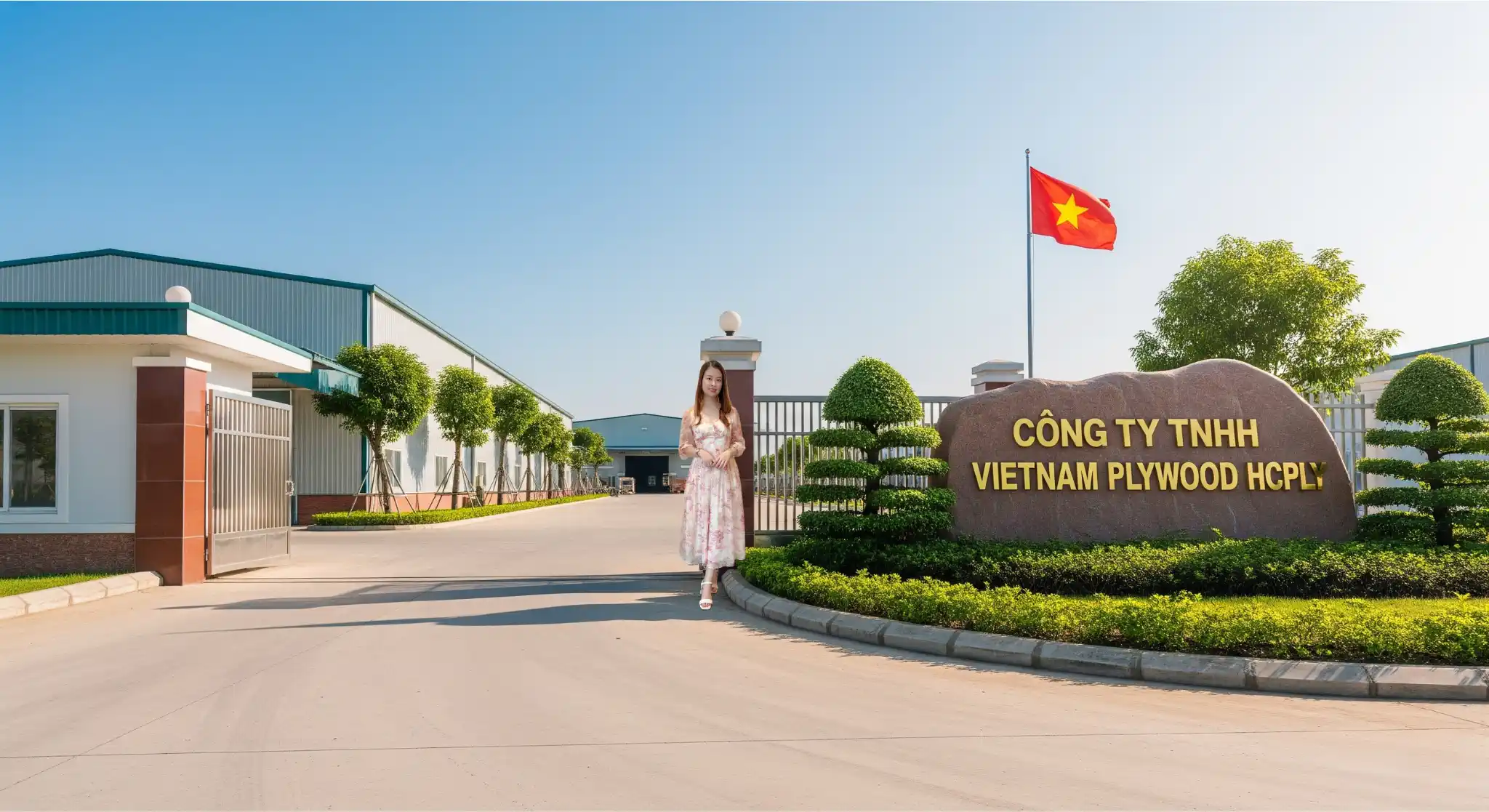
| Lead time | 15–20 days ex-factory (HCPLY, Phu Tho) |
MDF/HDF panels from Vietnam:
Standard MDF and HDF from Vietnamese manufacturers typically ship in 1220×2440mm or 1220×2800mm formats, at 6–30mm thickness. Container packing for MDF panels differs from plywood — flat-lay stacking without pallets is common for large MDF shipments, maximizing container CBM utilization.
For mixed container orders combining plywood and MDF/HDF, recalculate total container weight carefully. Eucalyptus-core plywood at 700 kg/m³ combined with HDF at 900+ kg/m³ can push a 40HC toward the 28.5 MT payload limit before the container is visually full.
Explore the full plywood sizes and thickness guide for detailed specification tables by application.
🔗 Sourcing Vietnam HDF, MDF, and Plywood from One Supplier
For furniture manufacturers and distributors sourcing from Vietnam, working with a single supplier who can cover all three panel types eliminates logistics complexity and quality inconsistency across multiple vendor relationships.
What HCPLY supplies for B2B importers:
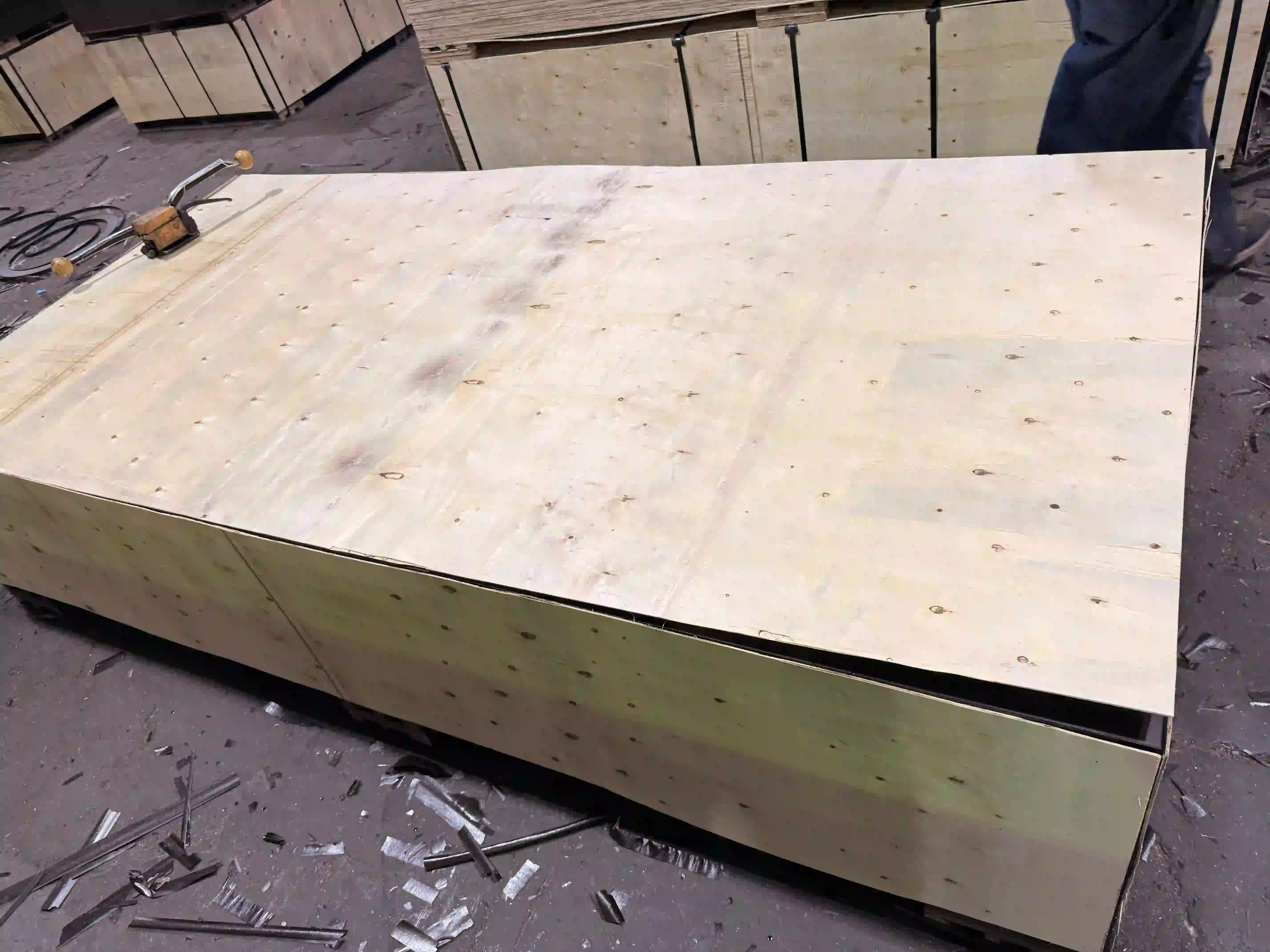
- Plywood (primary product): 10+ face veneer options, 3 core species (styrax, acacia, eucalyptus), full thickness range, E0/E1/E2 emission, FSC and CARB P2 certified
- Glue options: Melamine MR (furniture), Phenolic WBP (construction/marine)
- Panel certifications: FSC, CARB P2, CE, ISO 9001, EUDR, EUTR
- Mix-in-container: Multiple specs per 40HC with combined weight verification
- Export docs: CO, FSC, Phytosanitary, Fumigation, B/L, Insurance
As of 2026, HCPLY exports to 20+ countries across Europe, Asia, the Middle East, and the Americas from Hai Phong port, with 15–20 day production lead times.
When sourcing HDF vs MDF plywood from Vietnam, working with a factory-direct operator like HCPLY eliminates the middleman markup that trading companies add. See how HCPLY compares to other supplier types in the Vietnam plywood supplier types guide to understand what factory-direct sourcing delivers vs trading companies.
Get a Free Sample and Quote — Contact HCPLY Now
📊 Which Panel Type to Specify: Decision Framework
Use this framework to determine the right panel for your application before sending an inquiry:
Step 1 — Define moisture exposure:
- Dry interior, no moisture contact → MDF acceptable for non-structural elements
- Moderate moisture (kitchens, humid climates) → Plywood with MR glue minimum
- High moisture, marine, construction → Plywood with WBP (Phenolic) glue only
Step 2 — Define structural requirement:
- No structural load, decorative only → MDF or HDF suitable
- Load-bearing frames, shelves, carcasses → Plywood required
- Flooring core, laminate substrate → HDF preferred
Step 3 — Define surface finish requirement:
- Painting or lamination → MDF or HDF offers smoother surface
- Visible wood grain, premium finish → Plywood with birch, okoume, or EV face
- No face (substrate for further processing) → Matt plywood (unfaced raw core)
Step 4 — Define emission standard by destination market:
- US market → CARB P2 (equivalent to E0)
- EU market → E0 or E1; EUDR compliance required for timber panels from 2025
- Asian markets → E1 standard typical; E0 for high-end furniture
✅ Conclusion: Vietnam Plywood for Structural Confidence
The comparison of Vietnam HDF plywood vs MDF panels shows clear differentiation by application. HDF panels outperform MDF on density and surface hardness. MDF outperforms HDF on machinability and cost-effectiveness for decorative surfaces. Neither matches plywood’s cross-grain structural performance for load-bearing furniture carcasses, marine use, or construction applications.
For importers sourcing from Vietnam in 2026, the most efficient approach is to specify plywood for structural elements and use MDF or HDF only where surface smoothness or thin-profile precision is the primary requirement. HCPLY can fulfill all three panel categories factory-direct, with combined container orders available.
Ready to source Vietnam plywood or compare panel specifications for your project? Contact HCPLY for factory-direct pricing and free samples
Disclosure: This article is published by HCPLY, a Vietnam-based plywood manufacturer and export operator. While we aim to provide objective industry guidance, readers should consider our perspective as a market participant when evaluating recommendations.