

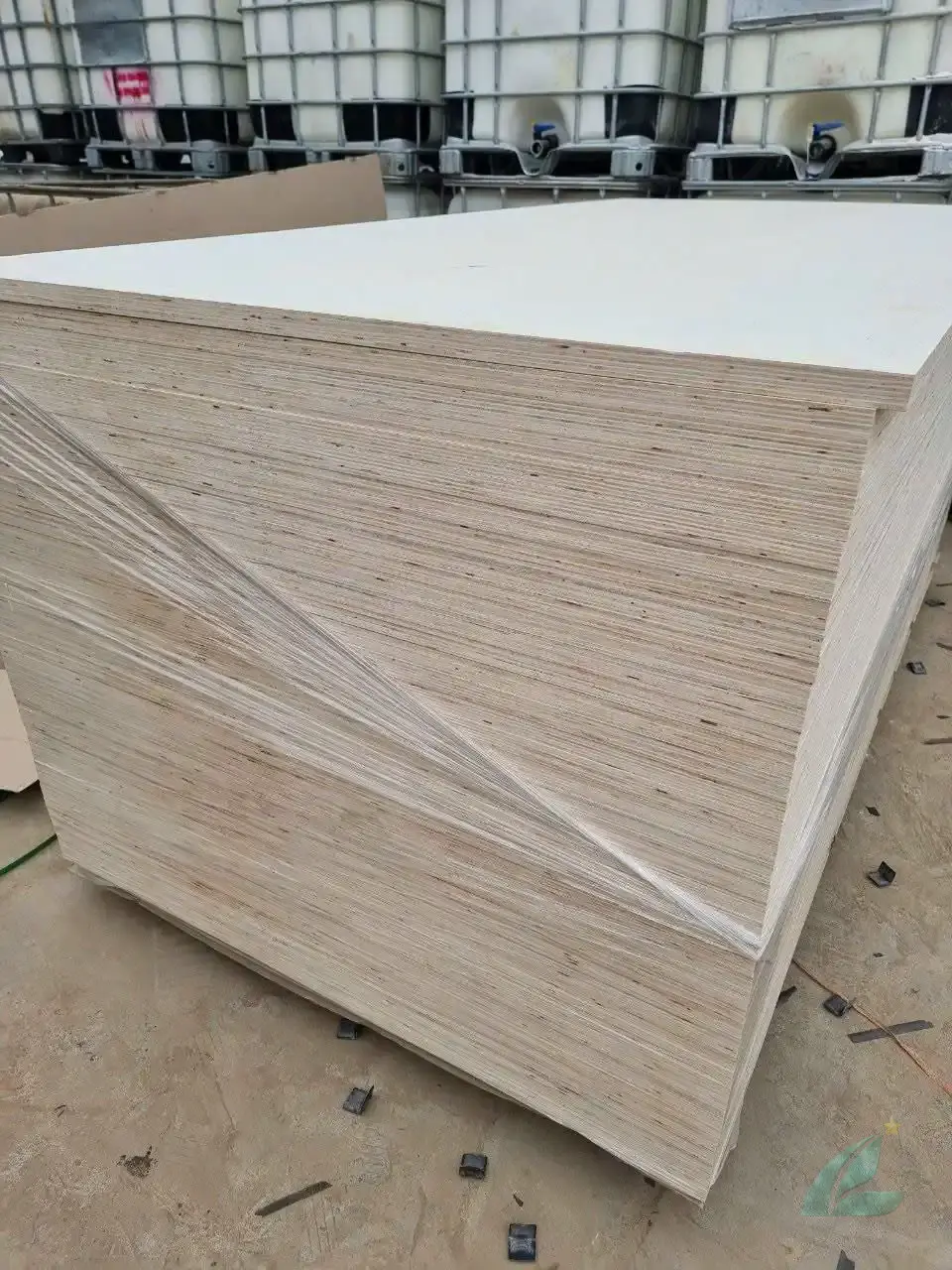
📊 TL;DR — Full Poplar Core vs Mixed Core Plywood Vietnam
| Property | Full Poplar Core | Mixed Core (Poplar + Hardwood) |
|---|---|---|
| Density | 450–500 kg/m³ | 550–700 kg/m³ (varies by hardwood ratio) |
| Weight (18mm, 1220×2440mm) | ~27–28 kg/sheet | ~33–40 kg/sheet |
| Screw holding | Good — standard furniture | Excellent — heavy-duty assembly |
| Bending strength | Moderate | High |
| Dimensional stability | Excellent (uniform species) | Good (species expansion differentials) |
| Lamination surface | Excellent (clean poplar face) | Good |
| Container efficiency (40HC) | Up to 18 pallets (~53 CBM) | 15–16 pallets (~44–47 CBM) |
| Shipping cost per sheet | Lower | Higher |
| Unit price | Lower | Higher |
| Best applications | Furniture, flat-pack, laminated panels, packaging | Construction, heavy furniture, flooring substrate |
The short answer: Choose full poplar core when weight and lamination quality matter. Choose mixed core when strength and screw retention are the priority.
🌳 What Is Full Poplar Core Plywood?
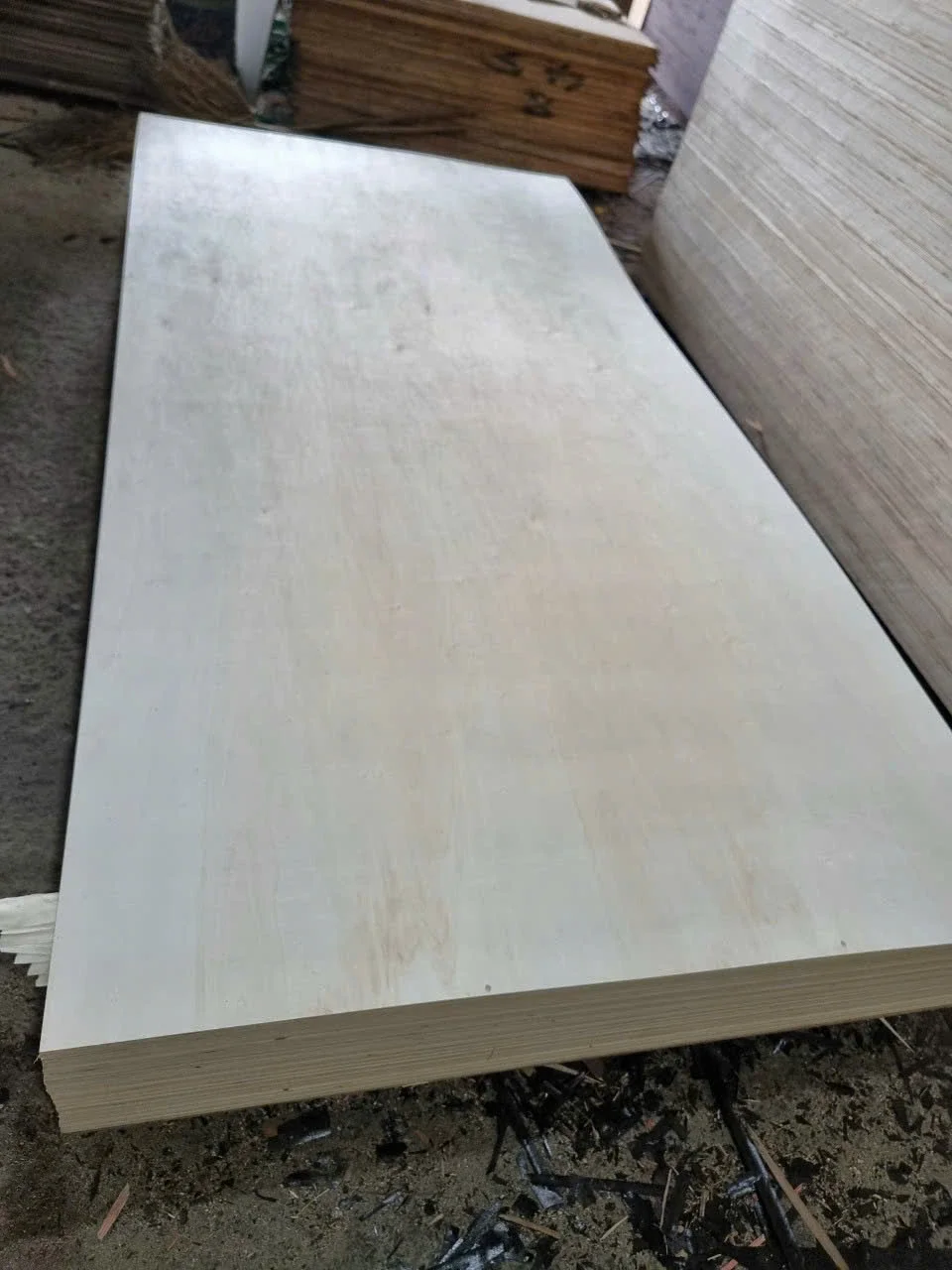
Full poplar core plywood is a panel where every inner layer — from the first ply behind the face veneer to the last ply before the back — is made from poplar veneer. No other wood species contributes to the core structure.
“The core species is the single biggest variable in plywood performance. Two panels can look identical on the surface — same face veneer, same thickness — but behave completely differently under load because one uses eucalyptus core at 650 kg/m³ and the other uses styrax at 500 kg/m³.” — David, Export Project Leader, HCPLY
Poplar (Populus spp.) is a fast-growing plantation species with a fine, uniform grain, pale white color, and consistent density of 450–500 kg/m³. In Vietnam, full poplar core plywood uses plantation-grown poplar veneers dried to 6–8% moisture content before pressing. The result is a panel with homogeneous internal structure — meaning no density gradient, no species boundary stress points, and predictable mechanical behavior across the full sheet.
This uniform composition is what gives full poplar core its defining characteristics: lightweight, flat, consistent, and easy to machine.
💡 Key Insight: “Full poplar core” describes the internal layer species, not the face veneer. A full poplar core panel can carry any face veneer — birch, okoume, EV, or poplar face itself. Always specify both core and face when ordering.
🔧 What Is Mixed Core Plywood?
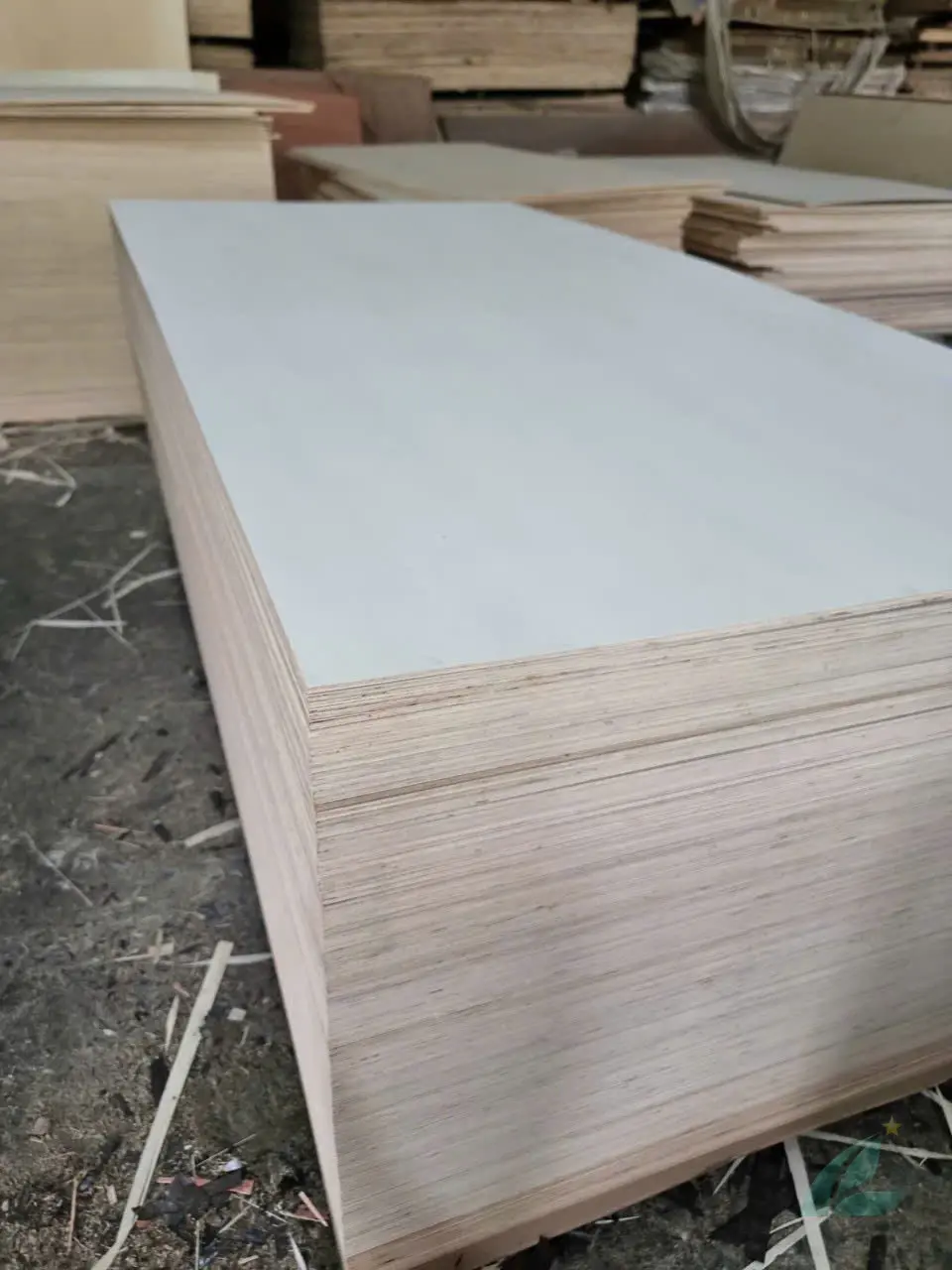
Mixed core plywood combines poplar inner plies with denser hardwood species in the outer core layers. The typical configuration places poplar veneer in the center layers and acacia (~580 kg/m³) or eucalyptus (650–750 kg/m³) veneer in the layers closest to the face and back veneers.
This arrangement is not accidental. The outer core layers carry the highest bending stress during load — placing denser hardwood there increases stiffness, screw-holding strength at the panel edges, and resistance to impact without adding the full weight penalty of an all-eucalyptus or all-acacia core.
Mixed core plywood is sometimes called combi-core or combination core in market literature. At HCPLY, the standard mixed core configuration uses acacia outer core layers with poplar inner plies, yielding a panel density of 580–650 kg/m³ depending on the hardwood ratio and thickness.
⚠️ Important: “Mixed core” does not mean random or inconsistent composition. In factory production, the hardwood and poplar layer arrangement is fixed by product spec. Ask your supplier to specify which species form which layers and confirm total panel density in the purchase order.
📐 Density, Weight, and Container Loading
The density difference between full poplar and mixed core plywood has direct consequences for shipping cost, container loading efficiency, and handling on the production floor.
📌 Weight per Sheet at Common Thicknesses
| Thickness | Full Poplar Core (~480 kg/m³) | Mixed Core (~600 kg/m³) | Eucalyptus Core (~700 kg/m³) |
|---|---|---|---|
| 12mm | ~17 kg | ~21 kg | ~25 kg |
| 15mm | ~22 kg | ~27 kg | ~31 kg |
| 18mm | ~26 kg | ~32 kg | ~37 kg |
| 25mm | ~36 kg | ~45 kg | ~53 kg |
Based on 1220×2440mm sheet. HCPLY production data, 2026.
At 18mm — the most common thickness for wardrobe carcasses and cabinet panels — a full poplar core sheet weighs approximately 26 kg versus 32 kg for mixed core. On a full 40HC container, that 6 kg difference across hundreds of sheets adds up fast.
📌 Container Loading Impact
A 40HC container loaded with full poplar core plywood (styrax-based) handles 18 pallets, delivering approximately 53 CBM at ~26.5 MT total weight. Mixed core with acacia outer layers fills approximately 16 pallets (~47.5 CBM, ~27.5 MT). Eucalyptus-heavy mixed core drops to 15 pallets (~44.5 CBM, ~28 MT) before approaching the 28.5 MT payload limit.
For buyers purchasing on FOB terms with freight calculated per CBM, full poplar core delivers more panels per container at the same or lower freight cost. See the plywood container packing calculation guide for complete 40HC packing tables by core species.
“Buyers who switch from mixed core to full poplar for packaging and flat-pack furniture are often surprised by the shipping savings,” says Lucy, International Sales Manager at HCPLY. “The weight difference is not marginal — it can change how many containers you need per quarter.” (HCPLY production data, 2026)
💪 Strength and Screw-Holding Comparison
Weight tells half the story. Strength is the other half — and this is where full poplar core and mixed core diverge in ways that matter for specific applications.
Full poplar core has moderate bending strength sufficient for standard furniture carcasses, interior paneling, and flat-pack systems. Published screw-holding data from academic research on combi plywood shows that poplar-only cores hold screws adequately for standard hinge mounting, drawer slide installation, and connector hardware (Researchgate, 2017 — “Screw and Nail-Holding Capacities of Combi Plywood”).
Where full poplar core shows limitations: high-torque fastener applications, edge-mounted hardware under repeated load, and thick structural components that carry sustained bending stress. Poplar’s lower density means lower fiber density at the screw insertion point, which reduces resistance to pull-out compared to eucalyptus or acacia layers.
Mixed core addresses this directly. The denser hardwood outer plies — sitting closest to the surface where screws typically enter — provide significantly higher pull-out resistance. For heavy hinges, concealed cabinet connectors, or structural brackets where the fastener is the load path, mixed core delivers measurably better retention.
The dimensional stability picture is more nuanced. Full poplar core’s homogeneous composition means all layers expand and contract at the same rate through humidity cycles — reducing internal stress at species boundaries. Mixed core panels with both poplar and hardwood layers have different expansion coefficients per species, which can introduce minor dimensional instability under significant humidity swings (International Wood Products Association, 2024). For standard interior applications with stable humidity, this difference is negligible. For export to markets with extreme seasonal humidity variation, full poplar core’s uniform response is worth noting.
🔍 Surface Quality and Lamination Performance
For buyers applying laminate paper, HPL, PVC film, or paint — the surface response of the substrate is critical.
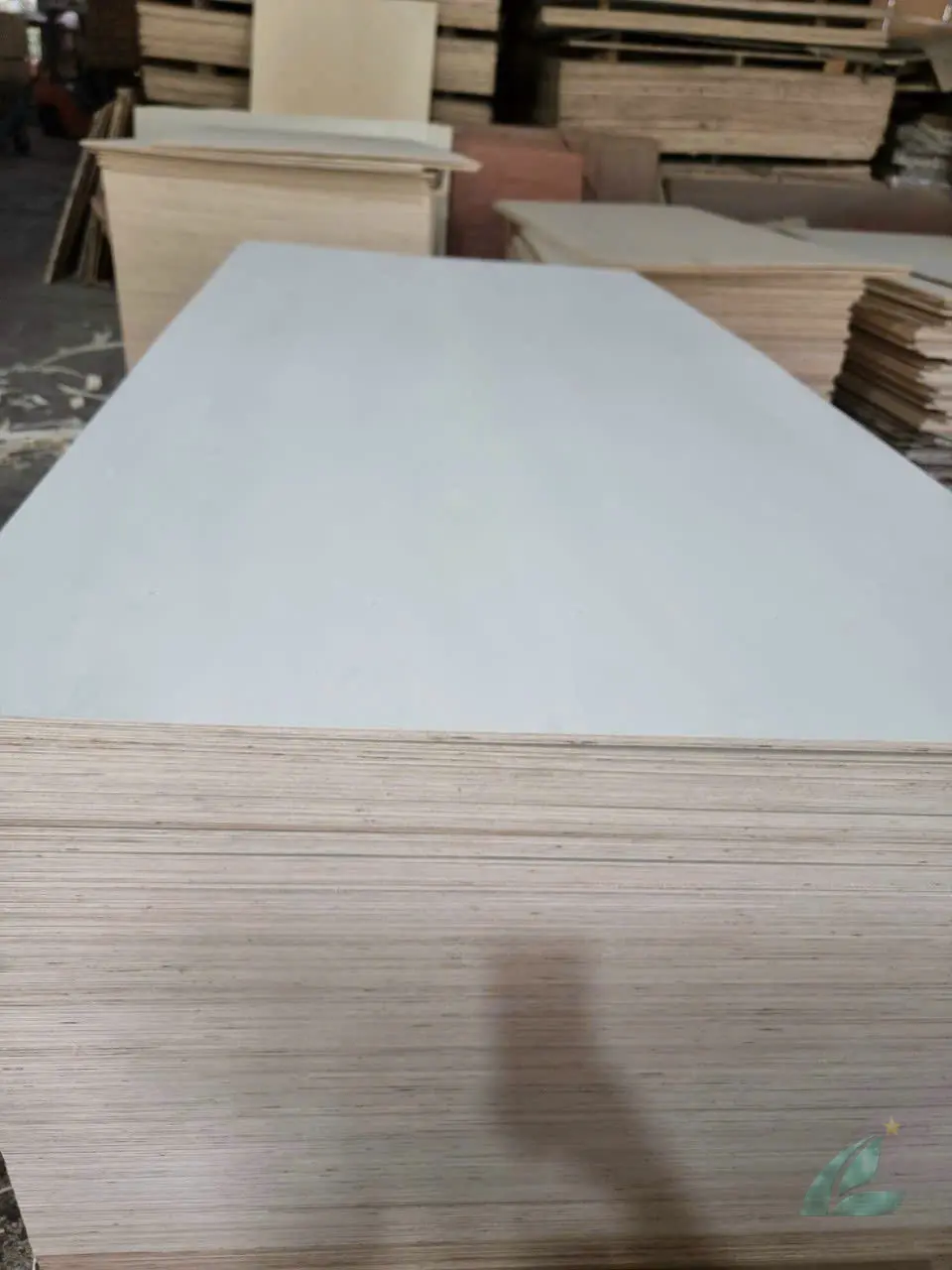
Full poplar core plywood accepts surface treatments exceptionally well. The pale, non-resinous poplar veneer absorbs adhesive evenly, and the uniform core density prevents telegraphing — the visible print-through of core layer joints or knots onto the finished surface. This makes full poplar core the correct substrate choice for:
- High-gloss melamine paper lamination — requires zero telegraphing on the surface
- Painted MDF-replacement applications — poplar face accepts paint without visible grain
- PVC wrapping — consistent face density prevents adhesive failure at joints
- Thin veneer overlay — uniform core pressure during pressing prevents face distortion
Mixed core performs well for standard lamination but can show minor telegraphing at the species boundary between poplar and hardwood layers if pressing parameters are not optimized. This is typically only visible in high-gloss applications. For satin, matte, or texture-film applications, mixed core produces equivalent results.
For the full breakdown of which face veneer types work best on each core, see the plywood face veneer types complete guide.
Request surface quality samples from HCPLY →
🏭 Market Applications: When to Choose Each
Choosing the wrong core type for your end market is one of the most preventable specification errors in plywood purchasing. Here is how experienced buyers apply the choice.
Full Poplar Core: Primary Use Cases
European flat-pack furniture manufacturers are the largest volume buyer of full poplar core plywood from Vietnam. Wardrobes, bed frames, bookcases, and modular storage systems benefit directly from the weight reduction — lighter panels mean lower packaging costs, less transport damage, and easier end-user assembly. E0 emission compliance is standard at HCPLY’s furniture facility.
Premium packaging for luxury goods — electronics, wine, cosmetics, high-value industrial components — requires a clean, paintable panel that is light enough to reduce total shipment weight. Full poplar core at 4–9mm thickness covers this application precisely.
Interior paneling and wall cladding in residential and commercial fit-out projects uses poplar core for its flatness, machining ease, and compatibility with all surface treatment systems.
Japanese and South Korean furniture buyers specify full poplar core with E0 emission and strict ±0.2mm thickness tolerance (equivalent to JAS F4-Star requirements) for CNC furniture lines where dimensional consistency is non-negotiable.
Mixed Core: Primary Use Cases
Concrete formwork substrate — when a film-faced panel must carry repeated concrete pour loads without delamination or deflection, the denser outer core layers in mixed core provide the structural backing that pure poplar cannot.
Heavy-duty furniture — commercial casework, institutional storage, trade show display systems, and retail fixture components that carry sustained load or require structural screwing use mixed core for its superior fastener retention.
Flooring substrates — plywood underlayment panels for wood flooring installation need dimensional stability under traffic load and moisture cycling. Mixed core with eucalyptus outer layers is specified for this application.
Indian and Middle Eastern construction markets — buyers in these markets typically specify mixed core for both the structural performance and the price-to-strength ratio. Pure full-hardwood cores like eucalyptus core plywood are specified for the most demanding structural applications.
For buyers ordering mixed core, the acacia core plywood guide and styrax core plywood comparison explain the cost and performance trade-offs of different hardwood species in the outer core layers.
⚙️ Glue Type and Emission Standards
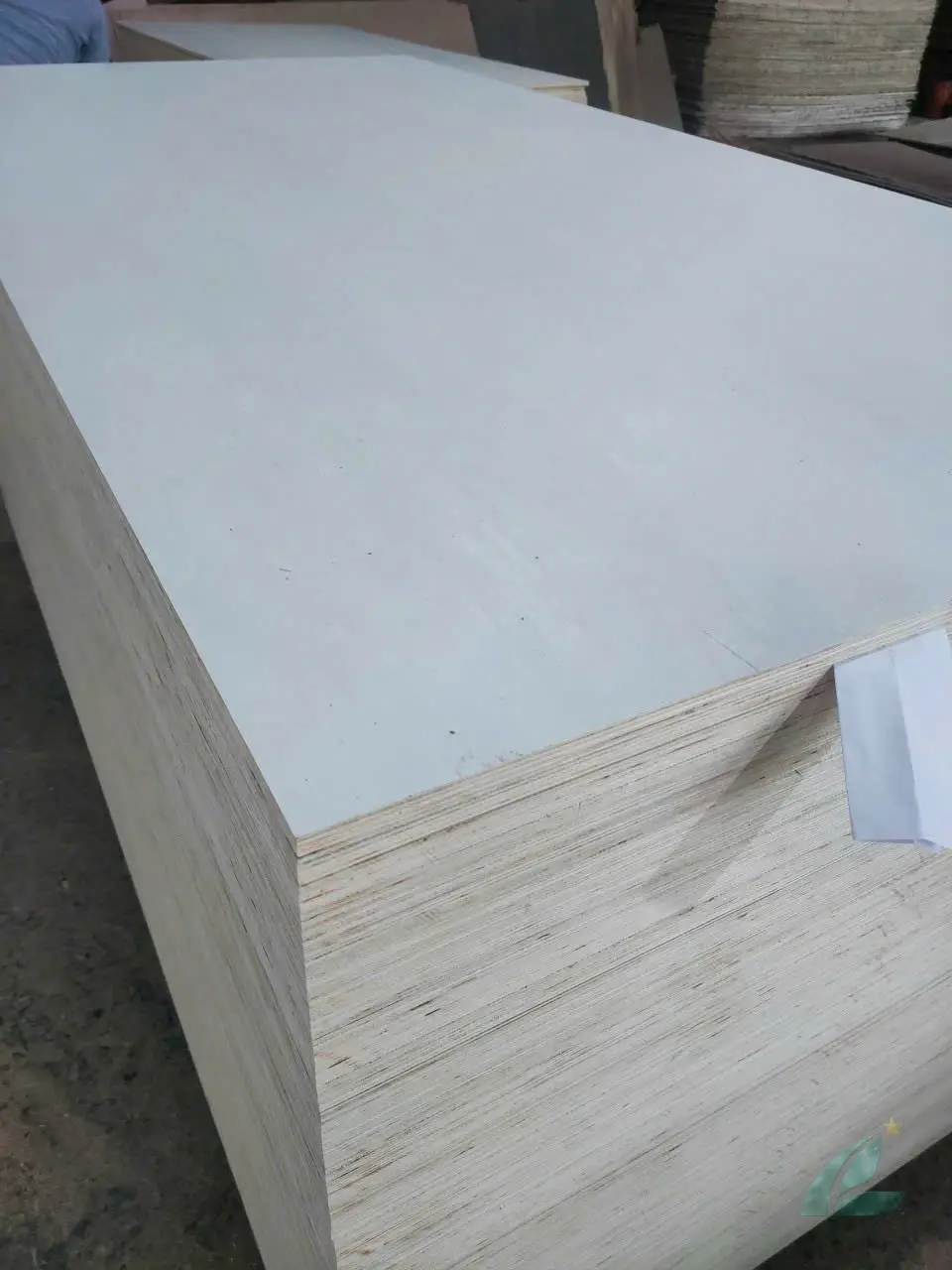
Both full poplar core and mixed core plywood are available with the same glue and emission options. These are separate parameters from core composition.
| Glue Type | Technical Name | boiling test | Application |
|---|---|---|---|
| Melamine | MR | 12 hours | Interior furniture, cabinets, packaging |
| Phenolic | WBP | 72 hours | Construction, marine, film-faced |
| Emission Class | Formaldehyde Limit | Markets |
|---|---|---|
| E0 / CARB P2 | ≤0.5 mg/L | US, EU, Japan, Korea — interior furniture |
| E1 | ≤1.5 mg/L | EU general, most Asian markets |
| E2 | ≤5.0 mg/L | Industrial, exterior, packaging |
⚠️ Critical distinction: Glue type (Melamine/Phenolic) and emission class (E0/E1/E2) are two separate specifications. Always declare both. “MR E0” means Melamine glue + E0 emission standard — correct format. “E0 glue” is incorrect — E0 is an emission level, not a glue type. See the plywood glue types and emission standards guide for the full explanation.
For furniture export to Europe and the US, specify: Melamine (MR) glue + E0 emission. For construction and formwork, specify: Phenolic (WBP) glue — emission class is less relevant for exterior structural use.
📈 Price, Lead Time, and Order Configuration
Full poplar core plywood is generally priced lower than mixed core — both on FOB per CBM and on per-sheet basis — for two reasons: poplar veneer costs less than acacia or eucalyptus, and the pressing process for uniform poplar core is more consistent, reducing waste.
The price gap varies by thickness, face veneer, and emission class. At 18mm with standard poplar face, full poplar core typically runs USD 3–6 per CBM less than mixed core. At higher thicknesses, the gap increases because the hardwood layer contribution to cost is proportionally larger.
For buyers ordering mixed specifications in one container, HCPLY structures packing calculations per combined core type. Mixed containers of full poplar core sheets and mixed core sheets are possible — total weight is recalculated to confirm the container stays within the 28.5 MT payload limit. See plywood container packing calculation for methodology.
Lead time for both core types from HCPLY: 15–20 working days from order confirmation to FOB Hai Phong. MOQ: 1 × 40HC container. Mixed specifications within one container are accepted.
Contact HCPLY for pricing on both core types →
🏭 Vietnam Production: Both Core Types from Dedicated Facilities
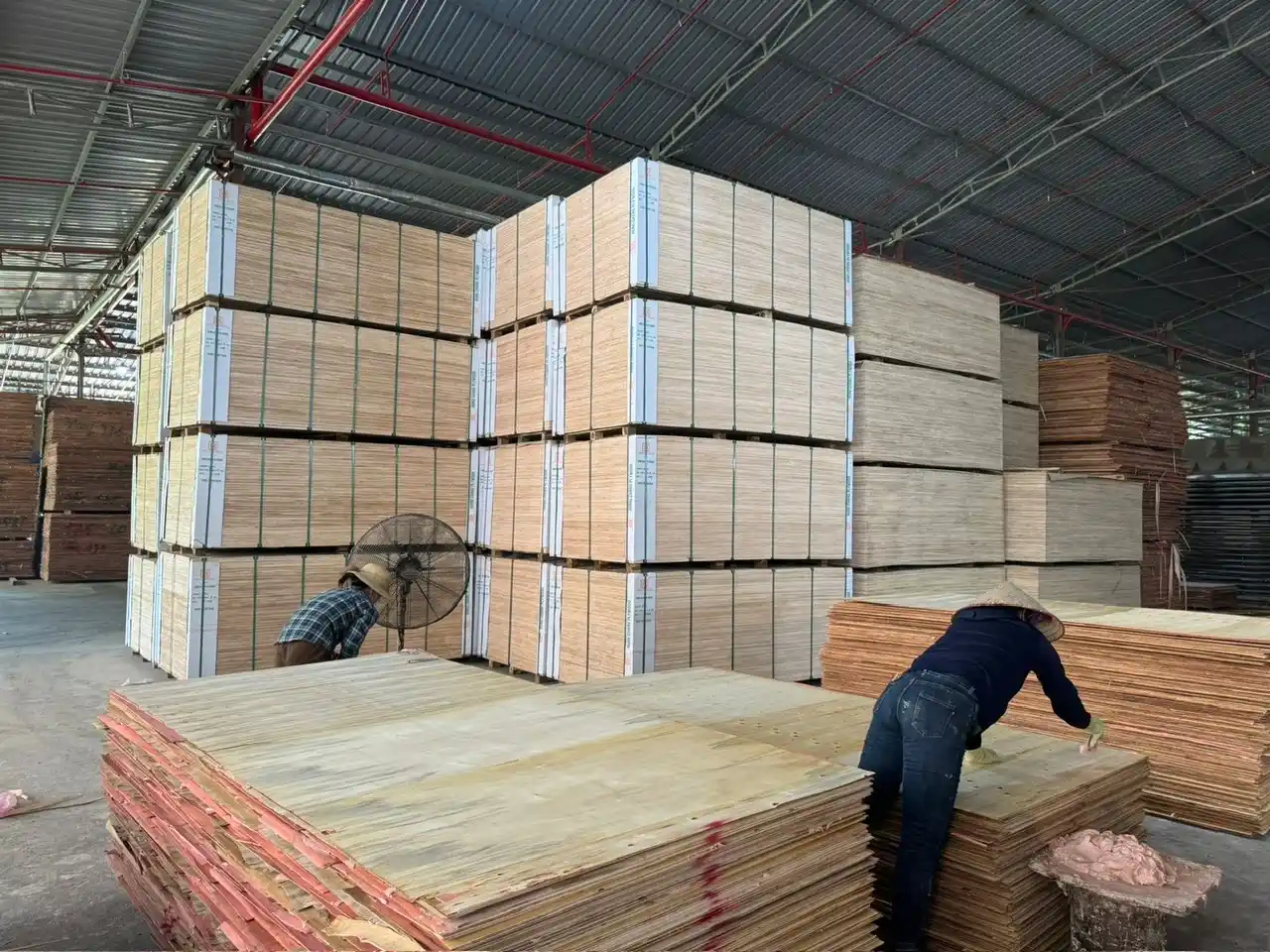
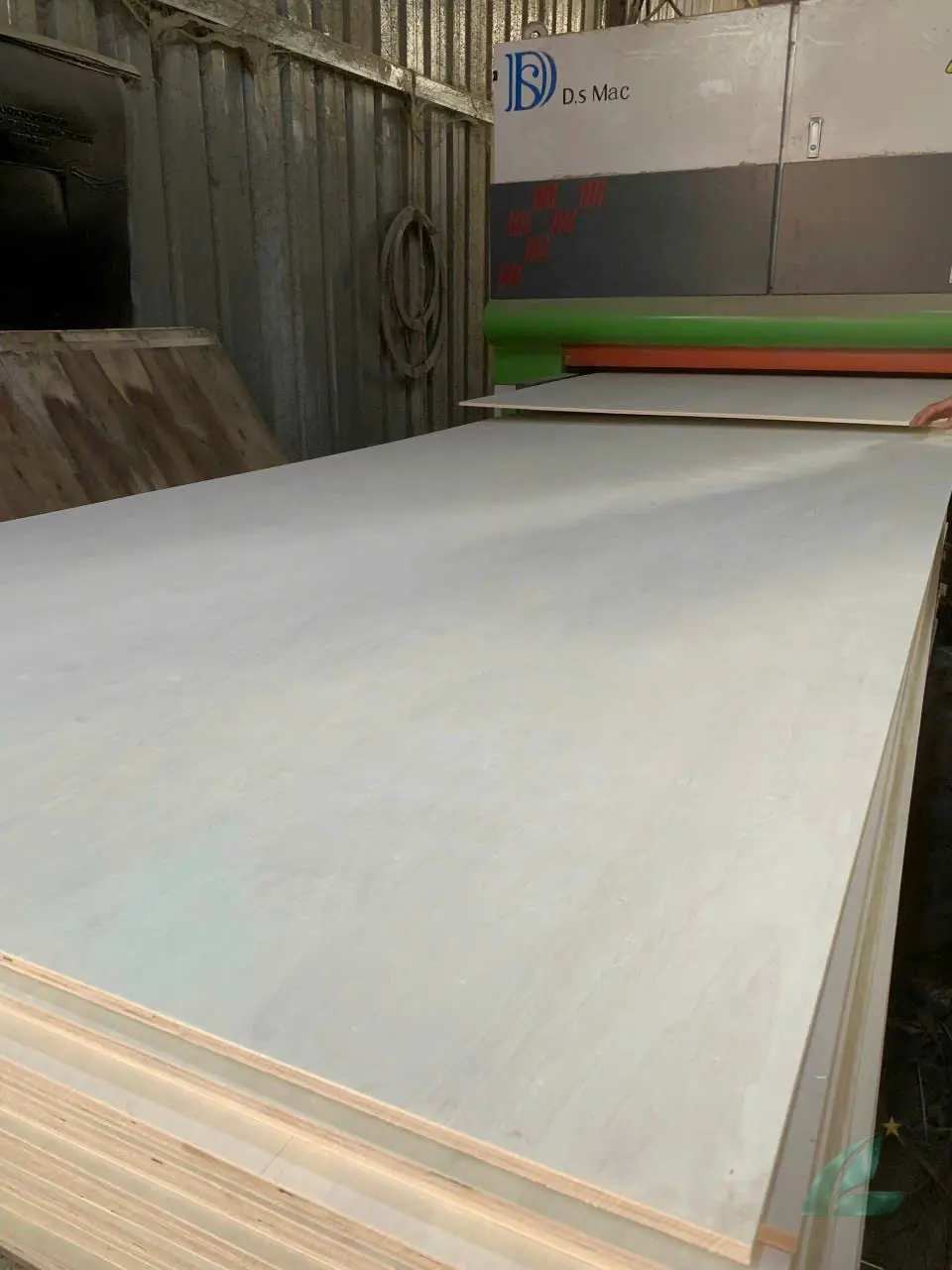
Full poplar core plywood is produced at the premium furniture facility in Phu Tho Province. This facility uses full stitched core construction — all core layers sewn for zero gaps and zero overlap — combined with calibrated wide-belt sanding to ±0.2mm tolerance. E0 emission, FSC, and CARB P2 certification are standard outputs from this facility.
Mixed core plywood is produced at both the furniture facility (for premium mixed core with E0 and full stitched outer layers) and the commercial/packing facility (for standard mixed core with acacia outer layers, MR glue, E1 emission). The specification determines which facility handles the order.
Factory-direct pricing means no VAT overhead that trading companies carry on domestic sales. For buyers comparing Vietnamese supplier quotes, this structural cost difference — typically 5–8% on the final price — is factored into every HCPLY offer (HCPLY production data, 2026).
For a deeper look at how Vietnam’s core species compare on all performance dimensions, see the plywood core types from Vietnam guide.
✅ Conclusion: Which Core Type Is Right for Your Order?
Full poplar core and mixed core plywood from Vietnam solve different problems. Neither is universally better — the correct choice depends on what your end application demands.
Choose full poplar core when you need the lightest panel, the cleanest lamination surface, the best container loading efficiency, and sufficient structural performance for interior furniture. European flat-pack manufacturers, packaging buyers, and buyers from Japan and Korea consistently specify full poplar core at E0 for CNC furniture production.
Choose mixed core when strength, screw retention, or load-bearing performance is the primary requirement. Construction buyers, heavy furniture manufacturers, and buyers targeting formwork or flooring applications get measurably better structural results from the denser hardwood outer layers.
Both are available from HCPLY with the same certifications (FSC, CARB P2, CE, ISO 9001, EUDR), the same sheet sizes (1220×2440mm, 1250×2500mm), and the same lead times. The decision comes down to application requirements — not supplier capability.
For buyers working through a multi-product sourcing strategy, the poplar plywood from Vietnam buyer’s guide covers the full poplar product range in detail, including styrax core advantages for the European market. See also the poplar plywood Vietnam product page for current specifications and the core veneer Vietnam page for raw veneer supply options.
Disclosure: This article is published by HCPLY, a Vietnam-based plywood manufacturer and export operator. While we aim to provide objective industry guidance, readers should consider our perspective as a market participant when evaluating recommendations.
Get a Free Quote for Poplar or Mixed Core Plywood →
No commitment required. Response within 24 hours. Samples and specification sheets available.