
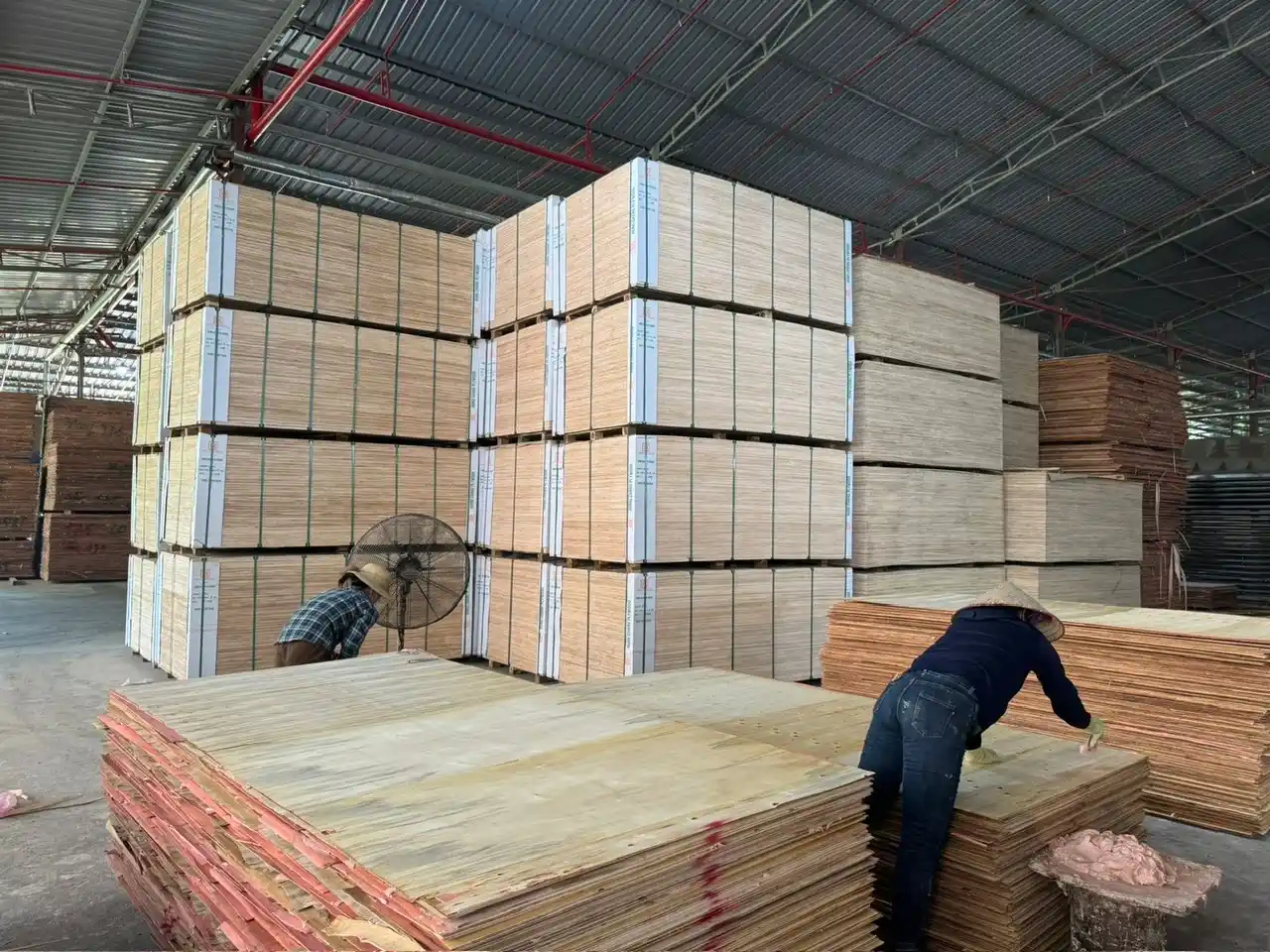
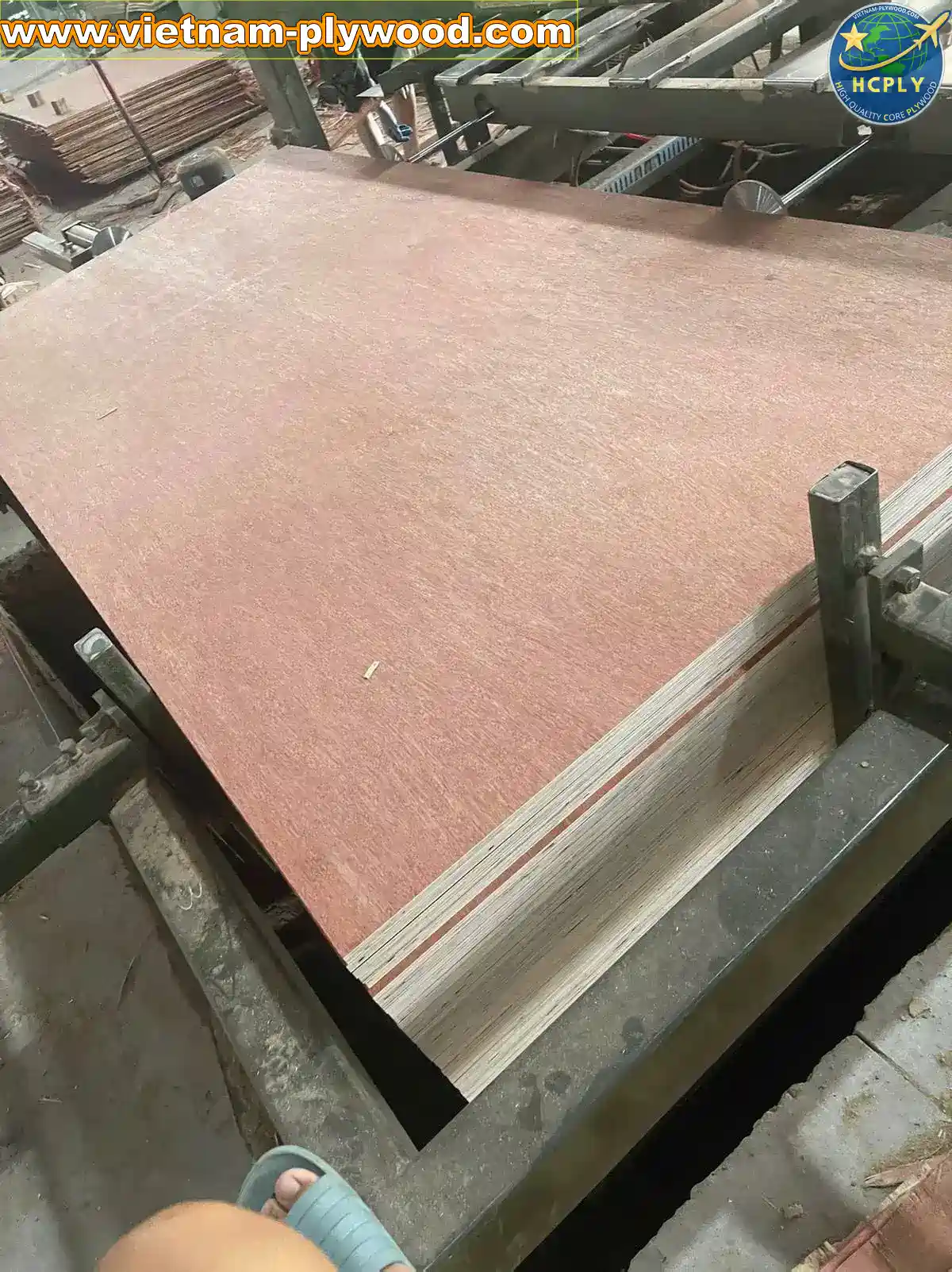
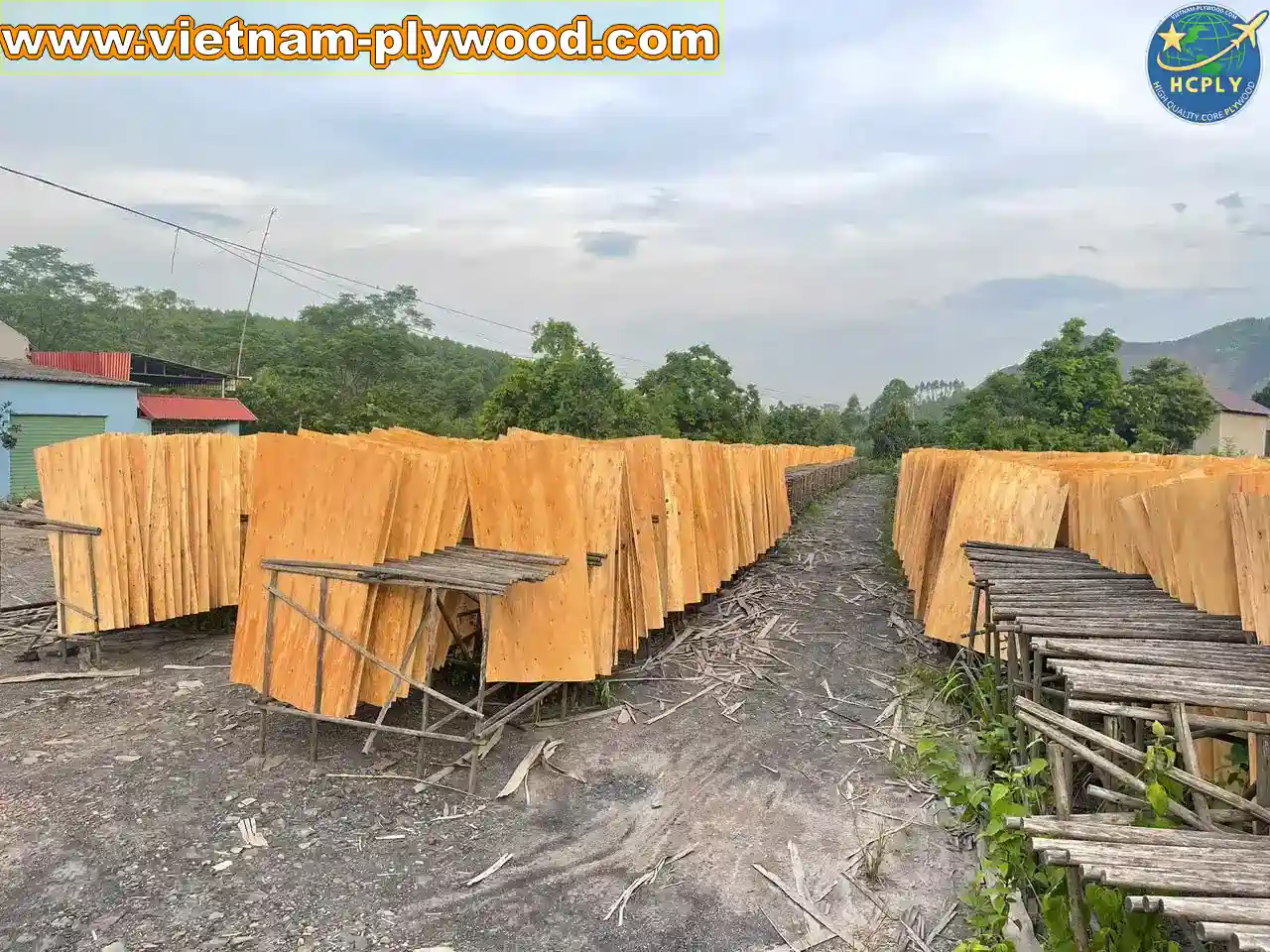

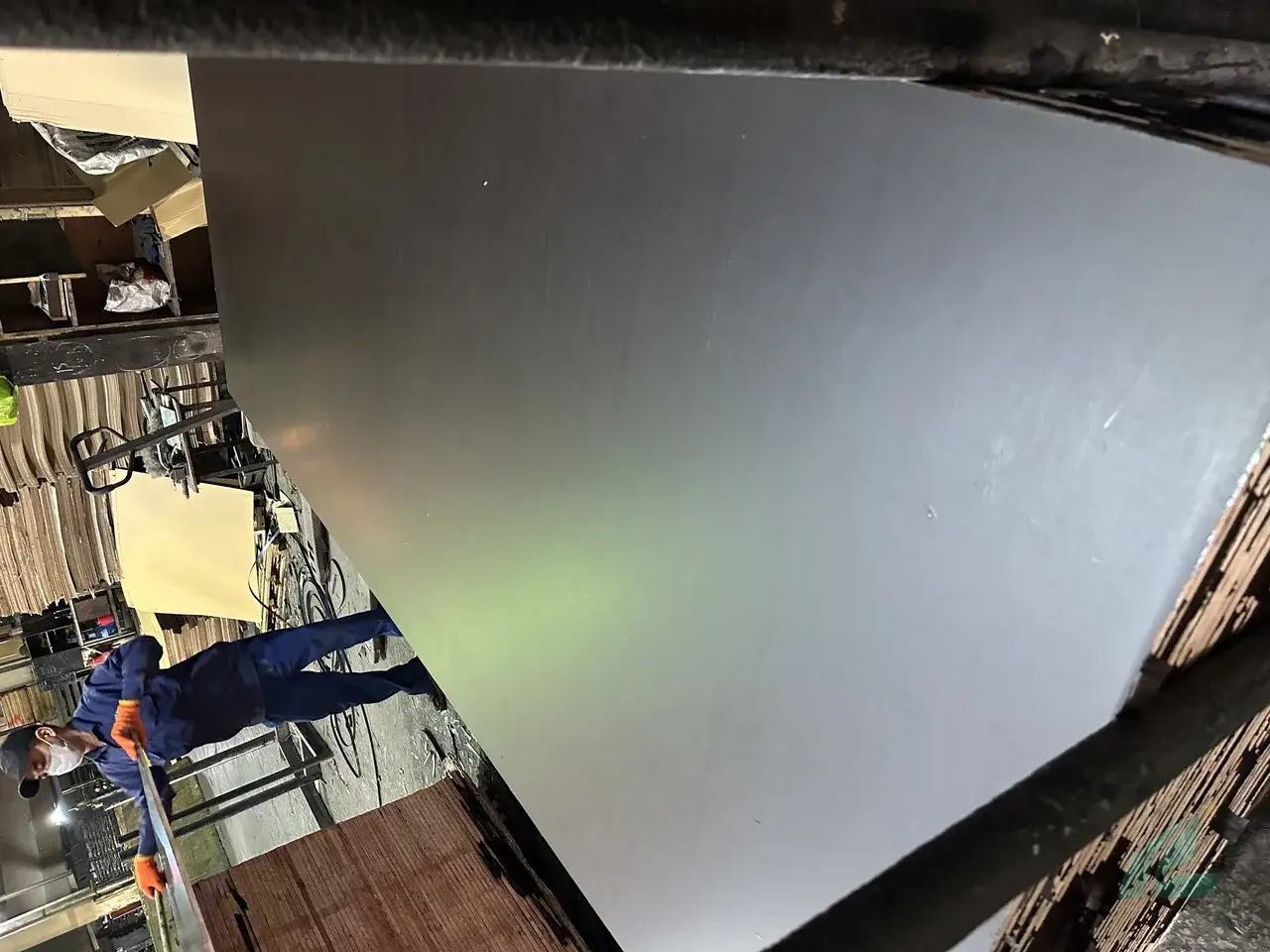
Film faced plywood from Vietnam ships to construction sites across the Middle East, South Korea, Europe, and Australia — yet most buyers receive the same generic spec sheet whether they are ordering a premium 20-reuse panel or a budget 5-reuse commodity panel. The differences are real, measurable, and directly affect your project cost per pour.
This guide covers Vietnam film faced plywood technical specs in the detail that procurement managers and site engineers need: film grades, core species, glue types, thickness tolerances, and the factory-segment differences that generic supplier catalogues never explain.
📋 What Is Film Faced Plywood?
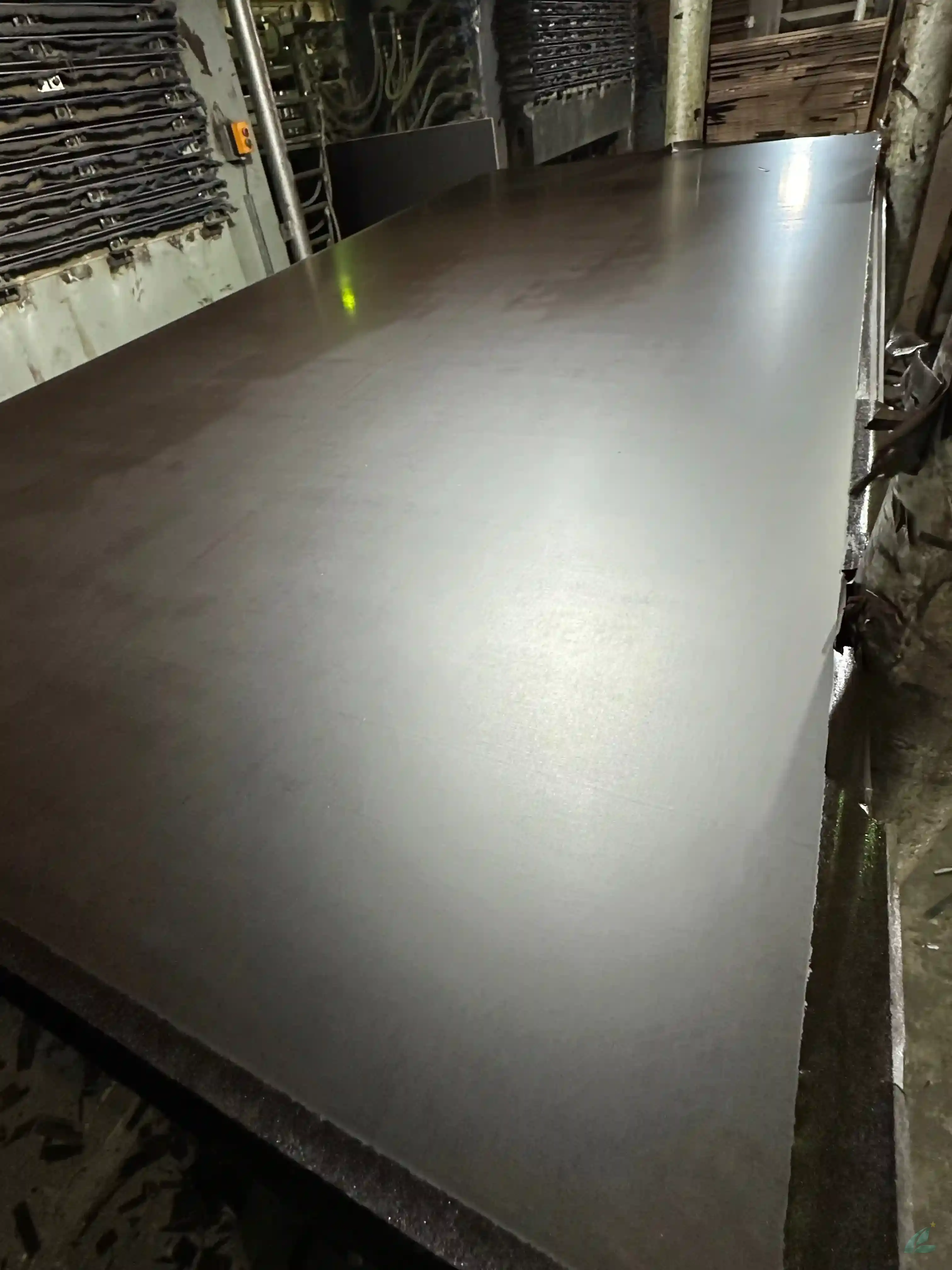
Film faced plywood — a primary construction plywood product — is a structural panel bonded under heat and pressure with a phenolic or melamine film overlay on both faces and edges. Phenolic film plywood is the dominant type for concrete formwork — the film creates a smooth, waterproof surface that releases cleanly from concrete and protects the core from moisture penetration during formwork cycles.
Vietnam is among the largest exporters of film faced plywood globally, shipping significant volumes to the Middle East, Korea, Australia, and EU construction markets (Vietnam Timber and Forest Product Association, 2024). Production is concentrated in Northern Vietnam — Phu Tho, Yen Bai, Bac Giang — where eucalyptus and acacia plantation timber provides the core raw material.
💡 Key Insight: The word “film faced” describes the surface treatment, not a single product. Two panels both called “film faced plywood Vietnam” can have radically different film weights, core species, core construction quality, and reuse counts. Understanding the specification components below is the only reliable way to compare quotations.
🔧 Film Type: The Specification That Matters Most
The phenolic film overlay is the component buyers most frequently under-specify. Film weight — measured in grams per square metre (gsm) — determines surface hardness, moisture resistance, and reuse count more than any other single variable.
“Film-faced plywood quality depends on the entire production process — core density, pressing parameters, and film grade — not just the percentage of melamine in the glue. Our premium line uses 8% melamine with AICA 135gsm film and achieves 12–15 reuse cycles.” — David, Export Project Leader, HCPLY
📌 Film Weight Reference
| Film Weight | Grade | Expected Reuses | Typical Use |
|---|---|---|---|
| 220gsm+ | Premium (AICA) | 15–20 | European, Korean, Australian construction |
| 135–170gsm | Commercial | 10–15 | Middle East, standard formwork |
| 80–120gsm | Budget | 4–8 | Southeast Asia, single-pour budget sites |
HCPLY’s dedicated film-faced production facility uses AICA film — a Japanese-grade phenolic paper imported and certified for construction-grade performance. AICA film at 220gsm is the standard specification for projects requiring 15+ reuse cycles (HCPLY production data, 2026).
Film color — black or brown — is primarily a manufacturing process variation. Black panels use a fully phenolic-impregnated paper; brown panels often use a melamine-phenolic blend. Performance differences between the two are marginal when film weight is equivalent. Buyers should specify film weight in gsm rather than color.
⚠️ Important: Budget-grade panels from factory segment D (see §Factory Segments below) often list “phenolic film” without specifying gsm. Always request the film weight certificate or ask the supplier to state gsm explicitly. A panel with 80gsm film will fail after 4–5 pours — a direct cost penalty on any project with more than 2 concrete pours.
⚙️ Core Species and Structural Performance
Core species determines the panel’s density, weight, strength, and ultimately how many pallets fit in a 40HC container. Vietnam produces three core species relevant to film faced plywood:
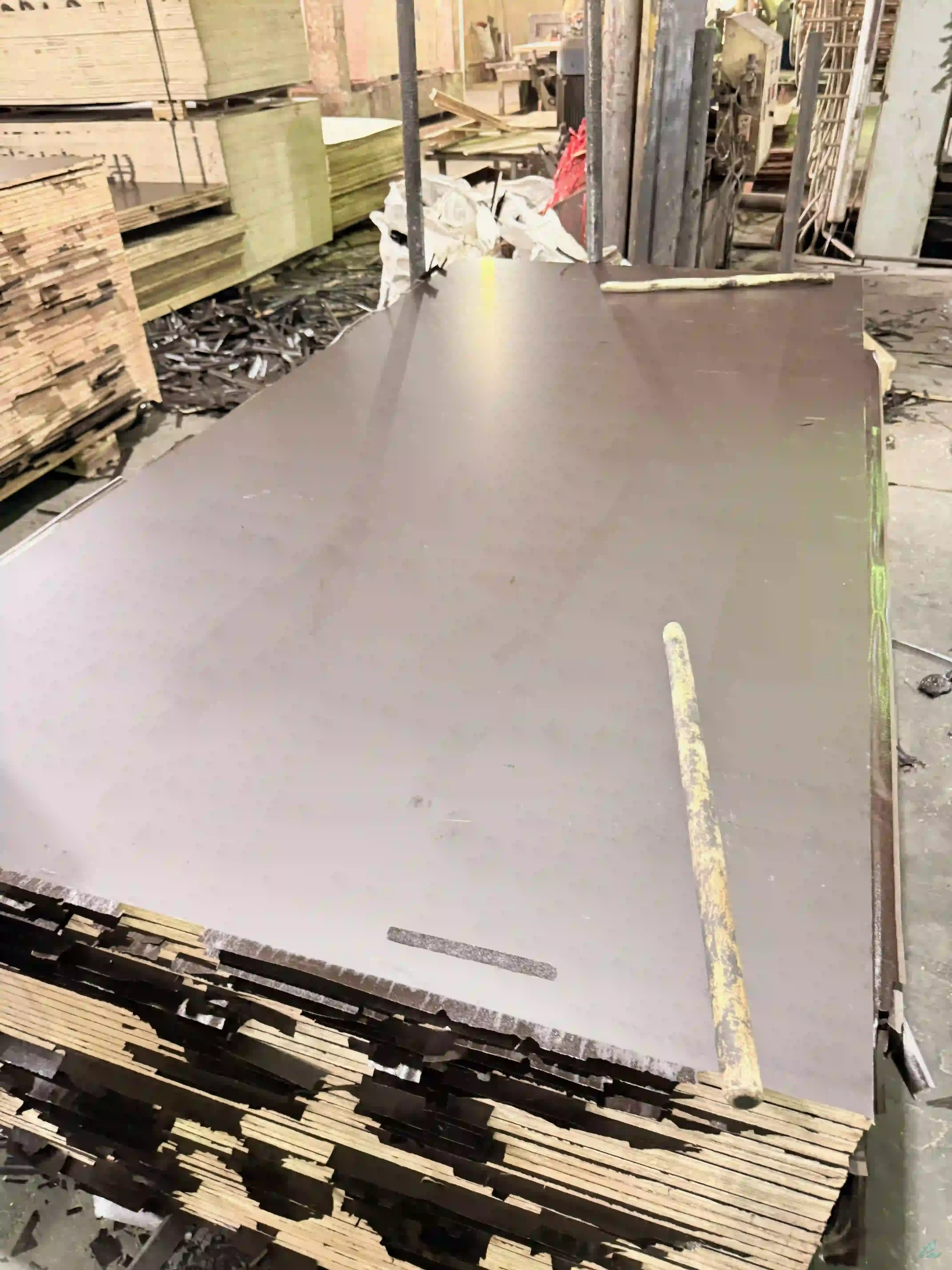
Eucalyptus Core (Preferred for Premium Formwork)
- Density: 650–750 kg/m³
- Container loading: 15 pallets per 40HC (heaviest configuration)
- Strength: Highest among Vietnamese core species — preferred for demanding formwork, repeated wet-cycle loading
- Appearance: Light yellow-white, consistent grain
Eucalyptus core is the standard for HCPLY’s premium film faced panels. The higher density translates to better screw-holding at panel edges and reduced deflection under concrete pressure — both critical for vertical formwork applications.
Acacia Core (Commercial Grade)
- Density: ~580 kg/m³
- Container loading: 16 pallets per 40HC
- Strength: Adequate for standard formwork, ceiling and slab applications
- Appearance: Darker brown, occasionally visible on edge sections
Acacia core is used for commercial-grade film faced panels where cost is the primary driver. It is structurally sound for most flat slab and standard wall formwork applications, though eucalyptus remains the preferred choice for projects with repetitive structural loads.
⚠️ Note: Vietnam does not produce gurjan, birch, or hopea core. Any film faced plywood specification referencing these species as core materials is inaccurate. Core VN = acacia, eucalyptus, styrax only. Styrax is rarely used for film faced panels (more common for furniture-grade products).
📊 Vietnam Film Faced Plywood Technical Specs: Full Reference
The table below reflects HCPLY factory-verified specifications as of 2026. These are the parameters buyers should request and confirm on every purchase order.
| Parameter | Premium Grade | Commercial Grade |
|---|---|---|
| Film | AICA phenolic 220gsm | Phenolic/melamine 135–170gsm |
| Film color | Black or brown | Black or brown |
| Core species | Eucalyptus | Acacia or Eucalyptus |
| Core construction | Stitched outer + edge-trimmed | Loose-lay or edge-jointed |
| Glue type | Phenolic WBP | Phenolic WBP or Melamine |
| Thickness range | 12–21mm | 12–21mm |
| Common sizes | 1220×2440mm, 1250×2500mm | 1220×2440mm |
| Thickness tolerance | ±0.5mm | ±0.5mm or wider |
| Sanding | Not sanded (film surface) | Not sanded |
| Reuse count | 15–20 cycles | 4–10 cycles |
| Certifications | FSC, CE, ISO 9001 | Basic COO |
Request a detailed specification sheet and pricing for your project
🔧 Glue Type and Emission Standards
Film faced plywood sits in an exterior/outdoor application category, which changes the relevant specifications compared to furniture-grade panels.
Glue type for phenolic film plywood should always be phenolic WBP (Weather and Boil-Proof). Phenolic glue passes the 72-hour boiling water test — the industry benchmark for structural moisture resistance (EN 314-2 Class 3). Melamine (MR) glue passes only a 12-hour boil test and is not suitable for concrete formwork where panels are repeatedly exposed to wet concrete and site weather.
⚠️ Key point: Glue type and emission standard are separate specifications. WBP vs MR describes moisture resistance. E0/E1/E2 describes formaldehyde emission. For film faced plywood used in outdoor formwork, emission standard is typically not the primary concern (panels stay exterior). However, some markets — notably South Korea and Australia — require E1 or E0 even for construction products. Confirm requirements for your market before ordering.
Emission standards by market (as of 2026):
- European construction markets: E1 minimum, CE marking required for structural use
- South Korea: E0 increasingly specified even for formwork
- Middle East/Southeast Asia: No standard emission requirement for exterior formwork
- Australia: AS/NZS compliance — confirm with project specifications
📐 Thickness, Sheet Size, and Tolerances
Standard thickness range for film faced plywood from Vietnam
Common thicknesses for concrete formwork: 12mm, 15mm, 18mm, 21mm.
| Thickness | Ply Count (approx) | Primary Application |
|---|---|---|
| 12mm | 9-ply | Light slab formwork, decking |
| 15mm | 11-ply | Wall formwork, slab |
| 18mm | 11–13-ply (varies by core veneer thickness) | Heavy formwork, columns, beams |
| 21mm | 13-ply | High-load structural formwork |
Thickness tolerance: ±0.5mm standard for film-faced construction panels. Premium calibrated panels may achieve ±0.3mm — specify in your purchase order if required for modular formwork systems.
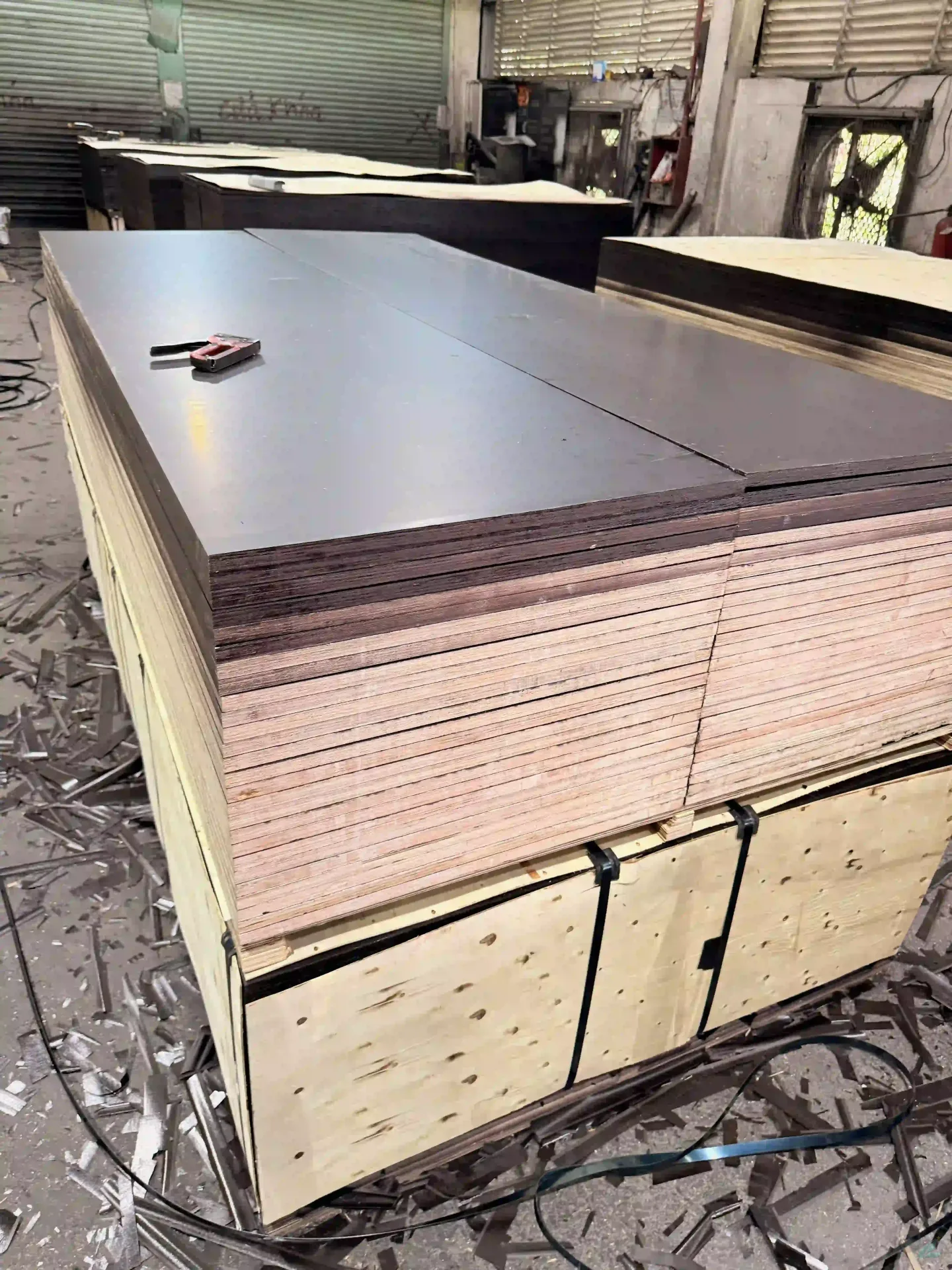
Sheet sizes
- 1220 × 2440mm (4×8ft): standard format, used globally
- 1250 × 2500mm: metric format, preferred in European and Korean markets
- Custom cutting available for project-specific dimensions
🏭 Factory Segments: Why Two “Film Faced” Quotes Look Nothing Alike
The most common sourcing error international buyers make is comparing quotations from different factory segments as if they produce equivalent product. Vietnam’s film faced plywood manufacturing divides clearly into two segments.
“When buyers ask why two Vietnamese suppliers offer 30–40% price difference on the same spec sheet, the answer is almost always the factory segment, not negotiating room,” says Lucy, International Sales Manager at HCPLY with 6+ years of export experience.
Premium film faced factories (Segment C):
- AICA film, 135gsm minimum
- Eucalyptus or acacia Grade A core, stitched or edge-jointed
- Phenolic WBP glue throughout
- Full certifications: FSC, CE, ISO 9001
- Reuse target: 15–20 cycles
- Markets served: EU, Korea, Japan, Australia
Budget film faced factories (Segment D):
- Vietnamese or Chinese domestic film, 80–100gsm
- Acacia Grade B core, loose-lay construction
- Melamine with 5–15% phenolic blend in some cases
- No certifications or basic COO only
- Reuse target: 4–8 cycles
- Markets served: Southeast Asia, Africa, budget Middle East
HCPLY manages a dedicated film faced production facility in Northern Vietnam (Phu Tho Province) operating to Segment C standards. All panels are produced under on-site quality control — thickness calibration, edge sealing verification, and boil test sampling (HCPLY production data, 2026).
Contact HCPLY for factory verification and certified specifications
📦 Container Loading for Film Faced Plywood
Container economics directly affect your landed cost per sheet. Film faced plywood density varies by core species, which changes how many pallets fit in a 40HC container.
| Core | Density | Pallets per 40HC | Approx CBM |
|---|---|---|---|
| Eucalyptus | 650–750 kg/m³ | 15 pallets | ~44.5 CBM |
| Acacia | ~580 kg/m³ | 16 pallets | ~47.5 CBM |
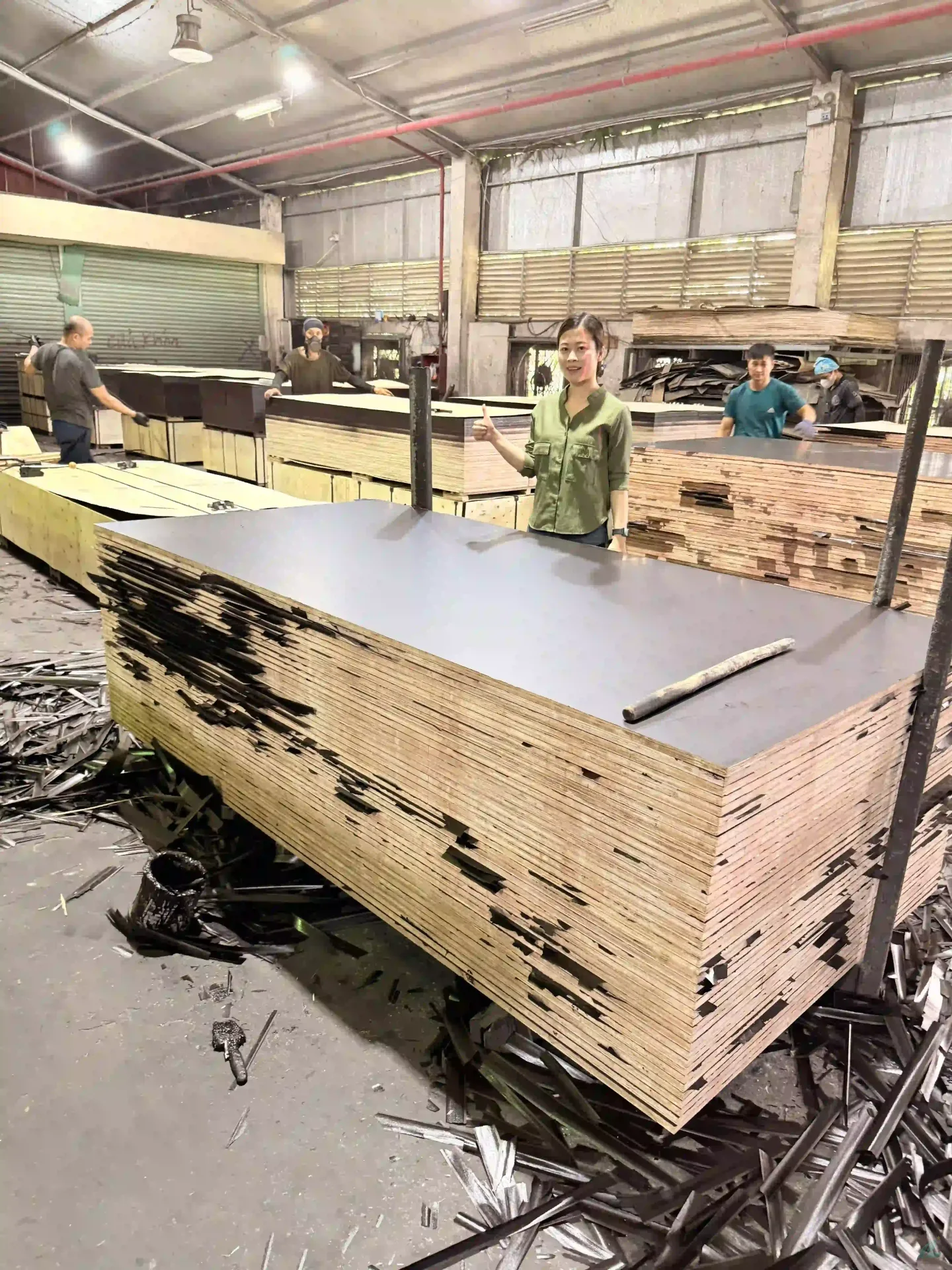
MOQ for film faced plywood export from HCPLY: 1 × 40HC container. Mixed thickness specifications in a single container are accepted — confirm weight limits with HCPLY’s logistics team when mixing eucalyptus-core panels across multiple thicknesses (payload limit: 28.5 MT per 40HC).
For a full breakdown of pallet counts, sheet counts, and CBM calculations by thickness and core species, see the plywood container packing calculation guide for 40HC and the CBM per thickness complete table.
✅ Quality Verification: What to Check Before Accepting Delivery
Three verifications that identify sub-grade film faced plywood before panels reach your formwork system:
-
Film adhesion test (site-level) Press a sharp tool edge against the film near a panel edge. Premium phenolic film resists delamination under concentrated lateral pressure. Budget film delaminates in thin strips within 3–5 pours under similar stress.
-
Edge sealing All four panel edges should be sealed with weather-resistant paint or waterproof edge tape. Unsealed edges absorb moisture from wet concrete, accelerating core delamination from the inside — which reduces reuse count regardless of film quality.
-
Thickness measurement Measure at four corners and the centre. A span greater than ±0.5mm indicates inadequate calibration. Inconsistent thickness creates form-face steps in the concrete surface and structural weak points in modular systems.
For buyers requiring third-party verification, HCPLY provides pre-shipment inspection support and co-ordinates with SGS, Bureau Veritas, and other inspection agencies on request.
Disclosure: This article is published by HCPLY, a Vietnam-based plywood manufacturer and export operator. While we aim to provide objective industry guidance, readers should consider our perspective as a market participant when evaluating recommendations.
🔗 Related Technical Guides
These articles provide supporting detail on specifications referenced above:
- Plywood glue types and emission standards: MR vs WBP, E0/E1/E2 explained
- Film faced plywood product page — HCPLY specifications and ordering
- Plywood sizes and thickness specification guide
- Plywood container packing calculation for 40HC
📋 Summary: Film Faced Plywood Specification Checklist
Before submitting a purchase order for Vietnam film faced plywood, confirm these seven parameters with your supplier:
- Film type and weight — phenolic or melamine-phenolic, gsm specified
- Core species — eucalyptus or acacia, Grade A or B
- Core construction — stitched, edge-jointed, or loose-lay
- Glue type — phenolic WBP (mandatory for formwork) or melamine MR
- Thickness and tolerance — ±0.5mm standard; specify ±0.3mm for premium calibrated panels
- Certification — FSC, CE, ISO 9001 if required by your market
- Reuse count claimed — ask for supporting factory data, not marketing language
Vietnam film faced plywood technical specs vary significantly between factory segments. Getting the right specifications confirmed before ordering — not after the first failed pour — determines whether your per-cycle cost is competitive or prohibitive.
Get a verified specification sheet and FOB quote from HCPLY — no commitment required, response within 24 hours.