
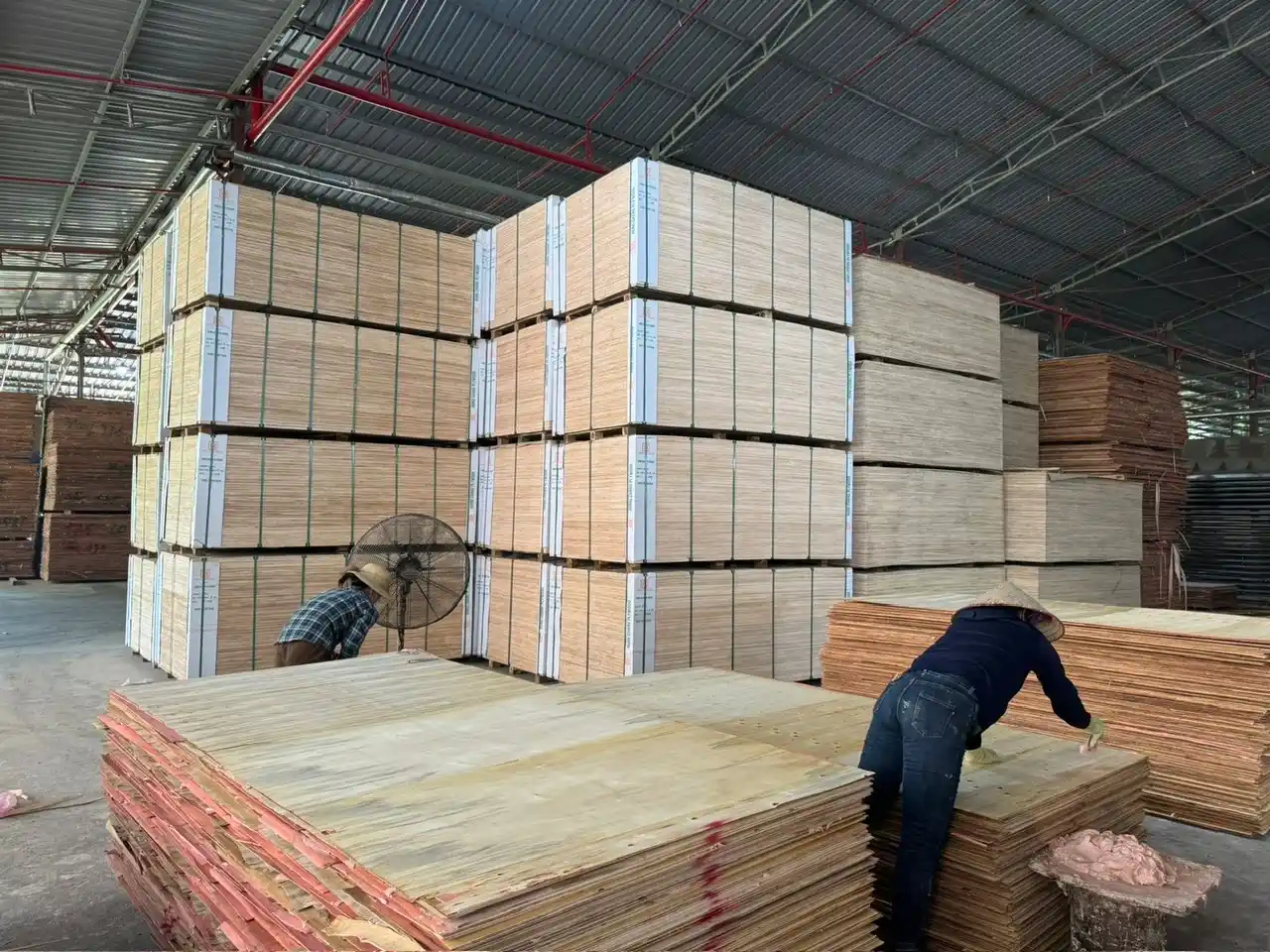
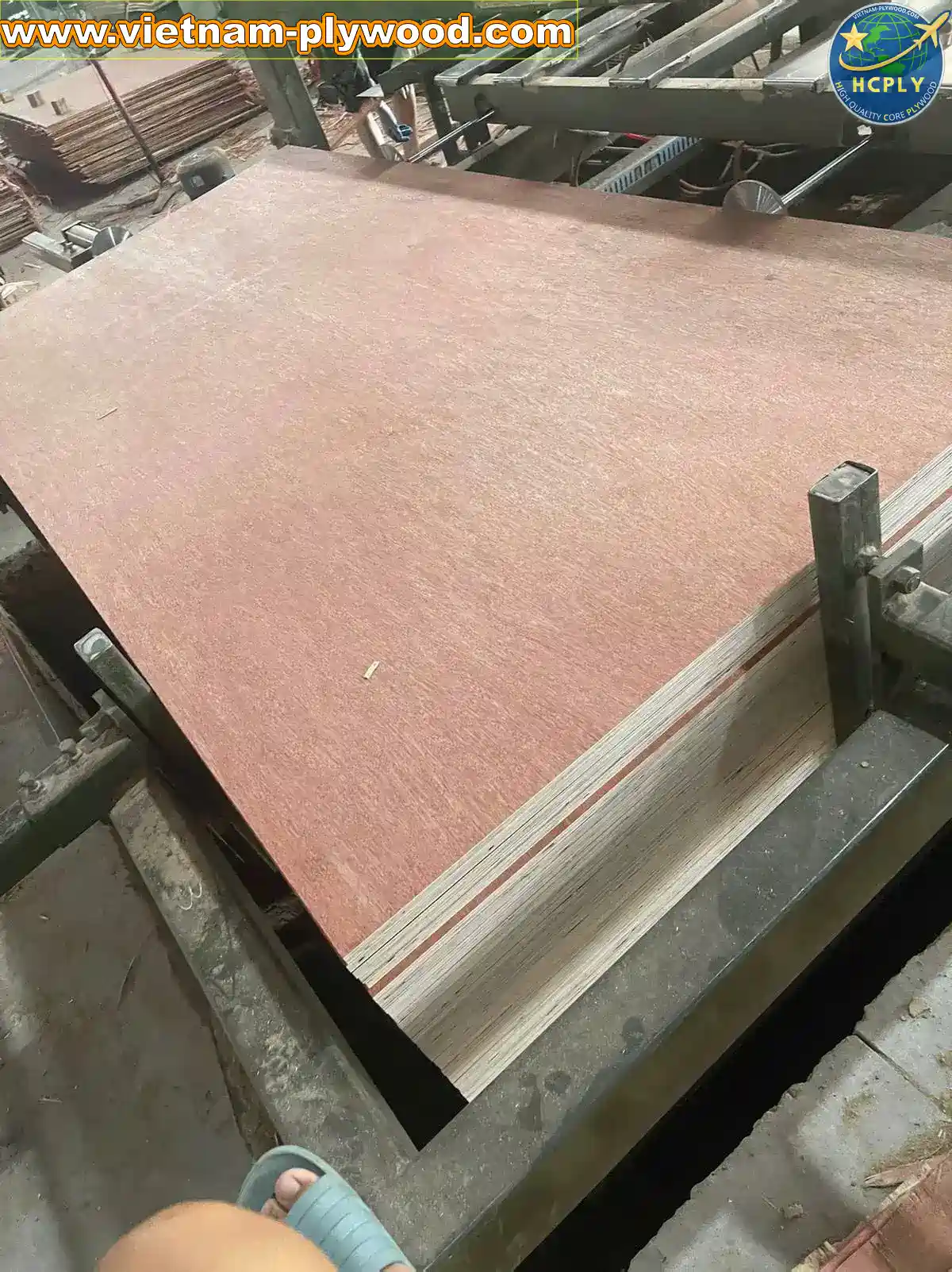

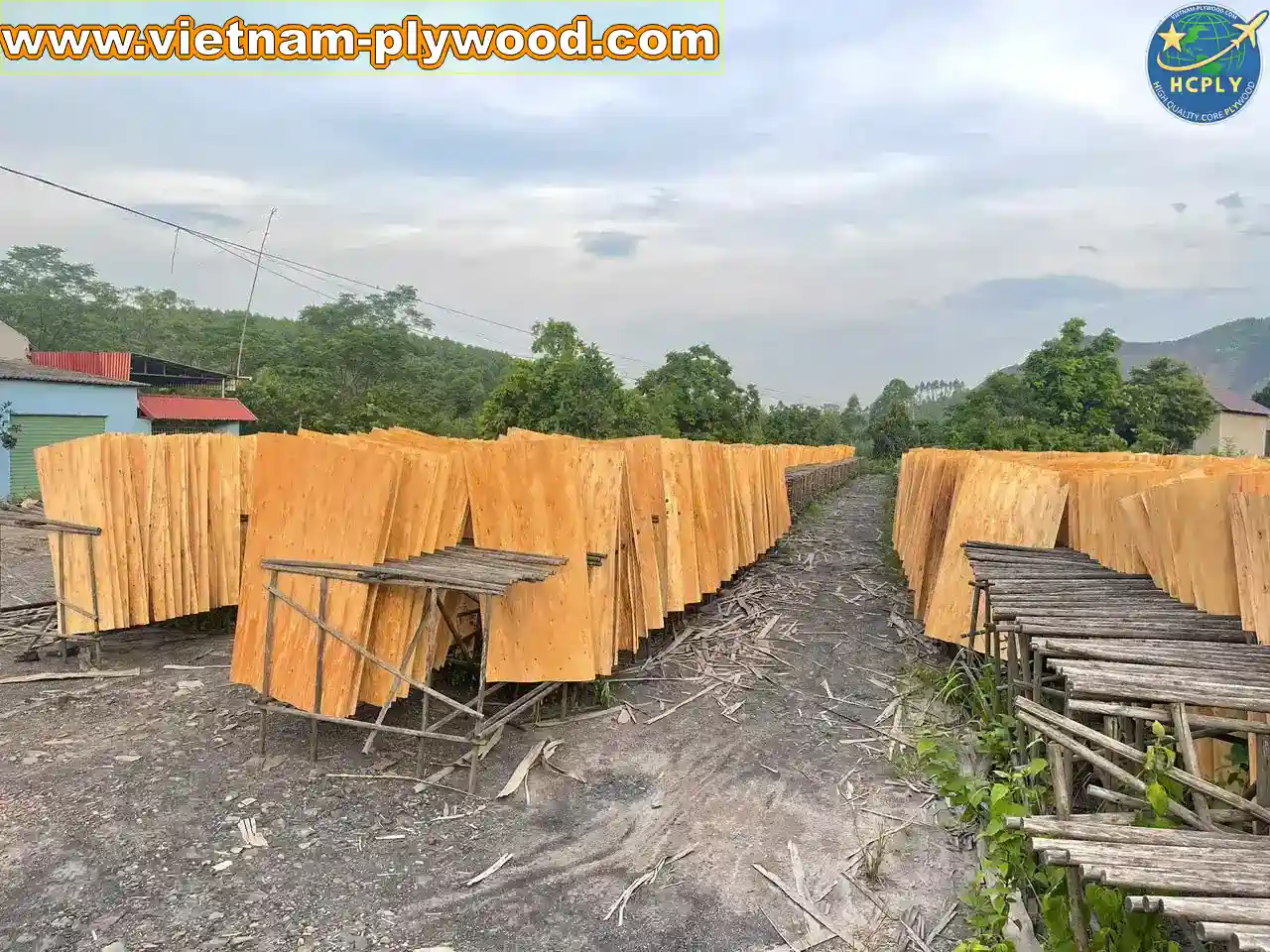

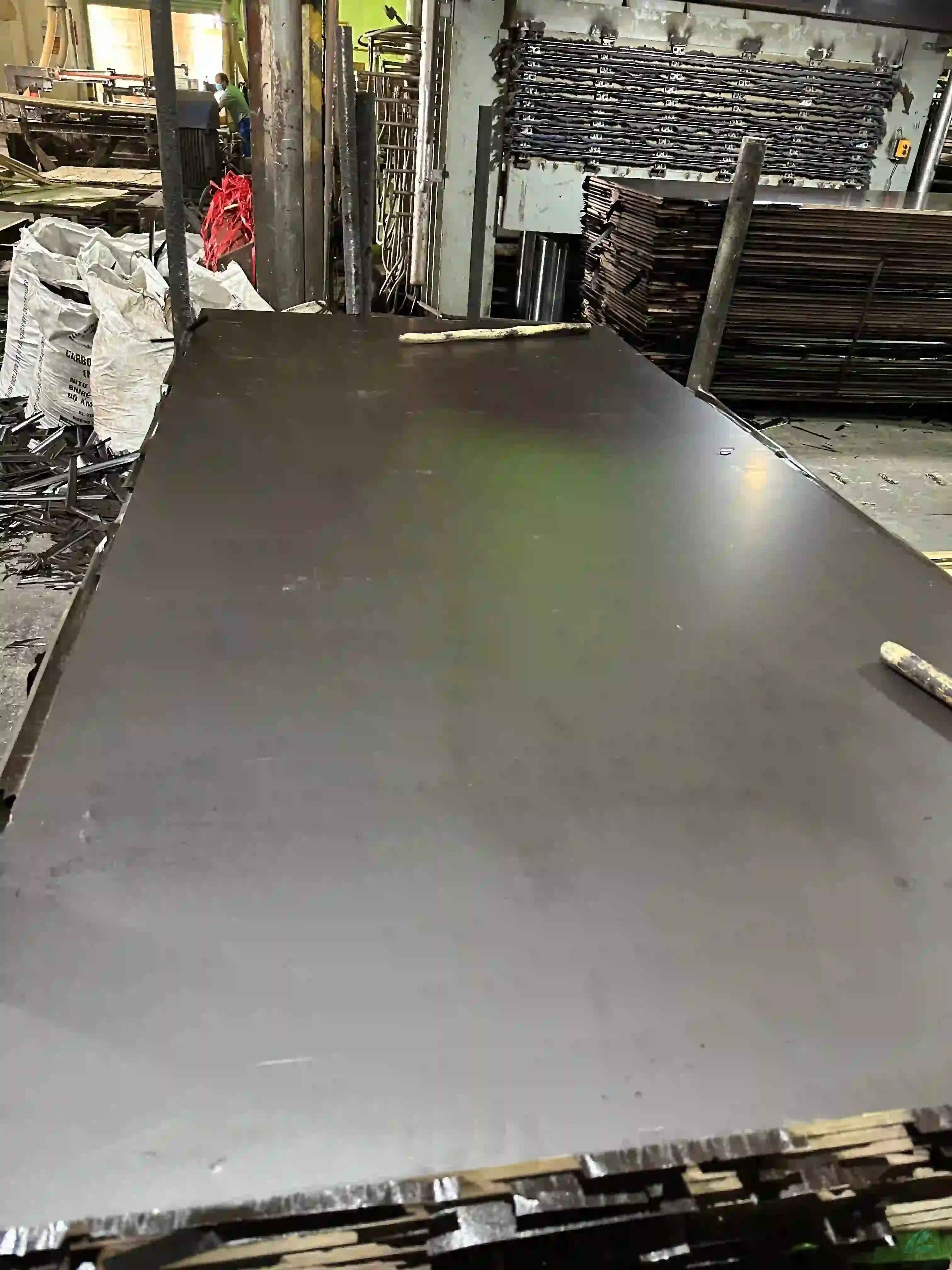
Film faced plywood is the standard panel for concrete formwork worldwide — and the specification you choose determines whether panels last 5 pours or 18. Getting this decision wrong costs more in replacement and downtime than the initial price difference between grades.
Vietnam manufactures formwork-grade film faced plywood using eucalyptus and acacia core from Northern plantation forests, with phenolic WBP glue and phenolic film overlay. This guide covers the technical specifications that matter for concrete applications: film weight, core density, thickness selection by formwork type, reuse cycle management, and what to verify when sourcing from a Vietnamese factory.
📋 What Makes Film Faced Plywood Suitable for Concrete Formwork?
Film faced plywood is a structural panel engineered specifically for direct concrete contact. Three properties combine to make it the construction industry standard:
1. Non-absorbent surface. The phenolic resin film — bonded to both faces under heat and pressure — creates a sealed, non-porous surface that resists moisture, concrete alkali, and chemical attack. Raw plywood absorbs bleed water from fresh concrete, swells, warps, and bonds to the concrete face.
- WBP glue construction. The core layers are bonded with phenolic WBP (Weather and Boil Proof) adhesive, which passes a 72-hour continuous boiling test without delamination. This is non-negotiable for formwork exposed to rain, humidity, and concrete moisture. Melamine MR glue panels — which pass only a 12-hour test — will fail in outdoor concrete applications. (See the full explanation in our phenolic vs melamine glue guide.)
3. Dimensional stability. Film-sealed surfaces dramatically reduce moisture-driven expansion and contraction across the panel. Stable dimensions maintain formwork alignment, joint tightness, and concrete surface quality pour after pour.
The result: a panel that can be stripped from concrete, cleaned with a mastic scraper, sprayed with release agent, and reused 10–20 times before replacement.
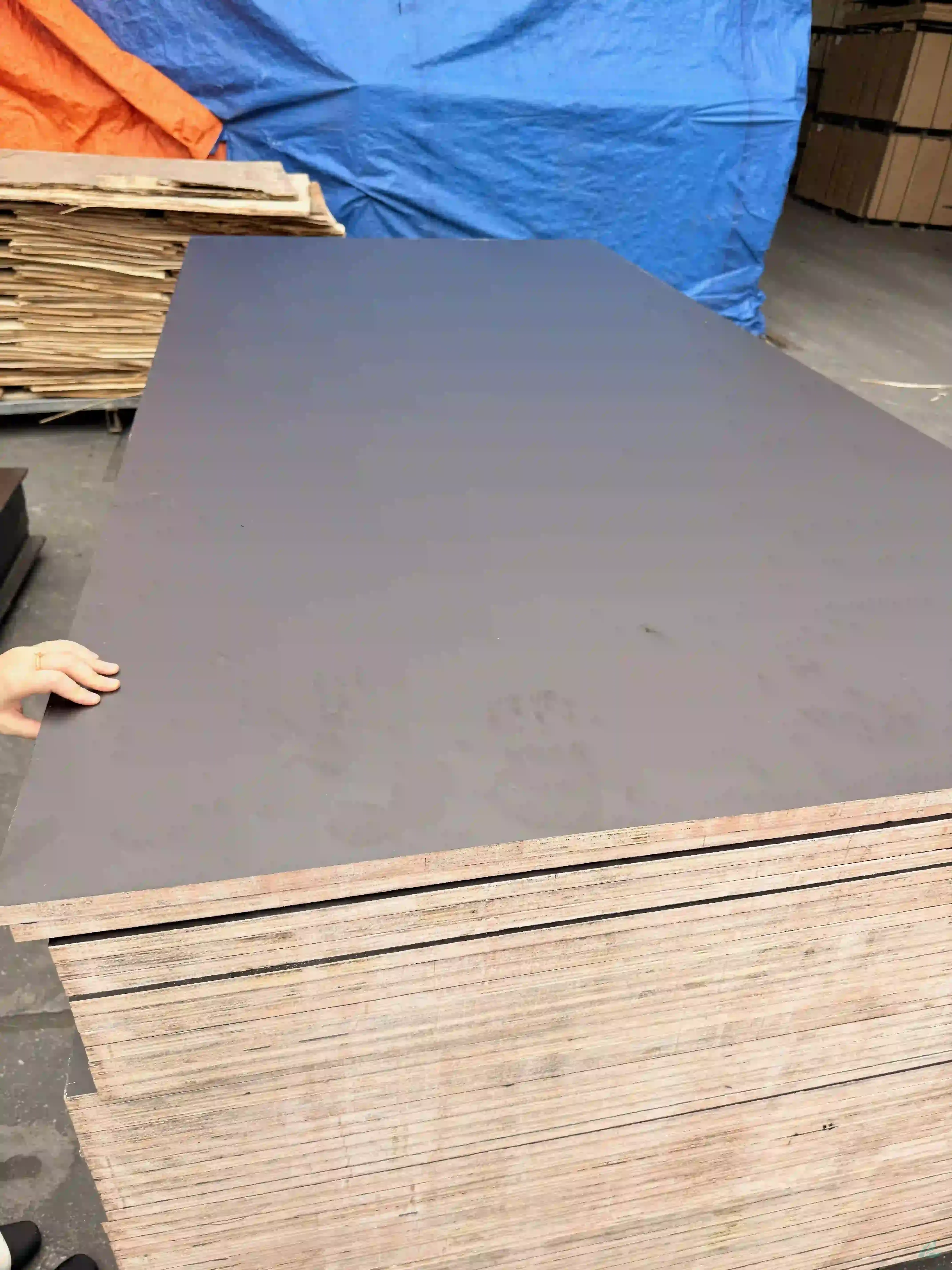
📦 Film Weight — The Single Most Important Specification
Most buyers focus on thickness when specifying formwork plywood. Film weight is more important.
Film weight (measured in grams per square metre, gsm) determines surface hardness, abrasion resistance, and reuse potential. A 220gsm film on 15mm plywood will outperform a 120gsm film on 21mm plywood in formwork reuse count.
| Film Weight | Reuse Potential | Typical Application |
|---|---|---|
| 120–135 gsm | 4–8 reuses | Budget grade, short projects |
| 180 gsm | 10–15 reuses | Standard commercial formwork |
| 220 gsm (AICA) | 15–20 reuses | High-rise, export-grade, Europe/Korea |
HCPLY’s premium grade uses AICA phenolic film at 220gsm — the same specification used in Korean and European high-rise construction projects. Budget Vietnamese suppliers use domestic or Chinese film at 120–135gsm, which explains the 3x price difference that buyers sometimes see in the market. (HCPLY production data, 2026.)
⚠️ Important: Always specify film weight in gsm in your purchase order, not just “film faced plywood.” A supplier who cannot confirm the gsm specification of their film is not offering a verifiable product.
🔧 Core Species and Density for Formwork Applications
The core species determines structural performance — stiffness under load, deflection under concrete pour pressure, and panel weight.
Eucalyptus core (650–750 kg/m³): The preferred specification for load-bearing formwork, slab shuttering, and applications where panel deflection directly affects finished concrete flatness. Higher density means more resistance to bending under the weight of wet concrete. A 40HC container of eucalyptus-core film-faced plywood loads approximately 15 pallets. (See our plywood container packing guide for full loading tables.)
Acacia core (~580 kg/m³): Appropriate for standard wall and column formwork at normal pour heights. Lighter weight makes on-site handling easier and increases the sheet count per container to approximately 16 pallets. For most commercial building projects where concrete pour height does not exceed 3 metres, acacia core performs adequately.
⚠️ Note: Density is determined by core species, not face film color. Black film and brown film panels at the same core species and thickness have identical structural performance — only surface finish differs.
For formwork applications, both core options use phenolic WBP glue — not melamine. This is distinct from furniture and interior grades, which use melamine MR glue. Our guide to plywood core types covers the structural differences between eucalyptus, acacia, and styrax core in detail.
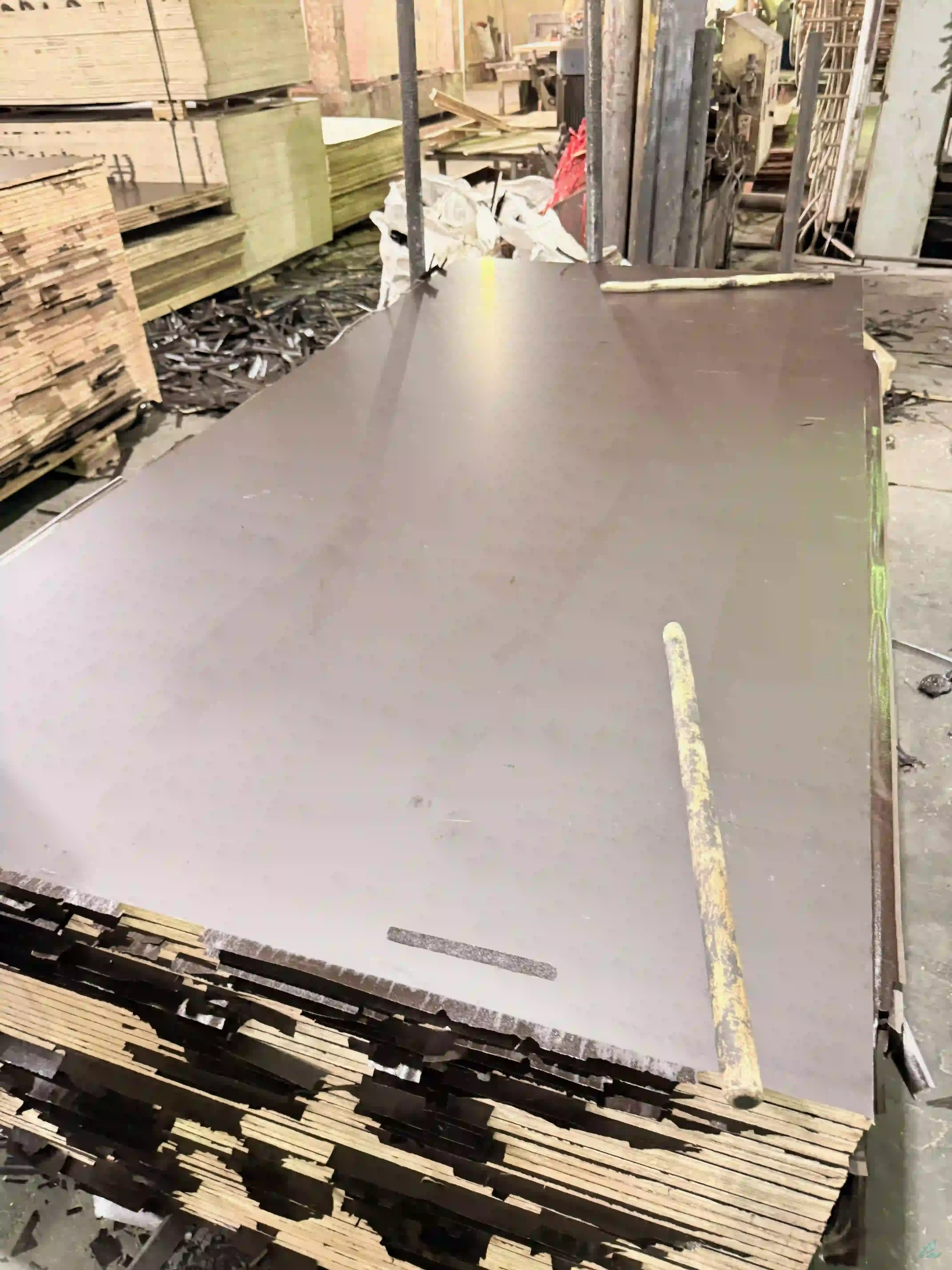
📐 Thickness Selection by Formwork Type
Matching panel thickness to the formwork application prevents over-specification (unnecessary cost) and under-specification (panel failure on site).
📌 Wall and Column Formwork — Standard 18mm
18mm is the globally accepted standard for wall and column formwork. At typical joist or waler spacing of 450–600mm, 18mm film-faced plywood provides adequate stiffness to resist concrete lateral pressure without measurable deflection.
Vietnamese factories produce 18mm panels in both 1220×2440mm (4×8ft, the dominant global standard) and 1250×2500mm (metric, preferred in European and Korean markets).
📌 Slab and Soffit Formwork — 15mm or 18mm
Slab formwork supports load perpendicular to the panel face. The joist or props spacing determines which thickness is required:
- Joist spacing ≤ 300mm: 15mm panels are structurally adequate.
- Joist spacing 300–450mm: 18mm panels recommended to limit deflection and achieve the ±3mm flatness tolerance required for structural concrete.
- Joist spacing > 450mm: 18mm minimum, 21mm for heavy slabs.
Deflection under slab load affects the finished soffit surface quality directly. Specifying 15mm panels to save cost, then extending prop spacing beyond 300mm, is one of the most common causes of wavy concrete ceilings on commercial projects.
📌 Heavy Civil and High-Rise — 21mm
Tunnel formwork, bridge soffit shuttering, precast element molds, and high pour-height columns specify 21mm. The additional core layer provides meaningful stiffness improvement over 18mm at spans above 450mm.
21mm panels are approximately 16–17% heavier than 18mm, which increases container cost and on-site handling effort. For high-rise applications where reuse counts are maximized, this tradeoff is favorable.
| Application | Standard Thickness | Notes |
|---|---|---|
| Wall formwork | 18mm | Global standard |
| Column formwork | 18mm | Same as wall |
| Slab (close props) | 15mm | Joist spacing ≤300mm |
| Slab (standard) | 18mm | Joist spacing 300–450mm |
| Heavy civil / high-rise | 21mm | High load, extended spans |
| Light secondary formwork | 12mm | Non-structural, edge forms |
🏭 Reuse Optimization — How to Get 15+ Cycles
Film-faced plywood panels degrade through three mechanisms: film abrasion, edge moisture ingress, and mechanical damage during stripping. All three are controllable.
📌 Release Agent Application
This is the highest-impact variable in reuse count. Apply a thin, even coat of concrete release agent (bond breaker) to the film surface before every pour. Over-application wastes product and can cause surface defects in the concrete. Under-application causes concrete adhesion, tearing the film during stripping.
Oil-based release agents are most common. Water-based agents are required for some architectural concrete specifications where oil contamination must be avoided. Confirm compatibility with your concrete mix before use.
📌 Proper Stripping Technique
Forcing panels off concrete using crowbars levered against the film surface is the single most destructive act in formwork management. Use:
- Dedicated stripping wedges inserted at panel joints
- Hydraulic or pneumatic form pullers on large pour faces
- Plastic or rubber-tipped scrapers to clean concrete residue from the film
Metal scrapers used aggressively across the phenolic surface will cut through the film in 2–3 uses. Panels that arrive on-site with perfect 220gsm film and leave after three pours looking like raw plywood are almost always victims of improper stripping.
📌 Edge Sealing
HCPLY applies paraffin wax to panel edges before shipping. Any on-site cutting must be re-sealed immediately — with paraffin wax, commercial edge sealer, or even site-mixed paint. Unsealed edges absorb water into the core during use, causing:
- Swelling that breaks joints and misaligns formwork
- Delamination of core layers starting from the edge
- Panel weight increase that makes handling difficult
Edge sealing takes 2 minutes per cut edge. Panel replacement costs 20–40x more. (HCPLY site usage data, 2026.)
📌 Panel Rotation and Storage
Rotate panels between uses where possible — using one face as the concrete contact face, then the other. Store flat on a level surface, never on edge. Stack face-to-face or with cardboard between panels to prevent film-to-film abrasion during storage.
“We always tell contractors: the film is your profit. Protect it and the panel pays for itself 12 times over. Damage the film on the first strip and you’ve paid full price for 4 uses.” — Lucy, International Sales Manager, HCPLY
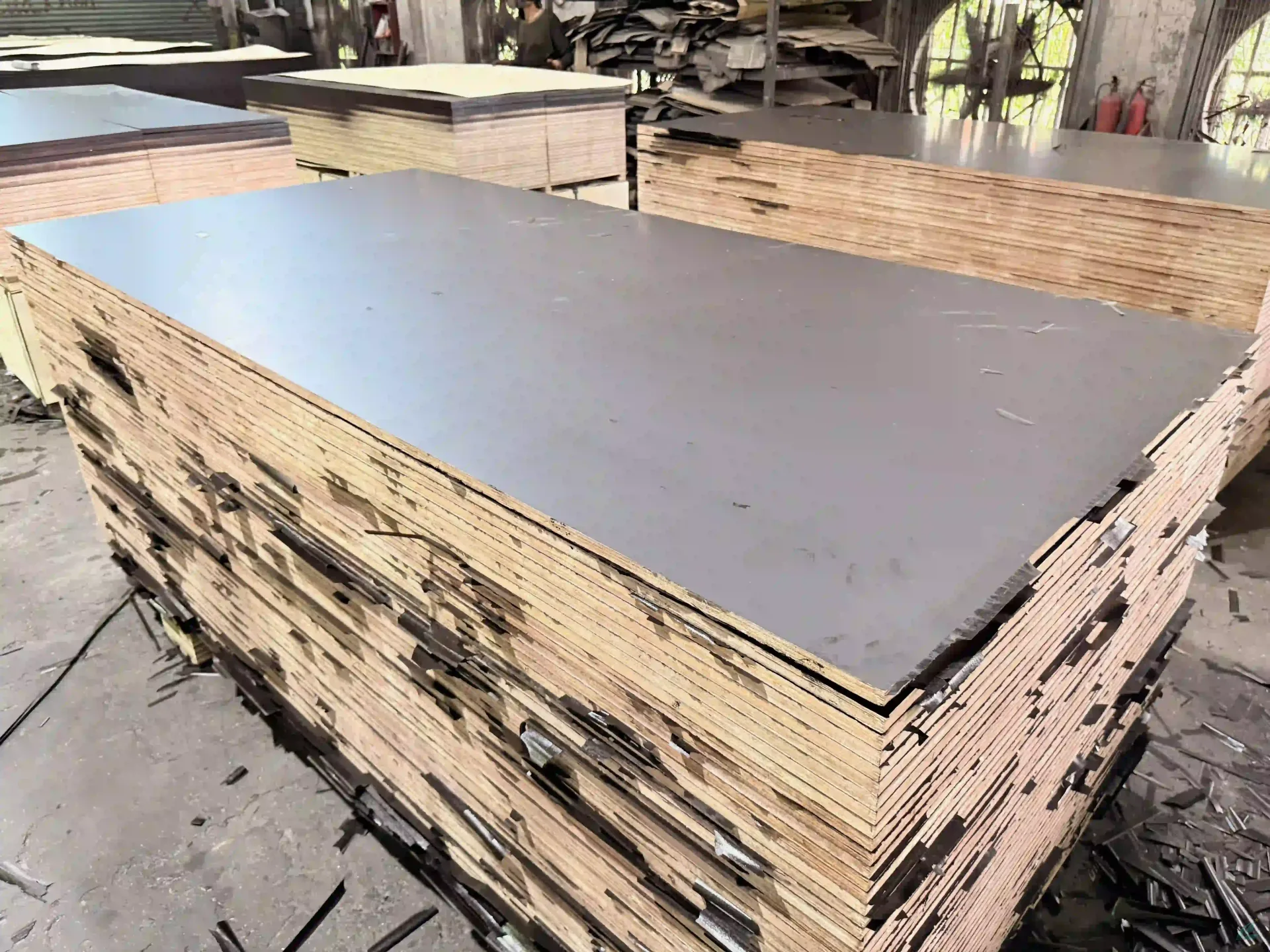
📊 Vietnam Film Faced Formwork Plywood — Standard Specifications
HCPLY’s standard export specification for construction-grade film faced plywood as of Q1 2026:
| Specification | Value |
|---|---|
| Film type | Phenolic resin (black or brown) |
| Film weight | 220 gsm (AICA premium) or 180 gsm (standard) |
| Core species | Eucalyptus (650–750 kg/m³) or Acacia (~580 kg/m³) |
| Glue type | Phenolic WBP |
| Boiling test | 72 hours (continuous) |
| Thickness range | 12, 15, 18, 21mm |
| Sheet size | 1220×2440mm (4×8ft) or 1250×2500mm |
| Thickness tolerance | ±0.5mm |
| Certifications | FSC, ISO 9001, CE |
| Edge treatment | Paraffin wax sealed |
| Reuse potential | 15–20 (220gsm film) |
Custom thickness and size cutting available for specific formwork system requirements.
According to the International Tropical Timber Organization (ITTO, 2024), film-faced plywood accounts for an estimated 70–80% of structural formwork panel consumption globally — a volume driven by construction activity across Asia, the Middle East, and emerging markets.
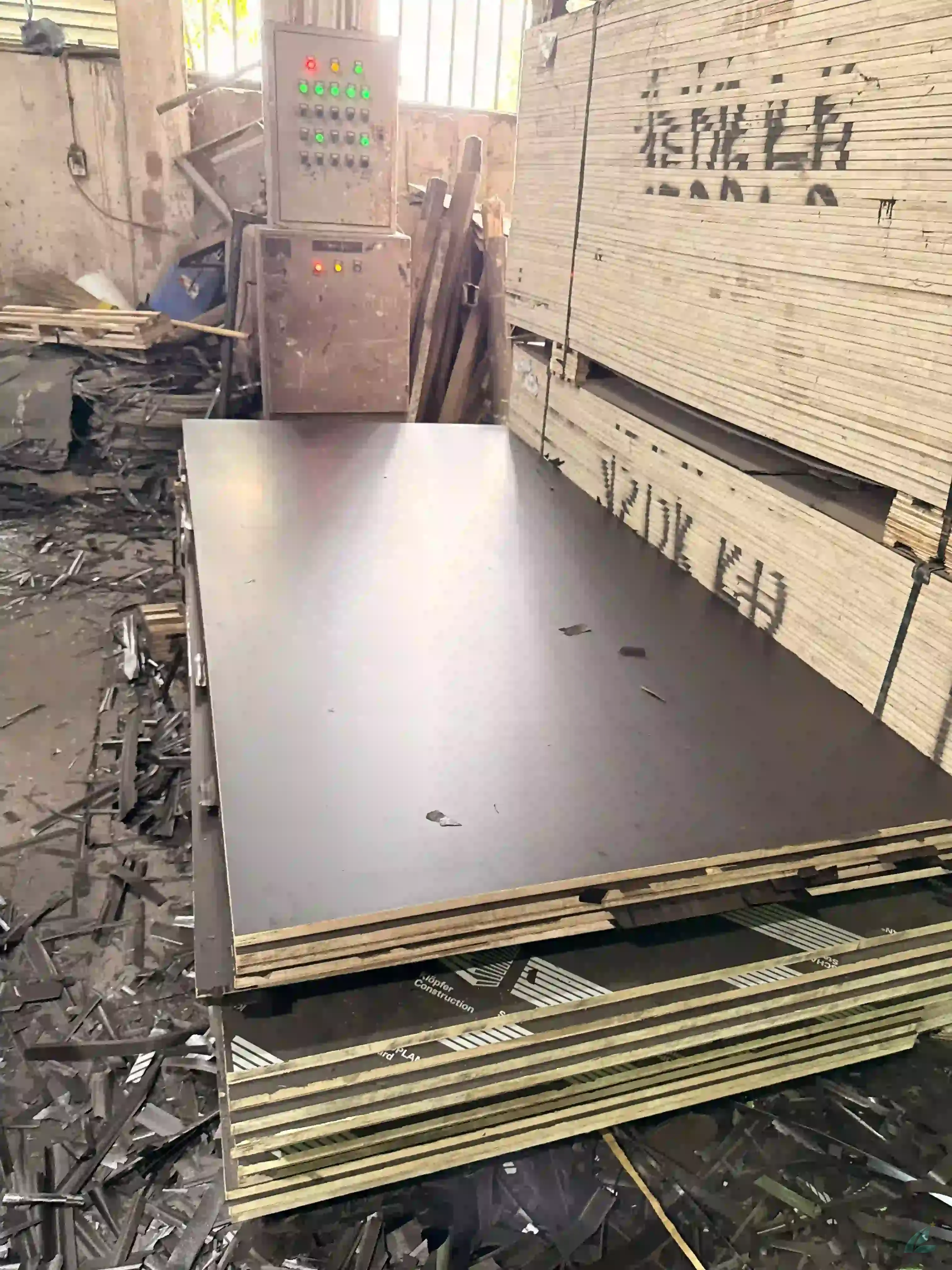
✅ Sourcing Film Faced Plywood from Vietnam: What to Verify
Vietnam has several hundred plywood exporters. Factory-direct suppliers and trading companies both use identical product names and marketing language. These verification steps identify which category you are dealing with.
Verify film weight in writing. A supplier who lists “film faced plywood” without specifying gsm cannot guarantee reuse performance. Request the AICA or film manufacturer specification sheet, or ask for the film roll labels on your order.
Check core species and density. Some budget suppliers use styrax or mixed core to reduce weight and cost. For formwork applications, specify eucalyptus or acacia core explicitly. (Styrax core at 480–500 kg/m³ is excellent for furniture applications but underdensified for heavy formwork loads.)
Verify WBP glue certification. Request the boiling test certificate from the production facility, not just a catalog claim. Third-party test reports from SGS, Bureau Veritas, or QUATEST 3 (Vietnam’s national testing body) are the accepted formats.
Confirm certifications through issuing bodies. FSC certificates are verifiable at fsc.org using the certificate code. ISO 9001 certificates are verifiable through the certification body’s online registry. Certificates displayed by trading companies may belong to the manufacturer, not to the trading company you are buying from.
Factory-direct pricing signal. Vietnamese manufacturers export without paying 8% domestic VAT on transactions. Trading companies do pay VAT and pass the cost on. A genuine factory-direct FOB price is typically USD 8–15/m³ lower than trading company pricing for identical specifications. (Vietnam Tax Authority, 2025; HCPLY commercial data, 2026.)
Request verified factory-direct specifications and FOB pricing from HCPLY
Disclosure: This article is published by HCPLY, a Vietnam-based plywood manufacturer and export operator. While we aim to provide objective industry guidance, readers should consider our perspective as a market participant when evaluating recommendations.
🔗 Related Resources
- Film Faced Plywood Vietnam — Product Page & Specifications
- Film Faced Plywood Manufacturing Process — Vietnam Factory Guide
- Concrete Formwork Plywood Complete Spec Guide
- Plywood Glue Types — Phenolic WBP vs Melamine MR Explained
- Plywood Core Types — Eucalyptus vs Acacia vs Styrax
- Plywood Container Packing Calculation — 40HC Tables