


Thickness variation costs furniture manufacturers money. When plywood panels arrive 0.8mm thicker on one edge than the other, CNC programs misfire, cabinet doors refuse to align, and laminate bonds fail at the glue line. Vietnam calibrated plywood solves this at the source — before the container is loaded.
HCPLY produces calibrated panels through double-sided wide-belt sanding that holds every sheet to ±0.2mm thickness tolerance. As of 2026, this precision standard is the benchmark requested by furniture factories in Korea, Germany, and the United Arab Emirates when sourcing from Vietnam. This guide explains the process, specifications, and applications so buyers can specify correctly from their first order.
📋 What Is Calibrated Plywood?
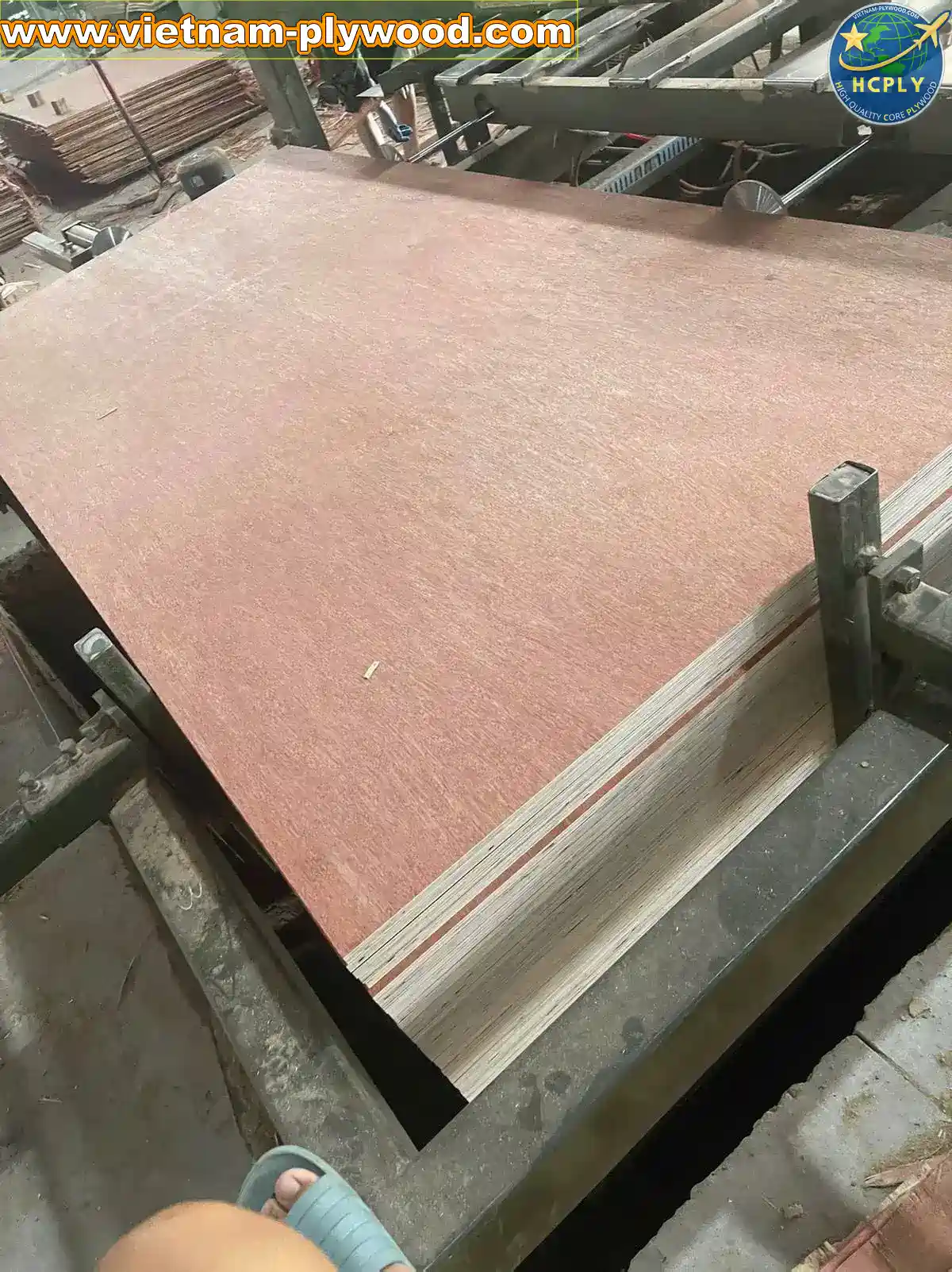
Calibrated plywood is standard structural plywood that undergoes additional precision sanding on both faces to achieve a uniform, consistent thickness across the entire panel surface. The objective is dimensional accuracy — not just aesthetics.
Standard hot-pressed plywood tolerates thickness variation of ±0.5–1.0mm across a 1220 × 2440mm sheet. That range is acceptable for construction and packing applications. For furniture assembly lines using CNC equipment or automated edge-banding machines, it is not.
Calibration brings this variation down to ±0.2mm (HCPLY production standard) through two mechanisms:
- Material removal — wide-belt sanding machines remove excess thickness from high spots
- Digital feedback control — thickness sensors continuously measure and adjust sanding belt pressure
💡 Key distinction: Calibration targets thickness consistency. Sanding targets surface smoothness. A panel can be smooth but uncalibrated — or calibrated but with a slightly open grain surface. Premium calibrated plywood achieves both simultaneously.
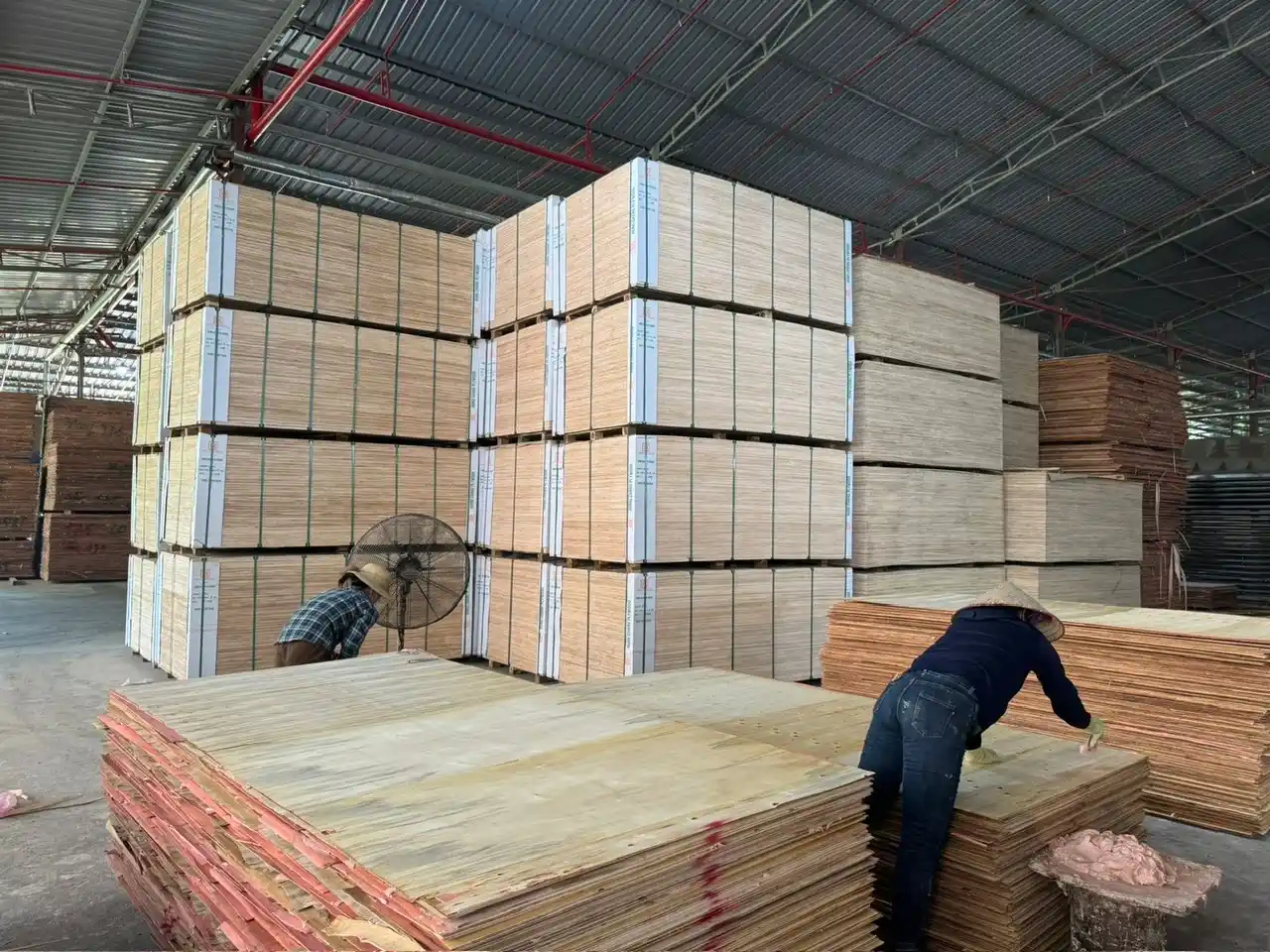
The result is a panel where thickness measured at the center, edges, and all four corners falls within the same 0.4mm window. This is what furniture factories call “stack-flat” — pallets of 100+ sheets that stack with zero visible tilt when a straightedge is laid across them.
⚙️ The Factory Calibration Process
Calibration at HCPLY’s Northern Vietnam facilities follows five controlled stages, each with defined exit criteria before advancing.
“HCPLY achieves ±0.2mm thickness tolerance for furniture-grade panels — the industry standard in Vietnam is ±0.3–0.5mm. That precision comes from calibrated sanding lines and consistent core veneer thickness, not from post-production sorting.” — David, Export Project Leader, HCPLY
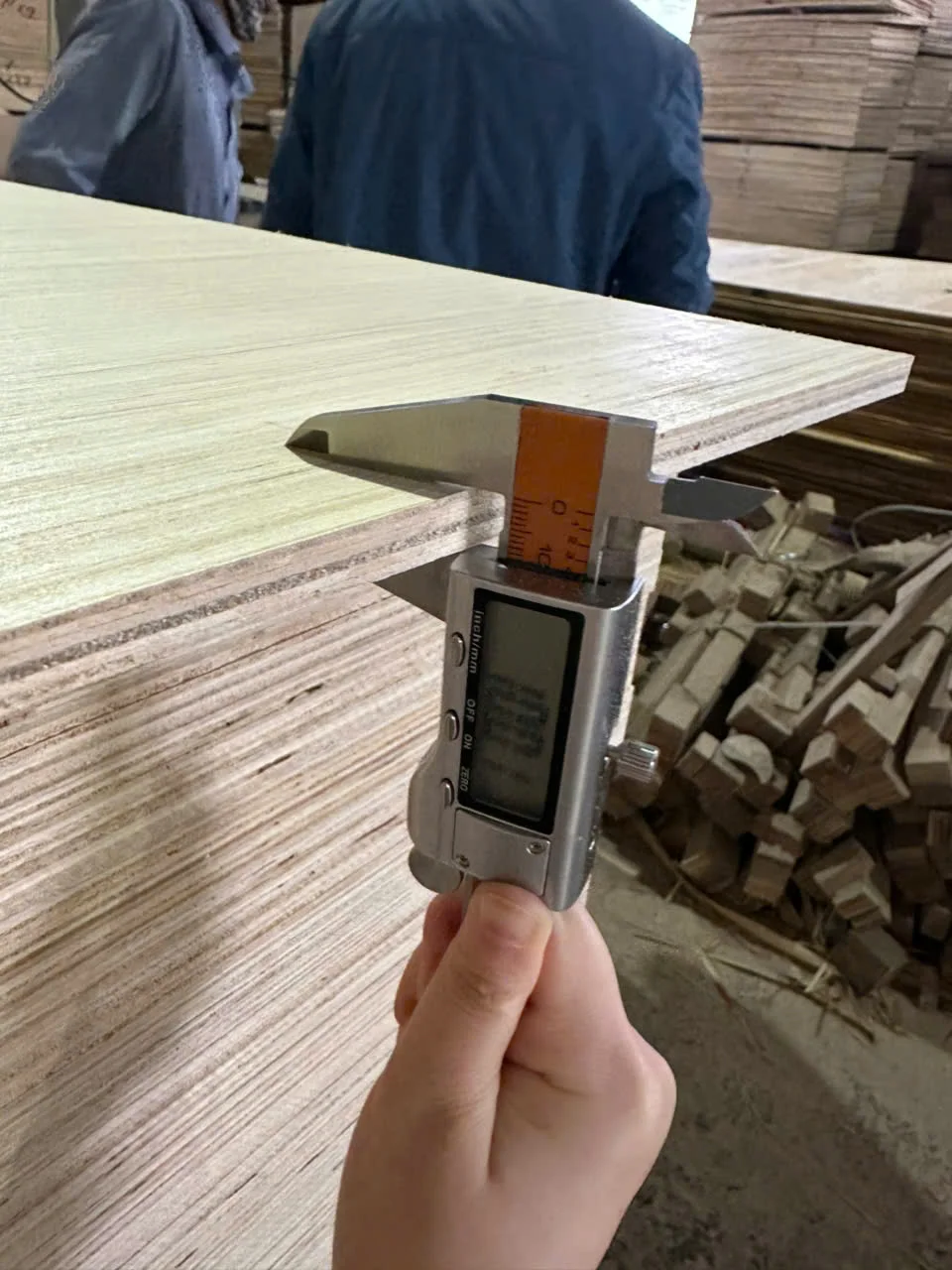
📌 Stage 1: Core Veneer Selection
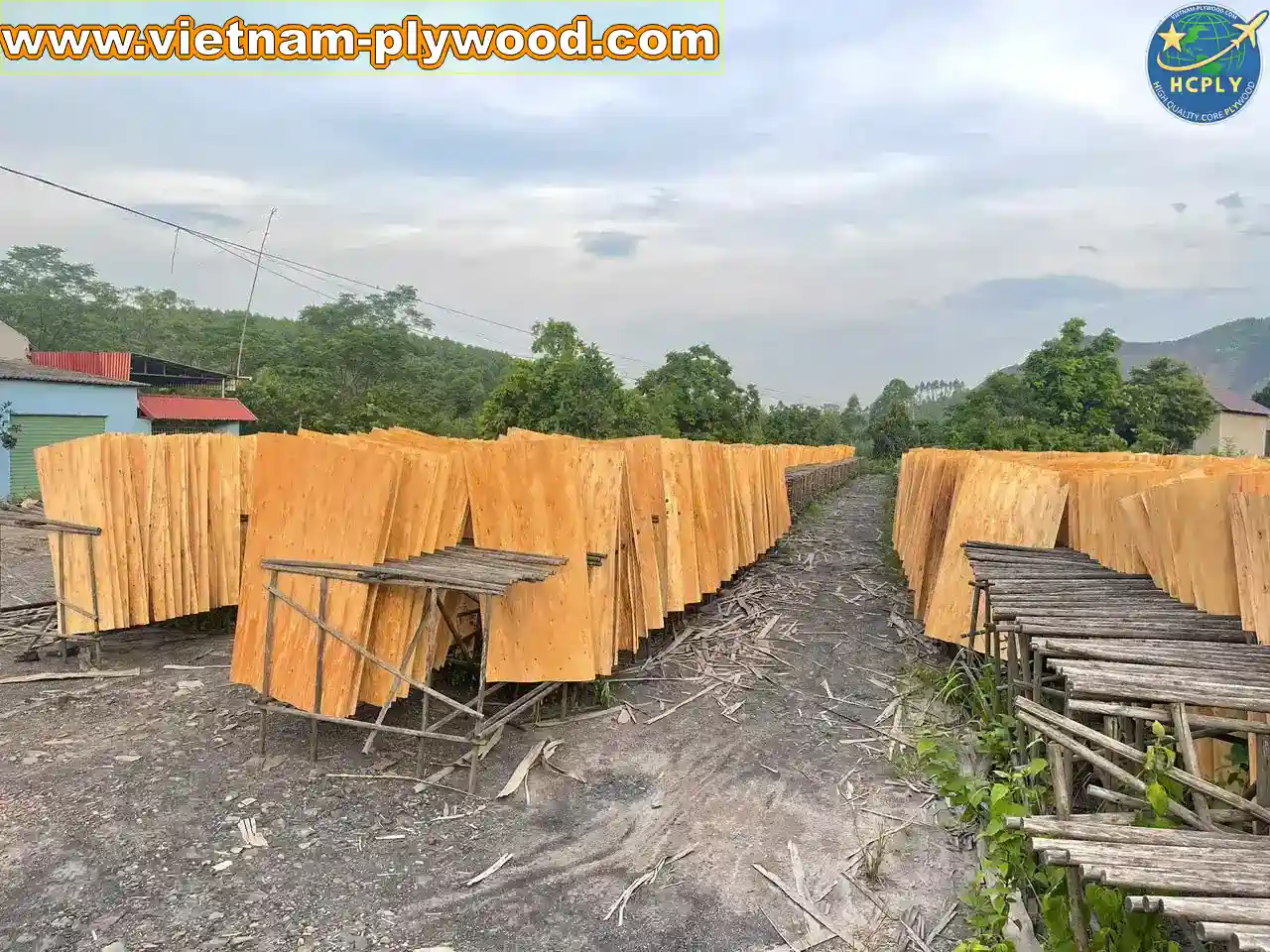
Only defect-free veneer with uniform density is approved for calibrated panel production. Veneers with core gaps, knots exceeding 5mm, or density variation above threshold are redirected to packing or construction grades. The core species — acacia (~580 kg/m³), styrax (480–500 kg/m³), or eucalyptus (650–750 kg/m³) — are selected to match the target panel weight and application (HCPLY production data, 2026).
📌 Stage 2: Layer Assembly and Hot Pressing
Cross-grain layer assembly follows standard veneer orientation (odd number of plies for dimensional stability). Hot pressing parameters are tuned per glue type:
- Melamine (MR) glue: 12h boiling test — used for furniture, interior applications
- Phenolic (WBP) glue: 72h boiling test — used for moisture-exposed applications
Pressing produces raw panels that are oversized in thickness by 0.3–0.5mm to allow material removal in calibration.
📌 Stage 3: Moisture Conditioning
After pressing, panels rest in a conditioning room for 24–48 hours. Target moisture content: 8–12%. This step is non-negotiable before calibration — moisture-swollen panels that are sanded to spec will shrink after delivery, pulling them out of tolerance. “Conditioning is where most shortcuts get taken,” notes Lucy, International Sales Manager at HCPLY. “Buyers see the tolerance certificate but never see the moisture log. We track both.”
📌 Stage 4: Double-Side Calibration
Wide-belt sanding machines run both faces simultaneously. Digital thickness sensors measure every 200mm along the panel length, feeding continuous pressure adjustments to the sanding heads. Each panel passes through two calibration passes:
- Coarse calibration — removes bulk material, brings within ±0.5mm
- Fine calibration — final pass holds to ±0.2mm
📌 Stage 5: Inspection and Packing
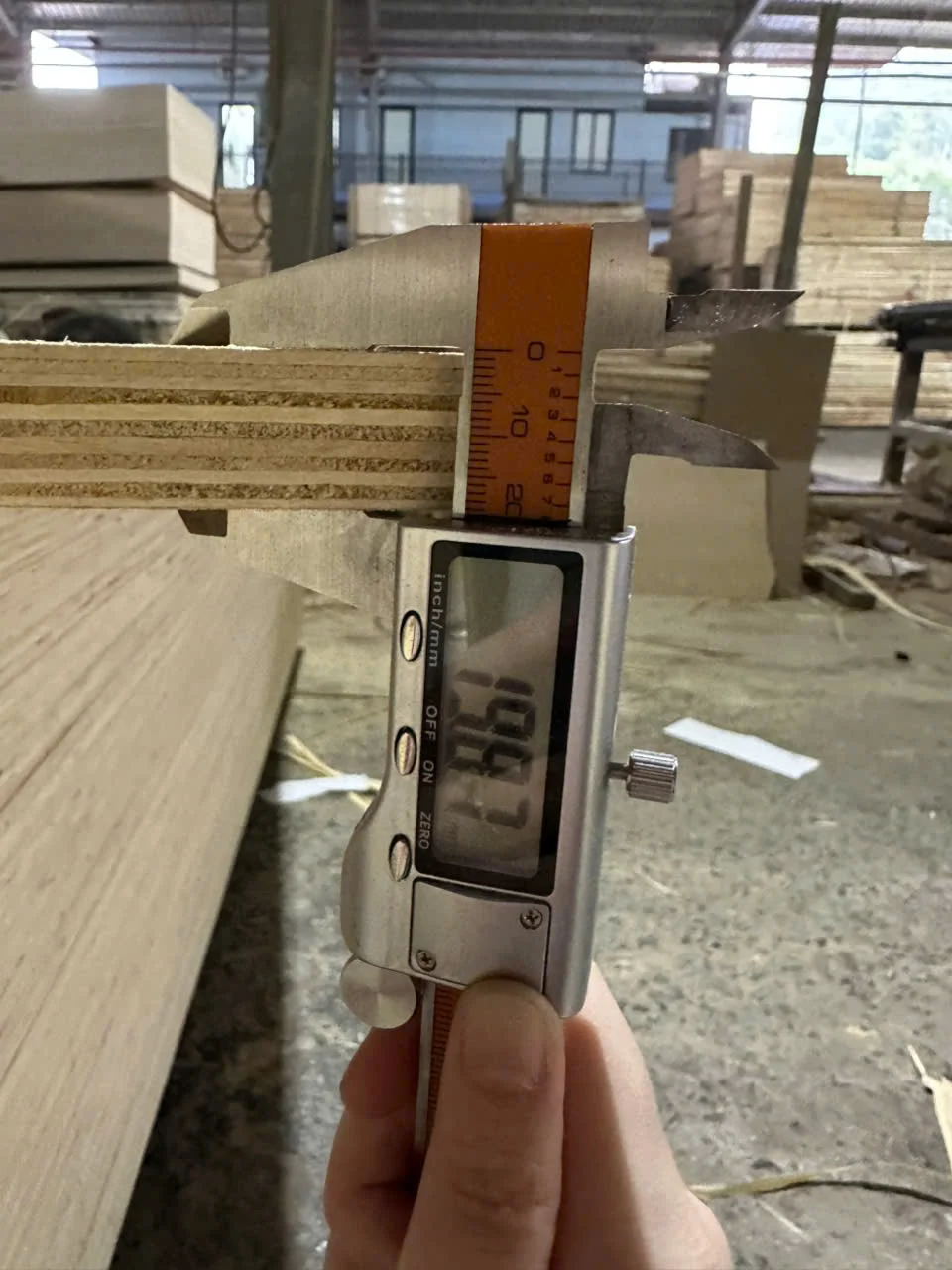
Random sampling pulls 5% of panels per production batch for thickness measurement at 9 points (four corners, four edge midpoints, center). Any panel outside ±0.2mm is rejected. Accepted panels are stacked, strapped, and packed per export requirements.
📊 Technical Specifications
| Parameter | Specification |
|---|---|
| Thickness range | 9–25mm |
| Thickness tolerance | ±0.2mm (calibrated grade) |
| Core species | Acacia (~580 kg/m³), Styrax (480–500 kg/m³), Eucalyptus (650–750 kg/m³) |
| Face veneer options | Bintangor, Okoume, Birch, Pine, Eucalyptus, EV |
| Glue type | Melamine (MR) or Phenolic (WBP) |
| Emission class | E0 / E1 / CARB P2 |
| Standard sheet size | 1220 × 2440mm; 1250 × 2500mm available |
| Moisture content | 8–12% |
| Certifications | FSC (on request), ISO 9001 |
⚠️ Important: Emission class (E0/E1/CARB P2) describes formaldehyde output — a separate parameter from glue type (Melamine/Phenolic). E0 with Melamine glue is common for export furniture. Do not combine these terms in specifications.
For a full breakdown of plywood sizes and thickness standards, including how thickness interacts with container loading capacity, see the dedicated specifications guide.
🔧 Applications: Where Calibrated Thickness Matters Most
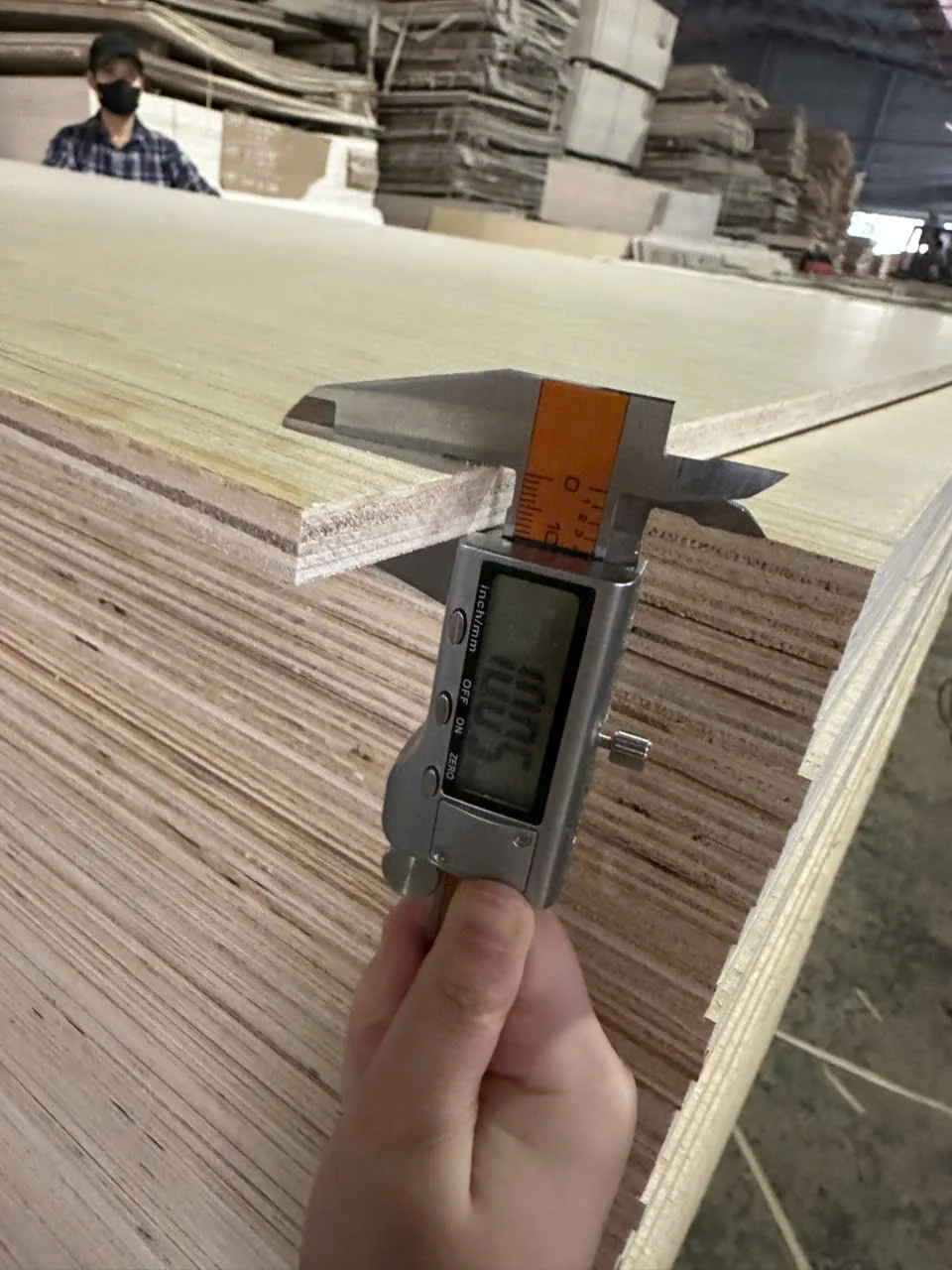
Calibrated plywood is not universally required. The table below helps buyers determine when the additional cost is justified.
| Application | Calibrated required? | Reason |
|---|---|---|
| Modular furniture / flat-pack | Yes | CNC program depth set to fixed thickness |
| Kitchen cabinet carcasses | Yes | Edge-banding machines require consistent thickness input |
| Flooring substrate (vinyl, LVT) | Yes | Height variation transfers through finished floor |
| Decorative lamination (HPL, PVC) | Yes | Bond quality requires flat, even substrate |
| Interior wall paneling (painted) | Recommended | Paint finishing exposes surface irregularities |
| Construction formwork | No | Phenolic film compensates; concrete pressure matters more |
| Packing/crating plywood | No | Structural requirement; precision unnecessary |
Furniture Manufacturing
The dominant application. Furniture factories running automated lines set CNC router programs for a specific thickness — 18.0mm, for example. If incoming panels vary from 17.5mm to 18.5mm, the router depth setting that was correct for 18.0mm produces shallow cuts on thick panels and breakthrough cuts on thin ones. Calibrated plywood eliminates this variable entirely.
Get a Free Quote to discuss calibrated plywood specs for your furniture production line. No commitment required.
Flooring Substrate
Vinyl plank (LVP) and luxury vinyl tile (LVT) installations require a flat, dimensionally consistent substrate. A 0.8mm height difference between adjacent panels causes the finished flooring surface to creak and flex. For export to European markets where LVT installation standards are strict, calibrated substrate plywood from Vietnam is the cost-effective solution — significantly cheaper than European birch at equivalent tolerance specifications.
Decorative Lamination
High-pressure laminates (HPL) and melamine-faced boards bond poorly to surfaces with thickness variation. Uneven substrates create differential stress in the laminate layer, leading to delamination at corners and edges. Calibrated plywood with ±0.2mm tolerance provides the flat, consistent bonding surface that makes HPL warranties achievable.
📐 Calibrated vs. Standard Plywood: Side-by-Side
The table below distills the key purchasing decision factors (Calibrated Plywood vs. Regular Plywood, GMG Plywood Technical Review, 2024):
| Factor | Standard Plywood | Calibrated Plywood |
|---|---|---|
| Thickness tolerance | ±0.5–1.0mm | ±0.2mm |
| Surface smoothness | Moderate (press marks visible) | High (sanding removes marks) |
| CNC compatibility | Low — requires manual calibration | High — direct to program |
| Price premium | Base | +5–12% depending on spec |
| Applications | Construction, packing, structural | Furniture, lamination, flooring |
| MOQ (HCPLY) | 1 × 40HC container | 1 × 40HC container |
The 5–12% price premium for calibration is often recovered in reduced production waste and rework. A furniture factory processing 10 containers/year that eliminates 3% rework from thickness inconsistency recovers the calibration cost within the first two containers.
🏭 Core Species Impact on Calibrated Panels
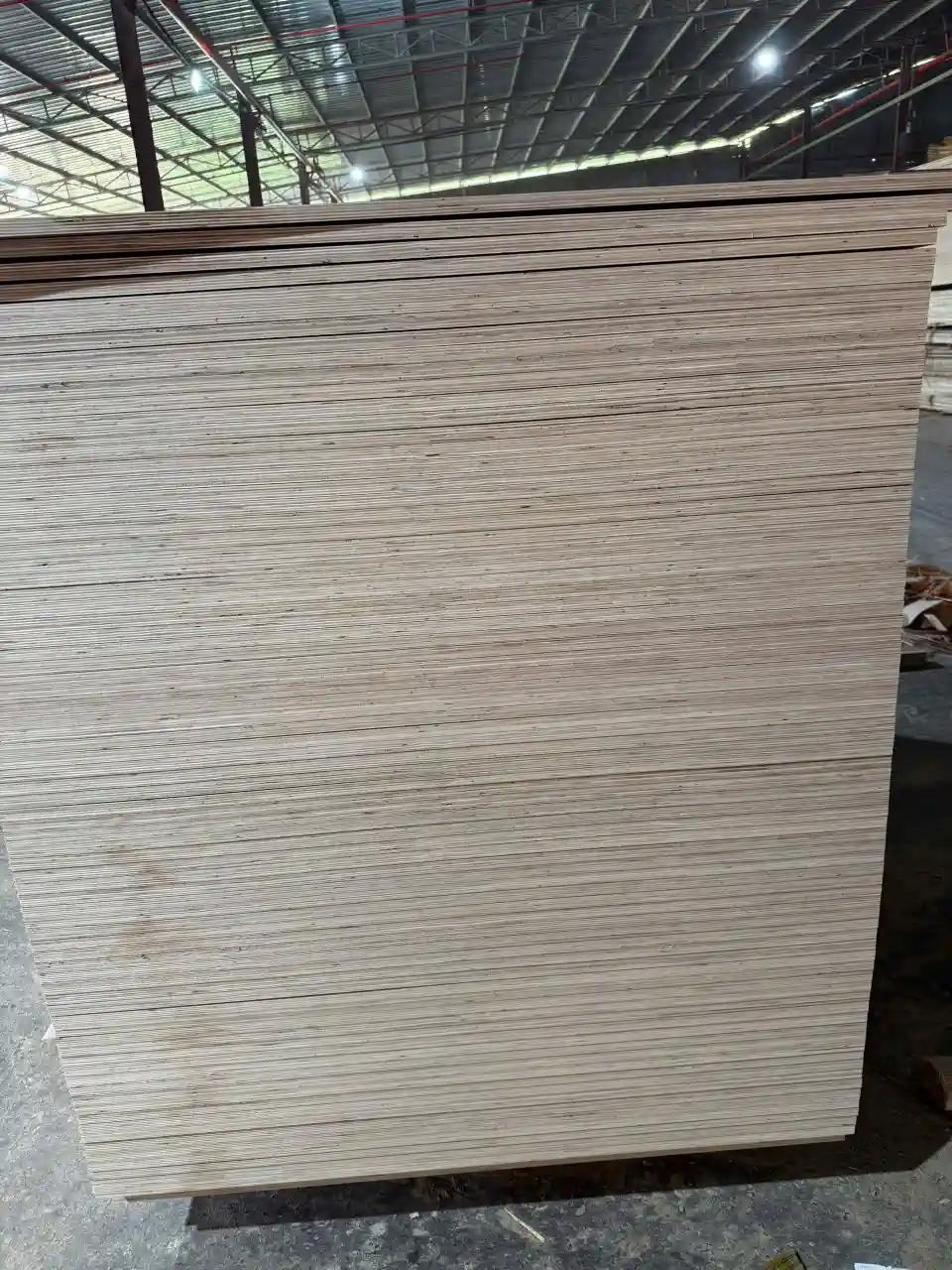
The choice of core species affects calibrated panel weight, density, and container loading capacity. All three species available from HCPLY are suitable for calibrated production:
Acacia core (~580 kg/m³): Most affordable option. Darker color; slight gap risk in lower-grade batches. Best for commercial furniture and packing applications where calibration is needed for automated processing but aesthetic core quality is secondary.
Styrax core (480–500 kg/m³): Lightest Vietnamese core species. White, clean appearance. Premium choice for furniture-grade calibrated panels where panel weight matters — flooring substrates, wall panels, transport interiors. Maximizes container CBM due to low density (18 pallets per 40HC vs 15 for eucalyptus core).
Eucalyptus core (650–750 kg/m³): Heaviest and strongest. Best dimensional stability and resistance to warping after calibration. Preferred when the application involves moisture cycles — bathroom furniture, outdoor structures, flooring in humid climates. Higher freight cost per CBM due to weight.
For a detailed comparison of core species and their impact on plywood performance, see Plywood Core Types — Acacia vs Eucalyptus vs Styrax.
✅ What to Look for in a Calibrated Plywood Supplier
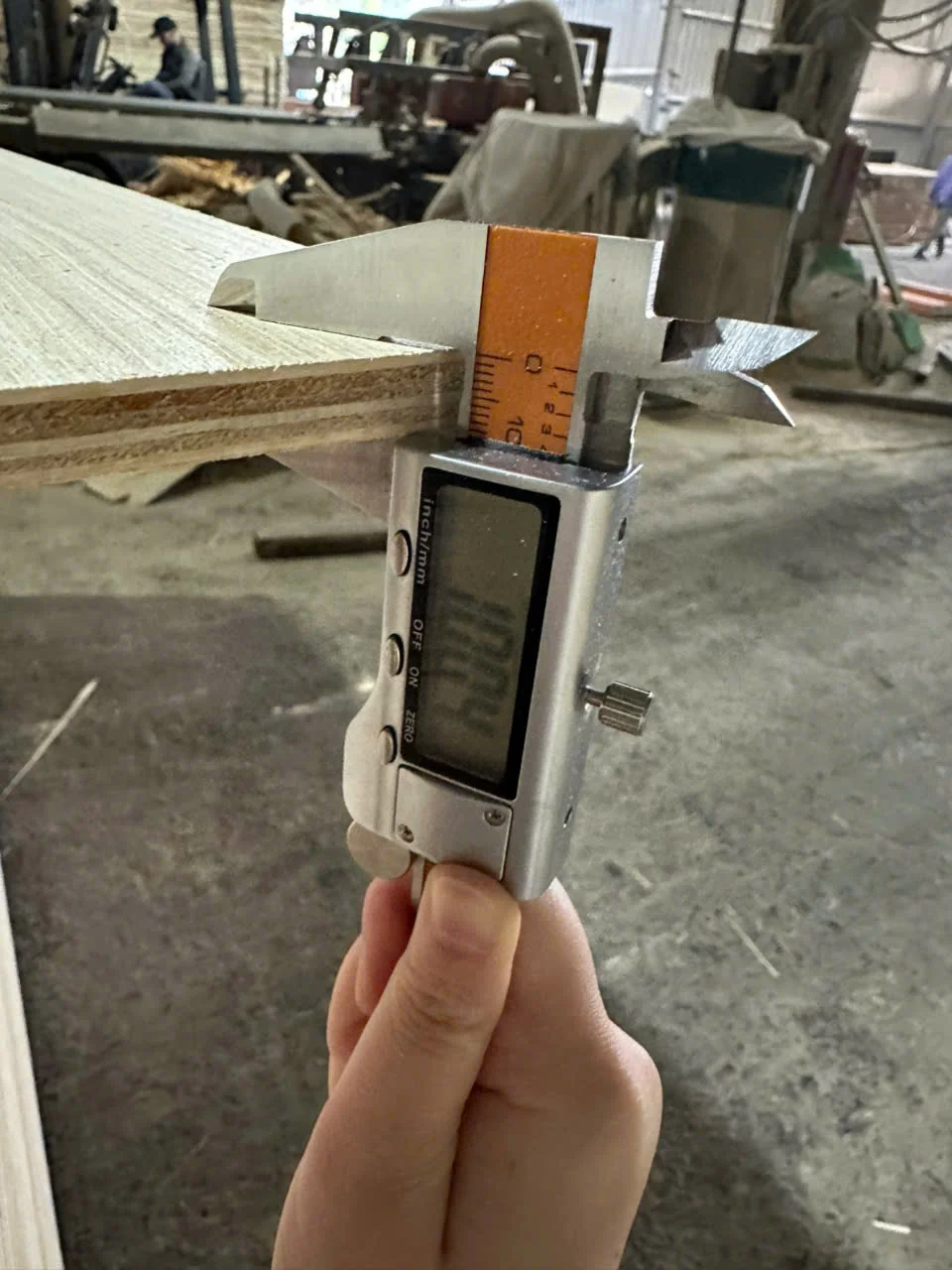
Factory-direct pricing: Full documentation and competitive pricing with no intermediary markup.
Documented QC process: Every calibrated production batch includes a thickness measurement report (9-point grid per panel, 5% random sampling). Buyers receive QC photos before container loading. “We send the caliper readings with the pre-loading photos,” says Lucy, International Sales Manager at HCPLY with 6+ years in export. “You see exactly what’s going into your container.”
Emission compliance: E0 / CARB P2 emission standards available for US, European, Korean, and Japanese markets. HCPLY’s emission testing follows chamber method measurement, with third-party lab reports available on request.
Export certifications: FSC chain-of-custody, CARB P2, CE marking, ISO 9001, EUDR, and EUTR — full documentation set for any market.
Mixed specification containers: Calibrated and standard panels can be combined in one 40HC container with recalculated weight verification. Useful for buyers who need calibrated panels for furniture lines and standard panels for packing operations.
Request Calibrated Plywood Specifications & Price — samples available on request, 15–20 day lead time.
📦 Ordering and Logistics
The HCPLY calibrated plywood ordering process follows the same export flow as standard panels:
- Buyer specifies: thickness, core species, face veneer, glue type, emission class, quantity in CBM
- HCPLY issues quotation (FOB Hai Phong) within 24 hours
- Production confirmed on deposit; calibration parameters documented in production order
- QC inspection with photos/videos at panel completion and pre-loading
- Container loaded, documents issued: B/L, CO, FSC certificate, phytosanitary, fumigation, CARB P2 cert (if required)
MOQ: 1 × 40HC container. Lead time: 15–20 working days. For container loading calculations by core species and thickness, see the Plywood Container Packing Calculation Guide.
🔗 Conclusion
Vietnam calibrated plywood is the solution when standard thickness variation causes downstream production problems. The ±0.2mm tolerance achieved through HCPLY’s double-sided calibration process eliminates CNC drift, lamination failures, and flooring height variance — at a price point that remains competitive against Malaysian and Indonesian sources.
The key specification decisions are: core species (acacia for cost, styrax for weight, eucalyptus for strength), emission class (E0/CARB P2 for US/EU/Japan, E1 for general markets), and face veneer (matched to the application’s surface requirements).
For buyers sourcing calibrated plywood for the first time, HCPLY provides sample sets of three thicknesses with tolerance measurement reports included. This allows incoming inspection comparison before committing to full container volumes.
Disclosure: This article is published by HCPLY, a Vietnam-based plywood manufacturer and export operator. While we aim to provide objective industry guidance, readers should consider our perspective as a market participant when evaluating recommendations.
Request Calibrated Plywood Specifications & Price — [email protected] | WhatsApp: +84-975-807-426