
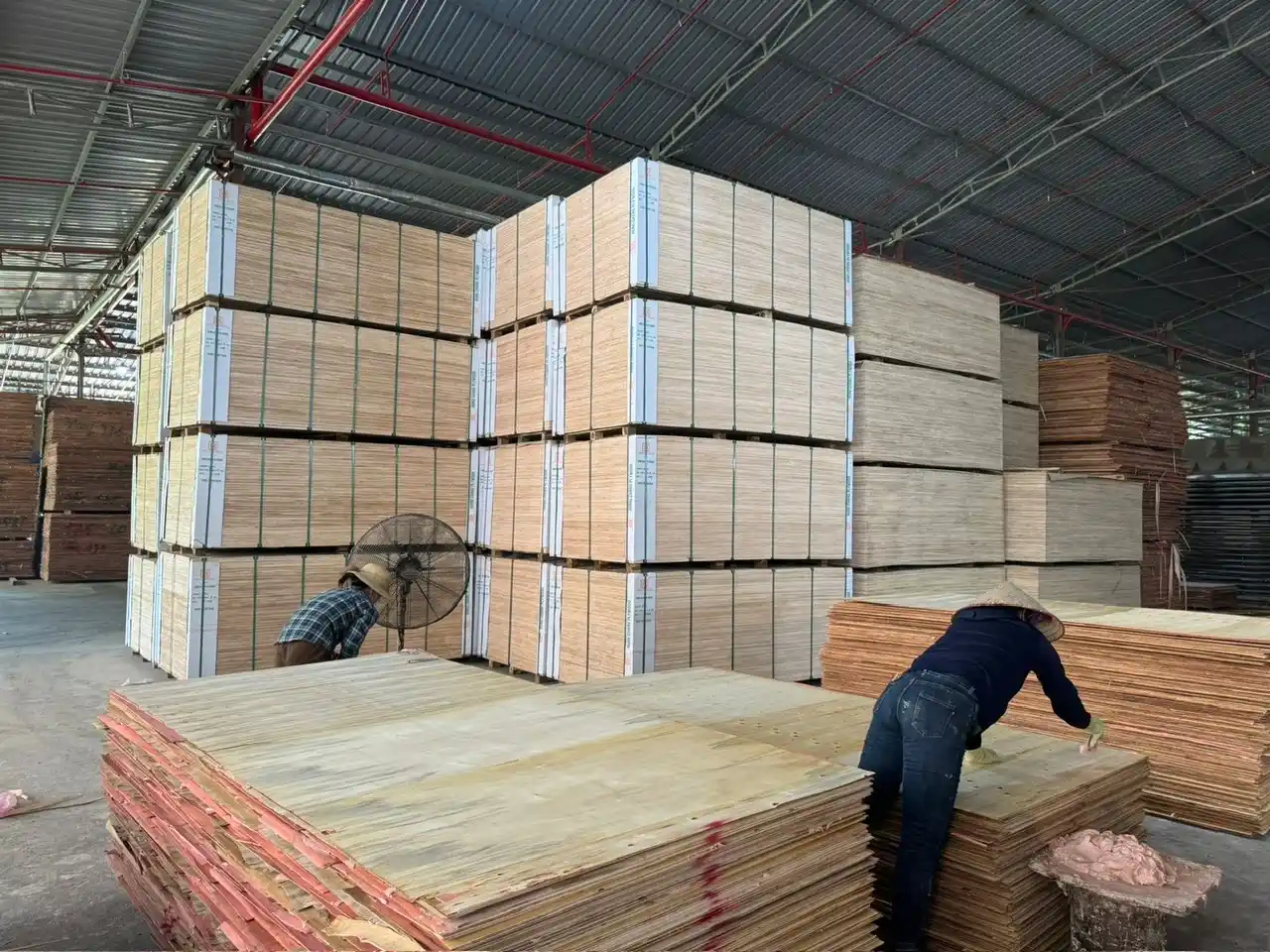
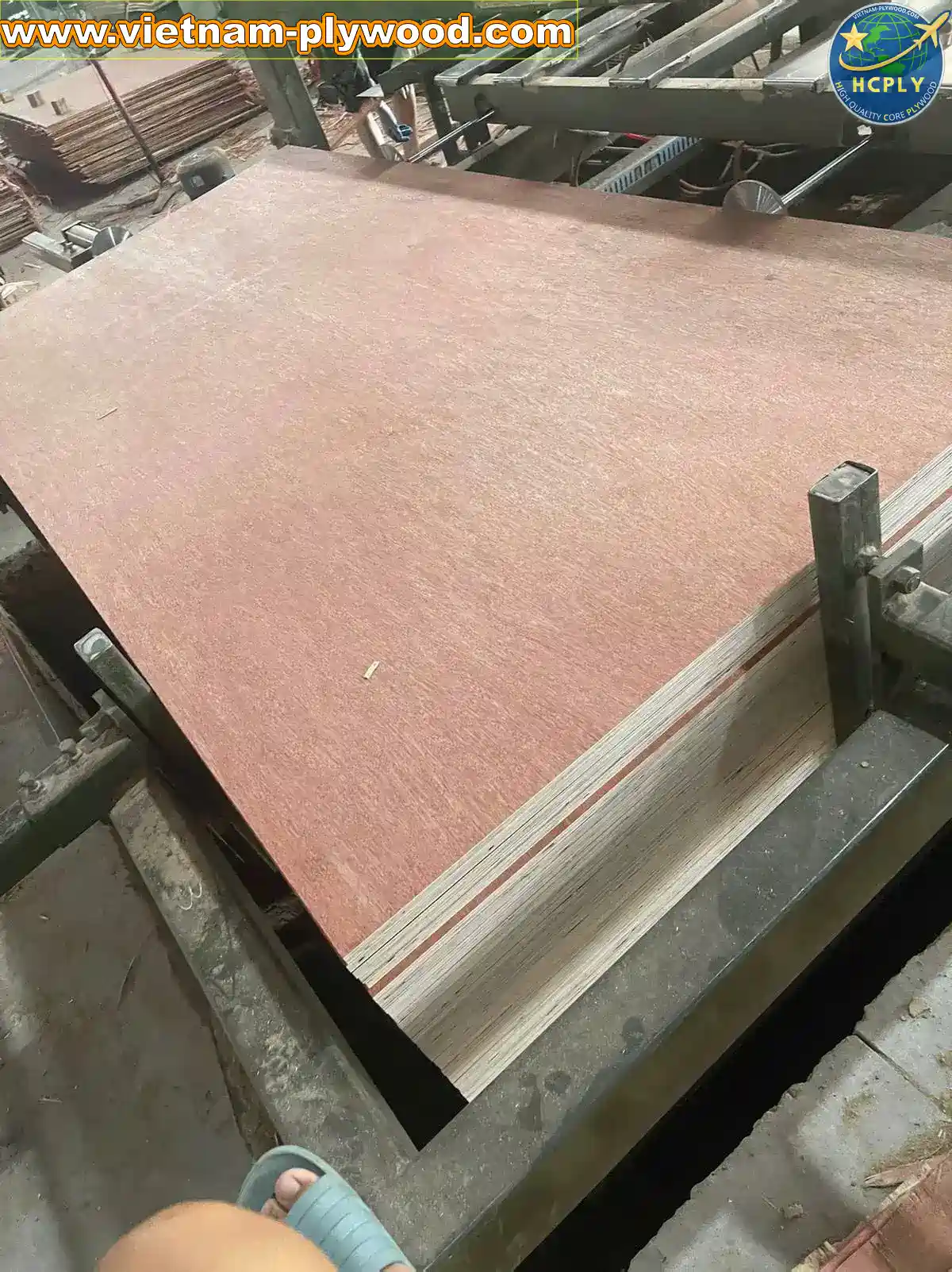

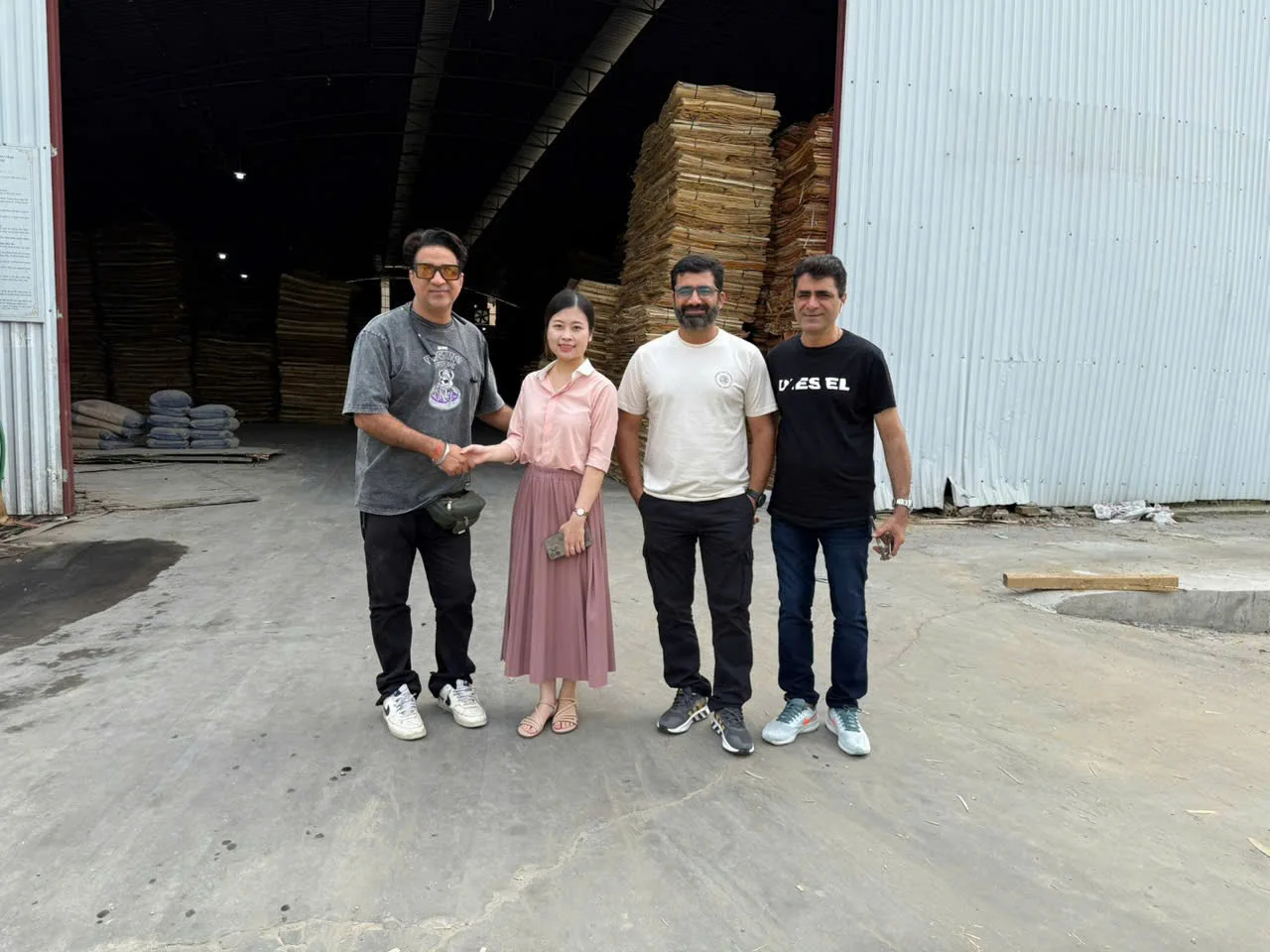
UV coated plywood from Vietnam has become a preferred choice for furniture manufacturers in Europe, Korea, and the Middle East — not because it is cheaper than domestic options, but because Vietnamese factories now combine export-grade substrates with factory-applied UV finishes that eliminate on-site lacquering entirely.
UV lacquered plywood Vietnam suppliers like HCPLY ship factory-finished panels ready for cutting and assembly — a significant production advantage for furniture factories managing tight lead times and VOC compliance.
This guide covers exactly what UV coated plywood is, which substrates HCPLY produces it on, the specs and benefits buyers should know, and what to verify before placing an order with Vietnam suppliers.
📋 What Is UV Coated Plywood?
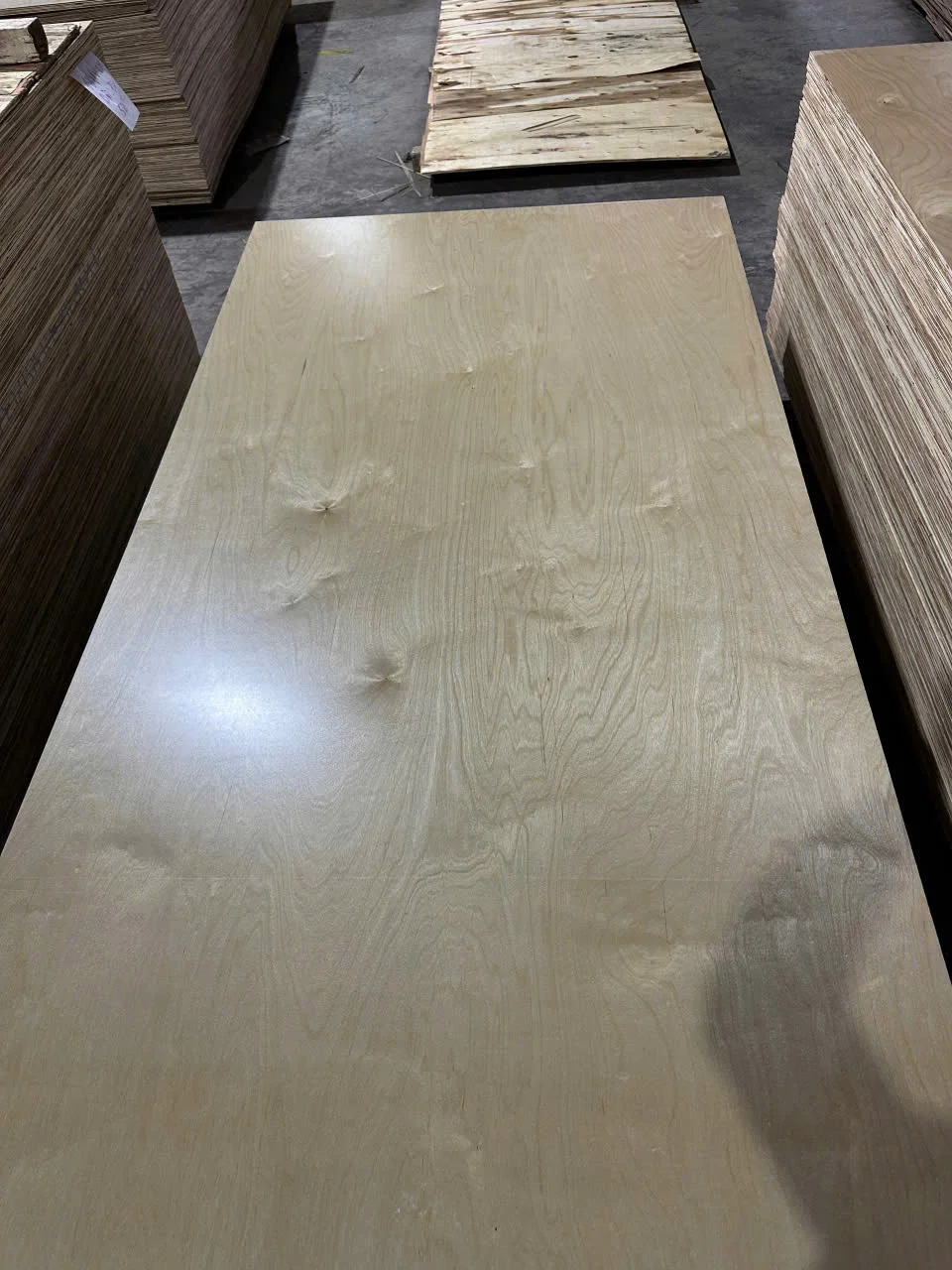
UV coated plywood is a standard plywood panel — typically birch, EV (engineered veneer), or matt substrate — with a UV-cured lacquer finish applied to one or both faces at the factory before export.
The UV curing process works as follows: a liquid acrylic coating is applied to the sanded panel surface, then exposed to high-intensity ultraviolet light for instant polymerization. The result is a hard, clear (or tinted) surface film that bonds permanently to the veneer face (Columbia Forest Products, 2024).
💡 Key distinction: UV coating is a surface finishing step, not a different type of plywood. The substrate underneath — face veneer species, core type, glue type, emission class — determines structural and chemical performance. The UV layer determines surface durability.
This matters for buyers because you need to specify both the substrate and the coating independently. A UV coated panel with E2 emission is not suitable for EU furniture markets, regardless of how good the surface finish is.
📦 Why Source UV Coated Plywood from Vietnam?
Vietnam exported over $16.2 billion in wood and forest products in 2024, making it one of the world’s largest plywood and processed wood exporters (Vietnam Timber & Forest Products Association, 2025). UV coated plywood sits at the premium end of this supply chain.
Three factors make Vietnamese UV coated plywood commercially competitive:
-
Factory-applied finish reduces buyer costs. Vietnamese manufacturers apply UV coatings on calibrated, wide-belt sanded panels before packing. Furniture factories receive ready-to-cut panels without setting up spray booths, buying lacquer stock, or managing VOC emissions on-site (Ply Supply Inc., 2024).
-
Emission compliance is built in, not added. For export to the EU and US, E0 (≤0.5 mg/L formaldehyde) or CARB P2 compliance is required in the substrate adhesive. These are specifiable at the ordering stage from HCPLY, not retrofitted. As of 2026, all HCPLY premium furniture facility production is available with E0 / CARB P2 certification.
Get a Free Quote for UV Coated Plywood from Vietnam
🔧 Which Substrates Accept UV Coating from Vietnam?
Three plywood types from Vietnam are routinely UV coated for export:
| Substrate | Face | Core | Typical Use |
|---|---|---|---|
| Birch plywood | Birch D/E grade | Styrax | Premium cabinets, shelving, furniture components |
| EV plywood | Engineered veneer (poplar EV) | Styrax, Acacia | Modern interiors, furniture panels, cabinet interiors |
| Matt plywood | Unfaced raw core | Styrax, Eucalyptus, Acacia | Lamination substrate, HPL bonding, veneering base |
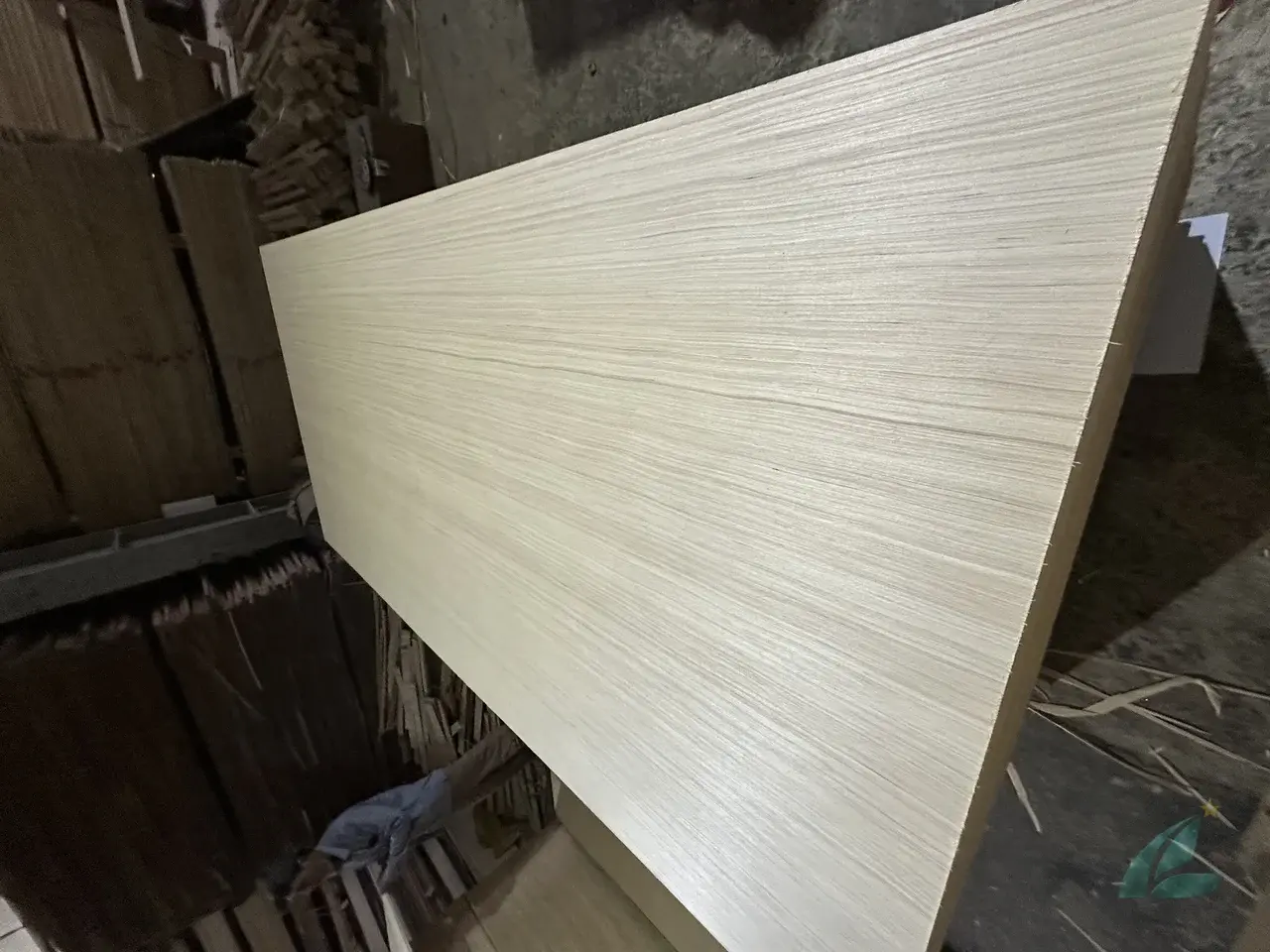
📌 Birch Face — Premium Cabinet Grade
Birch face plywood from Vietnam uses imported birch veneer (grade D/E/F — the Vietnamese grading range; grade A/B/C does not apply here) over a styrax core. Styrax core density is 480–500 kg/m³ — the lightest of Vietnam’s three core species, making birch face panels competitive in weight for kitchen cabinet boxes and shelving systems.
UV coating on birch face produces the flattest finish among the three substrates because birch veneer has a tight, consistent grain. This is why UV lacquered plywood from Vietnam with birch face dominates European and Korean cabinet specifications that call for pre-finished panels. See our birch UV coated plywood product page for full specifications and sample request.
📌 EV (Engineered Veneer) Face — Consistent Grain
EV plywood uses reconstituted engineered veneer — a processed face material made from fast-growing plantation wood pressed into uniform slices. The grain pattern is consistent across sheets, with no natural knots or mineral streaks. For UV coating, consistency matters: the coating cures evenly across a uniform surface, producing batch-to-batch color consistency that natural veneers cannot guarantee.
EV face on styrax core is the substrate HCPLY’s premium furniture facility produces for kitchen cabinet interiors and furniture backs where cost efficiency matters alongside appearance.
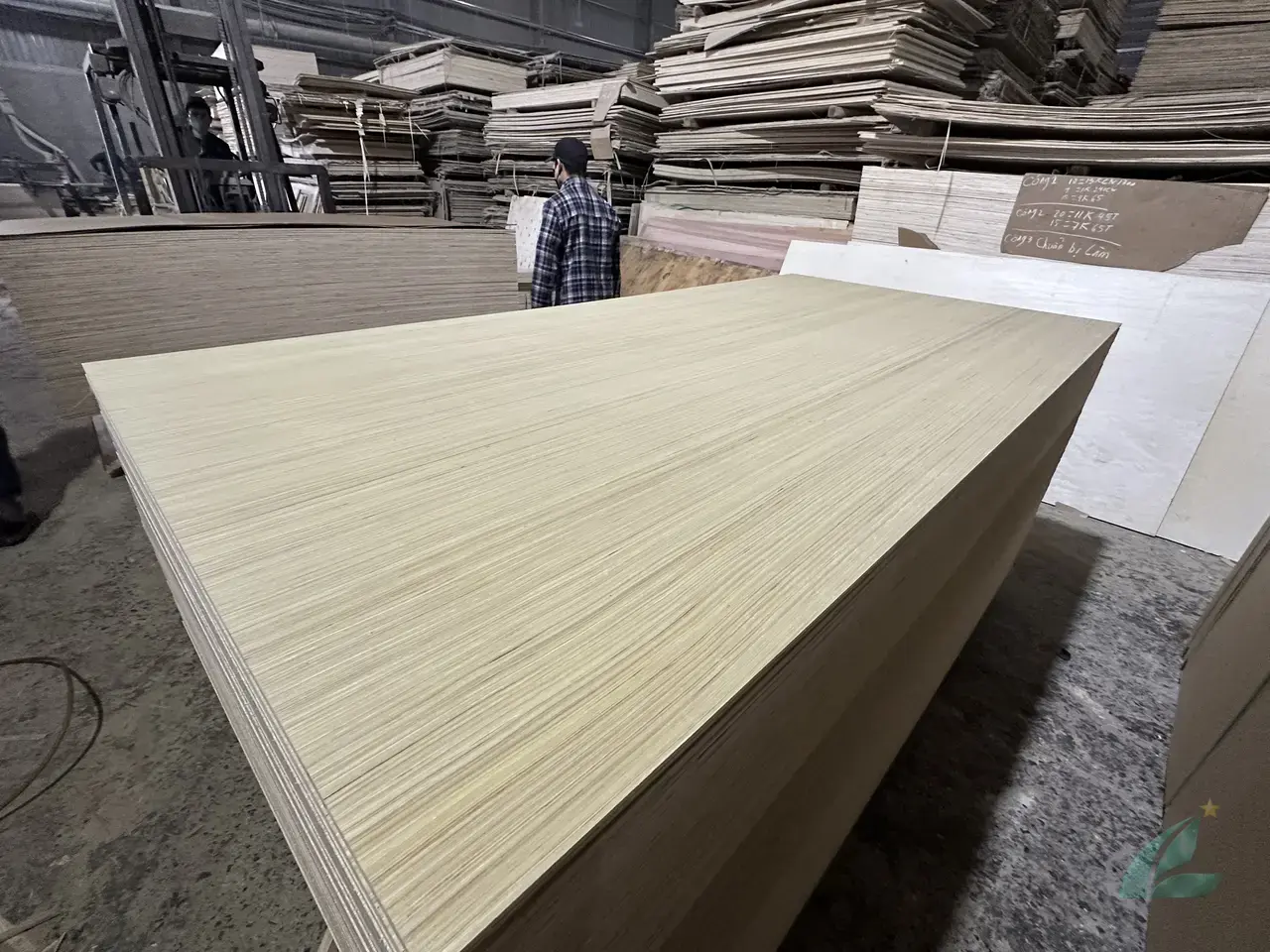
📌 Matt (Unfaced Raw Core) — Processing Substrate
Matt plywood is an unfaced panel — no decorative face veneer applied. The raw core surface is calibrated and sanded smooth. UV coating is applied to create a base layer before further processing: HPL bonding, PVC lamination, or real wood veneer overlaying. Buyers who apply their own surface materials use UV-primed matt as the substrate.
⚠️ Important: Matt plywood ≠ melamine-faced matt. In Vietnamese factory terminology, matt = raw, unfaced core substrate. Do not confuse with melamine paper overlaid panels.
📊 Technical Specifications for UV Coated Plywood from Vietnam
When requesting a quote, specify all five dimensions below. Each is independently configurable.
| Specification | Available Range | Notes |
|---|---|---|
| Thickness | 3–25mm | Popular: 9, 12, 15, 18mm for furniture |
| Sheet size | 1220×2440mm / 1250×2500mm | Custom cutting available |
| Core species | Styrax / Eucalyptus / Acacia | Styrax = lightest; Eucalyptus = strongest |
| Glue type | Melamine (MR) / Phenolic (WBP) | MR standard; WBP for moisture-critical applications |
| Emission class | E0 / E1 / E2 | E0 required for EU/US furniture; E1 for general interior |
| UV coating sides | 1 side / 2 sides | Cabinet interiors often 1 side; display furniture 2 sides |
| UV sheen level | Matte / Semi-gloss / High-gloss | Buyer-specified; confirm with factory sample |
⚠️ Note: Glue type and emission class are two separate specifications. Melamine (MR) is a glue type describing water resistance. E0/E1/E2 is an emission standard describing formaldehyde off-gassing. A panel can be Melamine glue + E0 emission. Never write “E0 glue” — this is technically incorrect.
✅ Key Benefits of UV Coated Plywood for Furniture Manufacturers
“We consistently see buyers choosing factory-applied UV coating over ordering raw sanded panels for post-processing. The surface quality from a calibrated panel in a controlled factory environment is more consistent than field-applied finishes, and the total landed cost is competitive once you factor in spray booth labor and material.” — Lucy, International Sales Manager, HCPLY
No on-site spray finishing required. Furniture factories receive cut-to-size-ready panels. UV-cured surfaces do not add to workshop VOC emissions — a compliance advantage for factories operating under EU or California EPA regulations (Plywood Express, 2024).
Scratch and stain resistance from day one. The polymerized UV coating provides surface hardness superior to solvent-based finishes. This matters for kitchen cabinet interiors that receive daily use from cookware, cleaning products, and humidity.
Batch-to-batch color consistency. Factory-controlled UV application delivers uniform sheen levels across full container orders. Natural veneer color variation is sealed under the coating layer, producing visually consistent panels for large furniture production runs.
Reduced production steps. A standard furniture manufacturing workflow requires sanding → grain filling → priming → sealing → topcoat. Factory UV coating replaces all five steps with a single pre-finished panel (Columbia Forest Products, 2024).
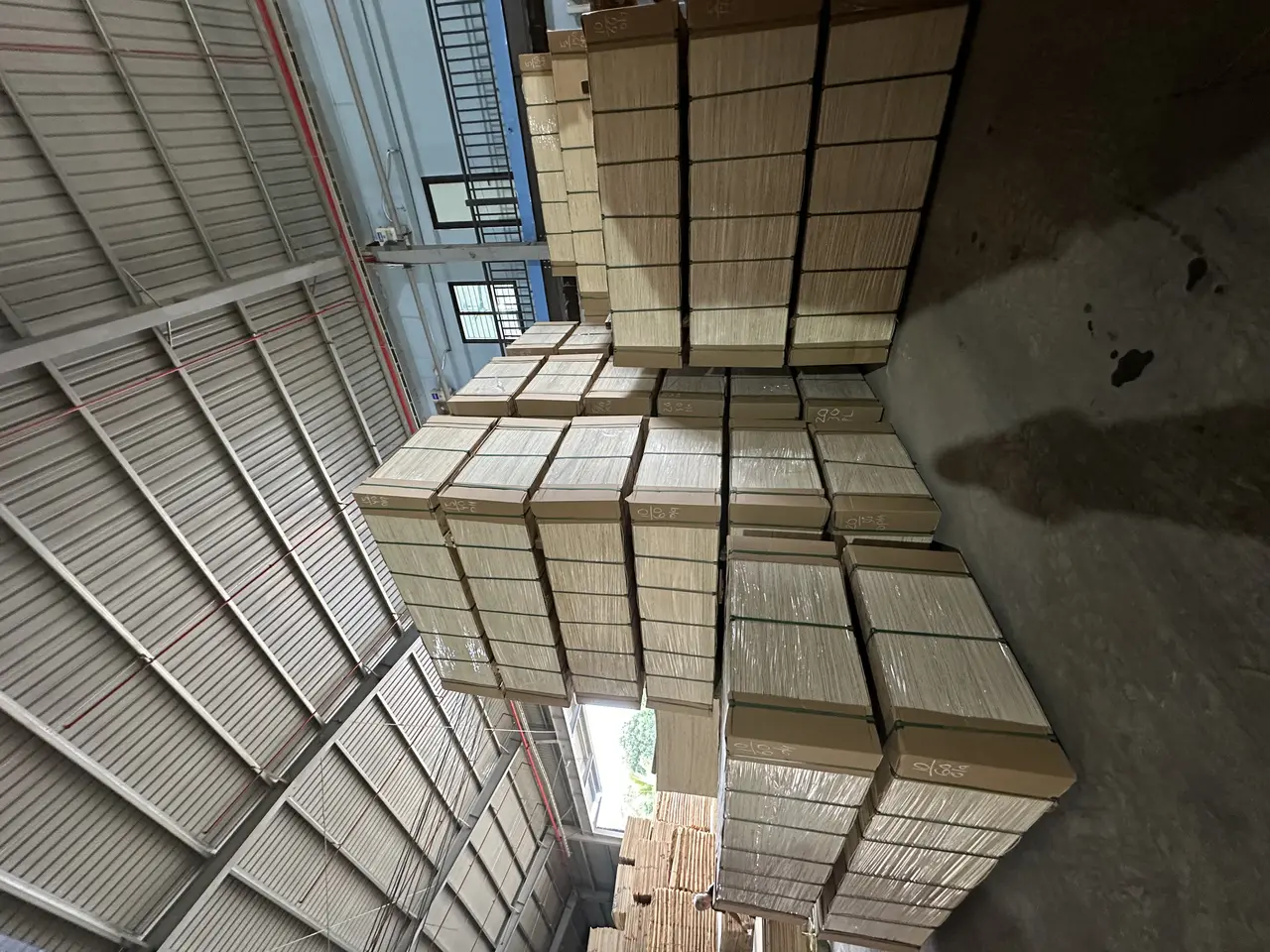
🏭 How Vietnamese Factories Produce UV Coated Plywood
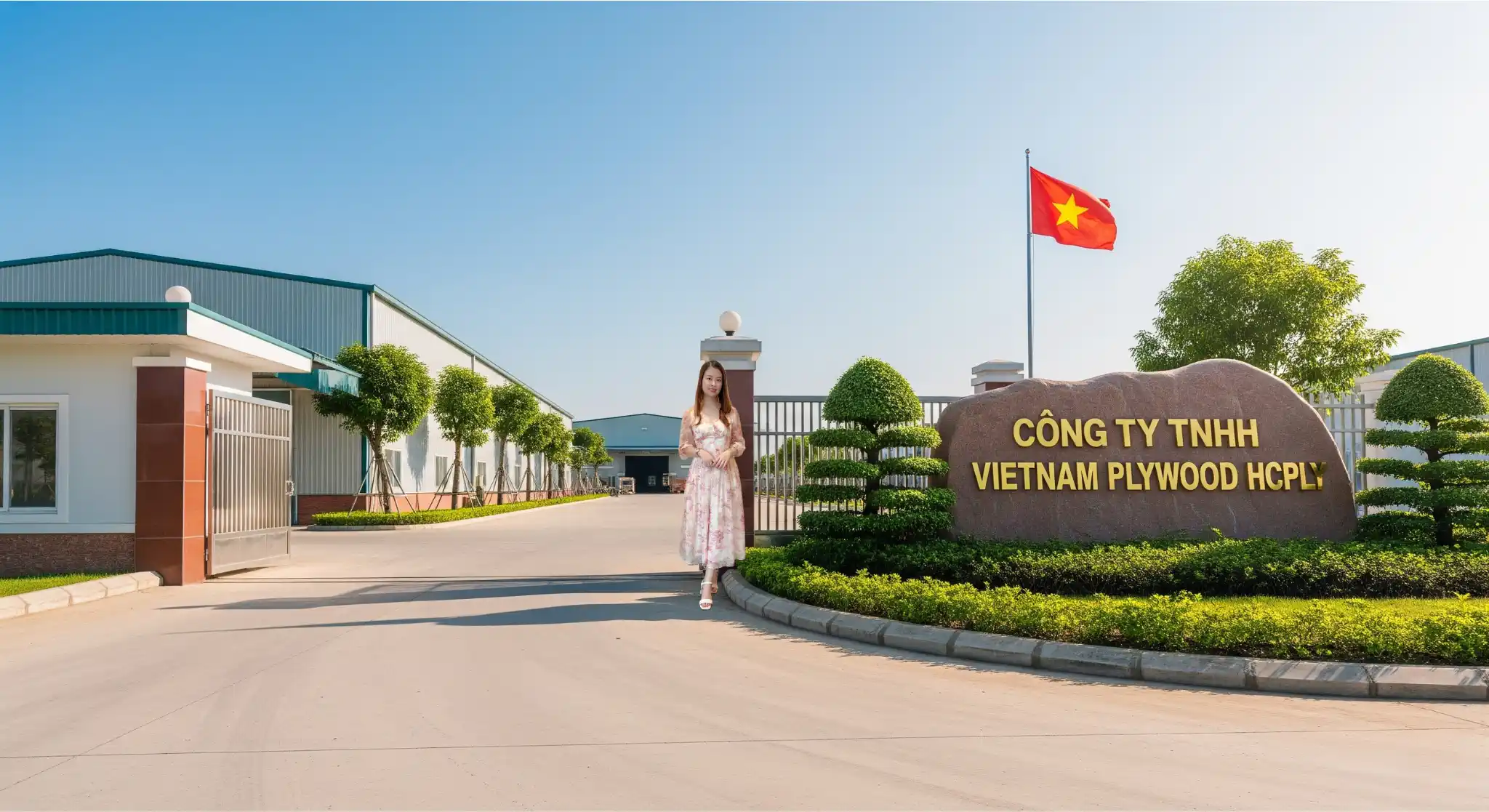
HCPLY’s premium furniture production facility in Ha Hoa District, Phu Tho Province, Northern Vietnam, follows a 5-stage production sequence before UV coating:
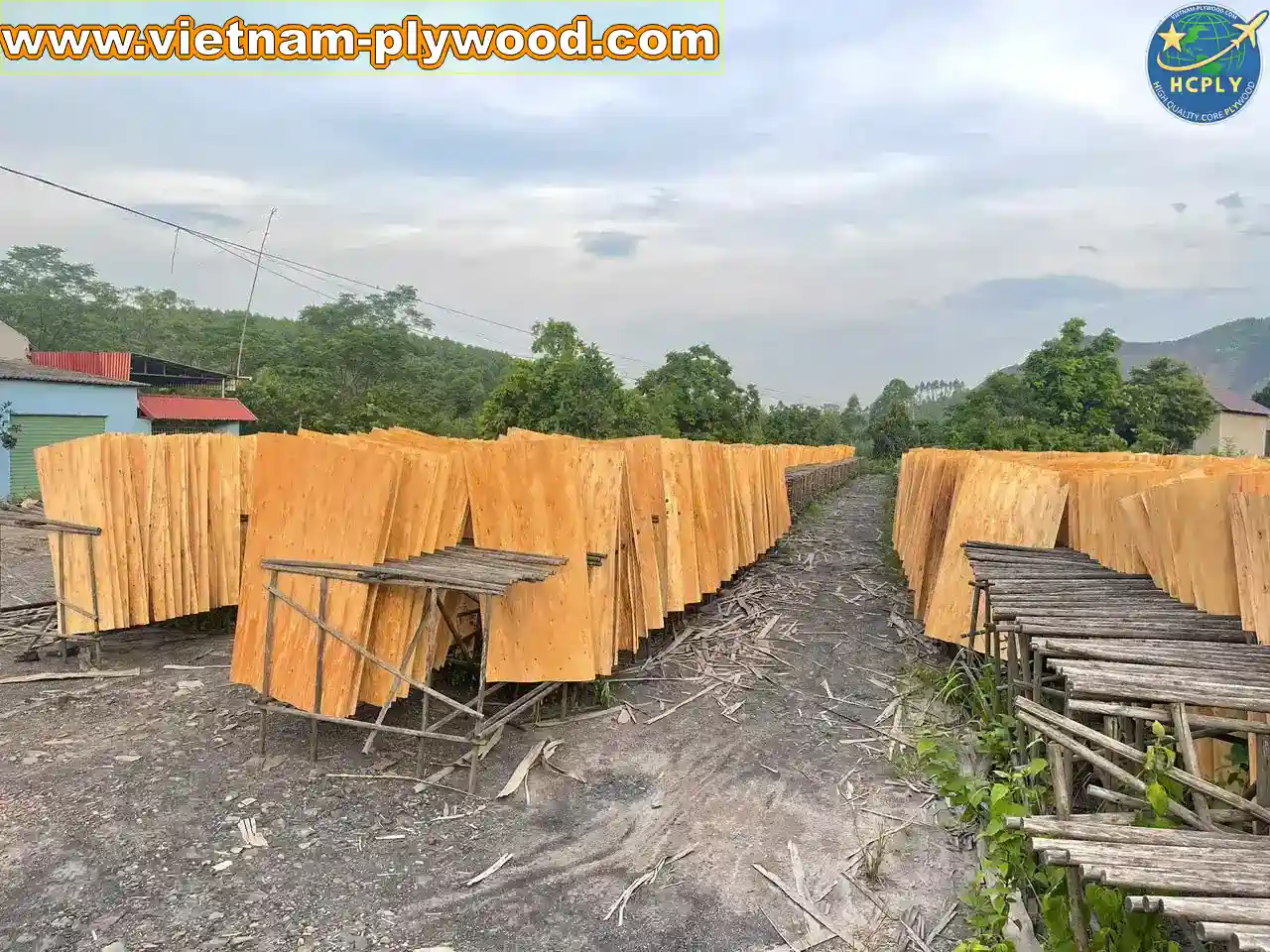
- Core preparation — Styrax or eucalyptus veneer dried to 6–8% moisture content, stitched (full or outer-layer stitched construction to eliminate gaps)
- Glue application and hot pressing — Melamine or phenolic adhesive applied under controlled pressure and temperature; panel formed
- Cold press and conditioning — Panels stabilize to equalize internal stress
- Wide-belt sanding — Calibration sanding to ±0.2mm thickness tolerance; face sanding to 180-grit finish before UV application
- UV coating application — Roller-applied UV lacquer, cured under UV lamps; available in matte, semi-gloss, and high-gloss variants
The factory holds ISO 9001 quality management certification and FSC chain-of-custody certification, covering both the substrate production and finishing processes. CARB P2 certification applies to the E0 emission substrate line.
🔗 Comparing UV Coating vs Other Surface Treatments
Buyers often compare UV coating against three alternatives: raw sanded, melamine paper overlaid, and HPL (high-pressure laminate). Each has a distinct cost-quality position.
| Surface Treatment | Durability | Cost | Appearance | Application |
|---|---|---|---|---|
| UV coating | High (scratch, stain) | Medium | High-gloss to matte, natural | Exposed furniture faces, cabinet interiors |
| Raw sanded | Low (unprotected) | Lowest | Natural wood, unfinished | Substrate for buyer’s own finish |
| Melamine paper | Medium (heat, moisture) | Low-medium | Uniform color, paper texture | Budget cabinets, shelving |
| HPL (high-pressure laminate) | Highest | Highest | Premium uniform surface | Countertops, high-wear surfaces |
UV coating occupies the middle tier: higher performance than raw sanded or budget melamine, lower cost than HPL. For furniture factories serving mid-to-premium markets, it represents the optimal cost-quality balance on interior faces and backs.
💡 Tip: For kitchen cabinet door faces (high-visibility, high-wear), specify UV coating on birch or EV substrate. For cabinet boxes (interior structure, cost-sensitive), EV substrate with UV 1-side or raw sanded is typical.
📐 Ordering UV Coated Plywood from Vietnam: Practical Checklist
Before placing an order with any Vietnam UV coated plywood supplier, verify these seven points:
- Substrate specification confirmed — Face species, core species, ply count stated explicitly
- Emission class tested and certified — Request test report (CARB P2 or E1/E0 EN 717-1)
- UV sheen sample received — Physical sample of the specific sheen level; do not rely on photos alone
- Thickness tolerance documented — ±0.3mm standard; request ±0.2mm for CNC-heavy production
- Batch consistency protocol — How does the factory maintain UV sheen uniformity across 40HC containers?
- Certifications for target market — EU: FSC + EUDR traceability. US: CARB P2. General: ISO 9001
- Payment and documentation — Confirm CO form (A or B), phytosanitary, fumigation certificate, B/L details
HCPLY provides full export documentation: Certificate of Origin, FSC certificate, CARB P2 test report, phytosanitary certificate, fumigation certificate, commercial invoice, and bill of lading.
Contact HCPLY for UV Coated Plywood Samples and Price List
🔍 UV Coated Plywood vs Matt Plywood: Which Do You Need?
This is the most common sourcing confusion among first-time buyers:
Matt plywood from Vietnam is an unfaced, raw core substrate. It accepts UV coating as a pre-treatment step. If your factory applies its own laminate, HPL, or real wood veneer, order matt plywood.
If your factory needs cut-to-size panels ready for assembly without further surface processing, order UV coated plywood on your preferred face (birch, EV, or matt base with UV priming).
The plywood face veneer types guide covers the full range of face options available from Vietnam. The plywood types classification guide explains how all surface treatments fit within the broader product taxonomy.
✅ Conclusion
UV coated plywood from Vietnam gives furniture manufacturers a factory-finished, E0-compliant substrate ready for cutting and assembly. The three main substrates — birch, EV, and matt — cover premium, mid-range, and processing applications. HCPLY manages specialized production facilities in Northern Vietnam with ISO 9001, FSC, and CARB P2 certification covering both substrate production and UV finishing.
Specifying correctly requires understanding five independent variables: substrate face, core species, glue type, emission class, and coating sheen level. Get each one confirmed in writing before production begins.
Disclosure: This article is published by HCPLY, a Vietnam-based plywood manufacturer and export operator. While we aim to provide objective industry guidance, readers should consider our perspective as a market participant when evaluating recommendations.
Request UV Coated Plywood Samples & Factory Pricing from HCPLY — No commitment required. Free samples available for qualified buyers.