
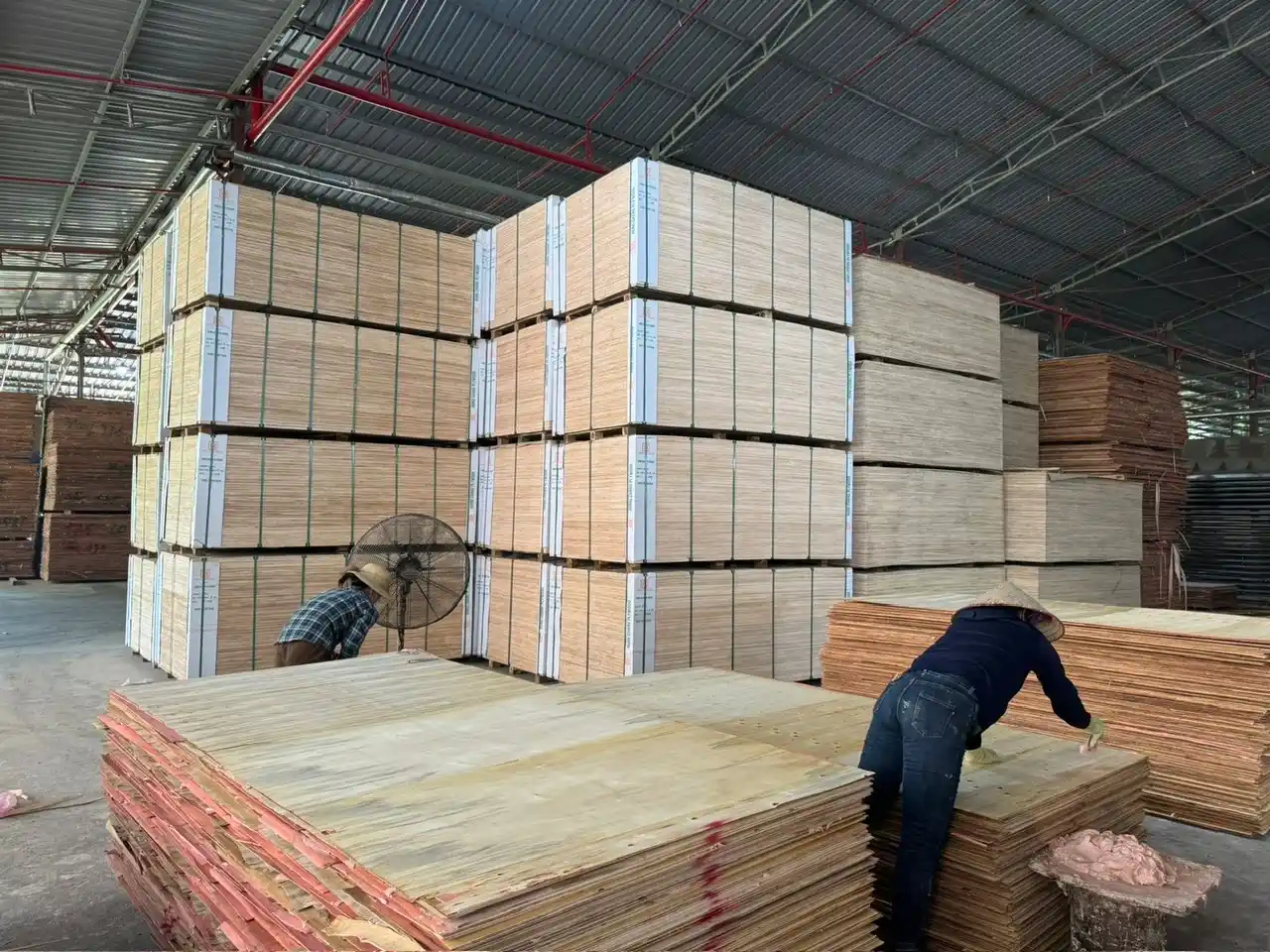

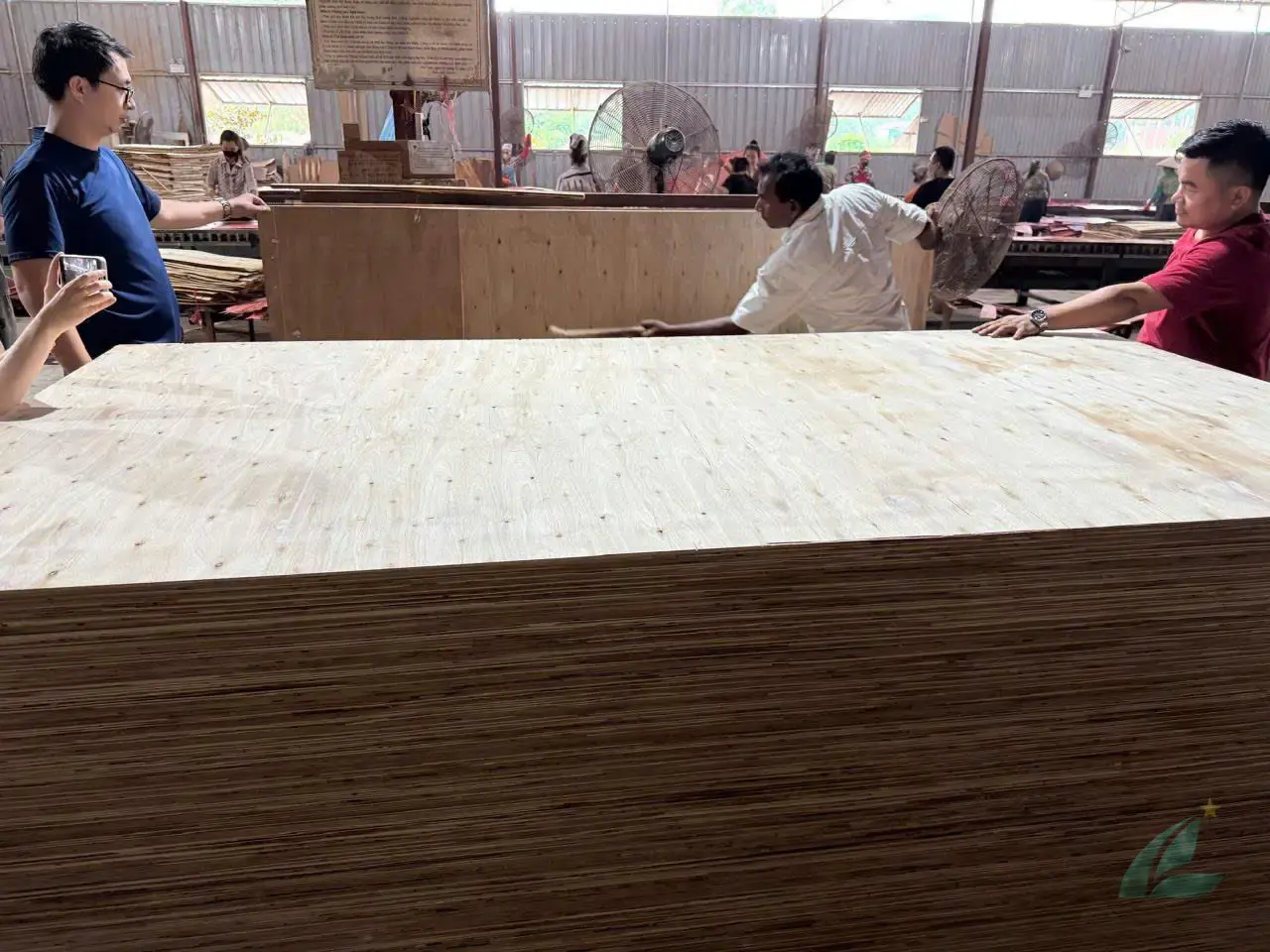
Vietnam exports more unfaced core substrate than most buyers realize. Matt plywood — the calibrated raw panel with no decorative face veneer — ships in full 40HC containers to lamination factories in India, furniture plants in the Middle East, and cabinetmakers across Southeast Asia. Demand is growing because laminators need a consistent, flat, correctly-sized base, and Northern Vietnam’s plantation-based supply chain produces exactly that at competitive FOB pricing.
This guide covers what to look for in a Vietnam matt plywood supplier: core species performance, glue and emission options, standard sizes, quality checkpoints, and how to verify that the board you receive matches what was quoted.
📋 What Is Matt Plywood — The Precise Definition
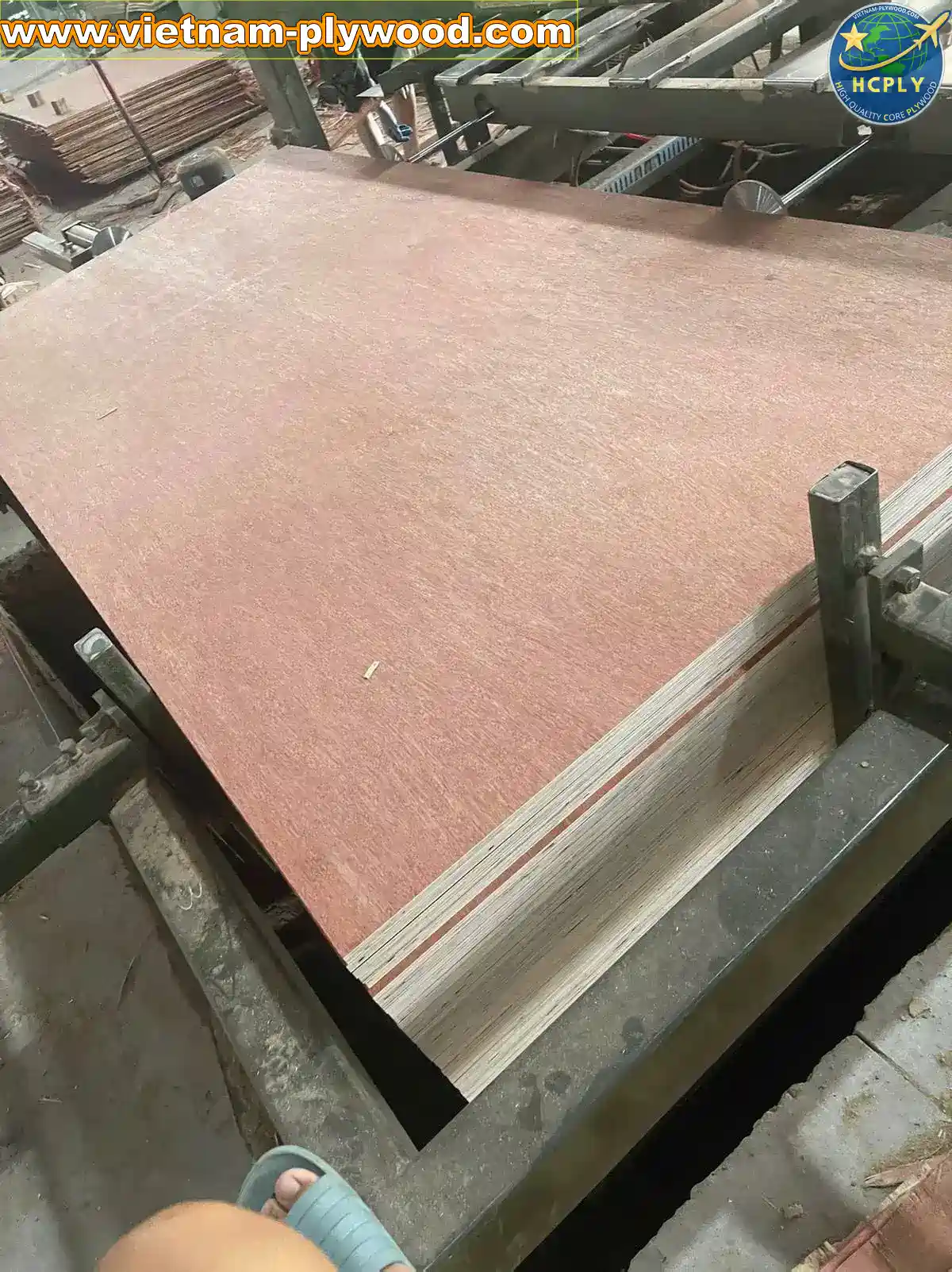
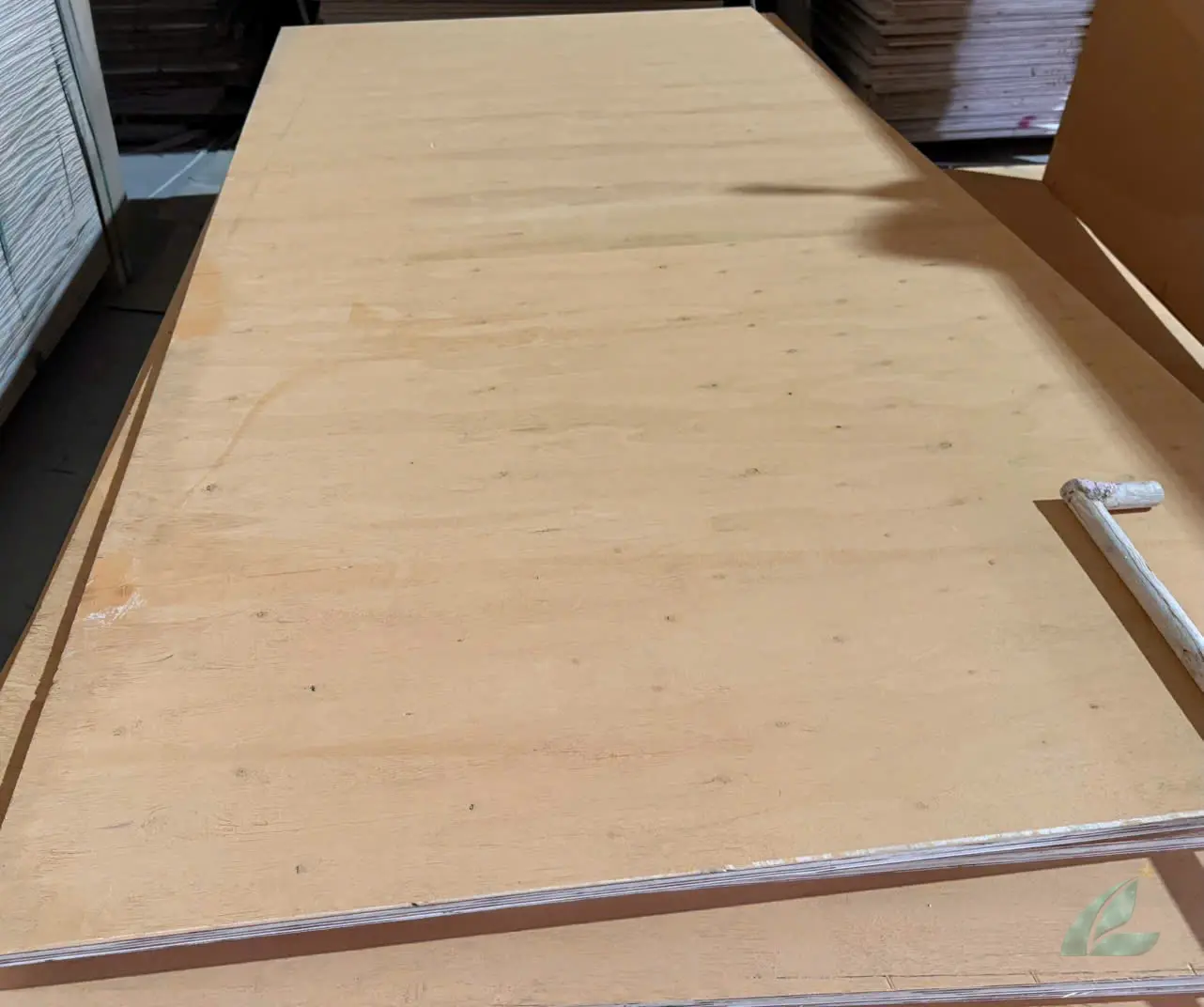
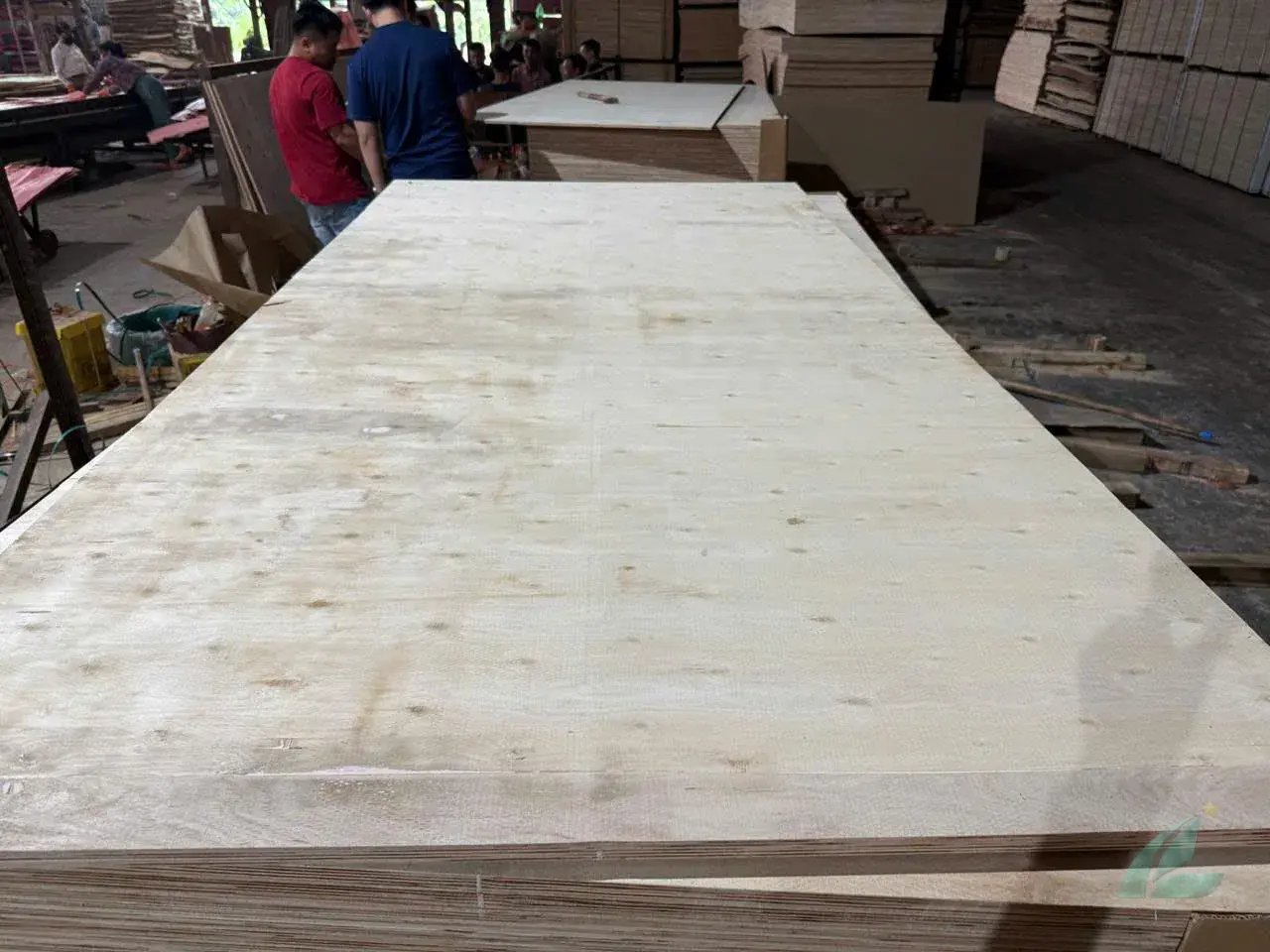
Matt plywood is an unfaced raw core plywood panel. No decorative face veneer is glued to either surface. The panel ships as the structural substrate layer, ready for the buyer’s own surface treatment: High-Pressure Laminate (HPL), melamine paper, PVC foil, decorative wood veneer, or paint primer.
The term “matt” originated from the Vietnamese plywood industry where factories refer to this product as ván ép mộc (raw unfinished panel). International buyers adopted “matt” or “unfaced core” as the commercial name. Both terms refer to the same product.
💡 Key distinction: Matt plywood is NOT a type of melamine finish. It has NO surface treatment at all. Buyers sometimes confuse it with matte-finish coated boards — those are entirely different products from different factories.
This distinction matters at the sourcing stage. A factory producing finished decorative panels cannot supply proper matt substrate at the same quality level — the production processes, machinery calibration, and QC checkpoints are different.
🌳 Core Species: The Most Important Specification
The core species determines density, weight per sheet, container loading capacity, and suitability for the buyer’s lamination press.
Vietnam’s three commercial core species (HCPLY production data, 2026):
| Core Species | Density (kg/m³) | Weight Characteristic | Best Application |
|---|---|---|---|
| Styrax (bồ đề) | 480–500 | Lightest | Furniture, cabinet substrate, birch-core replacement |
| Acacia (keo) | ~580 | Medium | Commercial furniture, cost-sensitive lamination |
| Eucalyptus (bạch đàn) | 650–750 | Heaviest | Flooring underlayment, heavy-duty structural substrate |
Styrax core is the premium choice for furniture-grade matt plywood. The wood is pale, tight-grained, and lightweight — properties that mirror European birch core at significantly lower cost. Lamination factories in India and Korea source styrax-core matt boards specifically to substitute for European birch substrate when producing furniture panels for export (Vietnam Timber and Forest Products Association, 2024).
Acacia core is the volume seller. Density slightly higher than styrax, darker color, and lower price. Suitable for mid-range furniture substrate where the laminate surface covers any slight core tonal variation.
Eucalyptus core is the densest option — not commonly used for standard lamination work because the additional weight increases freight cost without adding lamination benefit. It is appropriate when the substrate itself requires high structural integrity, such as flooring underlay or load-bearing panel applications.
⚠️ Important: Core species affects container packing capacity directly. A 40HC container with styrax core holds 18 pallets (~53 CBM); with eucalyptus core, the payload weight limit restricts loading to 15 pallets (~44.5 CBM). This affects cost-per-sheet landed price. See plywood container packing calculation guide for factory-level packing tables.
⚙️ Glue Types and Emission Standards
Two separate specifications — both must be confirmed when ordering.
📌 Glue Type (Water Resistance)
| Glue | Trade Name | boiling test | Use Case |
|---|---|---|---|
| Melamine | MR (Moisture Resistant) | 12 hours | Interior-grade lamination, furniture substrate |
| Phenolic | WBP (Weather & Boil Proof) | 72 hours | High-humidity applications, outdoor substrate |
For most HPL lamination and decorative veneer pressing applications, MR melamine glue is appropriate and standard. WBP phenolic is specified when the end product faces moisture exposure — door skins for bathrooms, exterior cladding substrate, or marine-adjacent applications.
📌 Emission Standard (Formaldehyde)
| Standard | Formaldehyde Limit | Primary Markets |
|---|---|---|
| E0 / CARB P2 | ≤0.5 mg/L | USA, EU, Japan, South Korea |
| E1 | ≤1.5 mg/L | General Europe, most Asian markets |
| E2 | ≤5.0 mg/L | Industrial/packaging, not for EU/US interior |
E0 is the appropriate specification for matt boards destined for furniture or cabinet production in markets with strict indoor air quality standards. E2 is acceptable for structural backing in non-occupied applications.
⚠️ Note: “Glue: MR, E0, E2” is an incorrect specification format that mixes two separate concepts. The correct format is: Glue: Melamine (MR). Emission: E0. Always confirm both specifications independently when requesting a quotation.
For buyers using HCPLY-supplied matt boards, full glue types and emission standards documentation is provided with each shipment.
📐 Standard Sizes and Thickness Range
Matt plywood is produced in two standard sheet sizes:
- 1220 × 2440mm (4×8 ft) — most common globally, best container utilization
- 1250 × 2500mm — metric format, preferred by European and Korean lamination factories
Thickness range: 3mm to 40mm. Common thicknesses for lamination substrate: 9mm, 12mm, 15mm, 18mm.
Thickness tolerance: ±0.3mm on sanded boards, ±0.5mm on unsanded. For lamination applications where press gap calibration matters, confirm tolerance spec with supplier before ordering.
Custom cutting is available. However, non-standard sizes reduce container packing efficiency — discuss with the supplier before finalizing.
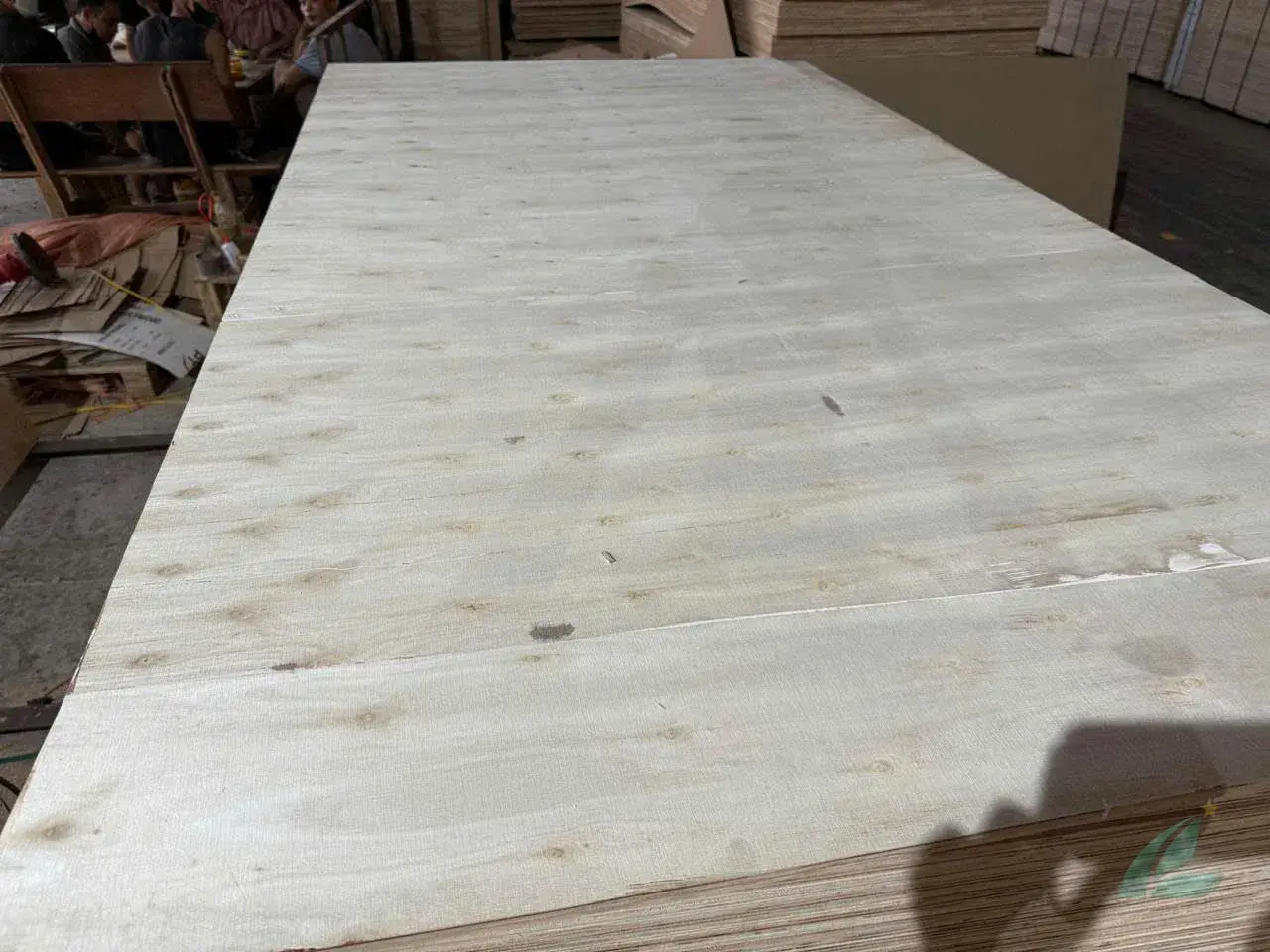
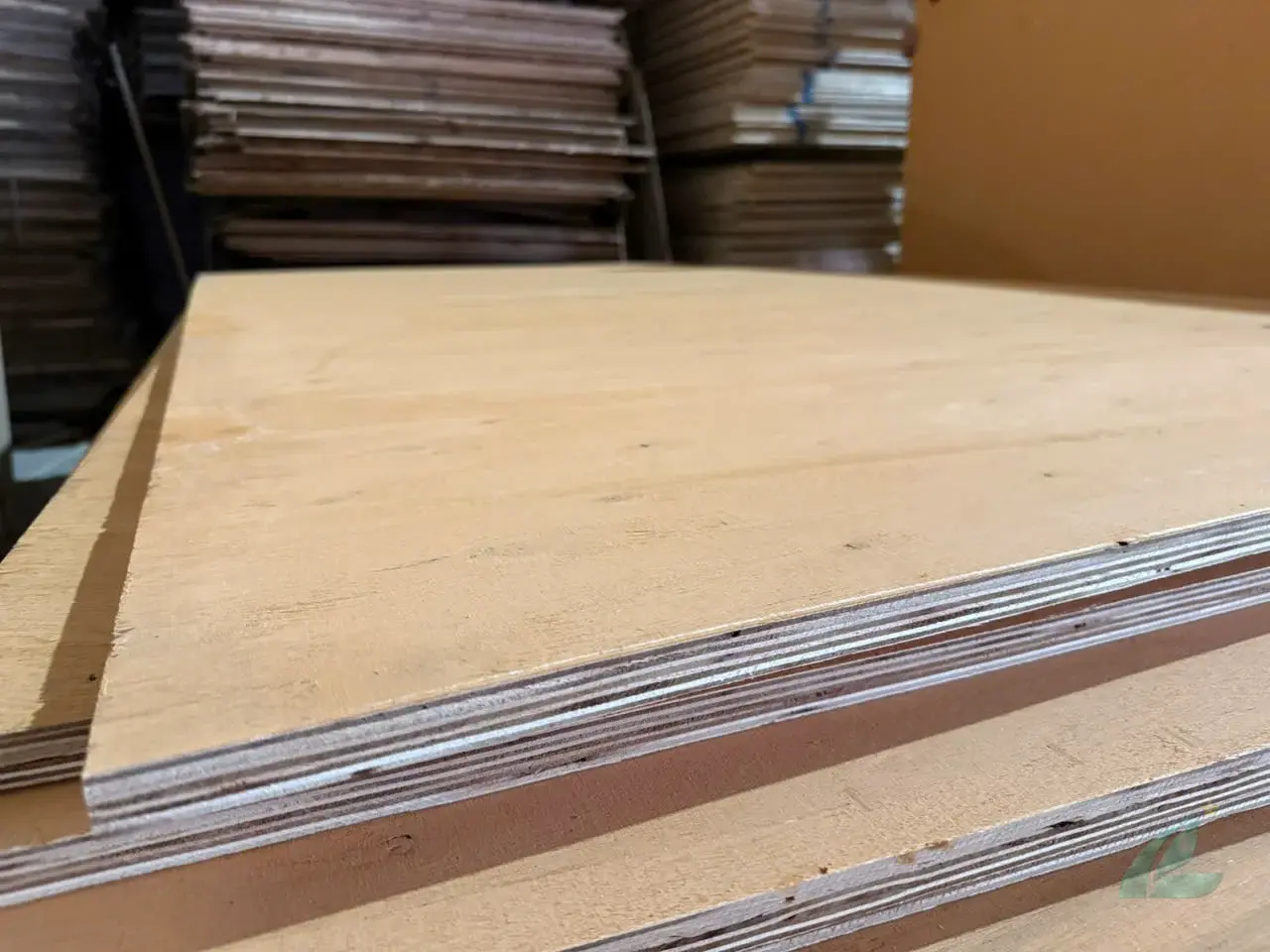
Ply count corresponds to thickness. A 12mm panel is typically 9-ply with individual core layers at approximately 1.2–1.5mm each. An 18mm panel is typically 11-ply (ply count varies based on core veneer thickness — thinner veneers may produce 11–13 plies at 18mm). Core construction method (full stitched, edge-jointed, or loose-laid) affects surface flatness and bonding gap consistency — critical for lamination press results.
🔧 Core Construction Quality — What Actually Matters
Most buyers focus on species and thickness. Experienced laminators also check core construction method, because it directly affects lamination press results and surface telegraphing.
Full stitched core: Individual veneer strips are sewn together with paper tape, creating a gap-free layer. This is the highest-quality construction. It produces flat panels with minimal surface irregularities after pressing. Required for furniture-grade E0 substrate (Vietnam Ministry of Agriculture and Rural Development export standards).
Edge-jointed (mài mí): Veneer strips are glued edge-to-edge. Good quality, tighter than loose-laid. Common in mid-grade commercial substrate.
Loose-laid: Veneer strips are overlapped without edge bonding. Lowest cost. More prone to small surface voids or overlap ridges that can telegraph through laminate under pressure. Acceptable for packing-grade backing but not recommended for furniture laminate substrate.
“We specify full stitched core for all E0 substrate orders because our laminate customers’ press results depend on it. A single void or overlap in the core creates a visible defect after pressing.” — Lucy, International Sales Manager, HCPLY
🏭 Vietnam Supplier Overview for Matt Plywood
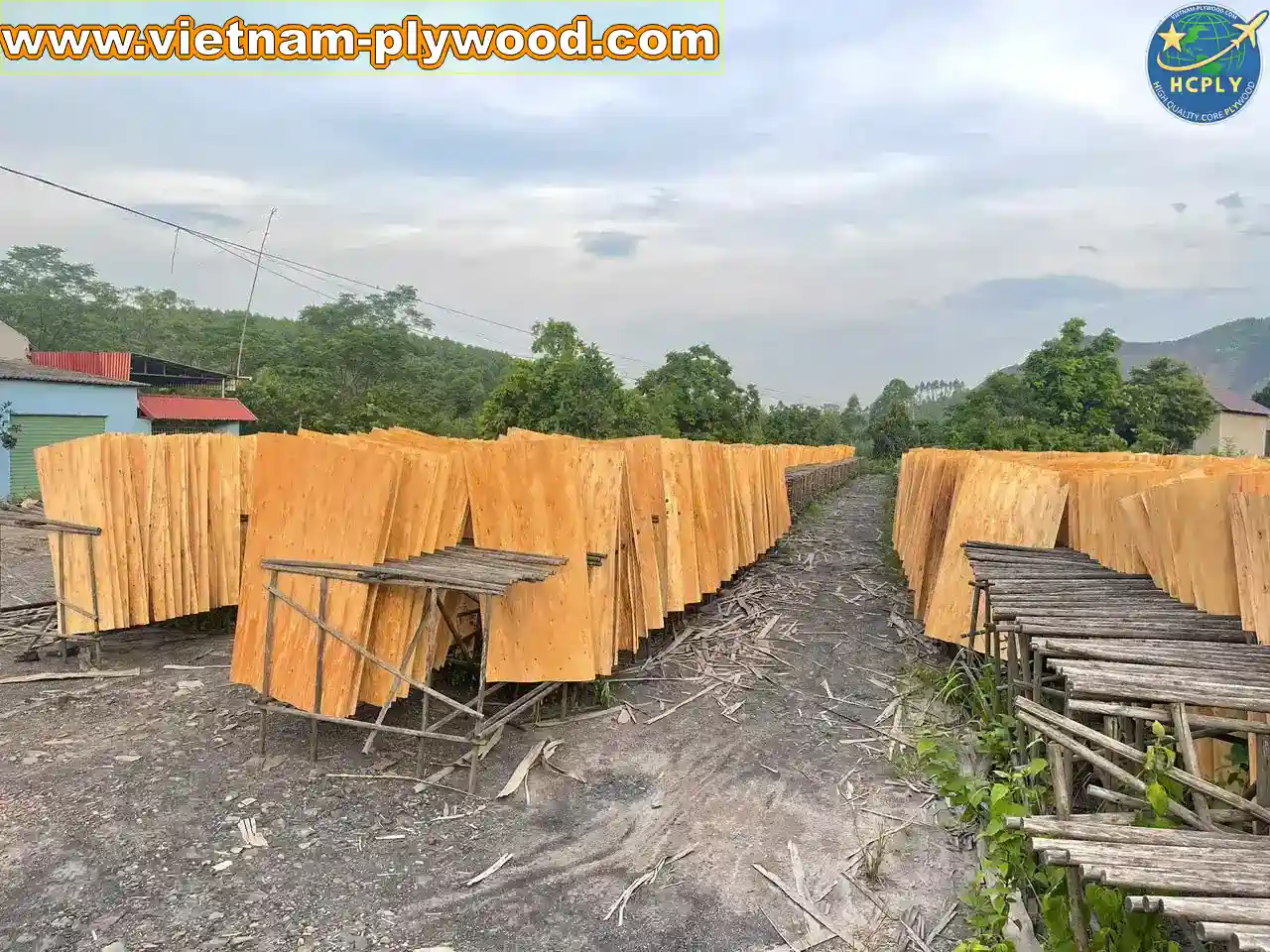
Vietnam’s matt plywood production is concentrated in Northern Vietnam — Phú Thọ, Yên Bái, Bắc Giang, and Tuyên Quang provinces — where plantation acacia, eucalyptus, and styrax timber is harvested and processed (Forest Trends, 2024). Over 80% of Vietnam’s plywood exports originate from these northern provinces.
Four supplier categories operate in this market:
-
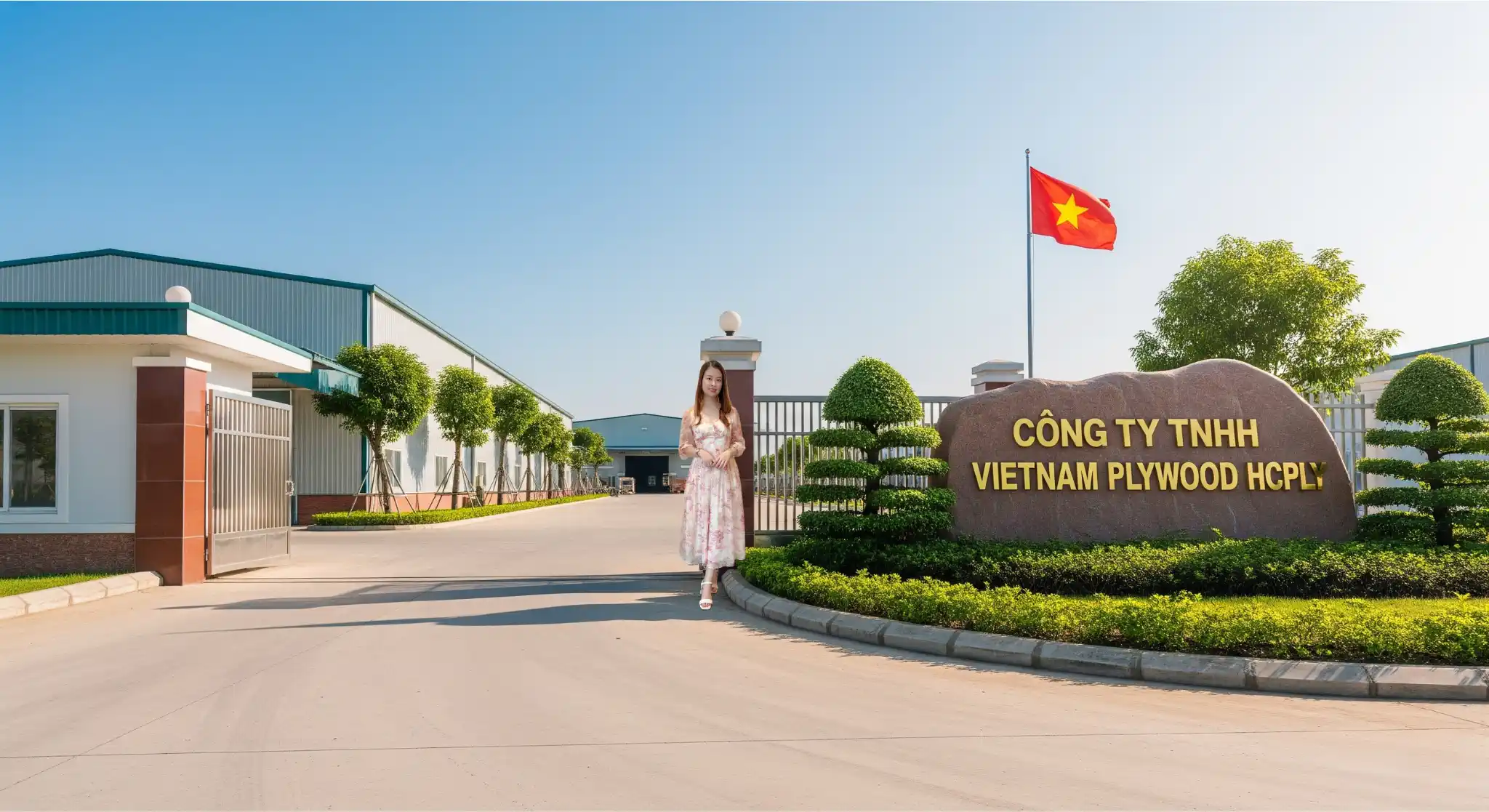
Integrated manufacturer-exporters own or manage dedicated production facilities and export directly. They carry full certification coverage (FSC, CARB P2, ISO 9001) and can provide factory-level documentation including production batch records and QC inspection photos. Price reflects full certification overhead. HCPLY operates in this category with 3 specialized facilities.
-
Trading companies purchase from multiple factories and resell. Broader product range but subject to VAT overhead (8% domestic tax on purchases), which adds to export price. Risk of quality inconsistency if supply sources are not fully disclosed.
-
Small brokers represent individual factories with limited certification capacity. Can offer lower pricing but limited QC control and documentation.
-
Southern Vietnam re-processors — companies in Ho Chi Minh City and Binh Duong that purchase matt board from Northern factories and apply surface treatments or cut to size before exporting. These are value-added processors, not substrate producers. Their matt board pricing is higher because it includes Northern factory cost plus transport to the South.
💡 Tip: When vetting suppliers, ask: “Do you produce this at your own facility or purchase from a factory?” A direct manufacturer will provide batch production photos, factory inspection access, and consistent QC data. Trading companies may struggle to provide consistent factory-level documentation across orders.
📦 Container Loading for Matt Plywood
Matt plywood ships in standard 40HC containers. Core species determines how much product fits:
- Styrax core, 18mm, 1220×2440mm: 18 pallets per 40HC, approximately 53 CBM, approximately 26.5 MT
- Acacia core, 18mm, 1220×2440mm: 16 pallets per 40HC, approximately 47.5 CBM, approximately 27.5 MT
- Eucalyptus core, 18mm, 1220×2440mm: 15 pallets per 40HC, approximately 44.5 CBM, approximately 28 MT
Maximum payload hard limit: 28.5 MT. Eucalyptus core approaches this limit most quickly, which constrains the volume that can be loaded.
For buyers mixing specifications within one container (multiple thicknesses or species), recalculate total weight before finalizing the order. HCPLY’s export team handles this calculation before confirming the loading plan.
Request a container packing plan for your matt plywood order
✅ Quality Verification Checklist for Buyers
Before confirming a matt plywood order from any Vietnam supplier, verify:
- Core species confirmation — request species declaration in the purchase agreement, not just on the packing list
- Core construction method — full stitched, edge-jointed, or loose-laid; this affects lamination quality
- Emission standard test report — E0 or E1 declaration should come with a lab test report (SGS, Bureau Veritas, or equivalent)
- Thickness calibration tolerance — confirm ±0.3mm capability and whether sanding is included
- Moisture content at dispatch — target 8–10% for stable lamination results; higher moisture causes warping after pressing
- Surface flatness check — inspect sample panels for warp or bow before order confirmation
- Export documentation — FSC certificate (if required), CO, phytosanitary, fumigation certificate
HCPLY’s QC process includes three checkpoints: post-pressing moisture and thickness check, post-sanding surface and flatness inspection, and pre-loading container audit with photos shared to the buyer.
Disclosure: This article is published by HCPLY, a Vietnam-based plywood manufacturer and export operator. While we aim to provide objective industry guidance, readers should consider our perspective as a market participant when evaluating recommendations.
🔗 Related Reading
- Plywood core types — acacia vs eucalyptus vs styrax comparison
- Plywood sizes and thickness standard specification guide
- Types of plywood from Vietnam — full classification guide
- Matt plywood product page — specifications and pricing inquiry
📊 Conclusion — Choosing the Right Matt Plywood Supplier
Matt plywood sourcing from Vietnam is straightforward when specifications are precise. The three decisions that determine product suitability are core species, core construction method, and emission standard. Get those three right and the rest — sizing, thickness, glue type — follows a predictable logic.
Vietnam’s northern factories, particularly in Phú Thọ province where HCPLY operates, produce substrate-grade matt boards that meet the consistency requirements of industrial lamination lines in India, Korea, and Europe. With FOB Hai Phong lead times of 15–20 days and direct factory documentation, the supply chain is efficient.
Request Matt Plywood Samples and FOB Pricing from HCPLY
No commitment required. Share your target specs and HCPLY’s export team will respond within 24 hours with a detailed quotation and packing plan.