
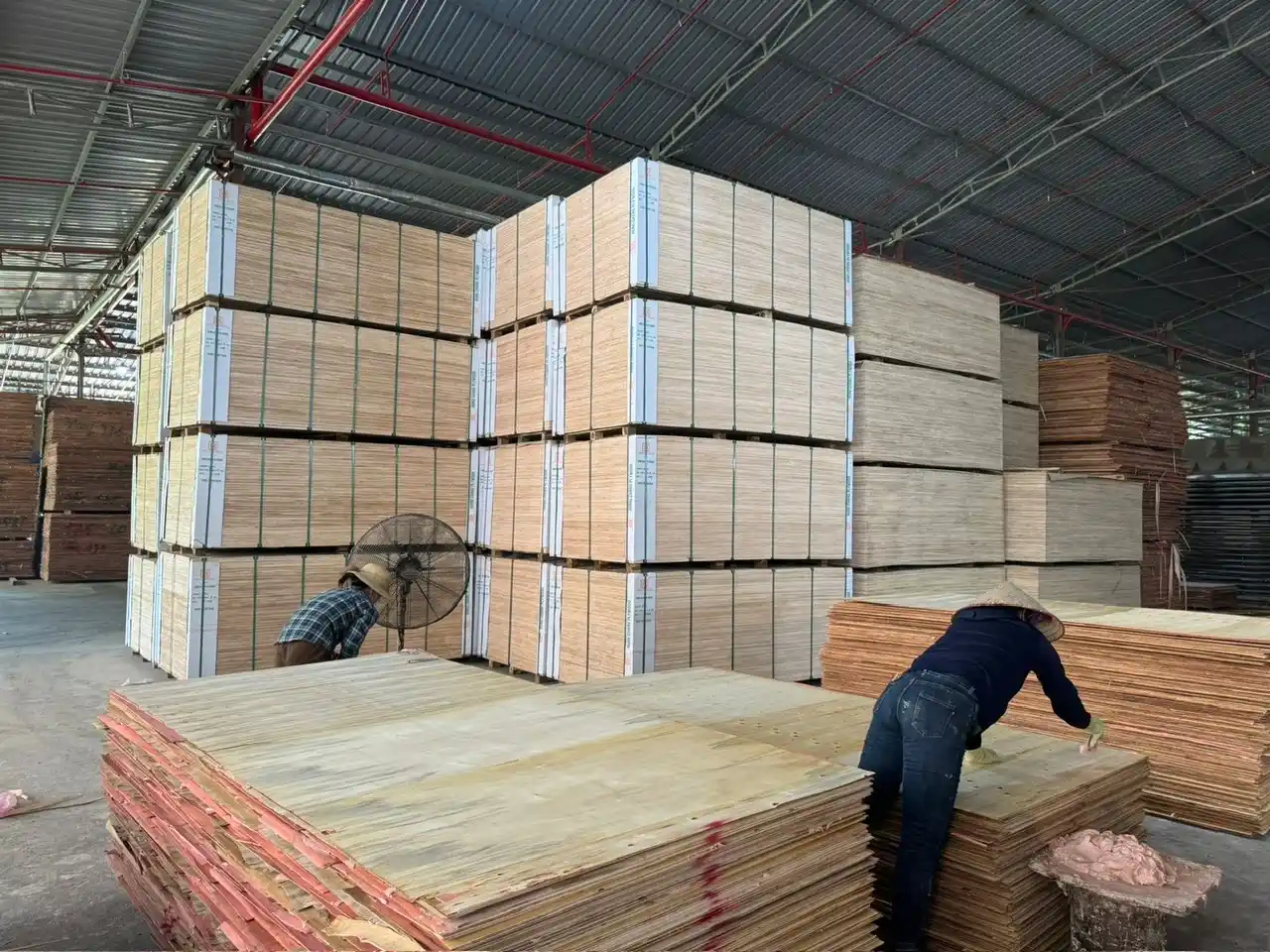
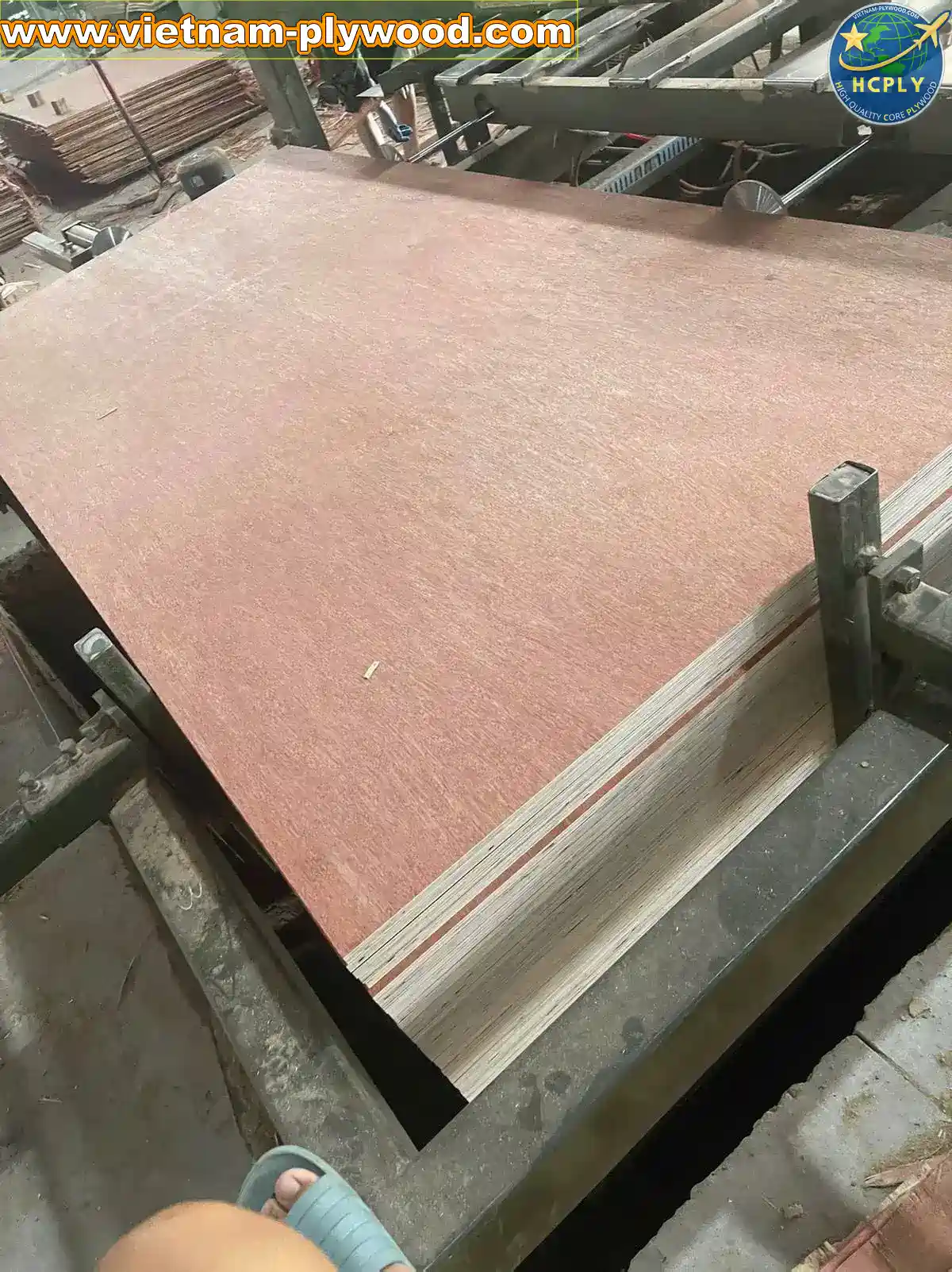

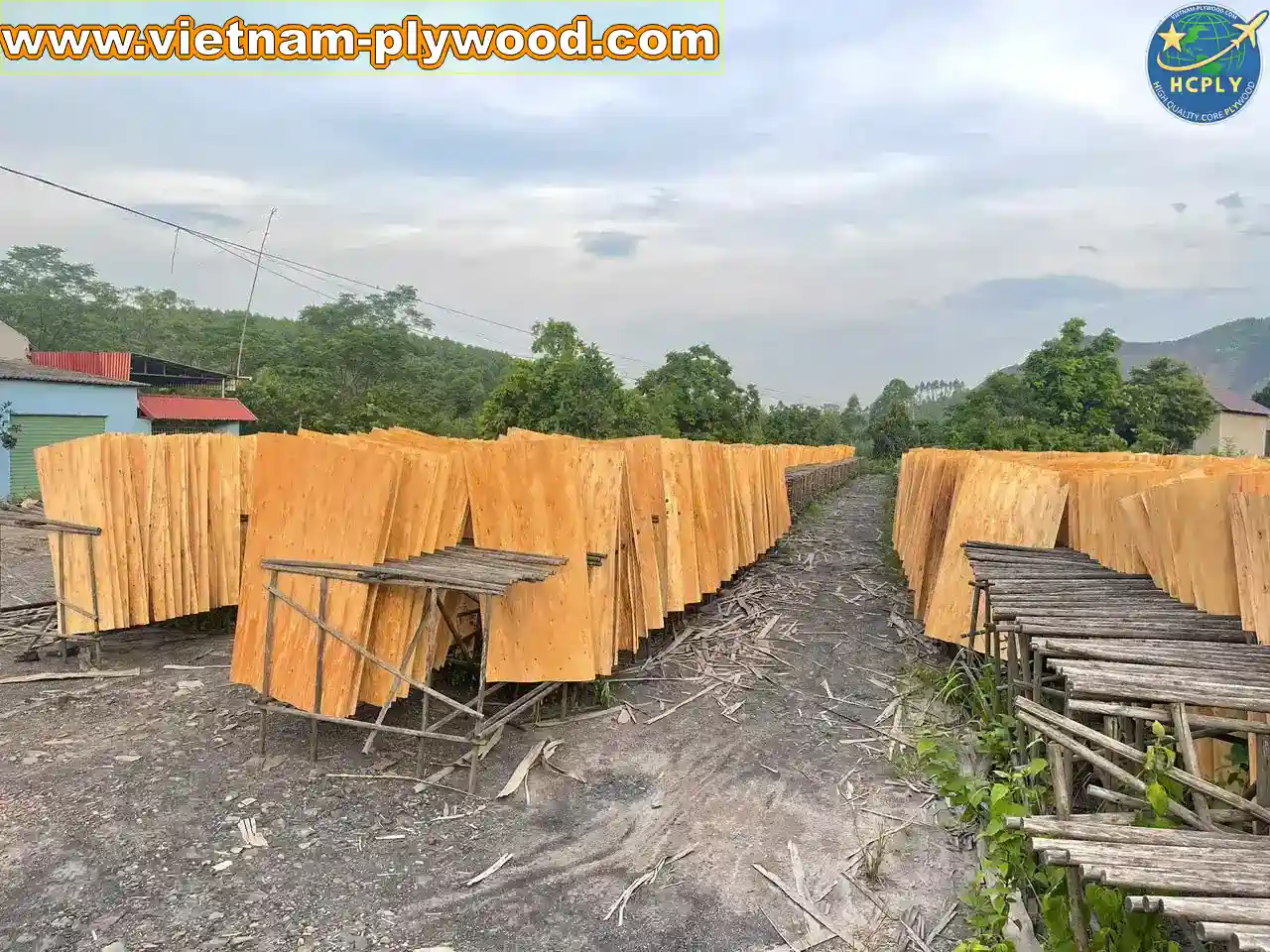

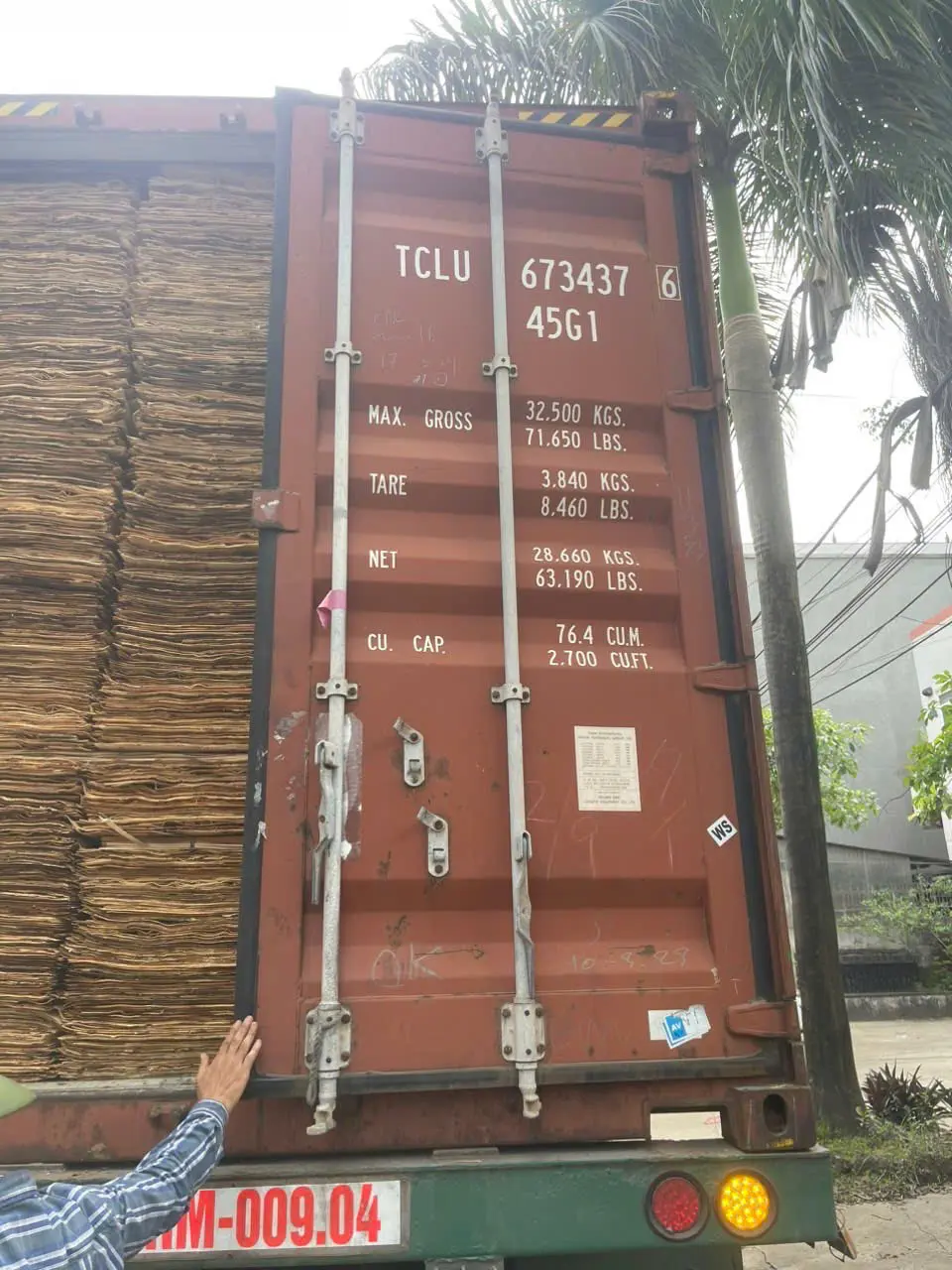
Vietnam plywood FOB prices at Hai Phong port range from $190 to $420 per CBM depending on specification — a spread of over $230/CBM for what buyers often assume is the same product. Understanding what drives that spread is not optional knowledge for importers. It directly determines whether your landed cost per sheet is competitive or overpriced.
This guide breaks down the 7 primary factors that drive and affect every Vietnam plywood export price, with factory-level data from HCPLY’s production operations across 3 specialized facilities in Northern Vietnam.
📋 Quick Reference: Vietnam Plywood FOB Price Ranges (2026)
Before examining each cost driver, here are the benchmark FOB price ranges buyers can expect from export-grade Vietnamese factories as of Q1 2026:
| Product Type | Core | Glue | FOB Hai Phong (per CBM) |
|---|---|---|---|
| Packing / commercial plywood | Acacia | Melamine MR, E2 | $190–$260 |
| Bintangor or okoume furniture | Acacia/Styrax | Melamine MR, E1 | $240–$310 |
| Birch or EV furniture plywood | Styrax | Melamine MR, E0 | $290–$380 |
| Film-faced formwork WBP | Acacia/Eucalyptus | Phenolic WBP | $320–$420 |
⚠️ Important: These ranges assume factory-direct pricing. Trading companies add a VAT and margin layer that typically pushes prices 8–15% higher for the same specification.
🏭 Factor 1: Raw Material Cost — Log Supply and Veneer Pricing
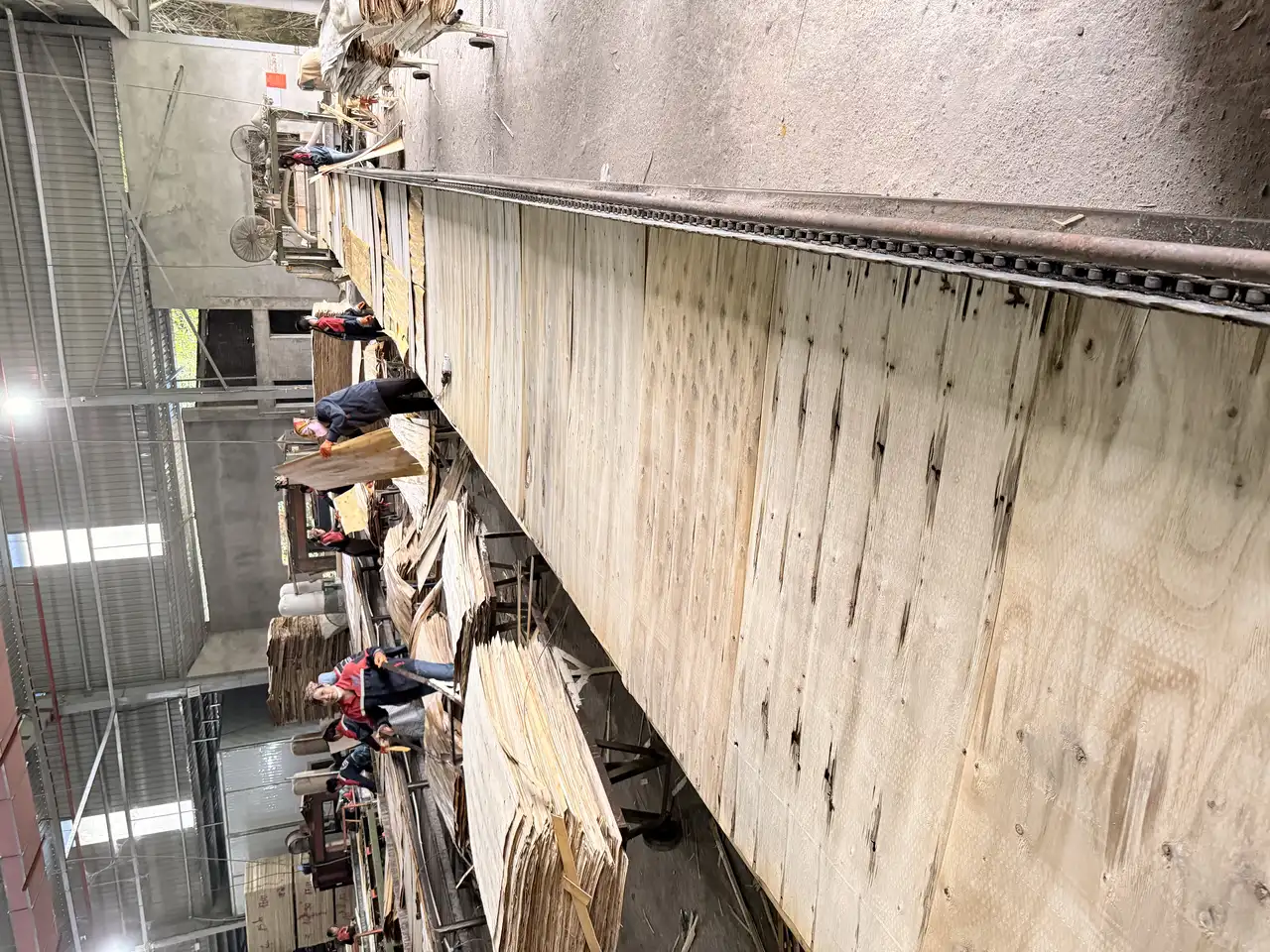
Raw materials — logs and processed veneer sheets — account for 55–65% of total production cost in a Vietnamese plywood factory (HCPLY production data, 2026). No other variable moves the final export price more directly.
Vietnam’s plywood industry in the North draws primarily on three plantation species for core: acacia, eucalyptus, and styrax. Acacia is the most abundantly farmed and cheapest. Styrax, grown in mountain provinces like Phu Tho and Tuyen Quang, commands a price premium because supply is limited to Northern Vietnam — it does not grow in Southern Vietnam at all. Eucalyptus is the densest and heaviest of the three.
Face veneer presents a separate cost dynamic. Domestic faces (bintangor, eucalyptus, pine, poplar) cost far less than imported faces (birch, okoume, gurjan). Birch veneer is sourced from Finland, Russia, or the Baltics — exchange rates and international shipping directly feed into the factory’s veneer cost before a single sheet is pressed.
Key insight: Veneer supply in Northern Vietnam tightens during heavy rainfall seasons (typically June–September), when log harvesting in raw material provinces is disrupted. During these periods, factory veneer costs rise 10–20% above dry-season benchmarks, and that increase passes through to FOB quotes within 2–4 weeks.
🔧 Factor 2: Core Species Selection — Density, Cost, and Freight Impact
Core species is the single most misunderstood cost variable in Vietnamese plywood pricing. Buyers often focus on face veneer species when negotiate prices, but the core drives both the production cost and the freight efficiency of every container.
Vietnam’s three core species have distinct density and cost profiles:
| Core Species | Density | Pallets per 40HC | Effect on Freight Cost |
|---|---|---|---|
| Styrax (bồ đề) | 480–500 kg/m³ | 18 pallets | Lowest freight per sheet |
| Acacia (keo) | ~580 kg/m³ | 16 pallets | Mid-range freight |
| Eucalyptus (bạch đàn) | 650–750 kg/m³ | 15 pallets | Highest freight per sheet |
A 40HC container loaded with styrax-core plywood carries approximately 18 pallets — 3 more than eucalyptus core. That difference in loadable volume means the freight cost per sheet is meaningfully lower for styrax, even though the raw material cost per CBM is higher. Container loading calculations by core type explain this in full detail.
“When buyers compare prices between two factories on the same face veneer, they frequently miss that one uses styrax core and the other uses acacia or eucalyptus — those are fundamentally different products with different landed costs at the destination port.” — Lucy, International Sales Manager, HCPLY
⚙️ Factor 3: Glue Type and Emission Class — Not the Same Thing
This is where specification errors cost buyers money. Glue type and emission class are two separate parameters that independently affect price. Confusing them leads to either overpaying or receiving a non-compliant product.
Glue type (water resistance):
- Melamine (MR): Standard interior grade. Passes 12-hour boiling test. Lower cost. Used for furniture, commercial plywood, cabinet panels.
- Phenolic (WBP): Weather and boil-proof. Passes 72-hour boiling test. Higher cost. Mandatory for film-faced formwork, marine applications, and exterior construction.
Emission class (formaldehyde off-gassing — separate variable):
- E0 / CARB P2: ≤0.5 mg/L. Required for US market, Japanese F4-star, premium European furniture. Adds $8–$15/CBM versus E1.
- E1: ≤1.5 mg/L. Standard EU and most Asian markets.
- E2: ≤5.0 mg/L. Industrial and packaging grades only. Not permitted for EU or US interior applications.
A buyer requesting “WBP plywood” for a furniture application is asking for phenolic glue — which is significantly more expensive than the melamine MR they actually need. A buyer requesting “E0 plywood” for exterior formwork is paying for a strict formaldehyde standard that is irrelevant in an outdoor application. Understanding plywood glue types and emission standards prevents both types of specification error.
📊 Factor 4: Core Construction Quality — Stitched vs. Loose-Lay
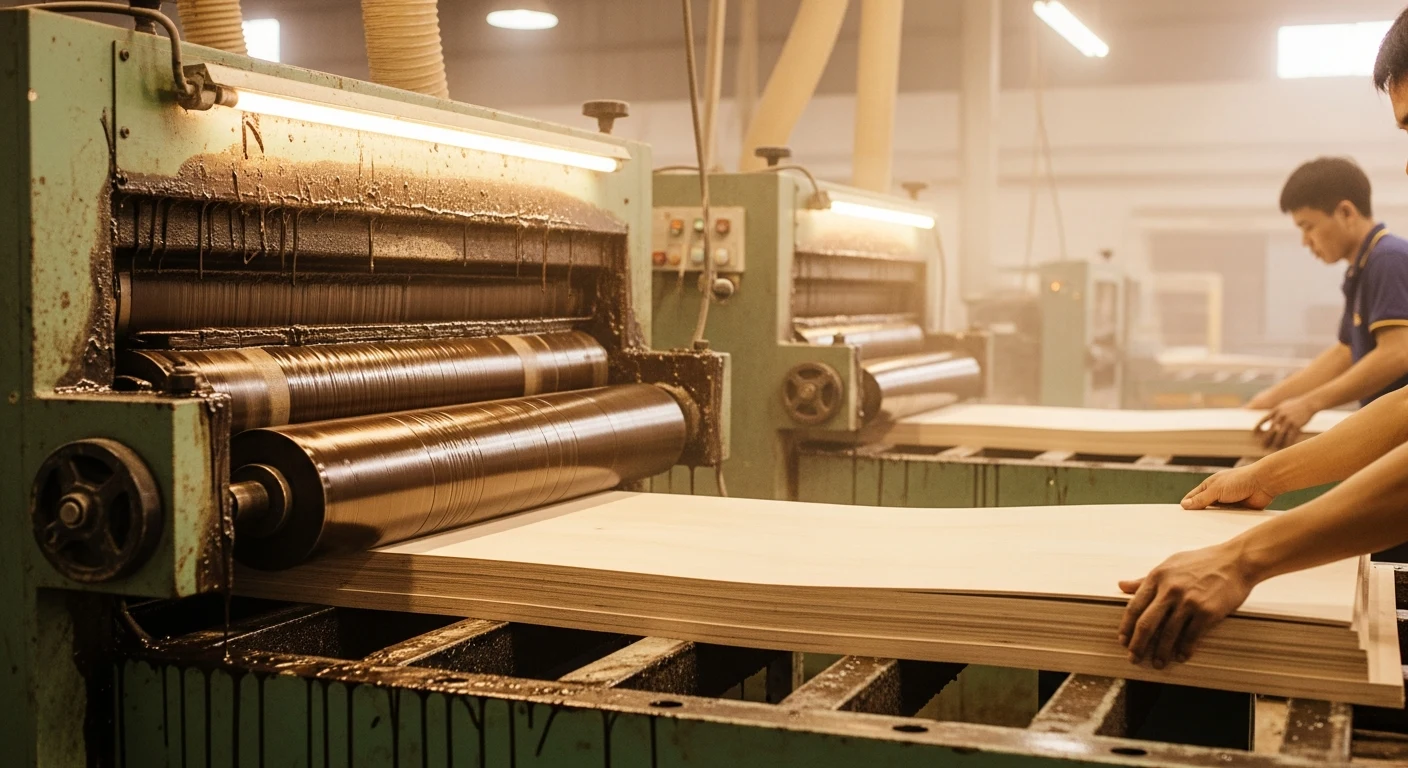
Among professional buyers, core construction is the most frequently underspecified variable in a purchase order — and one of the most significant price differentiators within the same core species.
Vietnamese factories produce plywood with four levels of core construction:
- Full stitched: All veneer pieces sewn together both horizontally and vertically — no gaps, no overlaps. Highest production cost. Required for premium furniture and European-market panels.
- Stitched outer + edge-trimmed inner: A practical balance for mid-range specifications. Face and back layers stitched; inner layers edge-jointed. Cost-optimized without sacrificing surface quality.
- Finger-jointed: Short veneer pieces joined end-to-end. Acceptable for commercial and packaging grades.
- Loose-lay: Veneer sheets placed without joining. Cheapest construction. Standard for low-price packing plywood.
The price spread between full-stitched and loose-lay construction is typically $8–$15/CBM for the same core species and face veneer. For a full 40HC container of 50 CBM, that difference is $400–$750 per shipment.
Factories that produce furniture-grade E0 plywood with full stitched cores are physically incapable of producing packing plywood at the same price point — their processes, workforce skill level, and QC requirements are entirely different. This is why Vietnamese factory type segmentation matters when evaluating supplier quotes.
📜 Factor 5: Certifications and Export Compliance
Certifications add real, measurable cost to every CBM shipped — and that cost is amortized across total order volume. Smaller orders carry a proportionally higher certification overhead than large annual contracts.
Certification cost impact per CBM (approximate):
| Certification | Who Requires It | Estimated Add-On per CBM |
|---|---|---|
| FSC Chain of Custody | EU, US, Aus (preferred/required) | +$3–$8 |
| CARB P2 | United States (mandatory) | +$5–$10 |
| CE Marking | European construction products | +$4–$8 |
| EUDR Due Diligence | EU (mandatory from 2025) | +$2–$5 |
| ISO 9001 audit overhead | Enterprise buyers | Minimal per CBM |
From 2026, EUDR enforcement requires full traceability documentation for all timber products entering the EU — forest of origin, geolocation data, deforestation-free verification (European Commission, 2023). Factories that invested in FSC certification before 2025 already have most of this infrastructure. Those without FSC face higher compliance costs per shipment. Read more in our plywood certifications and export documentation guide.
🚢 Factor 6: Freight, Container Efficiency, and Incoterms
FOB Hai Phong is the standard export price benchmark for Vietnamese plywood — but it is not the only cost buyers face. Understanding how container efficiency and Incoterms shift cost responsibility is critical for landed cost calculations.
Container efficiency directly affects freight cost per CBM:
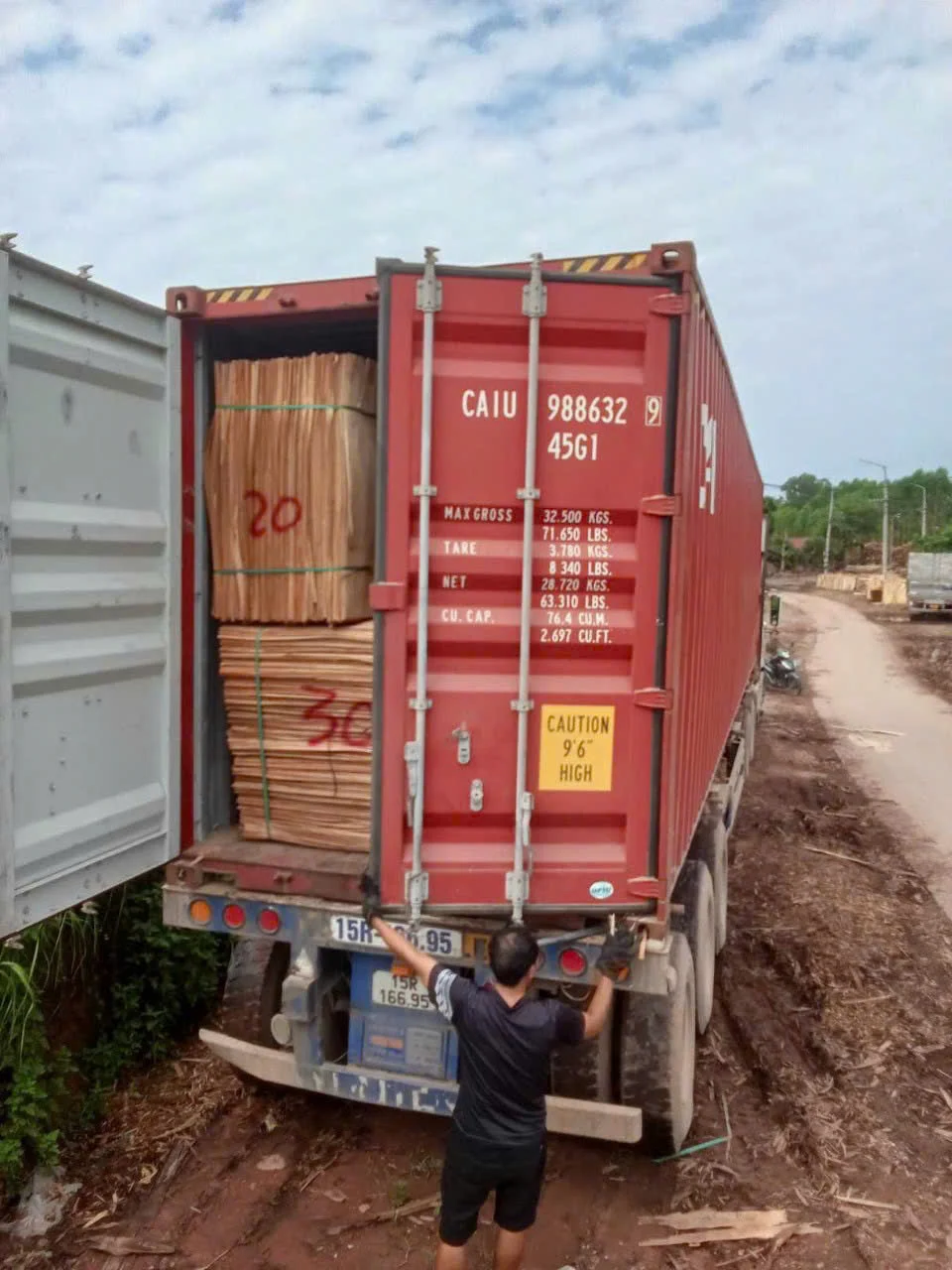
A well-packed 40HC container with styrax-core plywood (18 pallets, ~53 CBM) spreads ocean freight across significantly more volume than a eucalyptus-core container (15 pallets, ~44.5 CBM). If the freight rate is $1,200 per 40HC (a common benchmark for Asia-Europe routes), the freight per CBM is:
- Styrax load: $1,200 ÷ 53 CBM = $22.6/CBM
- Eucalyptus load: $1,200 ÷ 44.5 CBM = $27/CBM
That $4.4/CBM difference is a hidden cost that never appears in the FOB quote but lands directly in the importer’s cost structure.
Incoterms comparison:
- FOB Hai Phong: Buyer controls and pays freight + insurance. Industry standard for experienced importers who consolidate multiple supplier shipments.
- CIF destination port: Seller arranges freight and insurance. Convenience for smaller buyers but typically priced at a 12–18% premium over FOB to cover seller risk and margin.
💱 Factor 7: Market Demand, Currency, and Trade Policy
The final layer of price variation comes from external market forces that no factory controls but every buyer should track.
Currency exchange: Vietnamese plywood is quoted in USD. When the Vietnamese Dong (VND) weakens against USD, export costs from the factory’s perspective decrease slightly — and competitive factories often pass this through as price flexibility. When the USD strengthens sharply, factory margins tighten. This exchange sensitivity is most visible in quarterly price adjustments.
Demand seasonality:
- February–April: Pre-summer construction boom in the Middle East and Southeast Asia drives film-faced and commercial plywood demand. Prices for these grades firm up 5–8%.
- June–September: Furniture industry ordering ahead of the European and US pre-Christmas season. Furniture-grade birch and okoume panels see demand spikes.
- November–January: Quieter period. Best time to negotiate volume commitments for Q2 delivery.
Trade policy risks (2026): Anti-dumping duties on Vietnamese hardwood plywood remain a significant variable for US-bound shipments. US importers should verify current AD/CVD rates before finalizing landed cost calculations (USITC case data, 2025). The EUDR and CBAM mechanisms are expanding the compliance cost for European buyers sourcing from Vietnam in 2026.
📐 Bringing It Together: How to Read a Vietnam Plywood Quote
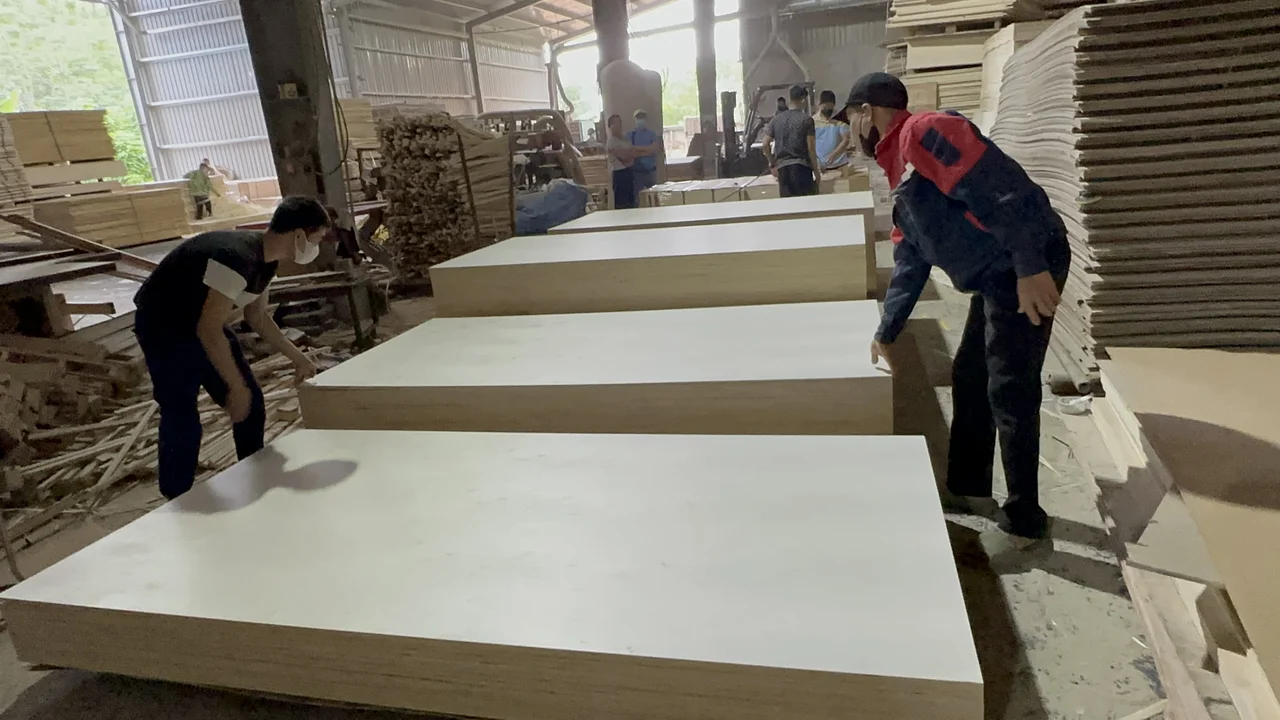
When you receive a FOB price from a Vietnamese supplier, the following specification variables should each be clearly stated — because each one directly explains the number you’re seeing:
- Face species (bintangor, okoume, birch, etc.) — drives veneer cost
- Core species (acacia, styrax, eucalyptus) — drives production cost and freight efficiency
- Core construction (stitched / edge-jointed / loose-lay) — drives quality and production cost
- Glue type (Melamine MR / Phenolic WBP) — separate from emission class
- Emission class (E0 / E1 / E2) — driven by destination market requirements
- Certifications (FSC, CARB P2, CE, EUDR) — drives per-CBM compliance overhead
- Incoterm (FOB / CIF) — determines where cost responsibility transfers
A quote missing any of these seven variables is incomplete. Comparing two incomplete quotes across suppliers is how buyers make expensive sourcing errors.
“We receive RFQs weekly where buyers ask for ‘birch plywood 18mm E0’ and consider that a complete specification. Without core species, core construction, and glue type defined, that spec can resolve to a $290/CBM or a $340/CBM product — same face, radically different cost structure.” — Lucy, International Sales Manager, HCPLY
For a deeper breakdown of how specification choices translate to quotation structure, read the full plywood quotation guide. For current pricing by product type, see the 2025 updated FOB price list.
✅ Key Takeaways
Vietnam plywood export prices are determined by a layered cost structure — not a single market rate. The same face veneer species will produce quotes ranging 30–50% apart depending on:
- Core species and density (styrax vs. eucalyptus = different CBM efficiency)
- Glue type and emission class (two separate variables, both priced individually)
- Core construction quality (full stitched adds $8–$15/CBM over loose-lay)
- Certification stack (FSC + CARB P2 adds $8–$18/CBM combined)
- Supplier type (factory-direct vs. trading company = 8–15% price difference)
- Freight efficiency (core species affects CBM loadable volume and per-CBM freight cost)
- Market timing (seasonality creates 5–10% price variation within a calendar year)
Understanding each variable before requesting a quote puts buyers in a position to compare apples to apples — and to identify when a lower-priced quote is genuinely competitive or simply a lower-specification product.
Get a factory-direct price quote for your specification
Disclosure: This article is published by HCPLY, a Vietnam-based plywood manufacturer and export operator. While we aim to provide objective industry guidance, readers should consider our perspective as a market participant when evaluating recommendations.