
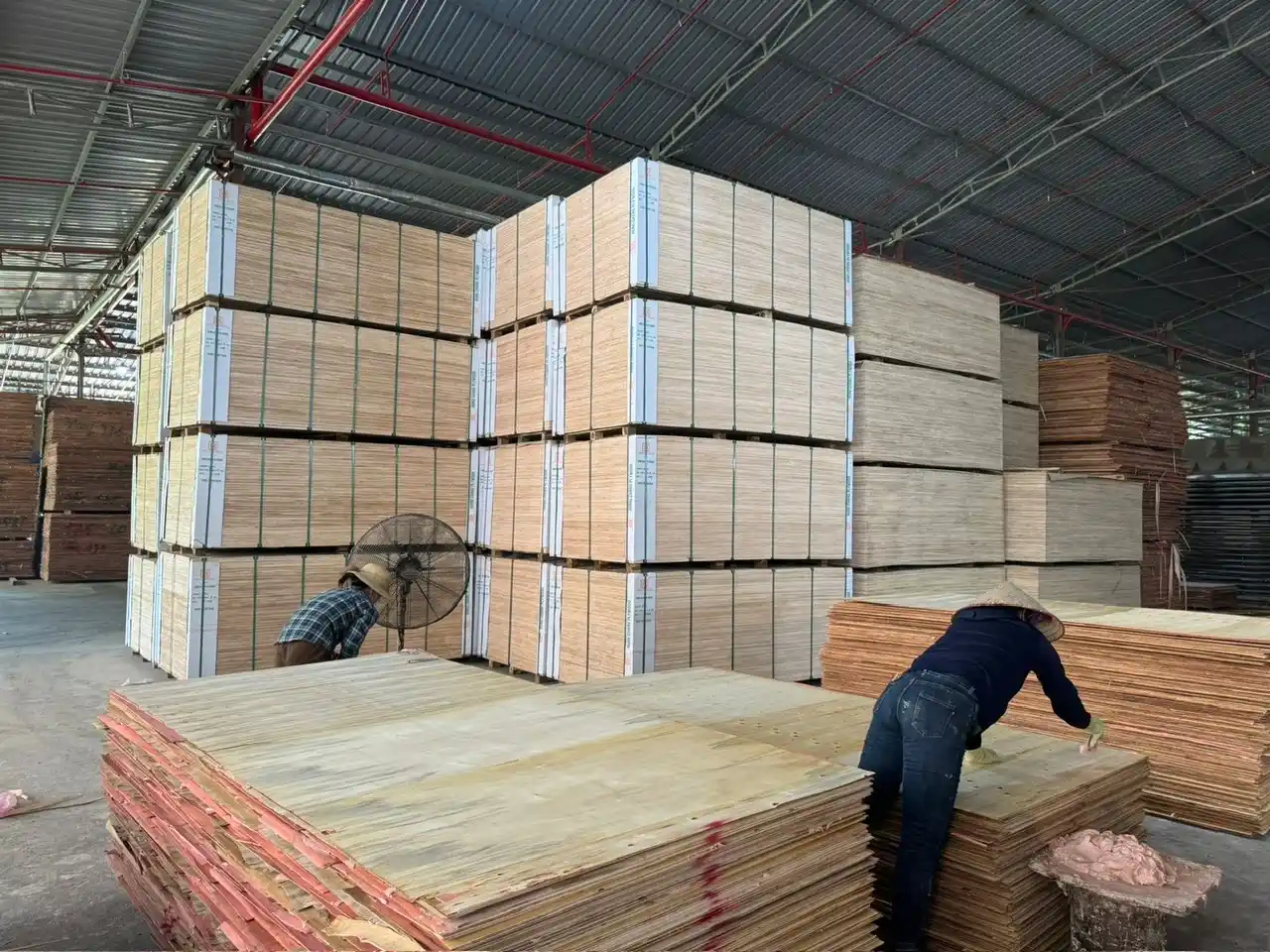

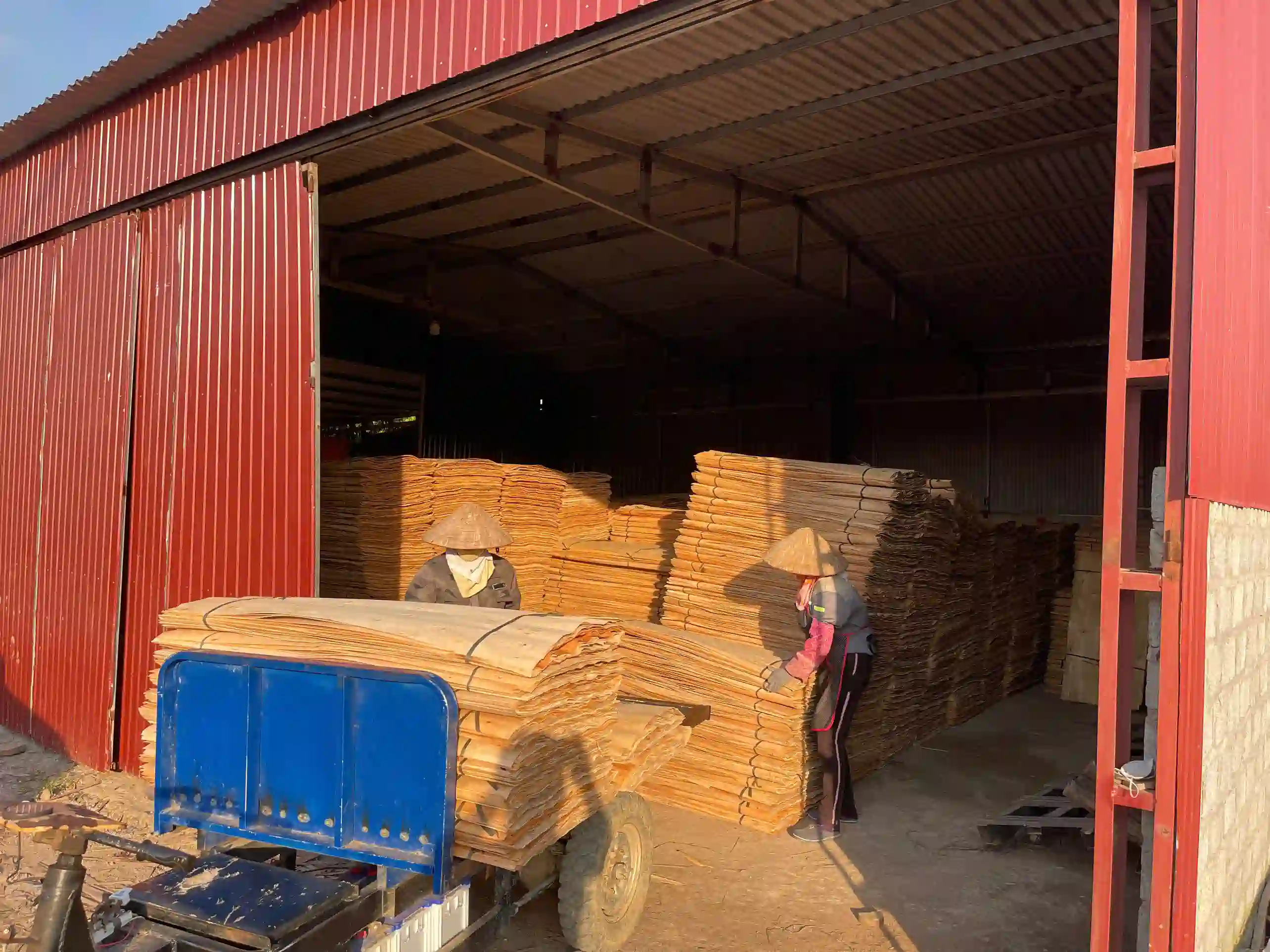
Vietnam supplies core veneer to plywood factories across India, South Korea, Japan, and the Middle East — a raw material trade that rarely appears in Google results but moves tens of thousands of containers each year. Buyers who know how to evaluate manufacturers cut material cost significantly without sacrificing the panel quality their end-market demands.
This guide covers what separates production-ready core veneer from bulk commodity supply, how the three core species differ, and what to look for when qualifying a Vietnamese manufacturer for long-term supply.
📋 What Is Core Veneer and Why Vietnam Dominates Supply
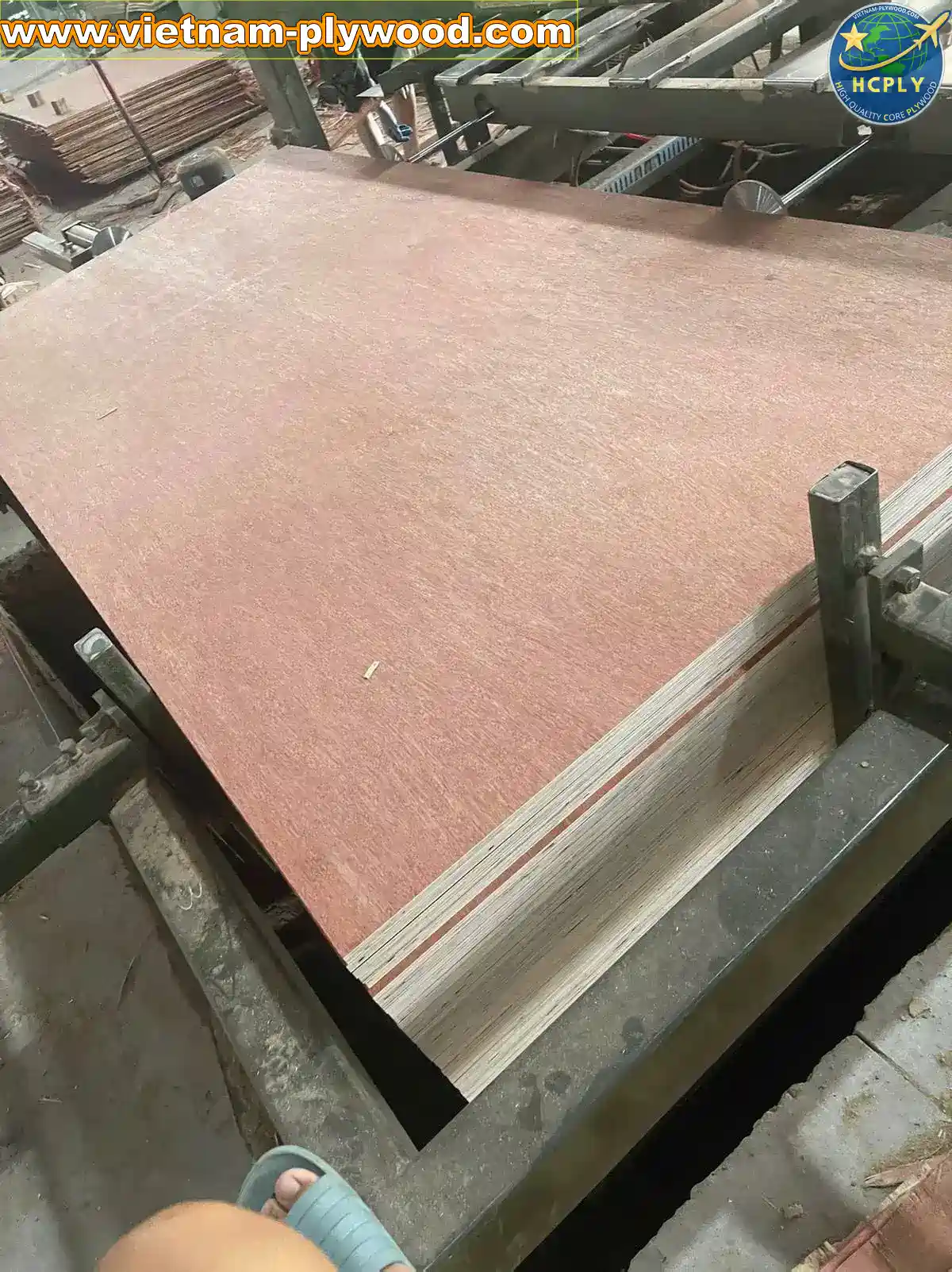
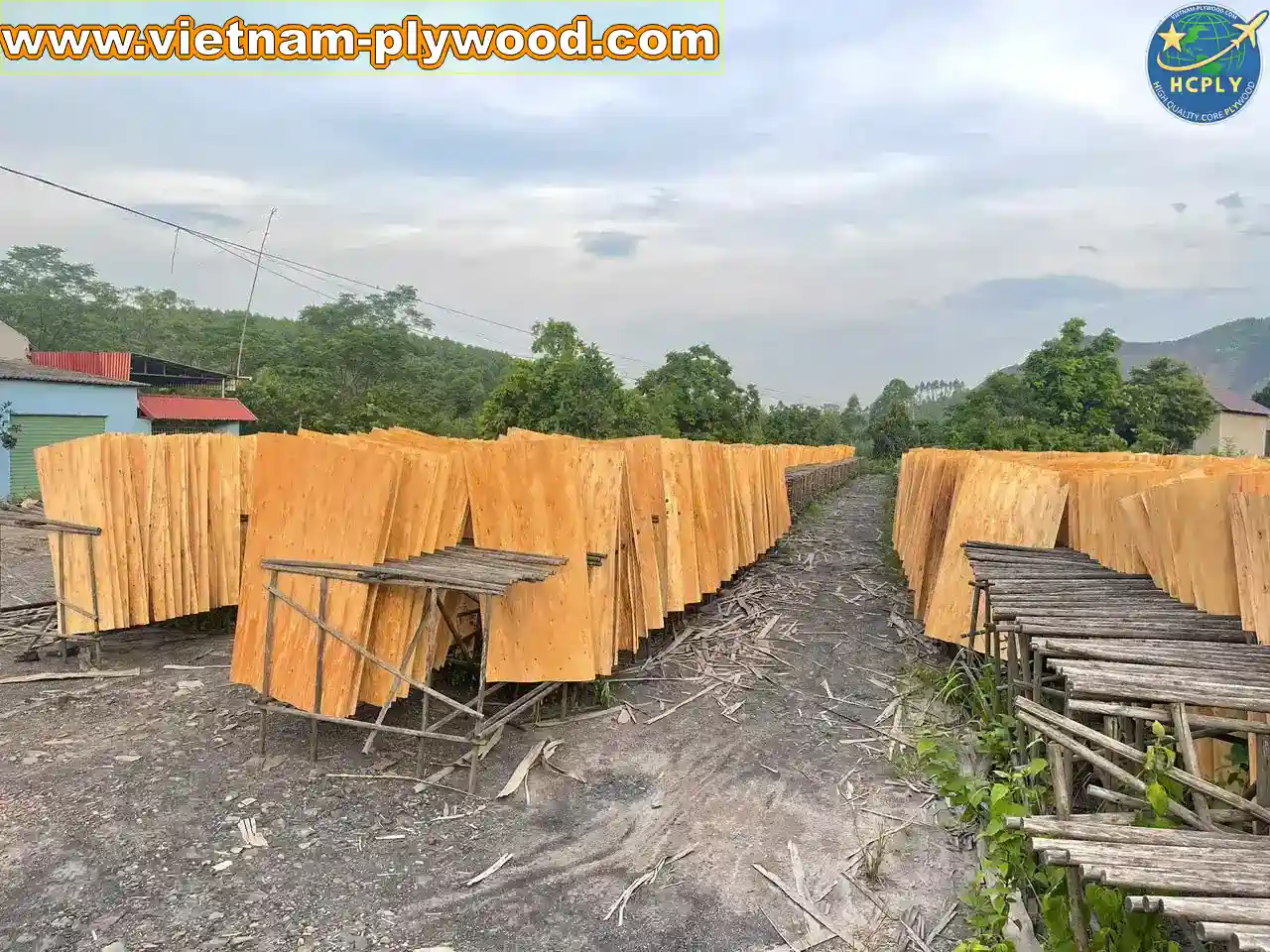
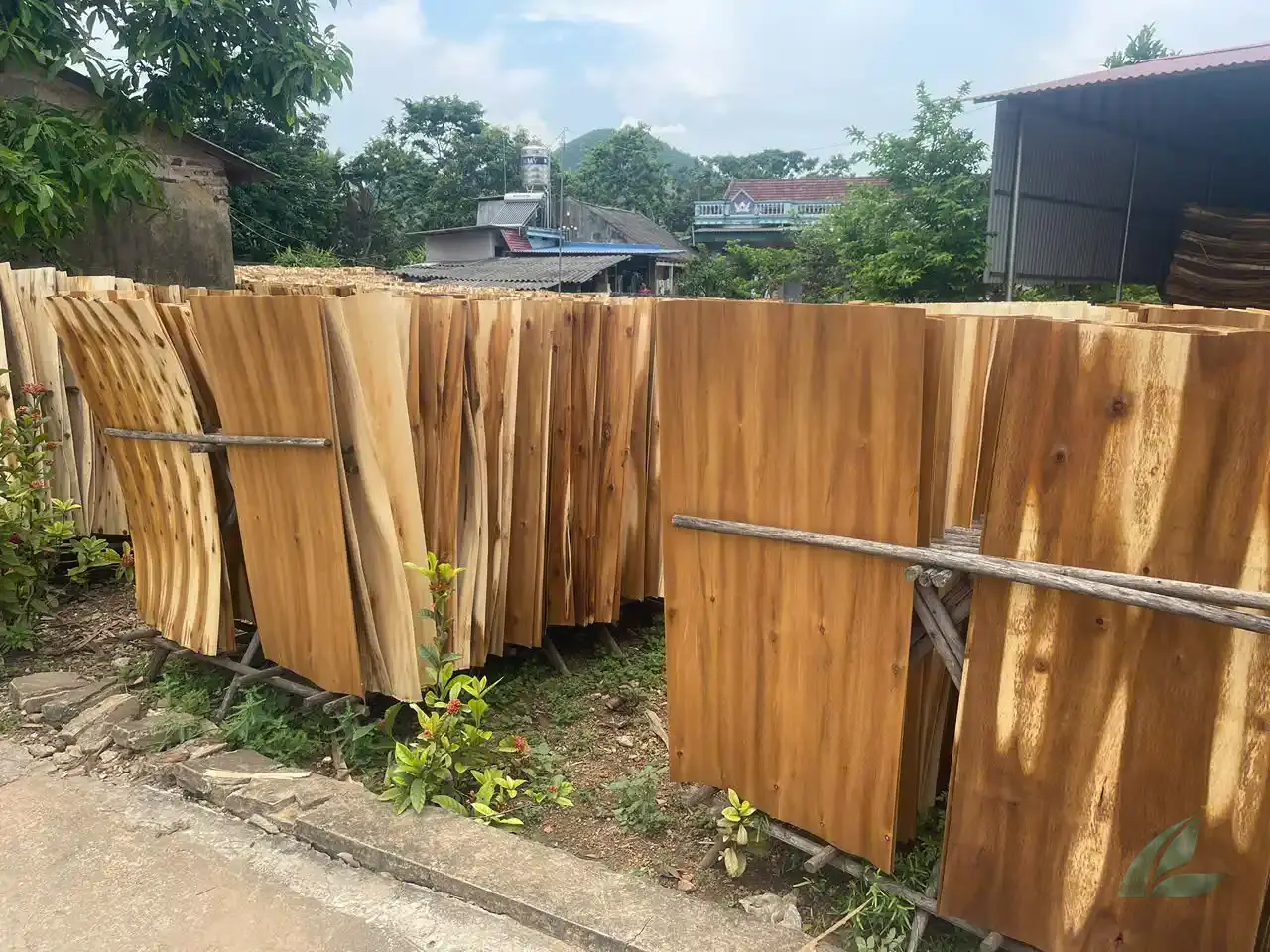
Core veneer: rotary-peeled wood sheets 1.2–2.0mm thick, used as the internal cross-band and long-grain layers in plywood panels. The core determines a finished panel’s density, strength, and weight — not the face veneer species.
Vietnam has become the primary source for three reasons. First, plantation-grown acacia, eucalyptus, and styrax trees mature in 5–7 years (FAO Forestry Update, 2023), giving factories a consistent raw material cycle. Second, Northern Vietnam — Phu Tho, Tuyen Quang, Yen Bai — hosts concentrated processing clusters within 150 km of Hai Phong port, reducing logistics cost. Third, production costs remain lower than China, Malaysia, and Indonesia for comparable grade material (Vietnam Timber & Forest Product Association, 2024).
For plywood manufacturers sourcing raw material, the species selection determines everything downstream. Choosing the wrong core adds weight to every container, affects glue absorption, and — if moisture control is poor — causes delamination after panel pressing.
💡 Key Insight: Core veneer density is species-dependent, not face-dependent. A birch-face panel built on acacia core (~580 kg/m³) weighs and performs differently than the same face on eucalyptus core (650–750 kg/m³). Specify core species explicitly in every purchase order.
Learn more about Vietnam’s three core species →
🌲 The Three Core Species: Acacia, Eucalyptus, Styrax
Understanding species differences is mandatory before qualifying any supplier. Each species serves a distinct market segment.
📌 Acacia Core — Budget Grade, ~580 kg/m³
Acacia (keo) grows throughout Vietnam’s Northern provinces and is the most abundant plantation species. It produces a dark-colored veneer with ~580 kg/m³ density.
Applications: Commercial plywood, packing grade, bintangor-face panels for the Indian and Middle East markets, film-faced formwork panels for cost-sensitive construction segments.
Moisture target: 6–8% after kiln drying. Acacia has moderate natural moisture and responds well to industrial dryers.
Grade spread: Grade A (clean, minimal knots, full stitchable sheets) commands a 15–20% premium over Grade B (acceptable for loose-lay or edge-jointed core construction).
📌 Eucalyptus Core — Premium Density, 650–750 kg/m³
Eucalyptus (bach dan) is Vietnam’s heaviest commercially available core species. The pale yellow color, high density, and strong screw-holding capacity make it the preferred choice for flooring substrate, structural plywood, and premium film-faced panels reusing 15+ times (HCPLY production data, 2026).
Applications: Premium furniture, flooring underlayment, film-faced construction panels for Korea and Japan, structural panels for the Australian market.
Weight impact on container: A 40HC loaded with eucalyptus-core panels carries only 15 pallets (vs. 18 for styrax) before hitting the 28.5 MT payload limit. Buyers sourcing eucalyptus core veneer should confirm their panel factory’s container loading plan before ordering bulk stock.
See the 40HC container loading guide →
📌 Styrax Core — Lightweight Birch Substitute, 480–500 kg/m³
Styrax (bo de) is the lightest Vietnamese core species at 480–500 kg/m³ and grows exclusively in Northern Vietnam — primarily Tuyen Quang, Yen Bai, and Phu Tho provinces. It has no equivalent in Southern Vietnam, which is why plywood factories in the south pay a premium for Northern-sourced styrax.
Applications: Premium furniture plywood, birch-face panels for European cabinetry, EV-face panels for US kitchen cabinets, poplar-face luxury packaging. Styrax achieves the light weight and pale color that buyers sourcing “full birch core” panels historically expected from Eastern Europe.
Container efficiency: 18 pallets per 40HC for styrax-core panels — the maximum before the payload limit binds. This translates directly to lower freight cost per sheet compared to eucalyptus core.
🏭 What to Look for in a Core Veneer Manufacturer
The Vietnamese market has two types of core veneer suppliers, and they are not equivalent.
Type 1 — Direct peeling factory: Owns or leases peeling lines, dryers, and stacking equipment. Issues its own certificates. Prices reflect factory-gate cost without intermediary margin. Volume flexibility is limited to that factory’s line capacity.
Type 2 — Trading consolidator: Buys from multiple small peeling operations, consolidates into containers, and resells. Offers wider species and thickness mix but adds cost and reduces traceability. Certificate origin may be from a different factory than the one producing the material.
For long-term supply reliability, direct factories are preferable. For mixed-species trial orders or small-volume entry, a trading consolidator reduces MOQ friction.
📌 Verification Checklist Before Placing an Order
Use these criteria to evaluate any manufacturer before committing to a container:
| Criteria | What to Ask | Acceptable Standard |
|---|---|---|
| Moisture content | Certificate + physical measurement on arrival | 6–8% (above 10% = delamination risk) |
| Thickness tolerance | Specify ±0.1mm tolerance | Confirm factory calibration capability |
| Peeling log diameter | Source log specification | Min. 10cm for consistent sheets |
| Core grade | Grade A (stitchable) or Grade B | Match to your panel construction method |
| Certificate origin | Who issues fumigation + phyto | Must be issuing factory, not a reseller |
| Lead time | Production schedule, not stock | 15–20 days for a full container |
🔍 Core Veneer Production in Northern Vietnam
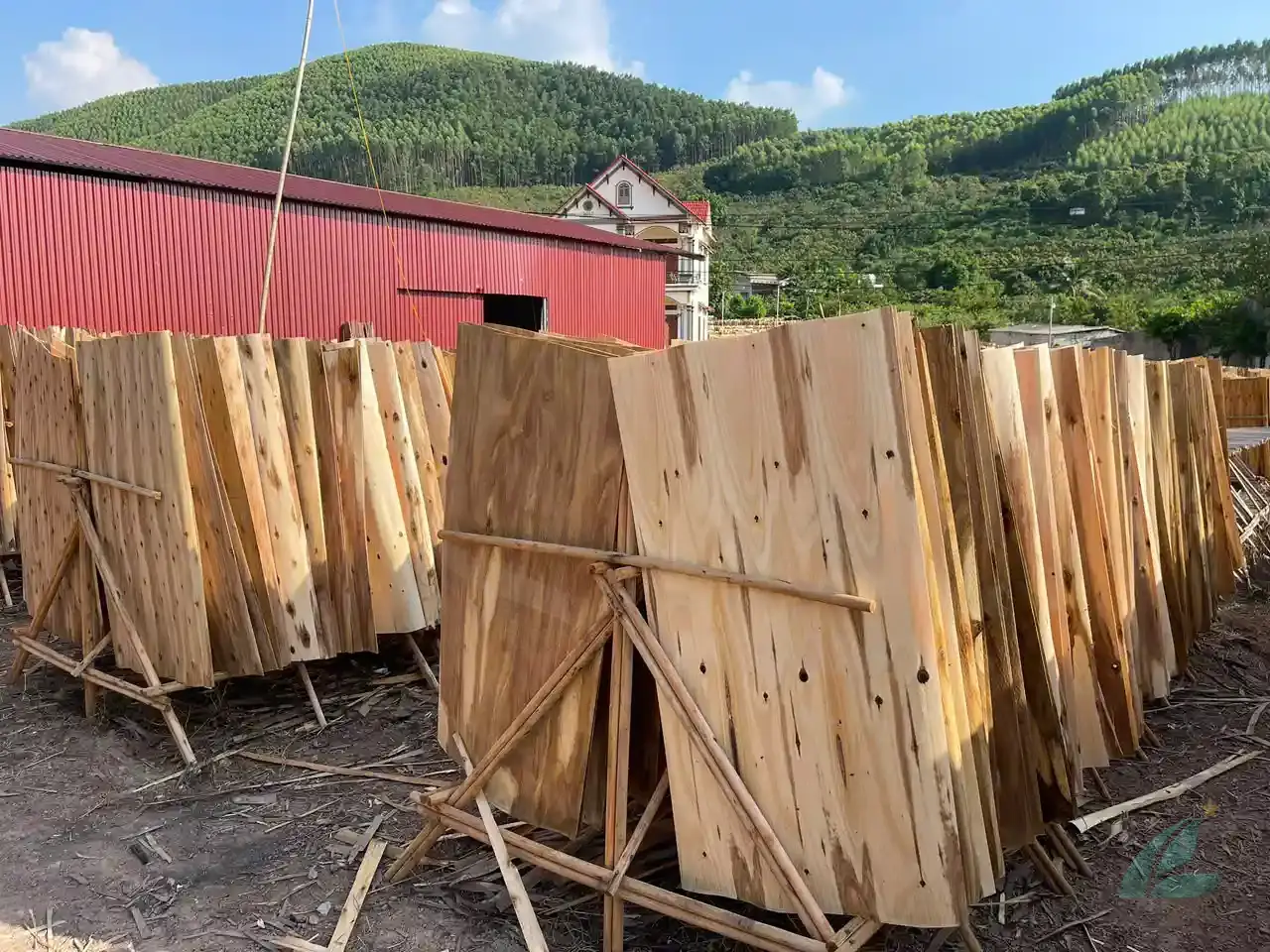
Acacia core veneer (export grade):
- Thickness: 1.2mm, 1.5mm, 1.7mm, 2.0mm
- Sizes: 1270×640mm (crossband) | 1270×1300mm (long grain)
- Moisture: 6–8% kiln-dried
- Grade: A (full sheets, Grade B available)
- Density: ~580 kg/m³
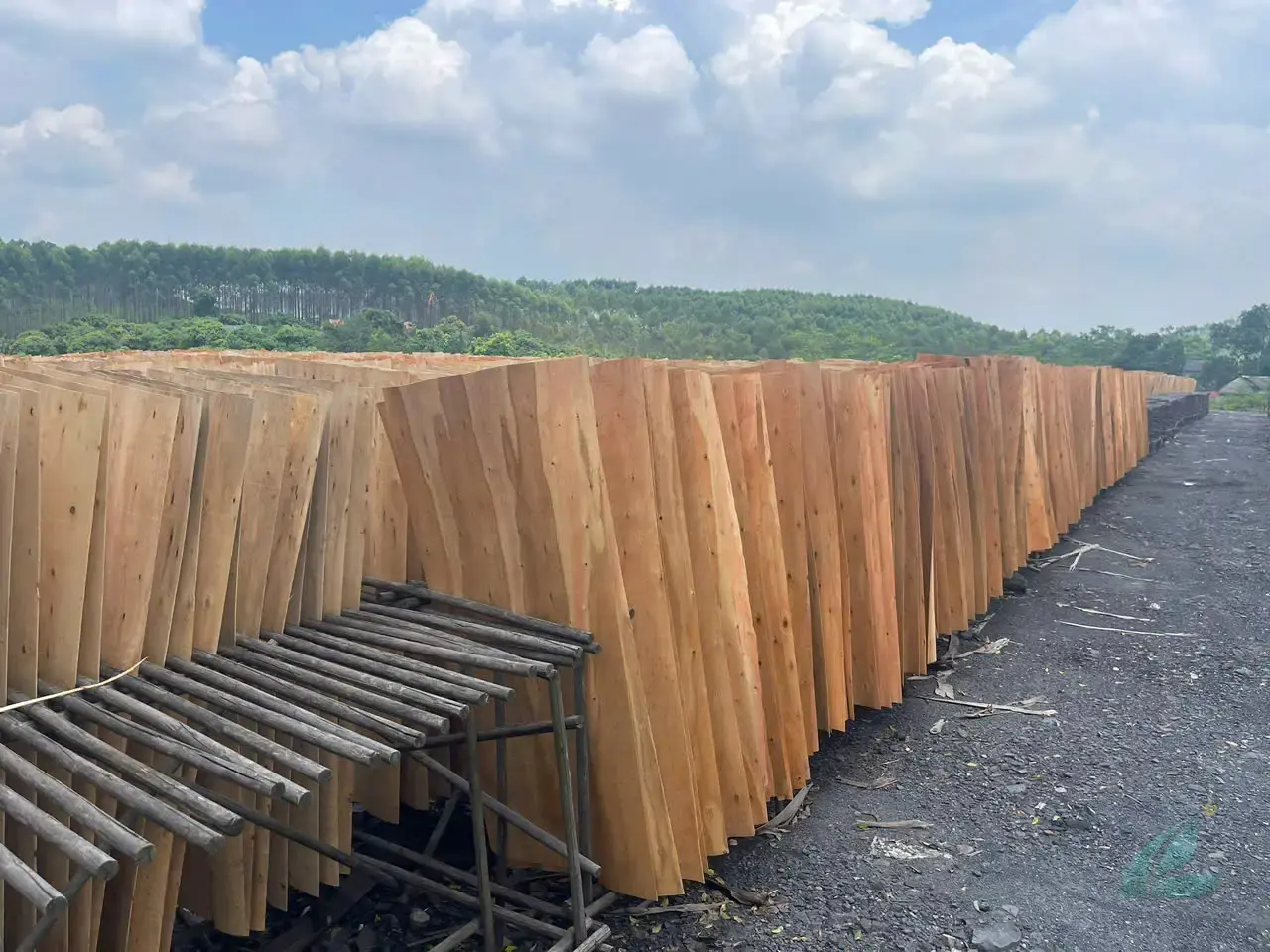
Eucalyptus core veneer (high density):
- Thickness: 1.5mm, 1.7mm, 2.0mm
- Sizes: 1270×640mm | 1270×1300mm
- Moisture: 6–8%
- Grade: A
- Density: 650–750 kg/m³
Because HCPLY operates as a factory-direct export division, core veneer ships with full export documentation — phytosanitary certificate, fumigation certificate, B/L, and CO — without the VAT markup that trading company intermediaries carry (HCPLY export records, 2026).
“Buyers sourcing core veneer for their own plywood production should verify two things before the first order: moisture certificate from the same dryer batch, and a grade sheet confirming stitchable quality for their target construction method.” — Lucy, International Sales Manager, HCPLY
View HCPLY Core Veneer product page →
📦 Other Active Core Veneer Exporters from Vietnam
Beyond HCPLY, several other manufacturer categories operate in Vietnam’s core veneer export segment. Buyers running a multi-supplier strategy or evaluating options should consider these:
Regional Cluster Specialists (Phu Tho / Yen Bai)
Concentrated in the same Northern provinces as HCPLY, these factories operate dedicated peeling lines for eucalyptus and acacia. Some specialize in styrax but volume is smaller — styrax supply is seasonally constrained by harvest cycles. Eucalyptus core veneer specialists in this cluster have documented export history to South Korea and Japan.
Factory-level due diligence matters here. The quality gap between a Grade A stitched-core supplier and a loose-lay commodity exporter is significant — both may describe their product as “core veneer,” but panel performance under pressing diverges sharply.
Consolidators and Mixed-Species Traders
Several trading companies in Hanoi and Ho Chi Minh City aggregate small-lot veneer from multiple northern factories and offer mixed-species containers. This model suits:
- Trial orders below 1×40HC equivalent per species
- Buyers needing acacia + eucalyptus in one container
- Markets where exact species traceability is not a procurement requirement
Price premium over direct factory: typically USD 10–20 per m³ for the consolidation service.
⚠️ Important: Southern Vietnam companies selling “core veneer” typically re-source material from Northern factories, then add margin. For the lowest cost and cleanest documentation chain, source directly from Northern production regions.
Understand Vietnam’s regional supply geography →
📊 Core Veneer Specification Table — Export Standards 2026
| Specification | Acacia | Eucalyptus | Styrax |
|---|---|---|---|
| Density (kg/m³) | ~580 | 650–750 | 480–500 |
| Color | Dark brown | Pale yellow | Light white |
| Standard thickness | 1.2–2.0mm | 1.5–2.0mm | 1.5–2.0mm |
| Moisture (export) | 6–8% | 6–8% | 6–8% |
| Typical grade range | A / B | A | A |
| Best application | Commercial, packing panels | Flooring, structural, premium | Premium furniture, birch-sub |
| Availability | Year-round, high volume | Year-round, moderate volume | Seasonal, Northern VN only |
| FOB price range (2026) | USD 130–155/m³ | USD 155–190/m³ | USD 145–175/m³ |
Prices FOB Hai Phong, February 2026. Indicative range — actual price depends on volume, thickness, and grade. Source: HCPLY commercial data.
🔧 How to Qualify a Core Veneer Manufacturer: Step-by-Step
Most buyers sourcing core veneer for the first time rely on B2B platform listings or trade show contacts. That approach works for price discovery but misses the quality verification that protects downstream production.
Step 1 — Request species-specific samples with certificates Ask for 5–10 sheets per species/thickness combination, shipped air freight at your cost. Measure moisture on arrival with a calibrated pin meter. Target 6–8%; reject samples above 10%.
Step 2 — Verify certificate origin The phytosanitary and fumigation certificates must identify the producing factory, not a trading company. A reseller’s address on certificates signals an intermediary layer — price accordingly.
Step 3 — Confirm grade specification in writing Grade A means full sheets without holes exceeding 10mm, clean peeling, minimal splits. Grade B allows more natural defects but is still stitchable. Confirm which grade the quoted price corresponds to.
Step 4 — Request peeling log diameter spec Larger-diameter logs produce longer uninterrupted veneer runs — critical for stitched-core construction. Smaller logs produce more short sheets, increasing waste in your pressing line. Ask explicitly.
Step 5 — Negotiate a trial container before committing to annual volume One 40HC trial container with documented moisture records at arrival and pressing QC data gives you the supplier’s actual performance profile. Annual volume commitments should follow, not precede, this verification.
Full guide to qualifying Vietnamese plywood suppliers →
📐 Core Veneer in the Plywood Manufacturing Supply Chain
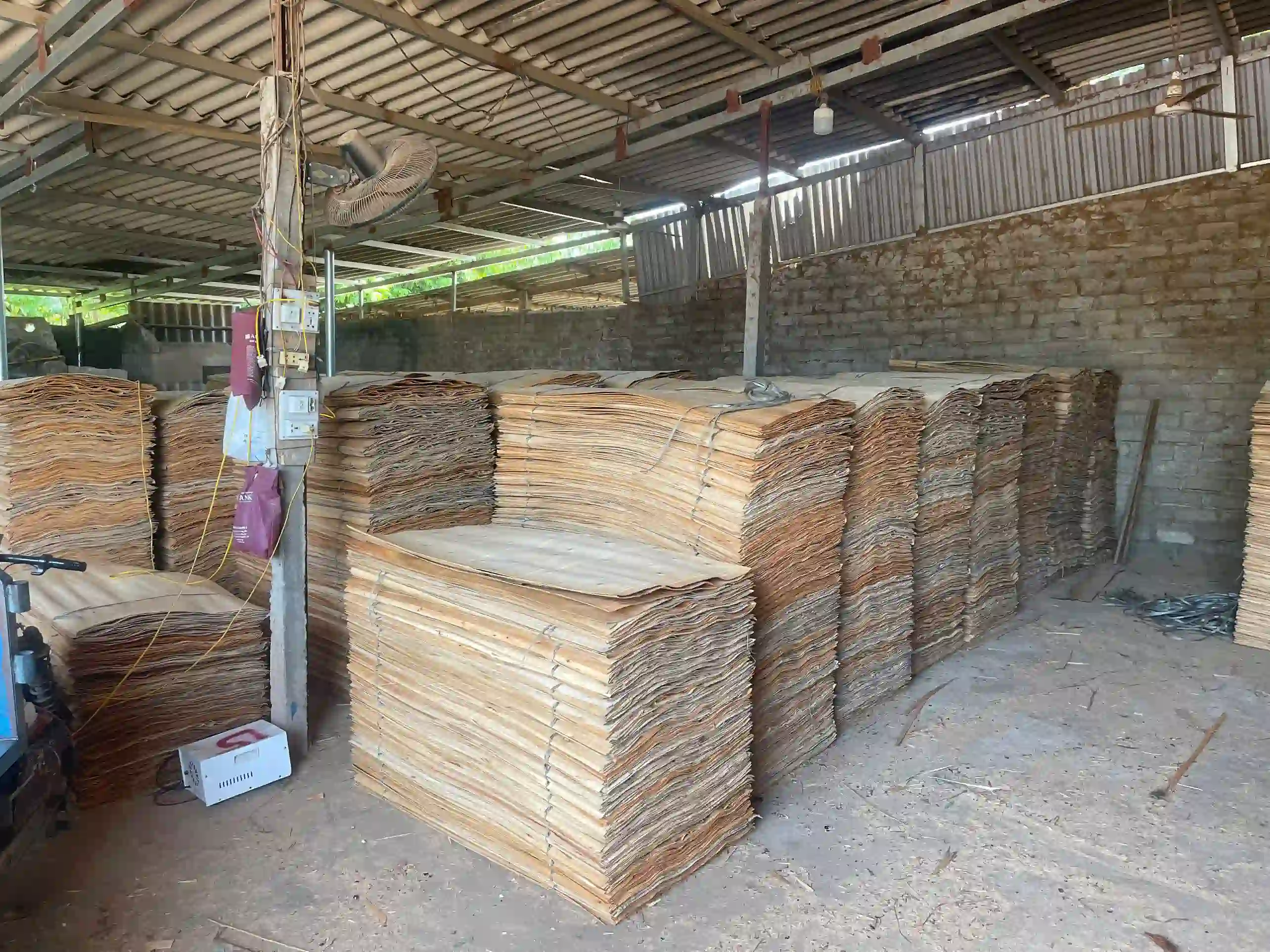
Core veneer is the upstream input — raw peeled sheets that arrive at a panel factory, get dried, sorted by grade, assembled into cross-band and long-grain stacks, glued, and hot-pressed into finished plywood. The quality of that finished panel is 60–70% determined by core veneer quality before the face ever touches the press.
Three failure modes trace directly back to sourced core veneer:
Delamination — caused by moisture above 10% at pressing. The glue bond fails as trapped moisture expands under heat. High-humidity shipping or insufficient kiln drying at the veneer factory are the two most common causes (Timber Research and Development Association, 2022).
Thickness inconsistency — caused by peeling knife calibration drift. Panels come out of press with uneven cross-section, failing ±0.3mm tolerance for furniture-market customers.
Core gaps and voids — caused by Grade B veneer used in Grade A applications. Structural voids telegraph through face veneer as surface blistering within 6–12 months of installation.
Each failure affects your buyer’s end product, not just your incoming stock. That connection is why verifying core veneer quality upstream — not just inspecting finished panels — is the procurement discipline that separates consistent exporters from one-container suppliers.
How plywood is manufactured from core veneer to finished panel →
✅ Conclusion: Sourcing Core Veneer from Vietnam in 2026
Vietnam’s core veneer manufacturers supply the foundation material for plywood produced across Asia, Europe, and North America. Acacia, eucalyptus, and styrax each serve distinct panel segments — matching species to application prevents cost overruns and quality failures that only surface after panels reach the end customer.
The manufacturers worth a long-term relationship share three characteristics: direct peeling lines (not consolidation resale), verified moisture control at 6–8%, and certificate chains that trace to the production source. HCPLY supplies both acacia and eucalyptus core veneer on a factory-direct basis from Northern Vietnam, with full export documentation and no VAT overhead.
Disclosure: This article is published by HCPLY, a Vietnam-based plywood manufacturer and export operator. While we aim to provide objective industry guidance, readers should consider our perspective as a market participant when evaluating recommendations.
Request a core veneer sample kit and FOB price list →
For buyers sourcing finished plywood panels alongside raw veneer, the core types guide explains how each species affects completed panel specifications — a useful companion read before finalizing your next container order.