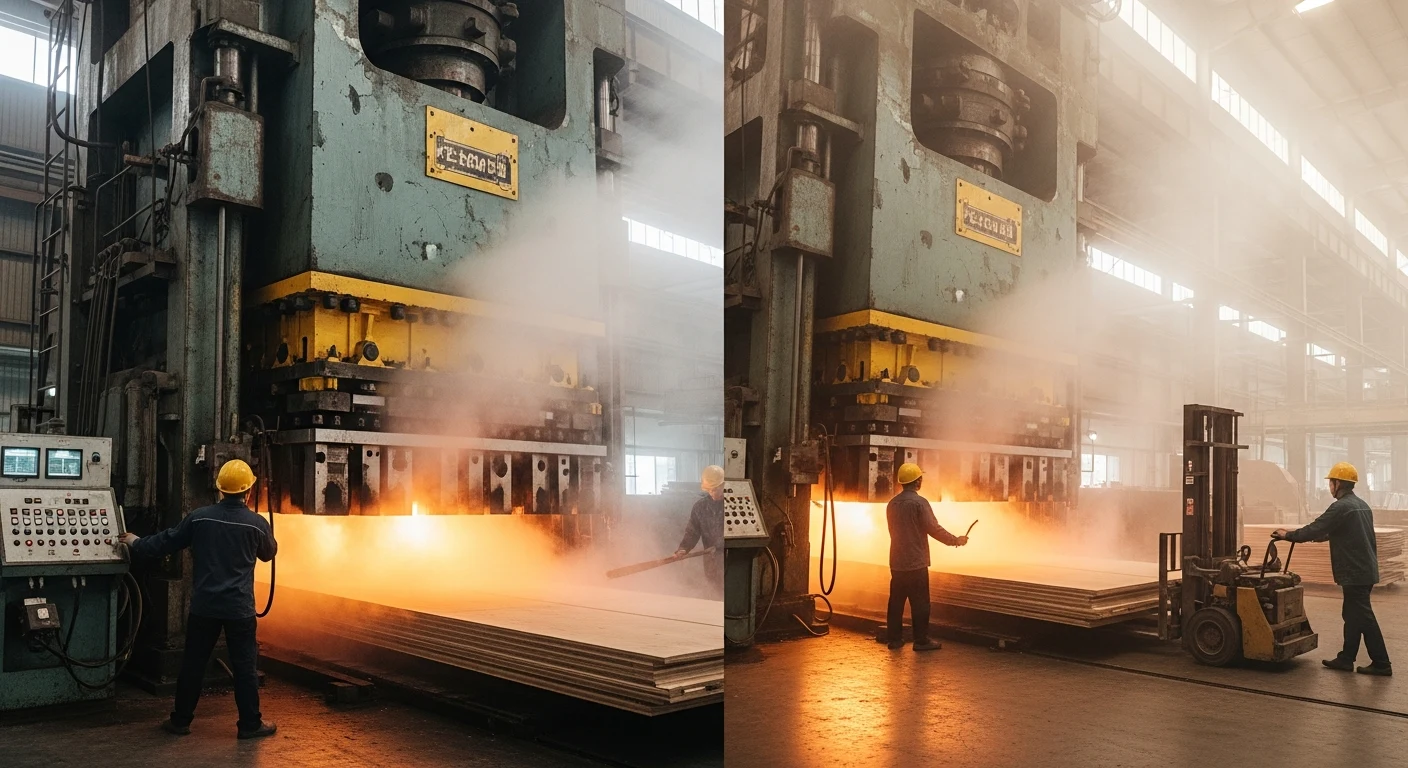
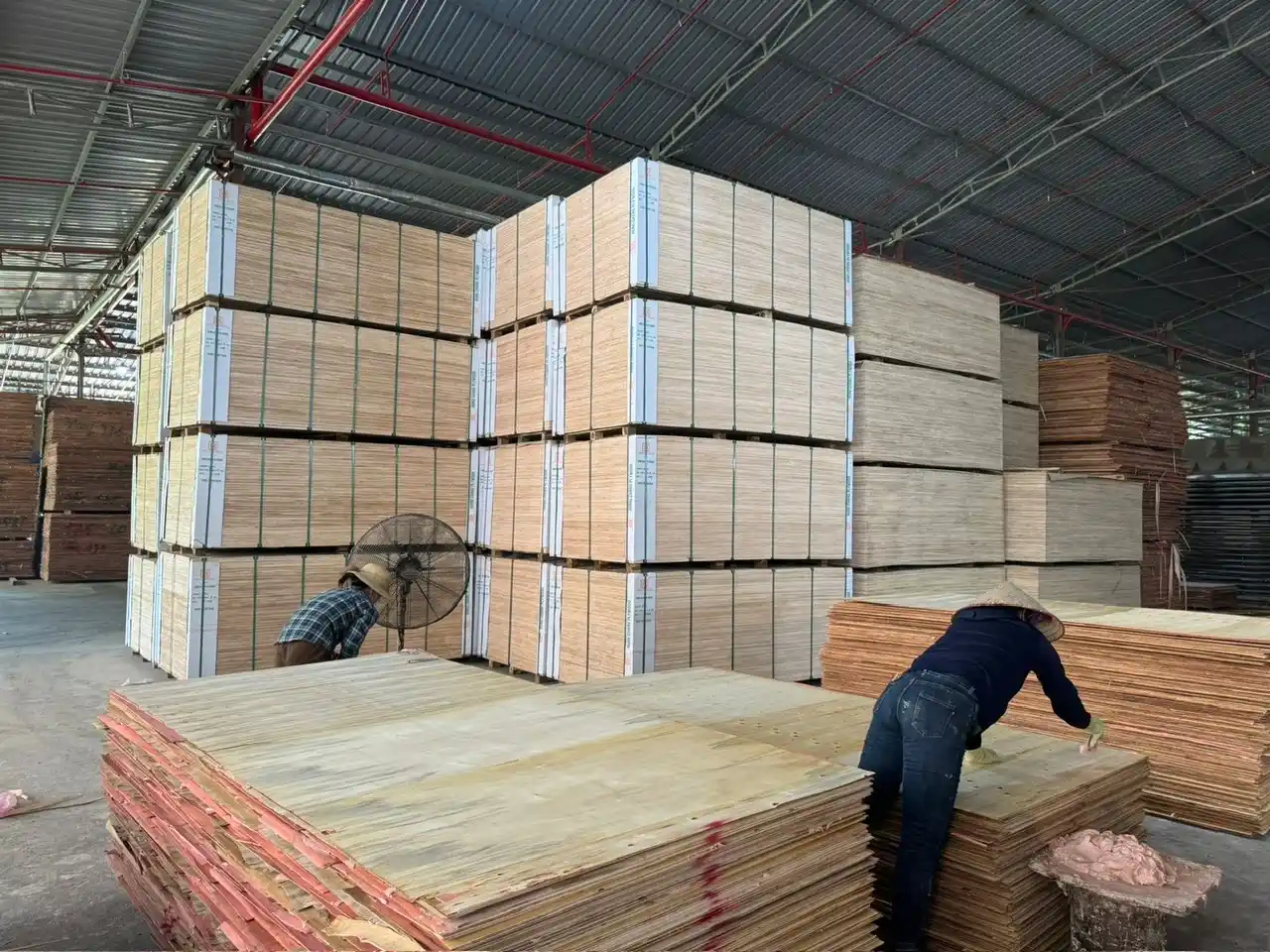
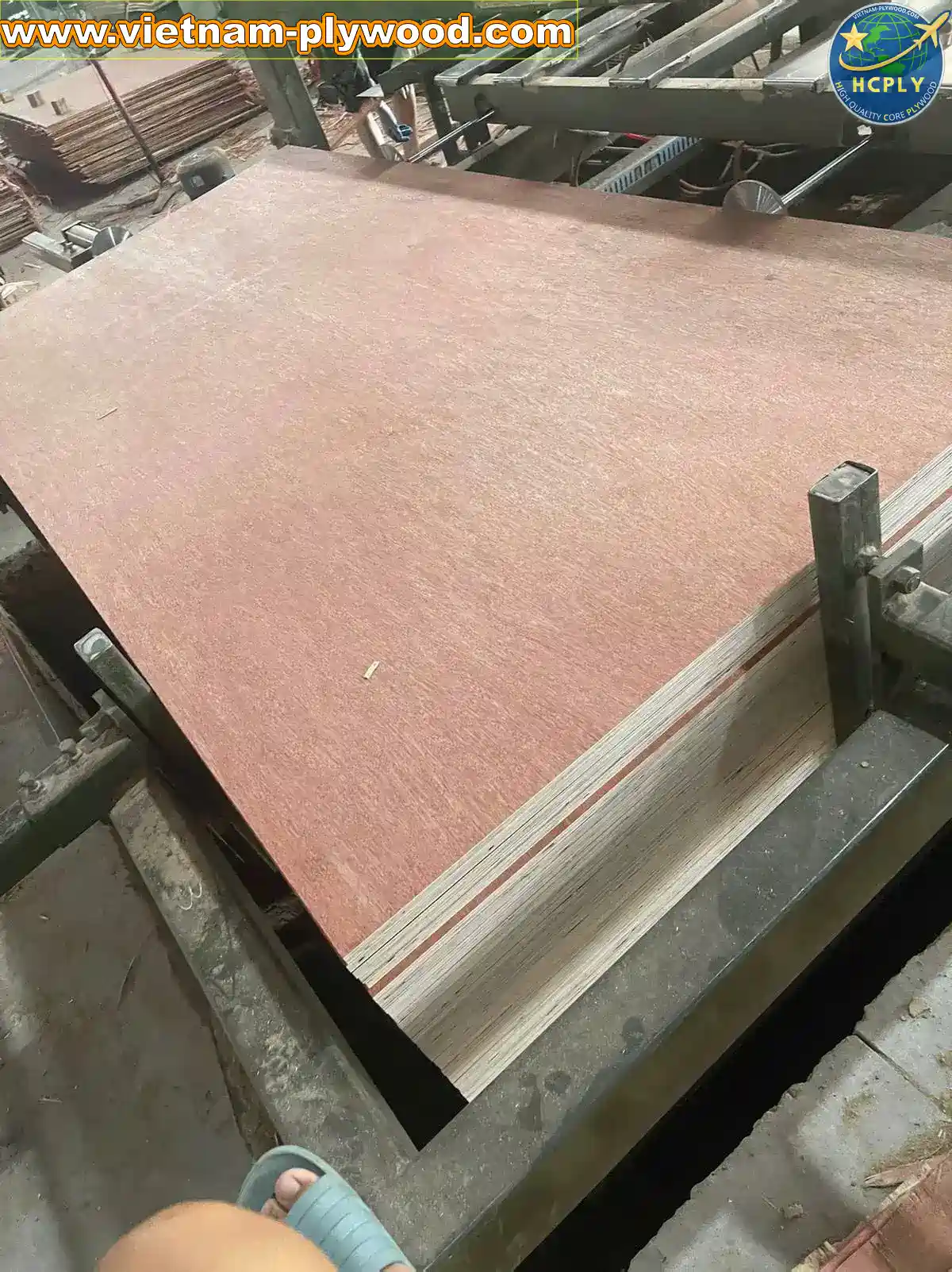
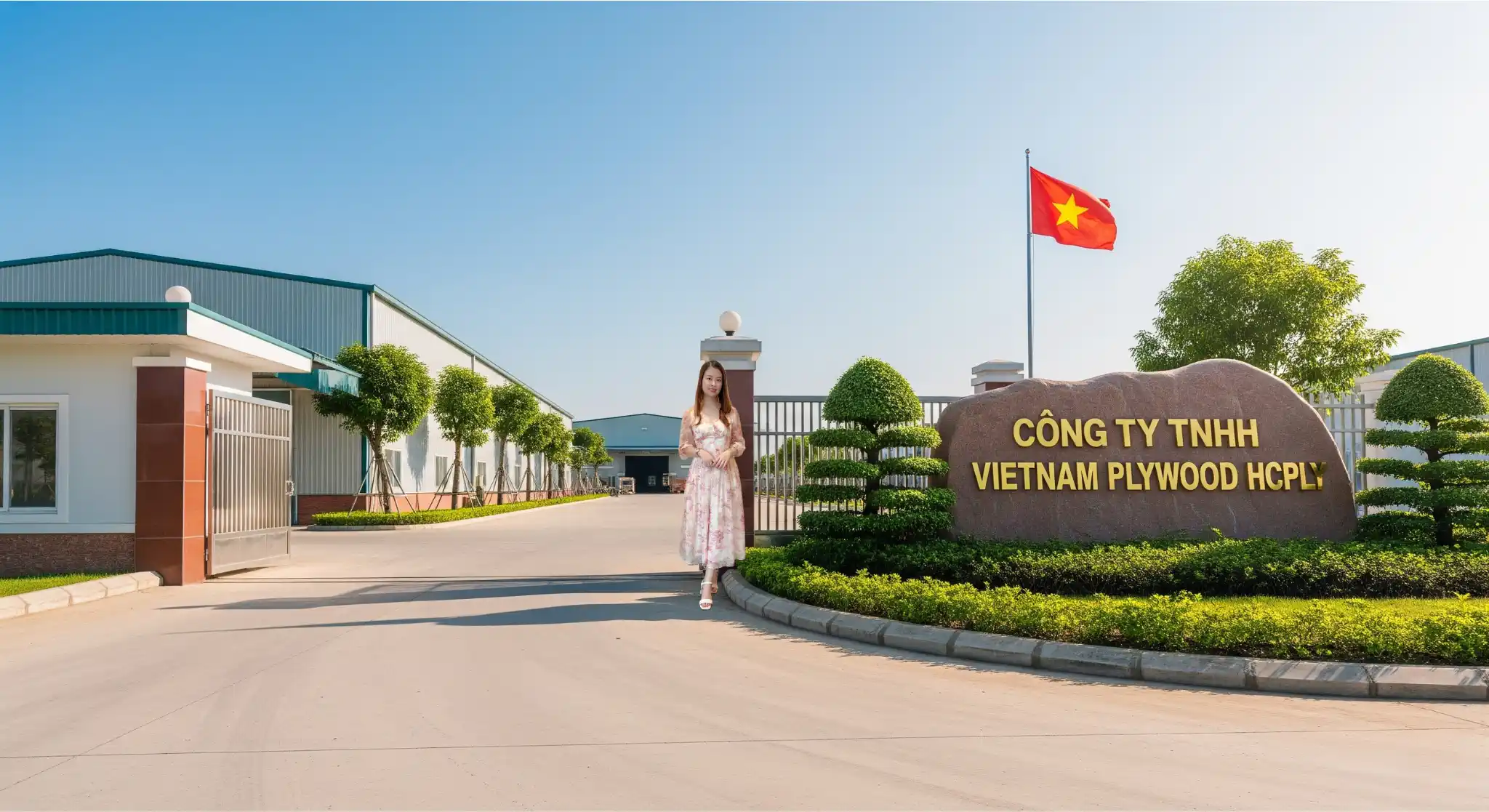
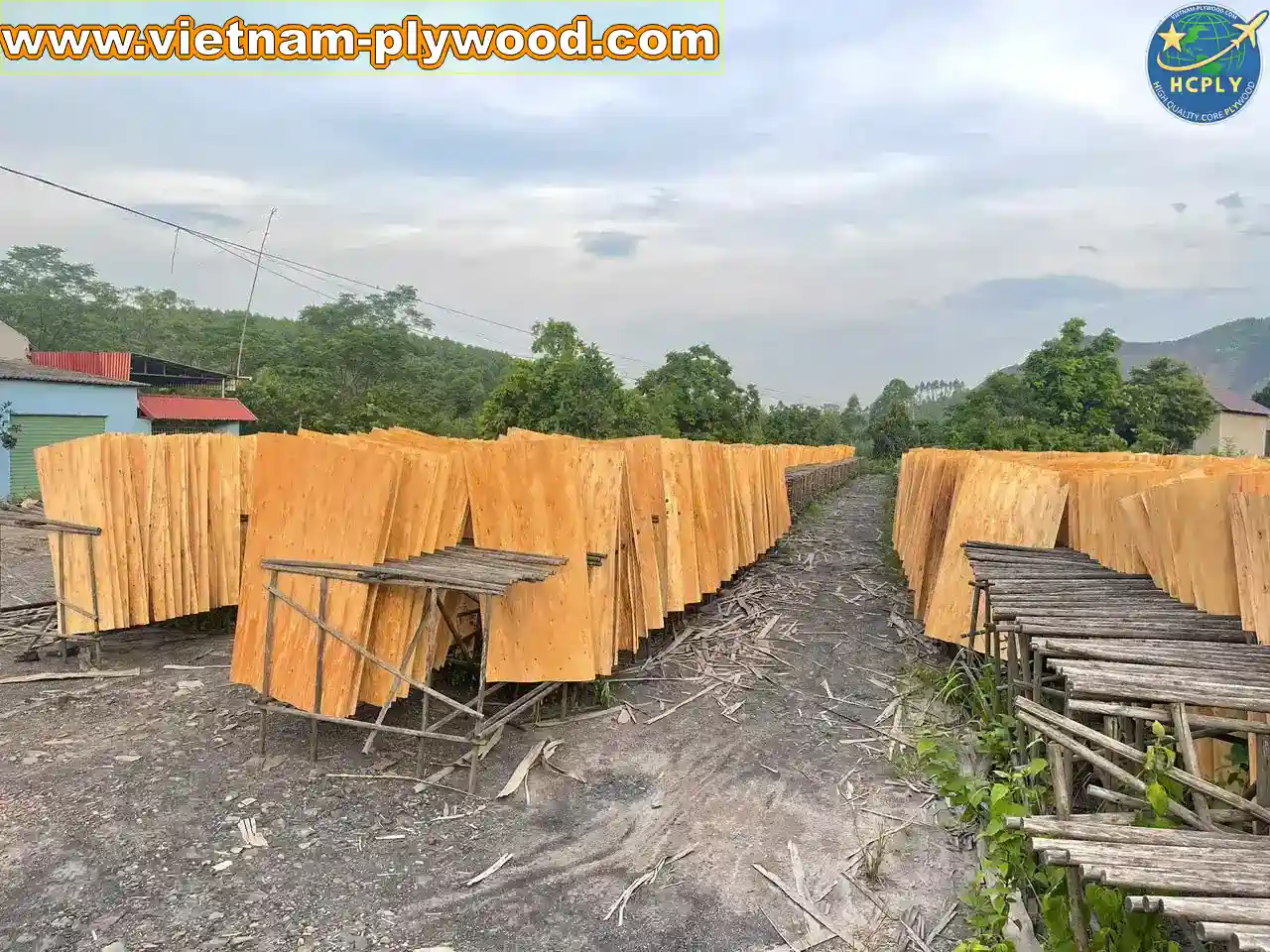
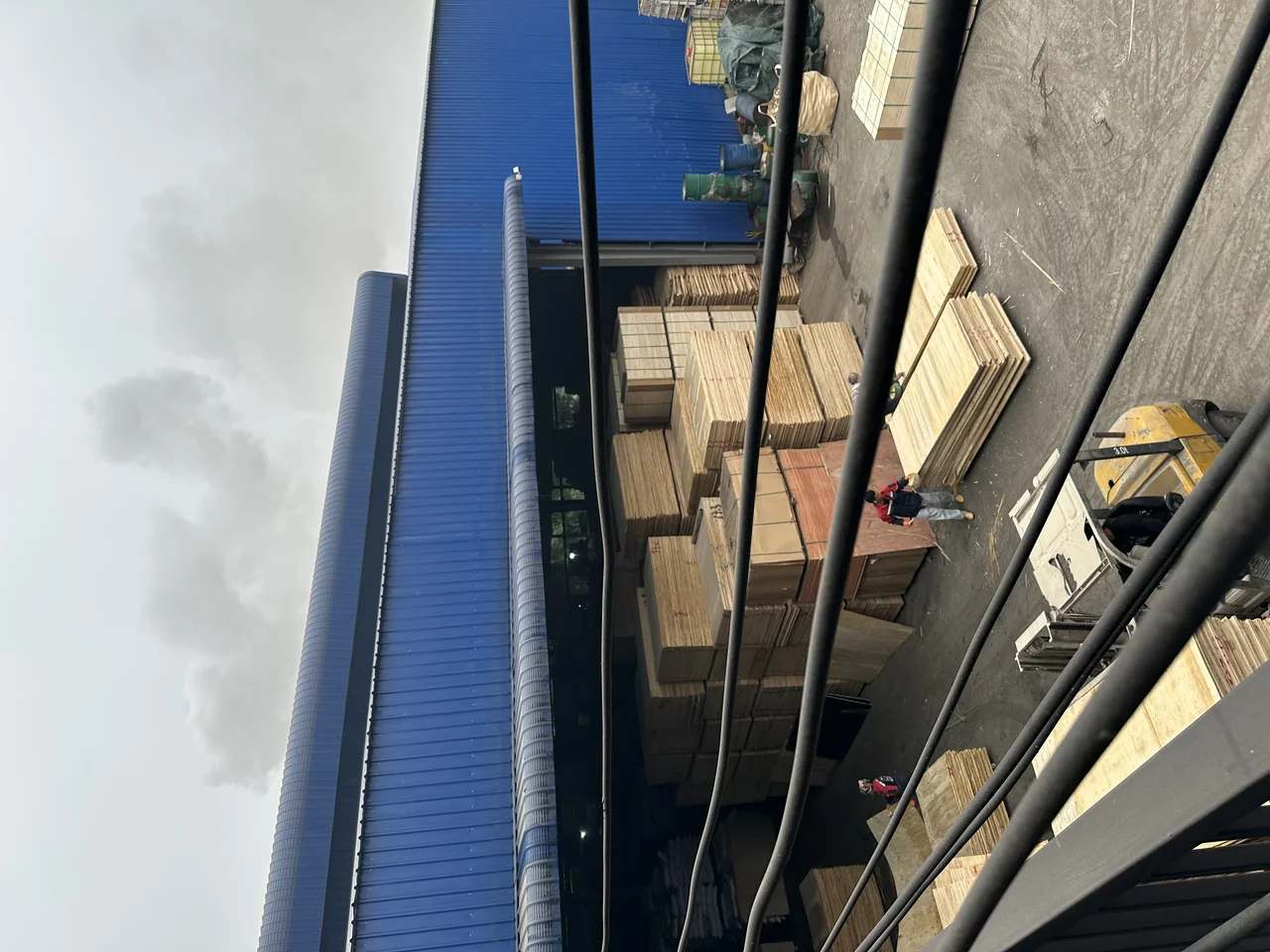
Vietnam exported over $1.8 billion worth of plywood in 2024, ranking among Asia’s top three plywood exporters (Vietnam Customs, 2025). From 2023 to 2024, export volume climbed to 2.6-2.8 million m3/year, with forecasts for 2025-2026 projecting 9-12% growth driven by EUDR compliance and shifting orders away from Chinese suppliers (Vietnam Timber & Forest Products Association, 2025).
For international buyers searching for reliable plywood suppliers in Vietnam, the challenge is not finding suppliers — it is separating genuine manufacturers from trading companies reselling panels under their own labels. Over 80% of results on B2B platforms are trading companies, not factories (HCPLY production data, 2026).
This guide provides the evaluation framework, verification methods, and technical benchmarks that professional buyers use when selecting Vietnam plywood suppliers. Data reflects factory visit, trade records, and export documentation verified through Q1 2026.
“We process quotation requests from 20+ countries monthly. Buyers who understand the Vietnamese supplier market negotiate 10-15% better pricing on their first order because they know which questions to ask.” — Lucy, International Sales Manager, HCPLY (6+ years in plywood export)
📊 Evaluation Framework — Five Criteria That Separate Qualified Suppliers
Professional buyers assess Vietnam plywood suppliers against five measurable criteria:
| Criteria | Weight | What We Verified |
|---|---|---|
| Production capacity | 25% | Monthly container output, number of production lines |
| Certifications | 25% | FSC, CE, CARB P2, ISO, EUDR — original certificates |
| Core species & construction | 20% | Acacia, eucalyptus, styrax capability; stitched vs loose-laid |
| Export market coverage | 15% | Active shipping destinations, customs records |
| QC documentation | 15% | Pre-shipment inspection process, moisture/thickness testing |
Key Insight: 80% of buyer complaints about Vietnamese plywood trace back to purchasing from uncertified workshops or trading companies without factory-level QC control (HCPLY production data, 2026).
🏭 What a Qualified Vietnam Plywood Supplier Looks Like
Not all suppliers are equal. The Vietnamese plywood export market includes 400-500 facilities, but fewer than 50 maintain the certifications, capacity, and QC systems required for consistent international export (Vietnam Timber & Forest Products Association, 2025).
A qualified supplier demonstrates these characteristics:
Multi-segment capability. Furniture plywood requires different equipment than film-faced formwork panels. Suppliers covering both segments operate multiple production lines or managed facilities — each optimized for its product category. HCPLY manages 3 specialized production facilities: premium furniture (styrax/eucalyptus core, E0, full stitched), commercial/packing (acacia core, MR), and film-faced (AICA film, phenolic WBP, 15+ reuse cycles).
Certification depth. Minimum requirements vary by destination market — FSC + CE + EUDR for Europe, CARB P2 for US, BIS IS 303 for India. A serious exporter holds multiple certifications simultaneously, not just one.
Container-scale capacity. Credible mid-size manufacturers export 50-100 containers per month. Verify by requesting recent Bills of Lading or loading videos with dates.
Factory-direct pricing transparency. Trading companies add 8% domestic VAT + their margin. Factory-direct exporters eliminate both costs — saving approximately $40-50/CBM on identical products.
QC documentation. Pre-shipment inspection reports with moisture readings, thickness measurements, bonding test results, and timestamped loading photographs separate professional exporters from opportunistic sellers.
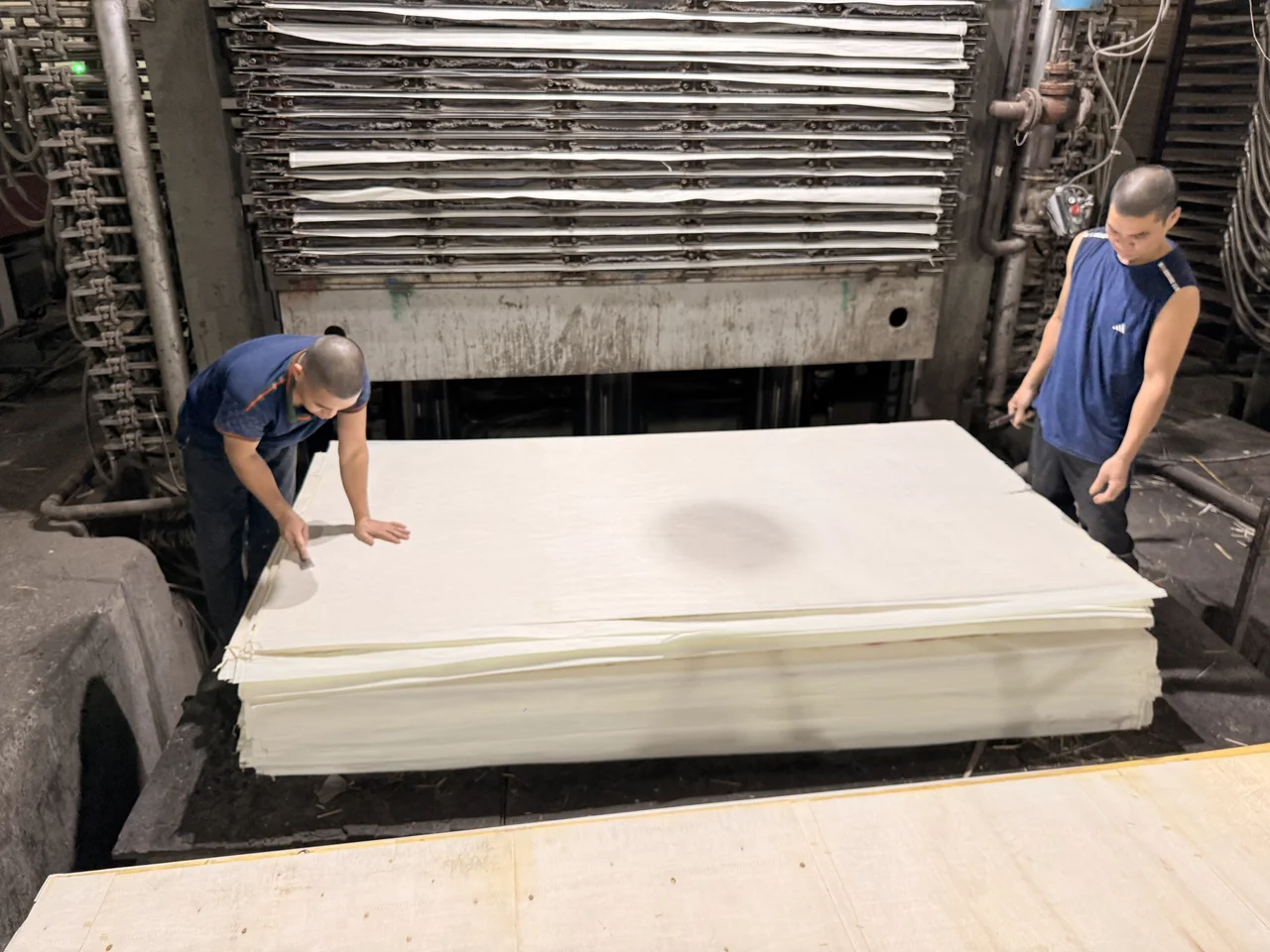
🏢 Four Types of Plywood Suppliers in Vietnam — Know Before You Buy
Understanding the Vietnamese supplier market prevents the most expensive mistake importers make: comparing prices between fundamentally different business models.
Type 1: Trading companies (~80% of search results). Buy finished panels from multiple workshops, resell under their own brand. Add 8% domestic VAT + sales margin. Largest online presence but no factory control. Price premium: 15-25% above factory-direct.
Type 2: Manufacturer-exporters. Own one factory with their own export sales team. Direct QC control but limited to one production segment. Cannot offer both furniture-grade and construction-grade from the same production line. Capacity ceiling: typically 30-100 containers/month.
Type 3: Brokers. Individual agents connecting buyers with small OEM factories. Low overhead means competitive pricing (factory price + $5-10/CBM margin). Weak point: cannot control factory QC processes or guarantee consistency across shipments.
Type 4: Multi-facility export operators. Operate as an independent export division managing multiple specialized factories. Factory-direct pricing without VAT overhead. Each facility purpose-built for a specific product category. HCPLY follows this model — managing 3 dedicated facilities covering furniture, commercial, and construction segments through one contact point. Learn more about how to find reliable Vietnam plywood suppliers and the evaluation process.
Pricing example: A factory produces bintangor plywood at $300/CBM. A trading company sells the same panel at $370/CBM (factory price + VAT + margin). A multi-facility operator like HCPLY offers $310-320/CBM — factory-direct without VAT markup (HCPLY production data, 2026).
🔍 How to Verify a Vietnam Plywood Supplier Before Ordering
Experienced importers follow these five verification steps before placing a first order:
-
Check VAT status. Factories exporting directly are exempt from the 8% domestic VAT. Trading companies cannot avoid it. If a supplier’s FOB price includes VAT, they are likely a trading company — not a manufacturer (Vietnam Tax Law, Article 5).
-
Request factory-specific documentation. Ask for timestamped production photos, named QC contacts, business registration, and factory GPS coordinates. A real manufacturer provides these within 24 hours. A trading company deflects or sends generic marketing photos.
-
Verify certificates at the source. FSC certificates carry a license code (e.g., FSC-C######). Check it at info.fsc.org. CARB P2 certificates are verifiable through the California Air Resources Board database. Do not accept photocopies.
-
Order trial samples before committing. Request a 5-piece sample set covering the exact specifications you need — face veneer grade, core species, thickness, glue type, and emission standard. Compare the sample against your production requirements.
-
Conduct a pre-shipment inspection. Hire a third-party inspector (SGS, Bureau Veritas, or TUV) to check moisture content, thickness tolerance, bonding strength, and face veneer quality before container loading. Cost: $250-400 per inspection — negligible against a $15,000-25,000 container value.
⚙️ Core Species Comparison — What Defines Panel Quality
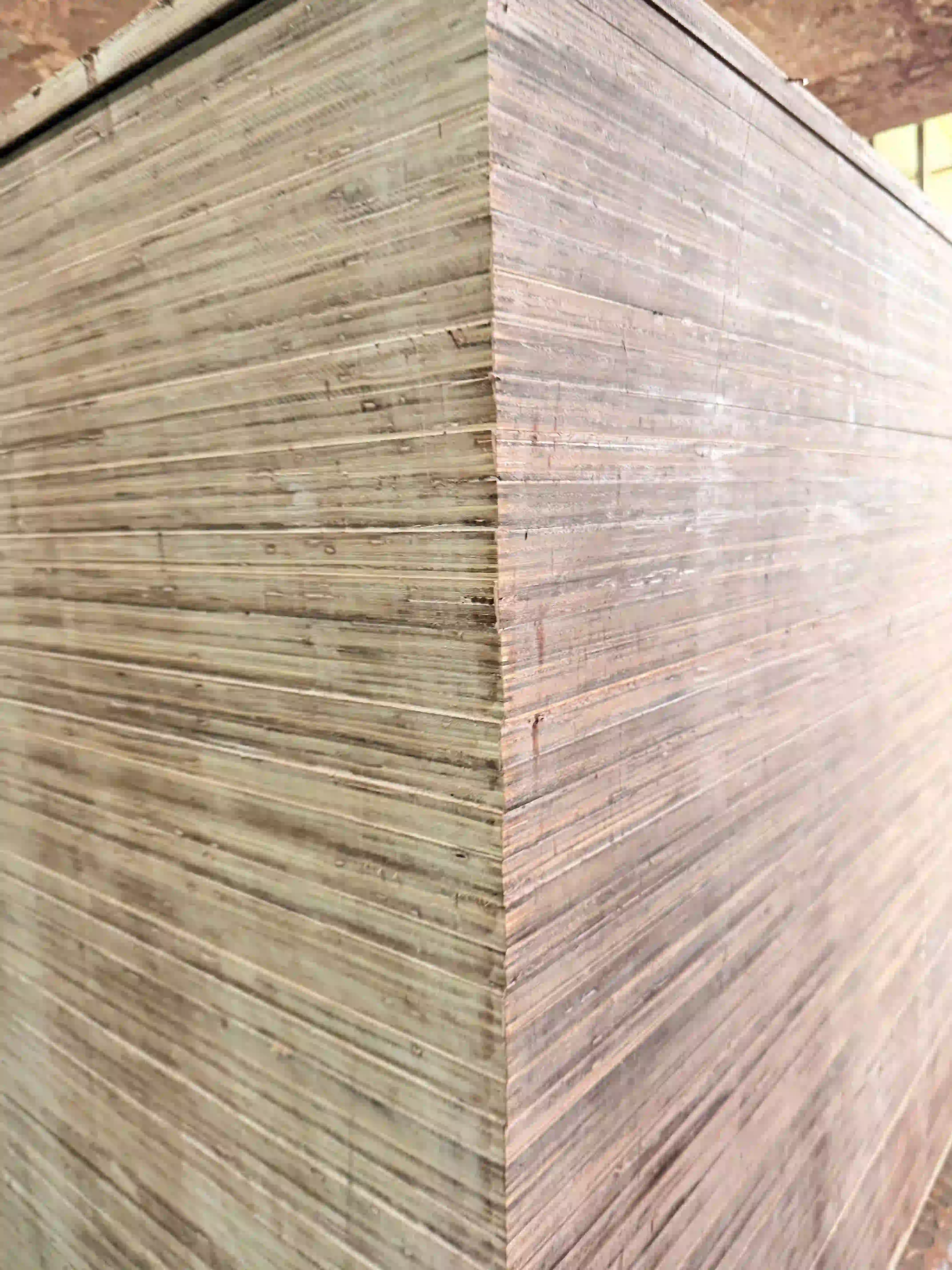
The core species determines density, weight, container loading efficiency, and mechanical performance. Any vietnam plywood manufacturer worth evaluating will specify which core species they use — and explain why. Vietnam’s three primary core species are acacia, eucalyptus, and styrax. Birch, gurjan, and hopea are face veneers only — they are not produced as core material in Vietnam.
| Core Species | Density (kg/m3) | Pallets per 40HC | CBM per 40HC | Best Application |
|---|---|---|---|---|
| Styrax | 480-500 | 18 | ~53 | Furniture, lightweight panels |
| Acacia | ~580 | 16 | ~47.5 | Commercial, packing, general use |
| Eucalyptus | 650-750 | 15 | ~44.5 | Construction, formwork, heavy-duty |
Styrax grows exclusively in Northern Vietnam and serves as the local alternative to imported birch core. Its light color and low density make it preferred for furniture-grade plywood destined for EU and Japanese markets. Acacia is Vietnam’s most abundant plantation timber — cost-effective with good bonding absorption. Eucalyptus provides the highest density and strongest mechanical properties, preferred for construction and formwork applications where weight is an advantage.
Container optimization tip: Styrax core maximizes volume per container (18 pallets, ~53 CBM) because it is the lightest. Eucalyptus core hits the 28.5 MT payload limit faster (15 pallets). Your core species choice directly affects freight cost per panel (HCPLY production data, 2026).
For a detailed container packing calculation, see our plywood container packing guide.
🏆 What Sets Leading Plywood Suppliers Vietnam Apart from the Rest
The gap between Vietnam’s top plywood suppliers and the hundreds of small workshops comes down to four factors:
Certification infrastructure. Maintaining FSC Chain of Custody, CARB P2 testing, and EUDR traceability systems costs $15,000-30,000 annually. Small workshops cannot justify this investment. Of Vietnam’s 400+ plywood facilities, fewer than 50 hold FSC certification (FSC International, 2025).
Core construction quality. Premium suppliers use full stitched core construction — every veneer layer is precisely joined with no gaps or overlaps. Budget workshops use loose-laid construction that saves labor cost but creates internal voids, reducing bonding strength and causing delamination under stress. The difference is measurable: full stitched panels achieve bonding strength above 1.0 MPa consistently, while loose-laid panels often fall below 0.7 MPa.
Glue system control. A critical distinction exists between glue type and emission standard — two separate specifications that buyers frequently confuse. Glue type (Melamine/MR or Phenolic/WBP) determines water resistance. Emission standard (E0, E1, E2) measures formaldehyde release. A quality plywood exporter Vietnam trusts for EU markets will specify both clearly: “Glue: Melamine (MR). Emission: E0.” Any supplier mixing these concepts — writing “E0 glue” — reveals a lack of technical knowledge.
QC documentation depth. The top plywood suppliers Vietnam offers provide pre-shipment inspection reports with moisture readings per pallet, thickness measurements at multiple points per sheet, bonding test results, and timestamped loading photographs. This level of documentation separates professional exporters from opportunistic sellers. Review our quality control process for a visual walkthrough of what proper factory QC looks like.
✅ Choosing the Right Vietnam Plywood Manufacturer for Your Market
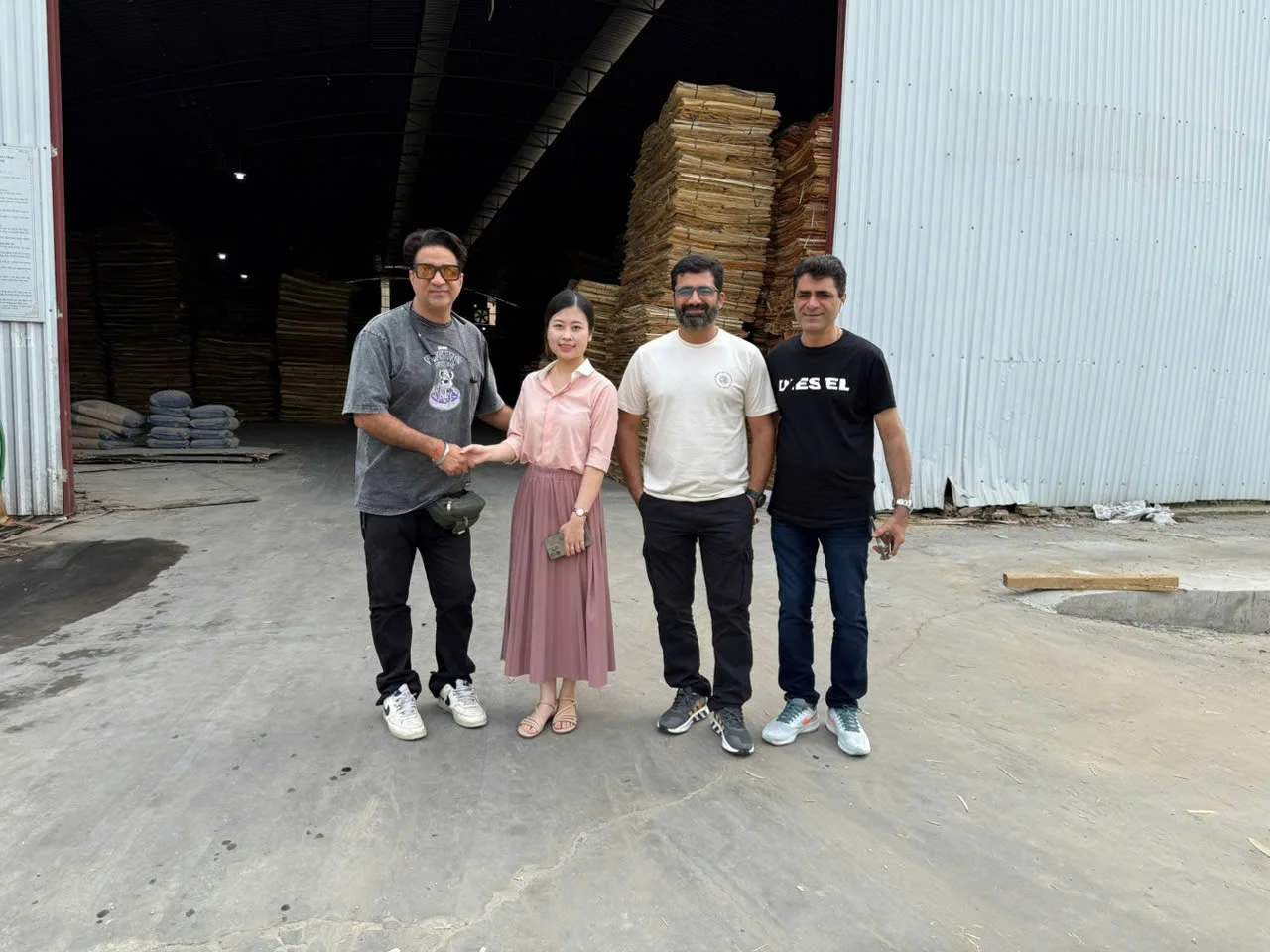
Your ideal supplier depends on your destination market, product segment, and order volume. No single vietnam plywood manufacturer covers every niche equally — specialization matters.
-
EU furniture buyers need FSC + CE + EUDR + E0/E1 emission. Prioritize suppliers with styrax or eucalyptus core, full stitched construction, and sanded finish. The EUDR regulation (enforced from 2025) adds traceability requirements that eliminate suppliers without documented supply chains. HCPLY holds active FSC, CE, and EUDR certifications.
-
US and Canadian buyers require CARB P2 compliance under EPA TSCA Title VI. Check that the supplier’s test reports come from an EPA-recognized laboratory — not a self-issued document. HCPLY holds active CARB P2 certification with third-party test reports.
-
India and South Asia buyers need BIS IS 303 certification for gurjan plywood imports. See the best gurjan face plywood manufacturers in Vietnam for supplier options. This certification is specific and difficult to obtain. Ask suppliers to share the BIS certificate number for independent verification. See our certification guide for details on documentation requirements.
-
Middle East and Africa construction buyers prioritize film faced plywood with phenolic WBP bonding and 8-15+ reuse cycles. Look for suppliers using AICA-brand film at 135+ gsm weight — not generic Chinese film that delaminates after 4-5 pours. Confirm the supplier owns the film-faced production line rather than sourcing finished panels from third-party workshops.
-
Latin America formwork buyers need heavy eucalyptus-core panels with strong phenolic bonds. Density of 650-750 kg/m3 provides the weight stability required for concrete pressure. HCPLY has established shipping routes to Central and South American ports.
Vietnam’s plywood export sector is growing at 9-12% annually (Vietnam Timber & Forest Products Association, 2025), driven by EUDR compliance pulling European orders away from non-compliant origins and Vietnamese manufacturers investing in modern production lines.
Whether you need furniture-grade panels with E0 emission for European retailers or construction-grade film faced plywood for Middle Eastern projects, use the verification steps above to shortlist three to five qualified suppliers, request matching quotations on identical specifications, and complete a pre-shipment inspection before the first container ships. For regional sourcing differences, see our guide on top plywood suppliers in North Vietnam vs South Vietnam. If you are evaluating smaller manufacturers for niche orders, read about small-scale plywood manufacturers in Vietnam. For the complete buying process, see our guide to buying plywood from Vietnam.
Disclosure: This article is published by HCPLY, a Vietnam-based plywood manufacturer and export operator. While we aim to provide objective industry guidance, readers should consider our perspective as a market participant when evaluating recommendations.
Request Factory-Direct Quotation from HCPLY — Free samples, competitive FOB pricing, full QC documentation. No minimum commitment to inquire.