
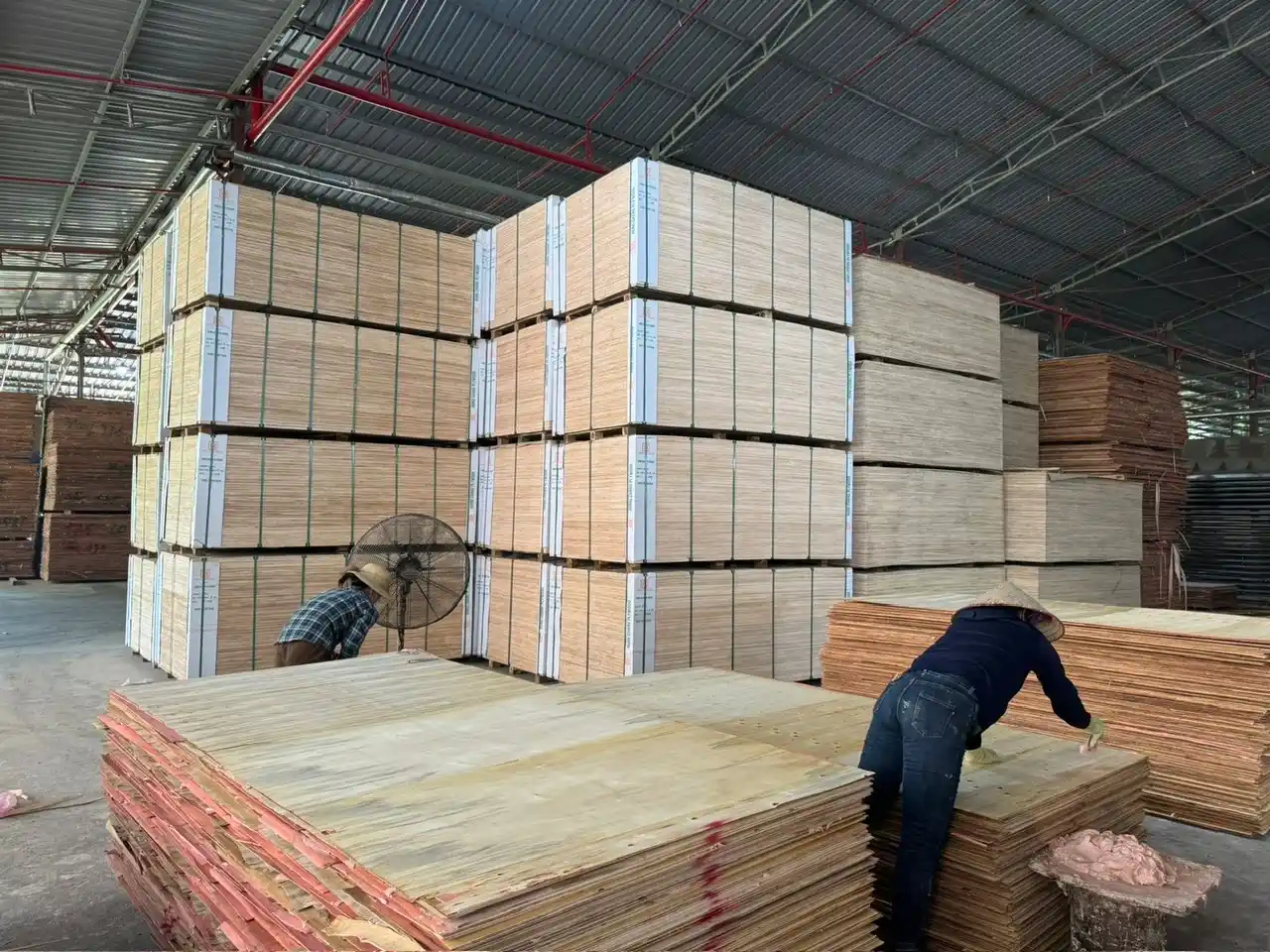
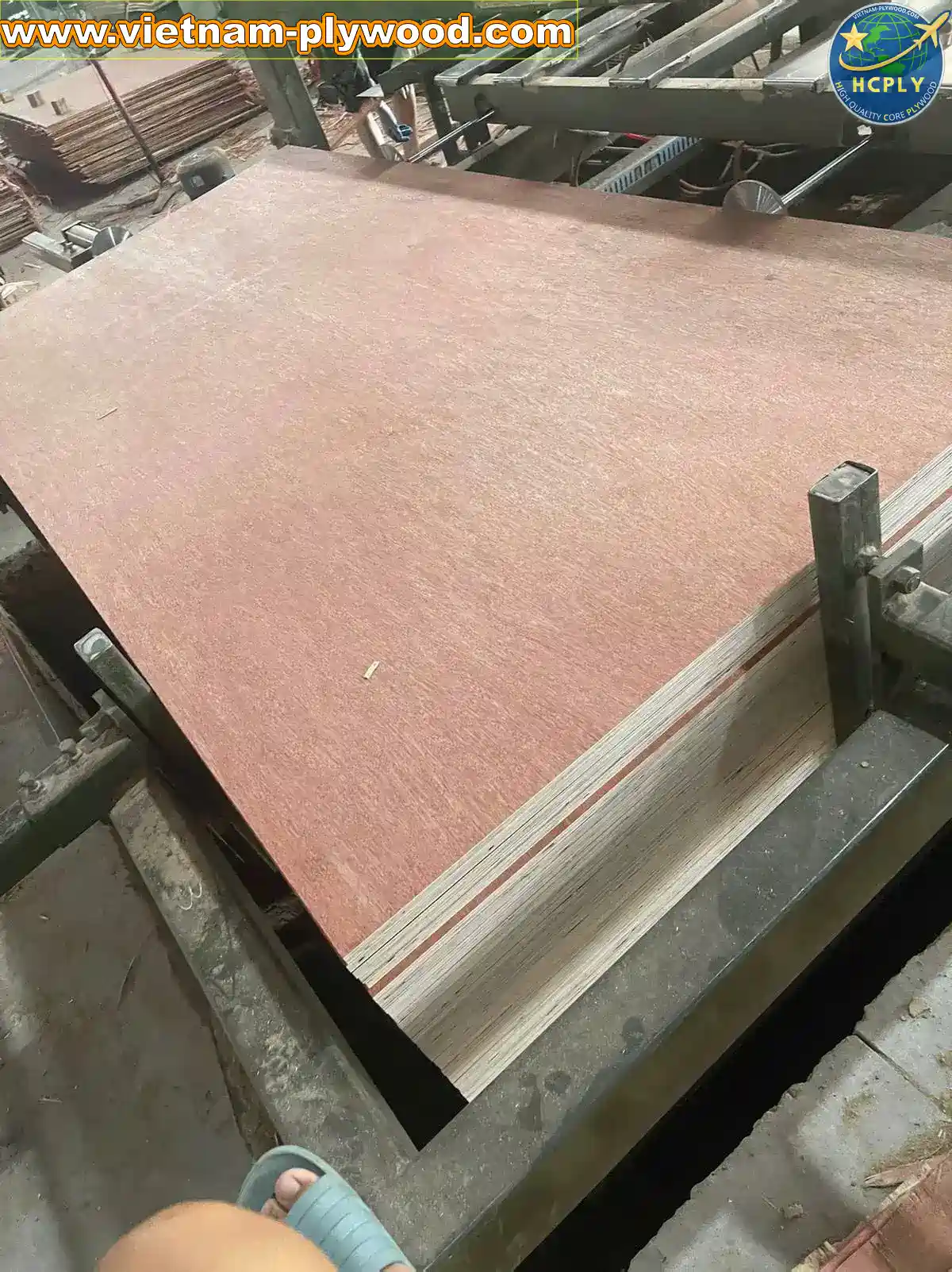
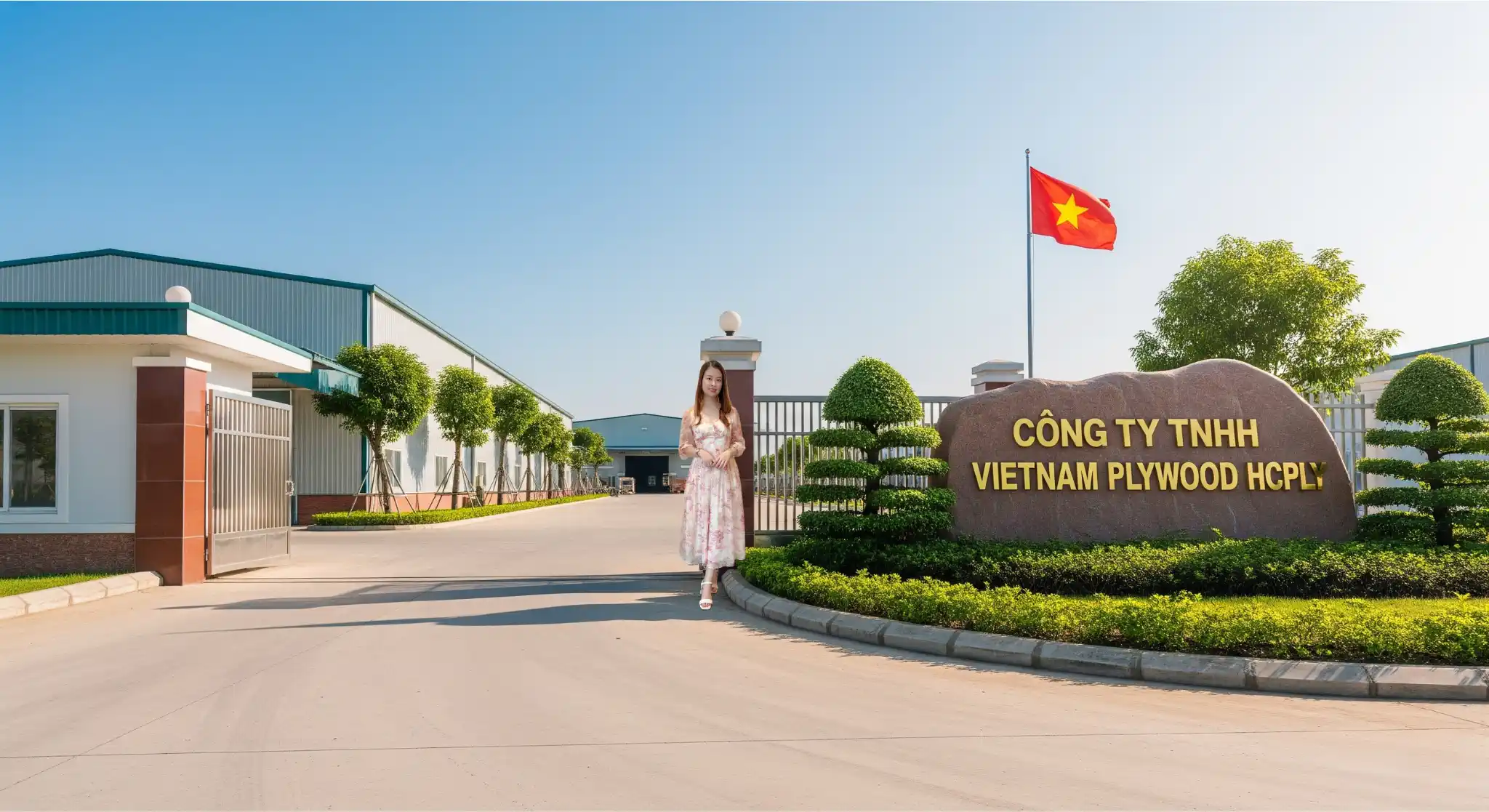
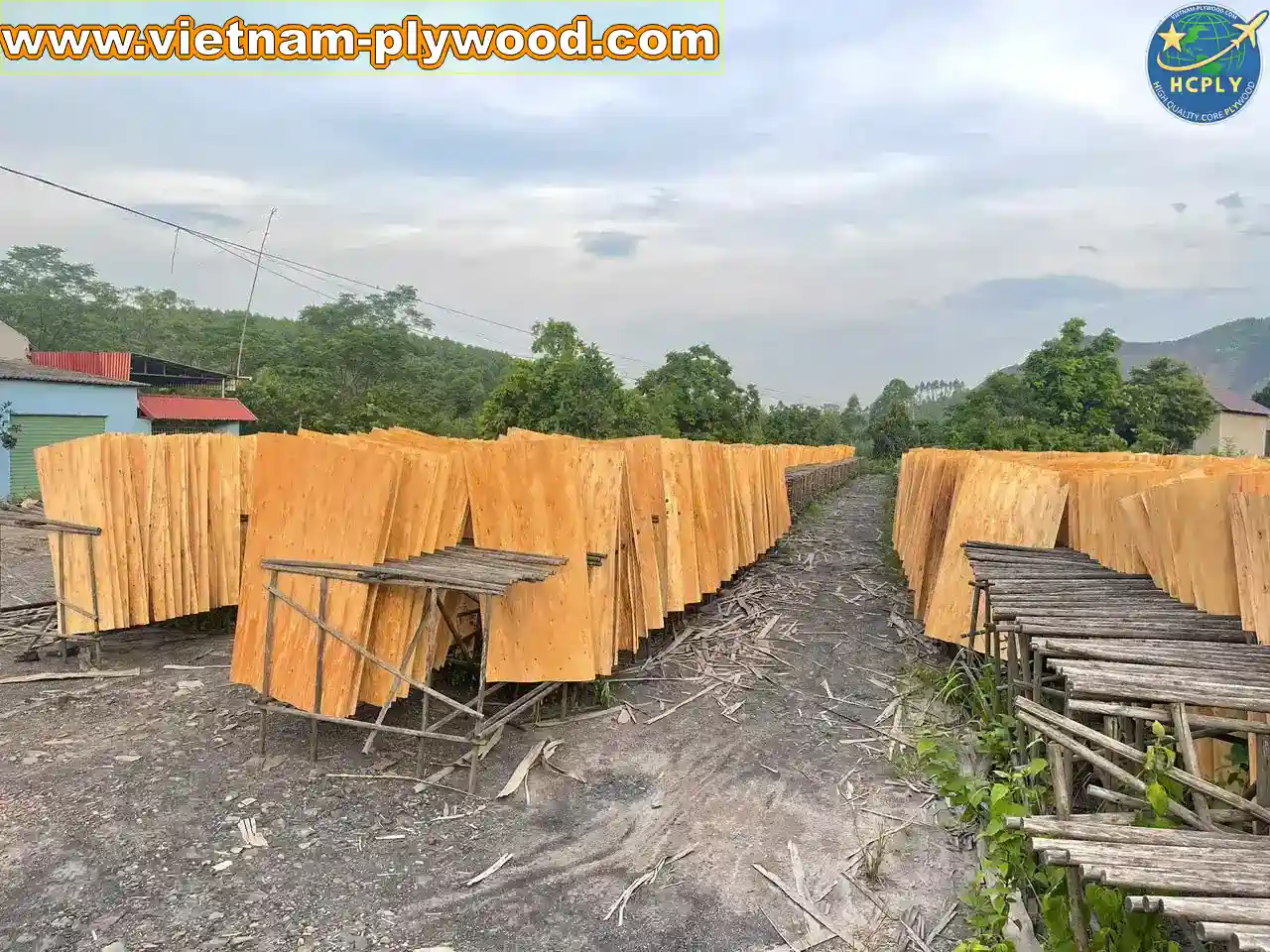

Bintangor is the most traded face veneer in Vietnam’s commercial plywood sector — yet finding a reliable supplier who actually manufactures (rather than resells) is harder than most buyers expect.
Over 80% of Vietnam plywood suppliers visible in search results are trading companies (Vietnam Timber & Forest Products Association, 2025). They show you a premium factory on video tours, then ship panels produced at a cheaper facility with looser quality controls. This guide covers the evaluation criteria, technical specifications, and verification methods for sourcing bintangor plywood from Vietnam.
Use this framework to shortlist three to five verified options before requesting quotations.
📋 How to Evaluate a Bintangor Plywood Supplier
Before examining individual companies, it helps to understand the evaluation framework. Four criteria separate genuine manufacturers from resellers:
-
Production control — Does the supplier press bintangor face veneers on their own hot-press lines, or do they buy finished sheets from third-party workshops? Factory-direct producers can adjust veneer grade, core species, glue formulation, and thickness mid-production. Resellers cannot.
-
Certification depth — FSC Chain of Custody, ISO 9001, and market-specific compliance (BIS for India, CE+EUDR for Europe, CARB P2 for North America) require ongoing audits. A supplier holding multiple active certifications has passed external verification — not just internal claims.
-
Export track record — Consistent monthly container volumes to multiple markets indicate stable production capacity. A supplier shipping 50+ containers per month to regulated markets operates under tighter QC pressure than one doing occasional spot orders.
-
Transparency — Willingness to share factory-floor loading videos, QC inspection photos at each stage (post-press, post-sand, pre-load), and real certificate numbers for independent verification.
⚠️ Important: “Manufacturer” labels are unregulated in Vietnam. Always cross-check the supplier’s FSC certificate number at info.fsc.org and request loading footage showing their specific production line.
For a deeper understanding of supplier types operating in Vietnam, read the complete Vietnam plywood supplier types buyer guide.
🏆 What to Look for in a Bintangor Plywood Supplier
The majority of Vietnamese suppliers listing bintangor plywood are trading companies — not manufacturers. A qualified bintangor supplier demonstrates:
“The biggest risk for international buyers is not price — it is specification drift after the first order. We have had buyers tell us their previous supplier changed core species or glue type without notification after the trial container.” — Lucy, International Sales Manager, HCPLY
Core species flexibility. Bintangor is a face veneer, not a core material. The core species underneath determines the panel’s density, container loading, and pricing. A proper supplier offers acacia core (~580 kg/m³, most cost-effective), styrax core (480-500 kg/m³, lightweight premium), and eucalyptus core (650-750 kg/m³, heaviest). HCPLY produces bintangor face plywood across all three core species from dedicated facilities.
Grade classification. Vietnamese factories classify bintangor face grades by surface defect tolerance — tight knots, discoloration, and joint visibility. Grade A: minimal defects, consistent color. Grade B: occasional knots, slight color variation. Grade C: visible knots, wider color range. Always request grade samples before ordering.
Production-line QC. Bintangor face veneer is thin (0.2-0.4mm). Proper bonding requires precise glue application and press temperature control. Ask for production QC photos showing the pressing stage — not just finished panels.
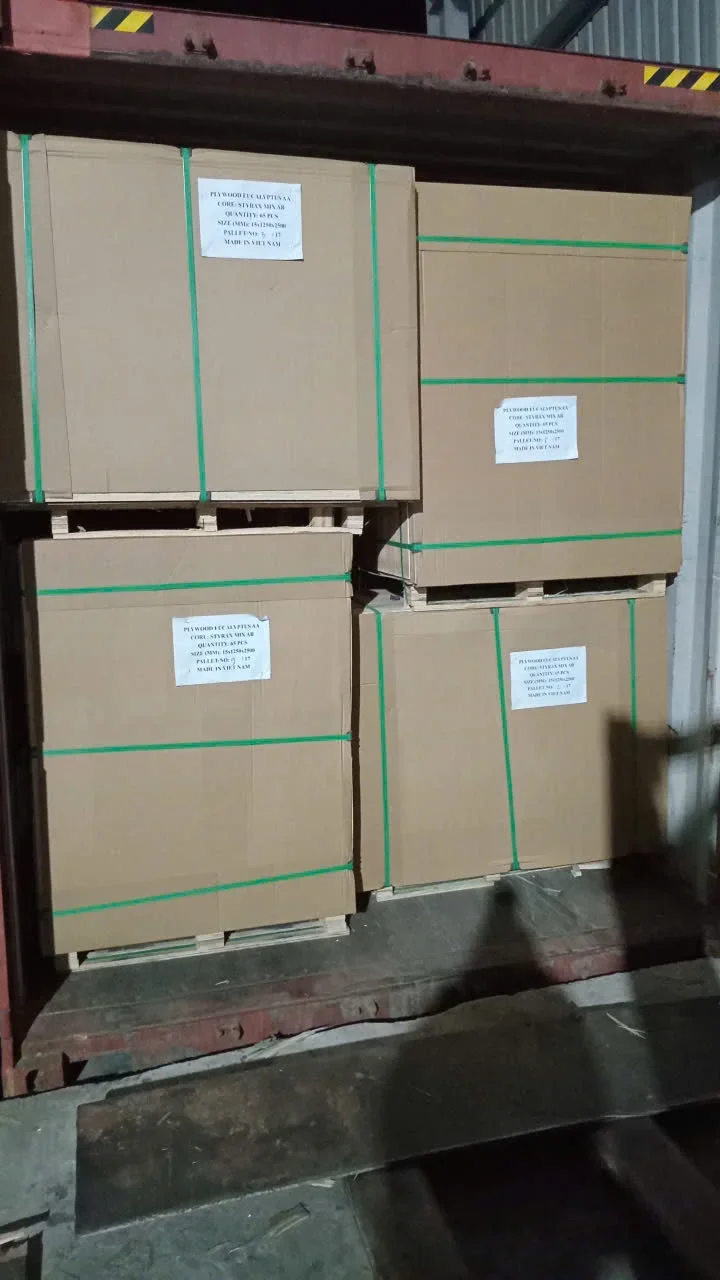
Container packing knowledge. Bintangor plywood with acacia core loads 16 pallets per 40HC (~47.5 CBM). With styrax core: 18 pallets (~53 CBM). Suppliers who cannot specify packing configurations by core species likely do not control their own production.
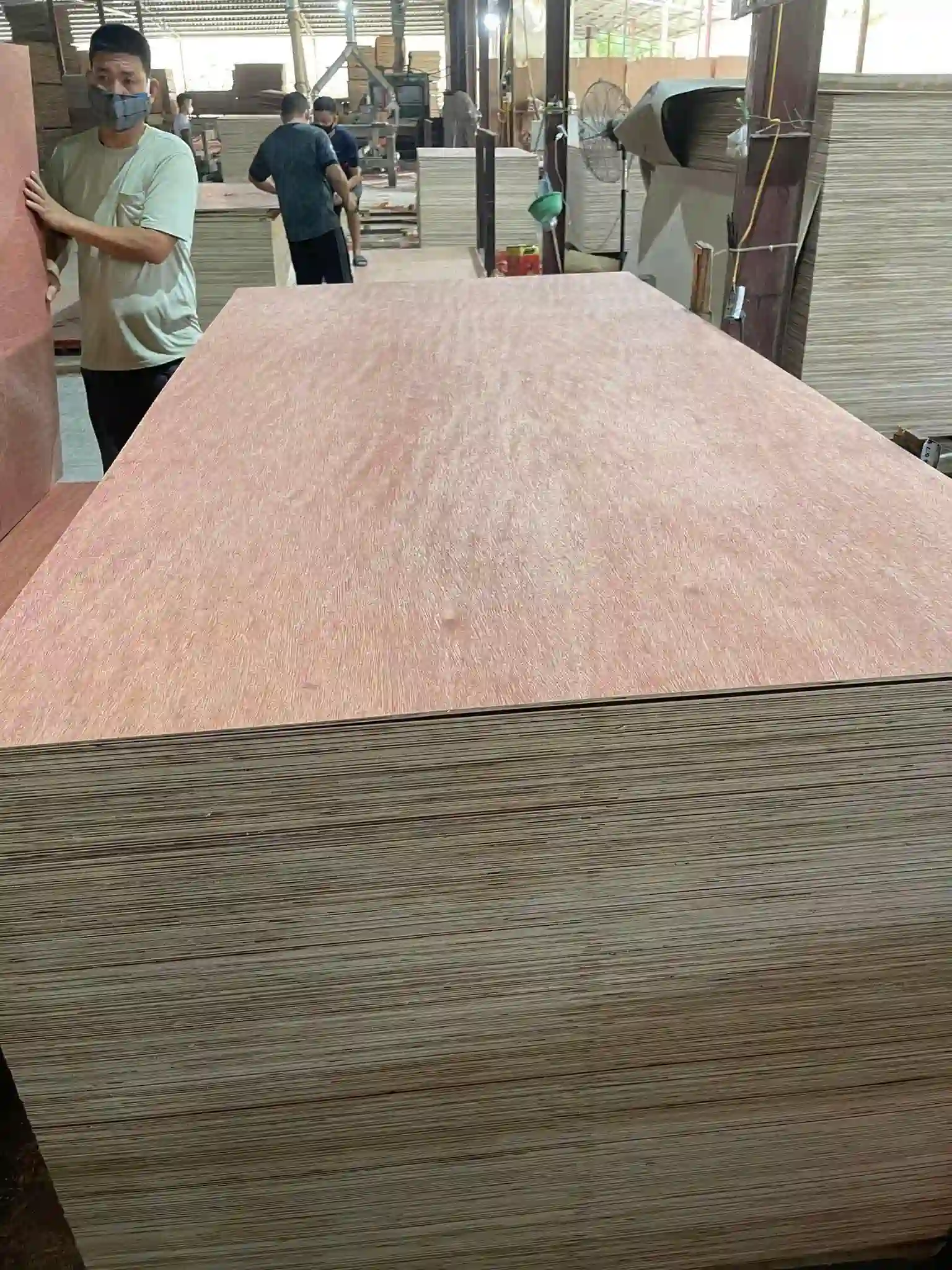
🔧 Bintangor Plywood Technical Specifications — What to Specify
When requesting quotations, provide these exact parameters to get comparable offers:
Face veneer: Bintangor (specify: plain / red / bleached). Grade: A/B (premium), B/B (standard commercial), or B/C (budget)
Core species: Acacia (~580 kg/m³), styrax (480–500 kg/m³), or eucalyptus (650–750 kg/m³). Core determines panel density, container loading efficiency, and price. Never compare quotes without confirming the same core species.
Core construction: Full stitched (highest quality, no gaps) vs. edge-jointed vs. loose-laid (cheapest, gap risk). For furniture applications, specify full stitched. For packaging, edge-jointed is acceptable.
Glue: Melamine (MR). Emission standard: E0 (US/EU/Japan/Korea furniture), E1 (standard EU indoor), or E2 (Asian commercial/packaging).
⚠️ Note: Glue type and emission standard are two distinct specifications. “MR” describes moisture resistance. “E0” describes formaldehyde emission. A panel can be MR-glued with E0 emission — specify both separately to avoid misunderstanding.
Thickness: 3, 5, 9, 12, 15, 18, 21mm are standard. Tolerance: ±0.3mm (thickness), ±2mm (length/width).
Size: 1220×2440mm (4×8 ft) is universal. 1250×2500mm suits metric markets (EU). Custom sizes available.
For a detailed breakdown of container loading quantities by core species and thickness, see the plywood container packing calculation guide.
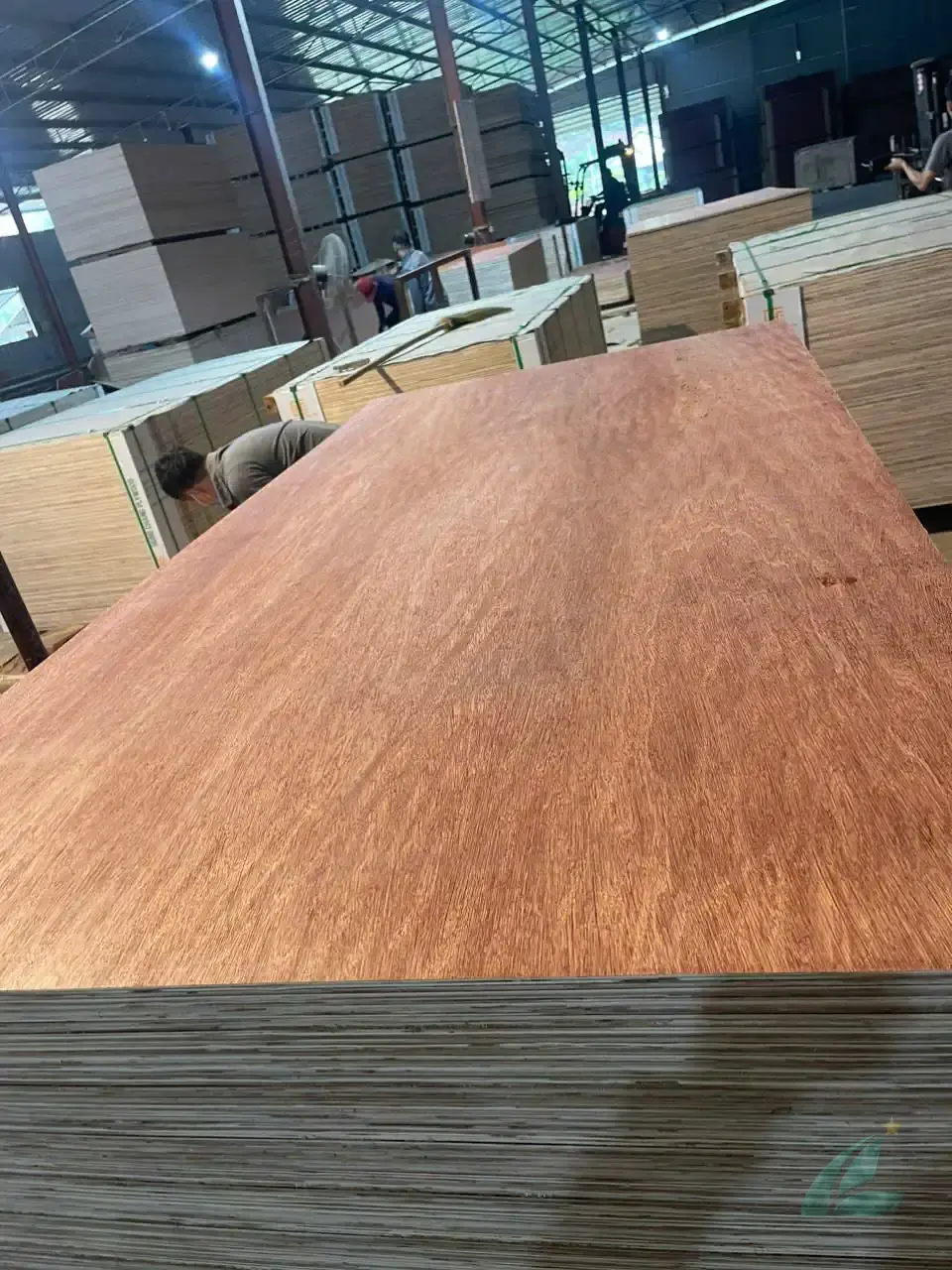
🌏 Market-by-Market Bintangor Demand Overview
Different markets prioritize different bintangor specifications. Understanding regional preferences lets you match your order to the right supplier segment.
India — Largest Bintangor Import Market
India imports more Vietnamese bintangor plywood than any other country. The dominant specifications: 4×8 ft and 3×6 ft sizes, 6mm–18mm thickness, acacia core, MR glue, E2 emission. Grade: B/B and B/C for furniture, crate, and partition applications (Vietnam Timber Exporters Association, 2025). BIS IS 303 certification is increasingly required by formal importers — verify this with any supplier before committing.
For India-specific sourcing details, see Vietnam plywood export to India buyer guide. Also compare bintangor face grading A/B quality to ensure you specify the correct grade for your market.
South Korea — Technical Specification Focus
Korean buyers prioritize dimensional accuracy and surface consistency over price. Common specifications: 1220×2440mm, 12mm–18mm, styrax or eucalyptus core, MR glue, E0 emission, sanded face. Korea is not a price-first market — suppliers with ISO 9001 and consistent thickness tolerance records perform better here.
Middle East and Southeast Asia — Volume and Price
The Middle East and Southeast Asian markets are the most price-sensitive for bintangor. Acacia core, loose-laid or edge-jointed construction, E2 emission, B/C grade face are typical. Volume per order tends to be high — 5–10 containers per shipment. Buyers in this segment should prioritize cost-per-CBM over certification depth, unless EU/US-grade documentation is required.
Europe — Niche Bintangor Demand
European buyers use bintangor primarily for budget furniture components and interior wall panels. EUDR traceability documentation is mandatory from 2025. FSC Chain of Custody is effectively required. E1 or E0 emission standards apply. HCPLY and suppliers with active FSC + EUDR certification are the most EU-ready options when sourcing from Vietnam.
🔍 How to Verify a Bintangor Supplier Before Ordering
Requesting a quotation is step one. Before placing an order, complete these verification steps:
-
Confirm the FSC certificate — Access info.fsc.org, search the supplier’s company name, and verify their Chain of Custody certificate is active and covers plywood (not just raw timber). A valid FSC-COC certificate lists the specific product categories covered.
-
Request a factory-floor loading video — Not a showroom. Not a marketing video. A loading video showing their specific hot press, sanding line, and container loading area. Production-line footage is difficult to fake and reveals equipment scale and condition.
-
Ask for a third-party pre-shipment inspection — Budget $200–$350 for an SGS or Bureau Veritas inspection at the factory before container sealing. This single step eliminates 95% of quality disputes before they start.
-
Match specifications exactly before comparing prices — Core species, core construction method, glue type, emission standard, face veneer grade, and sanding finish must all match before comparing two supplier quotations. A $30/CBM price difference often reflects a core construction downgrade from full stitched to loose-laid — a difference invisible in the quotation but visible after six months of use.
For a complete verification framework, use the plywood supplier evaluation checklist. You can also check plywood quality before shipping for a step-by-step pre-shipment QC guide.
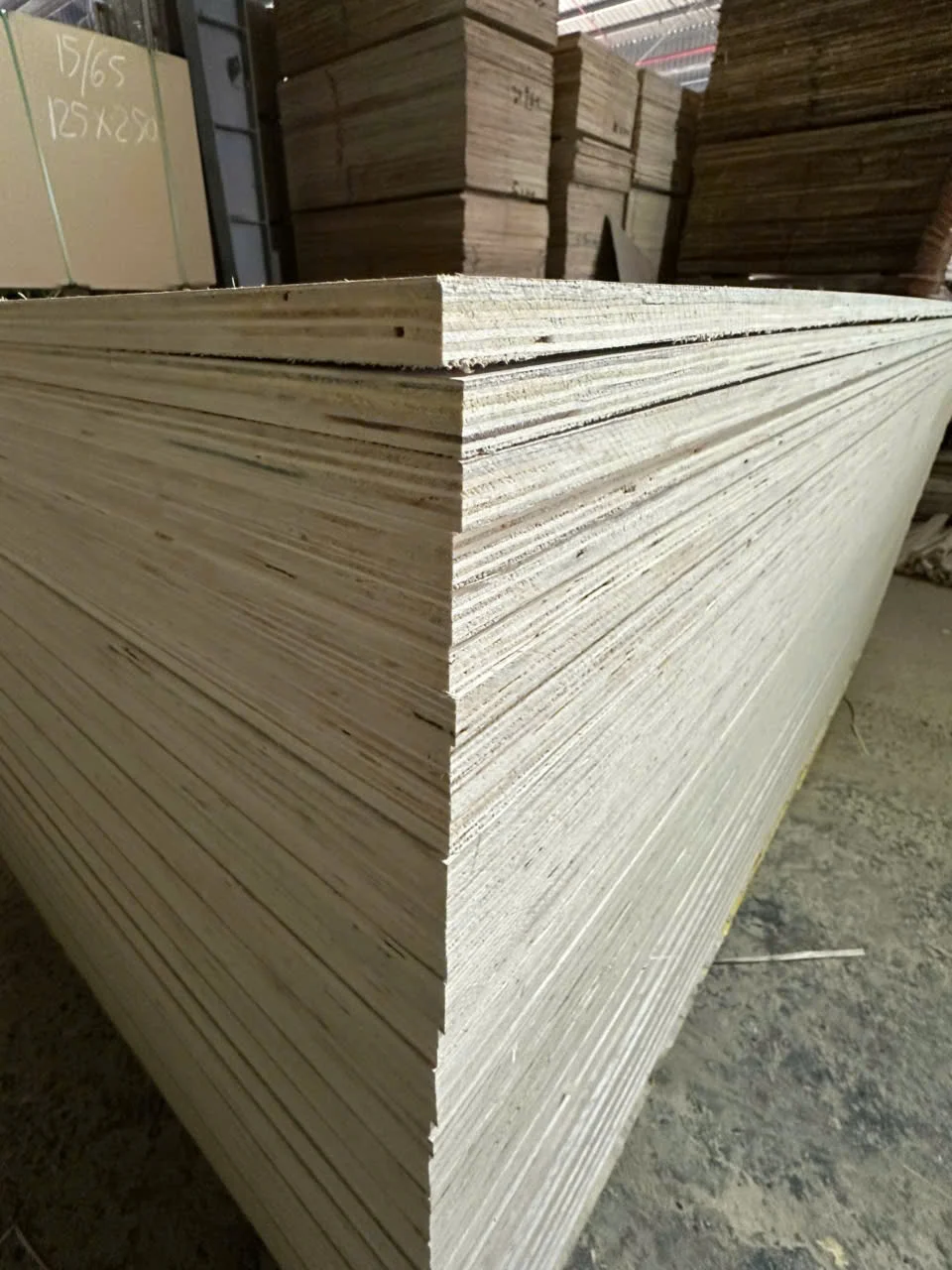
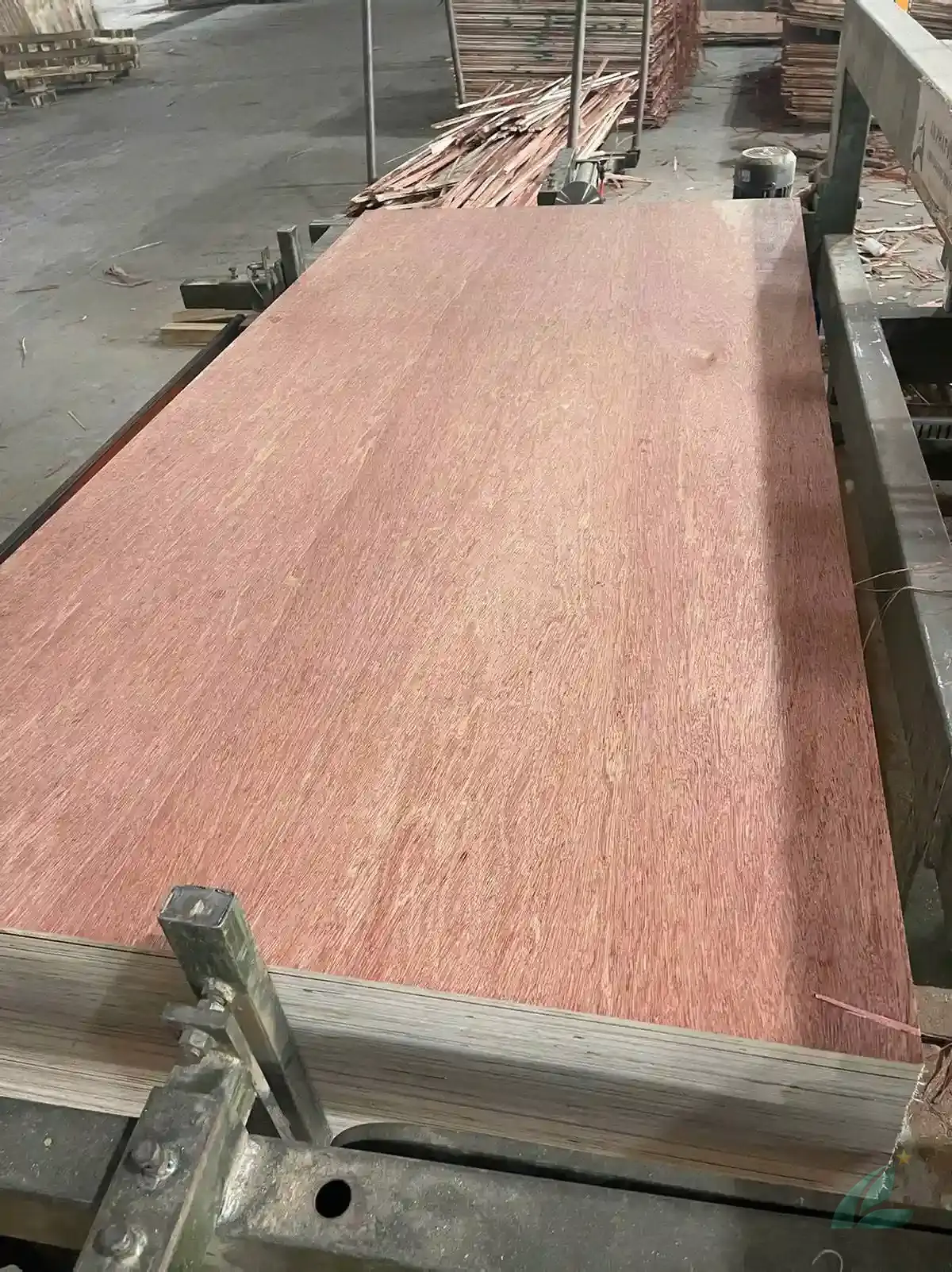
📦 Bintangor Plywood Applications
Understanding where bintangor performs — and where it does not — helps buyers match their order specifications to their end use.
Budget furniture and cabinets — Bintangor grade A/B with styrax or acacia core, MR glue, E0 or E1 emission, sanded finish. Common in Indian and Philippine furniture factories producing cost-efficient wardrobes, tables, and cabinets for domestic markets.
Export packaging and crates — Bintangor grade B/C with acacia core, MR glue, E2 emission, unsanded. Used by manufacturers building shipping crates, wooden boxes, and pallet tops for industrial export packaging. Cost efficiency is the priority.
Wall paneling and partition boards — Bintangor grade B/B or A/B, 9mm–12mm, suitable for interior fit-outs, exhibitions, and retail fixtures. Light, easy to cut, and paint-ready.
Construction subfloor (temporary) — In high-humidity markets like South Korea, thick bintangor panels (15mm–18mm) with MR glue occasionally replace film-faced plywood for temporary floor protection at construction sites. This is a niche application — not the primary use case.
For a side-by-side comparison of bintangor against the next most common face veneer alternative, see bintangor vs okoume plywood face veneer.
To understand the full range of face veneer options available from Vietnamese manufacturers, read the plywood face veneer types complete guide.
✅ Conclusion: Sourcing Bintangor Plywood from Vietnam
Vietnam’s bintangor plywood sector offers genuine value for global buyers — but only when the right supplier type matches your certification requirements, volume expectations, and target market specifications.
Use the evaluation criteria in this guide to shortlist two or three verified suppliers. Request matching quotations on identical specifications — same core species, same construction method, same glue type and emission standard — before comparing prices. Complete a pre-shipment inspection before the first container ships.
The single most important factor beyond price: confirm the core construction method. Full stitched panels hold longer under load cycles, maintain dimensional stability in humidity variations, and reduce warranty claims from your end customers. A $15/CBM price premium for stitched core versus loose-laid pays back within one shipment when post-arrival disputes are factored in.
Disclosure: This article is published by HCPLY, a Vietnam-based plywood manufacturer and export operator. While we aim to provide objective industry guidance, readers should consider our perspective as a market participant when evaluating recommendations.
Request a Factory-Direct Bintangor Quote from HCPLY — Samples, loading footage, and price list on request. No commitment required.