

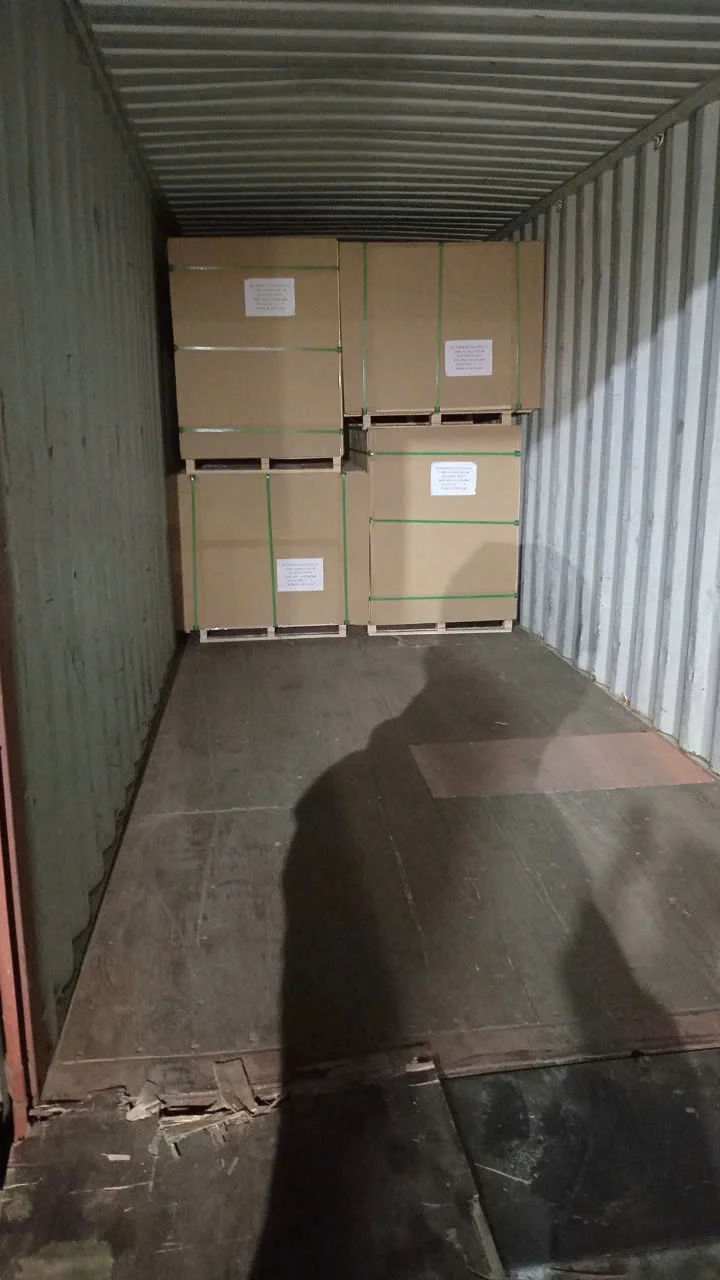
Two pallets separate styrax core from acacia core in every 40HC container you load. That gap — 18 pallets versus 16 — is not a rounding difference. Across a year of regular imports, it compounds into measurable freight savings or losses depending on which core you specify. This plywood core packing comparison gives you the factory-level numbers — pallet counts, CBM totals, weight limits, and per-sheet freight math — to make that decision with confidence.
📋 TL;DR — Styrax vs Acacia at a Glance
Before the detailed breakdown, here are the headline numbers for 1220×2440mm panels at 1000mm pallet stack height in a standard 40HC container (HCPLY factory data, 2026):
| Metric | Styrax Core | Acacia Core | Difference |
|---|---|---|---|
| Density | 480–500 kg/m³ | ~580 kg/m³ | Styrax 10–13% lighter |
| Pallets per 40HC | 18 | 16 | +2 pallets for styrax |
| CBM per 40HC | ~53 CBM | ~47.5 CBM | +5.5 CBM for styrax |
| Weight per 40HC | ~26.5 MT | ~27.5 MT | 1 MT heavier for acacia |
| Container weight limit (28.5 MT) headroom | 2.0 MT | 1.0 MT | Styrax has more buffer |
| Typical application | Premium furniture, E0 | Commercial, packing | Different market segments |
| Price per CBM (raw material) | Higher | Lower | Acacia cheaper at material level |
⚠️ Important: These figures apply to 1220×2440mm panels. 1250×2500mm panels maintain the same pallet count but produce approximately 5% more CBM per container due to the larger sheet footprint.
📦 Why Core Density Controls Container Packing
📌 The Constraint That Governs Everything
A 40HC container has two hard limits: a 1000mm pallet stack height (forklift-safe, structurally stable) and a 28.5 MT payload maximum. Whichever limit is reached first determines how many pallets fit.
For lightweight cores like styrax, the stack height limit (1000mm) is reached first — the container is physically full of wood before hitting the weight cap. For heavy cores like eucalyptus, the weight limit stops loading before the stack height is reached.
Acacia sits between these extremes. At ~580 kg/m³, it reaches weight-imposed limits at 16 pallets — two fewer than styrax. This is not a supplier choice. It is physics.
Key Insight: “The pallet count is determined by which limit — height or weight — is reached first. With styrax at 480–500 kg/m³, we always hit the height limit at 18 pallets. With acacia, we approach the weight cap at 16 pallets.” — Lucy, International Sales Manager, HCPLY
📌 The Calculation Behind the Numbers
The packing formula applied at HCPLY production level (HCPLY production data, 2026):
Sheets per pallet = FLOOR(1000 ÷ thickness_mm)
Total sheets      = Sheets/pallet × Pallets/40HC
CBM per container = Total sheets × (thickness_mm × 1.22 × 2.44 ÷ 1,000)
Weight per container = CBM × Density (kg/m³) ÷ 1,000 (MT)
This formula produces the same results across every spec combination. The inputs that vary are thickness, sheet size, and core density. The container constraints — 1000mm height, 28.5 MT payload — stay fixed.
📊 Side-by-Side Packing Tables
📌 Styrax Core — 18 Pallets per 40HC
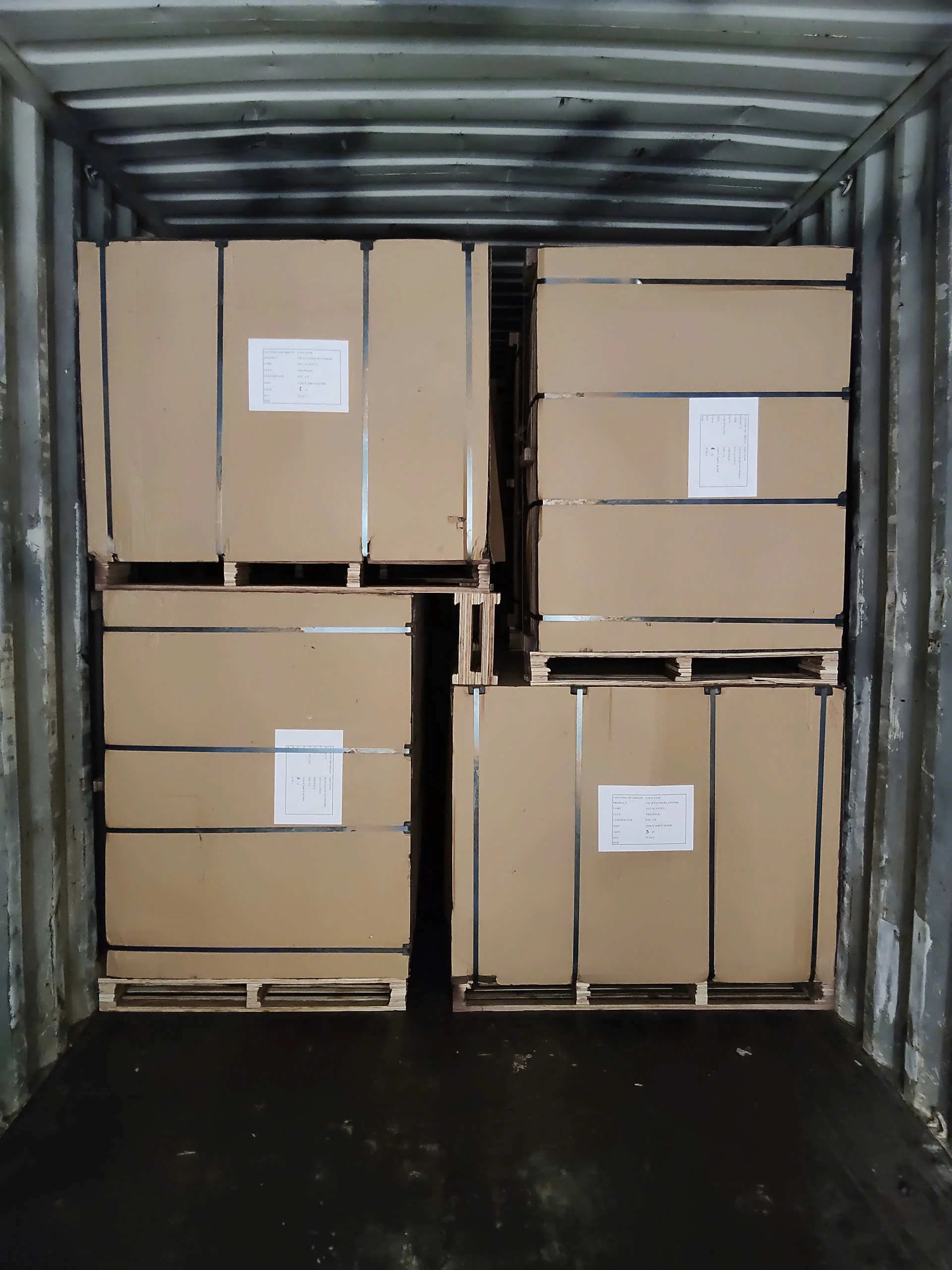
Styrax core density: 500 kg/m³ (used for packing calculations)
| Thickness | Sheets/Pallet | Sheets/40HC (18 pallets) | CBM/40HC | Weight/40HC |
|---|---|---|---|---|
| 9mm | 111 | 1,998 | 53.5 CBM | 26.7 MT |
| 12mm | 83 | 1,494 | 53.5 CBM | 26.7 MT |
| 15mm | 66 | 1,188 | 53.2 CBM | 26.6 MT |
| 18mm | 55 | 990 | 53.1 CBM | 26.5 MT |
| 21mm | 47 | 846 | 53.0 CBM | 26.5 MT |
💡 Tip: CBM stays roughly constant across thicknesses for the same pallet count — more sheets at thinner grades, fewer at thicker, but total volume stays near 53 CBM. Weight variation is minimal because density is fixed.
📌 Acacia Core — 16 Pallets per 40HC
Acacia core density: 580 kg/m³ (production calculation density)
| Thickness | Sheets/Pallet | Sheets/40HC (16 pallets) | CBM/40HC | Weight/40HC |
|---|---|---|---|---|
| 9mm | 111 | 1,776 | 47.5 CBM | 27.6 MT |
| 12mm | 83 | 1,328 | 47.5 CBM | 27.6 MT |
| 15mm | 66 | 1,056 | 47.3 CBM | 27.5 MT |
| 18mm | 55 | 880 | 47.2 CBM | 27.4 MT |
| 21mm | 47 | 752 | 47.1 CBM | 27.3 MT |
Acacia loads 222 fewer sheets per container at 9mm, and 166 fewer at 12mm compared to styrax. At competitive FOB prices for commercial-grade panels, that difference is often acceptable. The question becomes whether the freight cost per sheet remains within your landed cost target.
🔧 Freight Cost Implications
📌 Per-Sheet Freight Math
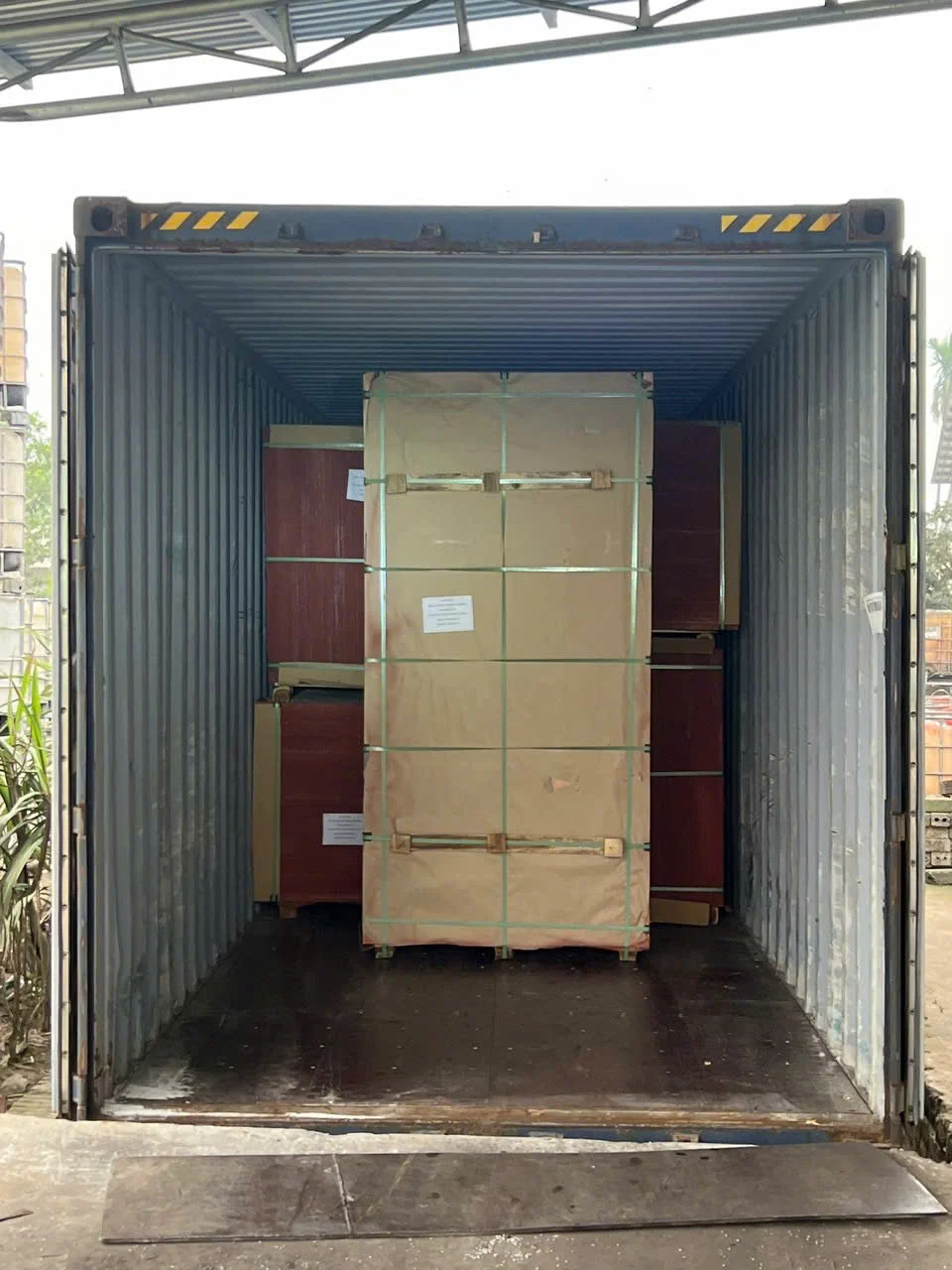
Ocean freight from Hai Phong to major ports runs approximately $1,500–$2,500 per 40HC container depending on destination and season (market rates, 2026). Using a mid-range estimate of $2,000 per container:
Styrax core (18 pallets, 12mm, 1,494 sheets):
- Freight per sheet: $2,000 ÷ 1,494 = $1.34/sheet
Acacia core (16 pallets, 12mm, 1,328 sheets):
- Freight per sheet: $2,000 ÷ 1,328 = $1.51/sheet
That $0.17/sheet gap may appear small. Across a full container of 1,328 acacia sheets, the freight overhead per sheet is 12.7% higher than for the same container loaded with styrax. For buyers purchasing multiple containers per month, this differential accumulates quickly in landed cost calculations.
📌 When Acacia’s Lower FOB Price Wins
The freight math above does not determine the outcome on its own. Acacia core consistently produces lower FOB prices per sheet than styrax, for two reasons:
- Raw material cost: Acacia (keo) is the most affordable Vietnamese plantation species, grown abundantly in Northern Vietnam (FAO, 2024 production data)
- Application match: Commercial and packing-grade applications do not require the E0 emission and full-stitched core construction that premium furniture demands — structural specifications are lower, and production costs reflect this
If your application is packing crates, commercial fitout, or budget-segment furniture where E1/E2 emission is acceptable, acacia typically delivers a lower total landed cost despite its inferior packing efficiency. The lower FOB per sheet offsets the higher freight per sheet.
If your application is premium furniture, kitchen cabinets, or export to the EU/US/Japan at E0 standard, styrax is the correct specification on both quality and cost grounds.
Get a free landed cost comparison for your specific spec
🏭 Application Profiles — Which Core for Which Product?
📌 Styrax Core — The Furniture Premium
Styrax (bồ đề) is grown exclusively in Northern Vietnam, primarily in Phu Tho, Yen Bai, and Tuyen Quang provinces — the same region where HCPLY’s production facilities operate. This geographic concentration is why styrax is a Northern Vietnam specialty unavailable in the south (HCPLY production data, 2026).
Its properties align precisely with premium furniture requirements:
- Color: White to pale cream — compatible with light-colored face veneers (birch, EV, okoume, pine)
- Density: 480–500 kg/m³ — comparable to Baltic birch core, the international benchmark for furniture plywood
- Glue compatibility: Accepts E0 (CARB P2) glue systems used in EU/US/Japan-bound products
- Core construction: Produced with full-stitched core at HCPLY’s furniture facility — no gaps, no overlaps
Face veneer combinations available on styrax core from HCPLY: birch (D/E/F grade), okoume, EV (engineered veneer), pine, poplar, bintangor, eucalyptus.
Acacia Core — The Commercial Workhorse
Acacia is the most produced Vietnamese plantation species. At ~580 kg/m³, it is denser and darker than styrax — unsuitable for light-colored premium interiors, but well-matched to applications where surface aesthetics matter less than strength and cost.
Standard acacia core applications at HCPLY:
- Commercial plywood: Bintangor A/B, okoume B, eucalyptus face — for shopfitting, partitioning, general interior fitout
- Packing plywood: Bintangor C/D or poplar face — for crates, pallets, industrial packaging
- Film-faced plywood: Phenolic or melamine film overlay for concrete formwork — acacia core supports the 15+ reuse cycles achievable with quality film
- Anti-slip plywood: AICA anti-slip film — acacia/eucalyptus core for truck floors and scaffolding
For these applications, E1 or E2 emission is typically acceptable, and the looser core construction (edge-jointed or loose-lay rather than full-stitched) keeps production costs aligned with market price expectations.
📐 Choosing the Right Core for Your Order
The decision between styrax and acacia core is not primarily about container packing — it is about matching core specification to end-use requirement. Container packing efficiency is one input into landed cost, not the only one.
Use this decision framework:
Order styrax core when:
- End use requires E0 (CARB P2) emission standard
- Face veneer is birch, EV, okoume, pine, or poplar (light-colored)
- Market destination is EU, US, Japan, South Korea, or Australia
- Application is furniture, kitchen cabinets, or premium interior millwork
- You want maximum sheets per container to minimize per-sheet freight cost
Order acacia core when:
- End use is commercial fitout, packaging, construction, or film-faced applications
- E1 or E2 emission is acceptable
- Face veneer is bintangor, gurjan, eucalyptus, or anti-slip film
- Price sensitivity is the primary buying criterion
- Application is packing crates, pallets, or budget commercial panels
Both cores ship FOB Hai Phong with full export documentation: B/L, CO, Phytosanitary Certificate, and Fumigation Certificate. FSC-certified versions of both core types are available subject to order volume.
For a detailed breakdown of how all three Vietnamese core species compare across density, application, and CBM, see the plywood core types guide for acacia, eucalyptus, and styrax.
📊 Mixed-Spec Containers — What Actually Happens
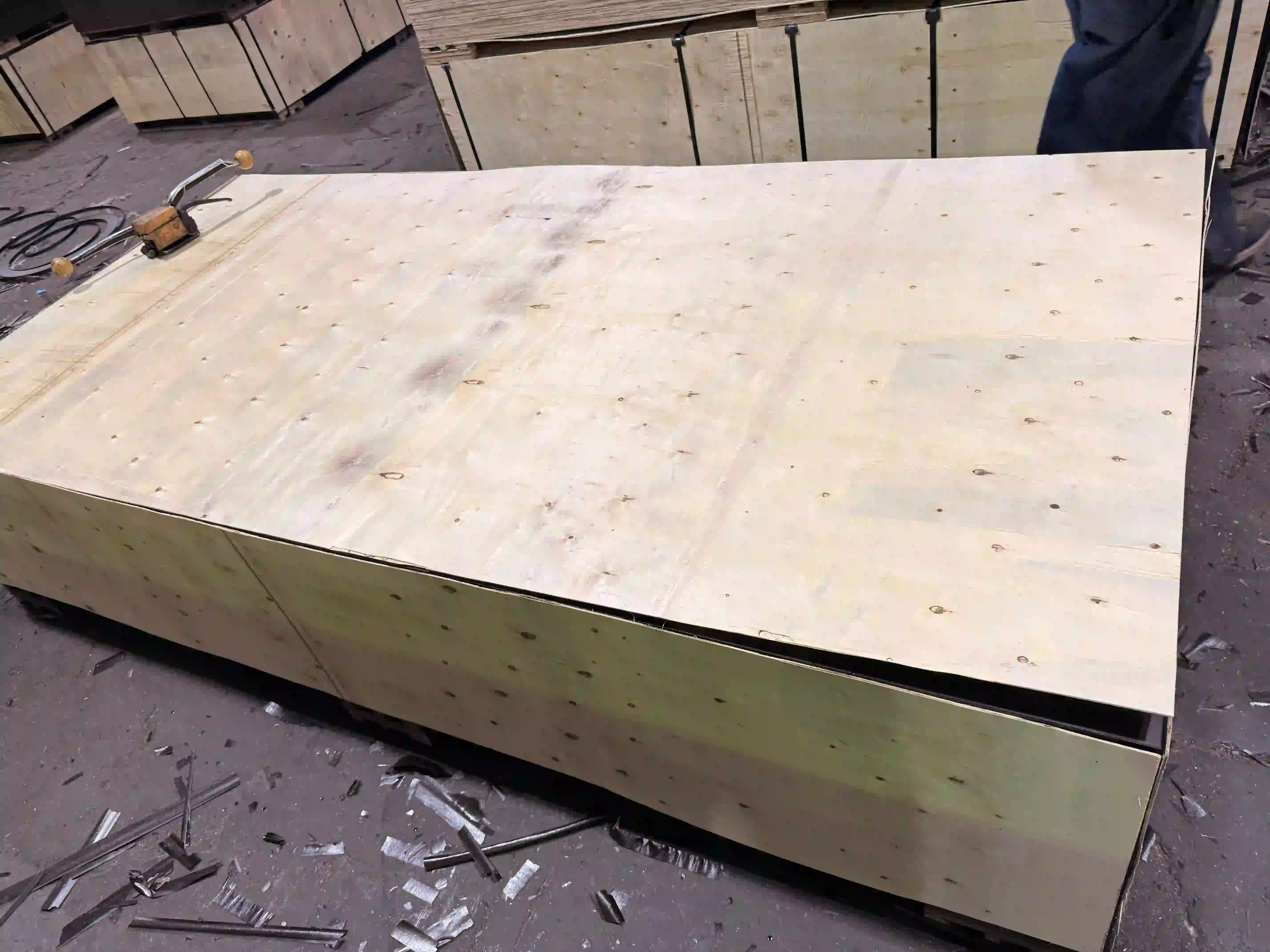
Many importers order one container mixing styrax-core furniture panels with acacia-core commercial panels. This plywood core packing comparison extends naturally to mixed loads — the same density-weight logic applies, just across two pallet groups instead of one. This is operationally straightforward at HCPLY — each pallet is packed separately by spec, and pallets are arranged in the container to distribute weight evenly.
The critical rule: total container weight must be recalculated using each product’s actual density and volume. You cannot apply the 18-pallet styrax table and the 16-pallet acacia table independently and add them together — that oversimplifies the constraint.
A mixed 40HC container with 10 pallets of styrax-core birch plywood (12mm) and 6 pallets of acacia-core bintangor (12mm) calculates as follows:
- Styrax 10 pallets × 83 sheets × 12mm × 1.22 × 2.44 ÷ 1,000 = 29.7 CBM at ~500 kg/m³ = 14.8 MT
- Acacia 6 pallets × 83 sheets × 12mm × 1.22 × 2.44 ÷ 1,000 = 17.8 CBM at ~580 kg/m³ = 10.3 MT
- Total: 47.5 CBM, 25.1 MT — within both the CBM and 28.5 MT limits
Adding 2 more acacia pallets (total 8 acacia + 10 styrax) pushes total weight to ~27.5 MT, still under the 28.5 MT limit. The 40HC packing calculation guide covers multi-spec scenarios with full formula breakdowns.
✅ Conclusion — The Two-Pallet Gap That Matters
Styrax core loads 2 more pallets per 40HC than acacia core. For premium furniture panels shipping to E0 markets, that extra volume reduces per-sheet freight cost while simultaneously delivering the correct core specification. For commercial and packing-grade applications, acacia’s lower FOB price typically compensates for its reduced container efficiency.
The wrong decision is choosing core species based on packing tables alone. Match the core to your end-use requirement first. Then verify the landed cost math covers freight.
HCPLY operates dedicated production facilities for both segments — styrax-core premium furniture and acacia-core commercial panels — which means you can source both grades from one export point without compromising specification integrity. For a full side-by-side across all three Vietnamese core species, the styrax core loading deep-dive and the plywood core types comparison cover the full picture.
Request a container packing plan and FOB quote for styrax or acacia core plywood
No commitment required. Send your spec (thickness, face veneer, destination port) and the HCPLY export team returns a complete packing table and FOB price within 24 hours.