

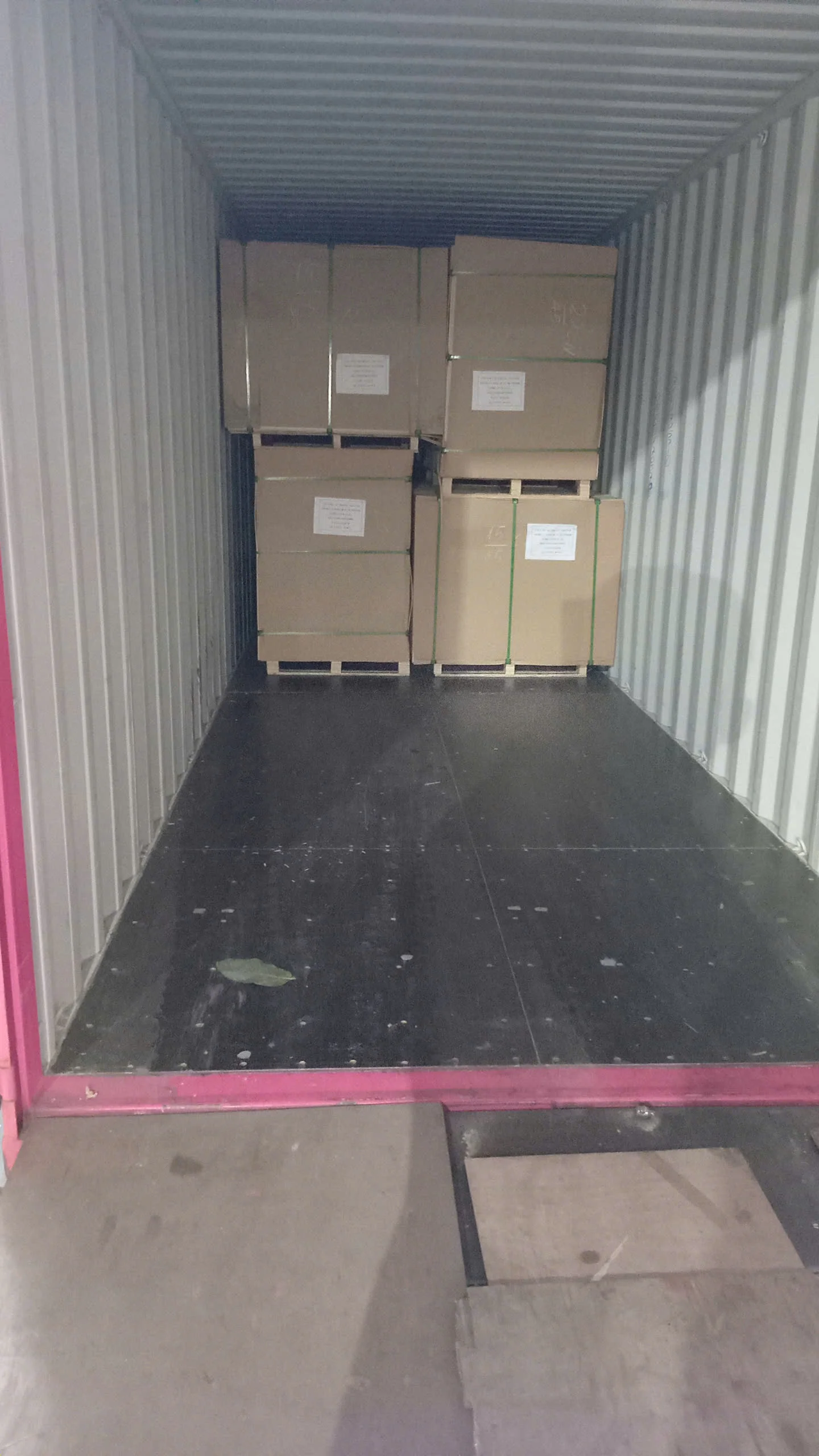
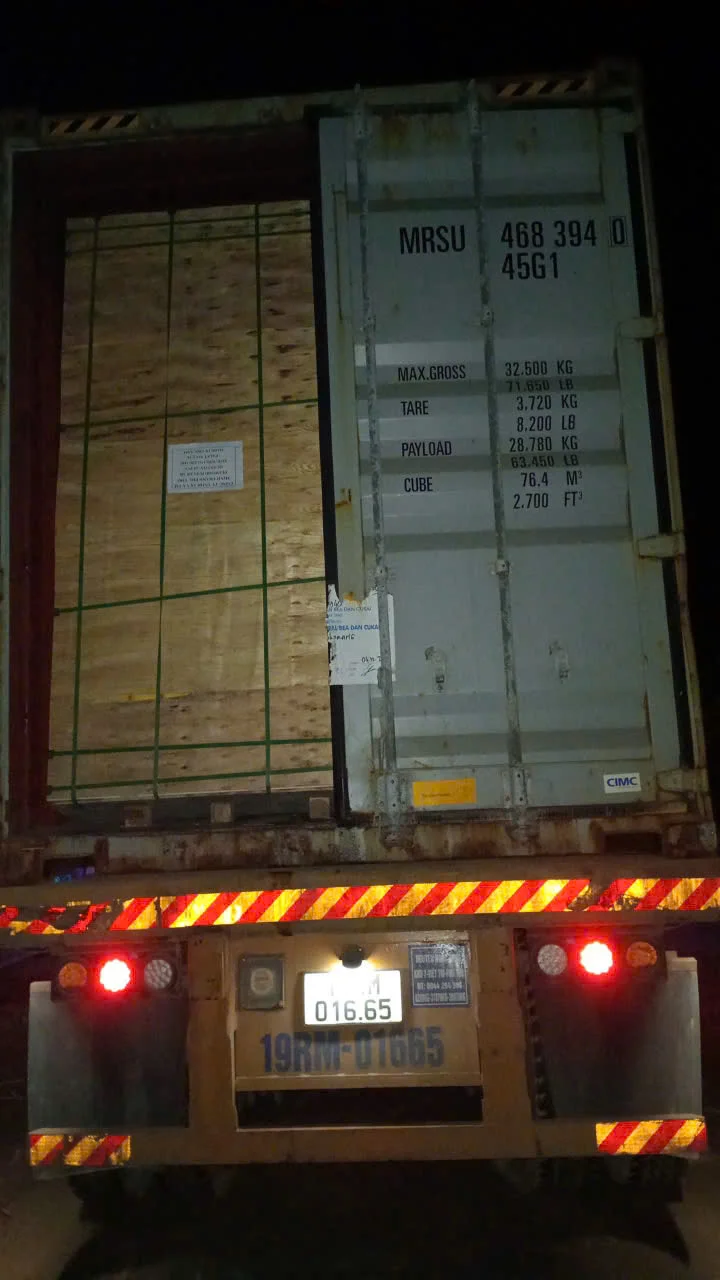
Every extra pallet in a 40HC container reduces your freight cost per sheet. Styrax core plywood loads 18 pallets per container — three more than eucalyptus core, two more than acacia. That gap is not a marketing claim. It follows directly from density physics, and understanding it lets you make smarter buying decisions before you request a quotation.
This article breaks down exactly why styrax core plywood achieves the highest CBM per 40HC of any Vietnamese core species, how to verify the numbers yourself, and what product categories rely on styrax to hit optimal freight economics.
🔢 The Core Numbers: 18 vs 16 vs 15 Pallets
The three core species used in Vietnamese plywood export — styrax, acacia, and eucalyptus — differ primarily in density. That single variable drives everything about container loading economics.
| Core Species | Density (kg/m³) | Pallets per 40HC | Approx CBM per 40HC | Approx Weight per 40HC |
|---|---|---|---|---|
| Styrax | 480–500 | 18 | ~53 CBM | ~26.5 MT |
| Acacia | ~580 | 16 | ~47.5 CBM | ~27.5 MT |
| Eucalyptus | 650–750 | 15 | ~44.5 CBM | ~28 MT |
(HCPLY production data, 2026. Based on 1220×2440mm panels, 1000mm pallet stack height, 40HC container.)
Styrax generates 8.5 CBM more per container than eucalyptus — approximately 19% more volume shipped per freight event. At $30–$45 per CBM in typical Asia-Europe freight lanes, that gap represents $250–$380 saved per container in freight cost alone (Freightos Baltic Index, 2025).
Key Insight: 18 pallets vs 15 pallets is not a small rounding difference. It is the result of styrax being 30–35% less dense than eucalyptus — a physical property verified across thousands of HCPLY shipments.
⚙️ Why Density Determines Pallet Count
Understanding why styrax fits more pallets requires a quick look at the loading constraint system.
A standard 40HC container has two hard limits:
- Volume: ~76 CBM internal space (theoretical maximum)
- Payload: 28.5 MT maximum gross cargo weight (legal limit, not a target)
📌 The 1000mm Stack Height Rule
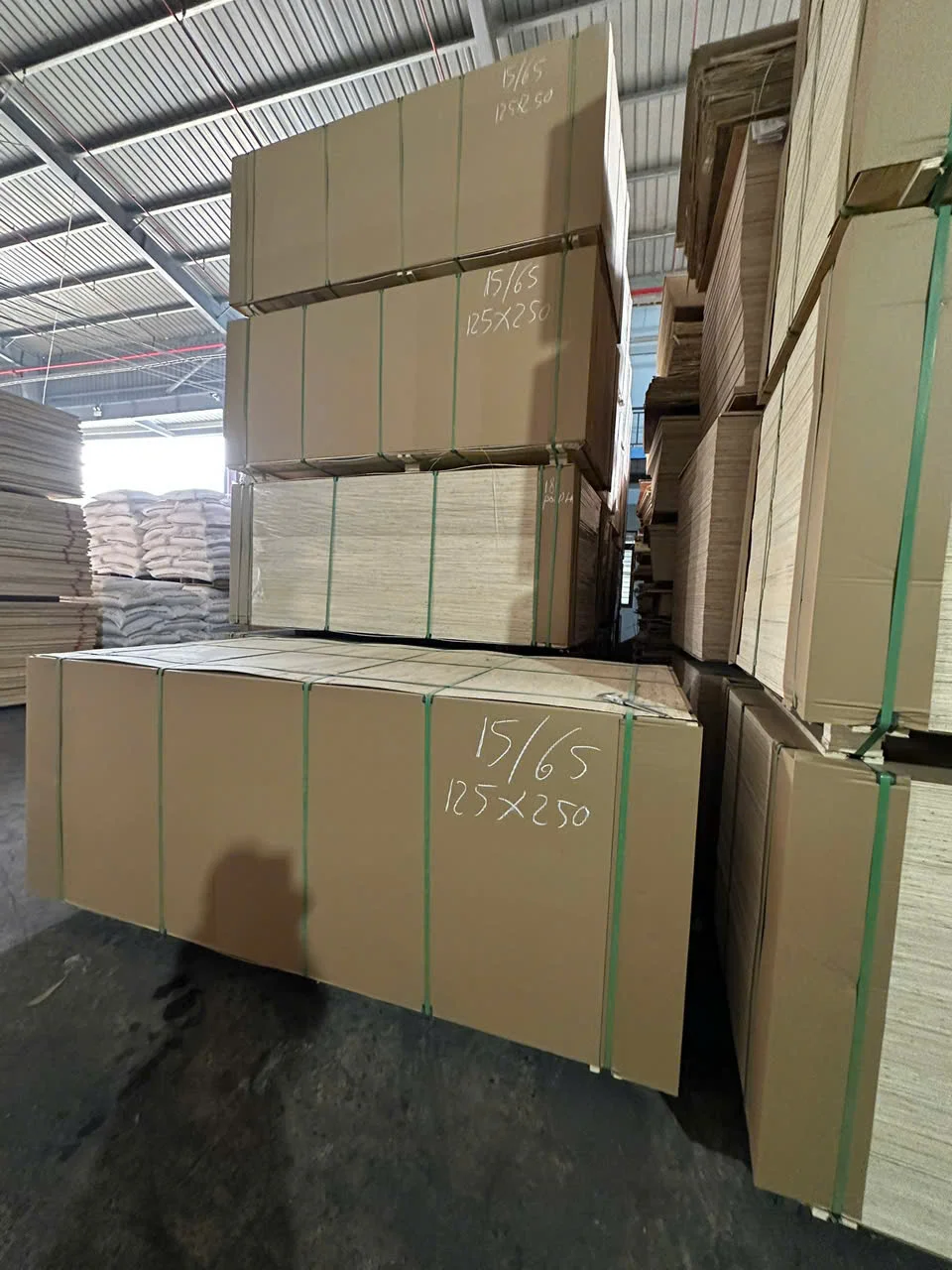
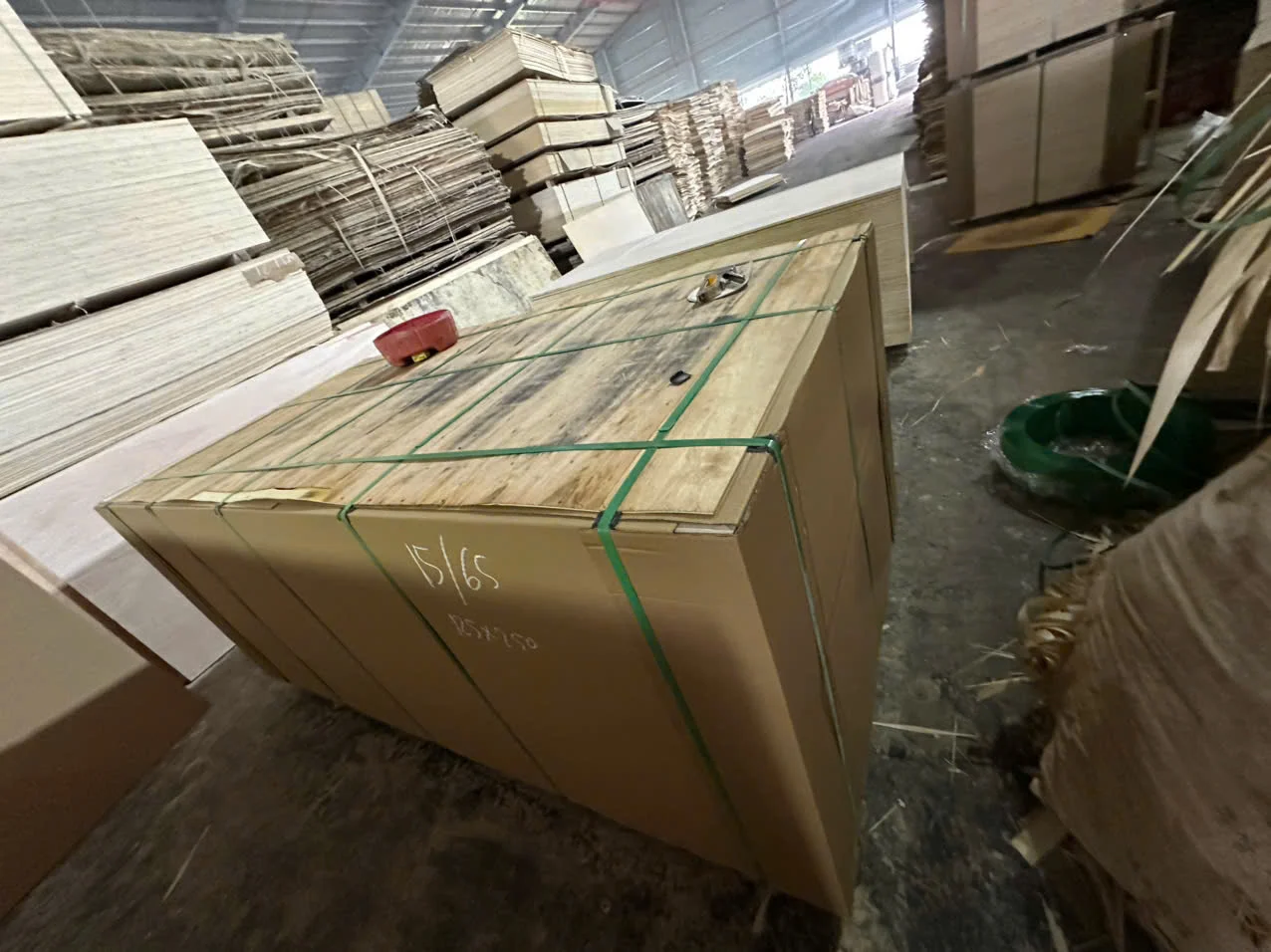
In practice, factory packing does not fill containers to their theoretical volume. Pallet stack height is fixed at 1000mm — a limit set by forklift safety and structural stability under transport vibration. Every pallet regardless of product thickness is built to exactly 1000mm.
The number of sheets per pallet is therefore:
Sheets per pallet = ROUNDDOWN(1000 ÷ Thickness_mm)For 18mm panels: 1000 ÷ 18 = 55 sheets per pallet.
A single pallet of 18mm styrax core panels (1220×2440mm) weighs approximately:
55 sheets × (1.22 × 2.44 × 0.018 × 490 kg/m³) ÷ 1 = ~72 kg per sheet × 55 = ~1,460 kg per pallet18 pallets × 1,460 kg = ~26.3 MT — safely below the 28.5 MT payload cap.
Run the same calculation with eucalyptus core (700 kg/m³):
55 sheets × (1.22 × 2.44 × 0.018 × 700 kg/m³) = ~103 kg per sheet × 55 = ~2,090 kg per pallet
18 pallets × 2,090 kg = ~37.6 MT — exceeds 28.5 MT hard limit
Eucalyptus hits the weight ceiling at approximately 15 pallets (~31.4 MT for 16 pallets → reduced to 15 by safety margin), not 18. The container still has physical space, but regulations prevent loading more weight. Those 3 empty pallet positions represent lost freight efficiency.
📦 Styrax Core: What Products Use It
Styrax is not a budget core choice — it is the standard premium furniture core for Northern Vietnamese factories. Understanding which products ship on styrax helps importers confirm they are specifying correctly.
📌 Birch Face Plywood (Primary Use)
Birch plywood from Vietnam uses styrax core almost exclusively. Styrax’s white, knot-free appearance and low density closely replicate Baltic birch core properties, making it the technically appropriate substitute in markets where full-birch specification is either unavailable or cost-prohibitive.
Products: Birch plywood (grade D/E), EV plywood, matt substrate panels.
See the full product-to-core mapping in plywood core types guide.
📌 Okoume and Pine Face Furniture Plywood
Premium okoume plywood and pine plywood for the EU and Australian furniture market frequently specifies styrax core for two reasons: weight savings during transit, and compatibility with E0 melamine adhesive used in these product segments.
📌 Poplar Face Plywood
White poplar face panels use styrax or acacia depending on grade. Styrax is preferred for furniture export applications requiring consistent panel weight and stability.
⚠️ Important: Styrax core is NOT appropriate for construction, flooring, or heavy-duty structural applications. These applications require eucalyptus core (650–750 kg/m³) for load-bearing performance. Substituting styrax in construction spec will result in insufficient panel stiffness under load.
📊 CBM Calculation Walkthrough — 18mm Styrax, 1220×2440mm
This walkthrough uses factory-verified methodology documented in the plywood container packing calculation guide.
Step 1: Sheets per pallet
ROUNDDOWN(1000 ÷ 18mm) = 55 sheets per palletStep 2: Total sheets in 40HC
55 sheets × 18 pallets = 990 sheetsStep 3: CBM per sheet
1.22m × 2.44m × 0.018m = 0.05357 CBM per sheetStep 4: Total CBM
990 sheets × 0.05357 CBM = 53.03 CBM per 40HCStep 5: Weight check
490 kg/m³ × 53.03 CBM = 25,985 kg = ~26 MT ✓ (under 28.5 MT limit)Result: 53 CBM, 26 MT — maximum volume, well within weight compliance.
Run eucalyptus at 700 kg/m³ and 15 pallets (15 × 55 × 0.05357 = 44.2 CBM, 700 × 44.2 = ~30.9 MT — the weight-adjusted loading stops at 15 pallets to stay under 28.5 MT).
🏭 Where Styrax Comes From — Regional Context
Styrax (bồ đề, Styrax tonkinensis) grows exclusively in Northern Vietnam. It does not exist in Southern Vietnam’s timber supply. This geographic fact has a direct impact on product specification and pricing.
Northern Vietnam — concentrated in Phú Thọ, Yên Bái, Tuyên Quang, and Hà Nội provinces — produces more than 80% of Vietnam’s plywood exports (Vietnam Timber and Forest Products Association, 2024). HCPLY’s production facilities are located in Hà Hoà District, Phú Thọ Province, which places them at the source of styrax supply.
Importers purchasing from Southern Vietnamese suppliers cannot reliably access styrax core. Southern factories typically use acacia or purchase matt plywood from Northern Vietnam for further processing. The cost premium for this logistics chain is reflected in FOB pricing.
For a complete picture of where Vietnamese core species originate, see Vietnam plywood regional map.
“From our experience managing thousands of container shipments, importers who switch from eucalyptus to styrax for furniture-grade panels typically reduce their effective freight cost per sheet by 15–18% without any change in product specification or quality.” — Lucy, International Sales Manager, HCPLY
📐 1250×2500mm Panels: Same 18 Pallets, Higher CBM
EU-market buyers frequently order metric-size panels at 1250×2500mm rather than the standard 1220×2440mm (4×8 ft). The pallet count remains 18 for styrax core, but the larger sheet area increases total CBM per container by approximately 5%.
| Size | Pallets/40HC (Styrax) | CBM per Sheet (18mm) | Total CBM |
|---|---|---|---|
| 1220×2440mm | 18 | 0.05357 | ~53 CBM |
| 1250×2500mm | 18 | 0.05625 | ~55.7 CBM |
This ~2.7 CBM difference is meaningful for buyers in Germany, Poland, and Spain where 1250×2500mm is standard panel sizing. More volume per freight event improves the economics further versus acacia or eucalyptus alternatives.
💡 Mixed Spec Containers: What Happens to Pallet Count
Some importers consolidate multiple product specifications in one 40HC — for example, 12mm birch face panels combined with 18mm EV panels, both on styrax core. Mixed loading is supported, but requires a recalculated weight verification.
Key principle: Total container weight (all pallets combined) must remain below 28.5 MT.
Because styrax’s low density (~490 kg/m³) gives you approximately 2.5 MT of headroom versus the payload cap in a full 18-pallet styrax load, mixed containers with thicker panels can often still fit 18 pallets provided all specs remain styrax core. The moment a eucalyptus core spec is introduced, the weight per pallet increases sharply and the maximum pallet count must be recalculated.
HCPLY provides container loading plans at the quotation stage for all mixed-spec orders. Request a detailed plan when comparing offers — a supplier who cannot produce a loading verification table is working from estimates, not factory-executed data.
Get a container loading plan for your styrax core plywood order
🔗 Styrax vs Acacia vs Eucalyptus — When to Specify Each
The right core choice depends on application, not just freight economics.
| Application | Recommended Core | Reason |
|---|---|---|
| Premium furniture (birch, EV, okoume face) | Styrax | Lightweight, white, E0-compatible, birch equivalent |
| Commercial furniture / packaging | Acacia | Cost-effective, adequate strength |
| Construction / flooring / load-bearing | Eucalyptus | 650–750 kg/m³, high stiffness, structural grade |
| Film-faced formwork plywood | Eucalyptus or Acacia | WBP requires dense core for reuse performance |
Freight efficiency should always be evaluated alongside application suitability. Specifying styrax purely for CBM optimization on a structural application is a technical error that will surface as panel failure in the field.
For a complete technical comparison of all three core species including density data, glue compatibility, and application guidelines, read Vietnam plywood core types guide.
✅ Conclusion: Styrax Core Offers Best Freight Economics
Styrax core plywood achieves 18 pallets per 40HC — approximately 53 CBM — because its density of 480–500 kg/m³ keeps the container weight safely below the 28.5 MT payload limit while utilizing full stack height. Eucalyptus core, at 650–750 kg/m³, hits the weight ceiling at 15 pallets (~44.5 CBM), leaving usable volume unfilled.
For importers sourcing furniture-grade plywood — birch face, EV, okoume, pine, or poplar face on premium core — styrax is the technically correct and freight-optimal specification. It delivers the same structural performance as birch core while maximizing container utilization.
To verify these numbers against your specific thickness and size requirements, use the full calculation methodology in the plywood container packing calculation guide.
Contact HCPLY for a factory-verified container loading plan and FOB quotation
The calculation takes less than 24 hours. Freight savings on a single container often exceed the cost of the consultation.