

Birch plywood prices jumped 40-60% between 2022 and 2024 after Russian export restrictions removed the world’s largest birch timber supplier from global markets (Wood Floor Business, 2023). Furniture manufacturers in Europe, Japan, and Korea scrambled for alternatives that matched birch’s light color and workability without the unpredictable pricing. One species answered that call: styrax — a Northern Vietnamese hardwood that global buyers increasingly specify as their primary core material, with reported cost savings of 30%+ over Baltic birch. This guide breaks down exactly why styrax core plywood delivers birch-level quality at 25-35% lower cost, and how to specify it correctly for your next export order.
🌳 What Is Styrax Core Plywood?
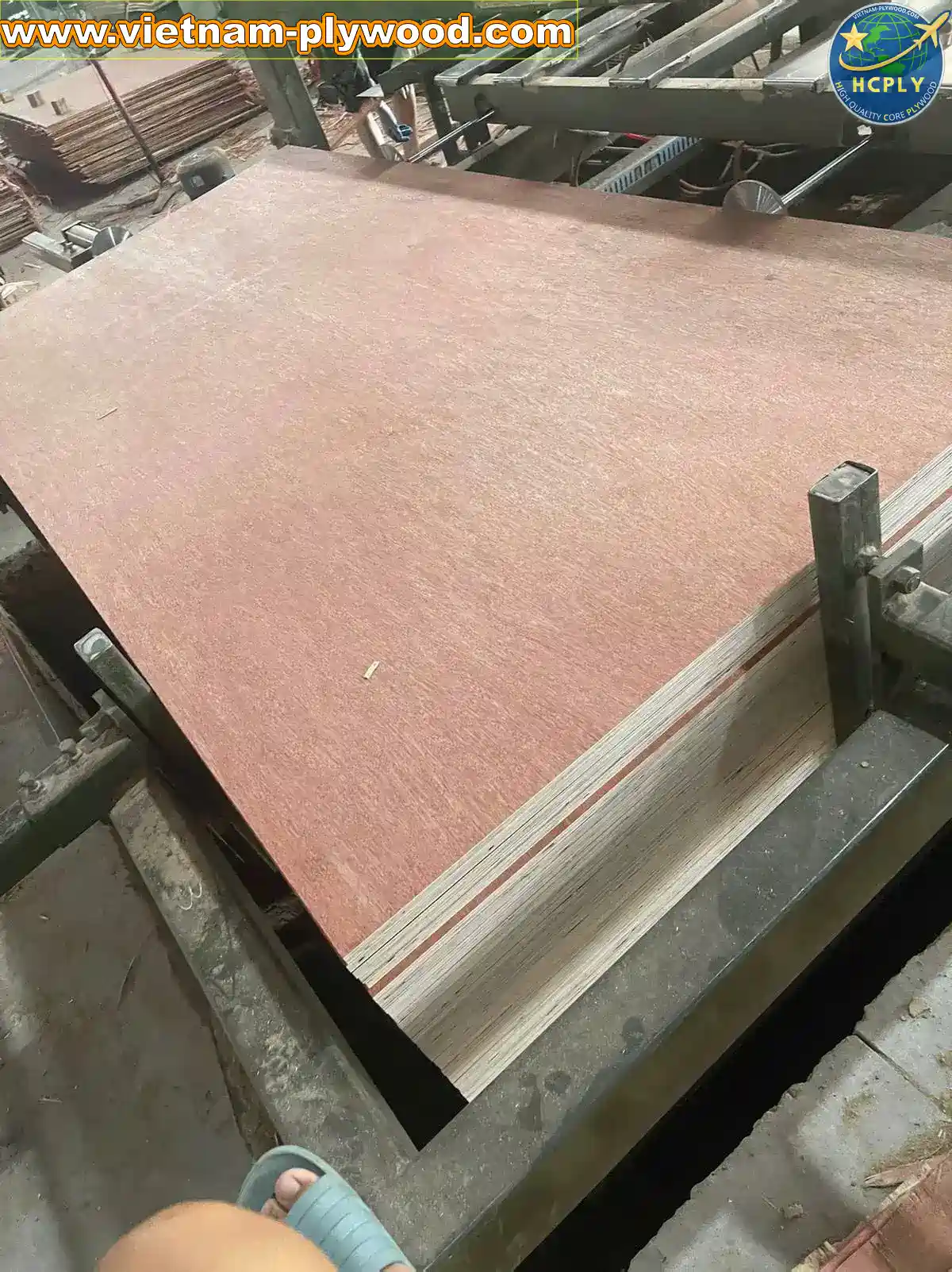
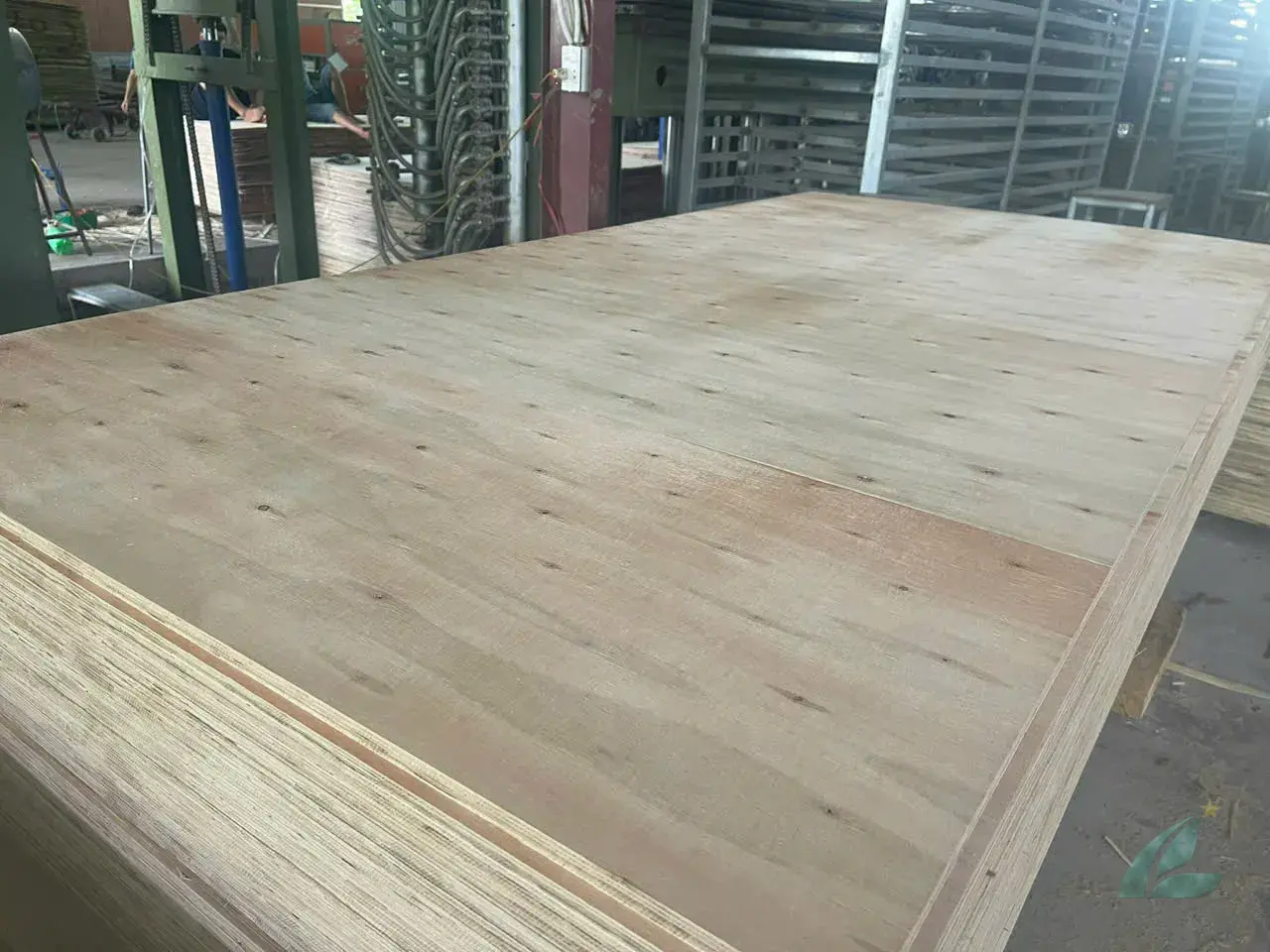
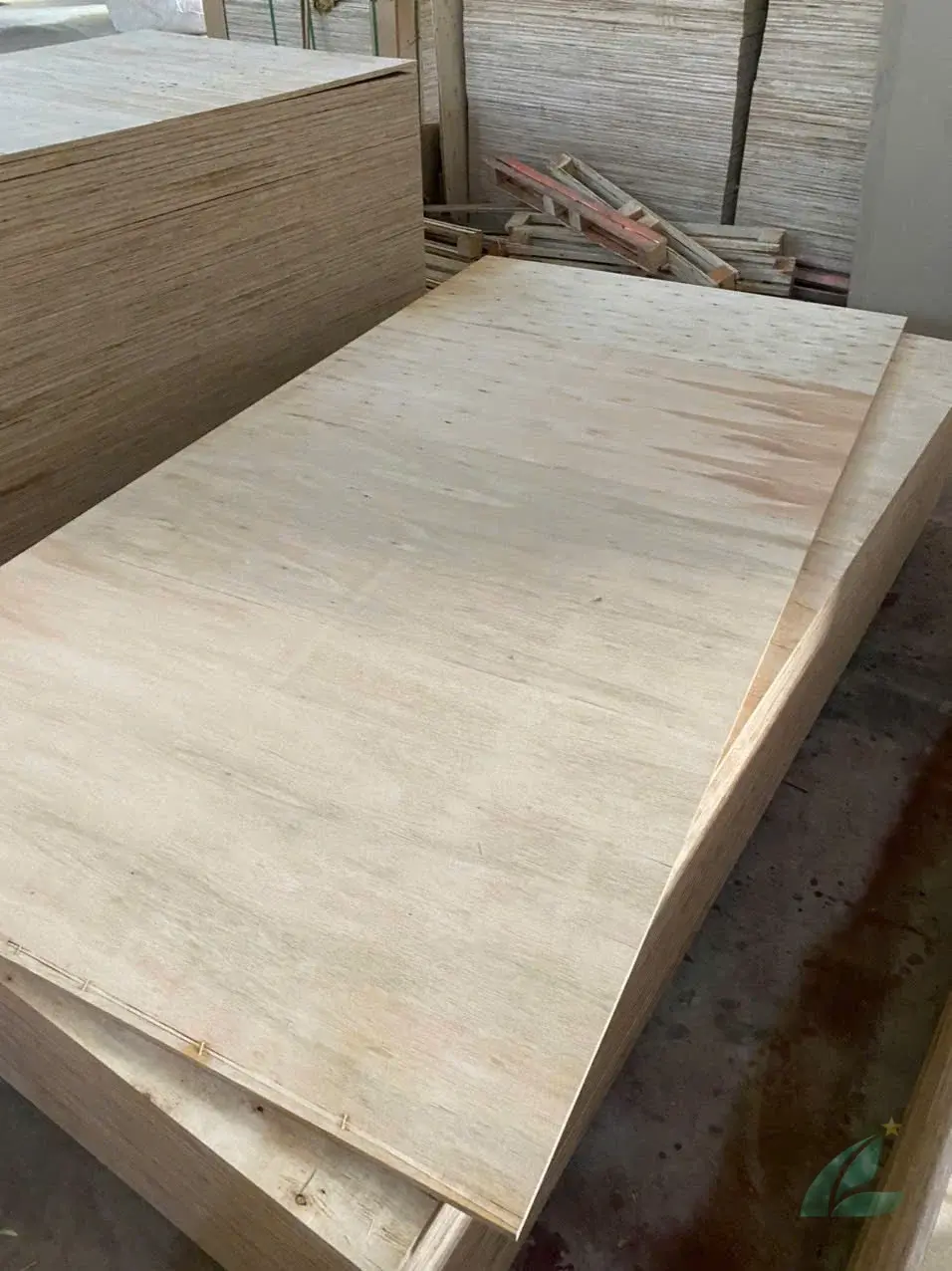
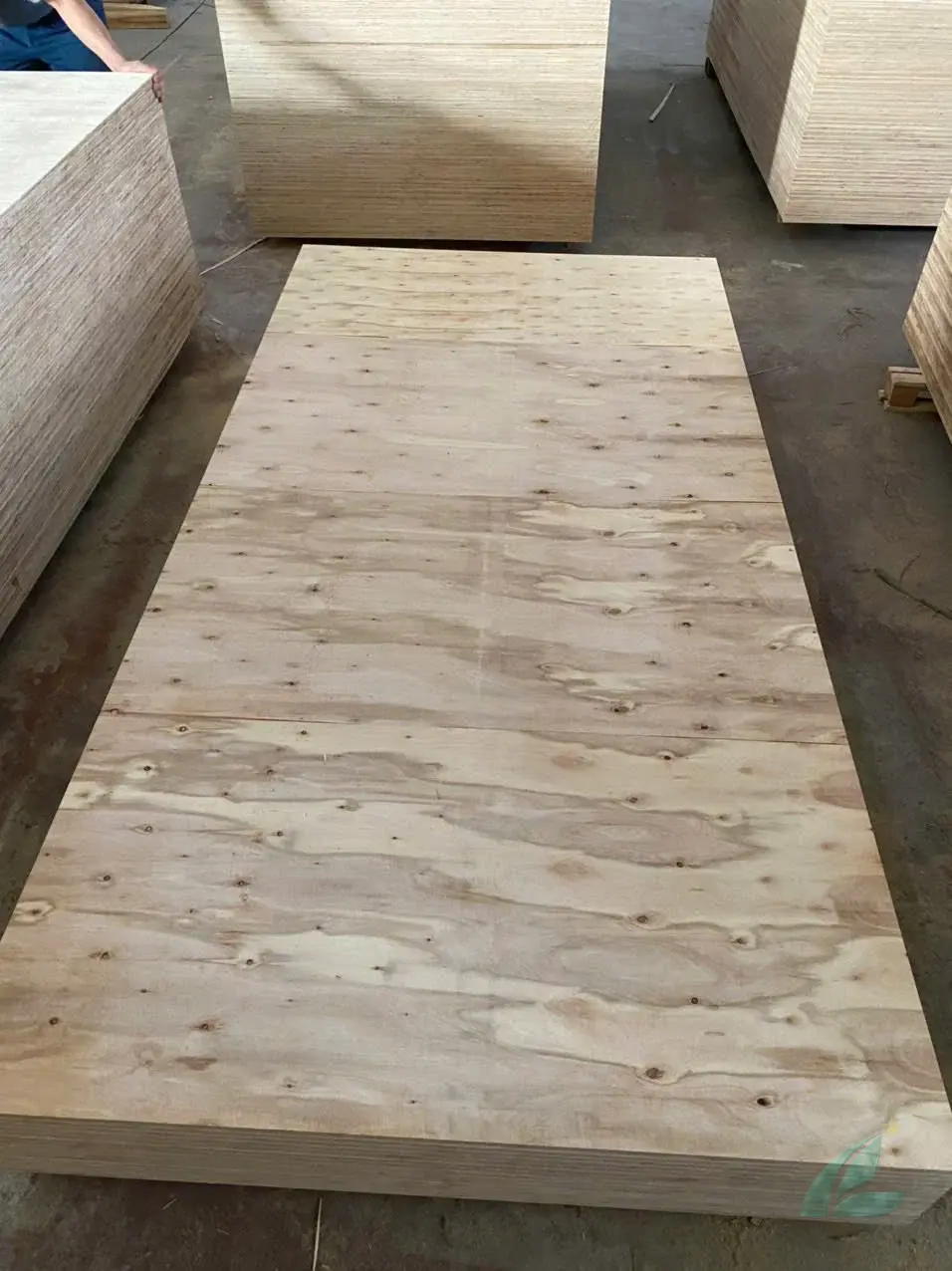
Styrax core plywood is an engineered wood panel that uses veneer layers peeled from Styrax tonkinensis logs as its inner core material. The face veneer can be any species — birch, okoume, EV, or others — but the structural backbone consists entirely of styrax wood.
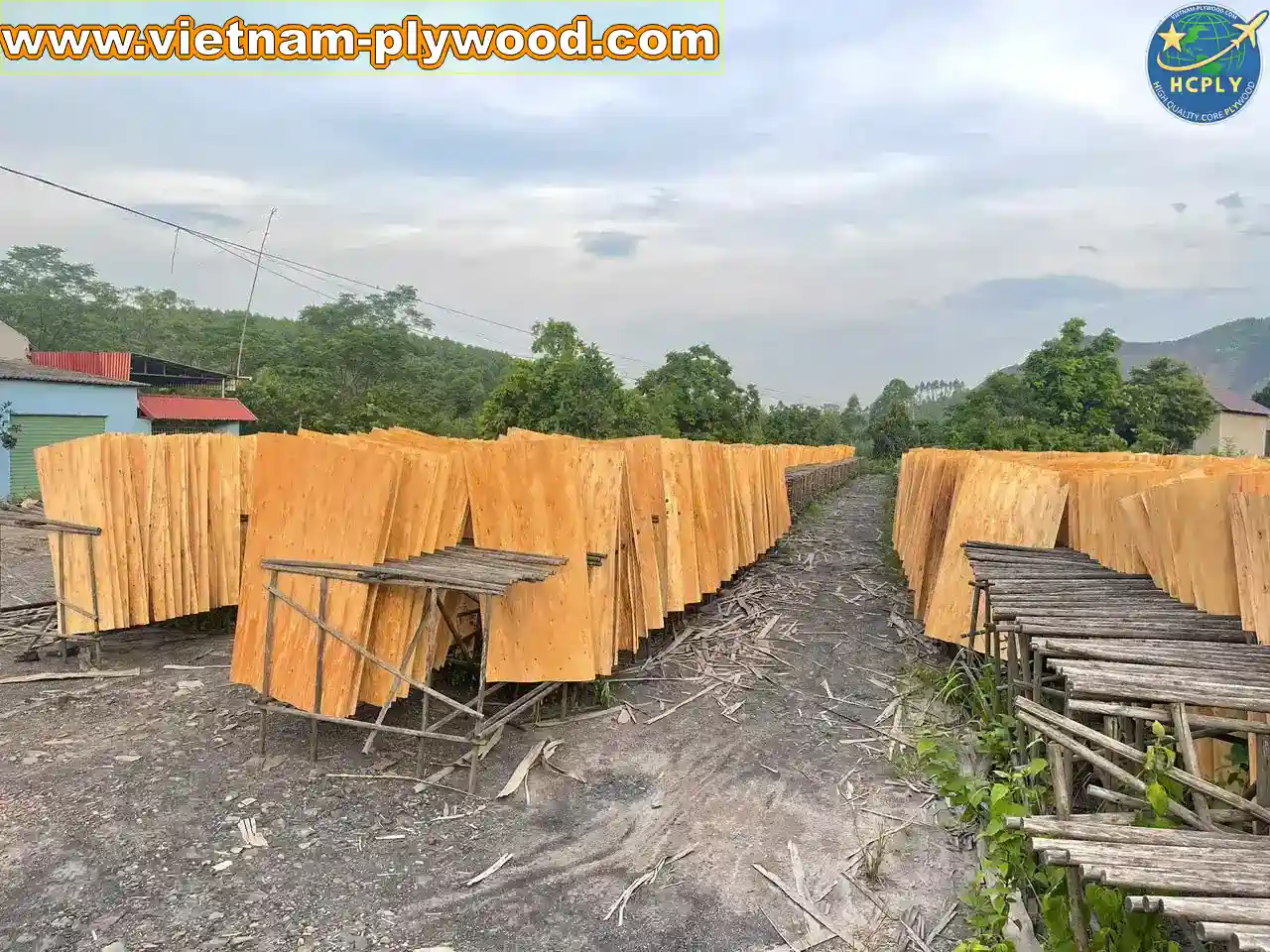
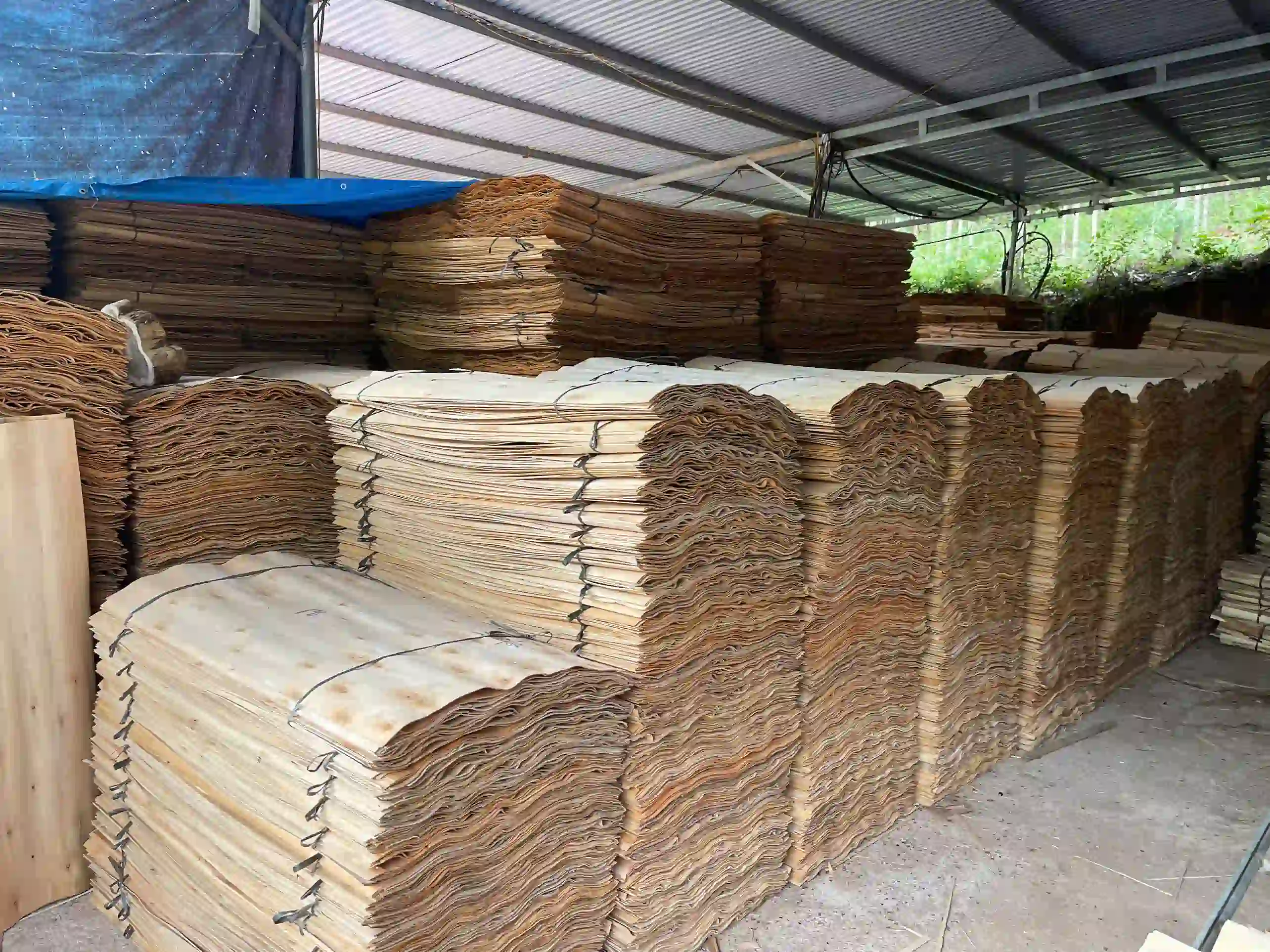
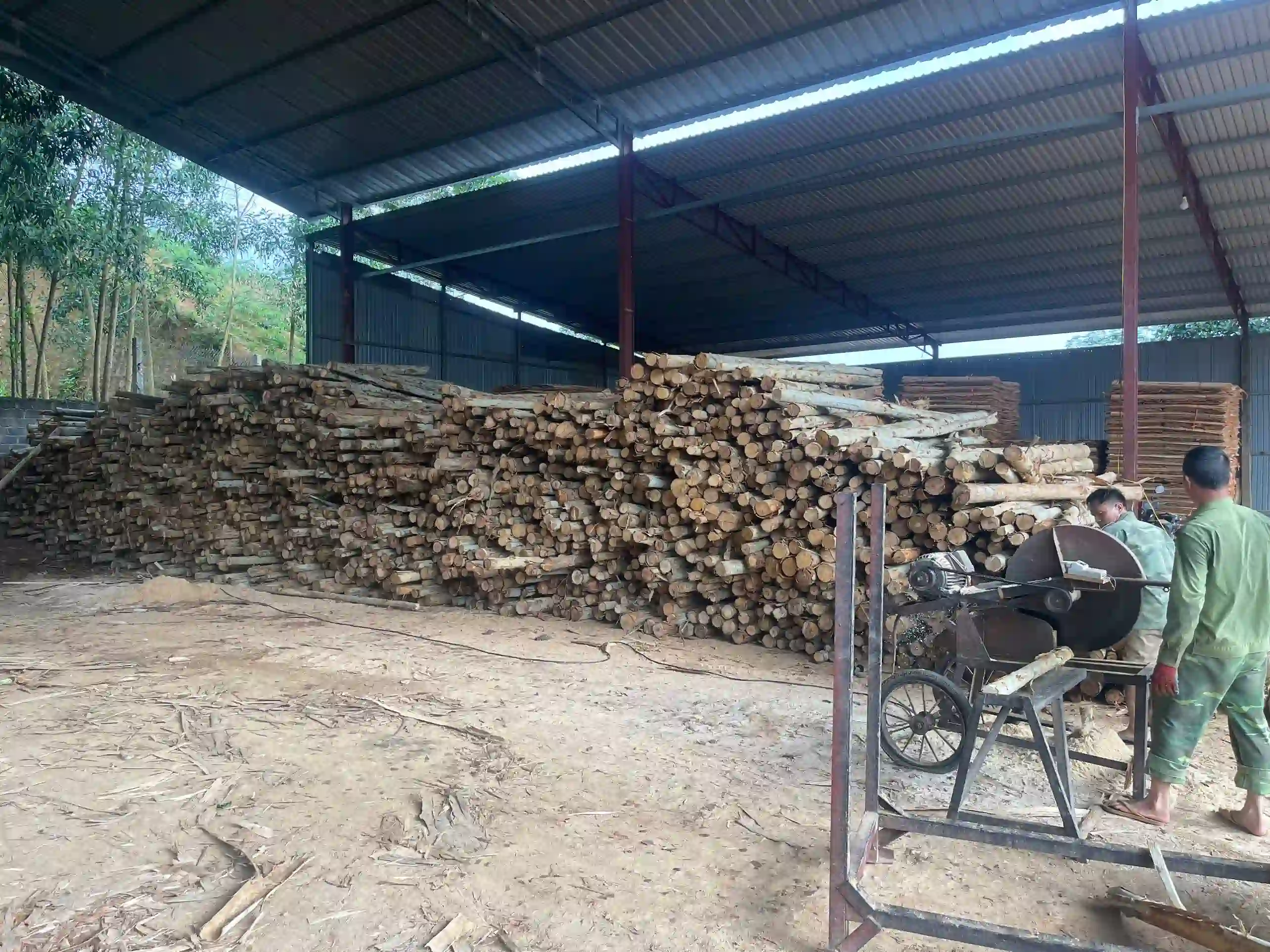
Styrax trees (locally called “bo de” in Vietnamese) grow abundantly across the mountainous provinces of Northern Vietnam: Phu Tho, Yen Bai, Tuyen Quang, and Thai Nguyen. These fast-rotation plantations produce logs suitable for veneer peeling within 5-7 years, making styrax one of the most sustainable commercial timber species in Southeast Asia (FAO, 2023).
📌 Key Physical Properties
| Property | Styrax Core | Birch Core | Difference |
|---|---|---|---|
| Density | 480-500 kg/m³ | 620-680 kg/m³ | 25-30% lighter |
| Color | Light cream-white | Pale yellow-white | Similar appearance |
| Grain | Smooth, uniform | Tight, fine | Both machine well |
| Warping resistance | High | High | Comparable |
| Availability | Year-round (Vietnam) | Constrained (Russia/Baltic) | Styrax more stable supply |
Key Insight: Styrax density at 480-500 kg/m³ sits in the optimal range for furniture-grade plywood — strong enough for structural integrity, light enough for efficient shipping and handling (HCPLY production data, 2026).
The light cream-white color of styrax core creates an aesthetically clean cross-section that high-end furniture manufacturers value. When buyers cut or drill into the panel, they see uniform light-colored layers rather than the dark, uneven appearance typical of acacia-core commercial plywood.
⚖️ Styrax Core vs Birch Core: Side-by-Side Comparison
Furniture buyers often ask whether styrax genuinely replaces birch or simply serves as a cheaper downgrade. The production data tells a clear story.
Technical Specifications
| Specification | Styrax Core (Vietnam) | Birch Core (Russia/Baltic) |
|---|---|---|
| Density | 480-500 kg/m³ | 620-680 kg/m³ |
| Glue options | Melamine (MR), Phenolic (WBP) | Melamine (MR), Phenolic (WBP) |
| Emission standards | E0, E1, CARB P2 | E0, E1, CARB P2 |
| Core construction | Full stitched available | Full stitched standard |
| Thickness range | 3-40mm | 3-30mm (typical) |
| Sheet sizes | 1220x2440, 1250x2500, custom | 1525x1525, 1220x2440 |
| Sanding | Double-side calibrated | Double-side calibrated |
| FOB price range | $280-380/CBM* | $450-650/CBM* |
| Lead time | 15-20 days | 30-60 days (when available) |
* FOB price ranges indicative (Q1 2026); subject to change — contact for current pricing.
Where Styrax Matches Birch
Both species share three properties that matter most to furniture manufacturers:
-
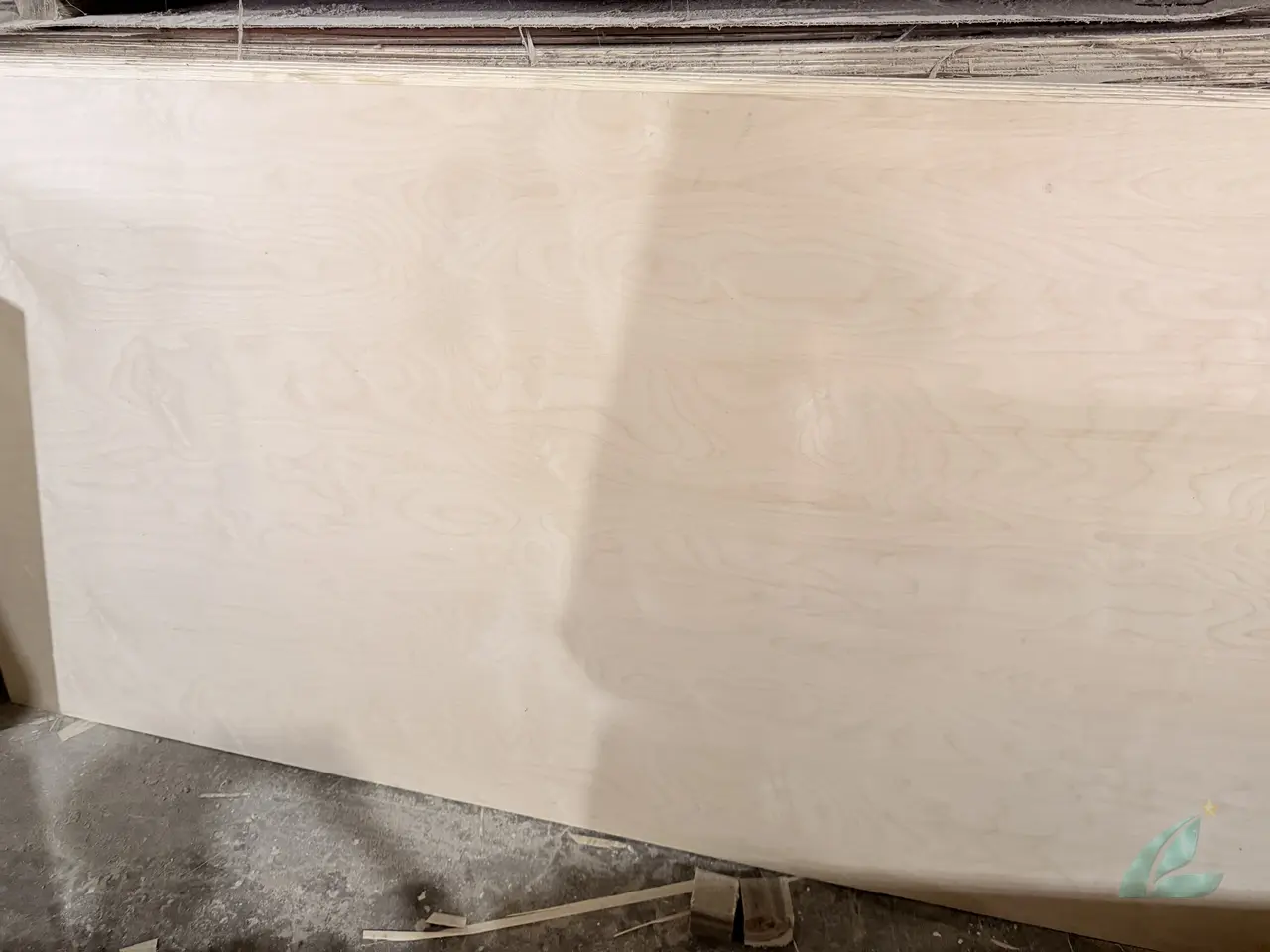
Light core color — When panels are edge-banded or left exposed, the core color becomes visible. Styrax and birch both present pale, uniform layers that complement modern furniture aesthetics.
-
Machinability — CNC routing, drilling, and edge profiling produce clean results on both materials. Neither species splinters excessively or dulls tooling prematurely.
-
Dimensional stability — Styrax core plywood holds flat under changing humidity conditions, matching birch’s reputation for minimal warping across seasonal temperature shifts.
Where They Differ
Birch core is denser (620-680 vs 480-500 kg/m³), giving it higher screw-holding strength in raw numbers. For applications requiring maximum fastener retention — such as heavy cabinet carcasses or structural beams — birch maintains an edge.
However, for flat panels used in wardrobes, desks, shelving, wall paneling, and standard cabinetry, styrax core plywood meets every performance threshold while reducing material cost by 25-35% and panel weight by approximately 25%.
“We ship styrax core plywood to 30+ countries, and EU furniture factories consistently report that their production lines require zero adjustment when switching from birch to styrax core. The machining parameters, coating adhesion, and screw patterns all transfer directly.” — Lucy, International Sales Manager, HCPLY
📊 Why Styrax Density (480-500 kg/m³) Matters for Furniture
Panel weight directly impacts four cost centers that furniture manufacturers track quarterly: raw material, shipping freight, factory handling labor, and end-product logistics.
The Weight-Cost Equation
A standard 18mm furniture plywood panel at 1220x2440mm weighs approximately:
- Styrax core: 26.8 kg per sheet (1.22 × 2.44 × 0.018 × 500 kg/m³)
- Acacia core: 31.1 kg per sheet (1.22 × 2.44 × 0.018 × 580 kg/m³)
- Eucalyptus core: 34.8 kg per sheet (1.22 × 2.44 × 0.018 × 650 kg/m³)
For a furniture factory processing 500 panels per day, the handling difference between styrax and eucalyptus amounts to 4,000 kg of cumulative weight per shift. Factory managers in Germany and Japan specifically request lighter panels to reduce worker fatigue and increase throughput (HCPLY client feedback data, 2025).
Density Sweet Spot for Furniture
| Application | Minimum Density | Optimal Density | Styrax Fit? |
|---|---|---|---|
| Cabinet carcass | 450 kg/m³ | 480-580 kg/m³ | ✅ Optimal |
| Wardrobe panels | 400 kg/m³ | 450-520 kg/m³ | ✅ Optimal |
| Office desks | 450 kg/m³ | 500-600 kg/m³ | ✅ Within range |
| Shelving | 420 kg/m³ | 480-580 kg/m³ | ✅ Optimal |
| Wall paneling | 350 kg/m³ | 400-500 kg/m³ | ✅ Optimal |
⚠️ Important: Density values above are for the core material only. Final panel density depends on face veneer species, glue line thickness, and pressing parameters. Always confirm specifications with your manufacturer.
Styrax sits in what engineers call the “furniture sweet spot” — dense enough to hold fasteners and resist impact, light enough to reduce shipping costs and improve factory ergonomics.
Request Styrax Core Plywood Specifications — Free samples and technical data sheets available. No minimum for sample orders.
🗺️ Where Styrax Trees Grow: Northern Vietnam Advantage
Styrax (Styrax tonkinensis) grows exclusively in Northern Vietnam’s highland provinces. This geographic concentration creates both a competitive advantage and a supply assurance that buyers need to understand.
Styrax Plantation Regions
| Province | Location | Annual Output | Notes |
|---|---|---|---|
| Phu Tho | Northeast, 80km from Hanoi | Largest volume | HCPLY factory located here |
| Yen Bai | Highland, 150km from Hanoi | Major supplier | High-quality logs |
| Tuyen Quang | Adjacent to Yen Bai | Growing fast | New plantations 2020-2025 |
| Thai Nguyen | Northeast highlands | Moderate | Mixed with acacia plantations |
Northern Vietnam produces over 80% of the country’s export plywood, and styrax is available only from this region (Vietnam Timber and Forest Products Association, 2024). Southern Vietnam relies on rubber wood and acacia — neither matches styrax’s light color or density profile for furniture applications.
Supply Chain Stability
Unlike birch — which depends on Russian and Baltic forests subject to geopolitical disruption — styrax supply remains stable because:
- Plantations operate on 5-7 year rotation cycles with continuous replanting
- Multiple provinces supply raw logs, preventing single-source risk
- Vietnam’s plywood export sector has grown steadily at 8-12% annually since 2019 (ITTO Tropical Timber Market Report, 2024)
- No trade sanctions or export restrictions affect Vietnamese timber
For buyers burned by birch supply disruptions post-2022, styrax from Vietnam offers predictable lead times (15-20 days) and consistent pricing without geopolitical risk premiums.
Pricing Stability: Styrax vs Birch (2022-2026)
The birch plywood market experienced severe volatility after 2022. Russian birch log exports — previously accounting for roughly 40% of global supply — dropped sharply due to sanctions (Business Research Insights, 2025). Baltic states (Latvia, Estonia, Lithuania) partially filled the gap but at premium pricing. Vietnamese styrax, grown domestically with no import dependency, remained stable throughout:
- 2022: Birch core FOB Europe surged 40-60%. Styrax core FOB Vietnam increased <5%.
- 2023-2024: Birch supply partially recovered but prices remained 30% above 2021 levels. Styrax held steady.
- 2025-2026: EU anti-dumping duties on Chinese plywood redirected demand toward Vietnam (ERA Forest Products Research, 2026). Styrax supply expanded with new plantation rotations reaching harvest maturity.
This pricing divergence explains why specification documents from major EU furniture groups now list “styrax core (Vietnam)” as an approved alternative to “birch core (Baltic/Russian)” for standard furniture applications.
🏗️ 5 Applications Where Styrax Core Outperforms
Styrax core plywood excels in specific applications where its unique density-to-weight ratio, color profile, and cost structure create measurable advantages over alternative cores.
1. Premium Furniture Panels
Birch-faced plywood with styrax core delivers the look buyers expect at a fraction of full-birch cost. The light styrax core complements birch face veneer aesthetically while reducing panel weight by 25% compared to eucalyptus core.
2. Cabinet and Wardrobe Carcasses
Furniture-grade plywood for cabinet interiors benefits from styrax’s workability. CNC-cut styrax panels show clean edges without tear-out, and the light color photographs well for retail catalog imagery — increasingly important for e-commerce furniture brands.
3. EV and Okoume Face Plywood
Engineered veneer plywood and okoume plywood pair naturally with styrax core. The technical reference confirms: styrax is the preferred core for both product lines in Vietnamese premium factories (HCPLY production data, 2026).
4. Lamination Substrates
Matt plywood — unfaced raw core panels — uses styrax as its primary material for high-end applications. Furniture factories in Korea and Japan purchase styrax matt plywood as a substrate, then apply their own decorative overlays or HPL finishes in-house.
5. Lightweight Construction Panels
Wall sheathing, partition panels, and exhibition booth construction benefit from styrax’s lower weight. Installers handle more panels per shift, and temporary structures require lighter support framing.
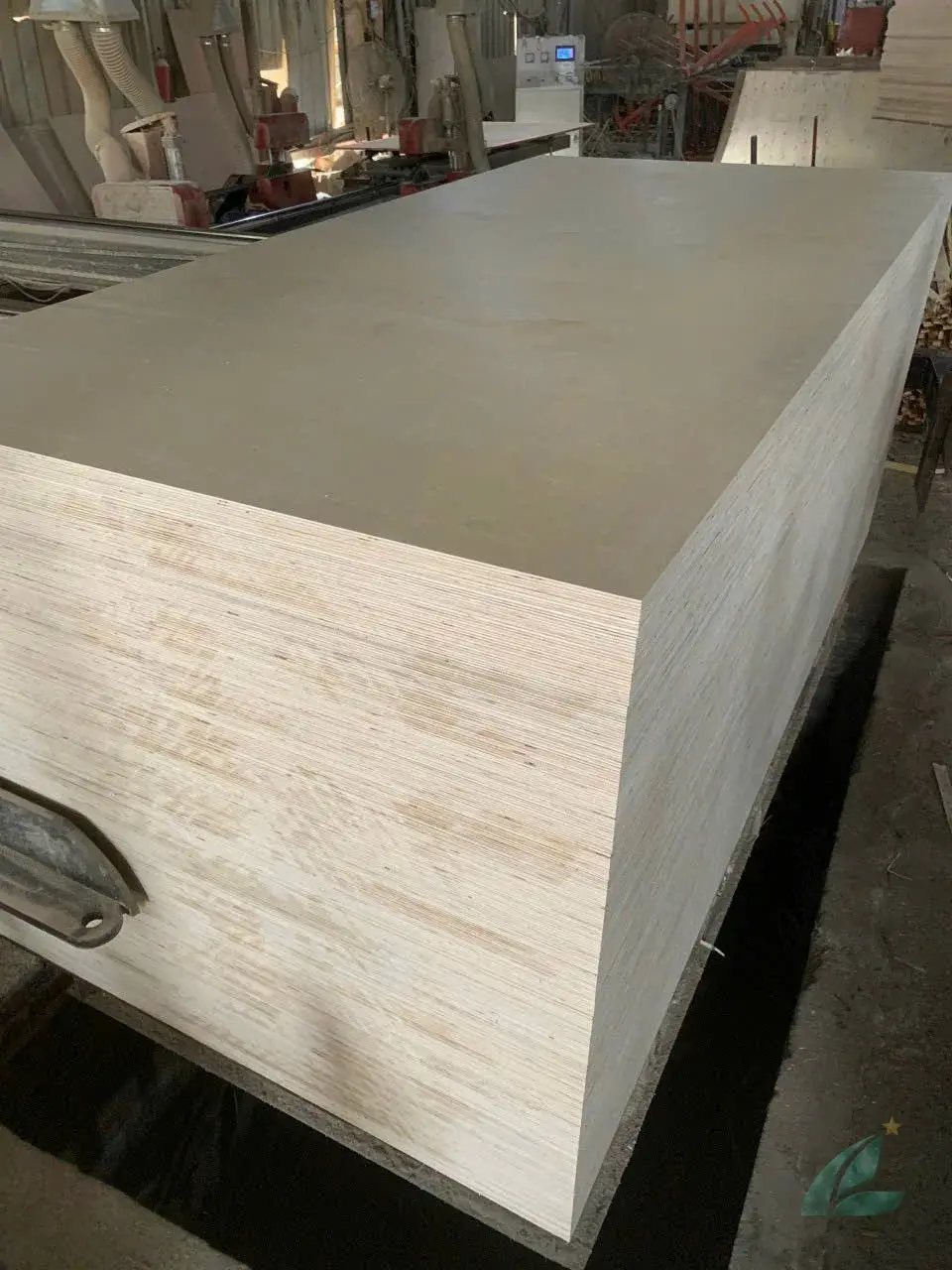
Key Insight: In 2025, styrax-core furniture plywood accounted for over 60% of HCPLY’s premium furniture shipments to EU and Japanese markets (HCPLY sales data, 2025). The trend accelerated after major European buyers audited Vietnamese factories and approved styrax as a birch-equivalent specification.
📦 Container Packing: 18 Pallets vs 15 with Eucalyptus
Styrax core plywood’s lower density translates directly into superior container utilization — a factor that impacts delivered cost per cubic meter more than most buyers realize.
Packing Comparison per 40HC Container
| Core Species | Density (calc.) | Pallets/40HC | CBM/40HC | Weight/40HC |
|---|---|---|---|---|
| Styrax | 500 kg/CBM | 18 | ~53 CBM | ~26.5 MT |
| Acacia | 580 kg/CBM | 16 | ~47.5 CBM | ~27.5 MT |
| Eucalyptus | 700 kg/CBM | 15 | ~44.5 CBM | ~28.0 MT |
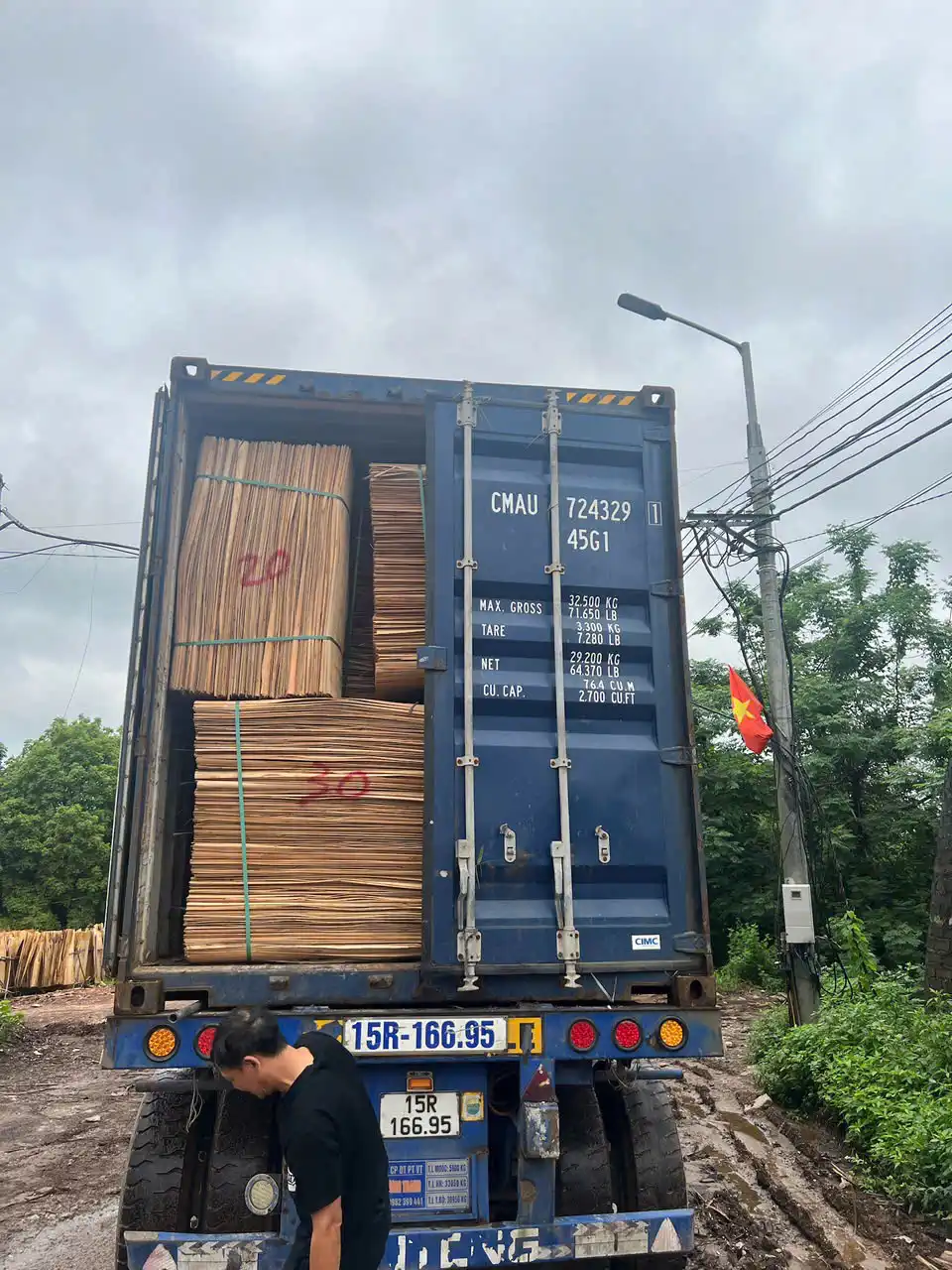
The 40HC container has a hard payload limit of 28.5 MT. Styrax panels at ~26.5 MT total weight stay well below this threshold, allowing all 18 pallets to load without overweight risk. Eucalyptus core pushes close to 28.0 MT with only 15 pallets — leaving less margin and fewer total CBM per shipment.
What This Means for Your CIF Cost
Each additional pallet per container reduces your per-CBM freight cost proportionally. With 18 vs 15 pallets, styrax core delivers approximately 20% more volume per container than eucalyptus core.
For a detailed breakdown of plywood container packing calculations, including formulas for mixed-spec loading, refer to our factory-level packing tables.
Get Container Loading Optimization for Your Order — HCPLY’s logistics team calculates exact pallet counts for your specifications. Free service with every inquiry.
📐 How to Specify Styrax Core Plywood for Export Orders
Ordering styrax core plywood correctly prevents specification mismatches that delay production and erode margins. Follow this buyer’s checklist.
Specification Checklist
| Parameter | What to Specify | Common Options |
|---|---|---|
| Face veneer | Species + grade | Birch D/E, Okoume A/B, EV A/B, Pine A/B |
| Core species | ”Styrax core” explicitly | Do NOT write “hardwood core” — too vague |
| Core construction | Stitching method | Full stitched (premium) or stitched outer + edge-trimmed inner |
| Thickness | In mm | 3, 5, 9, 12, 15, 18, 21, 25mm |
| Tolerance | Thickness ±0.3mm, L/W ±2mm | Standard for export grade |
| Sheet size | mm format | 1220x2440 (4x8ft) or 1250x2500 (metric EU) |
| Glue type | MR or WBP separately | Melamine (MR) for interior, Phenolic (WBP) for exterior |
| Emission class | E0, E1, or E2 separately | E0/CARB P2 for US/EU/Japan/Korea furniture |
| Sanding | Calibrated or rough | Double-side sanded for furniture, unsanded for lamination |
| Certifications | List all required | FSC, CARB P2, CE, EUDR as needed |
| Packing | Pallet specs | Standard export pallet, 1000mm stack height |
Sample Order Specification (Copy-Paste Template)
Product: Birch Face Plywood, Styrax Core
Face: Birch veneer, Grade D/E
Core: Styrax (Styrax tonkinensis), full stitched
Thickness: 18mm (tolerance ±0.3mm)
Size: 1220 x 2440mm (tolerance ±2mm)
Glue: Melamine (MR)
Emission: E0 / CARB P2
Sanding: Double-side calibrated
Certifications: FSC, CARB P2, CE
Packing: Standard export pallet, 1000mm stack height
Quantity: 1 x 40HC (18 pallets, ~53 CBM)
Common Mistakes Buyers Make
Mistake 1: Writing “hardwood core” instead of “styrax core.” This allows the factory to substitute acacia (darker, heavier) without technically violating the spec. Always name the species explicitly on your purchase order.
Mistake 2: Confusing glue type with emission standard. Specify separately: “Glue: Melamine (MR). Emission: E0.” These are two distinct parameters — MR describes water resistance, E0 describes formaldehyde levels. Mixing them (e.g., “E0 glue”) signals inexperience and invites inflated pricing.
Mistake 3: Not specifying core construction method. “Full stitched” costs more but eliminates core gaps and overlaps that cause surface defects after lamination. For furniture-grade applications, always specify stitched core construction.
Mistake 4: Requesting “sanded” without specifying calibration. Export-grade furniture plywood requires double-side calibrated sanding to ±0.3mm tolerance. Simply writing “sanded” may result in single-side or rough sanding unsuitable for automated production lines.
Browse the full HCPLY product catalog to see available styrax-core product combinations with pricing tiers.
❓ Frequently Asked Questions
Is styrax core plywood FSC certified?
Yes. HCPLY’s production facilities hold FSC Chain of Custody certification. Styrax logs from certified plantations in Phu Tho and Yen Bai provinces carry full FSC documentation through the supply chain. Certificates are available upon request with every export shipment.
What face veneers pair with styrax core?
Styrax core works with all major face veneer species: birch (D/E/F grade), okoume, EV (engineered veneer), pine, poplar, and eucalyptus face. The light core color complements every face option without visible contrast at panel edges.
How does styrax compare to acacia core for furniture?
Acacia core is denser (~580 kg/m³) and darker in color. For commercial-grade plywood where appearance is secondary, acacia works well at lower cost. For furniture where edge visibility, panel weight, and surface smoothness matter, styrax outperforms acacia on all three criteria.
What is the MOQ for styrax core plywood?
Standard MOQ is 1 x 40HC container. Mixed specifications within a single container are accepted — combine different thicknesses, sizes, or face veneers to test multiple configurations in one shipment.
Does Styrax Core Work with Phenolic Glue for Exterior Use?
Yes. Styrax core bonds effectively with both Melamine (MR) and Phenolic (WBP) adhesive systems. For exterior-rated panels such as concrete formwork or marine applications, styrax core with phenolic glue passes the 72-hour boiling test. However, most styrax core demand concentrates on furniture (Melamine MR, E0) because that segment values styrax’s light color and weight advantages most.
✅ Conclusion: Styrax Core Delivers Premium Quality at Competitive Cost
Styrax core plywood has moved from a regional Vietnamese specialty to a globally specified furniture material in under five years. The combination of birch-equivalent light color, 480-500 kg/m³ density, E0 certification availability, and 18-pallet container loading makes it the most cost-effective premium core species available for international furniture manufacturing as of 2026.
For buyers currently paying $450-650/CBM for birch core plywood with unpredictable lead times, switching to Vietnamese styrax core at $280-380/CBM with 15-20 day delivery represents both a cost reduction and a supply chain improvement (prices subject to change — contact for current pricing).
Request Styrax Core Plywood Pricing and Samples — Lucy and the HCPLY export team provide detailed specifications, sample panels, and container loading calculations within 24 hours. No commitment required.