

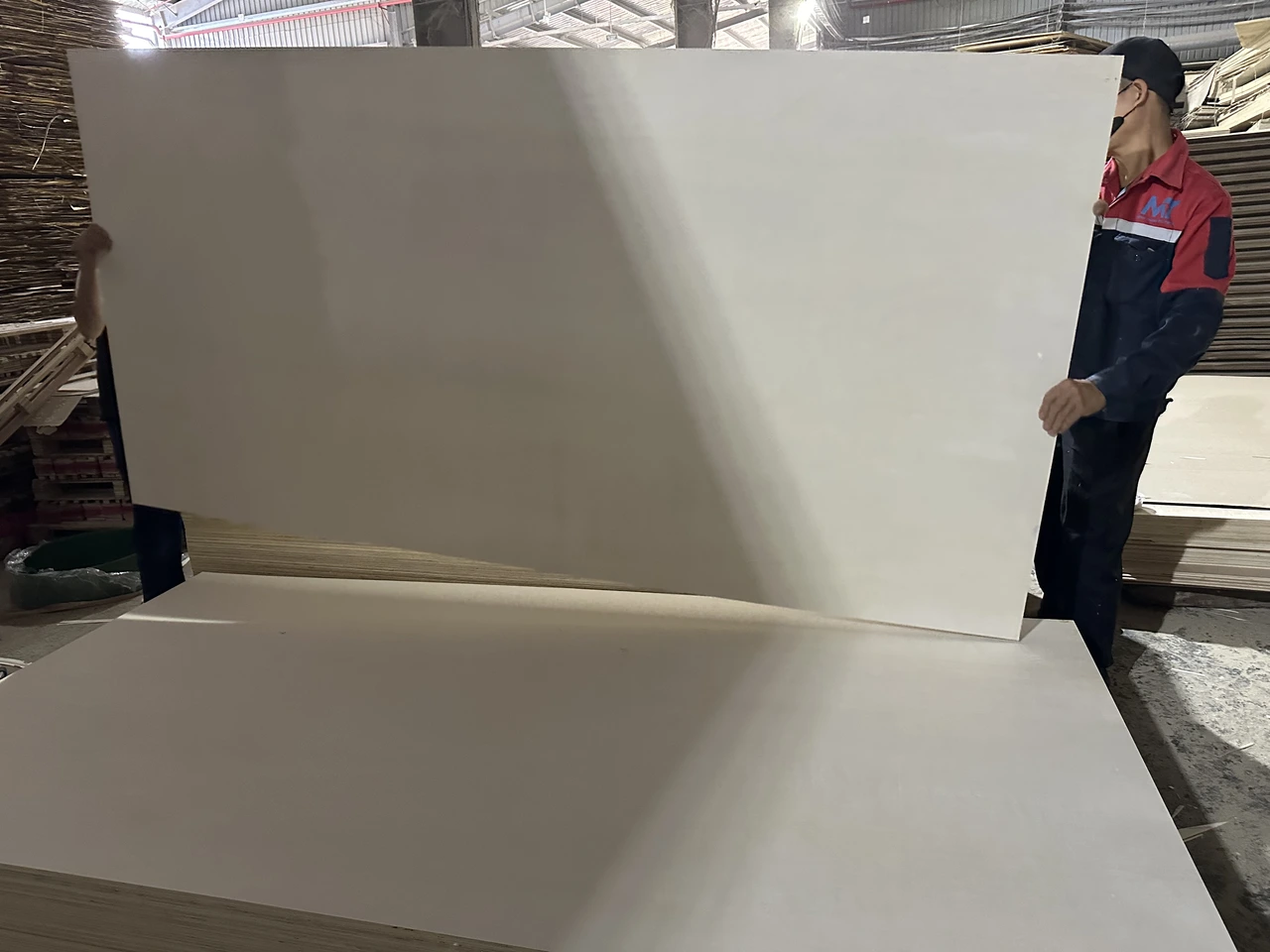
Three face veneers dominate the mid-to-premium furniture plywood market from Vietnam: poplar, birch, and okoume. Each targets a different buyer segment, price point, and end-use application. Choosing the wrong one — even with the right core and glue — leads to rejected containers, mismatched specs, or margin losses when the market shifts.
This guide breaks down the poplar vs birch vs okoume face veneer decision from a factory perspective. We cover appearance, price, strength, emission grades, core pairings, and which markets each species actually serves.
📊 TL;DR Comparison Table
| Spec | Poplar | Okoume | Birch |
|---|---|---|---|
| Price tier | Mid | Mid (slightly above poplar) | Highest |
| Color | Pale white, slight yellow | Light pink-cream | Pale cream-white |
| Grain | Fine, straight | Consistent interlocked | Fine, tight |
| Grade range | A/B | A/B | D/E/F (D = best) |
| Face thickness | 0.2–0.4mm | 0.2–0.4mm | 0.2–0.4mm |
| Common cores (VN) | Styrax, Acacia | Styrax, Eucalyptus | Styrax |
| Emission available | E0, E1, E2 | E0, E1 | E0, E1 |
| Glue options | MR, WBP | MR, WBP | MR, WBP |
| Sanded | Yes (furniture) | Yes | Yes |
| Primary markets | Europe, SEA, packaging | Europe, Middle East | EU, US, Korea, Japan |
🌿 Poplar Face Veneer — The Light, Versatile Option
Poplar face veneer is pale white with a faint yellow tint. The grain runs straight and fine, giving finished panels a clean, consistent look without the character markings found in harder species. That uniformity makes it attractive for applications where a neutral background is required — lamination substrates, economy furniture panels, interior packaging, and flat-pack components.
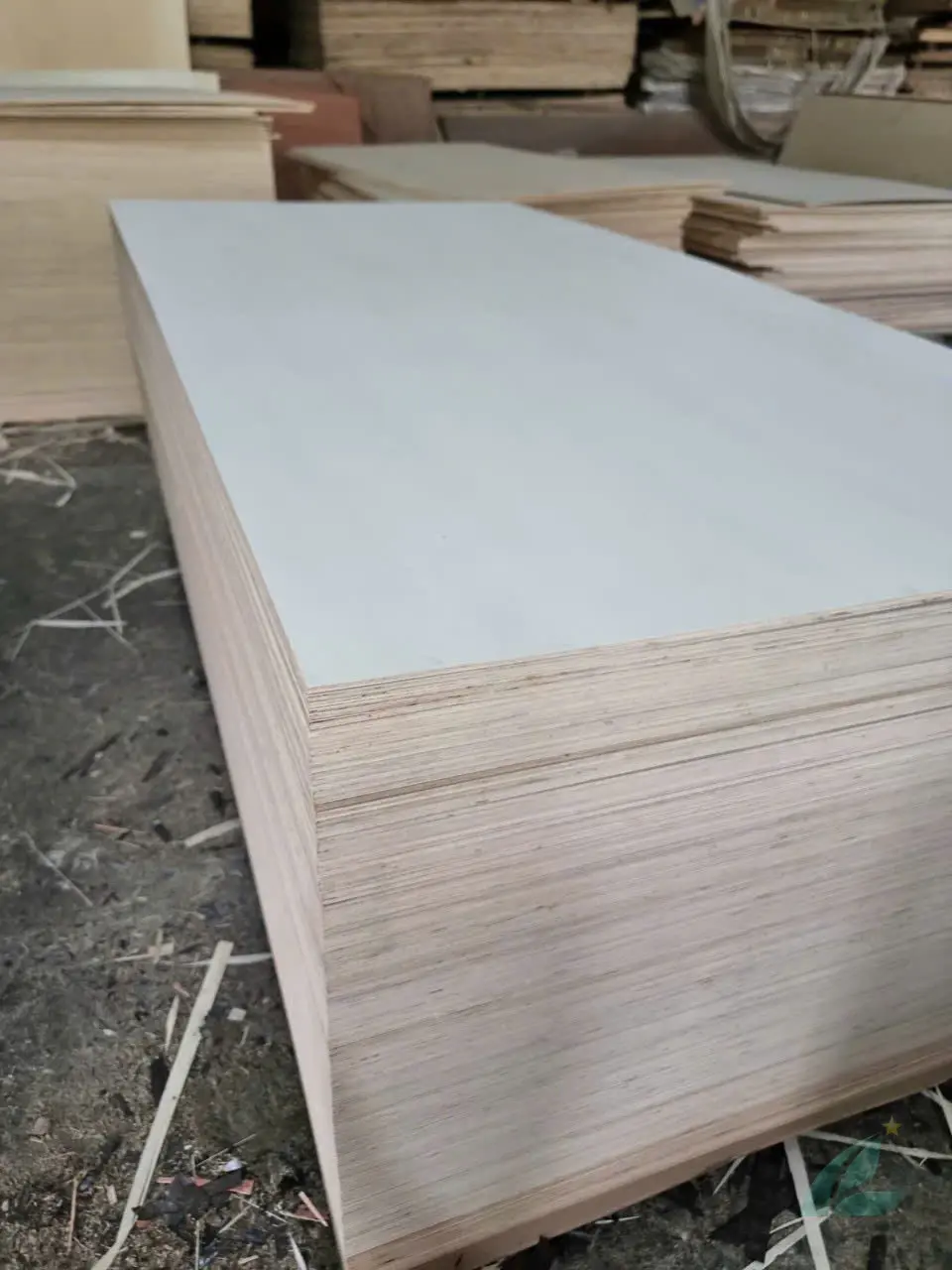
In Vietnam, poplar face pairs most commonly with styrax core for premium furniture-grade panels, or with acacia core for cost-driven commercial applications. Both produce a lightweight panel — styrax core density sits at 480–500 kg/m³, making poplar-over-styrax one of the lighter options available (HCPLY production data, 2026).
📌 Where Poplar Performs Well
Poplar excels in five specific use cases:
- Economy furniture panels — flat-pack bed frames, drawer bases, interior cabinet backs
- Lamination substrate — the pale, tight grain bonds cleanly to HPL, PVC film, and melamine paper
- Interior packaging — premium wooden gift boxes, watch packaging, display cases
- European commercial interiors — cost-effective alternative to okoume where surface quality is secondary
- Mixed-container orders — buyers combining poplar faces with bintangor or okoume to fill a 40HC container across price points
Poplar is available in E0, E1, and E2 emission grades — the widest range of the three species covered here. For export to markets that allow E2 (Southeast Asia, some Middle East segments), poplar with acacia core and melamine (MR) glue gives the lowest landed cost per sheet among furniture-face options.
⚠️ Important: Poplar face is a lighter, softer veneer than birch or okoume. It dents more easily under impact. For applications where the finished panel will be edge-exposed and subject to frequent contact, birch or okoume is a more durable choice.
View Poplar Plywood specs and pricing from Vietnam
🌳 Birch Face Veneer — Premium Grade, Highest Price
Birch sits at the top of the face veneer price range from Vietnam. The veneer itself is imported — typically sourced from Russia or Eastern Europe — then applied to Vietnamese core (most commonly styrax) at the production facility. This import component drives the price premium relative to locally sourced faces.
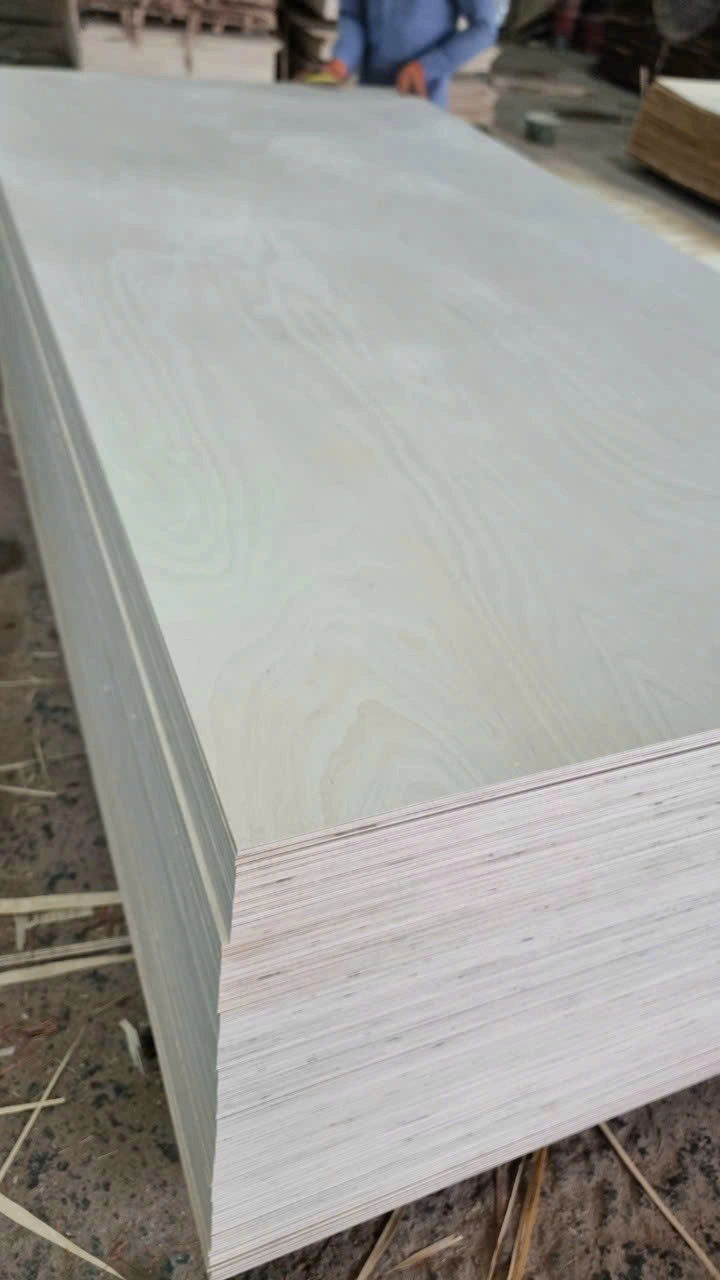
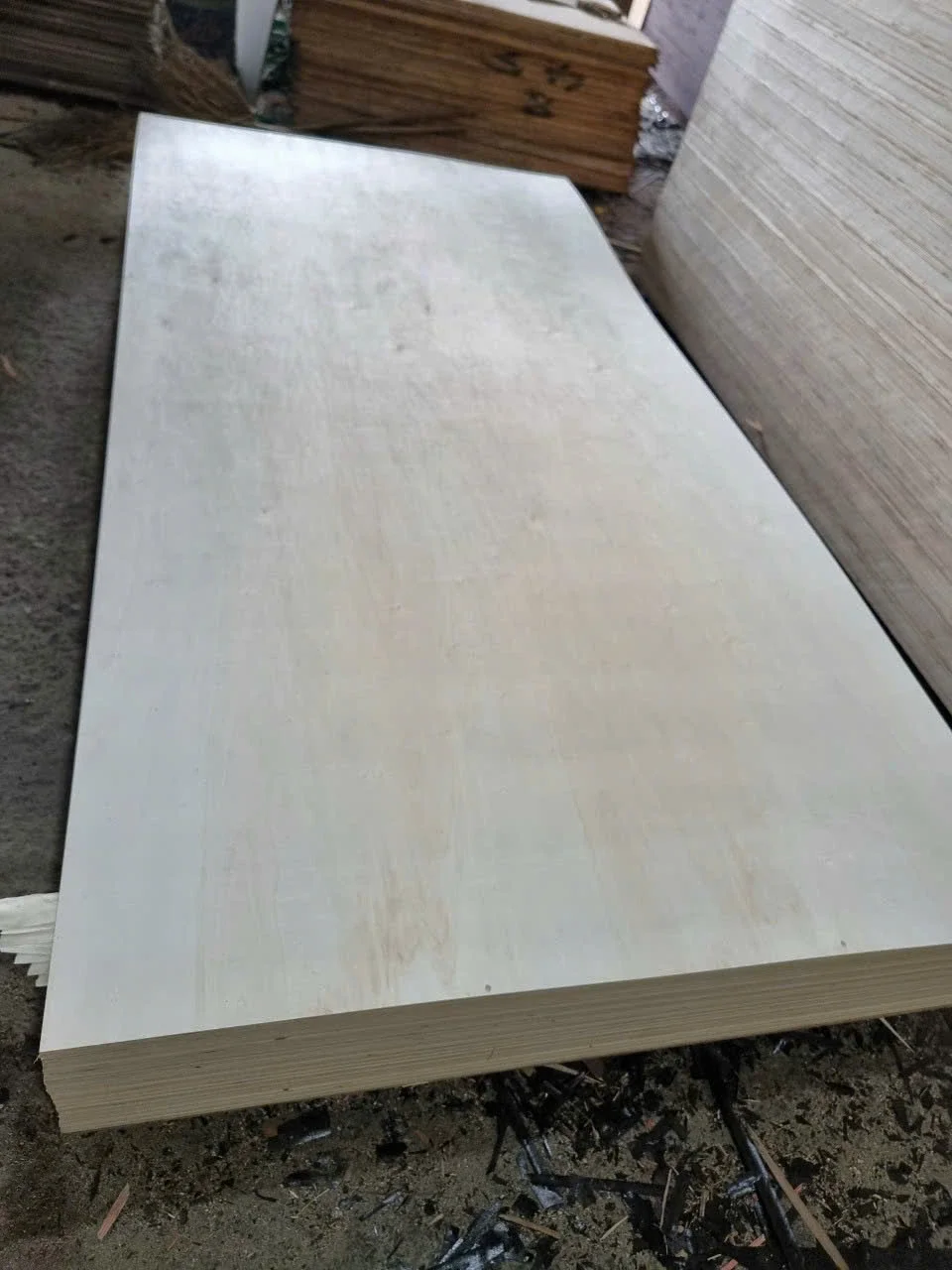
The grade system for birch differs from other species. Birch plywood from Vietnam uses D, E, and F grades — not A/B/C. Grade D is the highest quality tier available, characterized by minimal knots, tight grain, and the most consistent surface appearance. E and F grades show progressively more natural markings and minor defects.
💡 Tip: When requesting birch samples or quotes, specify “Grade D” explicitly. Suppliers using “A/B” terminology for birch veneer from Vietnam are using incorrect grade notation — a detail worth verifying before placing an order.
📌 Birch Strength and Surface Properties
Birch is a dense, hard species. The veneer layer adds meaningful tensile strength to the panel face, making it more resistant to surface scratches and edge impact than poplar or okoume. For cabinet interiors, drawer sides, or any application where the cut edge will be visible, birch delivers a tighter, cleaner edge line (HCPLY production data, 2026).
Birch plywood with styrax core and E0 emission meets CARB P2 requirements for the US market and satisfies European furniture regulations under EN 13986. This combination — birch face, styrax core, melamine (MR) glue, E0 emission — is the primary export specification from HCPLY’s premium furniture facility.
“For buyers in the US and Korea, birch D-grade with E0 emission is the default specification we receive. The market has standardized around this combination for kitchen cabinets and furniture components.” — Lucy, International Sales Manager, HCPLY
📌 Where Birch Is the Correct Choice
- Kitchen cabinet doors and interiors (US, EU, South Korea, Japan)
- Premium bedroom furniture components with exposed edges
- Interior architectural millwork requiring a light, consistent face
- Any specification calling for CARB P2 compliance
- High-end furniture flat-pack requiring a scratch-resistant outer face
View Birch Plywood specifications and available grades from HCPLY Vietnam
🌍 Okoume Face Veneer — European Standard, Broad Application
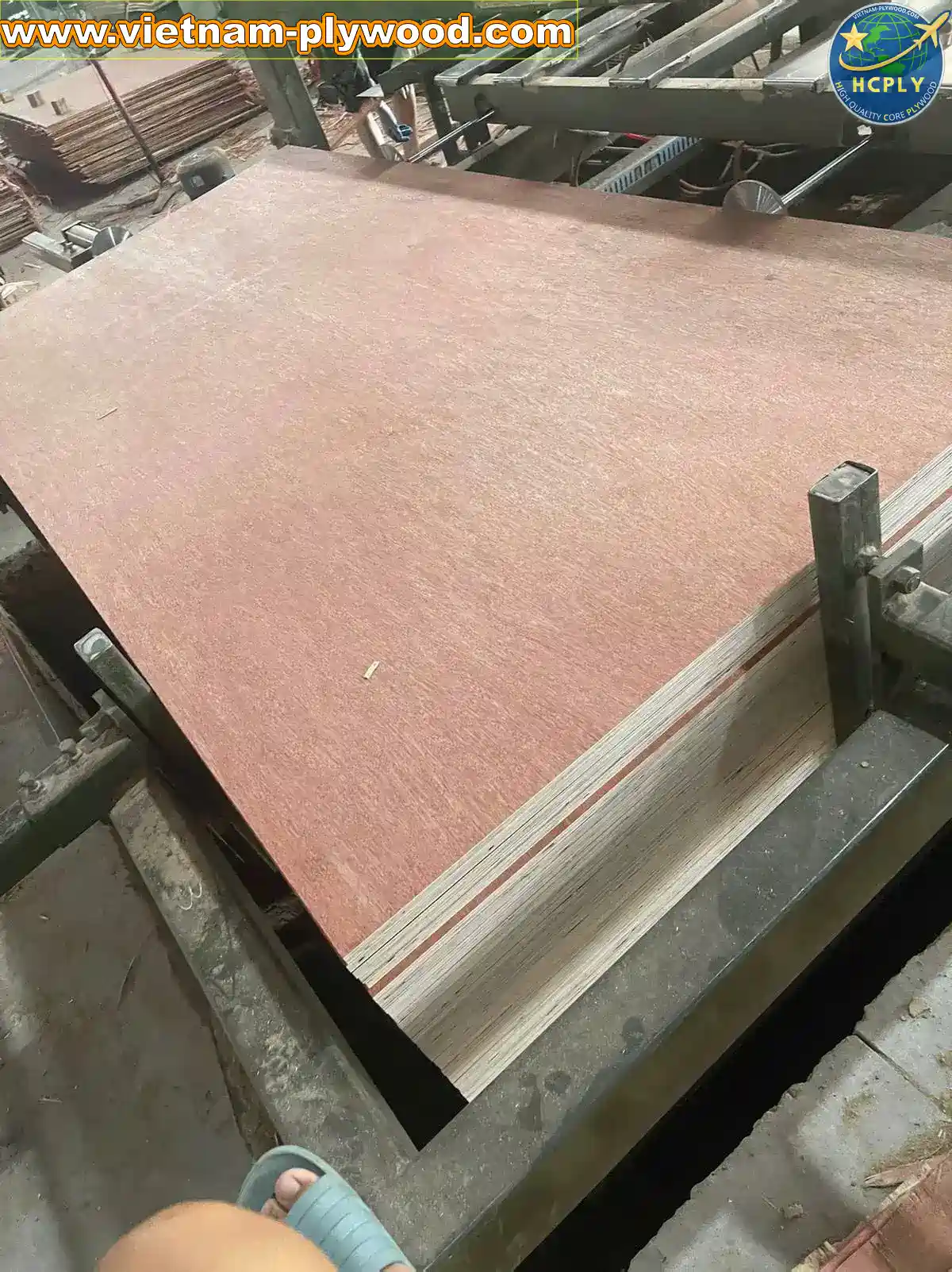
Okoume veneer has a distinctive light pink-cream color with a slightly silky sheen when sanded. The interlocked grain pattern catches light at different angles, giving panels a subtle visual depth that distinguishes them from the flatter appearance of poplar or the neutral cream of birch.
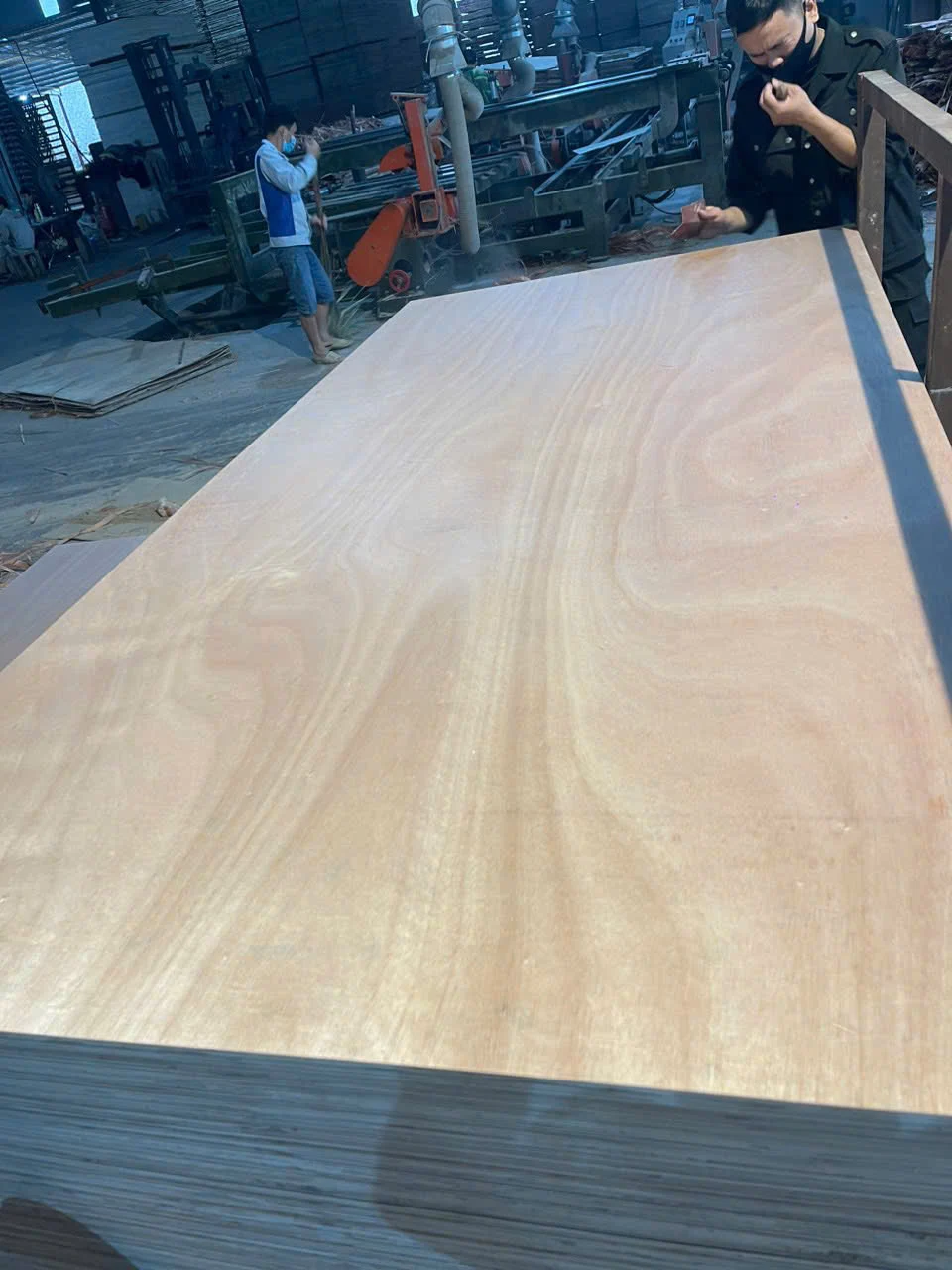
Okoume has been the European furniture market standard for decades. German, Polish, French, and Spanish furniture manufacturers sourcing from Vietnam consistently specify okoume face for interior components. It delivers better surface presentation than bintangor or commercial-grade poplar at a price below birch — a clear value position in the mid-market.
📌 Okoume and European Market Requirements
For European buyers, okoume plywood from HCPLY is configured for compliance from the outset:
- Emission: E0 or E1 — melamine (MR) glue as standard for interior use
- EUDR compliance: Traceability documentation available — critical for EU buyers from 2025 onward (EU Deforestation Regulation, 2023)
- FSC certification: Available for okoume panels from FSC-certified production runs
- Thickness tolerance: ±0.3mm standard, tighter on request
The typical okoume panel pairs with styrax or eucalyptus core. Styrax core (480–500 kg/m³) produces a lighter panel preferred for flat-pack furniture. Eucalyptus core (650–750 kg/m³) adds structural rigidity for load-bearing applications (HCPLY production data, 2026).
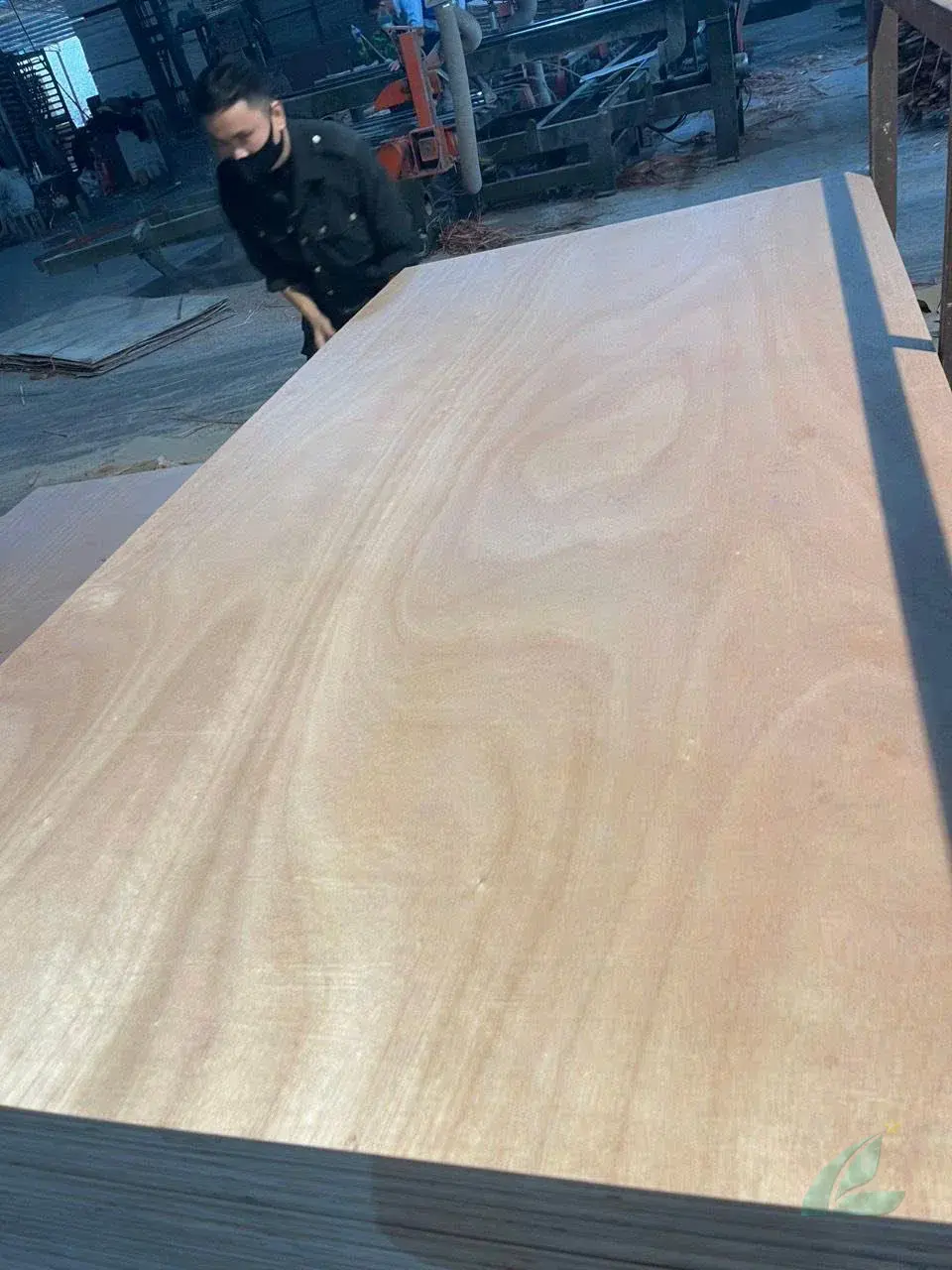
📌 Where Okoume Is the Correct Choice
- European furniture and interior fitout (primary market)
- Mid-range cabinet manufacturing in Germany, Poland, Spain, France
- Bed frames, wardrobe panels, interior shelving
- Applications requiring E0/E1 certification but not the cost of birch
- Marine-adjacent applications — okoume with WBP phenolic glue for moisture-resistant end uses
View Okoume Plywood full specification sheet from HCPLY Vietnam
⚙️ Core Pairing: How Core Species Changes the Panel
The face veneer defines surface appearance and application identity. The core defines weight, structural performance, and container economics. All three face veneers — poplar, birch, and okoume — can be paired with Vietnam’s three available core species.
| Core | Density | Best Pairing |
|---|---|---|
| Styrax | 480–500 kg/m³ | Birch (furniture), Okoume (EU furniture) |
| Acacia | ~580 kg/m³ | Poplar (commercial/budget) |
| Eucalyptus | 650–750 kg/m³ | Okoume (structural), high-load applications |
Styrax core is the dominant choice for premium furniture-grade panels across all three face species. It is lighter than acacia or eucalyptus, white in color (important for face blending in thin veneer applications), and produces the highest CBM per 40HC container — 18 pallets versus 16 for acacia and 15 for eucalyptus (HCPLY container data, 2026).
For buyers comparing landed prices, styrax core across all three faces maximizes sheet count per container — a relevant factor when calculating total cost per panel at destination.
Read the detailed breakdown: Plywood Core Types — Acacia vs Eucalyptus vs Styrax from Vietnam Factory
📋 Emission Standards and Glue — What Each Market Requires
All three face veneer options are available with melamine (MR) or phenolic (WBP) glue. Glue type and emission standard are separate specifications — a common source of confusion in procurement.
- Glue type (MR or WBP) = moisture resistance performance
- Emission class (E0, E1, E2) = formaldehyde off-gassing level
For furniture and interior applications, melamine (MR) glue is standard. E0 emission is required for US (CARB P2 equivalent — see E0 vs CARB P2 differences), Japan, and premium European specifications. E1 is accepted across most of Europe (EN 717-1, 2004).
| Market | Minimum Emission | Preferred Face |
|---|---|---|
| US | E0 (CARB P2) | Birch D-grade |
| EU Premium | E0 | Birch or Okoume |
| EU Standard | E1 | Okoume |
| Korea / Japan | E0 | Birch |
| Middle East | E1/E2 | Okoume, Poplar |
| Southeast Asia | E1/E2 | Poplar |
Full breakdown of glue and emission standards: Plywood Glue Types and Emission Standards — MR vs WBP, E0/E1/E2 Explained
🔧 Decision Framework: Which Face Veneer to Order
Three questions determine the correct face veneer for your specification:
-
What market is receiving the finished product? US and Northeast Asia require birch D/E with E0. Europe standard specification uses okoume with E1. Price-sensitive markets accept poplar or okoume with E1/E2.
-
What is the end-use application? High-contact surfaces with visible edges — choose birch. Furniture panels that will be laminated or painted — okoume or poplar. Substrate for HPL or film — poplar.
-
What is the target landed price? Premium: birch. Mid-market: okoume. Economy-mid: poplar. All three are available from HCPLY’s furniture-grade facility in Northern Vietnam with full export documentation.
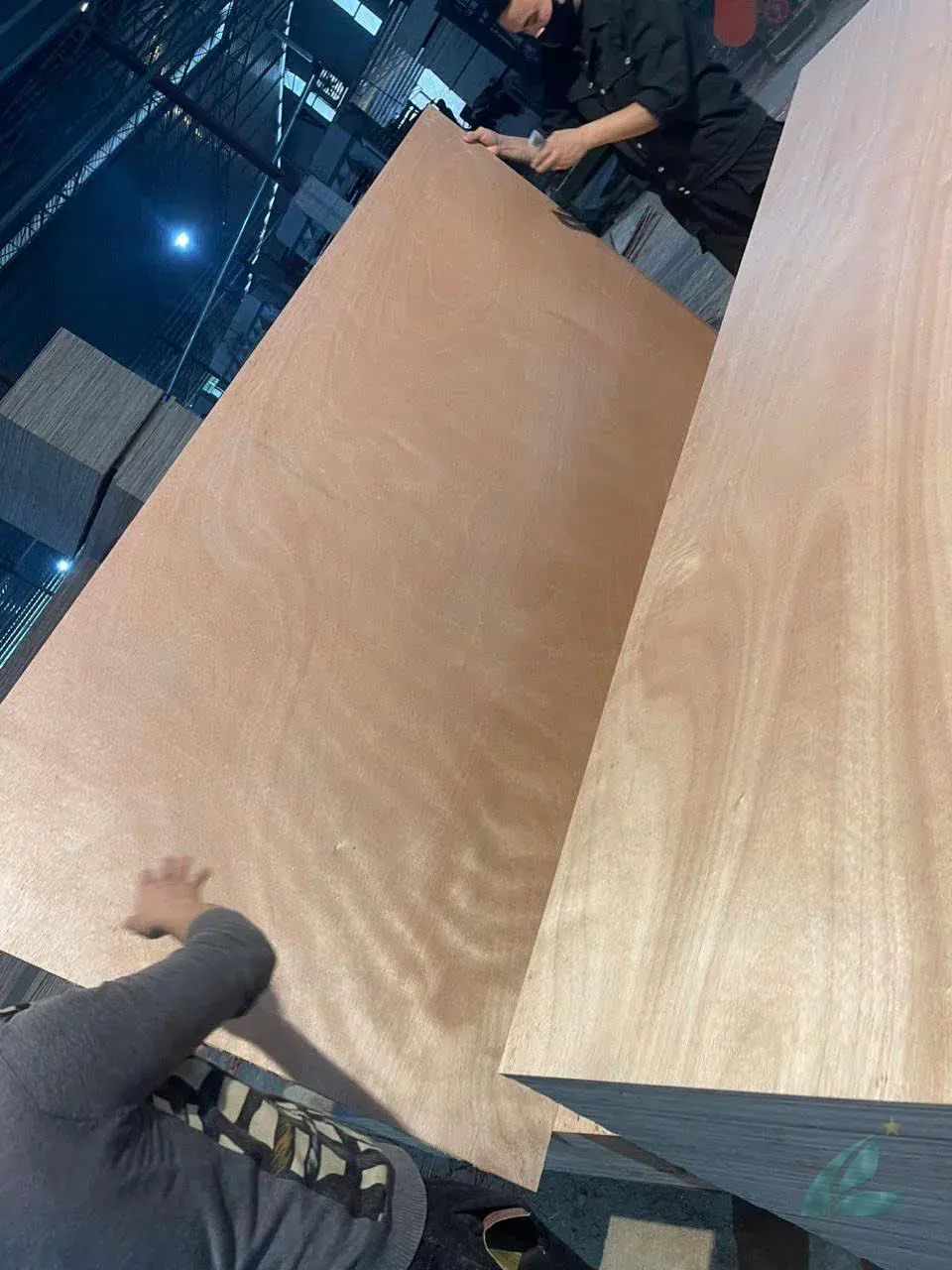
For buyers ordering from Vietnam for the first time, requesting sample sets of all three faces — same core, same thickness, same emission grade — is the most reliable way to confirm the correct choice before committing to a full container order.
Read the full face veneer guide: Plywood Face Veneer Types — Complete Buyer Guide from Vietnam Factory
✅ Summary
The poplar vs birch vs okoume face veneer decision is fundamentally a market and application question, not a quality hierarchy.
- Birch is not universally superior to okoume — it is the correct choice for specific markets (US, Korea, Japan) and applications (exposed-edge furniture, cabinet doors requiring CARB P2).
- Okoume is not a budget substitute for birch — it is the European market standard with its own well-established demand base.
- Poplar is not a low-quality option — it is the right face veneer for lamination substrates, economy furniture, and interior packaging where a neutral, lightweight panel is the actual requirement.
All three are produced at HCPLY’s Northern Vietnam facilities with factory-direct pricing, full export documentation, and on-site QC control. Minimum order is 1 × 40HC container. Mixed specifications are accepted within a single container.
Disclosure: This article is published by HCPLY, a Vietnam-based plywood manufacturer and export operator. While we aim to provide objective industry guidance, readers should consider our perspective as a market participant when evaluating recommendations.
Request samples and pricing for poplar, birch, or okoume face veneer plywood from HCPLY