

Every procurement manager who has ordered plywood by CBM and then hit a container weight violation knows the problem: the quoted CBM was fine, but the actual kilograms exceeded port limits. The root cause is almost always a misread weight estimate — often because the buyer used the wrong core density, or used a single “average” density across all species.
This article gives you the exact weight per sheet for every common thickness, for all three Vietnamese plywood core species. Every number comes from the same formula HCPLY uses for packing calculations: Length × Width × Thickness × Core Density. No guessing, no averaging.
⚠️ Important: Plywood weight is determined by core species, not face veneer. A birch-faced sheet and an okoume-faced sheet of the same thickness and core will weigh within 0.2% of each other. The tables below apply to any face veneer combination.
📊 The Formula Behind Every Number
Weight per sheet is straightforward to calculate once you know the core density:
Weight (kg) = Length_m × Width_m × Thickness_m × Density_kg/m³For the standard 1220×2440mm sheet:
Sheet area = 1.22 × 2.44 = 2.9768 m²
Weight (kg) = 2.9768 × Thickness_m × Density_kg/m³
Core density values used in all calculations (HCPLY production data, 2026):
| Core Species | Density | Notes |
|---|---|---|
| Styrax (bồ đề) | 500 kg/m³ | Lightest Vietnamese core — ideal for weight-sensitive orders |
| Acacia (keo) | 580 kg/m³ | Most common core for commercial plywood |
| Eucalyptus (bạch đàn) | 650 kg/m³ | Heaviest Vietnamese core — high-strength applications |
💡 Key Insight: These three species — acacia, eucalyptus, and styrax — are the only core species produced at scale in Northern Vietnam. There is no birch core, gurjan core, or hopea core in Vietnamese production (HCPLY technical reference, 2026).
“The single most common weight mistake we see is buyers quoting 600 kg/m³ as a universal density. That number doesn’t match any Vietnamese core species and leads to systematic errors in every calculation.” — David, Export Project Leader, HCPLY
📋 Weight Table — 1220×2440mm Sheet (Standard 4×8 ft)
All weights in kilograms per sheet. Calculated using 2.9768 m² × thickness × density.
| Thickness | Styrax (500 kg/m³) | Acacia (580 kg/m³) | Eucalyptus (650 kg/m³) |
|---|---|---|---|
| 3mm | 4.5 kg | 5.2 kg | 5.8 kg |
| 4mm | 6.0 kg | 6.9 kg | 7.7 kg |
| 5mm | 7.4 kg | 8.6 kg | 9.7 kg |
| 6mm | 8.9 kg | 10.4 kg | 11.6 kg |
| 8mm | 11.9 kg | 13.8 kg | 15.5 kg |
| 9mm | 13.4 kg | 15.5 kg | 17.4 kg |
| 12mm | 17.9 kg | 20.7 kg | 23.2 kg |
| 15mm | 22.3 kg | 25.9 kg | 29.0 kg |
| 18mm | 26.8 kg | 31.1 kg | 34.8 kg |
| 21mm | 31.3 kg | 36.3 kg | 40.6 kg |
| 25mm | 37.2 kg | 43.2 kg | 48.4 kg |
| 30mm | 44.7 kg | 51.8 kg | 58.1 kg |
⚠️ Note: These weights are for the plywood panel only. Pallet weight (typically 20–25 kg per pallet) and packaging strapping add additional mass. Use these figures for sheet-level calculations, then add packaging weight for container planning.
Get exact weight specs for your specific order
📋 Weight Table — 1250×2500mm Sheet (Euro Standard)
The 1250×2500mm format is used for European, Korean, and some Australian markets. Sheet area = 1.25 × 2.50 = 3.125 m² — approximately 5% larger than the 4×8 format.
| Thickness | Styrax (500 kg/m³) | Acacia (580 kg/m³) | Eucalyptus (650 kg/m³) |
|---|---|---|---|
| 3mm | 4.7 kg | 5.4 kg | 6.1 kg |
| 4mm | 6.3 kg | 7.3 kg | 8.1 kg |
| 5mm | 7.8 kg | 9.1 kg | 10.2 kg |
| 6mm | 9.4 kg | 10.9 kg | 12.2 kg |
| 8mm | 12.5 kg | 14.5 kg | 16.3 kg |
| 9mm | 14.1 kg | 16.3 kg | 18.3 kg |
| 12mm | 18.8 kg | 21.8 kg | 24.4 kg |
| 15mm | 23.4 kg | 27.2 kg | 30.5 kg |
| 18mm | 28.1 kg | 32.6 kg | 36.6 kg |
| 21mm | 32.8 kg | 38.1 kg | 42.7 kg |
| 25mm | 39.1 kg | 45.3 kg | 50.8 kg |
| 30mm | 46.9 kg | 54.4 kg | 60.9 kg |
The 1250×2500 format produces heavier individual sheets than 1220×2440 at the same thickness and core. For container weight planning, this matters: 1250×2500 sheets load slightly fewer per container (same pallet count, but each pallet holds the same sheets-per-pallet as the standard size).
🔧 How to Use These Tables in Practice
📌 Step 1: Identify Your Core Species
The most important variable. Ask your supplier explicitly — “What core species is used in this product?” Acceptable answers for Vietnamese plywood: acacia, eucalyptus, or styrax. If the answer is “mixed tropical hardwood” without specifying species, request clarification before calculating weights.
Product-to-core mapping for common Vietnamese plywood types:
| Product Type | Typical Core |
|---|---|
| Premium furniture plywood (birch, okoume, EV face) | Styrax or eucalyptus |
| Commercial/packing plywood | Acacia |
| Film-faced construction plywood | Eucalyptus or acacia |
| Matt plywood (unfaced substrate) | Styrax, eucalyptus, or acacia |
📌 Step 2: Find Weight Per Sheet in the Table
Look up your thickness and core species. Use the 1220×2440mm table for standard 4×8 orders, the 1250×2500mm table for Euro-format orders.
📌 Step 3: Multiply by Sheet Count
Total weight (kg) = Weight per sheet × Number of sheets ordered
Total weight (MT) = Total weight (kg) ÷ 1,000
Example: Ordering 1,776 sheets of 9mm acacia (1220×2440mm):
- Weight per sheet: 15.5 kg (from table)
- Total: 1,776 × 15.5 = 27,528 kg = 27.5 MT
- Container limit: 28.5 MT — this order fits comfortably
Contact HCPLY for weight verification on your order specs
📦 Container Weight Planning — Why These Numbers Matter
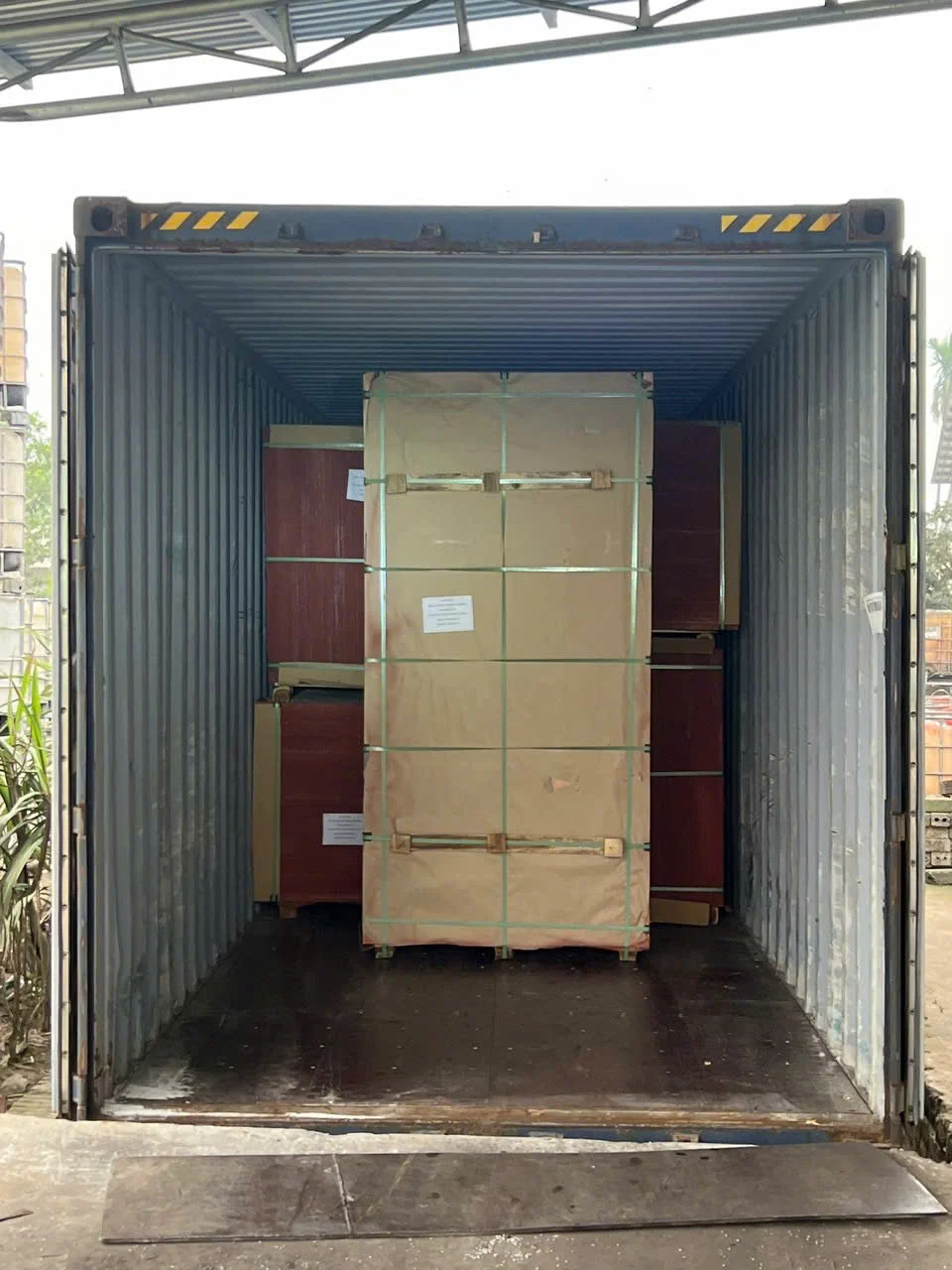
A 40HC container has a maximum payload of 28.5 MT (hard stop — not a target). The weight tables above let you calculate whether your order stays within limit before booking freight.
Cross-referencing against plywood container packing calculations for 40HC containers confirms that all standard configurations from HCPLY’s factory data stay under 28.5 MT:
| Core | Density | 18mm sheets/40HC | Total weight |
|---|---|---|---|
| Styrax | 500 kg/m³ | 990 sheets | 26.5 MT |
| Acacia | 580 kg/m³ | 880 sheets | 27.4 MT |
| Eucalyptus | 650 kg/m³ | 795 sheets | 27.7 MT |
These totals match: 990 × 26.8 kg = 26,532 kg = 26.5 MT ✓ (styrax, §12 reference data)
⚠️ Key point: Mixed-spec containers (multiple thicknesses or core types in one container) require recalculating total weight from scratch. Do not estimate from single-spec tables when mixing. Each combination must be calculated independently and summed.
⚙️ Why Density Differs by Core Species
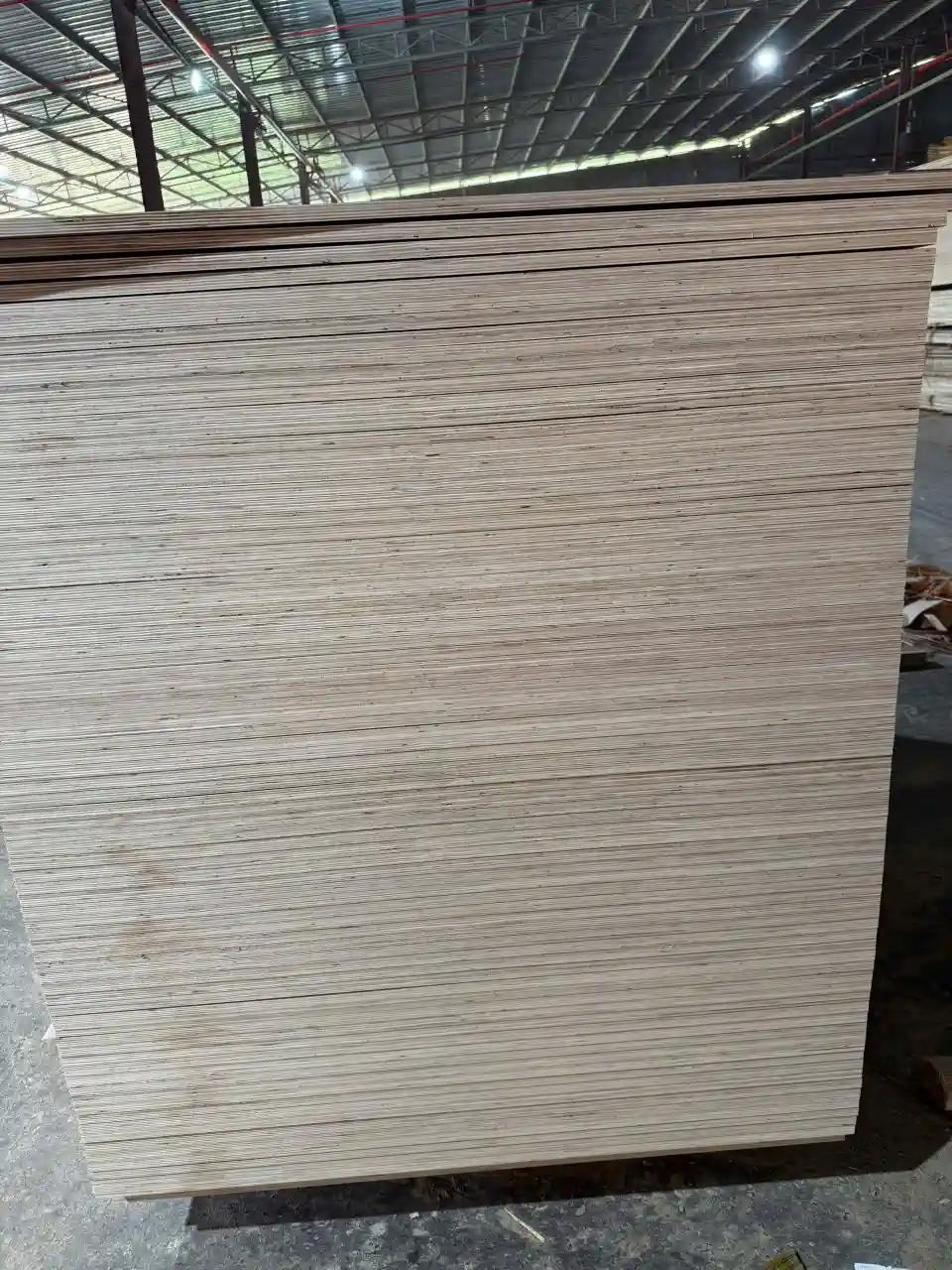
The 30% density difference between styrax (500 kg/m³) and eucalyptus (650 kg/m³) is not accidental — it reflects fundamental differences in wood cell structure:
Styrax (bồ đề): Fast-growing plantation species from Northern Vietnam. Lower density means lighter weight per unit volume. Preferred for furniture-grade plywood where weight savings matter in installation (kitchen cabinets, wall panels), and for maximizing sheet count per container.
Acacia (keo): The most widely planted hardwood in Vietnam. Medium density, darker color, slightly tougher than styrax. Standard choice for commercial and packing grades where cost is the primary driver.
Eucalyptus (bạch đàn): Denser, harder fiber. Heavier weight per sheet but stronger dimensional stability under load. Used in premium film-faced construction plywood and applications requiring higher screw-holding or surface hardness. Wood density for eucalyptus plantation species in Southeast Asia is documented at 600–750 kg/m³ depending on age and growing region (FAO Forestry Paper, Tropical Wood Density Data, 2022). HCPLY’s production data uses 650 kg/m³ as the conservative standard for packing calculations.
Per the plywood core types guide from Vietnam’s manufacturer perspective, these three species account for all export-volume plywood production in Northern Vietnam — where 80%+ of Vietnam’s plywood export output originates (Vietnam Timber and Forest Products Association, 2024).
📐 Thickness Tolerance and Its Effect on Weight
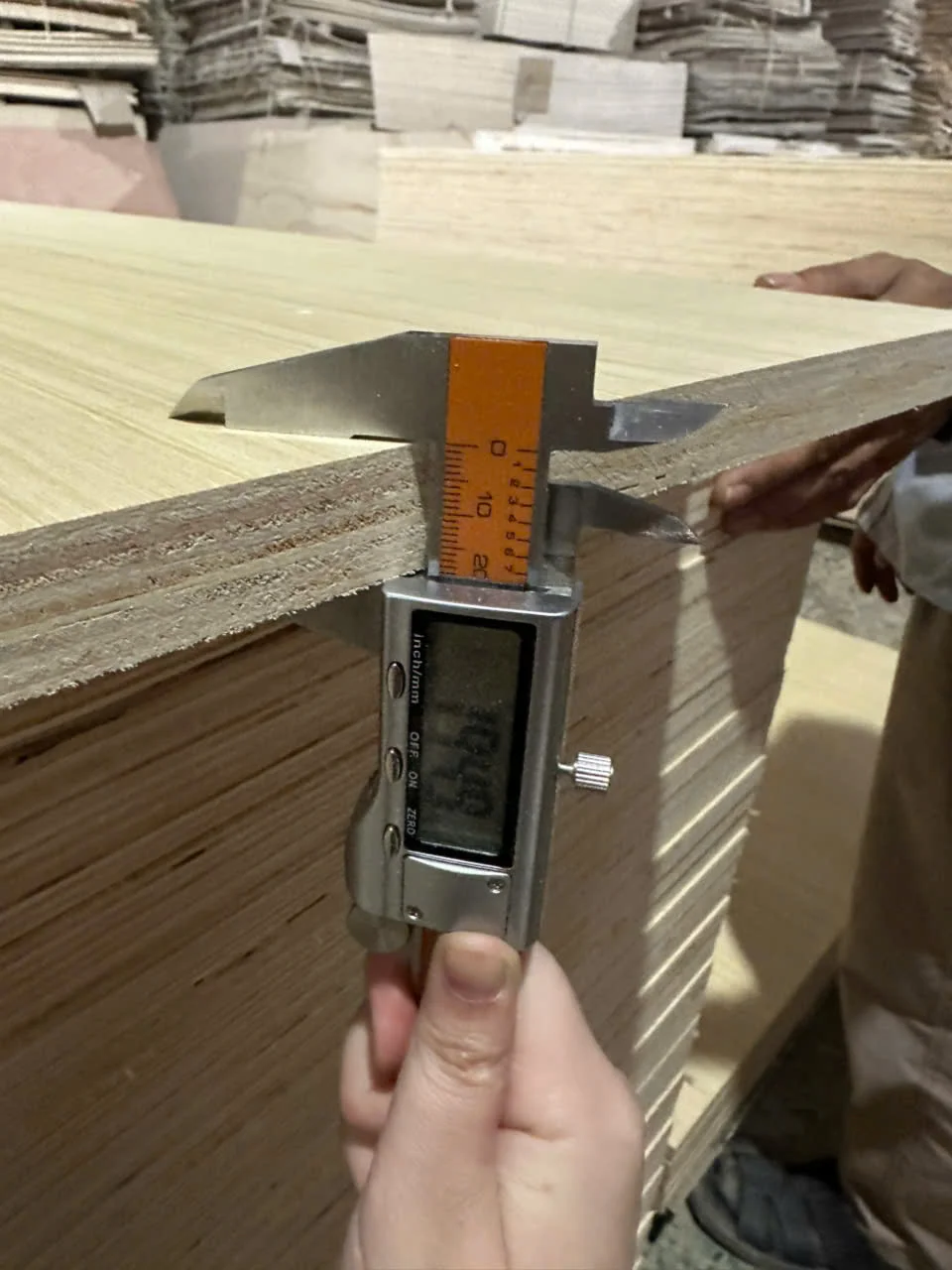
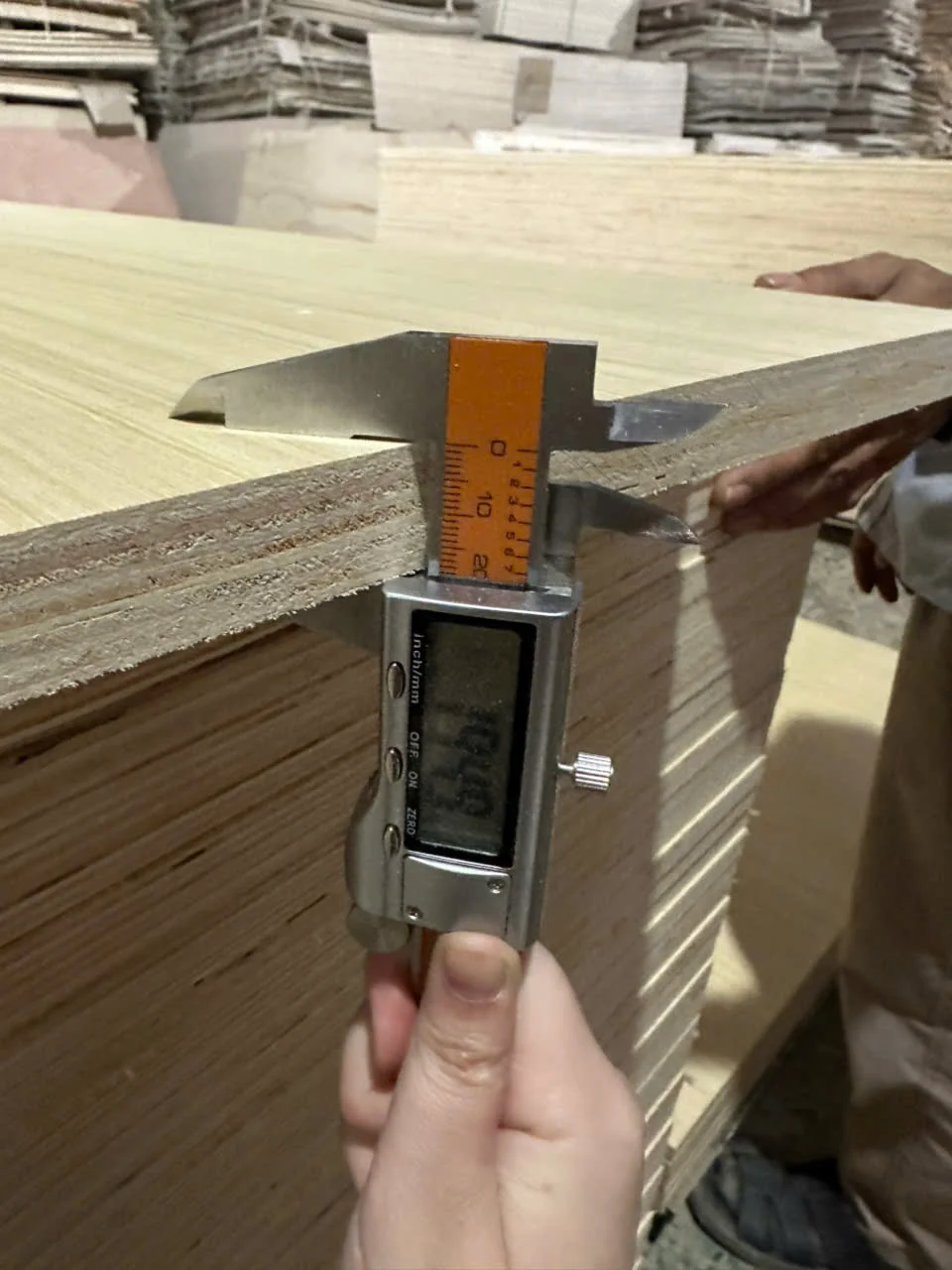
Thickness tolerance affects the actual weight of sheets received. Per the plywood thickness tolerance specification guide, Vietnamese plywood ships at:
- Furniture/cabinet grade (sanded): ±0.2mm or ±0.3mm
- Commercial grade (unsanded or lightly sanded): ±0.5mm
- Packing grade: ±0.5–1.0mm
At 18mm with ±0.5mm commercial tolerance, actual thickness can range 17.5–18.5mm. Weight variation:
- 17.5mm acacia: 2.9768 × 0.0175 × 580 = 30.2 kg
- 18.5mm acacia: 2.9768 × 0.0185 × 580 = 31.9 kg
That’s a 5.6% weight range from tolerance alone. For large orders, this affects total container weight estimates. Specify sanded (furniture grade) if tight weight budgeting matters — the ±0.2–0.3mm tolerance gives more predictable sheet weights.
🔗 Related Specifications in This Series
The weight tables here are one component of a complete specification picture. Related resources:
- Plywood sizes and thickness standard specifications guide — all standard dimensions, both 1220×2440 and 1250×2500 formats
- Plywood sheet sizes by market — which format for which destination — when to order 4×8 vs Euro standard
- Plywood thickness tolerance — what buyers should know — tolerance by product type, and how to specify correctly
- Container packing calculation for 40HC — full sheets-per-container and CBM data that connects to these weight figures
For complete specification verification before placing an order, see the plywood quotation guide — it covers every parameter buyers need to confirm before pricing.
✅ Quick Reference: Most-Ordered Thicknesses
For buyers who need fast lookups for the four most common export thicknesses:
9mm (1220×2440mm)
- Styrax: 13.4 kg/sheet
- Acacia: 15.5 kg/sheet
- Eucalyptus: 17.4 kg/sheet
12mm (1220×2440mm)
- Styrax: 17.9 kg/sheet
- Acacia: 20.7 kg/sheet
- Eucalyptus: 23.2 kg/sheet
18mm (1220×2440mm)
- Styrax: 26.8 kg/sheet
- Acacia: 31.1 kg/sheet
- Eucalyptus: 34.8 kg/sheet
25mm (1220×2440mm)
- Styrax: 37.2 kg/sheet
- Acacia: 43.2 kg/sheet
- Eucalyptus: 48.4 kg/sheet
HCPLY provides pre-calculated packing lists with exact sheet counts and total weights for every order. No manual estimation required at the purchase stage — but knowing the underlying formula means you can verify any quote independently.
Request a full packing specification with weight breakdown for your order