

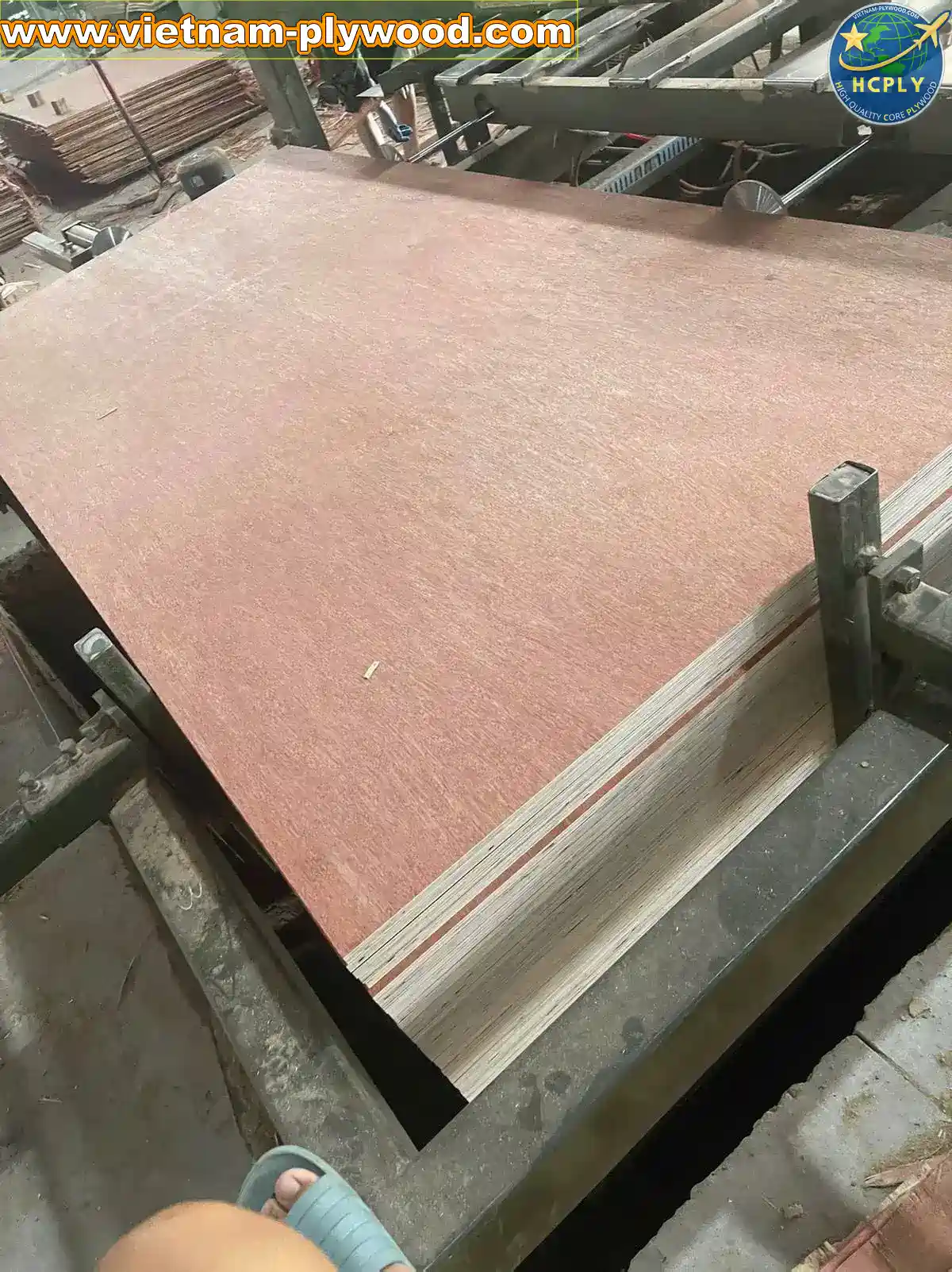


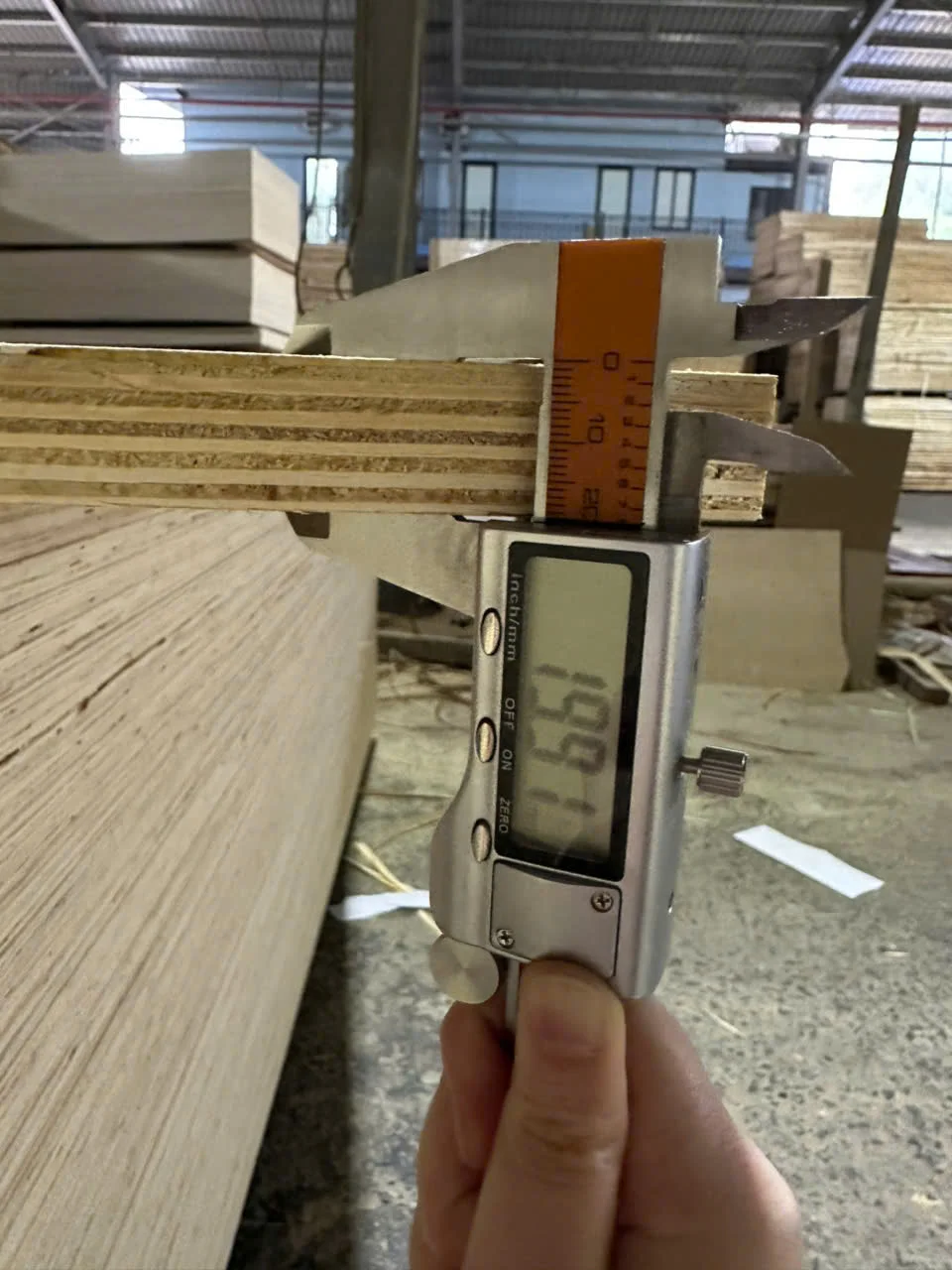
A buyer in Germany received 18mm birch plywood — measured on arrival at 17.2mm. No contractual basis to reject the order. The supplier’s invoice said “18mm plywood.” Nothing more.
This scenario repeats across thousands of B2B shipments every year. Plywood thickness tolerance is one of the most misunderstood specifications in international trade — and one of the costliest to discover after customs clearance. As of 2026, it remains the leading cause of post-shipment disputes between importers and Vietnamese plywood suppliers (HCPLY production data, 2026).
This guide explains the standard tolerances for sanded and unsanded grades, how factories achieve them, and exactly what language to put in your purchase order to protect the shipment.
📋 What Plywood Thickness Tolerance Actually Means
Thickness tolerance is the acceptable deviation above or below a panel’s nominal thickness. A sheet labeled 12mm is not always exactly 12mm — it may be 11.7mm to 12.3mm depending on grade and production method.
Two international standards govern this:
- BS EN 315:2000 — the European standard for plywood dimensional tolerances (BSI, 2000)
- ISO 1954:2013 — the ISO standard for tolerances on plywood dimensions, used across Asian and global export markets (ISO, 2013)
Both standards calculate tolerance as a formula based on nominal thickness, distinguishing between sanded and unsanded panels.
Key Insight: Tolerance is not a fixed number — it scales with nominal thickness. A 6mm tolerance band is narrower in absolute terms than an 18mm band under the same formula.
📊 Sanded vs Unsanded: The Tolerance Gap
The production method determines what tolerance is achievable — and what the standard allows.
Sanded Plywood (Calibrated Grade)
Under BS EN 315:2000, the thickness tolerance formula for sanded panels is:
Upper deviation = + (nominal × 0.03 + 0.2) mm
Lower deviation = − (nominal × 0.03 + 0.4) mm
Applying this to common thicknesses:
| Nominal (mm) | Upper limit (mm) | Lower limit (mm) | Band |
|---|---|---|---|
| 6 | +0.38 | −0.58 | ~1.0mm |
| 9 | +0.47 | −0.67 | ~1.1mm |
| 12 | +0.56 | −0.76 | ~1.3mm |
| 15 | +0.65 | −0.85 | ~1.5mm |
| 18 | +0.74 | −0.94 | ~1.7mm |
| 21 | +0.83 | −1.03 | ~1.9mm |
The standard is more permissive than most buyers expect. In practice, premium furniture-grade factories equipped with modern wide-belt sanders achieve ±0.3mm — tighter than the standard minimum. This factory-level precision is what differentiates quality-controlled production from commodity supply.
Unsanded Plywood (Commercial and Packing Grade)
Unsanded panels — used for packing crates, construction shuttering base layers, and commercial-grade applications — carry wider tolerance. The tolerance band for unsanded plywood is typically ±0.5mm to ±1.0mm, depending on factory equipment and production controls.
Budget-grade production can vary ±1.5mm or more, which creates real problems when multiple sheets are stacked or joined precisely.
⚠️ Important: Never assume a factory achieves better tolerance than stated. Ask for a caliper reading report from the last production batch before placing a large order.
🔧 How Factories Achieve Tight Tolerance
Understanding the production process explains why two factories quoting “18mm plywood” can ship panels with very different thickness precision.
1. Press Calibration
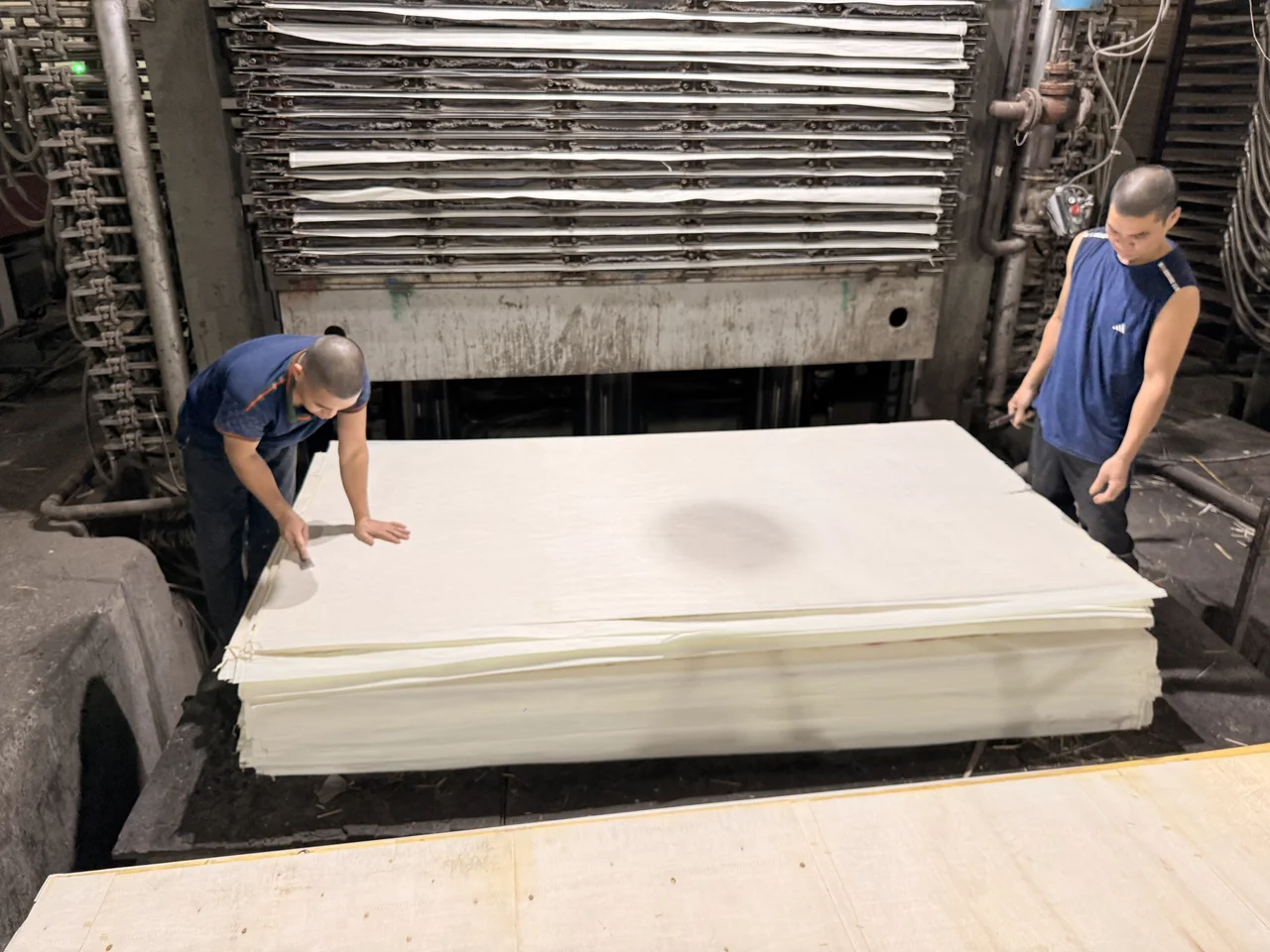
Hot-press platens control panel thickness during glue cure. A well-calibrated press holds ±0.5mm. This is the starting point — not the final measurement point.
2. Wide-Belt Calibration Sanding
The most critical step for thickness precision is calibration sanding on a wide-belt sander. The sander removes material in two passes:
- Calibration pass: removes 0.3–0.8mm from each face to bring the panel to target thickness
- Finish pass: 120–150 grit for surface quality
Factories running automated thickness feedback on their wide-belt sanders achieve ±0.3mm across the full sheet. Without automated feedback, the sander operator manually adjusts roller height — producing ±0.5mm or wider in skilled hands, ±1.0mm+ in less controlled environments.
3. QC Measurement Protocol
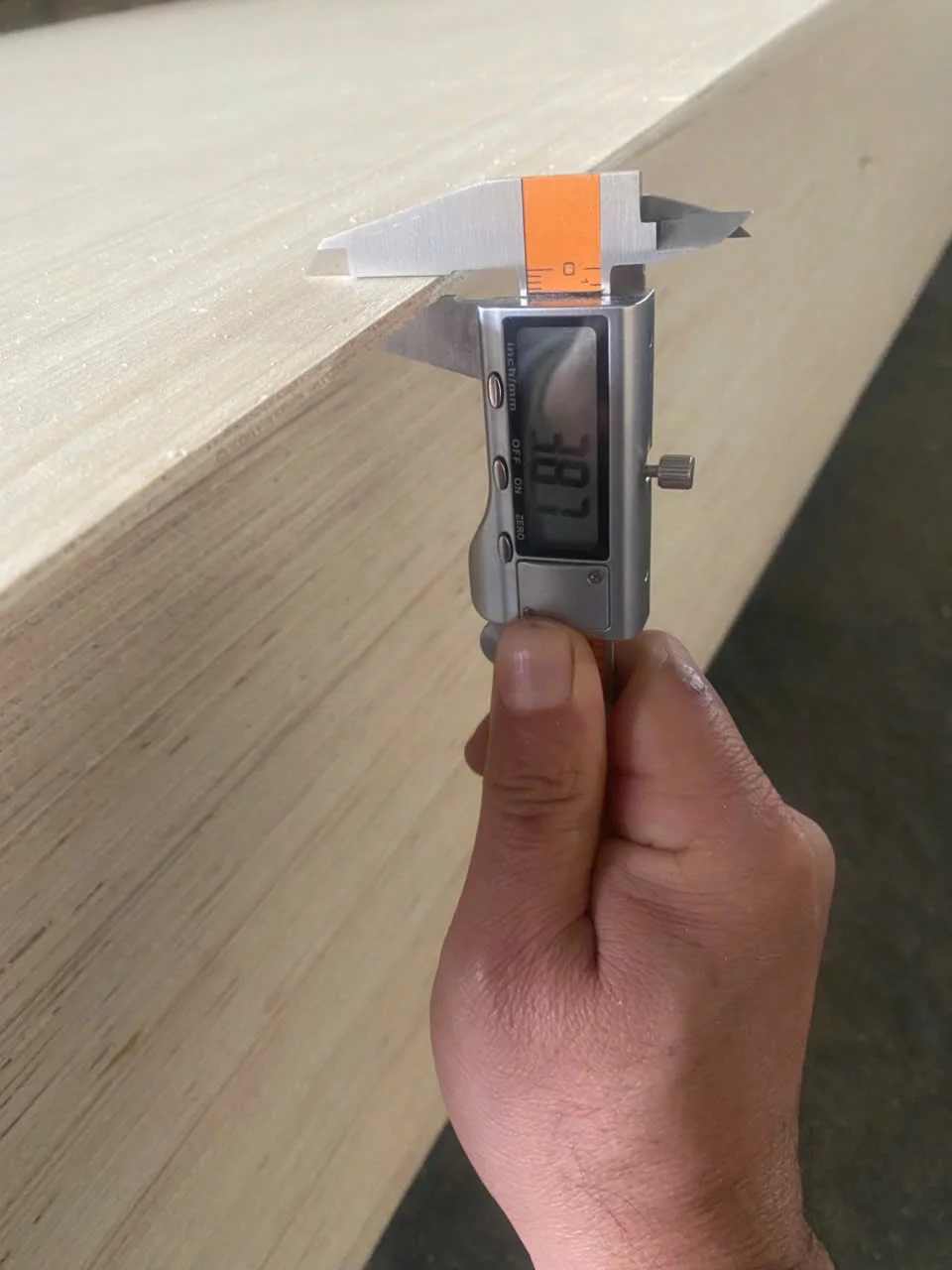
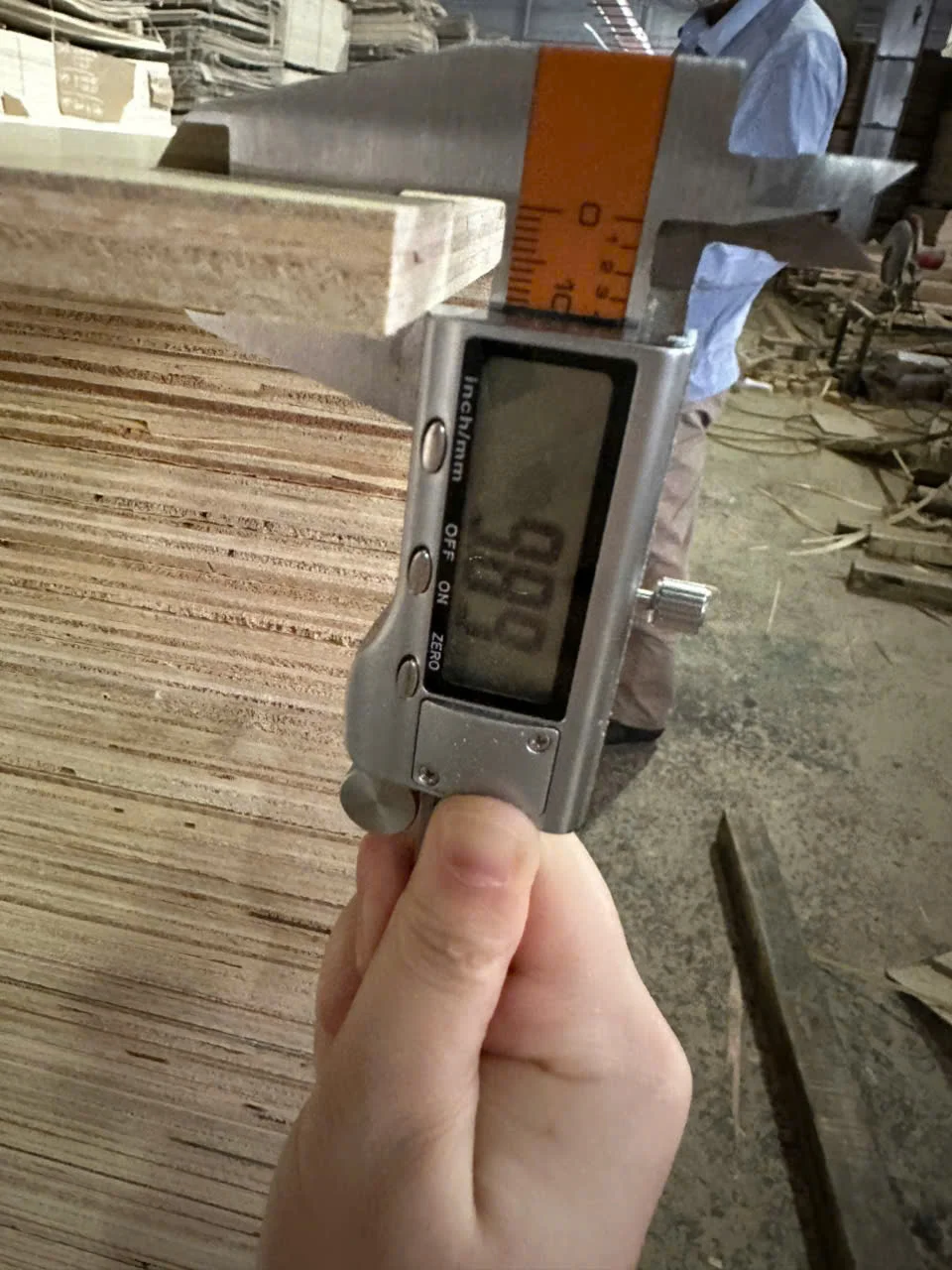
“We measure thickness” means very different things across factories. The correct method: 5-point measurement per sheet — four corners plus center — using a digital caliper or pin gauge.
At HCPLY, QC checks are performed:
- After hot press (batch sample: 3 sheets per press load)
- After sanding (every 50th sheet, full 5-point)
- Pre-loading inspection (random sample, minimum 10% of order volume)
“Our team measures at five points on every QC sample — not just center — because edge variance is where budget factories hide,” — Lucy, International Sales Manager, HCPLY.
This 3-stage QC model, documented in HCPLY’s plywood quality control process, catches tolerance drift before it reaches the container.
📦 Tolerance Grades and What They Signal
This is where buyers often go wrong: treating “18mm plywood” as a single specification. The tolerance grade signals the entire production category.
| Tolerance | Production type | Typical application | Factory type |
|---|---|---|---|
| ±0.2mm | Premium calibrated | Cabinet components, CNC-machined furniture | Furniture-grade facility (styrax/eucalyptus core, full stitched) |
| ±0.3mm | Standard calibrated | Furniture, interior fitout, export furniture | Furniture-grade facility |
| ±0.5mm | Moderate, unsanded or light sanded | Commercial fitout, film-faced base | Mixed-grade facility |
| ±1.0mm+ | Loose packing grade | Crating, pallets, structural shuttering non-critical | Budget commercial facility |
The tolerance grade also correlates directly with core construction. Full-stitched cores (see HCPLY’s furniture-grade birch plywood) maintain consistent density through the panel, which reduces thickness variation introduced by core gaps after pressing.
Loose-laid core construction — common in budget acacia-core packing plywood — creates void pockets that collapse unevenly under press, producing irregular plywood thickness tolerance across the sheet.
📐 What to Write in Your Purchase Order
Vague PO language is the root cause of most thickness disputes. These two PO clauses eliminate the gap:
For furniture/cabinet/interior grade:
Thickness: 18mm ±0.3mm
Measurement: 5-point per BS EN 315 (four corners + center)
Surface: Sanded both faces (calibration grade)
Rejection criterion: Any sheet outside ±0.3mm, or >5% of batch outside ±0.3mm
For commercial/packaging grade:
Thickness: 12mm ±0.5mm
Measurement: Center point per batch sampling (10% of sheets)
Surface: Unsanded acceptable
Add this clause for any order exceeding USD 20,000:
Supplier to provide caliper reading report (min. 10 sheets) prior to container loading.
Report format: [sheet ID, 5-point measurements, average, deviation from nominal].
Get a Free Quote with thickness sample set
This pre-shipment caliper report costs the factory less than 30 minutes to produce — and it eliminates the need for a third-party inspection on routine repeat orders.
🔍 How Thickness Tolerance Affects Downstream Costs
Buyers focused only on FOB price often miss the downstream cost implications of loose tolerance.
- CNC machining waste
Cabinet makers running CNC machines calibrated for 18.0mm panels lose setup time when panels arrive at 17.4mm. Re-calibration takes 15–30 minutes per machine setup — on a 500-sheet order, this compounds.
- Joinery failure
Floating floor systems, tongue-and-groove cabinet carcasses, and pre-drilled hardware all depend on consistent thickness within ±0.5mm. Panels at ±1.0mm variance fail assembly tolerances — resulting in visible gaps or forced joints.
- Container loading variance
Thickness variance affects sheet count per pallet. A 1000mm pallet of 18mm panels should stack 55 sheets (ROUNDDOWN(1000/18) = 55). At actual 17.2mm average, that pallet stacks 58 sheets — changing the total CBM and potentially triggering overweight penalties. The plywood container packing calculation guide covers this in full detail.
- Market certification requirements
Japan’s JAS standard and Korea’s KS standard both specify thickness tolerance as part of certification. Panels destined for certified construction projects in these markets must meet stated tolerances — and inspectors check.
🏭 Vietnam Factory Context: What ±0.3mm Requires
Not every plywood factory in Vietnam produces to ±0.3mm. Understanding what equipment and process are required helps buyers evaluate supplier claims.
Achieving consistent ±0.3mm requires:
- Wide-belt sander with automated thickness control — manual adjustment cannot hold ±0.3mm across a production run
- Calibrated press platens — maintained quarterly; older presses drift ±0.5mm within a production shift
- Stitched core construction — loose-laid core creates post-press gaps that sanding cannot fully correct
- Veneer moisture at 6–8% before pressing — high-moisture veneer swells unevenly, introducing thickness variation after press curing
HCPLY’s furniture production facility — purpose-built for European and Japanese export markets — runs calibrated wide-belt sanding as standard on all sanded products. Commercial and packing-grade facilities prioritize throughput over tight tolerance, which is appropriate for their applications.
This is a core reason why buyers should never mix production categories: comparing ±0.3mm furniture-grade pricing against ±1.0mm packing-grade pricing creates false price comparisons. The HCPLY product range maps each product to the appropriate production facility and tolerance grade.
✅ Pre-Shipment Checklist for Buyers
Before confirming a container order, verify these five points with your supplier:
- Tolerance stated in writing: PO and proforma invoice both show ±X.Xmm
- Sanding grade confirmed: “calibration sanded” vs “light sanded” vs “unsanded”
- Measurement method agreed: 5-point vs center-only, caliper type
- Caliper report requested: Prior to loading — not on arrival
- Rejection criterion defined: Percentage of out-of-spec sheets that trigger re-sort or replacement
For first orders with a new supplier, HCPLY recommends requesting a physical sample set of 3–5 sheets with the caliper reading report attached. This costs less than USD 100 in sample freight and provides direct evidence of production capability — no factory visit required.
Contact HCPLY for a thickness sample with caliper readings
📌 Summary
Plywood thickness tolerance ranges from ±0.2mm for premium calibrated furniture grade to ±1.0mm or wider for unsanded packing grade. Specifying the correct plywood thickness tolerance in your PO is the single contractual step that separates quality importers from buyers who discover problems at arrival. The standard (BS EN 315:2000, ISO 1954:2013) sets a minimum floor — not a maximum ceiling. What matters commercially is:
- What tolerance grade your application actually requires
- That the PO states this explicitly with measurement method
- That you receive a pre-shipment caliper report before accepting the container
A ±0.3mm specification written into the purchase order, paired with a 5-point measurement report, is the single most effective step an importer can take to prevent thickness disputes — at zero added cost to the supplier for orders above 1 container.