

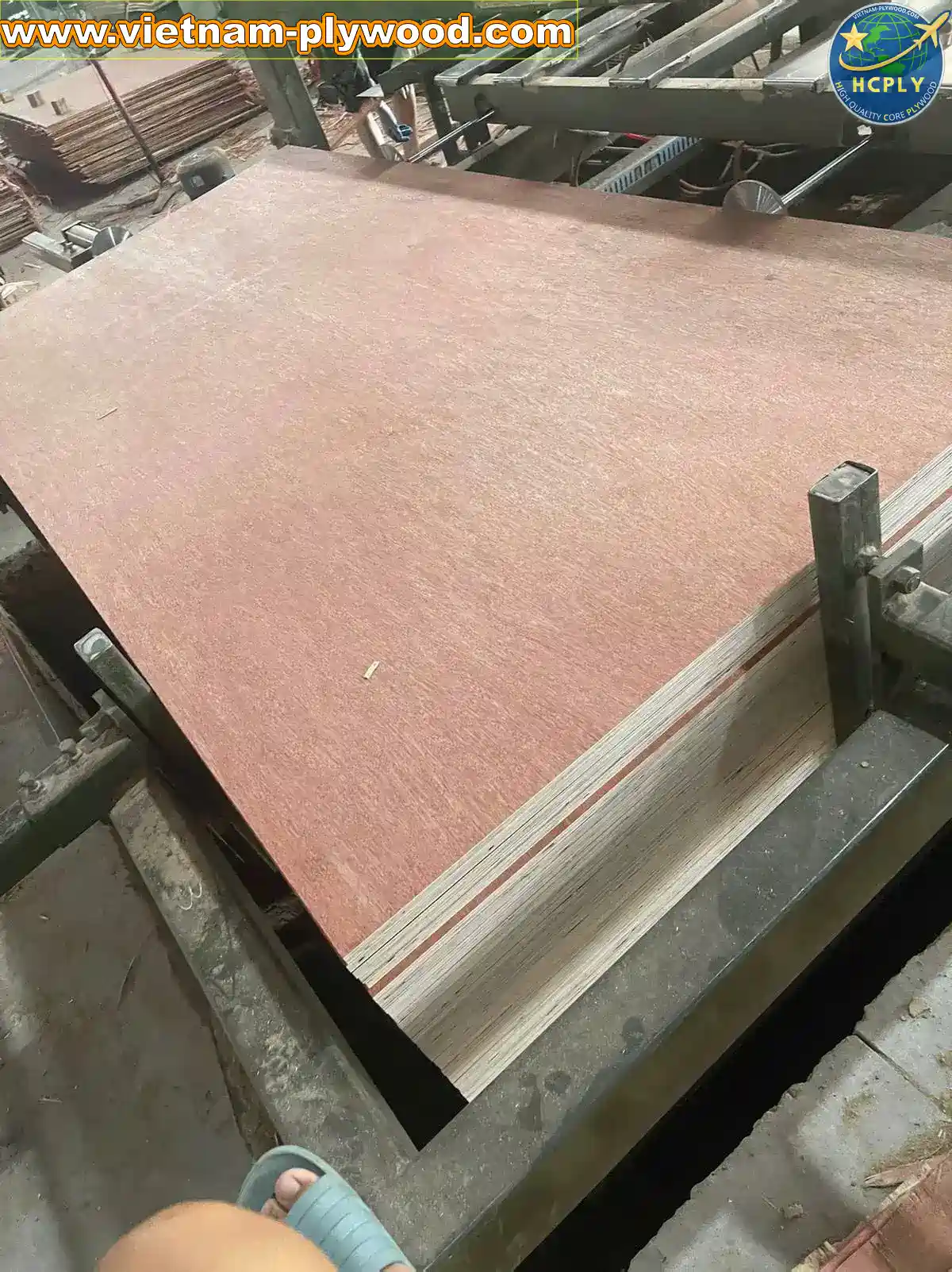


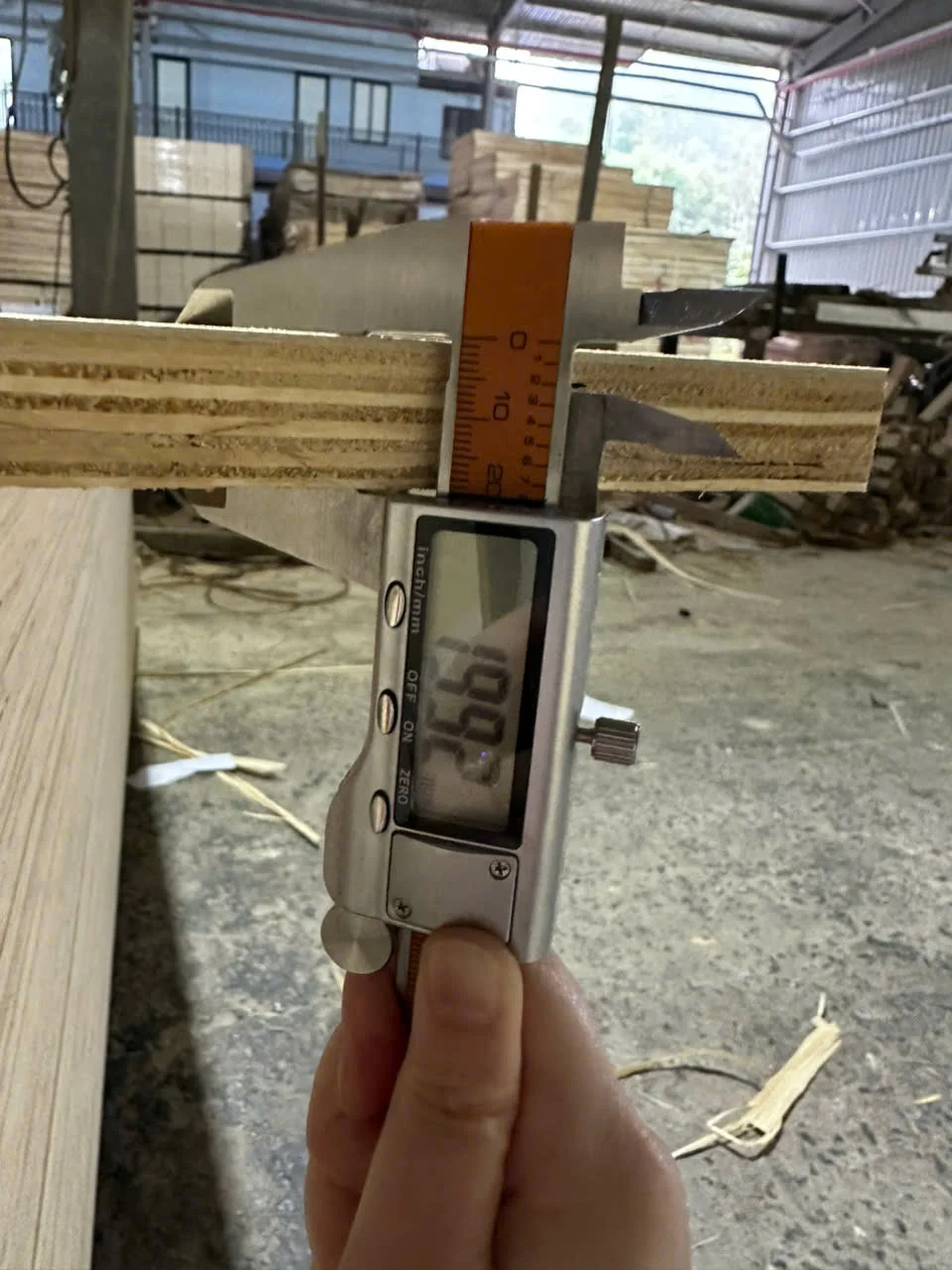
Plywood thickness tolerance is the difference between what you order and what you receive — and for furniture manufacturing, that difference is measured in tenths of a millimeter. Order 18mm furniture grade plywood and get panels ranging from 17.5mm to 18.5mm, and your CNC program is miscalibrated before the first cut.
This guide covers what ±0.3mm really means in production, how Vietnamese factories achieve it, which grades hold tight and which do not, and how to specify correctly when placing an import order.
📐 What Is Plywood Thickness Tolerance?
Plywood thickness tolerance is the permitted deviation from the nominal (stated) thickness across a finished panel. It is expressed as ±Xmm from the specified value.
A panel specified at 18mm with ±0.3mm tolerance measures between 17.7mm and 18.3mm at any point across its surface. This is not a defect — it is the factory’s controlled production range.
Tolerance applies in two dimensions:
- Panel-to-panel variation: How much 18mm panels differ from each other within a production batch
- Within-panel variation: How much thickness varies at different points across a single sheet
Furniture manufacturers care most about within-panel variation. A panel that is 18.3mm at one corner and 17.7mm at the opposite corner — a 0.6mm swing — will cause uneven lamination adhesion and inaccurate CNC cuts even if it meets panel-to-panel tolerance.
📊 Tolerance Classes by Grade
Not all plywood holds the same tolerance. The grade determines the process — and the process determines the tolerance outcome.
| Grade | Sanding | Thickness Tolerance | Typical Use |
|---|---|---|---|
| Furniture / E0 | Double-sided (calibrated) | ±0.3mm | Cabinet, interior, CNC |
| Premium / Japan market | Double-sided (calibrated) | ±0.2mm | Precision furniture, joinery |
| Commercial / E1–E2 | Light or single-sided | ±0.4–0.5mm | Shopfitting, non-critical interior |
| Packing / Construction | Unsanded | ±0.5–1.0mm | Crates, formwork, structural |
Source: HCPLY production standards, 2026. Standard tolerance ±0.3mm per reference/plywood-technical-reference.md §4.
The key process step is calibration sanding. Wide-belt sanders with digital thickness gauges remove surface material until the panel is uniform to within the target tolerance. Furniture grade panels go through two sanding passes — top and bottom — which is why they are called double-sided sanded or calibrated plywood.
Packing grade and construction grade panels skip this step. They come off the press and go directly to trimming. Thickness variation for unsanded panels is therefore determined by veneer thickness uniformity and press consistency alone — typically ±0.5mm to ±1.0mm.
⚠️ Important: Requesting “sanded plywood” does not automatically mean calibrated tolerance. Confirm the sanding specification: “double-sided calibrated sanding to ±0.3mm” when placing an order.
🔧 How Factories Achieve ±0.3mm
The path from raw veneer to a calibrated panel involves five tolerance-affecting steps. Each one accumulates error — or eliminates it.
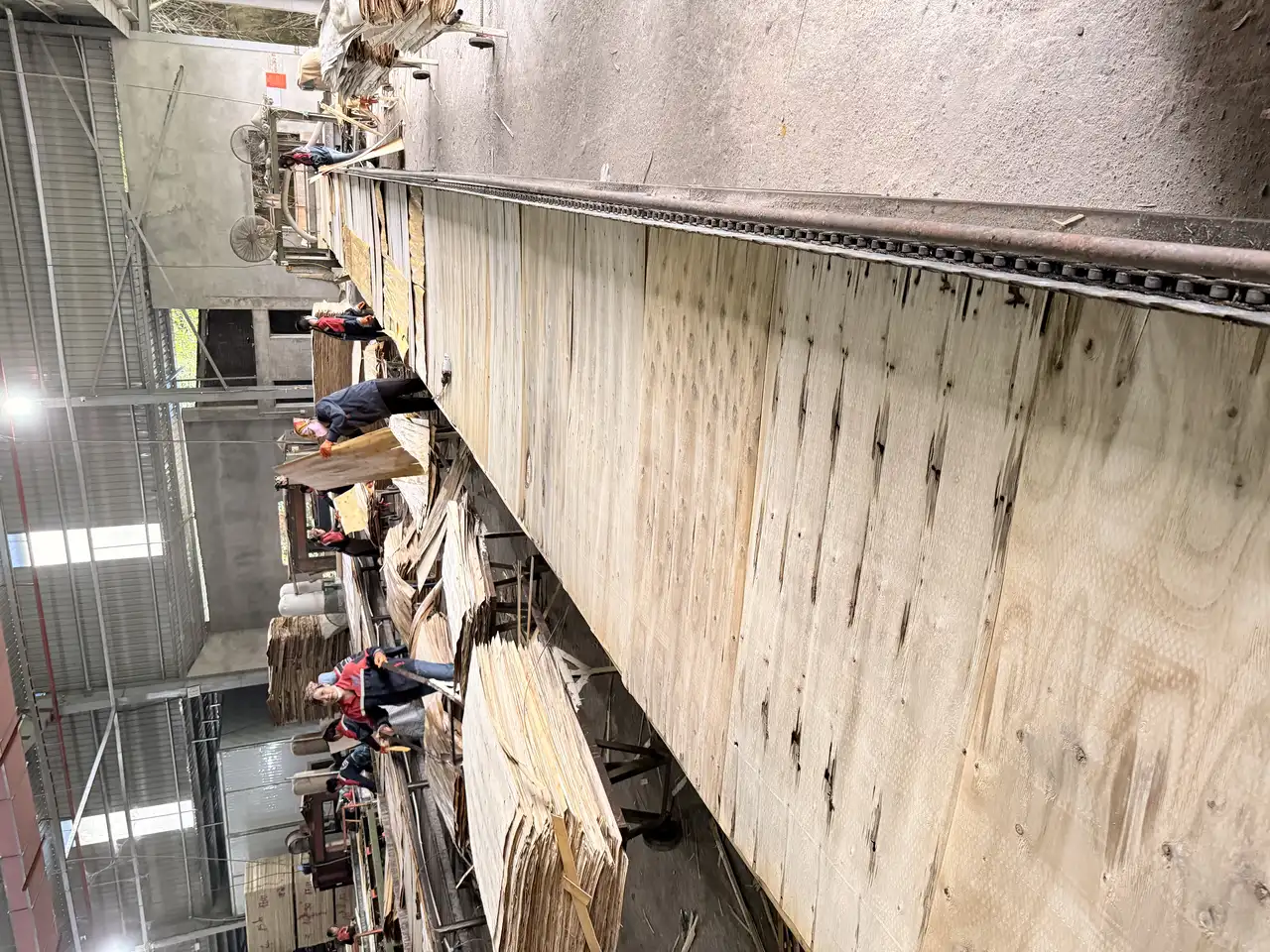
📌 Step 1: Veneer Drying to Target Moisture
Veneer must reach 6–8% moisture content before pressing. Higher moisture creates steam voids inside the panel during hot pressing. Lower moisture causes over-compression and density variation. Both result in post-press thickness inconsistency (HCPLY production protocol, 2026).
📌 Step 2: Veneer Sorting and Thickness Grading
Core veneer pieces must be sorted by thickness before assembly. Random-thickness core veneer creates uneven panel thickness even with a flat press. At HCPLY’s furniture-segment facility, core veneer is graded to ±0.1mm before use in E0 furniture panels.
📌 Step 3: Controlled Hot Pressing
Press pressure (typically 8–12 kg/cm² for melamine-glued panels) and temperature (110–120°C) determine final panel thickness. Factories calibrate press parameters by nominal thickness and veneer species combination. Eucalyptus core requires different parameters than styrax core because density differs significantly — 650–750 kg/m³ for eucalyptus versus 480–500 kg/m³ for styrax (HCPLY production data, 2026).
📌 Step 4: Post-Press Cooling and Conditioning
Panels must cool and equilibrate before sanding. Sanding hot panels causes surface tearing and inconsistent stock removal. The conditioning period allows residual press stresses to normalize.
📌 Step 5: Calibration Sanding
Wide-belt calibration sanders remove material to a target thickness. The machine measures incoming panel thickness and adjusts belt contact pressure automatically. A well-maintained sanding line achieves ±0.15mm within a single pass, resulting in ±0.2–0.3mm across the full production run.
🏭 Core Species and Tolerance Performance
Core species choice directly affects how well a panel holds tolerance — because species determines density consistency and compressibility under the press.
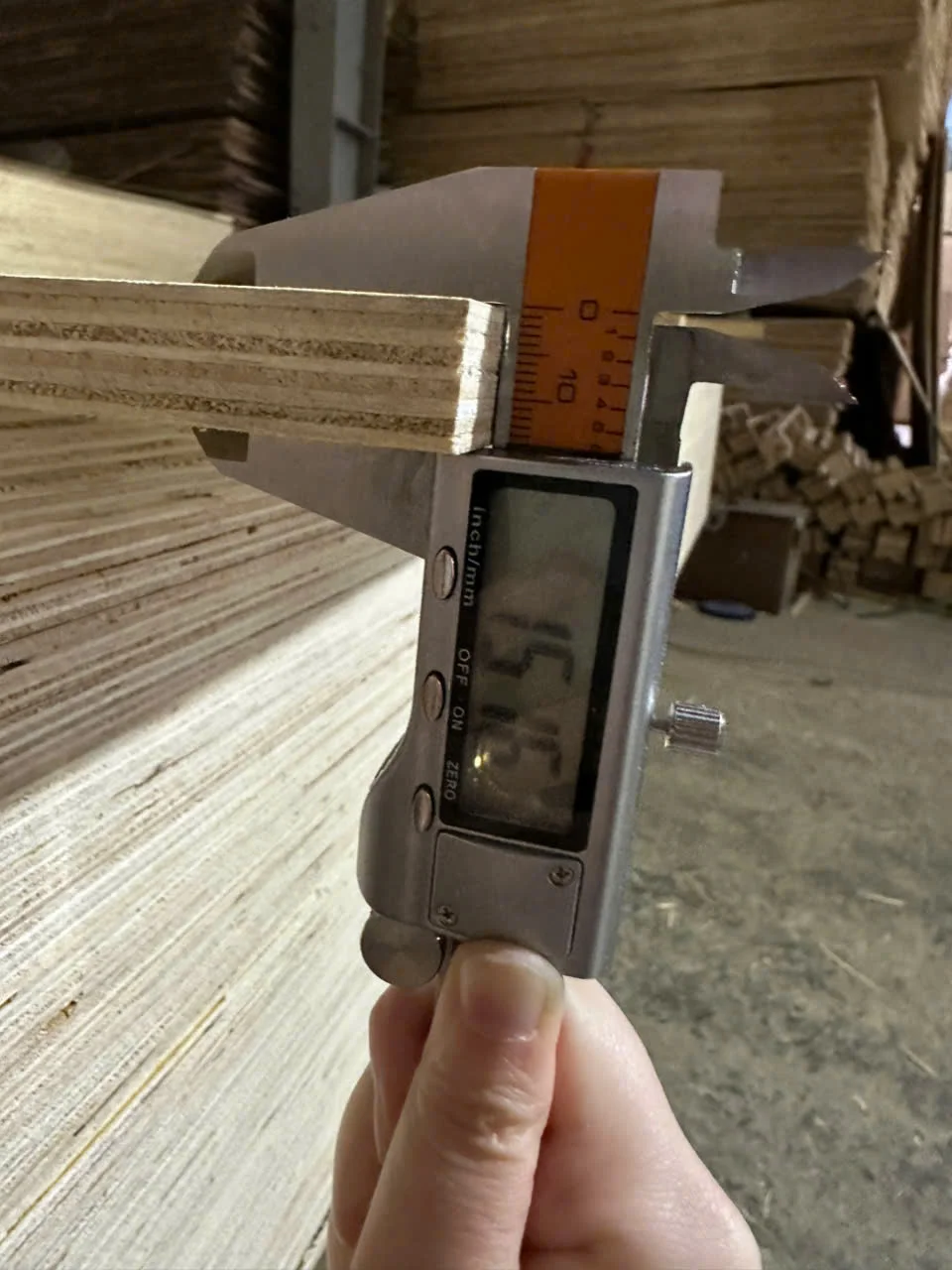
Styrax core (480–500 kg/m³) is the most dimensionally consistent Vietnamese core species. Its low, uniform density means predictable compression under the press and stable response to sanding. Furniture panels with styrax core reliably achieve ±0.3mm, with well-controlled batches reaching ±0.2mm for premium markets.
Eucalyptus core (650–750 kg/m³) is denser and harder. It holds tolerance well but requires higher press pressure. Post-press spring-back is slightly greater than styrax, so calibration sanding is critical. Eucalyptus core is the preferred choice for buyers prioritizing density and strength alongside tight tolerance — particularly flooring substrate and structural furniture components.
Acacia core (~580 kg/m³) achieves ±0.3mm in furniture-segment factories using calibrated sanding. In commercial-segment factories with lighter sanding or looser veneer sorting, acacia panels may vary ±0.4–0.5mm. Always confirm the factory segment when ordering acacia core furniture panels.
💡 Tip: For CNC cabinet production where tolerance is critical, specify styrax core explicitly. Styrax’s weight advantage (lightest of the three cores) also reduces shipping cost — 18 pallets per 40HC container versus 15 for eucalyptus core. See plywood container packing calculation 40HC guide for full figures.
📦 Tolerance in Practice — What Buyers Experience
“We ordered 18mm birch plywood from a new supplier. By the time it arrived, half the panels were measuring 17.4mm. Our CNC program uses 18mm as the reference — we had to recut every dado joint.” — Lucy, International Sales Manager, HCPLY, sharing a common buyer complaint received from incoming customers.
This scenario is not theoretical. It accounts for a significant share of quality claims in B2B plywood trade (HCPLY customer service data, 2026). The root cause is almost always one of three issues:
- Supplier mixed furniture-grade and commercial-grade production in the same order to meet price pressure
- Sanding was nominal — single-sided or insufficient stock removal — rather than full calibration
- No pre-shipment QC to verify actual thickness before loading
Specifying Correctly on Purchase Orders
When placing an order for furniture grade plywood, include these tolerance specifications explicitly:
Nominal thickness: 18mm (or 15mm, 12mm as required)
Thickness tolerance: ±0.3mm (or ±0.2mm for precision grade)
Sanding: Double-sided calibrated
Within-panel variation: ≤0.3mm (9-point measurement)
QC report required: Yes — caliper measurement report with shipment
HCPLY provides measurement reports and QC photos as standard documentation with furniture grade orders. The report includes 9-point thickness measurement per batch sample, moisture content, and surface inspection (HCPLY export documentation standard, 2026).
Request sample panels with QC measurement report — factory-direct, no commitment
📋 Thickness Tolerance by Common Furniture Dimensions
The table below shows actual measurement ranges buyers should accept for furniture grade panels. Readings outside these ranges at any single point constitute a quality non-conformance.
| Nominal Thickness | Accept Range (±0.3mm) | Reject Below | Reject Above |
|---|---|---|---|
| 9mm | 8.7–9.3mm | <8.7mm | >9.3mm |
| 12mm | 11.7–12.3mm | <11.7mm | >12.3mm |
| 15mm | 14.7–15.3mm | <14.7mm | >15.3mm |
| 18mm | 17.7–18.3mm | <17.7mm | >18.3mm |
| 21mm | 20.7–21.3mm | <20.7mm | >21.3mm |
| 25mm | 24.7–25.3mm | <24.7mm | >25.3mm |
Source: HCPLY production quality standard. Tolerance ±0.3mm applies to double-sided sanded furniture grade panels.
Length and width tolerance is separately specified at ±2mm for standard 1220×2440mm and 1250×2500mm sheet sizes (see plywood sizes and thickness specification guide for full dimensional standards).
🔍 Checking Tolerance Before You Order
Two practical steps protect buyers from receiving out-of-tolerance panels:
Pre-order sample request: Ask for 2–3 sample panels before placing the full order. Measure at 9 points per panel with digital calipers. Variation across points should not exceed 0.3mm. Variation panel-to-panel should not exceed 0.3mm from the nominal specification.
Pre-shipment inspection (PSI): Request a third-party or factory QC report with the shipment. The report should document thickness measurements from at least 5% of panels in the production run. HCPLY includes this as standard with furniture grade orders — buyers receive QC photos and measurement documentation before loading confirmation.
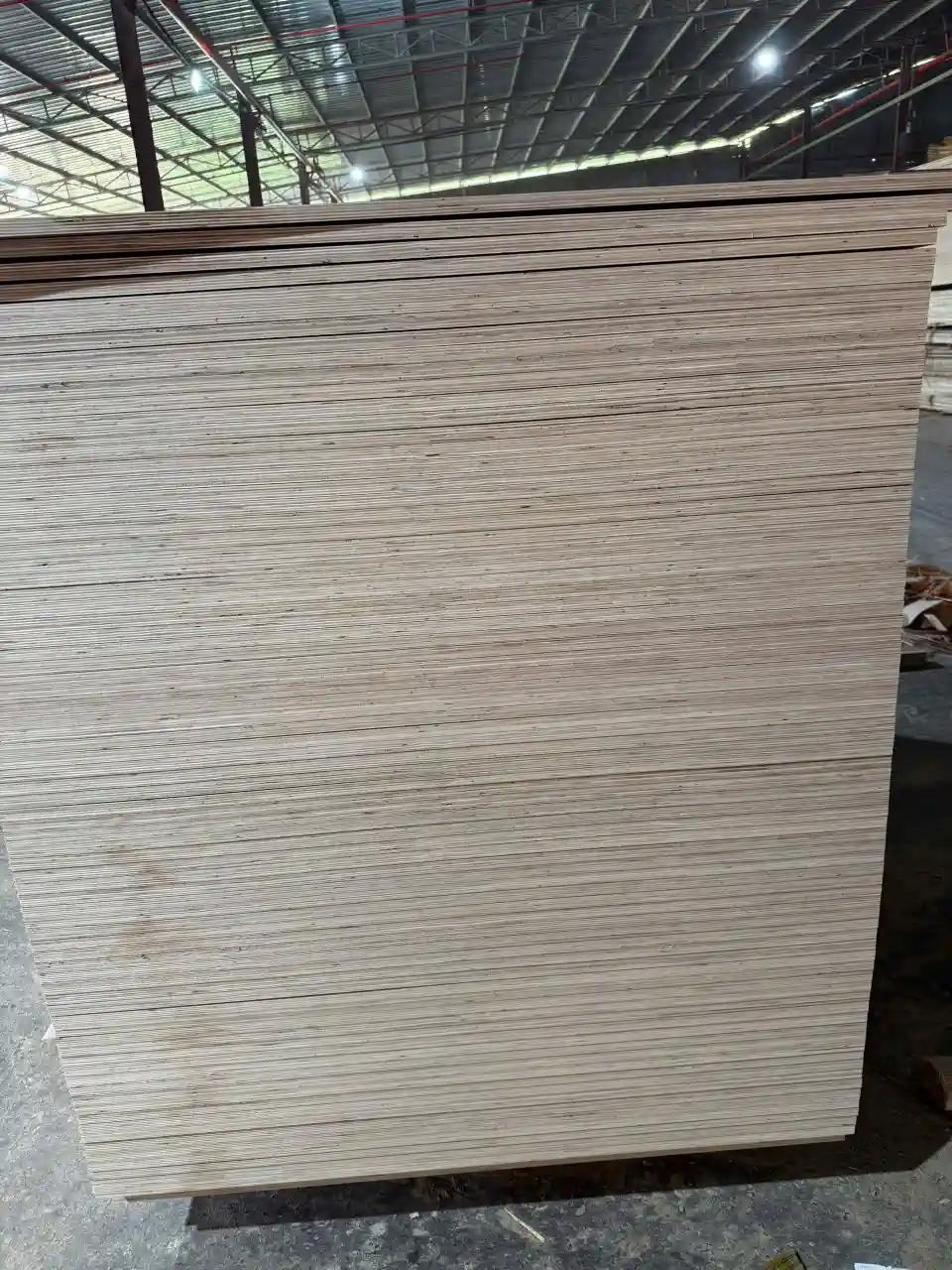
For buyers supplying the Japanese market, the tolerance standard tightens further. Japan’s JAS (Japanese Agricultural Standard) for structural and furniture plywood requires thickness control equivalent to ±0.2mm for sanded panels. This drives premium pricing at the furniture-segment factory level — additional sorting, finer calibration sanding, and stricter QC documentation (ITTO Trade Intelligence, 2024).
📐 Tolerance vs. Face Grade — Two Different Specs
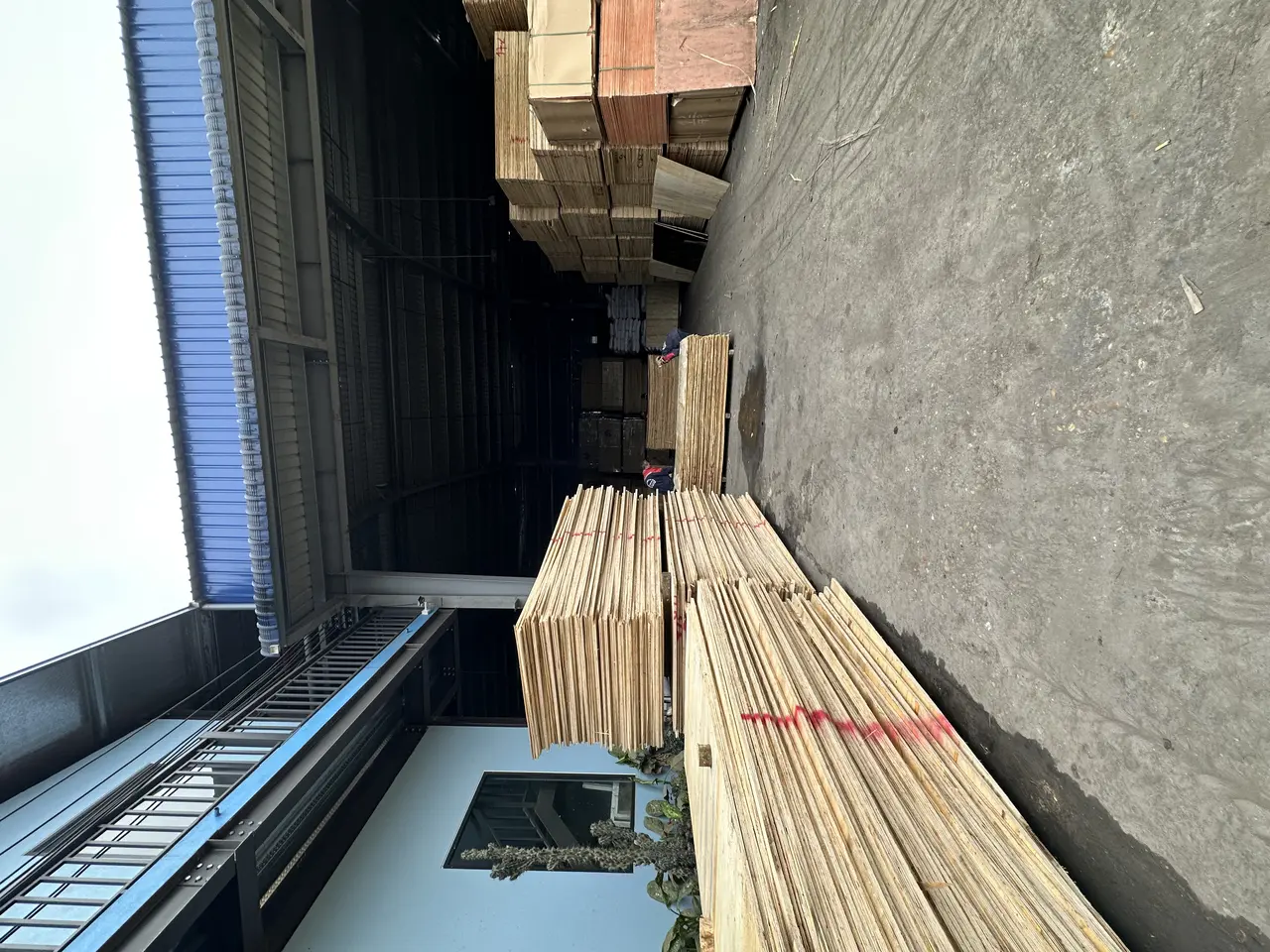
A common confusion in procurement: thickness tolerance and face grade are independent specifications. A panel can be:
- Tight tolerance (±0.3mm) with a low face grade (C/D) — pallet deck use
- Loose tolerance (±0.5mm) with a high face grade (A/B) — decorative panel where flatness does not matter
- Both tight tolerance and high face grade — furniture and cabinet production
For furniture manufacturing, both matter. Specify:
- Face grade: A/B for visible surfaces, B/C for concealed panels
- Core: Styrax or eucalyptus (not packing grade acacia)
- Sanding: Double-sided calibrated
- Emission: E0 or CARB P2 for interior use
- Tolerance: ±0.3mm explicitly stated
The furniture plywood specification guide covers the full specification matrix for cabinets, carcasses, and tabletops — including which face veneer species suit which applications.
🔗 Related Specifications
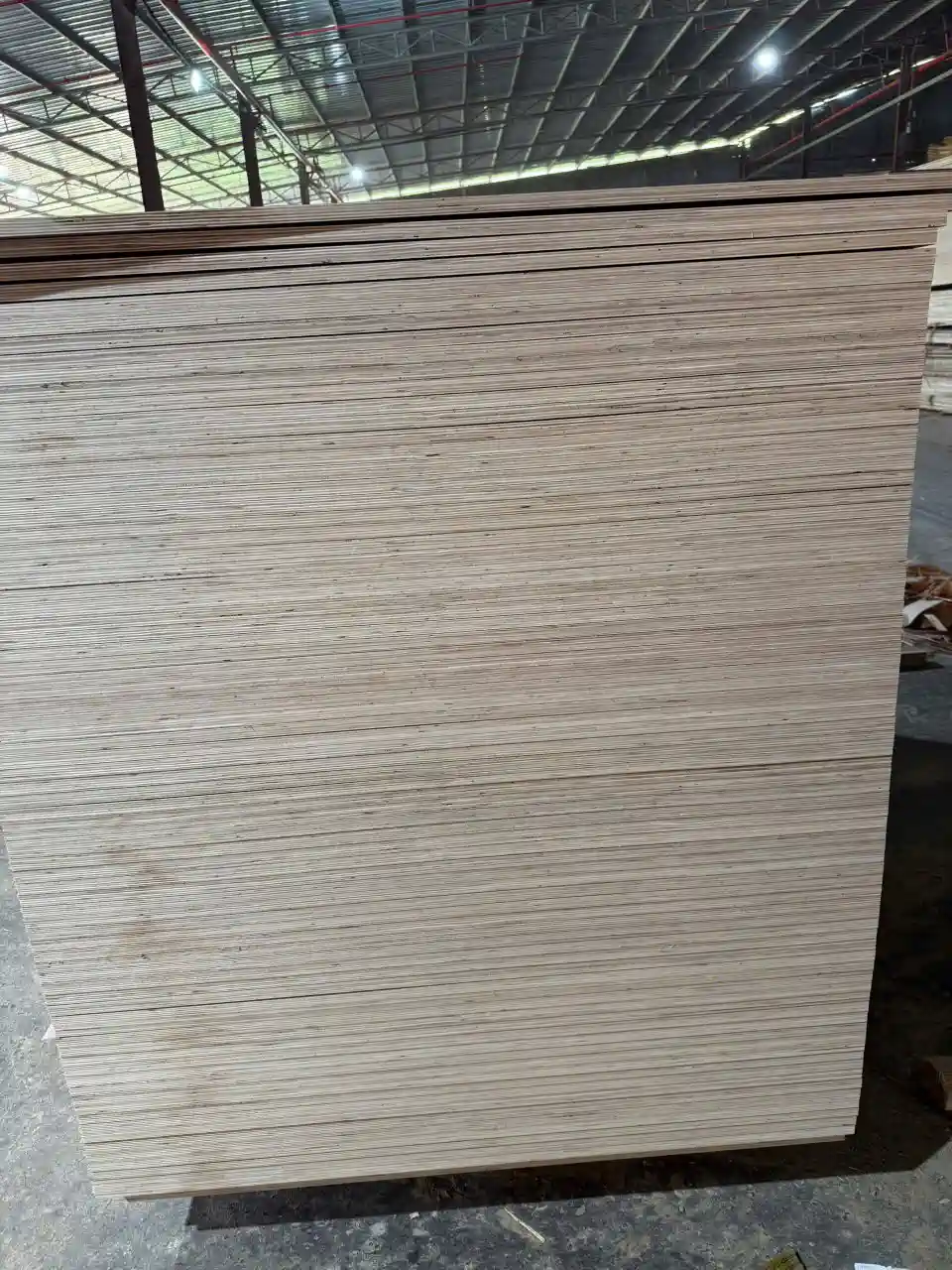
Understanding thickness tolerance connects to several related technical topics:
- Sanding and surface finish: plywood sanding vs unsanded — when to choose
- Core species selection: plywood core types — acacia vs eucalyptus vs styrax guide
- Complete size specifications: plywood sizes and thickness specification guide
- Quality control process: Visit the HCPLY quality control page to see how three-stage QC verifies thickness, surface, edge, and moisture before loading
✅ Summary: Furniture Grade Tolerance at a Glance
Plywood thickness tolerance for furniture grade production comes down to three requirements that must align:
- Factory segment — only furniture-segment factories (not commercial or packing) run calibration sanding
- Core species — styrax or eucalyptus core, sorted by thickness, produces consistent press results
- Explicit specification — ±0.3mm must be stated on the purchase order; do not assume it is included
HCPLY’s furniture-segment facility in Phu Tho Province produces E0 furniture plywood with double-sided calibration sanding as standard. Panels ship with full QC documentation. Mixed-spec containers (multiple thicknesses, multiple face options) are available with individual thickness verification per species.
Request furniture grade plywood with tight tolerance specs — include your nominal thickness, target tolerance, and annual volume for a factory-direct quotation.