

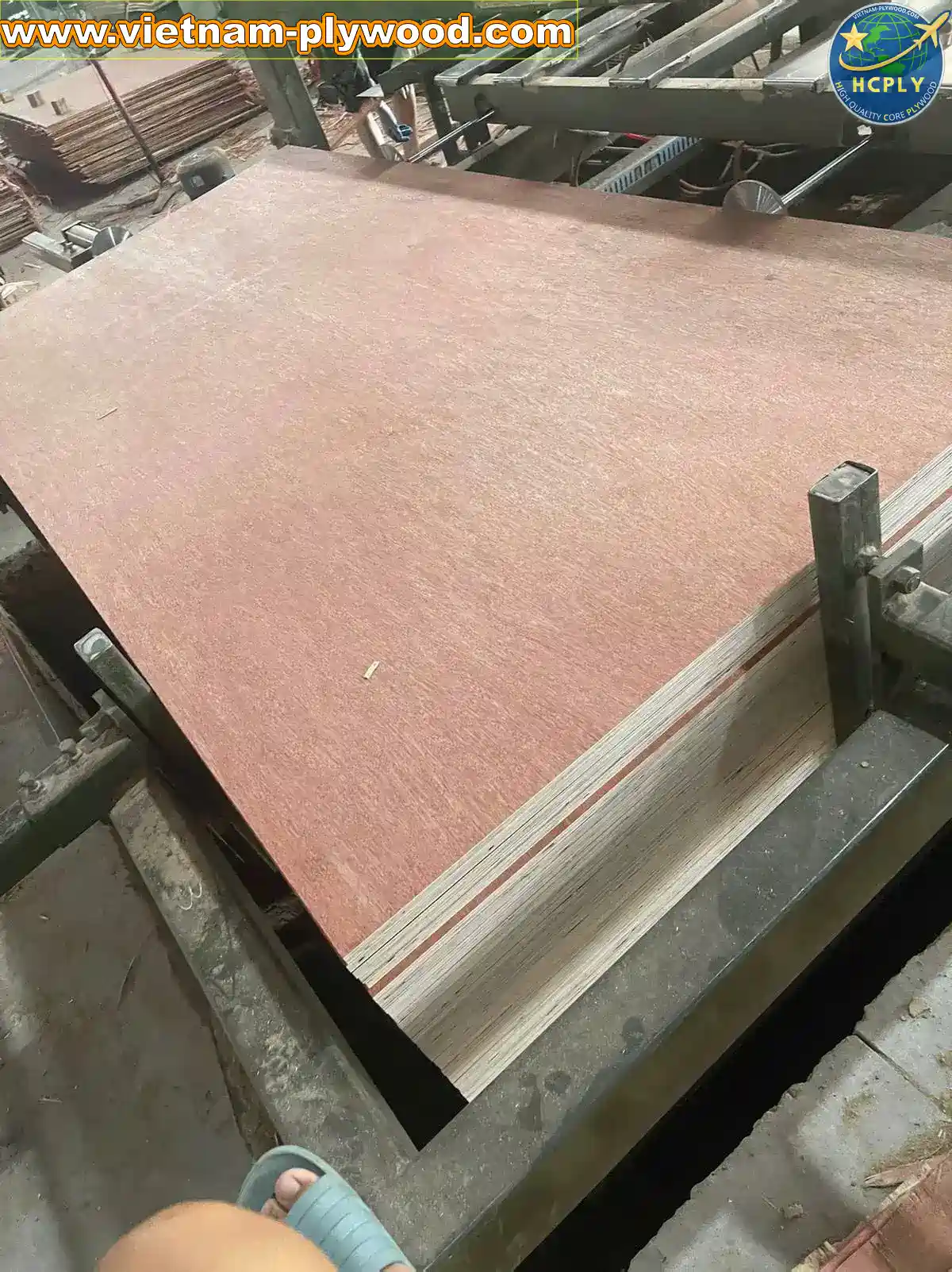
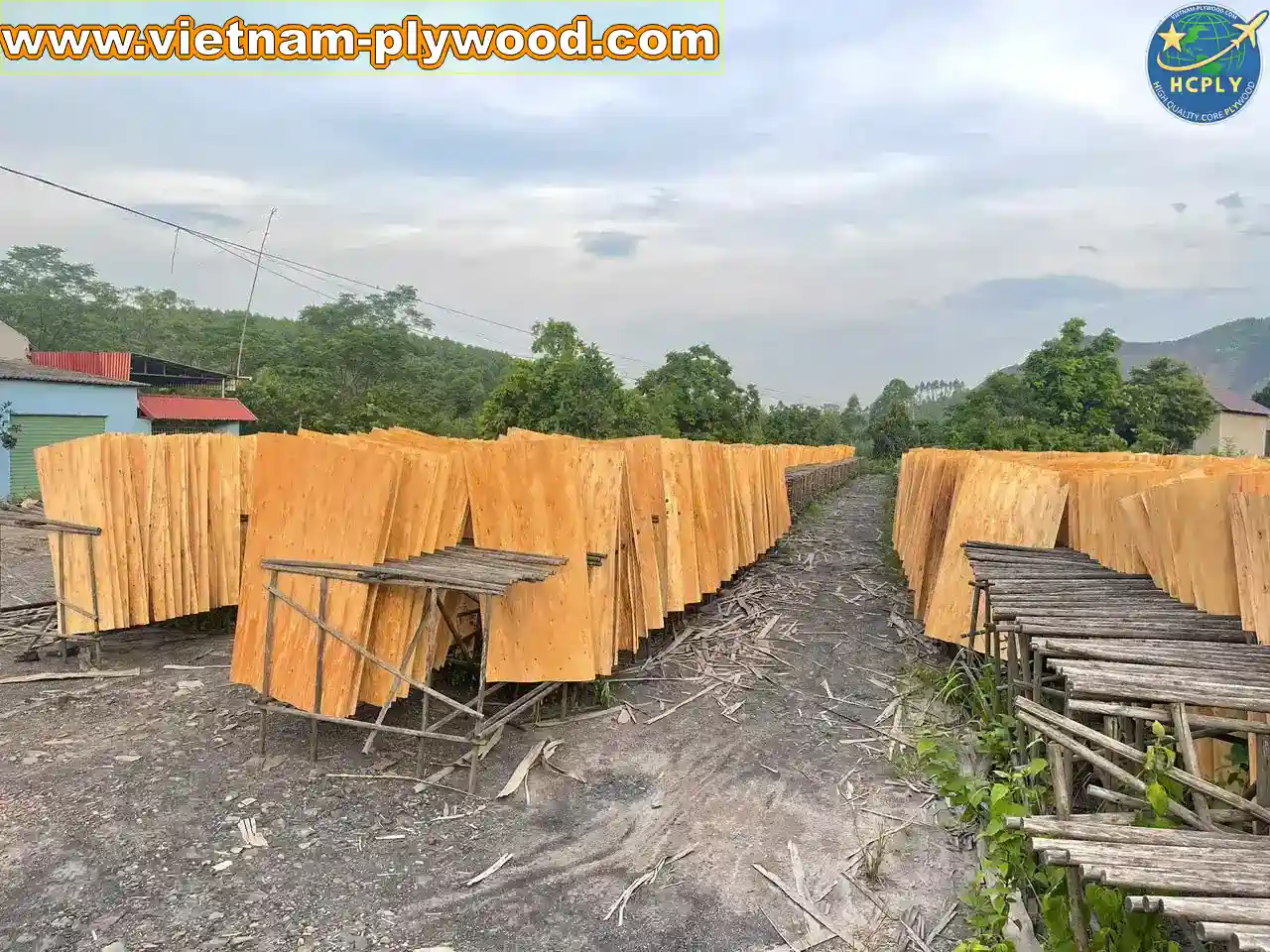


Forty percent of first-time plywood importers report receiving product that does not match the specification quoted. The gap is almost never price fraud — it is an evaluation gap. Buyers assess photos, brochures, and sample boards while skipping the technical and documentary checks that separate reliable exporters from opportunistic ones.
This plywood supplier evaluation checklist gives you 15 specific, verifiable points to apply before committing to any order. Each item is drawn from HCPLY’s own sourcing standards and from the most common failure patterns seen across 8 years of Vietnam plywood export operations.
📋 How to Use This Checklist
Work through each point sequentially. Points 1–5 cover company and factory credentials. Points 6–10 cover technical capability and product specification. Points 11–13 cover certifications and compliance. Points 14–15 cover communication and logistics competency.
Score each point as Pass / Partial / Fail. Any single Fail in Points 1–5 or Points 11–13 is a disqualifying red flag. Partials across multiple points indicate a supplier who needs active management — acceptable only for price-competitive packing grades, not for furniture or construction plywood. Download or bookmark this plywood supplier evaluation checklist before your next sourcing call.
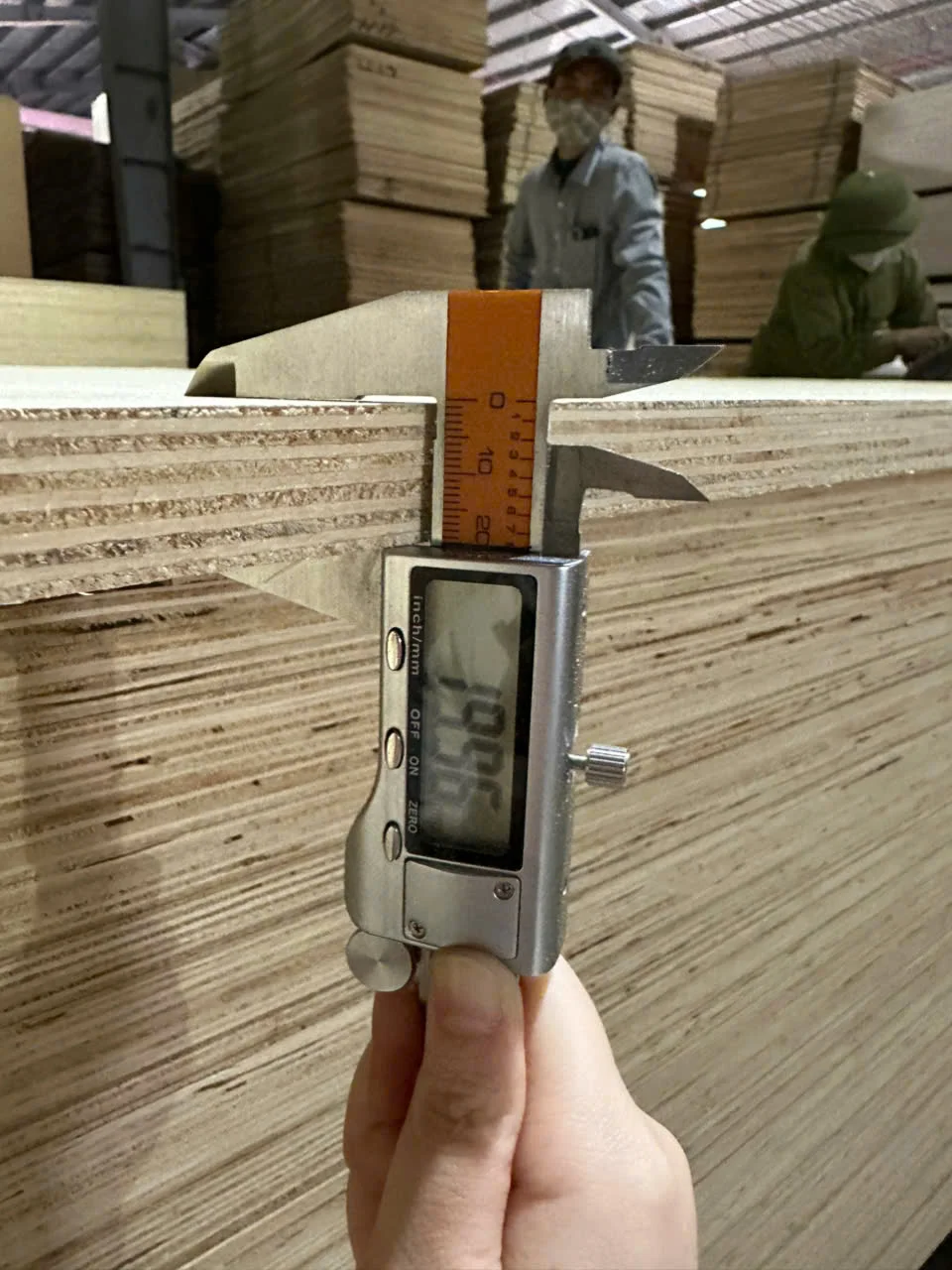
🏭 Part 1: Company and Factory Credentials (Points 1–5)
📌 Point 1: Legal Entity and Business Registration
Request the supplier’s business registration certificate (giấy chứng nhận đăng ký doanh nghiệp in Vietnam) and verify the company name, tax ID, and registered address. Cross-reference against Vietnam’s national business registry at dangkykinhdoanh.gov.vn.
What to watch: Trading companies frequently present themselves as manufacturers. A registered address in a commercial office building rather than an industrial zone is a reliable indicator. Genuine plywood factories are located in plantation zones — primarily Phu Tho, Ha Noi, Bac Ninh, Bac Giang, and Yen Bai provinces in Northern Vietnam (HCPLY production data, 2026).
Pass criteria: Business registration shows manufacturing activity (SIC code for wood processing), registered address matches an industrial zone, and VAT registration is active.
📌 Point 2: Factory Ownership vs. Trading Status
Ask directly: “Do you own the factory, or do you purchase from third-party manufacturers?” This is not a disqualifying question — several reliable exporters operate as multi-facility export operators managing dedicated production facilities. What matters is transparency and whether your QC team can access the production line.
A trading company selling through the spot market carries higher substitution risk: the panel they show in samples may come from a different facility than your production batch.
Pass criteria: Supplier clearly identifies production source, can provide factory gate address (not just an office), and agrees to pre-shipment inspection at the production facility.
📌 Point 3: Production Capacity Documentation
Ask for a factory profile showing production lines, press equipment count, and monthly capacity in CBM. Cross-reference the claimed capacity against MOQ and lead time. A supplier quoting 5,000 CBM/month capacity should not be offering 3-day turnaround on a 50 CBM order — either capacity is overstated or they are sourcing externally.
Pass criteria: Factory profile with production line photos (date-stamped), consistent capacity-to-lead-time ratio, and willingness to share historical production records for audit purposes.

📌 Point 4: Track Record and References
Request 3 customer references from buyers in your target market or market segment. Verify that the references are real importers, not affiliates. For Vietnam exporters, LinkedIn verification of the buyer’s procurement manager is a reliable secondary check.
HCPLY has shipped to buyers in 50+ countries across India, UAE, Korea, Germany, Mexico, and the Philippines — each market has different specification norms, and a supplier experienced in your market will anticipate your compliance requirements without needing to be coached.
Pass criteria: At least 2 verifiable references, ideally from buyers in your country or market segment, with specific product types mentioned.
📌 Point 5: Financial Stability Indicators
This does not require audited accounts. Ask for payment terms flexibility — can the supplier accommodate 30% deposit / 70% at B/L? Suppliers with fragile cash flow typically demand 50%+ upfront, which limits your leverage if quality issues arise. Also ask how long they have been exporting and whether they have a dedicated export documentation team.
Pass criteria: Standard trade payment terms offered (T/T 30/70 or LC at sight), dedicated export team confirmed, and minimum 3 years export history.
⚙️ Part 2: Technical Capability and Specification (Points 6–10)
📌 Point 6: Core Species Declaration
This is one of the most commonly misrepresented specification points in Vietnam plywood export. Demand written declaration of core species before sampling. The only core species commercially produced at scale in Northern Vietnam are acacia (~580 kg/m³), eucalyptus (650–750 kg/m³), and styrax (480–500 kg/m³). Any claim of “mixed tropical hardwood core” from a reputable northern factory is a specification mismatch signal (HCPLY production data, 2026).
Core species determines density, container load capacity, and structural performance — not the face veneer. A bintangor-face panel on styrax core behaves entirely differently from the same panel on eucalyptus core.
Pass criteria: Core species named explicitly, density range provided, and consistent with the declared face veneer and application.
For a detailed breakdown of how core species affects weight and container loading, see our guide on plywood container packing calculation for 40HC containers.
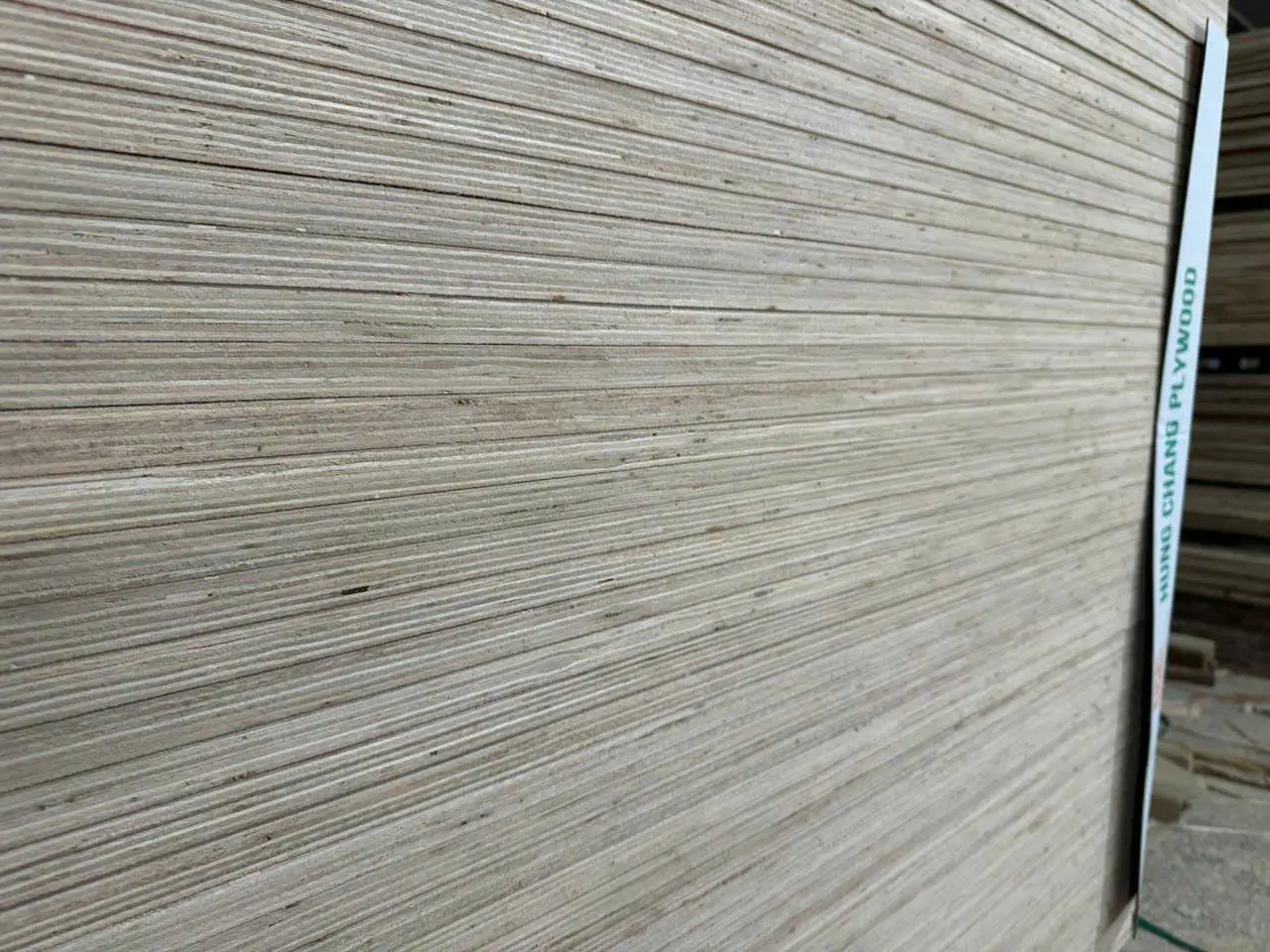
📌 Point 7: Glue Type and Emission Standard — Clearly Separated
These are two distinct specifications that are routinely conflated in quotation sheets. Glue type refers to water resistance: Melamine (MR, 12-hour boiling test) or Phenolic (WBP, 72-hour boiling test). Emission standard refers to formaldehyde off-gassing: E0 (≤0.5 mg/L), E1 (≤1.5 mg/L), or E2 (≤5.0 mg/L).
A quotation that lists “glue: MR, E0, E2” has mixed the two categories — which indicates either specification carelessness or intentional obfuscation. For furniture or cabinet plywood destined for the EU or US, E0 or CARB P2 compliance is non-negotiable (California Air Resources Board, 2025).
Pass criteria: Glue type and emission class stated separately, supported by a formaldehyde test report from an accredited third-party lab.
To understand the full framework, read our guide on plywood glue types and emission standards.
Point 8: Thickness Tolerance and Calibration Method
Standard tolerance for calibrated plywood is ±0.3mm. Ask whether the product is sanded to calibration or only rough-sanded, and request the measurement method. Japanese and Korean buyers routinely require 10-point cross-panel measurements — a supplier accustomed to these markets will have measurement logs available.
Furniture-grade panels must be consistently sanded. Film-faced and packing-grade panels are typically unsanded. If a supplier quotes “sanded” for film-faced plywood or anti-slip plywood, that is a technical error in their catalogue.
Pass criteria: Tolerance stated as ±0.3mm or tighter, calibration method specified (wide-belt sander, number of passes), and sample board accompanied by thickness log.
Point 9: Face Veneer Grade and Thickness
Face veneer in Vietnam ranges from 0.2–0.4mm in commercial production. The grade system varies by species: birch is graded D/E/F (not A/B/C — there is no A or B grade birch in the Vietnam system), while bintangor, okoume, and other commercial species use A/B grading.
Request the supplier’s internal grade standard document. A factory with a documented face veneer grading procedure (knot count limits, repair patch density, color consistency) is operating at a different quality tier than one that relies on visual sorting alone.
Pass criteria: Face veneer species, thickness (mm), and grade clearly stated with reference to an internal grading standard.
Point 10: Core Construction Method
Four core construction methods exist in Vietnam production: full stitched (highest quality, no gaps), stitched outer / edge-trimmed inner (optimized balance), finger-jointed, and loose-laid (lowest cost). The construction method directly affects bond strength, dimensional stability, and delamination resistance.
Premium furniture-grade plywood uses full stitched core throughout. Commercial and packing-grade panels typically use loose-lay or edge-trimmed. A supplier quoting furniture-grade pricing with loose-lay core is either mispricing or misrepresenting.
Pass criteria: Core construction method stated explicitly; if “stitched,” confirm whether full-stitched or partial.
🔰 Part 3: Certifications and Compliance (Points 11–13)
Point 11: FSC Certificate Verification
Request the FSC certificate number and verify it independently at info.fsc.org. Check:
- Certificate holder name matches the legal entity on the business registration
- Product scope includes finished plywood panels (not just logs or veneer)
- Certificate expiry date is current
“FSC-Mix” and “FSC 100%” have different meanings for sourcing chains. “FSC-Mix” permits a proportion of certified material — verify what percentage applies to your product category. (Forest Stewardship Council, 2025)
Pass criteria: Valid FSC certificate, scope covers your product, expiry is active, and supplier can provide chain-of-custody invoice notation on request.

Point 12: Market-Specific Compliance
Match the supplier’s certification portfolio to your destination market requirements:
| Market | Required | Strongly Preferred |
|---|---|---|
| USA | CARB P2 (TSCA Title VI) | FSC, Lacey Act compliance docs |
| EU | EUDR due diligence statement | FSC, CE for construction products |
| Japan | F4-star (≈E0) or JAS equivalent | Thickness accuracy ≤±0.2mm |
| Korea | E0 minimum for interior | FSC preferred |
| India | No standard mandatory | BIS for specific panel types |
| Australia | AS/NZS 2269 for structural | FSC preferred |
“We can get any certification you need” is a red flag phrase. Genuine compliance requires factory-level process controls — it cannot be obtained on demand for a single shipment. (CARB ATCM 93120.2, 2025)
For a complete guide on certifications and export documentation, see our article on plywood certifications and export documentation.
Pass criteria: Supplier holds the specific certifications required for your market, with current test reports available, not just certificate PDFs.
Point 13: Third-Party QC Access
Confirm that the supplier accepts pre-shipment inspection by independent third-party inspectors (SGS, Bureau Veritas, Intertek, or your appointed agent). Any resistance to third-party inspection at the production facility — not just at the port — is a disqualifying red flag.
“We inspect—you don’t need to” is not an acceptable response from a supplier you have not yet verified.
Pass criteria: Third-party inspection accepted unconditionally, production facility address available for inspector scheduling.
📦 Part 4: Communication and Logistics Competency (Points 14–15)
Point 14: Documentation Completeness and Accuracy
Request a sample set of export documents from a previous shipment (redacted for the original buyer’s identity). Review for accuracy and completeness: commercial invoice with HS code, packing list with exact CBM and weight per pallet, CO from the appropriate chamber of commerce, phytosanitary and fumigation certificates, and B/L.
Errors in export documents cause customs delays, demurrage charges, and in some markets, outright rejection. A supplier with a clean document history will present sample docs without hesitation.
⚠️ Important: Vietnam plywood export requires phytosanitary and fumigation certificates for most destination markets. Confirm these are included in your quoted price — some low-cost quotations exclude them as hidden costs.
Pass criteria: Complete sample document set presented, no errors in HS classification or declared values, and fumigation certificate included as standard.
Point 15: After-Sales Responsiveness and Dispute Protocol
Ask the supplier directly: “What happens if we receive panels outside of agreed specification tolerance?” A supplier with a genuine after-sales protocol will describe their process: photo documentation request within 48 hours of arrival, independent measurement verification, and credit or replacement on confirmed defects.
“Lucy” — International Sales Manager at HCPLY with 6 years in Vietnam plywood export — frames it plainly: “Our QC process creates a paper trail from press to container. When a buyer sends us photos of a thickness issue, we can pull the inspection log for that batch within hours. That paper trail is your protection — and ours.”
Pass criteria: Written dispute resolution process available (not just verbal assurance), with response time commitment and documentation requirements stated.
📊 Evaluation Scoring Summary
| Section | Points | Pass Weight |
|---|---|---|
| Company & Factory Credentials | 1–5 | Critical — any Fail = disqualify |
| Technical Capability | 6–10 | High — 2+ Fails = reject unless price-only packing grade |
| Certifications & Compliance | 11–13 | Critical — market-specific Fail = disqualify for that market |
| Communication & Logistics | 14–15 | Medium — Partials acceptable if Points 1–13 are clean |
A supplier scoring 13+ Passes across all 15 points is a qualified candidate for a trial order. 15/15 Pass is the standard HCPLY applies to its own production facilities — and the standard it recommends for any ongoing import relationship.
🔗 Related Buyer Resources
Before sending your first RFQ to any Vietnam supplier, these guides give you the technical vocabulary to write a specification that gets accurate quotes:
- Plywood Quotation Guide — What to Know Before Requesting a Price
- Vietnam Plywood Supplier Types — Buyer’s Due Diligence Guide
- Plywood Core Types — Acacia vs Eucalyptus vs Styrax
✅ Conclusion
The 15-point plywood supplier evaluation checklist above separates documentation-compliant suppliers from genuinely capable production partners. Most importers who receive wrong product did not receive it because they were unlucky — they received it because they evaluated on price and samples alone.
Credentials, core species declaration, glue/emission clarity, and third-party QC access are non-negotiable for any supplier relationship beyond a one-time trial. Apply this checklist before your first order, not after a quality claim.
HCPLY provides full factory audit documentation, third-party inspection coordination, and export document samples to qualified buyers before order confirmation. Request the HCPLY supplier evaluation package — no commitment required.