

Ordering the wrong surface finish is one of the most common — and preventable — specification errors in plywood import. A furniture factory that receives unsanded panels faces delamination, paint bleed, and thickness variation that kills their production line efficiency. A packing operation that pays for sanded panels wastes USD 3–7 per CBM on a surface treatment their crates will never need.
Sanded vs unsanded plywood is not a preference question. It is a technical requirement determined by your application, face veneer type, and end-market standard. This guide gives you the decision framework used by HCPLY’s production team across more than 200 containers shipped monthly.
📊 TL;DR: Sanded vs Unsanded at a Glance
Key Insight: Surface finish is determined by application, not by face species. Birch, okoume, and EV face veneers are always sanded for furniture. Film-faced and anti-slip panels are never sanded. Packing plywood is always unsanded.
| Application | Surface Finish | Face Veneer Types | Core Species |
|---|---|---|---|
| Furniture & cabinets | Sanded (S2S) | Birch, Okoume, EV, Bintangor A | Styrax, Eucalyptus |
| Commercial interiors | Lightly sanded or unsanded | Bintangor B, Poplar | Acacia, Styrax |
| Film-faced formwork | Unsanded | Phenolic/melamine film | Acacia, Eucalyptus |
| Anti-slip flooring | Unsanded | AICA anti-slip film 220gsm | Acacia, Eucalyptus |
| Packing & crates | Unsanded | Bintangor C/D, Poplar | Acacia, Styrax |
| Matt substrate | Unsanded | None (raw core) | Styrax, Eucalyptus, Acacia |
🔧 What Does Sanding Actually Do to Plywood?
Sanding plywood is not cosmetic. The wide-belt sanding process in a factory performs two distinct functions: calibration and finishing.
Calibration sanding uses a coarse abrasive belt (typically 40–80 grit) to bring panels to target thickness within ±0.3mm. After hot pressing, raw panels have surface irregularities from veneer thickness variation and the pressing plates. Calibration removes these highs, producing consistent thickness across the full sheet. This matters critically for furniture and cabinet assembly — if panels vary by 0.5–1.0mm, CNC routing dimensions will be off, and cabinet face frames will not align.
Finish sanding uses a finer belt (100–150 grit or finer) to achieve the smooth surface required for adhesion. Lacquer, paint, and UV coating bond to a sanded surface at the molecular level. An unsanded surface has micro-ridges that trap air, causing paint to bubble and HPL adhesive to fail.
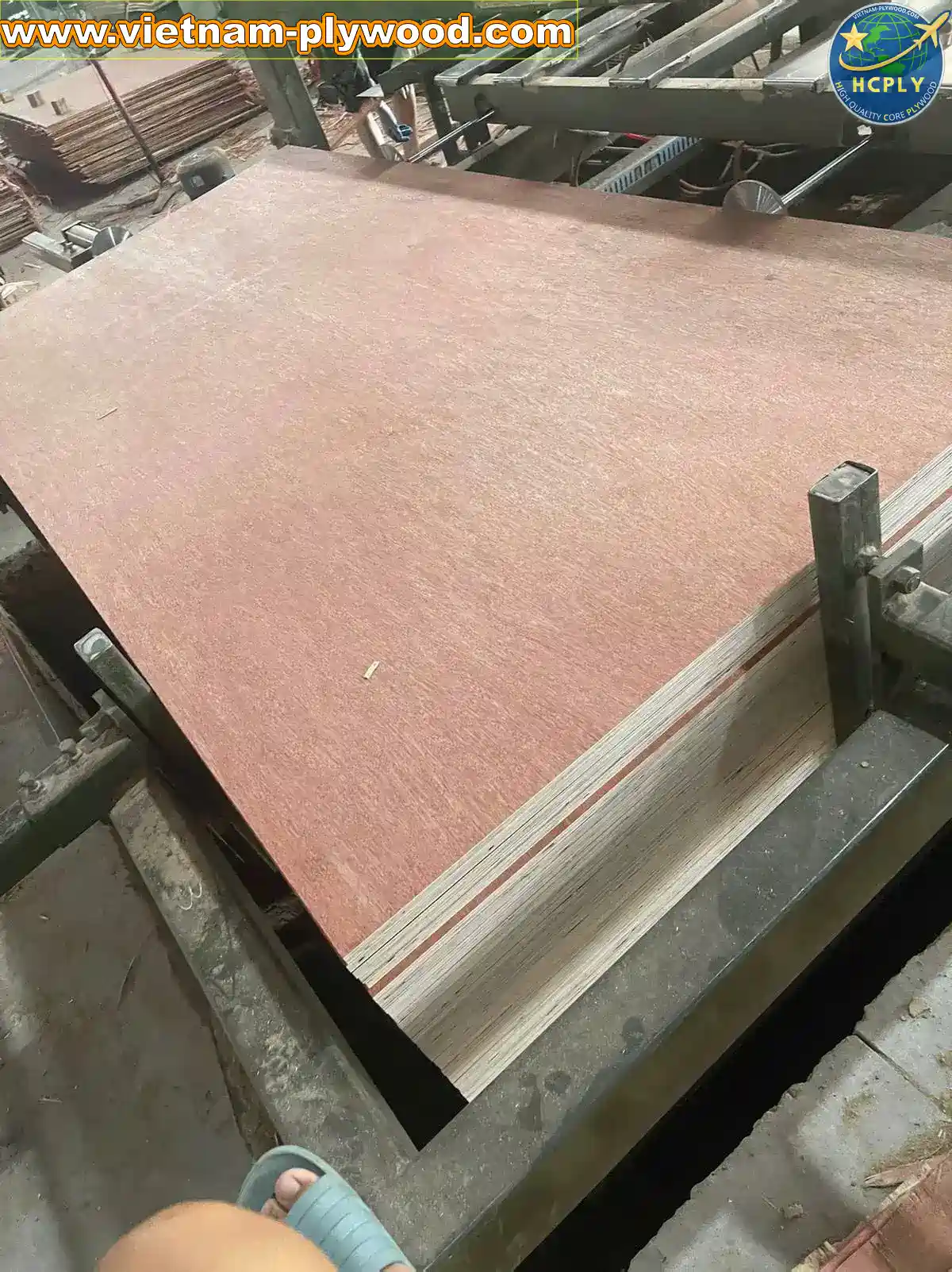
⚠️ Important: Sanding removes a measurable amount of surface wood — typically 0.1–0.2mm per pass. This is why furniture-grade panels are pressed slightly thicker than the target dimension to allow for calibration. An 18mm finished panel leaves the press at 18.2–18.5mm before sanding.
At HCPLY’s furniture production facility (styrax and eucalyptus core, E0 grade), every panel runs through a minimum of two sanding passes before QC inspection. Surface smoothness is measured visually and by hand-touch before loading.
🪑 When Sanded Plywood Is Required
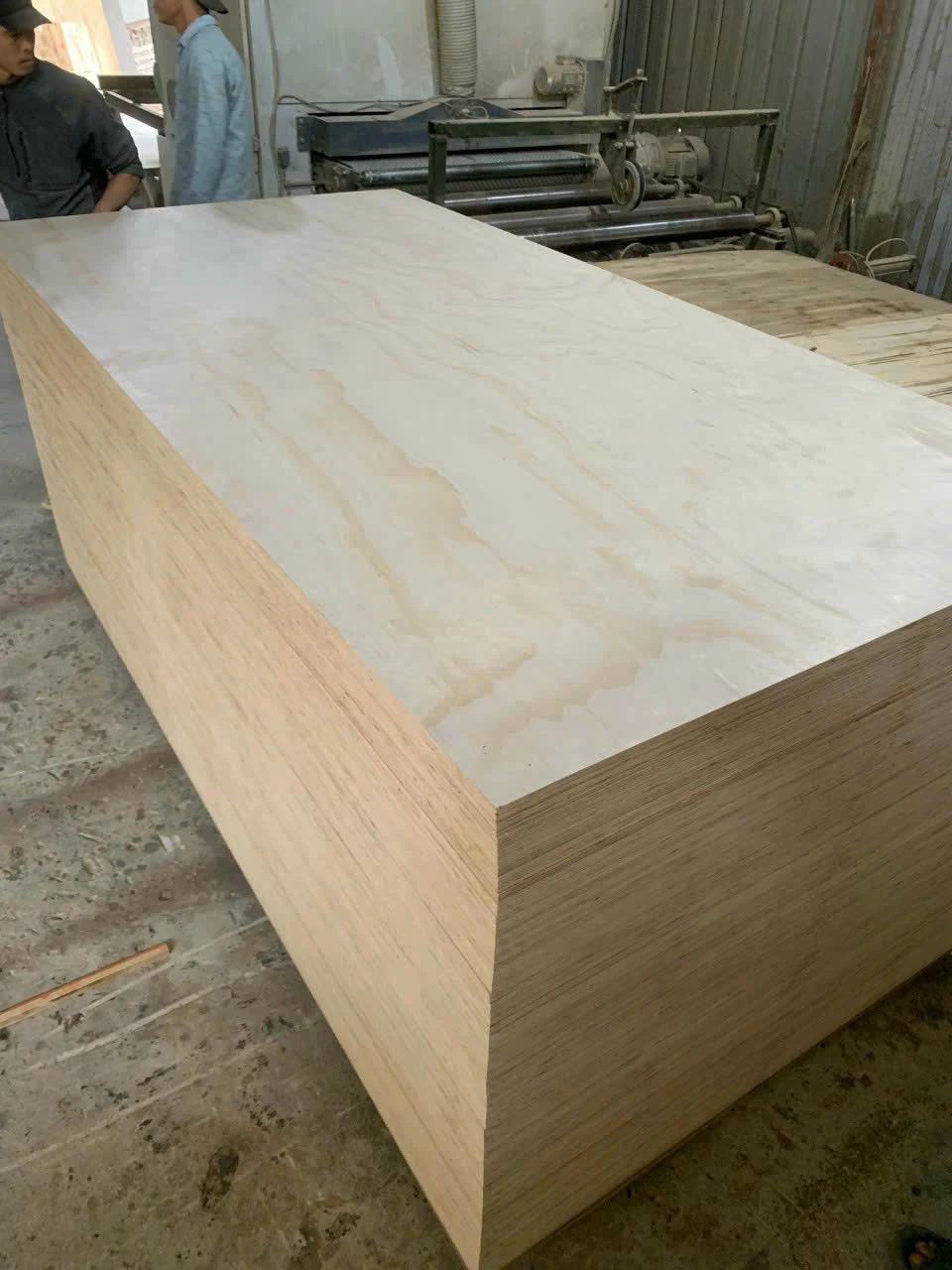
Sanded plywood is required for any application where the surface will be visible, painted, laminated, or bonded. The complete list of applications demanding sanded surface:
Furniture manufacturing — beds, wardrobes, dining tables, shelving units. Face veneer species most commonly sanded from Vietnam: birch (D/E/F grade), okoume (A/B), EV engineered veneer (A/B), bintangor A/B. Emission standard: E0 or E1. Core: styrax (480–500 kg/m³) or eucalyptus (650–750 kg/m³) from our Northern Vietnam production.
Kitchen and bathroom cabinets — cabinet carcass, door panels, and shelves require S2S sanded, CARB P2 or E0 emission, and moisture-resistant glue (melamine MR minimum). Buyers in the US market specify CARB P2, which eliminates E1 and E2 options entirely.
Interior wall paneling and decorative applications — panels that will receive paint, wallpaper, or architectural veneers. Even if the final surface will be covered, adhesive bond quality depends on the substrate being sanded.
Flooring substrate — not structural subfloor, but raised-floor panels and engineered wood flooring bases where dimensional tolerance under ±0.5mm is required. Here, eucalyptus core provides the density needed for stability.
📦 When Unsanded Plywood Is Correct
Unsanded plywood is not a lower-quality product — it is the correct specification for applications where the surface will be hidden, covered by film, or used structurally without finishing. Ordering sanded panels for these applications wastes money and adds lead time.
Film-Faced Plywood
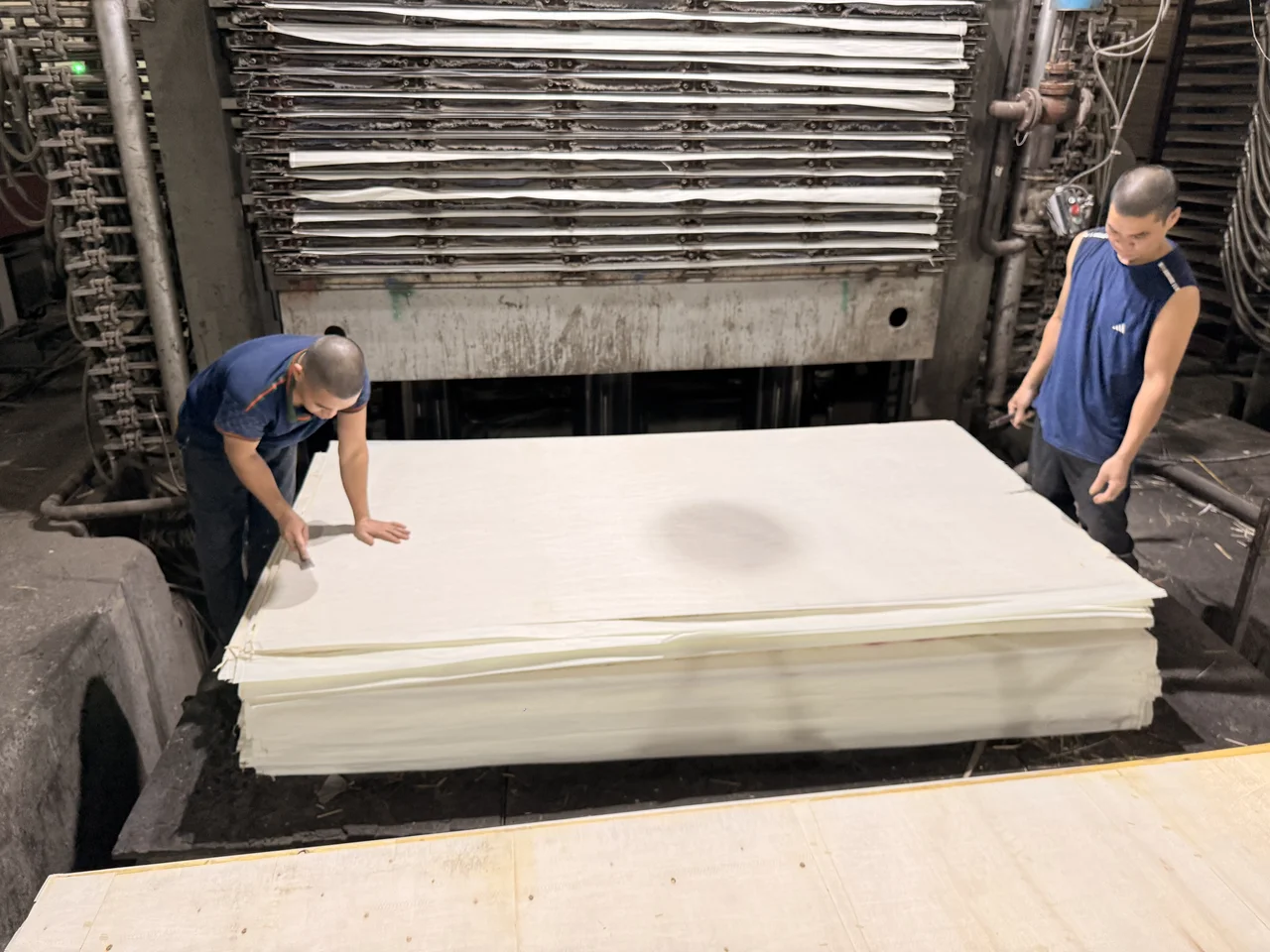
Film-faced plywood is never sanded. The phenolic or melamine film overlay is hot-pressed directly onto the panel surface. Sanding before film application would disrupt the surface chemistry needed for film adhesion. Film-faced panels leave the production line with the film intact — no post-press sanding step exists in the process.
Standard film-faced plywood uses 120–135 gsm phenolic film. HCPLY’s premium grade uses AICA film at 180–220 gsm, which is what delivers 15+ reuse cycles. Sanding the base panel before film application would reduce reuse performance.
Anti-Slip Plywood
The same logic applies to anti-slip plywood. The AICA anti-slip film (220gsm, wire mesh pattern) bonds to the raw panel surface through the same hot-press process as standard film-faced. Sanding before film application is not part of the production process.
Packing and Crate Plywood
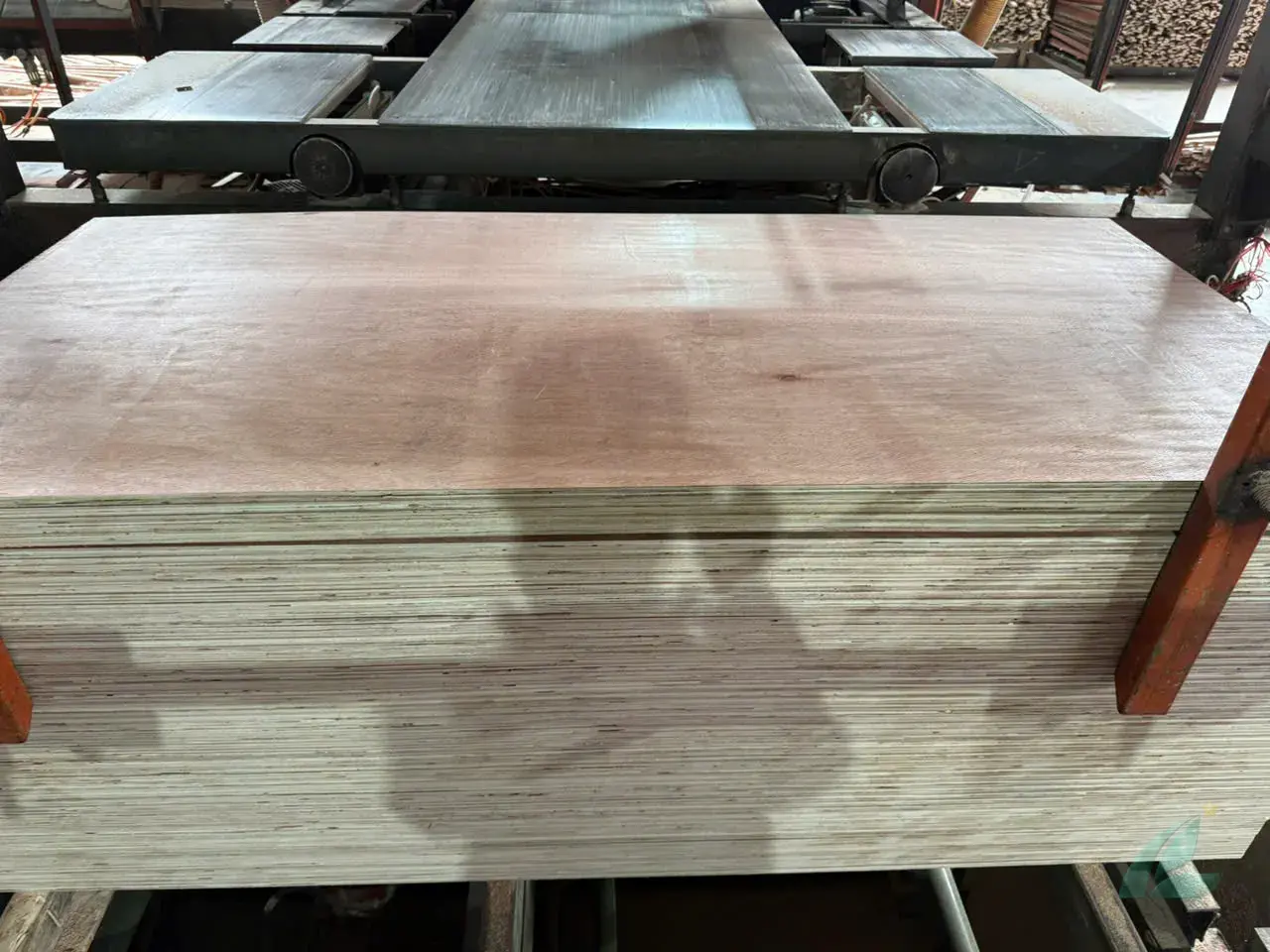
Packing plywood is produced in our commercial/packing facility using acacia or styrax core with bintangor C/D face veneer. The face grade itself — C/D — permits natural defects, discolouration, and minor voids. There is no commercial benefit to sanding a C-grade surface. The function is structural: hold the weight of goods in transit, not finish a visible surface.
Cost implication: packing plywood from Vietnam at 12mm in an unsanded state costs roughly USD 15–25 per CBM less than a comparable sanded furniture panel. The difference is real and compounds over a full container order.
Matt Plywood (Lamination Substrate)
Matt plywood is an unfaced raw core substrate — by definition unsanded. Matt panels are designed for HPL lamination, melamine paper overlay, or UV coating by the buyer’s downstream process. The buyer applies their own surface treatment. HCPLY’s production team does not sand matt panels because the downstream lamination step creates the final surface.
🏭 Factory Segment Determines Surface Finish
Understanding which factory produces your plywood explains why surface finish is consistent by product type rather than something negotiable on every order.
HCPLY manages 3 specialized production facilities in Northern Vietnam, each built for specific product categories:
- Premium furniture facility — styrax/eucalyptus core, E0 emission, full stitched core construction, melamine MR glue. Sanding is mandatory at this facility. Every panel passes calibration + finish sanding before QC.
- Commercial/packing facility — acacia core, E1/E2 emission, competitive pricing. No sanding on standard production. Commercial grade is lightly sanded in some runs where buyers pay for upgraded surface.
- Premium film-faced facility — AICA film, phenolic WBP or melamine. No post-press sanding — film application IS the surface treatment.
“The question buyers should ask is not ‘sanded or not’ but ‘which facility type matches my application.’ The surface finish follows from the facility and product type automatically,” says Lucy, International Sales Manager at HCPLY with 6+ years in Vietnam plywood export.
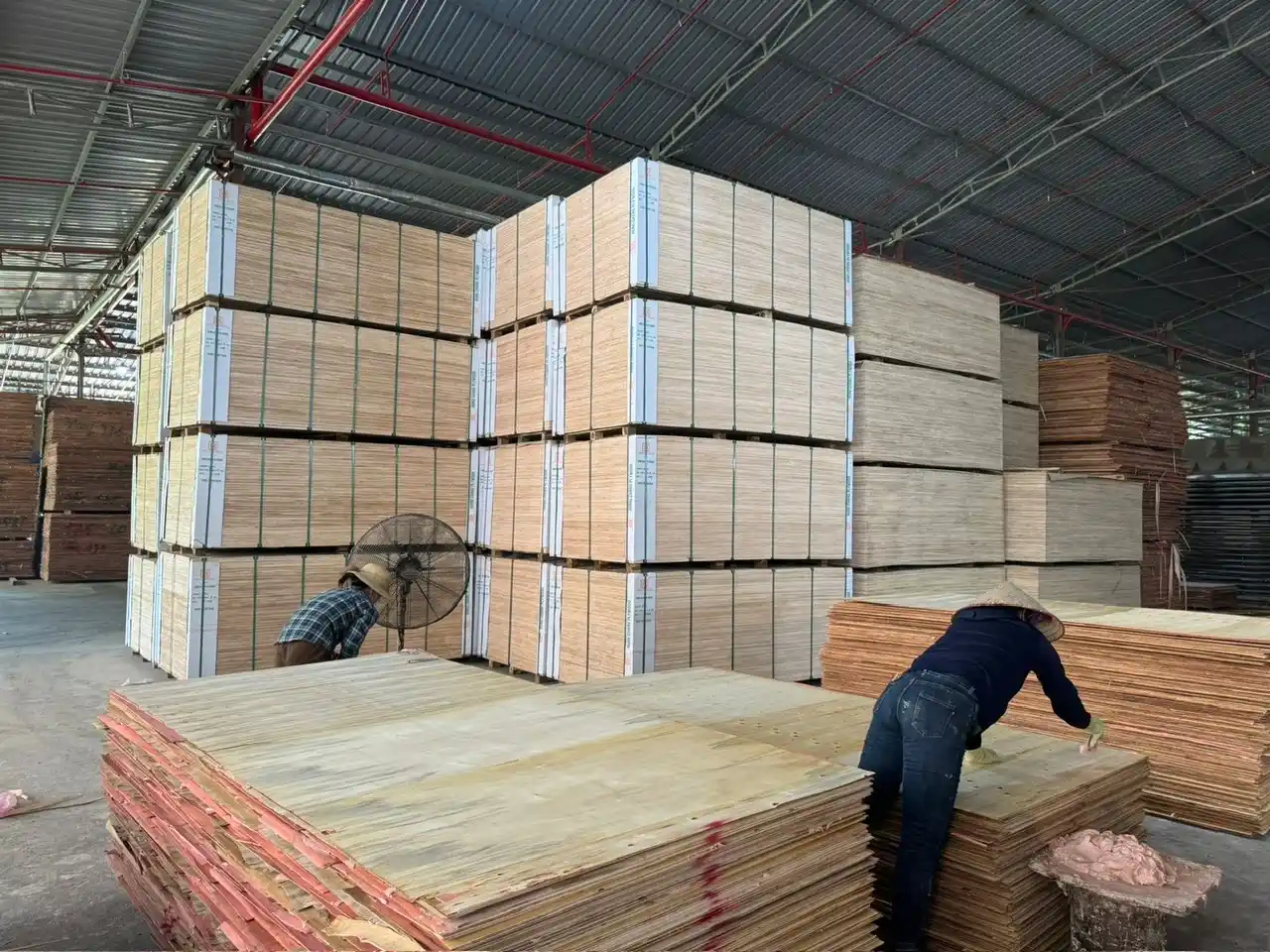
This segmentation is why comparing prices between an unsanded packing panel and a sanded furniture panel makes no sense — they are different products from different production lines with different cost structures (HCPLY production data, 2026).
📐 Technical Specifications: Sanded Plywood
For buyers writing purchase orders or spec sheets, the relevant parameters for sanded plywood from Vietnam:
| Specification | Standard Value |
|---|---|
| Sanding type | S2S (sanded two sides) — both faces |
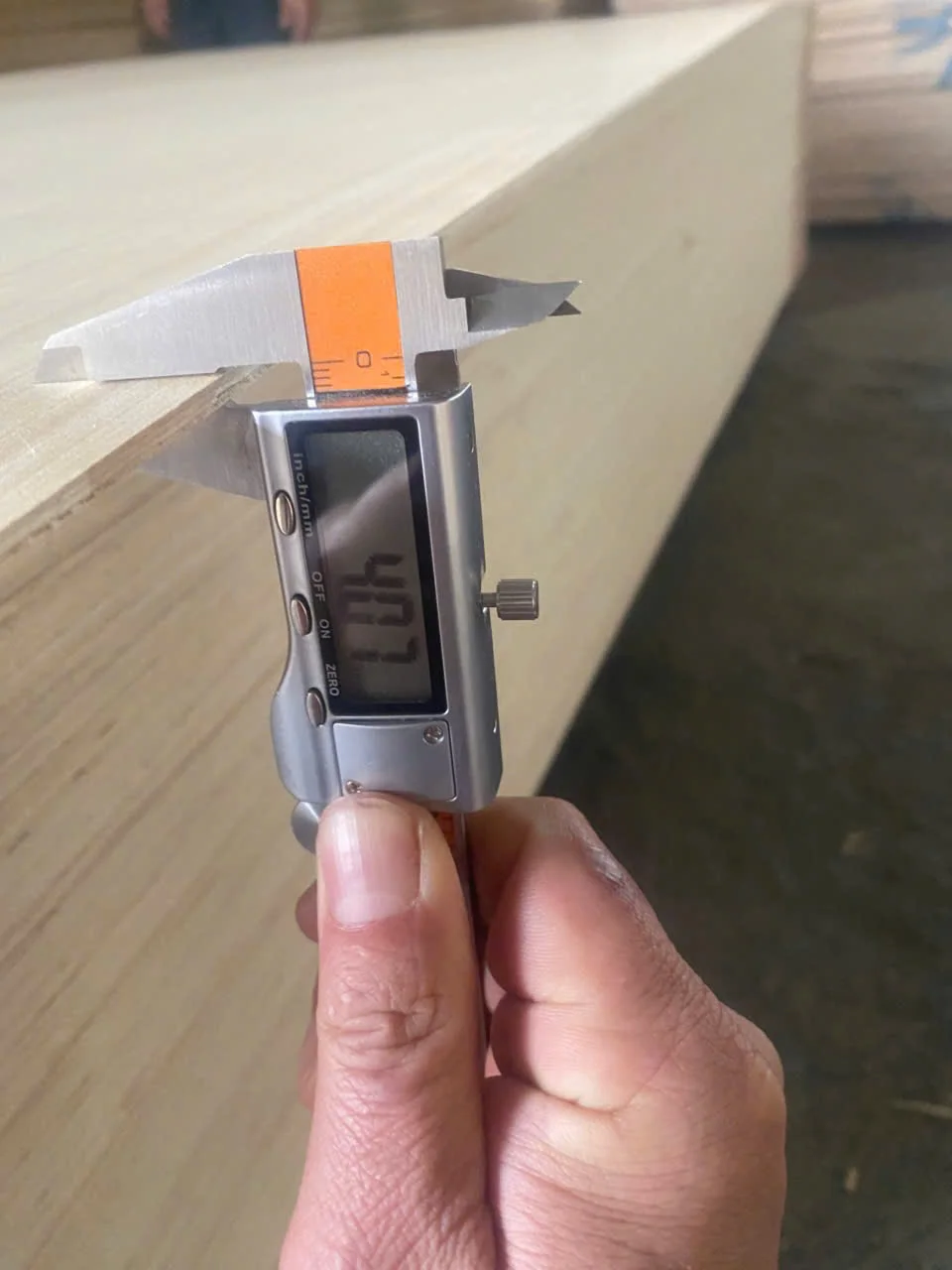
| Thickness tolerance post-sanding | ±0.3mm |
| Surface roughness (furniture grade) | Smooth, Ra typically <6.3 µm for premium |
| Abrasive progression | 40–80 grit calibration → 100–150 grit finish |
| Minimum face veneer thickness (VN) | 0.2–0.4mm (phổ biến), sanded after pressing |
| Core species options | Styrax (480–500 kg/m³), Eucalyptus (650–750 kg/m³) |
| Emission standard | E0 (≤0.5 mg/L), E1 (≤1.5 mg/L) available |
| Glue type | Melamine MR (12h boil test) |
| Certifications available | FSC, CARB P2, CE, ISO 9001, EUDR |
⚠️ Note: Thickness tolerance of ±0.3mm is the standard across Vietnamese factories. Japanese market buyers often require tighter tolerance (±0.2mm) and specify Ra values — confirm with your supplier before ordering if your production process has tight dimensional requirements.
💰 Cost Difference: Sanded vs Unsanded
The price gap between sanded and unsanded plywood reflects real production cost, not arbitrary margin. Three cost factors drive the difference:
-
Sanding machinery and consumables — wide-belt sanding machines are capital-intensive. Abrasive belts consume at a rate of 2–4 belts per shift depending on hardness of core species. Eucalyptus core (650–750 kg/m³) wears belts faster than styrax (480–500 kg/m³). For a full container run, sanding consumable costs alone add USD 3–5 per CBM.
-
Material removal loss — sanding removes 0.1–0.2mm of surface material per side. This means the factory presses slightly thicker panels to compensate. The additional veneer and glue cost is built into the price of sanded panels.
-
QC and rework rate — sanded panels require visual and tactile inspection of every sheet. Panels with surface defects after sanding — scratches from belt tracking, edge tearout, glue bleed-through — are pulled and either downgraded or resanded. This adds time and increases reject rates versus unsanded production.
For budgeting purposes: expect sanded furniture panels to cost USD 5–12 per CBM more than equivalent unsanded commercial panels in the same thickness and core species (HCPLY production data, 2026).
✅ Decision Checklist: Which Surface Finish to Specify
Use this checklist before writing your purchase order:
Specify SANDED if:
- Final product will be painted, lacquered, or UV-coated
- Applying HPL, melamine paper, or architectural veneer on top
- Dimensional tolerance under ±0.5mm is required
- Face veneer is birch, okoume, EV, gurjan, or bintangor A/B
- Market destination is EU, US, Japan, or Korea with strict emission/adhesion standards
- Application: furniture, cabinets, wall panels, flooring substrate
Specify UNSANDED if:
- Panel will receive film overlay (phenolic or melamine film, anti-slip film)
- Application is packing, crating, or industrial packaging
- Face is raw core (matt plywood as lamination substrate)
- Final surface will be hidden or structural (subfloor, blocking, bracing)
- Budget is constrained and surface appearance is not relevant
If unsure, request a sample set. HCPLY ships sanded and unsanded samples of any face type to qualified buyers. Comparing them directly in your production environment takes the guesswork out of the specification.
Request Free Plywood Samples from HCPLY