
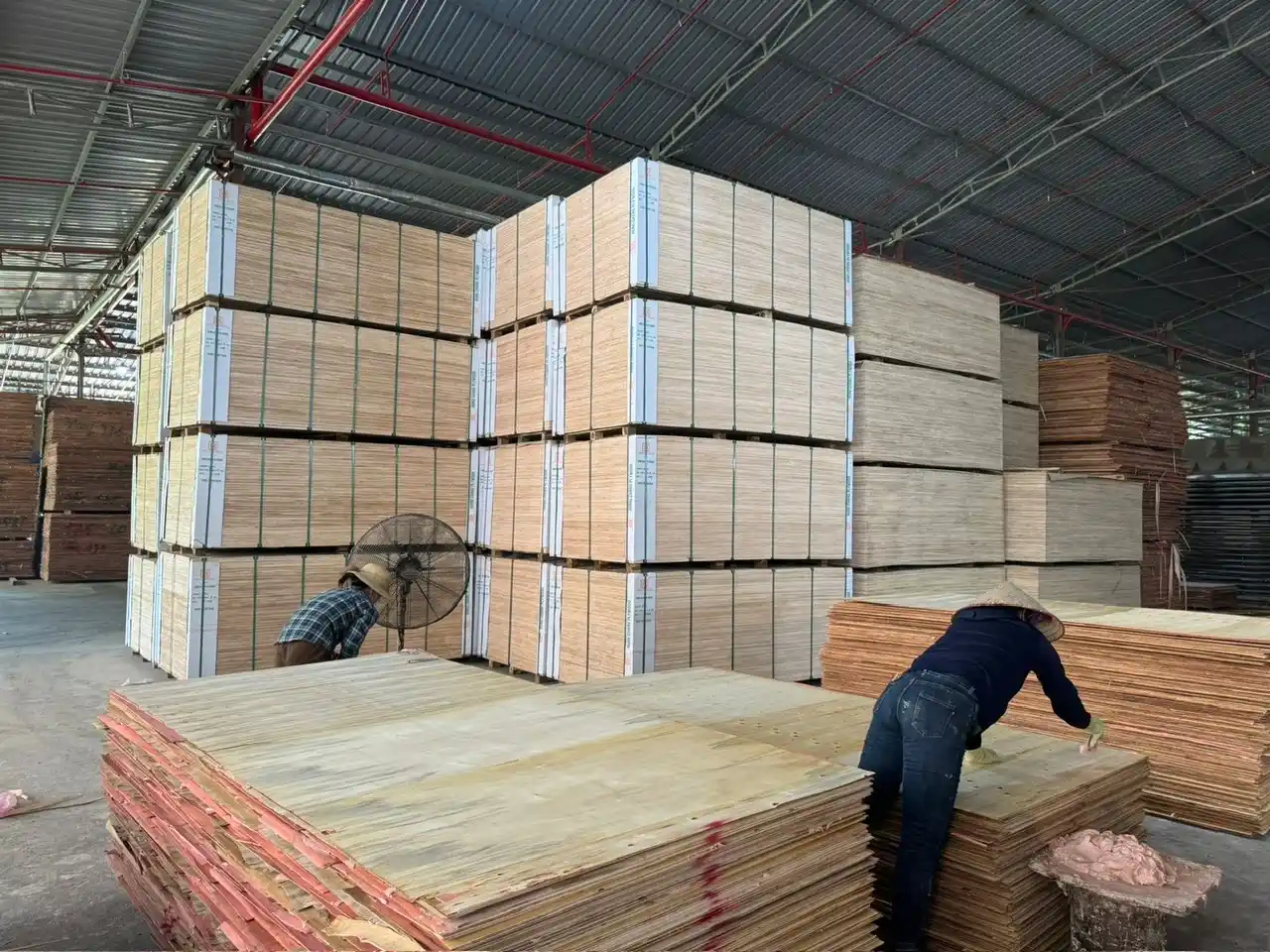
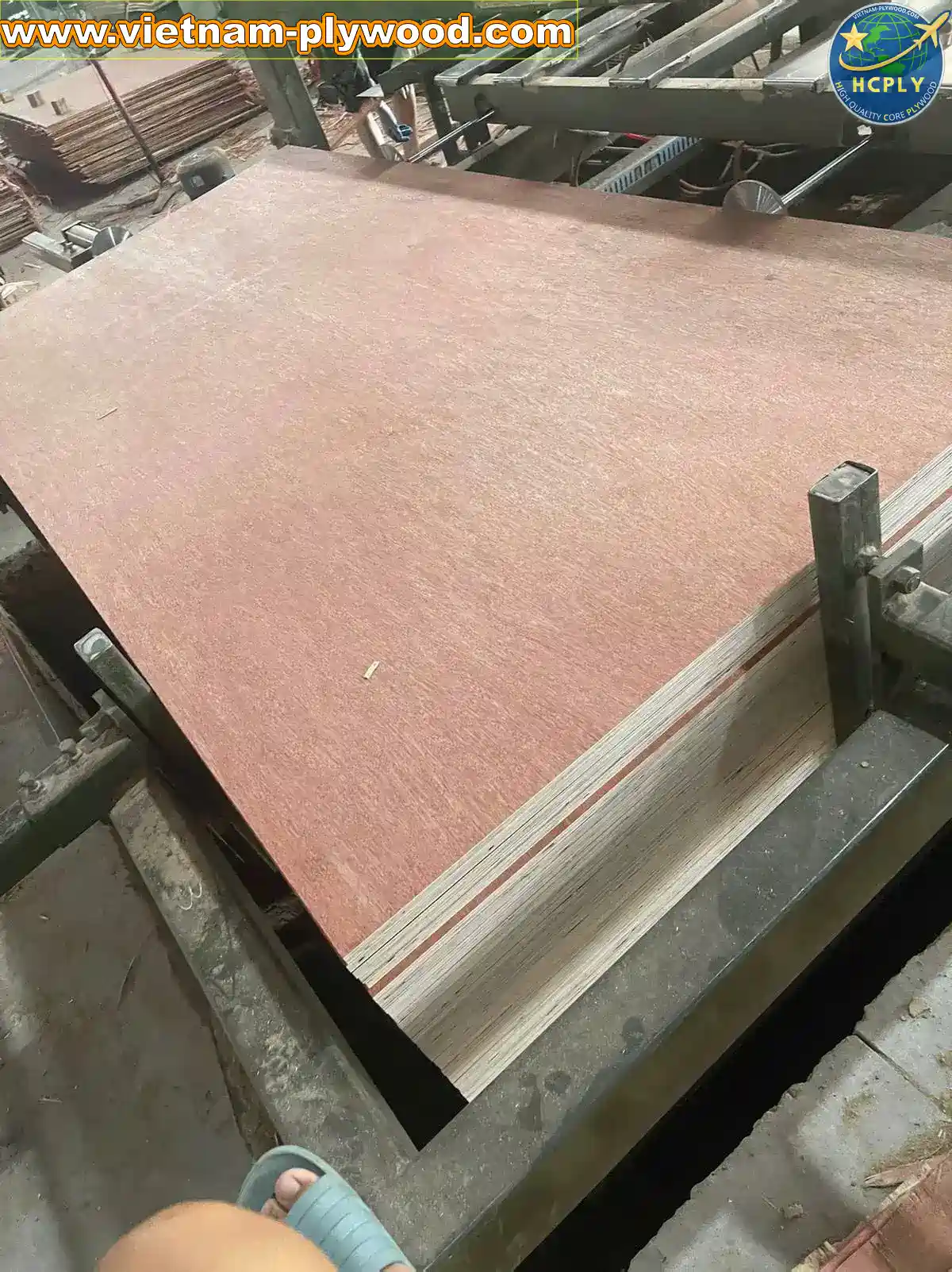


Every year, importers receive containers of plywood that look fine on the outside but fail on arrival — warped boards, delaminated edges, thickness running 1–2mm under spec. Almost every one of those failures traces back to one root cause: a factory that skips systematic quality control between production steps.
This article shows exactly how a real Vietnam plywood factory runs quality control — five distinct stages, what is checked at each one, and what the data looks like.
Get a Free Sample and QC Report from HCPLY →
📋 Plywood Quality Control at a Vietnam Factory vs Port Inspection
Port inspection catches defects after production is finished. Factory QC prevents defects from reaching the finished product in the first place.
The difference matters because wood-based panels have a compounding failure mode. A veneer sheet with 12% moisture content pressed with phenolic glue will delaminate within weeks — but it will look perfectly fine at the port. A thickness that runs 0.5mm under spec across a batch of 3,000 sheets cannot be corrected after pressing.
International quality standards recognize this distinction. ISO 9001 — the quality management certification that HCPLY holds — requires documented control points at each production stage, not just end-of-line sampling. The standard mandates that nonconformances are caught, recorded, and corrected at the process level (ISO 9001:2015, Clause 8.6).
For buyers, this means the right question to ask a Vietnam plywood supplier is not “do you do QC?” — every supplier will say yes. The right question is: at which production stages, with what instruments, and what are your rejection thresholds? For specific defect types to look for, see plywood face defects — what buyers should check.
⚠️ Important: Pre-shipment third-party inspection (SGS, BV) is valuable, but it covers only the final product. A factory without in-process QC can still show clean inspection results on one sample set while the rest of the container has hidden defects.
🔧 Stage 1 — Raw Veneer Grading and Moisture Control
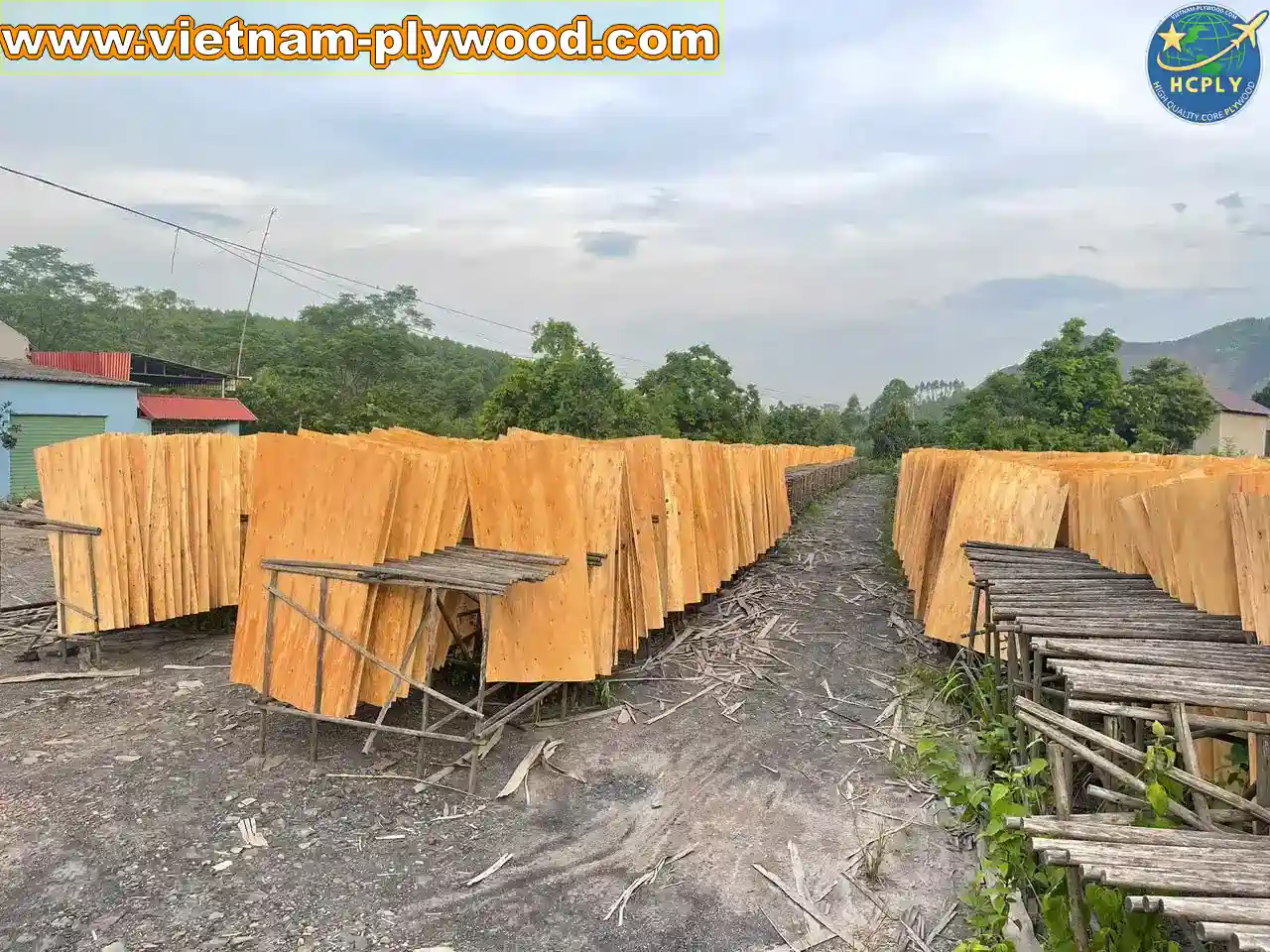
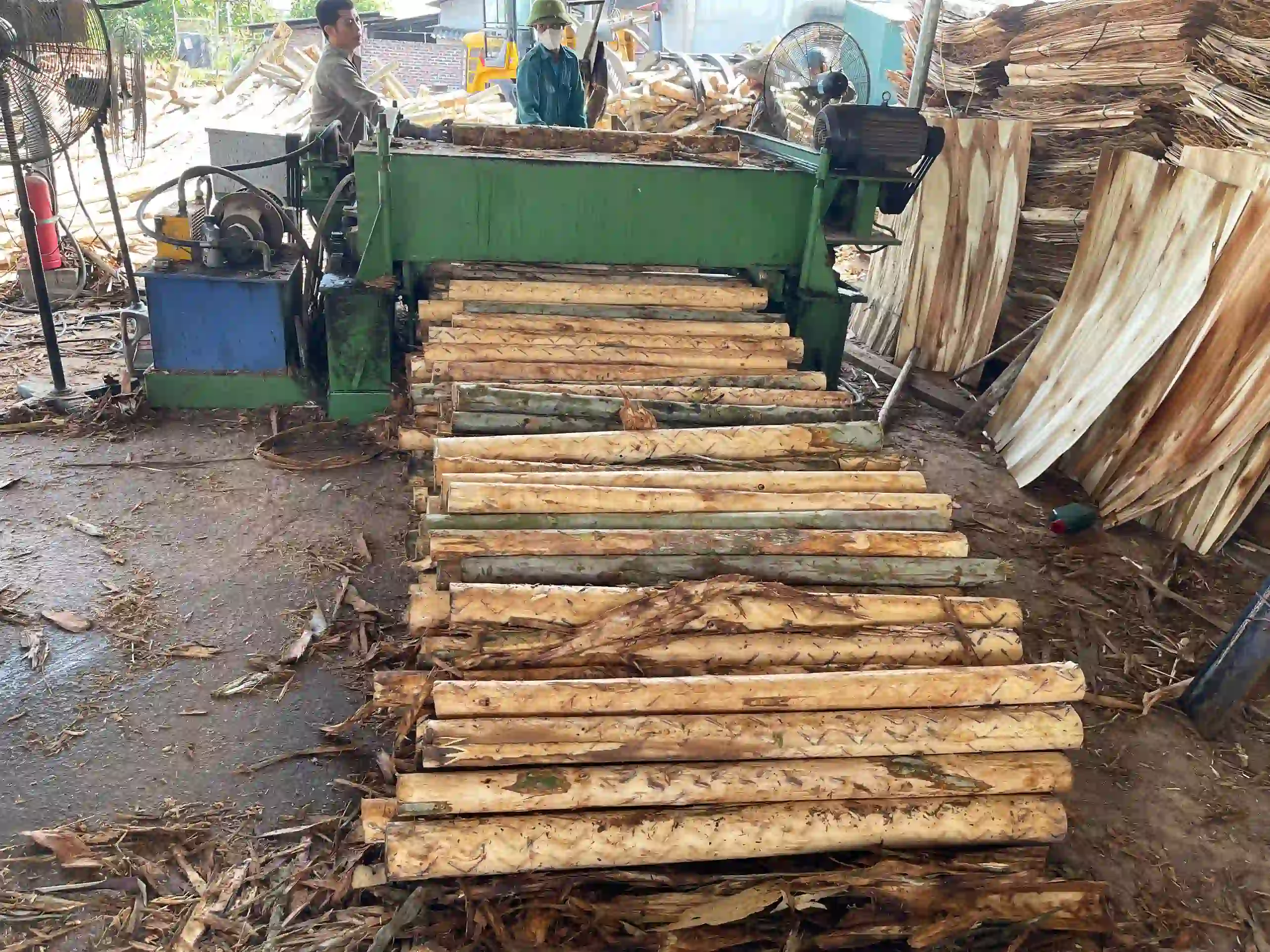
Quality control starts before a single sheet is pressed. Raw veneer — both face veneer and core veneer — enters a grading and drying check before it is approved for pressing. This first stage is where the plywood inspection process begins — before any glue or heat is applied.
📌 Face Veneer Grading
Face veneer is graded visually and by caliper measurement. The QC team checks for:
- Surface defects: knots, splits, discoloration, overlap, grain irregularity
- Thickness consistency: face veneer at HCPLY’s facilities runs 0.2–0.4mm (standard for Vietnam production). Sheets outside this range are pulled before pressing, as uneven face thickness causes sanding difficulties and visible surface variation in the finished panel.
- Species confirmation: birch veneer (grade D/E/F), gurjan, okoume, bintangor — each has distinct visual characteristics. A cross-check against the production order prevents face species substitution.
📌 Core Veneer Moisture Check
Core veneer must reach 6–8% moisture content before hot pressing. Above 8%, steam pressure during pressing causes bubbling and micro-delamination inside the panel — invisible at the surface, but detectable in boiling tests.
HCPLY’s dryers run at controlled temperature with exit moisture meters. Batches that exit the dryer outside the 6–8% range are re-dried before moving to the press line. This step is documented per batch.
The three core species used — acacia (~580 kg/m³), eucalyptus (650–750 kg/m³), and styrax (480–500 kg/m³) — each require slightly different drying parameters because of density differences. A single drying protocol applied to all three would over-dry styrax and under-dry eucalyptus. (HCPLY production data, 2026)
🏭 Stage 2 — Hot Press Process Control
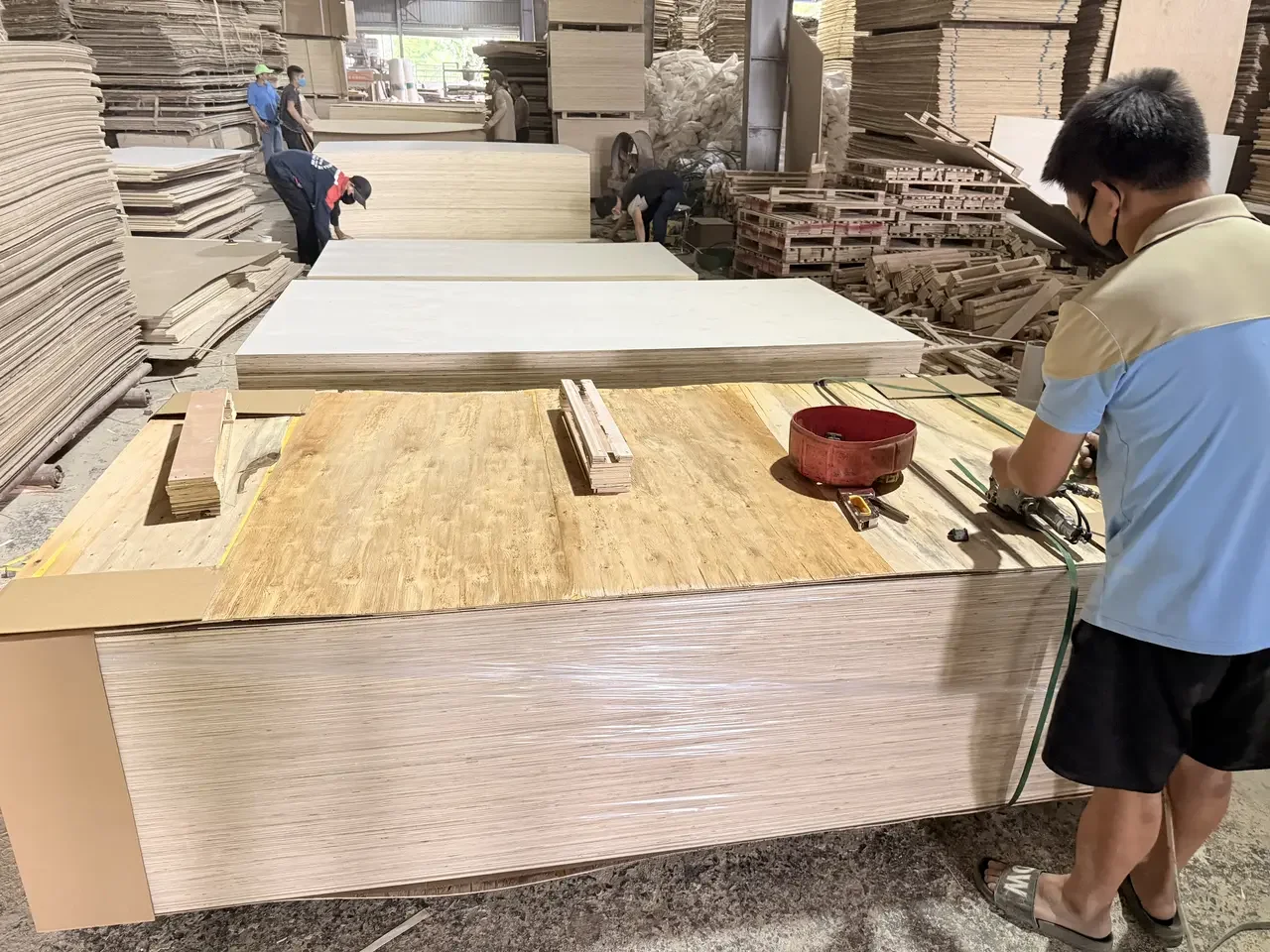
The hot press is where veneer layers are bonded into a panel. Press parameters — temperature, pressure, and cycle time — are set by glue type and panel thickness.
Glue-Specific Parameters
Melamine (MR) glue requires a shorter press cycle at lower temperature. Typical press conditions for 18mm panels with melamine glue run at 110–120°C. The MR glue bond must survive a 12-hour boil test — the international standard for moisture-resistant plywood (EN 314-1).
Phenolic (WBP) glue requires a longer cycle at higher temperature — typically 130–145°C for structural and film-faced grades. The phenolic bond must survive 72 hours of boiling without delamination, meeting the WBP standard required for concrete formwork, marine, and construction-grade plywood.
💡 Note on glue vs emission: Glue type (melamine MR / phenolic WBP) and emission class (E0, E1, E2) are two separate specifications. Melamine glue can be combined with E0 or E1 emission resin. Phenolic glue is inherently low-emission by formulation. Mixing these up in a purchase order is one of the most common buyer errors. For a full explanation, see our plywood glue types and emission standards guide.
Post-Press Panel Check
After pressing, QC checks the first few panels from each press cycle before the run continues. This post-press plywood inspection process is critical because any defect discovered here can still be corrected before sanding commits the panel to its final dimensions.
- Surface flatness: A straight-edge placed diagonally across the panel identifies warping. Panels with a crown or bow exceeding 3mm per meter are separated.
- Edge delamination check: Pressing pressure must be uniform across the panel. The QC team checks panel edges for visible glueline separation — a sign of insufficient press pressure or uneven glue spread.
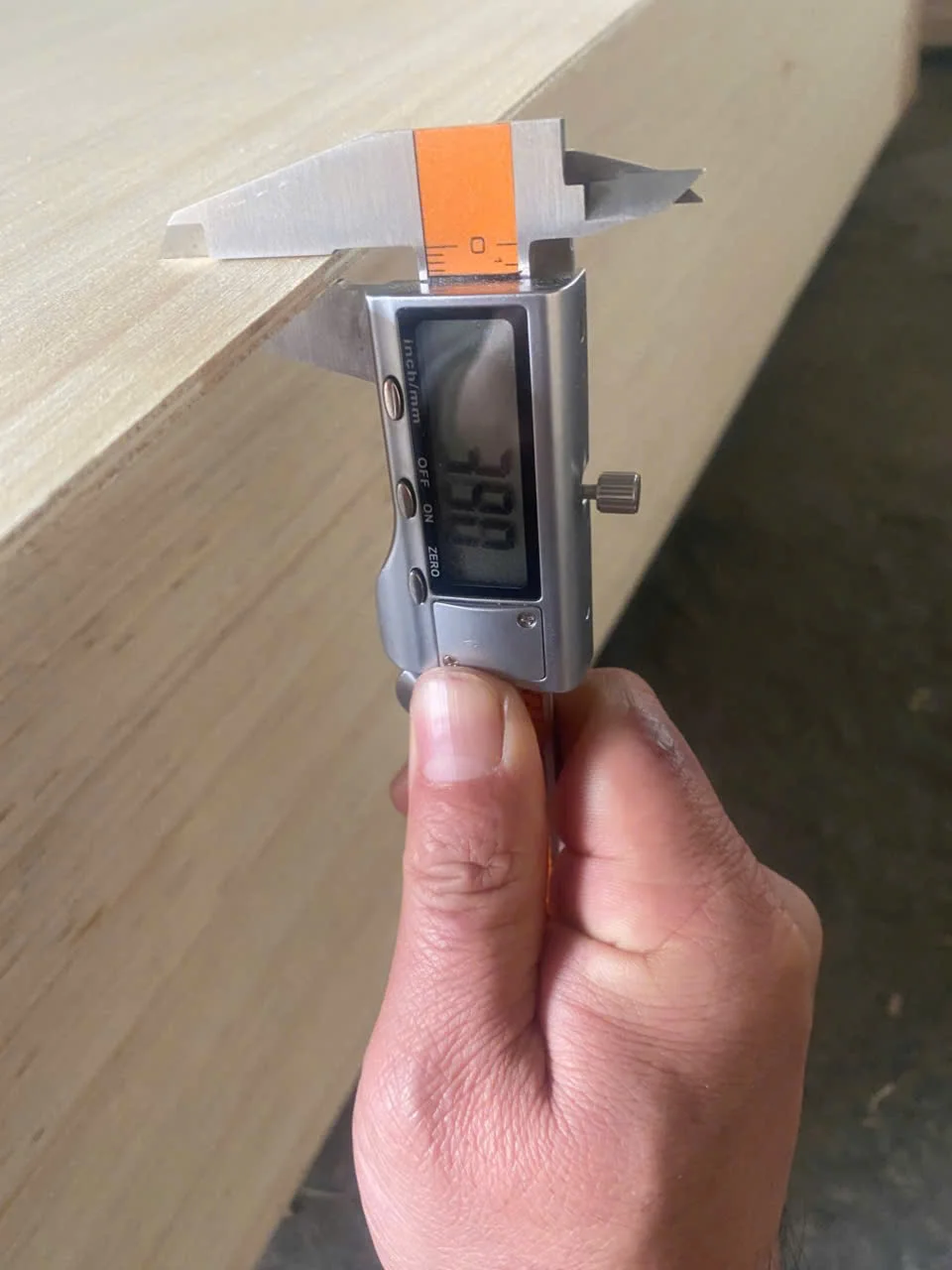
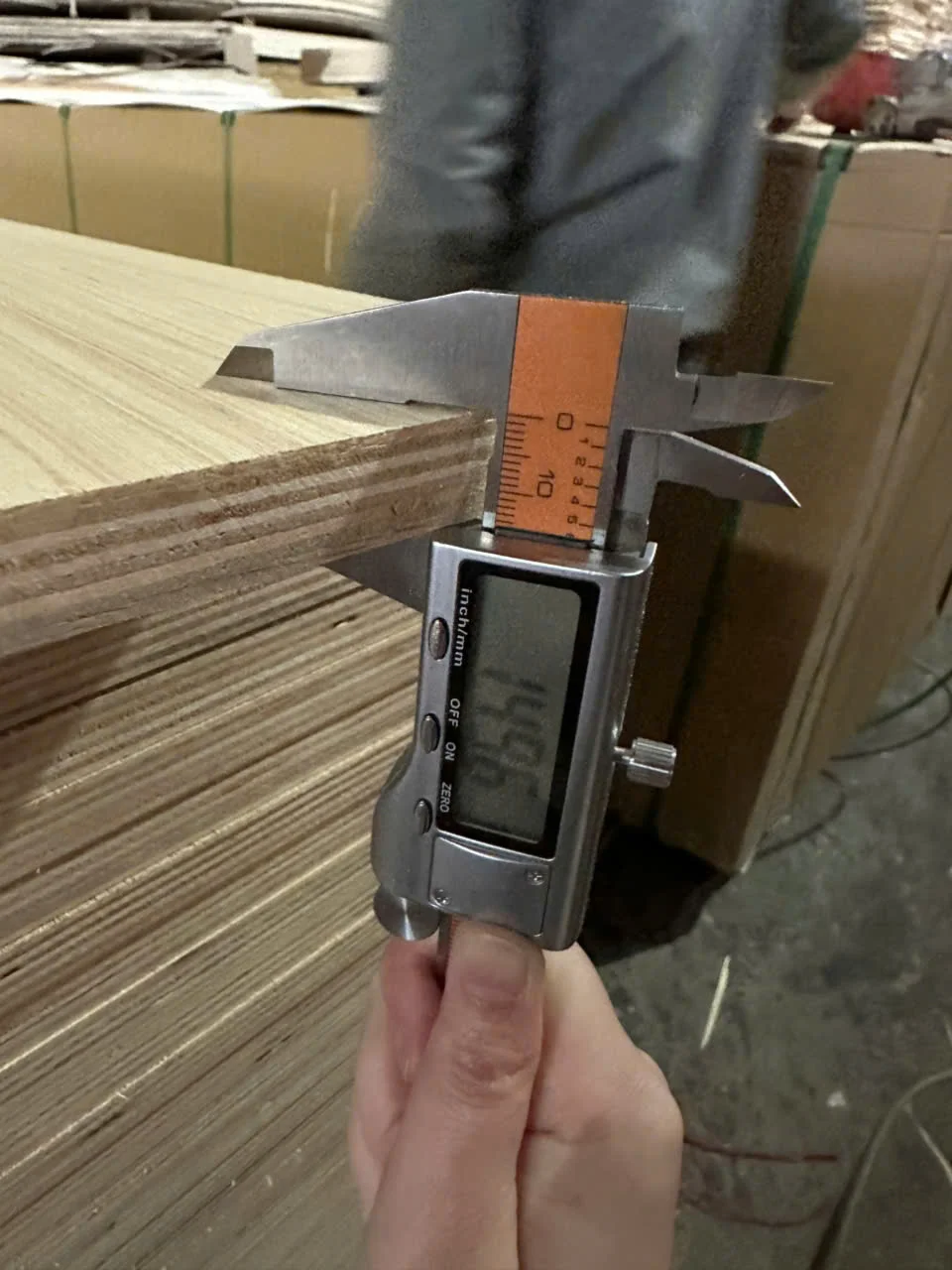
- Thickness rough measurement: A digital caliper at 4 points on the rough-pressed panel confirms the panel is within expected range before it moves to sanding.
📐 Stage 3 — Thickness Calibration and Sanding QC
After pressing and before surface sanding, every production batch goes through a calibration pass on a wide-belt sanding machine. This step serves two purposes: correcting thickness variation and preparing the surface for grading.
Thickness Tolerance Standard
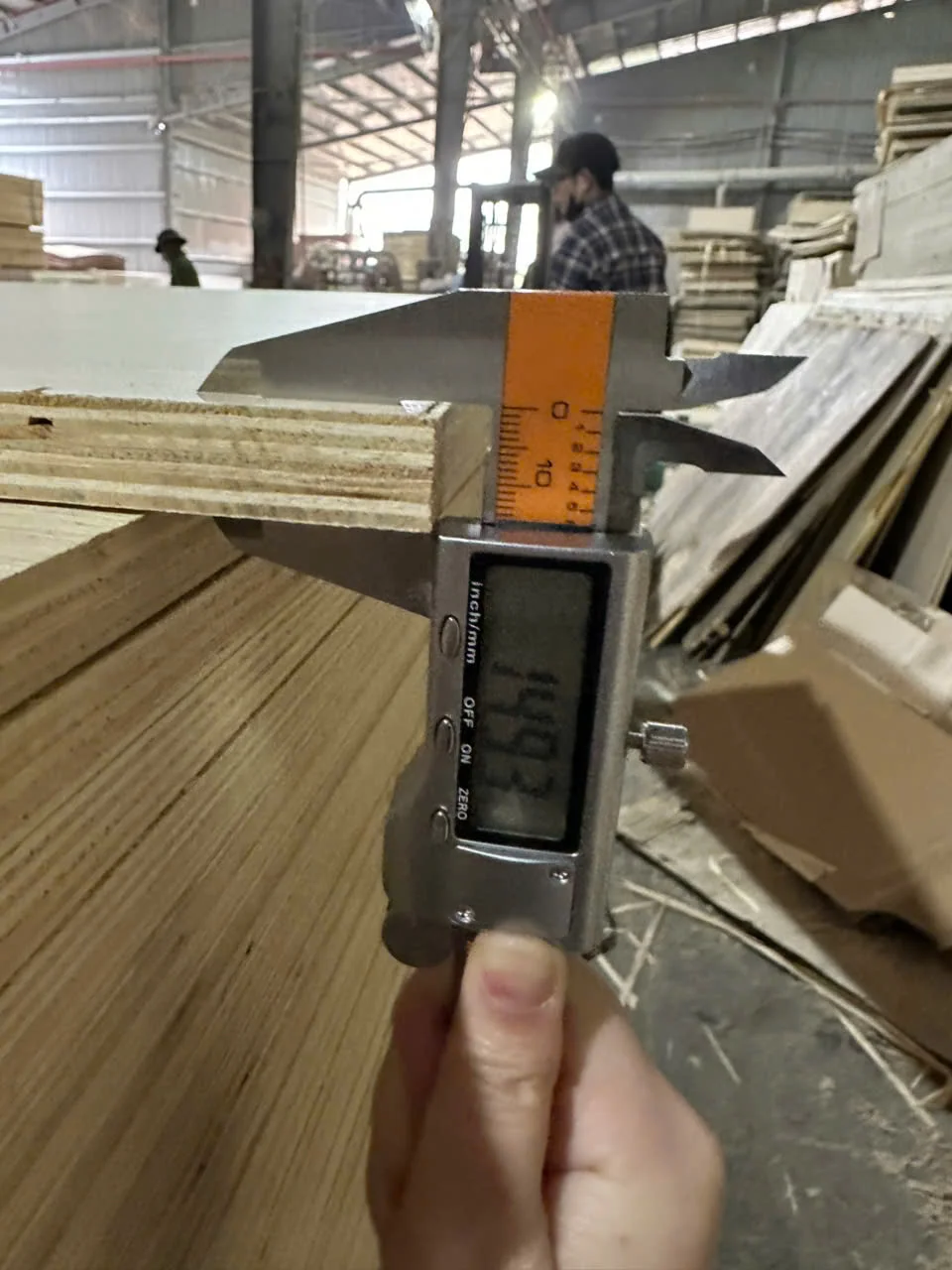
HCPLY’s thickness tolerance is ±0.3mm from nominal thickness. This aligns with the EN 315 standard for plywood dimensions and tolerances.
What this means in practice:
| Nominal Thickness | Acceptable Range |
|---|---|
| 12mm | 11.7 – 12.3mm |
| 15mm | 14.7 – 15.3mm |
| 18mm | 17.7 – 18.3mm |
| 21mm | 20.7 – 21.3mm |
Thickness is measured with calibrated digital calipers at 5 points per sheet — 4 corners and center. A minimum of 10 sheets per pallet is sampled. Sheets outside tolerance are sorted out, not mixed back into the main batch.
“For furniture and cabinet customers, especially those ordering for Japan or Korea, thickness consistency is the number one requirement. A single outlier sheet at 17.3mm in an 18mm order causes downstream fitting problems for their production line,” says Lucy, International Sales Manager at HCPLY.
Sanding for Furniture vs Commercial Grade
Furniture-grade plywood (birch, okoume, EV face) receives a full calibration + finish sanding sequence. The first sanding pass calibrates the panel to nominal thickness; the second pass achieves the surface smoothness required for veneer bonding or direct finishing.
Commercial, packing, and film-faced grades do not receive finish sanding — they exit the line after calibration. This is not a cost-cutting shortcut; unsanded surfaces are required for film adhesion (film-faced plywood) and for structural bond surfaces (anti-slip plywood).
For more on how face surface treatment varies by product type, see our plywood face veneer types guide.
🔍 Stage 4 — Surface and Edge Grading
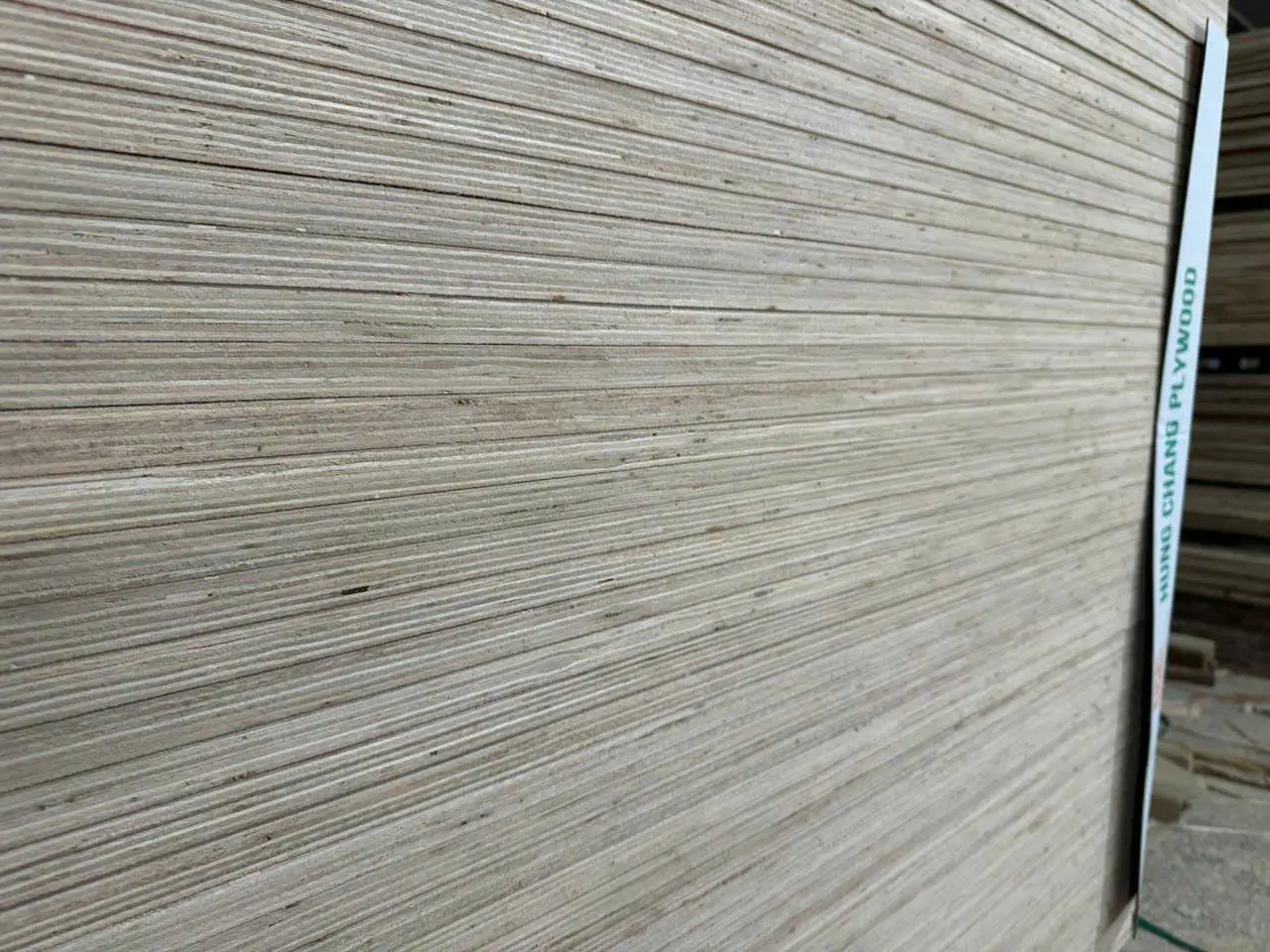
After sanding, every panel passes through visual grading. This stage determines the panel’s face grade and flags any cosmetic or structural defects that would cause rejection.
What Graders Check
Surface defects (face):
- Open knots, splits, or holes above the tolerance for the grade
- Overlap or telegraphing from core veneer joints showing through the face
- Sanding scratches, machine marks, or burn marks
- Glue bleed-through on the face surface
Edge checks:
- Visible delamination at panel edges — the most reliable visual indicator of glue bond failure
- Edge squareness — panels more than 2mm out of square cause stacking problems
- Core gap exposure at edges — loose-laid cores (used in commercial grades) sometimes show gaps at the sawn edge that exceed allowable limits
Grade tally sheet: Every production run generates a grade tally. Panels are sorted into the ordered grade (e.g., BB/CC face, or A/B face), adjacent grade, and reject. The tally sheet travels with the pallet through packing and is available to the buyer on request.
⚠️ Note: Grade definitions are not universal. BB/CC under Vietnamese factory grading may differ from European or Japanese grading standards. HCPLY aligns grade definitions with buyer specifications at the time of order to avoid disputes on arrival.
📦 Stage 5 — Pre-Shipment Inspection and Documentation
The final QC stage happens at the pallet level, before container loading. This is where a complete production batch is audited against the original purchase order.
Pre-Shipment Checklist
| Check Item | Method | Acceptance Criterion |
|---|---|---|
| Thickness | Digital caliper, 10 sheets/pallet | ±0.3mm from nominal |
| Moisture content | Pin-type moisture meter | ≤12% for standard grades |
| Panel count | Physical count per pallet | Matches packing list |
| Grade | Visual re-check of top and bottom sheets | Matches order grade |
| Stamping/marking | Check factory mark, grade stamp, spec label | Legible, correct |
| Pallet condition | Visual | No broken boards, secure strapping |
| Boiling test (on sample) | EN 314-1 | No delamination at 12h (MR) or 72h (WBP) |
Third-Party Inspection Access
HCPLY supports pre-shipment inspection by SGS, Bureau Veritas, Intertek, or buyer-appointed surveyors at no additional charge. The inspection team has access to:
- Thickness measurement logs for the production batch
- Moisture meter readings from the drying stage
- Grade tally sheets
- Boiling test results (if lab testing was requested for the order)
For export to regulated markets (EU, US, Japan, Korea), this documentation package also includes FSC chain-of-custody certificates, CARB P2 compliance documentation, and CE conformity declarations where applicable. For a full overview of export documentation requirements, see our plywood certifications and export documentation guide.
Request Pre-Shipment Inspection Documentation →
📊 How a Professional QC System Is Structured
- Facility 1 (Premium furniture): Full stitched core, styrax/eucalyptus, E0, finish sanded. Tightest thickness tolerance. Target markets: EU, US, Japan, Korea.
- Facility 2 (Commercial/packing): Acacia core, MR glue, E1/E2. Calibration sanding only. Target markets: India, Southeast Asia, Middle East.
- Facility 3 (Film-faced construction): AICA phenolic film, eucalyptus/acacia, WBP. Reuse testing (15+ cycle target). Target markets: EU, Korea, Australia.
The ISO 9001:2015 quality management system covers all three facilities — not just the premium line. Each facility runs its own nonconformance log, and the QC team meets weekly to review rejection rates and process deviations.
“Our rejection rate at final QC runs below 3% of production volume across all facilities. The reason is the in-process controls — by the time a panel reaches the pre-shipment stage, it has passed four earlier checks.” — Lucy, International Sales Manager, HCPLY (2026)
For a closer look at what each factory type produces and how to match supplier to your product category, see our Vietnam plywood factory types guide. You can also watch our factory QC process videos to see these inspection stages in real time.
✅ What This Means for Buyers Sourcing from Vietnam
Factory QC is not a single event — it is a chain of documented process controls. When evaluating a Vietnam plywood supplier, ask for:
- In-process control records — veneer moisture logs, press parameter settings, thickness calibration data
- Rejection rate data — a factory with no rejects is either not measuring or not sharing; typical range is 1–5%
- Grade tally sheets — confirms what fraction of production actually meets the ordered grade
- Boiling test results — especially critical when ordering WBP/MR grade for specific end uses
- Third-party inspection history — SGS/BV/Intertek reports from recent orders
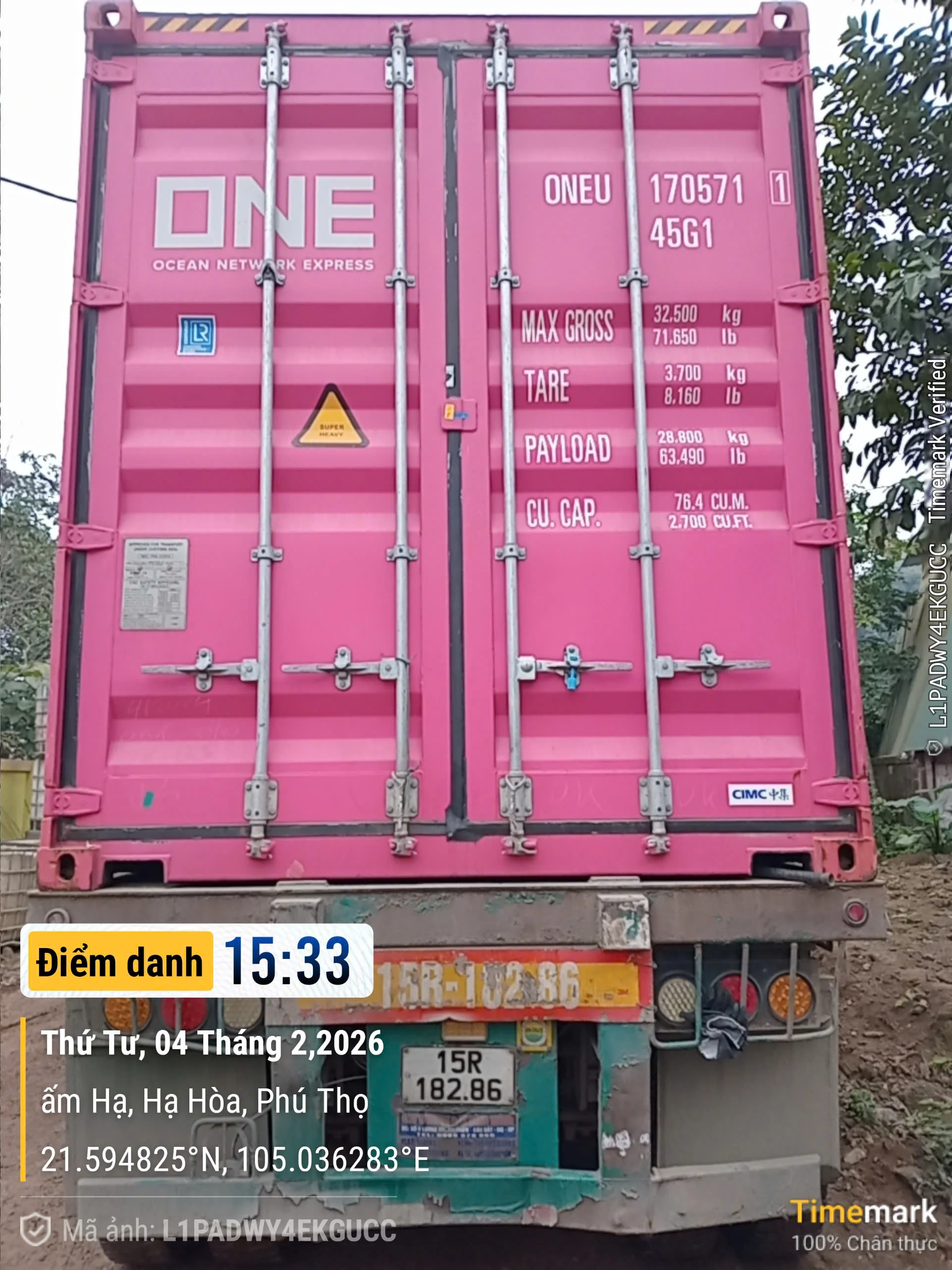
HCPLY provides all of the above as standard. Factory-direct documentation ships with every order, including FSC certificates, CARB P2 compliance, and pre-shipment inspection access.
For an overview of how HCPLY’s operations are structured, see our about Vietnam plywood factory page. For a direct quotation with QC specifications matched to your order requirements, use the contact form below.
Get a Free Quote with QC Specifications →
Disclosure: This article is published by HCPLY, a Vietnam-based plywood manufacturer and export operator. While we aim to provide objective industry guidance, readers should consider our perspective as a market participant when evaluating recommendations.