

Plywood face veneer defines everything a buyer sees, touches, and specifies on a purchase order. The face veneer species printed on the product name — birch plywood, gurjan plywood, okoume plywood — is not decorative marketing. It determines the panel’s visual quality, surface workability, grading system, target market, and price bracket. A furniture factory in Seoul specifying EV plywood for matched cabinet sets and a construction contractor in Mumbai ordering film faced plywood for concrete formwork are buying fundamentally different products, manufactured on different production lines, for different commercial outcomes.
This guide covers every plywood face veneer types available from Vietnam — from the most affordable packing plywood to the most expensive birch plywood. For each type, the information below draws from HCPLY’s production data across 3 specialized facilities in Phu Tho Province, Northern Vietnam.
⚠️ Important: Panel density depends on the core species (acacia, eucalyptus, or styrax), not the face veneer. A birch-face panel on styrax core weighs the same as a bintangor-face panel on the same core at the same thickness. Every density figure in this guide refers to core density.
📋 How Plywood Face Veneer Works — Naming, Thickness, and Grading
Plywood is named after its face veneer. Apply a birch veneer face to a styrax core and the product is called birch plywood — regardless of the core species beneath. This naming convention governs the entire global plywood trade.
Face Veneer Thickness
Vietnam factories apply face veneer at 0.2–0.4mm thickness as standard. This thin layer determines the panel’s visual identity while contributing negligibly to its structural properties. The core — acacia (~580 kg/m3), eucalyptus (650–750 kg/m3), or styrax (480–500 kg/m3) — determines density, weight, screw-holding strength, and container loading efficiency.
Grading Systems
Two distinct grading systems operate across plywood face veneer types from Vietnam:
- A/B system — used for bintangor, okoume, gurjan, EV, pine, poplar, eucalyptus. Grade A is the highest quality (minimal defects, uniform color). Grade B permits minor imperfections. Grade C and D are commercial/utility grades.
- D/E/F system — used exclusively for birch. D is the best grade available in Vietnam (minimal knots, tight grain). E permits small knots. F is commercial quality. Birch does not use A/B grading — this is a fundamental difference that catches first-time buyers.
Sanding
Furniture-grade plywood face veneer types (bintangor, okoume, birch, gurjan, EV, pine, poplar, eucalyptus) are sanded on both sides. Construction panels (film faced, anti-slip) are unsanded — the phenolic film overlay provides the working surface. Matt plywood (unfaced) is sanded to substrate specification for downstream lamination.
🏭 Master Comparison Table — All Face Veneer Types from Vietnam
| Face Veneer | Price Tier (FOB) | Grading | Appearance | Sanding | Typical Core | Primary Application | Target Markets |
|---|---|---|---|---|---|---|---|
| Bintangor | $280–420/m3 | A/B, B/B, B/C | Pale reddish-tan, moderate grain | Sanded | Acacia, Styrax | Budget furniture, packaging, wall panels | India, Korea, SE Asia, Africa |
| Okoume | $300–480/m3 | A/A, A/B | Light pinkish-red, fine grain | Sanded | Styrax, Eucalyptus | Marine, painted furniture, EU interiors | Europe, Australia, France |
| EV (Engineered) | $320–500/m3 | A/B | Uniform grain, consistent color | Sanded | Styrax, Eucalyptus | OEM furniture, matched sets, modern interiors | Korea, Japan, Europe, ME |
| Pine | $300–450/m3 | A/B | Yellow-tan, knotty rustic grain | Sanded | Acacia, Styrax | Decorative panels, packaging, light construction | Europe, Latin America |
| Poplar | $260–400/m3 | A/B | White-cream, clean light surface | Sanded | Styrax, Acacia | Lamination substrate, luxury packaging, interiors | Korea, Japan, ME |
| Eucalyptus | $300–450/m3 | A/B | Yellowish-brown, tight grain | Sanded | Acacia, Eucalyptus | Furniture, construction, lamination substrate | India, SE Asia, ME |
| Gurjan | $350–550/m3 | A/B, B/B | Rich reddish-brown, deep grain | Sanded | Acacia, Eucalyptus | Premium furniture, flush doors, marine | India, UAE, South Asia |
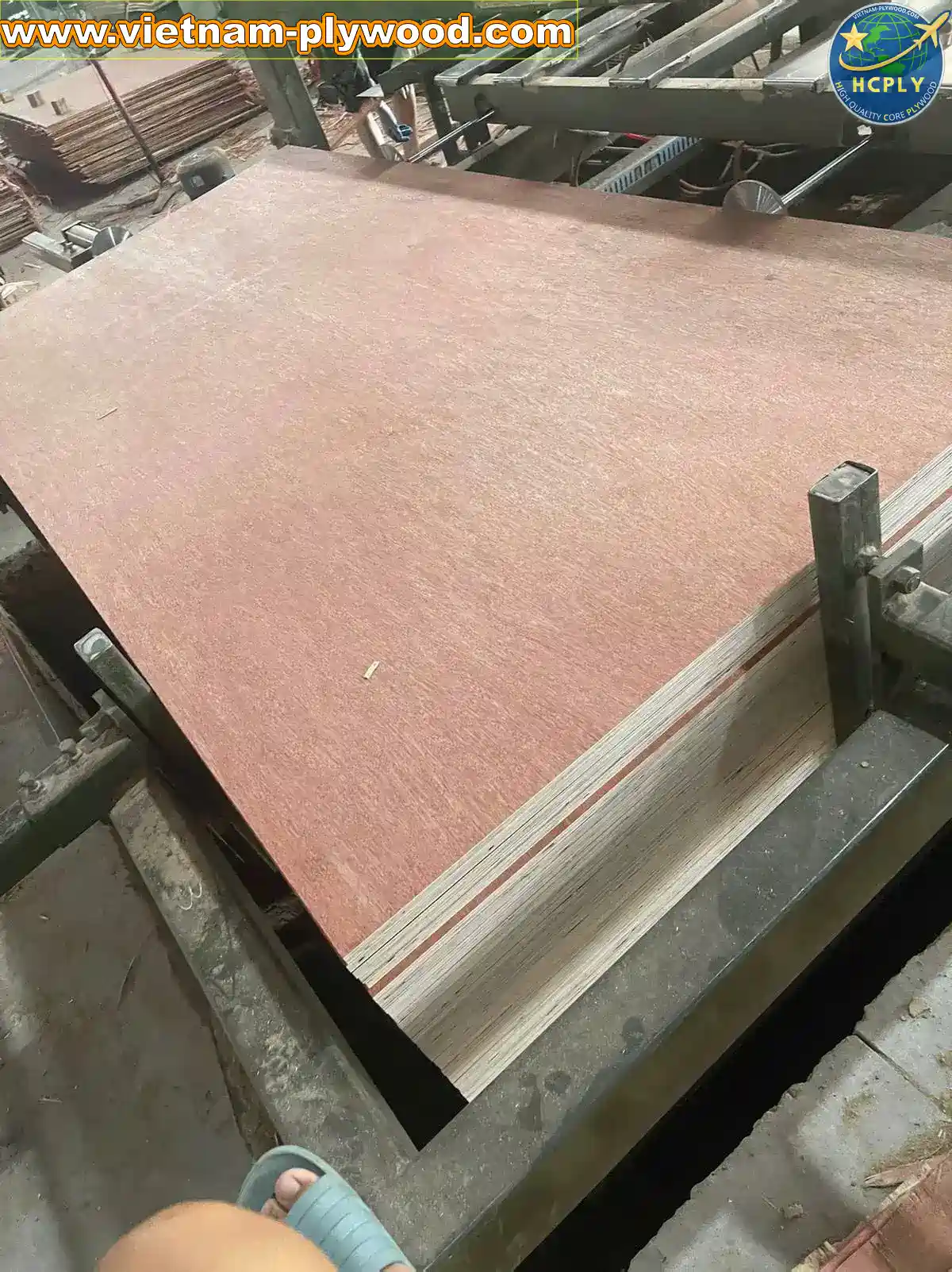
| Birch | $380–580/m3 | D/E/F | Pale cream, very fine tight grain | Sanded | Styrax (primary) | Premium cabinets, CNC furniture, EU interiors | EU, Scandinavia, N. America |
| Film Faced | $300–480/m3 | N/A (film grade) | Black/brown phenolic film overlay | Unsanded | Acacia, Eucalyptus | Concrete formwork, scaffolding, truck floors | India, UAE, Australia, EU |
| Anti-Slip | $350–520/m3 | N/A (film grade) | Hexagonal wire-mesh textured film | Unsanded | Acacia, Eucalyptus | Truck floors, scaffolding platforms, walkways | Global construction |
| Matt (Unfaced) | $240–380/m3 | N/A (substrate) | Raw sanded core — no face veneer | Sanded | Styrax, Eucalyptus, Acacia | Lamination substrate, veneering, UV coating | Korea, Japan, Southern VN |
| Packing | $220–320/m3 | B/C, C/D | Bintangor C/D or mixed face | Unsanded | Acacia, Styrax | Pallets, crates, shipping boxes | India, Africa, SE Asia |
| Core Veneer | From $139/m3 | N/A (raw veneer) | Raw veneer sheet — no panel | N/A | Eucalyptus, Acacia | Plywood production input material | Plywood manufacturers |
⚠️ Note: FOB prices reflect general ranges as of early 2026 and fluctuate with raw material costs, order volume, and specification details. Contact HCPLY for current pricing on your specific configuration.
🔧 Tropical Hardwood Veneers — Bintangor, Okoume, Gurjan
These three species form the backbone of Vietnam’s plywood face veneer export, serving distinct market segments at different price points.
Bintangor — The Most Affordable Face Veneer
Bintangor plywood (Calophyllum spp.) is the entry point for cost-conscious importers. The species grows widely across Southeast Asia, providing abundant veneer supply at the lowest face cost in HCPLY’s range.
Appearance: Pale reddish-tan to light brown with moderate interlocked grain. Smooth sanding properties — accepts paint, laminate, and UV coating without surface preparation issues.
Grades: A/B (one clear face, utility back), B/B (two usable faces), B/C (single show face, commercial back). A/B grade commands a 10–15% premium over B/C.
Core options: Acacia (~580 kg/m3) for stronger screw-holding. Styrax (480–500 kg/m3) for maximum container efficiency — loads ~53 CBM (18 pallets) per 40HC.
Glue: Melamine (MR) standard. Emission: E0, E1, or E2 available.
Thickness: 2–40mm. Common orders: 3, 9, 12, 15, 18mm.
Markets: India (furniture, packaging), South Korea (construction subfloor in foggy conditions), UAE (exhibition fit-outs, partition walls), Philippines, Southeast Asia, Africa.
Price positioning: USD 280–420/m3 FOB Hai Phong. Approximately 15–25% below okoume, 30–40% below gurjan, and 45–55% below birch at equivalent specifications.
Okoume — Marine Heritage and European Elegance
Okoume plywood (Aucoumea klaineana) carries deep market recognition in Europe, particularly France, where it has been the standard marine plywood species since the mid-20th century. The face veneer originates from West African tropical forests — primarily Gabon and Cameroon.
Appearance: Light pinkish-red to pale salmon. Fine, consistent grain with very low surface defect density. The species’ natural low resin content allows okoume to accept paints, varnishes, and WBP phenolic glue bond lines exceptionally well.
Grades: A/A (clear face both sides — standard for visible furniture), A/B (clear show face, utility back).
Core options: Styrax (480–500 kg/m3) for lightest panels — the default for marine and caravan applications where weight matters. Eucalyptus (650–750 kg/m3) for maximum rigidity. Acacia (~580 kg/m3) for balanced performance.
Glue: WBP phenolic for marine-grade applications (72-hour boil test). Melamine (MR) for interior furniture. Emission: E0 or E1.
Thickness: 3–25mm. Popular in Europe at 4, 6, 9, 12mm for door skins, ceiling panels, and caravan wall panels.
Markets: France, Netherlands, UK, Australia (caravan/RV manufacturers), Middle East (hotel fit-outs), Latin America.
Key differentiator: Okoume is one of the few face veneers regularly specified with WBP phenolic bonding for marine environments — boat building, yacht interiors, and watercraft surfaces. HCPLY sources FSC-certified okoume veneer to support EUDR compliance documentation for European buyers.
Gurjan — India’s Most Trusted Premium Face
Gurjan plywood (Dipterocarpus spp.) occupies the premium tier in South Asian markets. Indian furniture and construction industries have built decades of brand trust around gurjan face veneer — names like Greenply, Century Ply, and Archidply all anchor their premium lines on gurjan.
Appearance: Rich reddish-brown with deep interlocked grain and subtle ribbon striping when quarter-sliced. The dense face veneer finishes beautifully under lacquer, WBP coating, and laminate overlay.
Grades: A/B, B/B, B/C. A/B is the standard specification for premium Indian furniture.
Core options: Acacia (~580 kg/m3) for cost-effective general purpose. Eucalyptus (650–750 kg/m3) for maximum density and screw-holding — the most popular for Indian premium furniture. Mixed core (eucalyptus outer layers + acacia inner) for balanced cost-performance.
Glue: WBP phenolic for marine and waterproof applications. Melamine (MR) for interior furniture. Emission: E0 or E1.
Thickness: 3–25mm. Most commonly ordered at 12, 15, 18, 19mm for furniture frames and flush doors.
Markets: India (very high demand), UAE, Bangladesh, Pakistan, Middle East.
Price positioning: USD 350–550/m3 FOB. Commands a premium of USD 50–100/m3 above bintangor at equivalent specs. The premium reflects the face veneer’s higher-density properties, richer appearance, and stronger market acceptance in premium Indian and Middle East furniture.
⚠️ Key point: Gurjan is a face veneer species only. There is no gurjan core in Vietnam. The panel’s density and strength come entirely from the acacia or eucalyptus core beneath the
0.2–0.4mmgurjan face veneer.
⚙️ Specialty and Engineered Veneers — Birch, EV, Matt
These three plywood face veneer types serve markets that demand either specific visual properties (birch for Scandinavian design, EV for matched production sets) or raw substrate performance (matt for lamination).
Birch — Highest-Priced Face, Scandinavian Standard
Birch plywood (Betula spp.) is the most expensive face veneer manufactured in Vietnam. The birch veneer is imported from Europe and Northeast Asia (primarily Finland, Latvia, and China) and applied over Vietnamese-grown core species.
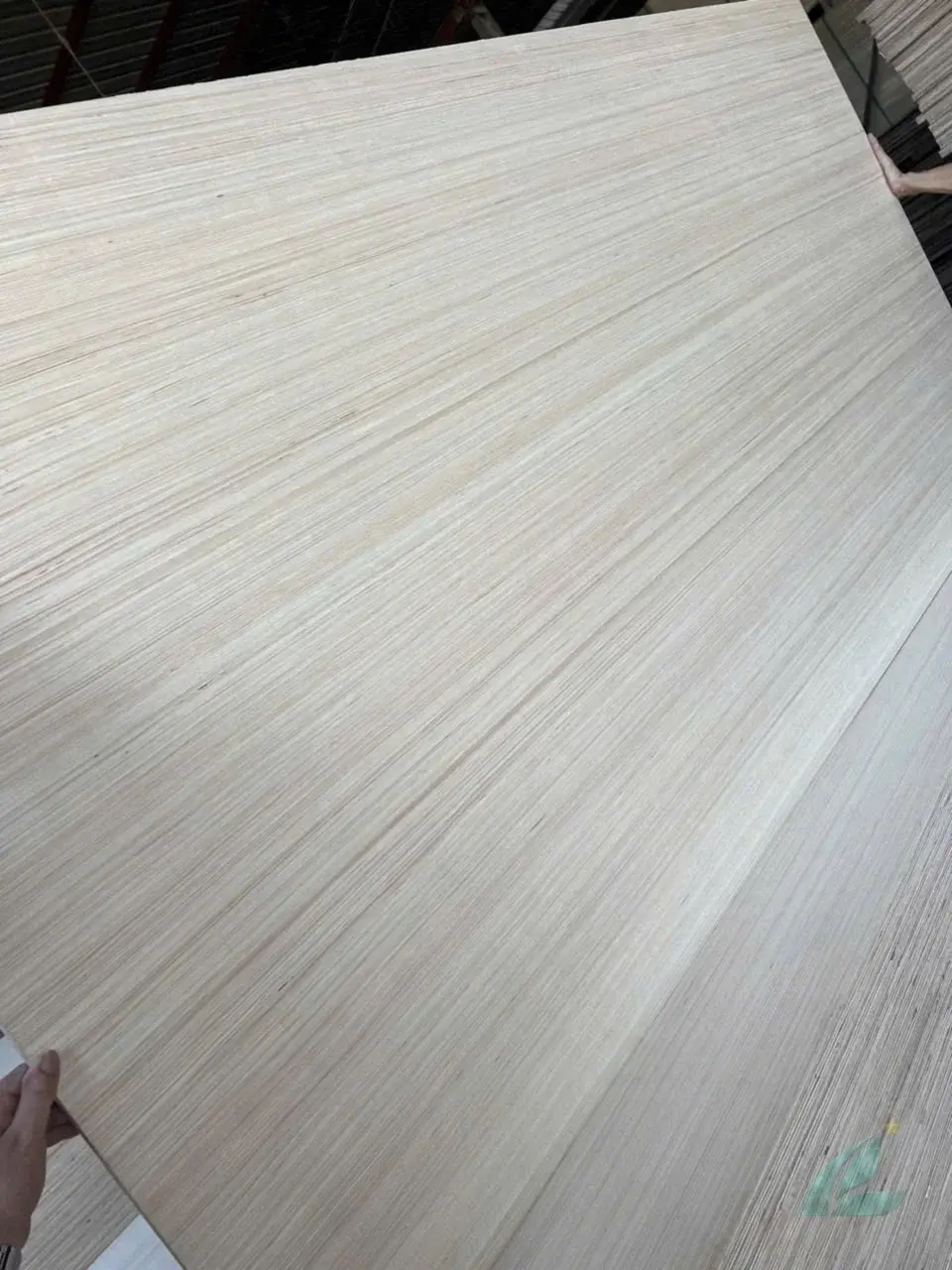
Appearance: Pale cream to light yellow. Exceptionally clean, uniform surface with very fine, tight grain. The neutral Scandinavian-aesthetic face accepts paint, lacquer, and melamine overlay without color interference.
Grading: D/E/F — not A/B. D grade is the best available quality in Vietnam (minimal knots, tight grain). E grade permits small knots and minor irregularities. F grade is commercial quality. This grading system is fundamentally different from the A/B convention used for other species.
Core options: Styrax (480–500 kg/m3) is the primary and most popular option — functionally similar to Baltic birch core. Provides excellent CNC routing performance with minimal chip-out. Acacia (~580 kg/m3) and eucalyptus (650–750 kg/m3) are also available.
Glue: Melamine (MR) or WBP phenolic. Emission: E0/CARB P2 standard for EU and US market compliance. E1 available.
Thickness: 4–30mm. Common: 9, 12, 15, 18mm.
Markets: EU (Scandinavia, Germany, Netherlands, UK), North America, Australia. The European furniture market demands birch face for cabinet carcasses, drawer boxes, and flat-pack furniture components.
Why Vietnam birch: Since 2022, EU/US sanctions on Russian timber have fundamentally reshaped birch supply. Russia — historically the dominant source — is now under comprehensive trade restrictions. Vietnam birch plywood offers a sanctions-safe, FSC-certified alternative at 20–35% below European birch pricing, with stable supply chains unaffected by Baltic log market volatility.
EV (Engineered Veneer) — Perfect Visual Consistency
EV plywood uses a reconstituted decorative veneer manufactured for perfectly uniform grain pattern and consistent color across all panels. Unlike natural veneer with inherent tree-to-tree variation, EV veneer is built from dyed, laminated wood blocks then sliced into sheets with identical appearance.
Appearance: Consistent grain direction, consistent color tone — the same visual pattern repeating from sheet to sheet. No natural defects, no grain variation.
Grades: A/B standard. The engineered manufacturing process eliminates the natural defect variation that grading systems for natural veneer address.
Core options: Styrax (480–500 kg/m3) for lightweight value. Eucalyptus (650–750 kg/m3) for premium density. Mixed core (eucalyptus outer + styrax inner) for balanced performance.
Glue: Melamine (MR) standard for furniture applications. WBP available. Emission: E0 (required for Korea, Japan, EU) or E1.
Thickness: 3–25mm. Common: 9, 12, 15, 18mm.
Markets: South Korea (very high demand for OEM flat-pack furniture production), Japan (sliding door panels, interior feature walls), Europe (retail fit-outs, display panels), Middle East (residential furniture).
Key differentiator: EV solves the production problem natural veneer cannot — visual uniformity at scale. A furniture factory producing 500 identical cabinet doors needs every panel to look the same. Natural veneer requires skilled matching labor; EV veneer eliminates that process. The smooth, consistent surface accepts UV coating lines directly without the absorption variation common with open-grained natural veneers.
Price positioning: USD 320–500/m3 FOB. Comparable to okoume. Lower than birch. Delivers a superior visual result at accessible pricing for high-volume OEM furniture production lines.
Matt (Unfaced) — The Substrate, Not a Finish
Matt plywood is the product most frequently misunderstood. Matt plywood is not a melamine matt finish. It is unfaced raw core plywood — a perfectly sanded substrate with no face veneer applied — designed for buyers who apply their own decorative surface (HPL, melamine, natural veneer, PVC film, UV coating) at their factory.
Appearance: Raw sanded core surface. The visual appearance depends on core species: styrax shows a pale whitish-tan, acacia shows darker tan-brown, eucalyptus shows dense yellowish-brown.
Core options: Styrax, eucalyptus, acacia — buyer’s choice based on density and downstream lamination requirements.
Glue: Melamine (MR) or WBP. Emission: E0, E1, E2 available.
Thickness: 3–40mm. The widest thickness range in HCPLY’s product line.
Markets: South Korea, Japan (lamination substrate for furniture factories), Southern Vietnam (trading companies buy matt plywood from Northern factories and apply their own face veneer or laminate).
Price positioning: USD 240–380/m3 FOB. Lower than faced plywood because the cost of face veneer procurement and application is eliminated. Buyers save on face veneer cost but assume responsibility for surface finishing.
📦 Construction-Grade Face Types — Film Faced and Anti-Slip
Construction plywood face veneer types serve a completely different market from furniture-grade panels. The surface is not a natural wood veneer — it is a resin-impregnated film overlay designed for waterproofing, concrete release, or anti-slip performance.
Film Faced — Concrete Formwork Standard
Film faced plywood is coated on both sides with phenolic or melamine film for maximum water resistance. The core is bonded with WBP phenolic glue throughout — the same adhesive chemistry as the film overlay — creating a panel where every bond line shares the same waterproof standard.
Surface: Black film (Dynea or equivalent — harder, more abrasion-resistant) or brown film (standard phenolic — more affordable). Film weight: 120–140 g/m2 standard, 160–220 g/m2 for Dynea premium.
Core options: Acacia (~580 kg/m3) for freight-cost optimization — loads ~47.5 CBM (16 pallets) per 40HC. Eucalyptus (650–750 kg/m3) for maximum stiffness — preferred for truck flooring and heavy scaffolding.
Glue: WBP phenolic standard. Emission: E1/E2 (construction-grade — WBP phenolic bonding prioritizes waterproof performance over emission class).
Thickness: 12, 15, 18, 21mm. Unsanded beneath the film overlay.
Reusability: 6–10 times under standard site conditions. Premium phenolic-bonded panels with proper care (release agent, edge sealing, shaded storage) achieve 15–20+ reuses.
Markets: India (residential and commercial high-rise), UAE and Middle East (tower formwork), Australia (black Dynea film, eucalyptus core), Southeast Asia (mixed specifications).
Key insight: Film faced plywood economics are measured by cost per concrete pour, not purchase price. A phenolic film panel at $12/sheet achieving 15 reuses costs $0.80 per pour. A melamine film panel at $10 achieving 7 reuses costs $1.43 per pour — 79% more expensive on a per-use basis. Experienced project managers specify phenolic film for this reason. For detailed container loading calculations, see the plywood container packing guide.
Anti-Slip — Textured Safety Surface
Anti-slip plywood shares the same WBP-bonded construction as film faced plywood but with a hexagonal wire-mesh textured film surface instead of a smooth one. The textured pattern provides maximum grip in wet, oily, or slippery conditions.
Surface: Hexagonal wire-mesh phenolic film — anti-slip rated for industrial transport and construction safety applications. Film weight: 220 g/m2 AICA standard.
Core options: Acacia (~580 kg/m3) or eucalyptus (650–750 kg/m3). Same construction approach as film faced plywood.
Glue: WBP phenolic standard. Unsanded beneath the film overlay.
Thickness: 12–21mm.
Applications: Truck floors, trailer decks, scaffolding platforms, industrial walkways, ramps.
Price positioning: USD 350–520/m3 FOB. A moderate premium over standard film faced plywood due to the specialized anti-slip film.
🌲 Softwood and Utility Veneers — Pine, Poplar, Eucalyptus Face
These plywood face veneer types occupy the middle range — more affordable than birch or gurjan, offering specific aesthetic or performance properties for targeted applications.
Pine — Natural Rustic Aesthetic
Pine plywood features natural pine veneer face (radiata or southern yellow pine) with a warm, knotty grain pattern that appeals to decorative and rustic interior applications.
Appearance: Yellow-tan with visible knots and natural grain variation. The most visually distinctive face veneer in HCPLY’s range — the wood grain character is the product’s selling point.
Grades: A/B for clear face. Pine’s natural knotty character means even A-grade veneer has more visual variation than equivalent grades in bintangor or okoume.
Core options: Acacia, styrax. Lightweight options for decorative applications.
Glue: Melamine (MR) standard. WBP available for outdoor-exposed applications. Emission: E0, E1.
Thickness: 3–25mm.
Markets: Europe (decorative interiors, DIY panels), Latin America, packaging.
Poplar — Lightweight White Surface
Poplar plywood delivers the lightest-colored face veneer — a clean white-cream surface with minimal grain — at one of the most competitive price points in the HCPLY range.
Appearance: White to cream with a clean, subtle grain. The lightest-toned face veneer available, making it ideal for painted furniture where a neutral base color is needed.
Grades: A/B.
Core options: Styrax (480–500 kg/m3) for maximum container efficiency. Acacia for balanced density.
Glue: Melamine (MR) standard. Emission: E0, E1.
Thickness: 3–30mm.
Markets: Korea, Japan (lamination substrate, luxury packaging), Middle East (residential furniture).
Price positioning: From USD 260/m3 FOB — one of the most affordable options in the HCPLY range. Positioned between packing plywood and mid-range furniture-grade face veneers.
Eucalyptus Face — Strong, Versatile Mid-Range
Eucalyptus plywood uses eucalyptus both as face veneer and (when specified) as core, creating one of the most structurally consistent panel options. The face veneer is genuine eucalyptus — not to be confused with eucalyptus core used beneath other face species.
Appearance: Yellowish-brown with tight, stable grain. Stronger and denser visual appearance than poplar but less decorative than birch or gurjan.
Grades: A/B.
Core options: Acacia, full eucalyptus, styrax. Full eucalyptus face + eucalyptus core creates the densest, heaviest panel option in the HCPLY range (650–750 kg/m3 throughout).
Glue: Melamine (MR), BWR, BWP available. Emission: E0, E1.
Thickness: 6–30mm.
Markets: India, Southeast Asia, Middle East. Popular as a cost-effective alternative for furniture frames and construction panels where visual appearance is secondary to structural performance.
Price positioning: From USD 300/m3 FOB. Mid-range — more affordable than birch or gurjan, stronger than poplar.
📊 Industrial and Raw Material Categories — Packing, Core Veneer
At the bottom of the plywood face veneer types pricing hierarchy sit packing plywood and core veneer — products where appearance matters least and cost per cubic meter drives purchasing decisions.
Packing Plywood — Lowest-Tier Face
Packing plywood uses bintangor C/D grade or mixed tropical species as face veneer — the lowest cosmetic standard in HCPLY’s product range. The panel exists to be functional at the lowest possible cost.
Appearance: Visible defects, open knots, color variation — cosmetic quality is not the specification. The face is utility-grade.
Core options: Acacia, styrax. Mixed tropical hardwood core used in the most cost-sensitive specifications.
Glue: Melamine (MR). Emission: E2 standard (no formaldehyde regulation applies to industrial packaging in most markets).
Thickness: 4–18mm. Typically unsanded or lightly sanded.
Markets: India, Africa, Southeast Asia. Pallets, crates, shipping boxes, industrial packaging.
Price positioning: From USD 220/m3 FOB — the most affordable plywood from HCPLY. Fast lead time (10–15 days) for urgent packaging supply.
Core Veneer — Raw Production Input
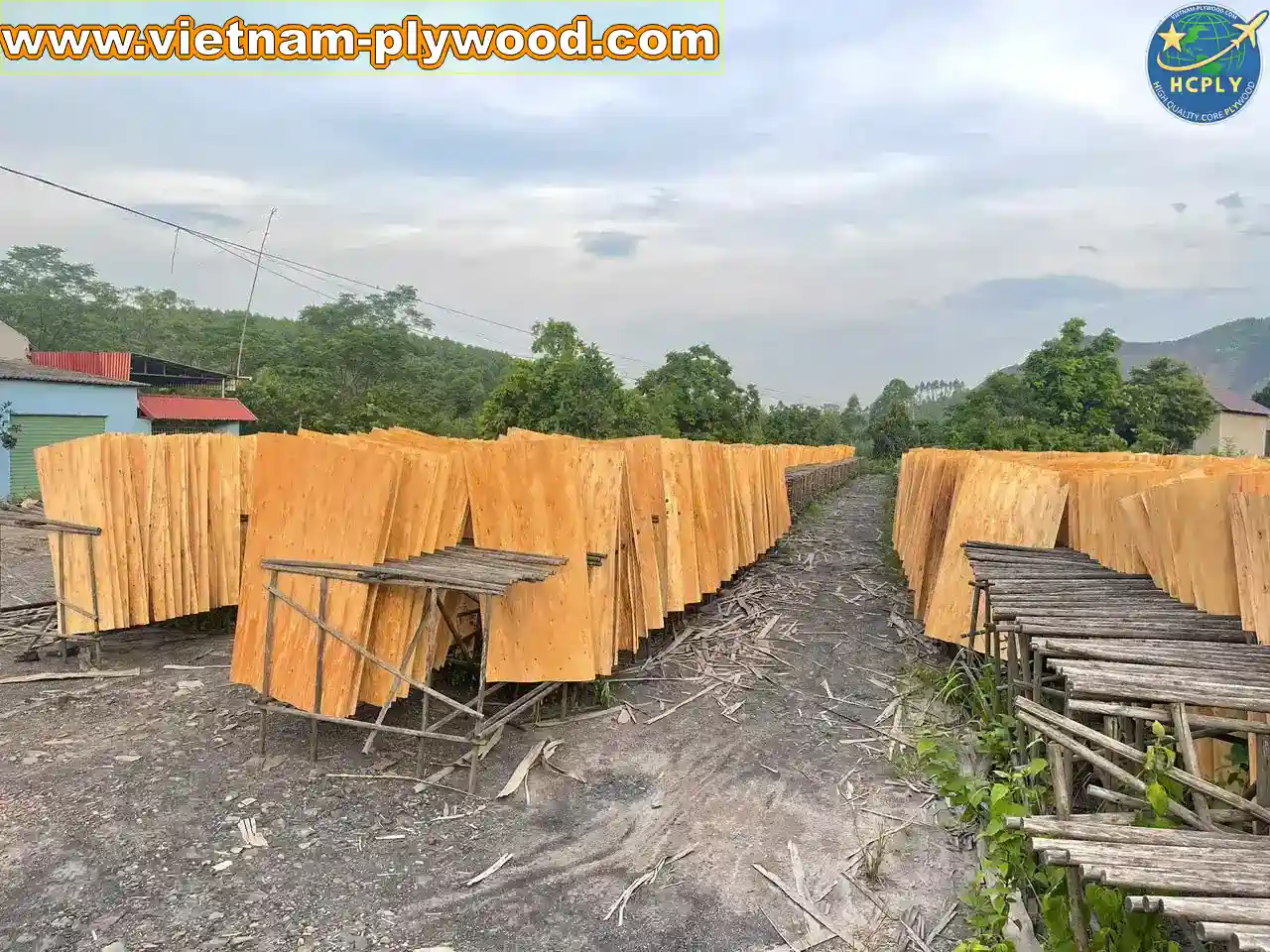
Core veneer is not a finished plywood product. It is raw veneer sheet material sold to other plywood manufacturers as a production input. HCPLY supplies eucalyptus and acacia core veneer sheets in thicknesses of 1.2–2.0mm at sizes 1270x640mm and 1270x1300mm.
Price positioning: From USD 139/m3 FOB — the lowest-priced wood product in the HCPLY catalogue. Sold by volume to plywood factories in Korea, China, India, and across Southeast Asia.
📐 How to Choose the Right Face Veneer — Decision Framework
Selecting the correct plywood face veneer types for your market starts with four questions, answered in order of priority:
- What is the end application?
- Furniture with visible wood surface → birch, gurjan, okoume, EV, bintangor (depending on market)
- Furniture to be laminated or painted → matt plywood or bintangor B/C (lowest substrate cost)
- Concrete formwork → film faced (phenolic film)
- Truck floors, scaffolding → anti-slip (wire-mesh film)
- Packaging, pallets, crates → packing plywood
- Marine, outdoor → okoume WBP or gurjan WBP
- What is the target market?
- India, South Asia → gurjan (premium) or bintangor (budget)
- EU, Scandinavia → birch or okoume
- Korea, Japan → EV or poplar (OEM furniture), bintangor (construction)
- Middle East → gurjan (premium furniture), bintangor (commercial), film faced (construction)
- Australia → okoume WBP (caravan/marine), film faced eucalyptus core (construction)
- What is the price sensitivity?
- Budget: bintangor ($280–420) → poplar ($260–400) → packing ($220–320)
- Mid-range: okoume ($300–480) → EV ($320–500) → pine ($300–450) → eucalyptus ($300–450)
- Premium: gurjan ($350–550) → birch ($380–580)
- Sanded or film-covered?
- Sanded (furniture, visible surface) → all natural face veneers + matt
- Film overlay (construction, transport) → film faced, anti-slip
For guidance on how to approach your first quotation request, see the plywood quotation guide. Understanding factory types in Vietnam also helps explain why the same product name can carry very different quality levels from different manufacturers.
🔗 Core Species and Face Veneer — Understanding the Relationship
A recurring point throughout this guide deserves its own section: the relationship between face veneer and core species is the most misunderstood aspect of plywood purchasing among first-time importers.
Vietnam produces plywood using three core species:
| Core Species | Density | Price | Container Load (40HC, 1220x2440mm) | Best For |
|---|---|---|---|---|
| Styrax | 480–500 kg/m3 | Most affordable | ~53 CBM (18 pallets) | Lightweight furniture, CNC, maximum freight efficiency |
| Acacia | ~580 kg/m3 | Mid-range | ~47.5 CBM (16 pallets) | General furniture, balanced cost-performance |
| Eucalyptus | 650–750 kg/m3 | Most expensive | ~44.5 CBM (15 pallets) | Heavy furniture, construction, maximum screw-holding |
Any face veneer can be paired with any core species. The face determines appearance and market identity. The core determines weight, density, freight cost, and structural performance.
⚠️ Heads up: Vietnam does NOT produce birch core, gurjan core, okoume core, or bintangor core. These are face veneer species only. Any plywood from Vietnam uses acacia, eucalyptus, or styrax core — regardless of what species name appears on the product label.
✅ Glue Type vs Emission Standard — The Critical Distinction
Every face veneer type requires the buyer to specify two separate parameters that many importers mistakenly treat as one:
Glue type (water resistance):
| Glue | Commercial Name | Boiling Test | Application |
|---|---|---|---|
| Melamine | MR | 12-hour | Interior furniture, cabinets, commercial |
| Phenolic | WBP | 72-hour | Construction, marine, formwork, outdoor |
Emission standard (formaldehyde):
| Standard | Market Requirement |
|---|---|
| E0 / CARB P2 | USA, EU, Japan, Korea — mandatory for furniture export |
| E1 | EU standard commercial |
| E2 | Basic Asian markets, packaging |
The correct way to specify: “Glue: Melamine (MR). Emission: E0.” or “Glue: Phenolic (WBP). Emission: E1.” These are two independent variables — specify each one separately on your purchase order.
📦 Container Loading by Face Veneer Type
All plywood face veneer types from HCPLY ship in standard 40-foot High Cube containers from Hai Phong Port. Container capacity depends on core species, not face veneer. The table below summarizes loading data for common configurations:
| Core Species | Pallets/40HC | Approx. CBM | Approx. Weight | Payload Status |
|---|---|---|---|---|
| Styrax (480–500 kg/m3) | 18 | ~53 CBM | ~26.5 MT | Within 28.5 MT limit |
| Acacia (~580 kg/m3) | 16 | ~47.5 CBM | ~27.5 MT | Within 28.5 MT limit |
| Eucalyptus (650–750 kg/m3) | 15 | ~44.5 CBM | ~28 MT | Near 28.5 MT limit |
HCPLY accepts mixed-specification containers: multiple face veneers, thicknesses, grades, and core species within a single 40HC. Each variant is palletized separately with clear bundle marking and a bundle-level packing list. For detailed container packing calculations by core and thickness, see the full plywood container packing guide.
🏭 How HCPLY Produces Multiple Face Veneer Types
HCPLY manages 3 specialized production facilities in Phu Tho Province, Northern Vietnam. Each facility is purpose-built for specific product categories, which is why the face veneer types available from HCPLY span such a wide range:
Facility 1 — Premium Furniture: Produces birch, okoume, EV, gurjan, pine, poplar, eucalyptus face plywood. Styrax and eucalyptus core. Full stitched core construction, sanded on both sides, E0/E1 emission. Certifications: FSC, CARB P2, CE, ISO 9001.
Facility 2 — Commercial / Packaging: Produces bintangor (all grades), packing plywood, matt plywood. Acacia core primary. Melamine (MR) glue, E1/E2 emission. Competitive pricing for volume buyers.
Facility 3 — Premium Construction: Produces film faced plywood and anti-slip plywood. Eucalyptus and acacia core. AICA film, WBP phenolic bonding throughout. Reusable 15+ times under controlled conditions.
This multi-facility structure means buyers can source furniture-grade birch, budget bintangor packaging panels, and construction-grade film faced plywood from a single point of contact — with each product manufactured on a production line optimized for its specific quality requirements. Mixed-product container loads combining panels from different facilities are a standard service.
Export details: MOQ 1 x 40HC container. Lead time 15–20 working days. FOB Hai Phong port. Full documentation: Commercial Invoice, Packing List, B/L, Certificate of Origin, Phytosanitary/Fumigation Certificate, FSC Chain of Custody (on request), CARB P2 test reports (on request).
❓ Matching Face Veneer to Market — Quick Reference
| If Your Market Is… | Recommended Face Veneer | Core | Why |
|---|---|---|---|
| India (premium furniture) | Gurjan A/B | Eucalyptus | Most trusted face in Indian market, premium appearance |
| India (budget furniture/packaging) | Bintangor B/C | Acacia | Lowest cost, wide acceptance |
| EU (Scandinavian furniture) | Birch D grade | Styrax | Neutral tone, CNC-ready, sanctions-safe |
| France/Australia (marine) | Okoume A/A WBP | Styrax | Traditional marine species, lightweight |
| Korea/Japan (OEM furniture) | EV A/B | Styrax or mixed | Perfect visual uniformity, E0 compliant |
| UAE (hotel fit-outs) | Gurjan or Okoume | Eucalyptus | Premium appearance, low-humidity interior |
| Global construction | Film Faced | Acacia or Eucalyptus | Waterproof, reusable 6–18 times |
| Industrial packaging | Packing | Acacia | Lowest cost, functional grade |
| Lamination factory | Matt | Styrax or Eucalyptus | Unfaced substrate, buyer applies own finish |
📊 Price Tier Summary — All Face Veneer Types from Vietnam
| Tier | Face Veneer Types | FOB Range (USD/m3) |
|---|---|---|
| Budget | Packing ($220–320), Matt ($240–380), Poplar ($260–400), Bintangor ($280–420) | |
| Mid-Range | Pine ($300–450), Eucalyptus ($300–450), Okoume ($300–480), Film Faced ($300–480), EV ($320–500), Anti-Slip ($350–520) | |
| Premium | Gurjan ($350–550), Birch ($380–580) | |
| Raw Material | Core Veneer (from $139) |
Prices reflect general FOB Hai Phong ranges as of early 2026. Actual pricing depends on core species, thickness, grade, emission standard, order volume, and current raw material costs. Contact HCPLY for specific quotation.
✅ Next Steps — Request Samples and Quotation
Understanding plywood face veneer types is the first step. The next step is physical sample evaluation — the only reliable way to confirm that a face veneer meets your production requirements before committing to a full container.
HCPLY ships sample panels by air freight (DHL/FedEx) to any destination worldwide. Sample costs are reimbursed against first container orders. Each sample includes the face veneer grade, core species, and emission documentation you specify.
To request samples or quotation, contact HCPLY:
- WhatsApp: +84-975807426 (Ms. Lucy, International Sales)
- Email: [email protected]
- Website: Contact HCPLY
Provide: face veneer type, grade, core species preference, thickness, emission standard, and approximate quantity. Quotation response within 12 hours.