

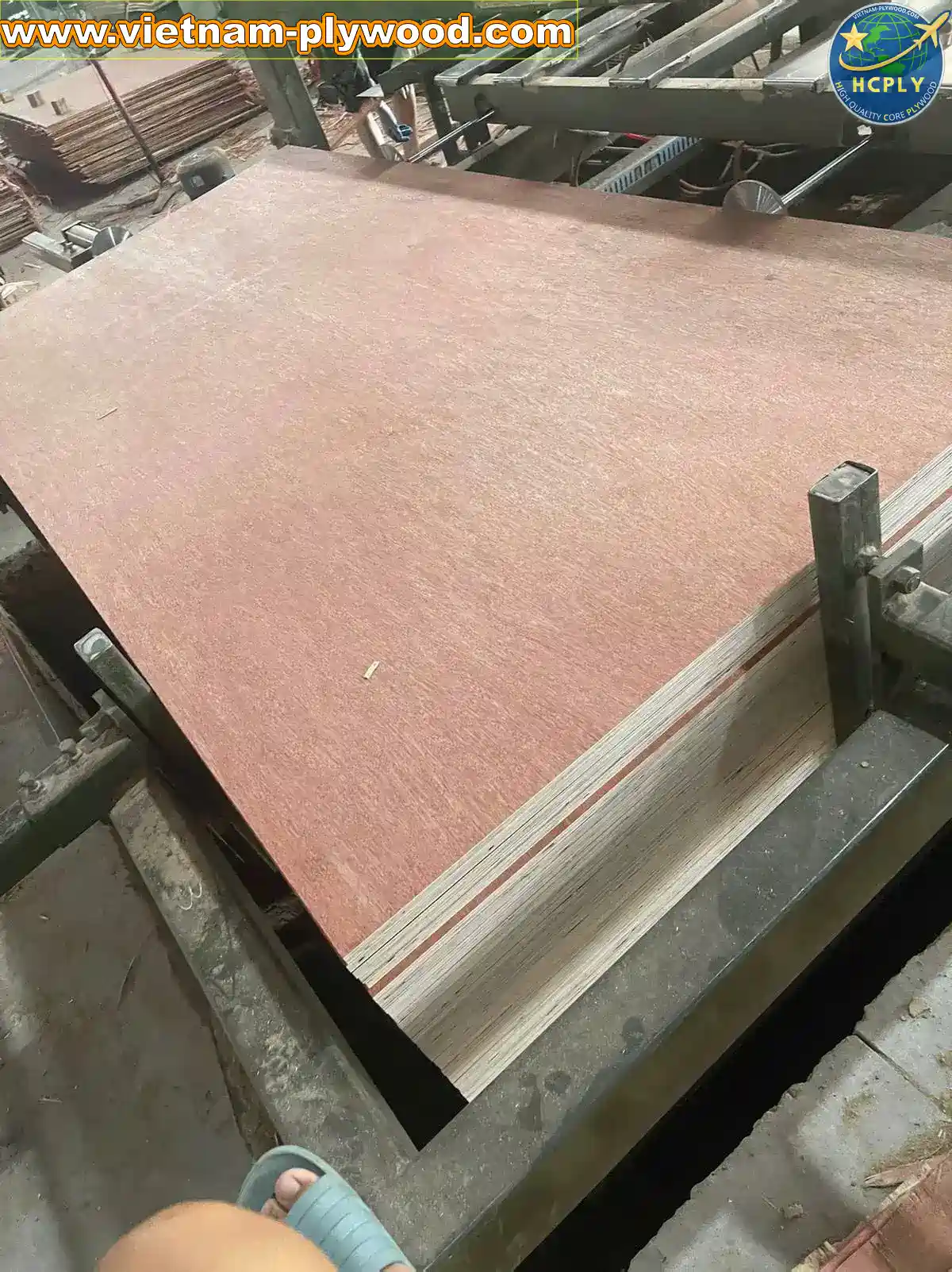
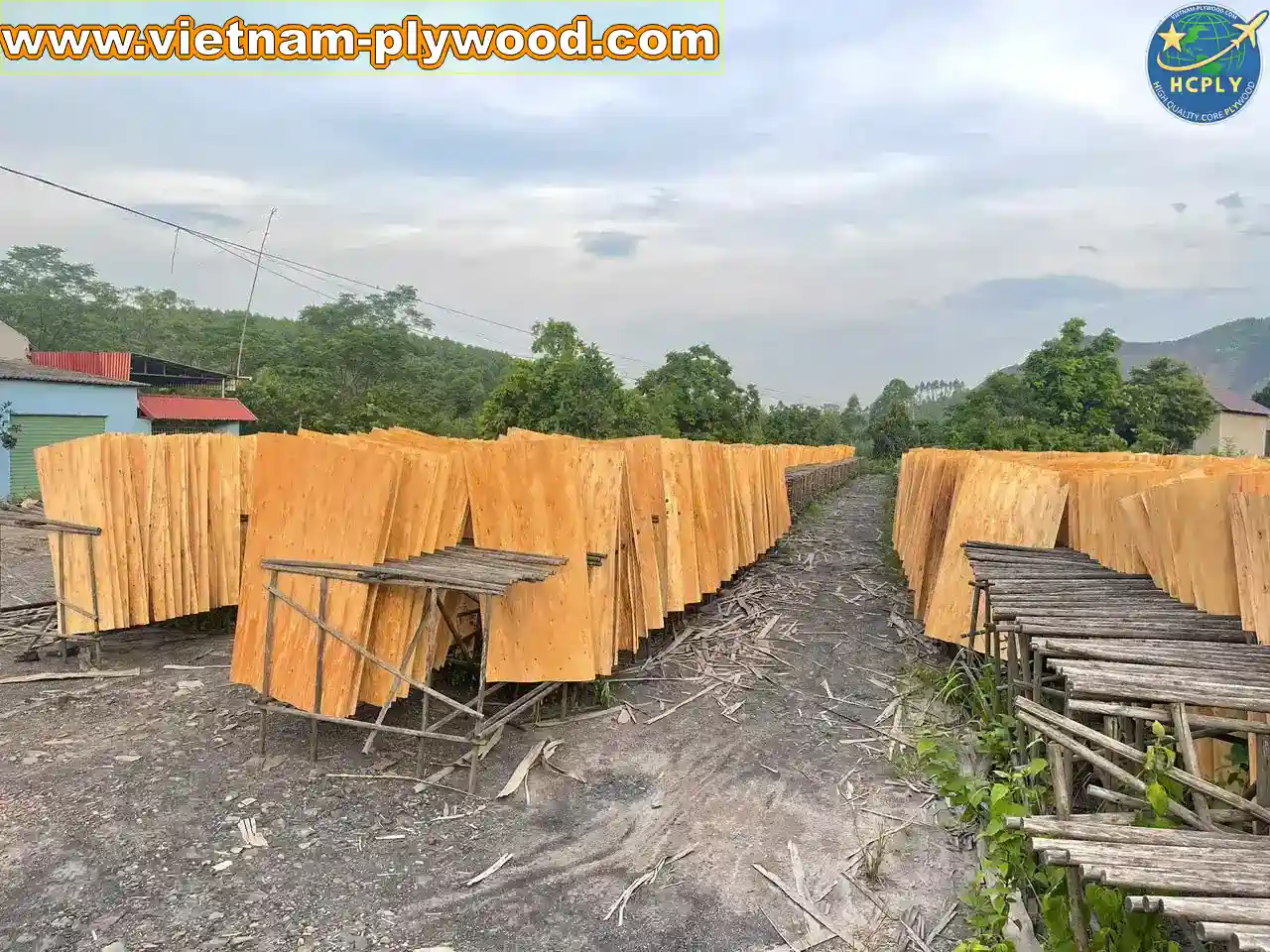

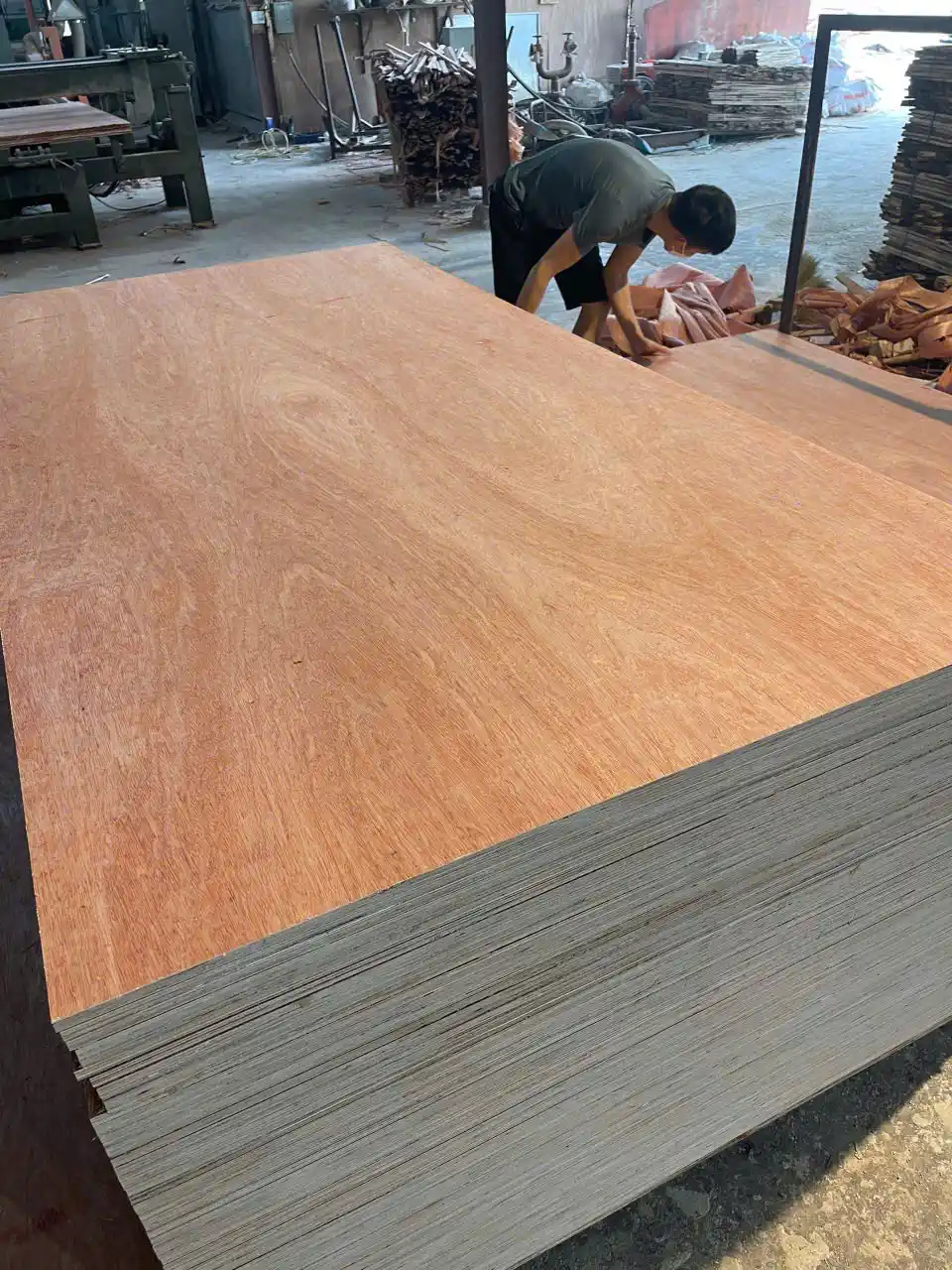
Most plywood quality disputes start with the same three words on a purchase order: “A/B grade please.” What the buyer means and what the factory ships are often two different things — not because of fraud, but because face grading in plywood involves two incompatible systems, inconsistent application across factories, and no universal quantified defect standard that buyers and sellers automatically share.
This reference article provides a plywood face grade comparison chart across both systems used in Vietnamese export production: the A/B/C/D system for tropical and mixed hardwood species, and the D/E/F system used exclusively for birch. It includes specific defect allowances per grade, cross-species grade equivalents, and market-by-market grade requirements — the data you need to write a purchase order that eliminates ambiguity.
📋 How Face Grade Is Defined
Plywood face grade measures the visual quality of the surface veneer only. It does not measure structural strength, glue bond integrity, core quality, or thickness tolerance — all of which are separate specifications.
Four categories of surface defect define every grade:
| Defect Category | What Is Measured |
|---|---|
| Knots | Diameter of tight (sound) knots; presence/absence of open (hollow) knotholes |
| Splits | Length and location of cracks running along the grain direction |
| Patches | Number, size, and neatness of repaired areas where defects were removed |
| Discoloration | Extent of sapwood streaking, mineral staining, or uneven color across the sheet |
Higher grade = tighter allowances on each category. The practical result: sorting more veneer sheets per volume of raw log to find qualifying panels, requiring more labor in patching and inspection, and applying additional sanding passes to achieve uniform surface smoothness.
Key Insight: Grade affects veneer yield, not panel engineering. A Grade A and Grade C panel of identical species, core, thickness, and core construction have the same structural performance. What changes is surface workability for the end product. (HCPLY production data, 2026)
International grading conventions are established by bodies including the HPVA (Hardwood Plywood & Veneer Association) for North American markets and EN 635-2 for European hardwood panels (European Committee for Standardization, 2023). Vietnamese export grades follow industry-adapted conventions from these frameworks, applied consistently across export-oriented factories.
📊 Grade A/B/C/D — Comparison Chart for Tropical Species
This system applies to: bintangor, okoume, gurjan, pine, poplar, eucalyptus, EV (engineered veneer). These are all face species produced or assembled at Vietnamese factories.
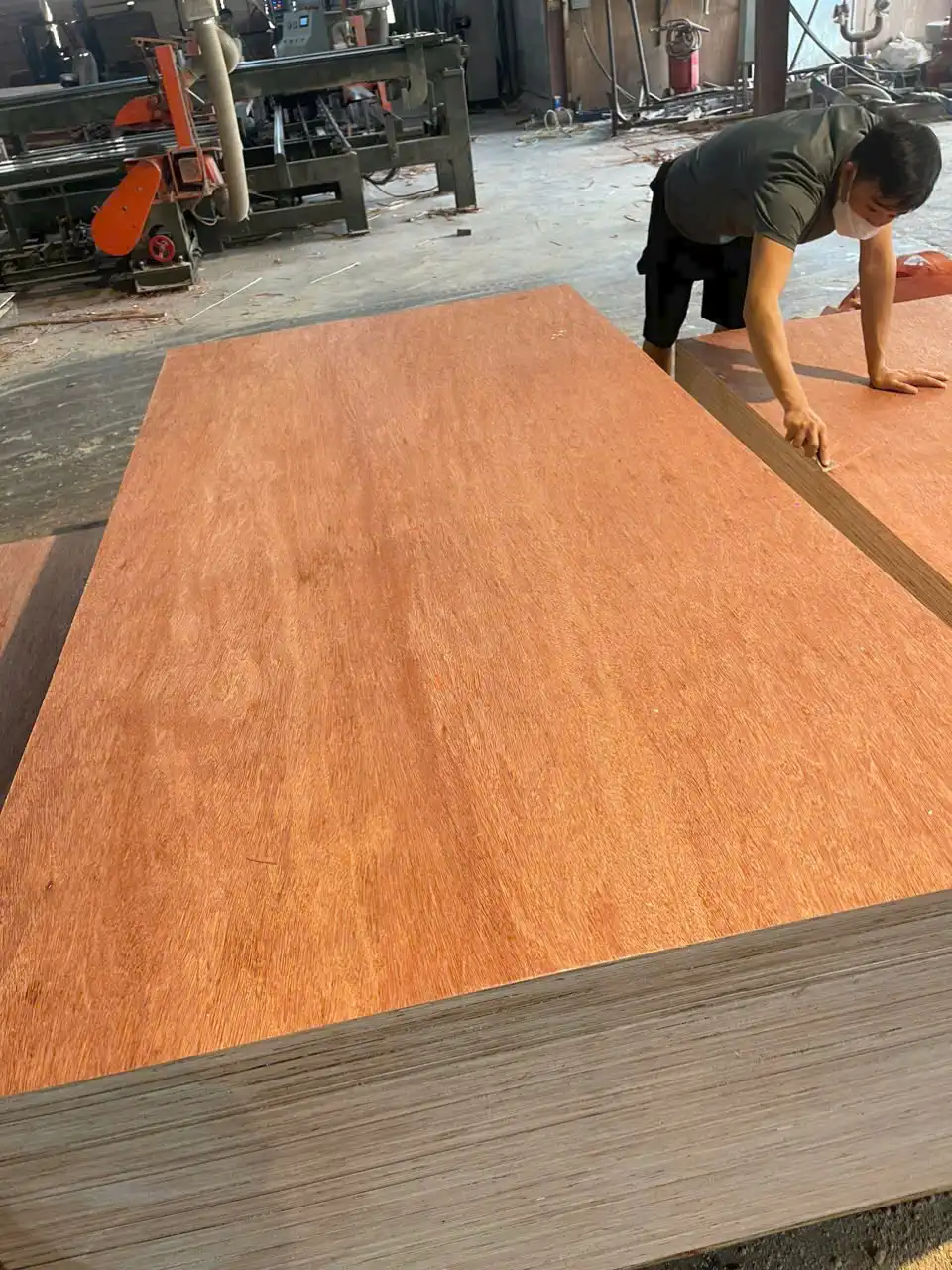
📌 Grade A — Premium Face
| Parameter | Allowance |
|---|---|
| Open knotholes | None permitted |
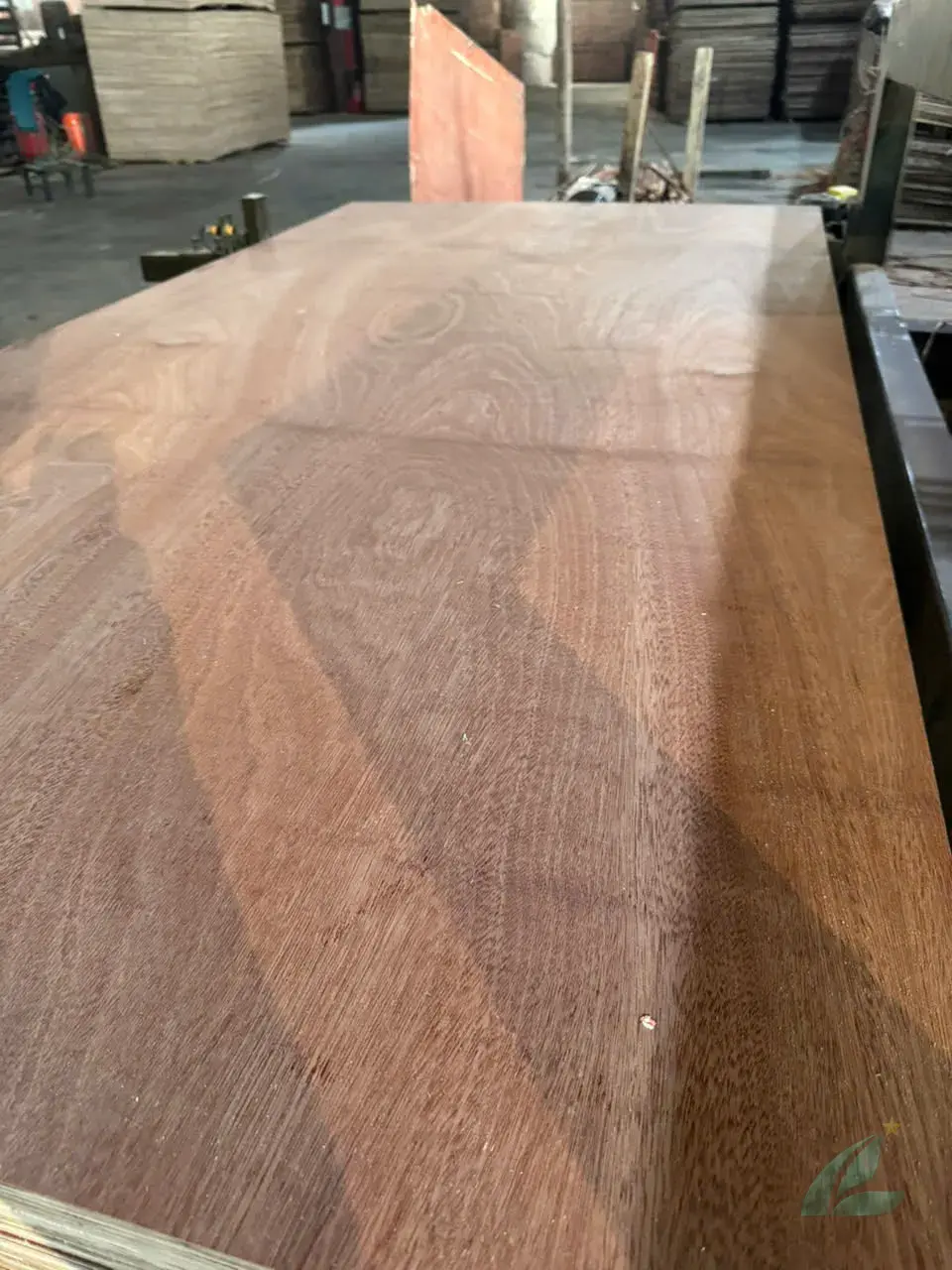
| Tight knots | ≤5mm diameter, small quantity, tight |
| Splits | None |
| Patches | Minimal, flush, color-matched only |
| Sapwood streaking | Minimal, within defined area limits |
| Sanding | Yes — both faces, calibrated smooth |
Applications: Painted cabinet fronts, visible furniture panels, European and Korean premium export, any surface that will be seen in the final product without coating.
Price position: Highest face grade tier. Grade A commands a 5–10% premium over Grade B per CBM (HCPLY export pricing data, 2026).
📌 Grade B — Standard Furniture Face
| Parameter | Allowance |
|---|---|
| Open knotholes | None (same as A) |
| Tight knots | Sound, repaired, up to ~20–25mm diameter |
| Splits | Very minor, repaired |
| Patches | Neat, flush patches permitted; limited count per sheet |
| Sapwood streaking | Moderate — up to 20% of face area in some conventions |
| Sanding | Yes — both faces |
Applications: Back face of furniture panels, interior shelving, secondary cabinet parts, structural panels that will be painted or laminated. Standard export to India and Southeast Asia uses A/B specification — A on the visible face, B on the hidden reverse.
📌 Grade C — Commercial / Construction Face
| Parameter | Allowance |
|---|---|
| Open knotholes | Small open knots permitted within size limits |
| Tight knots | Multiple, larger permitted |
| Splits | Minor splits allowed |
| Patches | Multiple patches permitted |
| Discoloration | Significant variation acceptable |
| Sanding | Often not sanded, or light pass only |
Applications: Structural concealed panels, packing crates, pallets, low-cost commercial fit-out where the face will be covered or is not visible. Packing plywood typically ships at C/D grade unsanded.
📌 Grade D — Industrial / Packaging Back Face
Grade D is the lowest face grade in the tropical species A–D system. It permits open knotholes, multiple splits, major discoloration, and numerous patches. This grade appears as the back face in packing and construction panels — or is redirected to core veneer in premium products.
⚠️ Important: Do not confuse Grade D in the tropical A/B system with Grade D in birch grading. In tropical species, D = lowest quality. In birch, D = highest quality. These letters are from two separate, non-equivalent grading conventions.
🌲 Grade D/E/F — Comparison Chart for Birch Plywood
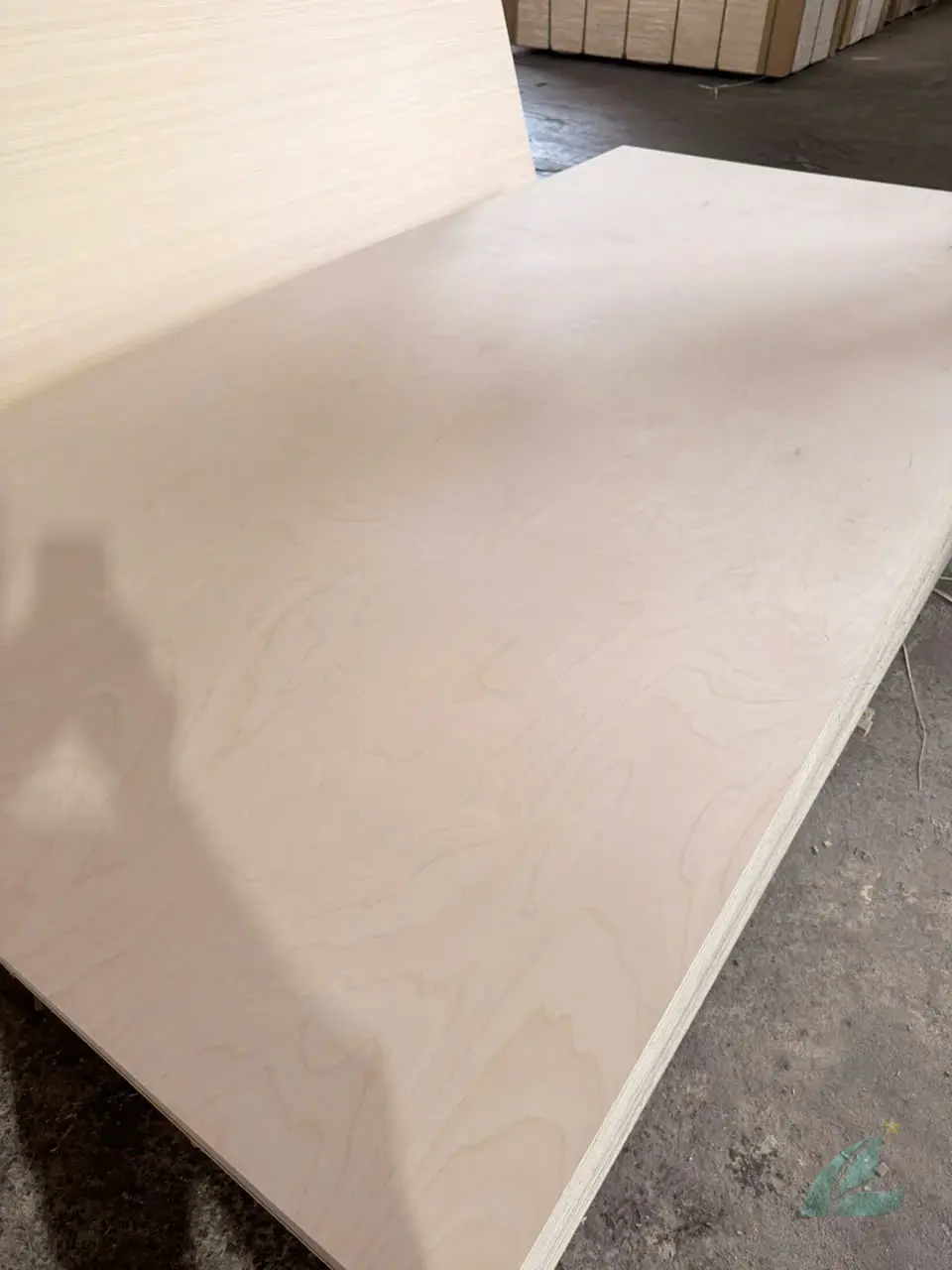
This system applies exclusively to birch plywood produced in Vietnam using imported birch face veneer over styrax core. For full context on birch production from Vietnam, see birch plywood Vietnam.
In Vietnamese birch production, D is the best available grade. The D/E/F nomenclature originates from European and Russian birch timber trade conventions, where different letter ranges were historically assigned to different product tiers.
📌 Grade D — Best Birch Face
| Parameter | Allowance |
|---|---|
| Open knotholes | None permitted |
| Tight knots | Very limited, small diameter only |
| Color variation | Minimal — uniform natural birch color |
| Splits | None |
| Patches | None or minimal invisible patches |
| Sanding | Yes — both faces, calibrated |
Applications: Premium furniture export to Europe, Korea, Japan. Cabinet fronts for lacquer or clear-coat finish. Show face where grain consistency is part of the aesthetic value. This grade is the functional equivalent of A grade in the tropical system.
Price position: Highest tier in birch grading. D/E is the most common premium birch export specification from Vietnam — D face, E back.
“When buyers from Europe first source birch from Vietnam, the grading notation creates real confusion. The D in our birch spec is the best face we produce — tight grain, minimal knots, sanded to a premium surface. It is the equivalent in quality intent to A grade in tropical hardwoods.” — Lucy, International Sales Manager, HCPLY
📌 Grade E — Commercial Birch Face
| Parameter | Allowance |
|---|---|
| Open knotholes | None or very minor |
| Tight knots | Sound knots permitted, small to medium size |
| Color variation | Some variation acceptable |
| Splits | Very minor, repaired |
| Patches | Neat patches permitted |
| Sanding | Yes |
Applications: Back face on D/E specification furniture panels, visible face on applications where slight variation is acceptable, lamination substrates. Functional equivalent of B grade.
📌 Grade F — Budget Birch Face
Grade F permits more knots, more variation, and more patches than E. Used as lamination substrates or hidden panels where the birch face is overlaid with HPL, melamine, or another surface. Not suitable for exposed furniture applications.
🔄 Cross-System Equivalence Chart
Vietnamese plywood buyers frequently need to translate between the two grading systems when switching species or comparing suppliers. The table below shows functional application equivalence — not formal standard equivalence (no ISO cross-conversion exists).
| End Application | Tropical Species Spec | Birch Spec | Notes |
|---|---|---|---|
| Premium cabinet fronts, lacquer finish | A / A | D / D | Requires visible face with no surface defects |
| Standard furniture export | A / B | D / E | Most common export spec — best face, acceptable back |
| Furniture back faces, hidden panels | B / C | E / F | Will be concealed — face quality irrelevant |
| Painted structural panels | B / B | E / E | Consistency over appearance |
| Packaging, packing crates | C / D | — | Birch rarely used for packaging applications |
| Industrial / construction (hidden) | D / D | — | Lowest-cost structural use |
For detailed species selection alongside grade, the plywood face veneer types complete guide covers each species’ price tier, target market, and typical grade combination.
🌍 Grade Requirements by Export Market
Different markets have established grade conventions based on downstream application and regulatory expectations. Over-specifying grade wastes procurement budget; under-specifying triggers quality complaints on arrival.
| Market | Standard Grade Requirement | Species Most Common | Emission Requirement |
|---|---|---|---|
| European furniture | A/B or D/E (birch) | Okoume, birch, pine | E0 or E1 |
| European construction | B/C or film-faced | Film-faced, eucalyptus | E1 |
| US furniture (CARB) | A/B | Birch, okoume | CARB P2 (≈E0) |
| Indian furniture (tier 1) | A/B | Gurjan, bintangor | E1 |
| Indian furniture (tier 2) | A/B or B/B | Bintangor | E1 or E2 |
| Korean furniture | D/E (birch) or A/B | Birch, okoume | E0 |
| Japanese furniture | D/E (birch) or A/B | Birch | JAS F4 (≈E0) |
| Middle East construction | B/C or C/C | Film-faced, bintangor | E1 or E2 |
| Southeast Asia commercial | A/B or B/B | Bintangor | E1 or E2 |
| Industrial packaging | C/D (unsanded) | Packing grade, poplar | E2 |
According to Vietnam Timber and Forest Products Association (VIFORES) trade data (2024), markets in Europe and Northeast Asia consistently import higher-grade combinations — A/B or D/E — while Southeast Asian and Middle Eastern construction markets predominantly use B/C and C/C grades where downstream lamination or coating covers the back face.
Key Insight: The most economically significant insight for importers: match grade to end-use, not to maximum available quality. A furniture factory laminating every panel with HPL has no cost benefit from Grade A over Grade B. Specifying A/B for those panels pays a 5–8% premium for surface quality that gets covered on the production line.
Request Grade-Specific Samples and FOB Pricing — Provide your species, grade, thickness, and destination market. HCPLY exports to 50+ countries with full grade documentation.
🔧 How to Write a Grade Specification Correctly
Ambiguous grade specifications are the most common source of plywood quality disputes. The complete specification format below eliminates misinterpretation:
Tropical species (example: bintangor):
Species: Bintangor (Plain face)
Face / Back Grade: A / B
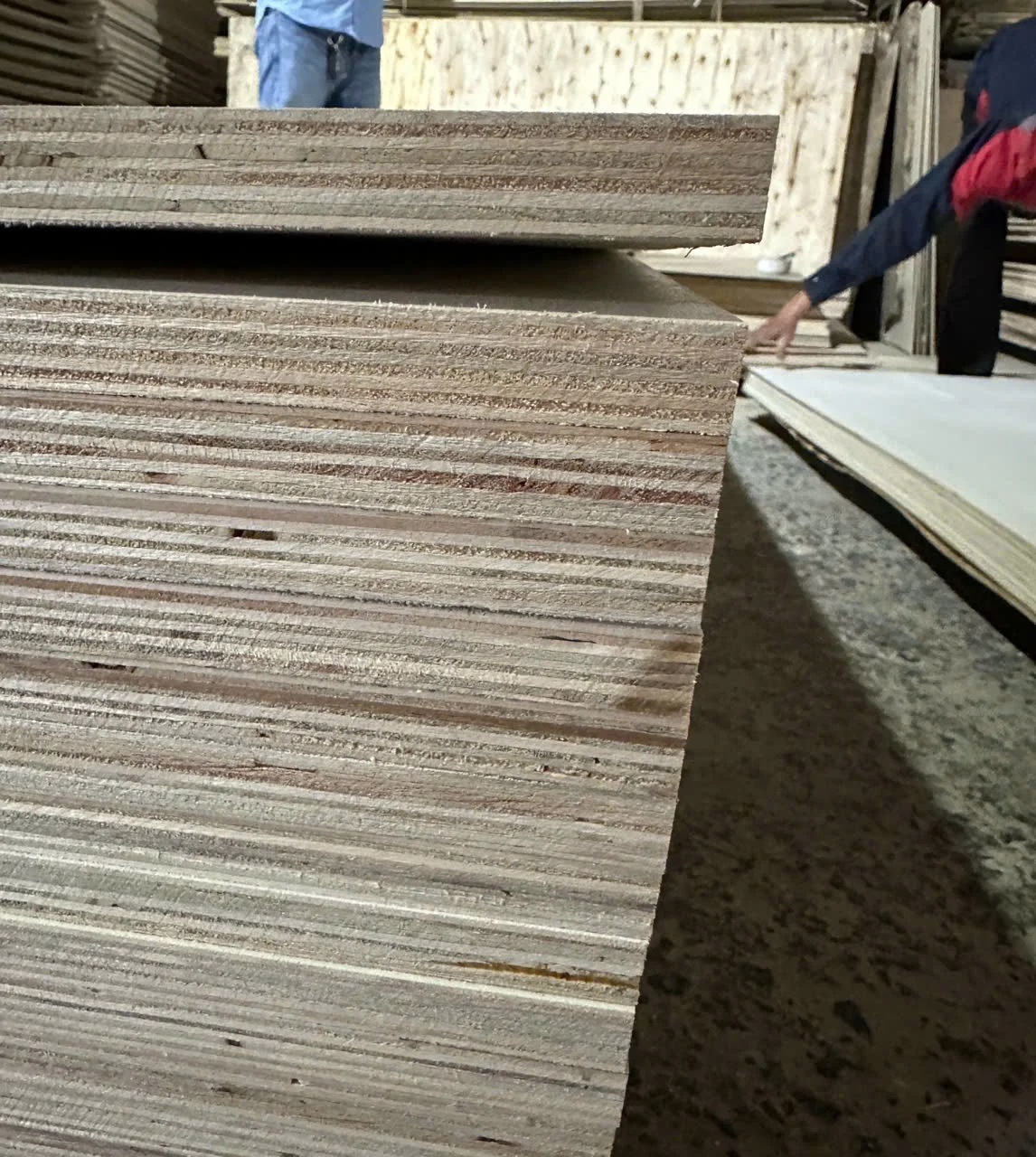
Core: Acacia (stitched outer layers + edge-jointed inner)
Glue: Melamine (MR)
Emission: E1
Thickness: 12mm (±0.3mm)
Sanding: Both faces, calibrated
Size: 1220 × 2440mm
Birch (example):
Species: Birch face veneer (imported)
Face / Back Grade: D / E
Core: Styrax (full-stitched all layers)
Glue: Melamine (MR)
Emission: E0
Thickness: 18mm (±0.3mm)
Sanding: Both faces, calibrated
Size: 1220 × 2440mm
Always state both face and back grade. Stating “A grade” without the back grade leaves room for suppliers to ship A/C or A/D without technically violating the order. The back grade matters: for furniture, B back (or E back for birch) is the economically rational choice. For structural or packing use, C or D back is standard.
For guidance on the full specification process from inquiry to order confirmation, the plywood quotation guide covers every variable buyers need to define before requesting pricing.
🏭 How Grade Is Applied on the Production Line
Face grade is assigned at two checkpoints during Vietnamese plywood production: before pressing and after sanding.
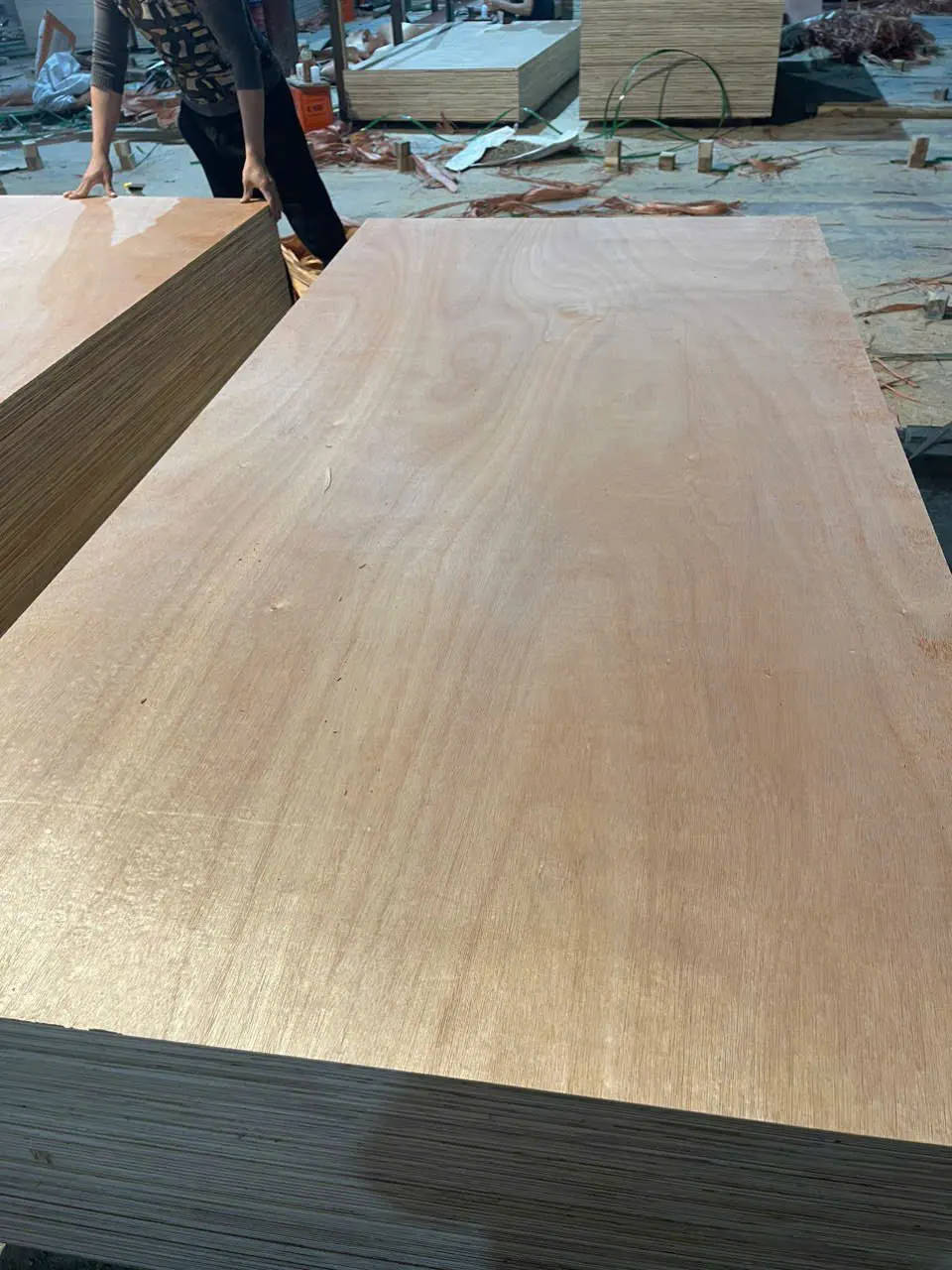
Veneer sorting (pre-press): Sheets coming off the rotary peeling line are graded visually by trained sorters. Knot count and diameter, visible splits, and structural defects are assessed per sheet. Sheets meeting Grade A/D criteria are separated from B/E and C/F stacks. Defective sheets within repairable limits go to a patch station; sheets outside repair limits are redirected to core layers.
Panel inspection (post-sand): After hot pressing and wide-belt sanding, finished panels receive final visual inspection. Inspectors compare the face grade against the purchase order specification. Any panel whose face veneer has been damaged during pressing, shows delamination at the face layer, or has missed patch repairs is rejected or reclassified.
“Our QC team inspects 100% of Grade A and D panels before palletizing — not sampling. Any open defect on a Grade A panel is a reject, not a reclassification. This level of rigor is only possible with on-site QC embedded in the production facility.” — Lucy, International Sales Manager, HCPLY
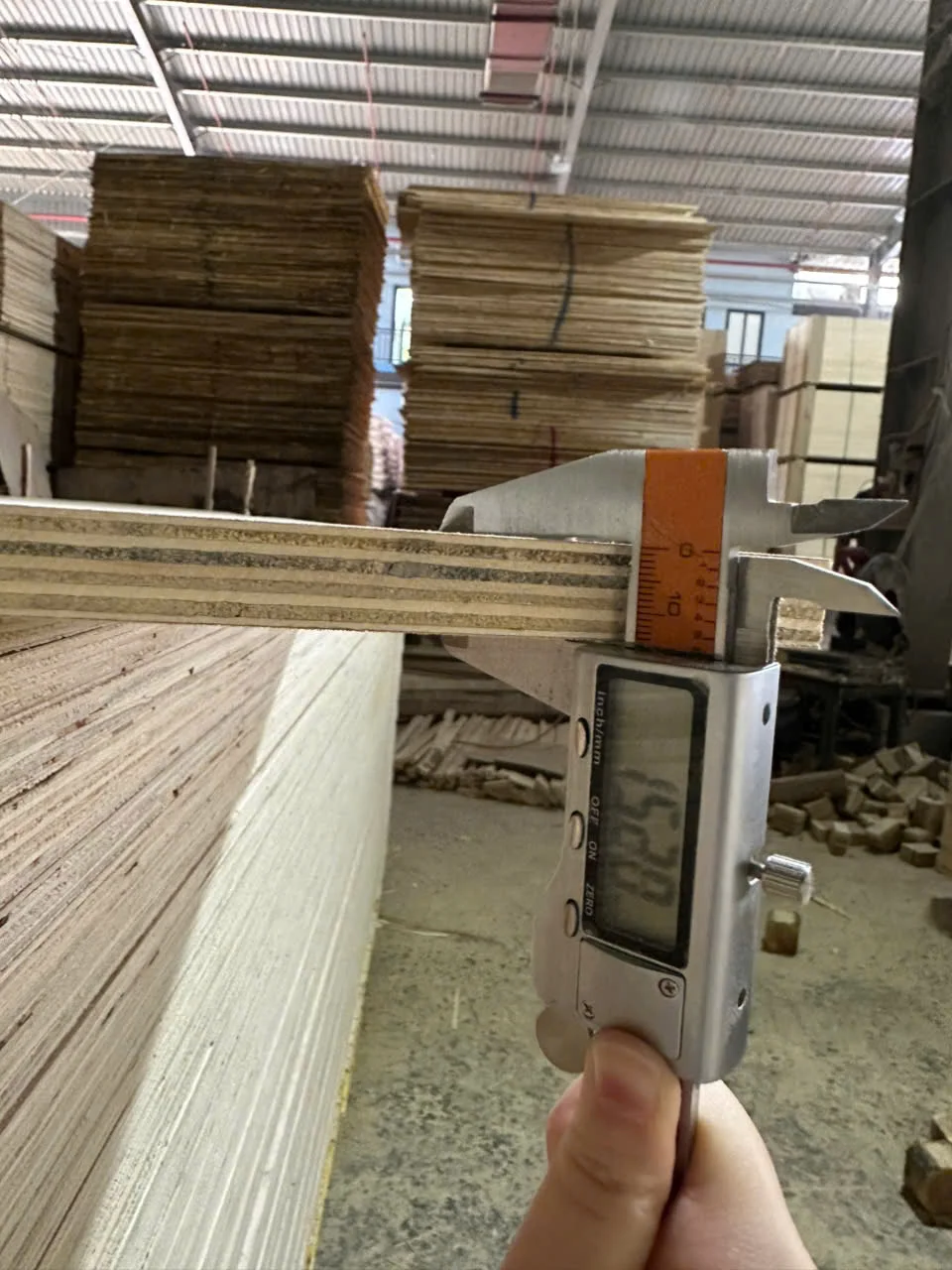
For the complete three-stage QC process applied across all export grades, see the quality control page. For the plywood face grade guide that covers the foundational explanation of both grading systems, including how price premium builds across grade steps.
✅ Summary: Using This Comparison Chart
Plywood face grade from Vietnam operates under two separate conventions that cannot be cross-compared by letter:
- A/B/C/D system: applies to all tropical and mixed species — bintangor, okoume, gurjan, pine, poplar, eucalyptus, EV. A = best. D = worst.
- D/E/F system: applies exclusively to birch plywood. D = best. F = worst. D in birch ≠ D in tropical.
The practical buying framework: specify the face/back grade combination based on end-use, not maximum quality. A/B (or D/E for birch) suits visible furniture panels. B/C suits painted or laminated construction. C/D suits structural packaging.
Match grade requirement to the export market standard for your destination. European and Korean furniture markets demand A/B or D/E with E0 emission. Indian market tier-1 requires A/B with E1. Southeast Asian construction accepts B/C and C/C at E1 or E2.
Provide the complete specification on every purchase order — species, face/back grade, core species, core construction, glue, emission, thickness tolerance, sanding, and sheet size. This eliminates the ambiguity that causes grade disputes between buyer and factory.
Contact HCPLY for Grade Samples and Factory-Direct Pricing — No intermediary, no VAT overhead, full export documentation from Hai Phong Port.