

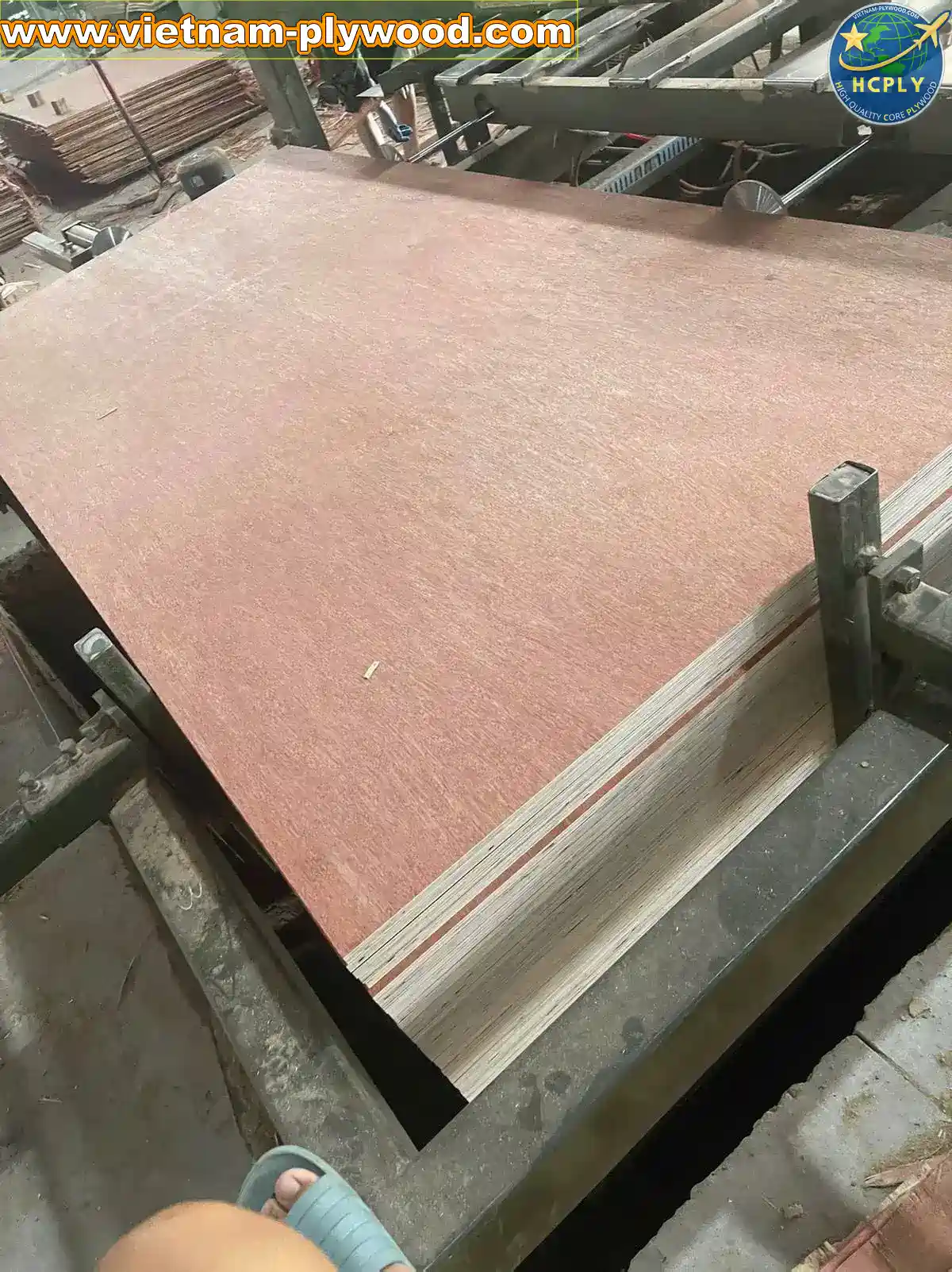
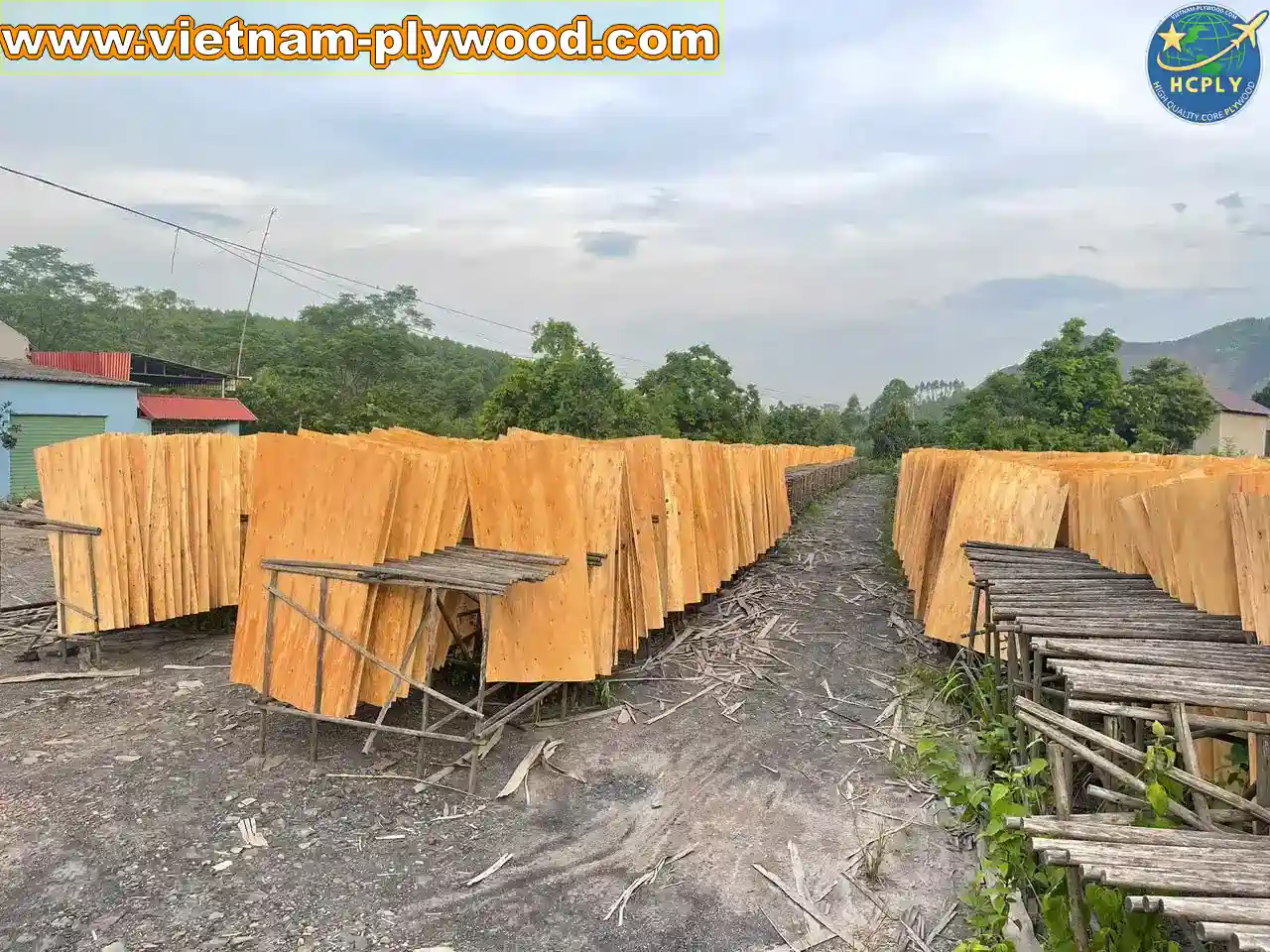

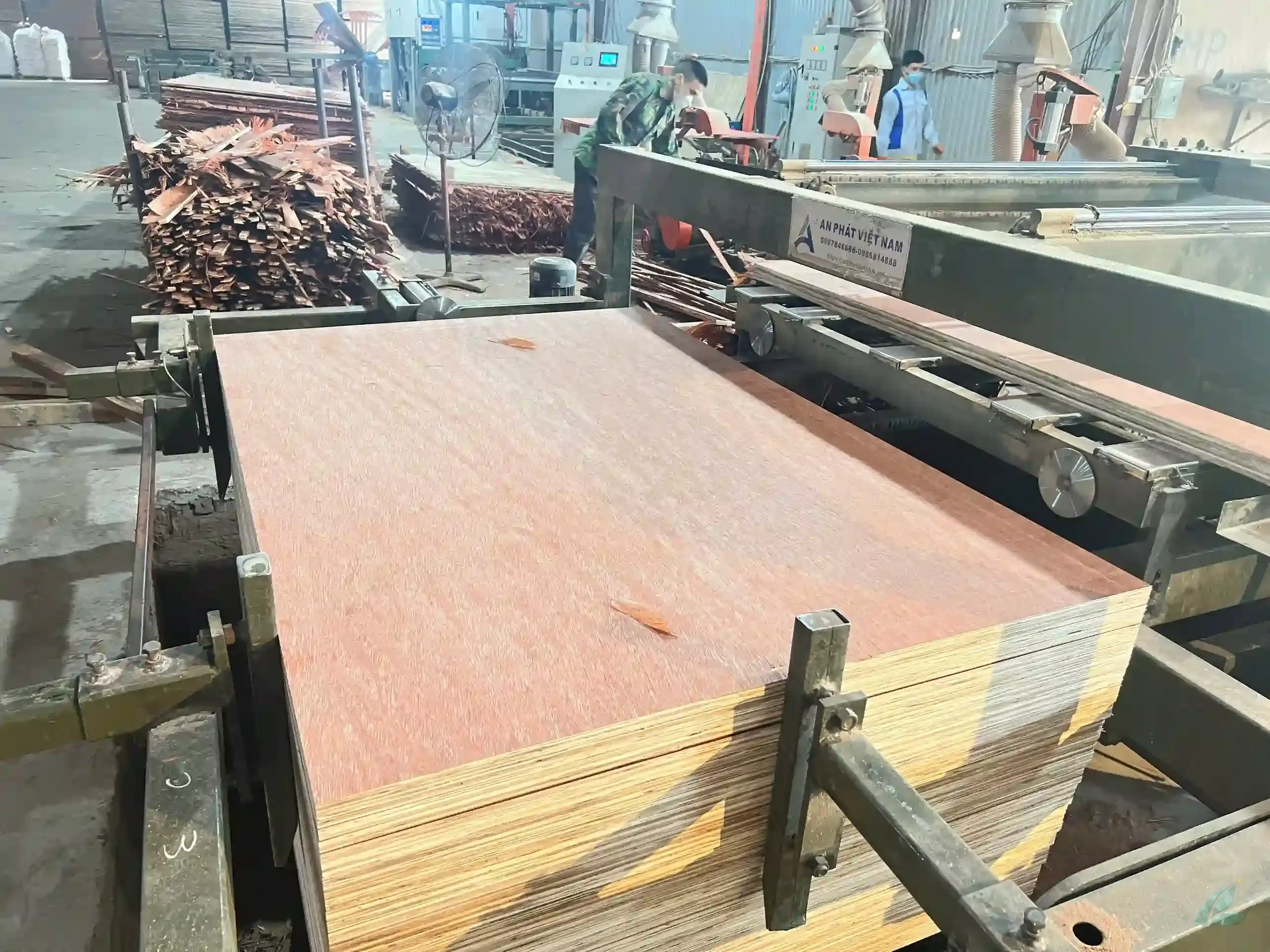
A container of plywood arrives at your warehouse. You split open the first bundle and immediately notice something: dark streaks across the face, a patch that doesn’t lie flat, and one panel with a hairline split running from the edge. Does this consignment meet the grade you ordered?
Plywood face defects are the single most frequent complaint in import quality disputes. Understanding what each defect type means — and how the A/B grading system controls them — lets buyers write tighter purchase orders, conduct smarter pre-shipment inspections, and resolve claims with documented evidence.
This guide covers the defects that matter most to furniture, cabinet, and commercial buyers sourcing from Vietnam.
📋 How Face Veneer Grading Works in Vietnam
Before examining individual defects, it helps to understand the grading framework. Vietnamese plywood manufacturers classify face veneers on a two-grade system for most species.
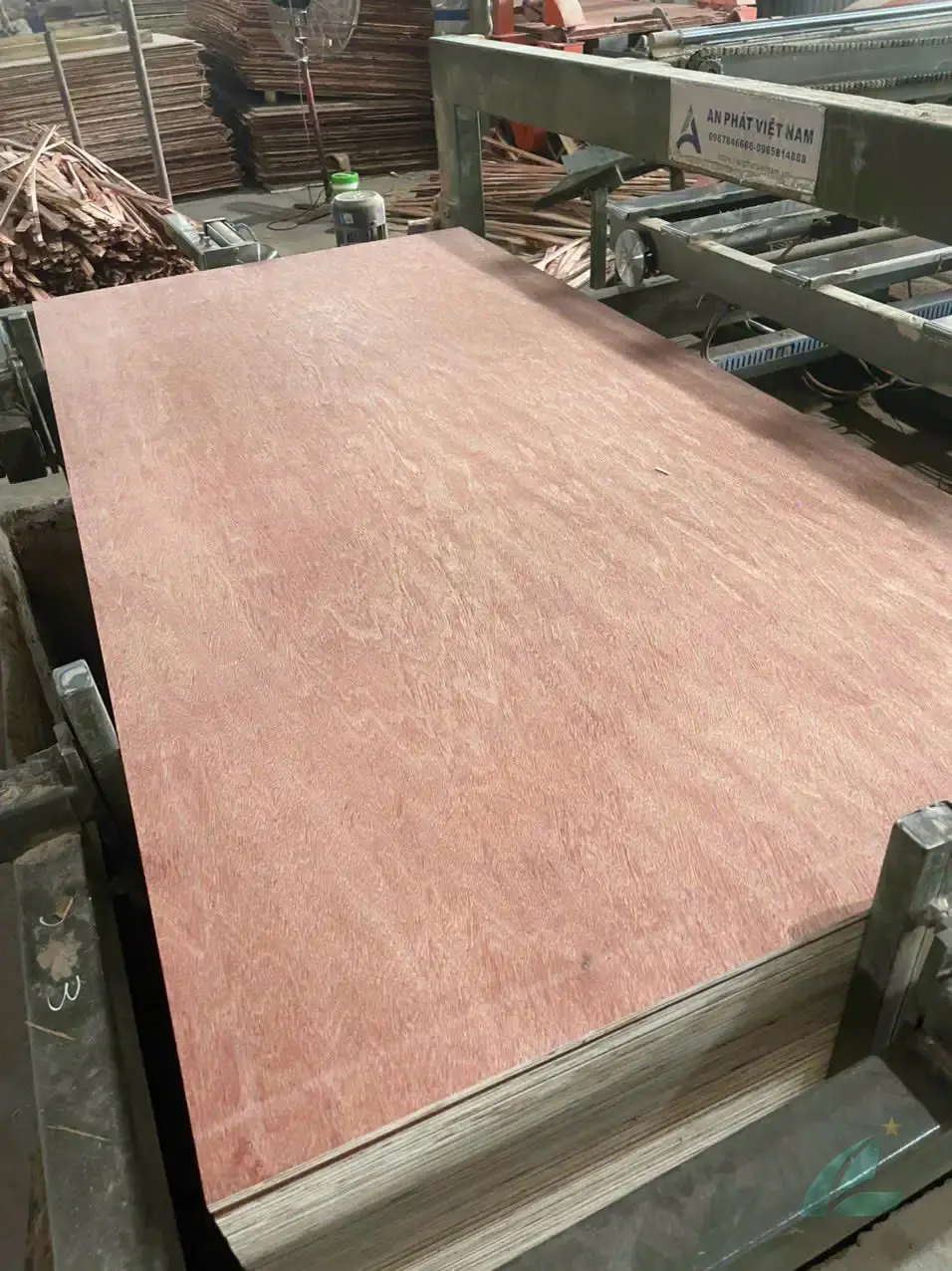
Grade A is the premium face. It allows minimal knots (sound, tight, limited in size), no open cracks, and a uniform surface after sanding. Colour consistency must be within the same veneer sheet. This is the standard face for furniture and cabinet plywood going to Europe, the US, Japan, and South Korea.
Grade B is the secondary face. It permits a higher count of sound knots, allows patches (if flush and well-bonded), and accepts minor colour variation. It is used as the back face on A/B panels, or as both faces on lower-cost commercial plywood.
⚠️ Important: This A/B grading system applies to all face veneer species in Vietnam except birch. Birch veneer uses a separate D/E/F scale (D being the highest quality available from Vietnamese production). Do not confuse the two systems when specifying purchase orders.
For sanded furniture-grade panels, the thickness tolerance held across both A and B faces is ±0.2–0.3mm (furniture/sanded grade). This tight tolerance is essential for cabinet box assembly. Unsanded commercial panels carry a wider ±0.5mm tolerance — relevant when checking whether your supplier’s QC process matches your application.
See the face veneer grading guide for the full grading matrix by species.
🔍 The 6 Most Common Plywood Face Defects
📌 1. Open Knots
An open knot is a hole or void where a branch intersection has fallen out of the veneer sheet during peeling or pressing. On Grade A faces, open knots are not permitted. On Grade B, very small open knots (typically under 10mm diameter) may be allowed in limited quantity depending on the buyer’s specification.
Why it matters: Open knots weaken the face veneer locally, create finishing problems (paint or lacquer will sink into the void), and can develop into delamination points in humid environments. For any furniture application, reject panels with open knots on the face side.
How to inspect: Hold the panel at a low rake angle to a light source. Voids will cast a shadow. For panels destined for painting, a wet sponge test (briefly moisten the surface) makes open knots visible by darkening faster than solid wood fibre.
📌 2. Splits and Edge Cracks
Splits are fractures running parallel to the grain, most common at panel edges or corners. They originate from two causes: veneer that was under-dried before pressing (moisture shock during hot pressing opens the grain), or mechanical damage during handling and stacking.
Why it matters: A split at the edge can propagate inward during sawing or routing. For kitchen cabinet panels, even a 20mm edge split may render the panel unusable once cut to size. Splits in the panel field (not just the edge) indicate more serious veneer quality issues.
On Grade A faces: No splits are permitted. On Grade B: Very fine, tight surface checks (hairline, non-through) may be accepted in limited number by some buyers, but must be confirmed in the purchase order specification. Open splits visible to the naked eye should not appear on any export-grade panel.
💡 Tip: Always specify “no edge splits” explicitly in your purchase order, even for Grade B. Without this specification, some factories interpret B-grade leniency broadly.
📌 3. Veneer Patches
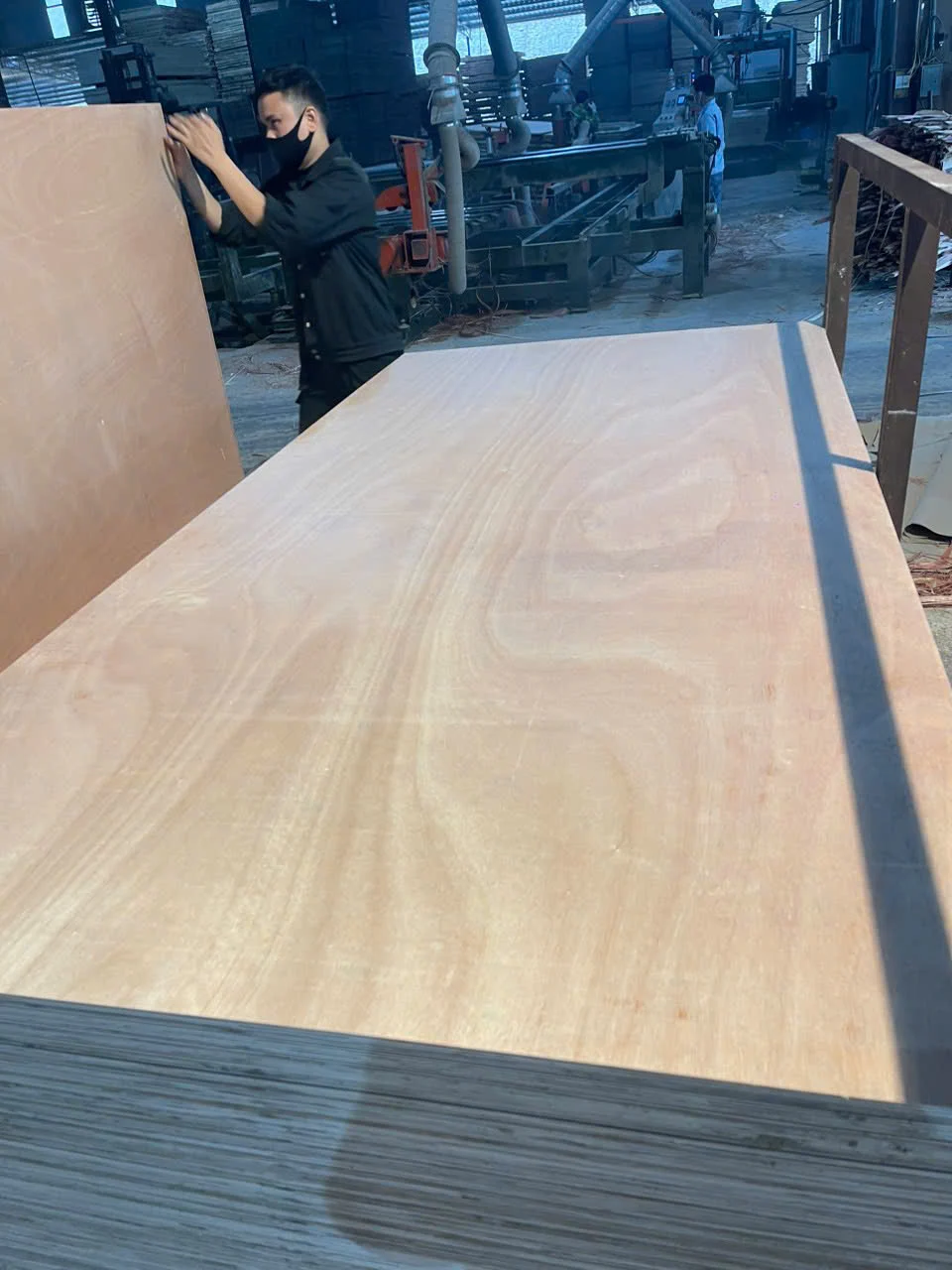
Patches are rectangular or “boat-shaped” repairs inserted into the face veneer to fill knot holes, small splits, or other voids. They are an accepted repair method in the industry when done correctly.
Acceptable patches: Flush with the surrounding surface (not raised or sunken), colour-matched to the surrounding veneer, well-bonded with no lifting edges, and limited in number per panel. On Grade A, patches must be near-invisible after sanding. On Grade B, a higher count is permitted but the same quality of application applies.
Unacceptable patches: Raised above the surface plane (will show as a bump through paint or veneer), darker or lighter than surrounding wood by more than one shade, loose at any edge, or cracked in the patch material itself.
“When buyers ask about patches, the key question is always: will the patch be visible after finishing?” — Lucy, International Sales Manager, HCPLY
📌 4. Discoloration and Mineral Streaks
Discoloration on plywood faces takes several forms: mineral streaks (dark lines or blotches from mineral deposits in the wood), sapwood-heartwood colour contrast, blue-stain fungal discoloration, and oxidation darkening on faces stored in humid conditions.
Grade A tolerance: Mineral streaks present in the natural wood grain are typically accepted if they do not exceed a defined width and total area. Blue stain or oxidation dark patches are not accepted. Uniform sanding helps, but cannot remove intrinsic mineral discoloration.
Grade B tolerance: Wider colour variation and mineral streaks are accepted. For buyers staining or painting the surface, colour variation matters less. For buyers applying clear lacquer or oil finish, Grade A consistency is worth the premium.
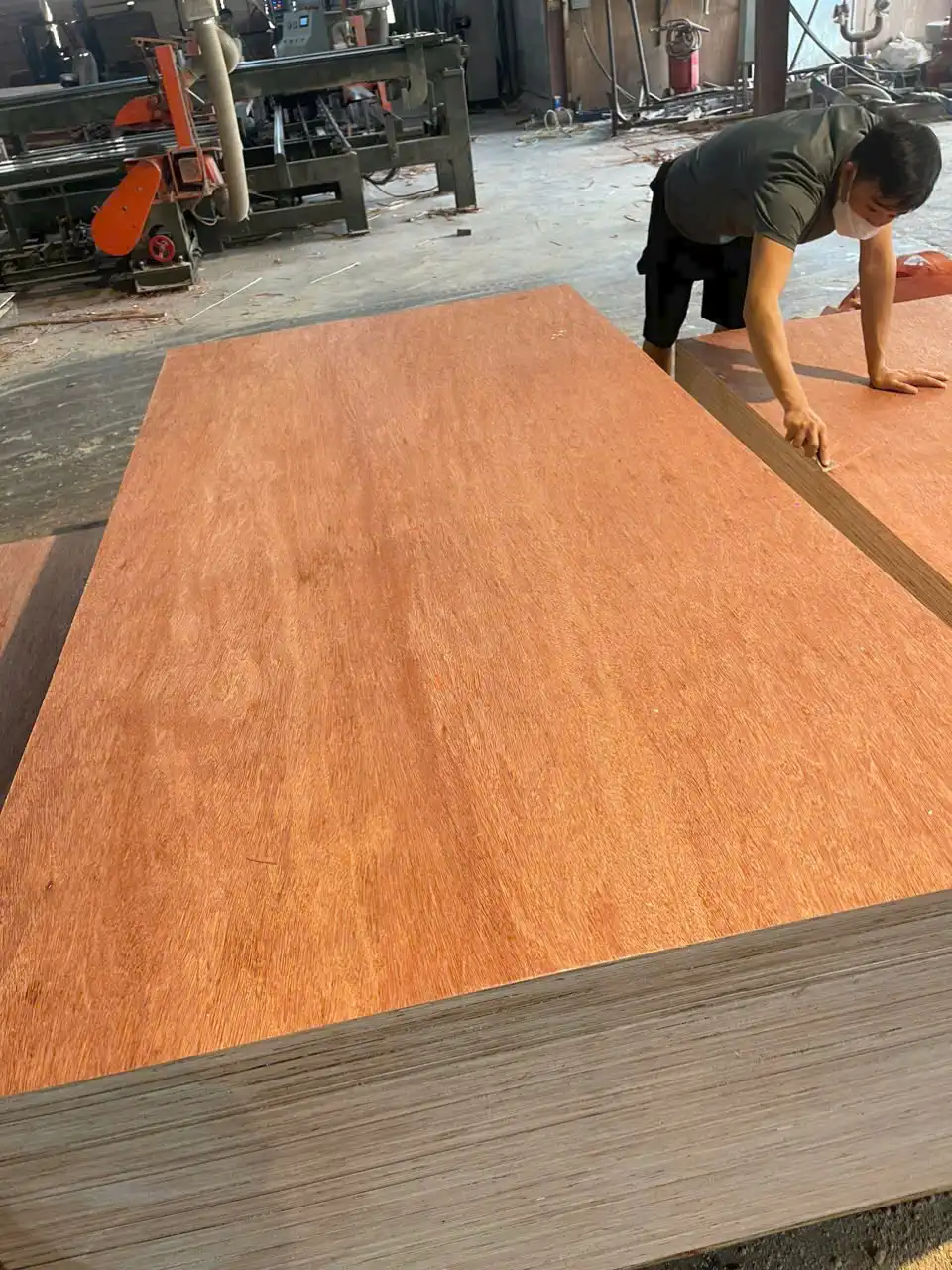
Practical note: Both species are prone to some reddish colour variation across the sheet. This is natural and accepted within Grade A tolerances. Bintangor plywood from Phú Thọ production typically shows more uniform colour than material from other production centres. Okoume, by contrast, tends toward lighter, more consistent pinkish-cream tones — a visual advantage for European interior applications.
📌 5. Overlapping Veneer Joints
Face veneer sheets are not always continuous across the full panel width. On wider panels, two veneer pieces may be book-matched and joined in the centre. On lower-grade commercial panels, the veneer pieces may not be precision-joined, resulting in visible overlaps or gaps at the seam.
Grade A requirement: Joints must be tight, with no visible gap and no overlap. The joint line should be virtually invisible after sanding. This is achieved by precision edge-trimming before pressing.
Grade B: Minor joint line visibility is accepted. An overlap (where one veneer edge rides over another) is not accepted on either grade — it creates a visible ridge that cannot be sanded flat without cutting through the face layer.
Inspection method: Run a fingertip across the panel surface at a joint area. Any raised edge or ridge is an immediate rejection criterion for furniture-grade material.
📌 6. Surface Roughness and Sanding Defects
On furniture and cabinet plywood, the face must be sanded smooth (typically 120–180 grit finish). Sanding defects include sander chatter marks (parallel ridges from a vibrating sanding belt), skip marks (areas the sander belt missed), or coarse grit scratches visible under raking light.
Why sanding quality matters beyond appearance: A well-sanded face holds primer and finish coats more uniformly. Uneven sanding means inconsistent finish absorption — visible as blotching or streaking after painting.
For sanded furniture-grade panels, the wide-belt calibration sander also determines thickness tolerance. A properly calibrated sanding line produces panels within ±0.2–0.3mm thickness across the sheet. Verify this against your purchase order specification with a digital caliper measurement at five points per panel: four corners and the centre. (HCPLY production data, 2026)
⚠️ Note: “Sanded” must be specified in the purchase order. Without this specification, the factory may ship “unsanded” or “lightly sanded” product at the same face grade, which is common for commercial export-grade plywood destined for further processing.
📊 Defect Allowance Summary by Grade
| Defect Type | Grade A | Grade B |
|---|---|---|
| Open knots | Not permitted | Limited (small, by spec) |
| Splits / cracks | Not permitted | Hairline surface checks only (must be specified) |
| Patches | Permitted, flush, matched, limited count | Permitted, more count, same quality |
| Discoloration | Mineral streaks within spec; no blue stain | Wider colour variation accepted |
| Veneer joint overlap | Not permitted | Not permitted |
| Sanding quality | 120–180 grit finish, no chatter marks | Lighter sanding, minor variation |
| Thickness tolerance | ±0.2–0.3mm (sanded) | ±0.5mm (lightly sanded / unsanded) |
🔗 How Grading Connects to Species Choice
The defect profile of a face varies by species. Understanding this helps buyers set realistic expectations.
Bintangor: Low density, relatively open grain, prone to small voids and patches even on Grade A. Most widely used for commercial and cabinet plywood across Asia. A/B grade bintangor from Northern Vietnam factories is well-suited for interior furniture and shopfitting where some patching is visually acceptable after painting.
Okoume: Tighter, more uniform grain. Fewer natural knots and voids. Produces cleaner A-grade surfaces. Preferred for European furniture markets and lightweight interior applications. See okoume plywood Vietnam for typical specifications.
Birch: The exception to the A/B grading system. Birch veneer from Vietnam is graded D/E/F. Grade D is the premium (equivalent to a high B in other species). Birch naturally produces fewer voids and tighter surfaces than tropical species. For cabinet and furniture manufacturers needing the cleanest possible face for lacquered finishes, birch remains the benchmark.
For a complete comparison of face veneer species and their typical defect profiles, see the face veneer types guide.
✅ Pre-Shipment Inspection Checklist
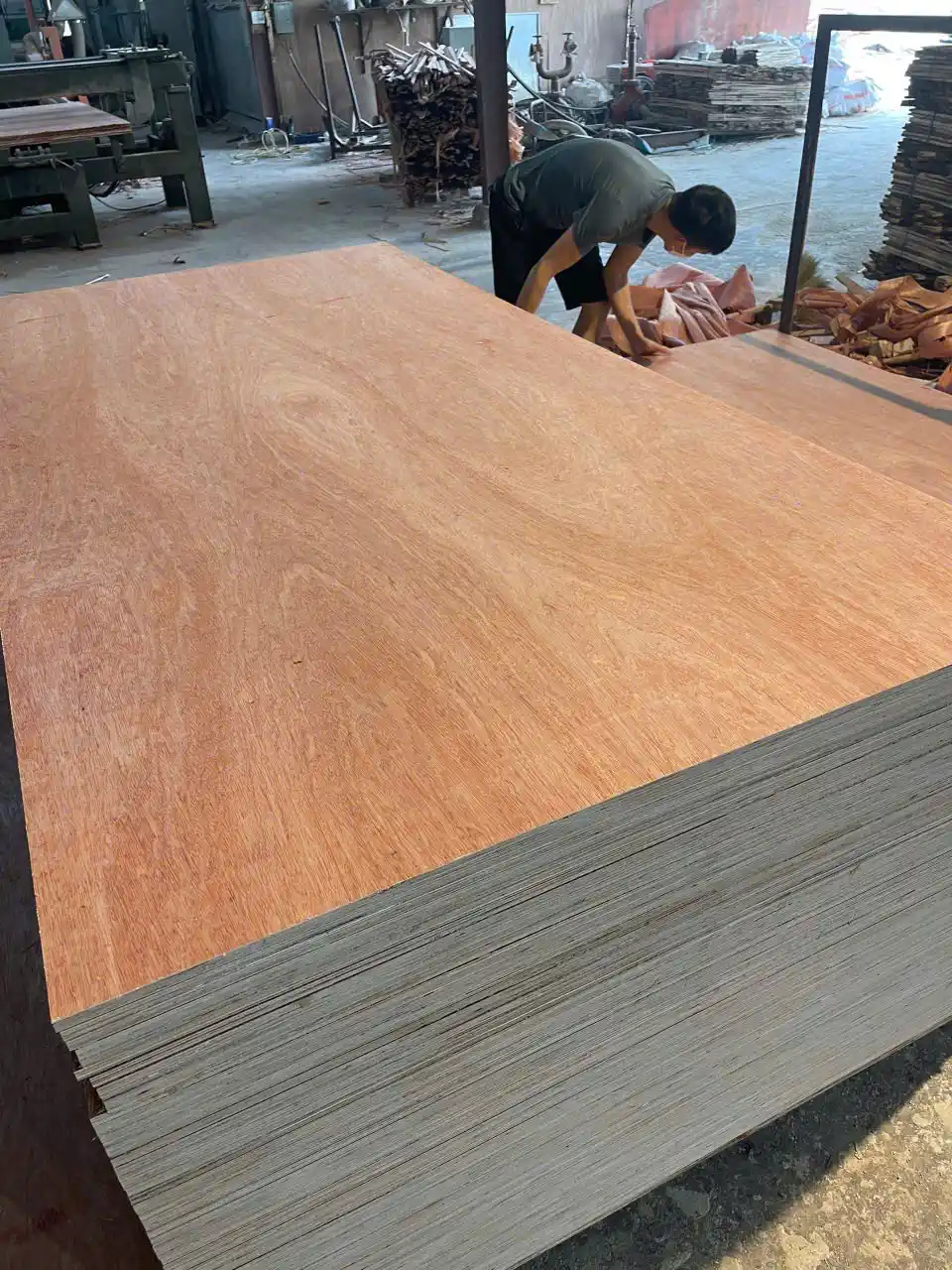
When inspecting a consignment before loading, apply this face defect protocol to a random sample (typically AQL 2.5, Level II, per ISO 2859-1):
- Visual scan at 1 metre distance — identify obvious discoloration, splits, or visible patches on randomly selected sheets from the bundle exterior
- Rake-light check — hold each sample sheet at 20-30° to a direct light source; surface roughness, sanding chatter, and overlap ridges become visible
- Edge inspection — check all four edges for splits, cracking, and veneer joint alignment
- Patch audit — count and quality-assess patches: flush, colour-matched, bonded
- Thickness measurement — five-point digital caliper check; confirm within ±0.2–0.3mm for furniture sanded grade
- Moisture check — pin moisture meter reading should be 8–12% for export; panels above 14% risk delamination in transit
Document findings with photos keyed to the pallet and bundle number. HCPLY’s on-site QC team provides this documentation before container loading as standard practice.
For a broader overview of the plywood quality control process at the factory level — covering pressing, sanding, and pre-shipment stages — see the factory QC guide.
📦 Ordering the Right Face Grade
Face grade specification in your purchase order should follow this format:
Face: [species] Grade [A or B] | Back: [species] Grade [A or B] | Sanded: Yes | Tolerance: ±0.2mm
Common configurations:
- A/B sanded — furniture cabinet interiors, interior fitout, painted surfaces
- A/A sanded — visible surfaces on both sides (premium cabinetry, high-end display units)
- B/B lightly sanded — commercial applications, painted site-cut panels, lower-cost interiors
- B/C unsanded — packaging, pallet decks, industrial applications not requiring face presentation
Specifying the tolerance class alongside the face grade closes the gap most frequently exploited in quality disputes: a supplier may deliver Grade A faces on panels that vary ±0.7mm in thickness, technically defect-free on the surface but unusable for precision cabinet work.
Request a Free Quote with Face Grade Specification — HCPLY’s team will confirm defect tolerances, sanding specification, and thickness tolerance in writing before production begins. No commitment required.
Related reading: