

Raw core veneer from Vietnam — acacia, eucalyptus, and styrax — is shipped to plywood factories across India, the Middle East, Southeast Asia, and Europe every month. For factories outside Vietnam that press their own panels, sourcing ready-cut core veneer from Northern Vietnam is often the most cost-effective input available.
This guide covers the three core species HCPLY exports, their standard specs, sizes, and the practical differences buyers need to evaluate before placing an order.
📦 What Is Raw Core Veneer and Who Buys It?
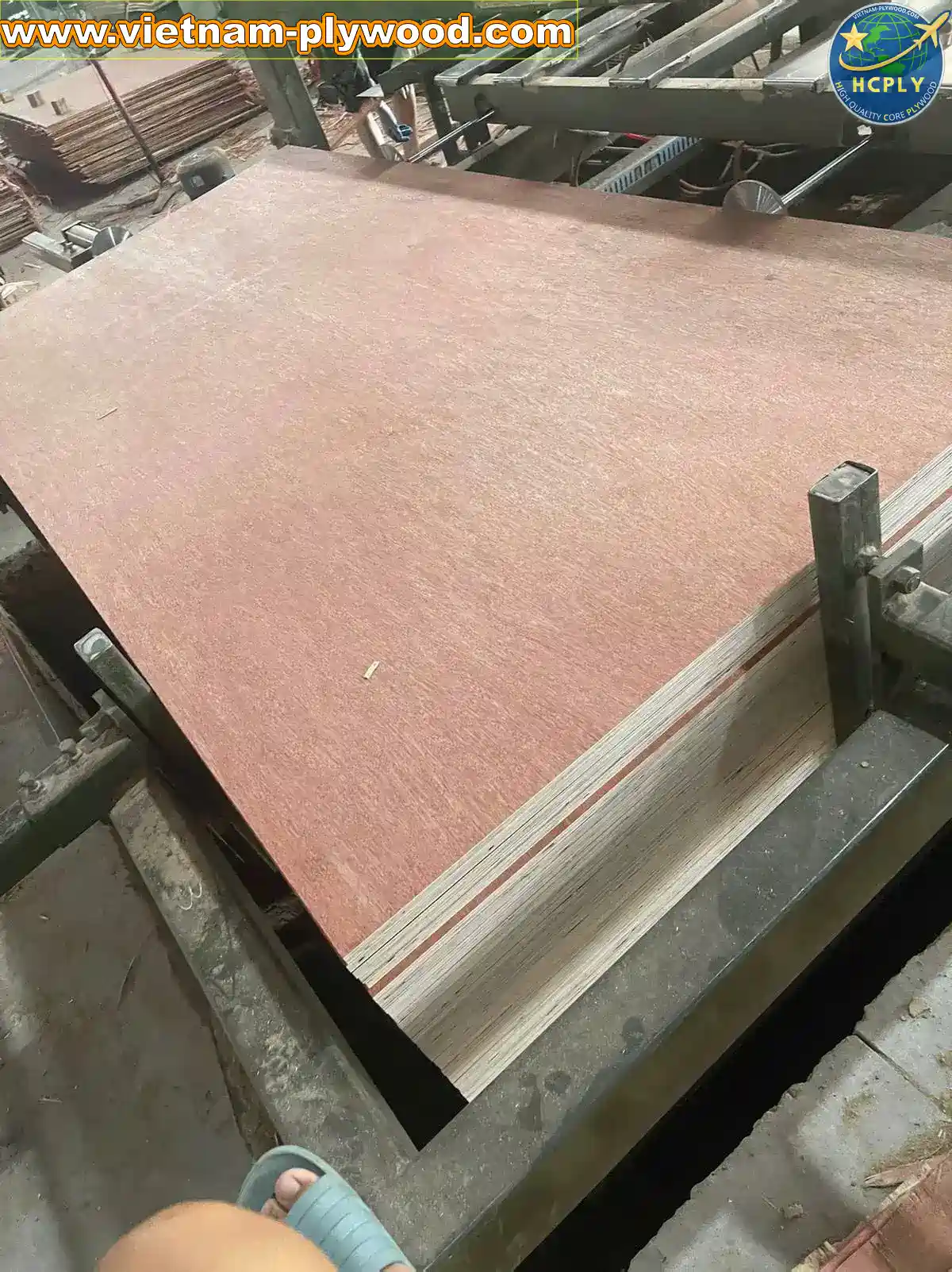
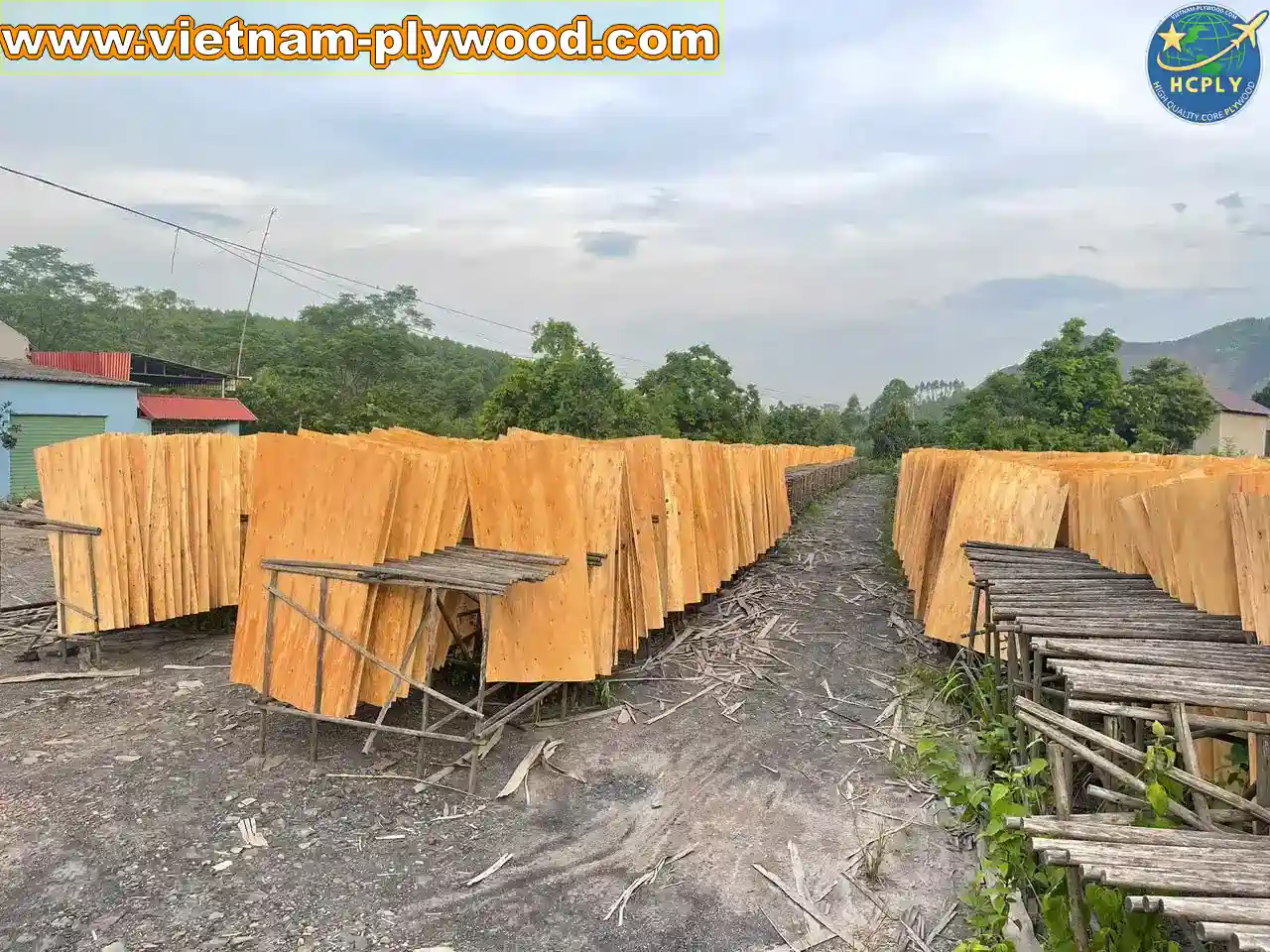
Raw core veneer is rotary-peeled, kiln-dried wood veneer sold as flat sheets — the middle layers that go between face veneers in plywood construction. It is not finished plywood. It is the input material that plywood presses need.
The buyers are plywood factories that:
- Lack local plantation timber supply (common in India, Bangladesh, Middle East)
- Need consistent density and moisture-controlled sheets for their automated presses
- Want to control face veneer selection while sourcing core from a cost-efficient origin
- Require certified raw material for FSC or CARB P2 chain-of-custody compliance
Vietnam’s plantation timber base — largely acacia and eucalyptus — supplies 80–90% of domestic plywood raw material (Vietnam Wood & Forest Product Association, 2025). The surplus capacity allows export of raw core veneer to factories worldwide alongside finished plywood products.
Vietnam’s total wood and forest product exports reached $17.2 billion in 2025, up approximately 6% year-on-year (Vietnam Export Data, 2025). Core veneer is a growing sub-category within this trade flow.
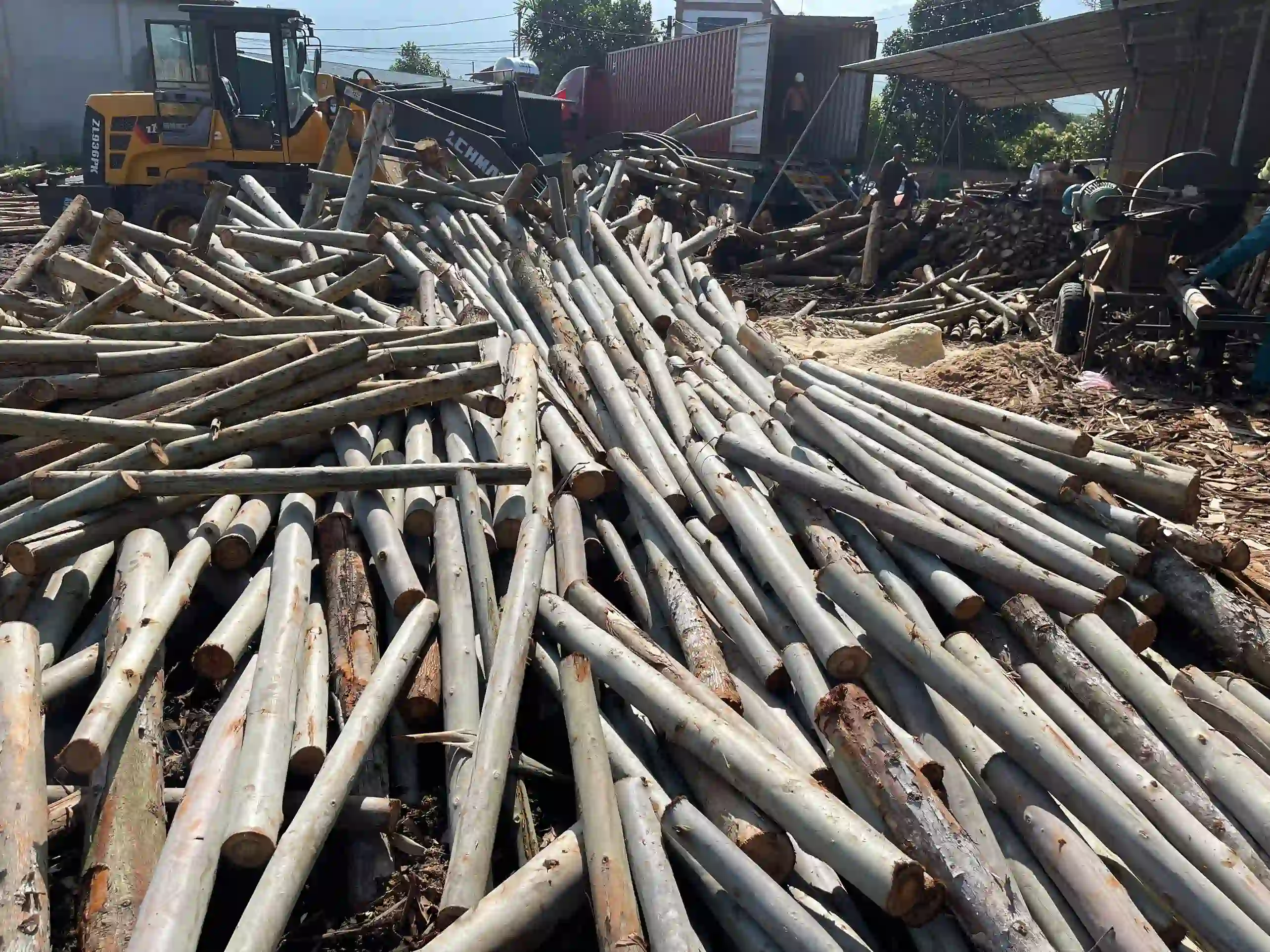
🌳 Three Core Species: What Each One Is Good For
Vietnam’s plantation forests produce three commercially available core species for plywood factories. Each has a distinct density profile, which directly determines the weight and strength characteristics of the finished panel.
📌 Acacia Core Veneer — Affordable, Widely Used
Acacia is the most common and most affordable core species from Northern Vietnam. Density is approximately 580 kg/m³ — mid-weight. The wood is darker in color, which can show through thin face veneers on light-colored finishes.
Best suited for:
- Film-faced plywood (phenolic or melamine coated — dark core not visible)
- Packing and commercial-grade plywood
- Cost-sensitive furniture-grade panels where face veneer is ≥0.3mm
Acacia’s strength at its price point makes it the default choice for factories producing mid-volume commercial plywood. “For film-faced shuttering boards and commercial packing panels, acacia core delivers the density you need at a price point that keeps your production cost competitive,” notes Lucy, International Sales Manager at HCPLY.
📌 Eucalyptus Core Veneer — Heaviest, Strongest
Eucalyptus is Vietnam’s highest-density core species at 650–750 kg/m³. The wood is pale yellow-white, which means it is compatible with light-face veneers without color bleed. It is the heaviest Vietnamese core, directly affecting container payload calculations (HCPLY production data, 2026).
Best suited for:
- Premium furniture where weight signals quality to end buyers
- Flooring substrate requiring dimensional stability under load
- High-reuse formwork plywood (15–20 reuse cycles vs. 8–12 for acacia core)
- Construction panels requiring maximum screw-holding and stiffness
The density advantage comes with a cost: eucalyptus core is the most expensive Vietnamese core species, and a 40HC container loaded with eucalyptus-core panels reaches payload limits faster (approximately 15 pallets vs. 18 for styrax core). See plywood container packing calculation by core type for full payload tables.
📌 Styrax Core Veneer — Lightest, White Color
Styrax (known locally as “bồ đề”) is the lightest Vietnamese core species at 480–500 kg/m³. White in color, no color bleed through face veneer. It is found only in Northern Vietnam — principally in Phú Thọ, Yên Bái, and Tuyên Quang provinces — and is unavailable in Southern Vietnam (HCPLY production data, 2026).
Key Insight: Styrax is the standard birch-core substitute used by Vietnamese furniture plywood factories. European and Korean buyers who specify “birch core” plywood from Vietnam are almost always receiving styrax core — the density (480–500 vs. birch’s 600+ kg/m³) and color profile are closest among available Vietnamese species.
Best suited for:
- Premium furniture plywood (okoume, birch face, poplar face)
- Lightweight interior panels for export to EU and Korea
- E0/CARB P2 grade products with full-stitched core construction
For a detailed comparison of styrax vs. birch core, see plywood core types — acacia vs eucalyptus vs styrax.
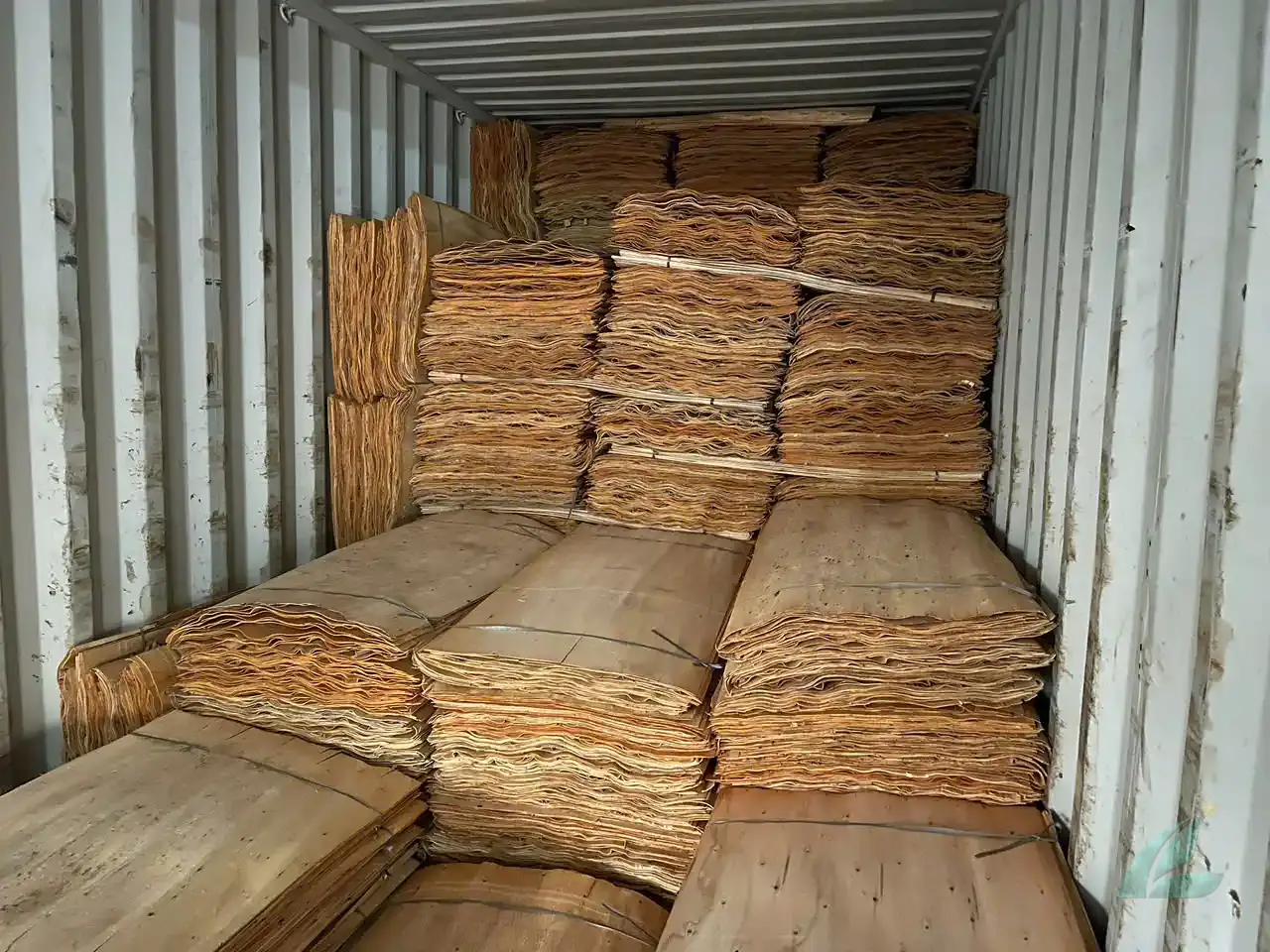
📋 Core Veneer Export Specifications
The table below covers HCPLY’s standard export specifications for raw core veneer. Custom dimensions and thickness are available for regular-volume buyers.
| Parameter | Acacia | Eucalyptus | Styrax |
|---|---|---|---|
| Density (kg/m³) | ~580 | 650–750 | 480–500 |
| Color | Dark brown | Pale yellow | White |
| Standard thickness | 1.2–2.0mm | 1.2–2.0mm | 1.2–2.0mm |
| Standard sizes (mm) | 1270 × 640, 1270 × 1300 | 1270 × 640, 1270 × 1300 | 1270 × 640, 1270 × 1300 |
| Thickness tolerance | ±0.1mm | ±0.1mm | ±0.1mm |
| Target MC at dispatch | 6–12% | 6–12% | 6–12% |
| Grade options | A, AB | A, AB | A, AB |
| Availability | High (year-round) | High | Seasonal/limited |
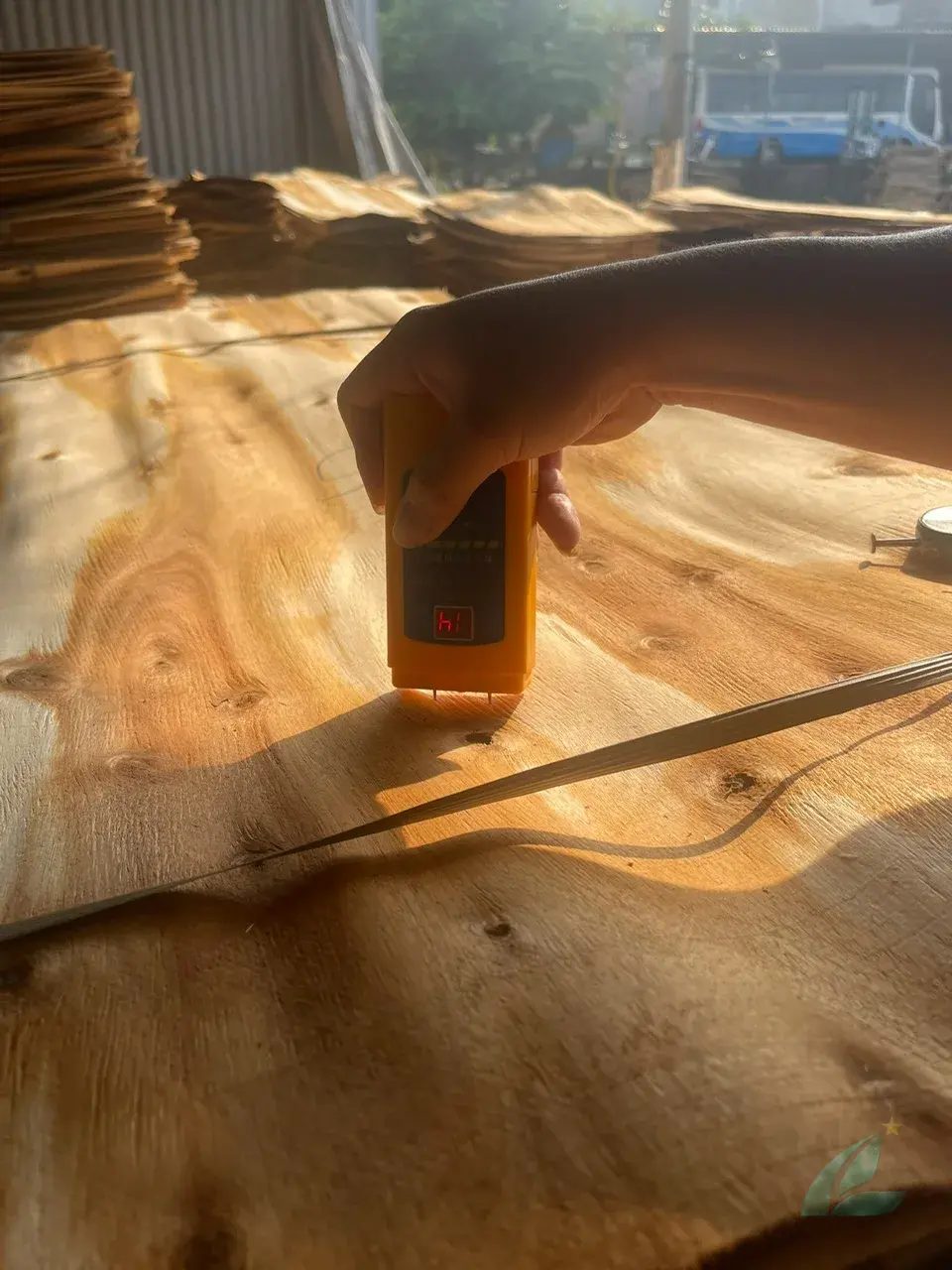
Moisture content note: Export-grade core veneer is kiln-dried to 6–12% moisture content before shipment. Factories should acclimatize sheets to their local conditions before pressing to avoid post-press warping.
Grade A sheets have no core gap, no overlap, and consistent thickness throughout. Grade AB permits minor defects on one side. For premium furniture pressing, Grade A is recommended.
🔧 Core Construction Methods and Their Impact on Quality
When buying raw core veneer to press your own panels, the joining technique you apply directly affects finished-board quality. Three methods are widely used:
Full-stitched (machine-sewn): Veneer pieces joined with polyester thread on an automated stitching machine. No gaps, no overlap. Highest quality output. Recommended for E0/E1 furniture-grade panels. 10–15% premium over loose-laid.
Edge-jointed (mài mí): Pieces joined edge-to-edge by a jointing machine. Tighter than loose-laid, lower cost than full-stitched. Common for mid-grade commercial panels in Asian markets.
Loose-laid: Veneer pieces placed side-by-side without mechanical joining. Fastest to process, lowest cost. Suitable for packing-grade plywood. Not recommended for furniture or structural applications.
For a breakdown of which construction method matches which end product, see plywood core construction — stitched vs loose-laid quality comparison.
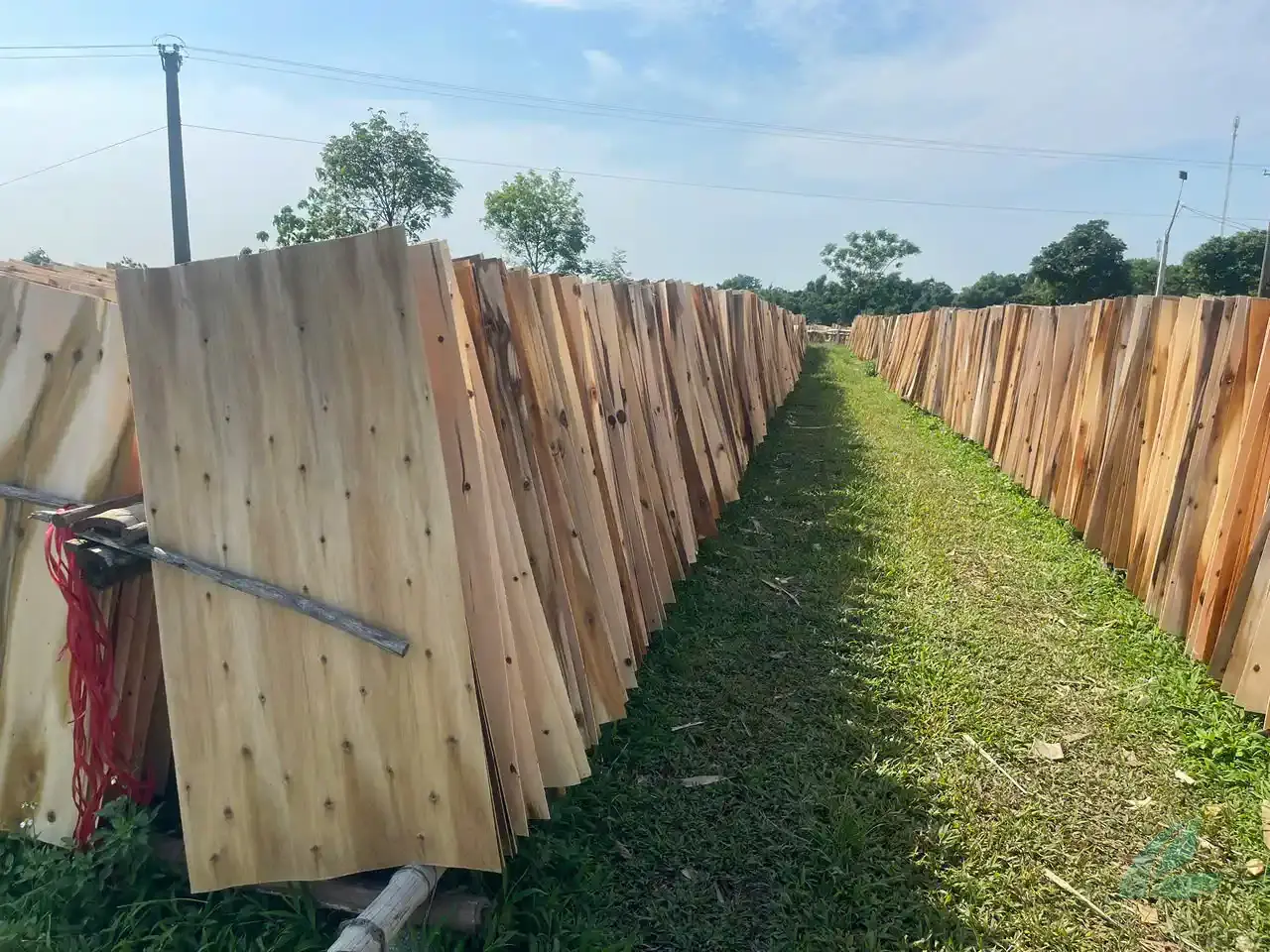
📐 How to Calculate Your Order Volume
Factories purchasing core veneer for their own presses need to convert finished-panel orders into raw veneer sheet requirements. The key calculation inputs:
- Panel thickness (mm) and ply count
- Core layer count (total plies minus 2 face veneers)
- Target core veneer thickness per layer (typically 1.5–2.0mm)
- Sheet dimensions vs. panel dimensions (trim allowance)
For example: a 15mm panel with 7 plies typically uses 5 core layers. At 1.5mm per core layer = 7.5mm of core veneer per panel. For 1000 sheets of 1220 × 2440mm panels, the raw core veneer requirement is approximately 7.5mm × 1.22 × 2.44 × 1000 = ~22.3 CBM of core veneer (before trim waste).
Add 8–12% for trim waste and grade-sorting loss. This brings practical order volume to approximately 24–25 CBM per 1000 finished panels at 15mm/7-ply.
For FOB pricing and logistics planning, use the inquiry form at HCPLY contact or review plywood export cost breakdown and freight guide.
🏭 Why Source Core Veneer from Vietnam?
Plywood factories in India, Bangladesh, and the Middle East have increasingly sourced Vietnamese core veneer over the past decade. The decision comes down to four factors:
Plantation consistency. Vietnamese acacia and eucalyptus come from managed plantation forests harvested at 5–7 years. Consistent growth conditions produce consistent ring density and moisture profiles — reducing variance in the core layers that cause finished-panel warping and delamination.
Competitive FOB pricing. Vietnam’s Northern plantation belt (Phú Thọ, Yên Bái, Tuyên Quang) offers lower input costs than comparable species from Malaysia or Indian plantation sources. No VAT overhead when exporting directly from the factory.
Certification readiness. HCPLY’s core veneer exports carry FSC chain-of-custody documentation. This is increasingly required by European and North American furniture factories operating under EUDR (EU Deforestation Regulation), CARB P2 (US), and FSC supply chain requirements.
Scale and reliability. A single supplier managing multiple production facilities can commit to consistent volume without the gaps common with single-mill sources. HCPLY exports 200+ containers per month of combined plywood and raw veneer products.
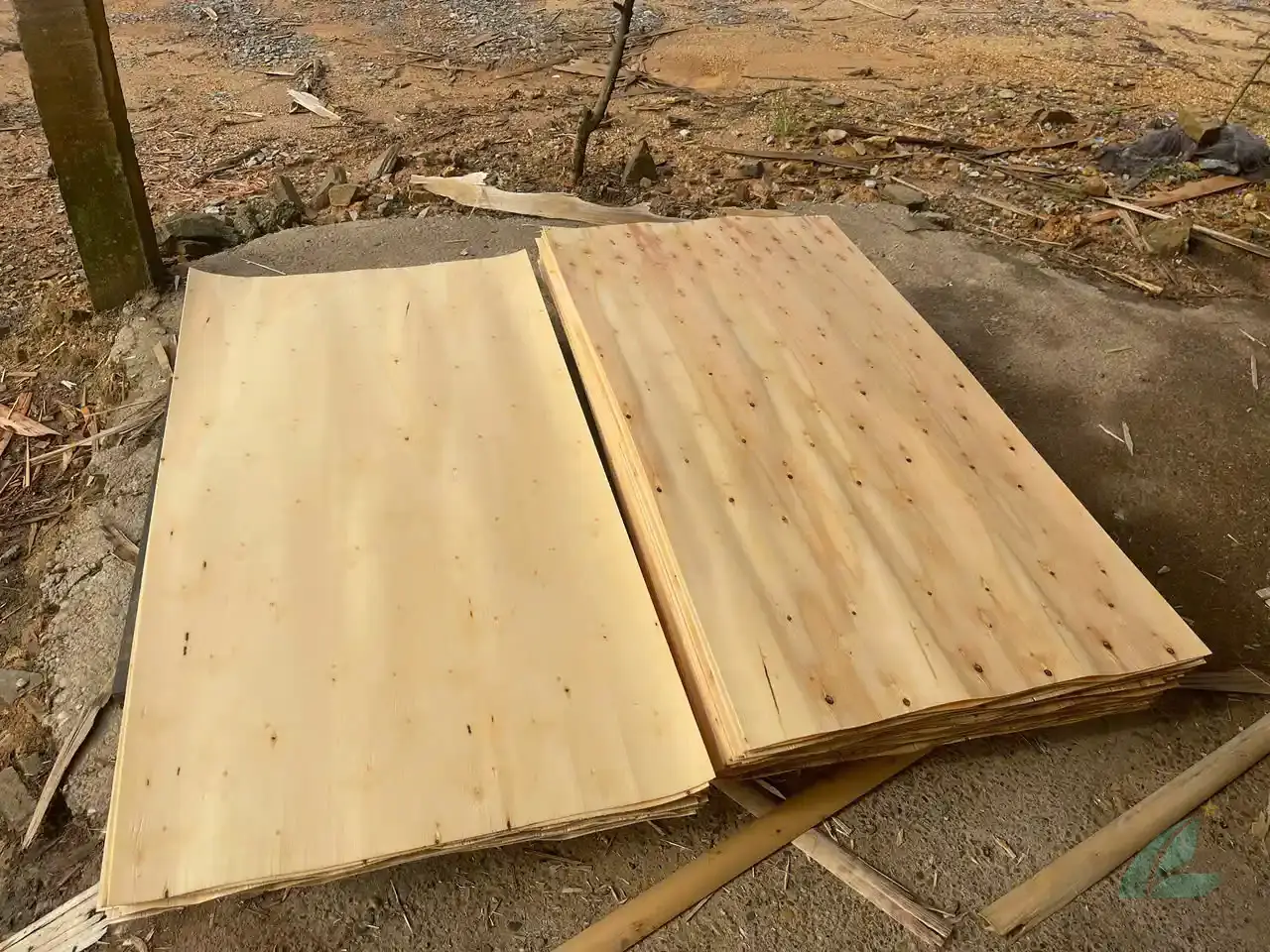
📊 Comparison: Vietnamese Core Veneer vs. Other Origins
| Factor | Vietnam (Acacia/Eucalyptus) | India (Plantation) | Malaysia (Mixed HW) |
|---|---|---|---|
| Price (FOB) | Competitive | Similar–higher | Higher |
| Consistency | High (plantation) | Medium | Variable |
| Species variety | 3 (acacia/eucalyptus/styrax) | 2–3 | Multiple |
| FSC availability | Yes | Limited | Yes (some mills) |
| Density range (kg/m³) | 480–750 | 500–650 | 500–700 |
| Lead time (FOB) | 15–20 days | 20–30 days | 20–35 days |
Vietnam’s plantation management discipline and export infrastructure give it a lead on delivery reliability and certification compliance vs. mixed-harvest origins (Vietnam Wood & Forest Product Association, 2025).
✅ Ordering Core Veneer from HCPLY
MOQ: 1 × 40HC container. Mixed species within one container is available.
Lead time: 15–20 working days from order confirmation.
Packaging: Bundles strapped with metal bands on wooden pallets. Kiln-drying certificate and moisture content report provided at dispatch.
Documents available: Commercial invoice, packing list, phytosanitary certificate, fumigation certificate, FSC chain-of-custody certificate, bill of lading.
For a full product page with current pricing inquiries, visit Core Veneer Vietnam — Acacia & Eucalyptus Plywood Core Exporter.
Request a core veneer price list from HCPLY — include target species, thickness, size, and monthly volume. Response within 24 hours.
Factories that press their own panels get the most value from Vietnamese core veneer when they match species to application: styrax for lightweight furniture, eucalyptus for dense structural panels, and acacia for cost-sensitive commercial and packing grades. Getting that species-to-application match right at the sourcing stage eliminates most downstream quality complaints.