

The core layer determines 80% of a plywood panel’s structural performance — yet most import inquiries specify only face veneer and thickness. Plywood core types in Vietnam come down to three species: acacia, eucalyptus, and styrax. Each carries distinct density, cost, and application profiles that directly affect product quality, shipping weight, and landed cost per CBM.
This guide covers every plywood core type produced in Northern Vietnam, with factory-verified density data, construction method comparisons, and container loading figures you can use in your purchase order.
⚠️ Important: Vietnam does not produce gurjan core, birch core, or hopea core. These are face veneer species — or simply do not exist — in Vietnamese production. Any supplier quoting these as core materials is mixing terminology, a common source of specification errors that lead to rejected shipments.
🌿 What Are Plywood Core Types?
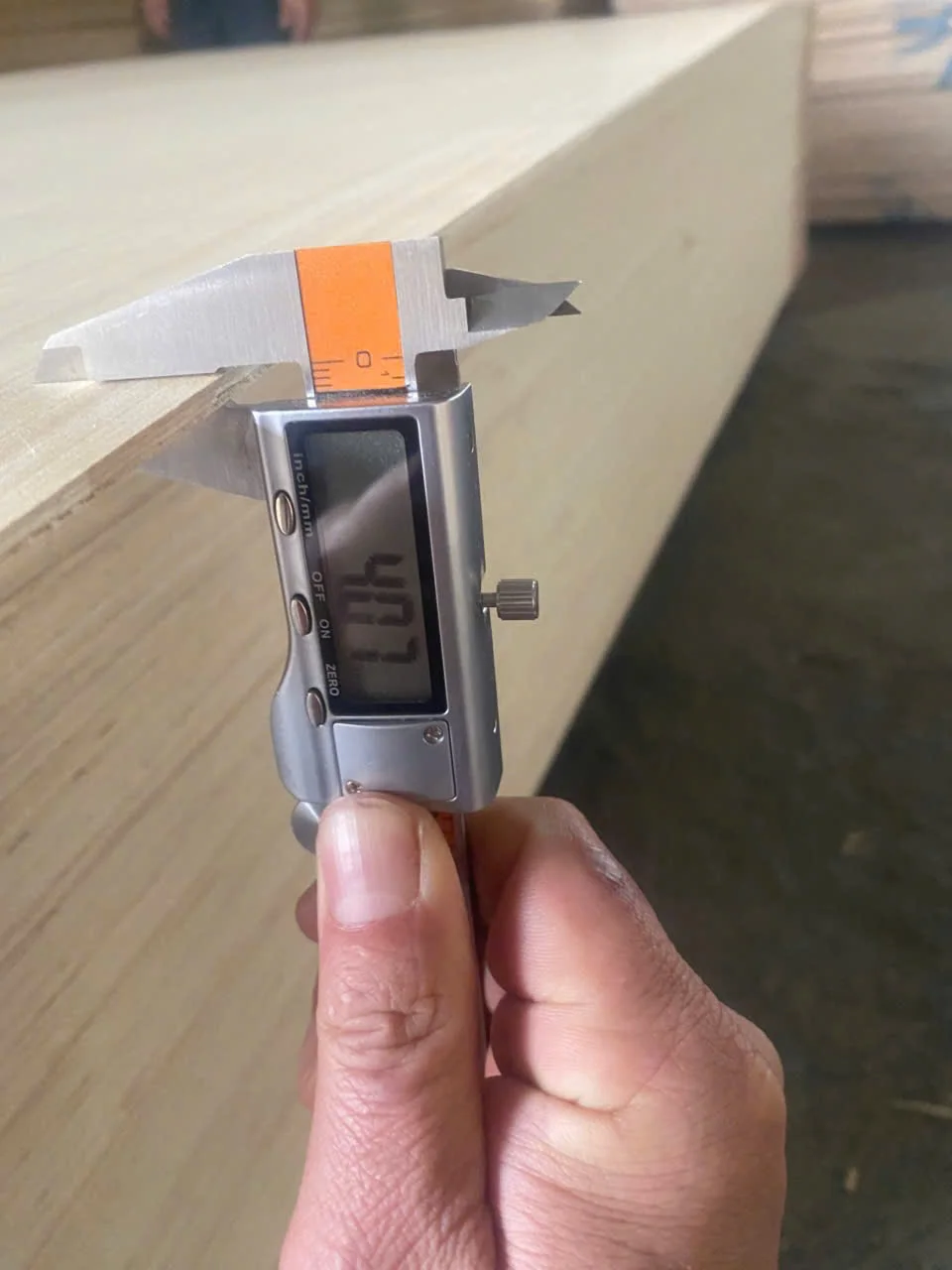
Plywood core refers to the inner veneer layers that form the structural backbone of a panel. In a standard 18mm sheet, the core accounts for 14–16mm of total thickness. The face veneer — birch, okoume, gurjan, or eucalyptus — adds only 0.2–0.4mm per side (HCPLY production data, 2026).
Core species determines:
- Panel density — the single largest factor in shipping weight and CBM per container
- Screw-holding strength — critical for cabinet hinges, drawer slides, and structural joints
- Surface flatness — gaps in core construction create telegraphing through thin face veneers
- Price tier — core species accounts for 40–60% of raw material cost in furniture-grade panels
In Vietnam, three core species dominate production at commercial scale:
| Core Species | Density (kg/m³) | Price Tier | Primary Application |
|---|---|---|---|
| Acacia | ~580 | Lowest | Commercial, packing, film-faced |
| Styrax | 480–500 | Mid-range | Furniture, interior, lamination substrate |
| Eucalyptus | 650–750 | Highest | Premium furniture, heavy-duty structural |
(HCPLY production data, 2026)
Understanding the differences between these plywood core types is the first step toward writing a specification that gets you the panel performance your application requires.
Compare all plywood specifications before sending your inquiry →
🌳 Acacia Core: Cost-Effective Strength for Commercial Grade
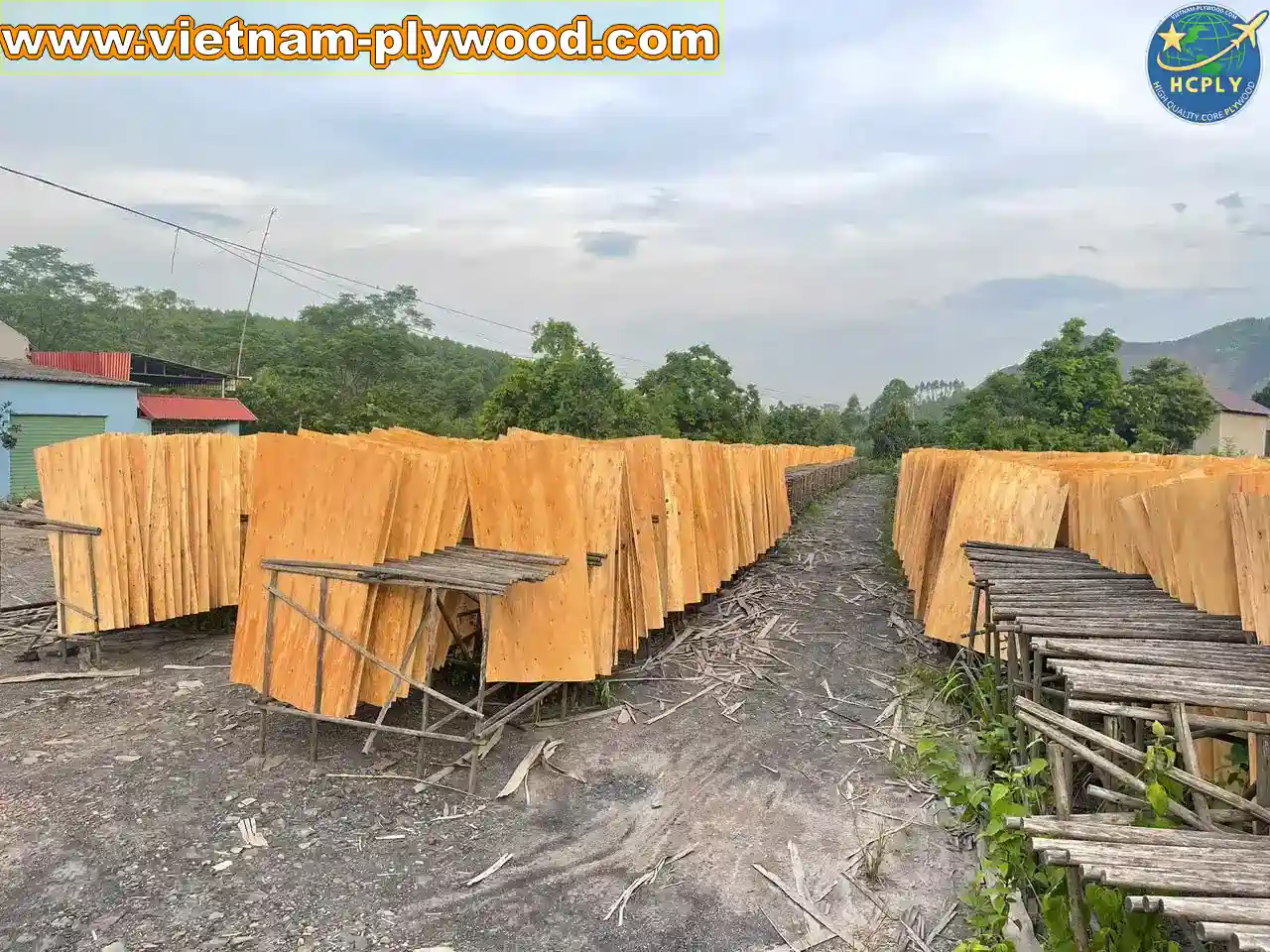
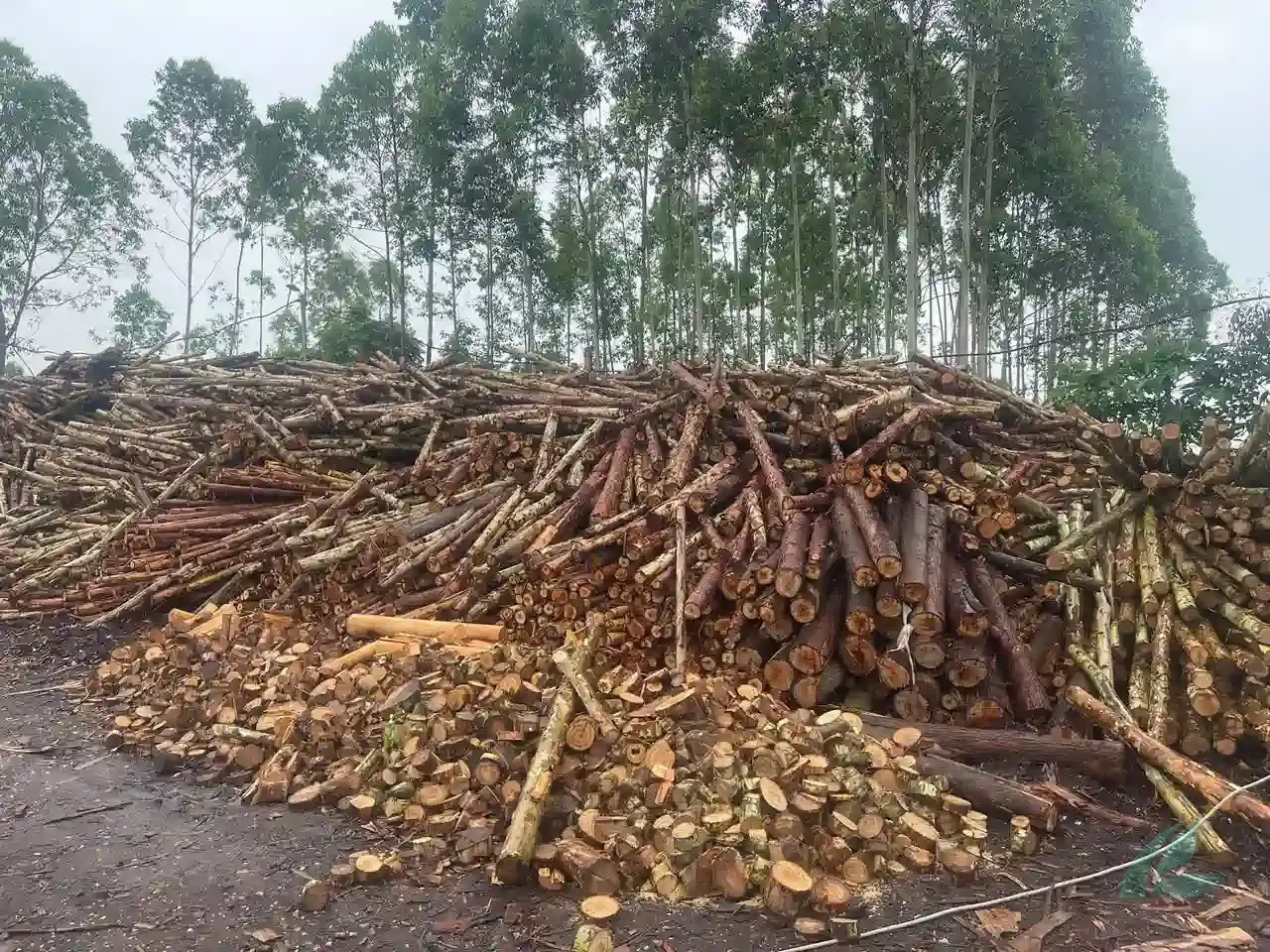
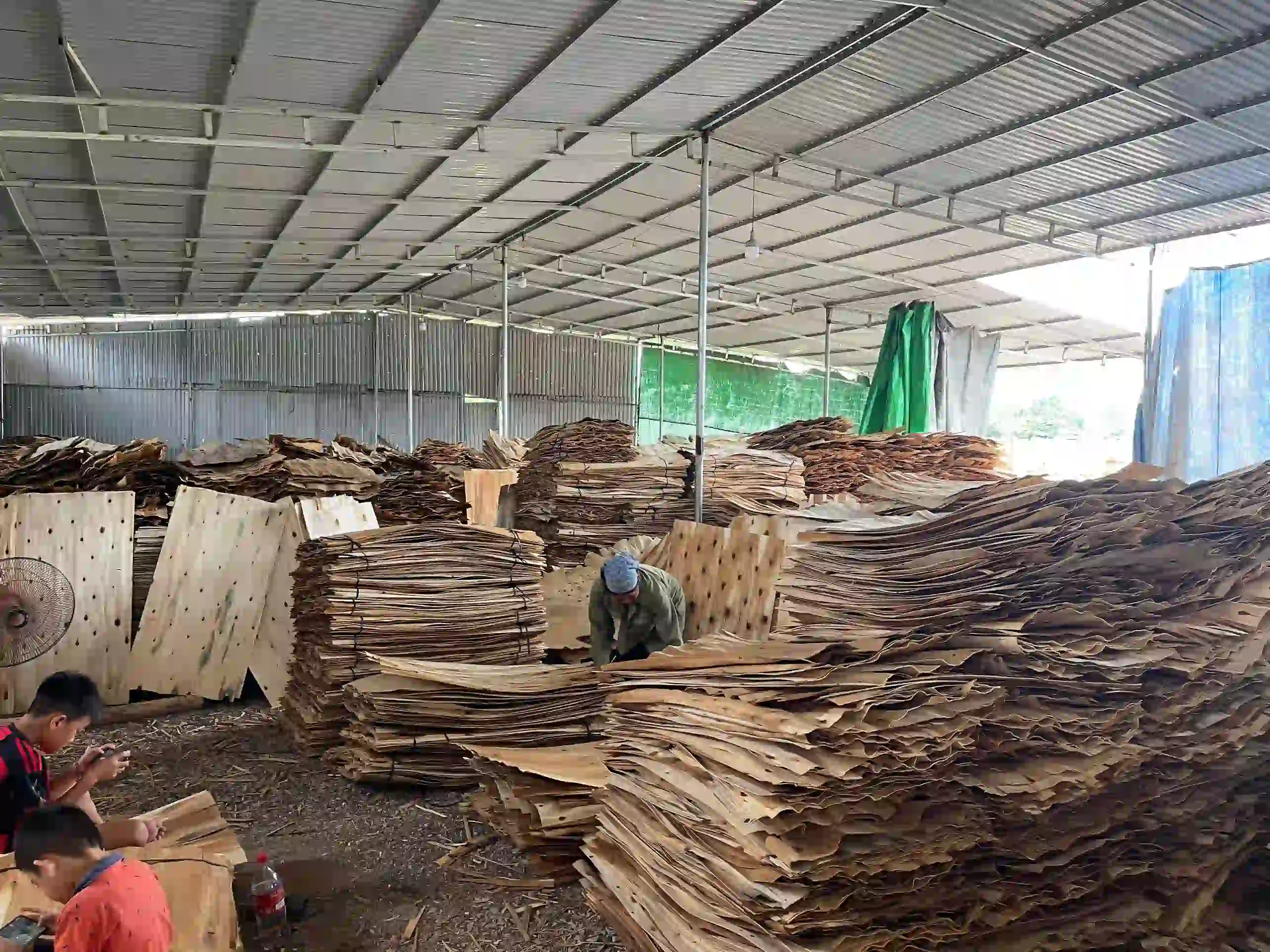
Acacia (Acacia mangium) is the most widely produced core species in Vietnamese plywood factories. It grows rapidly across the northern provinces — primarily Phú Thọ, Yên Bái, and Tuyên Quang — reaching harvest maturity in 5–7 years. This makes it the most available and cost-effective core timber in the country.
📌 Acacia Core Key Properties
Density: ~580 kg/m³ — moderate weight, sitting between styrax and eucalyptus. Acacia core produces panels heavier than styrax-core boards but significantly lighter than full eucalyptus-core panels.
Color: Dark brown to reddish-brown. The darker tone can show through thin face veneers (under 0.3mm) on light-colored faces like birch or EV. For natural-finish furniture applications, specify a minimum 0.4mm face thickness when pairing acacia core with light-face veneers.
Strength-to-cost ratio: Reliable. Acacia core performs well under normal residential and commercial furniture loads. It is not the optimal choice for applications requiring maximum screw-holding under repeated stress — such as cabinet door hinges with daily cycles — where eucalyptus core is preferred.
Where Acacia Core Is Used
- Commercial-grade furniture — kitchen cabinets, office furniture, bedroom sets for mid-market export
- Film-faced plywood — both premium formwork (Type A, phenolic WBP) and budget grades use acacia core
- Packing plywood — crates, pallets, industrial packaging where structural precision is secondary to cost
- Anti-slip plywood — truck decking and scaffolding applications
Container Loading (Acacia Core)
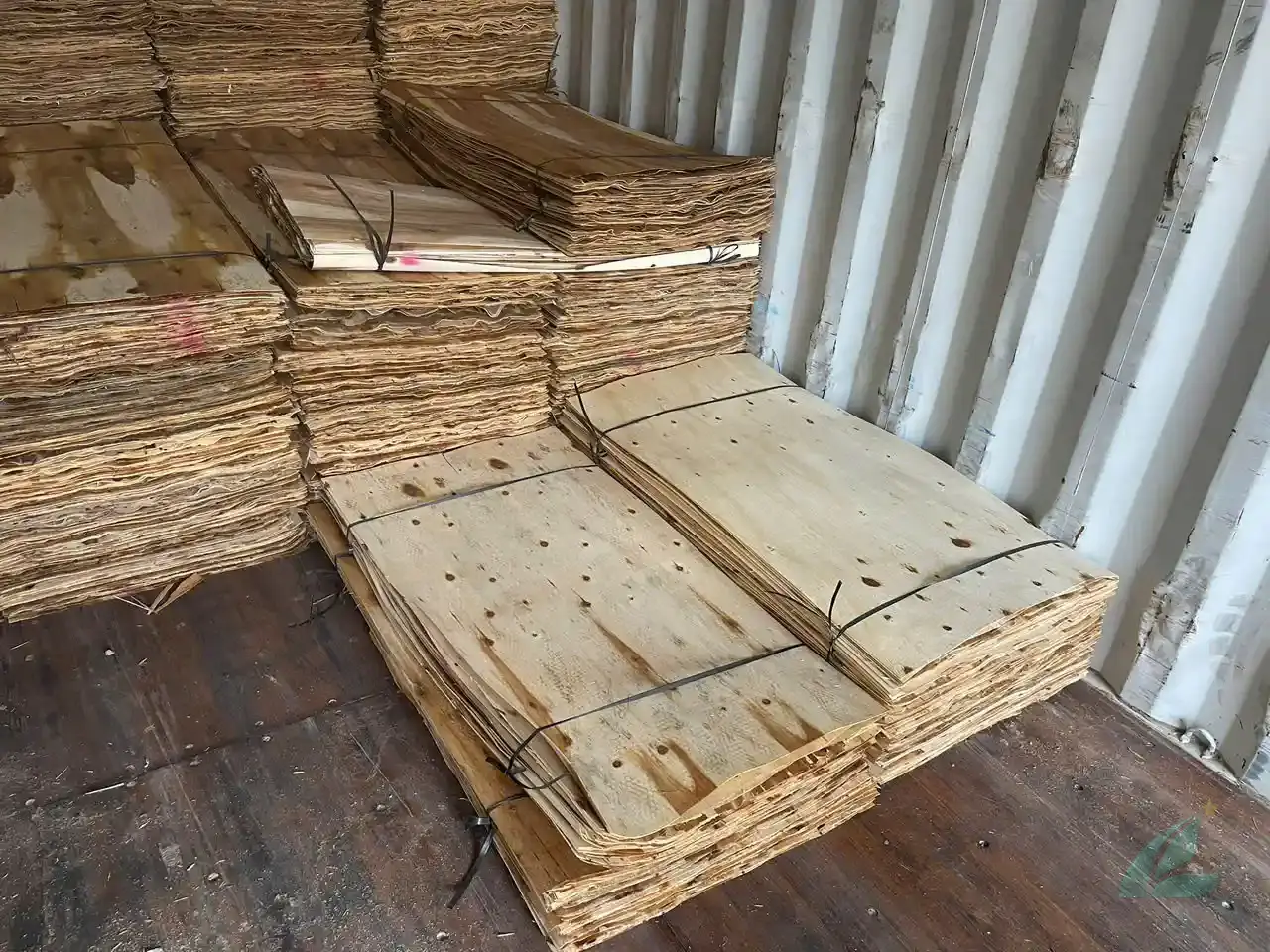
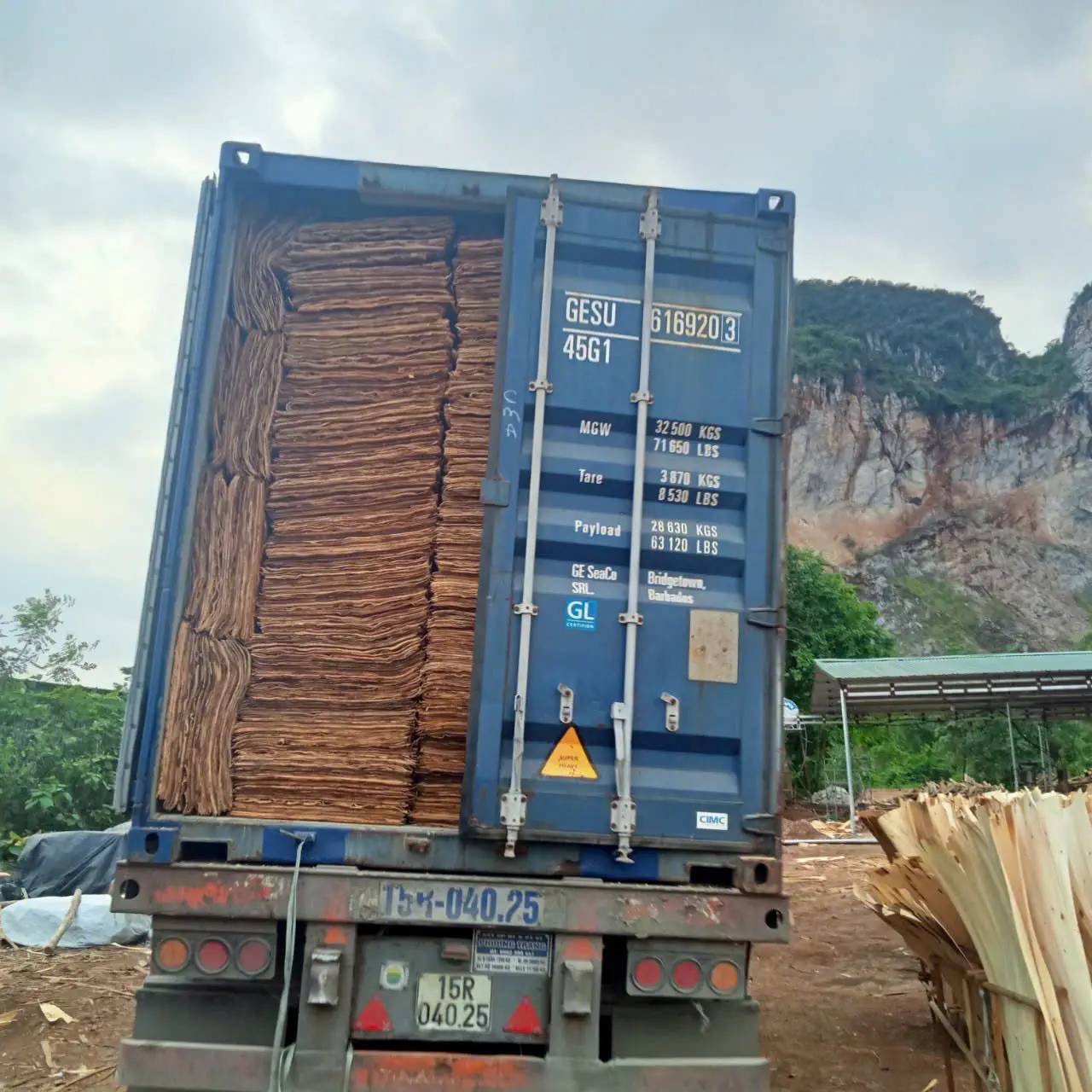
Acacia core loads at 16 pallets per 40HC container, yielding approximately 47.5 CBM and a freight weight of approximately 27.5 MT — well within the 28.5 MT payload ceiling (HCPLY production data, 2026).
⚠️ Note: Density figures use 580 kg/CBM for container planning — slightly above the nominal 580 kg/m³ to account for moisture content variation in standard production. Always request a verified packing list weight before finalizing freight booking.
See acacia core veneer specifications →
🌿 Eucalyptus Core: High-Density Premium Performance
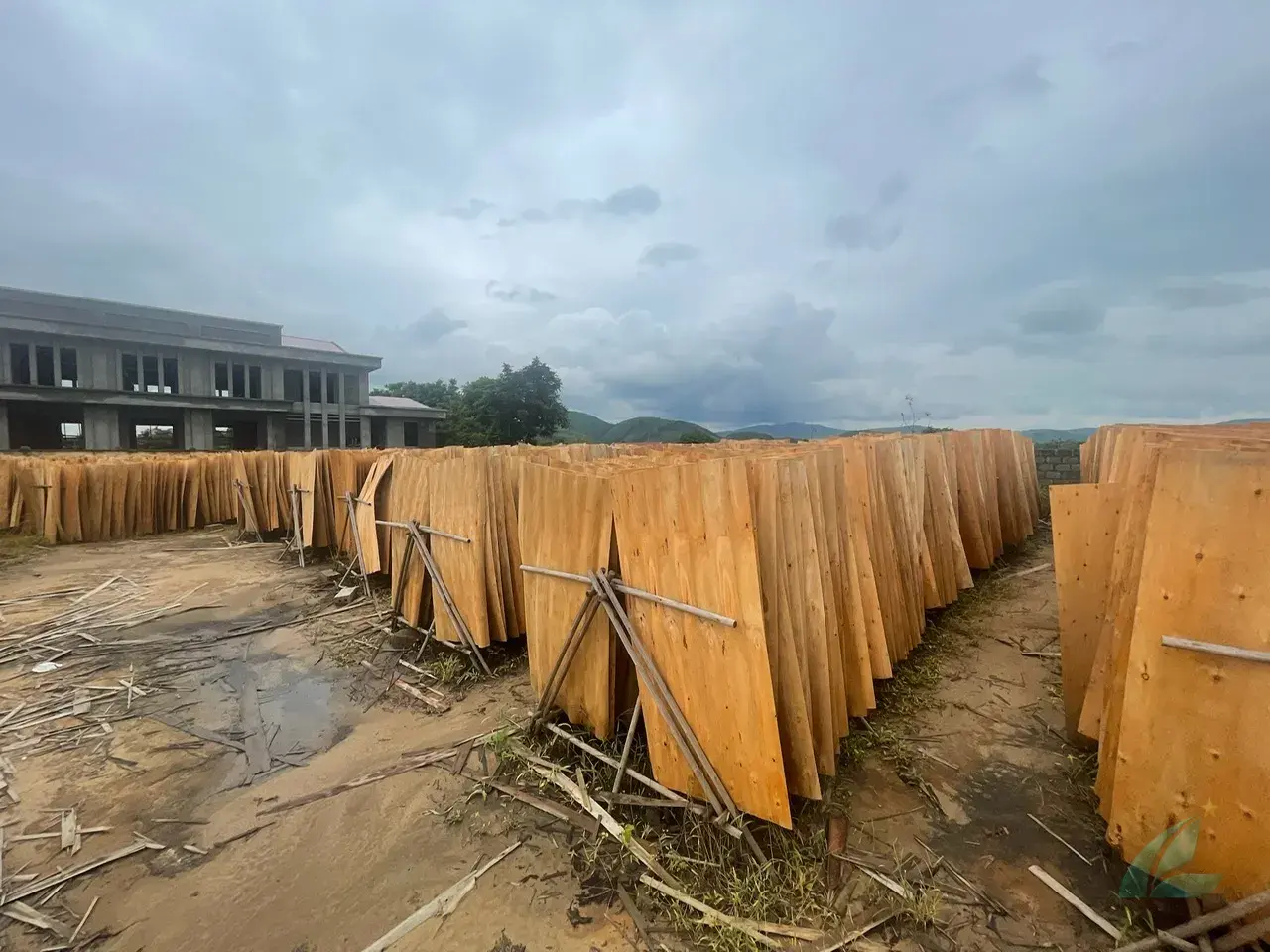
Eucalyptus (Eucalyptus urophylla) core is the densest and mechanically strongest core species produced in Vietnam. It commands the highest raw material cost among the three core types — and delivers the strongest performance.
📌 Eucalyptus Core Key Properties
Density: 650–750 kg/m³ — the widest range of the three core species, reflecting natural variation between eucalyptus growth regions and tree age at harvest. Panels from well-managed eucalyptus plantations in Phú Thọ Province test toward the upper end.
Color: Light yellow to cream-white. Unlike acacia, eucalyptus core does not telegraph dark color through thin face veneers. It is the preferred core for light-colored or natural-finish furniture exports.
Screw-holding strength: Superior. High density translates directly into resistance to screw pull-out — the specification of choice for cabinet hinges, adjustable shelf hardware, and structural furniture joints.
Moisture resistance: Eucalyptus is naturally more resistant to moisture movement than acacia or styrax. Furniture-grade panels with E0 emission and eucalyptus core are the correct specification for humid climate markets: Southeast Asia, Middle East, coastal regions.
Where Eucalyptus Core Is Used
- Premium furniture grade — high-end cabinet plywood for EU and US retail specifications
- Film-faced plywood — top and bottom two plies of premium grades are often eucalyptus for maximum surface hardness and formwork reuse performance (15–20 cycles)
- Structural applications — flooring underlayment, load-bearing shelving systems
- Marine-adjacent — combined with WBP phenolic glue for high-humidity environments
Container Loading (Eucalyptus Core)
Eucalyptus core loads at 15 pallets per 40HC, yielding approximately 44.5 CBM and a freight weight of approximately 28 MT — near the 28.5 MT payload ceiling (HCPLY production data, 2026). At 18mm thickness with eucalyptus core, you cannot add pallets without exceeding international freight limits.
⚠️ Key point: When ordering eucalyptus core panels thicker than 18mm, verify total container weight against the 28.5 MT limit before confirming order quantity. Your freight forwarder must receive the packing list pre-shipment.
🪵 Styrax Core: Lightweight Excellence for Furniture Grade
Styrax (Styrax tonkinensis), locally called bồ đề, grows exclusively in Northern Vietnam — Phú Thọ, Hòa Bình, and surrounding provinces. It does not grow in Southern Vietnam. Any supplier claiming Southern Vietnamese styrax core is misrepresenting their source.
Styrax is the Vietnamese industry’s answer to birch core. Vietnam does not produce birch core — birch is a temperate species not cultivated here. The furniture industry uses styrax as the lightweight, light-colored, high-surface-quality alternative that European, American, Japanese, and Korean buyers associate with premium furniture plywood.
Styrax Core Key Properties
Density: 480–500 kg/m³ — the lightest of the three core species. This low density is why styrax-core plywood achieves the highest CBM per container.
Color: White to cream. Uniform, bright, and consistent across the panel. Styrax core produces zero color telegraphing through any standard face veneer thickness.
Surface smoothness: Styrax fibers are fine and uniform, producing very smooth veneer surfaces after rotary peeling. This makes it the preferred core for sanded furniture-grade panels where face adhesion and flatness are critical.
Machinability: Low density means easier cutting, drilling, and routing — reduced tool wear and faster cycle times for furniture manufacturers. Cabinet makers in Europe and Japan specifically request styrax core for this reason.
Where Styrax Core Is Used
- Premium furniture grade — primary core for birch, EV, and okoume-faced plywood targeting EU, US, Japanese, and Korean markets
- Matt plywood (lamination substrate) — unfaced raw core panels for lamination with paper foils, PVC, HPL; styrax preferred for smooth, gap-free surface
- EV plywood — engineered veneer face over styrax or eucalyptus core for modern interior applications
- Poplar-faced plywood — full-white panel construction for luxury packaging and premium interiors
“Styrax is the wood that makes Vietnamese plywood competitive with Eastern European birch plywood on the premium furniture segment. The density, color, and surface quality are comparable — and Northern Vietnam’s lower production costs create a price advantage that most European importers recognize after a single side-by-side test.” — Lucy, International Sales Manager, HCPLY
Container Loading (Styrax Core)
Styrax core loads at 18 pallets per 40HC, yielding approximately 53 CBM — the highest volume per container of any core type — with a freight weight of approximately 26.5 MT (HCPLY production data, 2026). This 19% CBM advantage over eucalyptus core directly reduces landed cost per panel.
Explore matt plywood with styrax core for lamination →
🔧 Core Construction Methods: Full Stitched vs Loose-Laid
Core species is only half the specification. How the veneer strips are assembled — the core construction method — determines whether your panels perform consistently in production or fail at the joinery.
Vietnamese factories use four core construction methods:
| Construction Method | Description | Quality | Cost |
|---|---|---|---|
| Full stitched | All veneer strips mechanically joined across all layers — zero gaps, zero overlap | Highest | Highest |
| Stitched outer + edge-trimmed inner | Face-adjacent layers stitched, inner core layers trimmed but not stitched | Good | Mid-high |
| Finger-jointed | Strip ends joined with interlocking finger profile — strong end-grain connection | Mid | Mid |
| Loose-laid | Veneer strips placed adjacent without joining — gaps possible | Lowest | Lowest |
Full Stitched Core: The Furniture-Grade Standard
Full stitched construction eliminates the voids that cause three of the most common buyer complaints:
- Soft spots — panel surface deflects under localized load (screw driving, hinge installation) due to an air gap beneath the face veneer
- Delamination at joints — gaps in loose-laid core allow moisture to penetrate and glue lines to fail at strip boundaries
- Face veneer telegraphing — on thin faces (0.2–0.3mm), the edge of an unsealed gap shows as a slight surface depression
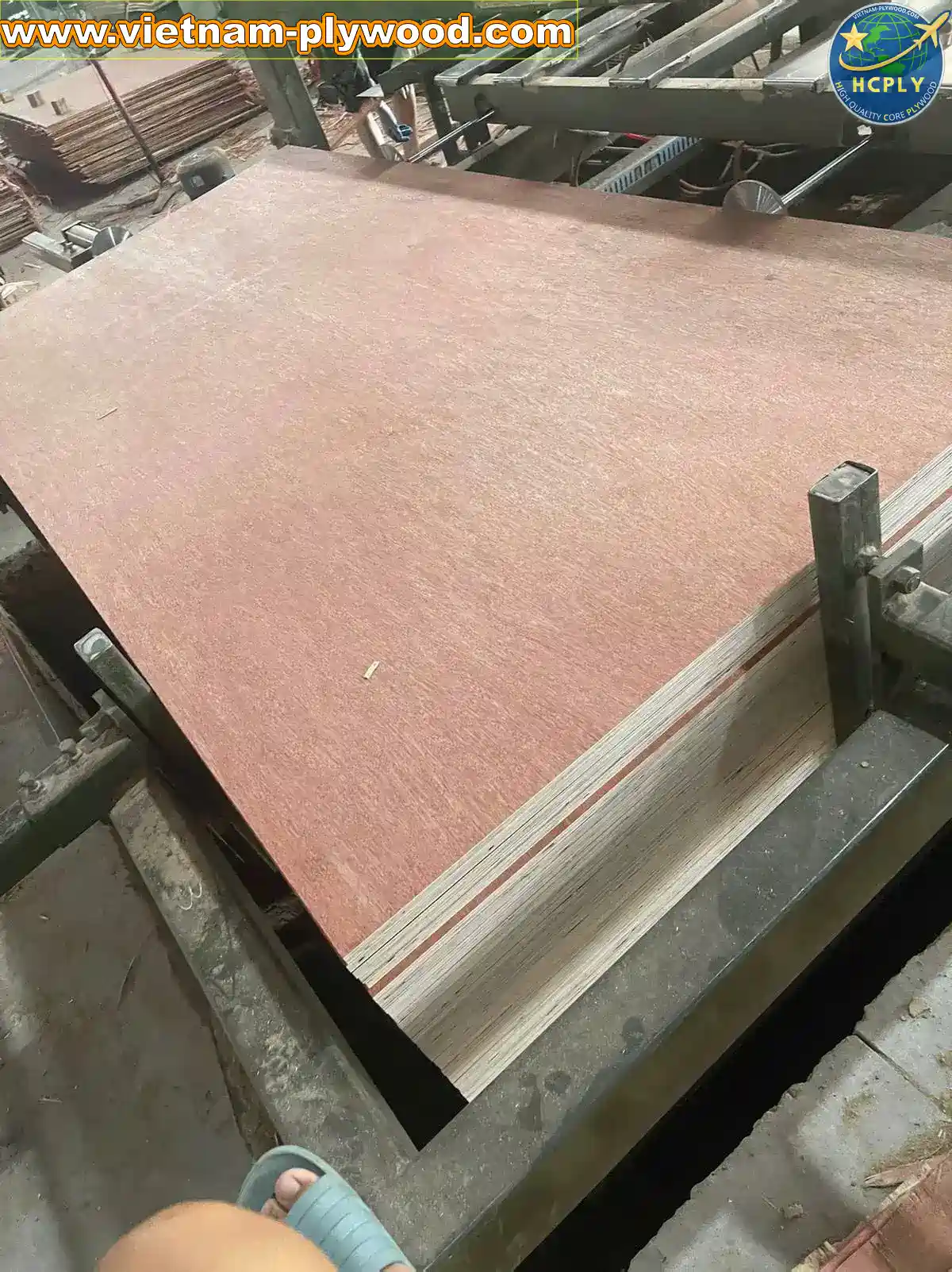
HCPLY’s premium furniture facility applies full stitched construction across all core layers for panels destined for EU and US markets — not just the outer plies, but every layer before hot pressing (HCPLY production data, 2026).
Loose-Laid Core: Appropriate Applications
Loose-laid core is not inherently defective — it fits applications where void tolerance is acceptable:
- Packing-grade plywood — crates and pallets where structural precision is secondary to cost
- Film-faced plywood, budget grade — construction panels with 4–8 reuses where surface is covered by film
- Internal structural panels — applications covered by MDF or HPL laminate
⚠️ Heads up: Loose-laid core plywood should never be specified for cabinet face panels, drawer boxes, or any furniture application where hinges, drawer slides, or cam fasteners require predictable screw-holding strength. Void location variation makes hardware performance inconsistent.
How face veneer types pair with core species →
📦 How Core Types Affect Container Shipping Economics
Core selection is a logistics decision, not only a quality decision. The density difference between styrax and eucalyptus core translates directly into CBM per container — driving your landed cost per panel.
The Core-to-Container Relationship
A 40HC container has a maximum payload of 28.5 MT — a hard limit imposed by road freight regulations in most receiving countries. Vietnamese factories load plywood on pallets stacked to 1000mm height (forklift-safe). The number of pallets — and the weight they carry — depends on core density:
| Core | Density (kg/CBM) | Pallets/40HC | CBM/40HC | Weight/40HC |
|---|---|---|---|---|
| Styrax | 500 | 18 | ~53 CBM | ~26.5 MT |
| Acacia | 580 | 16 | ~47.5 CBM | ~27.5 MT |
| Eucalyptus | 700 | 15 | ~44.5 CBM | ~28 MT |
(HCPLY production data, 2026)
Practical Cost Impact
At a representative FOB price of USD 380/CBM for 18mm furniture-grade plywood, and assuming USD 3,500 ocean freight per 40HC:
- Styrax core: 53 CBM = USD 20,140 product value | freight per CBM = ~USD 66
- Eucalyptus core: 44.5 CBM = USD 16,910 product value | freight per CBM = ~USD 79
The styrax-core container carries USD 3,230 more product value at the same freight rate. For buyers importing 10 containers per year, that is approximately USD 5,850 in annual freight efficiency — driven entirely by core density selection.
⚠️ Be aware: Mixed-core containers require per-specification weight calculation. A container mixing acacia-core and styrax-core panels cannot use a single density figure — calculate actual total weight from the packing list before confirming container capacity.
Full container packing calculation methodology →
🏭 Matching Core Types to Your Application
The correct core selection depends on three factors: target market emission standard, application mechanical requirements, and container economics.
Application Decision Matrix
| Application | Recommended Core | Construction | Glue / Emission |
|---|---|---|---|
| EU/US furniture export | Styrax | Full stitched | Melamine (MR) / E0 or CARB P2 |
| Japan/Korea furniture | Styrax or Eucalyptus | Full stitched | E0, CARB P2 |
| Middle East commercial furniture | Acacia | Stitched outer | MR / E1 |
| Concrete formwork (premium, 15+ reuses) | Eucalyptus | Stitched | Phenolic (WBP) |
| Budget film-faced (4–8 reuses) | Acacia | Loose-laid | Melamine / E2 |
| Lamination substrate (matt plywood) | Styrax or Eucalyptus | Full stitched | MR / E0 |
| Packing and crates | Acacia | Loose-laid | MR / E2 |
Critical Distinction: Glue Type vs Emission Standard
A specification error appearing regularly in import RFQs: listing “E0 glue” or “WBP E1” as a combined item. These are two separate properties:
- Glue type (water resistance): Melamine MR (passes 12-hour boil test) or Phenolic WBP (passes 72-hour boil test)
- Emission standard (formaldehyde): E0 / CARB P2 for US, EU, Japan, Korea | E1 for EU standard | E2 for budget Asian markets
Correct format: “Glue: Melamine (MR). Emission: E0.” or “Glue: Phenolic (WBP). Emission: E1.” — never combined into a single field.
HCPLY’s three production facilities are each configured for specific core-glue-emission combinations, matching your specification to the right facility to maintain quality consistency (HCPLY production data, 2026).
📋 How to Specify Plywood Core in Your Purchase Order
A complete core specification eliminates the most common causes of quality disputes and price mismatches. Use this format for every plywood inquiry:
Face veneer:    [species] [grade] [thickness]mm
Core species:   [acacia / eucalyptus / styrax]
Core construct: [full stitched / stitched outer / loose-laid]
Glue type:      [Melamine (MR) / Phenolic (WBP)]
Emission:       [E0 / E1 / E2 / CARB P2]
Thickness:      [mm] ±0.3mm tolerance
Panel size:     [1220×2440 / 1250×2500]mm ±2mm tolerance
Sanding:        [both faces / one face / unsanded]
Certification:  [FSC / CARB P2 / CE / EUDR]
Four Specification Mistakes to Avoid
-
Listing density without specifying core species. “500 kg/m³ plywood” does not tell the factory which species to use.
-
Omitting construction method. “Acacia core, MR, E1, 18mm” without “full stitched” lets factories default to their standard construction — which varies by facility.
-
Confusing glue and emission. “MR E0” written as one item creates ambiguity that produces specification errors in production.
-
Not specifying sanding. Furniture-grade panels must state “both faces sanded (calibrated).” Unsanded panels have significant thickness variation and are not suitable for visible furniture surfaces.
HCPLY’s export team reviews every purchase order before production confirmation. Ambiguous specifications receive a clarification request before proforma invoice — not after production begins.
Contact HCPLY to specify your core type and get a factory-direct quotation →
❓ Frequently Asked Questions About Plywood Core Types
What are the three plywood core types used in Vietnam?
Vietnam plywood manufacturers use three core species at commercial scale: acacia (~580 kg/m³), eucalyptus (650–750 kg/m³), and styrax (480–500 kg/m³). Each offers a different balance of density, mechanical performance, and cost. Vietnam does not produce gurjan core, birch core, or hopea core — these do not exist in Vietnamese plywood production.
Which plywood core is best for furniture-grade export?
Styrax core with full stitched construction is the standard for furniture-grade export to the EU, US, Japan, and South Korea. It provides a bright white appearance, low density (maximum container efficiency), smooth surface adhesion, and compatibility with E0 and CARB P2 emission standards required by these markets. For applications requiring maximum screw-holding, eucalyptus core is the stronger choice at the cost of higher shipping weight.
Does plywood core type affect container loading?
Yes, significantly. Styrax core allows 18 pallets per 40HC (~53 CBM) while eucalyptus core is limited to 15 pallets (~44.5 CBM) before hitting the 28.5 MT payload ceiling. The 19% CBM difference per container makes core selection a logistics cost decision, not only a product quality decision (HCPLY production data, 2026).
What is full stitched core plywood?
Full stitched core plywood uses mechanically joined veneer strips — with no gaps or overlaps — across all core layers before hot pressing. This construction eliminates voids that cause soft spots, delamination at strip joints, and face veneer telegraphing. It is the required standard for furniture-grade panels destined for EU and US markets.
Can I mix core types in one 40HC container?
Yes. HCPLY supports mixed specifications within a single 40HC container. Total container weight must be recalculated from the actual packing list — using the correct density per core species and thickness combination — to remain within the 28.5 MT payload limit. Request a pre-shipment packing list from your supplier before booking freight.
✅ Conclusion
Plywood core types in Vietnam — acacia, eucalyptus, and styrax — are not interchangeable. Each occupies a distinct position in the quality, cost, and logistics matrix that determines your panel’s performance and your container’s economics.
Picture your next shipment arriving with panels that perform exactly as specified: correct density, verified screw-holding, clean sanded surface, and a packing list that stays under the 28.5 MT payload limit with room to spare. That outcome comes from a complete specification — core species, construction method, glue type, emission standard, and sanding — written before the order, not negotiated after arrival.
HCPLY manages 3 specialized production facilities in Northern Vietnam, each configured for specific core-face-glue-emission combinations. Our export team matches every order to the correct facility, ensuring the panel you receive is the panel your specification requires. Factory-direct pricing, full on-site QC, and all export documentation are included as standard.
Get a factory-direct quotation with your core specification →
Related Articles
- Plywood Quotation Guide: What to Know Before Pricing — Pre-order checklist covering core, face, glue, emission, and certification specifications
- Core Veneer Vietnam: Eucalyptus & Acacia Sheets — Raw core veneer supply for plywood manufacturers
- Matt Plywood Vietnam: Unfaced Core Substrate — Styrax and eucalyptus core panels for lamination applications
- Plywood Face Veneer Types: Complete Guide — How face species, grade, and thickness interact with core selection
- Plywood Container Packing Calculation: 40HC Guide — Full CBM and weight calculation methodology by core type